23 Timeless Front Yard Landscaping Ideas You’ll Love
Your front yard sets the tone for your entire home. It is the first outdoor space guests see, and even simple landscaping changes can make the entrance feel more polished, welcoming, and personal.
The good news is that you do not need a huge budget or a massive yard to create a beautiful landscape. The right combination of plants, pathways, borders, textures, and focal points can completely change the way your home looks from the street.
In this guide, you’ll find timeless front yard landscaping ideas that work with different home styles, yard sizes, and maintenance preferences.
Understanding Your Front Yard Before You Start
Look at sunlight and shade
Walk around your yard at different times of the day and notice which areas receive full sun, partial shade, or very little direct light. This will help you choose plants that are more likely to thrive instead of simply picking varieties because they look attractive.
Think about the way people move
Your front yard should look beautiful, but it also needs to be practical. Pay attention to the natural route from the driveway, sidewalk, or street to your front door. Landscaping should guide movement rather than make the entrance difficult to use.
Choose a maintenance level you can handle
A beautiful landscape is much easier to enjoy when it fits your lifestyle. If you prefer a low-maintenance yard, focus on durable plants, simple planting beds, mulch, stone, and other elements that do not require constant attention.
Once you understand your space, you can start creating a front yard that looks intentional rather than overcrowded.
1. Frame the Entrance With Layered Planting Beds
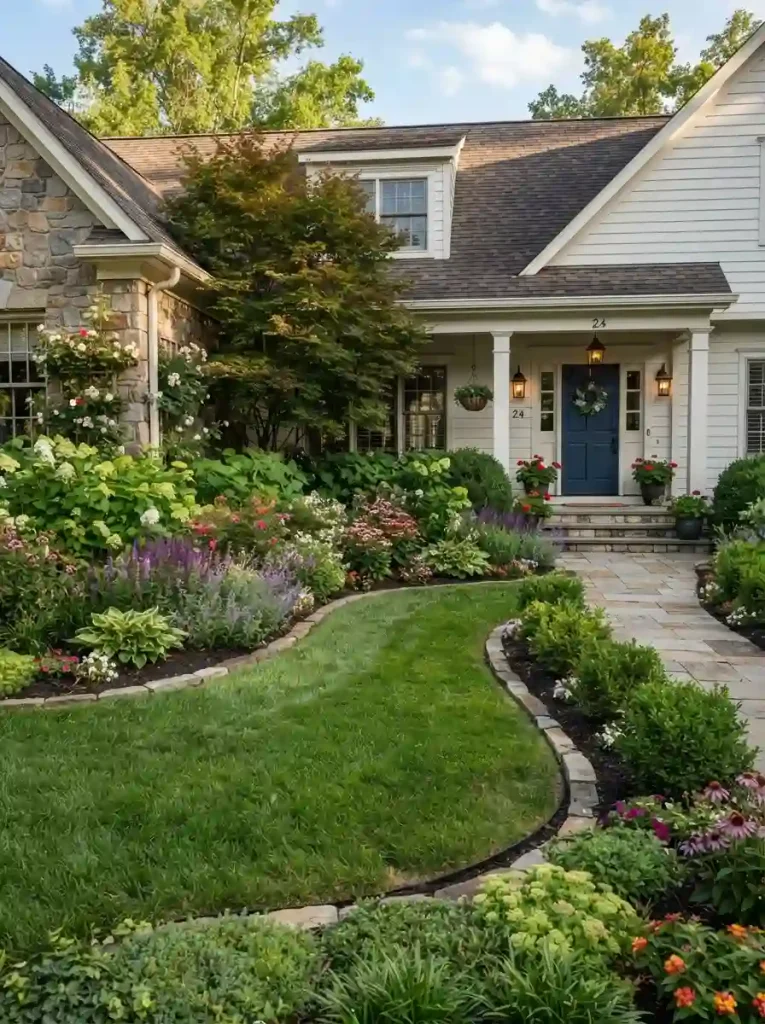
One of the easiest ways to give a front yard a finished appearance is to create planting beds around the main entrance. Instead of placing everything at the same height, use layers to create depth.
Start with a few taller shrubs or compact trees toward the back. Add medium-sized flowering plants in the middle and finish the front edge with low-growing plants or ground covers.
This arrangement naturally draws the eye toward the front door while giving the landscape a fuller appearance. Curved bed edges can also soften a boxy house and make the yard feel more organic.
Choose plants with different foliage shapes rather than relying entirely on flowers. Green textures can keep the bed attractive even when seasonal blooms disappear.
Expert Tip:
Keep the tallest plants away from windows and doorways. A layered bed should frame your entrance, not hide it.
2. Create a Clean Stone Border Around the Lawn
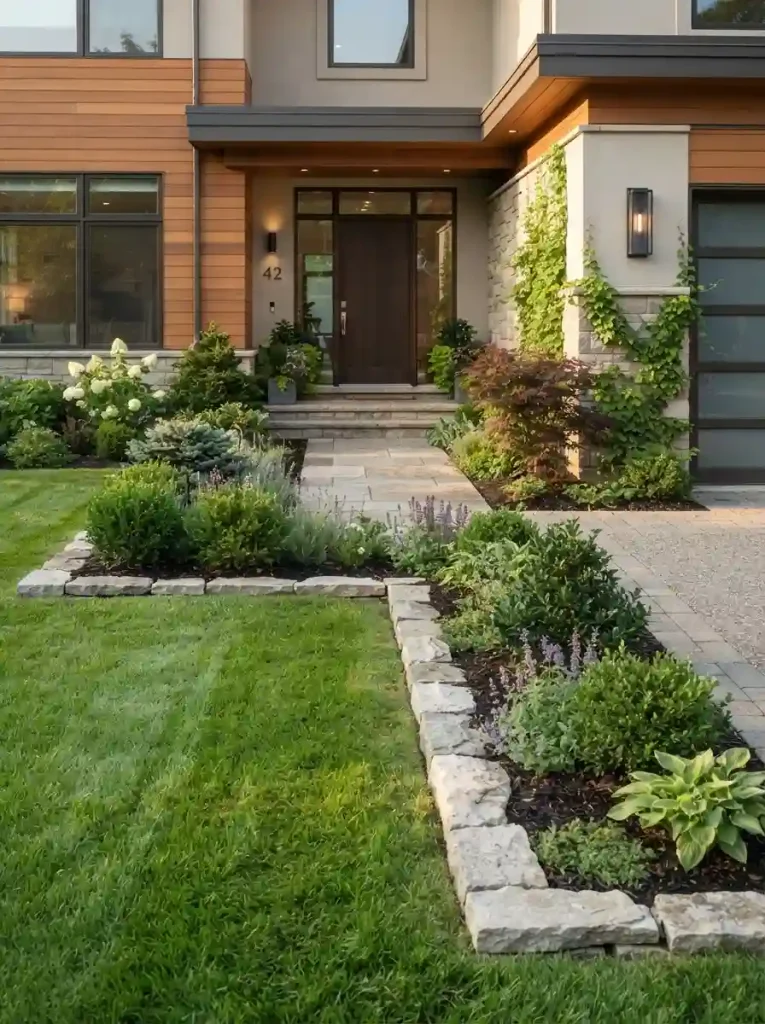
A simple stone border can instantly separate your lawn from garden beds and give the entire yard a more organized appearance. It works especially well when you want a polished landscape without adding too many decorative elements.
Choose natural-looking stones in a color that complements your home’s exterior. Arrange them along flower beds, trees, or the edge of the driveway to create clear visual boundaries.
Stone edging also makes garden maintenance easier because it helps define where grass ends and planted areas begin. For a more contemporary appearance, use evenly sized rectangular pavers. For a relaxed landscape, irregular natural stones can look more organic.
Keep the border consistent throughout the yard so the different areas feel connected rather than randomly decorated.
Expert Tip:
Choose one main edging material and repeat it in several areas. Consistency makes even a small front yard look thoughtfully designed.
3. Add a Statement Tree Near the Front Walk
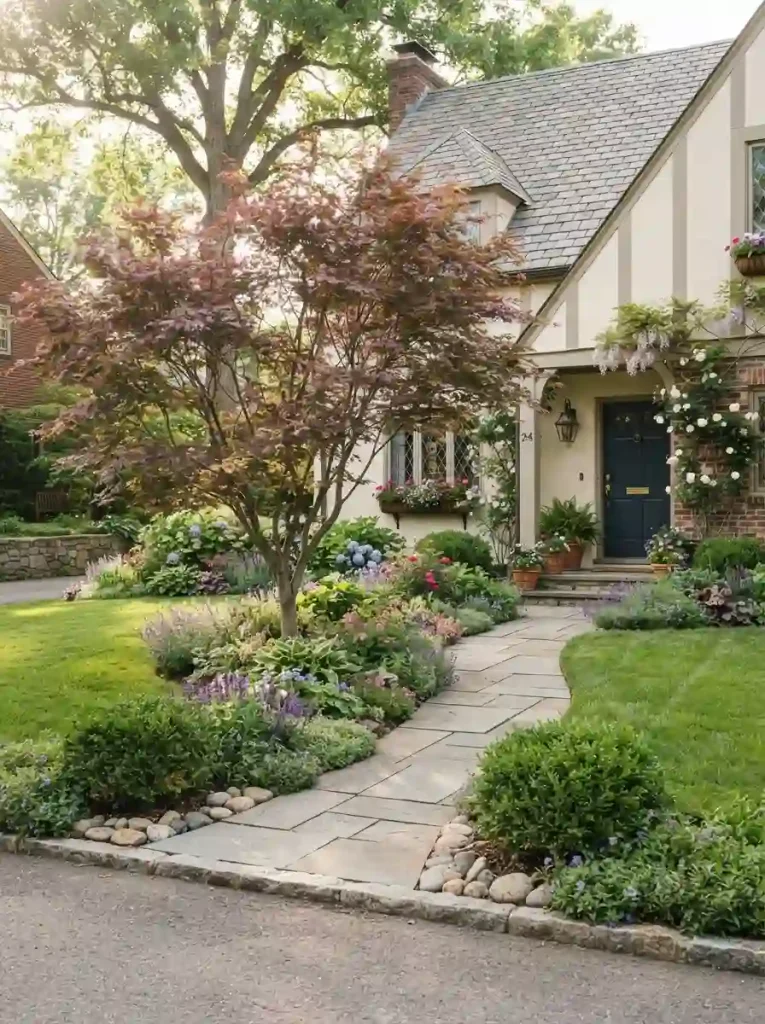
A well-placed tree can become the defining feature of a front yard. Instead of filling every available space with small plants, consider giving one attractive tree enough room to stand out.
Choose a tree that suits the mature size of your property and complements the scale of your house. A compact ornamental tree can add height without overwhelming a smaller yard.
Place it slightly away from the walkway so the branches do not interfere with foot traffic. Underplanting around the tree with low flowers, grasses, or ground covers can make it feel integrated into the landscape.
Think beyond flowers, too. Attractive bark, seasonal foliage, branching structure, or autumn color can make a tree interesting for much more of the year.
Expert Tip:
Always consider the tree’s mature size before planting. A small tree at the garden center can become much larger than expected.
4. Use Gravel for a Modern Low-Maintenance Look
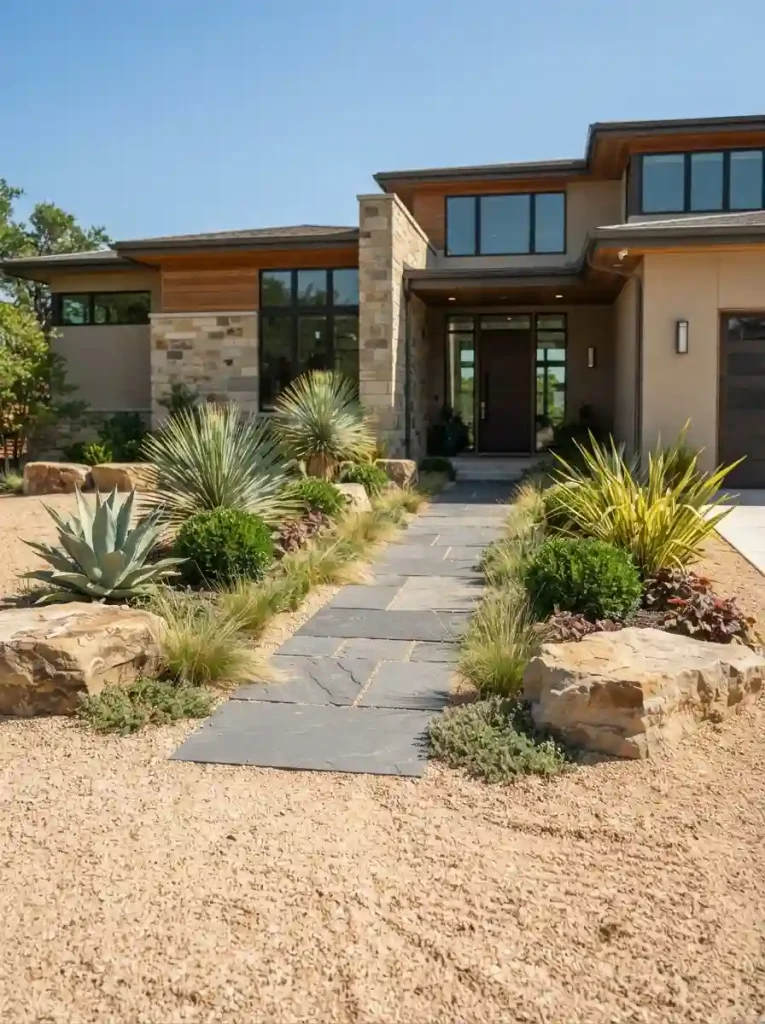
If you prefer a cleaner landscape with less lawn, gravel can be a practical and attractive option. It works particularly well around drought-tolerant plants, modern homes, and simple architectural features.
Use gravel to create small garden zones rather than covering the entire yard without a plan. You could surround sculptural plants, create a narrow strip beside the house, or build a decorative area between planting beds.
Mixing gravel with larger stones creates additional texture and keeps the landscape from looking flat. A few carefully selected plants can then provide the color and softness the hardscape needs.
Make sure the gravel area has a defined edge. Steel edging, stone, or concrete borders can keep the material from gradually spreading into your lawn.
Expert Tip:
Use landscape fabric only when appropriate for your design and choose gravel sizes that are comfortable and stable for the intended area.
5. Design a Welcoming Curved Walkway
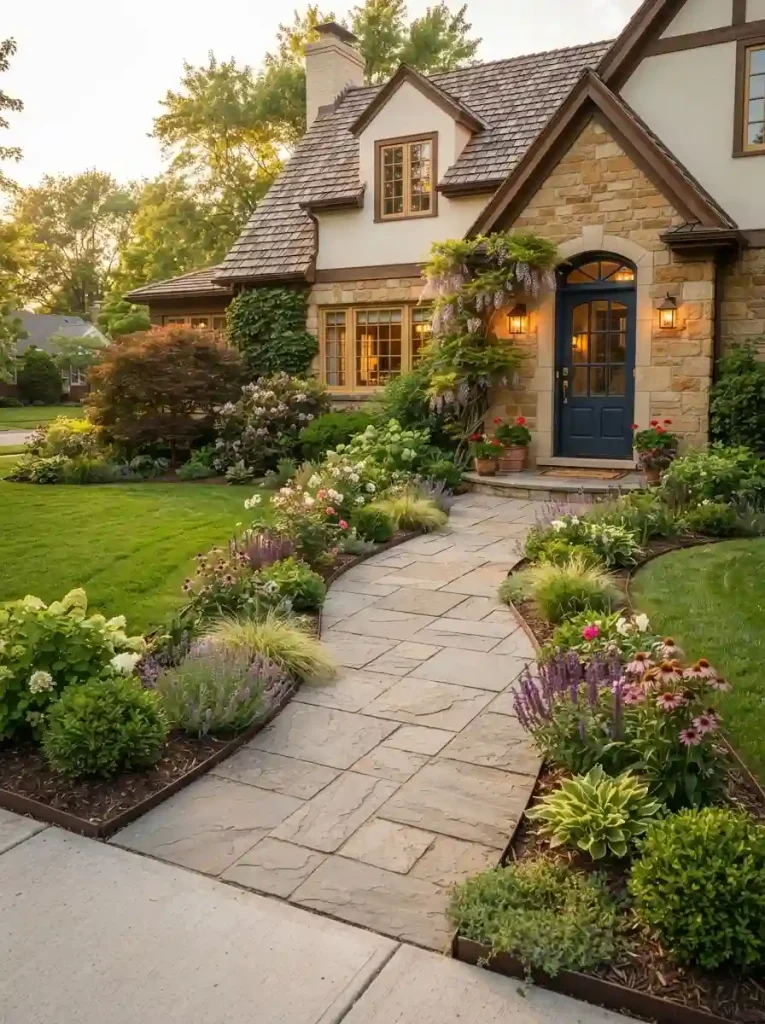
A front walkway does more than lead people to your door. It can shape the entire experience of approaching your home.
Instead of a perfectly straight route, consider a gentle curve if the space allows it. A curved walkway can make the yard feel larger and create opportunities for planting beds along both sides.
Use materials that complement the home’s architecture, such as natural stone, brick, concrete pavers, or textured stepping slabs. Keep the walking surface stable and wide enough for comfortable everyday use.
Plants along the edges can soften the hardscape. Low grasses, flowers, and compact shrubs are especially useful because they add color without blocking the path.
Expert Tip:
Let the walkway remain the visual priority. Plants should frame the route instead of growing into the walking space.
6. Mix Evergreen Shrubs With Seasonal Flowers
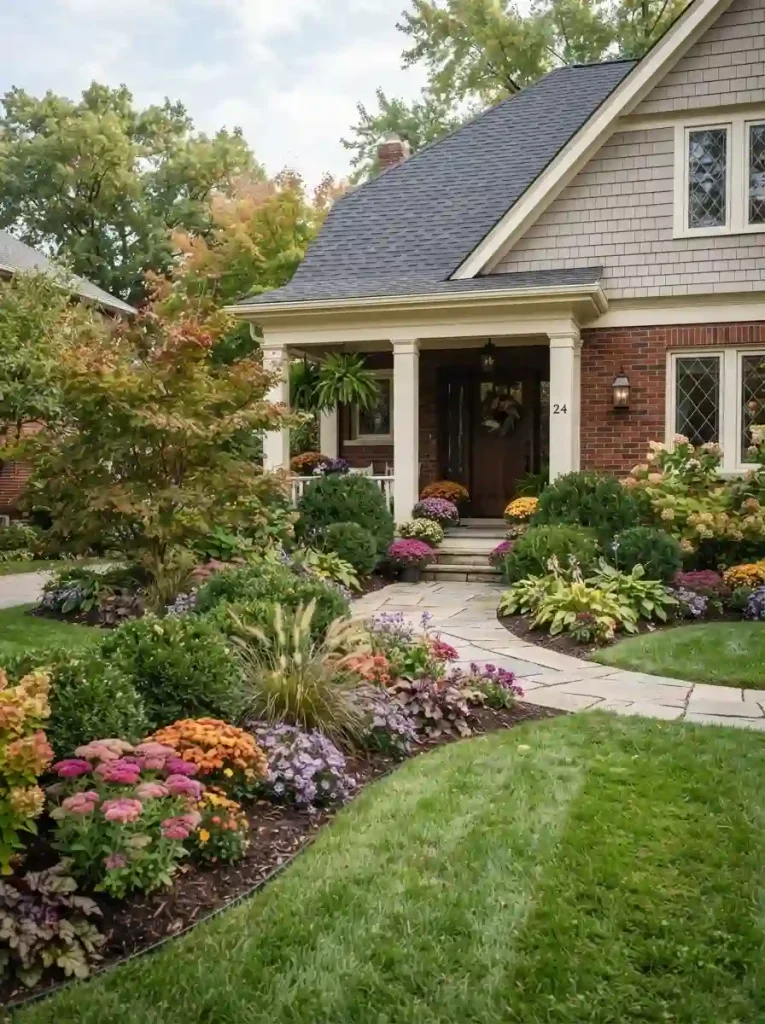
For a front yard that looks attractive through changing seasons, combine dependable evergreen shrubs with plants that provide temporary bursts of color.
Evergreen shrubs create the permanent framework of the landscape. They can define corners, frame windows, soften fences, or create a visual connection between different garden beds.
Seasonal flowers can then be added around them to change the mood throughout the year. Spring bulbs, summer flowers, autumn containers, and winter-friendly foliage can each bring something different to the same basic design.
This approach also makes future updates easier because you can refresh the seasonal plants without redesigning the entire yard.
Expert Tip:
Think of evergreen plants as the foundation and seasonal flowers as the changing accessories. This keeps your landscape cohesive throughout the year.
7. Give the Porch a Green Frame
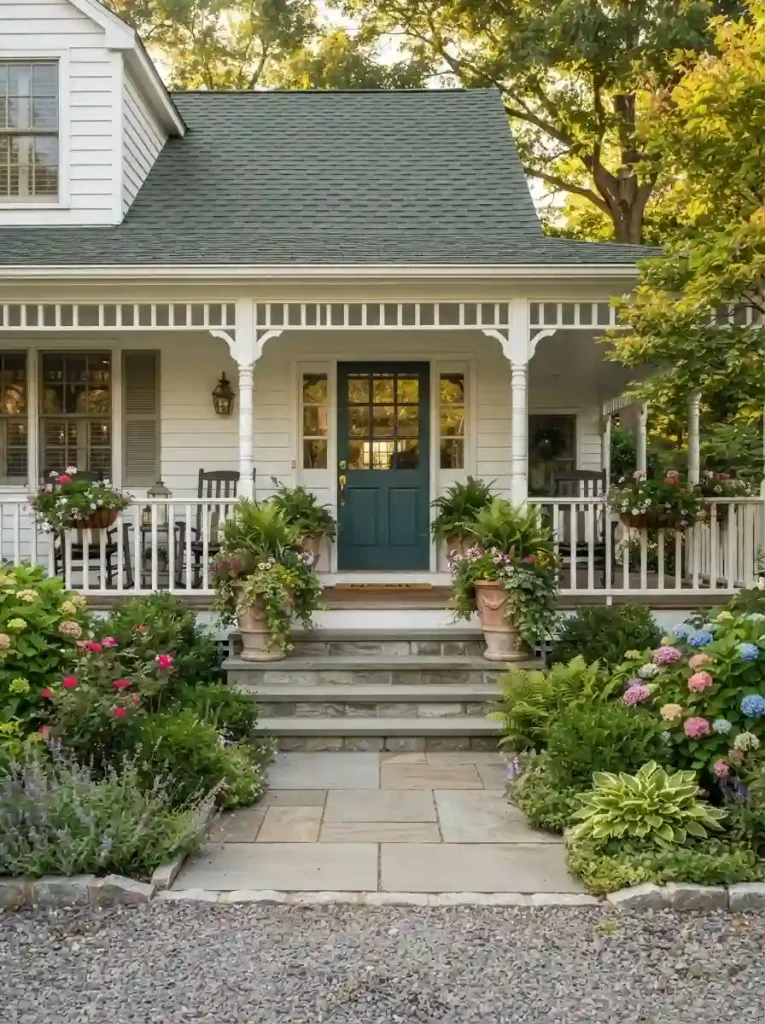
If your home has a front porch, use landscaping to make it feel connected to the rest of the yard.
Plants placed near the porch columns or along its outer edges can visually frame the entrance. Choose varieties that stay below important windows and do not make the steps difficult to access.
Large planters can add height near the doorway, while smaller plants can soften the edges of steps and railings. For a traditional home, symmetrical planting can create a classic appearance. For a more relaxed property, slightly varied arrangements can feel natural and welcoming.
The key is to leave enough breathing room around the entrance. A porch should feel inviting rather than buried beneath greenery.
Expert Tip:
Repeat one or two plant varieties near the porch and along the front garden beds to create a stronger connection between the entrance and the wider landscape.
8. Build a Layered Evergreen Hedge
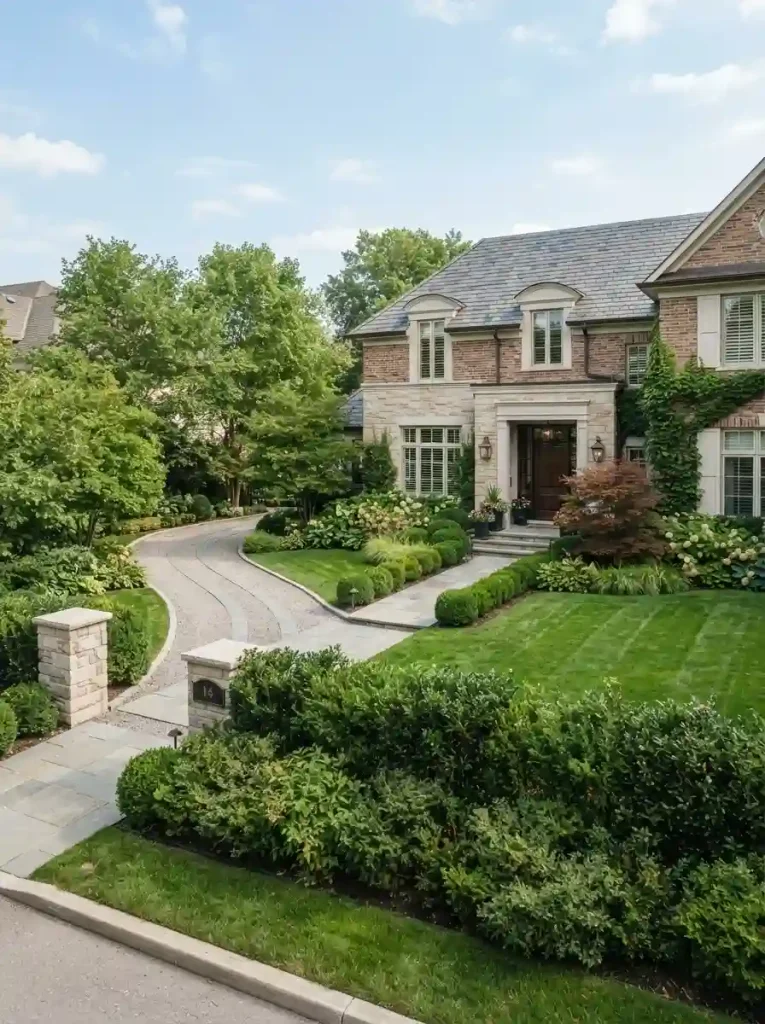
An evergreen hedge can give your front yard a sense of structure without making it feel overly formal. It is especially useful for defining property edges, softening driveways, or creating a subtle transition between the sidewalk and lawn.
Rather than planting one uniform row, consider combining shrubs with slightly different heights and textures. A lower hedge near the sidewalk can transition into taller shrubs closer to the house.
Keep the planting rhythm consistent so the result feels intentional. Regular shaping can maintain the desired outline, but avoid trimming everything into identical geometric forms if you prefer a softer landscape.
Evergreen foliage also provides a dependable backdrop for colorful flowers and decorative elements.
Expert Tip:
Leave enough space between shrubs for their mature width. Crowded plants may look good initially but can become difficult to maintain later.
9. Add Large Planters Beside the Front Door
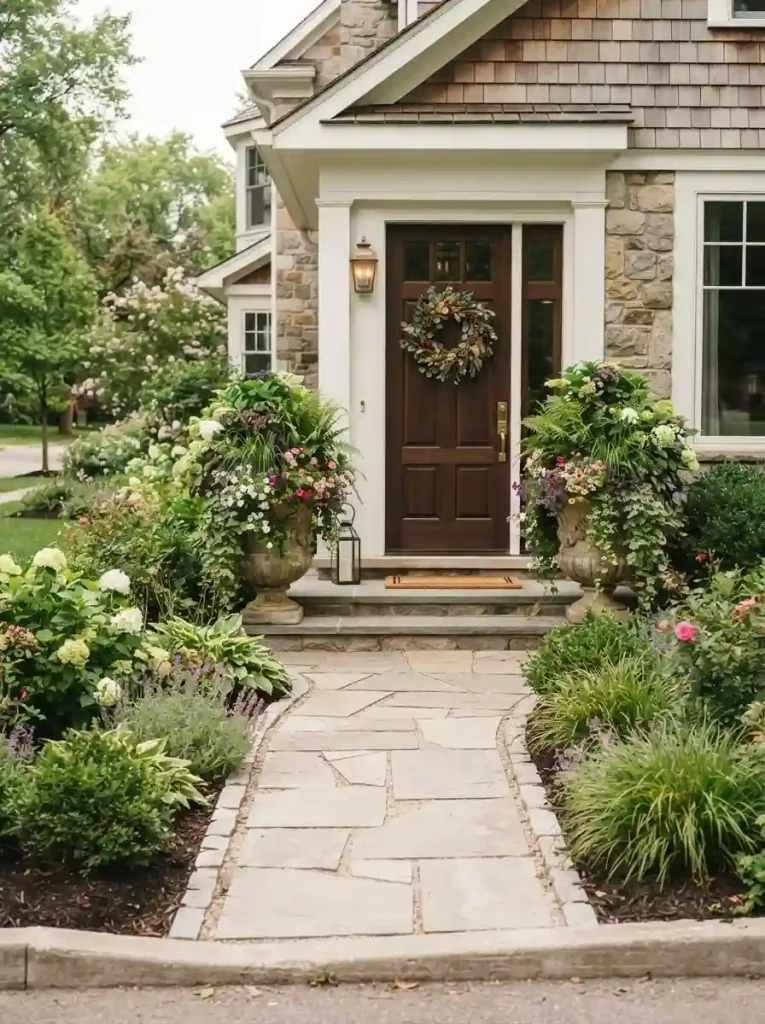
You do not need extensive garden beds to make your entrance feel landscaped. Two well-chosen planters can create an immediate focal point around the front door.
Use large containers that are proportional to the entrance. Tall planters work beautifully beside wide doors, while rounded containers can soften homes with strong architectural lines.
Fill them with a combination of foliage plants, flowers, or ornamental grasses. You can also change the plants throughout the year while keeping the same containers, making this a flexible way to refresh your curb appeal.
Choose containers that complement the colors and materials already used on your house.
Expert Tip:
A pair of matching planters creates instant symmetry, while mismatched containers can work when they share a similar color, material, or visual weight.
10. Create a Pollinator-Friendly Flower Border
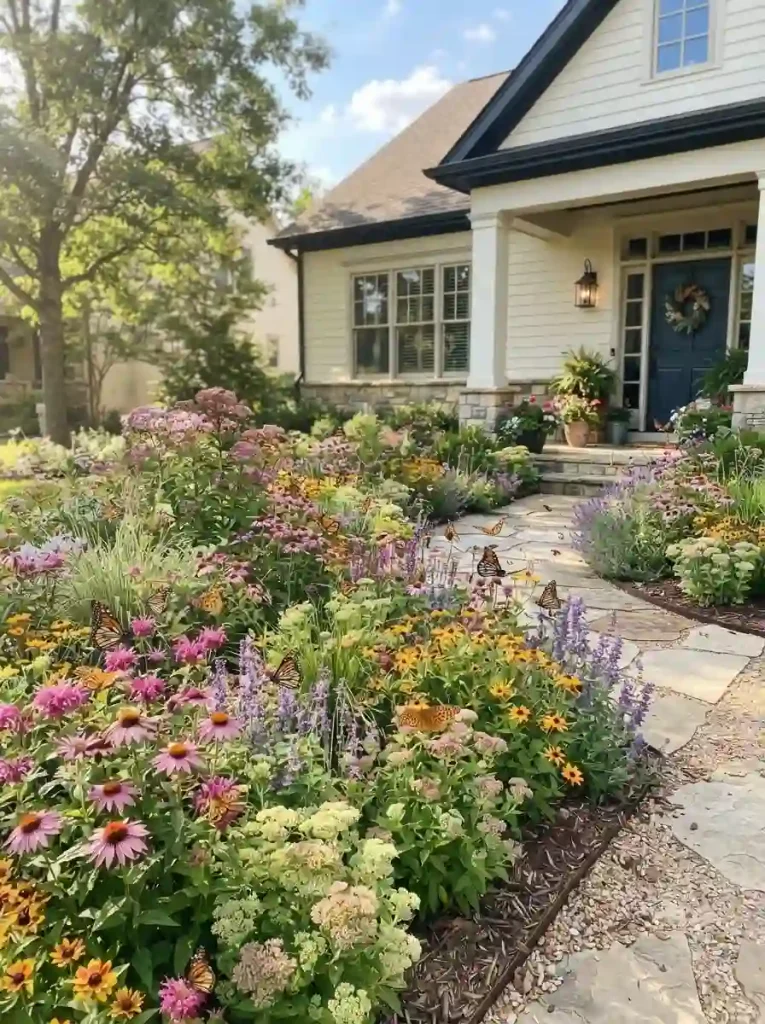
A colorful flower border can make a front yard feel lively while also providing useful habitat for pollinators.
Choose several flowering plants with different bloom periods so the garden does not depend on one short season of color. Mixing flower shapes and heights can create a more natural appearance and provide visual interest from the sidewalk.
Place taller flowers toward the rear and shorter varieties near the lawn or walkway. Adding herbs or plants with fragrant foliage can bring another layer of sensory appeal to the space.
Avoid trying to fill every inch. Leaving some breathing room between groups can actually make the planting design look more deliberate.
Expert Tip:
Choose flowering plants that are suitable for your local growing conditions and group plants with similar sunlight and watering requirements.
11. Use Ornamental Grasses to Soften Hard Edges
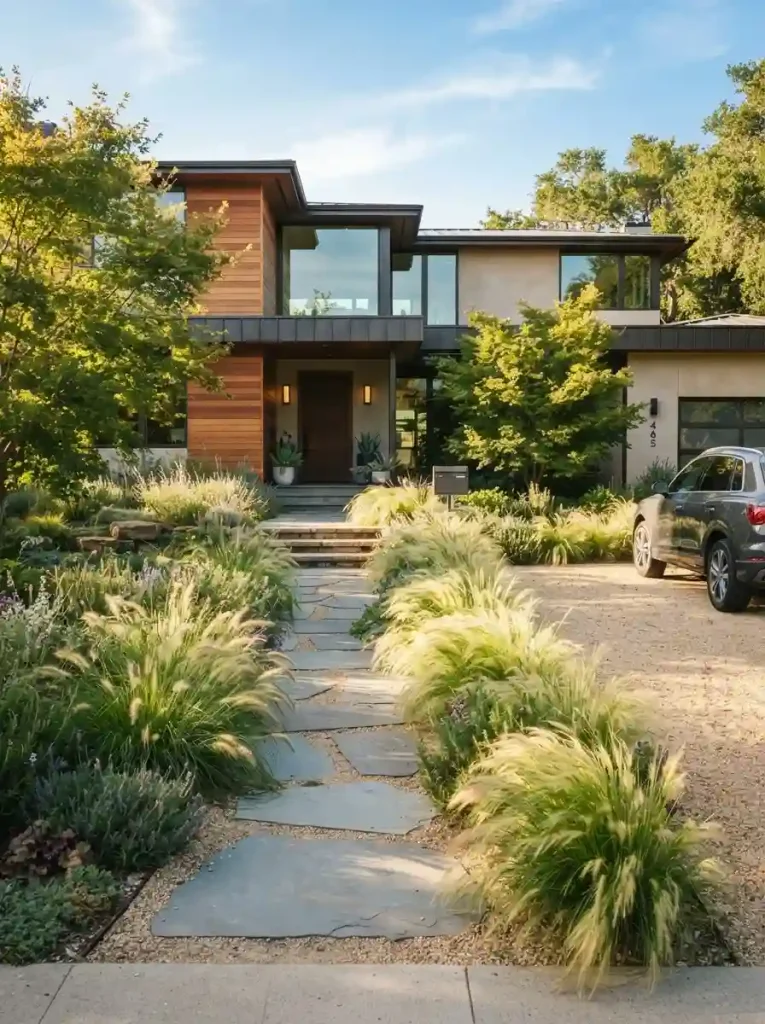
Ornamental grasses are an excellent choice when you want movement without adding a complicated planting scheme.
Their slender leaves can soften concrete walkways, retaining walls, driveways, and other strong architectural lines. When the wind moves through the foliage, the landscape gains a gentle sense of motion.
Use compact grasses along paths or taller varieties as background planting. Combining different textures can make a simple bed feel much richer without requiring dozens of plant types.
Grasses can also provide visual interest after many flowering plants have finished blooming, depending on the varieties you choose.
Expert Tip:
Plant ornamental grasses in repeating groups rather than scattering single plants randomly. Repetition creates a more polished landscape design.
12. Create a Simple Symmetrical Front Yard
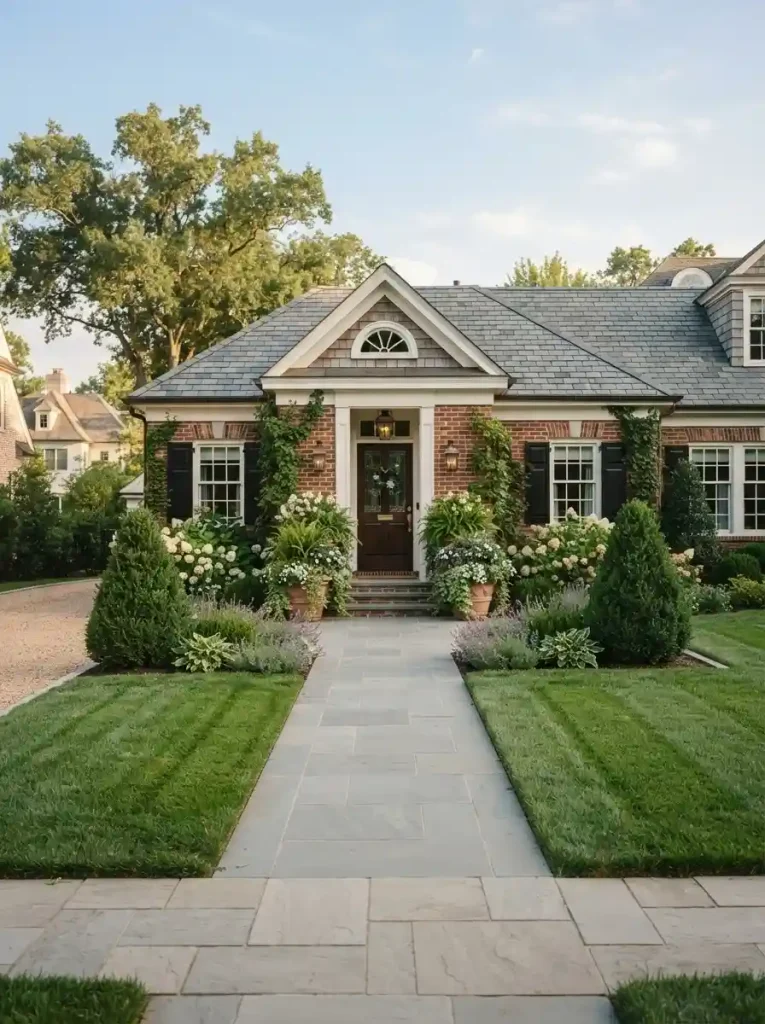
Sometimes the most timeless landscaping choice is also the simplest. Symmetry can make a front yard feel organized, elegant, and carefully maintained.
Place matching or visually similar plants on both sides of the entrance, walkway, or porch. This works particularly well with traditional and colonial-style homes, but the concept can be adapted to modern properties too.
You do not need every plant to be identical. Matching the overall shape, height, or visual weight is often enough to create balance.
Keep the central route clear and use planting beds to reinforce the home’s architecture rather than compete with it.
Expert Tip:
Start with the front door or main entrance as your central point, then work outward so the landscaping feels balanced from the street.
13. Add a Small Water Feature
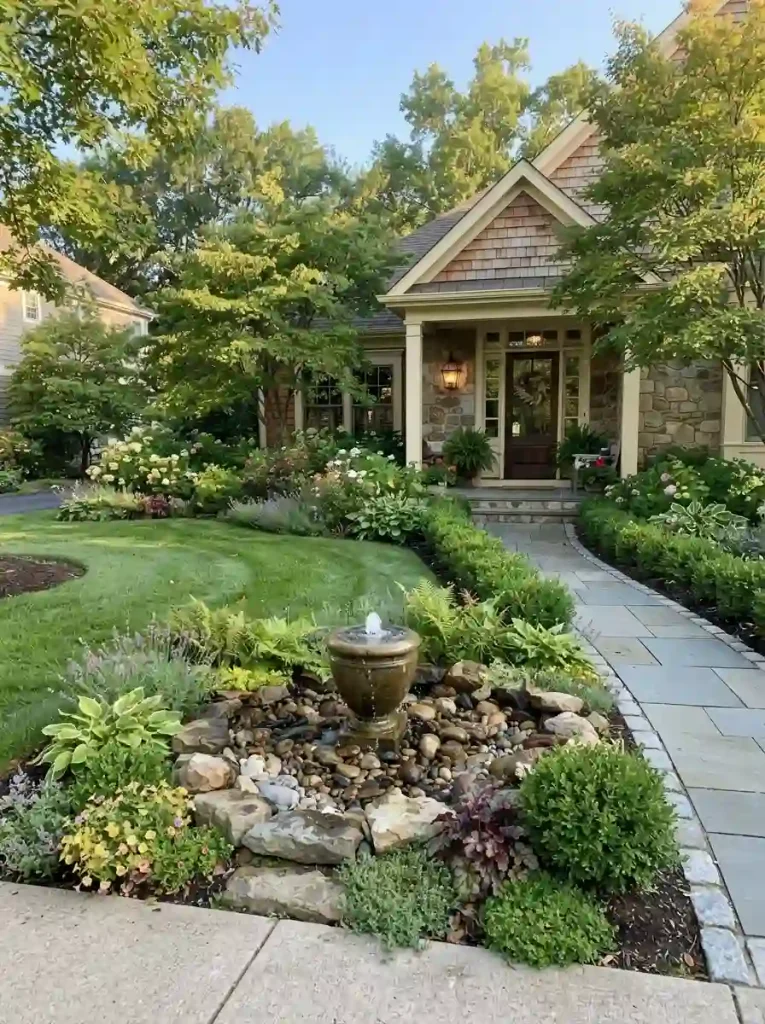
A small water feature can bring a completely different feeling to a front yard. The gentle sound of moving water adds a relaxing quality, while the feature itself can become an attractive focal point near the entrance.
You do not need a large pond to achieve the effect. A compact bubbling fountain, simple basin, or narrow recirculating feature can work beautifully in a smaller space.
Surround the water feature with a few carefully selected plants and natural stones. Avoid overcrowding the area so the feature remains easy to see and maintain.
Expert Tip:
Choose a self-contained water feature if you want the appearance of a fountain without the maintenance associated with a larger pond.
14. Design a Front Yard With Native Plants
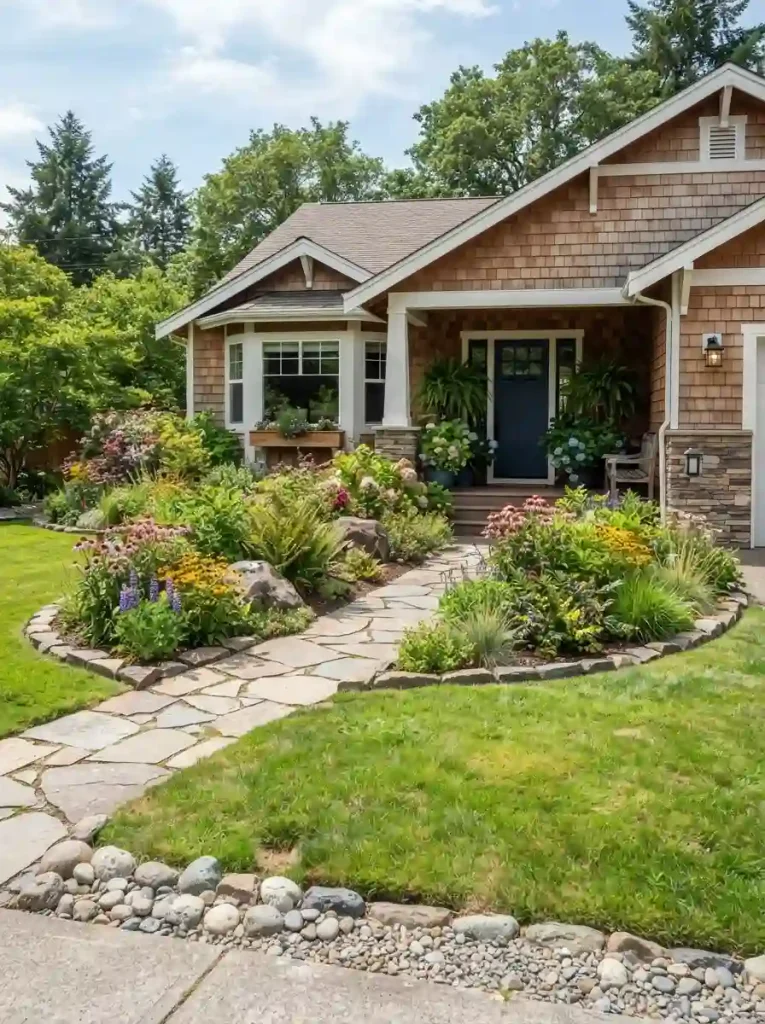
Native plants can make an excellent foundation for a beautiful and practical landscape. Because they are naturally adapted to the local environment, many native varieties can establish more easily than plants that come from very different climates.
Create a planting bed using a mixture of native shrubs, flowers, grasses, and ground covers. Vary the heights and textures to create depth while keeping the overall arrangement relaxed.
A native-focused garden does not have to look wild or untidy. Repeating selected plants and maintaining defined borders can give the landscape a polished appearance.
Expert Tip:
Visit a local nursery or extension resource to identify native plants that are appropriate for your soil, sunlight, and climate.
15. Turn a Small Corner Into a Rock Garden
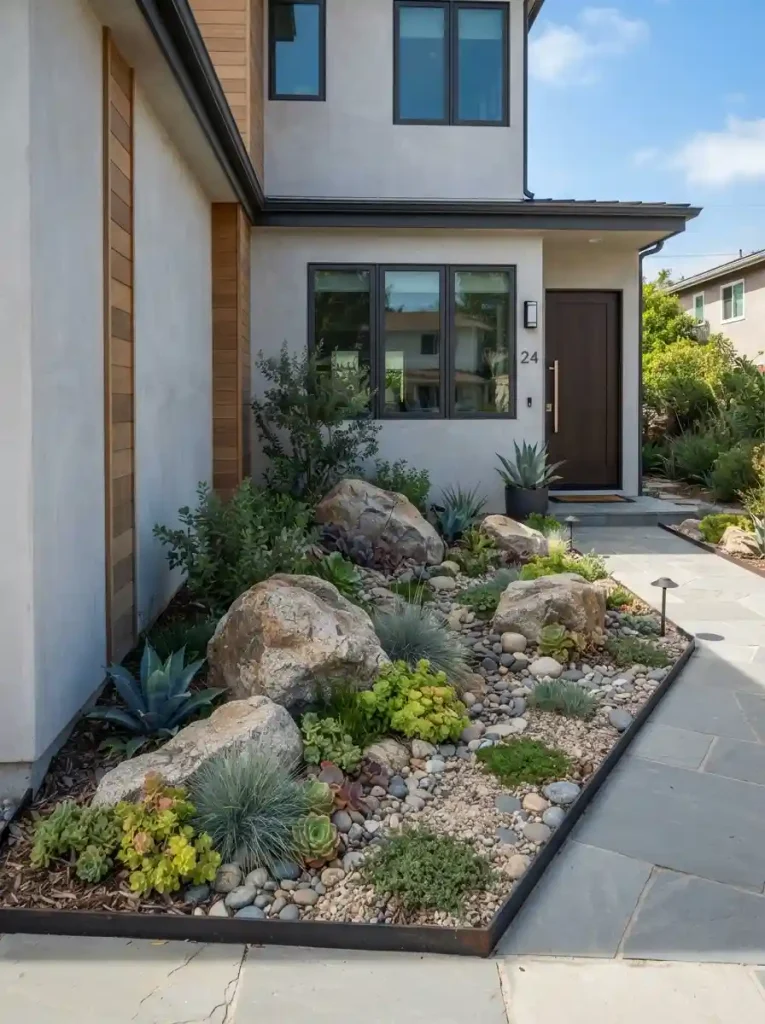
A difficult corner does not have to remain empty. A compact rock garden can turn an awkward area into one of the most interesting parts of your front landscape.
Start with a few larger rocks as the main structural elements, then add smaller stones and plants around them. Drought-tolerant varieties, compact grasses, and low-growing ground covers can work particularly well.
Keep the color palette restrained. Too many different stones or plant varieties can make a small space feel cluttered.
A rock garden is especially useful beside driveways, under sunny windows, or in areas where maintaining a traditional lawn would be inconvenient.
Expert Tip:
Partially bury larger rocks rather than simply placing them on top of the soil. This gives the garden a more natural and established appearance.
16. Use a Front Lawn as a Simple Focal Point
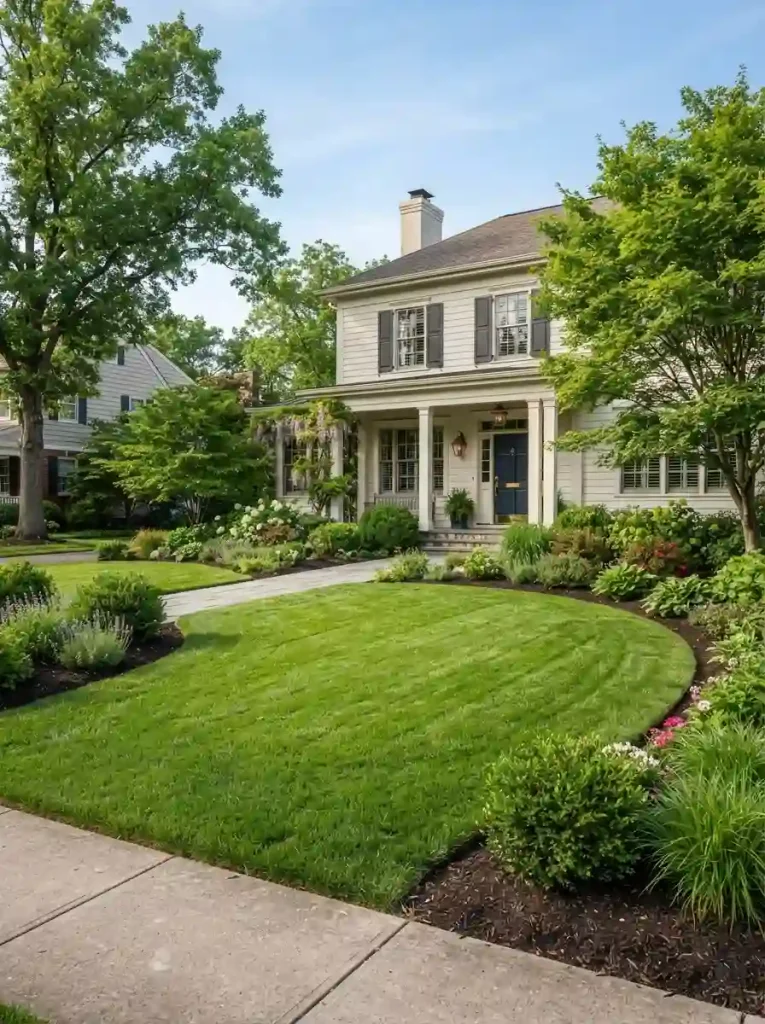
A beautifully maintained lawn does not have to compete with elaborate garden beds. Sometimes a clean, open stretch of grass provides exactly the breathing room a front yard needs.
Keep the lawn visually simple and use planting beds around its edges to frame it. A carefully shaped lawn can make a property feel larger while providing a soft contrast to stone, brick, and greenery.
If maintaining a large lawn is not practical, consider reducing its size and keeping one smaller section as the central green space.
The goal is not simply having more grass. It is creating a balanced relationship between open space and planted areas.
Expert Tip:
Clean, defined lawn edges can make a bigger visual difference than adding more decorative features.
17. Add a Low Garden Wall
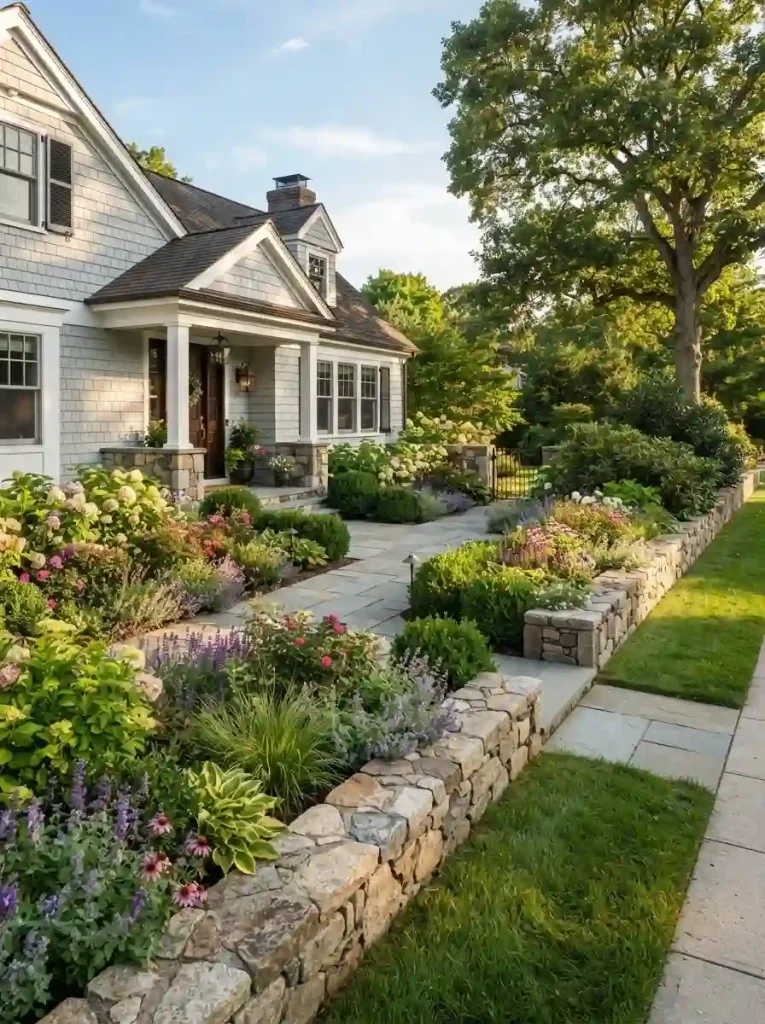
A low garden wall can provide structure while adding architectural interest to an otherwise flat landscape.
Use stone, brick, concrete, or another material that works with your home’s exterior. The wall can separate a raised planting bed from the lawn, define the front walkway, or create a subtle boundary near the sidewalk.
Keep the wall low enough that it does not block the view of the house. Plants can be layered behind it to add softness and additional height.
This approach works particularly well for properties with a slight slope because a low wall can help create more clearly defined planting areas.
Expert Tip:
Repeat the wall material somewhere else in the landscape, such as around steps or a walkway, to make the design feel unified.
18. Plant a Fragrant Garden Near the Walkway
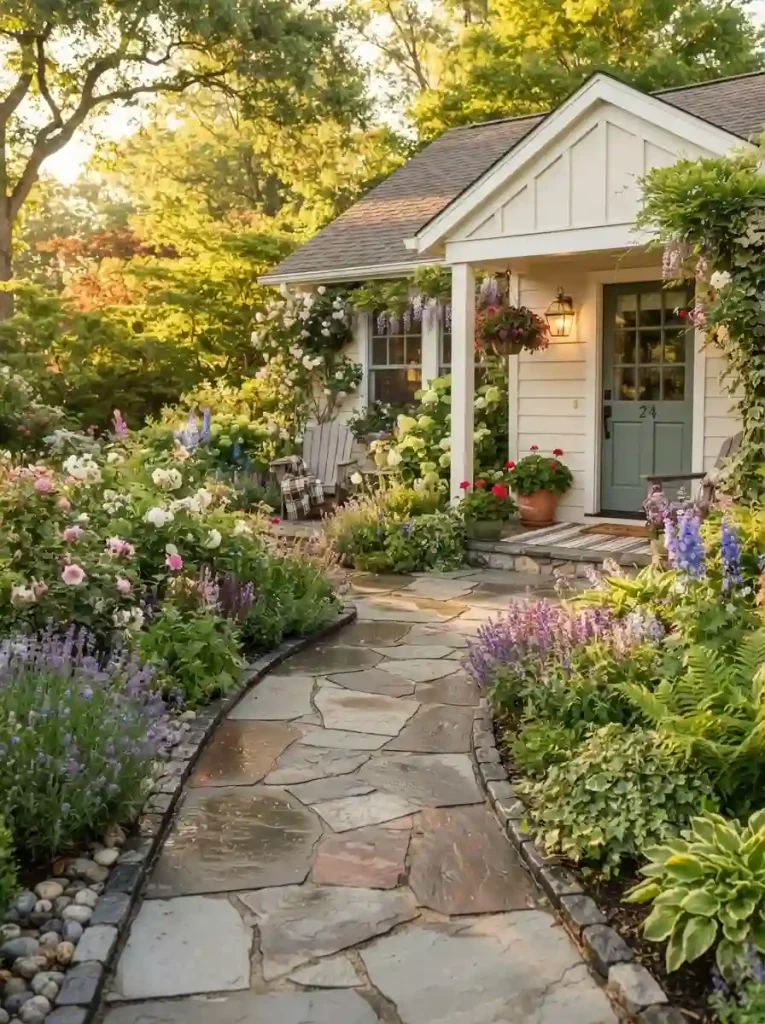
A front yard can appeal to more than just the eyes. Placing fragrant plants near a walkway allows visitors to experience the landscape as they approach the entrance.
Choose plants with pleasant scents that suit your growing conditions. Position them close enough to the path for their fragrance to be noticeable without allowing them to obstruct movement.
Combine fragrant flowers with attractive foliage so the garden remains visually interesting when individual plants are not blooming.
This idea works especially well near front steps, seating areas, and pathways where people naturally spend more time.
Expert Tip:
Do not rely on a single fragrant plant. Combining several varieties with different flowering periods can extend the sensory experience.
19. Make the Driveway Part of the Landscape
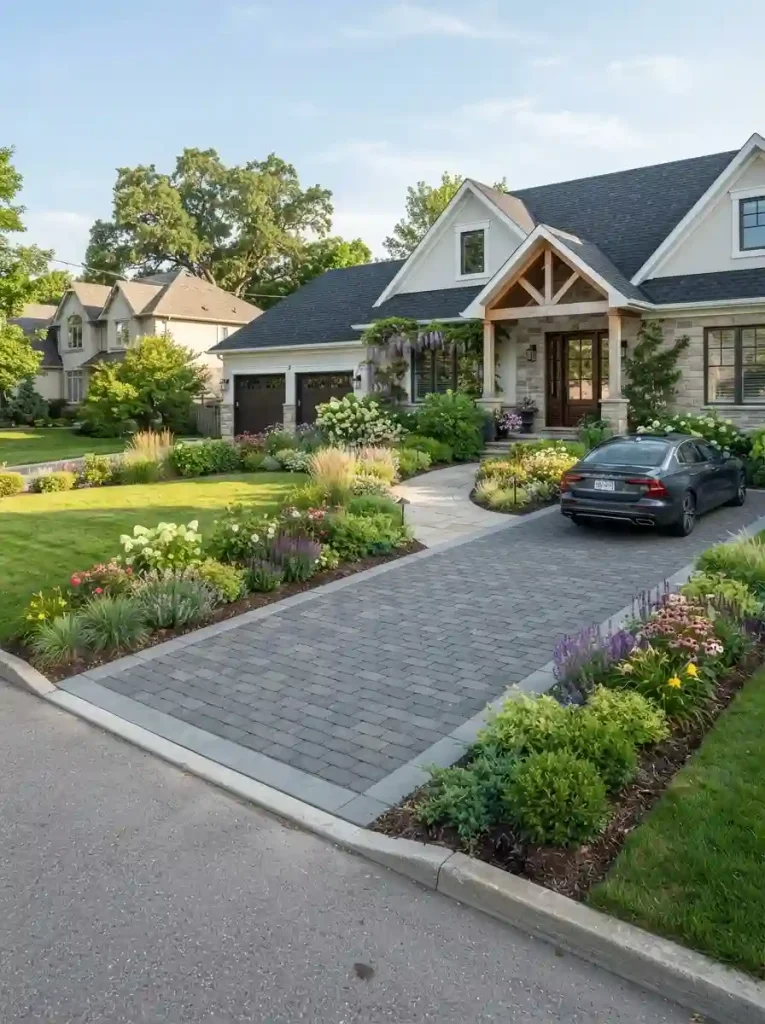
The driveway often takes up a large portion of the front yard, so treating it as a separate area can make the overall design feel disconnected.
Soften its edges with planting beds, low shrubs, ornamental grasses, or small flowering plants. Keep the plants low enough to preserve visibility for drivers and pedestrians.
For a wider driveway, alternating groups of plants can create rhythm without making the space feel crowded.
You can also repeat the materials used near the front walkway to visually connect the driveway with the entrance.
Expert Tip:
Keep plants away from areas where car doors open, and choose sturdy varieties that can handle occasional contact or road splash.
20. Add a Decorative Front-Yard Bench
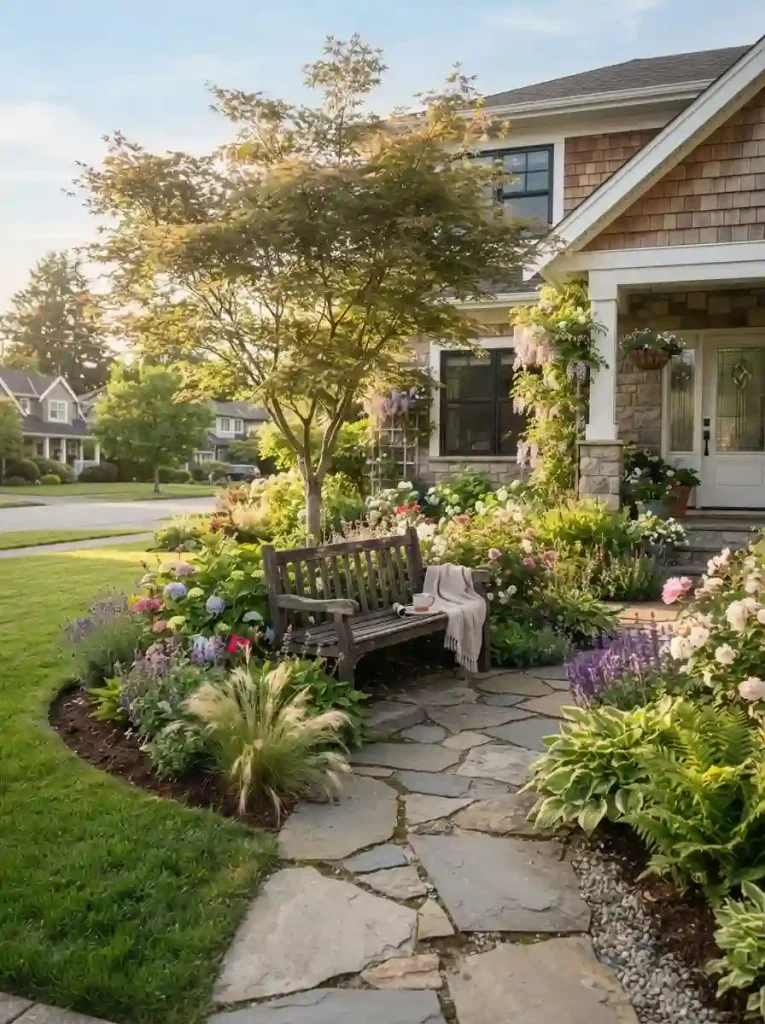
A bench can turn a purely decorative landscape into a space people can actually enjoy.
Place it beneath a mature tree, beside a planting bed, or at the edge of a quiet garden area. Choose a style that complements your home’s architecture rather than making the bench feel like an unrelated decoration.
Surround it with greenery without completely hiding it. A few plants nearby can make the seating area feel private and intentional.
Even if you rarely sit outside, the bench can provide scale and personality to the landscape.
Expert Tip:
Place the bench where it feels naturally connected to the garden rather than directly in the middle of the lawn.
21. Use Repeating Plant Groups for a Designer Look
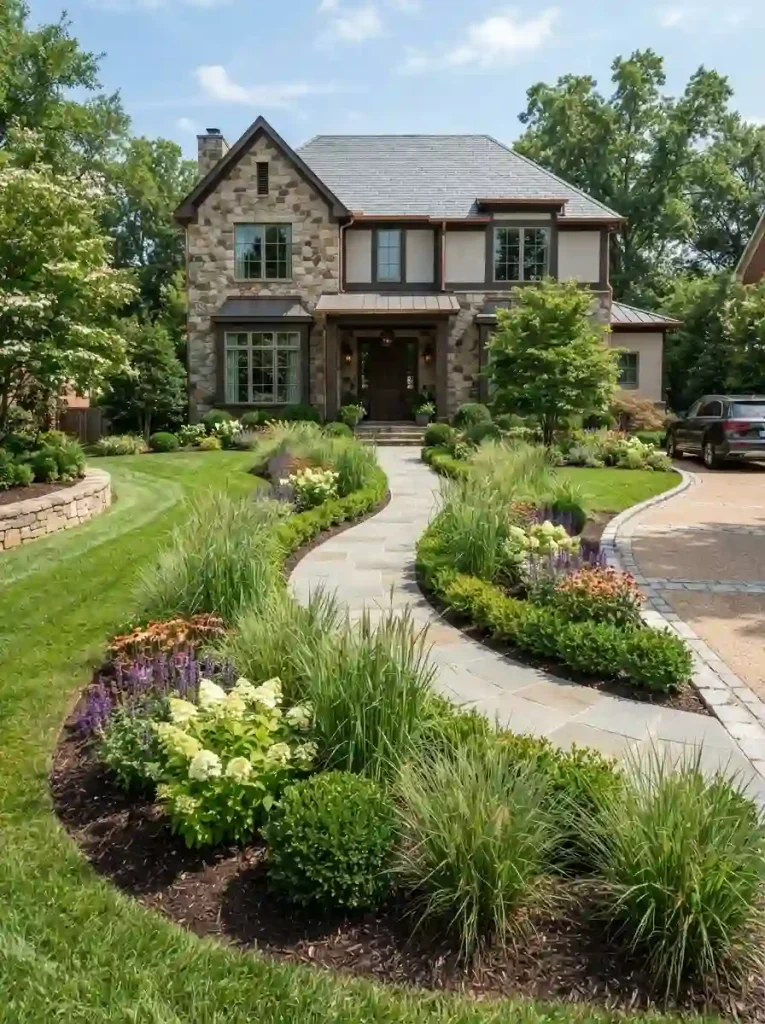
One of the simplest ways to make a landscape feel professionally designed is to repeat plants throughout the yard.
Instead of selecting a different plant for every small section, choose a few reliable varieties and use them in multiple areas. The repetition creates visual connections between the entrance, walkway, driveway, and garden beds.
You can still introduce seasonal flowers or decorative accents, but the repeated foundation keeps the overall design from becoming chaotic.
This technique is particularly effective in larger yards where separate planting areas can otherwise feel disconnected.
Expert Tip:
Repeat plants in groups rather than placing single specimens randomly. Larger clusters usually create a stronger visual impact.
22. Create a Soft Cottage-Style Front Garden
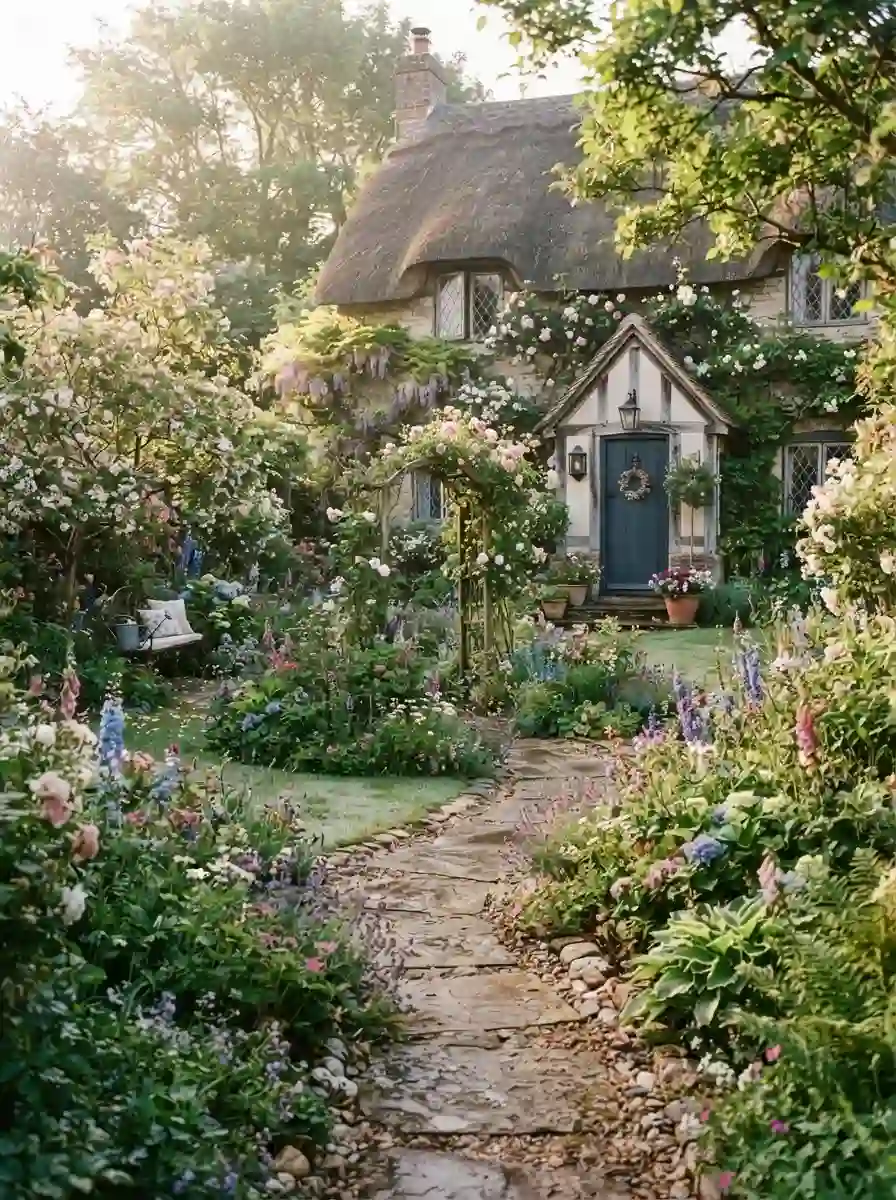
For a relaxed and romantic appearance, consider a cottage-inspired front garden filled with informal layers of flowers, foliage, and gentle pathways.
Mix plants with different heights and bloom shapes while keeping the overall palette coordinated. A few climbing plants near the porch or fence can add vertical interest.
Avoid making every edge perfectly straight. Soft curves, natural planting clusters, and slightly varied textures help create the casual character associated with cottage gardens.
This style works beautifully with traditional homes but can also soften newer properties with strong architectural lines.
Expert Tip:
Even a cottage-style garden benefits from structure. Use a defined path, repeated plants, or clear borders to keep the space looking intentional.
23. Keep the Design Simple With One Strong Focal Point
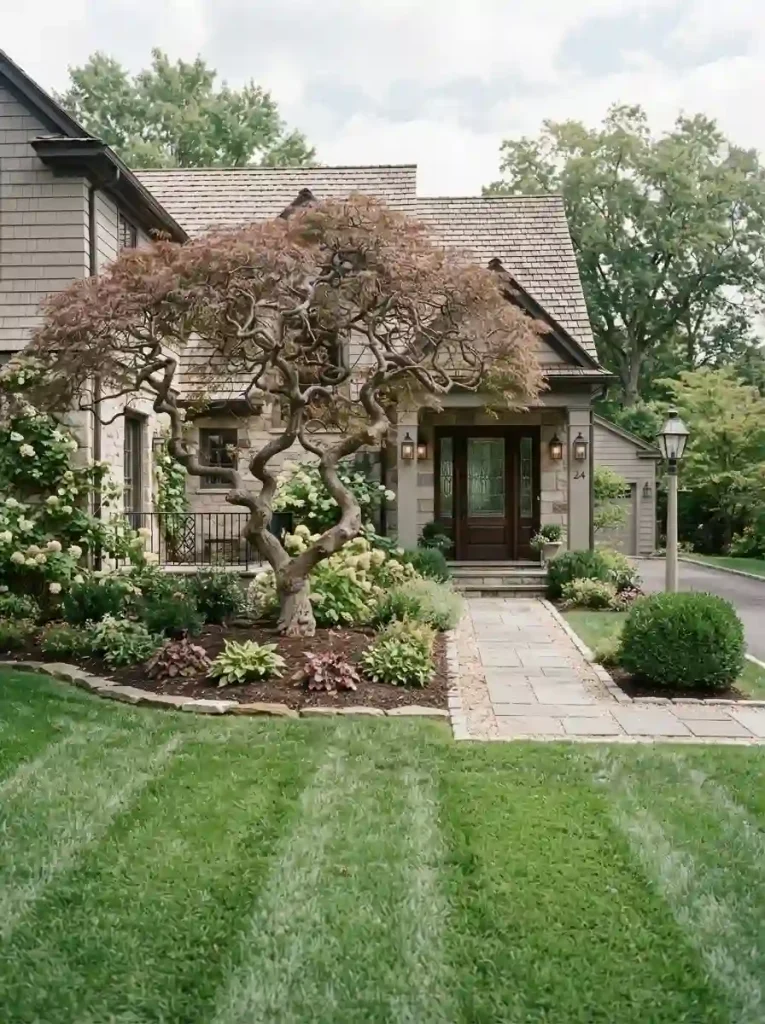
When in doubt, simplify. A front yard does not need countless features to look impressive.
Choose one main element that deserves attention. It might be an ornamental tree, a beautiful front door, a distinctive planter arrangement, a stone feature, or an elegant pathway.
Then let the rest of the landscaping support that focal point instead of competing with it. Use quieter plants and materials around the main feature so the eye naturally knows where to look.
This approach is especially helpful for smaller yards where too many decorative elements can quickly make the space feel crowded.
Expert Tip:
Stand across the street and look at your yard as a whole. If your eye jumps between too many features, remove or simplify a few elements.
How to Make Your Front Yard Look More Expensive?
A high-end front yard is not necessarily the one with the most expensive plants or materials. The difference often comes from consistency, proportion, and maintenance.
Start by choosing a limited palette of plants and hardscape materials. Repeating those elements throughout the yard creates a cohesive appearance.
Clean edges also matter. Trimmed lawn borders, healthy plants, weed-free beds, and well-maintained pathways can make a relatively simple landscape look polished.
Pay attention to scale as well. Tiny plants can disappear beside a large house, while oversized features can overwhelm a small property. Choose elements that feel proportional to the architecture.
Finally, avoid filling every empty space. Negative space gives important landscape features room to stand out.
How to Choose Plants for Your Front Yard?
The best plants for your front yard depend on your local climate, soil, sunlight, available water, and the amount of maintenance you are comfortable doing.
Before purchasing anything, check how large each plant is expected to become. This can prevent common problems such as shrubs covering windows, trees interfering with paths, or roots becoming difficult to manage.
It is also helpful to combine plants with different roles. Evergreen shrubs can provide structure, flowering plants can add seasonal color, grasses can provide movement, and ground covers can fill smaller spaces.
If you are unsure about a plant, speak with a reputable local nursery or gardening professional who understands your growing conditions.
How to Keep Front Yard Landscaping Low Maintenance?
Low-maintenance landscaping starts with choosing the right design rather than simply choosing fewer plants.
Group plants according to their water and sunlight needs so you are not constantly managing different care routines. Mulching appropriate garden beds can also help conserve moisture and reduce weed growth.
Avoid creating too many tiny planting areas. Several larger, well-designed beds are often easier to maintain than numerous scattered pockets.
Hardscape elements such as stone paths, gravel areas, and defined borders can also reduce the amount of lawn and planting that requires regular care.
Most importantly, choose plants that are naturally suited to your local conditions. The right plant in the right location usually requires much less intervention.
Final Thoughts
A beautiful front yard does not have to follow the latest landscaping trend. The most successful designs usually combine practical choices with a clear sense of balance and personal style.
Whether you prefer a neat symmetrical entrance, a colorful cottage garden, a modern gravel landscape, or a simple lawn framed with shrubs, the best approach is to work with your home’s architecture and your yard’s natural conditions.
Start with one area that needs improvement rather than trying to transform everything at once. A new planting bed, refreshed walkway, attractive tree, or pair of planters can make a noticeable difference.
With thoughtful plant selection, clean boundaries, and a little regular care, your front yard can become a welcoming part of your home that looks beautiful for years to come.
Frequently Asked Questions
What is the easiest way to improve a front yard?
Start with clean edges, healthy plants, and a clearly defined entrance. Adding a simple planting bed around the walkway or front door can create an immediate improvement without requiring a complete landscape renovation.
How can I landscape a front yard on a budget?
Focus on a few high-impact improvements rather than changing everything at once. Mulch, defined garden borders, strategically placed plants, and refreshed containers can provide noticeable curb appeal without a large investment.
What plants are best for a low-maintenance front yard?
The best choices depend on your local climate and growing conditions. Look for durable plants that naturally thrive in your area and match their sunlight and watering requirements to the location where they will be planted.
How do I make a small front yard look bigger?
Keep the design simple, use curved or clearly defined pathways, and avoid overcrowding the planting beds. Repeating a small selection of plants can also create visual continuity and make the space feel more spacious.
Should front yard landscaping match the house?
It does not need to match perfectly, but it should complement the architecture. Repeating colors, materials, shapes, or textures from the house in the landscape can make the entire property feel more cohesive.
How often should front yard landscaping be maintained?
Maintenance depends on the plants and landscape design. Regular mowing, watering when needed, pruning, weeding, and seasonal cleanup are generally enough for many residential landscapes, while some designs require more specialized care.