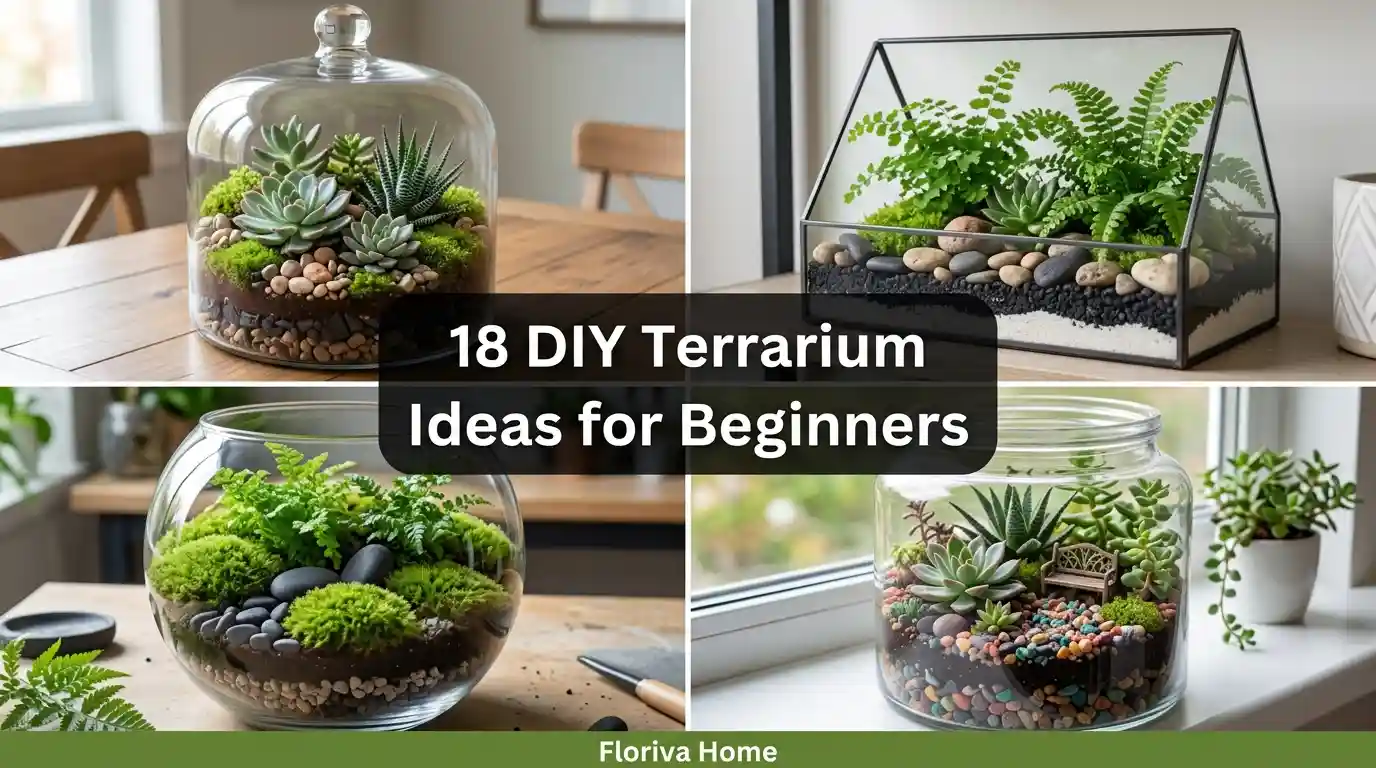
18 DIY Terrarium Ideas for Beginners
There’s something special about creating a tiny garden inside a glass container. You don’t need a huge backyard, expensive equipment, or years of gardening experience to get started. With the right plants and a few simple materials, even a beginner can create a beautiful miniature landscape.
The best part is that terrariums can be customized to fit almost any style. You can make a simple succulent display for your desk, a lush woodland scene for a shelf, or even reuse an everyday container that would otherwise end up sitting unused.
If you’re new to terrariums, start small and choose plants with similar light and watering needs. Once you get comfortable with the basics, you can experiment with different textures, containers, stones, moss, and decorative details.
Here are 18 DIY terrarium ideas for beginners to inspire your next little indoor garden.
1. Simple Succulent Bowl Terrarium
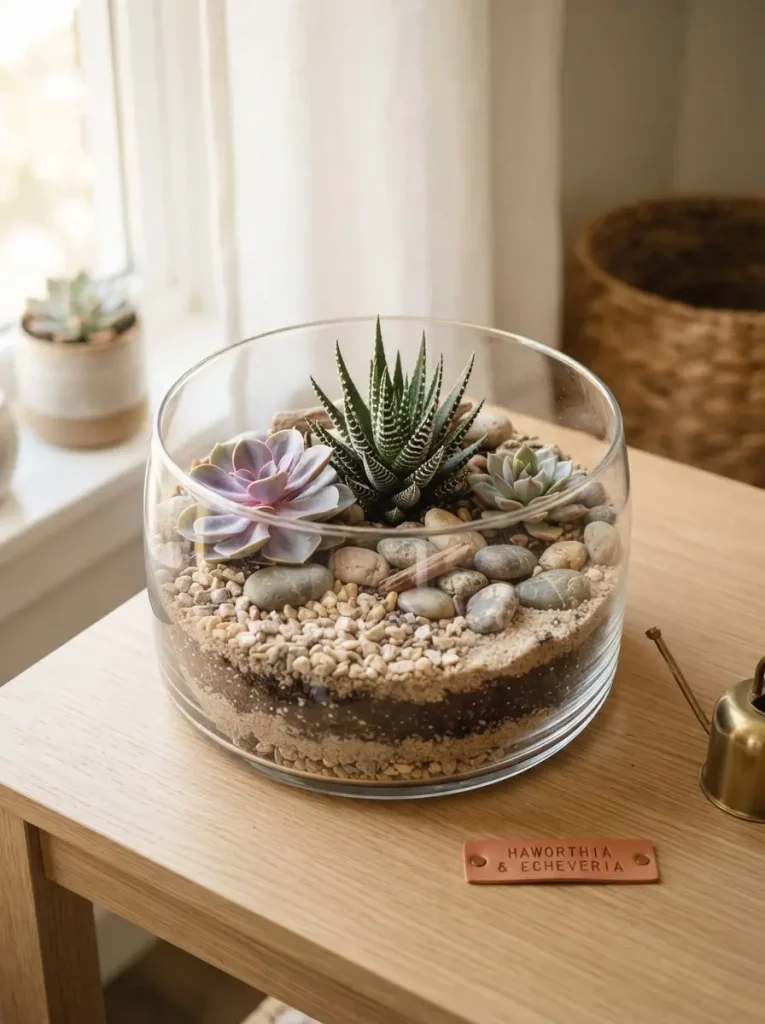
If you’re making your first terrarium, a shallow glass bowl is one of the easiest places to start. Its wide opening gives you plenty of room to position plants without struggling to reach inside.
Choose compact succulents such as haworthia, echeveria, or small sedums. Add a base of decorative gravel, followed by a thin layer of well-draining succulent soil. Leave enough space between plants so air can circulate and the plants have room to grow.
Finish the arrangement with a few smooth stones or pieces of decorative gravel. Keeping the design simple makes the different shapes and colors of the succulents stand out.
Expert Tip:
Place an open succulent terrarium somewhere with bright, indirect light. Allow the soil to dry thoroughly before watering again.
2. Mini Woodland Jar Terrarium
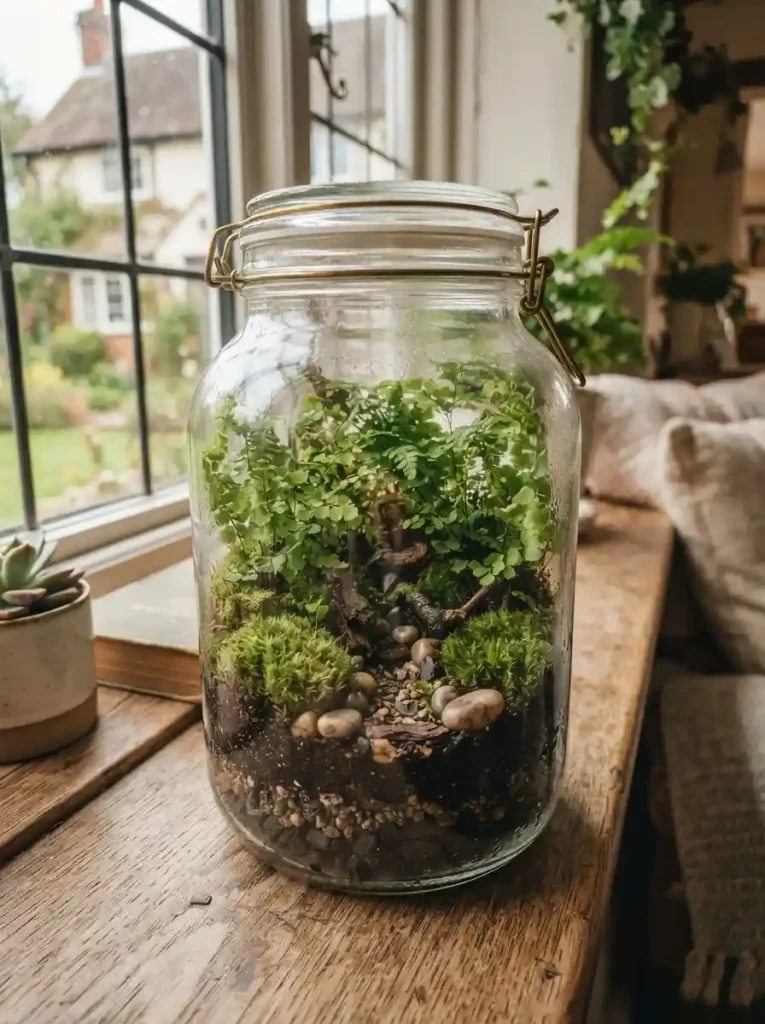
Want something that feels more like a miniature forest? A clear jar with a lid can create a cozy woodland-inspired display using moss and small humidity-loving plants.
Start with small stones at the bottom, then add a thin layer of charcoal if desired, followed by suitable potting soil. Arrange miniature ferns and moss across the surface, leaving a little open space so the composition doesn’t look overcrowded.
Pieces of natural bark or small stones can add height and make the jar look more like a tiny forest floor.
Expert Tip:
Keep the jar away from direct sunlight. If condensation becomes excessive or water starts pooling, open the lid temporarily to release some humidity.
3. Geometric Cactus Terrarium
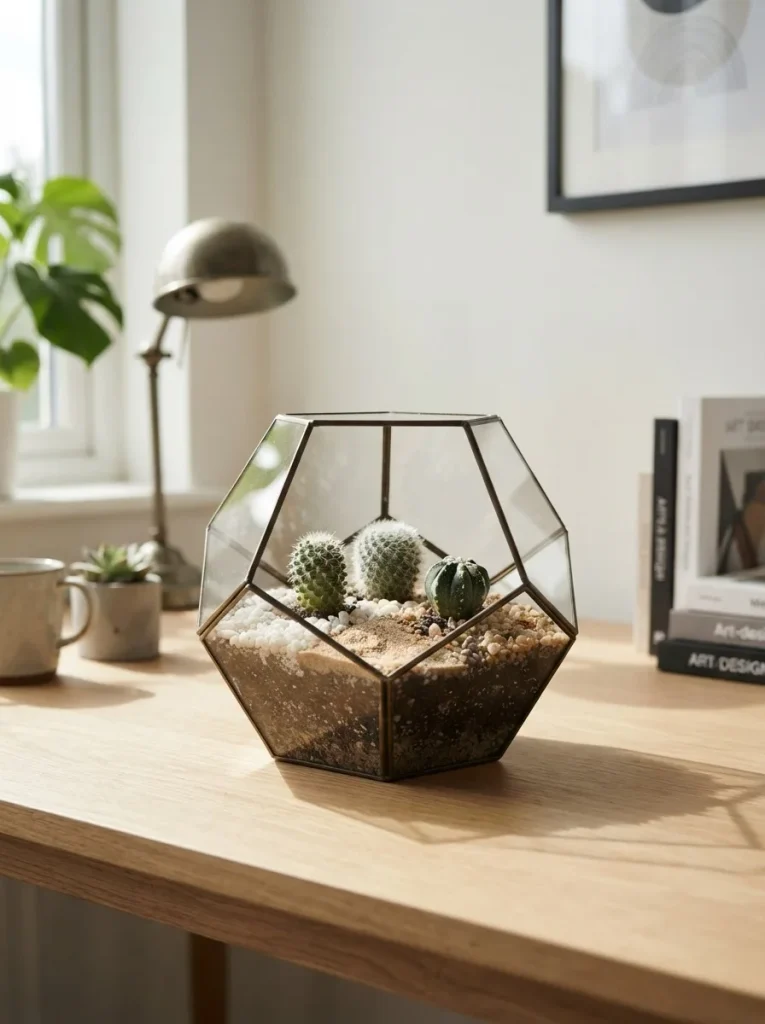
For a more contemporary look, try placing a few miniature cacti inside a geometric glass container. The sharp angles of the vessel create an interesting contrast with the organic shapes of the plants.
Use a gritty, fast-draining cactus mix rather than moisture-retaining soil. A layer of decorative gravel underneath can add visual interest while helping separate the planting area from the bottom of the container.
Choose cacti with different heights and silhouettes. One taller cactus surrounded by two smaller varieties can create a balanced arrangement without making the container feel crowded.
Expert Tip:
Keep the container open and provide plenty of bright light. Always check that the soil is completely dry before watering.
4. Vintage Teacup Terrarium
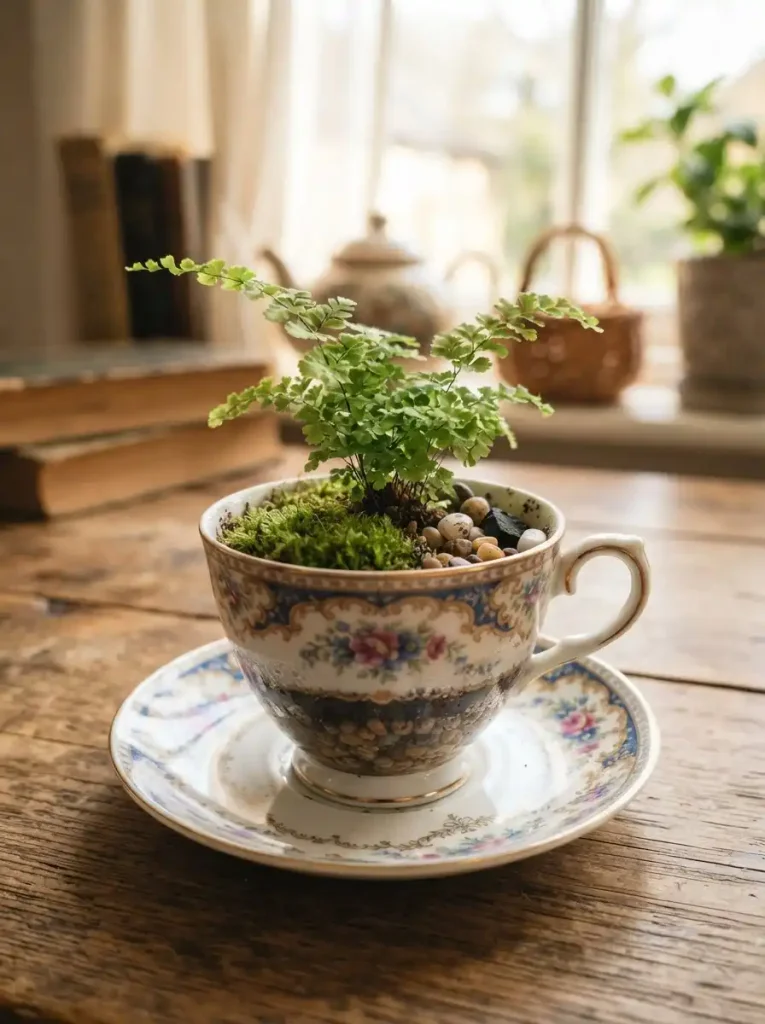
An old teacup can become an unexpectedly charming home for a miniature plant arrangement. Look around a thrift store or your own kitchen for a cup with an interesting floral pattern, unusual shape, or decorative rim.
Because teacups are usually small, choose plants that won’t quickly outgrow the container. Moss, miniature ferns, and certain compact plants can work beautifully depending on the cup and growing conditions.
Add a small amount of gravel and appropriate soil, then position your plant slightly off-center for a more natural appearance. The decorative cup becomes part of the terrarium design rather than simply serving as a container.
Expert Tip:
Since many teacups lack drainage holes, be especially conservative with watering. Excess moisture can quickly create root problems in a small enclosed planting area.
5. Repurposed Fishbowl Air Plant Garden
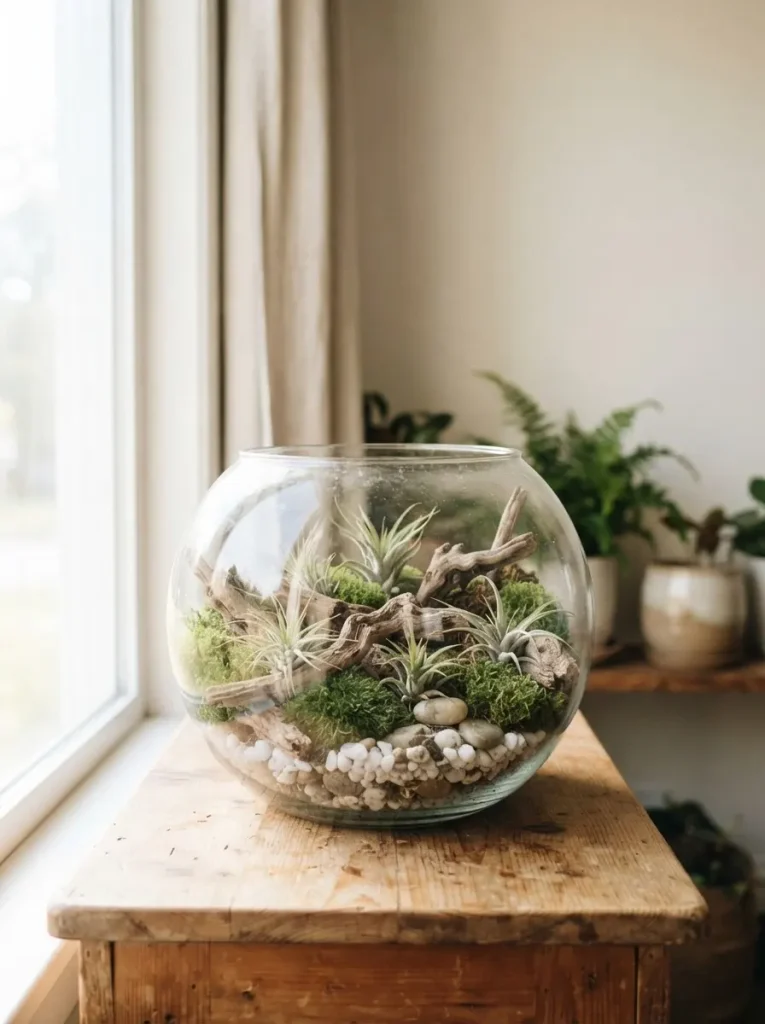
Before throwing away an unused fishbowl, consider turning it into an unusual terrarium display. The wide, transparent shape gives you plenty of room to create a layered arrangement.
Air plants are especially useful for this type of project because they don’t require traditional potting soil. Arrange them around pieces of driftwood, decorative stones, or preserved moss to create a natural-looking scene.
Try varying the heights of the elements rather than keeping everything at the same level. A piece of wood can provide structure while the plants soften the overall appearance.
Expert Tip:
Give air plants appropriate care according to their variety, including regular hydration and good airflow. Never leave them sitting in stagnant water.
6. Hanging Lightbulb Terrarium
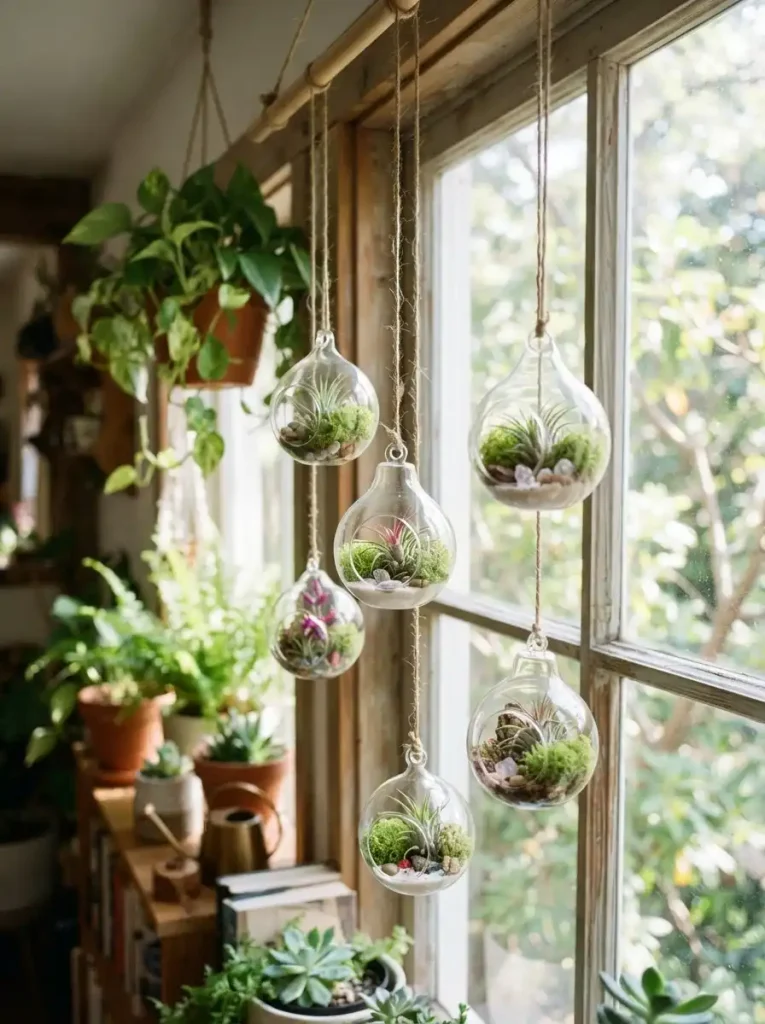
For a creative upcycling project, an empty decorative bulb can become a miniature hanging plant display. The unusual shape immediately gives this terrarium a whimsical appearance.
Because preparing a glass bulb can involve sharp edges and fragile components, beginners may prefer a purpose-made bulb-shaped terrarium instead of dismantling an actual lightbulb.
Fill the container with a small amount of decorative material and use an air plant or another tiny plant suited to the environment. Hang several at different heights to create a floating garden effect.
Expert Tip:
Prioritize safety when working with glass. Choose containers designed for crafts whenever possible, and make sure every hanging point is secure before displaying your terrarium.
7. Coffee Carafe Mini Garden
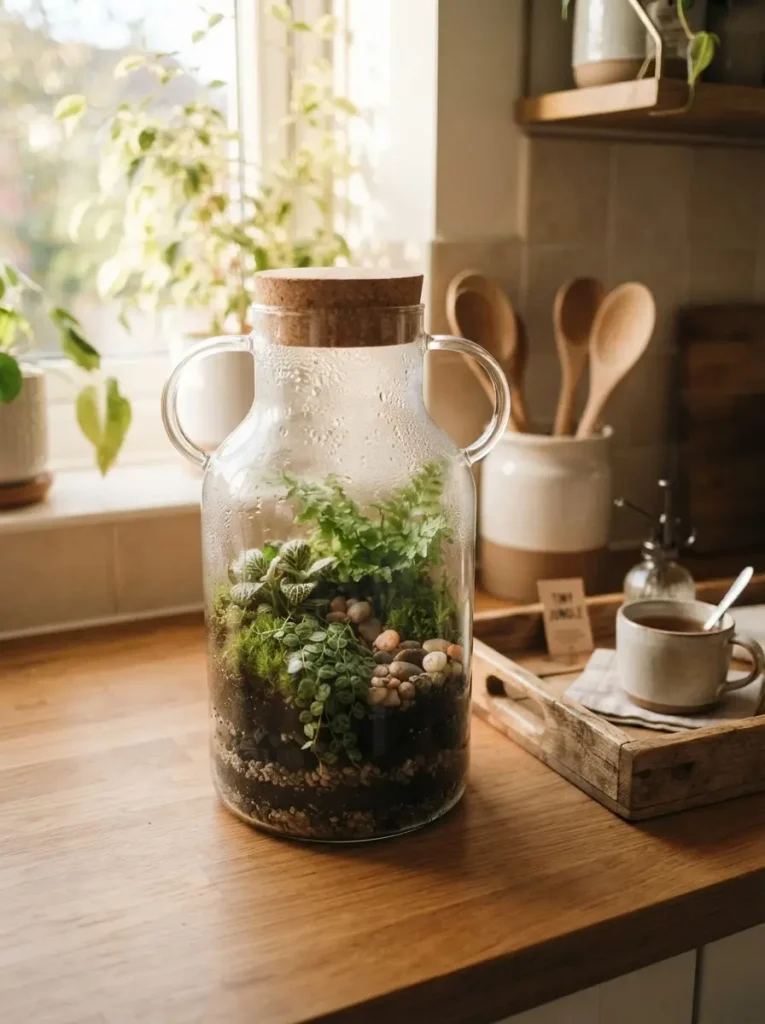
An unused glass coffee carafe can make a surprisingly attractive terrarium container. Its transparent body provides a large viewing area, while the narrow opening gives the arrangement a distinctive shape.
Try creating a miniature garden with moss, tiny foliage plants, decorative stones, and a suitable soil layer. Arrange the tallest element toward the back and keep smaller details toward the front so the entire display remains visible.
This idea is especially nice for kitchens, breakfast nooks, or open shelving where the glass container can become part of the room’s decor.
Expert Tip:
Choose plants based on the carafe’s opening and ventilation. Avoid packing too many plants into the container, and keep moisture levels appropriate for the species you select.
8. Fairy Forest Terrarium
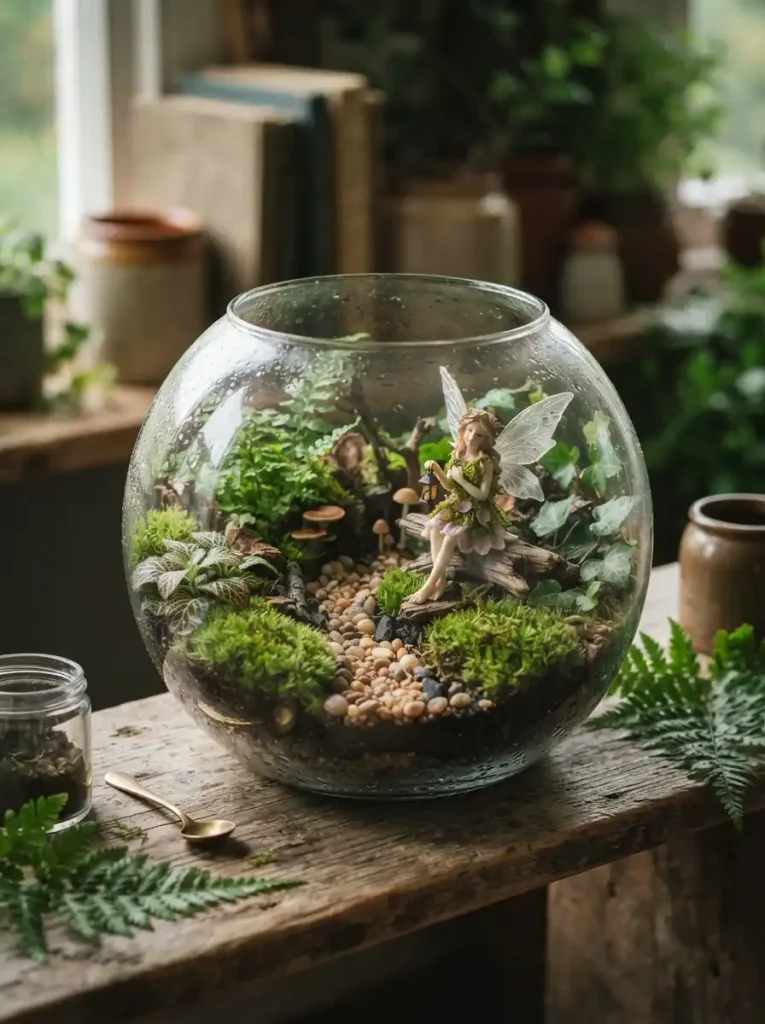
If you want your terrarium to feel playful rather than purely botanical, create a tiny fairy-inspired forest. Moss makes an excellent foundation because it gives the scene the appearance of a miniature woodland floor.
Add a small fern or another suitable plant, then create a simple path using tiny pebbles. A miniature fairy, mushroom ornament, or small woodland accessory can become the focal point.
The key is restraint. Too many decorations can hide the plants and make the container look cluttered. A few carefully selected details usually create a stronger miniature scene.
Expert Tip:
Use decorations that are clean and moisture-resistant if your terrarium will be humid. Keep ornaments small enough that they don’t interfere with plant growth.
9. Wall-Mounted Succulent Terrarium
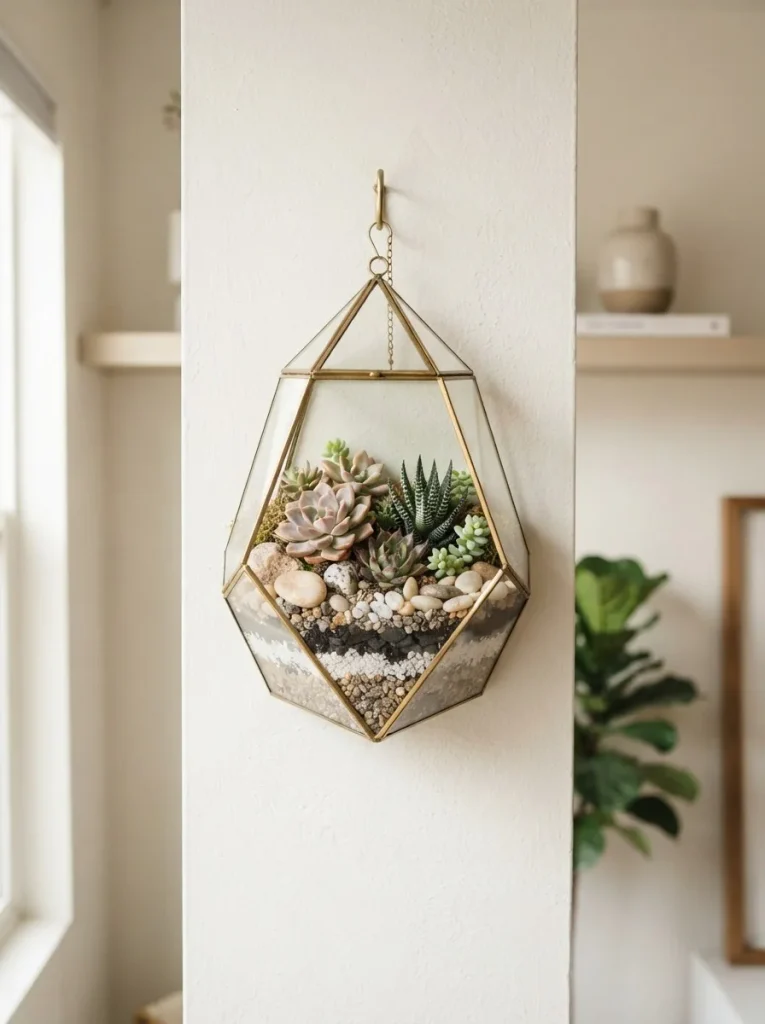
When table and shelf space is limited, move your terrarium onto the wall. A shallow wall-mounted glass planter can become a living piece of decoration while taking up very little room.
Succulents are a natural choice for an open wall terrarium because many varieties prefer good airflow and relatively dry soil. Combine different leaf shapes and colors to give the arrangement visual variety.
Keep the planting relatively sparse. Leaving small areas of visible gravel or soil creates negative space and prevents the display from looking too busy.
This style works particularly well in home offices, apartments, entryways, and small bedrooms.
Expert Tip:
Make sure the wall and mounting hardware can safely support the container. Position it somewhere with suitable bright light and avoid frequent heavy watering.
10. Mason Jar Moss Terrarium
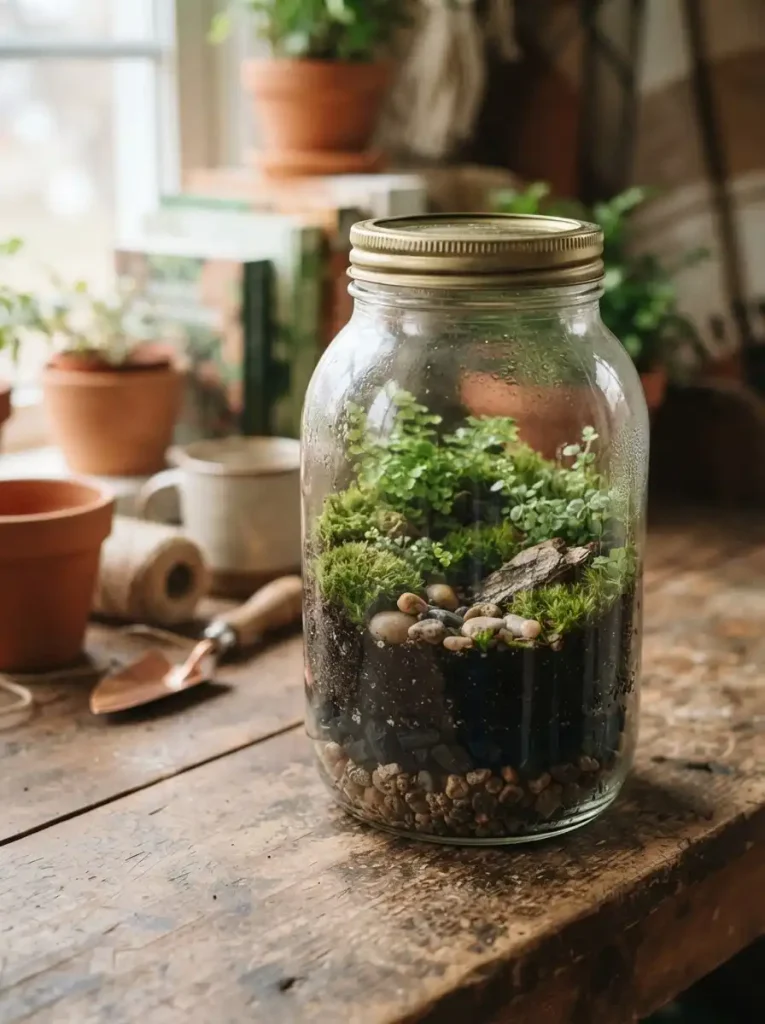
Mason jars are inexpensive, easy to find, and ideal for creating a simple terrarium at home. Their familiar shape also makes them less intimidating for anyone building a miniature garden for the first time.
For a lush arrangement, use moisture-loving moss alongside one or two small plants that enjoy humid conditions. Create some depth by placing a few larger stones toward the back and smaller pebbles toward the front.
A clear jar also lets you watch the moisture inside the terrarium, which makes this project both decorative and educational.
Expert Tip:
If you use a lid, monitor condensation closely. A light layer of moisture on the glass can be normal, but persistent heavy condensation may indicate that the container needs more ventilation.
11. Desert Landscape Terrarium
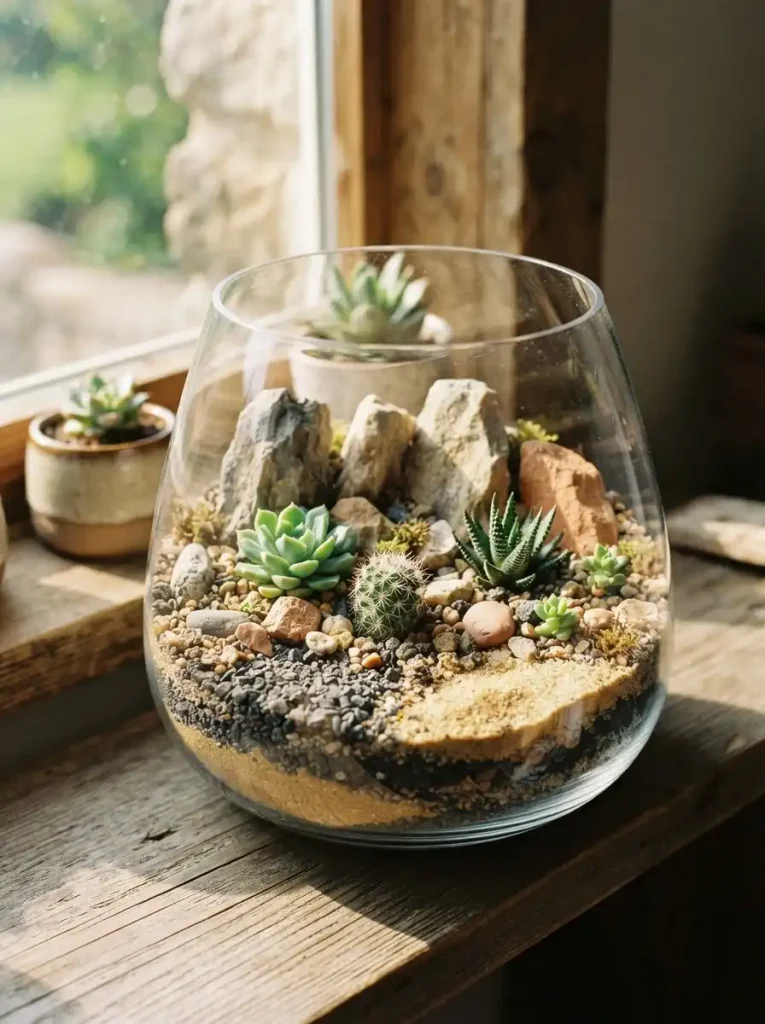
Bring the look of a tiny desert indoors with a dry terrarium inspired by sandy landscapes. This style is perfect for anyone who prefers sculptural plants and earthy colors over dense greenery.
Start with a well-draining growing medium and arrange a few miniature succulents or suitable small desert plants. Use sand, gravel, and rocks to create contrasting sections across the surface.
You can also add one larger stone as a focal point. Instead of trying to make the scene perfectly symmetrical, let the materials form an organic landscape.
The result can look like a miniature desert garden rather than a traditional plant container.
Expert Tip:
Select plants with comparable light and watering requirements. Bright light is generally important for desert-style plants, but acclimate them gradually if they’re moving into stronger sunlight.
12. Bookcase Bottle Terrarium
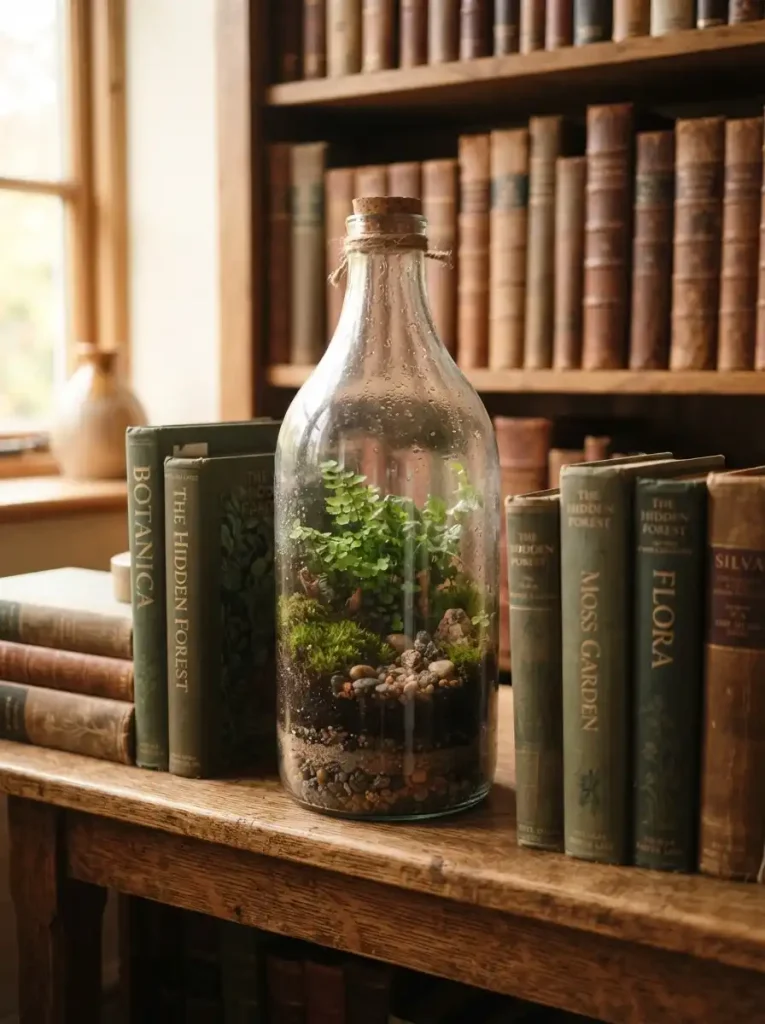
A bottle-shaped terrarium can add a little greenery to an otherwise ordinary bookshelf. Its narrow silhouette takes up minimal space and creates an attractive vertical accent among books and decorative objects.
Choose a small plant that suits the container’s conditions and arrange the planting materials carefully before adding the greenery. A long-handled tool can make it easier to position elements through a narrow opening.
For visual balance, place the tallest plant toward one side rather than directly in the middle. This creates a more natural miniature landscape.
Expert Tip:
Think about maintenance before choosing a bottle with a very small opening. A container that looks beautiful but is difficult to access can become frustrating for a beginner.
13. Colorful Pebble Terrarium
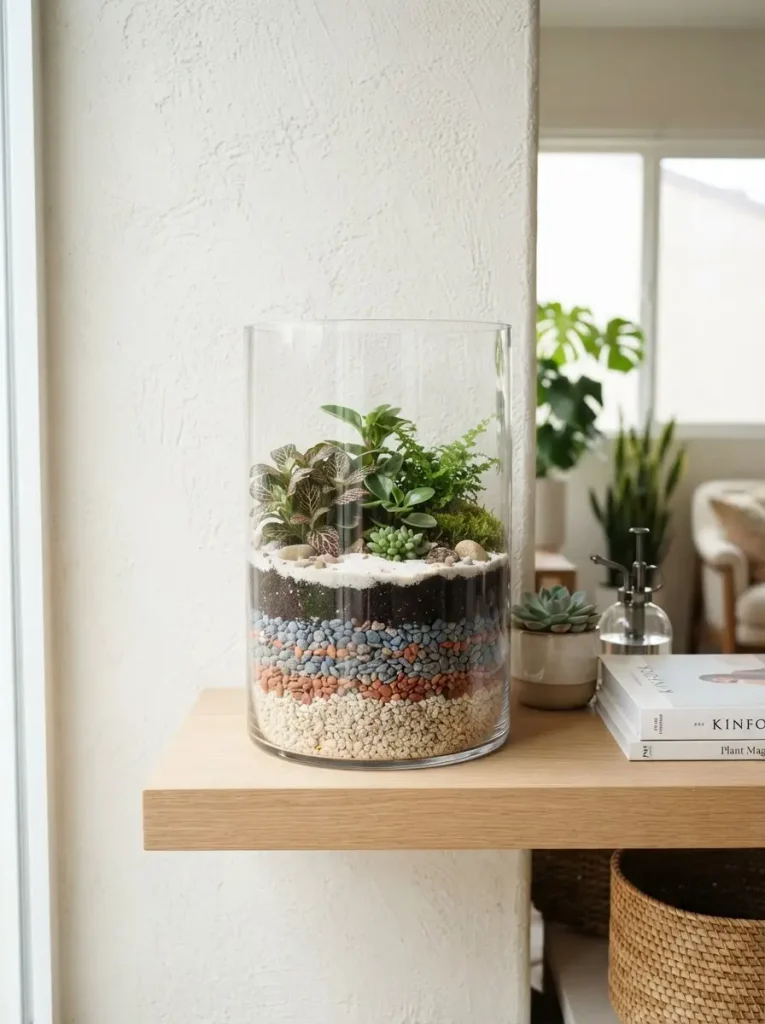
Sometimes the simplest terrariums make the strongest visual statement. Use colorful decorative pebbles to create layers beneath and around a small selection of plants.
Try combining muted green foliage with stones in complementary shades such as cream, terracotta, gray, or soft blue. Keep the plant selection limited so the colorful substrate remains visible.
This approach is especially useful if you want a terrarium that coordinates with an existing room color scheme.
Rather than covering the entire surface with one material, create sections or gentle curves with different pebble colors.
Expert Tip:
Wash decorative stones thoroughly before using them. Dust and residue can cloud the glass or introduce unwanted material into your planting environment.
14. Mini Fern Terrarium
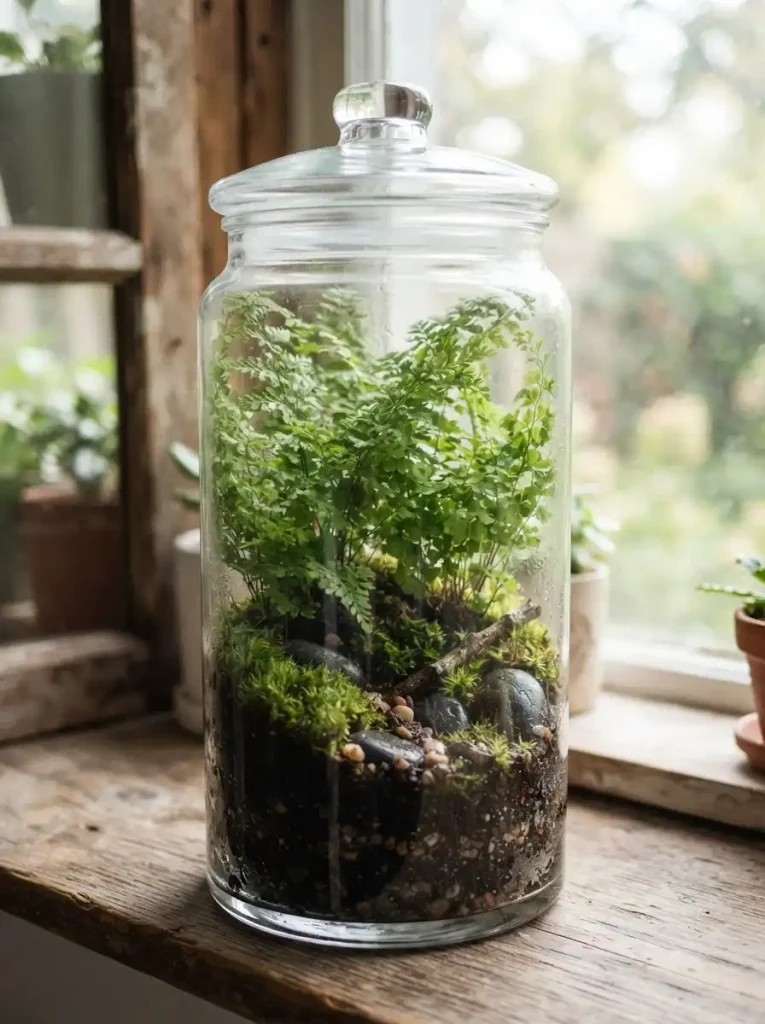
Ferns can transform a simple glass container into a lush miniature garden. Their delicate fronds create movement and give even a small terrarium a woodland feeling.
Choose a compact fern variety suited to terrarium conditions, then surround it with moss and a few natural stones. Instead of filling the entire container with plants, leave some open areas where the soil and decorative materials can be seen.
A fern terrarium can be especially attractive in bathrooms or other spaces with suitable indirect light and naturally higher humidity.
Expert Tip:
Ferns generally appreciate consistent moisture and humidity, but the growing medium should not remain waterlogged. Good drainage and appropriate ventilation are still important.
15. Beach-Inspired Terrarium
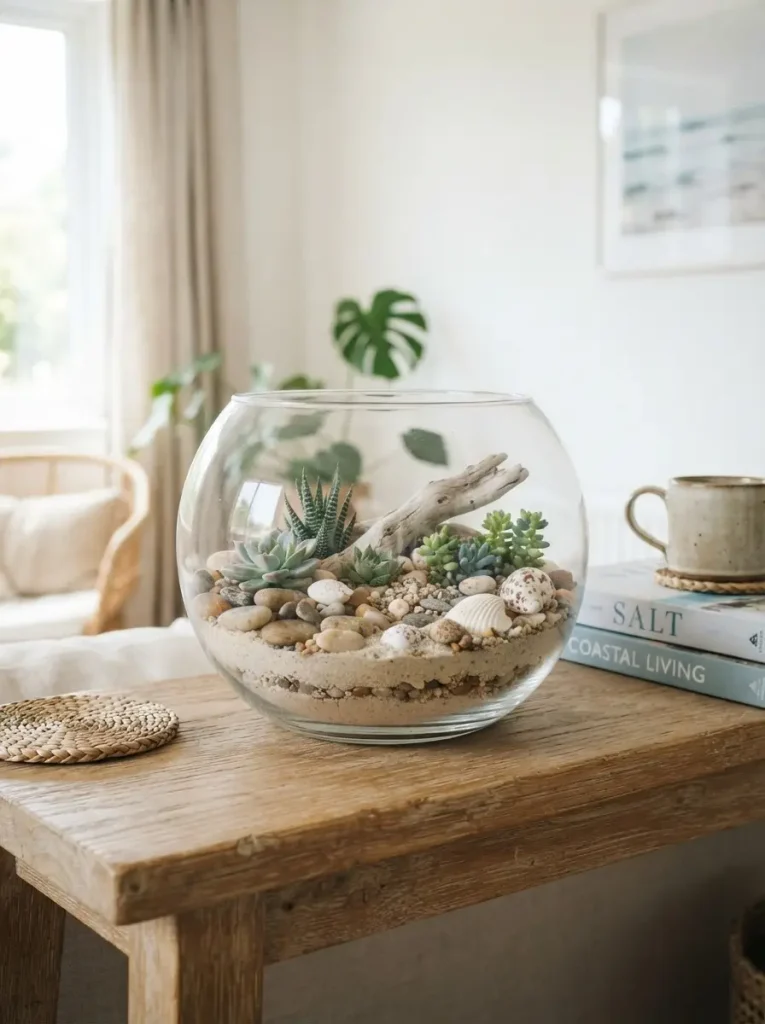
Bring a relaxed coastal feeling indoors by creating a terrarium inspired by the seaside. Light-colored sand, smooth stones, and subtle shells can provide the foundation for the design.
For the plant element, choose a species that can tolerate the conditions of an open, dry arrangement rather than trying to grow a traditional beach plant indoors.
Keep the decoration understated. A small piece of driftwood or a few shells can suggest a coastal landscape without turning the terrarium into an overcrowded display.
This idea works beautifully with bright, airy interiors and natural wood furniture.
Expert Tip:
Avoid collecting natural materials from places where removing them is prohibited. Clean and dry decorative materials before placing them around your plants.
16. Hanging Glass Globe Terrarium
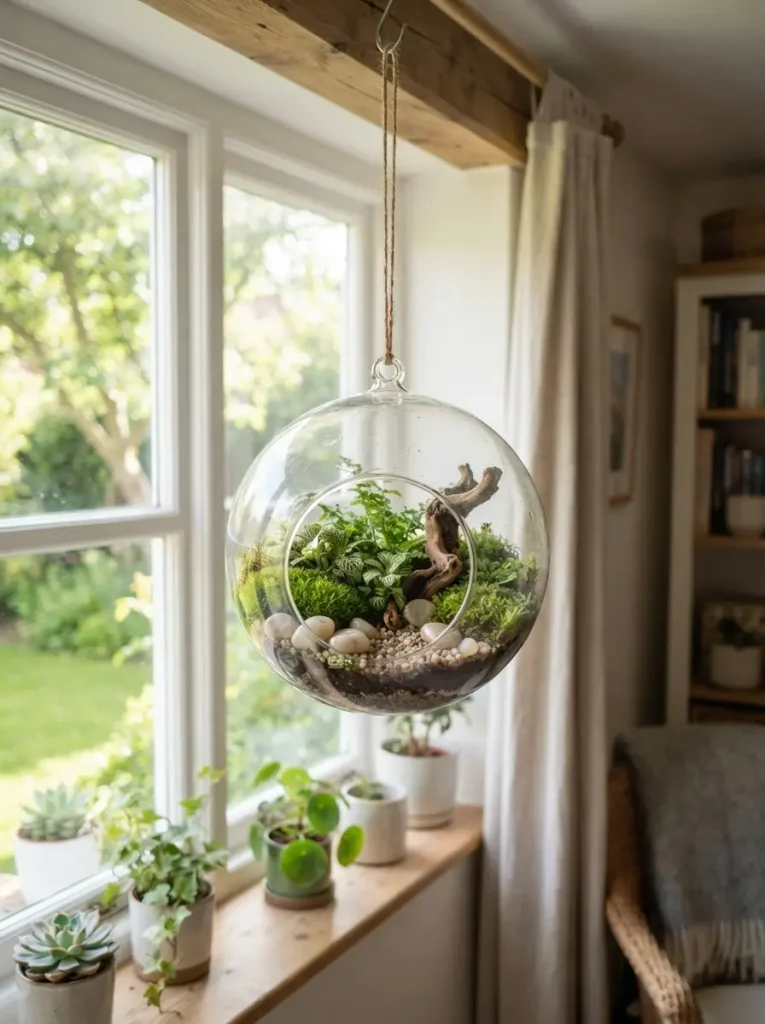
A glass globe can turn a small plant arrangement into an eye-catching hanging decoration. Its rounded shape gives the greenery a floating appearance and works especially well near windows.
Use an open globe for plants that prefer good airflow, filling the bottom with a restrained combination of moss, stones, or a suitable growing medium.
Hang the globe where it receives the appropriate amount of light without exposing delicate plants to excessive heat from direct sun.
Several globes can also be arranged at staggered heights to create a miniature suspended garden.
Expert Tip:
Check the hanging cord, hook, and mounting point regularly. A beautiful terrarium is only useful if it is securely supported.
17. Minimalist Black-and-White Terrarium
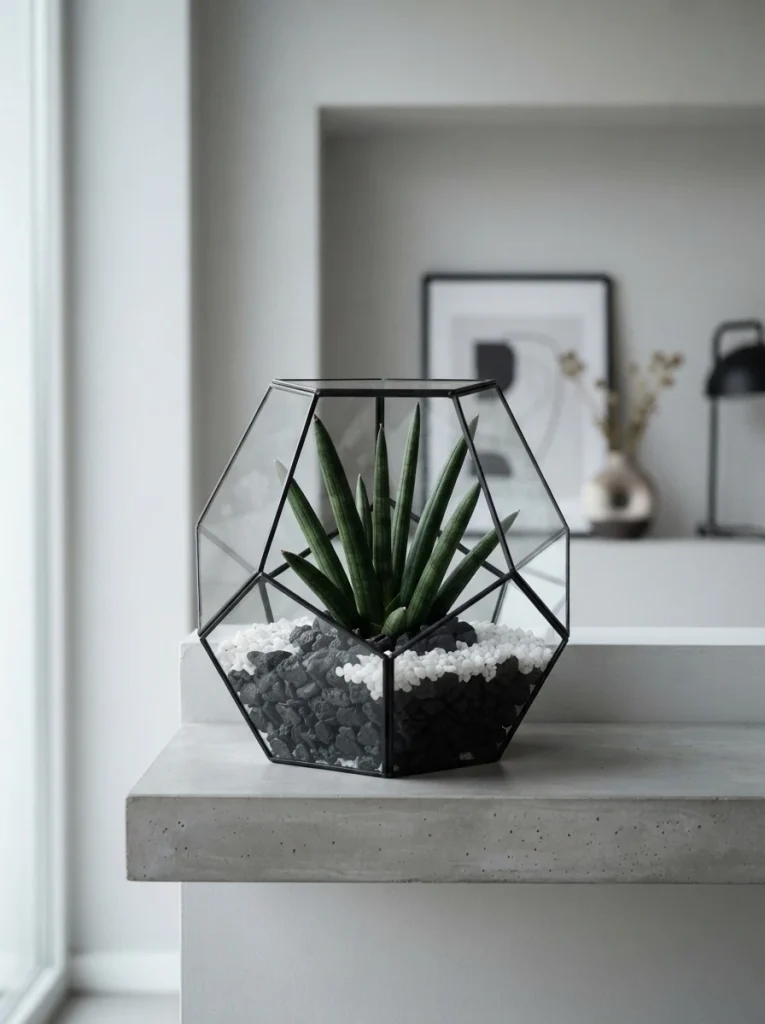
For a modern home, skip the colorful decorations and build a terrarium around a simple black-and-white palette. Dark stones paired with pale gravel can create dramatic contrast against green foliage.
Choose one or two plants with distinctive shapes rather than filling the container with many varieties. The simplicity allows each leaf, stone, and layer to become part of the composition.
A clear geometric container can make this style feel particularly contemporary, while a rounded bowl creates a softer appearance.
Expert Tip:
Repeat only a few colors throughout the arrangement. Limiting the palette makes even inexpensive materials look intentionally designed.
18. Upcycled Glass Jar Terrarium
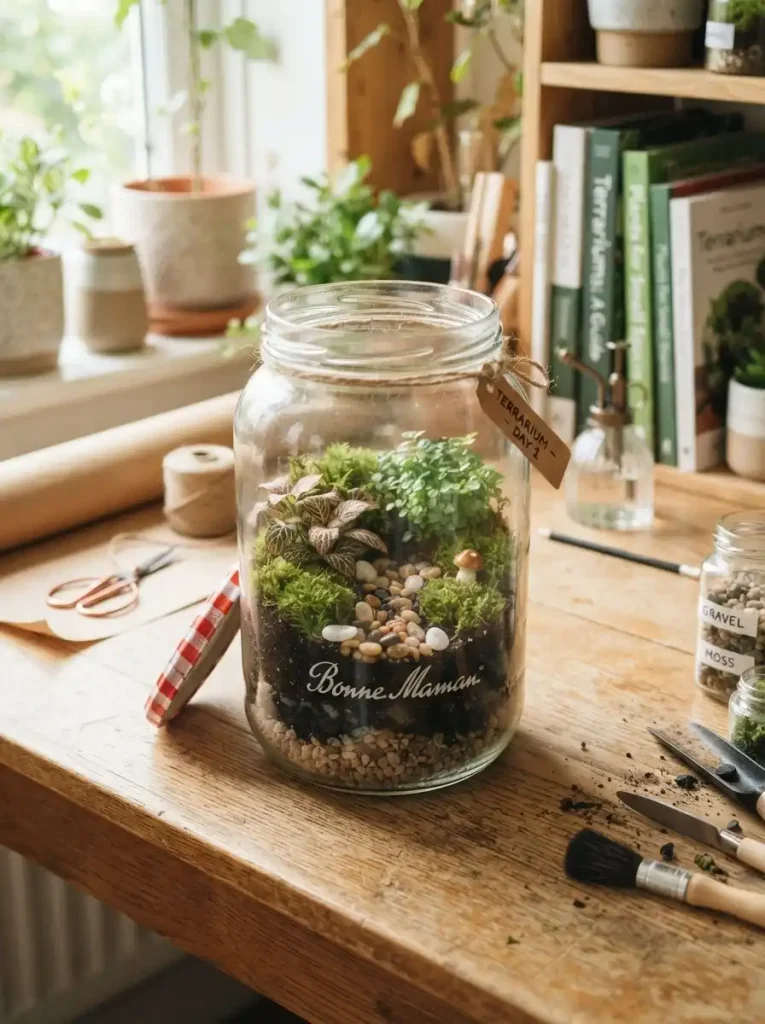
You don’t need to purchase a special container to make a beautiful terrarium. An empty food jar, storage jar, or other clean glass container can become the foundation for a creative miniature garden.
Choose the container according to the plants you want to grow. A wider opening is easier for beginners because it allows you to arrange soil, plants, and decorative materials with less difficulty.
Add a simple combination of gravel, suitable soil, greenery, and a few decorative stones. You can even add a handmade label or small tag to give the finished project a personalized touch.
This is one of the most budget-friendly ways to experiment with terrarium gardening while giving an everyday object a second purpose.
Expert Tip:
Wash the jar thoroughly and remove any food residue or labels before planting. If the container has no drainage hole, use a light touch when watering and pay close attention to moisture levels.
How to Make a DIY Terrarium
Once you’ve chosen your favorite design, assembling a basic terrarium is relatively straightforward. The exact materials depend on whether you’re creating a humid plant terrarium, an open succulent arrangement, or an air-plant display.
Basic materials
- Clear glass container
- Small plants appropriate for the environment
- Suitable potting or cactus soil
- Small stones or gravel
- Optional activated charcoal
- Decorative moss
- Clean decorative rocks
- Small gardening tools or a spoon
- Water
1. Clean the container.
Wash and dry the glass thoroughly before adding anything. A clean container gives you a clearer view of your miniature garden.
2. Create the bottom layer.
For containers without drainage, a layer of small stones can provide a place for excess water to collect away from plant roots. This does not replace drainage, so watering still needs to be controlled.
3. Add appropriate soil.
Use a growing medium suited to your chosen plants. Succulents need a much faster-draining mix than humidity-loving tropical plants.
4. Position your plants.
Arrange taller plants toward the back or center and shorter plants toward the front. Give each plant enough room to grow.
5. Add decorative details.
Use stones, moss, bark, or other suitable decorations to complete the miniature landscape.
6. Water carefully.
Add only the amount of moisture appropriate for your plants and container. It is much easier to add more water later than to correct an overly wet terrarium.
7. Choose the right location.
Place the finished terrarium where its plants receive suitable light. Avoid assuming that every terrarium should sit in direct sunlight.
Beginner Terrarium Care Tips
Watch the moisture. Closed terrariums can retain humidity for long periods, while open succulent terrariums dry much faster. Check the soil and plants rather than following a rigid watering schedule.
Provide suitable light. Most terrarium plants appreciate bright, indirect light. Strong direct sunlight through glass can create excessive heat.
Remove damaged leaves. Take out yellowing, dead, or decaying plant material promptly. This keeps the display cleaner and can reduce the chance of problems spreading.
Avoid overcrowding. Plants that look perfectly spaced when first planted may become crowded later. Leave room for growth.
Clean the glass. Dust and mineral marks can make even a healthy terrarium look dull. Wipe the outside and carefully clean accessible areas of the glass when needed.
Observe before changing anything. One of the best beginner habits is simply paying attention. Watch how quickly the soil dries, how plants respond to their location, and how much condensation develops inside the container.
Final Thoughts
Creating a DIY terrarium is an easy way to bring a small piece of nature into your home without needing a large gardening space. From a simple succulent bowl to a whimsical woodland jar, there are plenty of approaches for beginners to try.
Start with one container and a small number of plants rather than attempting an elaborate miniature landscape immediately. Once you understand how your plants respond to light, moisture, and airflow, you can experiment with more creative designs.
The most important thing is to choose plants that can comfortably share the same environment and to avoid overwatering. With a little patience, even a recycled glass jar can become a beautiful miniature garden.