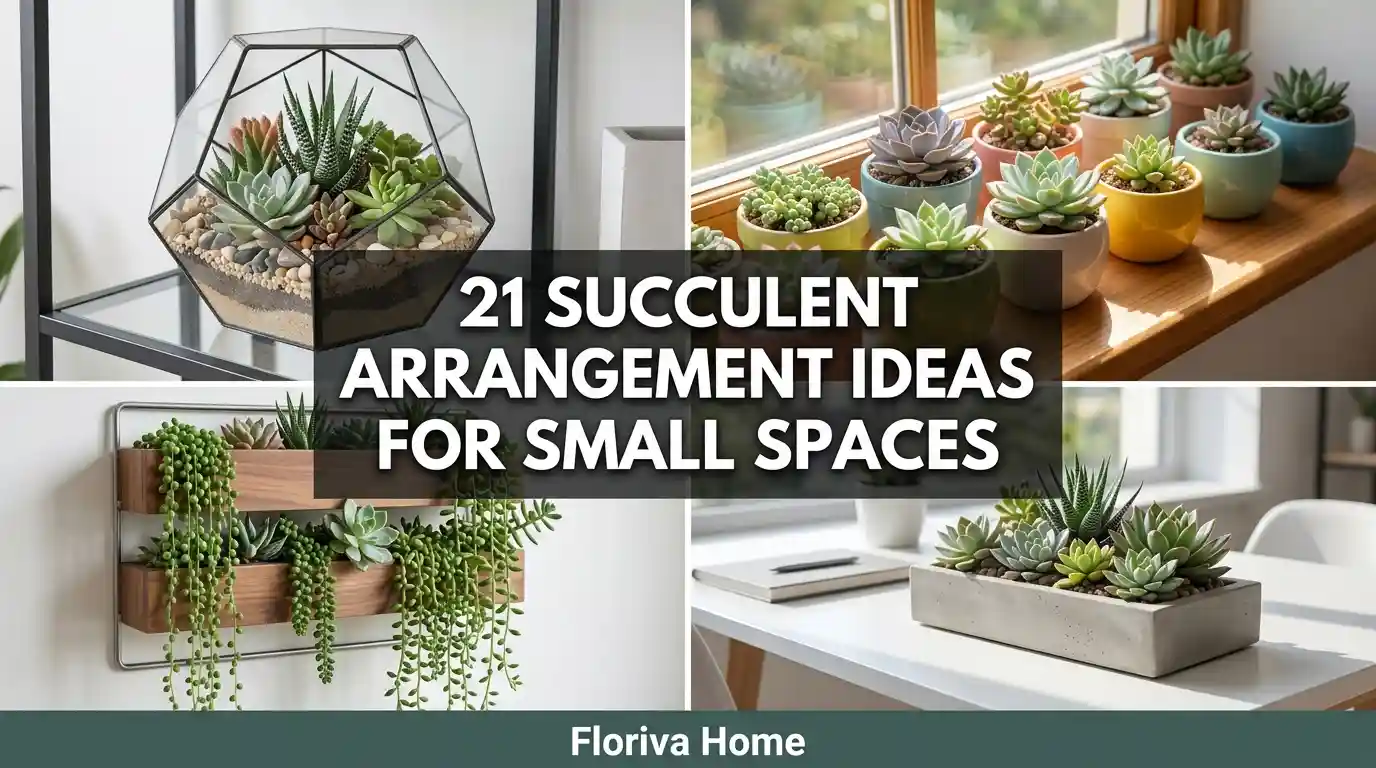
21 Succulent Arrangement Ideas for Small Spaces
You don’t need a large garden to enjoy a beautiful succulent display. With the right container, plant combination, and a little creativity, even a narrow windowsill, tiny desk, apartment balcony, or unused corner can become a charming green retreat.
Succulents are especially useful for compact spaces because many varieties stay relatively small and offer interesting shapes, colors, and textures. Instead of spreading plants across a room, you can arrange them vertically, group them in unexpected containers, or create miniature landscapes that make every inch count.
Whether your style is modern, rustic, playful, or minimalist, these succulent arrangement ideas can help you create a small-space display that feels intentional without becoming difficult to maintain.
1. Layered Succulent Arrangement in a Long Planter
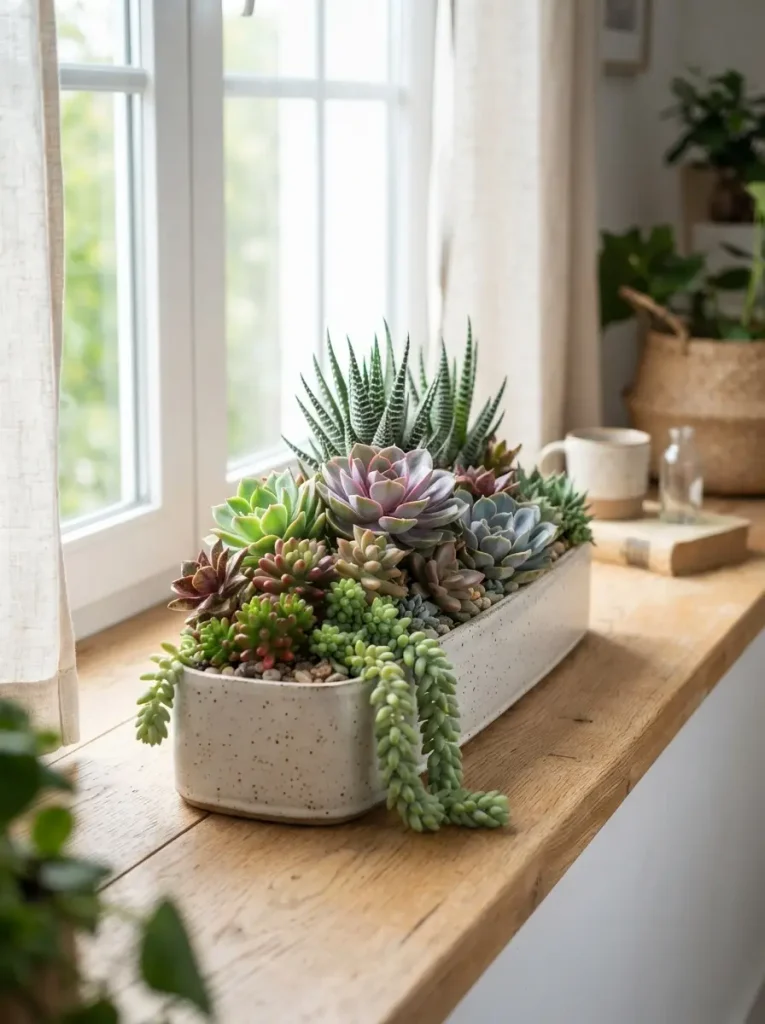
A long, narrow planter is an easy way to create a full succulent display without using much width. Choose several compact varieties with contrasting forms, such as rounded rosettes, upright leaves, and trailing stems.
Place the tallest plant toward the back and gradually move toward smaller varieties at the front. This simple layering technique gives the arrangement depth while keeping every succulent visible.
A rectangular ceramic planter works especially well on a narrow windowsill, console table, or balcony ledge. Choose a neutral container if you want the plants to remain the main attraction.
Expert Tip:
Leave small gaps between mature plants so the arrangement has room to grow without quickly becoming overcrowded.
2. Succulent Arrangement in a Wooden Tray
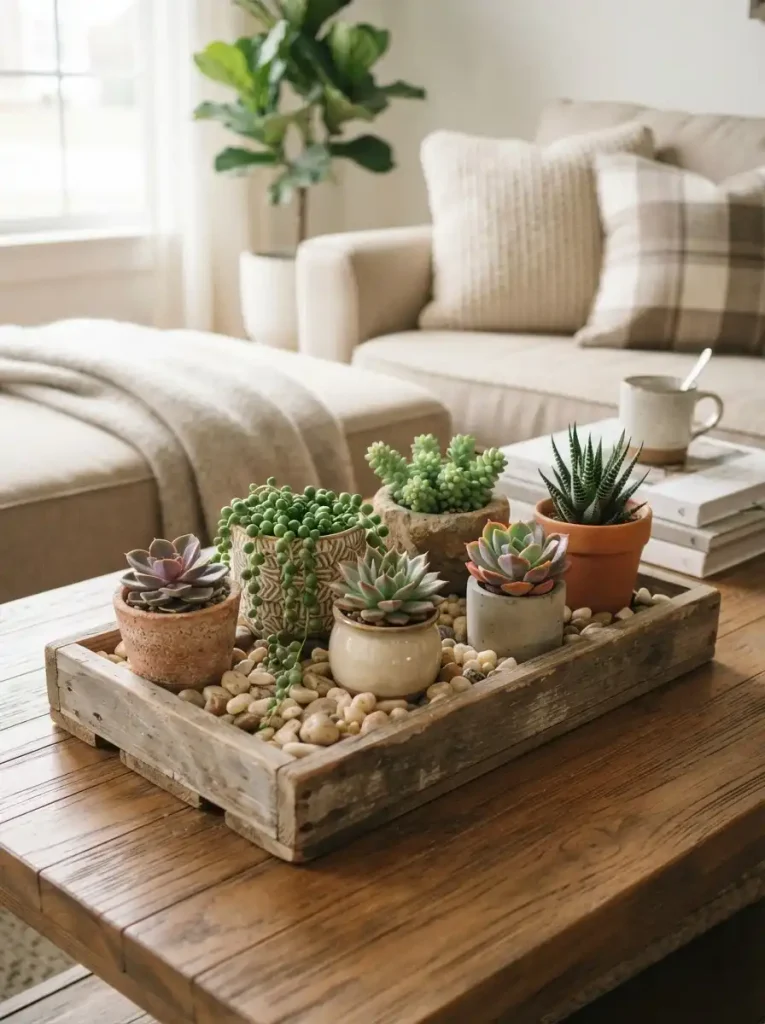
A shallow wooden tray can turn several individual succulent pots into one cohesive centerpiece. Instead of planting everything together, keep each plant in its own small container and arrange them closely inside the tray.
This approach is particularly useful when your plants have different watering requirements. You can remove individual pots whenever they need attention without disturbing the rest of the display.
Choose a weathered wood tray for a farmhouse look or a smooth light-wood version for a Scandinavian-inspired space. Add a few decorative stones around the pots to make the arrangement feel more finished.
Expert Tip:
Use plants with different heights and leaf shapes rather than choosing several varieties that look almost identical.
3. Corner Succulent Ladder Display
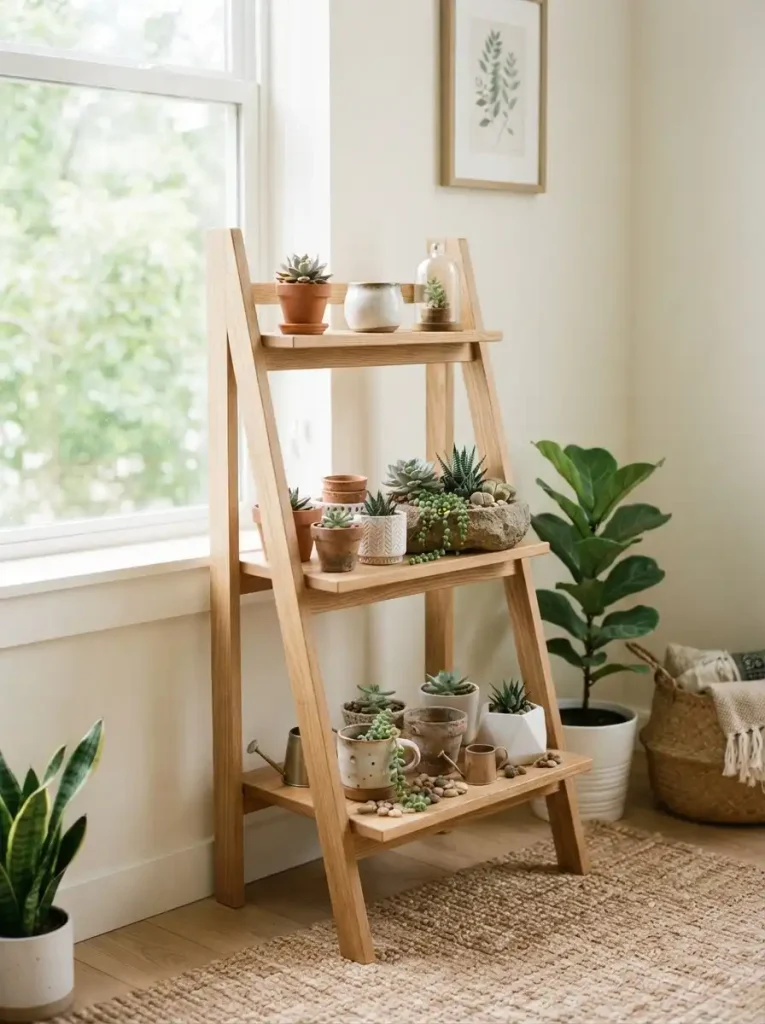
Make use of vertical space with a miniature ladder shelf dedicated to succulents. A narrow three- or four-tier ladder can hold several tiny pots while occupying only a small footprint.
Place larger plants on the lower levels and smaller specimens higher up to create a balanced silhouette. You can also alternate ceramic, terracotta, and concrete pots for subtle visual variety.
This arrangement works beautifully in apartment corners, near bright windows, or on small balconies where floor space is limited.
Expert Tip:
Check that every shelf receives enough light. Rotate pots periodically if one side of the arrangement begins leaning toward the window.
4. Monochrome White Pot Succulent Grouping
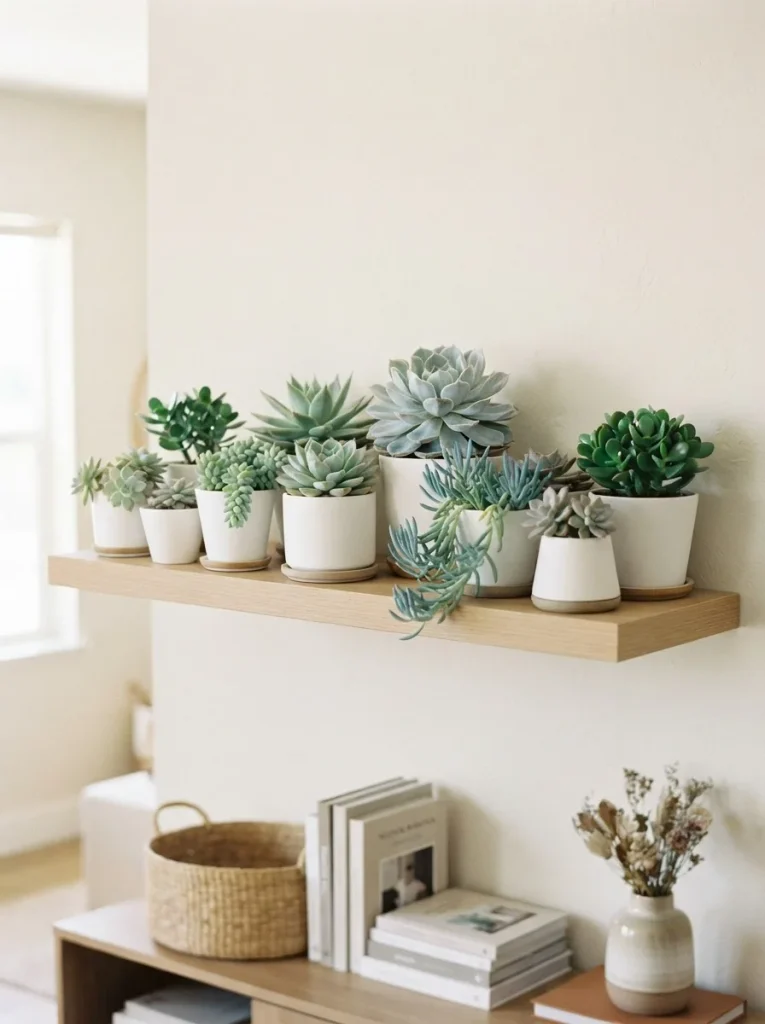
For a clean and sophisticated look, arrange several succulents in matching white pots. The uniform containers create visual consistency while the plants provide all the natural variation.
Try combining pale green echeverias, blue-green graptopetalum, and darker jade varieties. Keeping the containers identical allows differences in foliage shape and color to become the focal point.
This arrangement works particularly well on office desks, shelves, bathroom counters with suitable light, or minimalist side tables.
Expert Tip:
Use pots in slightly different sizes to avoid making the arrangement look too rigid or repetitive.
5. Succulent Arrangement Inside a Stone Bowl
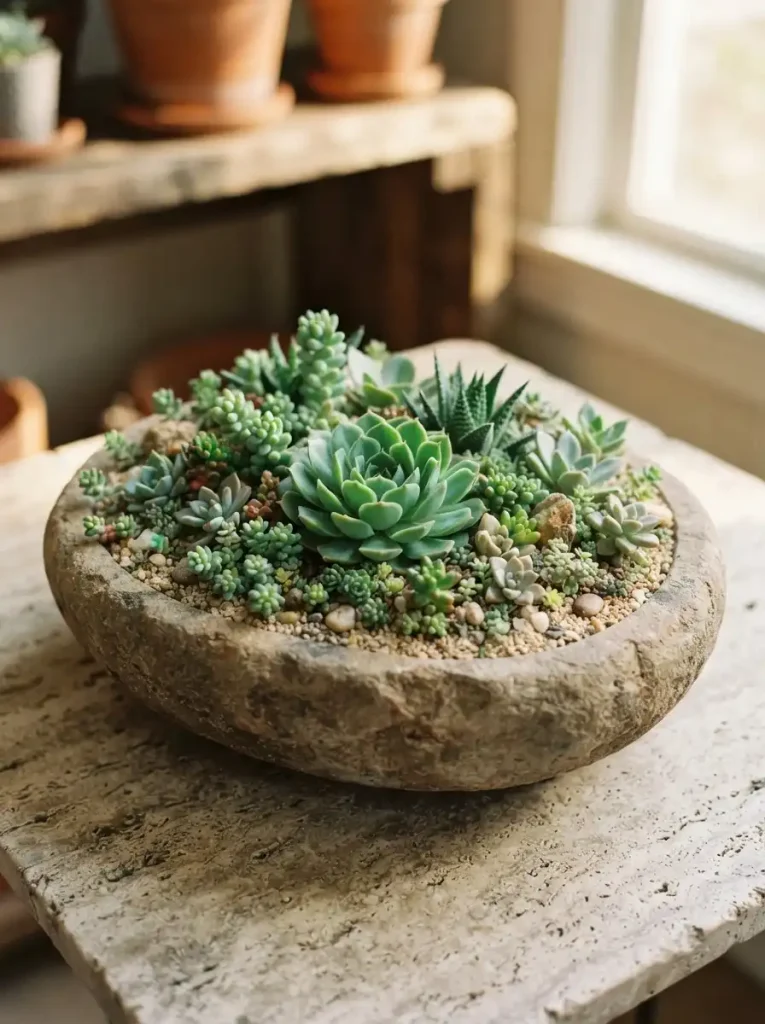
A shallow stone bowl gives succulents a natural, earthy setting and can become an attractive focal point without taking up much room.
Choose a bowl with enough surface area for several small plants, then combine different textures around the edges. A compact rosette can serve as the centerpiece while smaller offsets and creeping varieties fill the surrounding spaces.
Top the exposed soil with fine gravel for a polished finish and to emphasize the desert-inspired character of the arrangement.
Expert Tip:
Make sure the container and soil setup allow excess moisture to escape. Succulents generally perform better when their roots are not left wet.
6. Hanging Pocket Succulent Garden
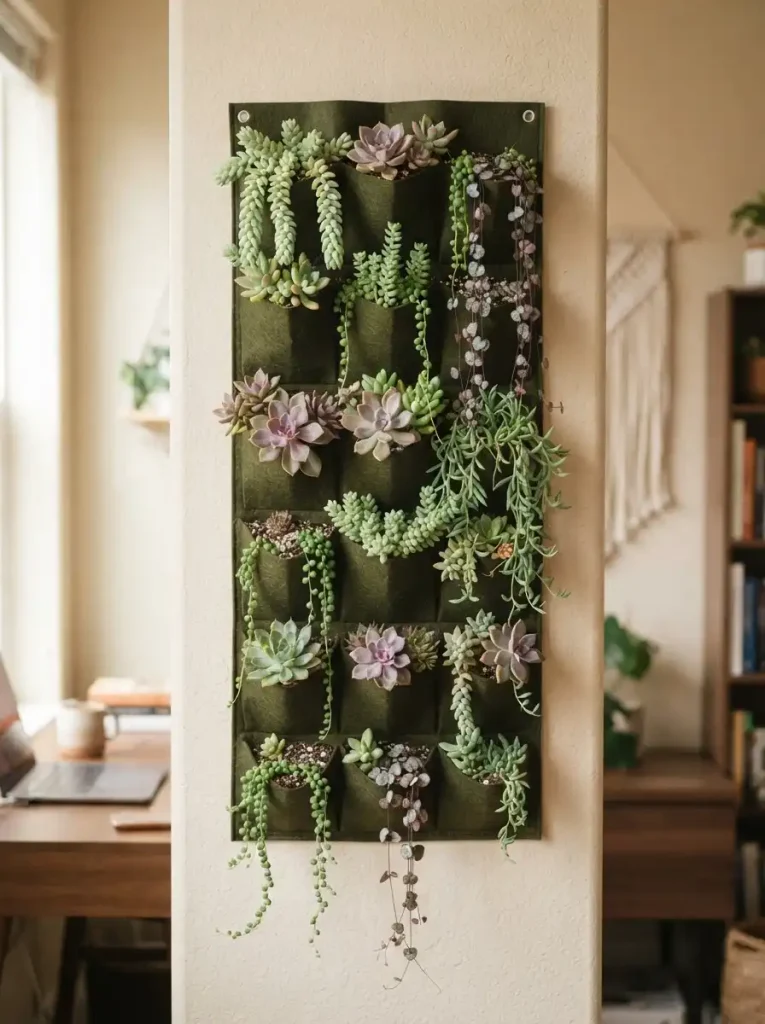
When horizontal space is scarce, move your plants onto the wall. A fabric or ceramic pocket planter can hold several small succulents while turning an otherwise empty wall into a living display.
Arrange plants with different growth habits so some remain upright while others gently spill over the edges. This creates movement without requiring shelves or tables.
A hanging pocket arrangement can work beside a sunny kitchen window, on a balcony wall, or in a bright home office.
Expert Tip:
Choose a secure mounting system and avoid placing heavy, wet containers above areas where people frequently walk or sit.
7. Tiny Succulent Landscape in a Ceramic Bowl
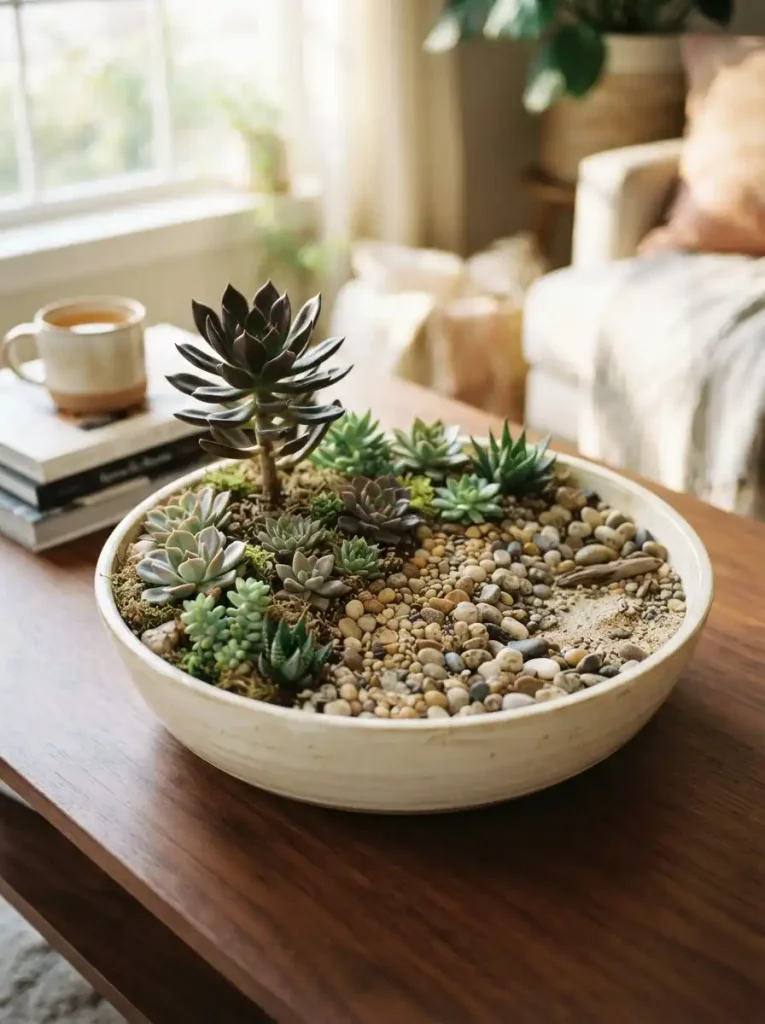
Create a miniature landscape by combining several small succulents in one broad ceramic bowl. Rather than placing plants randomly, give the arrangement a sense of direction and scale.
Use one taller variety as the visual anchor, then surround it with smaller rosettes and low-growing plants. Add a curved path of tiny stones through the arrangement for a miniature-garden effect.
This design looks especially charming on a coffee table, bookshelf, or compact entryway console.
Expert Tip:
Think of the bowl as a tiny landscape. Leave some open space instead of filling every inch with plants and decorations.
8. Succulents in a Reclaimed Metal Container
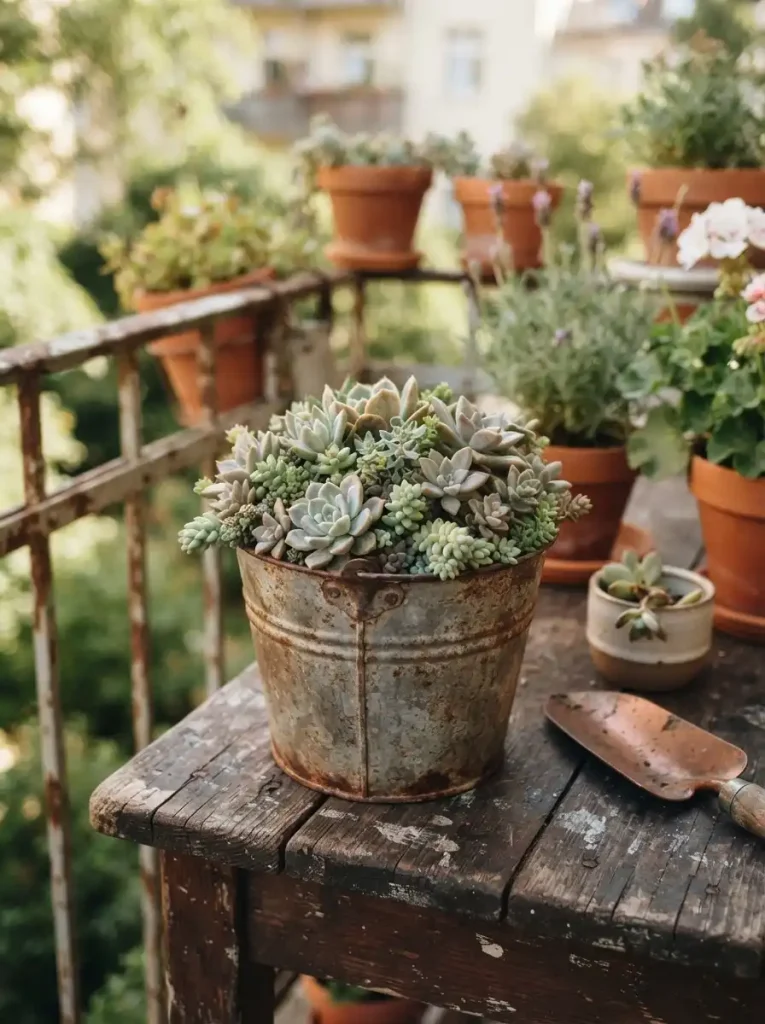
Give an old metal container a second life by turning it into a compact succulent planter. Small vintage tins, shallow metal boxes, or weathered containers can add character to an otherwise ordinary arrangement.
The aged surface contrasts beautifully with fresh green foliage. For a more curated appearance, use two or three varieties that share similar colors but have noticeably different leaf structures.
This is a great option for rustic kitchens, balconies, patios, and small outdoor tables.
Expert Tip:
Check older metal containers carefully for sharp edges, rust damage, or coatings that could interfere with planting.
9. Succulent Arrangement Around a Centerpiece Stone
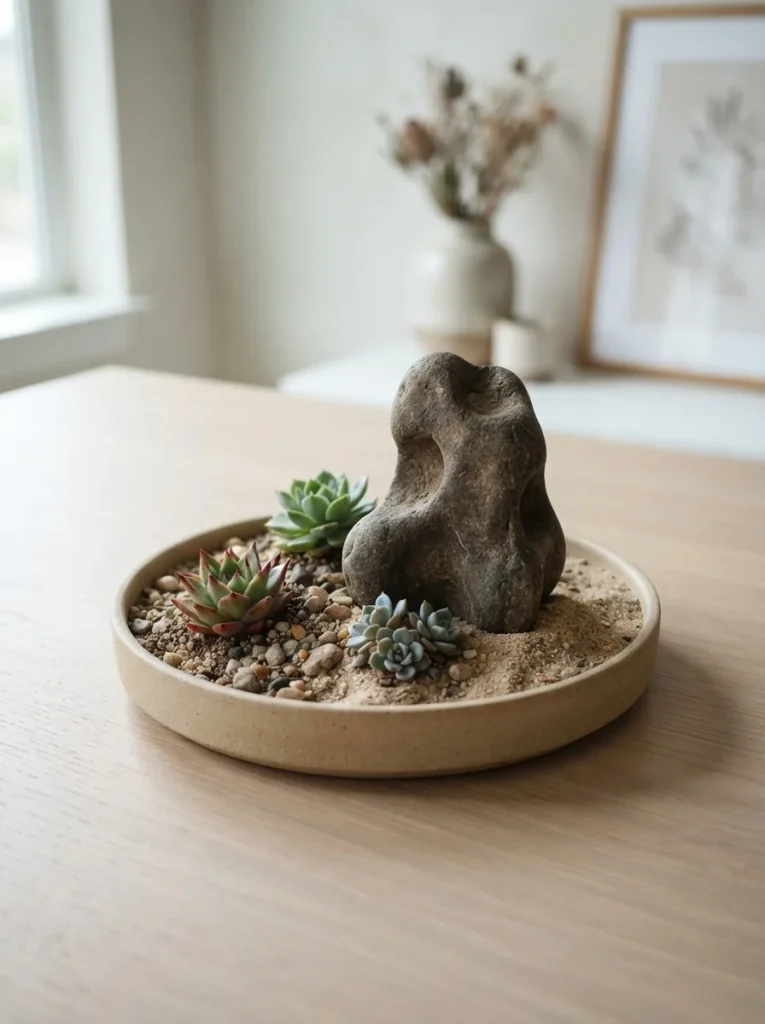
A single decorative stone can act as the visual anchor for a simple succulent arrangement. Choose an interesting rock with an unusual shape or natural texture, then position smaller plants around it.
The stone creates a strong focal point while the succulents soften the composition. This idea is especially effective when you prefer minimalist arrangements rather than densely packed displays.
Use a shallow tray or low ceramic container so the arrangement remains visually close to the surface.
Expert Tip:
Choose a stone that is proportionate to the container. An oversized centerpiece can make small succulents disappear visually.
10. Succulent Windowsill Trio
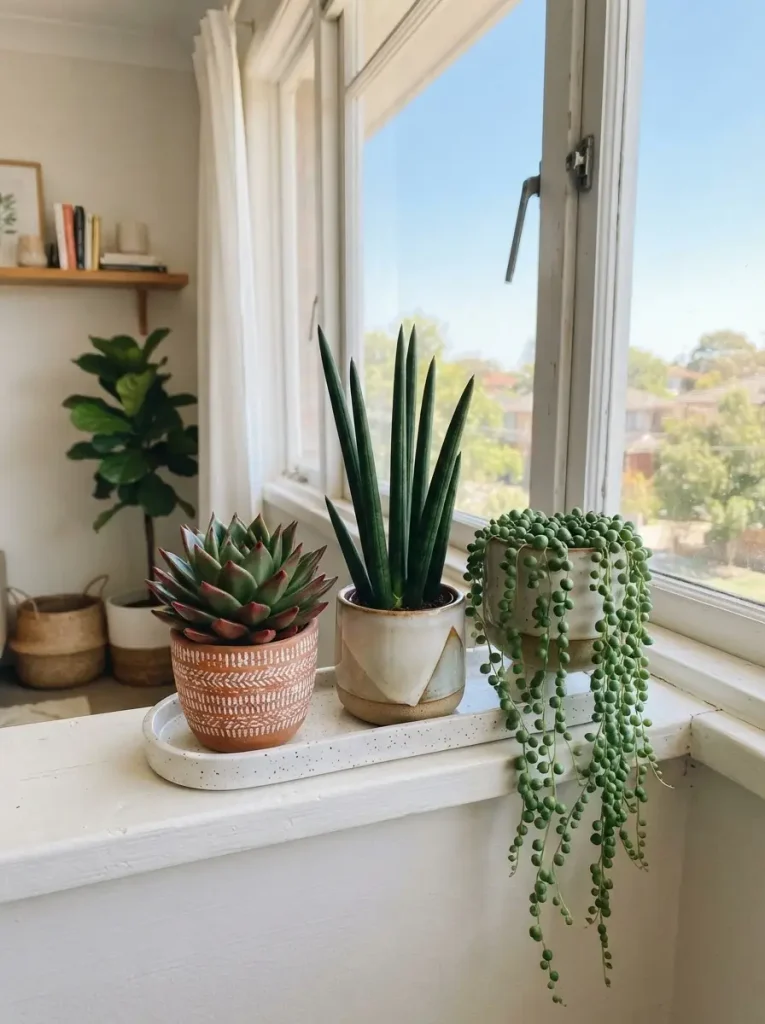
A sunny windowsill can become a miniature plant gallery with just three carefully selected succulents. Instead of overcrowding the ledge, choose plants with noticeably different silhouettes.
For example, pair a round rosette with a vertical variety and a trailing succulent. Place them in coordinating pots and leave a little breathing room between each container.
This arrangement is simple enough for beginners but still looks thoughtfully styled.
Expert Tip:
Keep an eye on intense direct sunlight through glass, especially during hot weather. Some succulents appreciate strong light but can still suffer from extreme heat.
11. Mini Succulent Arrangement in a Concrete Pot
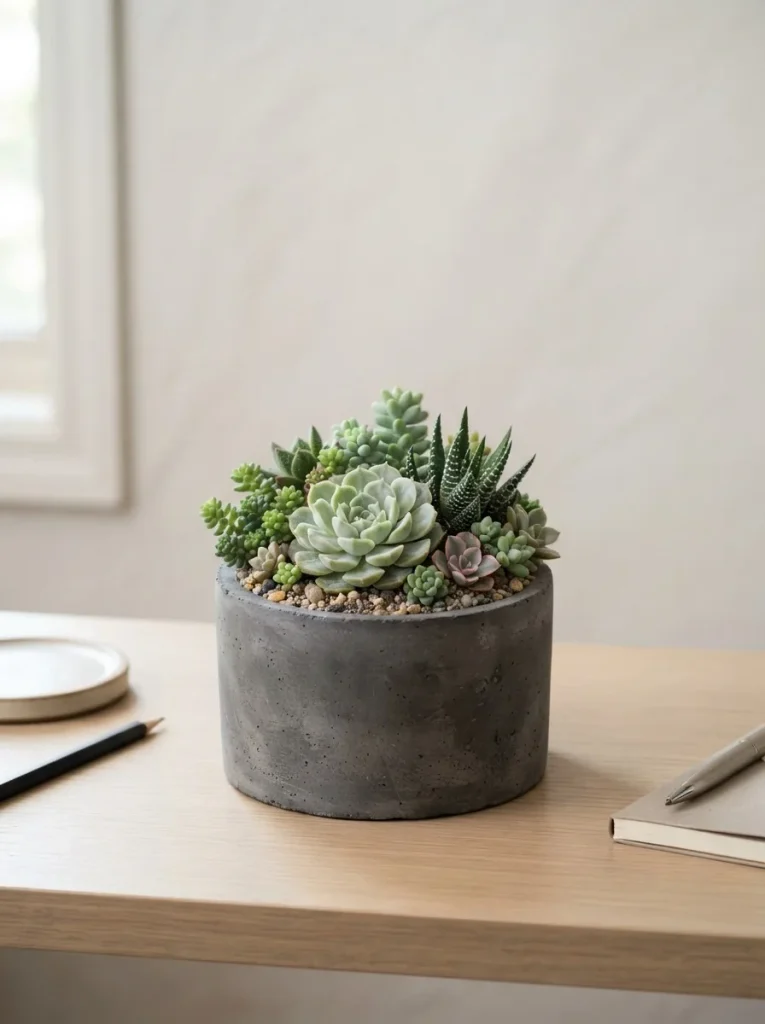
A small concrete planter can give a succulent display a modern architectural feel. The cool, understated container works particularly well with colorful or sculptural foliage.
Try planting a compact rosette slightly off-center and surrounding it with smaller contrasting varieties. The asymmetrical placement keeps the arrangement contemporary rather than overly formal.
This idea works beautifully on minimalist desks, shelves, balconies, and small outdoor tables.
Expert Tip:
Concrete can influence how quickly soil dries, so check moisture before watering rather than following a fixed schedule.
12. Succulent Arrangement in a Tiered Stand
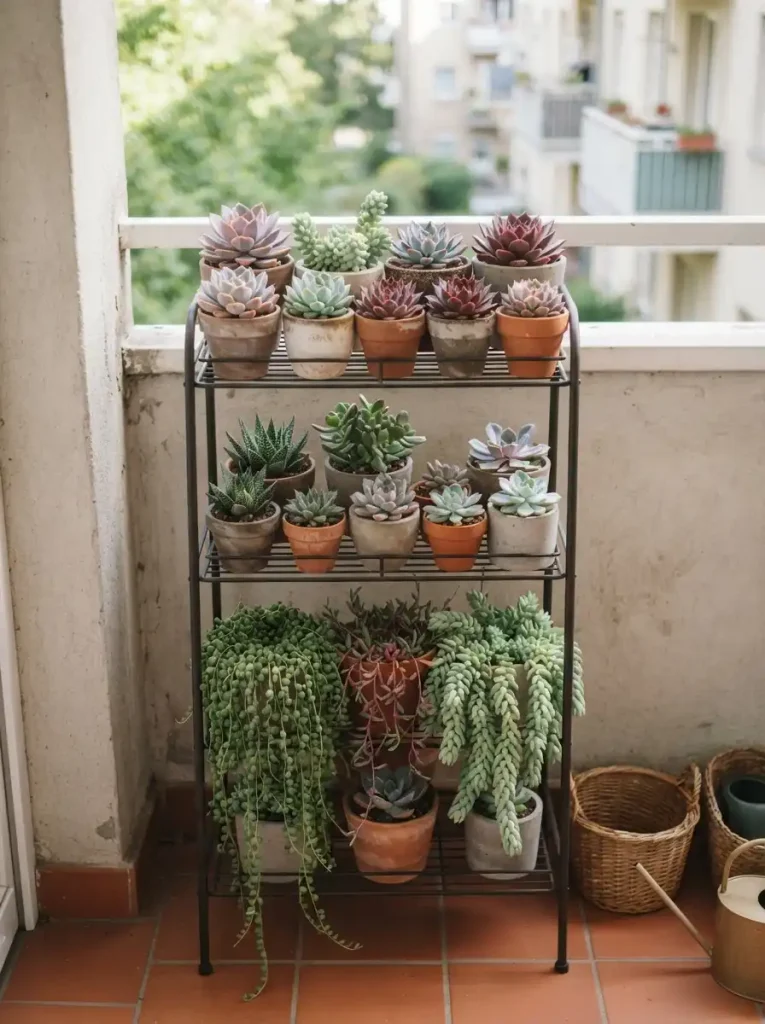
A tiered stand is an excellent solution when you want to display several succulents without occupying a large amount of table or floor space. By stacking plants vertically, you can create a fuller display within a very small footprint.
Use the upper levels for compact rosettes and place trailing varieties toward the lower tiers. This creates a cascading effect that makes the entire arrangement feel more dynamic.
A small metal or wooden stand can work well beside a bright window, on a balcony, or in an apartment entryway.
Expert Tip:
Arrange the stand so each plant has adequate access to light rather than allowing the upper pots to shade everything underneath.
13. Succulent Arrangement in a Teacup
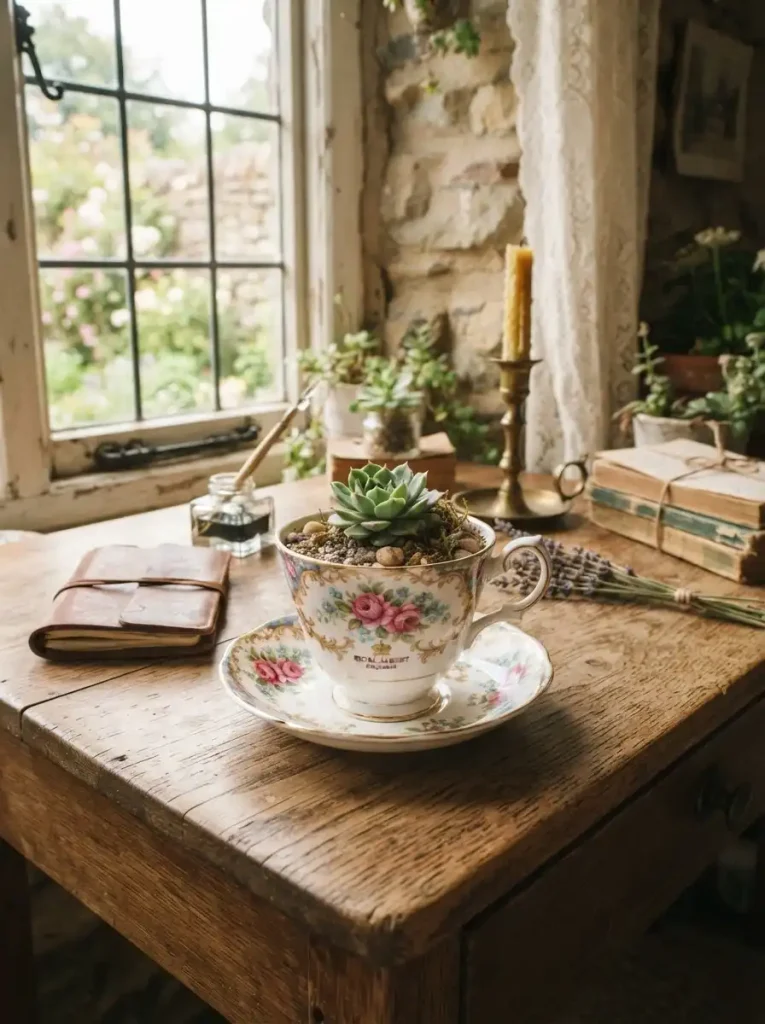
An unused teacup can become an adorable home for a miniature succulent. This is especially useful for very small plants that do not need a large growing area.
Choose a decorative cup that complements your room and pair it with a tiny rosette or compact haworthia. Several mismatched cups can also be grouped together to create a charming collection.
Because many teacups lack drainage holes, be particularly careful about excess water when using them as planters.
Expert Tip:
A very small amount of water is usually better than repeatedly soaking a succulent planted in a container without drainage.
14. Geometric Succulent Arrangement
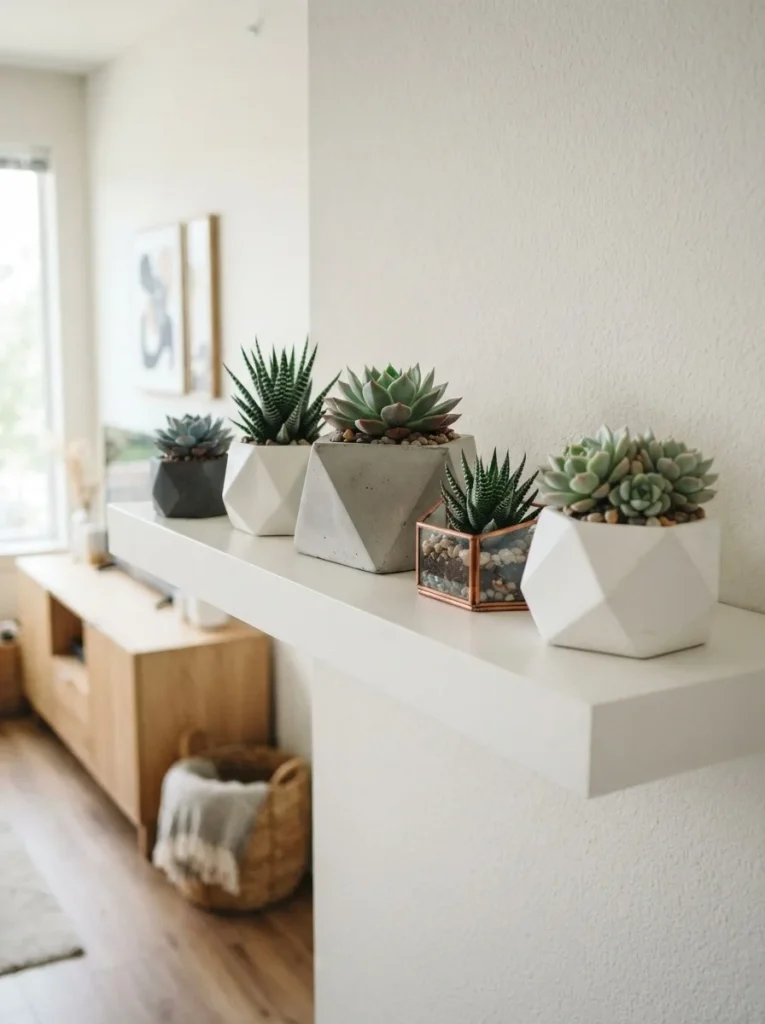
Give a small space a contemporary feel with geometric containers and sharply defined succulent shapes. Hexagonal, triangular, or angular planters can complement the natural symmetry found in many succulent varieties.
Arrange two or three containers together, using plants with different forms to prevent the display from appearing too uniform.
This idea is ideal for modern apartments, workspaces, bookshelves, and minimalist interiors where decorative objects are kept simple.
Expert Tip:
Let the shape of the containers remain visible. Leaving space around each pot can make the overall arrangement feel more sophisticated.
15. Succulent Arrangement in a Small Hanging Basket
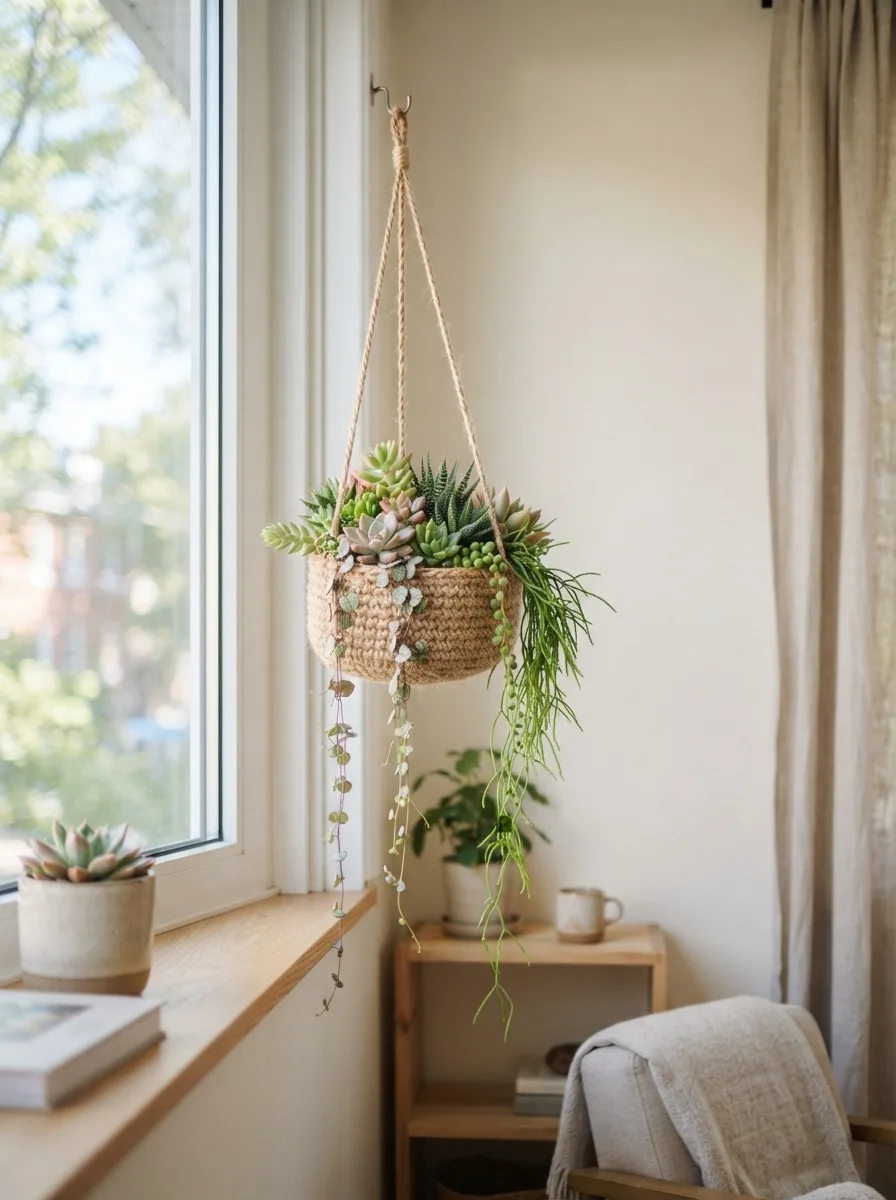
A miniature hanging basket can add greenery without taking up any valuable surface area. Choose a lightweight container and fill it with a compact succulent combination suited to the available light.
Trailing varieties can spill gently over the edge, creating a soft waterfall effect. Keep the arrangement relatively small so it remains proportional to the room.
Hang it near a bright window or from a secure outdoor hook where the plants can receive sufficient light.
Expert Tip:
Consider the weight of the container after watering and make sure the hanging hardware is strong enough to support it safely.
16. Black-and-Green Succulent Display
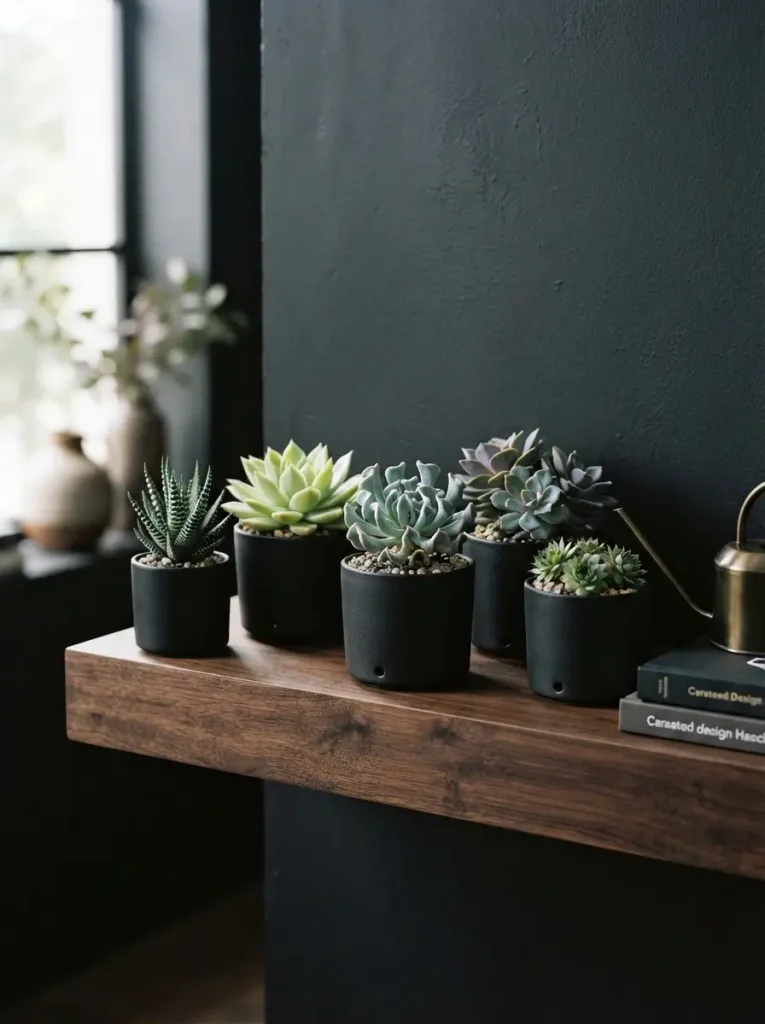
For a dramatic look, pair deep-toned containers with fresh green succulents. The contrast creates a simple but striking arrangement that can make a small plant collection stand out.
Use black ceramic or matte charcoal pots with plants featuring pale green, blue-green, or reddish foliage. Keeping the color palette restrained prevents the display from feeling busy.
This arrangement can add personality to a small office, bookshelf, kitchen shelf, or modern balcony.
Expert Tip:
Dark containers can become quite warm in strong outdoor sunlight, so monitor the temperature if your arrangement is placed outside.
17. Succulent Arrangement with Decorative Gravel
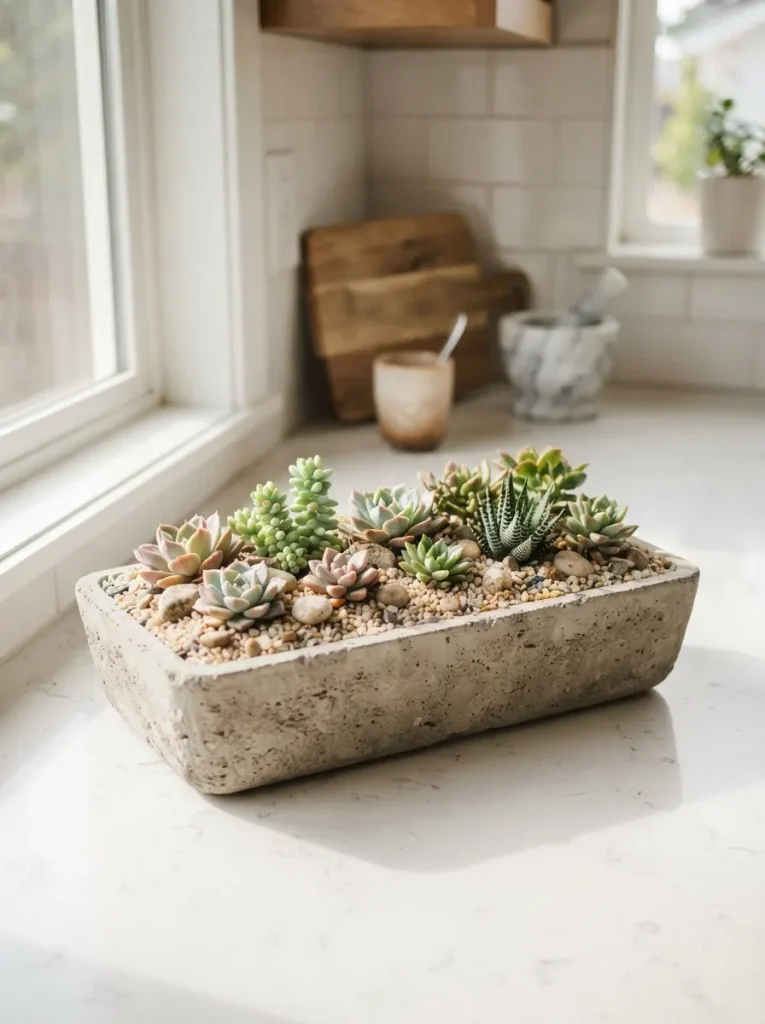
Sometimes the simplest arrangement is the most effective. Use several small succulents in one shallow container and cover the visible soil with decorative gravel.
The gravel creates a clean surface around the plants while helping establish a miniature desert-inspired appearance. Mix different stone sizes sparingly for subtle texture.
This technique works especially well with compact rosettes because the clean gravel surface allows their shapes to stand out.
Expert Tip:
Use a thin top layer rather than burying the base of the plants. Keep the crown and lower leaves clear of moisture and debris.
18. Succulent Bookcase Arrangement
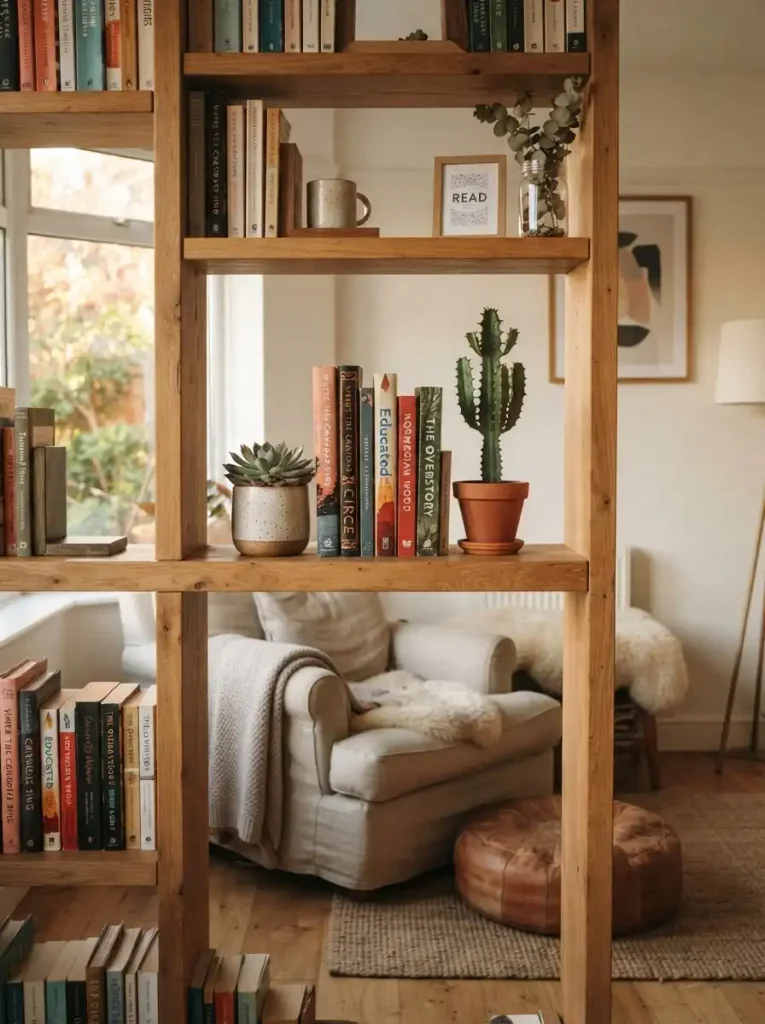
Turn an empty section of your bookshelf into a small botanical feature. One or two succulents can soften rows of books and introduce a natural element without requiring much space.
Place a taller plant beside horizontally stacked books and use a smaller succulent on an adjacent shelf. A simple ceramic pot can tie the arrangement together.
This is particularly useful for renters or anyone who wants greenery without adding additional furniture.
Expert Tip:
Keep plants away from cramped areas where leaves may constantly brush against books. Good airflow around the foliage helps keep the display healthier.
19. Succulent Arrangement in a Shallow Dish
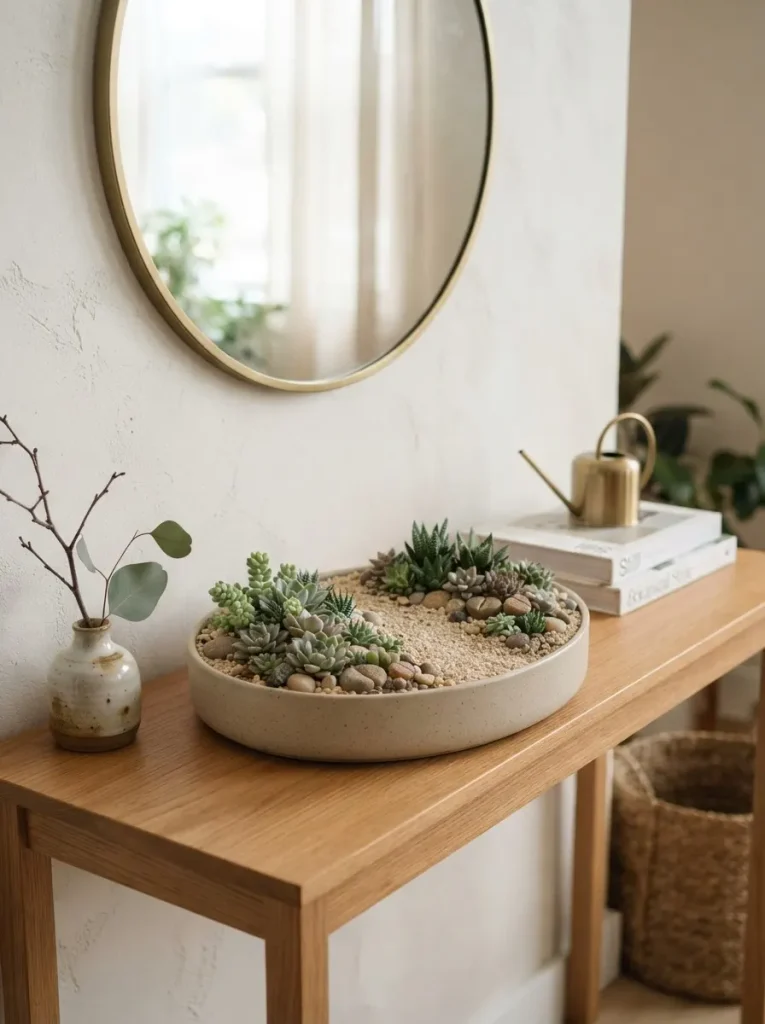
A shallow dish can create a low-profile arrangement that fits easily on narrow furniture. Instead of using tall plants, focus on spreading forms and small rosettes that remain close to the surface.
Combine three or four varieties with different textures and place them in a loose composition. A layer of fine stones can help visually connect the plants.
This design is ideal for dining tables, narrow consoles, bedside tables, and small coffee tables.
Expert Tip:
Avoid filling the dish too tightly. A little open space between plants makes the arrangement appear larger and more intentional.
20. Succulent Arrangement in a Wall-Mounted Shelf
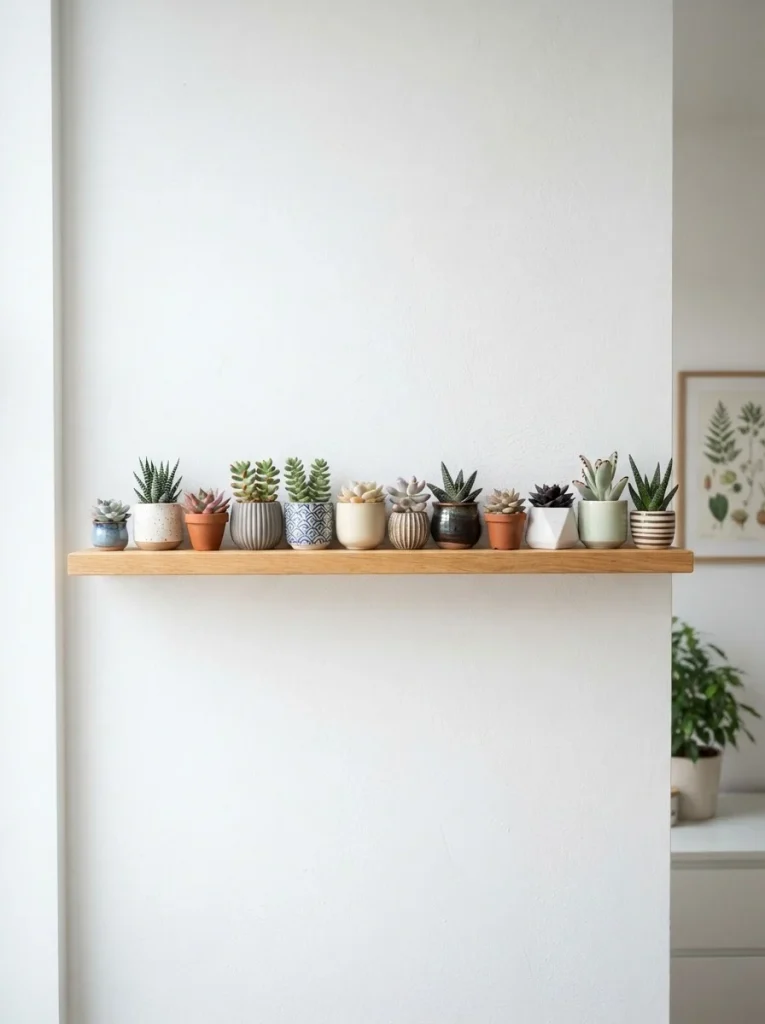
A narrow wall shelf can provide an attractive home for a small collection of succulents while keeping your floor and furniture completely clear.
Use a combination of small pots rather than planting directly into the shelf. This makes it easier to rearrange the collection, replace plants, or move them closer to a light source when necessary.
Choose a shelf that complements the room and keep the number of plants limited for a clean appearance.
Expert Tip:
Avoid positioning a wall shelf so far from natural light that the plants begin stretching toward the nearest window.
21. Mini Succulent Arrangement in a Glass Bowl
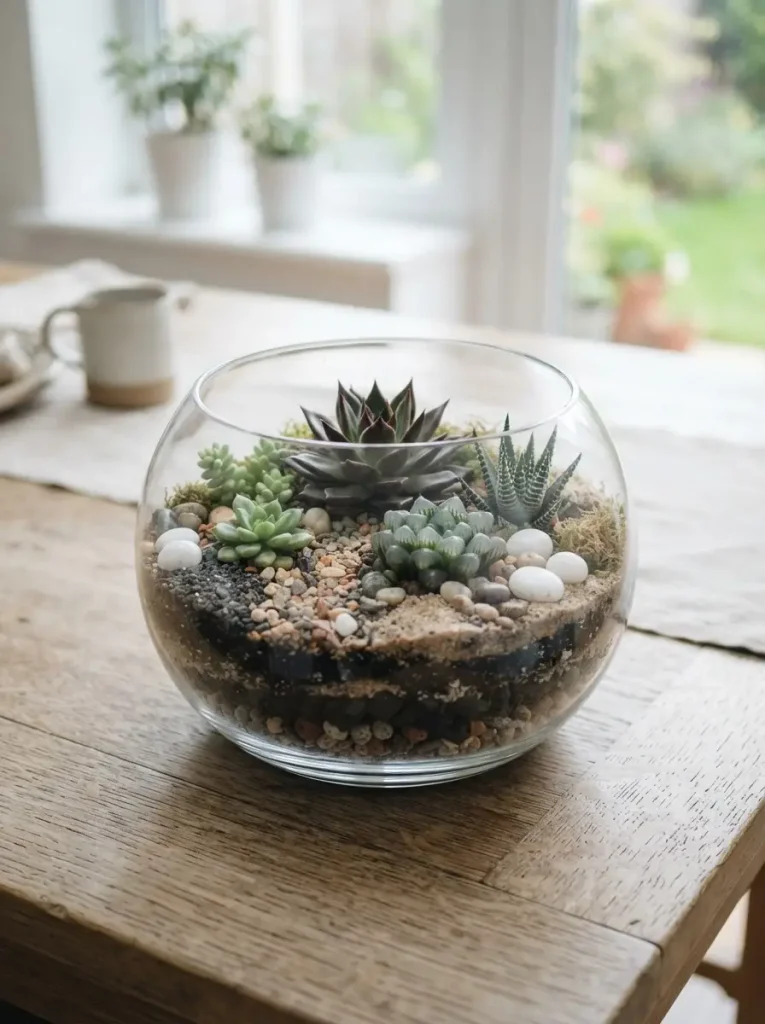
A glass bowl can create an elegant centerpiece when used thoughtfully with miniature succulents and decorative materials. The transparent container allows the layers beneath the plants to become part of the design.
Build the arrangement with appropriate gritty growing material, then position a few small succulents with enough room around them. Decorative stones can add additional texture and definition.
This compact arrangement can brighten a desk, side table, or small dining area.
Expert Tip:
Glass containers often lack drainage, so avoid treating them like traditional pots. Careful watering and a well-draining growing medium are especially important.
Tips for Creating Succulent Arrangements in Small Spaces
A beautiful succulent arrangement is not only about choosing attractive plants. The container, light, spacing, and growing conditions all affect how well the display performs over time.
Choose Plants That Match the Space
Before buying succulents, consider where the arrangement will live. A sunny windowsill can support plants that need stronger light, while a dim corner may not be suitable for most succulents without additional lighting.
Pay attention to the mature size of each variety. A tiny plant may eventually become much larger than expected, so choosing naturally compact varieties can save you from constantly rearranging your display.
Prioritize Drainage
Good drainage is one of the most important considerations when growing succulents. Containers with drainage holes make it easier for excess water to escape and reduce the risk of roots remaining wet for too long.
Decorative containers without drainage can still be used, but they require much more careful watering.
Combine Different Shapes
The best succulent arrangements usually have some contrast. Pair rounded rosettes with upright plants, textured foliage, or trailing stems.
Different silhouettes create visual depth even when the arrangement contains only a few plants.
Avoid Overcrowding
It can be tempting to fill every available space, especially when creating a miniature garden. However, leaving some room between plants improves airflow and gives each succulent enough visual space.
A slightly sparse arrangement can also look more elegant than one where every plant is touching.
Use a Well-Draining Growing Medium
Succulents generally prefer a growing medium that drains efficiently rather than dense soil that stays wet for long periods.
A suitable succulent or cactus mix can be a convenient starting point. If you’re mixing your own medium, focus on creating a structure that allows excess water to move away from the roots.
Pay Attention to Light
Light requirements vary between succulent varieties, so don’t assume every plant will thrive in exactly the same location.
If a succulent begins becoming unusually stretched or loses its compact shape, insufficient light may be one possible reason. Gradual changes in lighting are generally preferable to suddenly exposing a plant accustomed to low light to intense direct sun.
Rotate Your Arrangement
Plants naturally grow toward their strongest light source. Rotating containers occasionally can help maintain more even growth and prevent a display from becoming noticeably lopsided.
This is particularly useful for windowsill arrangements.
How to Make a Small Succulent Arrangement Look Fuller
You don’t necessarily need more plants to make a small arrangement appear abundant. Instead, use visual layering.
Start with one plant that provides height or acts as the focal point. Add medium-sized rosettes around it, then use smaller plants or trailing varieties near the container’s edge.
Decorative gravel can visually connect separate plants, while containers with complementary shapes can make individual pots look like one coordinated display.
Another effective technique is varying plant heights. Even a collection of three or four succulents can look surprisingly full when their silhouettes are different.
Best Containers for Small Succulent Arrangements
The right container can make a major difference when space is limited. Consider the following options:
- Long rectangular planters — Great for narrow windowsills and shelves.
- Shallow bowls — Useful for low-profile miniature gardens.
- Small ceramic pots — Easy to arrange individually on desks and shelves.
- Tiered stands — Ideal when you want to use vertical space.
- Hanging baskets — Keep plants off tables and floors.
- Wall shelves — Turn unused wall space into a plant display.
- Repurposed containers — Add personality to rustic or eclectic arrangements.
Whatever container you choose, make sure its size suits the plants and that watering requirements can be managed appropriately.
Final Thoughts
Small spaces can still have plenty of personality, and succulents make it surprisingly easy to introduce greenery without needing a large garden or extensive collection of plants.
From tiny teacup planters and shallow bowls to vertical shelves and hanging baskets, the best arrangement is often the one that works naturally with the space you already have.
Focus on light, drainage, plant size, spacing, and contrasting shapes, then choose a container that complements your home’s style. Even a simple group of two or three succulents can become a beautiful focal point when arranged thoughtfully.
The goal isn’t to fit as many plants as possible into one corner. It’s to create a compact display that looks intentional, stays manageable, and gives your space a little more life.
Frequently Asked Questions
How many succulents should I put in a small arrangement?
There is no fixed number, but three to five small succulents are often enough to create an attractive compact display. The ideal number depends on the container size and the mature size of the plants.
Can succulents grow well in small containers?
Yes. Many succulents can thrive in relatively small containers when they have suitable light, appropriate soil, and careful watering. Make sure the container isn’t dramatically oversized for the plant.
What is the best location for a small succulent arrangement?
A bright windowsill is often a good choice, but the exact location depends on the succulent varieties. Always consider each plant’s individual light requirements.
How often should small succulent arrangements be watered?
There isn’t one universal schedule. Check the growing medium and water when appropriate for the plant and conditions rather than watering automatically on a particular day. Allowing excess moisture to drain away is important.
Can different succulents be planted together?
Yes, provided their light, watering, and growing requirements are reasonably compatible. Combining plants with very different needs can make maintaining the arrangement more difficult.
How do I keep a small succulent arrangement from becoming overcrowded?
Leave enough space between plants for growth and airflow. Choosing naturally compact varieties and occasionally pruning or separating plants can also help maintain the arrangement’s shape.
Are succulents good for apartments and small homes?
Absolutely. Their variety of shapes and generally compact growth habits make them popular choices for windowsills, desks, shelves, balconies, and other areas where space is limited.