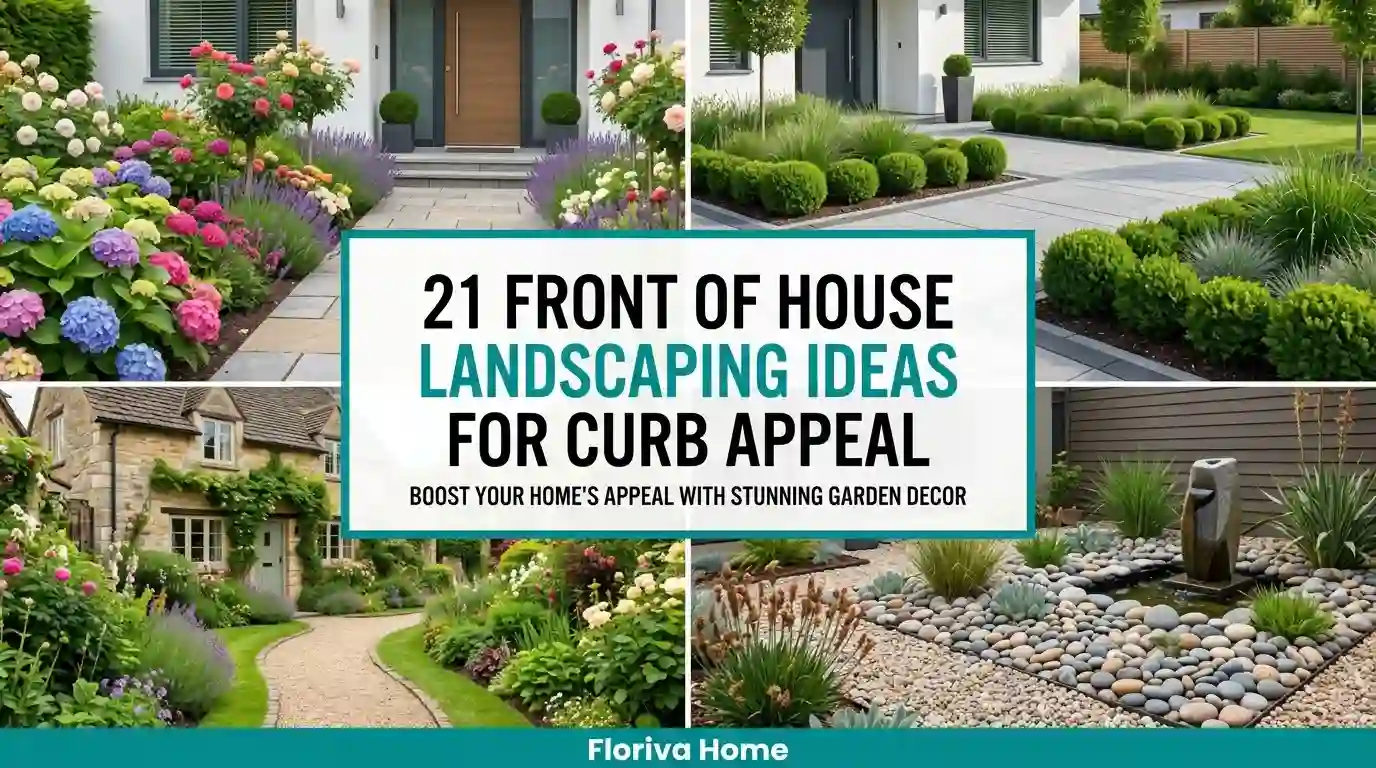
21 Front of House Landscaping Ideas for Curb Appeal
Your front yard is one of the first things people notice about your home, so thoughtful landscaping can make a big difference in how welcoming and polished the property feels.
The right combination of plants, pathways, edging, lighting, and decorative details can improve curb appeal without requiring a complete outdoor renovation.
Whether you have a compact entrance, a wide lawn, or a sloped front yard, these front of house landscaping ideas can help you create an attractive outdoor space that feels intentional and inviting.
From layered planting beds to statement trees and elegant walkways, there are plenty of ways to give your home’s exterior a fresh new look.
1. Layered Planting Beds
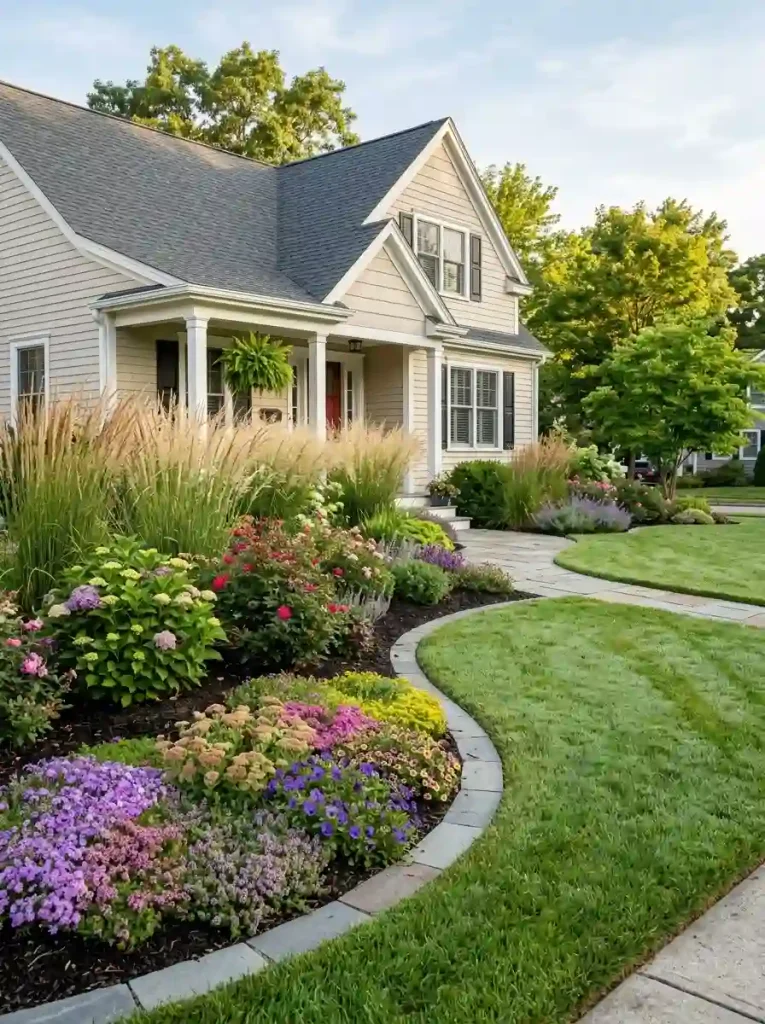
Layered planting beds are an easy way to give your front yard more depth and dimension. Instead of placing plants randomly, arrange them according to height, with taller shrubs or ornamental grasses toward the back and shorter flowers or ground covers toward the front.
This arrangement makes the landscape look fuller while keeping each plant visible. You can also combine evergreen foliage with seasonal flowers to maintain interest throughout the year.
Use curved or gently flowing bed lines if you want a softer appearance, or choose straight edges for a more contemporary home.
Expert Tip:
Group plants with similar sunlight and watering requirements together. This makes maintenance easier and helps the entire planting bed stay healthy.
2. Statement Tree Near the Entrance
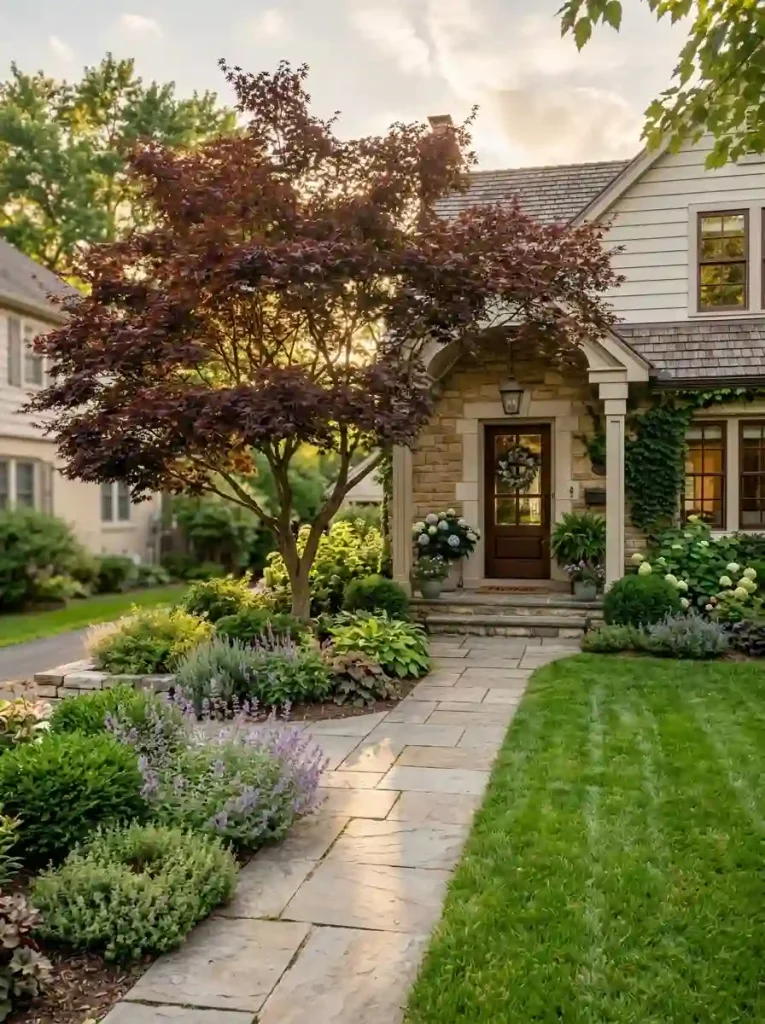
A carefully chosen statement tree can become the visual anchor of your front yard. Instead of filling every available space with plants, give one attractive tree enough room to stand out.
Small ornamental trees work especially well near walkways or beside the front entrance. Look for varieties with interesting foliage, seasonal flowers, attractive bark, or a naturally distinctive shape.
The tree should complement the scale of your house rather than overwhelm it. Leave enough clearance from walls, windows, utility lines, and pathways as the tree matures.
Expert Tip:
Check the mature height and spread before planting. A tree that looks perfectly sized at the nursery can become much larger than expected.
3. Wide Welcoming Walkway
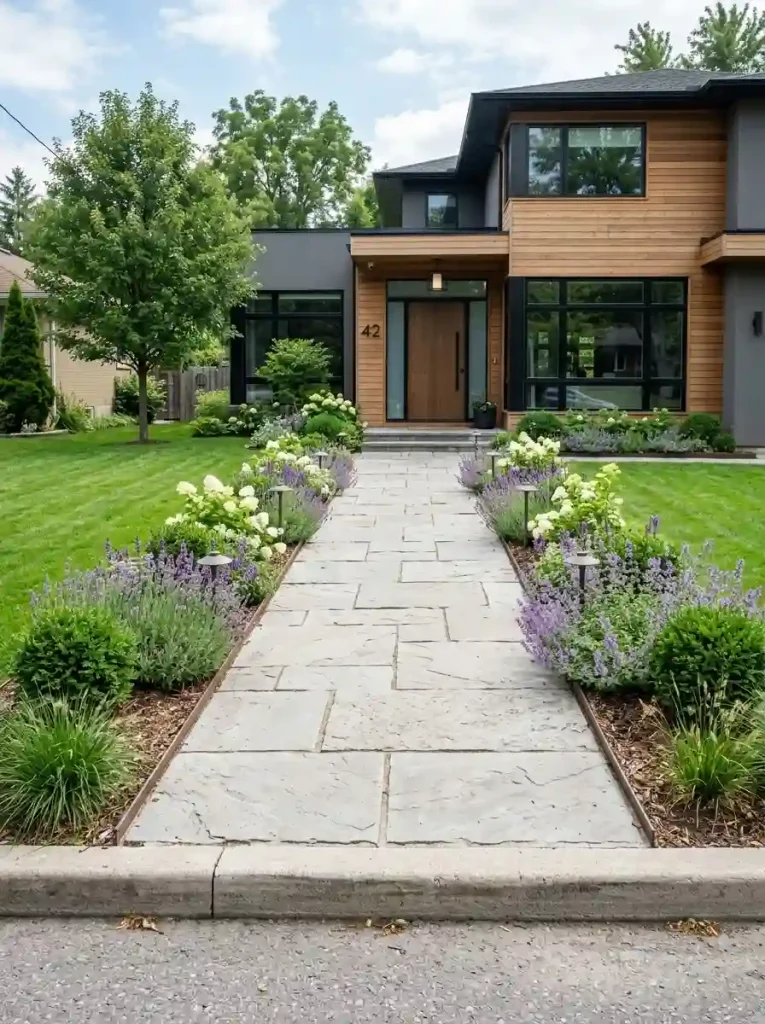
A wide walkway can make a small front yard feel more generous while creating a clear visual route toward the front door. Choose durable materials such as concrete, natural stone, brick, or large-format pavers.
Rather than making the pathway look isolated, connect it visually with the surrounding landscape. Low shrubs, flowers, grasses, or ground covers can soften the edges and make the entrance feel more integrated.
For a modern property, oversized rectangular pavers can create a clean appearance. Traditional homes may look better with brick or irregular natural stone.
Expert Tip:
Keep plants from spreading into the walking area. A clearly defined path feels cleaner and is safer for guests.
4. Evergreen Foundation Planting
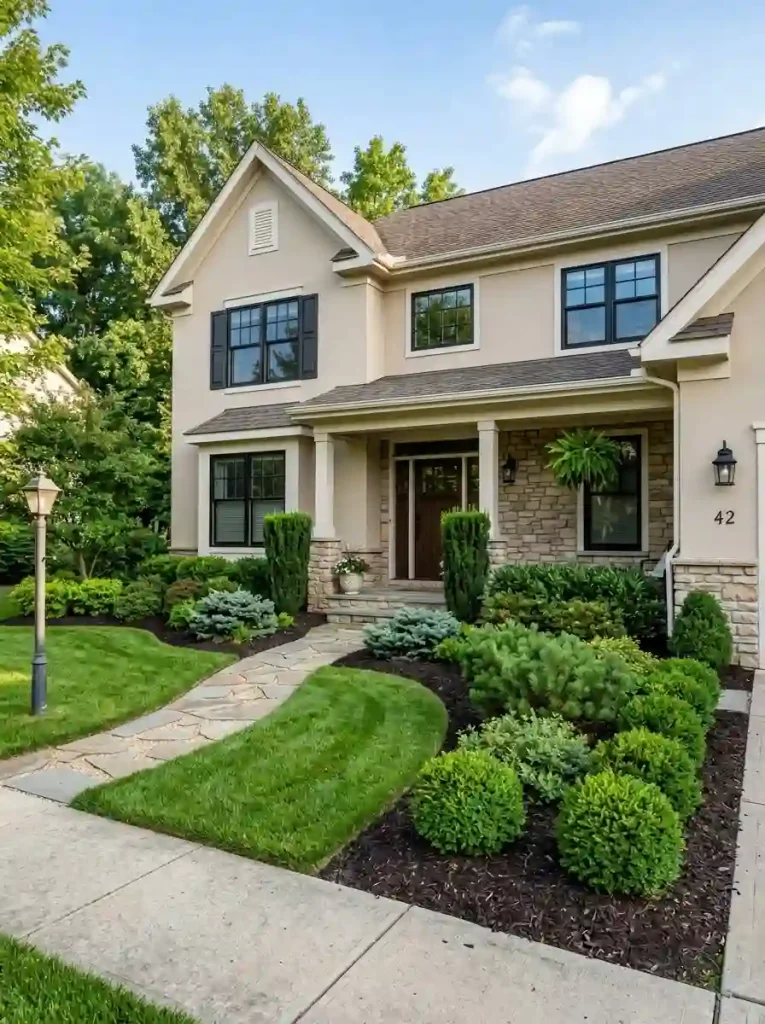
Evergreen shrubs can provide structure to your front yard even when seasonal flowers are no longer blooming. Their consistent foliage creates a dependable backdrop around the foundation of the house.
Use different shapes and heights instead of planting one uninterrupted row. Rounded shrubs, upright evergreens, and spreading ground covers can create a more natural arrangement while still keeping the home visually grounded.
Leave adequate space between mature plants and the exterior walls. Good airflow and room for growth will help prevent the landscape from becoming overcrowded.
Expert Tip: Choose evergreen varieties suited to your local climate and available sunlight rather than selecting plants based only on appearance.
Expert Tip:
Keep plants from spreading into the walking area. A clearly defined path feels cleaner and is safer for guests.
5. Flower-Filled Mailbox Garden
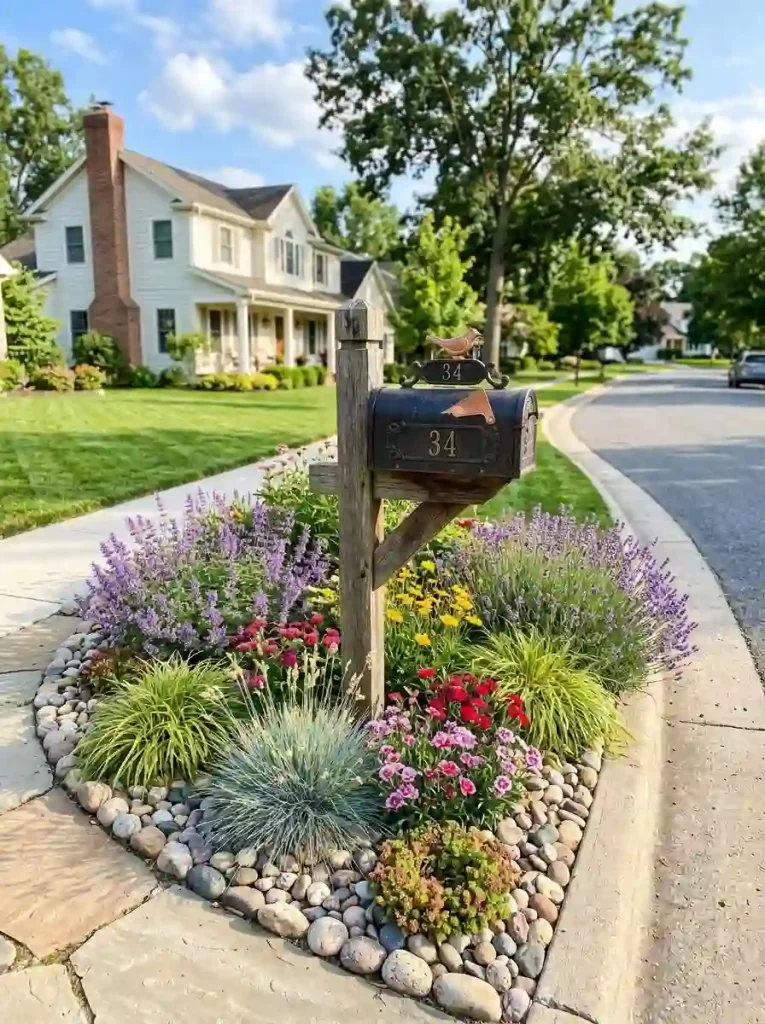
Your mailbox area is a small detail, but it can contribute surprisingly much to curb appeal. Turn the space around the mailbox into a miniature garden instead of leaving it surrounded by bare soil or plain grass.
Choose compact flowers, low-growing perennials, and a few attractive foliage plants that can tolerate the conditions around the roadside.
A small curved planting bed can make the mailbox feel like a deliberate part of the landscape. Decorative stones or a simple border can further define the area.
Expert Tip:
Avoid tall plants that block the mailbox or interfere with delivery access. Keep the planting low and easy to maintain.
6. Modern Gravel Garden
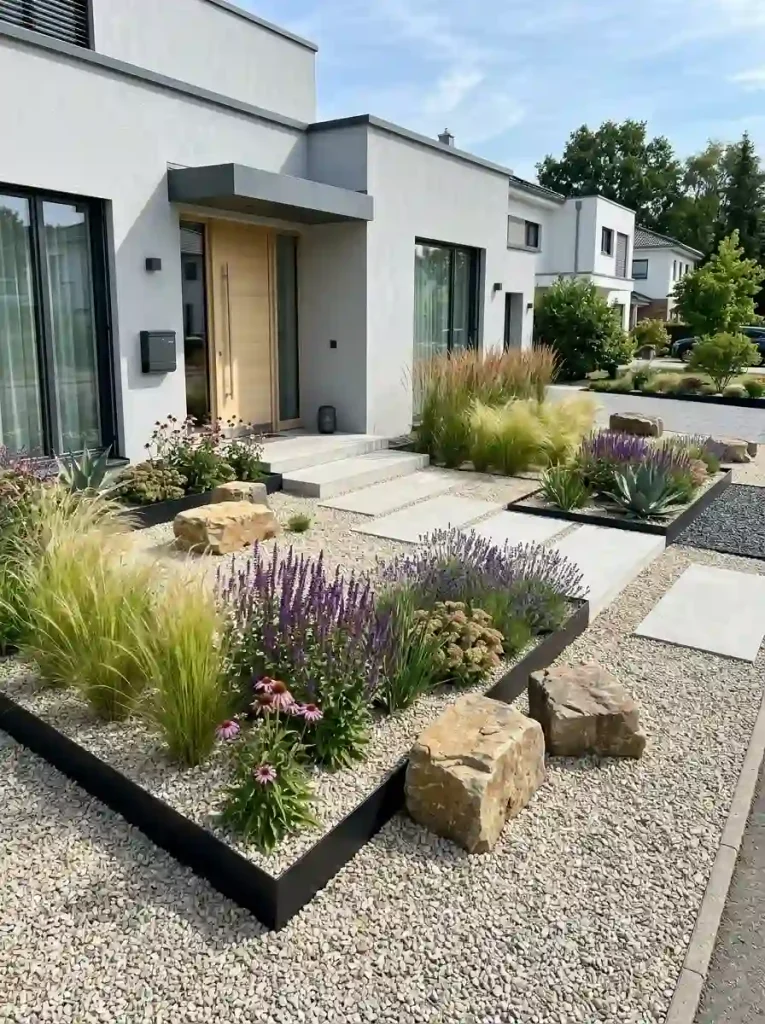
A gravel garden can give the front of your house a clean, contemporary appearance while reducing the amount of traditional lawn you need to maintain.
Use decorative gravel as the foundation and introduce drought-tolerant plants, architectural grasses, small shrubs, or sculptural stones for contrast. Varying textures prevents the space from looking flat.
This approach works particularly well around modern homes, where simple materials and restrained planting can create a sophisticated appearance.
Expert Tip:
Install a properly prepared base beneath the gravel and use edging to prevent stones from spreading into lawns or walkways.
7. Curved Garden Border
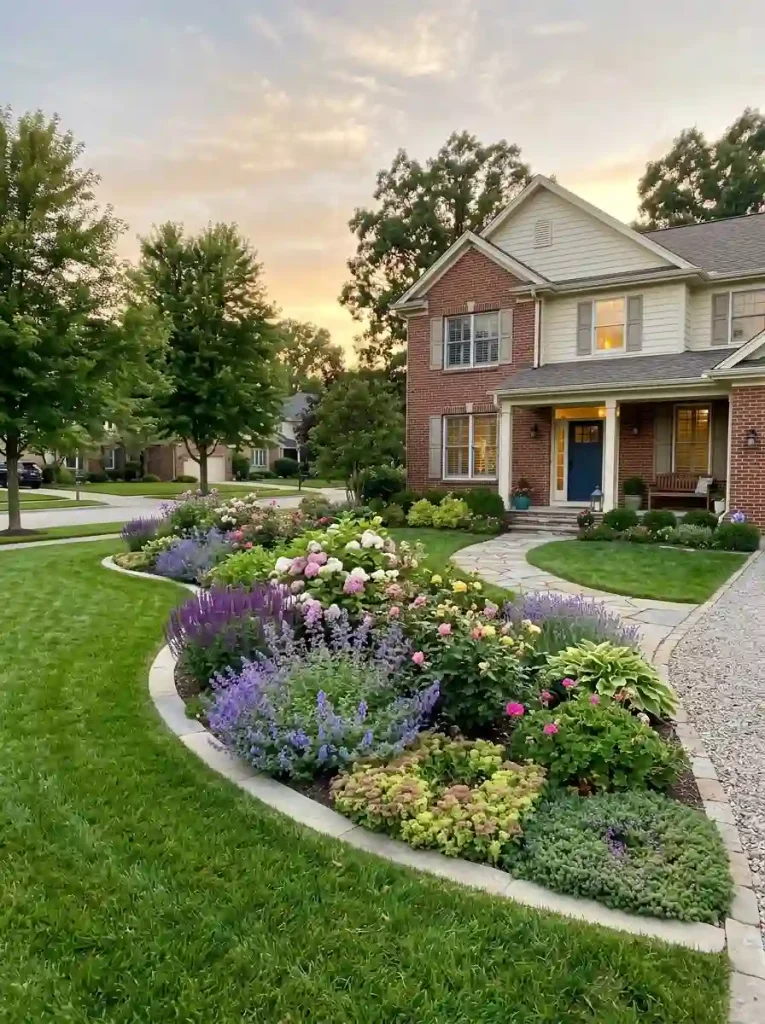
Curved borders can soften the appearance of a boxy house and create a more natural transition between the lawn and planting areas.
Instead of running a perfectly straight line along the foundation, create gentle curves that guide the eye through the landscape. Fill the border with a mixture of shrubs, flowering plants, and foliage with different textures.
Keep the curves broad and intentional. Too many small bends can make the front yard look cluttered rather than graceful.
Expert Tip:
Lay out the border with a garden hose before digging. This makes it easy to adjust the shape until the curve looks balanced from the street.
8. Ornamental Grass Accents
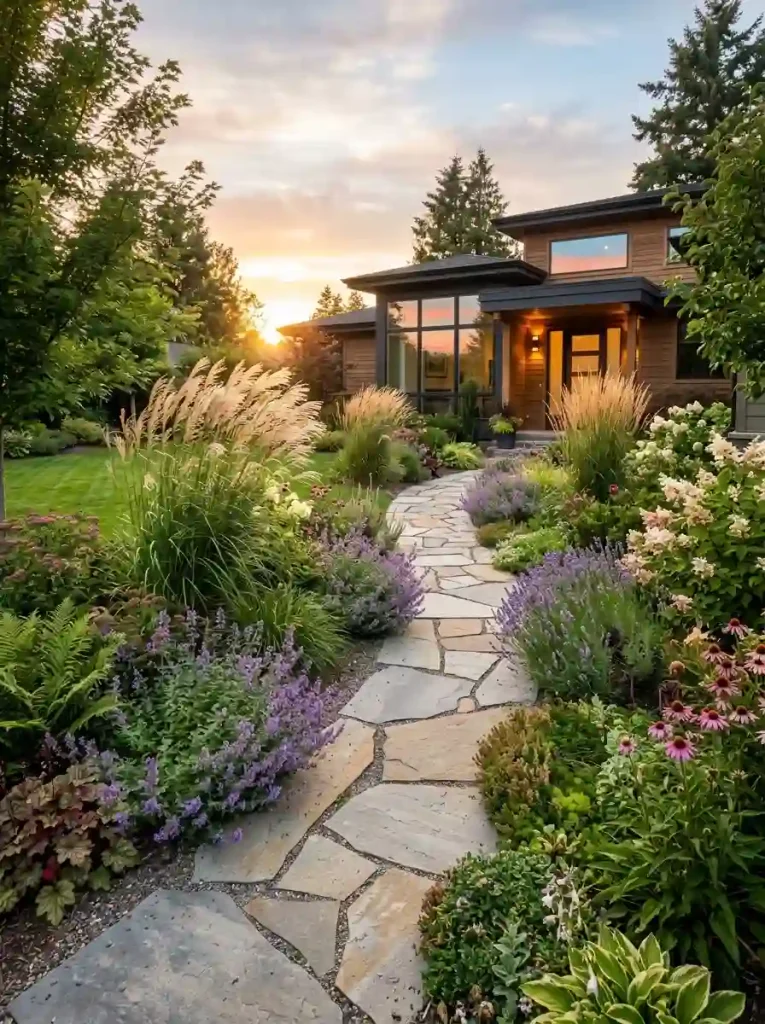
Ornamental grasses add movement and texture without making the front yard feel overly formal. Their fine foliage can contrast beautifully with broad-leaved shrubs, flowers, stone, and hardscape materials.
Plant grasses in small groups rather than scattering individual specimens throughout the yard. This creates stronger visual impact and makes the landscape feel more cohesive.
Depending on your climate, choose varieties that remain attractive through multiple seasons and fit the available space.
Expert Tip:
Leave enough room for mature grass clumps to spread. Crowded grasses can quickly hide nearby plants and make borders look untidy.
9. Low Hedge Along the Front Walk
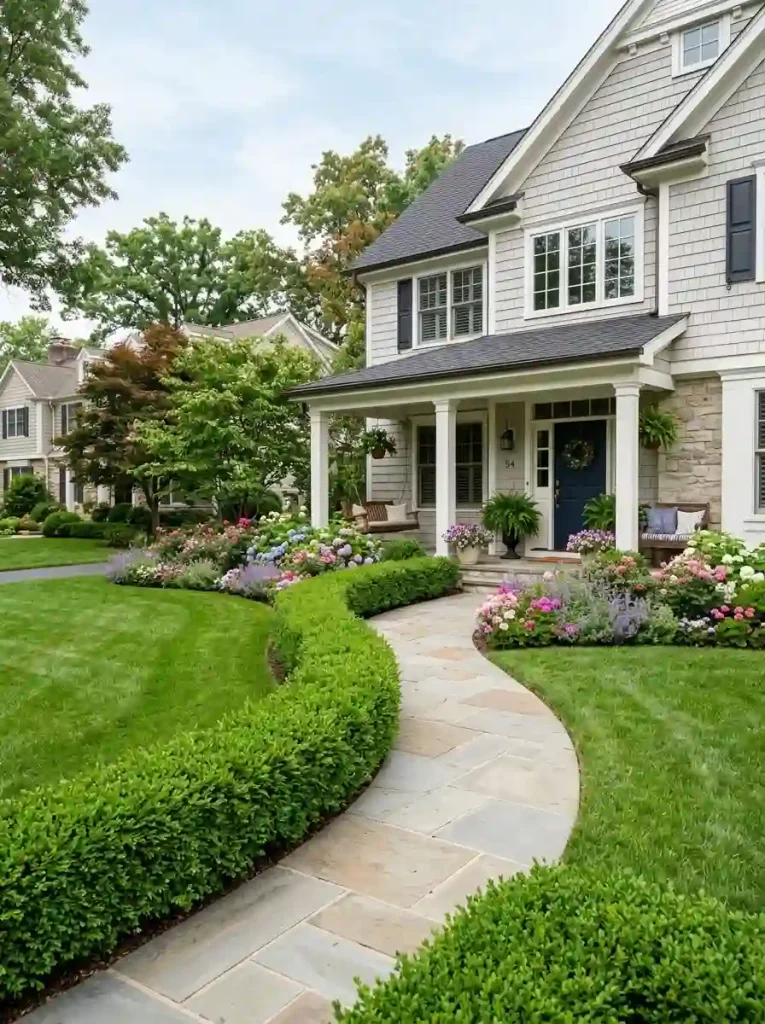
A low hedge can provide definition without hiding the front of your home. It works especially well along pathways, driveways, or the edge of a porch garden.
Choose compact shrubs that respond well to pruning and naturally stay at a manageable height. A neat hedge can make the entire front yard appear more organized while providing a strong visual boundary.
For a softer look, allow the shrubs to retain a slightly natural shape instead of trimming them into perfectly rigid forms.
Expert Tip:
Keep hedges low enough that visitors can easily see the front entrance from the street and driveway.
10. Layered Porch Planters
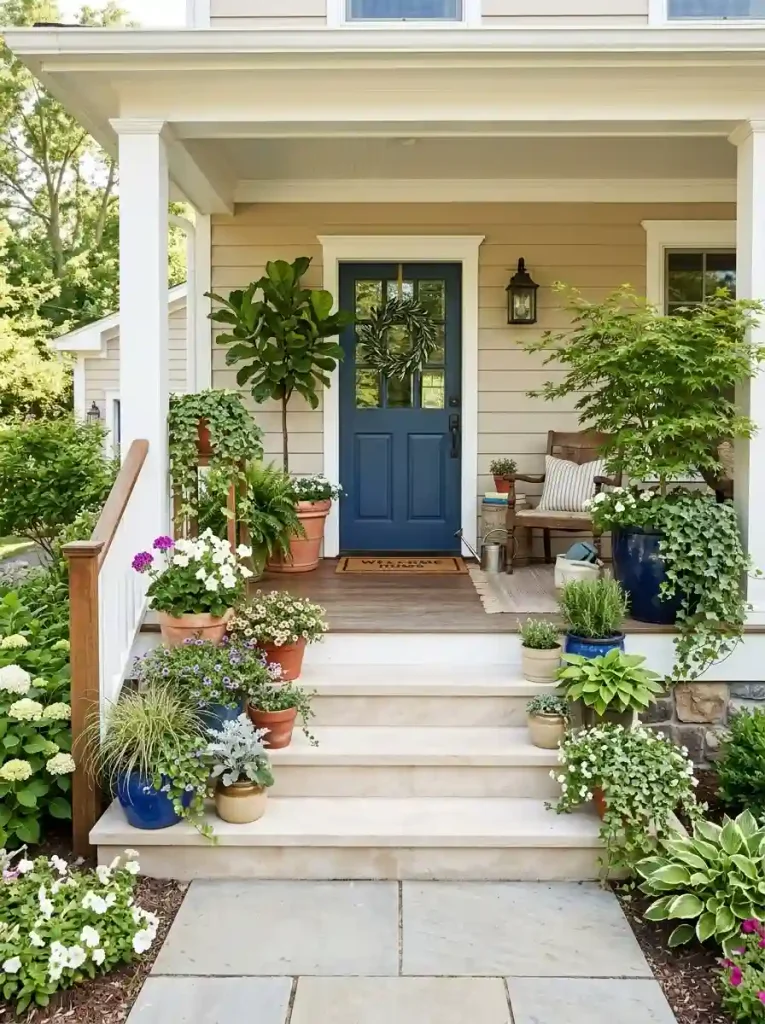
Planters around the front porch offer a flexible way to add color and personality without permanently changing the landscape.
Create visual layers by combining tall plants, medium foliage, and trailing varieties in containers of different sizes. Position larger planters near corners and smaller ones closer to the doorway.
You can change seasonal plants throughout the year while keeping the main containers consistent. This makes it easy to refresh your home’s appearance without redesigning the entire front yard.
Expert Tip:
Choose containers that complement the color and material of your home’s exterior so the plants feel connected to the architecture.
11. Illuminated Pathway Edges
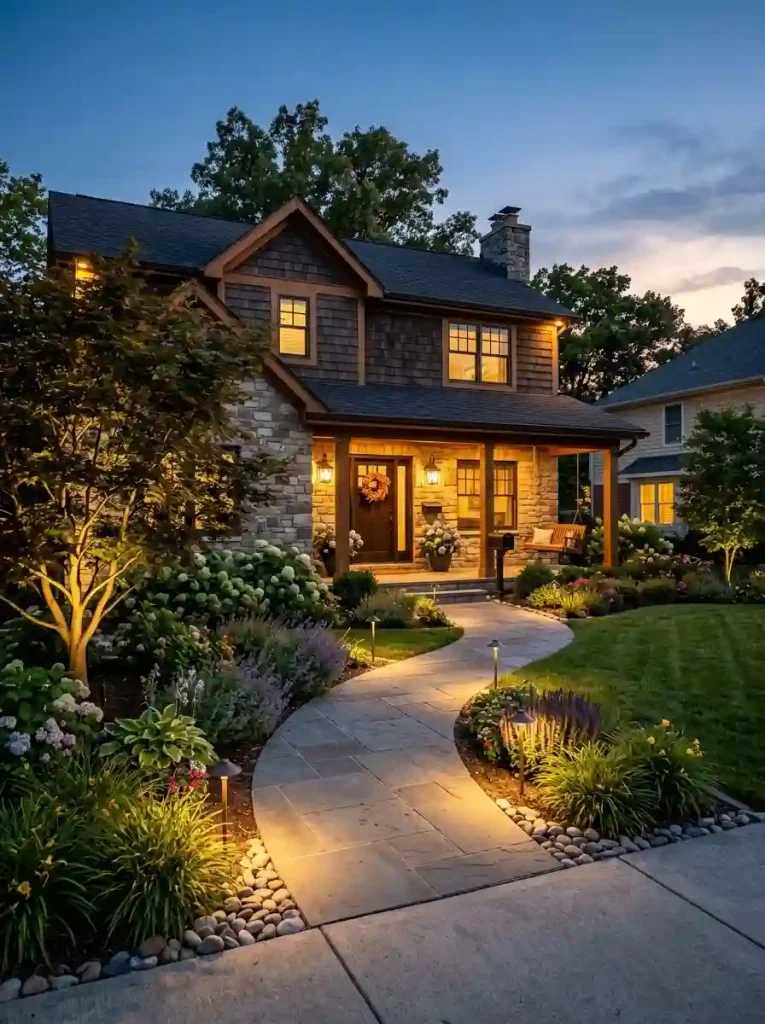
Landscape lighting can dramatically change the appearance of your front yard after sunset. Small lights positioned along a walkway can make the entrance easier to navigate while highlighting the shape of the landscape.
Avoid placing lights too close together or making them excessively bright. A softer, evenly distributed glow usually looks more elegant.
You can also use a few accent lights to highlight a tree, architectural feature, or particularly attractive planting bed.
Expert Tip:
Aim lights downward or use shielded fixtures to reduce glare and keep the lighting comfortable for people approaching your home.
12. Mixed Stone and Planting Border
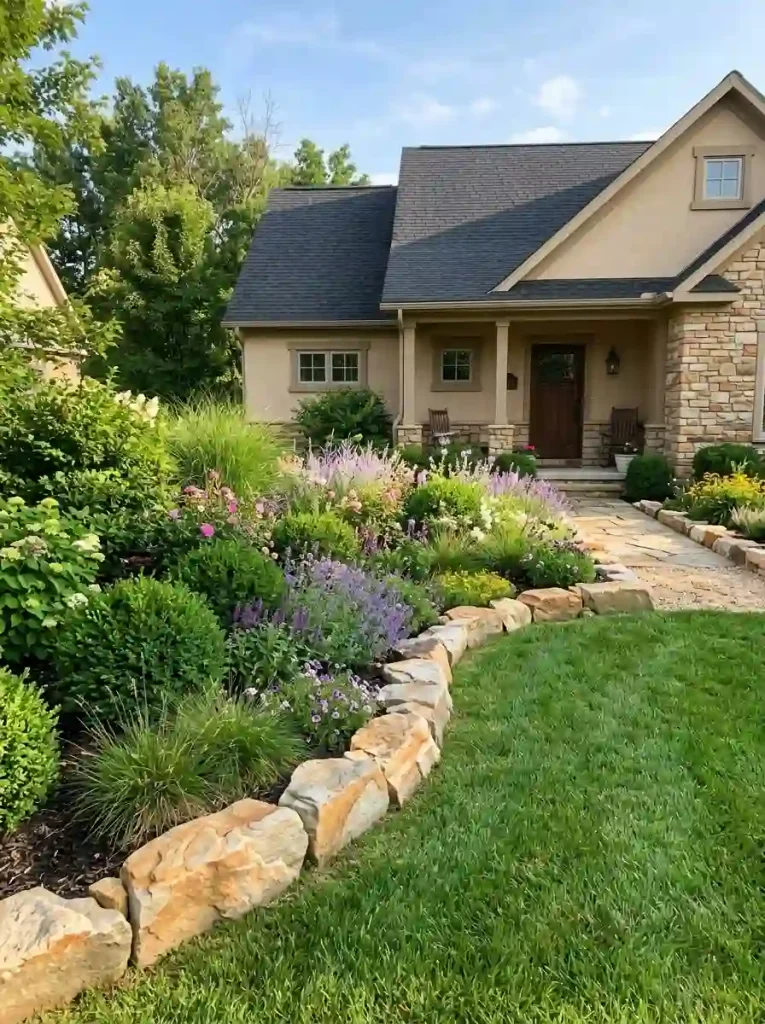
Combining natural stone with plants can create a front yard that feels both structured and organic. Use larger stones to define a planting bed and smaller rocks to fill visual gaps.
Pair the stone with plants that provide contrasting forms, such as rounded shrubs, narrow grasses, flowering perennials, or spreading ground covers.
The result can look especially attractive when the stone colors coordinate with the home’s exterior materials.
Expert Tip:
Use a limited range of stone colors. Too many competing colors can make a small front garden feel visually busy.
13. Front Yard Focal Bed
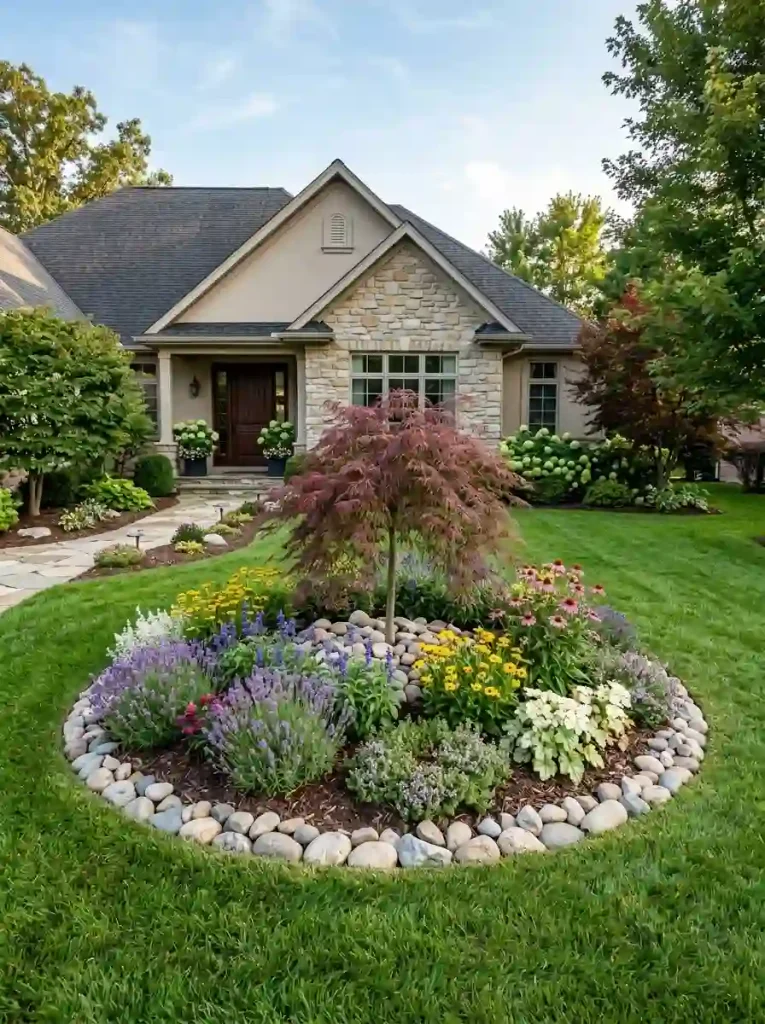
A dedicated focal bed can give your landscape a clear centerpiece instead of allowing every plant to compete for attention.
Place the bed where it can be seen easily from the street, such as near the center of the lawn or beside the main entrance. Build the composition around one standout feature, such as a sculptural plant, decorative stone, or ornamental tree.
Surround the focal element with simpler plants so the centerpiece remains visually dominant.
Expert Tip:
Step back across the street while designing the bed. This helps you judge whether the focal point is actually visible from the most important viewing angle.
14. Drought-Friendly Front Garden
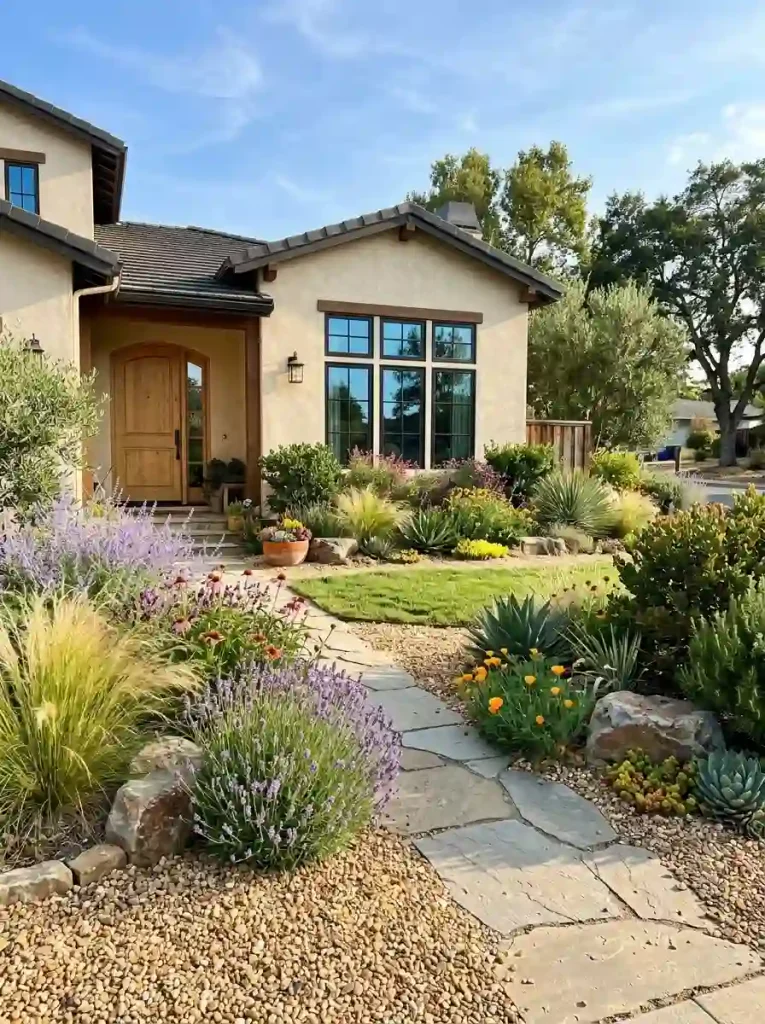
A drought-friendly landscape can provide strong curb appeal while reducing dependence on frequent watering. The key is selecting plants suited to your climate rather than simply choosing plants marketed as low-water.
Combine drought-tolerant shrubs, grasses, perennials, and decorative stone to create a landscape with varied heights and textures.
A layer of suitable mulch or gravel can also help reduce exposed soil and create a finished appearance.
Expert Tip:
Group plants according to their water requirements. This prevents plants with different needs from being watered inefficiently.
15. Small Front Yard Courtyard
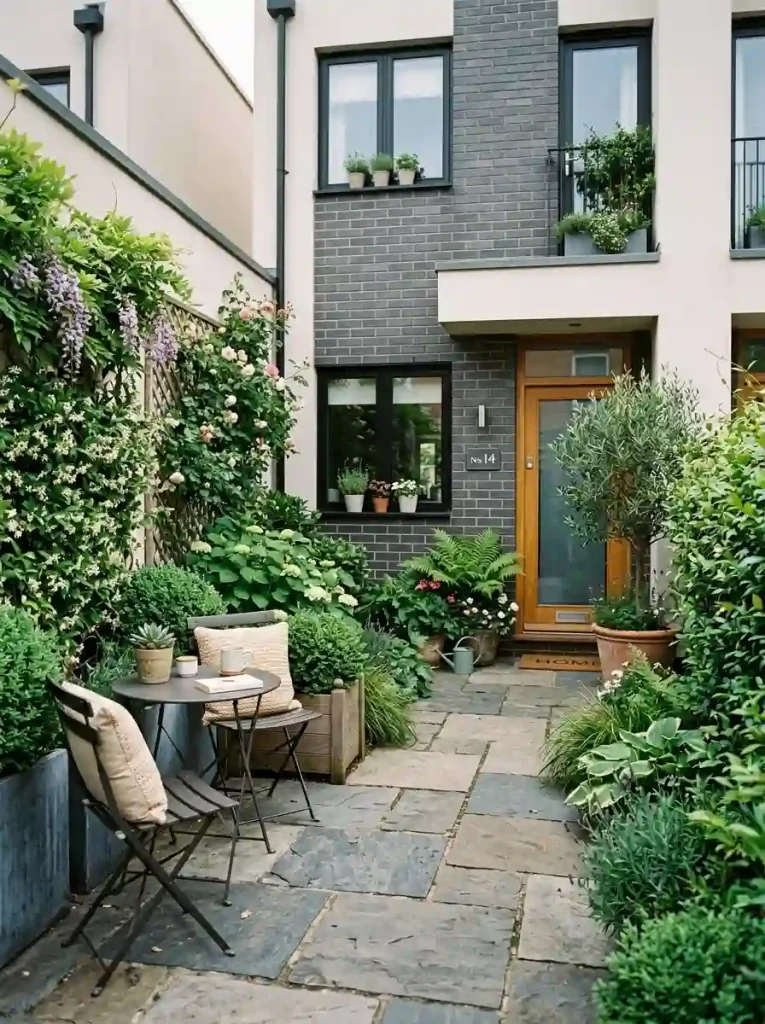
If your front yard is compact, consider treating it more like a small outdoor courtyard instead of trying to squeeze in a traditional lawn.
A paved sitting area, large container plants, compact shrubs, and a carefully selected decorative feature can make the space feel purposeful.
Use vertical elements such as trellises or narrow planting structures when ground space is limited. This draws the eye upward and adds dimension without consuming valuable floor area.
Expert Tip:
Keep the material palette simple. Repeating the same stone, container, or paving finish can make a small courtyard feel considerably larger.
16. Symmetrical Front Yard Design
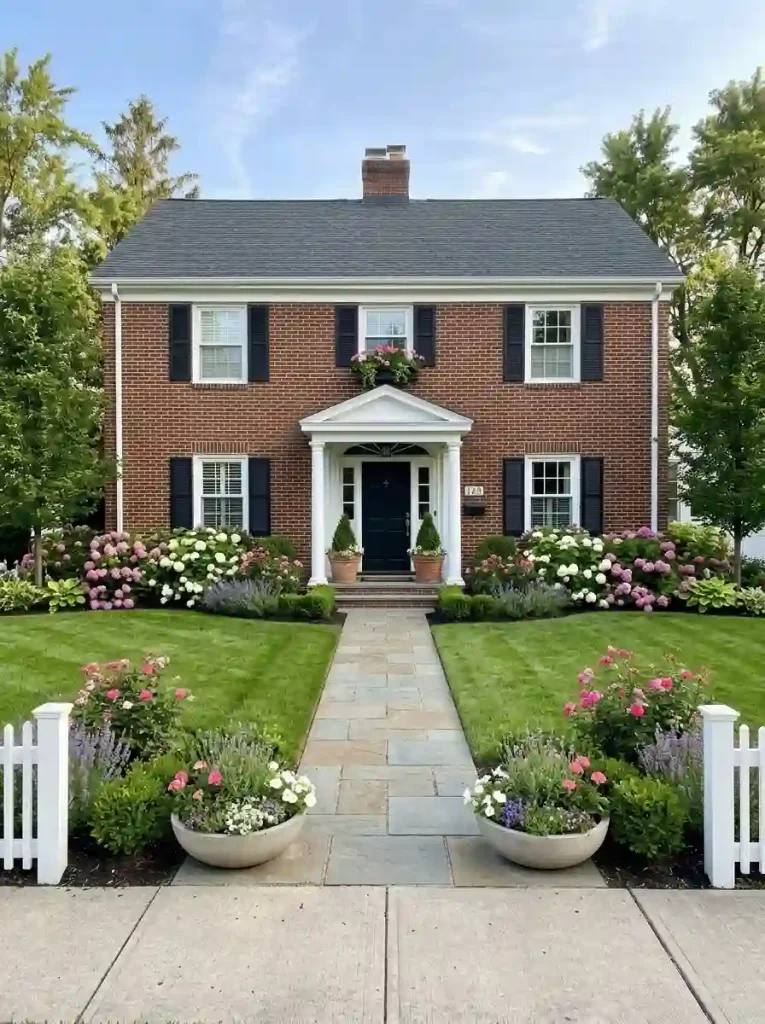
Symmetry can instantly make a home’s exterior feel more polished and balanced. This approach works particularly well with traditional, colonial, or formal architectural styles.
Place matching or visually similar plants on both sides of the entrance, driveway, or main walkway. You do not necessarily need identical plants everywhere; similar heights, shapes, or colors can create the same balanced effect.
Keep the central entrance as the main focal point and avoid adding too many unrelated elements around it.
Expert Tip:
Use symmetry around the most important architectural feature rather than trying to make the entire yard perfectly identical.
17. Raised Front Garden Beds
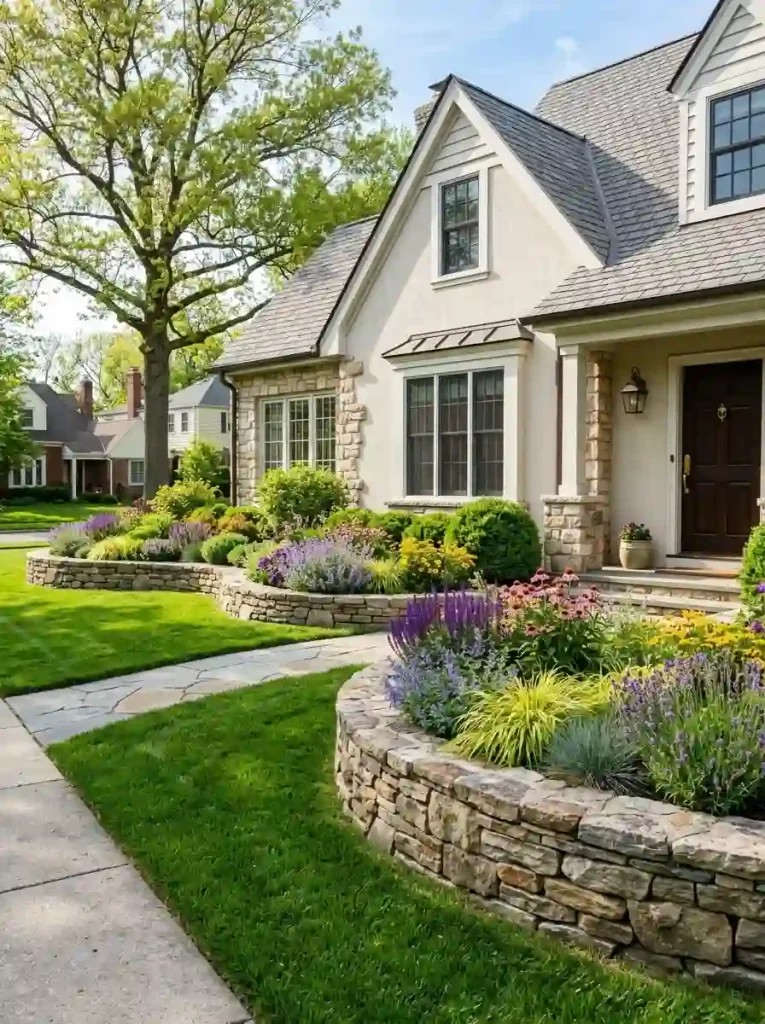
Raised garden beds can add dimension to a flat front yard while giving plants a clearly defined growing area.
Build the beds using materials that complement your home, such as natural stone, brick, timber, or concrete blocks. Fill them with a combination of compact shrubs, flowering plants, and decorative grasses.
Raised beds can be especially useful when the existing soil is poor or when you want to visually separate different planting zones.
Expert Tip:
Keep raised beds proportional to the house. Oversized structures can make a smaller property feel cramped.
18. Front Yard Rock Garden
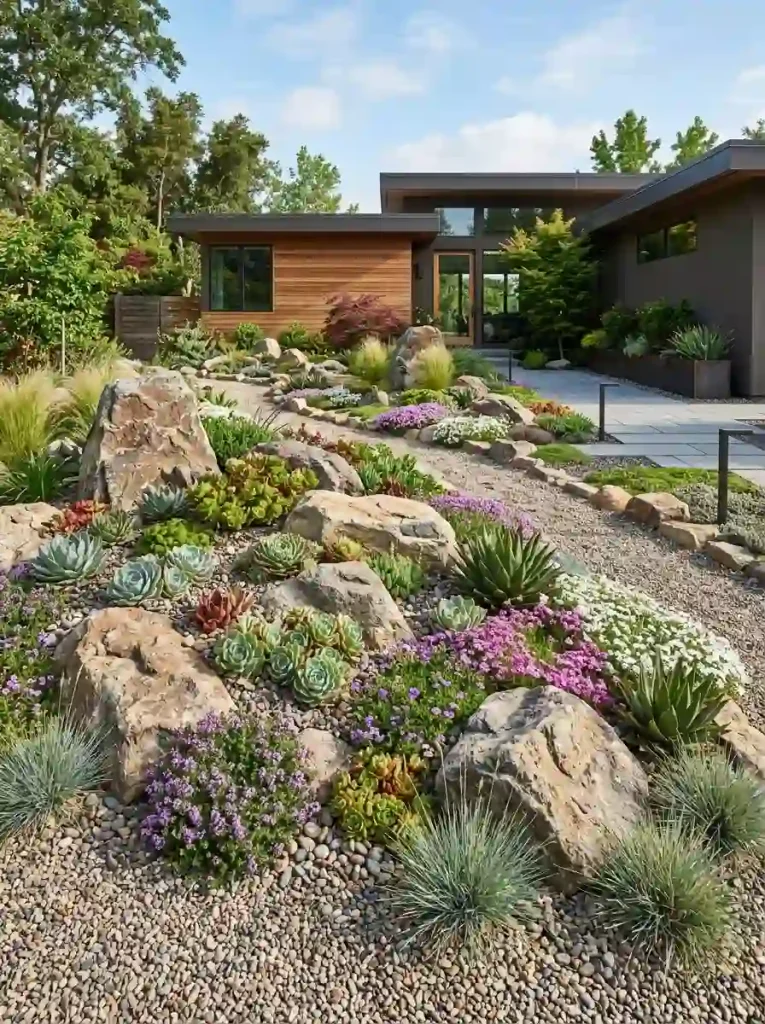
A rock garden offers an attractive alternative to a large expanse of grass. It can introduce strong texture and structure while working particularly well with drought-tolerant plants.
Use rocks of different sizes but keep their overall color palette coordinated. Position larger stones partially into the soil so they appear naturally integrated rather than simply placed on top.
Small succulents, ornamental grasses, creeping plants, and flowering perennials can soften the hard surfaces.
Expert Tip:
Repeat a few plant varieties throughout the rock garden instead of using too many different species. Repetition creates visual unity.
19. Driveway Planting Strip
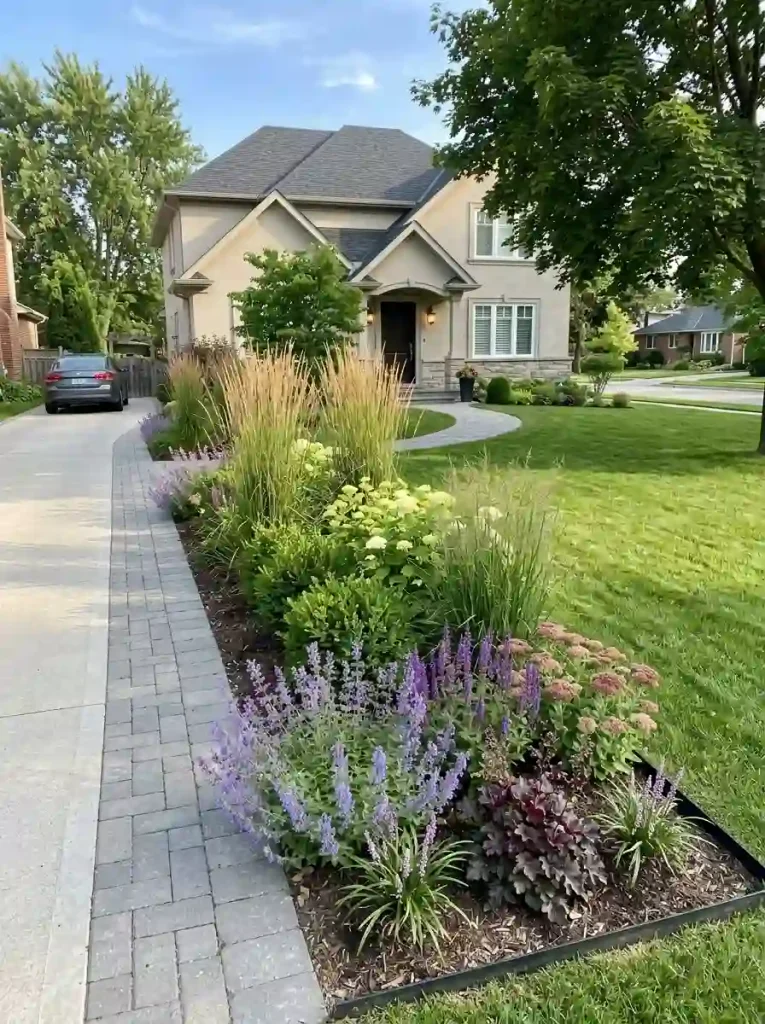
The space between a driveway and lawn or property boundary is often overlooked, but it can become an attractive planting strip.
Use narrow shrubs, ornamental grasses, flowering perennials, or low ground covers that can handle the conditions around a driveway. Plants should remain far enough away from vehicles to prevent damage.
A defined planting strip can soften large areas of concrete or asphalt and make the approach to your home feel more landscaped.
Expert Tip:
Select plants that stay compact and do not spread aggressively onto the driveway surface.
20. Layered Front Yard With a Small Lawn
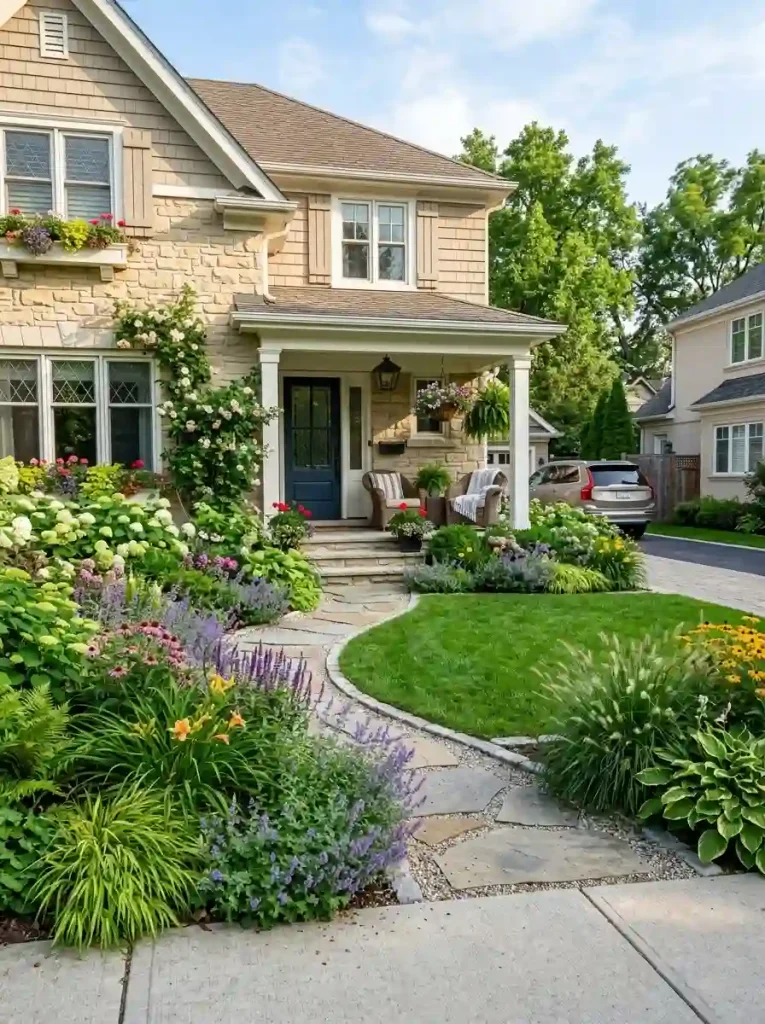
You do not have to eliminate your lawn to create a more interesting landscape. A small, carefully maintained lawn can actually provide useful visual breathing room between planting areas.
Surround the grass with layered borders containing shrubs, flowers, and foliage plants. This creates a contrast between the open green center and the denser planting around the edges.
The result feels organized without appearing overly formal.
Expert Tip:
A smaller lawn is often easier to maintain than a large one, especially when the remaining space is clearly defined by attractive planting beds.
21. Seasonal Front Yard Color
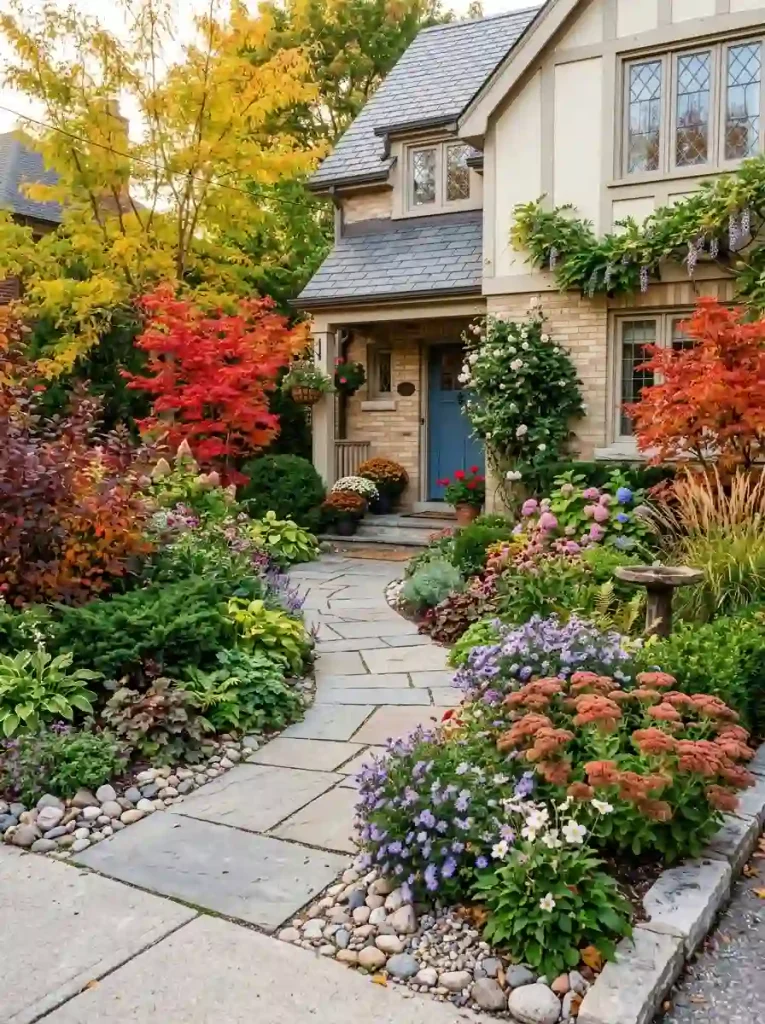
Using plants with different bloom periods can keep your home’s entrance visually interesting throughout the year.
Instead of choosing every plant for the same season, combine early spring flowers, summer bloomers, autumn foliage, and evergreen structure. This creates a landscape that changes naturally as the seasons progress.
You can also introduce seasonal color through planters, window boxes, or small decorative accents without replacing permanent plants.
Expert Tip:
Build the landscape around dependable evergreen structure first, then add seasonal plants for changing color and texture.
How to Choose the Right Front of House Landscaping Ideas
Not every landscaping idea will work equally well for every property. The best design should respond to your home’s architecture, available space, climate, maintenance preferences, and budget.
Before buying plants or materials, take a few minutes to evaluate the existing space.
Consider Your Home’s Architecture
The landscape should complement the style of your house rather than compete with it.
Modern homes often look attractive with clean planting lines, gravel, architectural plants, and simple hardscape materials. Traditional homes may benefit from symmetrical planting, flowering shrubs, brick pathways, and more formal borders.
Think About Sunlight
Observe how much sunlight different parts of your front yard receive throughout the day.
A sunny planting bed can support many flowering plants, while shaded areas may require plants specifically suited to lower light conditions.
Choosing plants according to the site is much more reliable than selecting them simply because they look attractive at a garden center.
Plan for Mature Plant Size
One of the most common landscaping mistakes is planting everything too close together.
Young plants may look sparse when first installed, but they will eventually grow. Check the mature width and height of every tree, shrub, and perennial before deciding where it belongs.
Giving plants adequate space can also reduce pruning and make future maintenance easier.
Balance Hardscape and Greenery
A successful front yard usually combines both hardscape and planting.
Walkways, edging, gravel, stone, patios, and other structural materials create definition, while trees, shrubs, flowers, and grasses provide softness and seasonal interest.
Too much hardscape can make a yard feel harsh, while excessive planting can make it appear crowded.
Choose a Manageable Maintenance Level
Think honestly about how much time you want to spend maintaining the front yard.
If you prefer a low-maintenance landscape, focus on suitable shrubs, ground covers, perennial plants, mulch, gravel, and efficient irrigation. If gardening is something you enjoy, you can incorporate more seasonal flowers and plants that require regular pruning or division.
The best front yard is one you can realistically keep looking good.
Simple Ways to Improve Curb Appeal on a Budget
You do not need a major landscaping budget to make your home’s exterior look better.
Start with the areas that have the greatest visual impact. Cleaning the walkway, defining messy lawn edges, removing overgrown plants, refreshing mulch, and trimming shrubs can immediately make the property appear more cared for.
Adding a few containers near the entrance is another inexpensive way to introduce color. A new pathway border, fresh gravel, or a small planting bed can also create a noticeable transformation without requiring a complete yard renovation.
If your budget is limited, improve the landscape in stages rather than attempting everything at once.
Common Front Yard Landscaping Mistakes to Avoid
Even attractive plants can produce disappointing results when they are poorly positioned.
Avoid planting large shrubs directly against windows or walkways. Overgrown vegetation can hide architectural details, block views, and make the entrance feel less welcoming.
Another common mistake is using too many unrelated plant varieties. A landscape filled with dozens of different colors, textures, and shapes can quickly become visually chaotic.
Instead, repeat several key plants throughout the yard and use a consistent material palette for edging, pathways, containers, and decorative features.
Finally, do not ignore the practical side of landscaping. Consider drainage, irrigation, mature plant size, pedestrian movement, and access to utilities before installing permanent features.
Final Thoughts
A beautiful front yard does not have to be complicated. The most successful front of house landscaping ideas usually combine a few well-chosen elements rather than trying to include everything at once.
Start by identifying the areas that need the most attention, such as the entrance, walkway, foundation, driveway, or lawn edges. Then introduce plants and materials that work with your home’s architecture and local growing conditions.
Whether you prefer a colorful cottage-style garden, a structured modern landscape, a low-maintenance gravel yard, or a simple planting makeover, thoughtful design can make your home’s exterior feel more welcoming.
Focus on balance, repetition, proportion, and year-round interest, and your front yard can create strong curb appeal while remaining practical to maintain.