
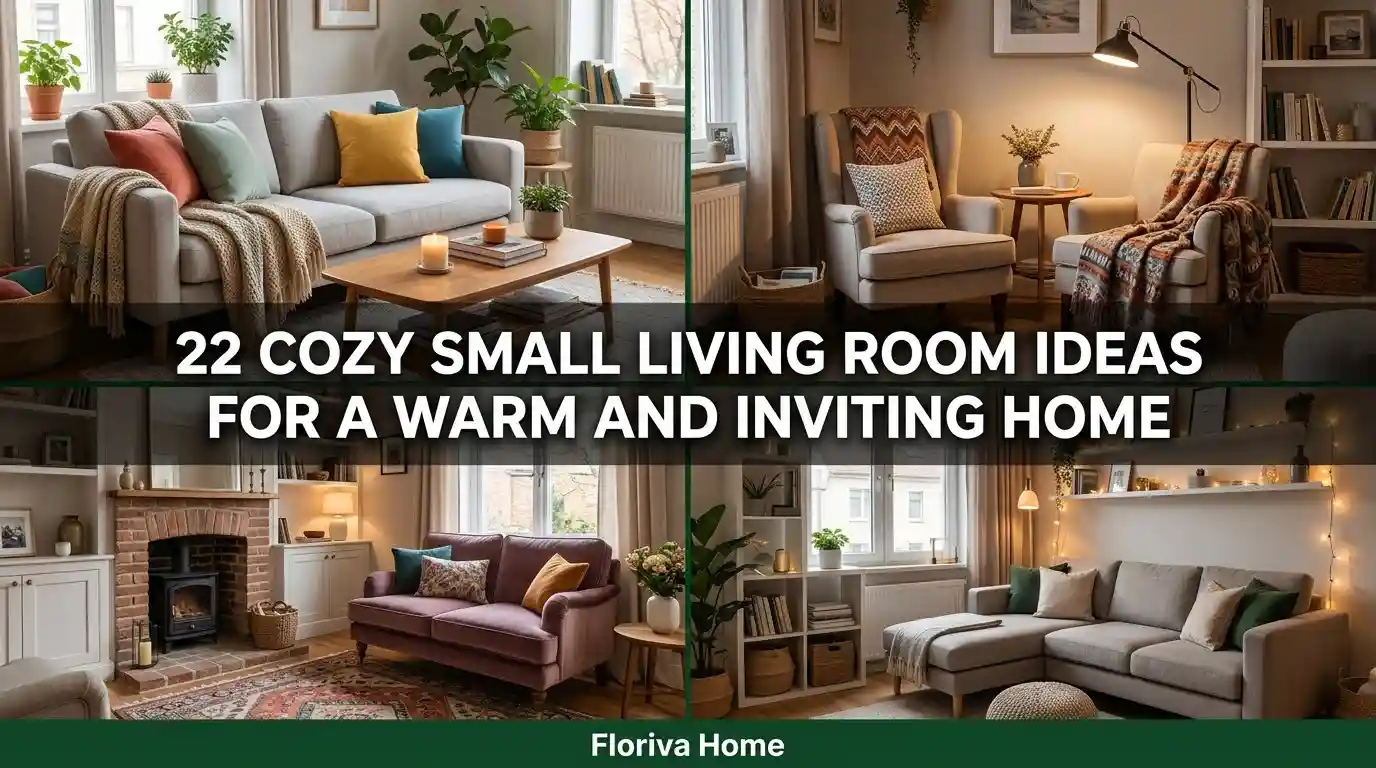
22 Cozy Small Living Room Ideas for a Warm and Inviting Home
A small living room doesn’t have to feel tight or unfinished — it can feel like the coziest room in the house. When square footage is limited, warmth comes from thoughtful choices: how you layer light, texture, and color, and how intentionally you arrange every corner. Below are 22 ideas to help you turn a compact living room into a space that feels genuinely inviting, without sacrificing function or flow.
This guide focuses on practical, budget-conscious changes you can make gradually — no full renovation required. Whether you’re working with a studio apartment, a narrow rental living room, or a cozy nook in a larger home, these ideas are built around one goal: making a small space feel warm, personal, and welcoming.
Key Takeaways
- Layering textures — soft rugs, knit throws, and mixed materials — creates warmth that a single statement piece can’t achieve alone.
- Ambient and task lighting layered together make a small room feel softer and more intimate than one overhead fixture ever could.
- Anchoring furniture with a rug and grouping pieces closely encourages conversation and makes the room feel purposeful rather than sparse.
- Warm neutral palettes and wood tones bring a sense of calm without visually shrinking the space.
- Personal touches — books, photos, and collected objects — are what make a small room feel like your room, not a showroom.
1. Layered Textured Throws
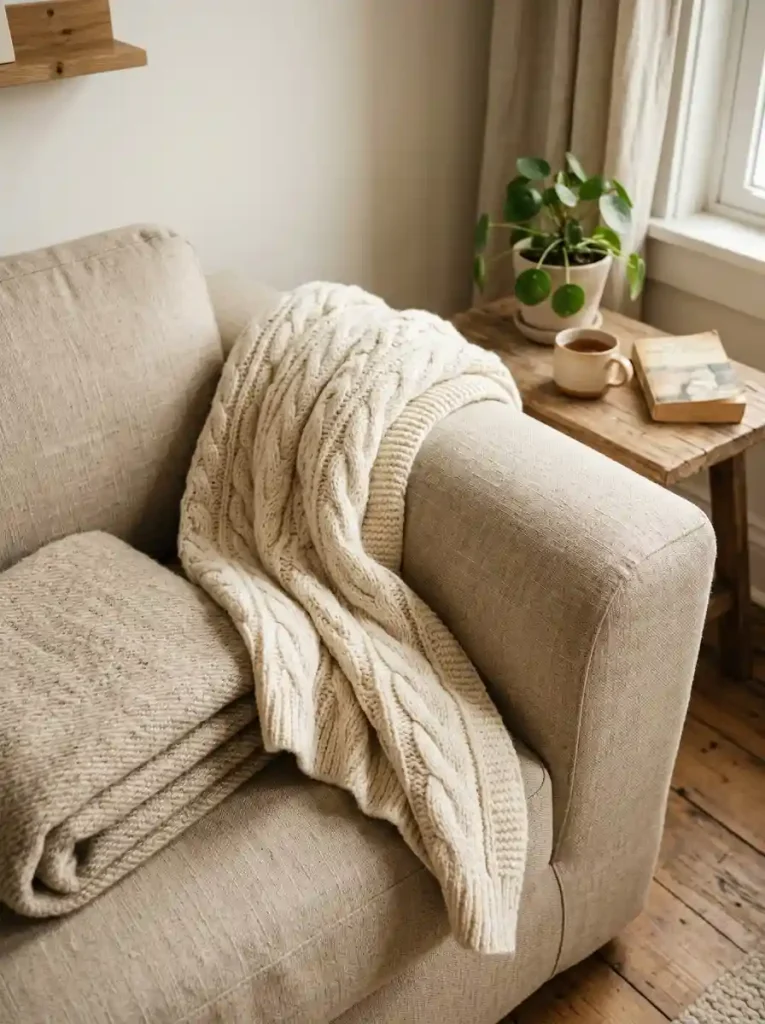
Texture is one of the fastest ways to add warmth to a small living room without adding bulk. A chunky knit throw draped over the arm of a sofa, paired with a smoother woven blanket folded at the opposite end, creates visual depth without crowding the seating area. Mix materials — bouclé, wool, linen — so the eye has something to linger on even in a compact space.
Keep the color story tight so the layering reads as intentional rather than cluttered. Two or three coordinating tones usually work better than a rainbow of throws competing for attention.
Ways to layer throws effectively:
- Drape one over the sofa arm and fold another at the seat’s edge
- Mix a chunky knit with a flat-weave textile for contrast
- Stick to two or three tones from the same warm palette
- Swap throws seasonally to refresh the room without buying new furniture
2. Warm Ambient Lighting Layers
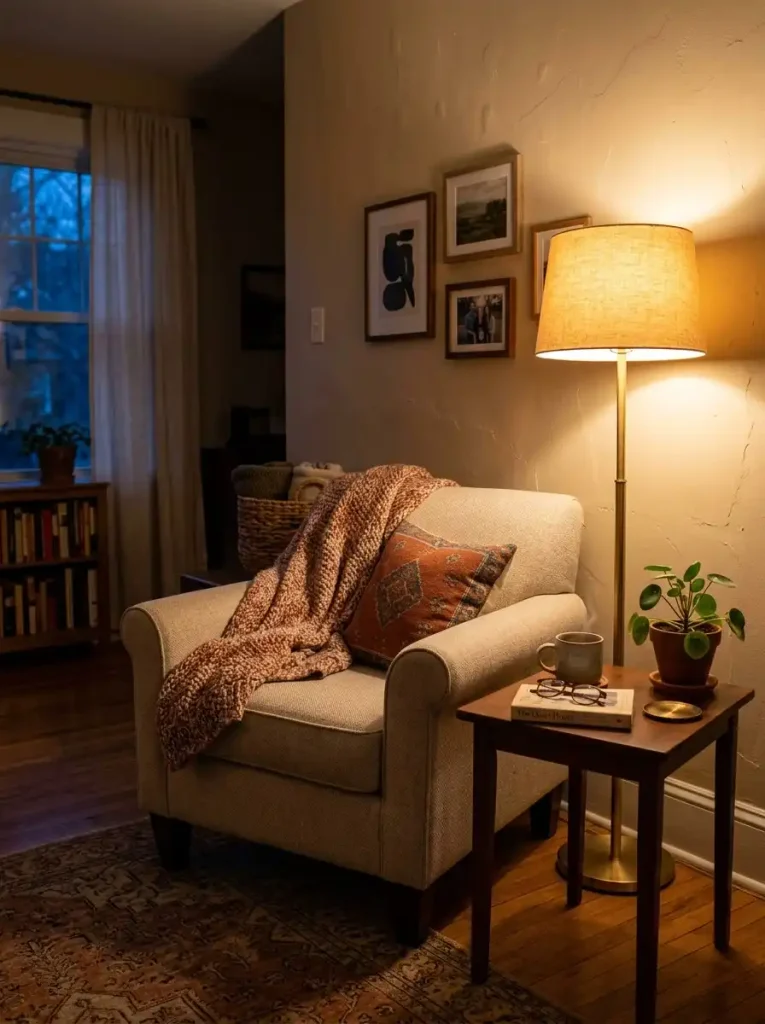
A single ceiling light tends to flatten a small room and make it feel clinical. Instead, layer three types of lighting: ambient (overhead or floor lamp), task (a reading lamp beside a chair), and accent (a small table lamp or string lights tucked into a shelf). This layering creates pools of warm light that make the room feel larger and cozier after dark, since shadows and soft glow do more work than one bright bulb ever could.
Choose bulbs in the 2700–3000K range for a golden, candle-like warmth rather than a stark white tone that can feel sterile in a compact space.
Lighting tips for small rooms:
- Use at least two lamps at different heights for depth
- Choose warm-toned bulbs over cool white
- Add a dimmer switch where possible for evening flexibility
- Tuck a small lamp into an otherwise dark corner
3. Soft Area Rug Anchoring
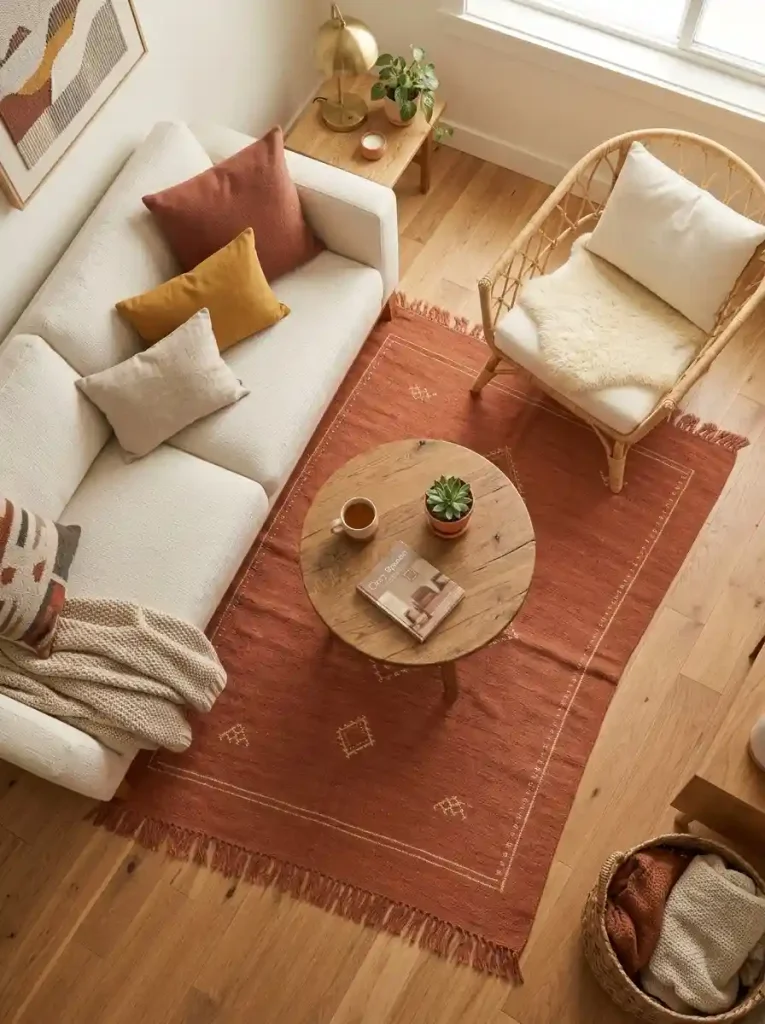
In a small living room, an area rug does more than add softness underfoot — it visually defines the seating zone and stops furniture from feeling like it’s floating aimlessly. Choose a rug large enough that at least the front legs of your sofa and chairs rest on it; too small a rug can make the whole room feel disjointed rather than pulled together.
Opt for a low pile in high-traffic layouts to keep pathways easy to navigate, and lean into warm tones like terracotta, cream, or deep rust to reinforce the cozy feeling.
Rug placement tips:
- Size up rather than down when in doubt
- Let front furniture legs rest on the rug’s edge
- Choose warm, muted tones over bold cool colors
- Layer a smaller vintage-style rug on top for extra texture
4. A Dedicated Reading Nook Corner
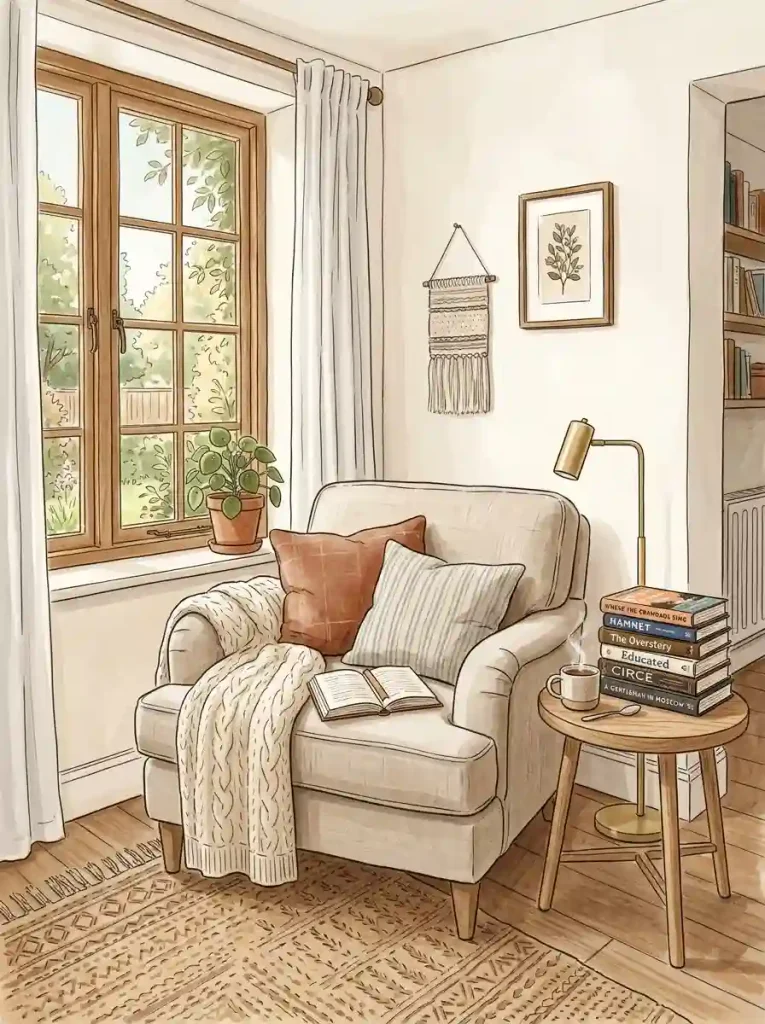
Even in a small living room, carving out one corner exclusively for quiet moments adds a sense of intentional coziness. A single accent chair angled toward the window, paired with a small side table and a floor lamp, signals that this spot is for slowing down — which instantly makes the whole room feel more livable rather than purely functional.
Keep the footprint minimal: one chair, one light source, and a small surface for a mug or book is enough to create the feeling without eating into your floor plan.
Elements of a cozy reading nook:
- Angle the chair toward natural light when possible
- Add a small side table within arm’s reach
- Include a soft throw specifically for this spot
- Keep a low basket nearby for current reads
5. The Curtain Ceiling Trick
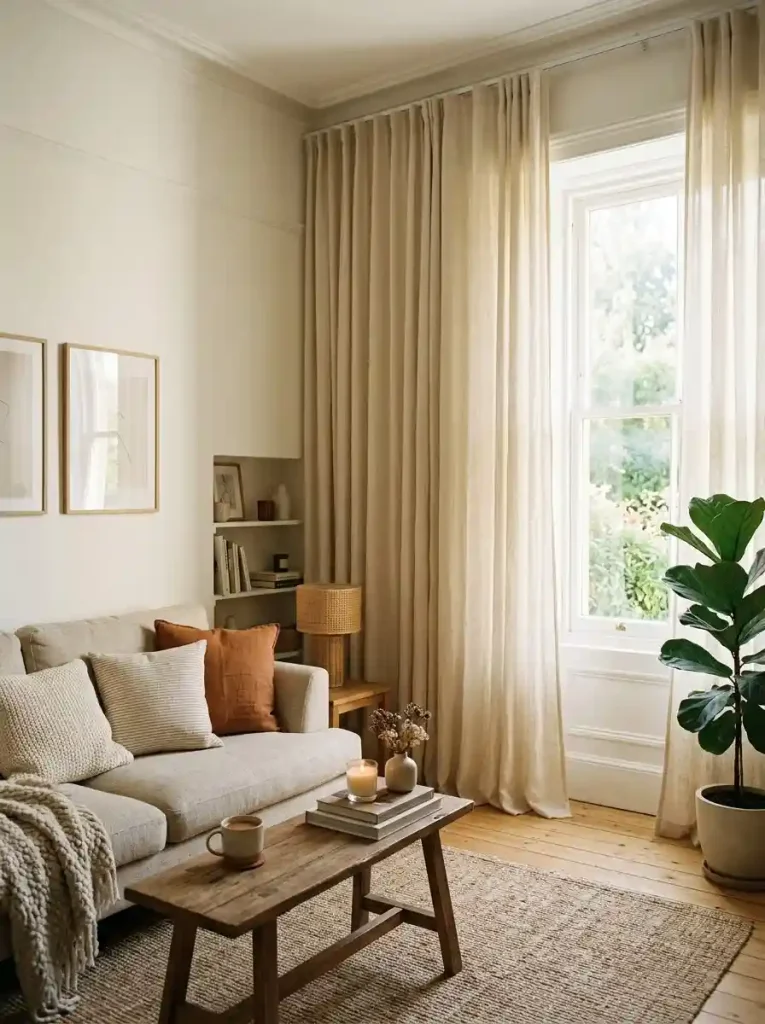
Hanging curtains close to the ceiling rather than directly above the window frame is a simple trick that draws the eye upward, making a small living room feel taller and airier. Choose flowing, lightweight fabrics in warm neutral tones so the curtains soften the room’s hard edges without blocking precious natural light.
This technique works especially well in rooms with lower ceilings, where every inch of perceived height matters for keeping the space from feeling boxed in.
Tips for the ceiling-height curtain trick:
- Mount rods 4–6 inches below the ceiling line
- Choose curtains that puddle slightly or graze the floor
- Pick lightweight linen for softness without heaviness
- Stick to warm, muted colors that blend with your walls
6. Warm Wood Tone Accents
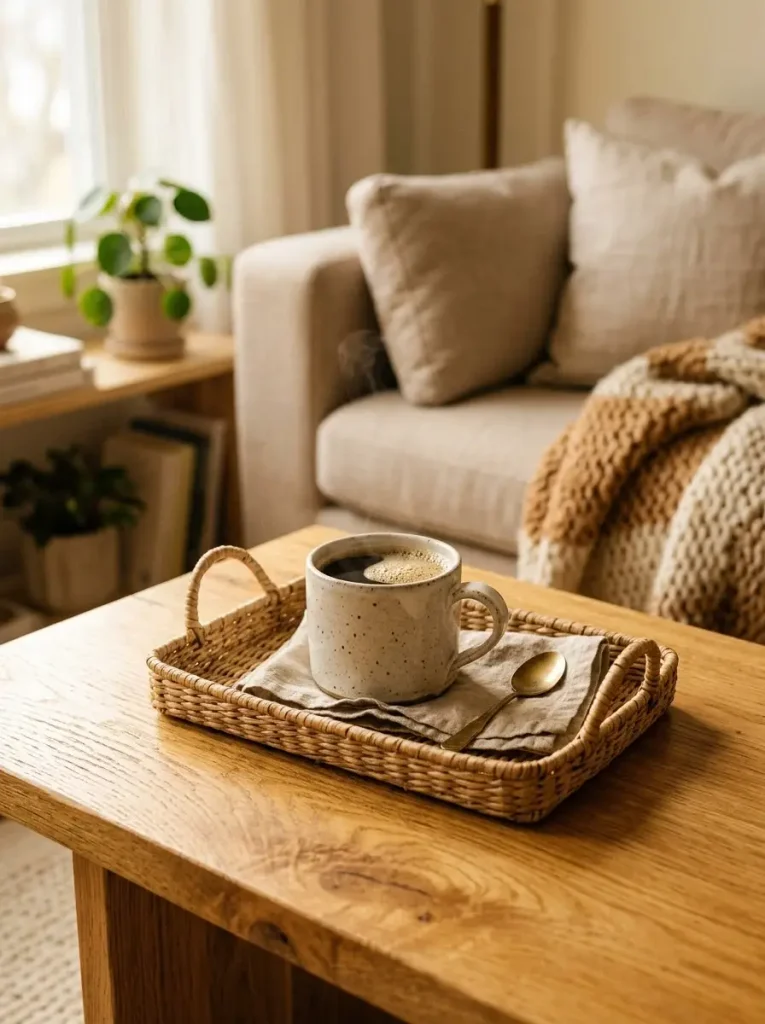
Wood brings an organic warmth that’s hard to replicate with any other material. In a small living room, even a few well-placed wood accents — a coffee table, a picture frame, a woven wall hanging with a wooden dowel — can ground the space and keep it from feeling cold or overly styled.
Mixing wood tones is fine as long as there’s a common undertone (warm or cool) running through the pieces, so the room doesn’t feel mismatched.
Ways to incorporate wood warmly:
- Choose one dominant wood tone and let smaller pieces echo it
- Add a wood-framed mirror to double the warmth with reflected light
- Use a wooden tray to corral remote controls or candles
- Bring in a small wood stool as an extra side table
7. A Gallery Wall of Personal Memories
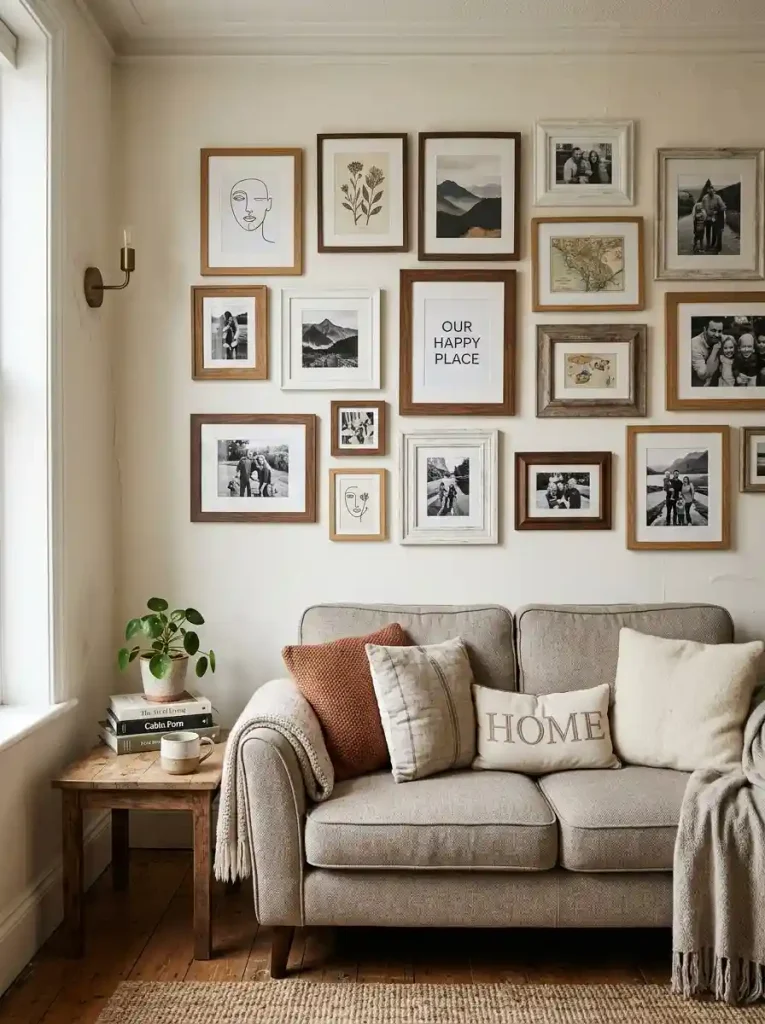
Nothing makes a small living room feel more like home than a wall filled with images that matter to you. Mixing framed photos, small art prints, and even a pressed botanical or two creates a layered, personal focal point that draws the eye without requiring additional furniture or floor space.
Keep frame colors consistent (all wood, all black, or a mix of warm metals) so the wall feels curated rather than chaotic, even with varied image sizes.
Gallery wall tips for small spaces:
- Lay out the arrangement on the floor before hanging
- Keep at least 2–3 inches between frames
- Mix frame sizes but repeat one color throughout
- Include at least one textured or dimensional piece
8. A Multi-Purpose Coffee Table
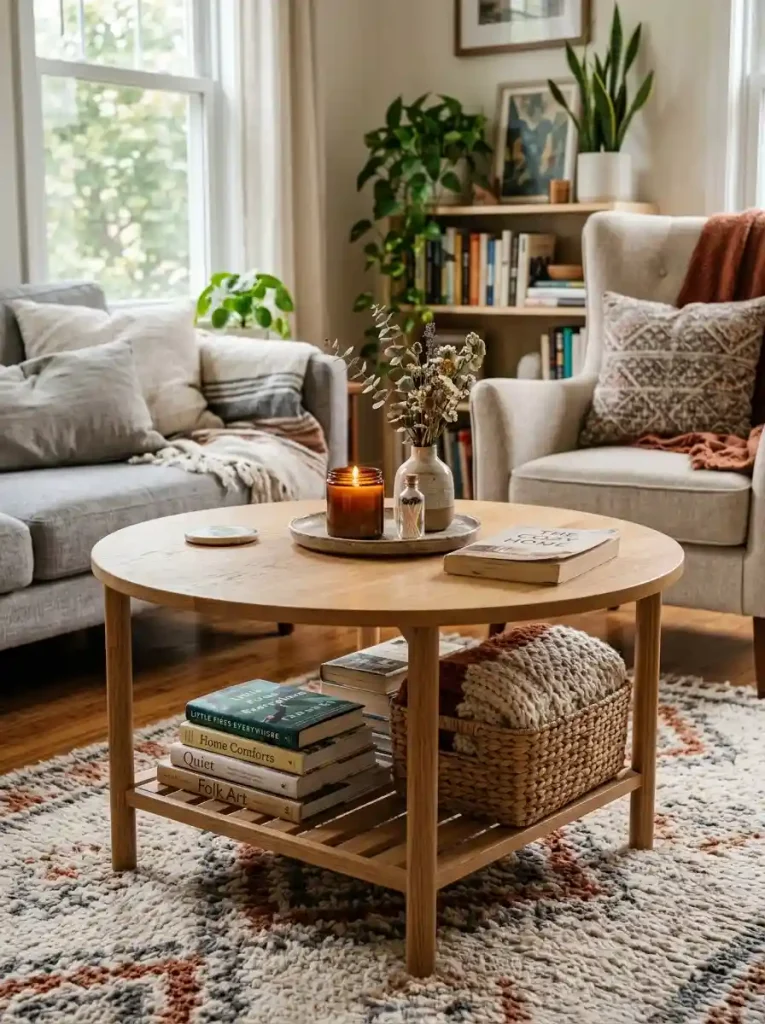
A coffee table in a small living room needs to earn its space. Look for a design with a lower shelf or hidden storage so it can hold blankets or board games, keeping surfaces clear while still offering a spot for coffee, candles, and the everyday objects that make a room feel used and loved.
Round or oval shapes tend to work better in tight layouts since they eliminate sharp corners that can make walking paths feel cramped.
Coffee table styling ideas:
- Add a tray to corral candles and coasters neatly
- Use the lower shelf for a stack of favorite books
- Choose a round shape to soften tight walking paths
- Rotate a small plant or seasonal object as a centerpiece
9. A Fireplace or Faux Fireplace Focal Point
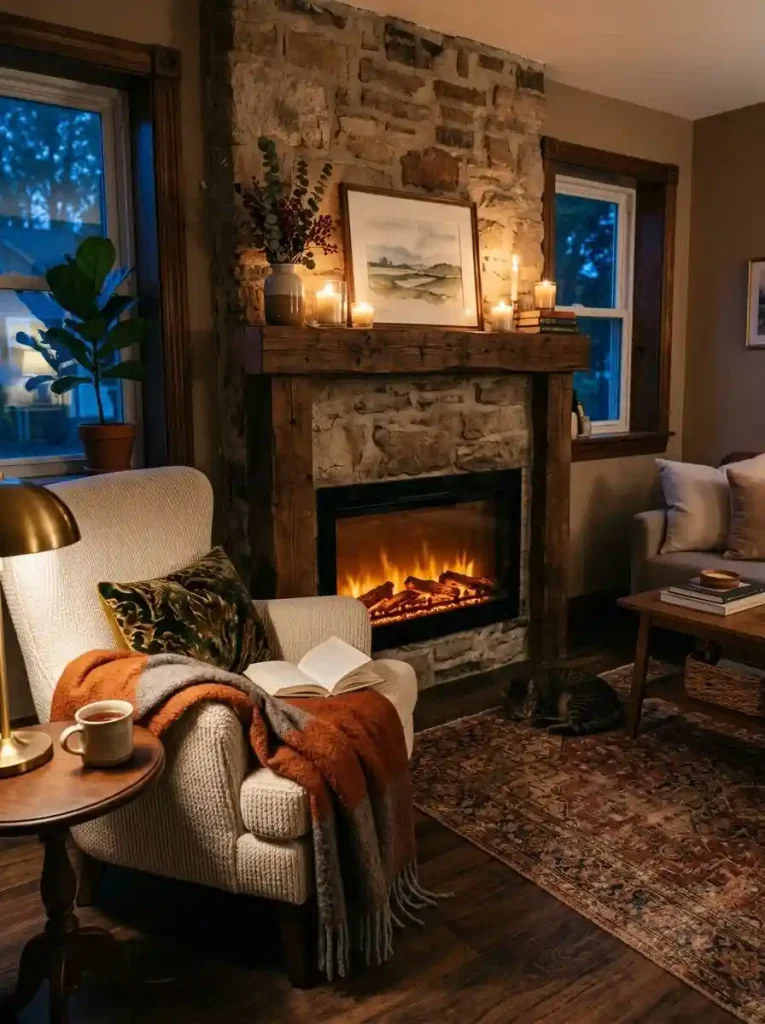
A fireplace — real, electric, or even a styled faux mantel — gives a small living room an instant emotional anchor. It signals warmth both literally and visually, and gives furniture something to be arranged around, which helps a compact layout feel purposeful rather than improvised.
If a built-in fireplace isn’t an option, a slim electric insert or a candle-filled faux hearth can deliver much of the same cozy, glowing effect.
Ideas for a fireplace focal point:
- Arrange seating to face the fireplace when possible
- Style the mantel with candles of varying heights
- Add a mirror above to reflect the warm glow
- Keep decor simple so the flame remains the focal point
10. Plush Oversized Cushions
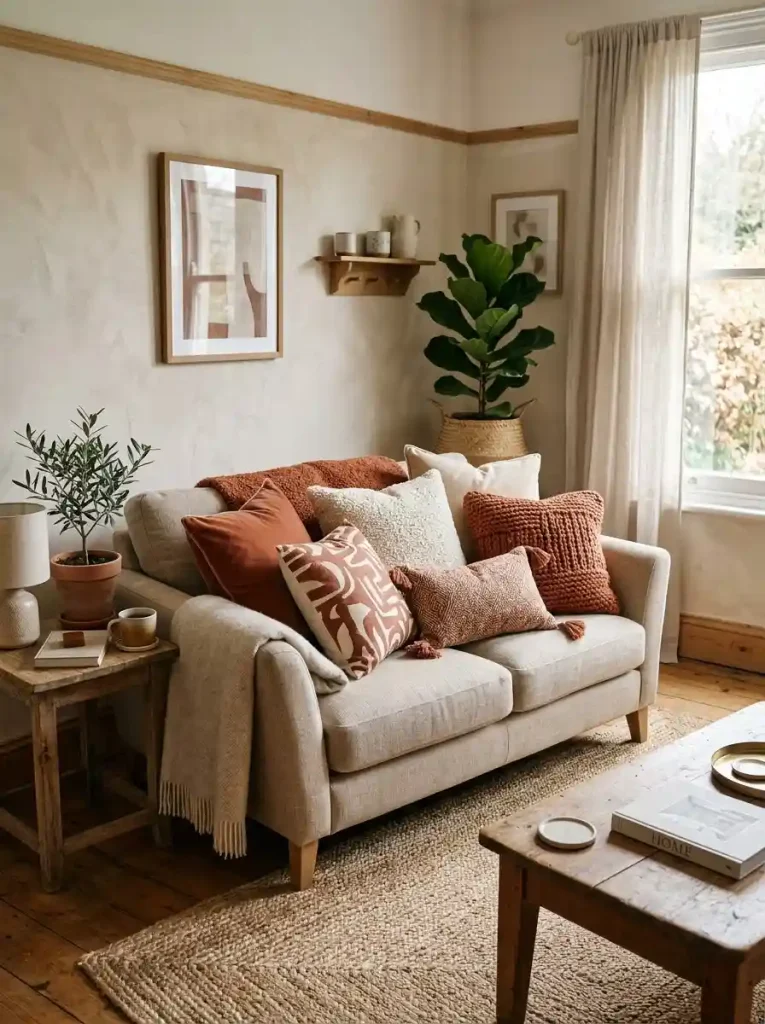
Cushions are one of the most affordable ways to add instant coziness to a small living room. Oversized floor cushions or an abundance of throw pillows in mixed textures — velvet, bouclé, linen — invite people to sink in and stay a while, which is exactly the feeling a cozy room should give.
Avoid overcrowding a small sofa with too many pillows; three to five in varying sizes usually strikes the right balance between plush and functional.
Cushion styling tips:
- Mix at least two textures for visual interest
- Vary sizes: one large, two medium, one small
- Choose a floor cushion for flexible extra seating
- Rotate covers seasonally for an easy refresh
11. A Warm Neutral Paint Palette
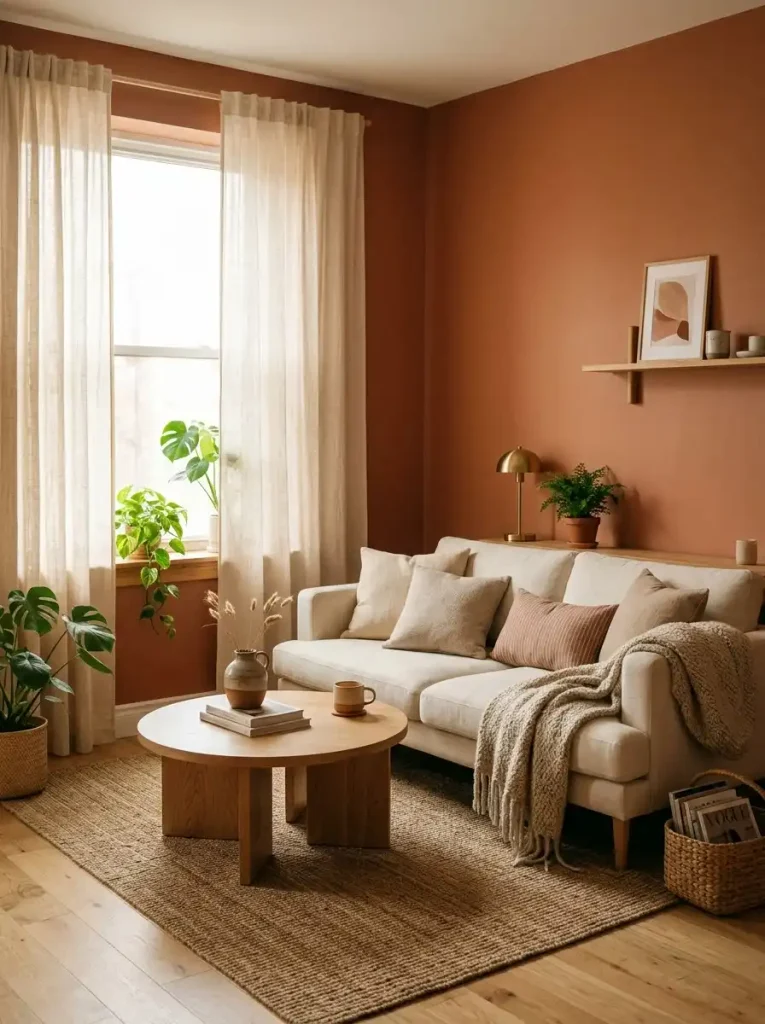
Wall color sets the emotional tone of a small living room before any furniture goes in. Warm neutrals — soft terracotta, warm greige, buttery cream, or muted clay — create a cocooning effect that cooler tones like stark white or icy gray simply can’t achieve in a compact space.
Test paint swatches at different times of day before committing, since a warm neutral can shift dramatically under morning versus evening light.
Choosing a warm neutral palette:
- Test swatches in both natural and lamp light
- Pair warm walls with warm-toned trim for cohesion
- Use a matte or eggshell finish to soften light reflection
- Let the wall color guide your textile and accent choices
12. Layered Vintage-Style Rugs
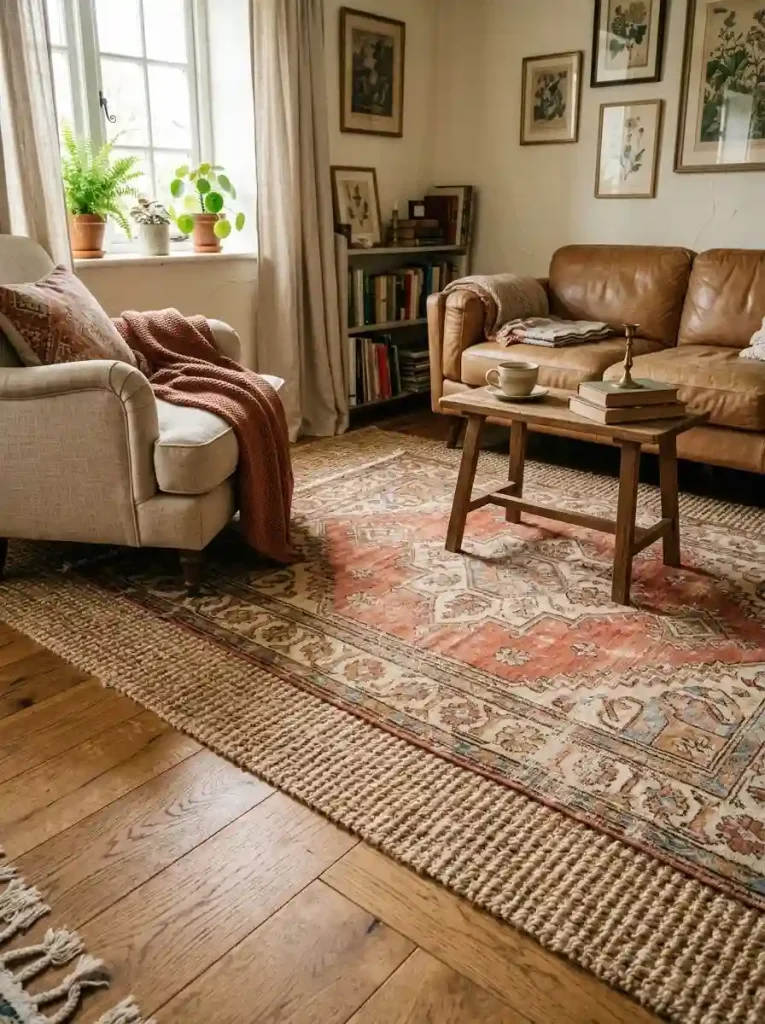
Layering a smaller vintage or Persian-style rug over a larger neutral base rug is a designer trick that adds warmth and history to a small living room without requiring more floor space. The contrast in pattern and pile height creates visual richness that a single flat rug can’t deliver on its own.
Keep the base rug neutral so the vintage layer can carry the color and pattern without the combination feeling busy.
Tips for layering rugs successfully:
- Choose a jute or flatweave base for texture contrast
- Center the smaller rug slightly off-center for a lived-in look
- Stick to warm, faded tones for the vintage layer
- Let the rug pairing anchor your color palette
13. Candlelight Corners
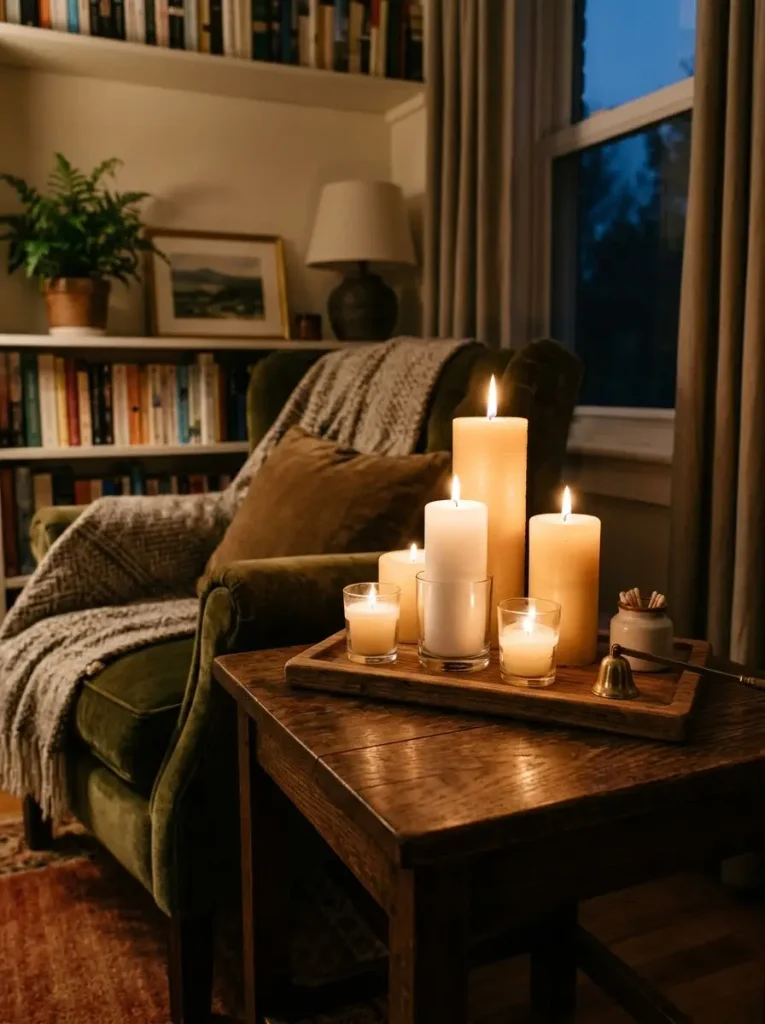
A cluster of candles at varying heights in an otherwise empty corner can do more for coziness than an entire piece of furniture. The flickering, warm light softens edges and adds a sense of calm, especially in the evening when overhead lighting can feel too harsh for a small space.
Group candles on a small tray or a stack of books to add height variation and keep the arrangement from looking scattered.
Styling candlelight corners:
- Use a mix of pillar and taper candles for height variety
- Group on a tray to keep the surface protected
- Choose warm-scented candles like amber or sandalwood
- Reserve one corner specifically for this evening ritual
14. A Statement Armchair
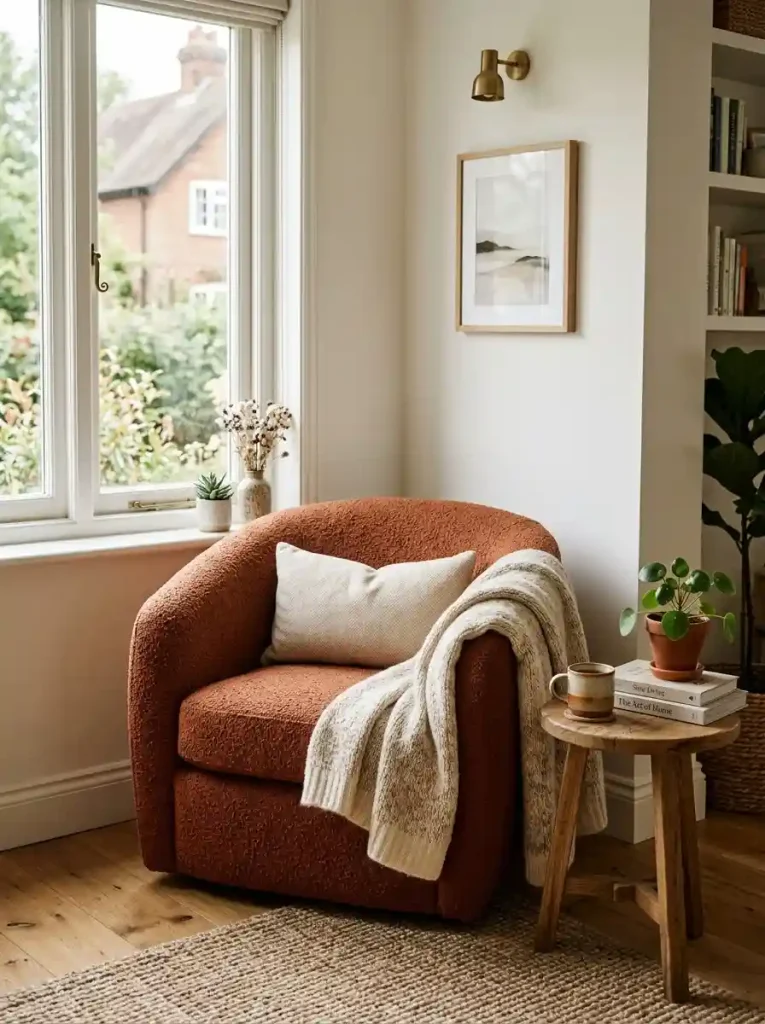
One bold, comfortable armchair can do more heavy lifting in a small living room than an entire matching furniture set. Choose a piece in a rich, warm color or an interesting silhouette — a curved back, a deep bouclé texture — so it becomes a focal point rather than just extra seating.
Position it at a slight angle rather than squared off against the wall to create a more relaxed, conversational layout even in tight quarters.
Choosing a statement armchair:
- Pick one bold color or texture rather than a busy pattern
- Angle it toward the main seating area, not the wall
- Pair with a small pouf for flexible footrest space
- Let it be the room’s one “splurge” piece
15. Book Nook Shelving
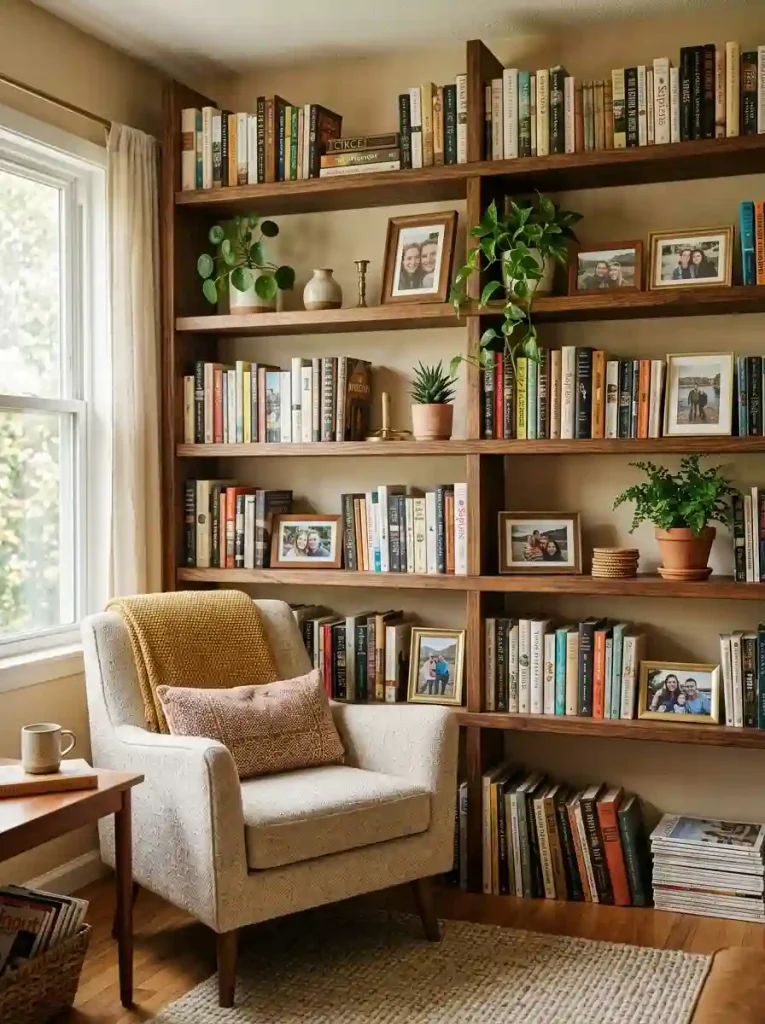
Open shelving styled with books, small plants, and a few personal objects turns an empty wall into a warm, lived-in feature. In a small living room, vertical shelving is especially valuable because it stores and displays without ever touching the floor plan.
Group books by color or size for a calmer, more curated look, and leave breathing room between objects so the shelf doesn’t feel overstuffed.
Styling book nook shelves:
- Stack some books horizontally, others vertically, for rhythm
- Add one small plant per shelf for a natural touch
- Leave at least 20% of each shelf empty for breathing room
- Include one or two personal objects, not just books
16. Woven Baskets for Soft Storage
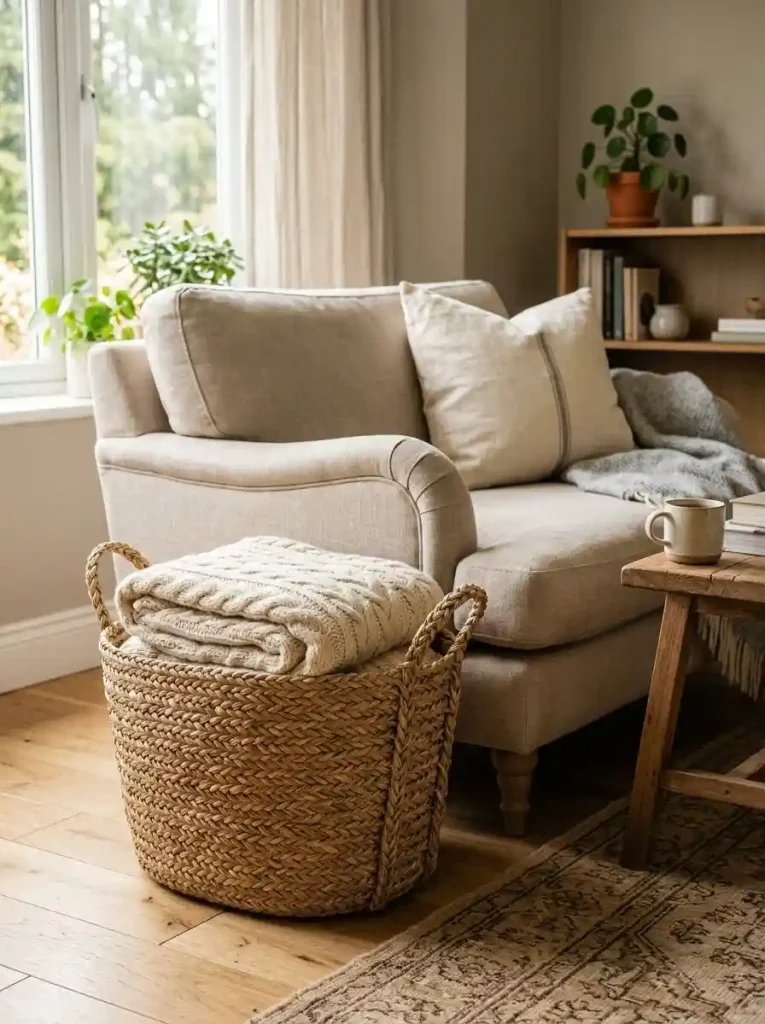
Woven baskets tucked beside a sofa or under a console table hide everyday clutter while adding natural texture that instantly reads as cozy. Unlike hard-edged storage bins, the organic shape and material of a basket blend into a warm, relaxed living room aesthetic rather than looking purely utilitarian.
Use varying sizes for different purposes — one for throw blankets, a smaller one for remotes or magazines — so each has a clear function.
Using woven baskets effectively:
- Choose a large basket for blankets beside the sofa
- Add a smaller lidded basket for remotes and odds and ends
- Stick to natural fiber tones like seagrass or rattan
- Tuck one under a console table to use vertical space
17. Curved Furniture Silhouettes
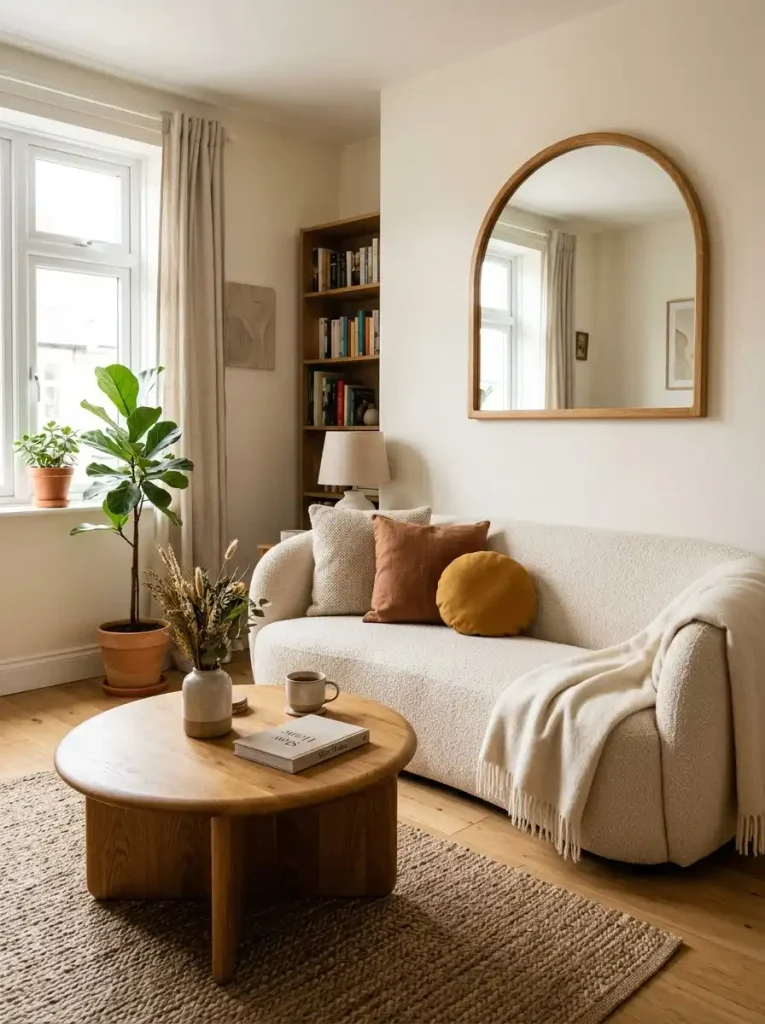
Curved sofas, rounded coffee tables, and arched mirrors soften a small living room in a way that boxy, angular furniture can’t. Curves also improve traffic flow in tight spaces since there are no sharp corners to navigate around, making the room feel both cozier and more functional.
You don’t need to replace every piece — introducing one or two curved elements alongside your existing furniture is often enough to shift the whole room’s feel.
Incorporating curved furniture:
- Start with a round coffee table if a full sofa swap isn’t in budget
- Add an arched mirror to echo the curve elsewhere
- Choose a curved-back accent chair for visual softness
- Balance curves with a few straight-lined pieces for contrast
18. A Window Seat Nook
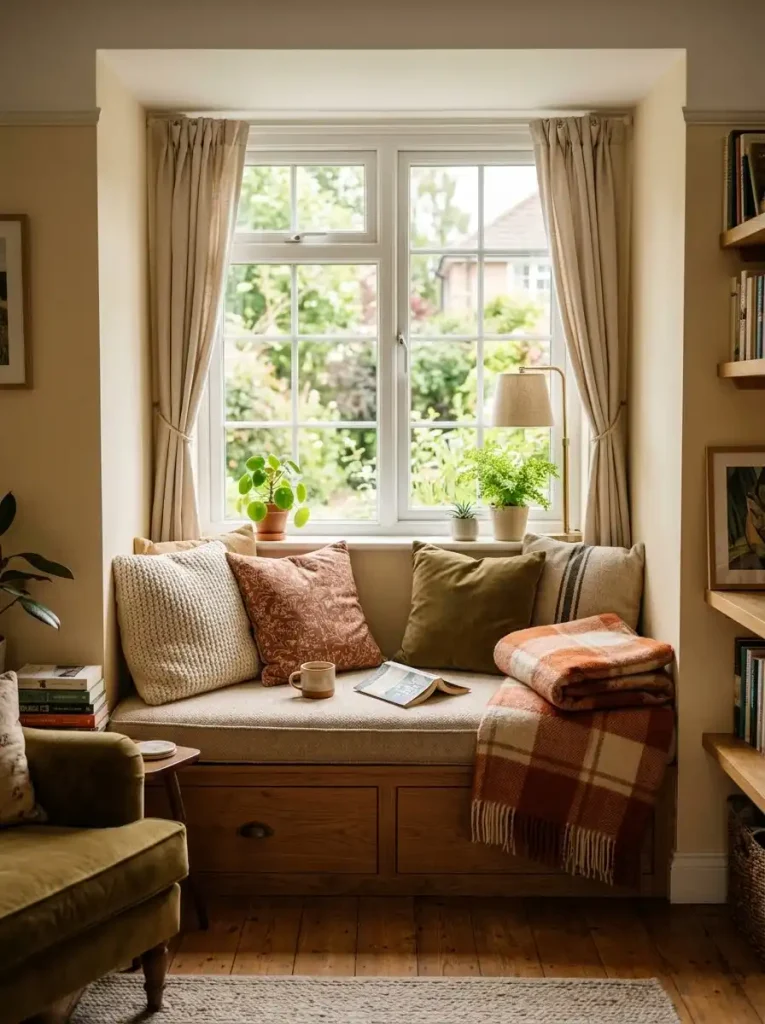
If your small living room has a window ledge or a radiator cover, building a simple cushioned seat there creates extra seating without using any additional floor space. Add a fitted cushion, a few throw pillows, and a small reading light to turn an overlooked architectural feature into one of the coziest spots in the room.
This works especially well in older homes or apartments with deep window sills that are otherwise wasted space.
Creating a window seat nook:
- Measure the ledge before ordering a custom cushion
- Add two to three coordinating throw pillows
- Include a small clip-on light for evening reading
- Keep a folded blanket nearby for chilly days
19. Textured Curtains for Softness
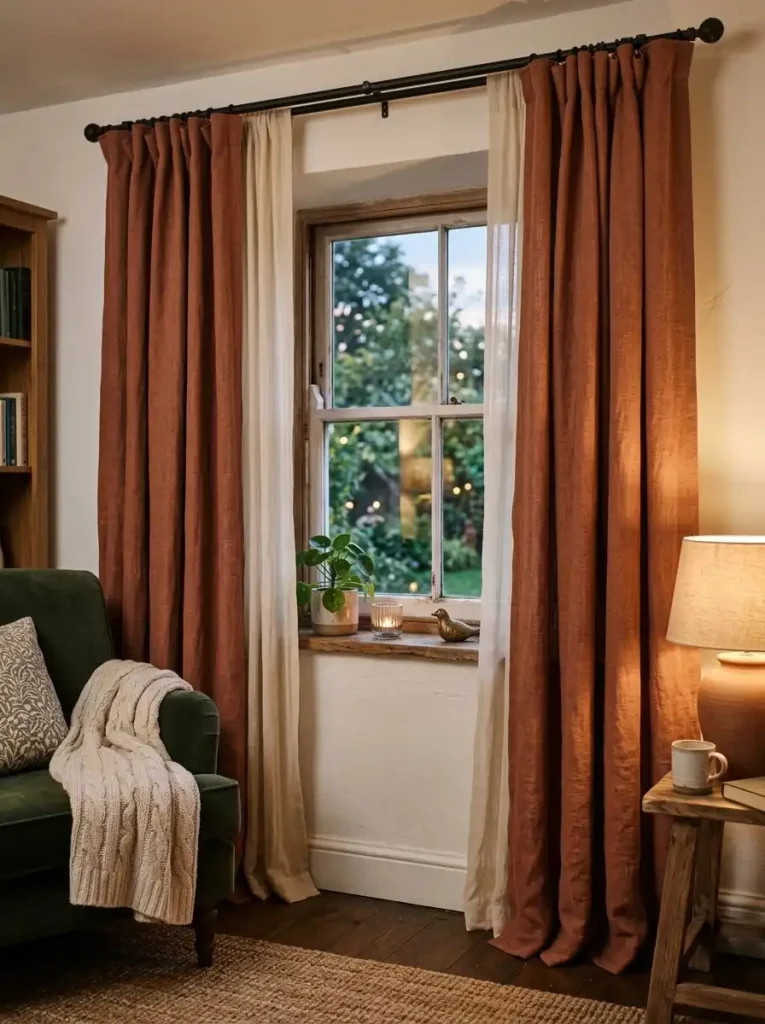
Beyond the ceiling-height trick, the fabric choice itself matters for coziness. Heavier textured curtains — a nubby linen blend or a soft velvet — absorb sound and soften hard window lines in a way that sheer or flat cotton panels don’t, making a small living room feel more enclosed and comforting in the best way.
Layer a sheer panel underneath a heavier curtain for flexibility between daytime brightness and evening coziness.
Choosing textured curtains:
- Layer a sheer panel under a heavier textured drape
- Choose warm tones that echo your wall color
- Pick a fabric with visible weave or nap for depth
- Ensure curtains can fully close for evening coziness
20. Displaying Personal Touches
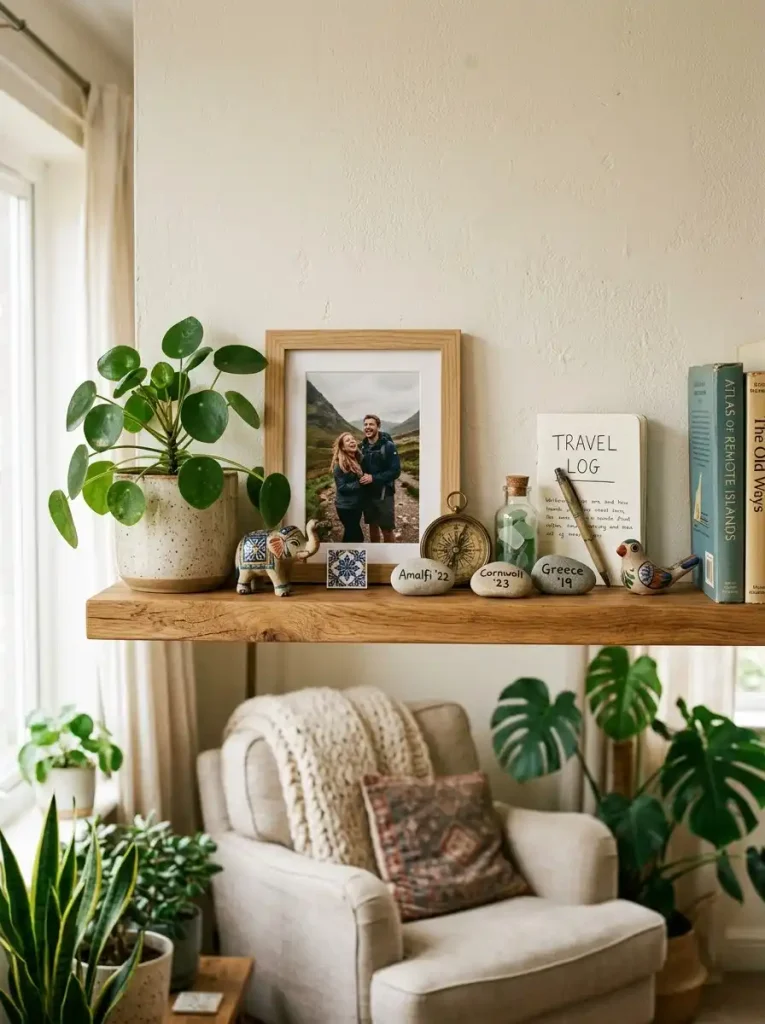
The objects that make a room feel like yours — travel souvenirs, handwritten notes, a favorite mug collection — are often the last thing added and the first thing that makes guests feel welcome. In a small living room, a few well-placed personal items on a shelf or coffee table do more for warmth than any purchased decor piece.
Rotate these items occasionally so the space continues to feel fresh and considered rather than static.
Displaying personal touches thoughtfully:
- Choose 3–5 meaningful objects rather than displaying everything
- Group items by color or material for cohesion
- Rotate seasonal pieces in and out every few months
- Leave space around each item so it doesn’t feel cluttered
21. Warm Scented Ambiance
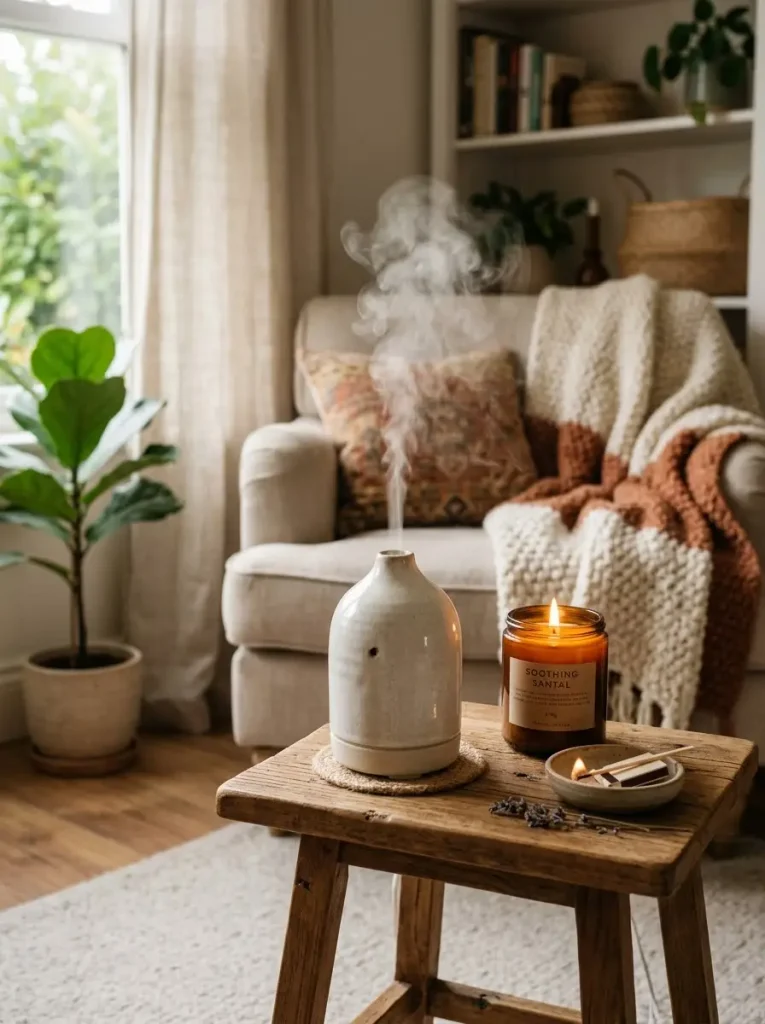
Scent is an often-overlooked layer of coziness. A simmering diffuser, a scented candle, or even simmered spices on the stove nearby can make a small living room feel warm and welcoming the moment someone walks in, reinforcing the visual coziness with something sensory.
Choose warm, comforting scent families — amber, cedar, vanilla, or spice — rather than sharp or overly floral notes for a true cozy-room feel.
Building warm scented ambiance:
- Choose one signature scent for consistency
- Place a diffuser or candle near the seating area, not the entryway
- Opt for warm notes like amber, cedar, or clove
- Refresh scent choices seasonally to match the mood
22. Strategic Mirror Placement for Warm Light
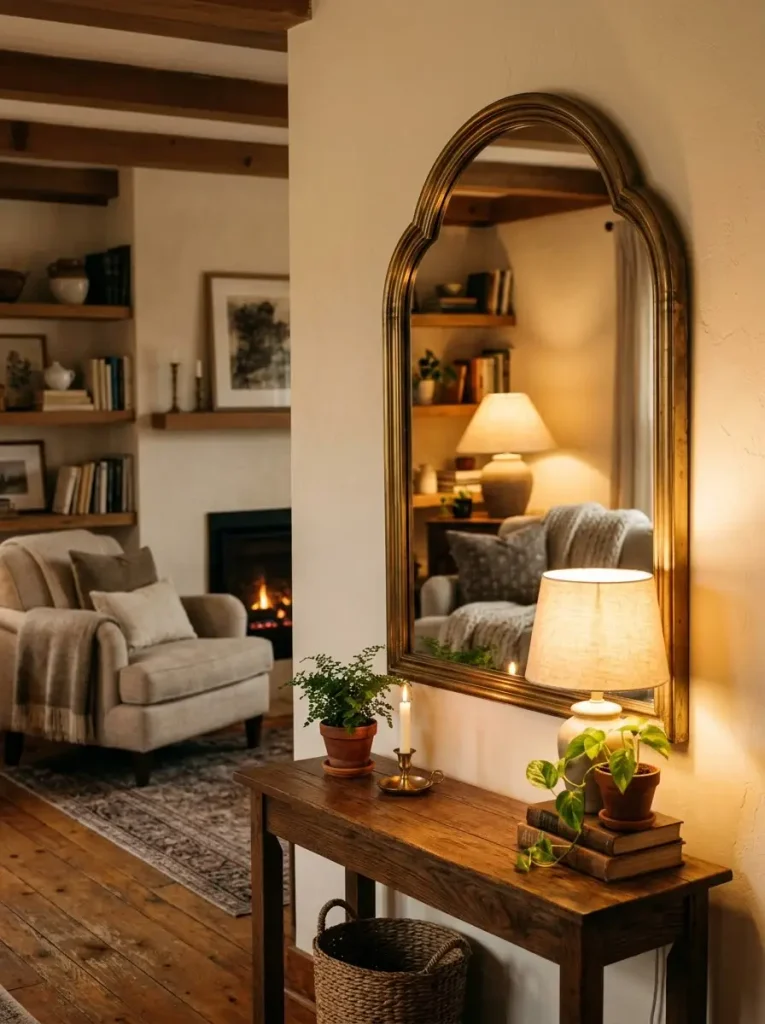
A well-placed mirror doesn’t just make a small living room feel larger — positioned to reflect warm lamp light or a sunset view, it can double the coziness of your existing light sources. Choose a mirror with a warm wood or brass frame rather than a stark, cold-toned frame to keep the reflection feeling soft rather than sharp.
Position it across from a lamp or window rather than directly opposite a plain wall to get the most warmth-multiplying effect.
Placing mirrors for warmth:
- Position across from your main light source, not a blank wall
- Choose a warm wood or brass frame over cold metal
- Avoid placing directly across from a TV to prevent glare
- Use an arched or organic shape to soften the room further
Pro tip: If you can only change one thing this week, start with lighting. Layering warm, low light sources transforms a small living room’s mood faster than almost any other single change — and it’s one of the most budget-friendly upgrades on this list.
Conclusion
A small living room can feel just as warm and welcoming as a much larger space — sometimes even more so, since every choice you make has room to be intentional. From layered textures and warm lighting to a few meaningful personal touches, these 22 ideas are designed to work together or stand alone, so you can start wherever fits your space and budget best.
The goal isn’t to fill every corner — it’s to make each element earn its place, creating a living room that feels curated, comfortable, and truly yours.
Frequently Asked Questions
What’s the fastest way to make a small living room feel cozier without buying furniture?
Start with layered lighting and textiles. Swapping overhead lighting for a warm-toned lamp, adding a textured throw, and grouping a few candles can transform the mood of a small living room in an afternoon, with no furniture changes required.
Do dark colors make a small living room feel smaller?
Not necessarily — warm neutrals and even deeper tones like terracotta or clay can create a cozy, cocooning effect rather than shrinking the room, especially when paired with good layered lighting. It’s stark, cool-toned brightness that often feels less inviting in a compact space, not depth of color itself.
How many cushions and throws are too many for a small sofa?
As a general guide, three to five cushions in varying sizes plus one or two throws is usually the sweet spot. Beyond that, a small sofa can start to feel more cluttered than cozy, leaving little room to actually sit comfortably.
Can a small living room have both a reading nook and a media area?
Yes, as long as each zone has a clear, minimal footprint. A single accent chair with a side table can serve as a reading nook, while the main seating faces the media area — the key is keeping each zone’s furniture count low so the two don’t compete for space.
What’s the easiest cozy upgrade for a rented small living room?
Textiles and lighting are ideal for renters since they require no permanent changes. Layered rugs, warm-toned lamps, curtains, and cushions can be taken with you when you move, making them a low-risk, high-impact way to add warmth to a rental space.