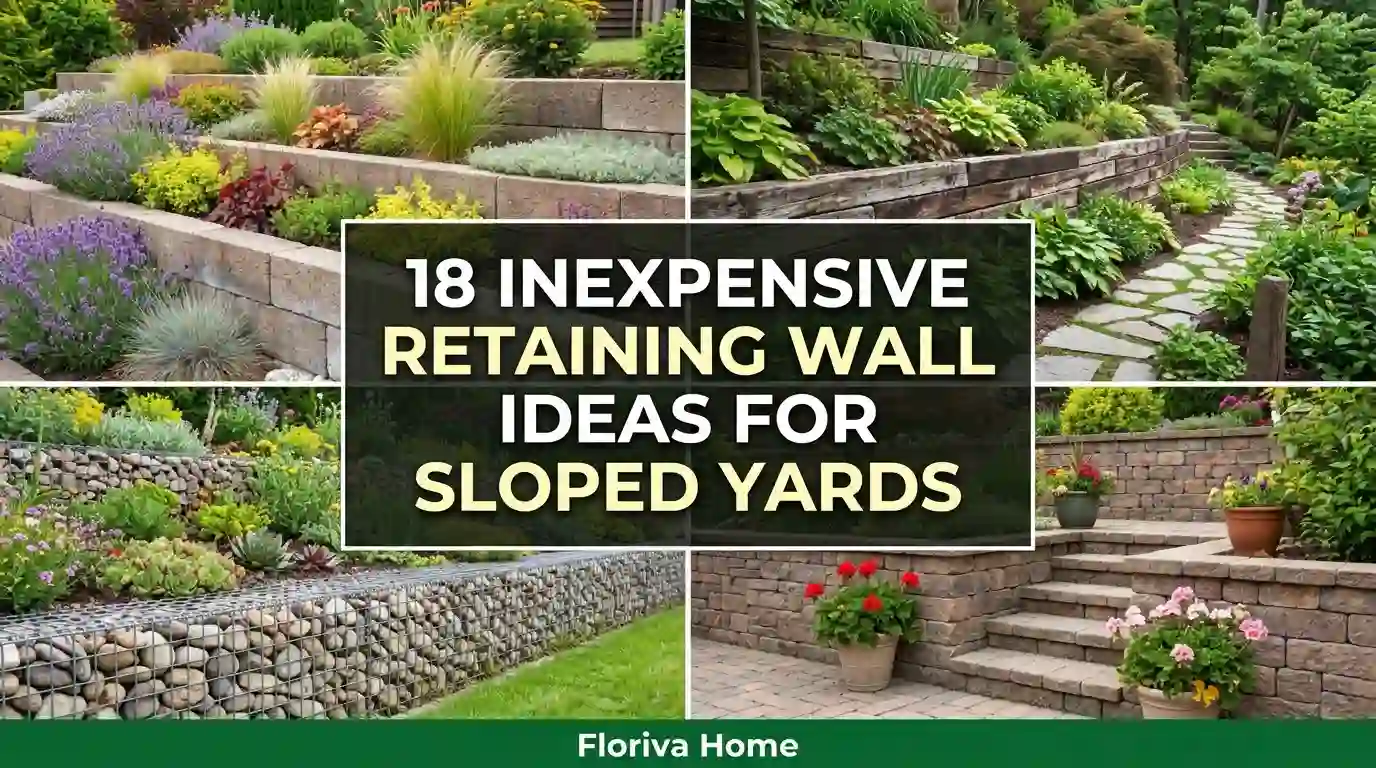
18 Inexpensive Retaining Wall Ideas for Sloped Yards
Sloped yards can be beautiful, but they often bring practical problems like soil erosion, difficult mowing, poor drainage, and awkward planting areas. A well-planned retaining wall can turn that challenging slope into useful garden space without requiring an expensive landscape makeover.
The good news is that you don’t always need premium stone or a large construction budget. Reclaimed materials, simple timber, small terraces, and creative planting can all help you build an attractive retaining wall while keeping costs under control.
These inexpensive retaining wall ideas for sloped yards can help you create flatter planting areas, define different levels, control runoff, and give your outdoor space a more finished appearance.
Before building, consider the height of the wall, soil pressure, drainage, local requirements, and the condition of the slope. Small decorative walls are very different from structures holding back a substantial amount of soil.
1. Create a Low Timber Step Wall
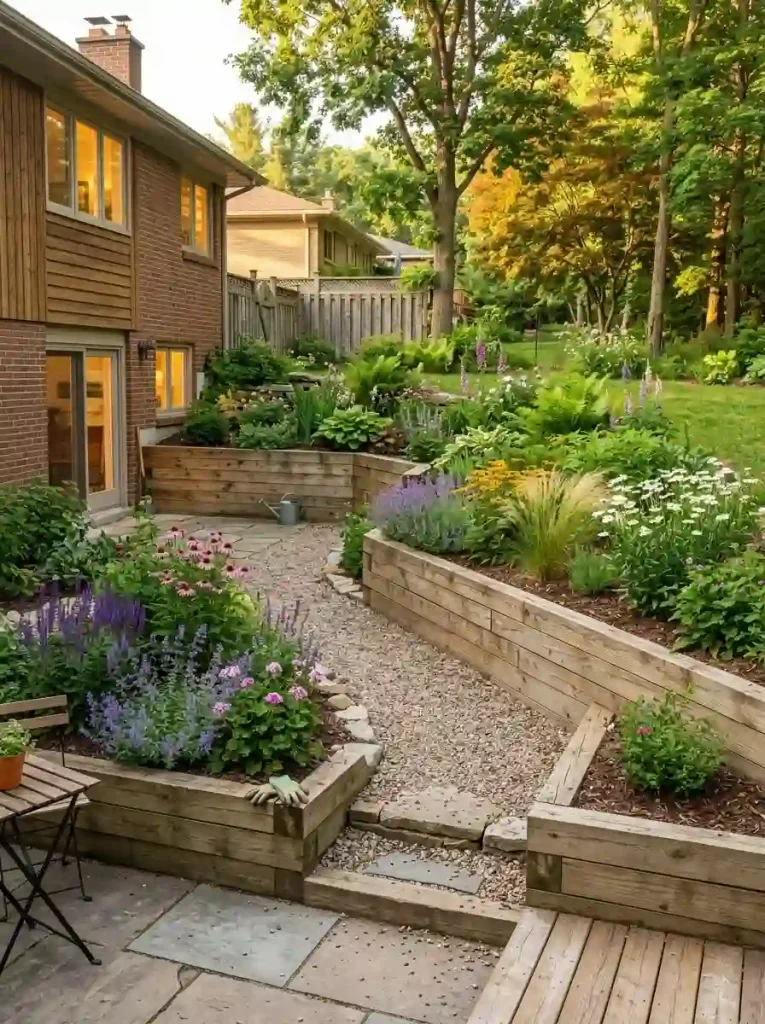
A low timber retaining wall can be one of the simplest ways to break a long slope into manageable levels. Instead of trying to hold back the entire hillside with one tall structure, create several short sections that follow the natural grade.
Landscape timbers or suitable treated lumber can form horizontal courses, while sturdy stakes or other appropriate connectors help keep the structure aligned. The spaces between levels can become planting beds for flowers, herbs, ornamental grasses, or compact shrubs.
This approach works particularly well when you want a relaxed, garden-like appearance rather than a formal masonry wall. Using several short terraces can also make a steep yard feel more organized.
Expert Tip:
Keep each terrace modest in height and pay close attention to drainage. A series of small, well-supported levels can be easier to manage than one oversized wall.
2. Build a Pallet-Inspired Garden Retaining Wall
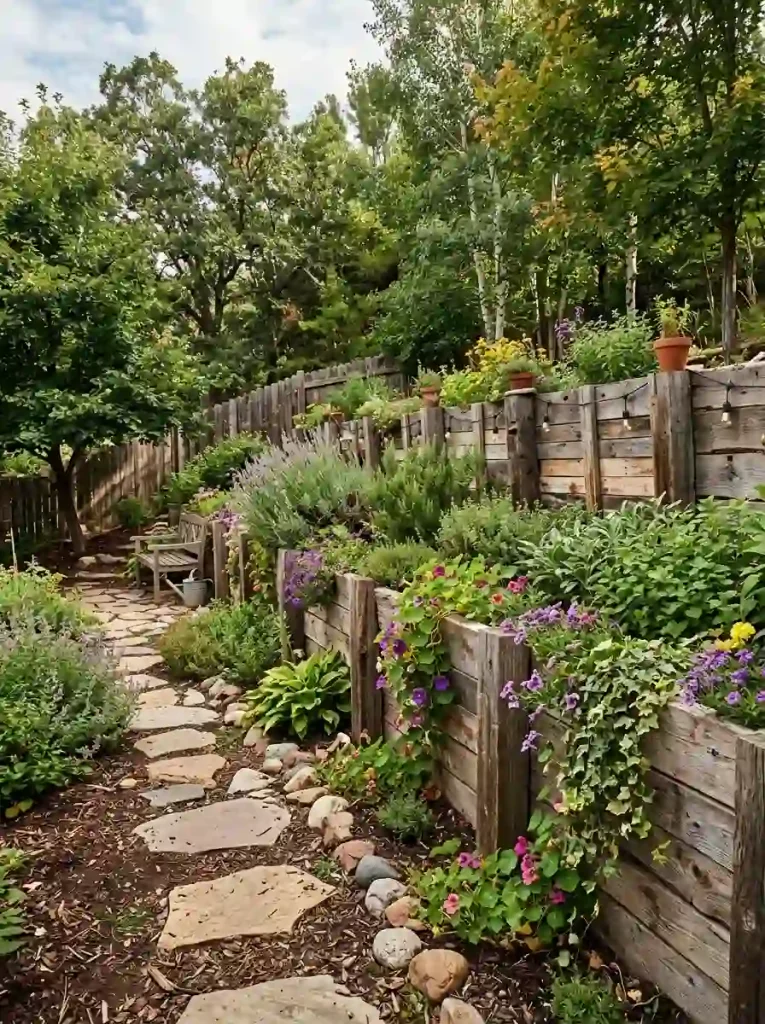
If you already have suitable reclaimed wood available, a pallet-inspired retaining structure can give a sloped garden a rustic personality without relying on expensive decorative materials.
Rather than simply burying old pallets in soil, inspect every piece carefully and use sound, weather-appropriate lumber. Reinforce the structure where necessary and keep the design limited to areas where the soil load is manageable.
The spaces between boards can also become an opportunity for planting. Small trailing flowers or herbs can soften the wood and make the retaining feature look intentionally designed.
This idea is especially appealing for informal backyard gardens, cottage-style spaces, and DIY landscapes where perfectly uniform materials aren’t necessary.
Expert Tip:
Don’t assume every discarded pallet is suitable for landscaping. Choose clean, structurally sound wood and avoid pieces showing rot, chemical contamination, or major damage.
3. Use Reclaimed Bricks for Small Terraces
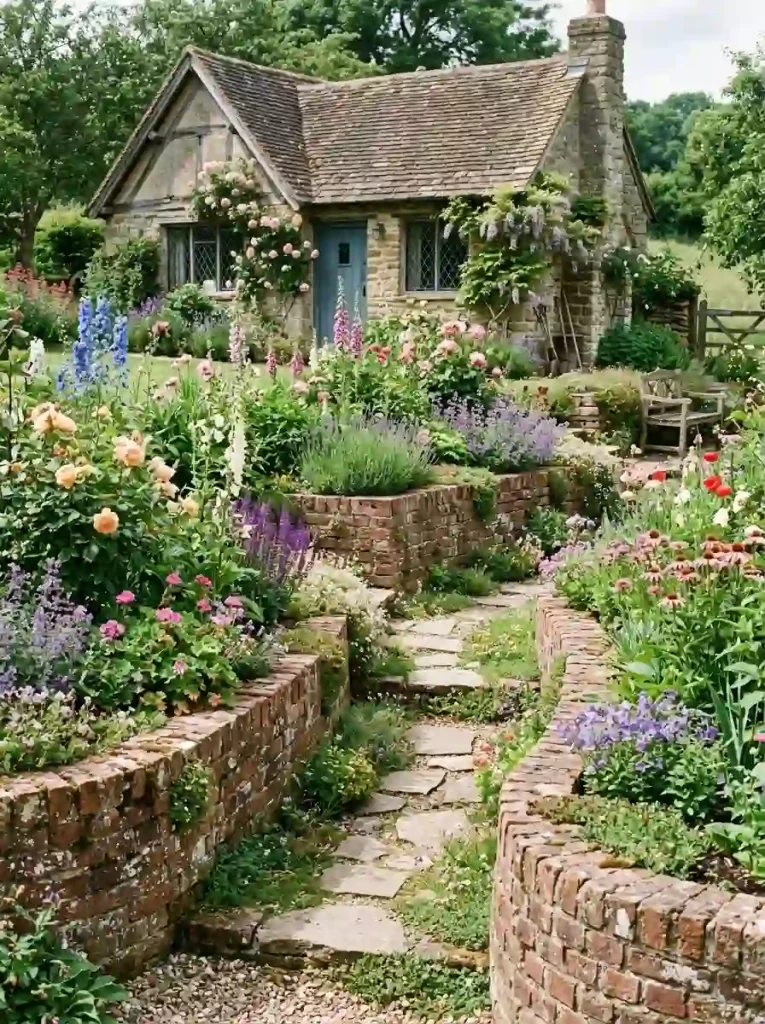
Old bricks can become surprisingly attractive retaining-wall material when arranged into short garden terraces. Their weathered surfaces bring character, while different shades of red, brown, and faded orange can create a naturally aged appearance.
Use reclaimed bricks where their condition and the wall design are appropriate, particularly for low landscape features. A carefully prepared base is important because uneven settling can quickly make a brick wall look crooked.
You can leave the brick exposed for a classic appearance or surround the wall with soft planting to make it blend into the yard.
Consider using the terraces for compact flowers, ground covers, or vegetables that appreciate the improved access created by the slope.
Expert Tip:
Sort reclaimed bricks before construction and use the strongest pieces in the most important courses. A consistent, stable base matters more than perfectly matching brick colors.
4. Create a Tiered Rock-and-Gravel Wall
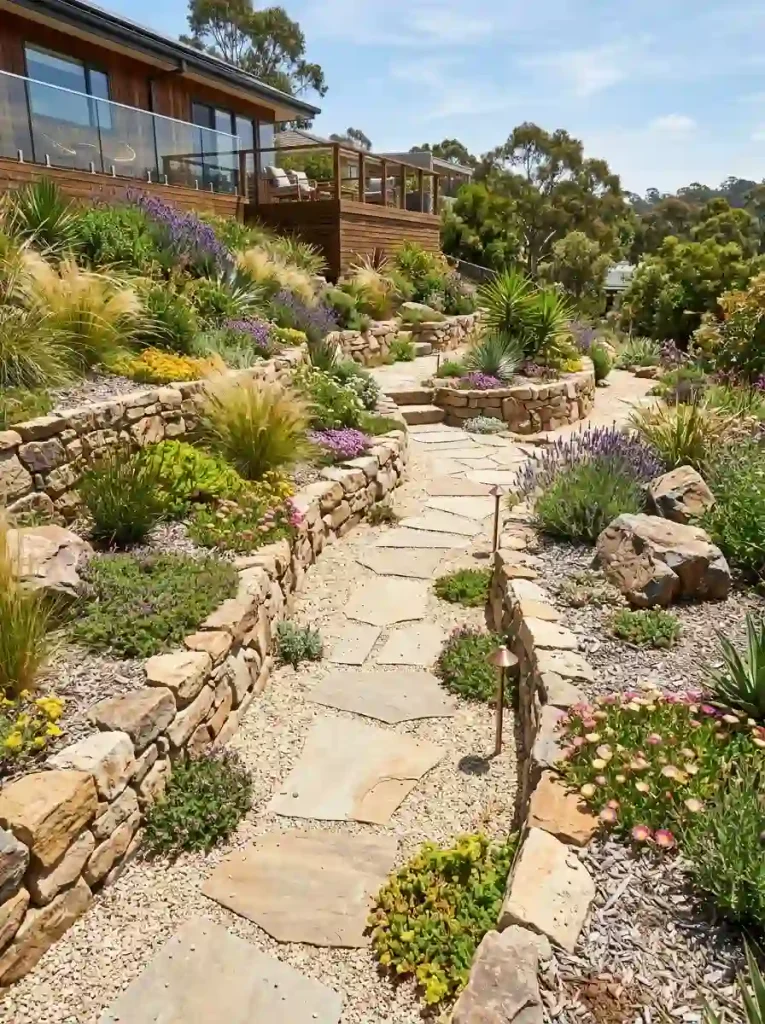
Instead of constructing one large formal wall, use several short rock-filled terraces to slow water and visually divide the slope.
Large landscape rocks can establish the main structure, while smaller gravel fills gaps and creates a natural transition between levels. Plants can then be tucked around the rocks to make the installation feel less rigid.
This style works especially well in yards that already contain stone, gravel paths, or drought-tolerant landscaping. You can also use plants that spread gently over the edges, helping connect the different levels.
The finished result can look more like a natural hillside than a conventional retaining wall.
Expert Tip:
Place larger stones where they visually and structurally anchor each terrace. Avoid creating pockets where runoff can collect behind the rocks.
5. Turn Old Concrete Into a Garden Wall
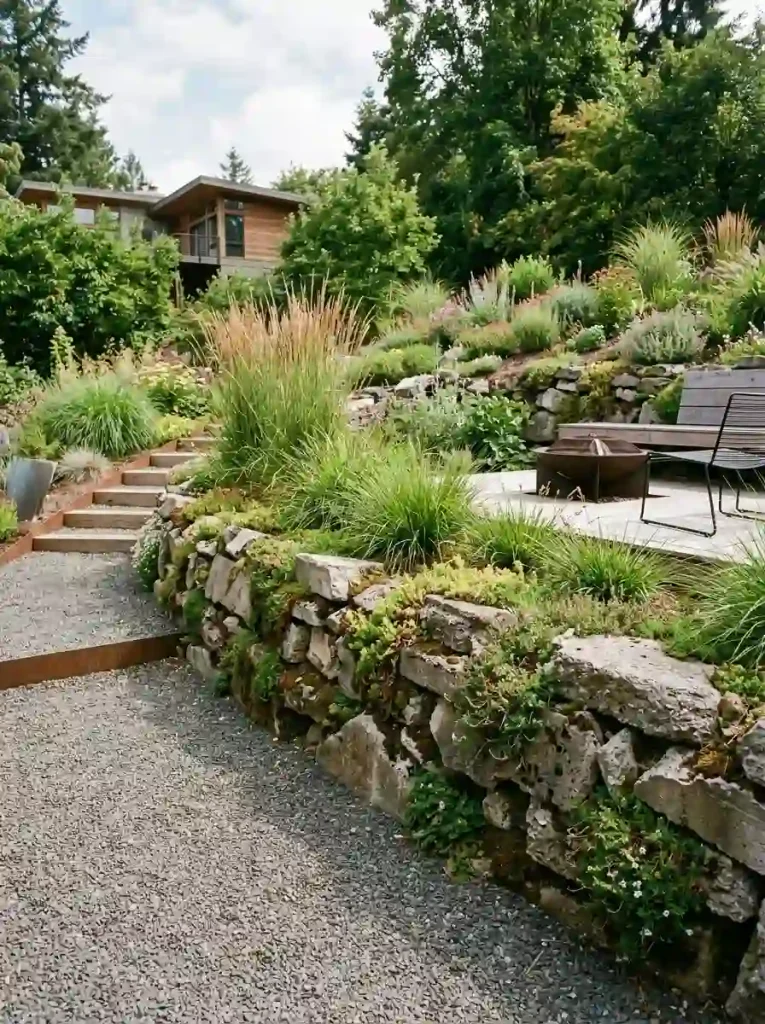
Broken or leftover concrete pieces don’t necessarily have to become waste. In the right setting, larger chunks can be arranged into a rugged retaining feature with a distinctly modern-industrial character.
The key is selecting pieces that are stable and appropriate for the intended wall. Arrange them so they interlock visually and leave controlled spaces for drainage and planting.
Once plants grow around the edges, the rough concrete becomes less noticeable. Grasses, creeping plants, and hardy perennials can soften the hard surfaces and create a more natural transition.
This approach is particularly useful for homeowners who have leftover concrete from previous landscaping or renovation work.
Expert Tip:
Inspect reclaimed concrete carefully before using it. Avoid unstable fragments and plan the arrangement so water has a clear route away from the slope.
6. Install a Simple Log Terrace
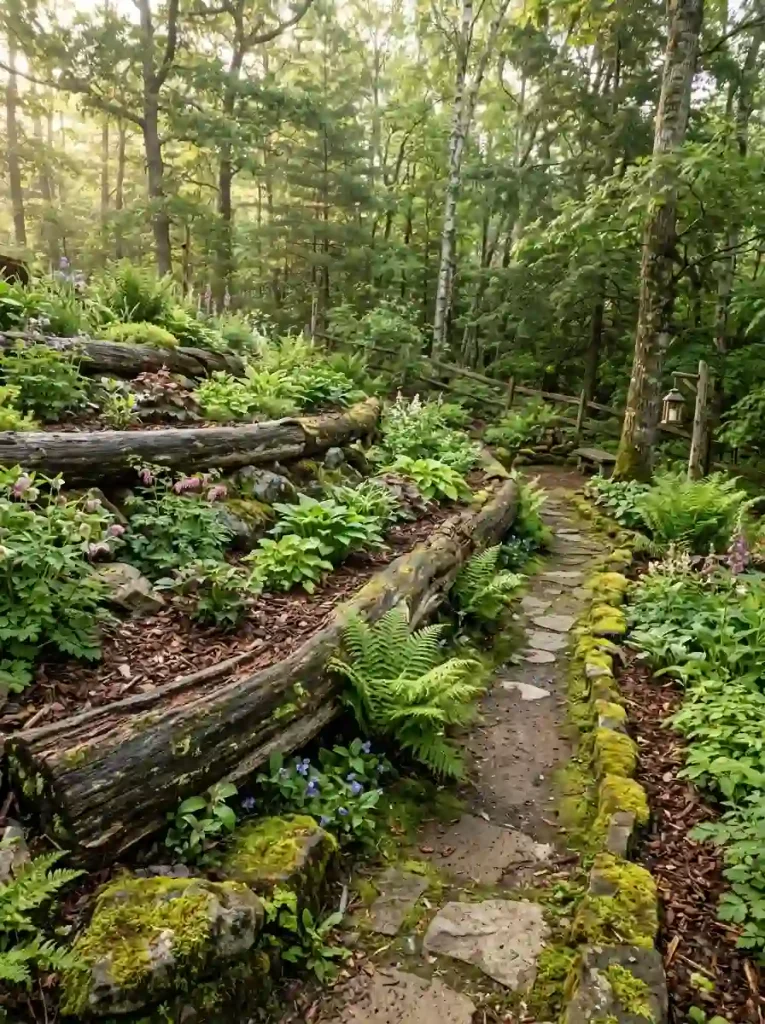
Logs can give a sloped yard a woodland-inspired appearance while creating useful planting levels. Straight, sturdy logs can be arranged horizontally along the contour of a hillside and secured appropriately.
This idea looks particularly attractive when the surrounding garden already contains trees, bark mulch, native plants, or other natural materials.
Instead of making every terrace perfectly straight, you can allow the wall to gently curve with the landscape. That softer layout makes the structure feel like part of the garden rather than something placed on top of it.
Keep in mind that untreated wood eventually decays, so material selection and expected service life should be considered before construction.
Expert Tip:
Choose durable logs and expect natural wood to have a limited lifespan. Keep the structure well drained so moisture doesn’t remain trapped against the timber.
7. Use Interlocking Landscape Blocks
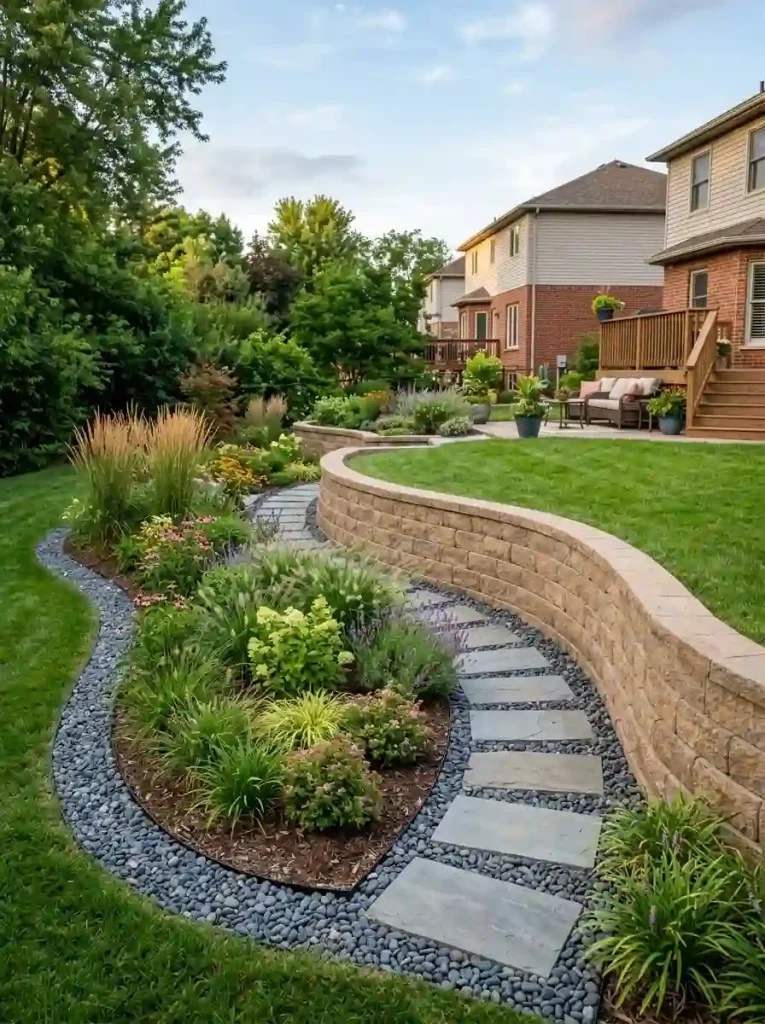
Interlocking landscape blocks can make a relatively neat retaining wall without requiring mortar between every course. Many systems are designed specifically for landscaping and are available in different textures and finishes.
For a sloped yard, a short wall can create a level planting bed while the block pattern gives the garden a clean edge.
You can keep the appearance simple by choosing one block style throughout the project. Planting low-growing greenery near the base can soften the straight lines without hiding the wall completely.
This option is particularly useful if you prefer a more polished appearance but still want to keep installation straightforward.
Expert Tip:
Follow the manufacturer’s installation requirements rather than treating every block system the same. A properly prepared base is essential for keeping courses aligned.
8. Create Multiple Mini Retaining Walls
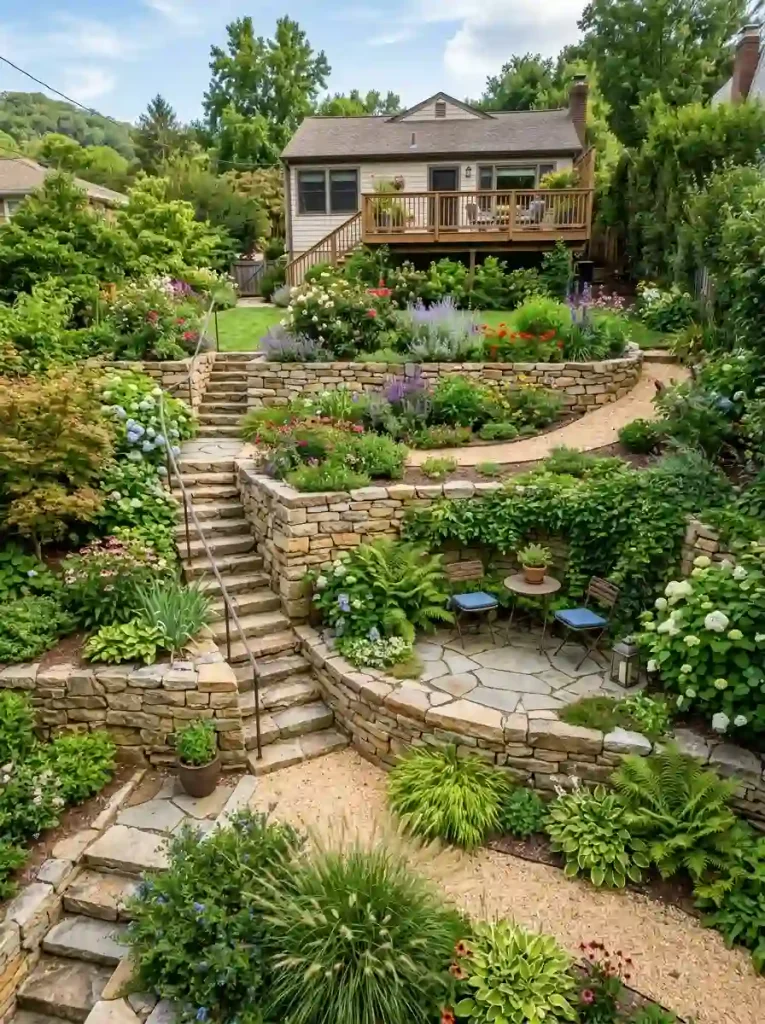
One of the most useful solutions for a steep yard is to stop thinking about it as one giant retaining-wall project.
Instead, divide the slope into several small retaining sections. Each wall can create a narrow terrace for planting, seating, pathways, or decorative gravel.
This technique can visually reduce the steepness of the property while giving you several smaller projects to complete over time. You can even use different finishes in different areas while maintaining a consistent planting palette.
For homeowners working with a limited budget, this phased approach can make the overall transformation feel much more achievable.
Expert Tip:
Plan the entire slope before building the first terrace. Even when construction happens in stages, the levels should work together as one drainage and landscape system.
9. Combine a Retaining Wall With Raised Garden Beds
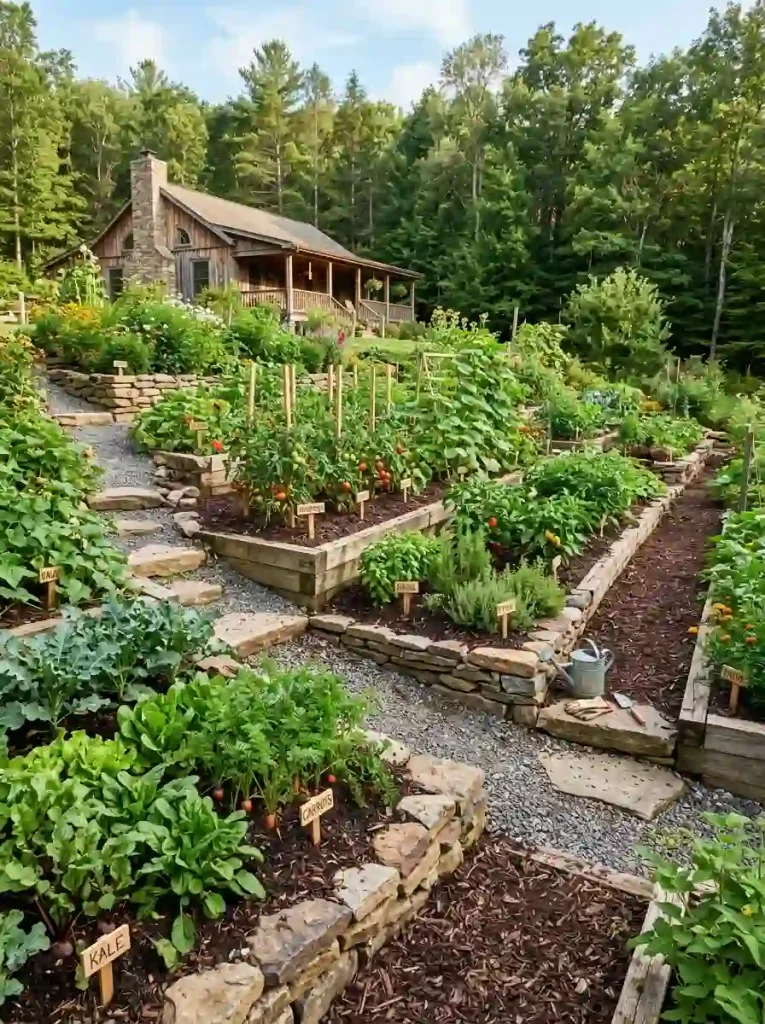
A sloped yard can become more useful when the retaining structure doubles as the edge of a raised planting area.
Create a relatively level bed behind a suitable low wall, then fill it with quality growing soil. You can use the new space for vegetables, culinary herbs, flowers, or pollinator-friendly plants.
This design makes the retaining wall serve two purposes: managing the slope and increasing usable gardening space.
For a backyard vegetable garden, several narrow terraces may also be easier to access than one large bed positioned directly on a steep incline.
Expert Tip:
Leave enough room between terraces to work comfortably. Easy access makes the new planting areas much more useful throughout the growing season.
10. Add a Gravel Drainage Strip Along the Wall
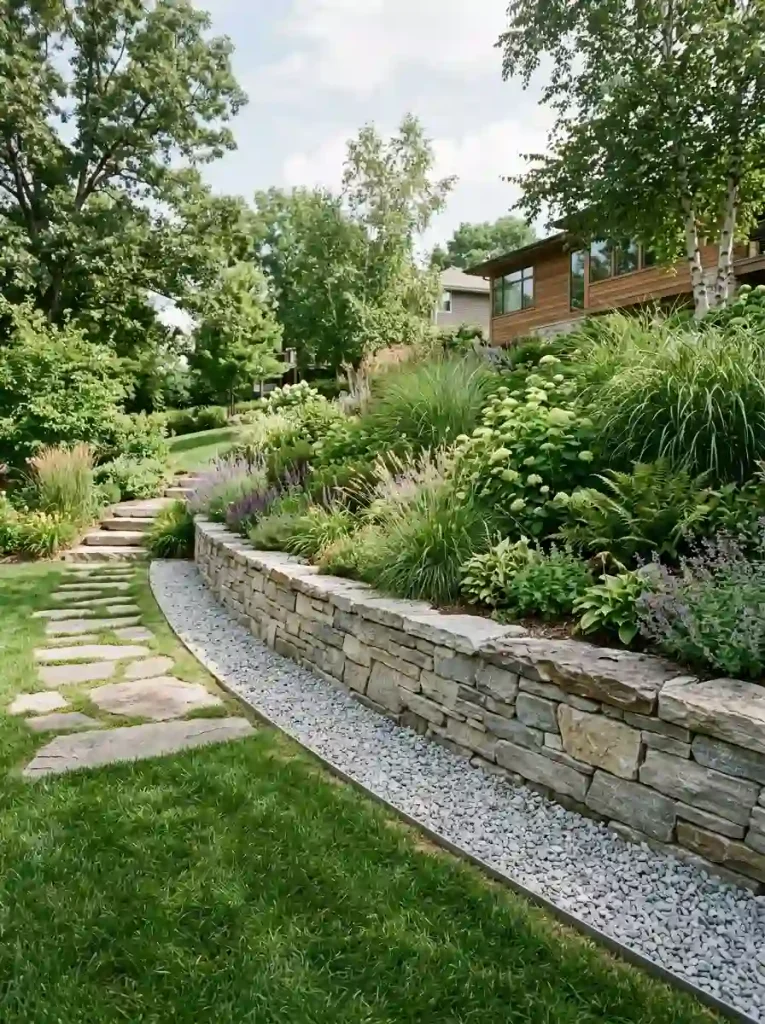
Sometimes the most inexpensive improvement isn’t changing the wall material—it’s improving what happens around the wall.
A gravel strip along the base or appropriate drainage zone can create a clean transition between the retaining structure and the rest of the landscape. It can also make maintenance easier by separating soil and mulch from the wall.
Use drainage components appropriate to the wall design and site conditions rather than assuming gravel alone will solve every water problem.
Visually, the gravel can also become a deliberate design element. Choose a stone size and texture that complement your retaining material and repeat it elsewhere in the yard.
Expert Tip:
Treat drainage as part of the retaining-wall design, not an afterthought. Water pressure behind a wall can cause serious problems if runoff has nowhere appropriate to go.
What to Consider Before Choosing an Inexpensive Retaining Wall
The cheapest material is not always the cheapest solution over time. Think about the height of the wall, slope steepness, soil conditions, drainage, material lifespan, and maintenance before choosing a design.
For a low decorative terrace, a simple DIY approach may be reasonable. A taller structure holding back significant soil is a different project and may require professional design, permits, or engineering depending on local requirements.
For the next half of the article, we’ll continue with more budget-friendly ways to reshape a sloped yard while keeping the finished landscape attractive and practical.
11. Try a Corrugated Metal Retaining Wall
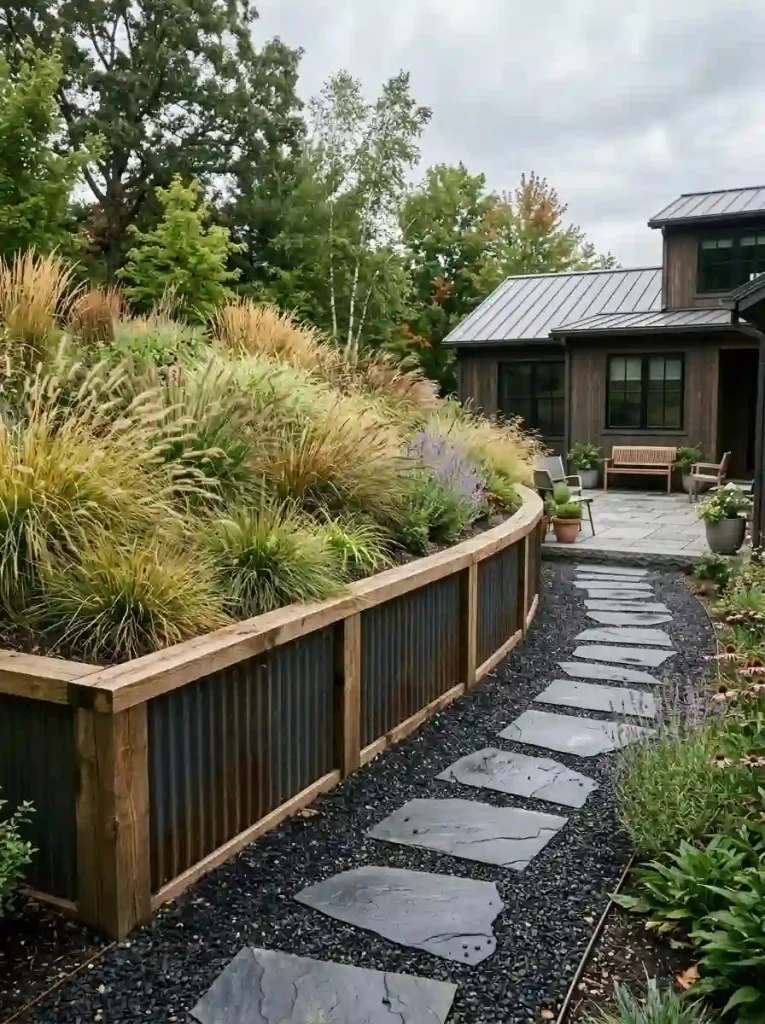
Corrugated metal can create a surprisingly stylish retaining feature when paired with inexpensive timber framing. The combination works especially well in modern, farmhouse, and industrial-inspired yards.
Use the metal as a facing or infill element within a properly designed structure rather than relying on thin sheets alone to hold back heavy soil. A dark or galvanized finish can contrast beautifully with green plants and warm wood.
This option can also be useful when you want a retaining wall that looks different from conventional stone or concrete.
Expert Tip:
Use corrugated metal as part of a properly supported retaining system. Protect cut edges from corrosion and choose materials suitable for outdoor exposure.
12. Repurpose Old Stone From Your Property
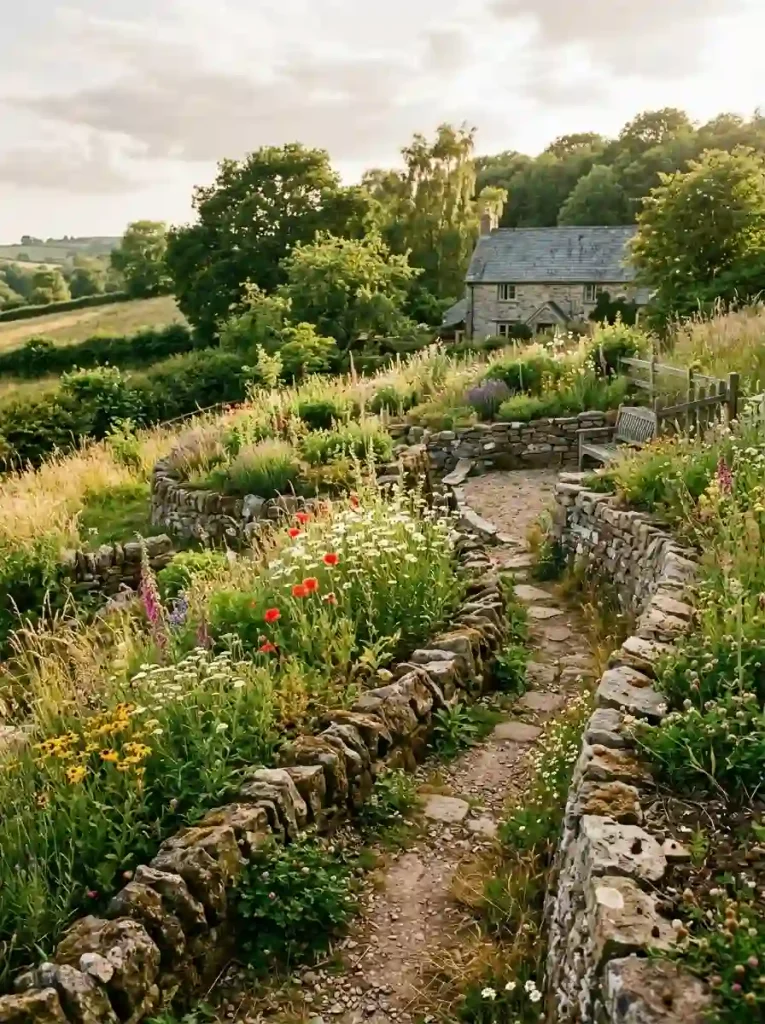
If your yard already contains loose stones, rocks, or leftover masonry, consider incorporating them into a new landscape feature instead of purchasing all-new material.
A collection of different-sized stones can create a relaxed, natural-looking wall around a garden terrace. Smaller pieces can fill visual gaps, while larger rocks can provide the main structure.
This approach works particularly well on rural or naturalistic properties because the materials already belong visually to the landscape.
Before using found stones, make sure they are suitable for the intended construction and can be arranged securely.
Expert Tip:
Sort your existing stones by size before starting. Planning the larger pieces first makes it easier to create a stable and attractive arrangement.
13. Make a Reclaimed-Timber Style Garden Edge
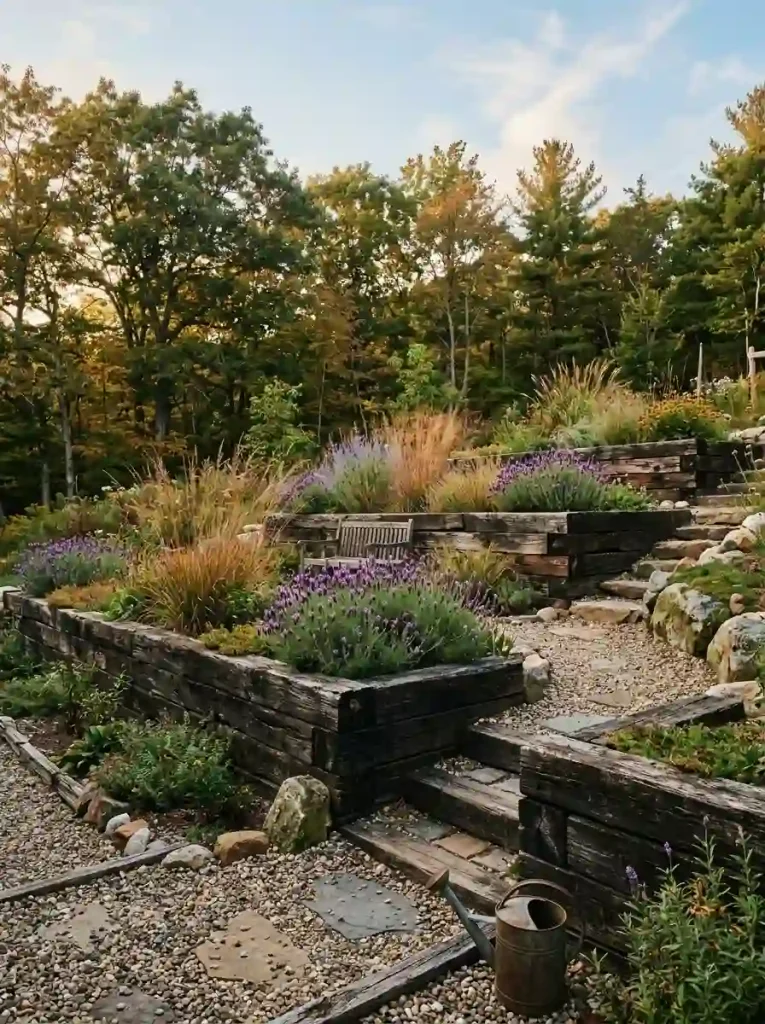
For a rugged landscape appearance, substantial reclaimed-looking timber can define the edge of a sloped planting bed. The dark, aged appearance works especially well with gravel, native grasses, and woodland-style planting.
However, avoid using old railroad ties or other reclaimed wood without understanding their history and condition. Some older materials may have been treated with substances that are unsuitable around gardens.
A safer approach is to use modern landscaping timber designed for outdoor use while recreating the same rustic appearance.
Expert Tip:
When recreating a reclaimed-timber look, prioritize modern landscape-rated materials over questionable salvaged wood whose treatment history is unknown.
14. Build a Simple Terraced Gravel Garden
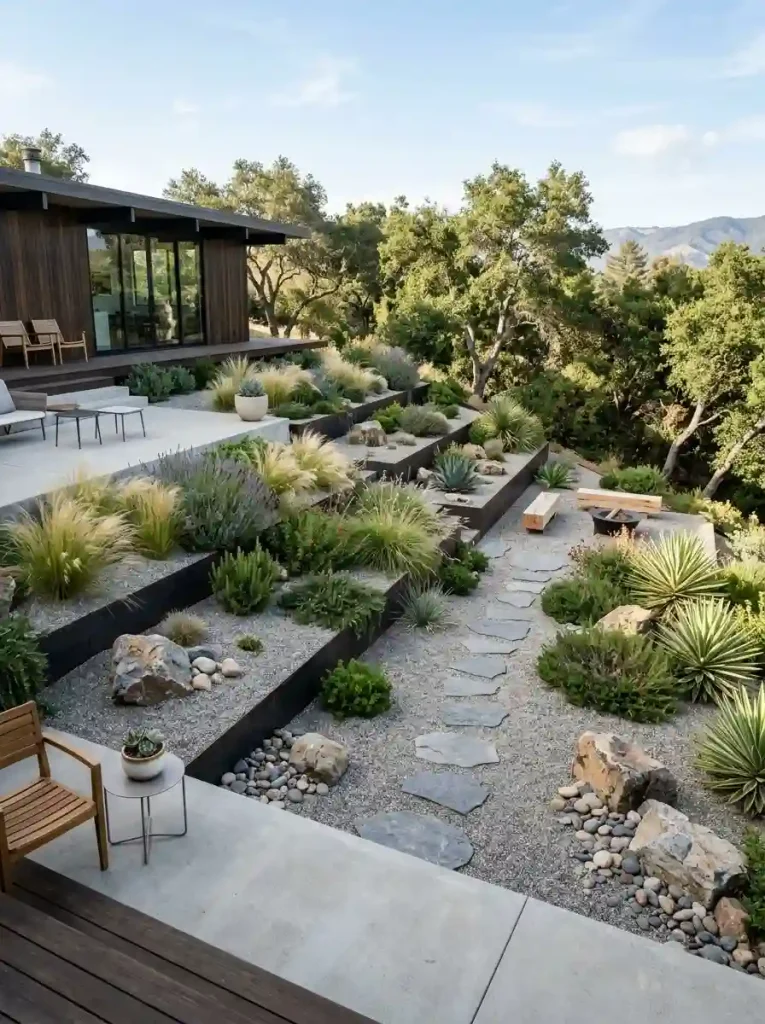
Not every slope needs a traditional solid retaining wall. For a mild grade, carefully planned terraces with compact edging, gravel, and vegetation can create the appearance of multiple levels without an elaborate masonry installation.
Use inexpensive gravel as the dominant surface material and introduce plants in strategic clusters. Small shrubs, ornamental grasses, and spreading ground covers can add structure while helping the terraces blend together.
This is a particularly good choice for homeowners who prefer low-maintenance landscaping and want to minimize large areas of lawn.
Expert Tip:
This approach is best suited to appropriate slopes and landscape applications. Make sure runoff is directed safely rather than allowing water to concentrate between terraces.
15. Use a Living Retaining Wall With Ground Covers
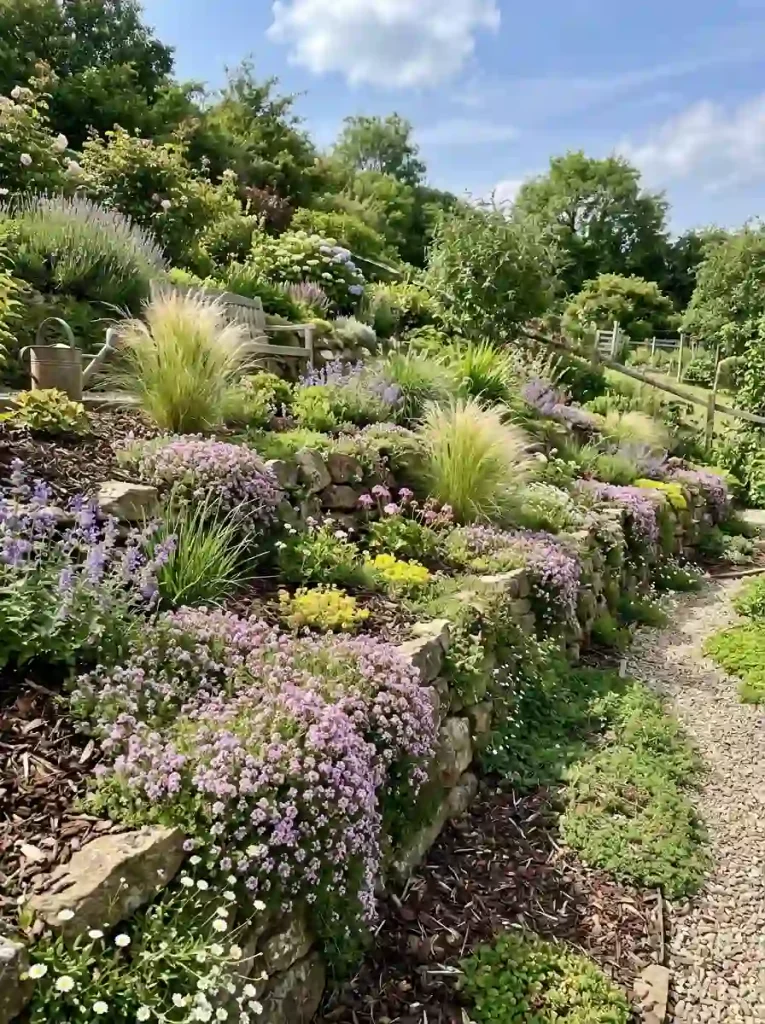
Plants can play an important supporting role around a retaining wall. Low-growing ground covers and spreading perennials can help cover bare soil, reduce visual harshness, and make the wall feel integrated with the surrounding garden.
Instead of spending heavily on decorative finishes, use inexpensive structural materials and let the planting provide much of the visual impact.
Choose plants according to sunlight, soil, climate, and moisture conditions. Avoid aggressive species that could spread into unwanted areas.
Expert Tip:
Think of plants as a finishing layer rather than a replacement for structural support. Select species that remain manageable and suit the conditions around the wall.
16. Create a Dry Creek Bed Beside the Wall
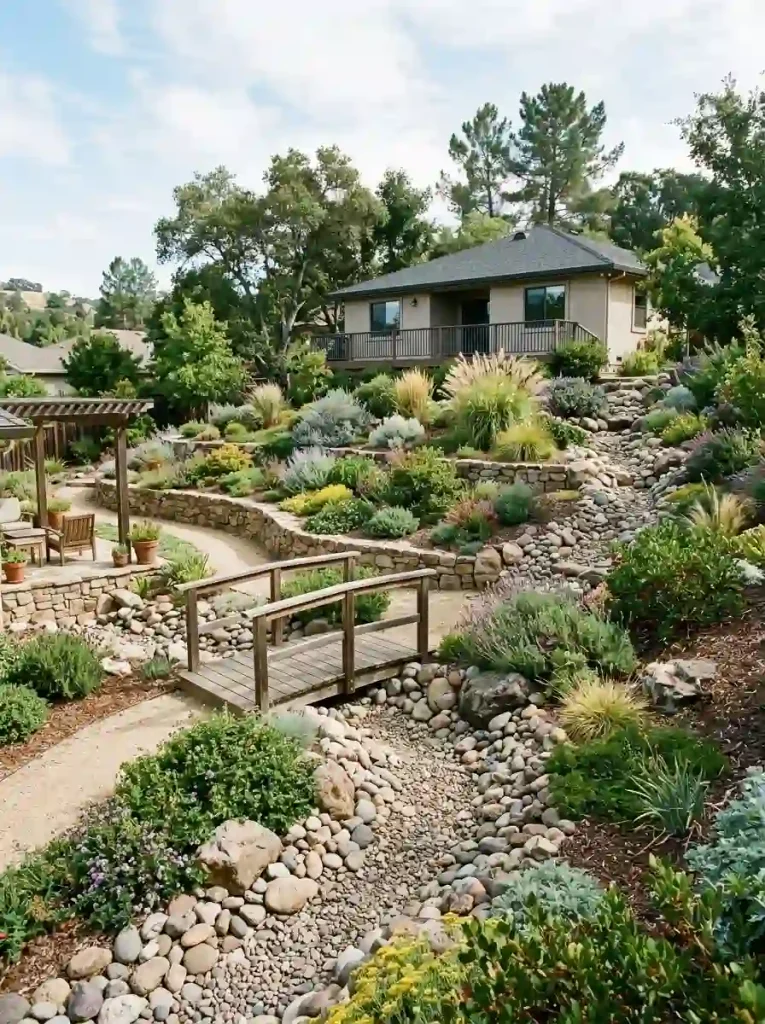
A dry creek bed can make a sloped yard more attractive while providing a visible route for certain types of surface runoff. Large stones, smaller river rocks, and gravel can be arranged in a winding channel beside or between garden terraces.
Rather than directing water randomly across the yard, the landscape can visually communicate where runoff is intended to travel.
The creek bed can also become a major decorative feature, especially when surrounded by grasses, shrubs, and low-maintenance plants.
Drainage planning is important, particularly on properties that receive substantial rainfall.
Expert Tip:
A decorative dry creek should never be treated as an automatic drainage solution. Understand where water originates and where it will safely exit before shaping the channel.
17. Paint or Refresh an Existing Retaining Wall
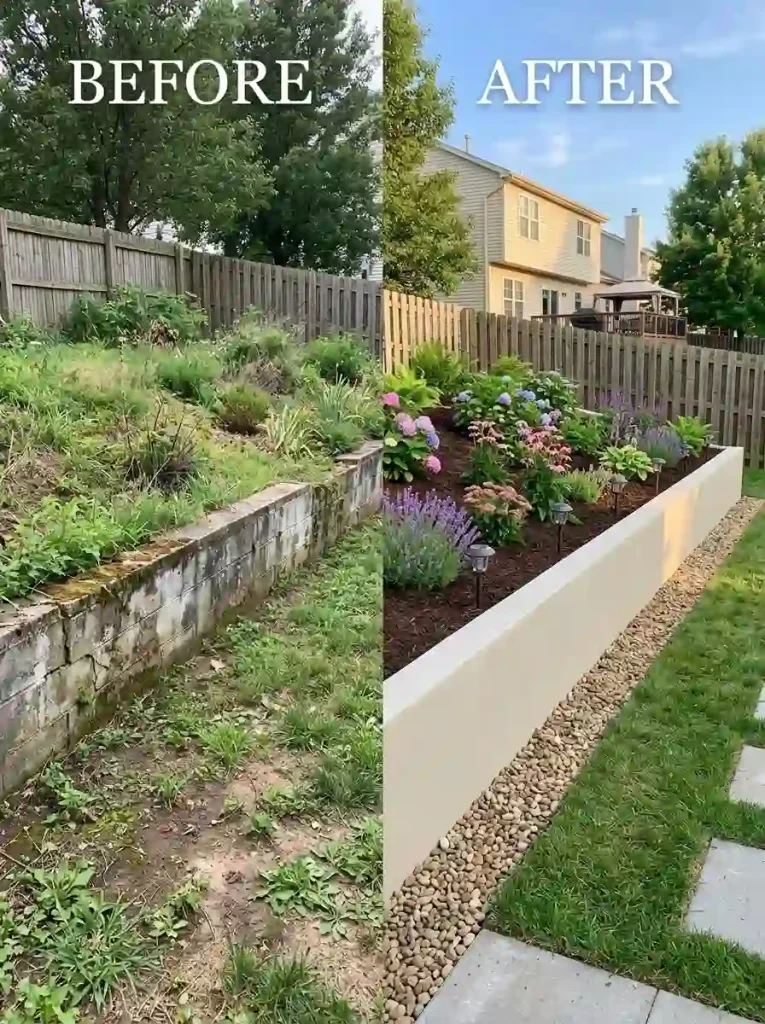
If your current retaining wall is structurally sound, replacing it may be unnecessary. A thorough cleanup and suitable exterior finish can dramatically change its appearance for a fraction of the cost of rebuilding.
For example, a tired concrete wall can become a cleaner backdrop for plants after appropriate preparation and an exterior coating compatible with the surface.
You can also improve the surrounding area with inexpensive gravel, mulch, solar lighting, or new plants.
This is one of the best cheap retaining wall ideas when the main problem is appearance rather than structural performance.
Expert Tip:
Never cover up structural problems with paint. Inspect the wall for movement, major cracks, drainage issues, or other concerns before investing in cosmetic improvements.
18. Combine an Inexpensive Wall With a Stairway
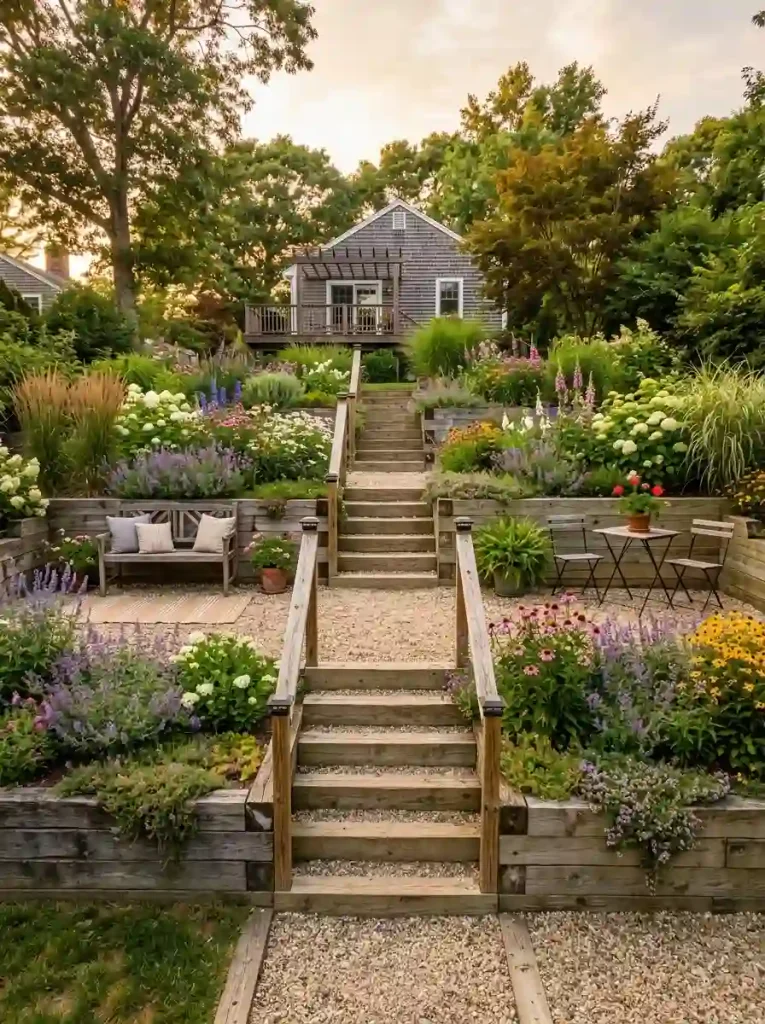
A sloped yard becomes far more functional when the retaining system includes a convenient way to move between levels.
A simple stairway can connect two terraces while the retaining walls create planting areas on either side. Depending on the landscape, stairs can be constructed or finished with compatible pavers, stone, timber, or other suitable materials.
Keep the steps visually connected to the retaining walls so the entire slope feels like one coordinated landscape.
Add plants along the edges rather than filling the pathway itself, giving the stairs a clear and comfortable route.
Expert Tip:
Plan the stairway and retaining walls together. Comfortable proportions, stable footing, drainage, and local safety requirements should come before decorative details.
How to Choose the Best Inexpensive Retaining Wall Idea
The best budget retaining wall isn’t necessarily the material with the lowest purchase price. Consider the slope, wall height, drainage requirements, soil conditions, available materials, maintenance, and expected lifespan.
For a small garden terrace, reclaimed brick, timber, rocks, or landscape blocks may provide an attractive solution. For a more substantial wall, structural requirements become increasingly important, and saving money on materials should never mean compromising stability.
It can also help to divide the project into stages. Build the most important retaining section first, establish proper drainage, then add planting, paths, lighting, or decorative features as your budget allows.
Ways to Save Money on a Sloped Yard Project
- Reuse suitable materials: Look around your property for usable stone, brick, or landscaping materials.
- Keep walls lower: Multiple appropriately designed low terraces may be more practical than one unnecessarily tall feature.
- Use plants strategically: Attractive ground covers and ornamental grasses can make inexpensive structures look much more finished.
- Limit decorative materials: Use premium stone or pavers only where they create the greatest visual impact.
- Build in phases: Complete drainage and structural work first, then add cosmetic improvements later.
- Choose low-maintenance plants: Plants suited to your conditions can reduce future watering and replacement costs.
- Keep the design simple: Straightforward layouts generally require fewer specialty materials and less complicated construction.
Are Inexpensive Retaining Walls Worth It?
Yes—when the design is appropriate for the site.
A budget retaining wall can improve a sloped yard by creating planting areas, reducing erosion, defining outdoor spaces, and making difficult terrain easier to use. The important distinction is between saving money through smart design and cutting corners on structural requirements.
Materials such as reclaimed brick, landscape timber, natural stone, gravel, and suitable landscape blocks can create attractive results without requiring an extravagant landscaping budget.
For taller or heavily loaded walls, however, professional advice may be worthwhile. Soil pressure and water behind a retaining wall can create forces that aren’t obvious when looking at the finished landscape.
Final Thoughts
A sloped yard doesn’t have to become an expensive landscaping problem. With the right approach, you can transform uneven ground into terraced gardens, practical pathways, attractive planting beds, and useful outdoor spaces.
The 18 ideas above range from reclaimed materials and simple timber terraces to gravel gardens, living walls, dry creek beds, and refreshed existing structures. Choose the option that fits your property’s slope, drainage, style, and budget rather than simply choosing the cheapest material.
Most importantly, remember that a retaining wall has a job beyond looking attractive. Proper drainage, stable construction, appropriate materials, and site conditions should always come first. Once those fundamentals are handled, inexpensive materials and thoughtful planting can make even a modest retaining-wall project look impressive.
Quick Takeaway
- Can I improve the existing wall instead of replacing it?
- Can the slope be divided into several manageable terraces?
- Can inexpensive planting and gravel provide most of the visual impact?
Answering those questions can help you create a beautiful sloped yard without turning the project into a major expense.