
24 Amazing Pallet Garden Ideas to Build This Weekend
Pallet wood can help you create a garden that feels more organized, colorful, and personal without spending a fortune. With a little planning, reclaimed boards can become useful planting stations, decorative features, and practical additions that make outdoor spaces easier to enjoy.
The best part is that you can adapt these projects to your available space, whether you have a small patio, a narrow side yard, or a spacious backyard. Before starting, choose clean, sturdy pallets with a known, safe history, remove damaged boards, and sand rough edges. For edible plants, use wood suitable for garden use and avoid pallets with unknown chemical exposure.
Here are 24 creative pallet garden ideas to inspire your next weekend project, with different designs and practical ways to make each one your own.
1. Build a Tiered Pallet Flower Display

A tiered flower display gives you the look of a layered garden without needing a large planting bed. Use reclaimed pallet boards to build three or four shallow levels, placing the tallest flowers at the back and shorter blooms along the front edge. The stepped design makes each plant easier to see.
Choose a mix of flowers with different blooming periods so the display stays attractive throughout the growing season. You could combine compact marigolds, trailing petunias, and leafy ornamental plants for a balanced look. Keep each tier accessible for watering, and make sure excess water can drain away.
Quick building plan:
• Prepare straight, sturdy pallet boards.
• Build a stable base and attach the stepped sections.
• Add suitable liners and drainage openings.
• Fill with potting mix and arrange plants by height.
2. Create a Compact Pallet Salad Garden

If you enjoy picking fresh greens for lunch, a compact pallet salad garden is a practical weekend project. Rather than building a large vegetable plot, use pallet boards to construct a low rectangular bed that fits beside a patio, kitchen entrance, or sunny garden wall.
Divide the bed into small planting sections for lettuce, spinach, arugula, and radishes. This makes it easier to rotate crops and harvest only what you need. Choose a location with appropriate sunlight and convenient access to water. Use enough soil depth for the crops you select, and avoid using questionable reclaimed timber around edible plants.
Unlike a decorative planter, this garden is designed around convenience. Keep frequently harvested greens near the front and leave enough room to reach every section without stepping into the bed.
3. Make a Hanging Strawberry Garden

A hanging strawberry garden is a smart way to use vertical space when your backyard has little room for traditional planting beds. Start with a sturdy wooden frame and attach individual containers or securely lined planting pockets. This gives strawberry plants room to grow without spreading across the ground.
Choose a sunny position and make sure every container has drainage holes. Strawberries need consistent moisture, especially when they are flowering and producing fruit. Check the upper and lower containers separately because elevated planters can dry out at different rates.
For a more decorative finish, leave the wood in a natural tone and let the green foliage and red fruit provide the color. You can also place the frame near an outdoor seating area, where the fruit becomes part of the garden display.
Weekend tip: Test the frame’s stability before filling it with wet soil and plants. A loaded planter is considerably heavier than an empty pallet.
4. Turn Pallet Boards Into a Garden Potting Station
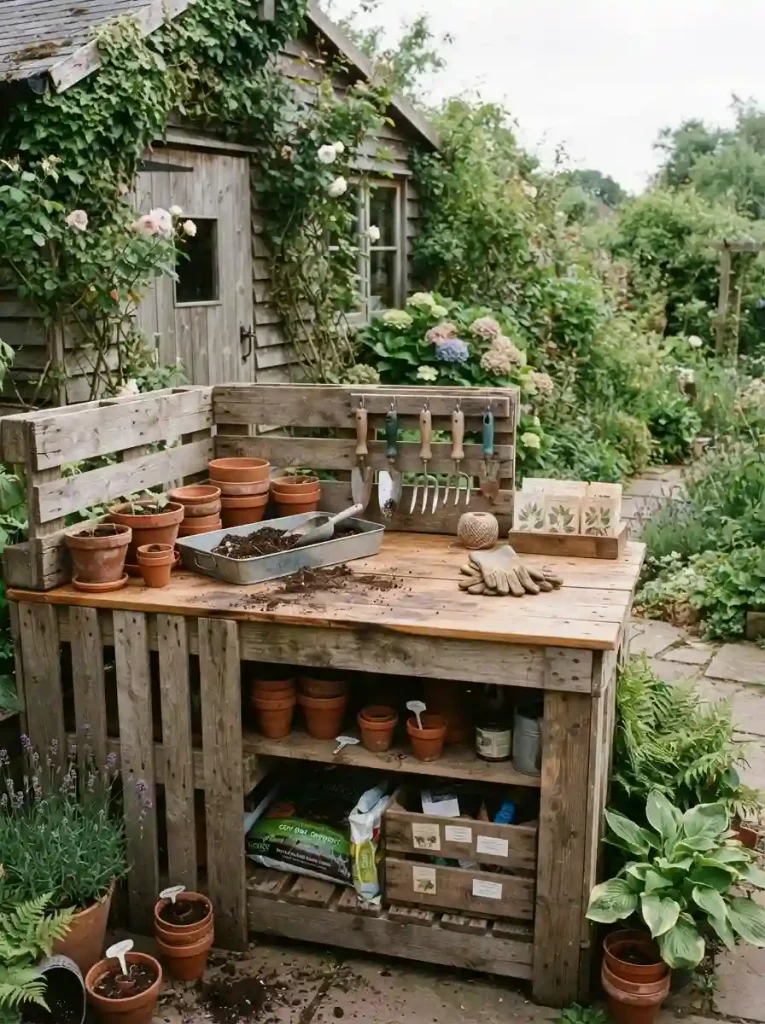
A potting station gives you one dedicated place to prepare seedlings, fill containers, and organize your everyday gardening supplies. You can make a simple workbench from reclaimed pallet boards and add a lower shelf for compost bags, spare pots, and watering equipment.
The most useful feature is a comfortable work surface. If you often repot plants, consider adding a removable tray or shallow container that catches loose soil. Small hooks can hold hand tools, while a narrow shelf above the bench can keep labels and seed packets within reach.
Keep the station on a firm, level surface and protect the wood from prolonged moisture. A simple, practical design is often better than an elaborate workbench that takes too long to build.
Materials to consider:
• Sturdy pallet boards — worktop and frame
• Exterior-rated screws — secure assembly
• Small hooks — hang hand tools
• Shallow tray — catch loose potting mix
• Weather-resistant finish suitable for the intended use — help protect exposed wood
5. Design a Pallet Garden With Color-Coordinated Pots
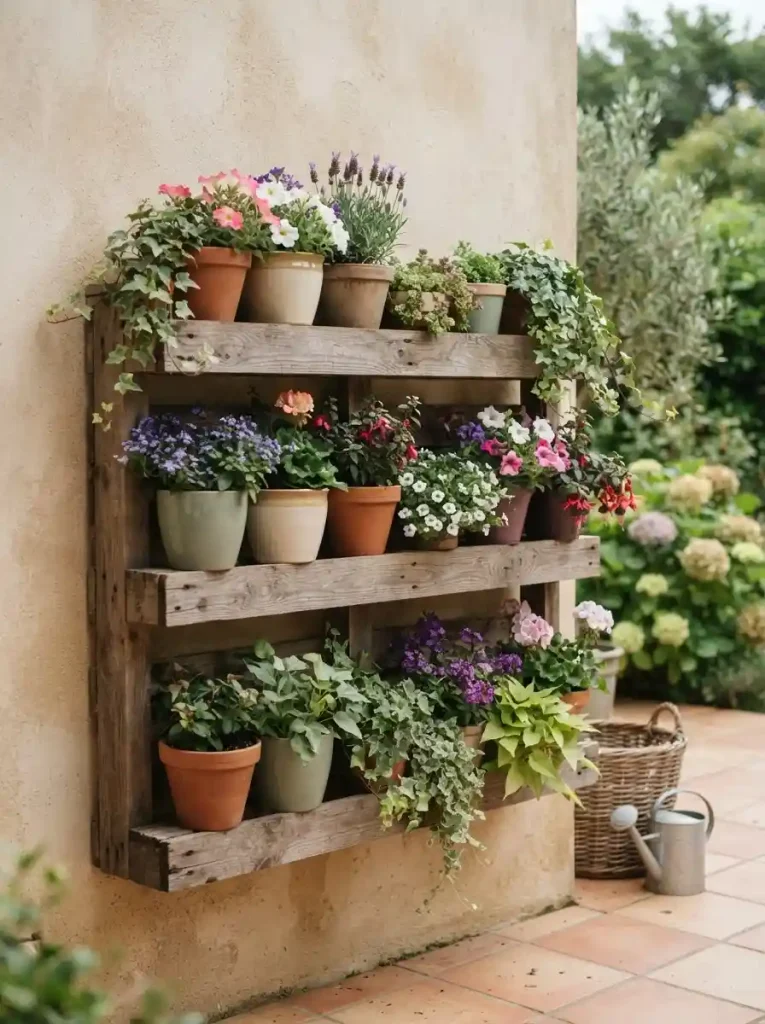
Sometimes the simplest garden upgrade is about arranging what you already own. A pallet can become a display frame for a collection of pots, creating a coordinated feature without requiring you to build individual planting compartments.
Choose two or three pot colors and repeat them across the frame. For example, terracotta, warm cream, and muted green can create a relaxed natural look. Fill the pots with plants of different heights and textures, such as compact flowering plants, trailing foliage, and upright ornamental grasses.
Attach the containers with suitable brackets or place them on properly supported shelves. Do not rely on loose pots balanced between the slats. If the display stands vertically, anchor it securely and distribute the weight evenly.
This idea works especially well for renters or gardeners who want flexibility because the pots can be moved, replaced, or rearranged as the seasons change.
6. Build a Pallet Garden Border With Curved Sections
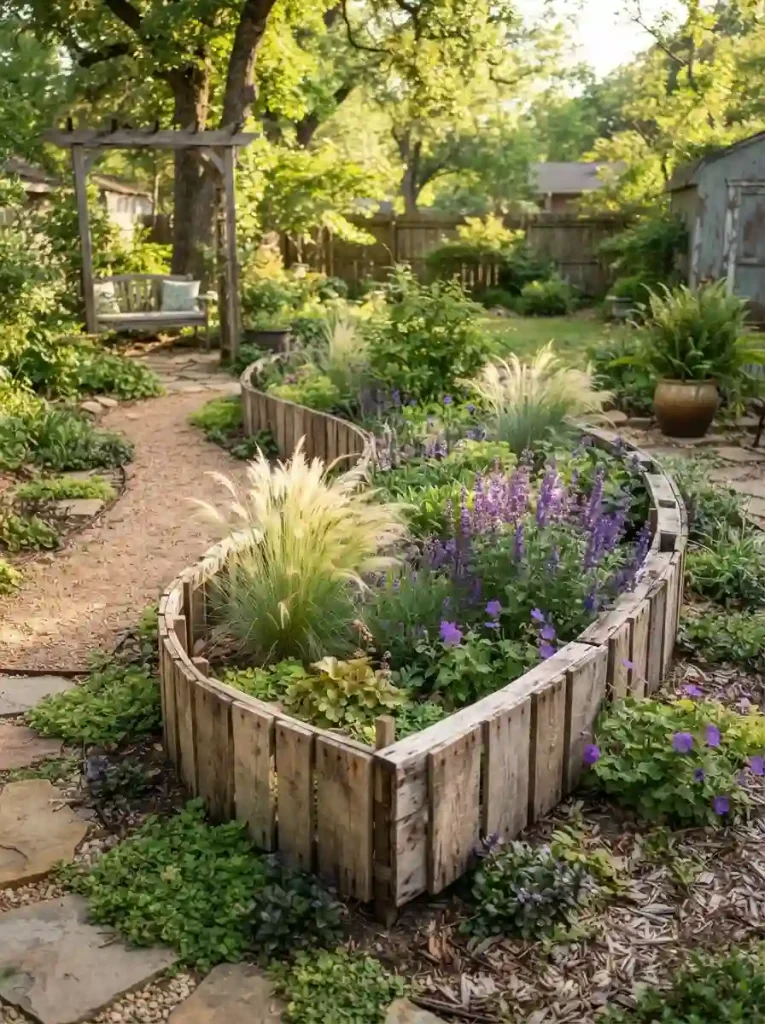
Straight garden borders are easy to make, but curved sections can give a yard a softer and more natural appearance. Use suitable pallet boards to create short edging segments around a flower bed, herb patch, or small ornamental planting area.
The trick is to build the curve from several short sections rather than trying to bend thick boards. Lay out the shape with a garden hose or rope first, then position the wood along the marked line. Secure the sections with appropriate stakes and keep the top edges at a consistent height.
This project is more about defining space than holding back large amounts of soil. For tall beds or areas with significant soil pressure, use a purpose-built retaining structure instead.
7. Create a Vertical Garden for a Narrow Side Yard

A narrow side yard can feel wasted when the only things occupying it are a fence and a walking path. A vertical pallet garden introduces greenery at eye level while leaving more of the ground open for movement.
Use a sound pallet frame with securely attached planting containers or properly lined pockets. Select plants according to the available sunlight. Shade-tolerant foliage may work well beside a north-facing wall, while sun-loving herbs and flowers need a brighter position.
Before mounting the structure, check that the wall or fence can support its weight when wet. Leave space behind the planter for airflow and maintenance, and keep the walking route clear.
This approach works best when the plants are grouped thoughtfully instead of filling every opening. A few well-chosen varieties can make a tight space feel calmer and more intentional.
8. Make a Mini Garden for Children

A small pallet garden station can give children their own place to learn about planting, watering, and watching seeds grow. Build a low, stable frame with shallow containers that are easy to reach. Use large, lightweight pots rather than heavy boxes filled with soil.
Choose quick-growing plants that make the experience rewarding. Leaf lettuce, radishes, and some easy annual flowers are useful options, depending on the local climate and growing season. Add simple labels to help children identify what they have planted.
Sand every reachable wooden edge carefully, remove exposed nails, and use safe finishes. Keep tools age-appropriate and supervise activities involving sharp equipment, soil amendments, or unfamiliar plants.
The aim is to make gardening approachable. A few containers and a small watering can are enough to create a space children can enjoy without taking over the entire backyard.
9. Assemble a Pallet Compost Storage Corner

A compost storage corner helps keep garden waste in one organized location. Use sturdy pallet panels to create a simple three-sided enclosure for leaves, small prunings, and other suitable compostable garden materials.
Leave gaps between the boards to allow airflow. Position the enclosure on a well-drained area that is convenient to reach but not directly against wooden siding. If you plan to compost food scraps, use a suitable system that helps discourage rodents and other pests.
You can build a removable front panel to make turning the compost easier. Keep the enclosure simple enough to access with a garden fork or shovel, and leave room to move finished compost to nearby beds.
This is a functional project rather than a decorative planter, so prioritize airflow, easy access, and stable construction over elaborate finishes.
10. Create a Pallet Garden Bench With Planter Ends

If your garden needs both seating and greenery, combine the two in one design. A pallet garden bench with planter boxes at either end creates a small destination where you can sit, read, or enjoy a morning coffee.
Use sturdy, well-prepared wood and reinforce the seat and legs properly. The planter boxes should be separate, lined containers rather than loose soil resting directly against the seating structure. This makes drainage easier to manage and helps reduce moisture damage.
For comfort, keep the seat broad enough for relaxed sitting and sand the surfaces thoroughly. Add compact ornamental plants or fragrant flowers to the end planters, taking care not to choose varieties that attract excessive insects directly beside the seating area.
Before building: Test the frame’s strength and stability carefully. Decorative pallet furniture should never be assumed safe for seating without suitable reinforcement.
11. Make a Dedicated Pallet Planter for Cut Flowers
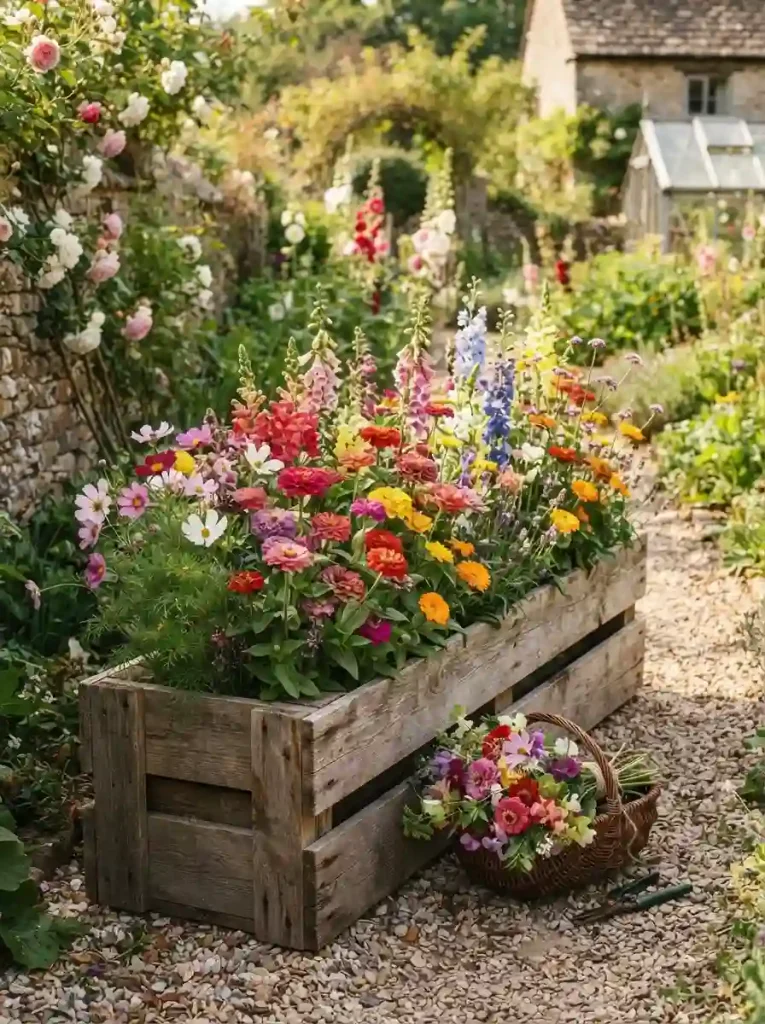
A cut-flower planter lets you grow fresh blooms for indoor arrangements without needing a large flower garden. Build a long, accessible planting box from suitable pallet boards and position it where the flowers receive the sunlight they need.
Choose varieties with different colors and stem heights, such as zinnias, cosmos, and suitable seasonal flowers for your climate. Group each variety in small clusters so you can harvest stems without disturbing neighboring plants.
Leave enough space to reach the flowers from the sides, and avoid making the planter so narrow that tall stems become crowded. Regular harvesting, watering, and removing spent blooms can encourage continued flowering in many suitable varieties.
This design is especially useful for gardeners who enjoy bringing fresh flowers indoors or creating inexpensive bouquets for friends.
12. Turn Pallet Offcuts Into a Small Garden Tool Caddy

Not every pallet project needs a large structure. If you have leftover boards from another build, turn them into a compact garden tool caddy that keeps your most-used supplies together.
Create a small rectangular box with a sturdy handle or divided compartments. One section can hold hand tools, another can store plant labels, and a smaller compartment can keep gloves or seed packets. Smooth the edges and make sure the handle is firmly attached before carrying the caddy around the garden.
A portable organizer is especially useful when your plants are spread across several beds. Instead of returning to the shed for every item, you can carry the essentials with you.
Keep the caddy dry when not in use, and avoid storing damp gloves or dirty tools inside for long periods.
13. Build a Rustic Pallet Garden Gate
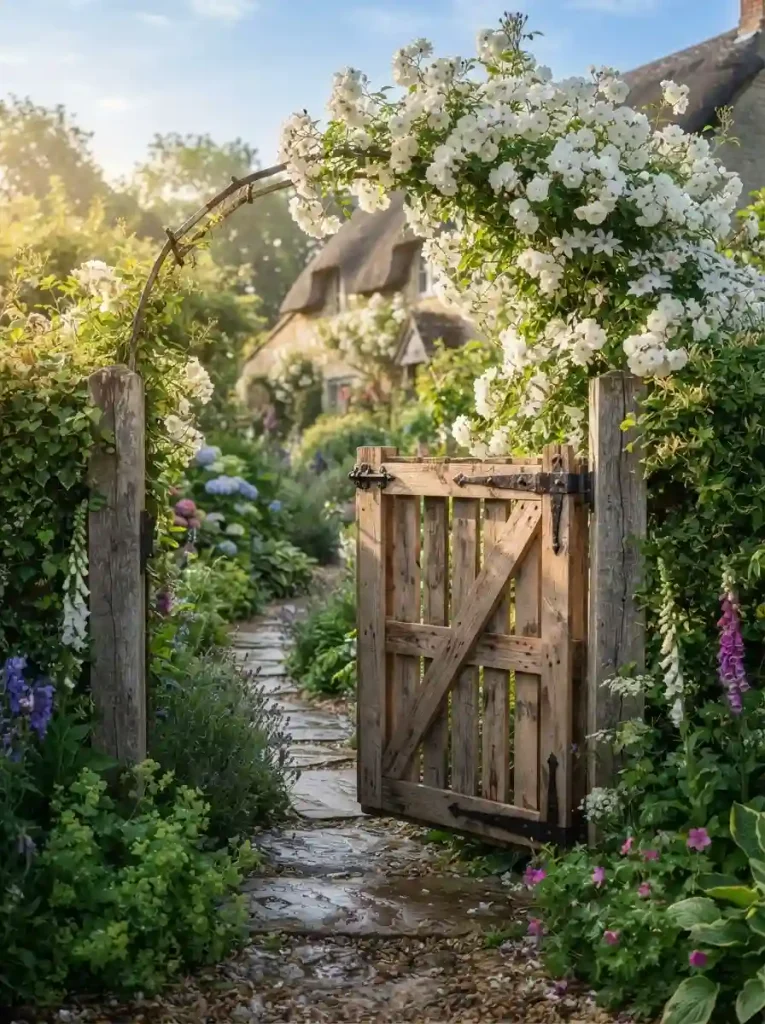
A rustic pallet garden gate can give your outdoor space a welcoming entrance while helping define different areas of the yard. Use straight, sturdy boards to create a simple gate with horizontal slats and diagonal bracing. The natural wood texture works particularly well beside cottage gardens, vegetable patches, and informal pathways.
You can leave the timber in its natural color or apply an appropriate exterior finish to complement your existing fence. For extra character, grow lightweight climbing plants nearby and guide them around a separate trellis rather than allowing vines to interfere with the hinges or latch.
Design details to consider:
• Use durable hinges and a secure latch.
• Check that the gate swings freely without dragging.
• Anchor the supporting posts firmly.
• Keep the gate light enough for its hardware.
• Protect the timber from ground contact and standing water.
Remember that a pallet gate needs proper reinforcement and suitable outdoor hardware. Decorative boards alone may not provide enough strength for a gate exposed to frequent use or strong winds.
14. Create a Pallet Herb Spiral Display

A herb spiral-inspired display brings visual interest to a practical kitchen garden. Instead of building a traditional stone spiral, arrange short pallet-board sections into several curved or angled planting levels. The resulting shape can create distinct planting areas for herbs with different growth habits.
Place rosemary and thyme in a relatively sunny, well-drained section, while basil and parsley can occupy areas that suit their moisture and light requirements. Exact placement will depend on your climate and the sunlight reaching the garden.
Use the wood to define the planting spaces rather than building a tall, unsupported soil structure. Keep each section accessible for trimming and harvesting, and make sure water does not collect at the bottom.
This design is a good option for gardeners who want a small herb garden that looks more decorative than a row of identical pots.
15. Make a Pallet Wall for Climbing Vegetables
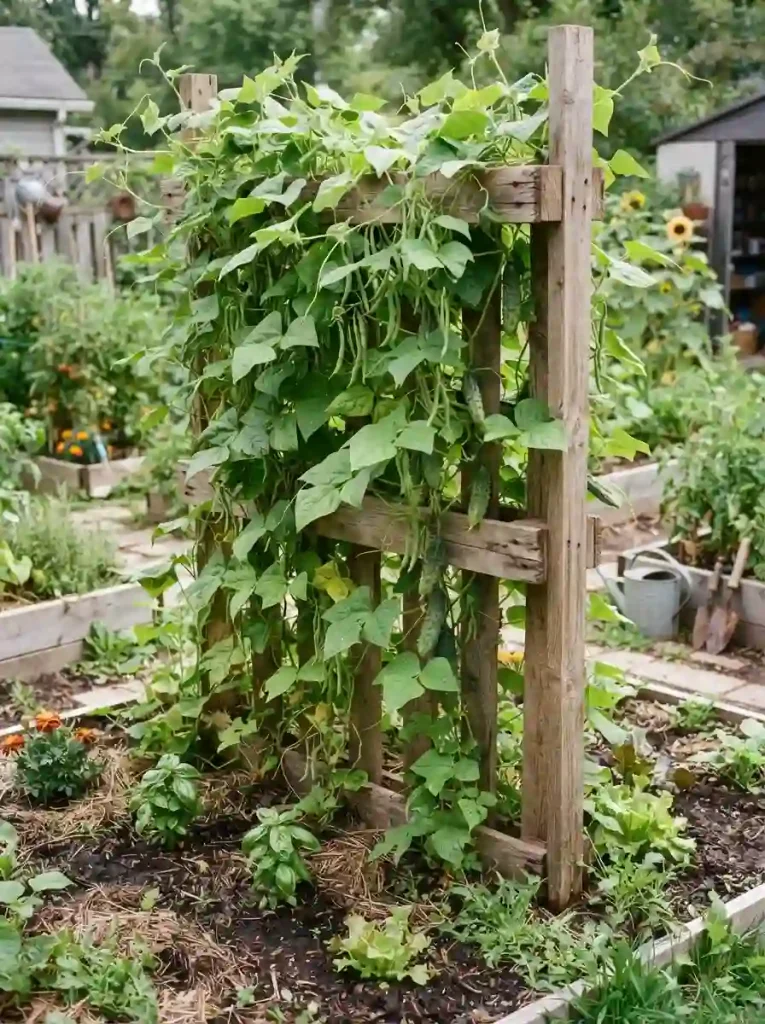
Climbing vegetables can save valuable ground space, especially in a small backyard. A pallet-inspired trellis provides a framework for plants such as pole beans and certain cucumber varieties, allowing their foliage to grow upward instead of spreading across the soil.
Start with a sturdy wooden frame and add appropriately spaced crosspieces or separate garden netting. Secure the structure so it can withstand the weight of mature plants and the pull created by wind. Not every pallet is suitable for supporting climbing crops, so inspect the wood carefully before using it.
As the plants grow, guide their stems gently onto the supports. Keep the base accessible for watering and harvesting, and leave sufficient space between the trellis and nearby plants for airflow.
Suitable climbing crops:
• Pole beans — provide strong, narrow supports.
• Climbing peas — prefer suitable cooler growing conditions.
• Small-fruited cucumbers — check the variety’s support requirements.
• Climbing ornamental flowers — choose according to available sunlight.
Avoid using the structure for heavy squash or other large-fruited crops unless it has been specifically designed to carry their weight.
16. Design a Pallet Garden With a Built-In Watering Shelf

A narrow shelf built into a pallet garden makes everyday plant care easier. It provides a convenient place to set down a watering can, keep plant labels, or temporarily hold a pot while you trim leaves and remove dead flowers.
Build the shelf from sturdy boards and secure it to a properly supported frame. Keep the surface shallow enough that it does not obstruct the plants below, and make sure water can drain away instead of pooling against the timber. A removable tray can help protect the shelf from frequent splashes.
This setup works well near a patio door, greenhouse entrance, or outdoor potting area. You can keep small containers on the shelf while arranging larger planters underneath, giving the display a useful combination of storage and greenery.
17. Create a Pallet Garden for Shade-Loving Plants

Not every garden receives hours of direct sunshine. If your yard has a shady corner beneath mature trees or beside a building, a pallet planter can help introduce layers of foliage without relying on sun-loving flowers.
Choose plants that suit the actual light conditions. Depending on your climate, ferns, certain hostas, and shade-tolerant ornamental foliage may be appropriate. Check individual plant requirements before purchasing them, especially if the area receives only filtered light or becomes dry beneath tree roots.
A low, wide pallet planter can work better than a tall vertical display in a shaded space because it allows you to arrange plants with different leaf shapes and heights. Use a suitable potting medium and make sure the containers drain properly.
The overall effect can be calm and natural, with the contrast between wood grain and lush leaves providing most of the visual interest.
18. Make a Mobile Pallet Planter on Wheels
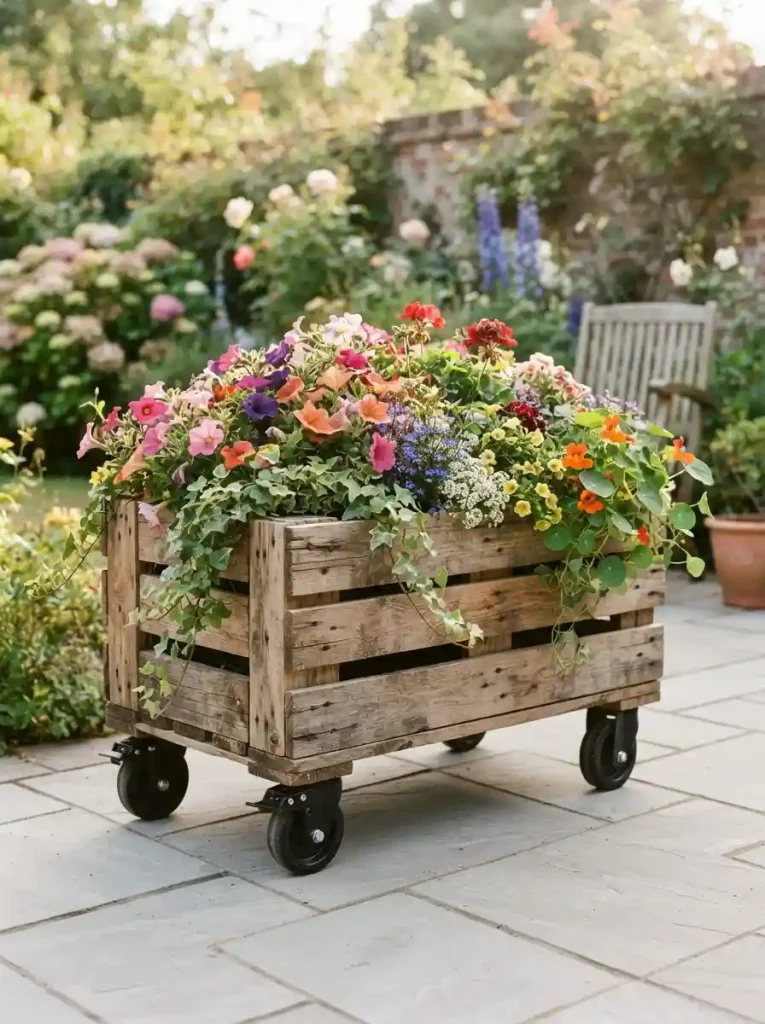
A mobile pallet planter gives you more flexibility when arranging your outdoor space. Mounted on suitable locking caster wheels, a compact planter can be moved to follow seasonal sunlight, clear a patio for gatherings, or make plant maintenance easier.
Build a rigid box from suitable wood and use wheels rated for the combined weight of the frame, wet soil, and mature plants. Attach the casters to reinforced mounting points rather than thin boards alone. A drainage layer and properly positioned holes will help prevent excess water from accumulating inside the planter.
This idea is especially useful for patios, paved courtyards, and rented homes where permanent garden beds are not practical. Choose compact plants that will not become top-heavy, and lock the wheels whenever the planter is in position.
Before you build: Test the empty frame first, then load it gradually and confirm that the wheels roll and lock safely on your surface.
19. Build a Pallet Garden Screen for Privacy

A pallet garden screen can help separate an outdoor seating area from a neighboring space without constructing a full fence. Its slatted design creates a visual boundary while allowing some light and air to pass through.
Build a freestanding frame with properly braced supports and secure it against tipping. The screen can stand behind a bench, beside an outdoor dining table, or at the edge of a patio. Add separate containers at its base for ornamental grasses or climbing plants that suit the available light.
Avoid attaching heavy pots high on the screen unless the frame has been designed to carry their weight. If your area experiences strong winds, use secure anchoring and consider whether a solid or partly solid screen is appropriate.
A natural finish gives the structure a relaxed look, while a muted exterior paint can help it blend with existing outdoor furniture.
20. Turn Pallet Wood Into a Raised Salad-and-Herb Combo Bed

If you want fresh ingredients close to the kitchen, combine salad greens and culinary herbs in one raised bed. This design makes efficient use of a small garden area and reduces the need to maintain several separate containers.
Build a stable rectangular frame from suitable timber and divide the interior into sections using short boards. Plant compact lettuce and other leafy greens in one area, then place herbs such as chives, parsley, and basil in sections suited to their growing requirements.
Keep vigorous plants from crowding slower-growing neighbors, and check the mature size of each variety before planting. A raised bed should have enough depth for the crops you select, along with suitable drainage and a growing medium that retains moisture without becoming waterlogged.
Simple planting layout:
• Front edge — compact lettuce.
• Sunny middle section — basil.
• Side compartment — chives.
• Back section — parsley.
• Open corner — seasonal salad greens.
Adjust the arrangement according to local temperatures, sunlight, and the size of your bed.
21. Create a Pallet Garden Feature With Solar Lighting

A garden feature with solar lighting can make a simple wooden planter more inviting after sunset. Use a sturdy pallet frame as a backdrop for a few carefully arranged containers, then add suitable outdoor-rated solar lights to highlight the plants and surrounding seating area.
Keep the lighting separate from the planting compartments so that water cannot collect around electrical components. Select lights rated for outdoor use and position their solar panels where they can receive adequate daylight. Avoid attaching hot lighting equipment directly to dry wood or overcrowding the display with cables.
For the best result, use gentle illumination rather than very bright lights. Warm-toned solar lamps can emphasize the timber’s natural texture while creating a comfortable atmosphere for evening relaxation.
This project combines gardening and outdoor styling, making it suitable for a patio corner or a small seating nook.
22. Make a Pallet Garden for Pollinator-Friendly Flowers
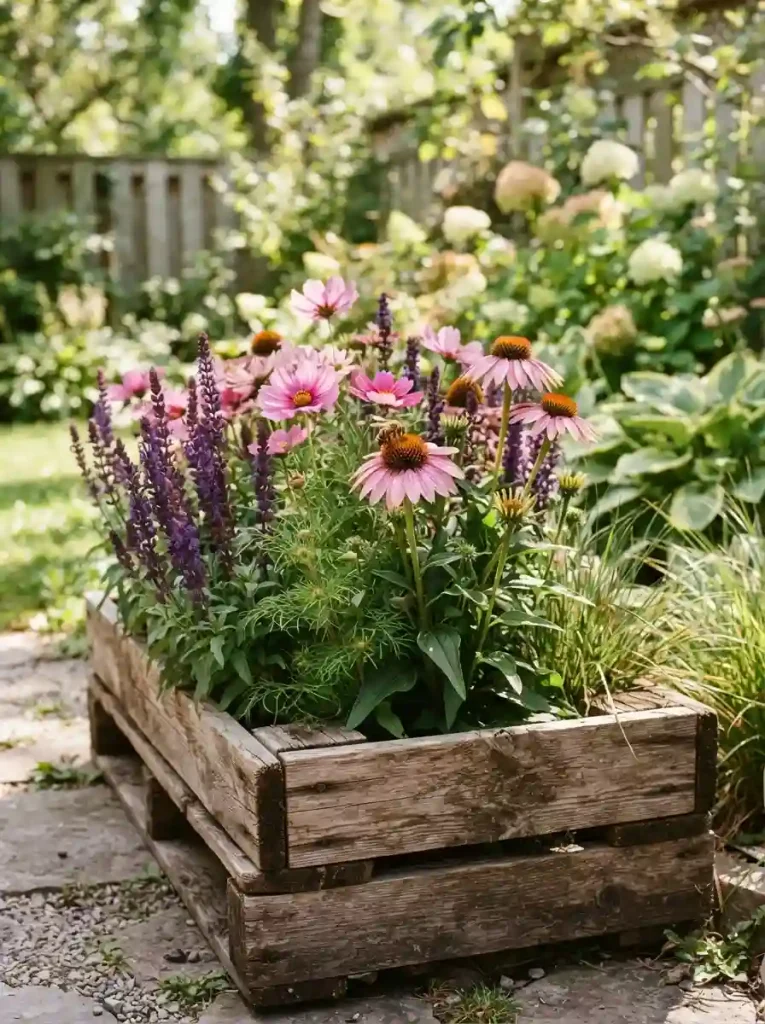
A pollinator-friendly pallet planter can bring more life to a small garden while adding seasonal color. Use a wide, stable wooden container or several ground-level planting boxes to grow flowers that provide nectar and pollen for visiting insects.
Choose regionally suitable flowering plants with different bloom periods so that food sources are available across more of the growing season. Depending on your location, options may include salvia, cosmos, echinacea, or other locally appropriate flowers. Avoid pesticide use that could harm pollinators, and provide a variety of flower shapes to support different visitors.
The planter does not need to be elaborate. A mix of flowering heights and colors can make it attractive while giving bees and butterflies places to forage.
Position the garden where it receives the light required by your chosen flowers, and avoid placing it directly beside a busy doorway if frequent insect activity would be inconvenient.
23. Build a Small Pallet Garden for a Balcony

A balcony garden needs to be lightweight, compact, and easy to maintain. Instead of filling a large pallet with soil, use a smaller vertical frame with separate pots that can be removed for watering or seasonal changes.
Measure the available floor space before building, and check any building rules concerning balcony loads and exterior attachments. A loaded wooden structure can become surprisingly heavy once containers are filled and watered. Secure the frame against tipping and avoid placing it where it could fall or obstruct an exit.
Choose plants that suit the balcony’s sunlight and wind exposure. Compact herbs, small leafy plants, and suitable flowering varieties are often easier to manage than large shrubs or vigorous climbers.
A simple arrangement of different pot heights can make the balcony feel greener without sacrificing the space needed for a chair or walking area.
24. Design a Pallet Garden With a Seasonal Planting Calendar
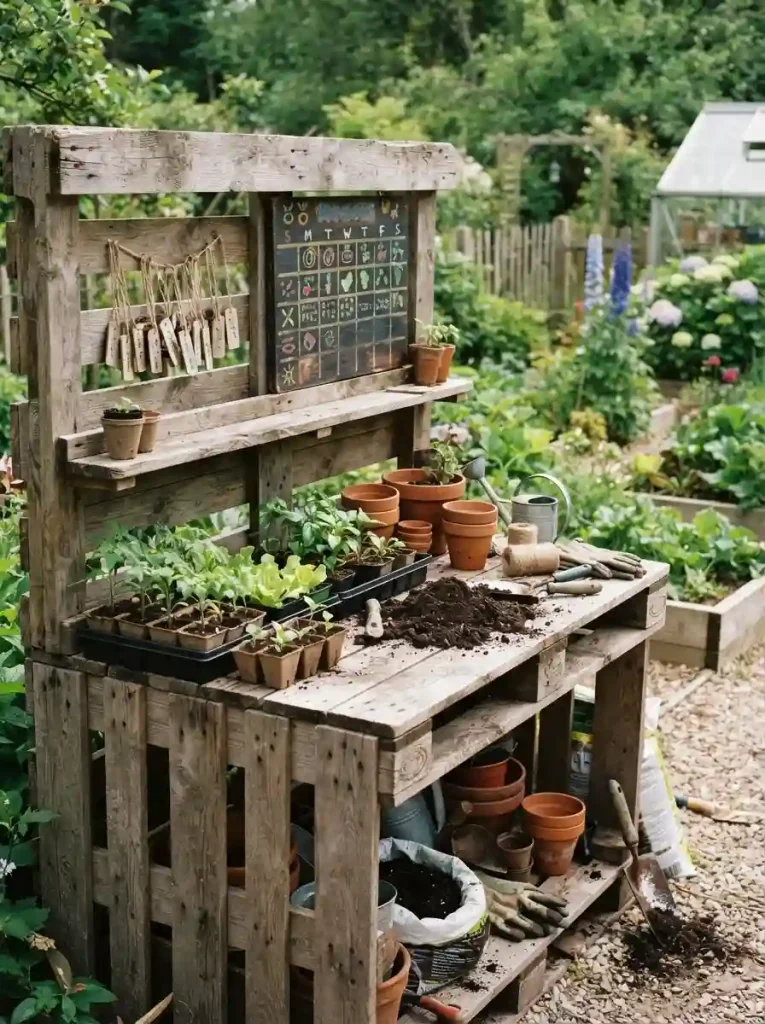
A garden is easier to maintain when you know what to plant and when to care for it. Turn a pallet board into a practical garden planning station with removable labels, small shelves, and a weather-resistant board for noting planting dates.
Keep seed trays and small pots on a stable lower shelf, and use separate labels to identify varieties and sowing dates. You can also organize plants into seasonal groups, helping you remember which containers need replacing as temperatures change.
The calendar should follow your local growing conditions rather than a fixed set of months. Check the recommended sowing times for your region, particularly if your climate has hot summers, mild winters, or a short cool season.
This idea is useful for beginners and experienced gardeners alike because it combines organization with a decorative wooden feature. Unlike a simple planter, it can help you plan future projects and keep track of what is growing throughout the year.
Final Tips for Building Pallet Garden Projects
Before starting any pallet garden project, check the wood’s condition and origin. Avoid pallets with unknown chemical exposure, contamination, mold, or extensive damage, especially when growing edible plants. Sand rough edges, remove exposed nails, and choose fasteners suitable for outdoor conditions.
Remember these practical points:
• Plan the location first: Check sunlight, drainage, available space, and access to water.
• Use suitable containers: Keep soil and moisture away from untreated wood when necessary by using appropriate liners or separate pots.
• Secure vertical designs: Anchor tall frames and screens against tipping, particularly in windy areas.
• Keep maintenance simple: Choose plants that suit your climate and the time you can spend caring for them.
• Protect the structure: Use suitable exterior protection where appropriate, and inspect the wood regularly for deterioration.
Frequently Asked Questions
Are pallet gardens inexpensive to build?
They can be. Reclaimed wood may reduce material costs, particularly if you already have suitable pallets and basic tools. However, soil, plants, liners, fasteners, supports, and protective finishes can add to the total cost.
Can I grow vegetables in a pallet garden?
Yes, provided the wood is suitable for the intended use, the planter has adequate depth and drainage, and the vegetables receive the right growing conditions. For edible crops, avoid pallets with unknown treatment or contamination histories.
How do I protect a pallet garden from rain?
Keep the structure off persistently wet ground where practical, allow water to drain freely, and use a suitable exterior finish if needed. Inspect joints and boards regularly, since repeated moisture exposure can weaken reclaimed timber.
Which pallet garden project is best for a beginner?
A small tool caddy, simple pot display, or low raised planter is usually easier than a tall vertical wall or freestanding privacy screen. Start with a project that requires minimal structural reinforcement and basic tools.
How long does it take to build a pallet garden?
A small organizer or pot display may take a few hours, while a reinforced planter, bench, or privacy screen may require a full weekend or longer. Preparation, safe disassembly, sanding, and finishing can take as much time as assembly.
Conclusion
Pallet wood offers plenty of opportunities to make a garden more practical, attractive, and personal. From compact herb beds and mobile planters to flower displays and privacy screens, the best project is one that suits your available space, gardening habits, and building skills.
Start with a simple design, choose suitable materials, and focus on stability and drainage. Once you finish your first project, you can use the leftover boards for smaller additions and gradually create an outdoor space that works for you.