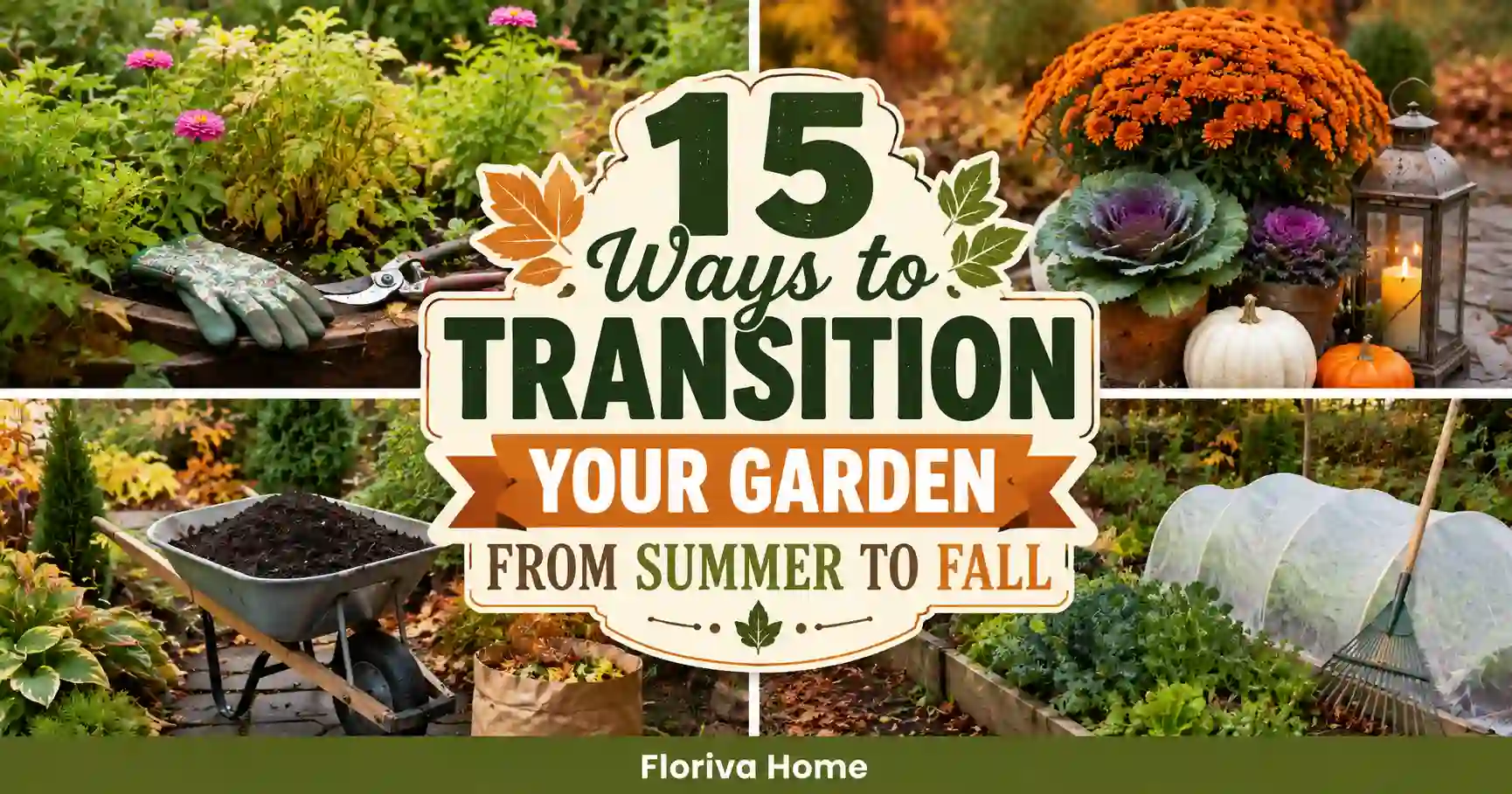
15 Ways to Transition Your Garden From Summer to Fall
As summer winds down, your garden does not have to lose its color or charm. A few changes can welcome cooler days while keeping outdoor spaces inviting, layered, and full of life.
From swapping tired annuals for autumn blooms to adding warm containers, cozy lighting, and protective mulch, these simple updates make the seasonal shift feel effortless. Whether you have a tiny patio garden or backyard beds, these 15 ideas can help you create a fall garden that feels welcoming and ready for the season.
How can I make my garden look cozy for fall?
Add warm outdoor lighting, autumn-colored containers, ornamental grasses, pumpkins, and comfortable seating. Mulching garden beds and refreshing pathways can also make the space look polished. Combining natural textures with burgundy, gold, rust, cream, and green tones creates a welcoming autumn atmosphere.
1. Swap Summer Annuals for Fall Color
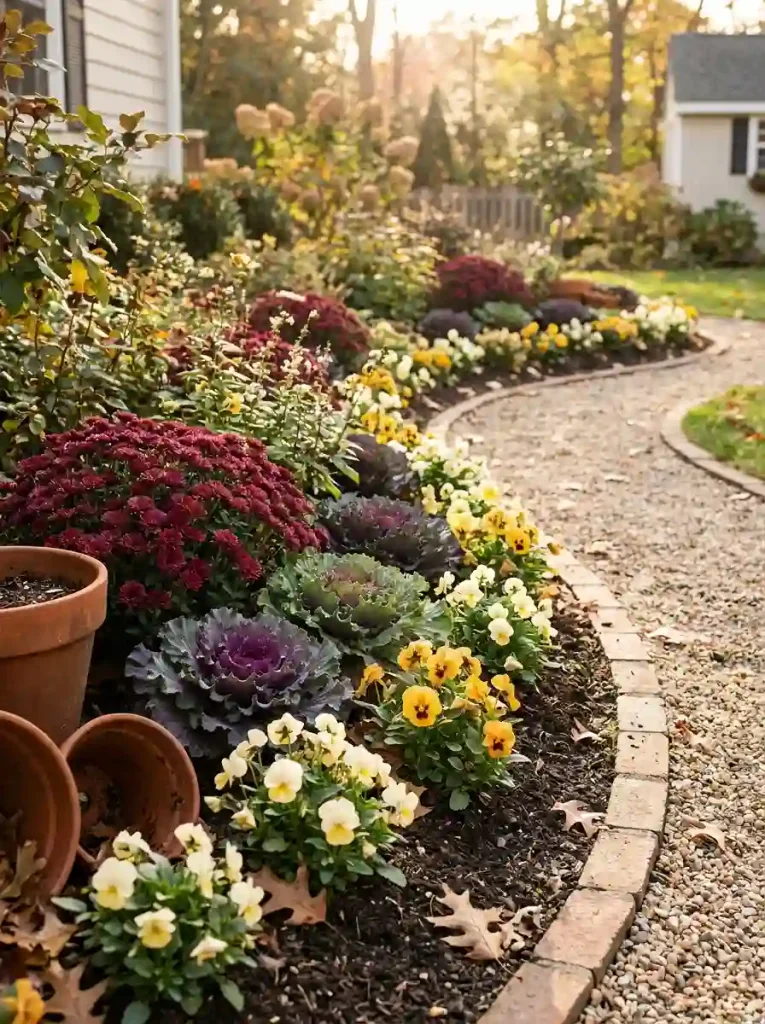
Replace fading summer annuals with cool-season favorites such as chrysanthemums, pansies, violas, and ornamental kale. Group plants in repeating colors for a polished look, then tuck shorter varieties along pathways. Choose healthy plants with unopened buds so containers and beds keep blooming longer.
Before planting, loosen tired soil and mix in compost to improve drainage and root growth. Keep new transplants evenly watered while they settle, especially during warm afternoons. Echo your chosen colors throughout the garden, creating a cohesive autumn palette instead of scattered seasonal accents.
2. Refresh Containers With Autumn Layers
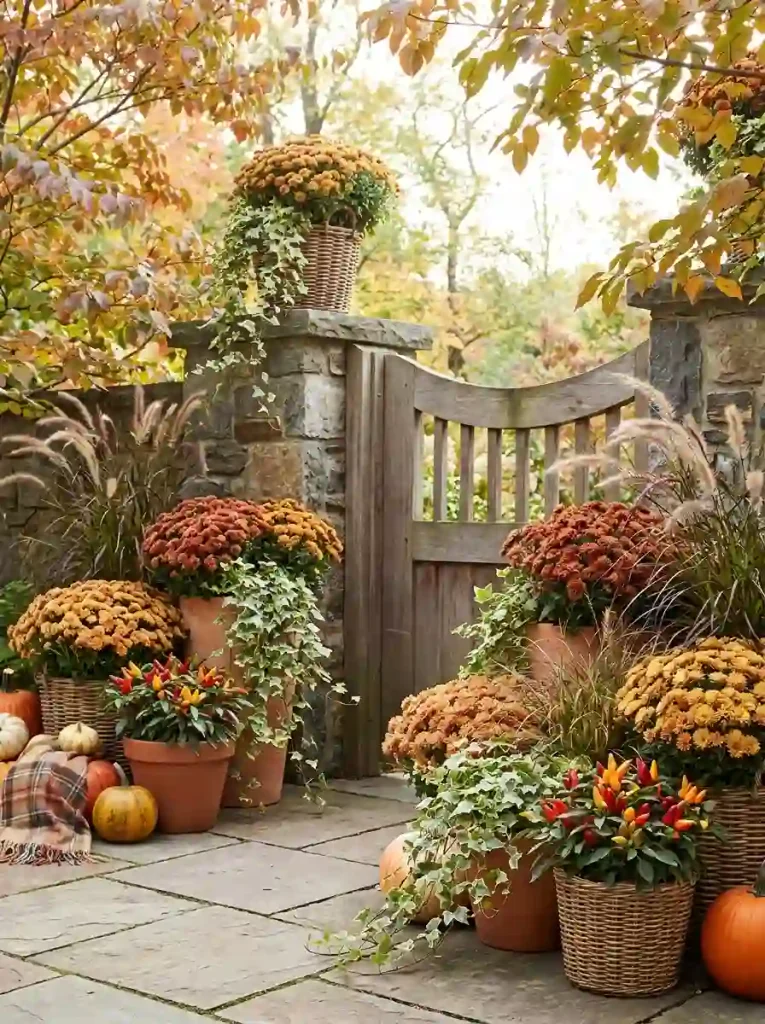
Give summer containers a fresh fall personality by combining mums, trailing ivy, ornamental peppers, and textured grasses. Use one tall plant, one rounded bloomer, and one spiller for balanced height. Terracotta, stone, or woven planters add natural warmth that makes the arrangement feel seasonal.
Remove exhausted summer plants and trim damaged foliage before replanting. Check that containers still drain freely, then refresh the top layer with quality potting mix. Place arrangements near entrances, steps, or seating areas where their changing foliage and flowers become easy focal points throughout fall.
3. Add Ornamental Grasses for Movement
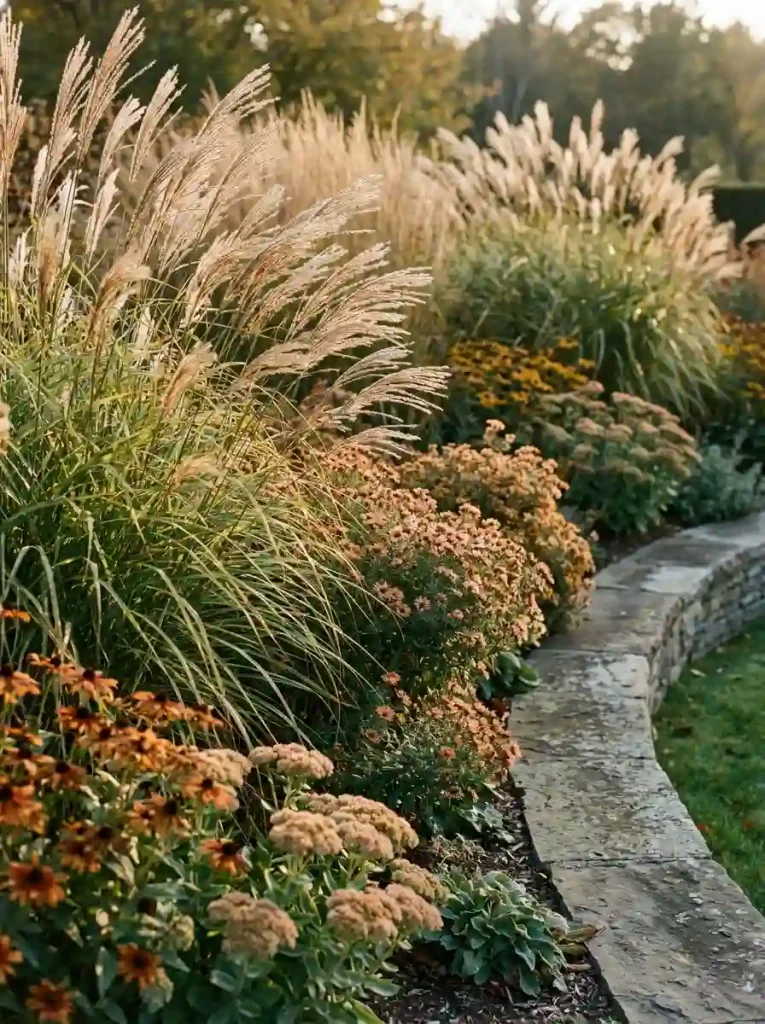
Introduce ornamental grasses to bring height, softness, and movement into fading summer beds. Choose varieties suited to your climate, then plant them where light can highlight their feathery seed heads. Golden, tan, or copper tones naturally complement autumn flowers and foliage in fall.
Give established grasses a tidy trim only when needed, leaving attractive seed heads for seasonal texture and wildlife. Water newly planted clumps consistently until roots settle. Repeat grasses in two or three areas rather than using one isolated specimen, creating rhythm and a designed garden.
4. Plant Bulbs for a Future Spring Surprise
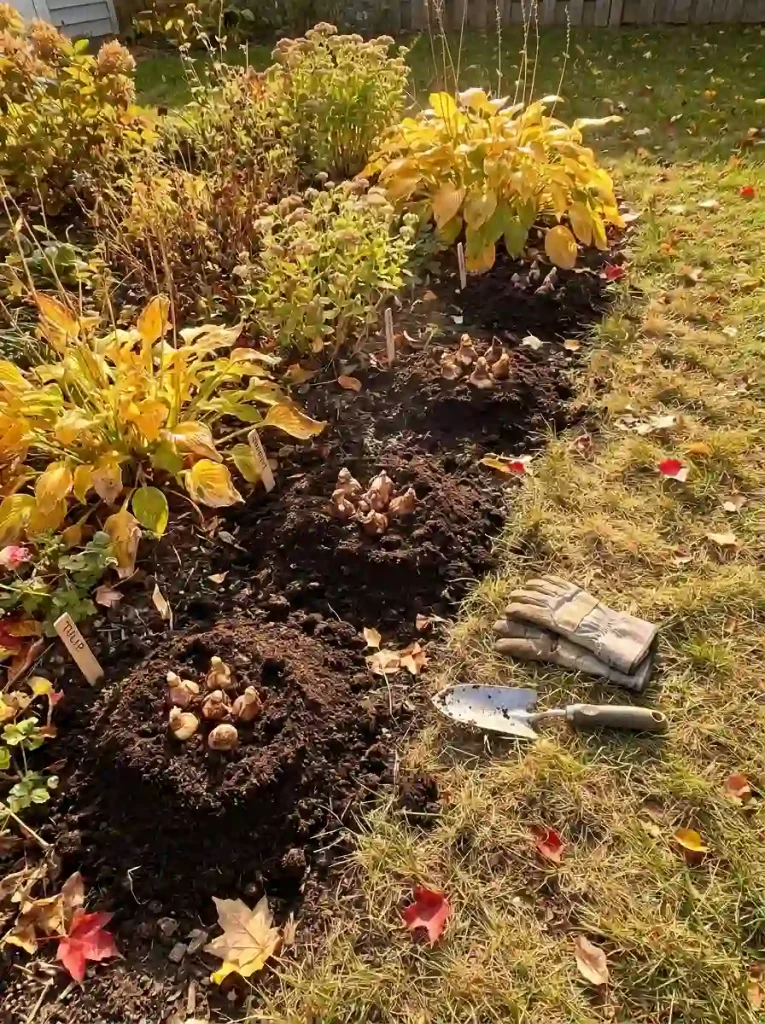
Fall is the perfect time to plant spring-flowering bulbs, turning an autumn task into a colorful promise for next year. Try tulips, daffodils, crocuses, or hyacinths in sunny borders. Tuck bulbs between perennials where spring flowers can fill spaces before summer growth returns.
Choose firm, healthy bulbs and plant them at the depth recommended for each variety. Point the growing tip upward, cover gently with soil, and water once after planting. Mark locations with small labels so you remember where bulbs are sleeping when winter arrives and spring begins.
5. Create a Cozy Garden Seating Corner
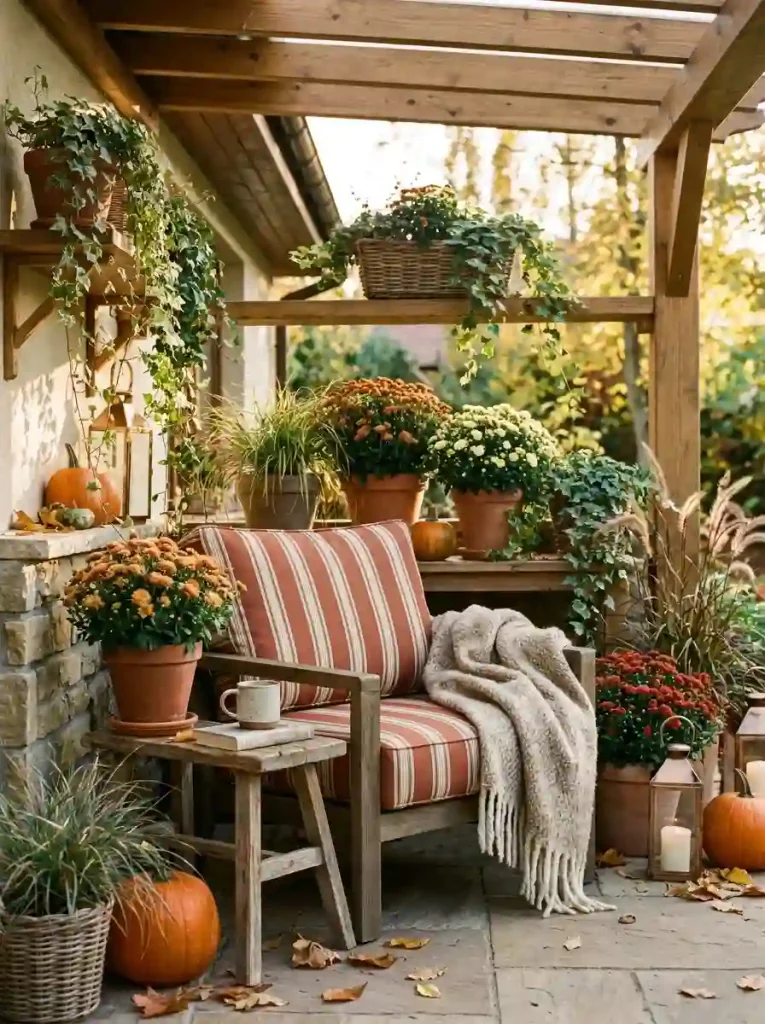
Transition an outdoor seating area with weather-friendly cushions, a textured throw, and a small side table in warm autumn tones. Surround the space with pots of mums, grasses, or trailing plants. A simple arrangement can make a summer patio comfortable enough for crisp fall afternoons.
Move furniture into a sheltered position when possible, especially where autumn winds are strong. Choose washable textiles and bring delicate cushions indoors overnight. Keep planting nearby but not crowded around chairs, leaving enough walking space for an open, relaxed layout for coffee or evening conversations.
6. Bring in Warm Garden Lighting
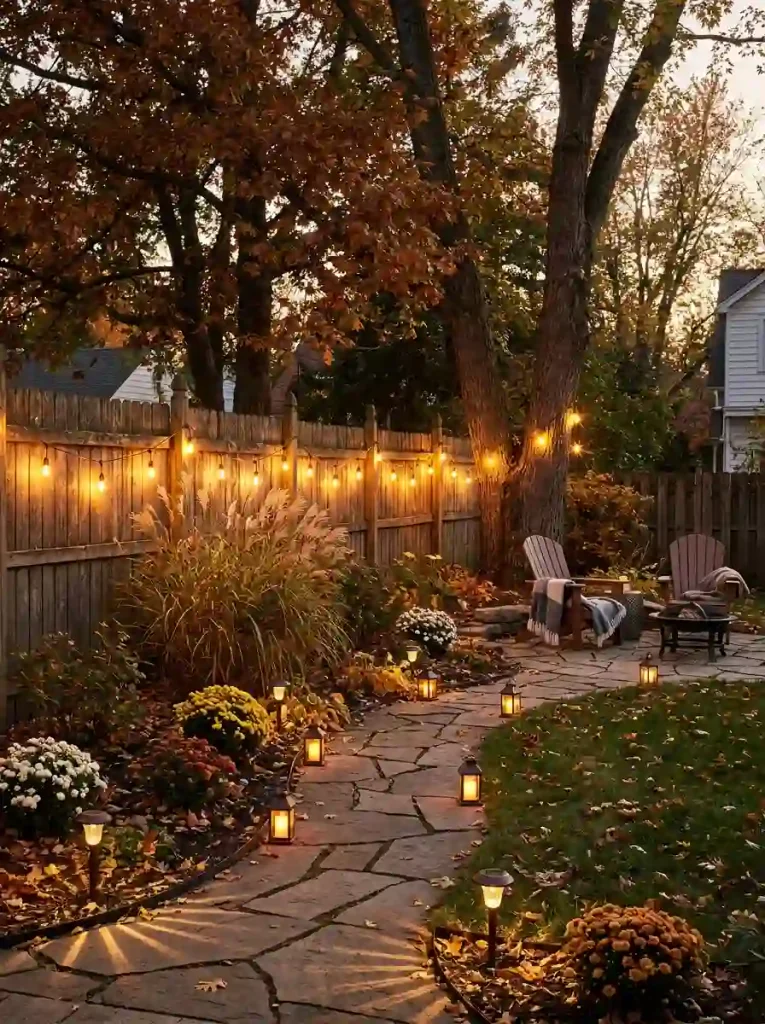
Replace bright summer lighting with softer illumination that makes early autumn evenings inviting. Add warm string lights along a fence, small lanterns beside paths, or low solar lights around planting beds. Keep fixtures subtle so the garden remains the star while pathways stay safely visible.
Focus lighting on steps, entrances, seating areas, and changes in elevation rather than illuminating everything equally. Hide cords securely and keep fixtures away from standing water. Use repeated light points to guide the eye through the garden, creating depth and a gentle glow after sunset.
7. Mulch Beds for a Fresh Seasonal Finish
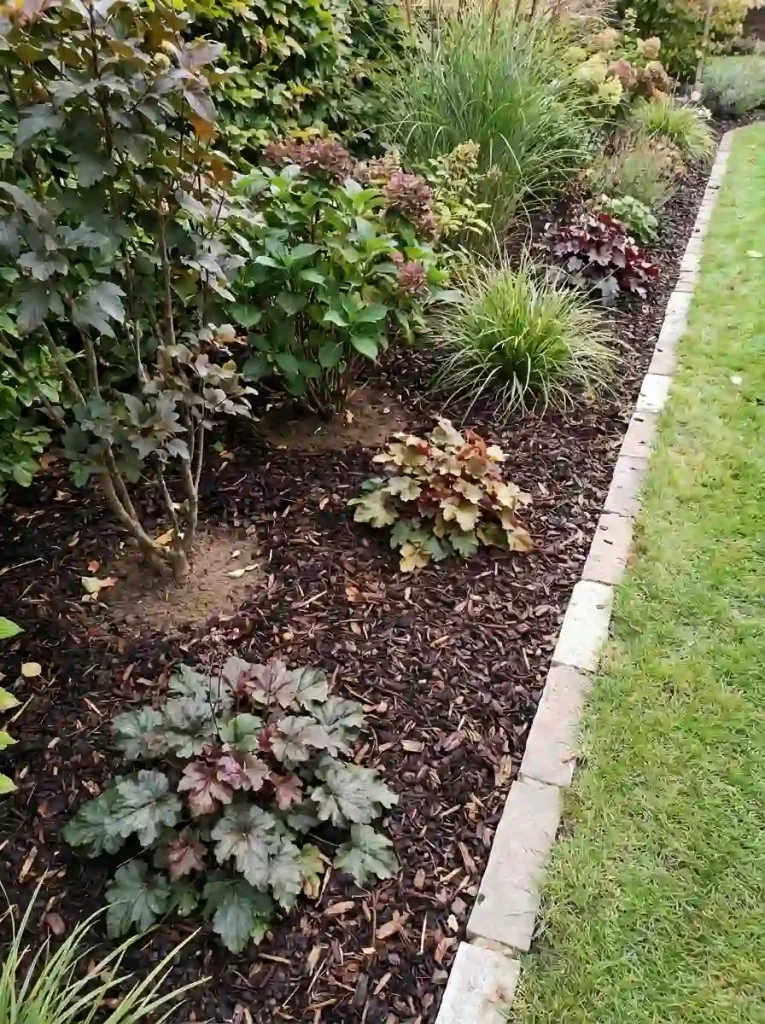
Give garden beds a clean autumn finish with a fresh layer of organic mulch. Shredded bark, compost, pine straw, or leaf mulch can frame plants beautifully while helping soil retain moisture. Spread mulch evenly around established plants, leaving a small gap around stems and trunks.
Clear weeds and fallen debris before mulching so the new layer looks tidy and works effectively. Apply moderate depth rather than creating a thick mound. As temperatures cool, mulch helps buffer soil conditions and protects roots from rapid moisture and temperature changes during autumn weather.
8. Add Pumpkins Without Overcrowding the Garden
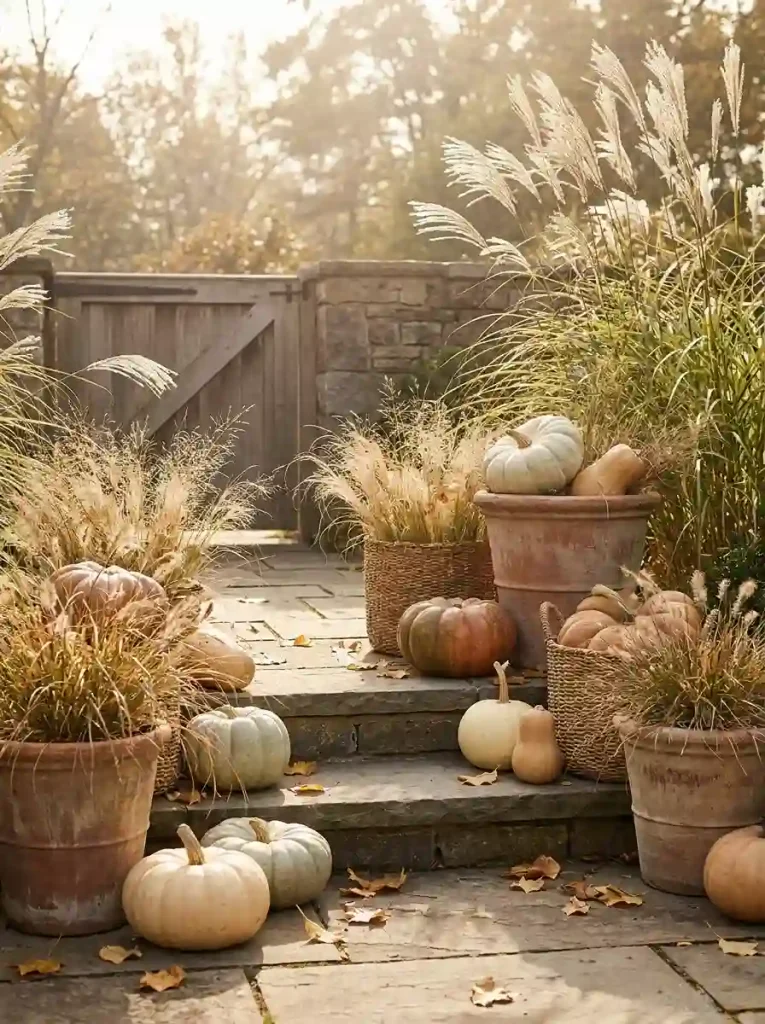
Use pumpkins and gourds as natural garden accents instead of covering every surface with decorations. Arrange a few on steps, beside large containers, or among ornamental grasses for an effortless harvest look. Mix shapes, sizes, and muted shades to keep the arrangement relaxed and sophisticated.
Choose firm pumpkins without soft spots, then place them on a dry surface to reduce moisture damage. Leave room between pieces so the display feels airy and plants remain visible. After rain, move pumpkins if water collects underneath, helping protect both produce and nearby surfaces.
9. Welcome Fall Pollinators With Late Blooms
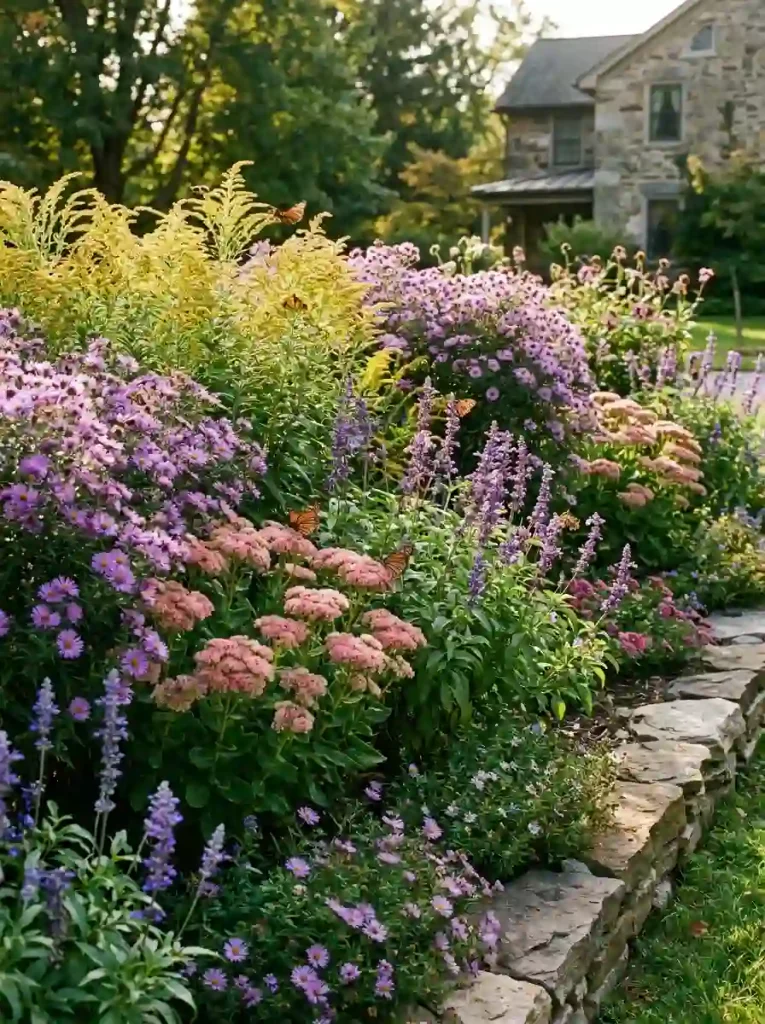
Extend garden activity by adding late-blooming flowers that provide nectar when summer favorites begin fading. Asters, sedum, goldenrod, and late-flowering salvias can bring bees and butterflies back to your borders. Plant several together for stronger visual impact while giving pollinators an easy-to-find food source.
Select plants suited to your sunlight and soil, then group them near existing flowering areas. Avoid removing every spent bloom immediately, because seed heads can offer food and shelter. Keep watering consistent during dry periods so late-season flowers stay healthy and support beneficial garden visitors.
10. Prune Summer Growth With a Light Touch
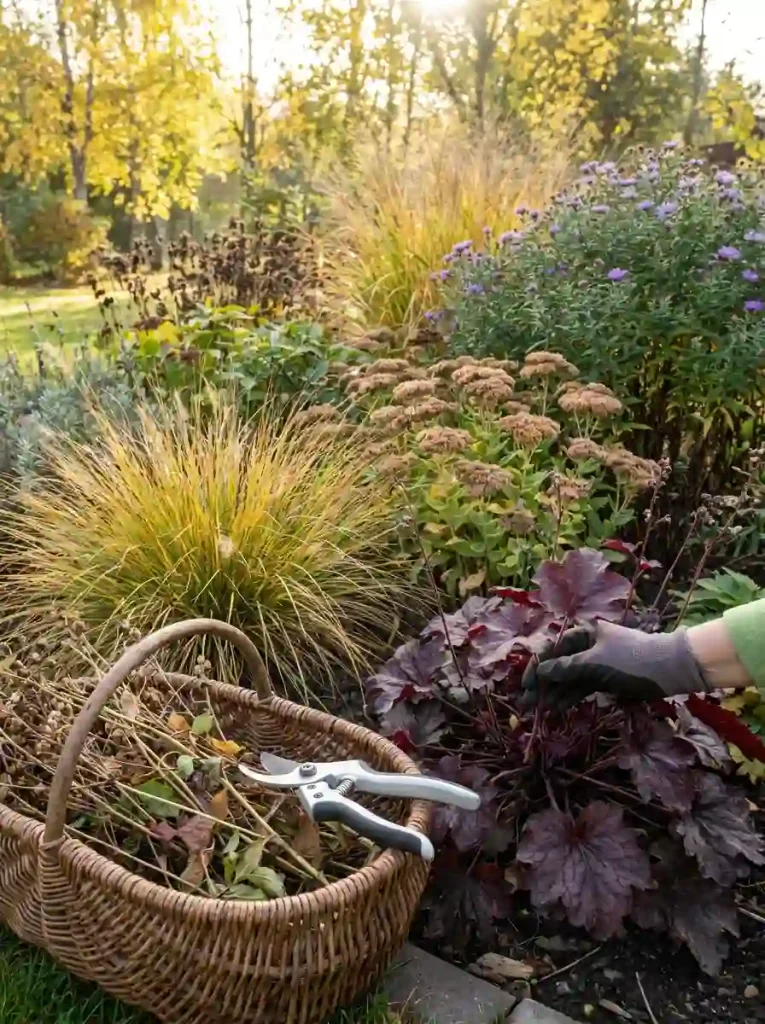
Use early fall to tidy summer growth, but avoid cutting everything back at once. Remove broken stems, yellowing leaves, and finished annuals while preserving healthy foliage and attractive seed heads. This keeps the garden neat while preserving texture carefully.
Use clean, sharp pruners and make deliberate cuts rather than shearing plants broadly. Check each perennial before pruning because some provide winter interest or habitat. Remove diseased material, but leave healthy stems where they contribute structure, shelter, or visual interest during colder months throughout fall.
11. Refresh the Garden Path With Natural Texture
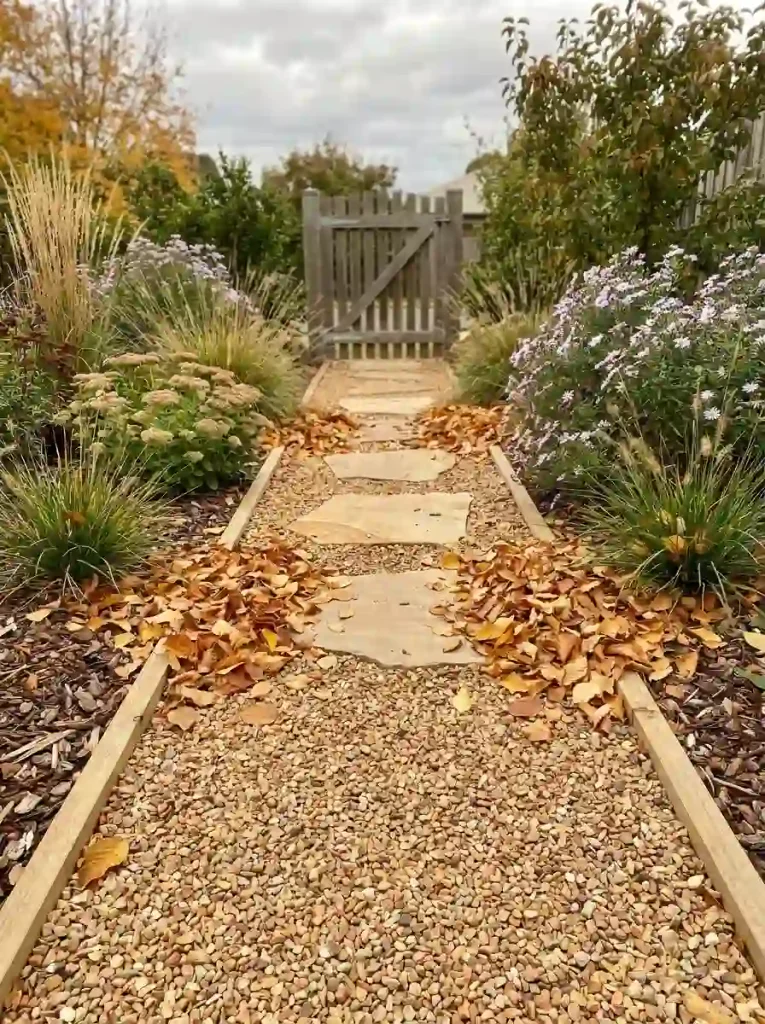
Refresh pathways with gravel, edging, stepping stones, or bark. Sweep away summer debris and define borders so the route feels crisp against surrounding foliage. Warm stone, natural wood, and golden leaves create a welcoming transition from the house into the autumn garden.
Pull weeds from cracks and reset loose stones before adding fresh material. Keep path edges clear for comfortable walking, especially as rain and falling leaves make surfaces slippery. A tidy walkway improves appearance and makes seasonal displays feel intentional now and beautiful.
12. Make a Simple Fall Focal Point
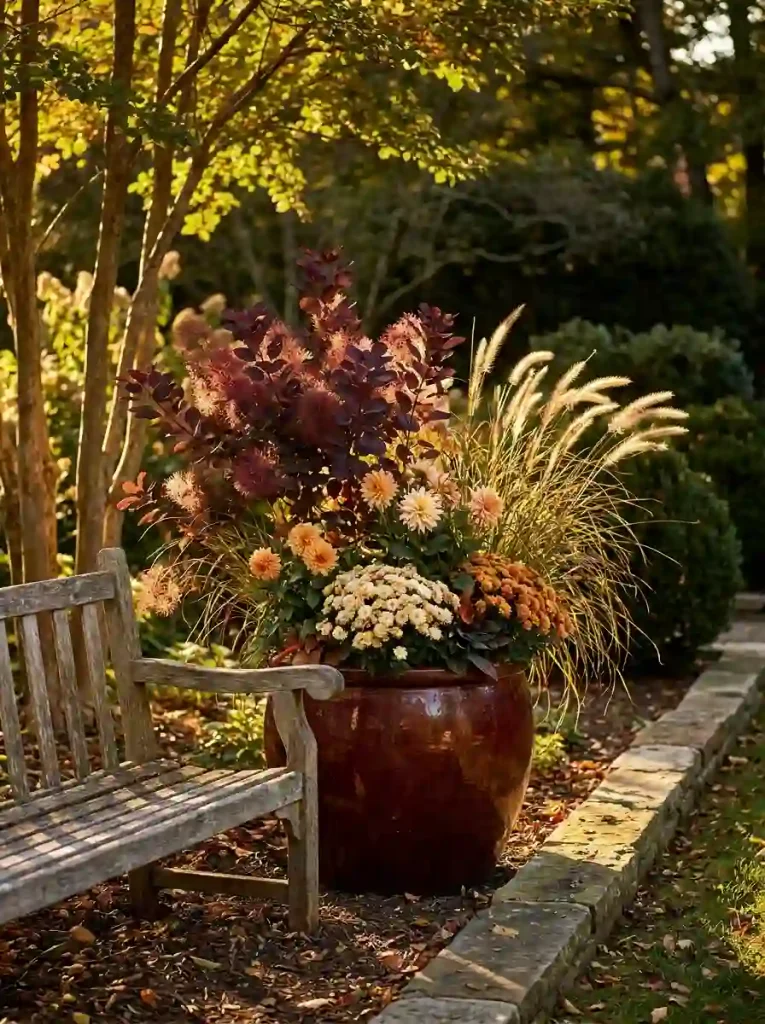
Choose one prominent garden area and turn it into a seasonal focal point using layered plants, a planter, or rustic bench. Combine burgundy foliage, golden grasses, and cream flowers for contrast. Keeping strong color in one area creates impact without making the garden busy.
Start with the largest element, then add medium plants and smaller accents around it. Repeat one or two colors elsewhere, but keep the main display visually distinct. Step back while arranging and check that the focal point remains attractive from paths and seating areas beautifully.
13. Prepare Tender Plants for Cooler Nights
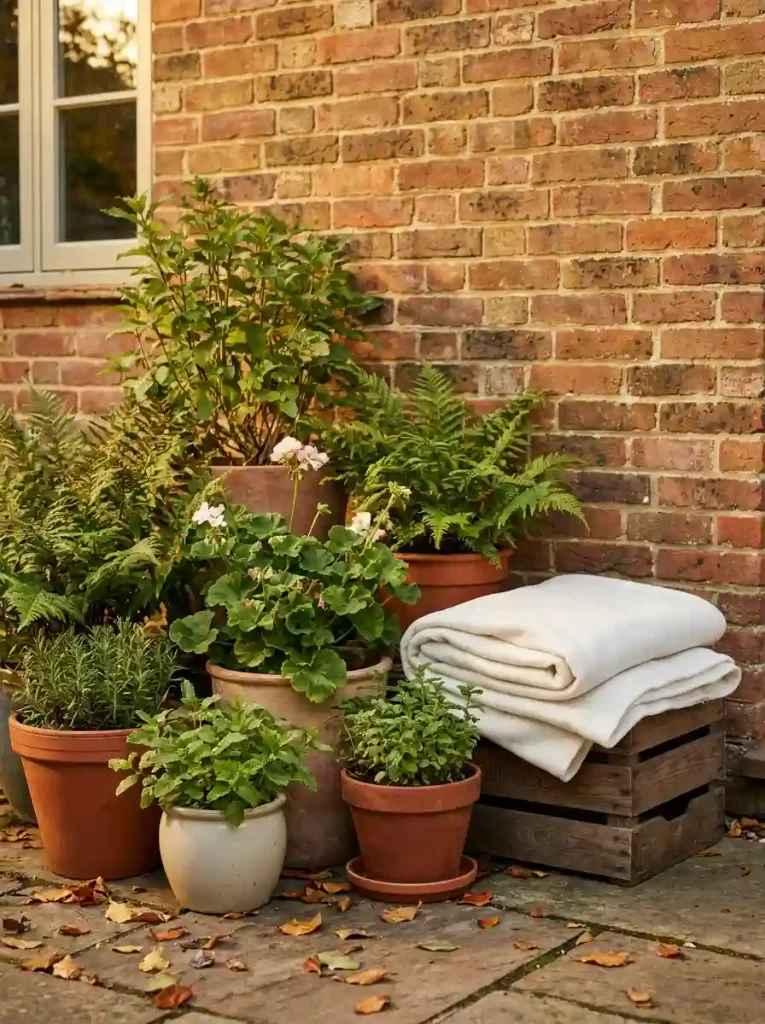
Protect tender plants as nights cool by moving portable pots closer to sheltered walls or covered areas. Grouping containers can reduce exposure to chilly winds. Before relocating, inspect leaves and stems for pests and remove damaged growth so healthy plants enter the cooler season stronger.
Know which plants need protection in your climate and act before a sudden cold night arrives. Water thoroughly when appropriate, but avoid leaving containers constantly wet. For outdoor plants, use suitable covers during cold snaps and uncover them during mild days comfortably again during winter.
14. Create a Leaf-Friendly Autumn Garden
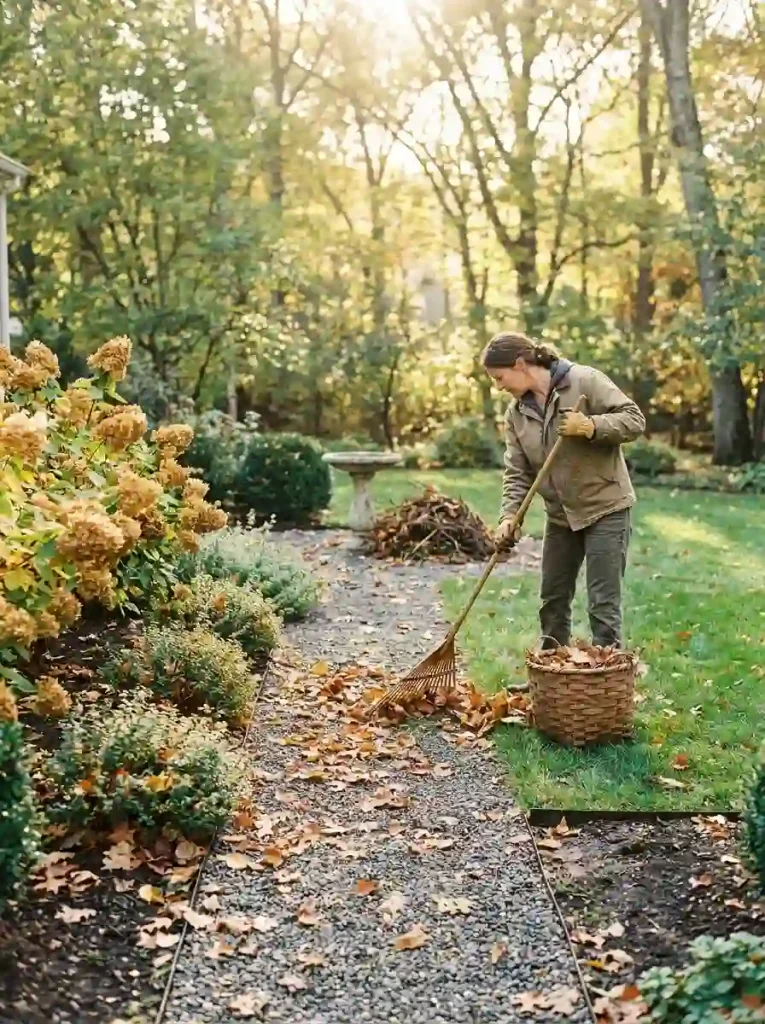
Use autumn leaves to add texture and support the soil. Rake leaves from paths and lawns, then shred suitable leaves for compost or mulch. Leave leaf litter beneath shrubs for shelter. This simple approach makes seasonal cleanup more useful and naturally reduces garden waste.
Keep thick piles away from crowns, plant stems, and drainage areas because excess moisture can encourage rot. Compost leaves mixed with other organic materials for a useful soil amendment. A little seasonal mess can make the garden feel natural while reducing waste and returning nutrients.
15. Give the Garden a Final Summer-to-Fall Tidy
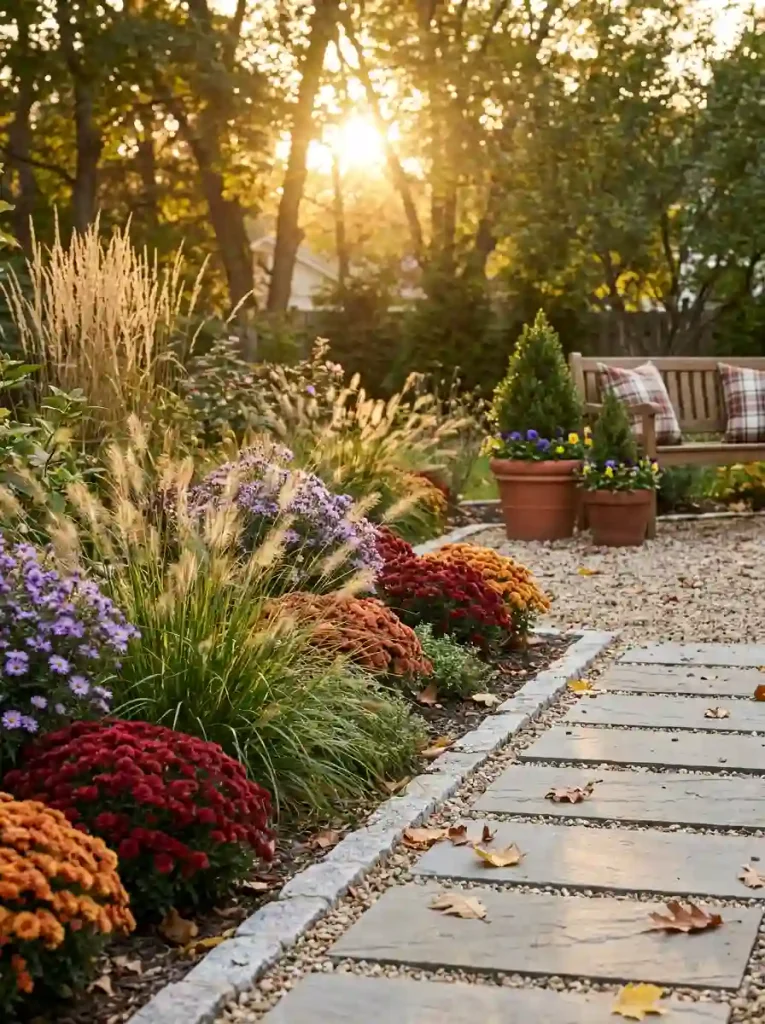
Finish the transition with a gentle garden reset: remove spent annuals, clear clutter, refresh visible edges, and check containers for tired plants. Keep changes selective rather than making the space spotless. A garden with purposeful texture, autumn color, and natural imperfections feels more welcoming.
Walk through the space slowly and notice what looks tired, crowded, or out of place. Tackle the most visible areas first, especially entrances and seating areas. Then step back and enjoy. The goal is not perfection, but a garden that feels prepared for fall in autumn.
Conclusion
A fall garden does not require a complete makeover. Small, thoughtful updates can preserve summer’s charm while introducing richer colors, cozy textures, late-season blooms, and practical protection for cooler weather. Choose the changes that fit your space, budget, and gardening style, then let the season unfold naturally.
From refreshed containers to glowing pathways and layered planting beds, each detail can make your outdoor space feel more inviting. Save your favorite ideas, start with one simple update, and enjoy watching your garden settle gracefully into autumn.