
15 Easy Pothos Plant Care Tips for Thriving Houseplants
Pothos is one of those houseplants that can make a room feel instantly greener, even when you are new to plant care. Its trailing vines and heart-shaped leaves are beautiful, forgiving, and easy to enjoy indoors. Still, a little thoughtful pothos plant care goes a long way toward keeping leaves lush and growth steady.
From finding the right window to watering wisely, these simple pothos care tips cover everyday habits that help. Explore all 15 ideas and give your healthy pothos the care it deserves.
How do you keep a pothos plant healthy?
Give your pothos well-draining soil, proper drainage, bright indirect light, and water when the top soil dries. Prune damaged growth, clean dusty leaves, check regularly for pests, and provide occasional fertilizer during active growth. Consistent, simple care helps pothos remain healthy and attractive indoors.
1. Give It Bright, Gentle Light
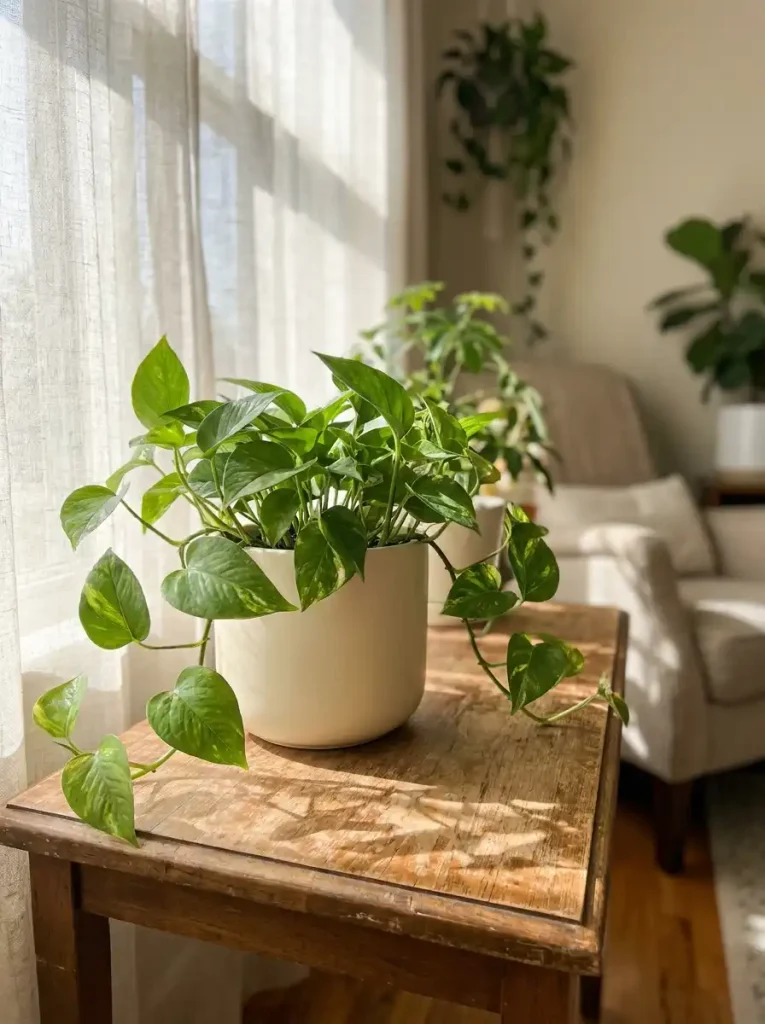
Bright, indirect light helps pothos produce strong, attractive growth without scorching its leaves. A spot near an east-facing window often works beautifully, while filtered light keeps variegated varieties looking colorful. Good pothos light requirements are the foundation for steady, healthy indoor growth.
Place your plant close to a bright window, but soften harsh afternoon sun with a sheer curtain. If leaves look pale or growth becomes sparse, move it slightly closer. Avoid dark corners for long periods, especially with strongly variegated pothos varieties.
2. Water When the Top Soil Dries
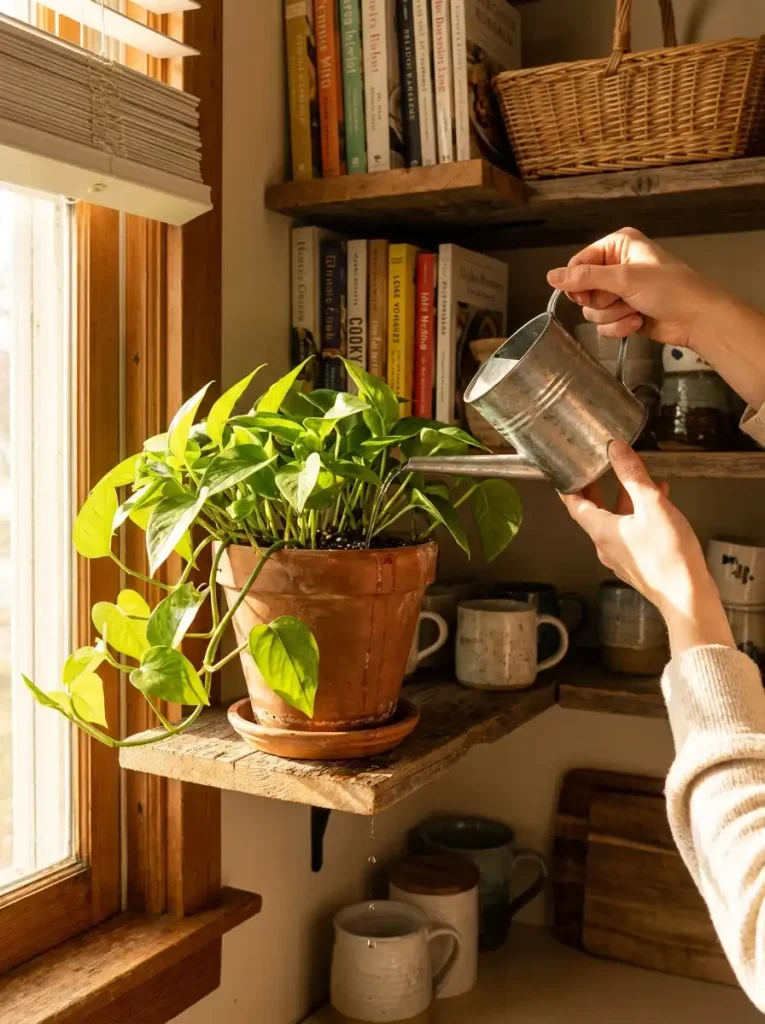
Good pothos watering is about timing rather than following a rigid calendar. Letting the upper soil dry slightly between drinks encourages healthy roots while preventing constantly soggy conditions. Your plant may need water more often during bright, warm periods and less during cooler months.
Press a finger about an inch into the pothos soil before watering. If that layer feels dry, water slowly until excess flows from the drainage holes. Never leave the pot sitting in collected water, because consistently wet roots can become stressed and unhealthy.
3. Choose a Fast-Draining Soil Mix
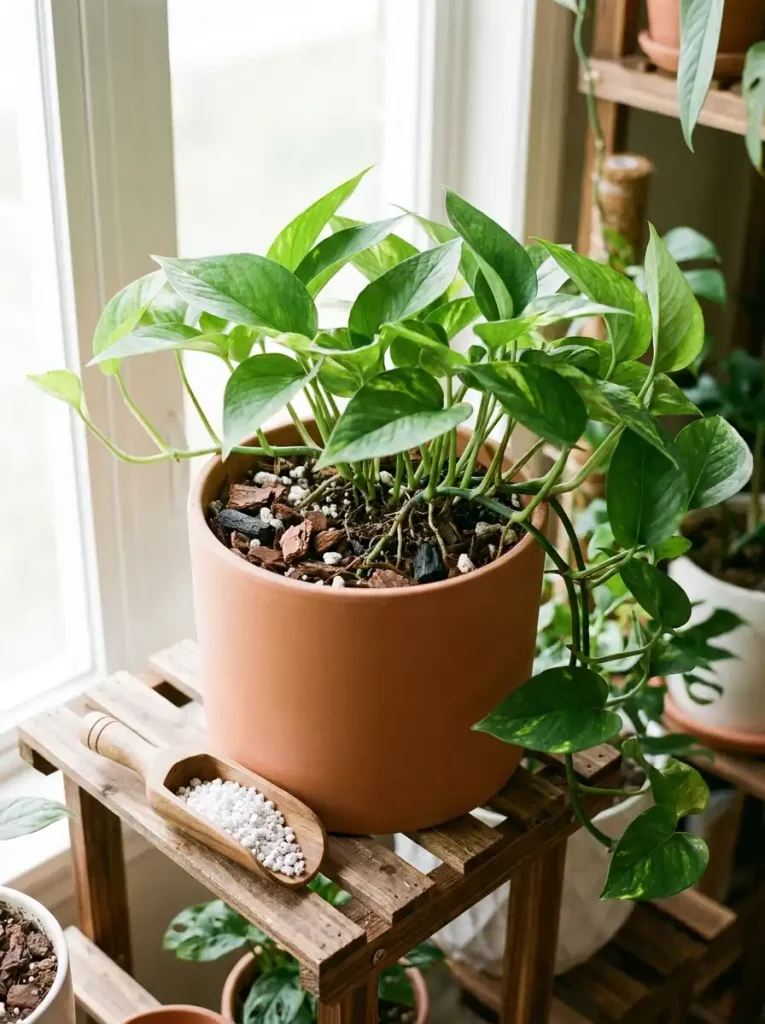
The right pothos soil should hold enough moisture for roots while allowing extra water to escape easily. A light, airy houseplant mix supports oxygen around the roots and reduces the chance of compacted, waterlogged soil. This simple choice makes everyday care much easier.
Use a quality indoor potting mix blended with materials such as perlite for added drainage. Avoid heavy garden soil in containers, since it can become dense and stay wet. Refresh the mix when it breaks down or no longer drains freely after watering.
4. Always Use a Pot With Drainage
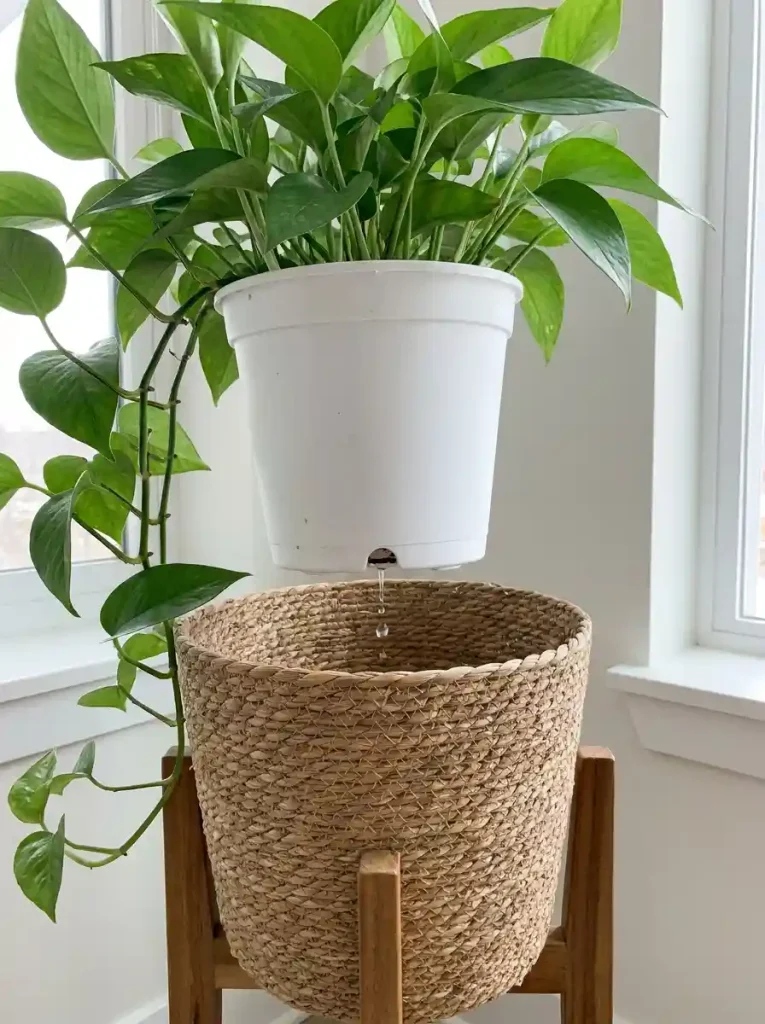
Drainage holes give excess water an easy escape route, making them essential for reliable pothos plant care. Even a beautiful decorative pot cannot compensate for trapped moisture around the roots. Proper drainage helps create a healthier root environment and makes watering mistakes less risky.
Choose a nursery pot or container with at least one clear drainage opening underneath. If you use a decorative cover pot, remove the inner pot when watering and let it drain completely. Never add a shallow layer of stones as a substitute for drainage holes.
5. Keep Humidity Comfortable
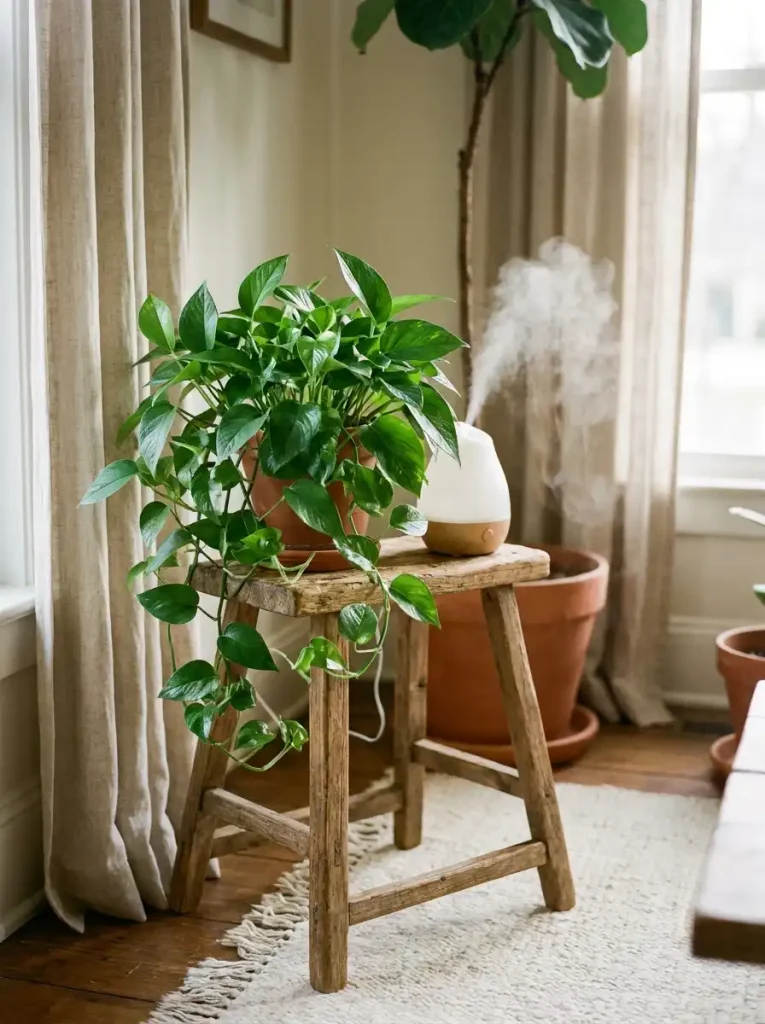
Pothos can adapt to normal household humidity, but moderately humid air can help leaves stay fresh and reduce crispy edges. This is especially helpful when indoor air becomes dry from heating or strong air conditioning. Comfortable humidity supports a fuller, happier-looking plant.
Keep your pothos away from constant blasts of dry heat or air conditioning. A nearby humidifier can raise room humidity more reliably than frequent misting. You do not need a tropical greenhouse; simply avoid extremely dry conditions and watch the leaves for signs of stress.
6. Protect It From Temperature Swings
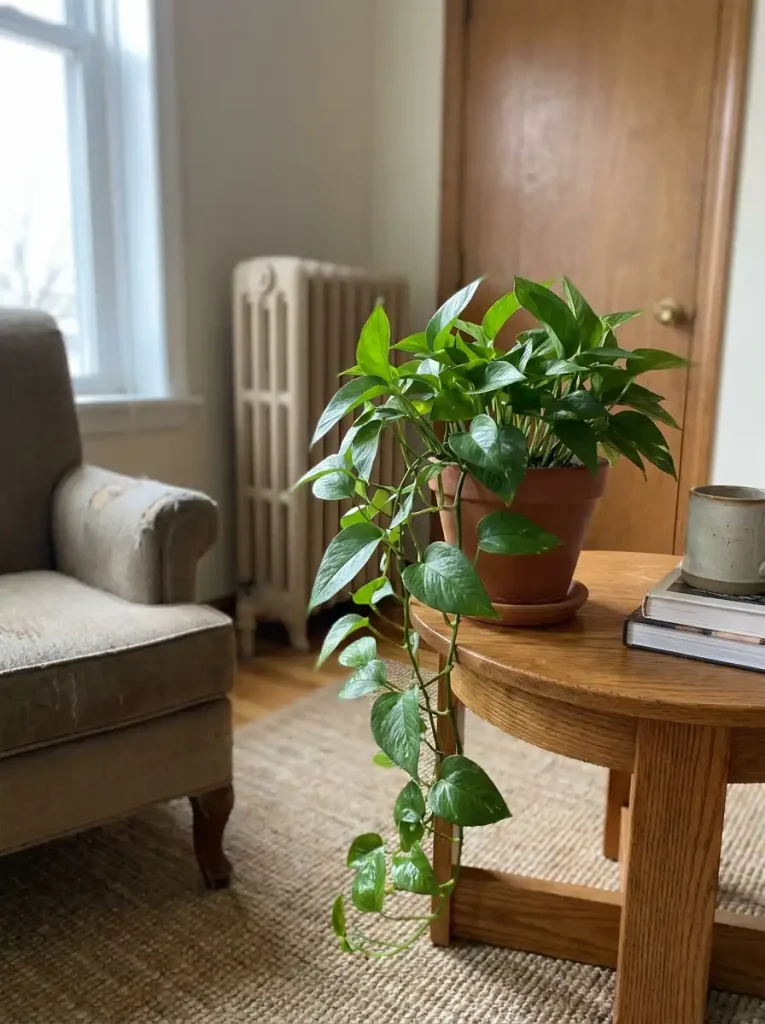
Stable temperatures help pothos maintain steady growth and avoid unnecessary stress. These tropical plants generally prefer comfortable indoor conditions rather than chilly drafts or sudden heat. Protecting your plant from sharp temperature changes is an easy pothos care habit that supports consistent, attractive foliage.
Keep the pot away from drafty doors, very cold windows, heaters, and direct air-conditioning vents. Choose a comfortable room with fairly stable temperatures instead. If moving the plant seasonally, make changes gradually so it can adjust without experiencing an abrupt environmental shift.
7. Feed During Active Growth
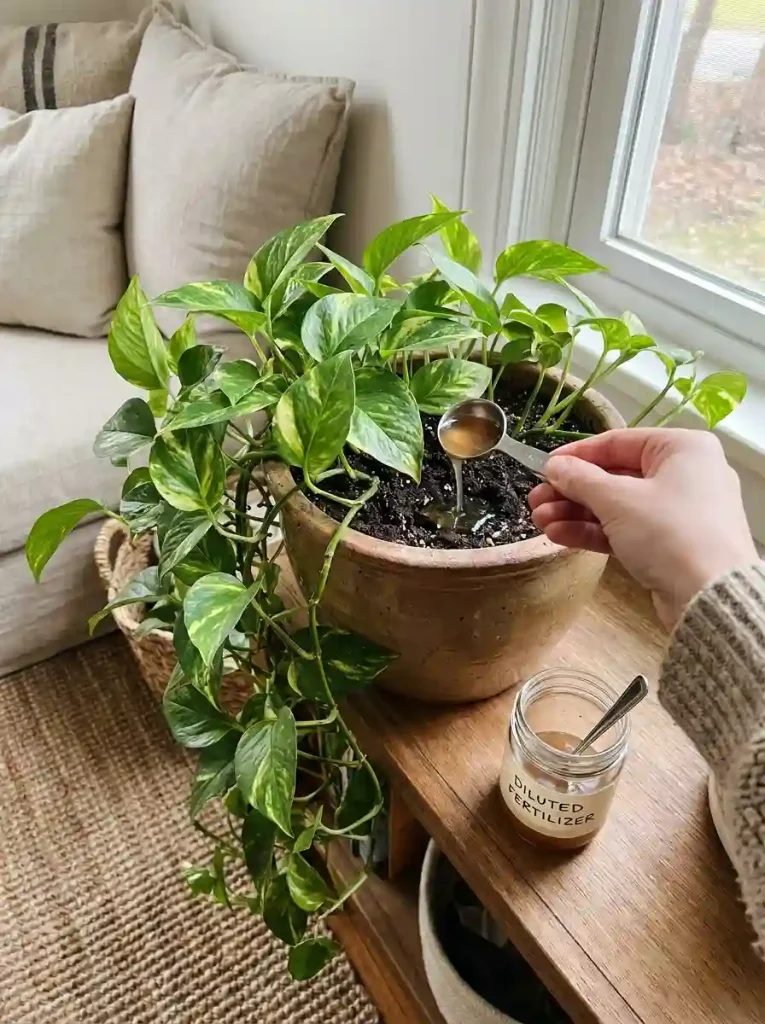
Light fertilizing during active growth can provide nutrients that support new leaves and longer vines. Pothos usually does not need frequent feeding, and overfertilizing can create more problems than benefits. A balanced houseplant fertilizer, used sparingly, is enough for routine indoor care.
Follow the fertilizer label and use a conservative amount rather than feeding heavily. Apply fertilizer to already moist soil, not bone-dry roots. During slower winter growth, reduce or pause feeding according to your plant’s conditions, and avoid adding extra fertilizer when growth is weak.
8. Prune for Fuller, Healthier Growth
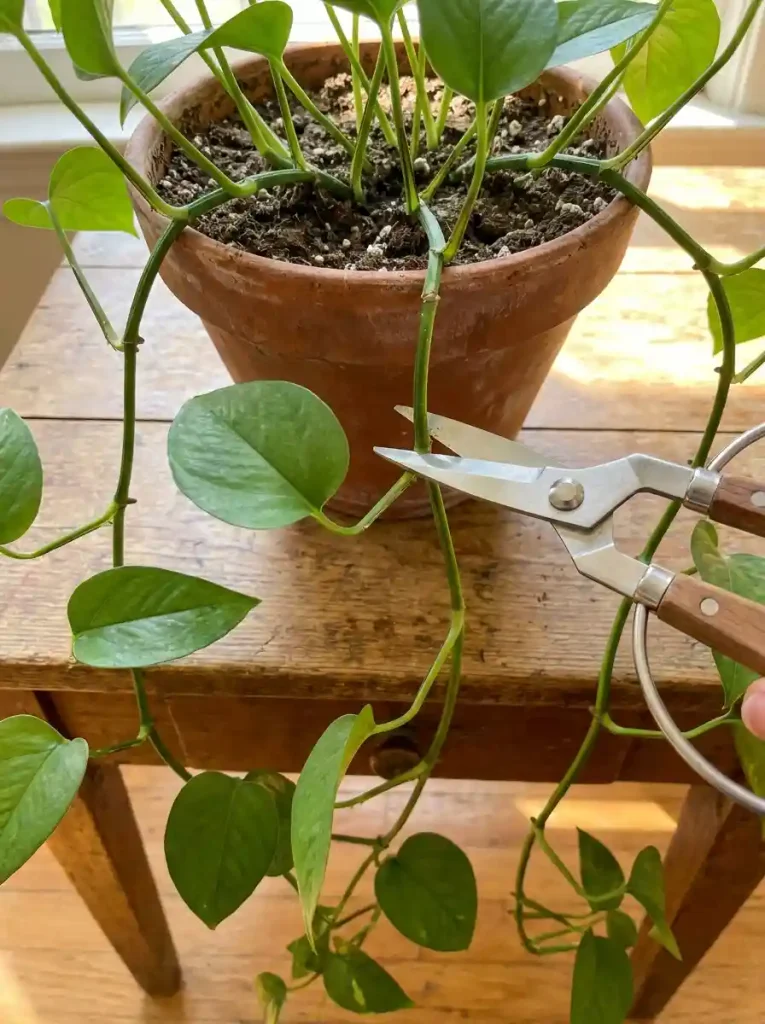
Pothos pruning helps control long vines, remove damaged growth, and encourage a fuller shape. Regular trimming can also keep a plant from becoming thin or uneven near the pot. Pruning is simple, and small cuts can make an indoor pothos look tidier and healthier.
Use clean, sharp scissors to cut just above a leaf node, where new growth can develop. Remove yellowing or damaged leaves separately. Avoid removing too much at once; trimming a few stems at a time keeps the plant balanced while giving it room to recover.
9. Clean Dust From the Leaves
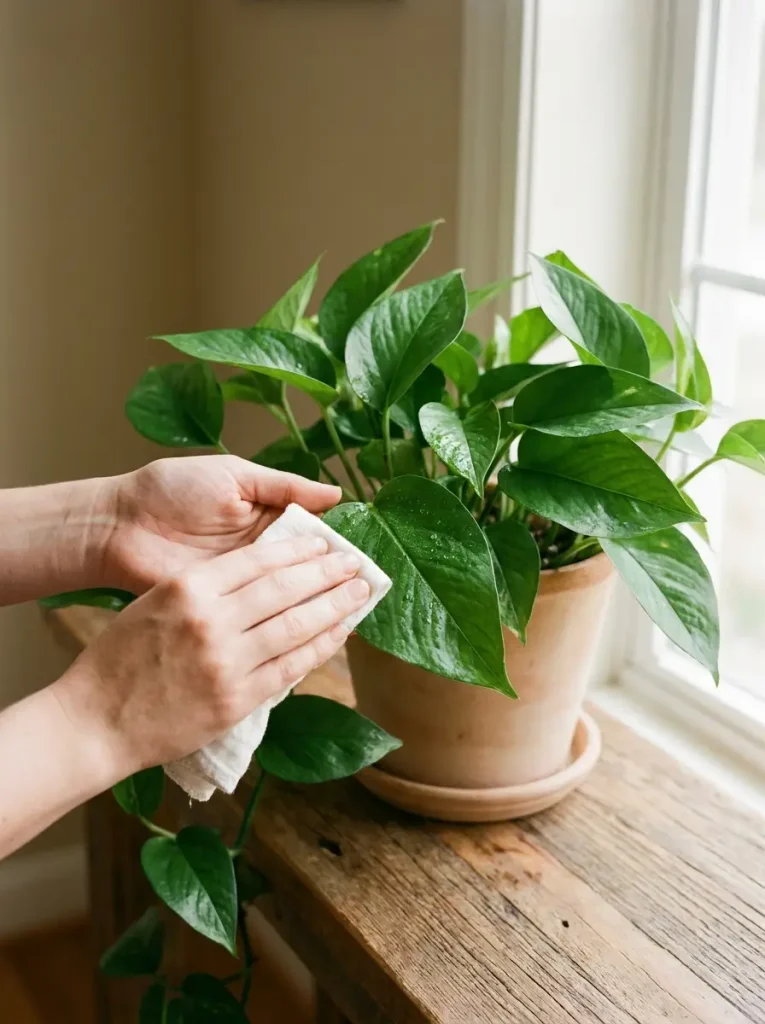
Clean leaves help pothos capture available light and look brighter in your home. Dust can collect on broad foliage, especially in still indoor spaces. Gentle leaf cleaning is a simple maintenance habit that supports attractive growth and keeps your healthy pothos looking fresh.
Support each leaf with one hand and wipe its surface gently using a soft, damp cloth. Work from the stem outward without rubbing hard. Skip oily leaf-shine products, which can leave residue. Clean only when needed, especially after visible dust builds up.
10. Repot When Roots Become Crowded
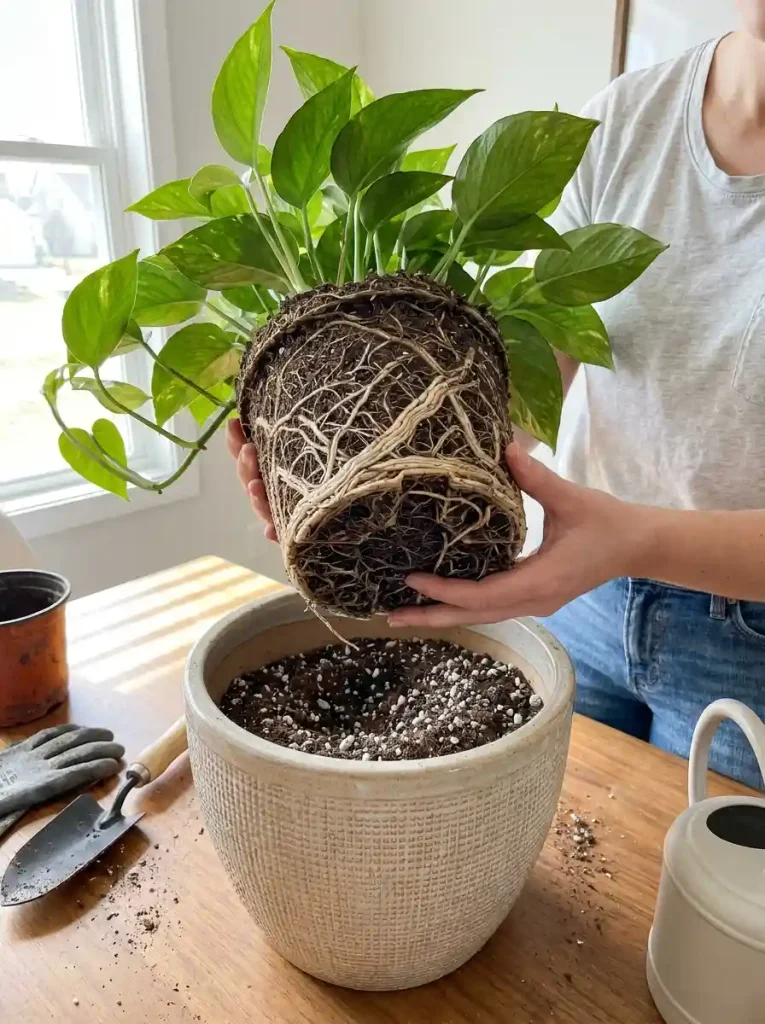
Repotting gives a root-bound pothos more room when its container becomes crowded. Signs can include roots circling the pot, very slow drying soil, or growth that has stalled despite good care. Moving up one pot size can refresh the plant without overwhelming its roots.
Choose a container only slightly larger than the current one and make sure it has drainage. Gently loosen the outer roots before transferring the plant into fresh mix. Avoid jumping into a very large pot, because extra soil can stay wet longer than needed.
11. Propagate Healthy Cuttings
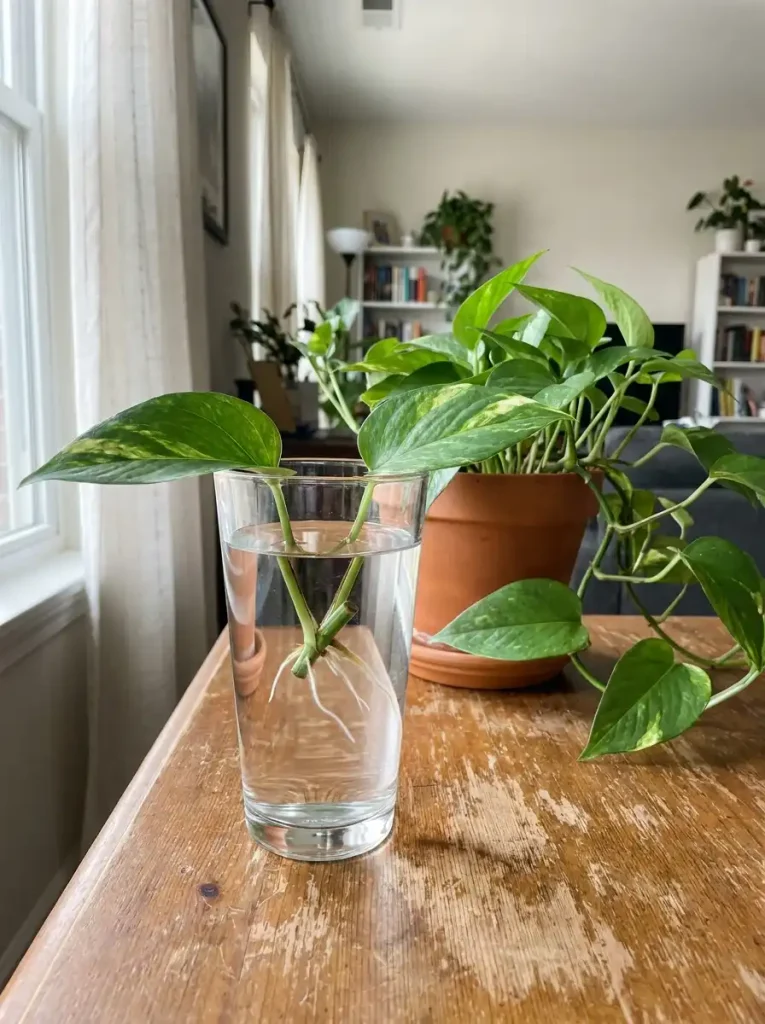
Pothos propagation is an easy way to create new plants from healthy stems while learning how your pothos grows. A cutting with a leaf node can develop roots in water, making this a fun project for beginners and a simple way to fill another pot.
Cut a healthy vine just below a node using clean scissors, then place the node in water while keeping leaves above the surface. Set the glass in bright, indirect light and refresh the water regularly. Once roots develop, transfer the cutting into lightly moist soil.
12. Check Leaves and Stems for Pests
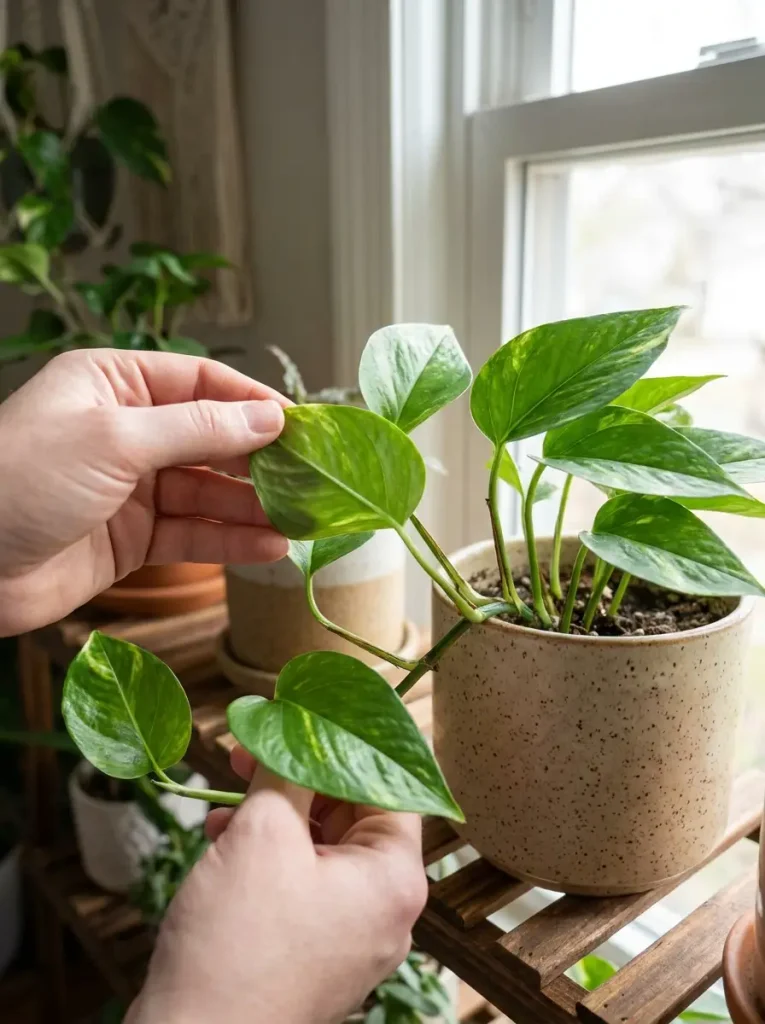
Regular pest inspections can catch common houseplant problems before they spread through your pothos. Look closely at leaf undersides, stems, and new growth for tiny insects, webbing, sticky residue, or unusual spots. Early attention makes treatment simpler and protects nearby houseplants too.
Once a week, examine the plant under good light and gently turn several leaves to inspect both sides. If you notice pests, isolate the pothos from other plants and follow an appropriate treatment. Avoid spraying unfamiliar products without checking that they are safe for houseplants.
13. Rotate the Pot for Even Growth
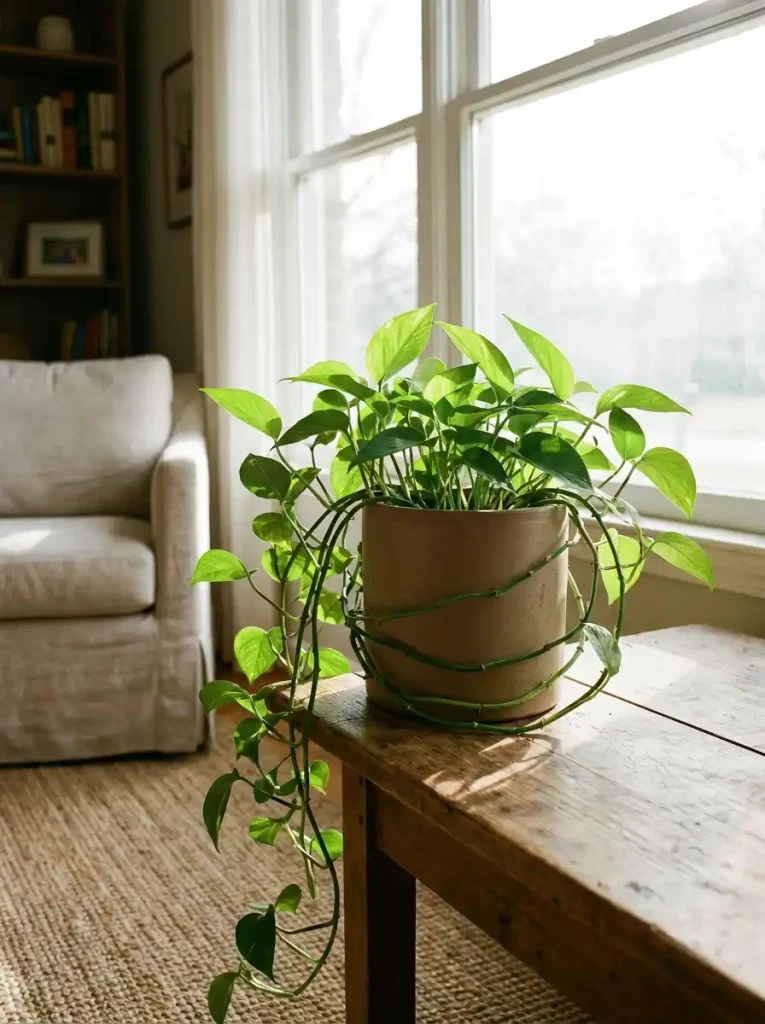
Rotating your pothos regularly helps different sides of the plant receive light, encouraging more balanced growth around the container. Without occasional rotation, vines may lean strongly toward one window. This small routine is especially useful for indoor pothos displayed beside bright windows.
Turn the pot a quarter turn every week or two rather than making large changes daily. Keep the plant in the same light conditions after rotating. If one side is much thinner, give it time to adjust instead of moving the pot into harsh light.
14. Watch Root Health When Problems Appear
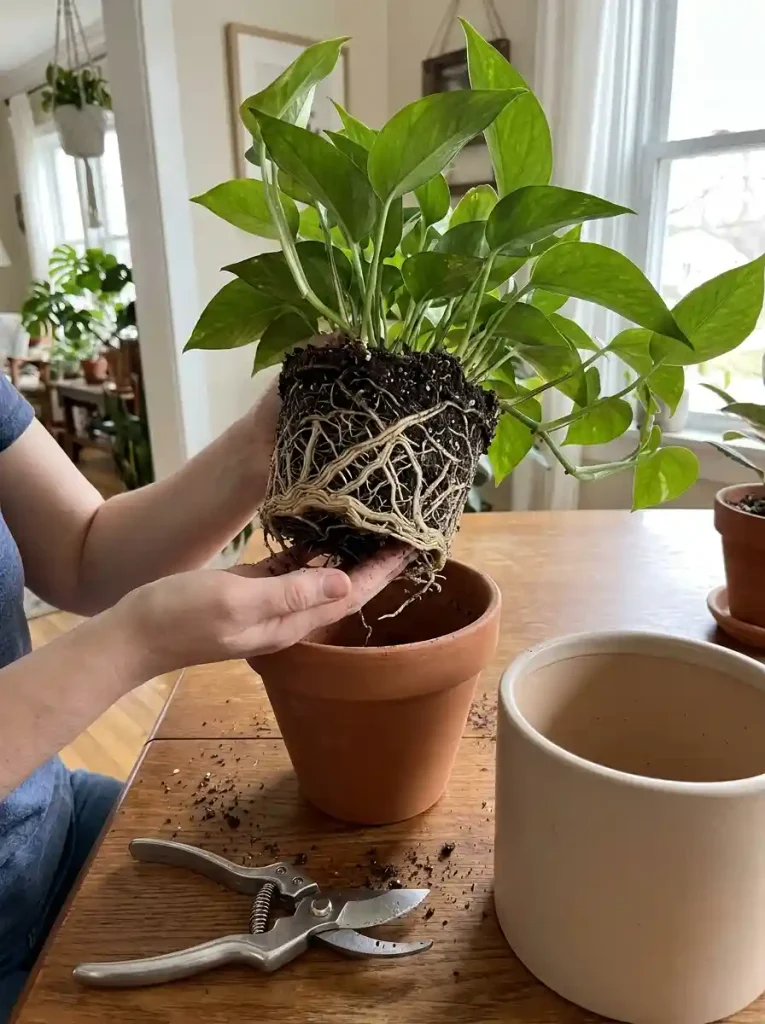
Root health often explains problems that show above the soil, such as repeated wilting, yellowing, or unusually slow growth. If your pothos stays wet for too long, roots may struggle. Checking them when symptoms persist can help you identify a watering or drainage issue.
When removing the plant for inspection, handle the root ball gently and look for firm, light-colored roots. Trim only roots that are clearly mushy or decayed with clean scissors. Repot into fresh, well-draining soil and correct the watering routine that caused the stress.
15. Remove Yellow or Damaged Leaves
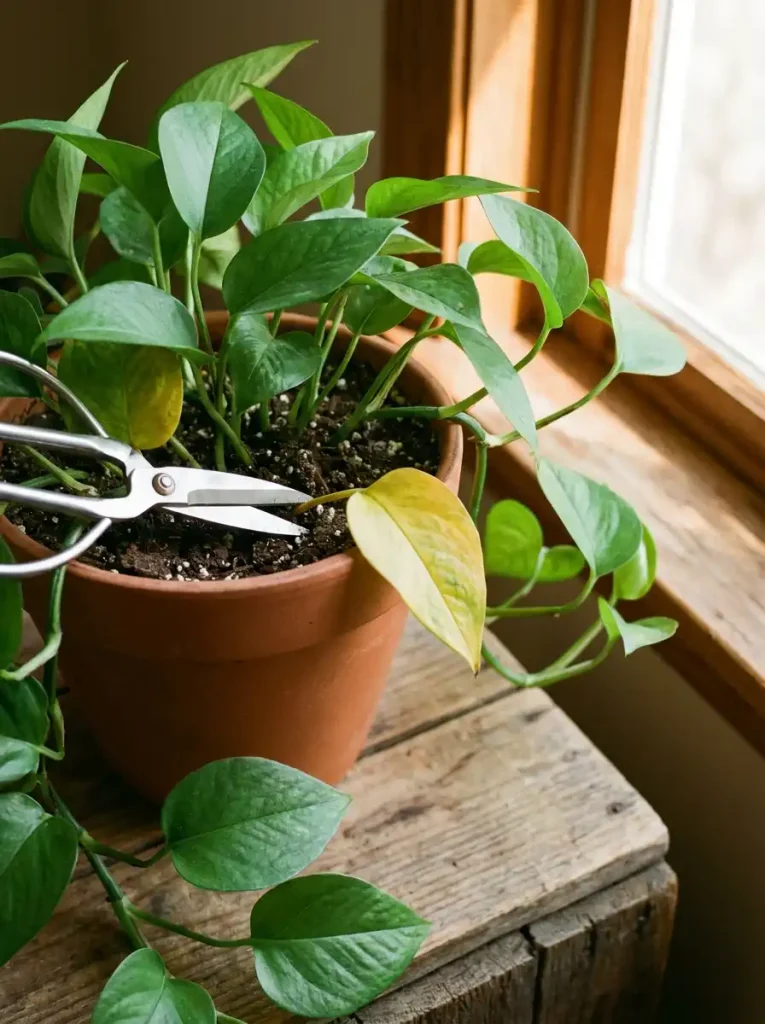
Removing yellow or damaged leaves keeps your pothos looking neat and lets the plant focus on healthier growth. One occasional yellow leaf is not automatically a crisis, but repeated yellowing can signal a care problem. Treat leaf removal as maintenance, not a substitute for diagnosis.
Use clean scissors to cut unwanted leaves close to their stem without tearing the main vine. Then check whether the soil is staying too wet, light is too low, or another issue is developing. Removing symptoms while ignoring the cause will not solve recurring problems.
Conclusion
Thriving pothos plants do not need complicated routines. Focus on bright indirect light, thoughtful watering, well-draining soil, comfortable temperatures, occasional feeding, and maintenance like pruning and leaf cleaning. Pay attention to what your plant is showing you, because changes in leaves, soil, or roots can reveal problems early.
With these pothos plant care habits, beginners can build confidence and enjoy healthier greenery. Choose the tips that fit your space, make them part of your routine, and let your pothos turn everyday care into green joy.