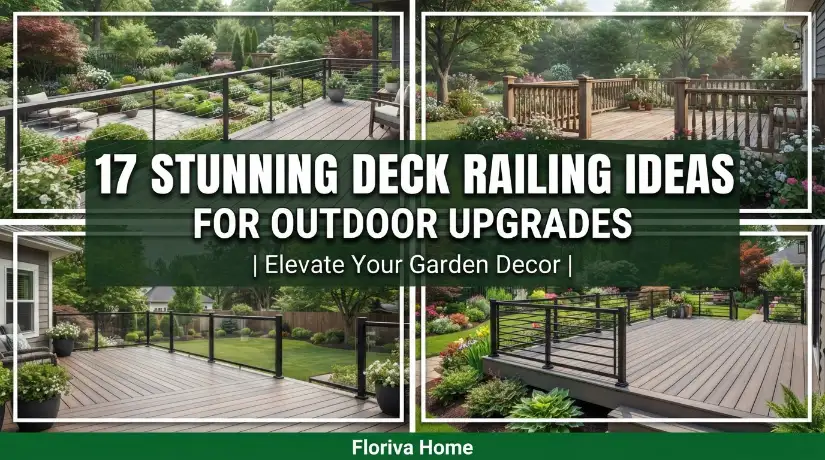
17 Stunning Deck Railing Ideas for Outdoor Upgrades
The right deck railing can do far more than define an edge; it can shape the feel of your backyard. From warm wood to sleek glass, deck railing ideas add character, safety, privacy, and visual polish while supporting an outdoor living space. Whether your deck needs a subtle refresh or a noticeable transformation, the railing becomes part of the deck design.
These outdoor upgrades offer practical ways to improve your space while creating a welcoming backdrop for relaxing, dining, entertaining, and enjoying daily outdoor moments.
What is the best material for deck railings?
Wood, metal, cable, glass, and composite are popular deck railing materials. The best choice depends on your home’s style, maintenance preferences, privacy needs, budget, and local climate. Composite and metal offer easy upkeep, while wood provides natural warmth and traditional appeal.
1. Warm Cedar Railing for a Natural Backyard Retreat
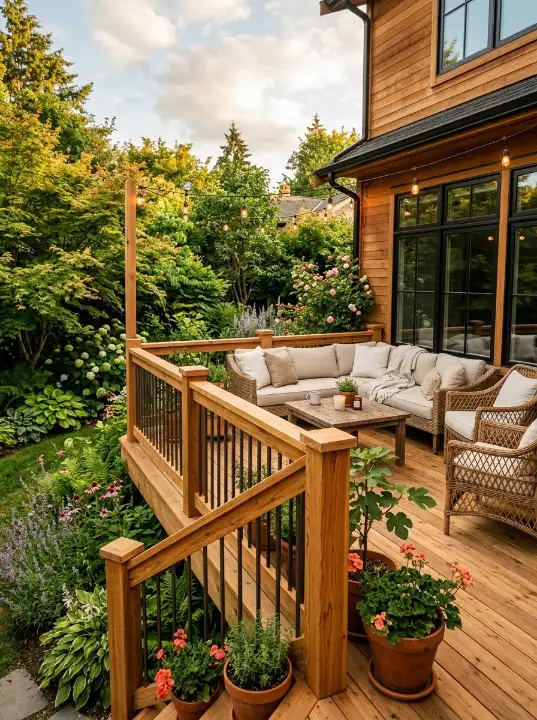
Warm cedar creates a welcoming boundary with visible grain, rich honey coloring, and straightforward vertical balusters. The natural wood pairs especially well with gardens, stone paths, and relaxed furnishings, giving a backyard deck design a grounded character that feels connected to surrounding greenery.
Seal cedar regularly according to the product instructions, especially where rain and strong sunlight are common. Pair the railing with earthy cushions, planters, and warm lighting for a cohesive retreat. Its traditional shape also provides a dependable visual boundary without making the deck feel enclosed.
2. Sleek Black Metal Railing for Modern Contrast
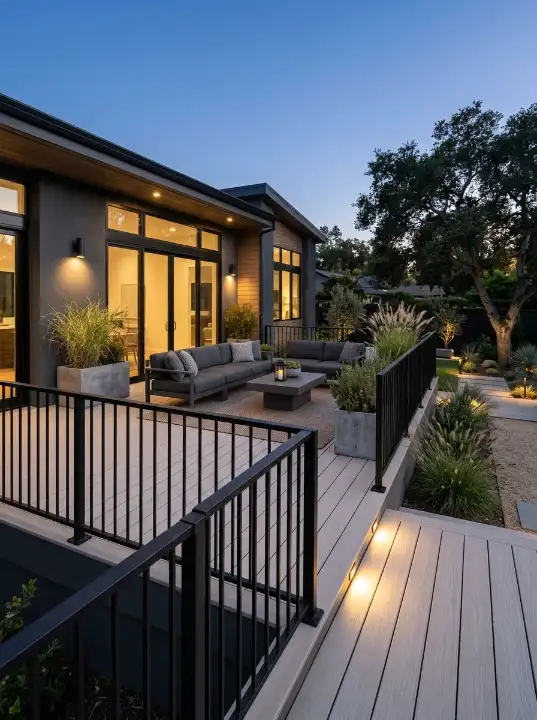
Matte black metal gives a deck a crisp, architectural edge without adding visual bulk. Slim vertical bars contrast nicely with pale decking, concrete accents, and modern siding, making this modern deck railing especially suitable for contemporary homes that favor clean lines and restrained outdoor decor.
Metal railings are a practical choice when you want a defined boundary with a streamlined appearance. Keep the surrounding furniture simple, then soften the harder lines with grasses or leafy planters. Check the finish periodically for chips, corrosion, or wear so maintenance stays manageable.
3. Classic White Balusters with Timeless Charm
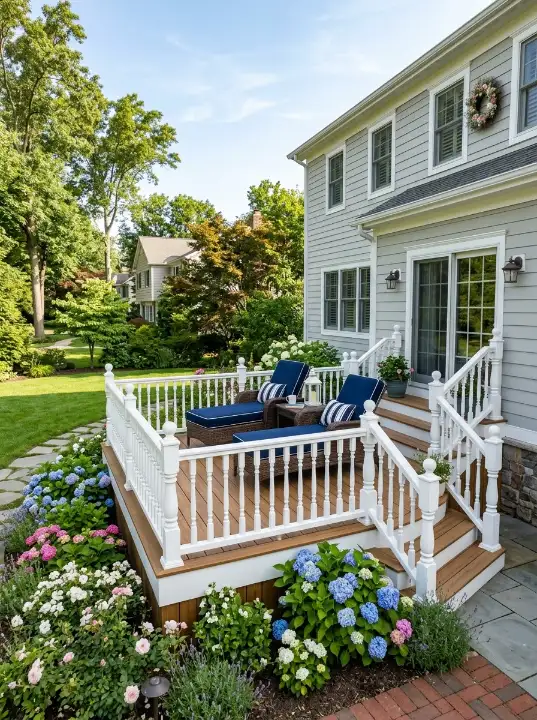
White balusters bring a familiar, timeless look to decks with traditional architecture. Paired with stained wood flooring and substantial posts, this railing design adds definition while keeping the space bright. Flowering plants and classic furniture reinforce its relaxed, polished character without feeling overly formal.
Use exterior-grade paint or finish suited to your railing material, and clean the white surfaces regularly to keep them fresh. Navy, green, or natural textiles create attractive contrast. The open baluster pattern preserves connection with the yard while giving the deck a finished perimeter.
4. Cable Railing for an Unobstructed View
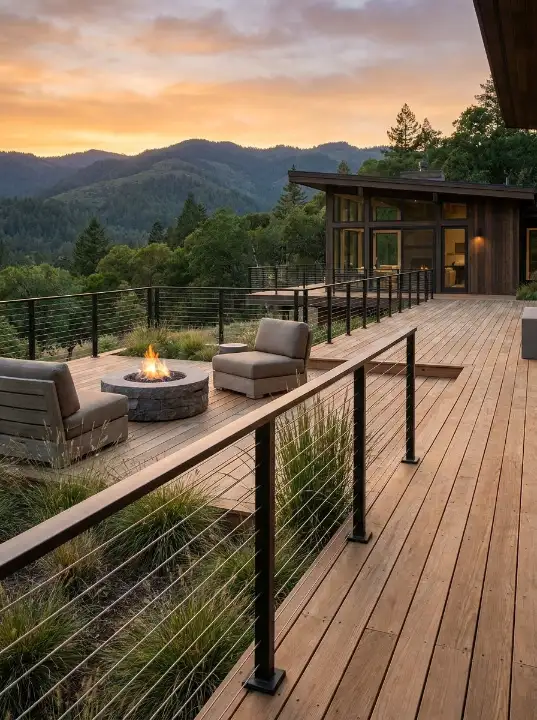
Cable deck railing uses slender horizontal cables between sturdy posts, creating a visually light boundary around the deck. It works particularly well where scenery matters, because the open pattern keeps sightlines toward gardens, forests, water, or distant landscapes while supporting a contemporary deck design.
Choose weather-resistant components and follow local requirements for spacing, tension, and installation. Cable systems benefit from occasional checks. Keep furniture low around the perimeter so the railing remains visually quiet, allowing the landscape to become the main feature of your outdoor living space.
5. Framed Glass Railing for a Bright Contemporary Deck
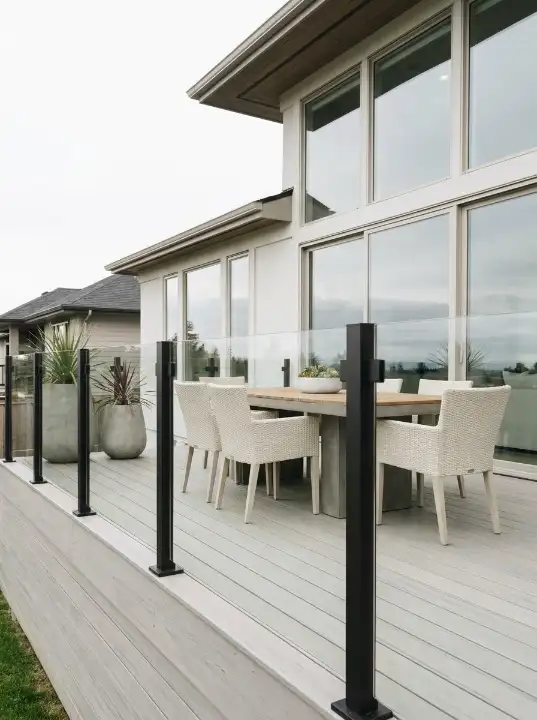
Glass panels create a smooth, transparent boundary that keeps a contemporary deck feeling open and bright. Dark framing adds definition while clear sections visually disappear against the landscape. This glass deck railing works especially well beside modern architecture, expansive windows, and carefully edited outdoor furnishings.
Glass needs regular cleaning to preserve its clear appearance, after weather or heavy use. Combine it with simple furniture and restrained planters to maintain an airy look. Before installation, confirm that the selected system suits local building requirements and the deck structure.
6. Horizontal Wood Slats for Added Privacy
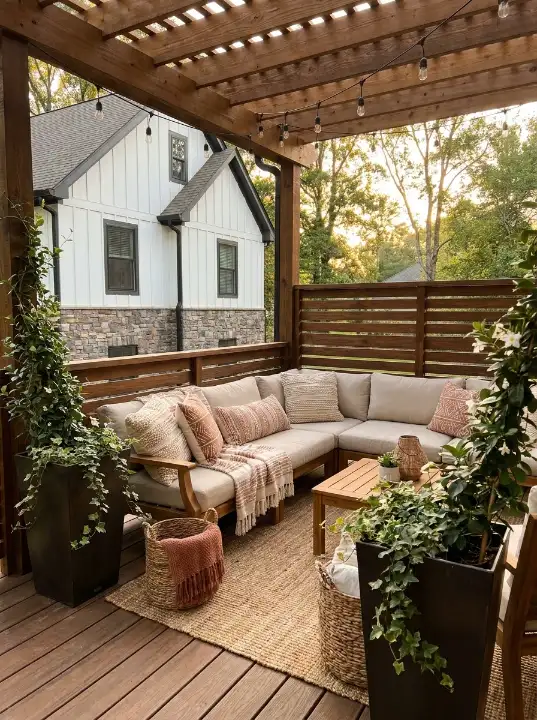
Horizontal wood slats turn a simple railing into a stronger privacy feature while adding rhythm to the deck. A warm stain highlights the boards and complements modern farmhouse or contemporary architecture. The denser pattern can visually screen nearby spaces while creating a cozy, settled backdrop.
Spacing can be adjusted within applicable local requirements to balance airflow, light, and privacy. Add tall containers or climbing plants for extra softness, but leave room for maintenance. A quality exterior finish helps protect the wood, while occasional cleaning keeps the slats looking even.
7. Vertical Privacy Screen with Built-In Planters
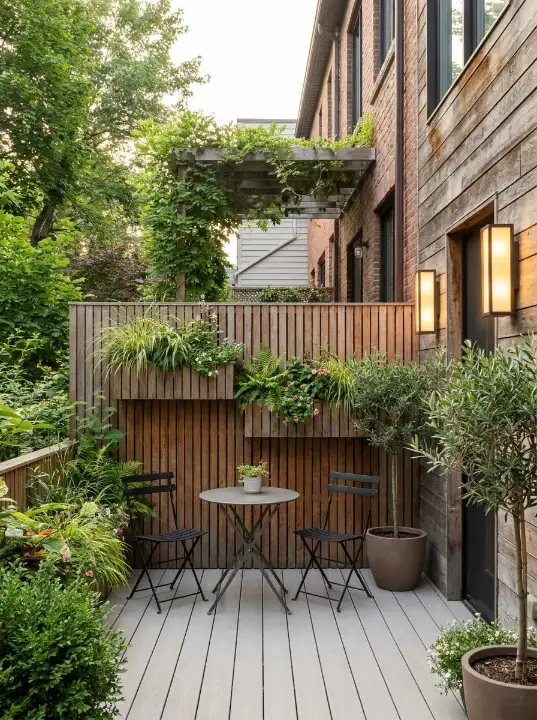
A vertical privacy screen combines closely spaced boards with integrated planters, giving a deck height and visual interest. This approach suits backyards where privacy matters, while the greenery breaks up the solid surface and creates a softer transition between the home and outdoor living space.
Choose planters with proper drainage and use plants suited to the available sunlight. Leave accessible gaps or panels where cleaning and upkeep are needed. It can define a dining nook or lounge area, making the deck feel intentional without adding bulky furniture.
8. Farmhouse X-Pattern Railing for Rustic Character
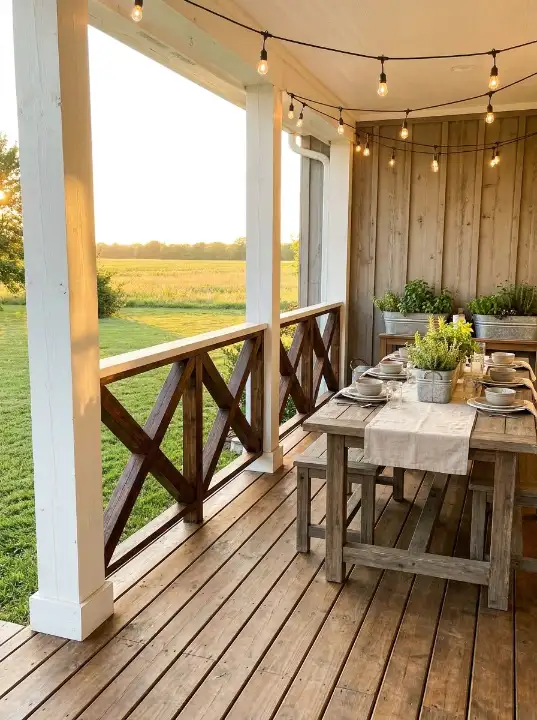
An X-pattern railing adds farmhouse character through simple geometric detail and contrasting wood tones. White posts paired with darker inserts work nicely against timber decking, painted siding, and garden greenery. The distinctive pattern gives the perimeter personality without relying on ornate or complicated detailing.
Keep the surrounding styling relaxed with sturdy wood furniture, galvanized containers, and textiles. The crisscross panels may require more careful cleaning than open balusters, so accessible surfaces are helpful. Use exterior finishes appropriate for materials, and coordinate the stain and paint for a balanced look.
9. Mixed Wood and Metal for Contemporary Warmth
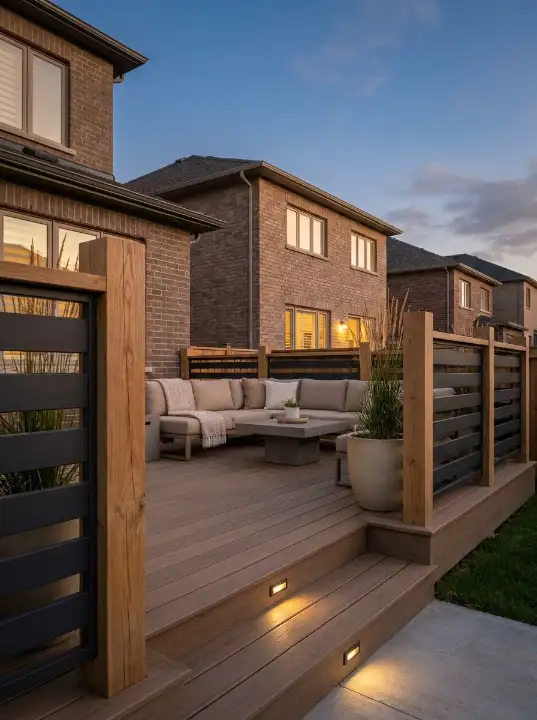
Combining natural wood with dark metal creates a balanced railing that feels contemporary without becoming cold. Warm timber posts soften the sharper metal elements, while the mixed palette connects easily with brick, concrete, composite decking, or neutral outdoor furniture for a flexible backyard deck design.
Use the wood selectively where maintenance access is easy, and choose a durable metal finish for exposed sections. Repeat the same materials in planters, tables, or lighting for visual continuity. This combination works when your deck upgrade ideas need to bridge traditional and modern features.
10. Minimalist Thin Vertical Bars for a Clean Look
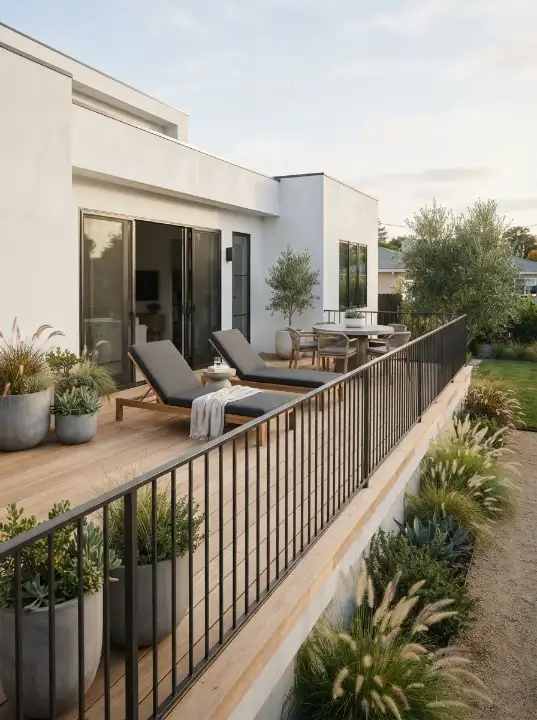
Thin vertical bars create a restrained railing profile that keeps the deck tidy. Their repeated lines add structure without competing with furniture or architecture, making this style useful for minimalist homes, smaller decks, and outdoor spaces where a clean backdrop matters more than decorative detail.
Keep accessories limited to a few pieces so the railing remains the visual support rather than the focal point. Powder-coated metal can simplify routine care, while washing removes dust and pollen. Pair the bars with pale decking and greenery for a calm, contemporary outdoor setting.
11. Natural Branch Railing for Rustic Cottage Appeal
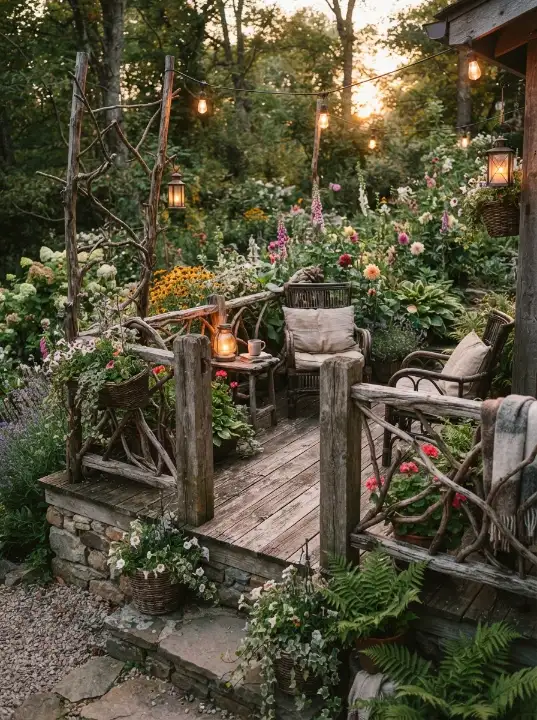
Naturally shaped branches can give a deck a handcrafted cottage or woodland character. Their irregular lines contrast with straight timber posts and decking, creating a railing that feels connected to the surrounding landscape. This creative option suits cabins, cottages, gardens, and rustic outdoor living spaces.
Select sound, durable materials and prepare them appropriately for outdoor exposure. The uneven surfaces may need regular inspection and maintenance than manufactured systems. Keep furniture simple so the organic railing remains distinctive, and use lanterns, woven textures, and native plants to strengthen the relaxed setting.
12. Black Horizontal Slat Railing for a Bold Statement
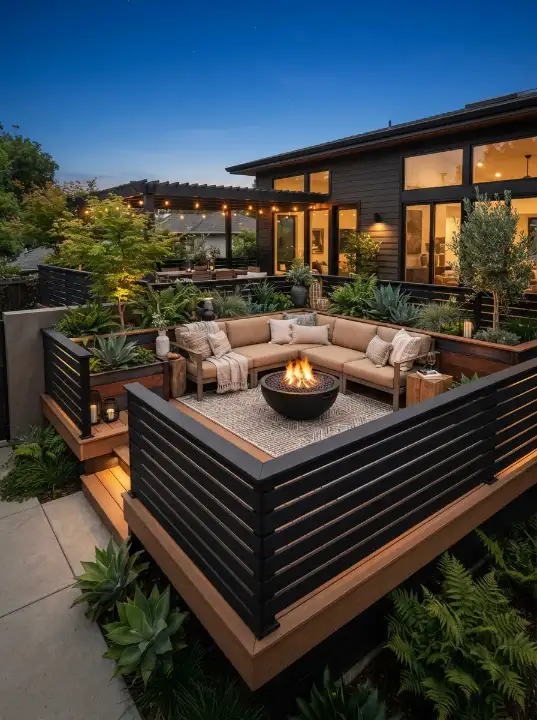
Black horizontal slats make a strong visual statement while giving the deck a more enclosed, architectural feel. The dark surface contrasts with warm decking and greenery, creating a bold contemporary look that works especially well around urban backyards or modern homes with simple exterior forms.
Use weather-appropriate materials and finishes, since dark surfaces can show dust and fading noticeably. Keep the deck balanced with cushions, planters, or natural wood accents. If privacy is the goal, confirm the planned spacing meets applicable requirements rather than assuming a visual screen is compliant.
13. Cable and Wood Combination for Coastal Style
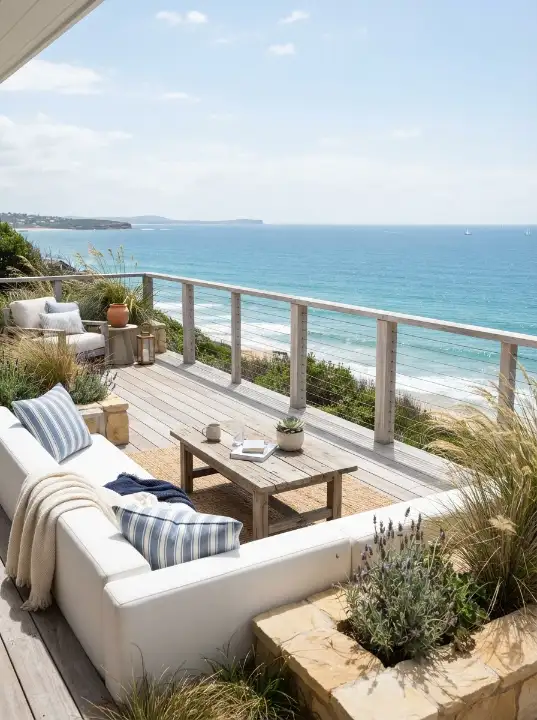
Pale wood posts and stainless steel cables create a relaxed coastal railing with a clean, open profile. The combination keeps the horizon visible while introducing enough natural texture to prevent the deck from feeling stark. Blue textiles, weathered finishes, and grasses reinforce the seaside character.
Choose corrosion-resistant hardware for exposed locations and rinse components as needed. Keep decorative pieces light and practical so strong views remain unobstructed. This railing can complement small decks, where its open appearance helps preserve a sense of space without sacrificing a defined edge.
14. Composite Railing for Low-Maintenance Style
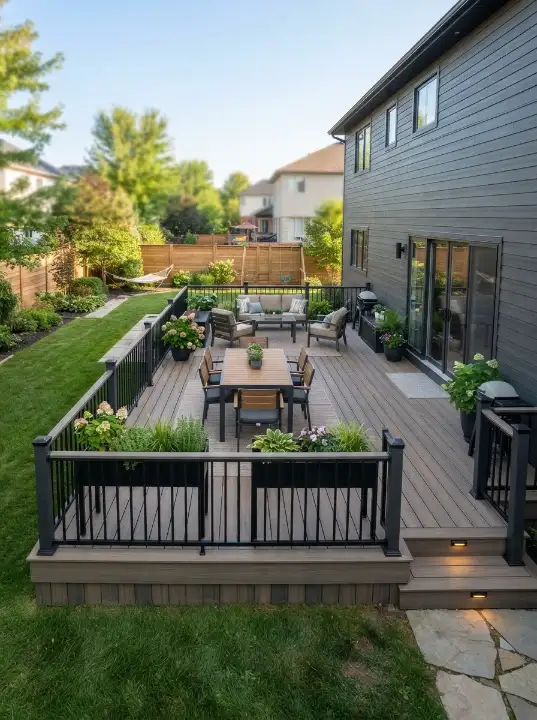
Composite railing offers a coordinated appearance when you want the deck and perimeter to feel intentionally designed together. Available in several tones and profiles, it can complement contemporary, transitional, or traditional homes while providing a consistent finish that avoids the look of mismatched materials.
Follow the manufacturer’s cleaning and care guidance, especially for stains, mildew, or seasonal buildup. Pair the railing with durable outdoor furniture and simple planters for an easy-care setup. Before choosing a system, compare color, profile, warranty, and compatibility with your existing deck surface and structure.
15. Decorative Metal Scrollwork for Classic Character
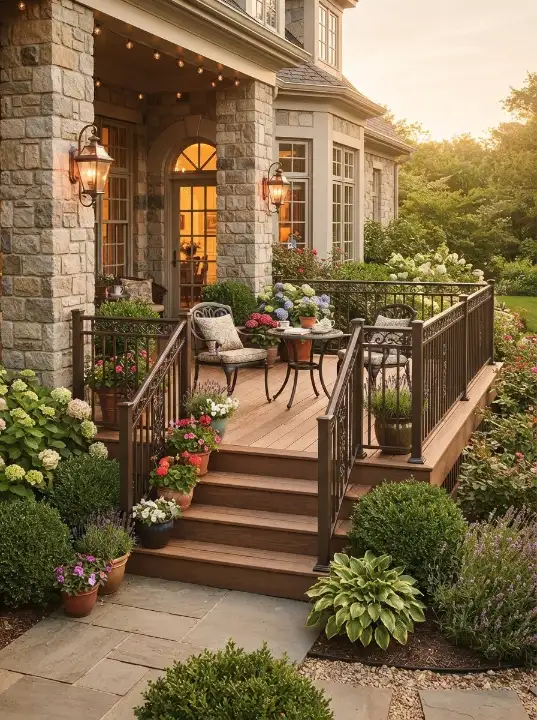
Subtle metal scrollwork brings decorative character to a deck without elaborate architecture. A bronze or dark finish pairs naturally with wood decking and stone details, making this style suitable for traditional homes, garden terraces, and outdoor spaces that benefit from a more established visual identity.
Decorative sections collect dust in more corners, so brushing and gentle washing can help preserve their appearance. Keep furnishings understated to avoid visual competition. Inspect joints and finishes regularly, particularly in exposed locations, and select a system designed for the environmental conditions of your deck.
16. Glass and Wood Railing for a Warm Luxury Feel
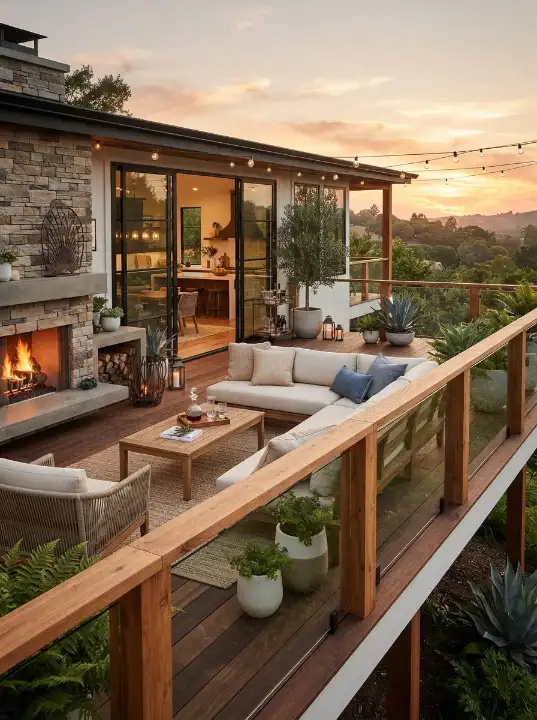
A wood-and-glass railing blends warmth with transparency, giving a deck a polished appearance while preserving broad views. The timber adds tactile character around the clear panels, making this combination a natural fit for upscale contemporary homes, outdoor fireplaces, and carefully styled lounge spaces.
Clean the glass often and use products that do not leave a cloudy film. Wood components need exterior protection suited to the climate and finish. Keep the area around the panels simple, allowing the combination of grain, clear views, and landscaping to carry the design.
17. Geometric Privacy Railing with Layered Slats
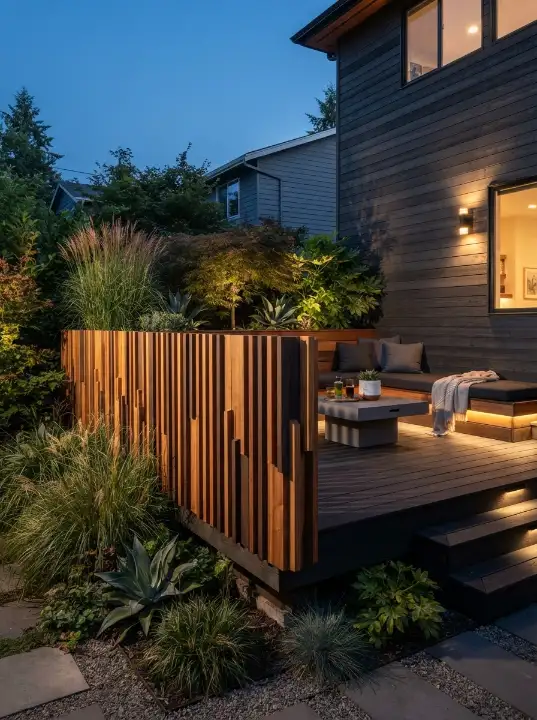
Staggered vertical slats create a geometric privacy feature that feels more artistic than a solid wall. Varying widths and stain changes add rhythm, while openings preserve light and airflow. This contemporary approach works well on urban decks where privacy and visual interest need equal attention.
Plan the pattern carefully so it remains cohesive from both sides of the railing. Use exterior-rated finishes and provide areas for cleaning. Pair the screen with low furniture and layered greenery to reinforce privacy without making the deck feel crowded, especially in narrow backyard settings.
Conclusion
Choosing the right railing can change how your deck looks, feels, and functions. From natural wood and farmhouse details to sleek metal, glass, cable, and privacy screens, the best deck railing ideas complement your home’s architecture while supporting outdoor living.
Thoughtful outdoor upgrades can make a backyard feel more finished, comfortable, and inviting without overwhelming the space. Consider your view, maintenance needs, privacy goals, and personal style before deciding. Then create an outdoor setting that feels unmistakably yours, ready for relaxing, gathering, and making memories.