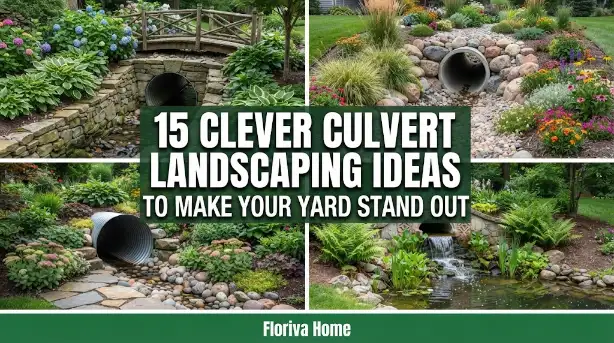
15 Clever Culvert Landscaping Ideas to Make Your Yard Stand Out
A culvert in your yard does not have to look plain or forgotten when it can become part of a beautiful outdoor design. With a little creativity, this practical feature can turn into something that adds charm, texture, and character to your landscape.
From colorful flower borders to rustic stone details, there are plenty of inspiring ways to make it feel intentional. Here are fifteen clever culvert landscaping ideas that can help your yard look more inviting, polished, and full of personality for everyday enjoyment.
What plants work best around culvert landscaping?
Low maintenance plants like ornamental grasses, ground cover plants, wildflowers, succulents, ivy, lavender, and seasonal flowers work beautifully around culverts. These plants soften hard edges, improve visual appeal, and help the structure feel more connected with the surrounding landscape design naturally.
Before You Landscape a Culvert: Drainage First, Then Design
A culvert is the pipe that carries ditch water under a driveway, path, or road edge, and the landscaping around it only works if that job still gets done. Water must enter one end and leave the other at full capacity. So the first rule behind all fifteen ideas here is simple: never narrow, block, or bury the pipe opening. Frames, borders, and plantings belong around the mouth of the culvert, never inside the flow path.
The second check is permission. Many front-yard ditches sit inside a public right-of-way or a drainage easement, even when the homeowner mows them. The county or city may need to clean the ditch, replace the pipe, or dig through the area, and anything built there can be removed without notice. Rules vary, so confirm who controls your ditch and whether an HOA has a say before building anything permanent. Designs that sit lightly, like the River Rock Dry Creek Design or a Natural Stone Framed Culvert, are safer near the opening than fixed structures.
With drainage and rules settled, choose your approach. Hardscape, meaning stone, brick, and gravel, handles flowing water and erosion best. Plantings soften the look, but keep them set back from the mouth, and favor plants whose roots will not push into pipe joints or seed themselves into the ditch.
1. Natural Stone Framed Culvert
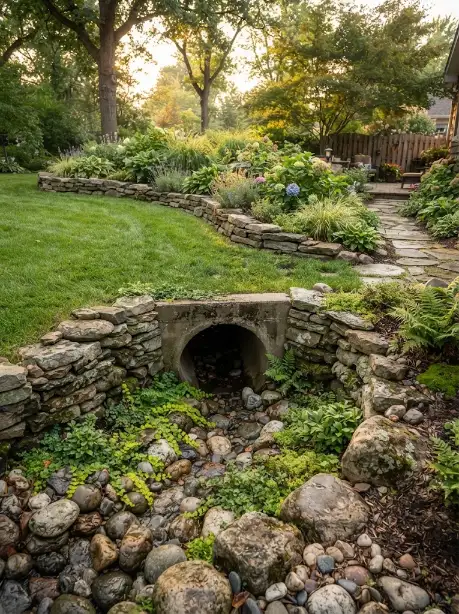
Turn an ordinary culvert opening into a charming stone framed feature by surrounding it with stacked natural rock and low greenery. This approach helps the structure blend beautifully into the yard while creating a finished look that feels thoughtfully designed and balanced.
Adding creeping flowers between the stones softens the hard edges and brings natural color throughout the season. It also protects exposed soil around the culvert while giving your landscape a polished style that feels neat, welcoming, and carefully arranged and highly visually appealing.
2. Flower Bed Around The Opening
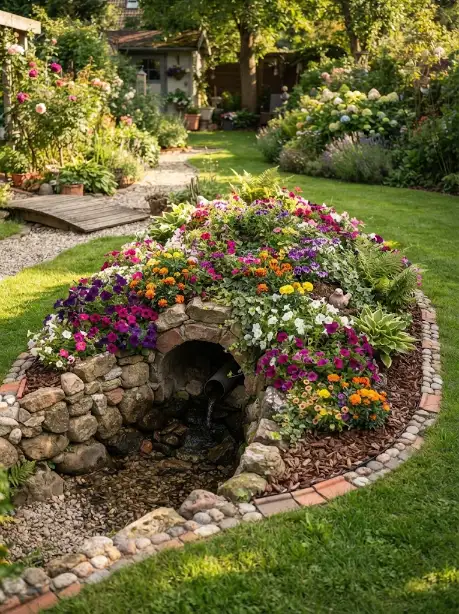
A flower bed placed around the culvert instantly helps the area feel intentional instead of overlooked. Surrounding the opening with colorful seasonal blooms creates visual interest while turning a basic drainage feature into something decorative that naturally fits within your landscape design.
Mixing flowers with fresh mulch helps retain moisture while keeping weeds under control around the structure. Choosing bright blooms also draws attention away from the culvert itself, helping the entire yard feel cheerful, balanced, inviting, and much more thoughtfully maintained overall.
3. Rustic Wooden Bridge Cover
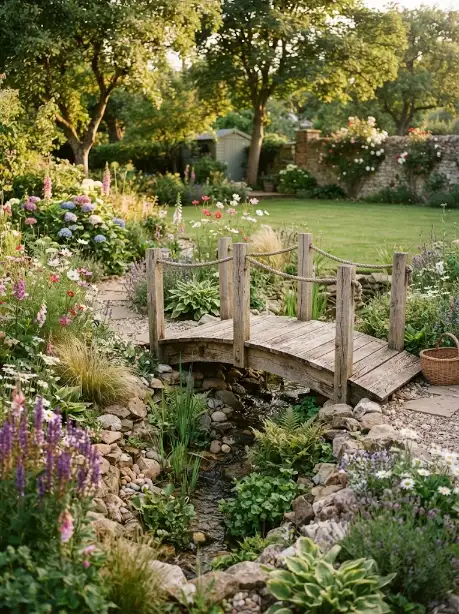
Building a small wooden bridge over your culvert creates a practical feature that doubles as attractive yard decor. The natural wood texture introduces warmth while making the drainage area feel more integrated with the surrounding garden rather than purely functional.
A rustic bridge works especially well in cottage gardens, farmhouse inspired landscapes, or natural outdoor settings. Sealing the wood properly helps it last longer outdoors while giving your yard an eye catching detail that feels cozy, charming, timeless, and beautifully handcrafted.
4. River Rock Dry Creek Design
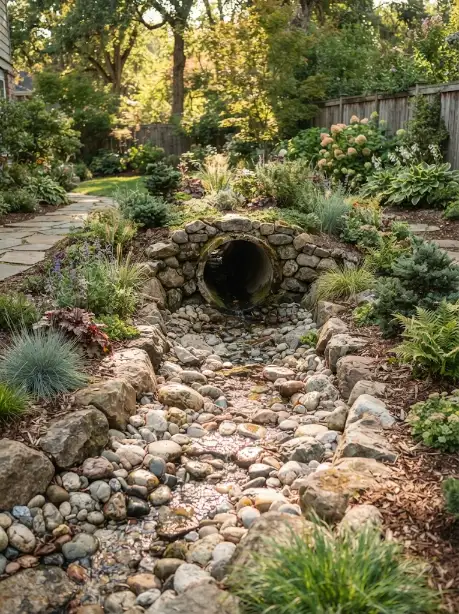
Create a dry creek bed extending outward from the culvert using smooth river stones and natural gravel. This design makes the drainage system look purposeful while creating the illusion of a natural water feature woven beautifully into the landscape.
The layered stone textures guide rainwater effectively while reducing muddy areas after storms. Adding ornamental grasses nearby enhances the natural appearance and helps create a backyard feature that feels calm, earthy, balanced, practical, and beautifully inspired by natural landscapes.
5. Mini Garden Waterfall Look
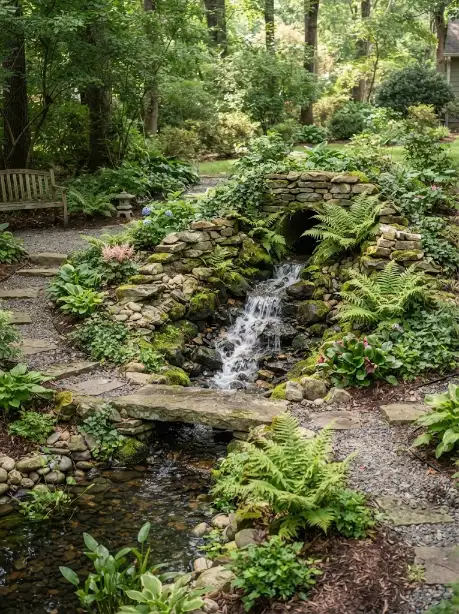
A creative way to hide a culvert is designing it to resemble a small garden waterfall. Stacked rocks around the opening help create movement visually while making the drainage feature appear like an intentional decorative focal point within the yard.
This idea works beautifully in gardens with shaded greenery, ferns, or moisture loving plants nearby. The stone texture creates natural character while helping the culvert area feel peaceful, artistic, refreshing, unique, and much more visually connected with surrounding landscaping.
6. Decorative Brick Border Design
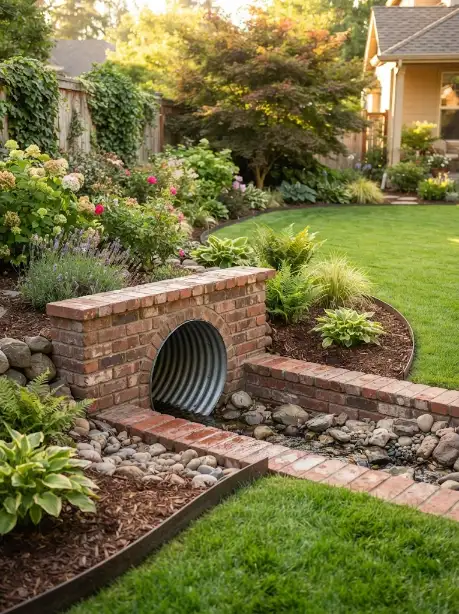
Installing decorative brick around the culvert gives the area structure while creating a polished finished appearance. Brick edging works particularly well in organized gardens where clean lines help make every part of the landscape feel intentionally planned.
Brick borders require very little maintenance and hold their appearance for years outdoors. Pairing them with low shrubs or flowering plants softens the overall design while helping the culvert blend naturally into a yard that feels neat, classic, inviting, and beautifully maintained.
7. Climbing Vines Camouflage
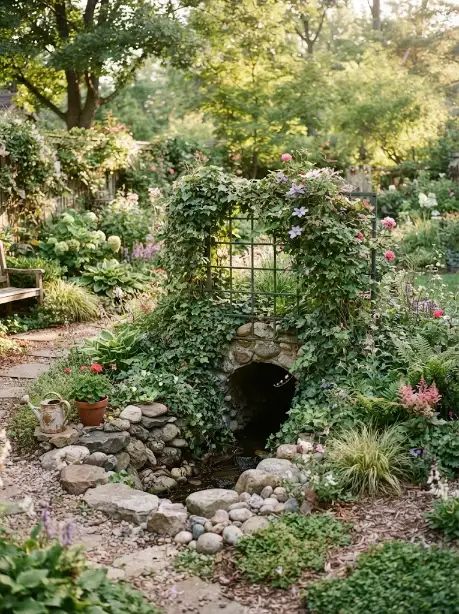
Climbing vines offer a simple way to soften the appearance of an exposed culvert opening. Allowing greenery to grow around the structure helps camouflage harsh materials while creating a garden feature that feels lush, relaxed, natural, and pleasantly integrated.
Fast growing vines work especially well when supported by a small decorative frame nearby. Regular trimming keeps the area tidy while allowing the culvert to remain functional beneath greenery that adds softness, texture, beauty, privacy, and a refreshing natural garden atmosphere.
8. Cottage Garden Culvert Corner
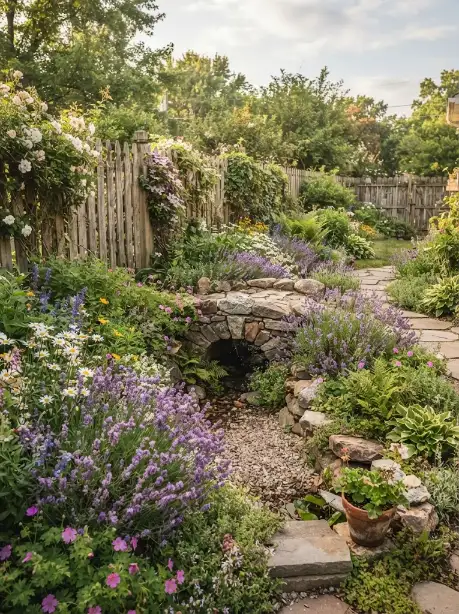
Turn the culvert area into a cottage garden corner filled with layered flowers and relaxed greenery. Mixing lavender, daisies, and soft ground cover plants helps the space feel charming while shifting attention toward the beauty surrounding the structure naturally.
This style works wonderfully for homeowners who love gardens with personality and abundant texture. Combining overflowing plants with decorative stones makes the culvert disappear visually while giving the yard a cozy, romantic, welcoming atmosphere that feels collected, lived in, and timeless.
9. Raised Planter Bed Surround
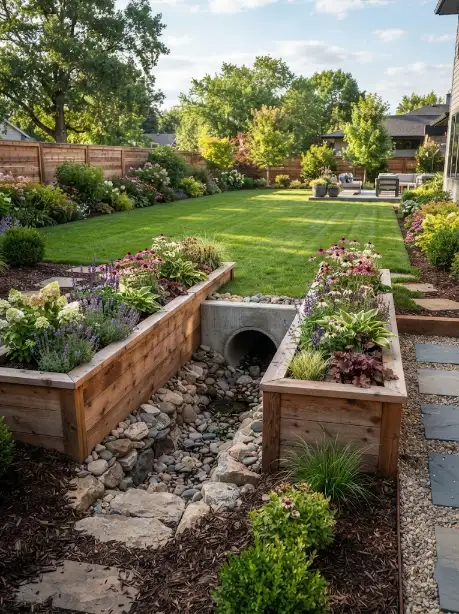
Using raised planters around a culvert helps convert an awkward utility area into a beautiful layered garden feature that feels intentional and inviting. Elevated beds create structure while allowing flowers, herbs, or greenery to frame the opening in a stylish way naturally.
They also improve drainage management by keeping soil contained and reducing erosion after heavy rain. Choosing weather resistant materials like stone or cedar ensures durability while adding texture that complements nearby landscaping and helps the culvert area feel organized and beautifully maintained.
10. Gravel Pathway Accent Design
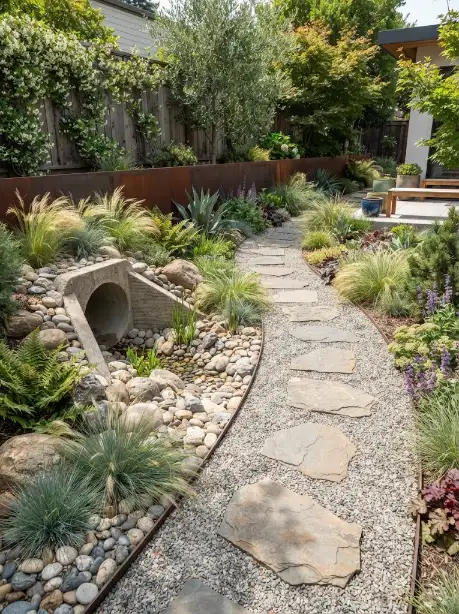
A gravel pathway leading toward the culvert can make the space feel like part of the overall landscape rather than a forgotten corner. The combination of textured stone and clean borders creates a tidy design that adds visual interest while improving outdoor flow naturally.
Gravel is easy to maintain and works especially well in modern or minimalist outdoor spaces. Pairing the path with stepping stones and soft grasses helps the culvert blend seamlessly into the yard while adding texture, movement, contrast, and a carefully designed appearance overall.
11. Wildflower Meadow Border
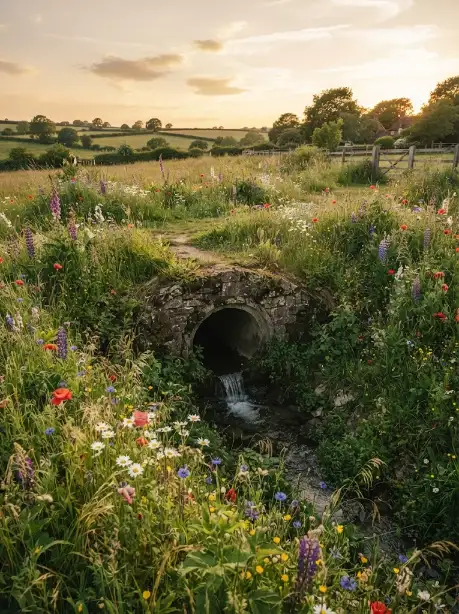
Planting wildflowers around the culvert creates a relaxed natural look that feels effortless and beautifully organic. The loose arrangement of colorful blooms softens harsh structural edges while allowing the drainage feature to disappear within a lively landscape full of texture and movement.
Wildflower gardens also attract butterflies and helpful pollinators that bring more life into outdoor spaces. This low maintenance approach works beautifully for homeowners wanting a softer countryside inspired yard where practical features feel hidden beneath colorful layers of natural beauty.
12. Decorative Fence Feature Corner
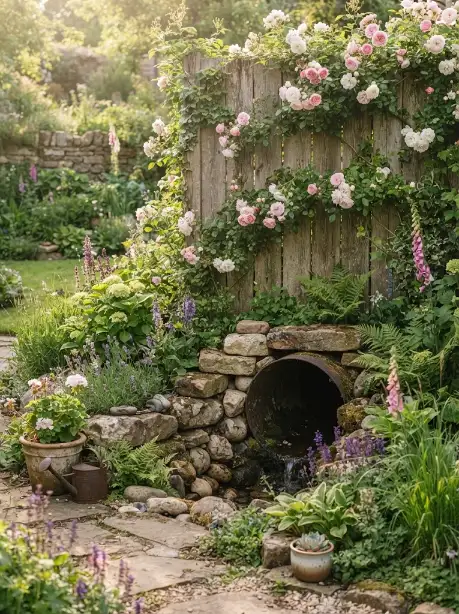
Adding a decorative fence panel near a culvert helps break visual focus while creating a charming garden backdrop. Wooden fencing introduces warmth and structure while helping the drainage area feel more connected with surrounding outdoor decor and intentional landscaping details nearby naturally.
This design works especially well when paired with climbing flowers or leafy vines nearby. It creates privacy, adds vertical interest, and helps the culvert disappear visually while giving the yard extra character, balance, texture, and a beautifully layered outdoor design overall.
13. Succulent Rock Garden Display
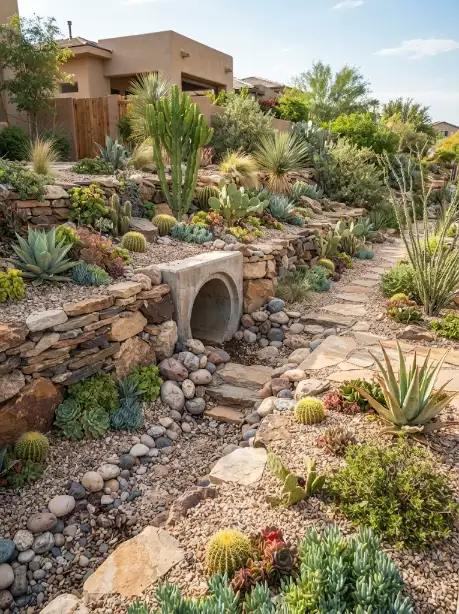
A succulent garden around a culvert creates a stylish low maintenance design filled with interesting texture and shape. Decorative gravel paired with compact plants helps keep the area neat while turning a practical drainage structure into an attractive outdoor design feature.
Succulents require very little watering, making this perfect for warm climates and busy homeowners. Combining stone textures with unique plant shapes helps create contrast while making the culvert blend naturally into a landscape that feels modern, clean, balanced, and visually striking outdoors.
14. Small Bench Garden Nook
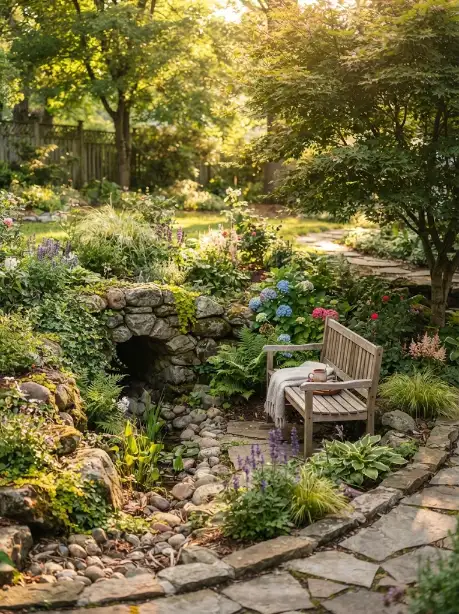
Placing a small bench near the culvert turns an overlooked yard section into a cozy relaxing corner. Framing the area with flowers and greenery helps the structure feel intentional while creating a comfortable space that adds personality and warmth to the garden.
A bench encourages the area to feel like part of the overall outdoor experience instead of unused space. Adding soft landscaping around it makes the culvert blend quietly while creating a peaceful garden corner that feels inviting, comfortable, charming, balanced, and thoughtfully designed.
15. Lantern Lit Garden Feature
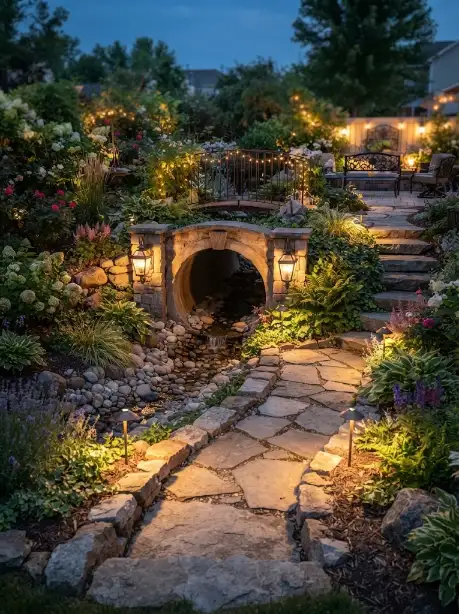
Installing decorative lanterns around a culvert creates a beautiful nighttime feature that feels warm and inviting. Soft lighting draws attention toward surrounding landscaping instead of the drainage structure while adding charm that makes the yard feel intentionally styled after sunset.
Lantern lighting works especially well beside stone borders, pathways, or flower gardens nearby. It improves evening visibility while creating a cozy outdoor atmosphere that helps the culvert disappear visually and gives the entire yard an elegant, peaceful, welcoming, beautifully finished appearance.
Culvert Landscaping: Order of Steps, Common Mistakes, and Seasonal Care
Plan the work in this order. First, inspect the pipe and ditch, and clear out leaves, silt, and debris, or contact the county if the culvert itself is damaged or belongs to them. Second, confirm the easement and permission questions. Third, stabilize anywhere water actually flows: larger stone at the inlet and outlet, and a rock-lined channel where the current runs, so the banks stop eroding. Fourth, build the decorative hardscape, such as a Decorative Brick Border Design or the frame of a Rustic Wooden Bridge Cover, keeping every piece clear of the opening. Fifth, add soil and plantings outside the flow line, and finish with mulch only where moving water cannot reach it. Before calling the job done, photograph the finished layout from the road: a culvert feature reads best when the frame, the planting, and the opening line up in one clear view.
Common mistakes include letting mulch, gravel, or soil wash into the pipe mouth and slowly choking the flow; reducing the visible opening with a frame or cover that catches storm debris like a grate; planting large shrubs or thirsty trees right at the pipe joints, where roots exploit any gap; placing permanent features such as a Raised Planter Bed Surround or a bench nook inside an easement the county must be able to dig up; and ignoring a growing erosion hole at the outlet until the driveway edge starts to undermine.
Care is mostly inspection. Walk the culvert after heavy storms, pull debris from the mouth by hand, re-set any rock the water has shifted, and trim climbing vines so they frame the opening instead of growing across it. In autumn, keep fallen leaves from matting across the mouth, because a leaf dam during one hard rain can push water over the bank and undo a season of planting. A quick spring and fall cleanout keeps the whole feature working as well as it looks.
Frequently Asked Questions
Can you cover a culvert pipe completely?
No. Both ends of the pipe must stay open so water can pass through at full capacity, and the opening should stay visible and reachable for cleaning. Decorative treatments work around that rule: a bridge-style cover spans above the pipe, and stone or brick frames surround the mouth. Anything that seals, buries, or shrinks the opening risks flooding the yard and the road.
What plants are safe to grow near a culvert?
Choose shallow-rooted, clump-forming plants and set them back from the pipe mouth: ornamental grasses, daylilies, irises, groundcovers, and wildflowers all soften a ditch bank without threatening the pipe. Avoid large trees and aggressive spreaders near the joints, since roots seek the moisture there. On banks that flood, pick plants that tolerate wet feet in spring and dry soil in summer.
Who is responsible for the culvert in front of a house?
It varies by location, which is why checking first matters. In many areas the homeowner maintains the pipe under their own driveway, while the county or city owns the road ditch and the culverts under the road itself. Some jurisdictions handle everything inside the right-of-way. A quick call to the local public works or road department settles who maintains what before you build.
How do you stop erosion around a culvert opening?
Start where the water lands. Line the inlet and outlet aprons with larger, angular rock that locks together rather than rolling, and extend a rock channel along any path the water regularly takes. Groundcover and deep-rooted grasses hold the upper banks, while keeping the pipe mouth clear prevents the turbulence that scours soil. Persistent, worsening erosion usually signals a drainage problem worth raising with the county.
Conclusion
Culverts may serve a practical purpose, but with thoughtful landscaping they can become one of the most attractive details in your yard. Whether you love colorful flowers, rustic stonework, cozy garden corners, or clean modern designs, there are endless ways to make these spaces feel beautiful and intentional.
Small creative changes can completely reshape how overlooked areas fit into your outdoor design. Try a few of these ideas and turn an ordinary yard feature into something that feels charming, memorable, and wonderfully connected to the beauty of your landscape.