How to Create a Low Maintenance Front Yard
Does your front yard feel like a second job? If you spend every weekend mowing, watering, and pulling weeds, you are not alone, and there is a better way. Here is how to create a low maintenance front yard that still looks great.
I’ve noticed that most people think a beautiful yard has to mean endless work. It does not. With the right plants, a thick layer of mulch, and simple watering, your yard can mostly take care of itself.
This guide walks you through planning, planting, and upkeep, even if you have never gardened before. A little planning now saves hours every week later. By the end, you will know exactly where to start and how to finish.
Why a Low Maintenance Front Yard Is Worth Creating
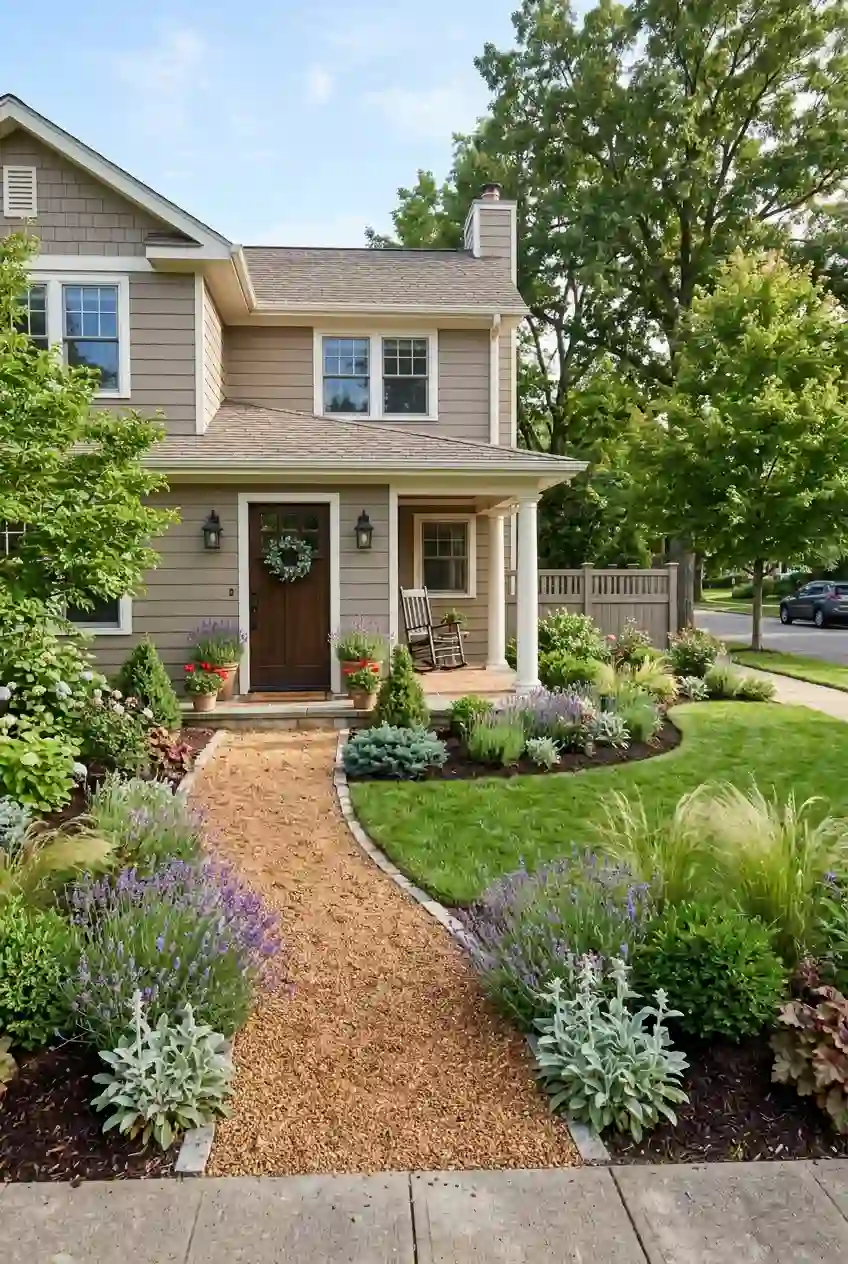
A front yard should make you smile when you pull into the driveway, not remind you of a chore list. Mowing every weekend, hauling the hose, and pulling the same weeds again add up fast. Learning how to create a low maintenance front yard gives those hours back.
The payoff goes beyond free time. A smaller lawn means lower water bills, fewer fertilizer purchases, and less money spent on gas and equipment. I’ve also noticed that a well planned, mulched yard looks neater year round, which boosts curb appeal without any extra effort.
What Makes a Front Yard Truly Low Maintenance
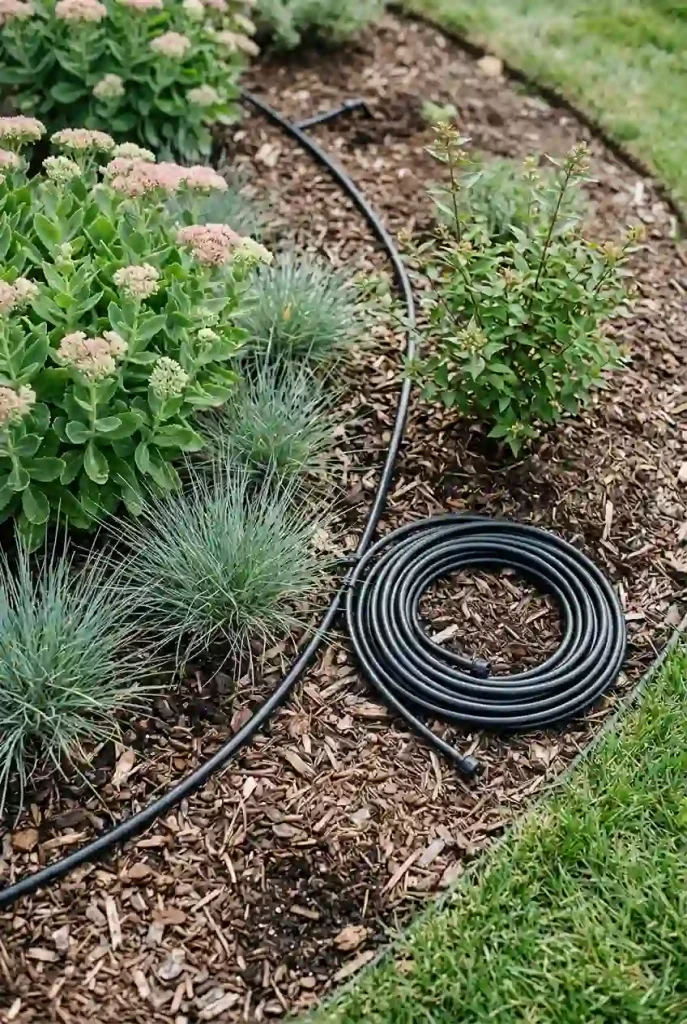
Low maintenance does not mean no maintenance. It means designing your yard so nature does most of the work. Four ideas shape every good low care yard, and once you understand them, every choice in the later steps becomes much easier.
- Cut down on mowing. Less grass, or grass in a smaller and simpler shape, means fewer hours behind the mower.
- Cut down on watering. Plants suited to your climate and watered at the roots need far less water once they are established.
- Stop weeds before they start. A thick layer of mulch and dense planting leaves weeds little light or space to grow.
- Choose tough plants. Pick hardy varieties that handle your local sun, soil, and weather without constant feeding or trimming.
Plan Your Space Before You Plant Anything
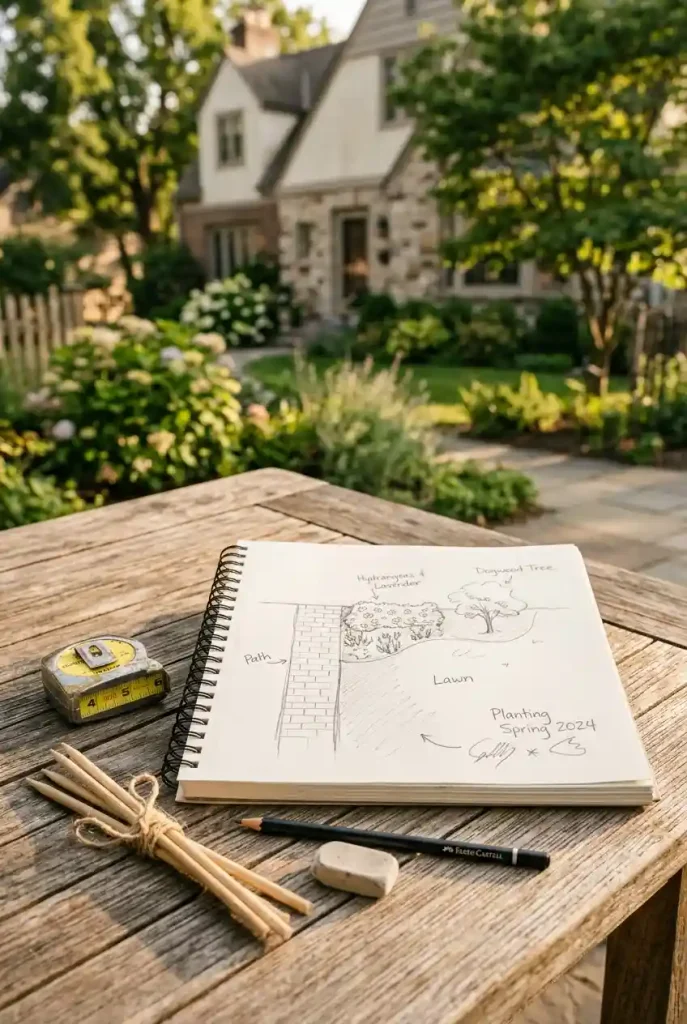
Quick Tip: Spend one full day watching your yard before you buy a single plant. Note where the sun hits in the morning, midday, and late afternoon, and where water pools after rain. Those patterns, plus your local climate zone, decide which plants will thrive and which will struggle.
Then sketch your yard on paper. Mark the house, driveway, walkways, and any utility boxes, then draw rough areas for lawn, garden beds, and paths. Check your soil by squeezing a damp handful: sandy soil falls apart, clay stays in a tight ball. Keep the layout simple, since fewer shapes mean easier upkeep.
Reduce or Replace Your Lawn
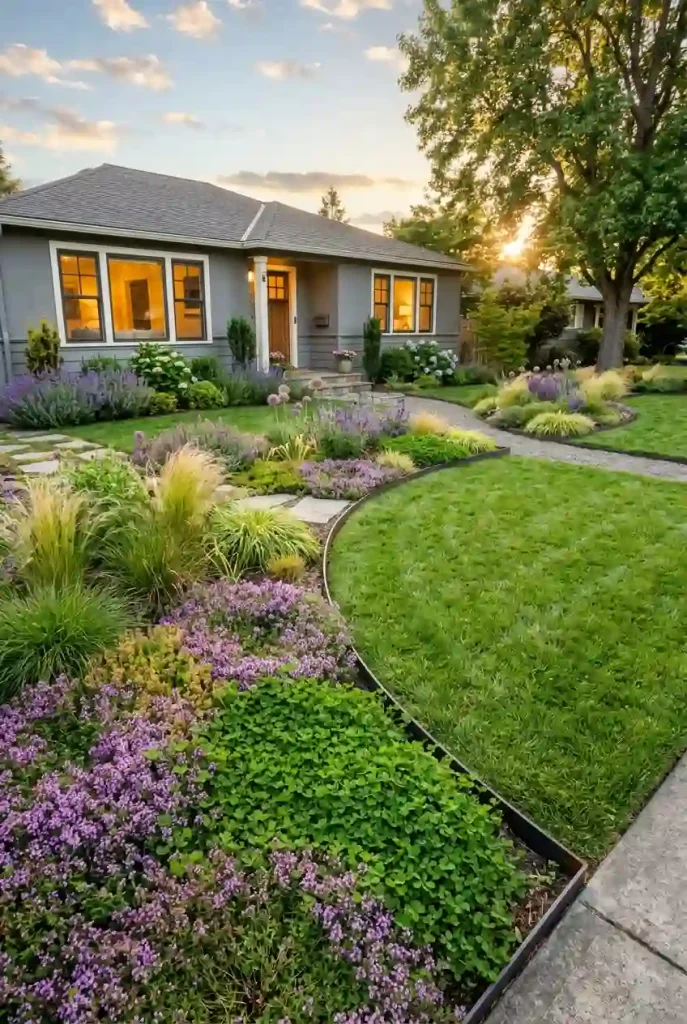
Common Mistake: Many beginners tear out the whole lawn in one weekend. Bare soil quickly fills with weeds, and the project feels overwhelming before it is half done.
The Fix: Shrink the lawn in stages. Start by turning the edges or the patchiest area into a garden bed, then cover the grass with cardboard and a thick layer of mulch to smother it. Keep the grass you actually use and give up the rest.
Lawn alternatives work well too. Creeping thyme and clover handle light foot traffic with little mowing, sedum fills dry, sunny patches, and gravel or mulched beds need no mowing at all. Choose what suits your climate, and keep a small, simple lawn if you want somewhere for kids or pets to play.
Choose Tough, Easy Care Plants
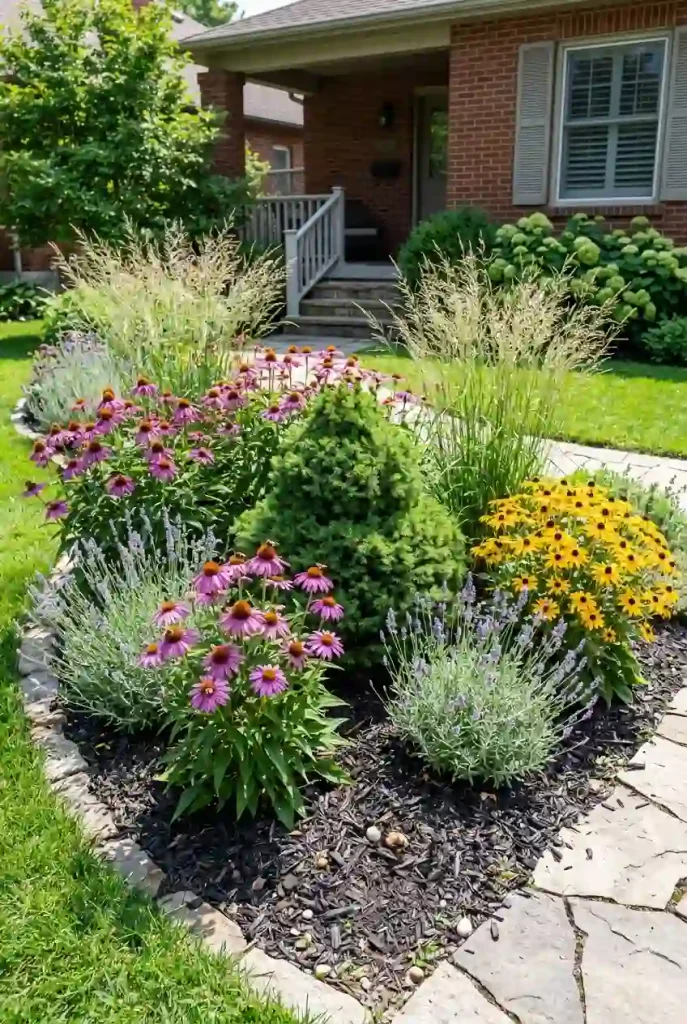
What You Need:
- Native plants: They are already adapted to your rainfall and soil, so they need less water and care.
- Hardy perennials: These return every year, which saves you from replanting each spring.
- Compact shrubs: Slow growing, small shrubs hold their shape with very little pruning.
- Ornamental grasses: They add movement and structure and usually need just one trim a year.
- Plant tags: Check the sun needs, mature size, and hardiness zone before you buy.
- A local nursery or extension office: The staff can name plants that do well in your area.
Group plants with similar sun and water needs together, and give each one room to reach its full size. Crowded beds need more pruning and invite disease. In my experience, three or four reliable plant types repeated across the bed look better and take less work than ten different ones.
Use Mulch and Ground Cover to Stop Weeds
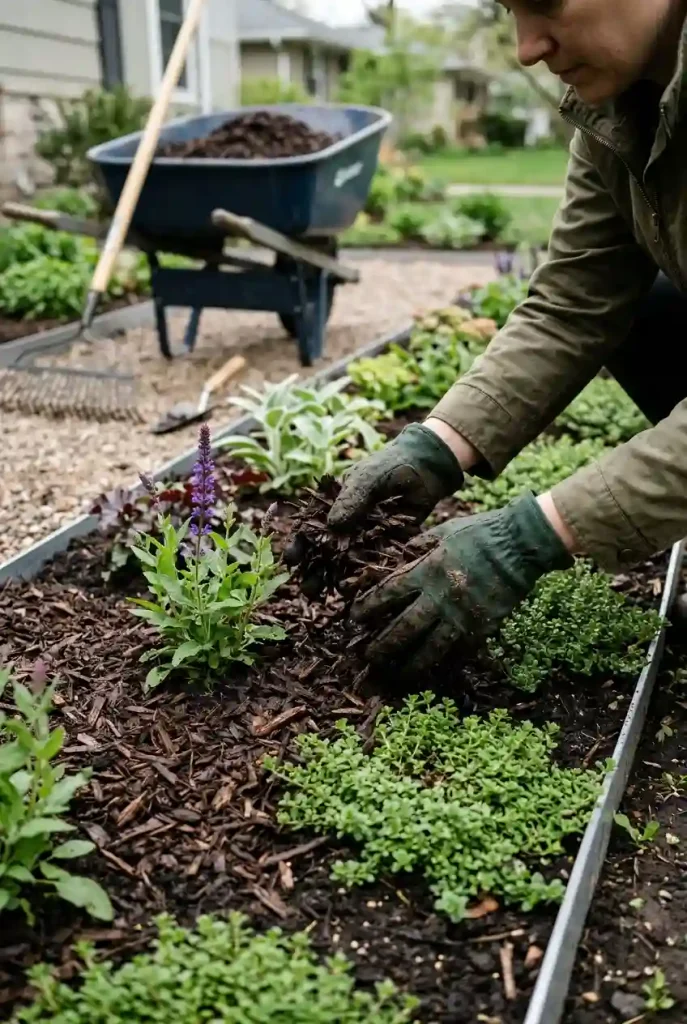
Before: Bare soil between plants lets weeds sprout every time it rains or you water. Within weeks you are back on your knees pulling them, and the soil dries out fast in summer heat.
After: A 2 to 3 inch layer of mulch blocks light, so most weed seeds never sprout. The soil stays cooler and holds moisture longer, and the bed looks finished and tidy.
Spread mulch after weeding, and keep it a few inches away from trunks and stems to prevent rot. Wood chips or shredded bark suit most beds, and gravel suits dry loving plants. Fill the gaps between plants with low ground covers like creeping thyme or ajuga, which spread and shade the soil naturally.
Add Paths, Gravel, and Borders for Structure
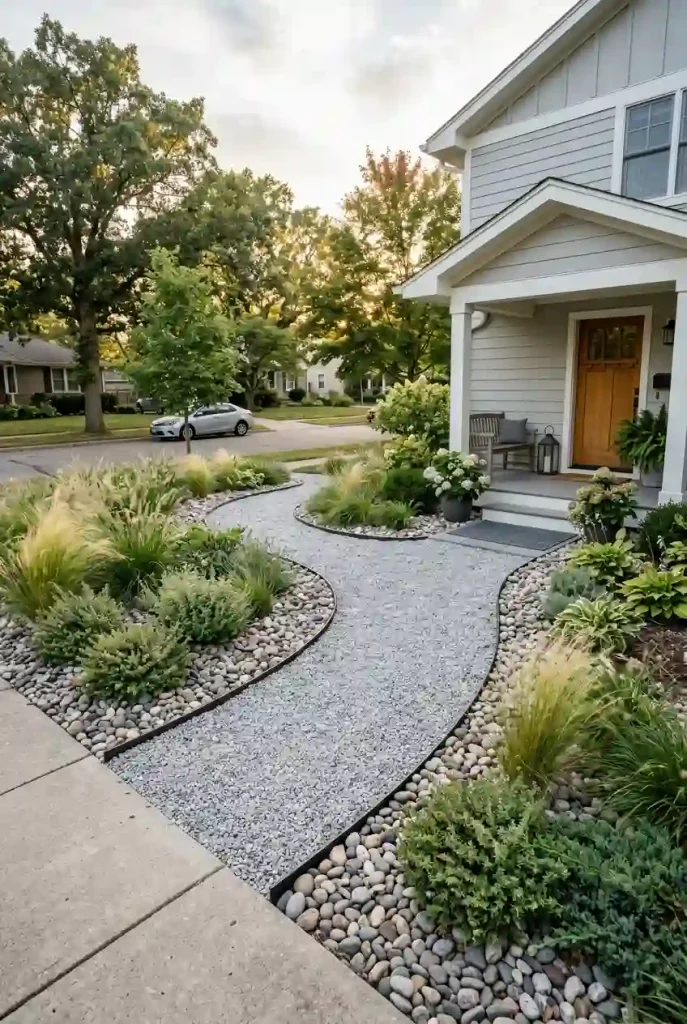
Do This:
- Install firm edging, such as steel or stone, along beds and paths.
- Make main walkways at least 3 feet wide so two people can walk side by side.
- Compact the base layer before adding gravel so the path stays firm underfoot.
- Choose materials that match your home’s color and style.
Avoid This:
- Skip loose gravel on steep slopes, where it washes away.
- Do not leave out edging, because gravel and mulch will creep into the lawn.
- Avoid curves so tight that they are hard to walk or mow around.
- Do not lay stone directly on soil, or it will sink and shift.
Hard surfaces like paths and borders give a yard shape even in winter, when plants are dormant. A clear path to the front door also tells visitors where to walk, which protects your beds. Start with one path or border, finish it well, and add more only if the yard needs it.
Set Up Simple, Efficient Watering
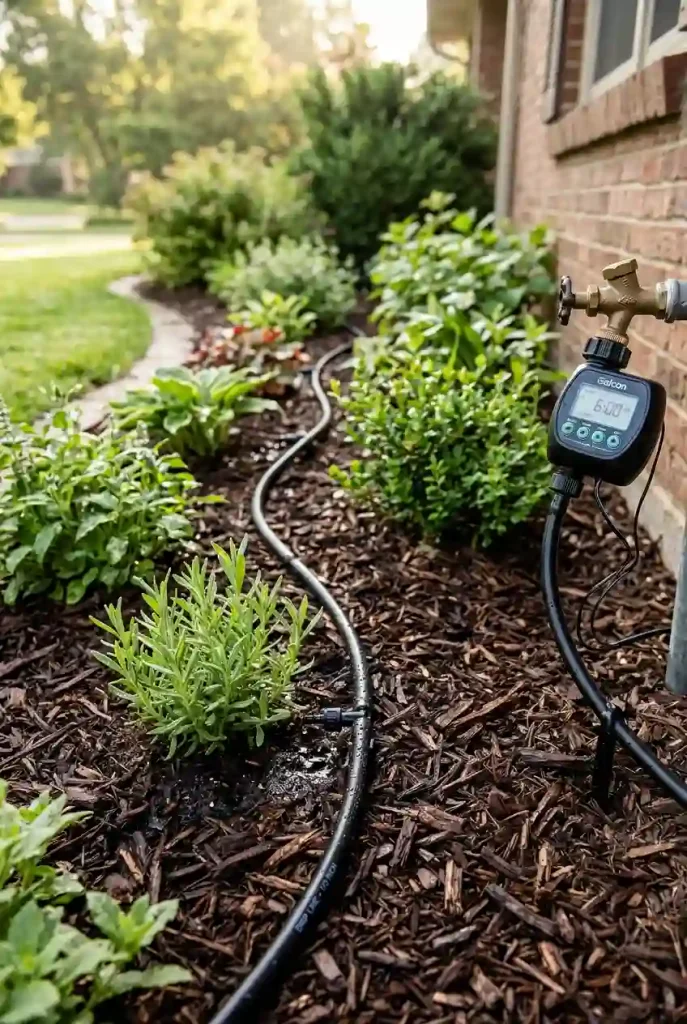
Time Needed: 2 to 3 hours | Difficulty: Easy
Cost: Low to moderate | Tools Required: Drip kit, faucet timer, and scissors
Pro Tip: Water deeply but less often so roots grow down instead of staying near the surface.
Result: Healthy plants with far less hand watering.
Drip lines and soaker hoses deliver water slowly to the roots, so very little is lost to wind or evaporation. Attach a timer to your faucet and set it for early morning. New plants need frequent watering at first, but established ones usually need much less.
Common Mistakes to Avoid
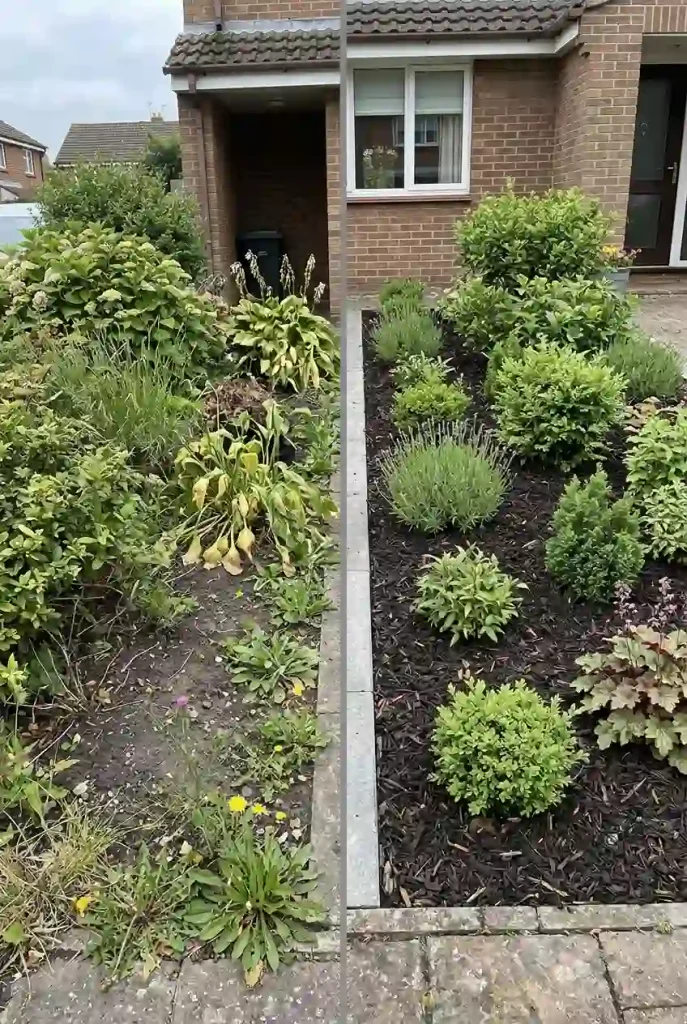
Low maintenance projects tend to go wrong in the same few ways. A common one is overplanting. Tiny plants look sparse, so people squeeze in too many, then spend years pruning and thinning. Check the mature size on each plant tag and trust the spacing, even when the bed looks bare.
Other frequent slips include picking sun loving plants for shady spots, skipping edging so mulch spills into the lawn, and watering every day instead of deeply. Most of these come from rushing the planning step, which is why experts recommend sketching your yard first.
Your Easy Upkeep Routine and What to Expect
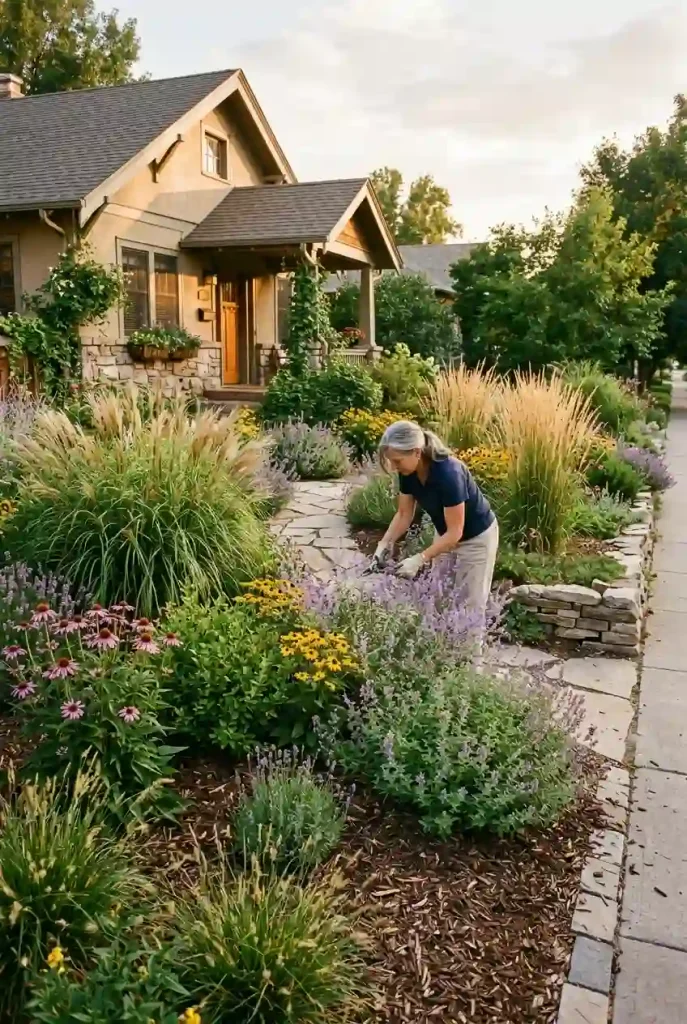
A low maintenance yard still needs a little attention, but only a little. Plan on small, regular tasks rather than big weekend projects. Here is a simple routine, plus what to expect as the yard matures over the first two or three years.
- Spring: Cut back old growth, top up mulch to 2 to 3 inches, and check your drip lines for leaks.
- Summer: Water deeply on schedule and pull stray weeds while they are small.
- Fall: Clear heavy leaf buildup from beds, and plant new shrubs or perennials while the soil is still warm.
- Winter: Protect tender plants if your area gets hard frosts, and plan any changes for next season.
- Year by year: The first year looks sparse and needs the most watering. By year three, plants fill in, weeds drop off, and upkeep shrinks to a few light tasks each season.
Budget Friendly Ways to Get Started
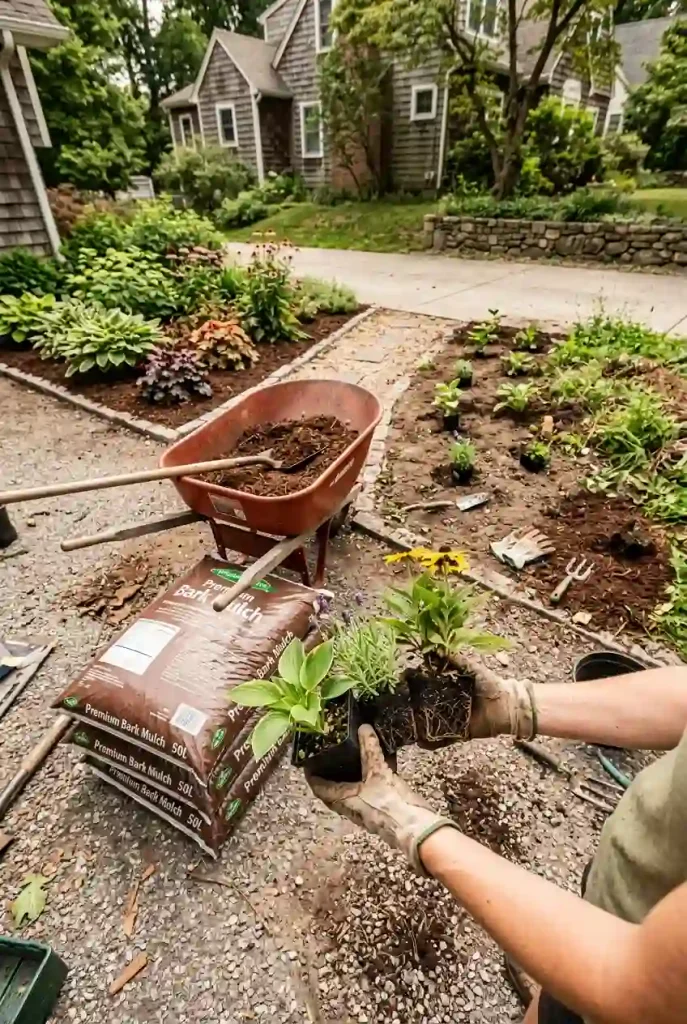
Quick Tip: Do the project one bed at a time. Finish a small area this season, then expand next season as your budget allows. Spend money where it lasts, on good plants and edging, and save on mulch by asking your city or local tree services about free wood chips.
Buy smaller plants, which cost less and settle in faster than large ones. Ask neighbors to share divisions of perennials, and check local plant sales in spring. Skip pricey decorations at first. A simple, well planted bed looks more finished than a crowded one filled with extras.
Low Maintenance Ideas for Tricky Spots
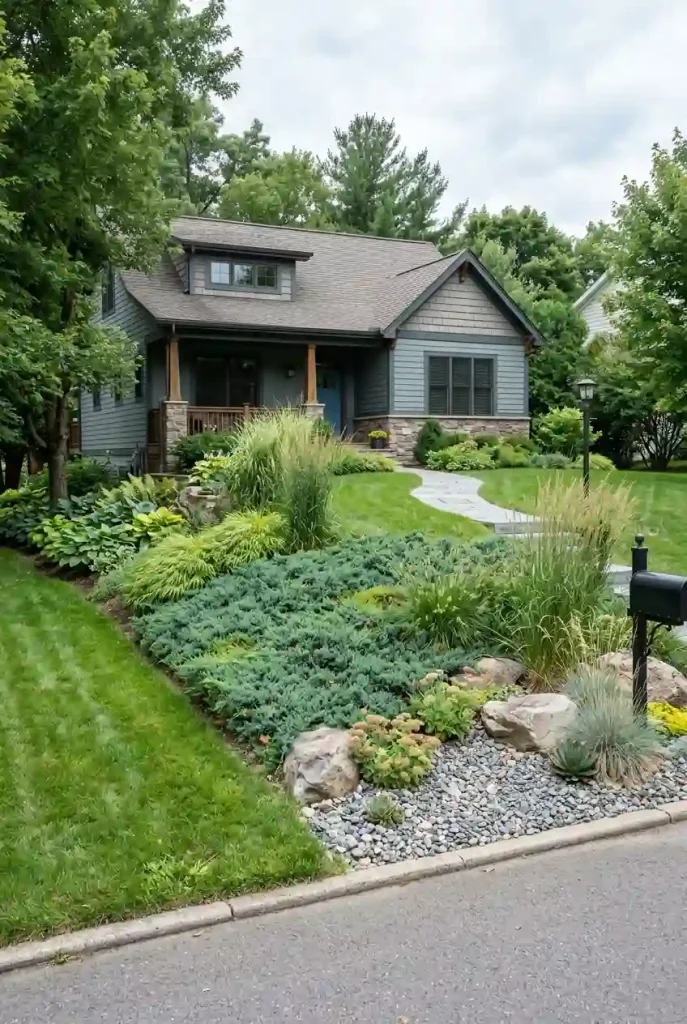
Common Mistake: Treating every part of the yard the same. A steep bank, a shady corner, and a hot, dry strip each have different needs, and one plant list rarely works for all three.
The Fix: Match the plants to each spot. Use dense, deep rooted ground covers or grasses on slopes to hold soil, shade lovers like hostas and ferns under trees, and drought tolerant plants such as sedum or lavender in hot strips. For small yards, keep the design simple with one or two bold plant groups.
Slopes can be the trickiest, because water runs off before it soaks in. Plant in staggered rows across the slope and cover the soil with mulch until plants spread. Water slowly so it sinks in. Once roots take hold, slopes need very little care.
Simple Finishing Touches That Boost Curb Appeal
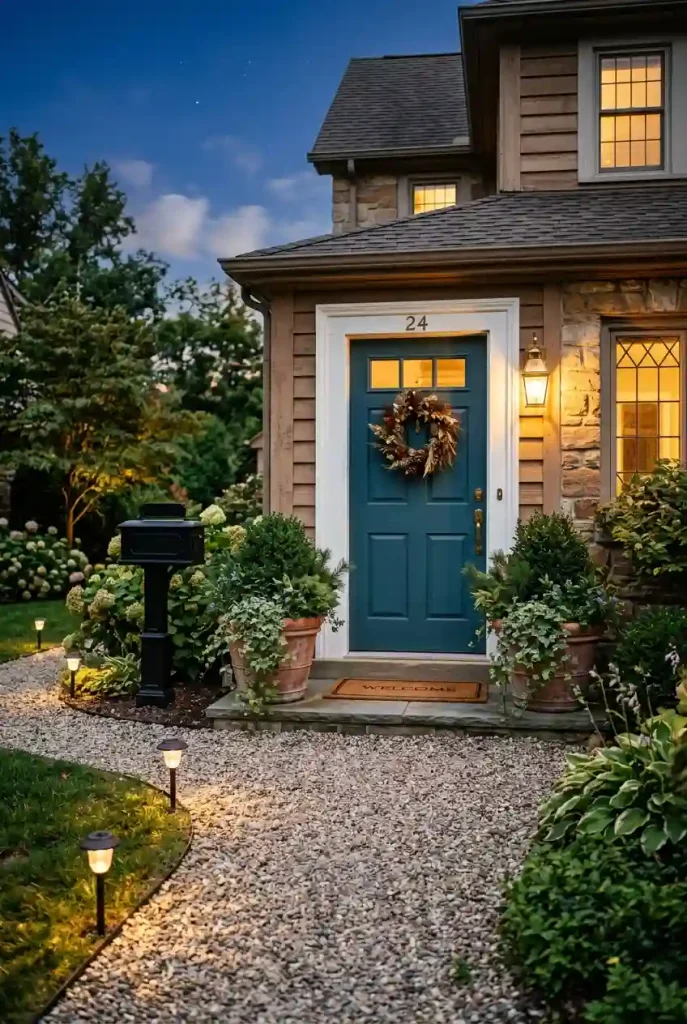
What You Need:
- Large planters: One or two big pots of hardy evergreens or grasses need less watering than many small ones.
- Solar path lights: They light the walkway at night with no wiring.
- A fresh front door color: One coat of paint gives the house a clear focal point.
- House numbers and a mailbox: Clean, easy to read ones show care and help visitors find you.
- A sturdy doormat: A simple one finishes the entry and keeps dirt outside.
Pick a few touches and repeat colors from your plants, door, and planters so the front yard feels connected. Stop before it gets too busy. The goal is a welcoming entry that still takes almost no upkeep, so choose simple items that need very little attention.
Frequently Asked Questions
How long does a new low maintenance yard take to settle in?
Most yards need one to three growing seasons for plants to fill in. Plan on regular watering and some weeding during the first year.
Can I keep a small lawn?
Yes. A small lawn with a simple shape and a clean edge is easy to mow and gives kids and pets space to play.
What is the best mulch for a front yard?
Shredded bark or wood chips suit most beds, while gravel works well around dry loving plants. Apply 2 to 3 inches and refresh it as it breaks down.
Do native plants need watering?
Yes, during the first year while their roots grow. After that, many need little beyond rainfall, with an occasional deep soak in long dry spells.
Now you know how to create a low maintenance front yard step by step, from planning your space to choosing plants and mulch. Start small, finish one area at a time, and let the yard grow in. Each season, upkeep gets lighter and the results look better.
Conclusion
You now know how to create a low maintenance front yard, from planning your space to choosing tough plants, mulching, and setting up simple watering. That means less time working and more time enjoying a yard you are proud of.
I’ve seen how making just one change, like adding mulch or shrinking the lawn, can completely shift the result. Start with one small bed this weekend. Save this article on Pinterest so you can come back to it, try the steps in your own yard, and share it with someone who is tired of weekend yard work. Your easier, greener front yard starts today.