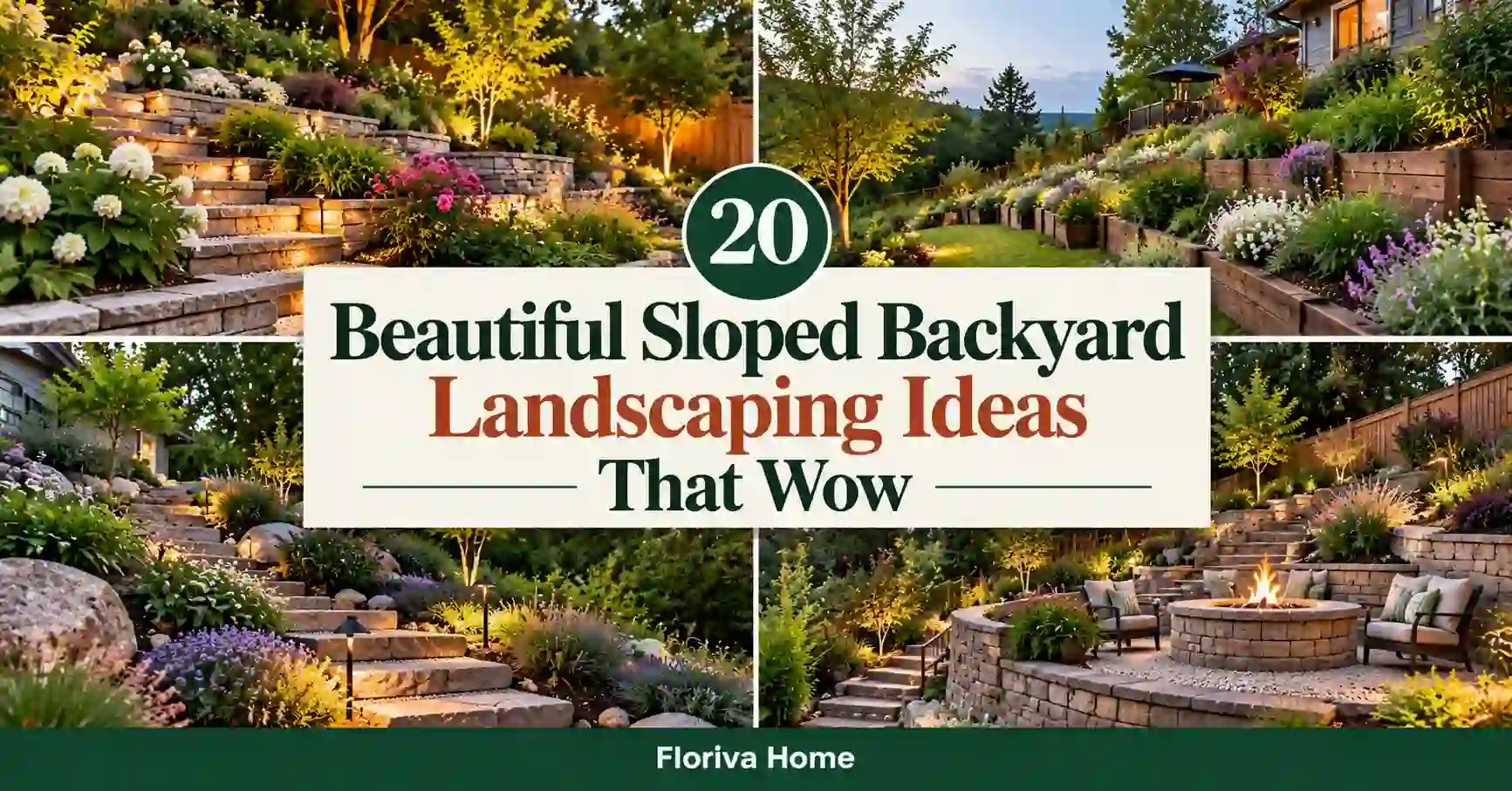
20 Beautiful Sloped Backyard Landscaping Ideas That Wow
A sloped backyard can be more than a challenging patch of uneven ground. With thoughtful landscaping, you can turn that hillside into a beautiful outdoor space filled with layered gardens, inviting pathways, cozy seating areas, and eye-catching natural features.
Whether your backyard has a gentle incline or a steeper hill, the right design can make it feel more organized, attractive, and useful. From creative planting arrangements to stylish outdoor living spaces, these sloped backyard landscaping ideas will help you make the most of your yard while working with its natural shape.
1. Create a Layered Hillside Garden
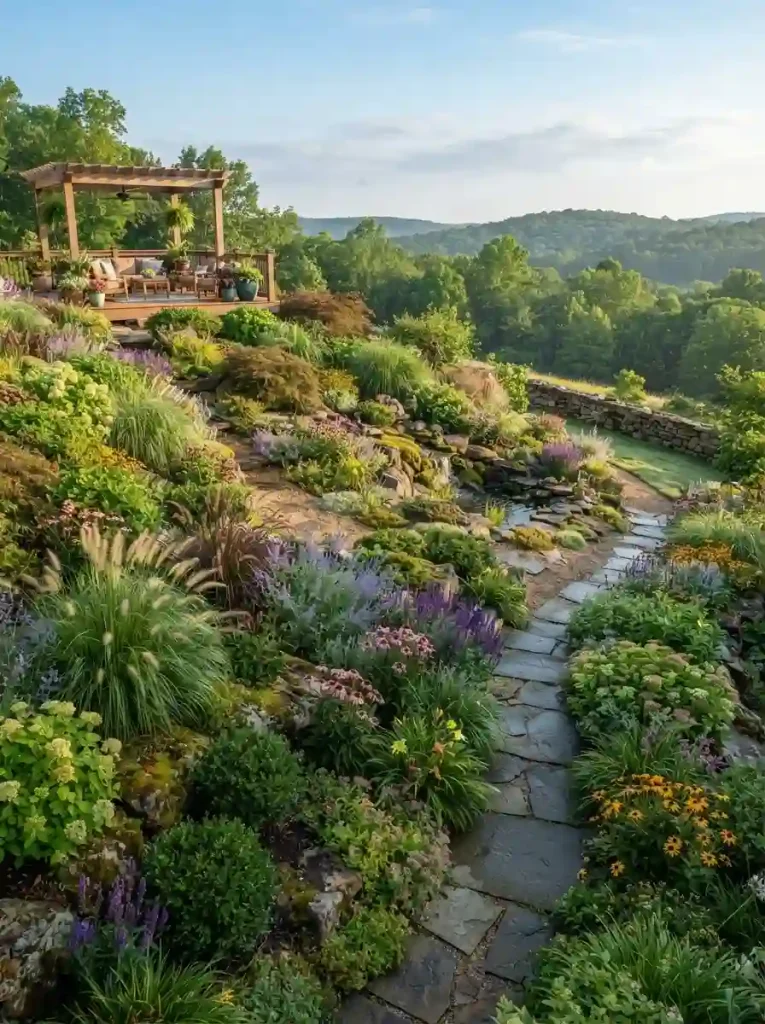
A layered hillside garden is a wonderful way to give an uneven backyard a sense of depth and natural beauty. Instead of covering the entire slope with grass, arrange plants at different heights to create a landscape that feels full, balanced, and visually interesting.
Start with taller ornamental grasses or compact shrubs near the upper section. Fill the middle with flowering perennials, then use spreading ground covers along the lower edges. This arrangement creates a soft transition between levels without making the garden look overly formal.
Choose plants according to the amount of sunlight and moisture each section receives. Adding a few decorative rocks between plant groupings can make the hillside feel more natural while helping define individual planting areas.
2. Design a Cozy Hillside Patio
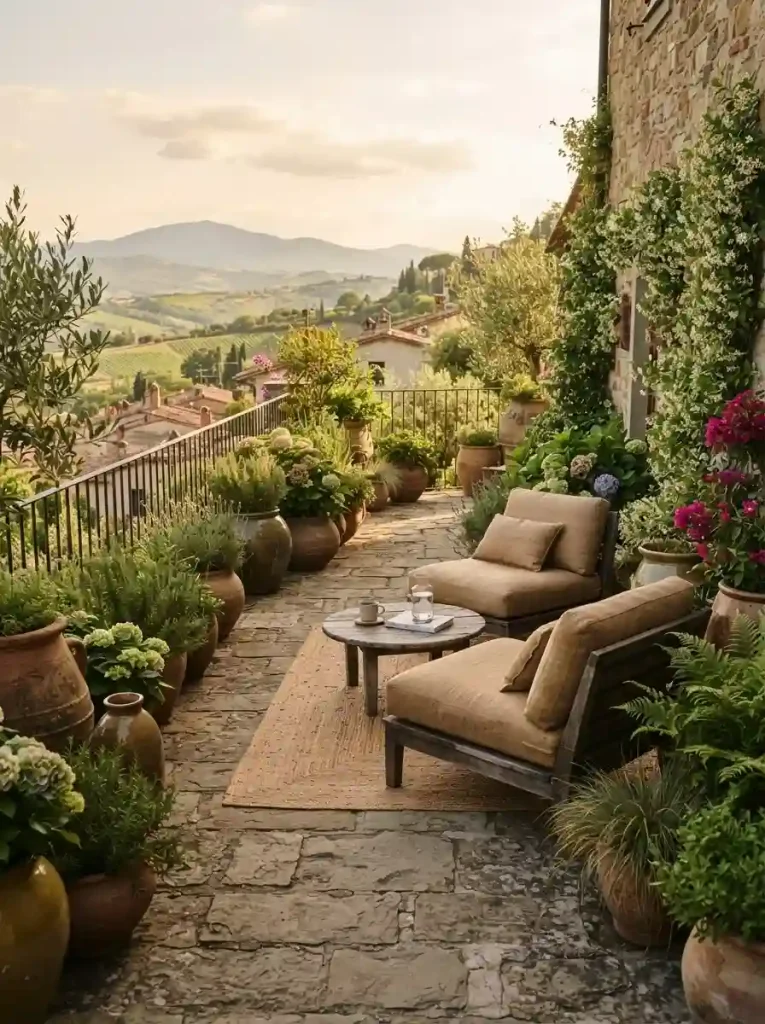
A patio built into a suitable section of a sloped backyard can create a comfortable place to enjoy fresh air, outdoor meals, or quiet evenings. The key is finding a naturally convenient position and creating a stable, level surface that fits the surrounding landscape.
Consider using stone pavers, textured concrete, or outdoor porcelain tiles for the patio floor. Add weather-resistant chairs, a compact coffee table, and large planters to make the area feel welcoming without overcrowding it.
If the patio sits below the house, use planting beds or a low garden border to connect it visually with the higher ground. Outdoor cushions and warm lighting can make the space feel especially inviting after sunset.
For steeper slopes or substantial excavation, consult a qualified landscape professional to assess drainage, soil stability, and the support the patio may require.
3. Build a Curved Garden Stairway
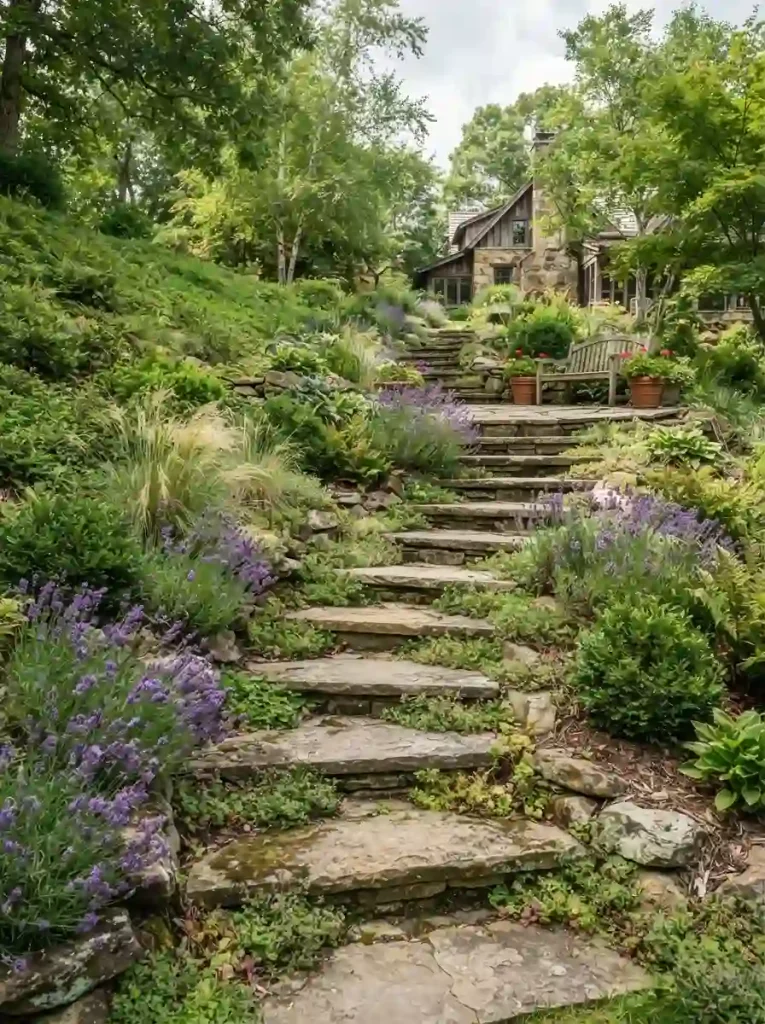
Straight stairways can sometimes make a sloped backyard feel rigid. A gently curved garden stairway creates a more natural flow, guiding visitors through the landscape while turning an ordinary route into an attractive garden feature.
Use broad stone treads, textured pavers, or durable outdoor steps suited to your garden’s style. Let the staircase follow a comfortable route across the hillside rather than climbing directly up the steepest section.
Plant low-growing flowers, ornamental grasses, or compact evergreen shrubs along the edges. These plants soften the hard materials and make the staircase feel connected to the rest of the yard.
Pay attention to consistent step heights, secure footing, drainage, and adequate lighting. On steep or unstable ground, have the staircase professionally designed to ensure safe access.
4. Add a Modern Hillside Fire Pit Area
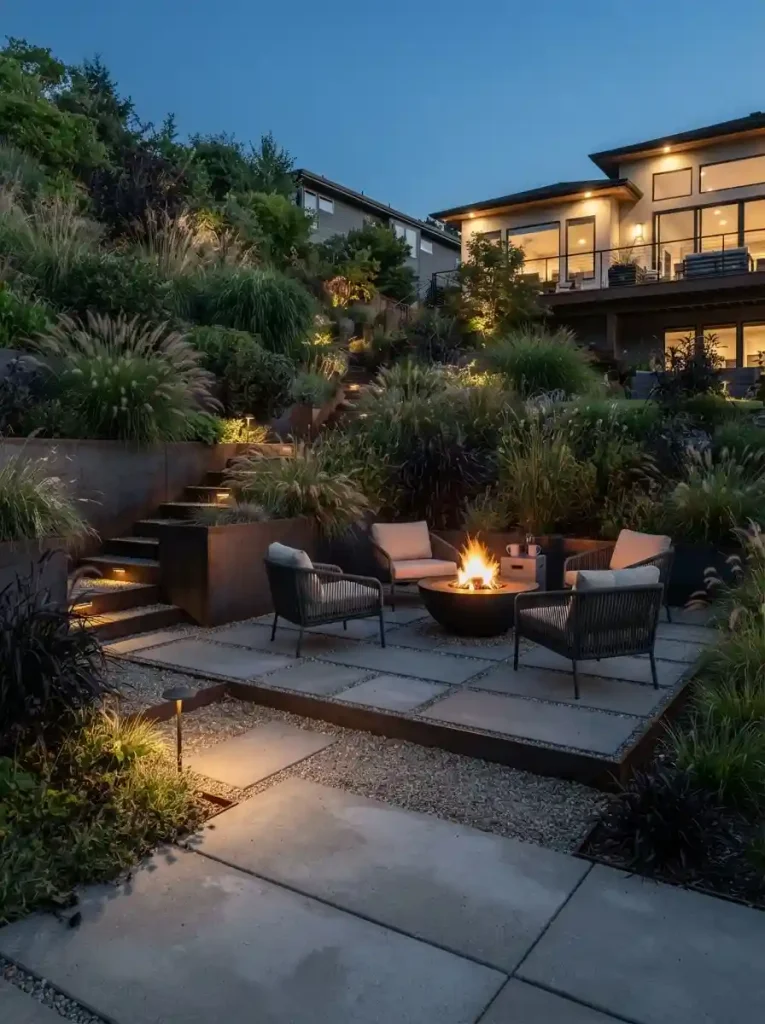
A fire pit area can turn an otherwise awkward slope into a memorable place for gathering with family and friends. Rather than placing seating directly on uneven ground, create a properly supported, level outdoor area where everyone can sit comfortably.
Arrange weather-resistant chairs around a fire pit made from concrete, stone, or metal. Keep the surrounding design simple with gravel, large pavers, and a few carefully positioned ornamental plants.
For a contemporary look, combine neutral paving with dark metal furniture and subtle landscape lighting. If space allows, add a small side table for drinks and snacks.
Choose a fire pit suitable for your setting, maintain safe clearances from structures and vegetation, and follow local fire regulations. Steep slopes may require professional grading or structural support before construction.
5. Transform the Slope With a Woodland Garden
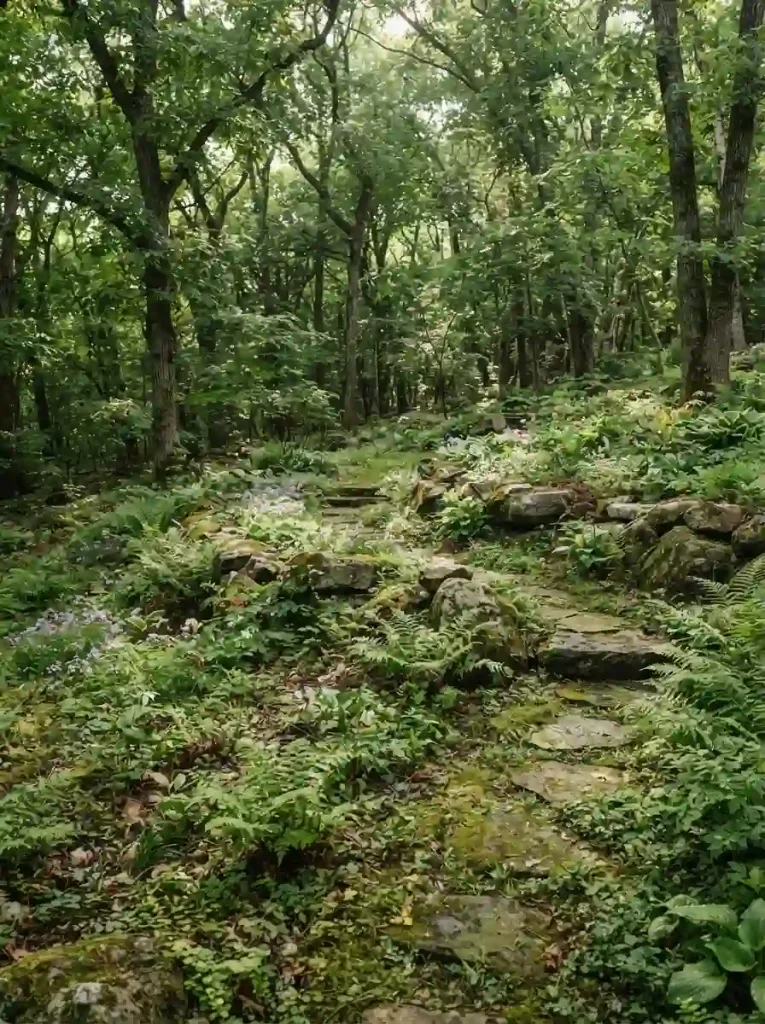
If you love a relaxed, natural atmosphere, a woodland garden can make a sloped backyard feel like a peaceful retreat. This approach works especially well beneath established trees or in areas where filtered sunlight creates suitable growing conditions.
Begin by preserving healthy existing trees and incorporating shade-tolerant plants around them. Ferns, woodland perennials, native ground covers, and small shrubs can fill the spaces between tree trunks without requiring a perfectly manicured appearance.
A narrow stepping-stone path can lead visitors through the garden, while fallen logs or naturally shaped rocks add character. Use leaf mulch where appropriate to help retain soil moisture and support the garden’s natural appearance.
Choose plants that suit your local climate and soil conditions. Avoid piling soil against tree trunks or disturbing major roots during installation.
6. Install a Natural Rock Garden
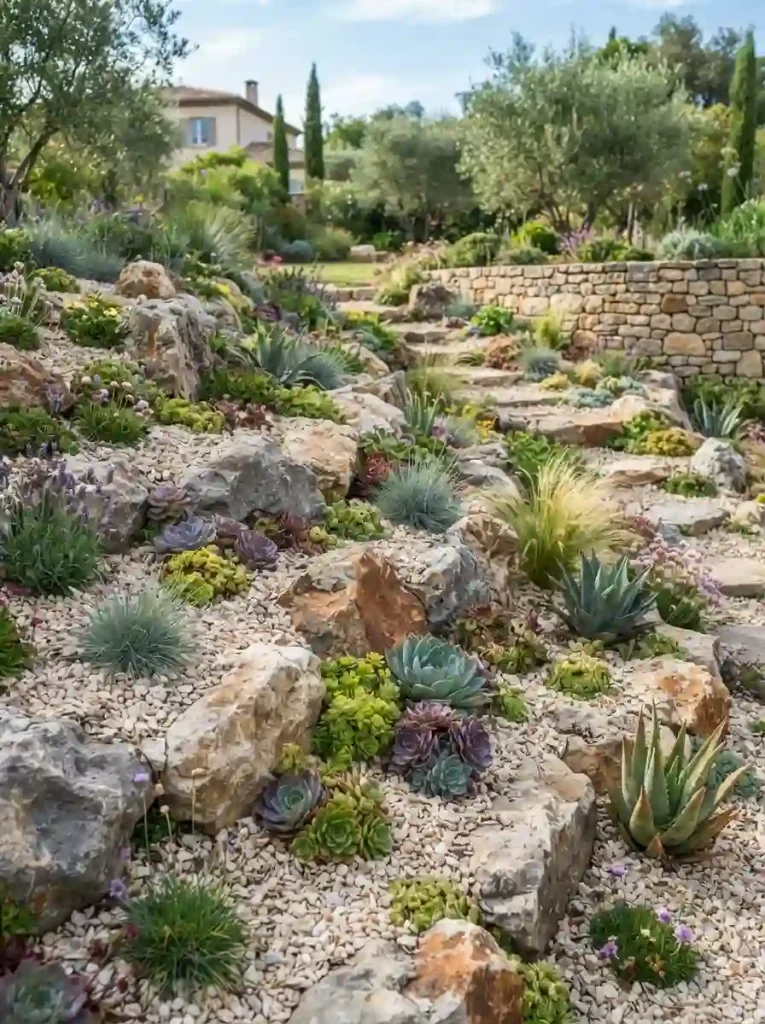
A rock garden is an attractive option for a sloped backyard, particularly if you want a landscape that requires less frequent mowing. Stones, gravel, and carefully selected plants work together to create texture while giving the hillside a more intentional appearance.
Arrange rocks of different sizes in small groups rather than spreading them evenly across the slope. Partially setting larger stones into the ground helps them look naturally established. Fill the spaces with drought-tolerant perennials, compact grasses, or suitable succulents.
Choose plants based on your local climate, sunlight, and soil drainage. Small pockets of planting soil between rocks can support greenery without requiring extensive lawn coverage.
For a finished look, use a consistent gravel color and repeat a few plant varieties throughout the garden. On steep slopes, secure the stones properly and address runoff before installation.
7. Create a Multi-Level Outdoor Dining Space
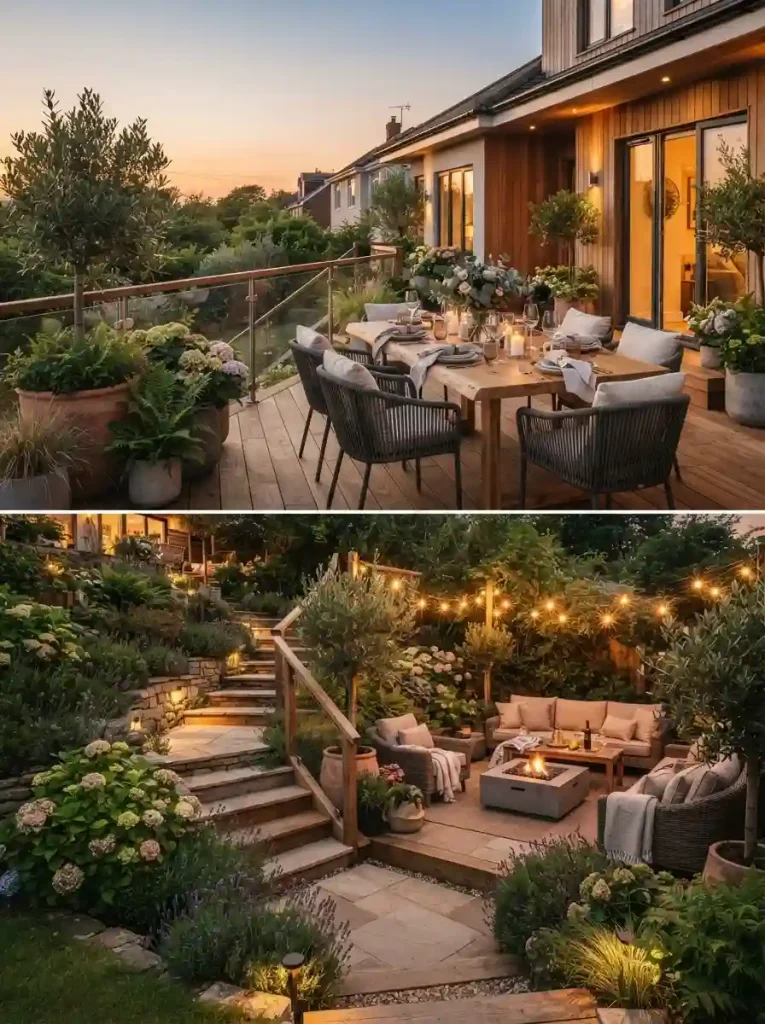
A multi-level outdoor dining space allows you to use different elevations for separate activities. One level can accommodate an outdoor dining table, while another provides a quieter corner for lounging or enjoying the garden.
Use sturdy decking or professionally installed paving to create stable surfaces. A dining area positioned close to the house can make serving meals easier, while a lower platform may offer a more secluded setting surrounded by plants.
Choose furniture that suits the size of each level. A rectangular table works well for family meals, while a compact round table can fit into a smaller outdoor nook. Large planters and simple outdoor lighting help connect the separate areas.
Make sure stairs between levels are comfortable and secure. Proper foundations, drainage, and structural support are particularly important when building elevated platforms on sloping ground.
8. Add a Dry Creek Bed for Better Drainage
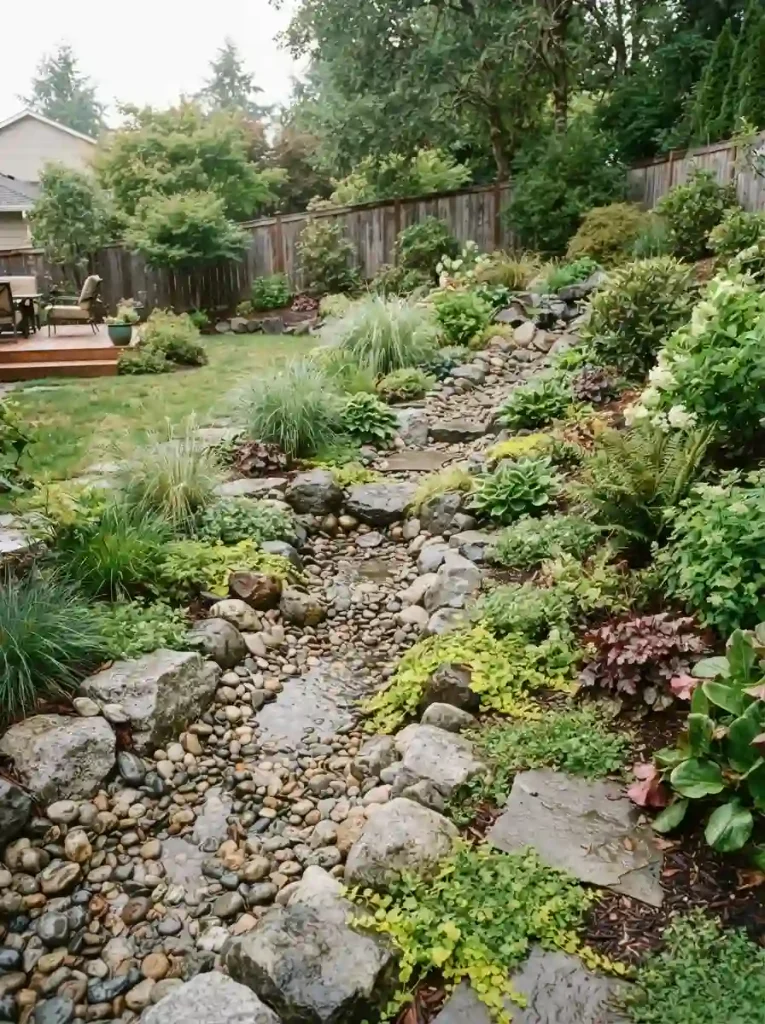
A dry creek bed can turn a practical drainage solution into an attractive landscaping feature. It resembles a natural stream filled with stones, even when no water is flowing, and can help direct runoff when designed for the site’s conditions.
Begin by identifying where rainwater naturally travels across your backyard. A carefully planned channel lined with rounded river stones, larger rocks, and suitable planting can create a natural-looking route through the landscape.
Place larger stones along selected edges to give the creek bed definition. Add moisture-tolerant plants where appropriate, and use ground covers around the surrounding banks to soften the overall appearance.
A dry creek bed should have a suitable outlet and must not redirect water toward your house or neighboring properties. If runoff is substantial or the slope is steep, seek professional drainage advice before construction.
9. Plant a Colorful Butterfly Garden
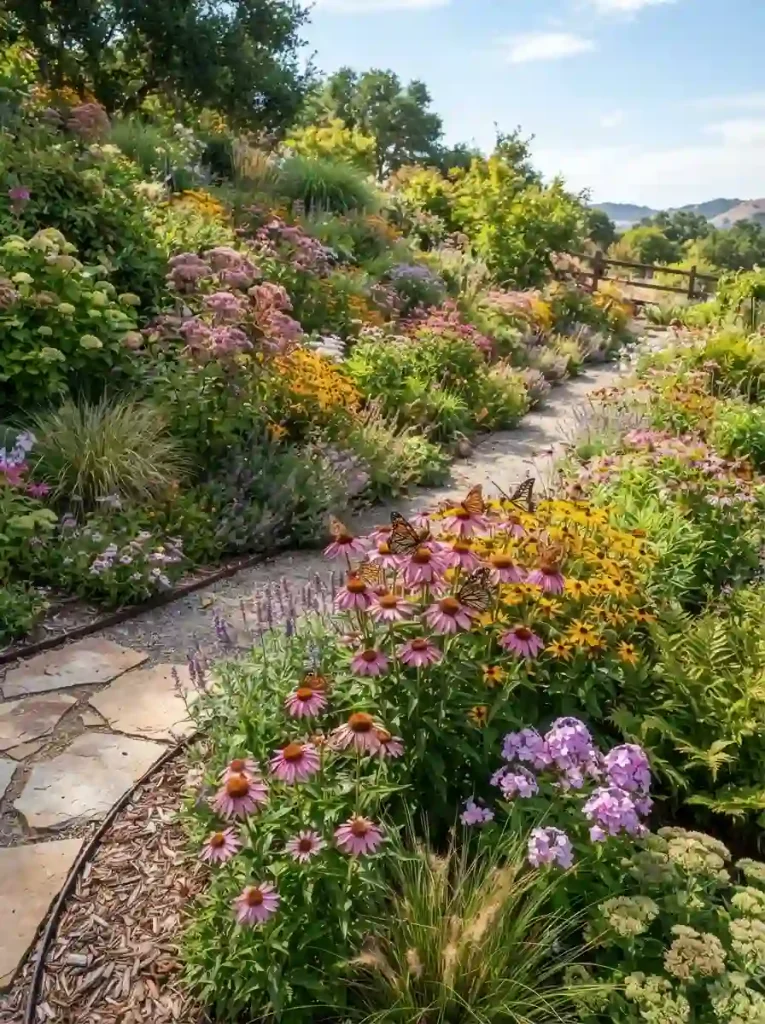
A butterfly garden brings movement, seasonal color, and wildlife interest to a sloped backyard. By choosing suitable nectar plants and host plants, you can create a landscape that supports butterflies and other pollinators while making the hillside more visually appealing.
Group flowers in generous clusters rather than planting single specimens far apart. Different bloom periods can provide food throughout the growing season, while a combination of flower heights creates a more natural appearance.
Use compact flowering plants along the lower edges and taller varieties farther up the slope. Leave enough space between groups for maintenance, and avoid using pesticides that could harm pollinators.
Select native flowering species suited to your region and soil conditions. Once established, an appropriately planted butterfly garden can provide seasonal interest without demanding the constant upkeep of a formal flower bed.
10. Build a Small Pergola Retreat on the Slope
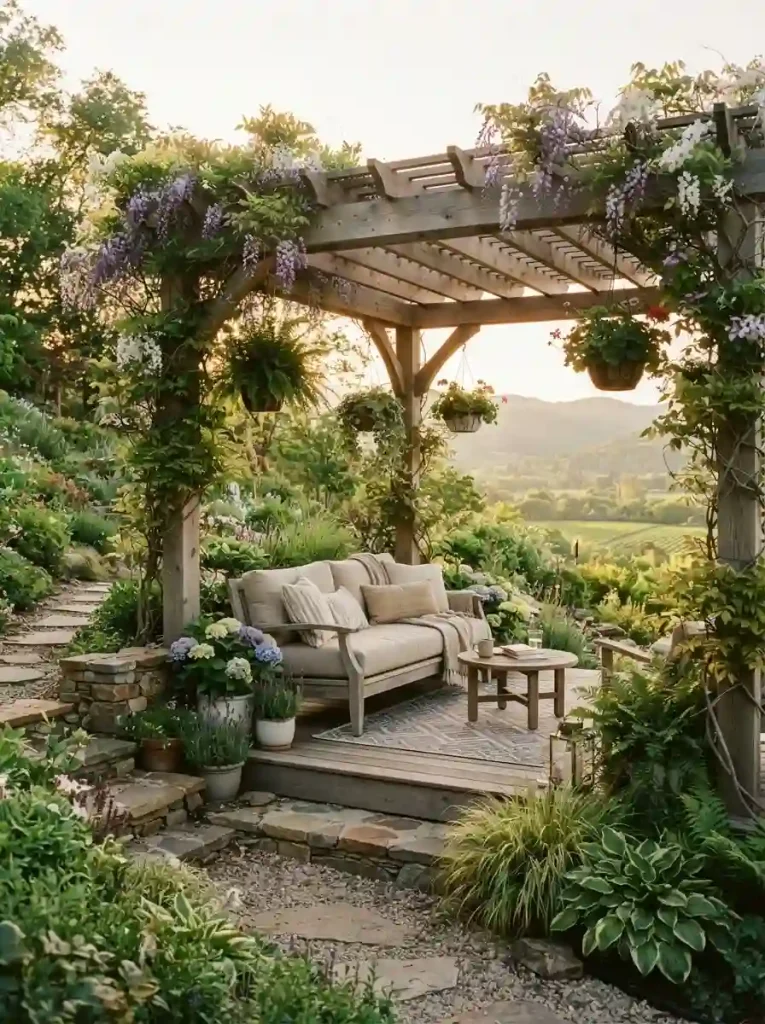
A pergola can give your sloped backyard a defined destination without requiring you to landscape every inch of the hillside. Positioned on a suitable level platform, it creates a shaded retreat for reading, relaxing, or enjoying the garden.
Choose a pergola style that complements your home, whether that means a simple natural timber structure or a modern design with clean lines. Add a comfortable outdoor bench, a pair of lounge chairs, or a small table to suit the available space.
Climbing plants can soften the structure and introduce seasonal color. Alternatively, hanging planters and carefully placed container plants can add greenery without covering the entire pergola.
Consider the direction of the sun when choosing its position. Ensure the platform, foundations, and access route are appropriate for the slope, and check local building requirements before installation.
11. Create Terraced Retaining Wall Gardens
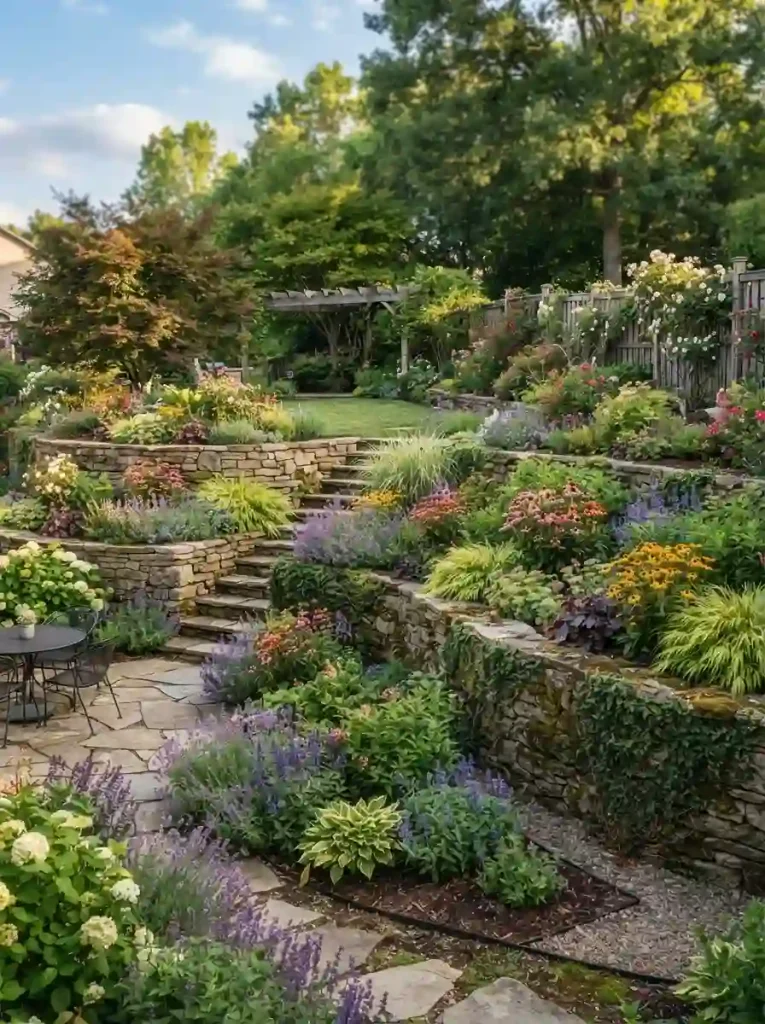
Terraced retaining wall gardens are an effective way to organize a steep backyard into attractive planting levels. Instead of treating the incline as one continuous surface, you can create separate garden beds that add structure, depth, and visual interest.
Choose materials that complement your home, such as natural stone, textured concrete blocks, or timber suitable for outdoor use. Fill each terrace with a different combination of flowers, evergreen shrubs, ornamental grasses, or small decorative trees.
For a cohesive appearance, repeat a few plant varieties across the different levels. You can also use the upper terrace for taller plants and reserve the lower beds for colorful flowers and ground covers.
Proper drainage and structural design are essential for retaining walls, particularly on steep slopes. Have taller walls or walls supporting significant soil loads assessed by a qualified professional before construction.
12. Add a Cascading Water Feature
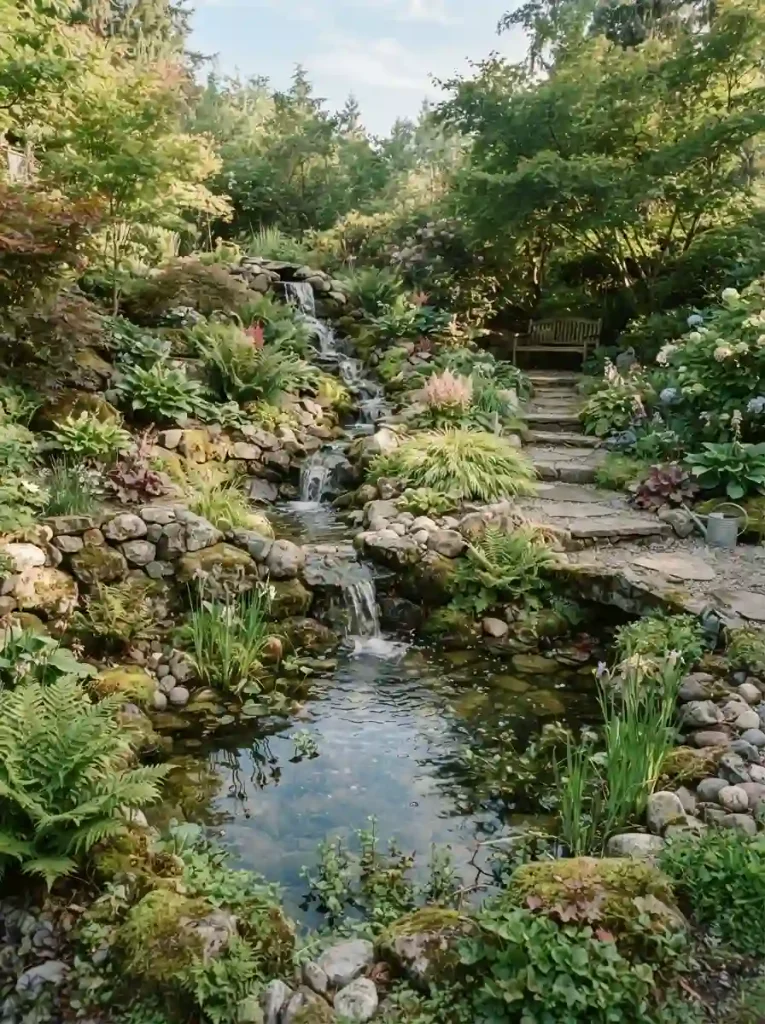
A cascading water feature can turn a sloped backyard into a relaxing outdoor retreat. The natural change in elevation provides an opportunity to create a series of small waterfalls that flow between rocks and collect in a lower pond or basin.
Use irregular stones and carefully arranged boulders to give the feature a natural appearance. Surround the water with moisture-tolerant plants, ferns, and compact shrubs that complement the surrounding garden.
For a modern design, choose clean-lined stone edges and a simple recirculating water system. A more natural arrangement can incorporate uneven rocks and lush planting to resemble a woodland stream.
Make sure the installation includes a suitable waterproof basin, pump, and accessible maintenance points. The foundation and water flow should be professionally assessed where the hillside is steep or unstable.
13. Design a Winding Gravel Garden Path
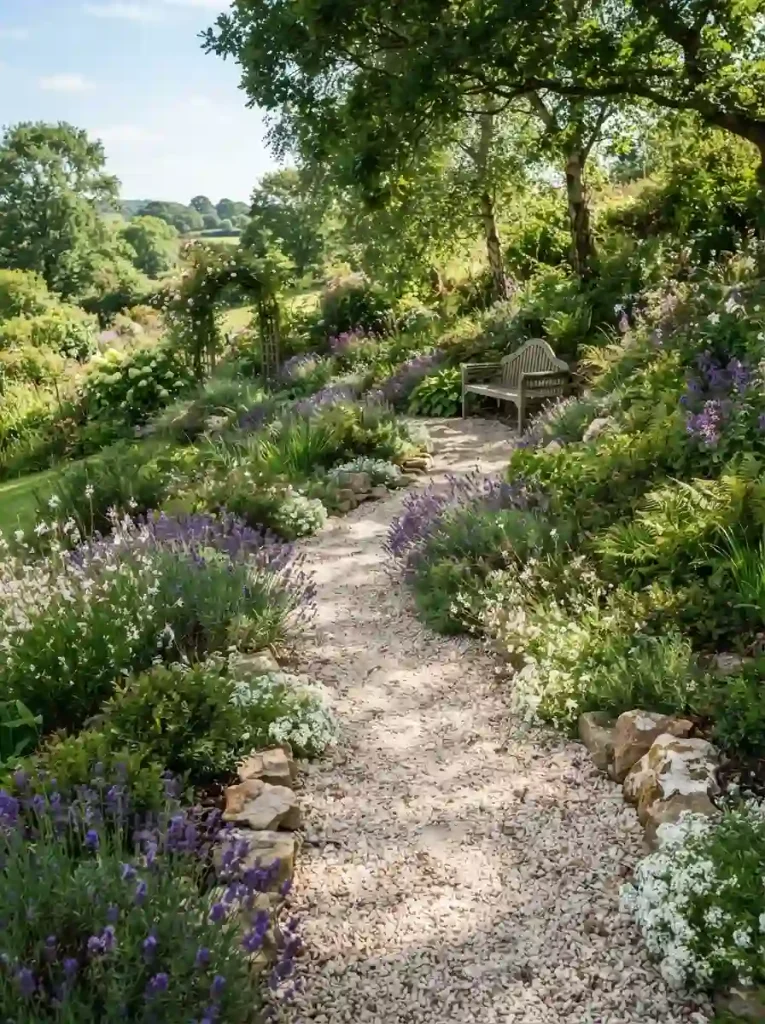
A winding gravel path is a simple way to make a sloped backyard feel more accessible and visually interesting. Rather than walking straight up the hill, a gently curving route allows the landscape to unfold gradually as you move through it.
Use compacted gravel with a suitable base to create a durable walking surface. Metal, stone, or timber edging can help keep the gravel in place, while stepping stones provide additional stability in selected areas.
Plant low-growing greenery along the path and introduce occasional flowering plants to create attractive focal points. A small bench at a bend in the path can provide a quiet place to pause and enjoy the view.
On steep terrain, avoid loose gravel where it could become slippery or wash away. Choose a route with a comfortable gradient, appropriate drainage, and stable footing.
14. Turn the Hillside Into a Raised Vegetable Garden
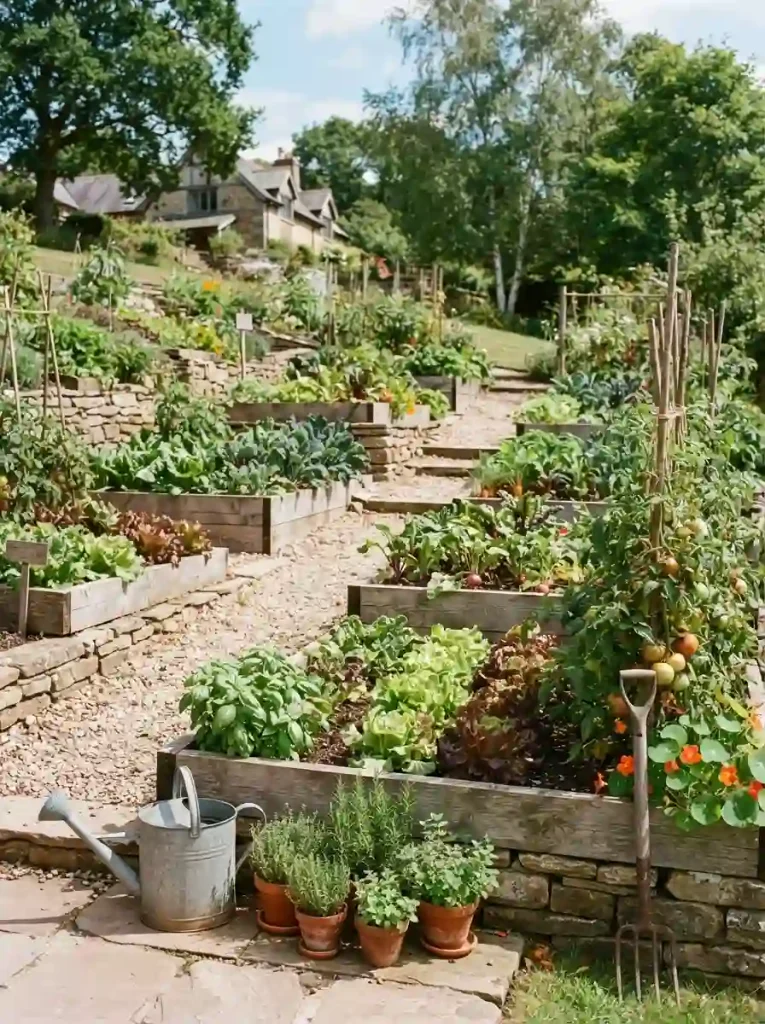
A sloped backyard can provide an excellent opportunity to grow vegetables, herbs, and seasonal produce. With carefully planned growing beds, you can make gardening easier while transforming unused ground into a productive outdoor space.
Arrange raised beds along suitable contours of the hillside, keeping their growing surfaces level. Cedar or other durable outdoor materials can create attractive bed frames, while stone borders offer a more permanent appearance.
Grow vegetables such as lettuce, tomatoes, peppers, and beans according to your climate and available sunlight. Add herbs near the edges for easy harvesting, and leave comfortable walking space between the beds.
Make sure the beds have adequate drainage and are properly supported. Raised beds should not be used as retaining walls unless specifically designed for that purpose. On a steep slope, professional grading or terracing may be necessary.
15. Add a Decorative Boulder Seating Area
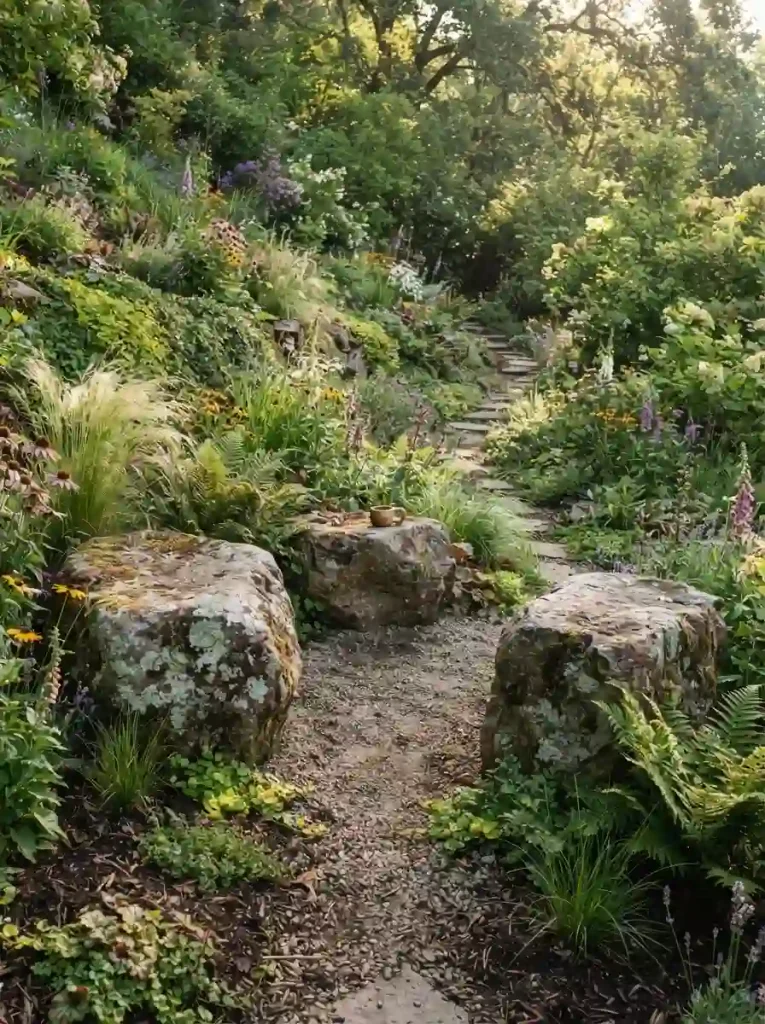
Large natural boulders can provide a distinctive seating feature while helping a sloped garden feel connected to its surroundings. This design works particularly well in rustic, woodland, and naturalistic landscapes.
Choose stable, appropriately sized stones with relatively comfortable surfaces for sitting. Arrange them around a small open area or beside a garden path, leaving enough room to move safely between them.
Surround the seating area with ornamental grasses, low ground covers, and flowering perennials. A few carefully placed stepping stones can connect the space to other parts of the backyard without introducing an overly formal layout.
Boulders should be securely positioned on stable ground rather than simply placed on loose soil. Avoid using stones that can roll, shift, or become unstable on the incline.
16. Create a Multi-Level Lawn With Garden Borders
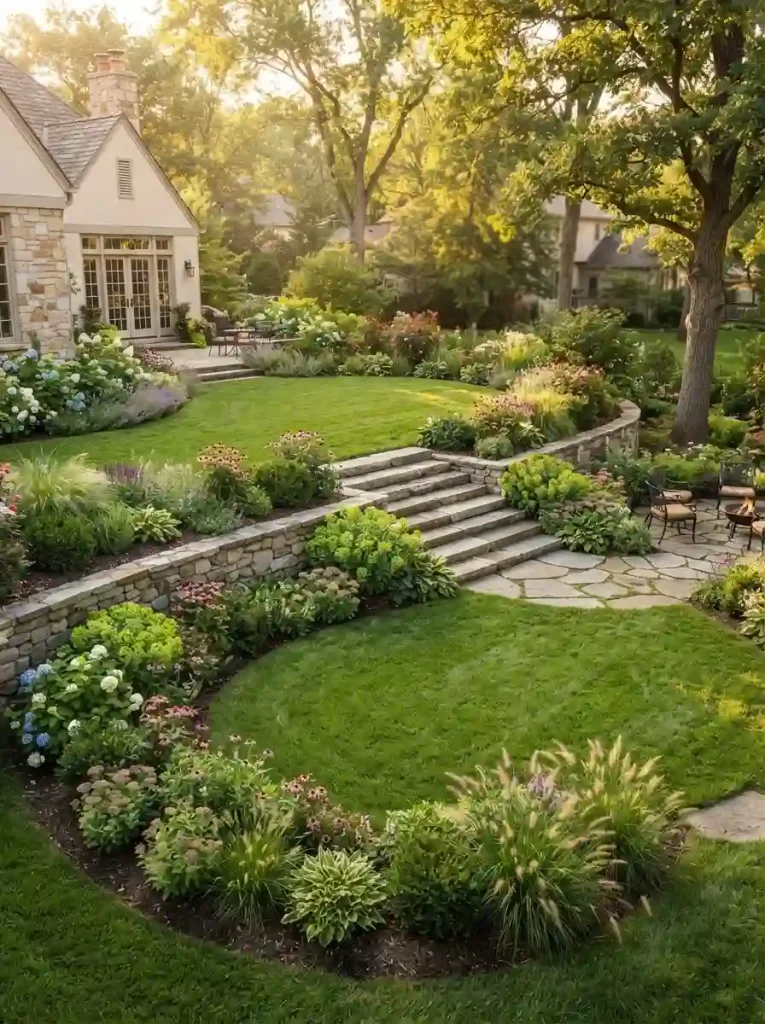
If you love the appearance of a traditional green lawn, you do not have to abandon it simply because your backyard slopes. A thoughtfully planned design can combine manageable lawn areas with planted borders and separate garden levels.
Use suitable landscaping techniques to create gently graded lawn sections where the terrain allows. Define the edges with flowering plants, low shrubs, or simple stone borders to give each section a clean, finished appearance.
Choose grass varieties suited to your climate, soil, and sunlight conditions. Ground covers or ornamental grasses may be better options for particularly steep sections where mowing would be difficult.
Avoid creating abrupt changes in elevation without proper support. A landscape professional can help determine whether grading, retaining walls, or erosion-control planting is needed to establish stable lawn areas.
17. Build a Secluded Hammock Garden
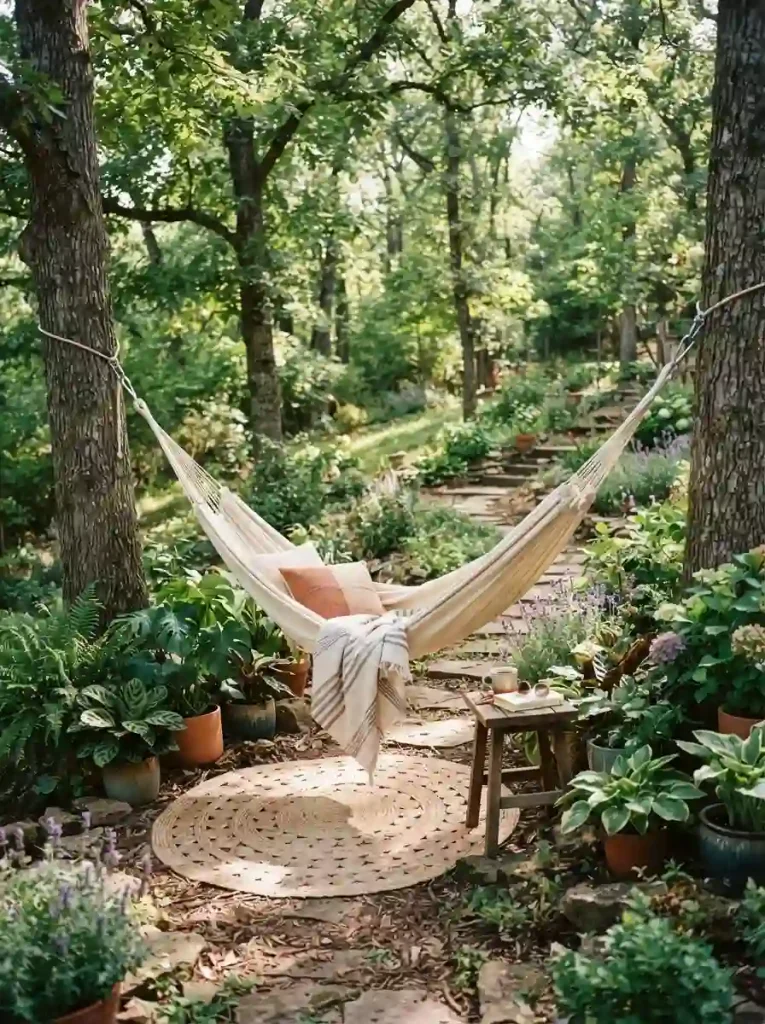
A hammock garden offers a relaxed way to enjoy a sloped backyard without filling it with bulky outdoor furniture. By selecting a comfortable, stable location between suitable supports, you can create a peaceful corner for reading, resting, or enjoying a warm afternoon.
Position the hammock where the ground is reasonably level and access is convenient. Mature trees may provide natural shade, while a freestanding hammock frame offers flexibility when suitable trees are unavailable.
Add a small side table, a weather-resistant outdoor rug, and a few containers filled with leafy plants. Soft lighting can make the area inviting in the evening, provided electrical fixtures are rated for outdoor use.
Always use secure, load-rated hammock supports and follow the manufacturer’s installation instructions. Never attach a hammock to unstable trees, weak branches, or structures that are not designed to support its weight.
18. Add a Contemporary Outdoor Lighting Scheme
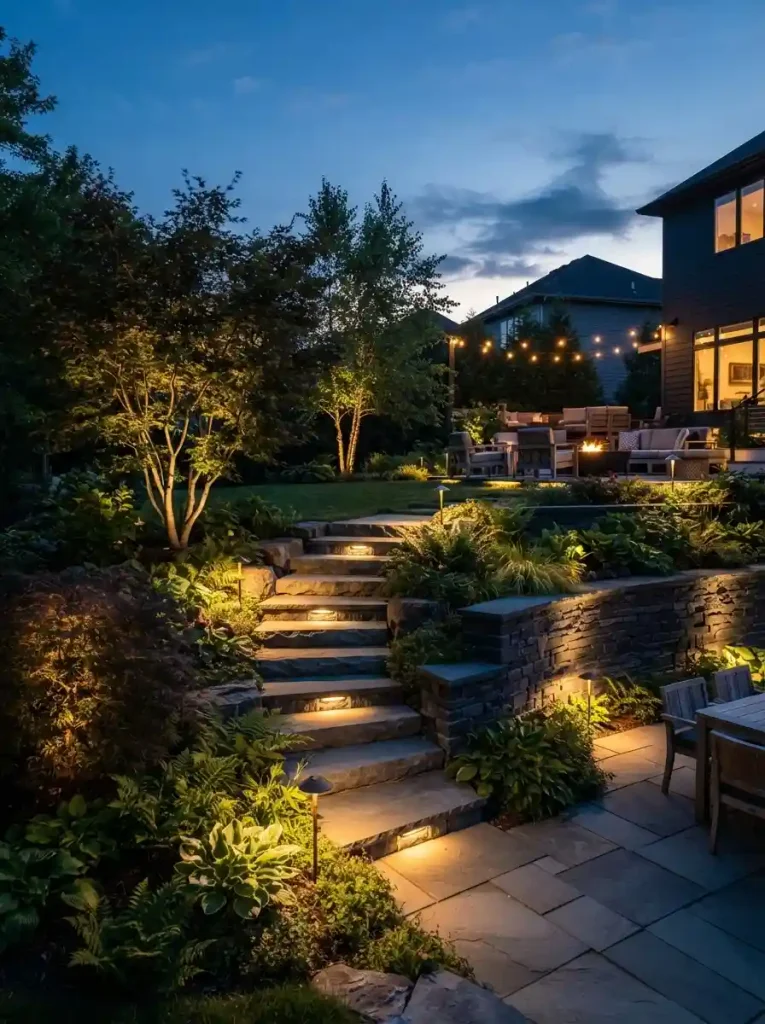
Outdoor lighting can dramatically change the appearance of a sloped backyard after sunset. It highlights changes in elevation, makes pathways easier to navigate, and allows you to enjoy your landscaping well into the evening.
Install low-level path lights along walkways and stairs, positioning them to illuminate the walking surface without creating glare. Uplights can highlight a distinctive tree, a textured retaining wall, or an attractive ornamental plant.
Warm-white lighting often creates a comfortable atmosphere around seating areas. For a more contemporary look, use simple fixtures with dark finishes that blend into the landscape during the day.
Choose outdoor-rated lighting equipment and have electrical installations completed according to local safety requirements. Solar lights can be convenient in sunny areas, while wired systems may offer more consistent illumination where sunlight is limited.
19. Design a Mediterranean-Inspired Hillside Garden
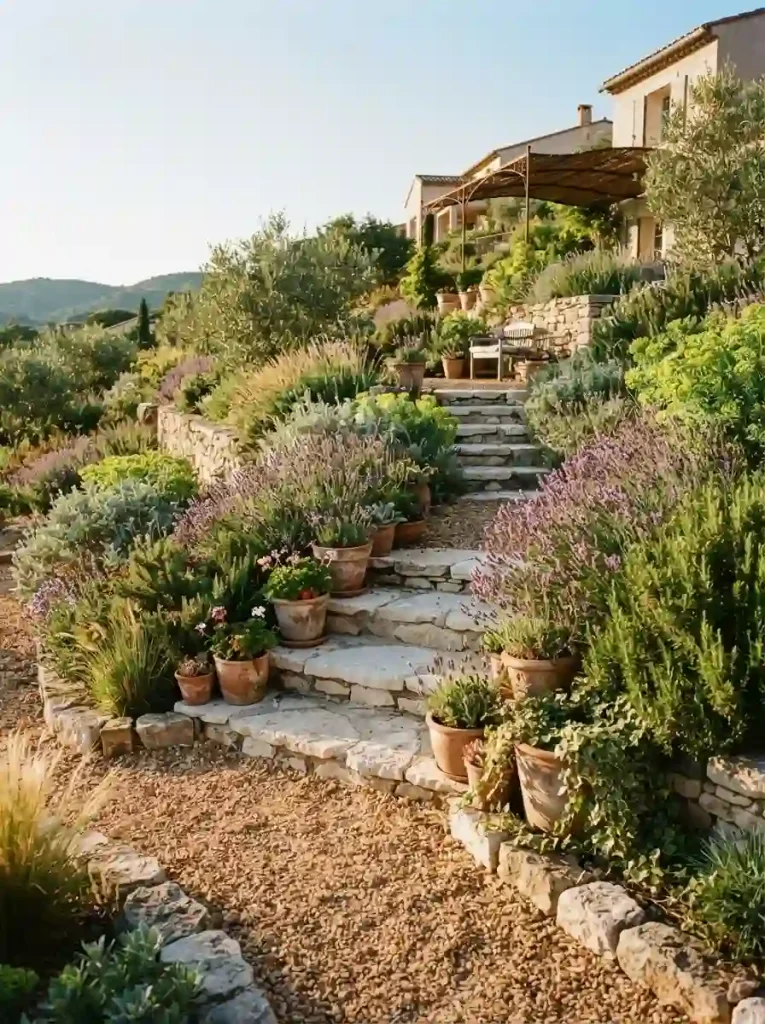
A Mediterranean-inspired hillside garden brings together sun-loving plants, natural stone, textured surfaces, and warm earthy colors. It is especially appealing in climates where suitable drought-tolerant plants can thrive with relatively little supplemental watering once established.
Use pale gravel, terracotta pots, and stone edging to create a warm, relaxed atmosphere. Plant suitable varieties of lavender, rosemary, ornamental grasses, and compact shrubs according to your region’s growing conditions.
Instead of covering every part of the hillside with greenery, leave selected areas of decorative stone or gravel between planting groups. This creates contrast and allows individual plants to stand out.
Choose species suited to your local climate rather than assuming every Mediterranean plant will tolerate your winters or rainfall. Use appropriate erosion-control measures beneath gravel and around newly planted areas.
20. Create a Private Hillside Lounge With a Garden View
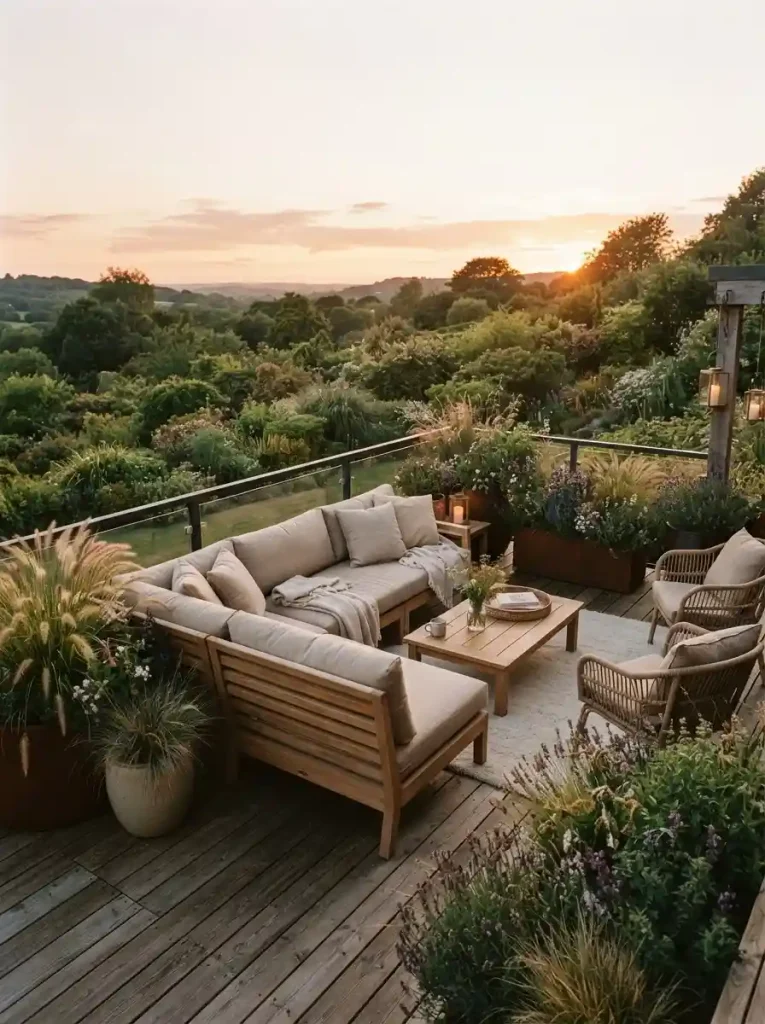
If your sloped backyard overlooks trees, a garden, or a beautiful landscape, consider creating a dedicated lounge where you can enjoy the view. Even a modest seating platform can become a favorite outdoor destination when its position and surroundings are carefully planned.
Choose a suitable level area and arrange comfortable weather-resistant chairs or a compact outdoor sofa so the seating faces the best available view. A simple coffee table and a few large planters can complete the space without making it feel crowded.
Use layered planting around the sides for privacy while keeping the main view open. Evergreen shrubs, ornamental grasses, and suitable screening plants can help create a sense of separation from neighboring properties.
Pay particular attention to structural support, surface drainage, and safe access. If the lounge is elevated above a steep drop, appropriate foundations and professionally designed guardrails may be necessary.
Tips for Landscaping a Sloped Backyard
- Assess the slope: Determine whether your yard has a gentle incline or a steep hillside before deciding on patios, paths, or terraces.
- Plan for drainage: Observe where rainwater flows and address runoff before installing planting beds, patios, or retaining walls.
- Choose suitable plants: Select species that match your local climate, soil conditions, sunlight, and moisture levels.
- Control soil erosion: Ground covers, deep-rooted plants, mulch, and professionally designed terracing can help stabilize suitable slopes.
- Create safe access: Use stable steps, appropriate path surfaces, and suitable lighting wherever people will walk.
- Work with the natural landscape: Preserving healthy trees and incorporating existing rocks can reduce unnecessary disturbance and create a more established appearance.
For steep slopes, unstable soil, significant excavation, or retaining walls that support substantial loads, consult a qualified landscape professional or structural engineer before beginning construction.
Final Thoughts
A sloped backyard offers plenty of opportunities to create a landscape with character, depth, and distinct outdoor spaces. Whether you prefer a colorful hillside garden, a natural rock landscape, a productive vegetable patch, or a cozy patio, the best design is one that suits your space and how you want to use it.
Start by identifying the most useful areas of your yard, understanding its drainage, and choosing a design that works with the existing terrain. You can begin with a simple planting project and gradually introduce paths, seating areas, or other features as your budget allows.
With thoughtful planning and suitable materials, your uneven backyard can become one of the most attractive and enjoyable parts of your home.