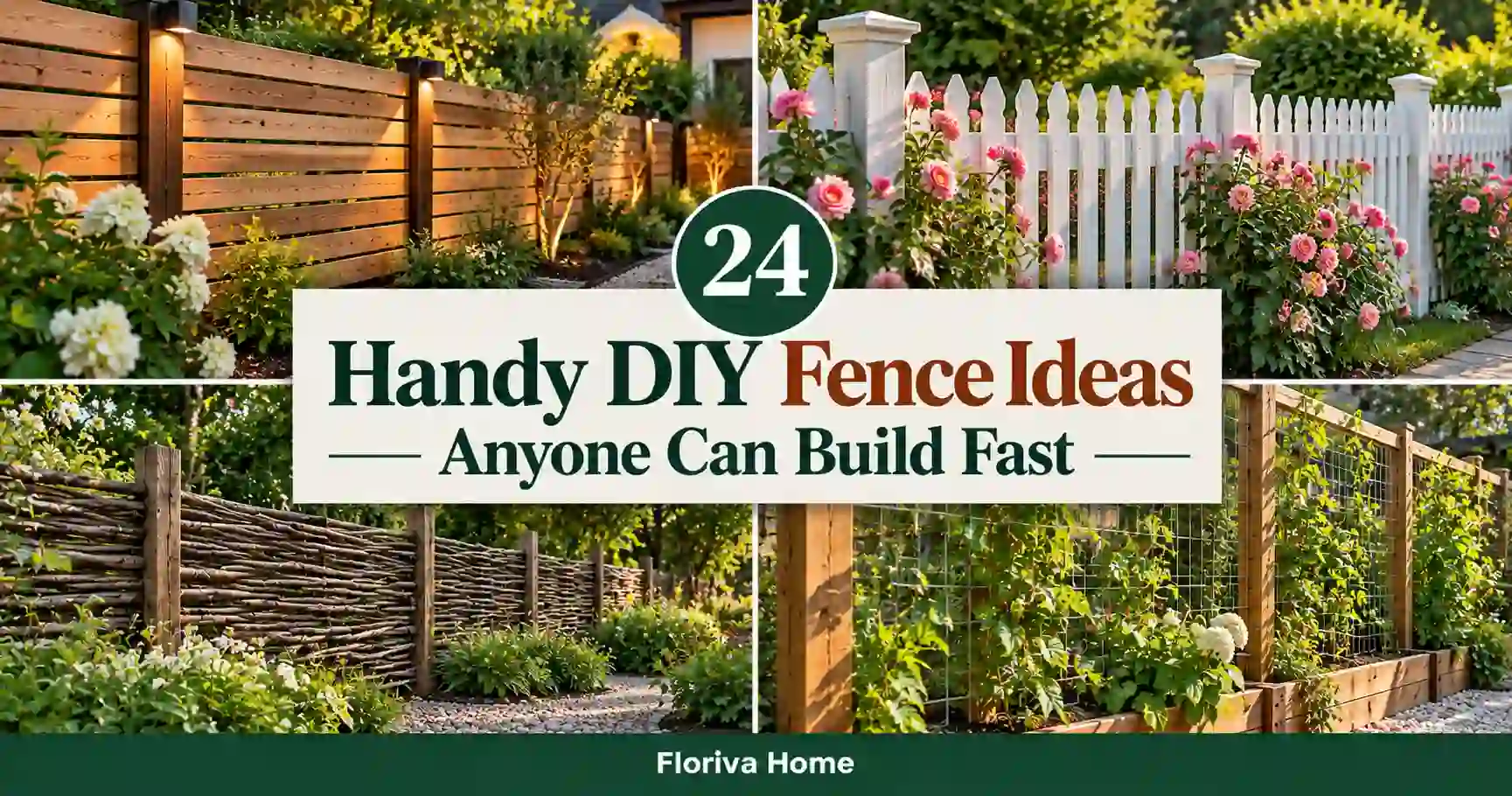
24 Handy DIY Fence Ideas Anyone Can Build Fast
A fence can do much more than mark the edge of your yard. It can create a little privacy, protect your plants, give your patio a finished look, or turn an unused corner into a welcoming outdoor space.
The good news is that you don’t always need expensive materials or professional help to build one. With basic tools, a little planning, and materials you can find at a hardware store or reuse from older projects, many small fencing projects are manageable over a weekend.
These 24 handy DIY fence ideas include practical designs for gardens, backyards, patios, and outdoor spaces. Each idea offers a different look, along with simple building suggestions to help you choose a project that suits your space, budget, and skill level.
1. DIY Garden Border Fence With Wooden Stakes
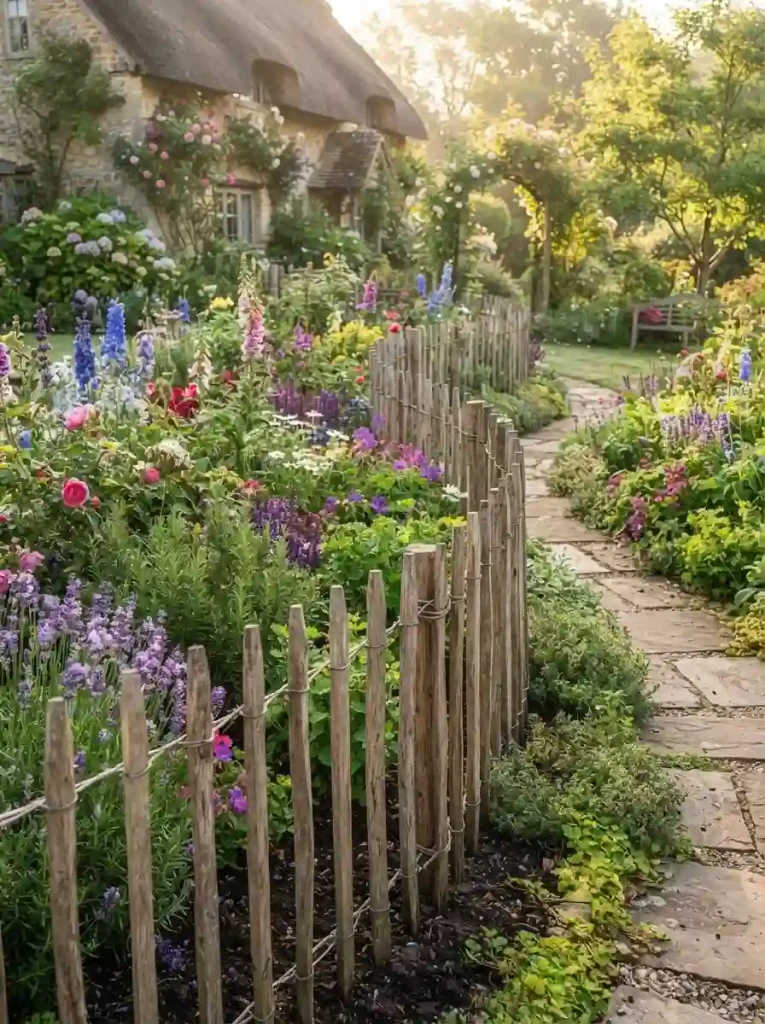
A small wooden border fence is a practical way to give flower beds a neat, finished appearance without building a tall structure. It works especially well around vegetable patches, herb gardens, and flower beds along a walkway.
To make one, choose wooden stakes of similar height and arrange them along the edge of your garden. Connect them with narrow support strips or install them closely together, depending on the style you prefer. A rubber mallet can help you position individual stakes in softer soil.
You can leave the wood in its natural color or apply an exterior finish for a more polished look. This design is best for decorative boundaries rather than security or serious animal control.
Helpful tip:
Measure the border before buying materials so you can keep the spacing consistent and avoid unnecessary cuts.
2. DIY Rope and Post Fence for a Coastal Look
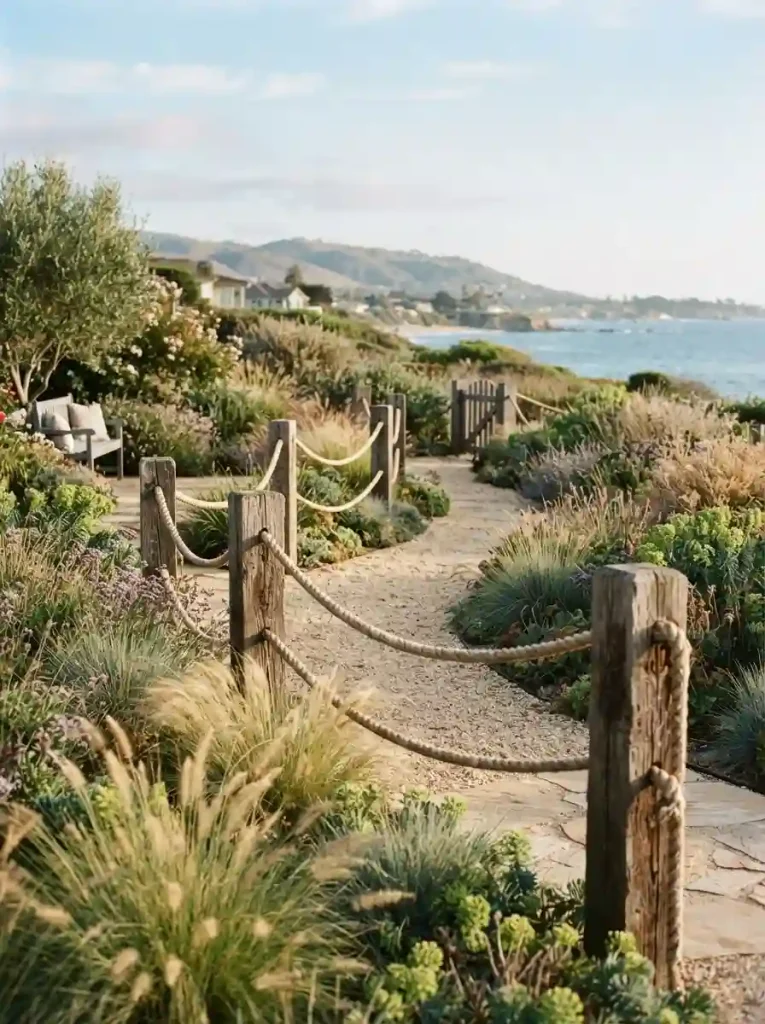
If you want something lighter than a traditional wooden fence, a rope-and-post design can give your outdoor space a relaxed coastal appearance. It works nicely beside a garden path, around a patio, or along a decorative landscape border.
Start with sturdy wooden posts and place them at regular intervals. Drill suitable holes through the posts or use outdoor-rated rope fittings to secure thick rope between them. Keep the rope tension consistent while allowing a little natural curve if you prefer a casual look.
Choose natural-colored rope with weather-resistant posts for a beach-inspired finish. You can also stain the wood darker for a more rustic appearance.
This fence offers visual separation without blocking views, so it isn’t suitable where you need a secure enclosure for children or pets.
Helpful tip:
Use rope and hardware rated for outdoor exposure, and inspect the connections regularly for loosening or wear.
3. DIY Corrugated Metal and Wood Fence
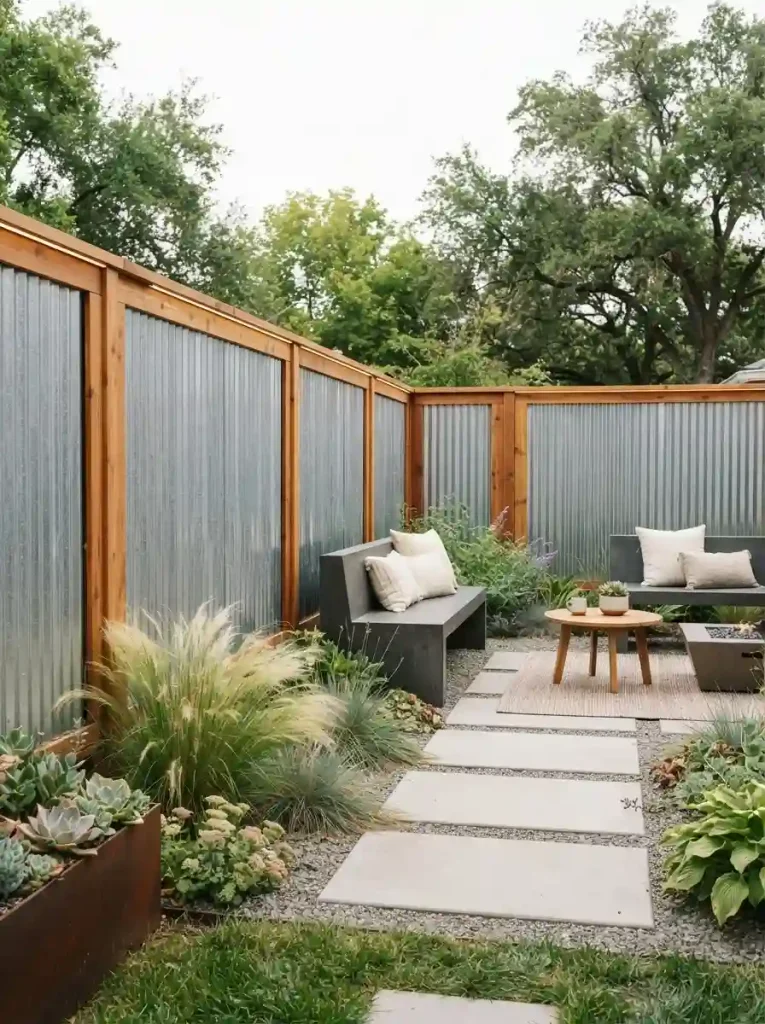
Corrugated metal panels can give a backyard a modern, industrial appearance without requiring an entirely solid wooden structure. Pairing the panels with timber framing adds warmth and helps the finished fence feel more welcoming.
Begin by planning the fence dimensions and choosing exterior-rated metal panels. Build a sturdy wooden frame, then attach the panels using compatible fasteners recommended by the manufacturer. You can leave the metal in a natural galvanized finish or choose a suitable coated color.
This style works well for screening utility areas, separating a patio from the rest of the yard, or creating a contemporary boundary beside a garden.
Metal edges can be sharp, so use appropriate protective equipment and cover exposed edges with suitable trim.
Helpful tip:
Check local fence-height rules and consider wind exposure before installing large, solid panels.
4. DIY Cinder Block Fence With Decorative Plants
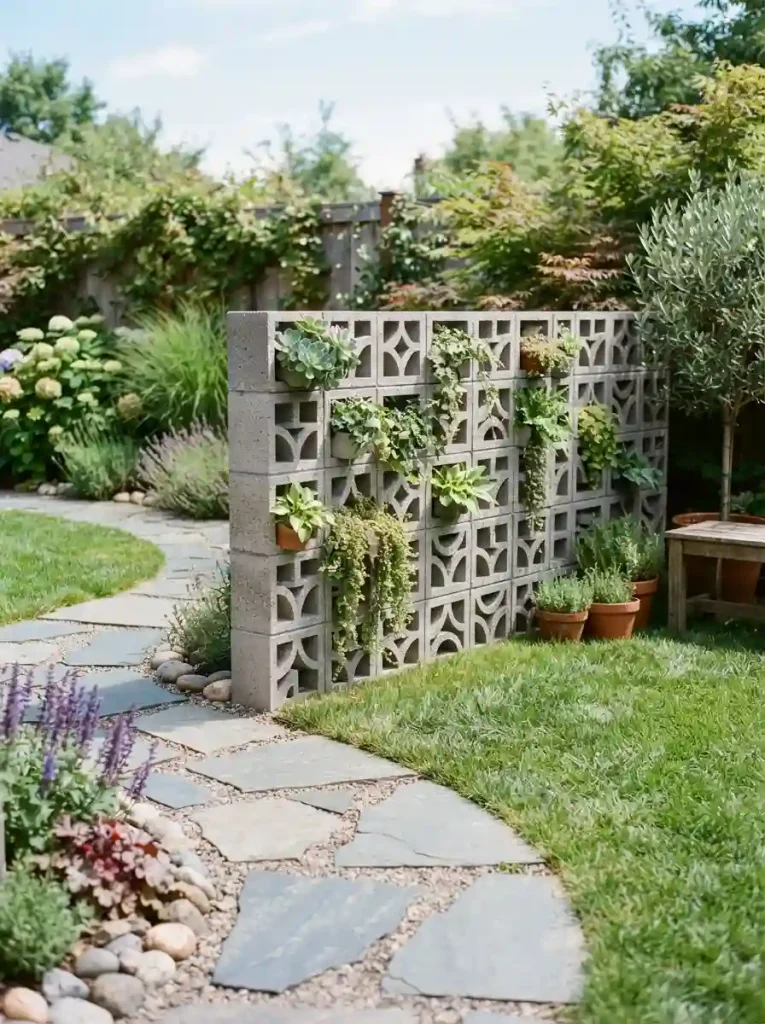
Cinder blocks can create a practical low fence or garden divider, particularly when you want a structure that feels different from conventional wood fencing. Their simple shape also makes them useful for combining boundaries with small planting areas.
For a short decorative divider, arrange suitable blocks on a stable, level base and check that each course sits evenly. Depending on the design, the openings can hold small plants or decorative stones. Exterior masonry paint can also help the blocks blend with the surrounding landscape.
This option is useful for separating a seating area from a planting bed or defining the edge of a small outdoor space.
A tall or freestanding masonry fence needs a properly designed foundation and suitable construction methods. Do not assume that simply stacking blocks will create a stable wall.
Helpful tip:
Start with a low section to test the layout and choose plants that suit the available light and drainage.
5. DIY Trellis Fence for Climbing Plants
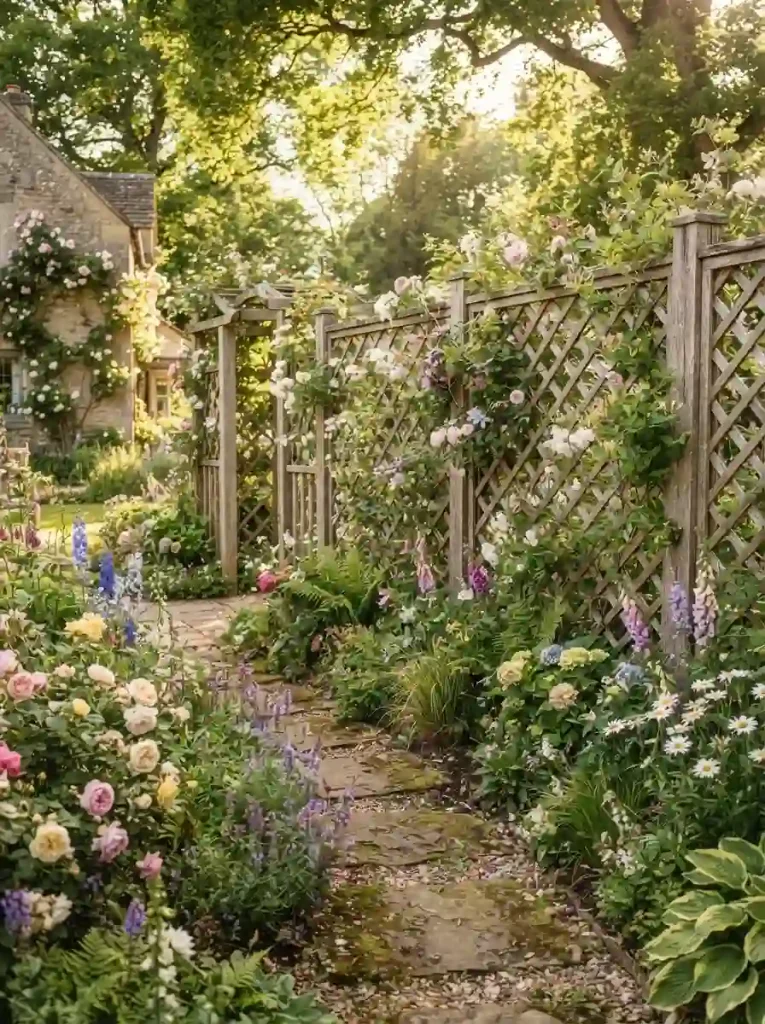
A trellis fence is a good choice when you want to introduce greenery without completely closing off your yard. Its open framework allows air and light to pass through while giving climbing plants a place to grow.
You can build a simple trellis using narrow wooden battens arranged in a square or diamond pattern. Secure the framework to properly anchored posts, then guide suitable climbing plants through the openings as they grow.
For a decorative garden, consider flowering climbers suited to your climate and sunlight. If you prefer less maintenance, choose a trellis design that looks attractive even before the plants fill it in.
Keep in mind that mature vines can add considerable weight, so the structure needs adequate support.
Helpful tip:
Leave enough room behind the trellis for pruning, watering, and checking the wood for damage.
6. DIY Vertical Garden Fence With Built-In Shelves
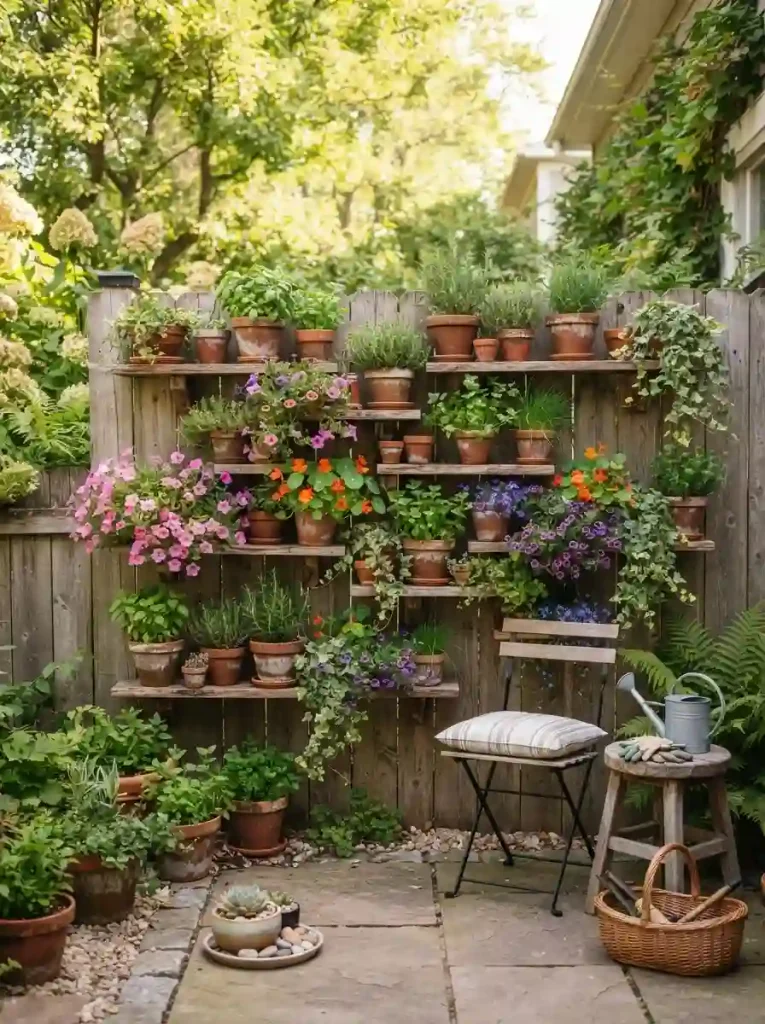
A vertical garden fence can turn an otherwise plain boundary into a useful planting display. It’s particularly handy for compact patios, small backyards, and outdoor spaces where there isn’t much room for traditional garden beds.
Build a sturdy frame with horizontal supports, then attach narrow shelves or small planting containers at staggered heights. Use exterior-rated screws and make sure the supporting posts can handle the combined weight of the structure, containers, and wet soil.
You can grow herbs, trailing flowers, or compact ornamental plants, depending on the amount of sunlight your fence receives. Keep heavier pots on lower shelves and arrange lighter containers higher up.
This design can also provide some visual screening while making your outdoor space feel more personal.
Helpful tip:
Add drainage to planting containers and protect the wooden frame from constant moisture.
7. DIY Curved Wooden Fence for Flower Beds
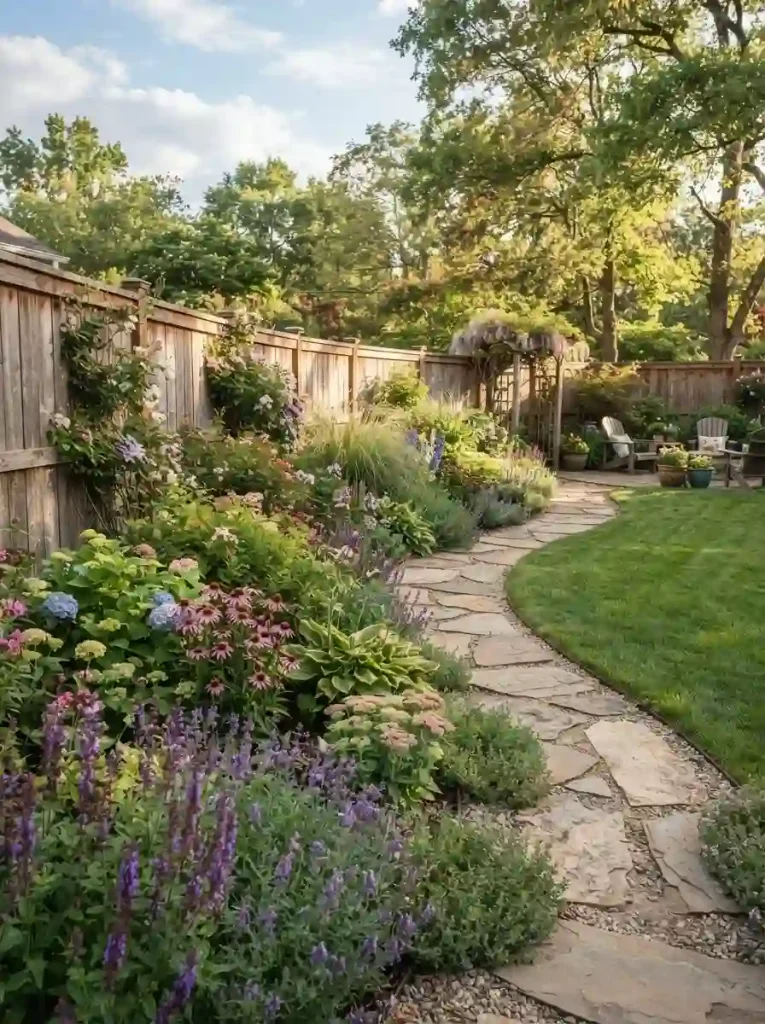
Straight fence lines aren’t the only option for a garden. A gently curved wooden fence can follow the shape of a flower bed and make a landscape feel more relaxed and thoughtfully designed.
For a simple version, use short wooden sections or narrow flexible garden boards designed for curved layouts. Mark the desired shape with a garden hose or string before installing the supports. Position the sections gradually along the curve rather than forcing rigid boards into a shape they cannot safely accommodate.
This type of fence is ideal for defining rounded flower beds, protecting delicate plants from accidental foot traffic, or adding a decorative edge beside a lawn.
Choose naturally durable or appropriately treated outdoor materials to help the fence withstand moisture and changing weather.
Helpful tip:
Walk around the marked layout before installation to make sure the curves look balanced from different viewing angles.
8. DIY Branch Fence With a Natural Woodland Style
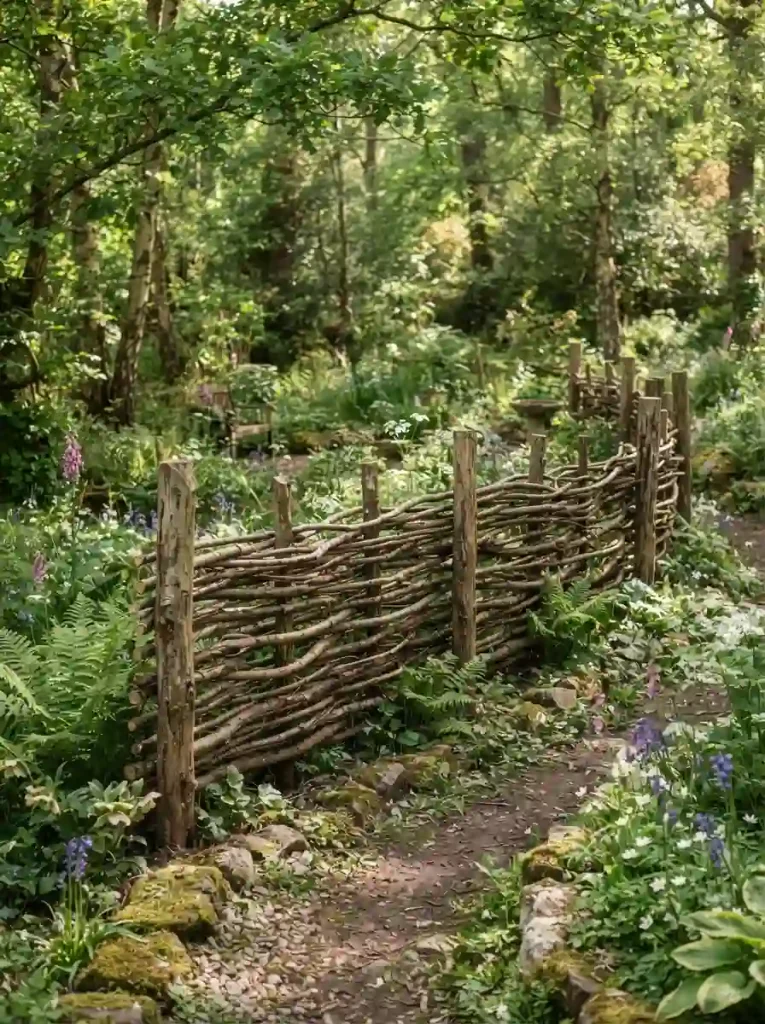
If you enjoy a natural garden style, a fence made from suitable fallen branches can give your outdoor space a handmade woodland feel. It is especially appealing around informal flower beds, wildlife-friendly gardens, or quiet corners with native plants.
Collect sound, appropriately sized branches and arrange them between securely installed support posts. Thinner branches can be woven horizontally, while thicker pieces can create a more open arrangement. Trim protruding ends and check that the structure doesn’t wobble.
Because branch sizes and shapes vary, this project is forgiving when it comes to appearance. The finished fence can look intentionally rustic rather than perfectly uniform.
Use only sound wood and avoid branches that are rotten, brittle, or likely to break under pressure.
Helpful tip:
Keep branches slightly above damp soil where practical, and replace deteriorating pieces before they become unstable.
9. DIY Painted Two-Tone Fence
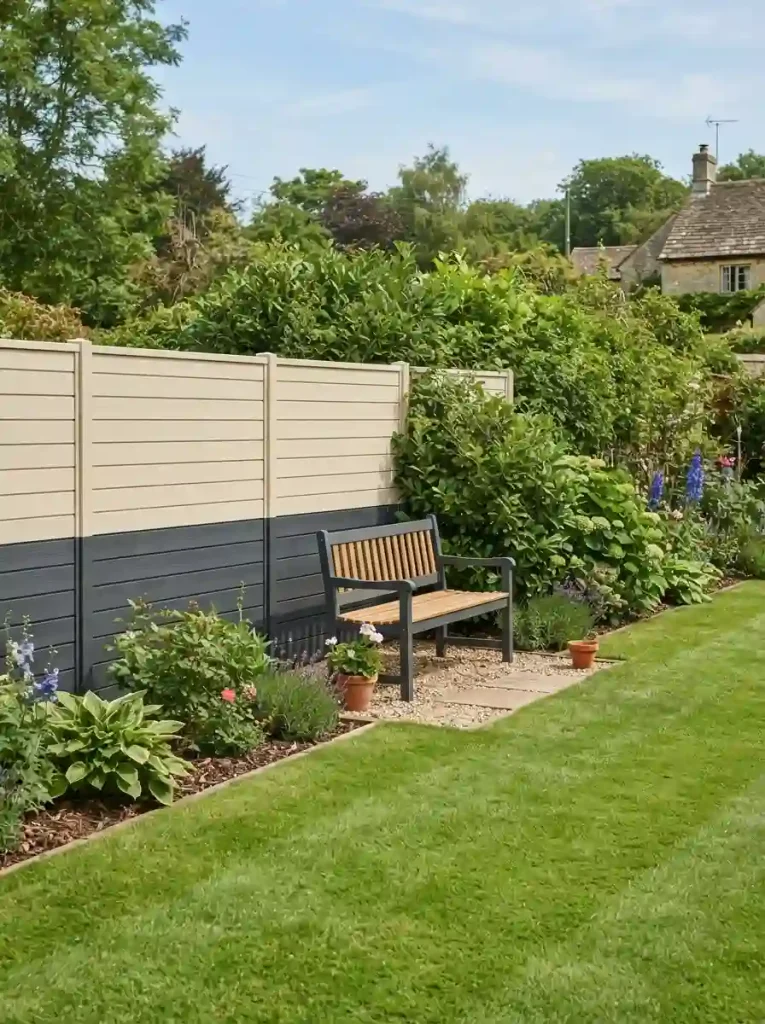
Sometimes an existing fence needs a fresh finish rather than a complete rebuild. Painting it in two complementary colors can create a noticeable change without the expense of replacing every board.
Choose two exterior paints that work well with your home’s exterior and landscaping. For example, a darker lower section paired with a lighter upper section can create a balanced appearance. Clean the surface, remove loose paint, repair damaged boards, and apply the appropriate primer before painting.
You can use this approach on a full backyard fence, a small patio divider, or a decorative garden enclosure. A carefully measured color division helps the result look deliberate rather than unfinished.
Check the condition of the wood before painting, because paint will not fix rot or structural damage.
Helpful tip:
Test both colors on a small, inconspicuous section and check them in daylight before committing to the entire fence.
10. DIY Folding Privacy Screen Fence
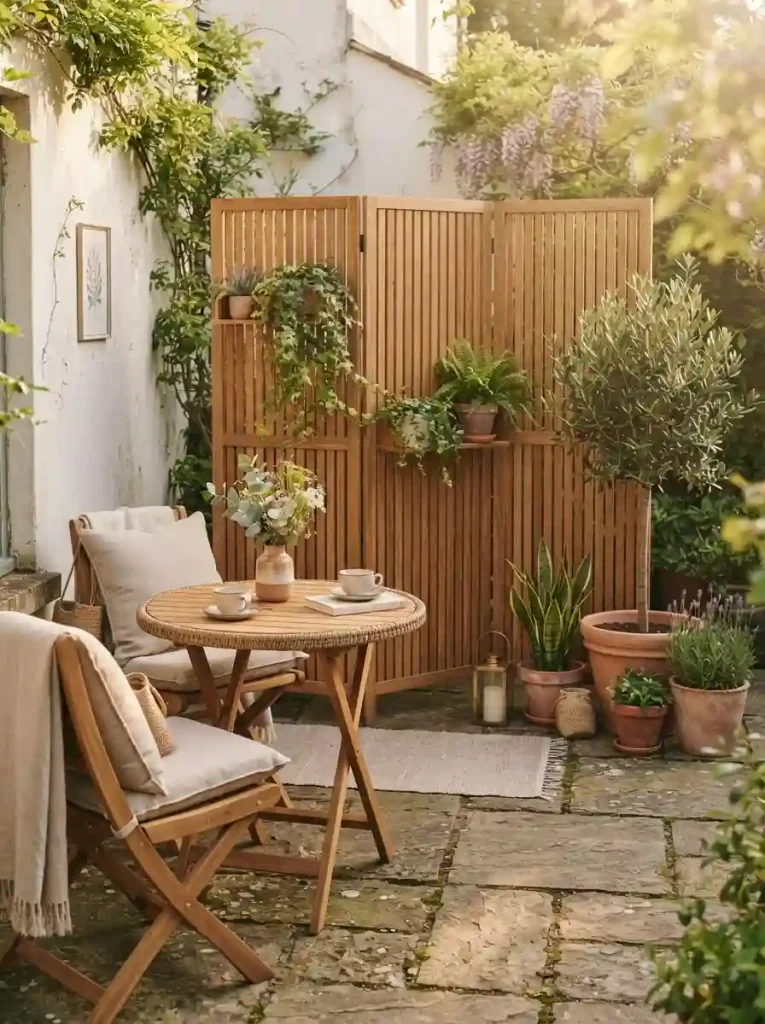
A folding privacy screen is a flexible alternative to a permanent fence when you need to separate a patio, balcony, or small seating area. Because the panels can fold together, the screen is easier to reposition or store when it’s no longer needed.
Make three or more lightweight wooden frames and connect them with suitable outdoor-rated hinges. Fill each frame with narrow slats, decorative panels, or another lightweight material that suits your space.
The screen can help hide outdoor storage, create a more private dining corner, or separate a lounge area from a garden. It is particularly useful for renters or anyone who doesn’t want to dig post holes.
Since folding screens can tip over in strong wind, use an appropriate anchoring method or bring them indoors during severe weather.
Helpful tip:
Keep the panel width manageable so the finished screen folds smoothly and remains easy to move.
11. DIY Horizontal Fence From Leftover Deck Boards
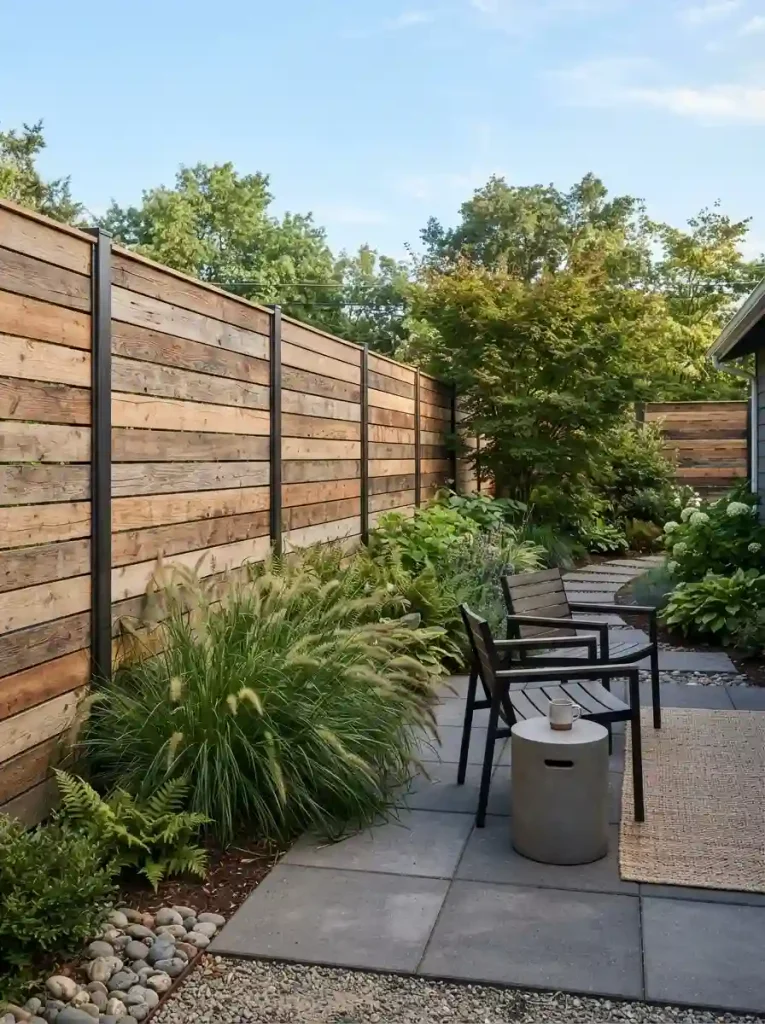
Leftover deck boards can be useful for building a simple horizontal fence, provided the wood is still sound and suitable for outdoor use. The long, clean lines create a contemporary appearance that works well with modern homes and straightforward landscaping.
Start by measuring the area and installing sturdy posts with appropriately spaced horizontal supports. Cut the boards to consistent lengths, then attach them with exterior-rated fasteners. Decide whether you want narrow gaps between boards or a closer arrangement for more screening.
Using leftover materials can reduce waste and make the project more affordable. However, inspect the boards carefully for splits, rot, corrosion from old fasteners, or damage caused by prolonged exposure.
Avoid using deck boards that have been treated with chemicals unsuitable for your intended setting.
Helpful tip:
Sort the boards by length and condition before installation to make cutting easier and keep the finished lines consistent.
12. DIY Outdoor Fence With Hanging Planters
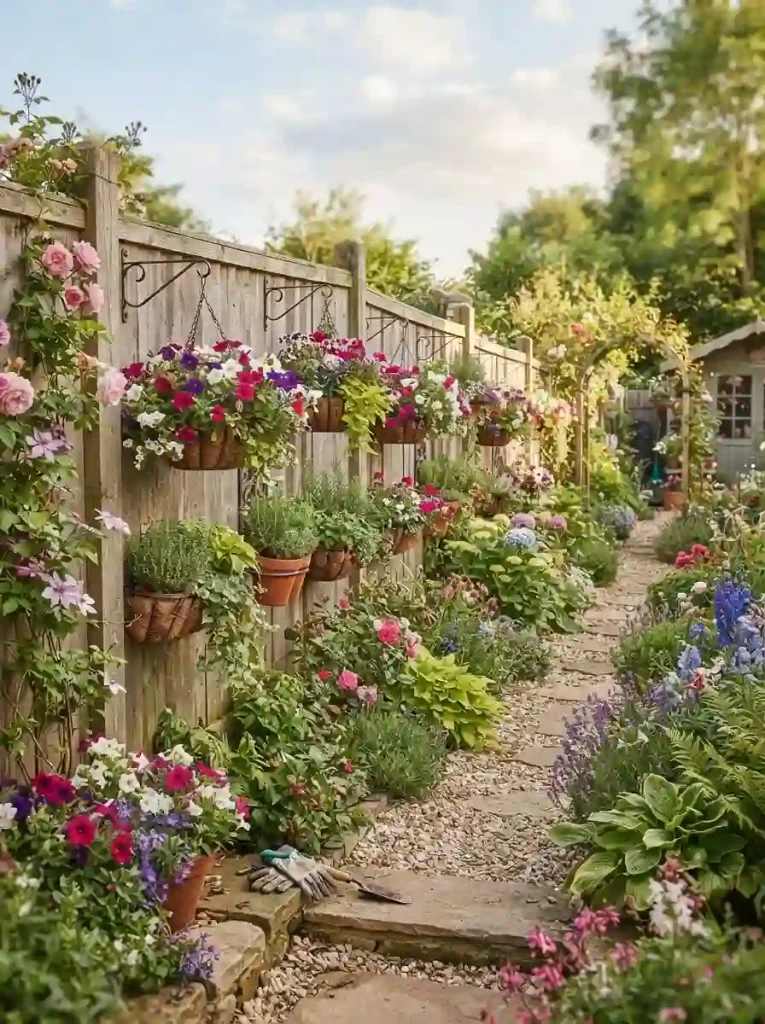
A fence with hanging planters combines a useful boundary with a place to display flowers and greenery. It’s a straightforward way to brighten an existing wooden fence or add personality to a small outdoor enclosure.
Begin with a sound fence that can support the weight of the containers. Attach suitable outdoor-rated hooks or brackets to the structural parts of the fence, spacing them so the planters have room to grow. Choose lightweight containers with drainage holes and fill them with plants suited to the available sunlight.
Trailing flowers can soften the fence’s appearance, while compact herbs provide a practical option near an outdoor cooking area. Keep the arrangement simple so watering and maintenance remain manageable.
Remember that wet soil is heavier than dry soil, so check the fence’s strength before adding multiple containers.
Helpful tip:
Arrange a few empty pots first to plan the spacing, then fill them after the hooks and brackets are secure.
13. DIY Pallet Fence for a Budget-Friendly Backyard
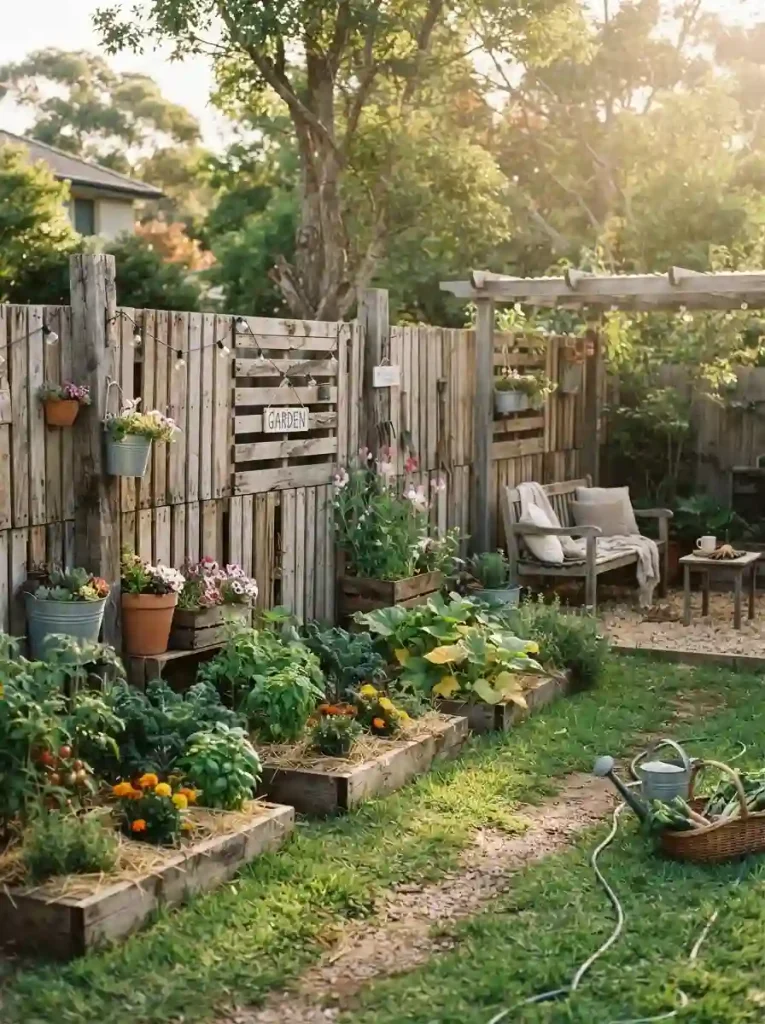
A pallet fence can be a practical option if you want to create a backyard boundary without purchasing large quantities of new lumber. Reclaimed pallets can provide ready-made wooden sections, making them useful for informal gardens, compost areas, and outdoor storage spaces.
Start by finding clean, structurally sound pallets that are suitable for reuse. Remove loose nails, inspect the boards for damage, and decide whether you want to install the pallets as complete panels or dismantle them for a more customized design.
Secure the sections to properly anchored posts rather than relying on the pallets’ weight alone. You can leave the wood natural, apply an exterior stain, or paint it to match your garden.
Remember that pallets vary in quality and treatment. Avoid wood with unknown chemical contamination, and check that the materials are appropriate for your intended use.
Helpful tip:
Keep the design low and decorative if you want a simple weekend project without the extra requirements of a tall boundary fence.
14. DIY Bamboo Fence for a Tropical Garden
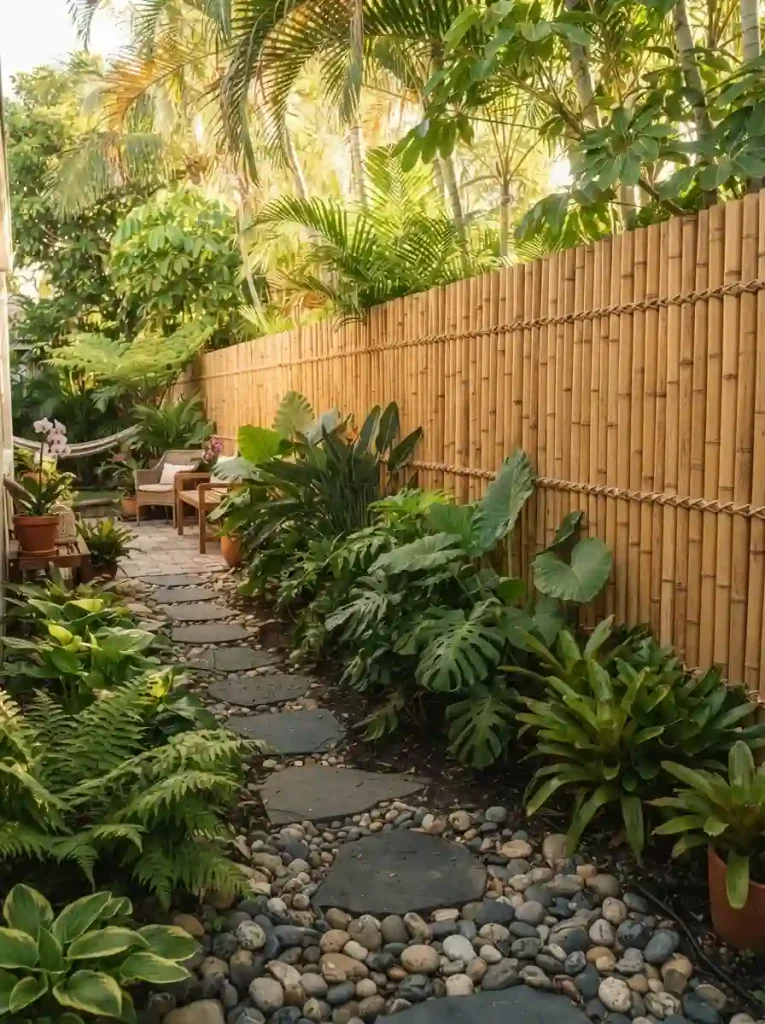
Bamboo fencing brings a natural, relaxed appearance to outdoor spaces. Its warm color and repeating vertical lines work particularly well in tropical gardens, meditation corners, patios, and landscaped areas with plenty of greenery.
For a straightforward project, purchase bamboo poles or a ready-made bamboo fencing roll. Install sturdy support posts, then attach the bamboo securely using outdoor-rated ties, screws, or compatible fasteners. A roll can simplify installation because many of the individual poles are already connected.
You can use bamboo as a decorative screen in front of an existing fence or build a freestanding section for a small garden area. Choose poles of consistent thickness if you want a neat, uniform finish.
Bamboo can deteriorate when exposed to persistent moisture, so select suitable outdoor-grade materials and follow the supplier’s maintenance recommendations.
Helpful tip:
Leave adequate clearance from damp soil and inspect the fastenings periodically to keep the fence secure.
15. DIY Lattice Fence for a Decorative Backyard
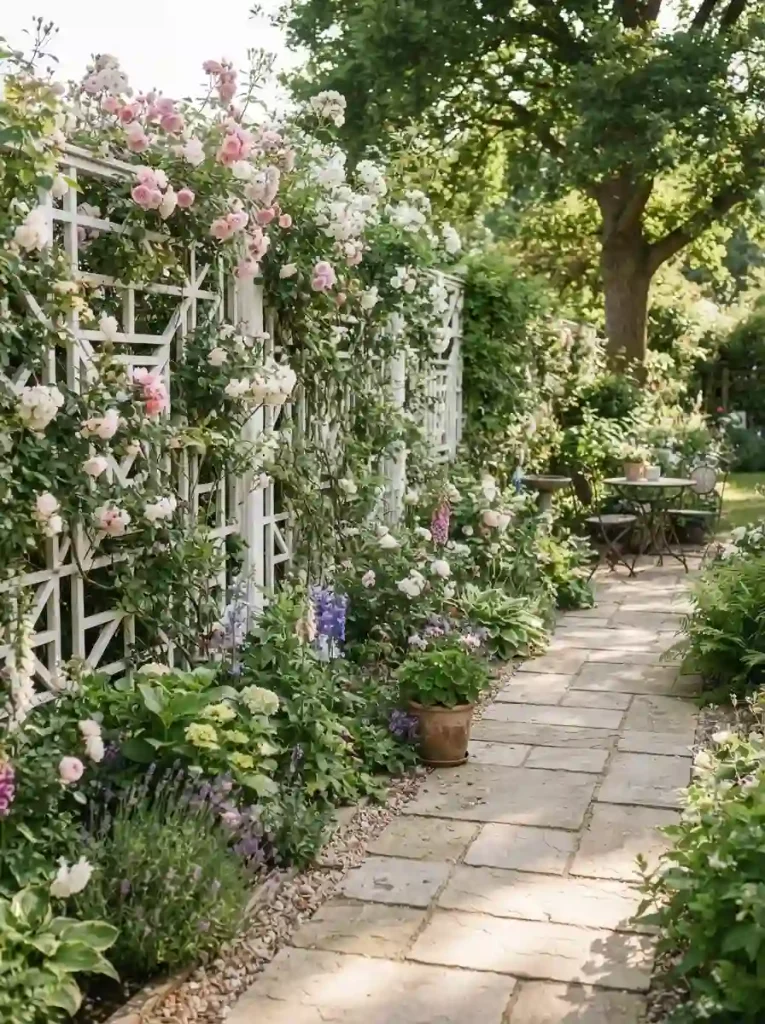
A lattice fence offers a decorative way to divide outdoor spaces without creating a completely solid wall. Its repeating pattern adds visual interest, while the openings allow light and air to pass through.
You can simplify the project by purchasing ready-made lattice panels and fitting them into a sturdy wooden frame. Measure the area carefully, cut the panels according to the manufacturer’s instructions, and secure them with appropriate exterior-rated fasteners.
A lattice fence can work around a patio, beside a flower bed, or along the edge of a seating area. Painting it white creates a classic garden appearance, while a natural wood finish gives it a more rustic feel.
Climbing plants can eventually soften the framework, but leave enough space for pruning and airflow.
Helpful tip:
Use properly supported panels instead of attaching lightweight lattice directly to widely spaced posts without framing.
16. DIY Fence With Recycled Wooden Shutters
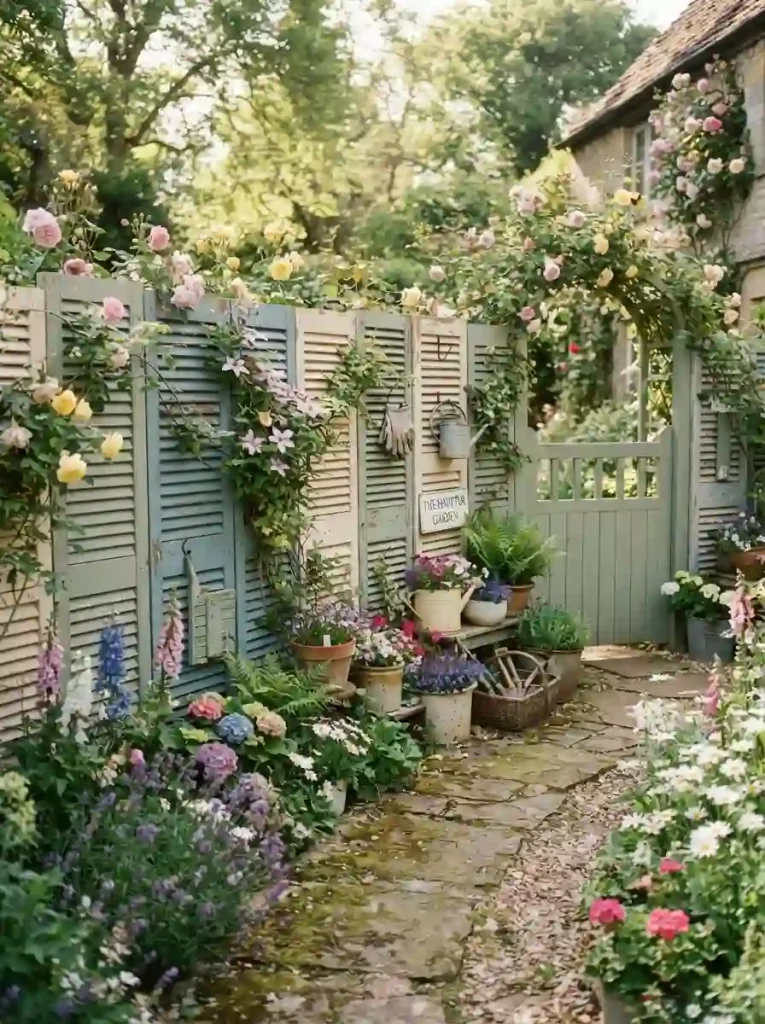
Old wooden shutters can become an unusual decorative fence when you have several matching or complementary pieces available. Their existing slats and frames add texture, making this project particularly suitable for cottage gardens, creative patios, and small decorative enclosures.
Begin by checking each shutter for loose joints, damaged wood, and peeling paint. Repair the frames and apply an appropriate outdoor finish. Attach the shutters to a separate supporting structure so the completed fence remains stable.
You could paint the sections in muted green, soft blue, cream, or a coordinated mix of colors. Alternatively, retain their weathered appearance for a vintage-inspired garden.
Because shutters were not necessarily designed to function as fence panels, their strength and weather resistance need careful consideration. This design is best suited to decorative boundaries unless the structure is reinforced appropriately.
Helpful tip:
Keep the shutter heights consistent or use a deliberate pattern to make the finished arrangement look intentional.
17. DIY Fence Made From Vertical Timber Slats
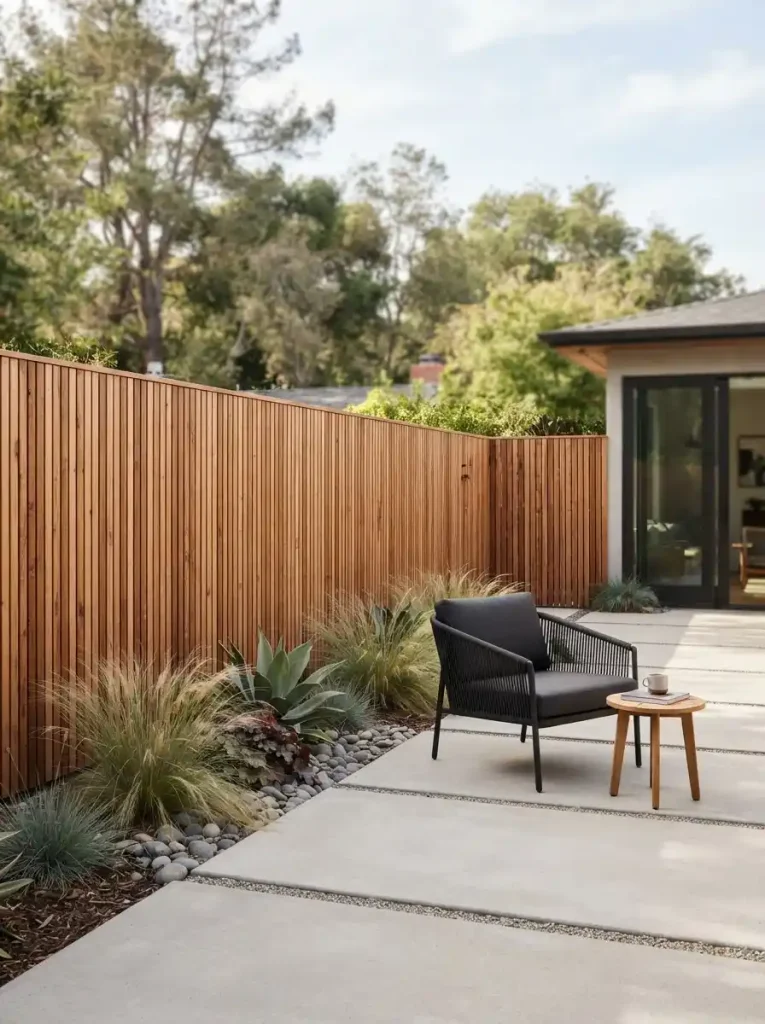
Vertical timber slats create a clean, organized fence design that complements contemporary homes and simple backyard landscaping. The repeated lines can make a small outdoor area feel taller and more structured without relying on decorative details.
To build this fence, install appropriately anchored posts and horizontal rails. Cut the slats to a consistent length, then attach them at evenly measured intervals. Use a spacer while working to help maintain uniform gaps throughout the fence.
The final appearance depends on the width of the slats and the space between them. Narrow gaps create a lighter, more open effect, while closer spacing provides greater visual screening.
Choose wood suitable for exterior conditions and seal or finish it according to the manufacturer’s guidance.
Helpful tip:
Lay out a short test section first so you can check the spacing and overall appearance before installing the full fence.
18. DIY Low Picket Fence for a Cottage Garden
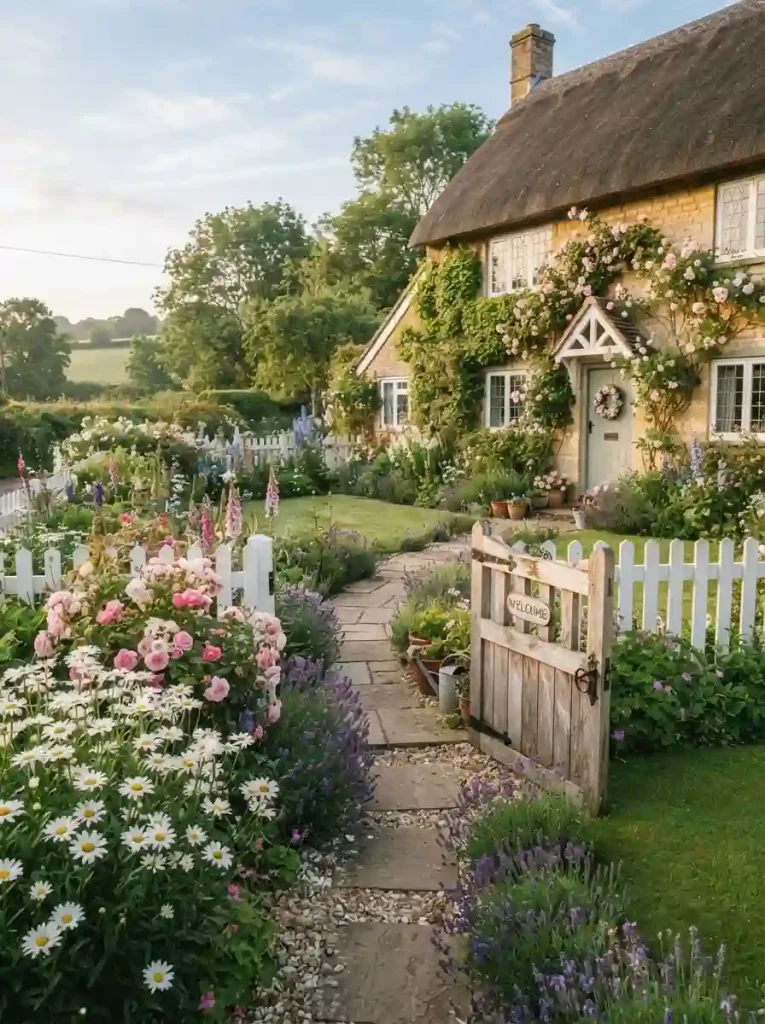
A low picket fence is a classic option for giving a flower garden or front yard a tidy, welcoming appearance. Its recognizable shape suits cottage-style landscaping, traditional homes, and pathways bordered by colorful plants.
For an uncomplicated version, purchase prepared pickets or cut suitable exterior-grade boards to size. Attach them to horizontal rails and install the assembled sections between securely anchored posts. You can choose pointed tops for a traditional look or flat tops for a simpler finish.
White paint creates a familiar cottage appearance, but natural timber or soft pastel shades can work equally well. This fence is mainly decorative, so consider a taller, stronger design if you need meaningful privacy or animal containment.
Before installation, check local boundary requirements and confirm the location of underground utilities.
Helpful tip:
Use a measuring guide to keep the gaps between pickets consistent and the top edge level.
19. DIY Fence With Built-In Outdoor Lighting
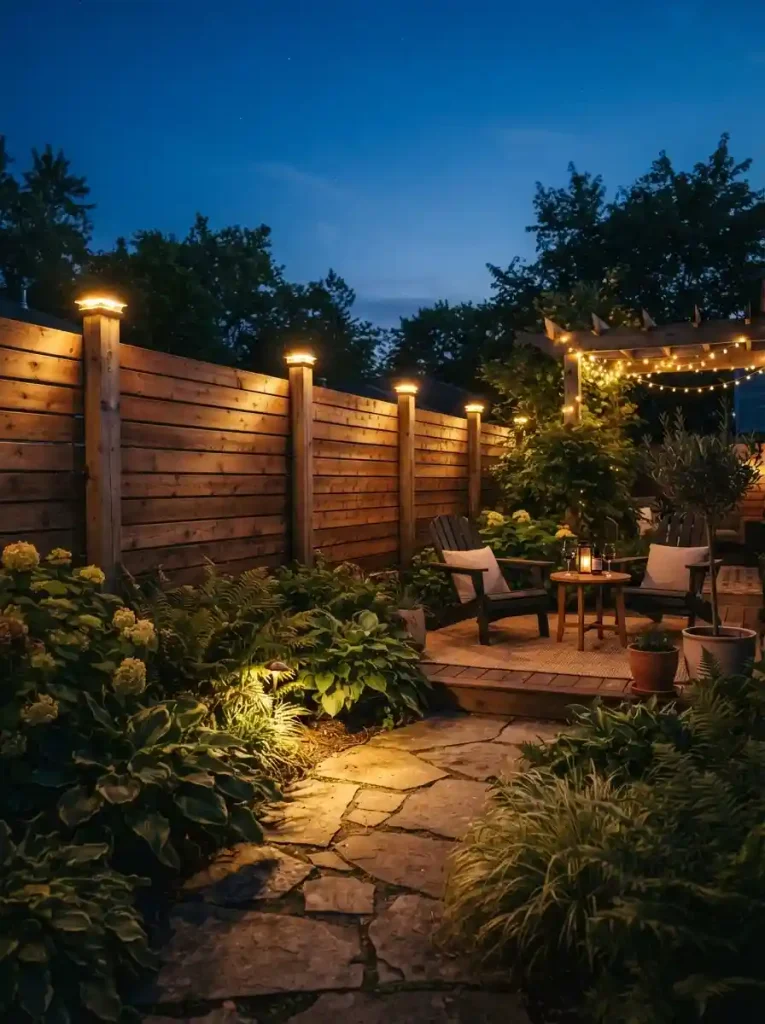
Adding lighting to a fence can make a backyard feel more inviting after sunset. It also helps define pathways and seating areas without requiring a complete landscape redesign.
You can build a straightforward wooden fence and attach outdoor-rated solar lights to selected posts or rails. Solar models are convenient where suitable sunlight reaches the panels during the day, while other lighting systems may require more detailed installation.
Position the lights so they illuminate useful areas without shining directly into neighboring windows. Warm-white lighting often complements natural wood and garden greenery.
If you plan to use wired lighting, select products rated for outdoor conditions and have any necessary electrical work completed safely by a qualified professional.
Helpful tip:
Test the light positions after dark before permanently attaching every fixture.
20. DIY Fence Using Reclaimed Barn Wood
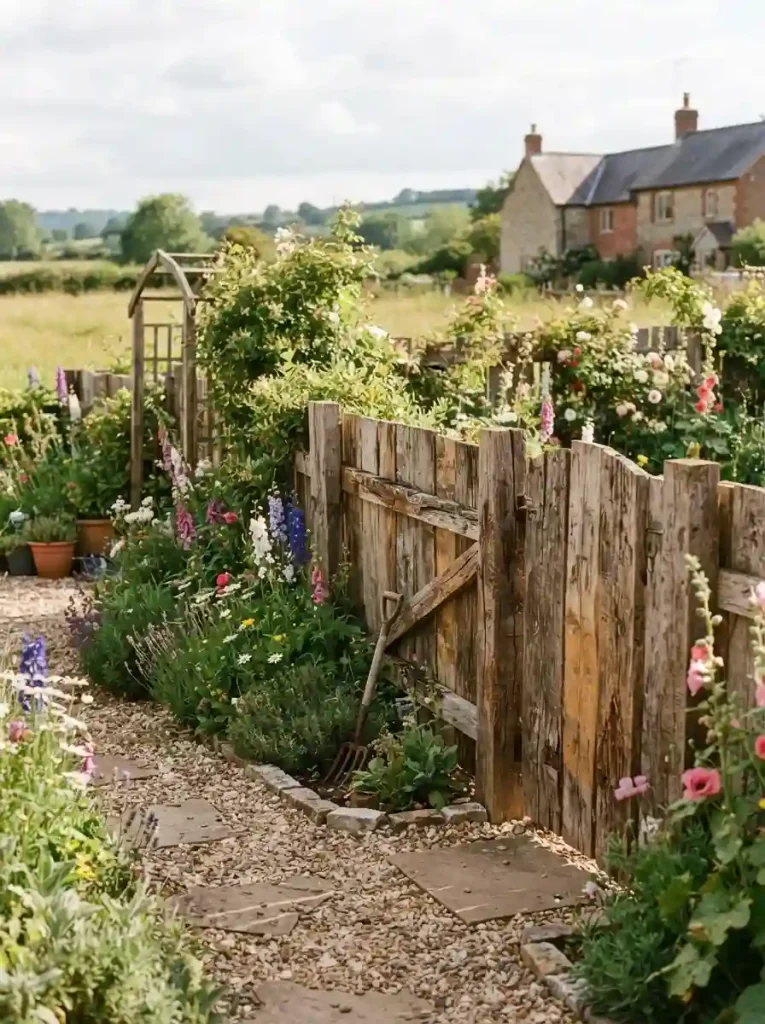
Reclaimed barn wood can give a backyard fence a distinctive rustic appearance. The natural variations in color, grain, and surface texture make each section look different, which works well in farmhouse gardens and informal outdoor spaces.
Begin by sourcing reclaimed boards that are sound and appropriate for exterior use. Remove protruding nails, inspect for rot and insect damage, and trim the pieces to suit your chosen layout.
Attach the boards to a properly supported frame, arranging them horizontally or vertically. A mix of weathered gray, brown, and muted tan tones can create a relaxed appearance without requiring additional decoration.
Avoid using reclaimed timber that may contain hazardous coatings or unknown chemical treatments, especially around vegetable gardens or frequently touched surfaces.
Helpful tip:
Arrange the boards on the ground before installation to balance the colors and avoid placing similar-looking pieces together.
21. DIY Fence With a Small Garden Gate
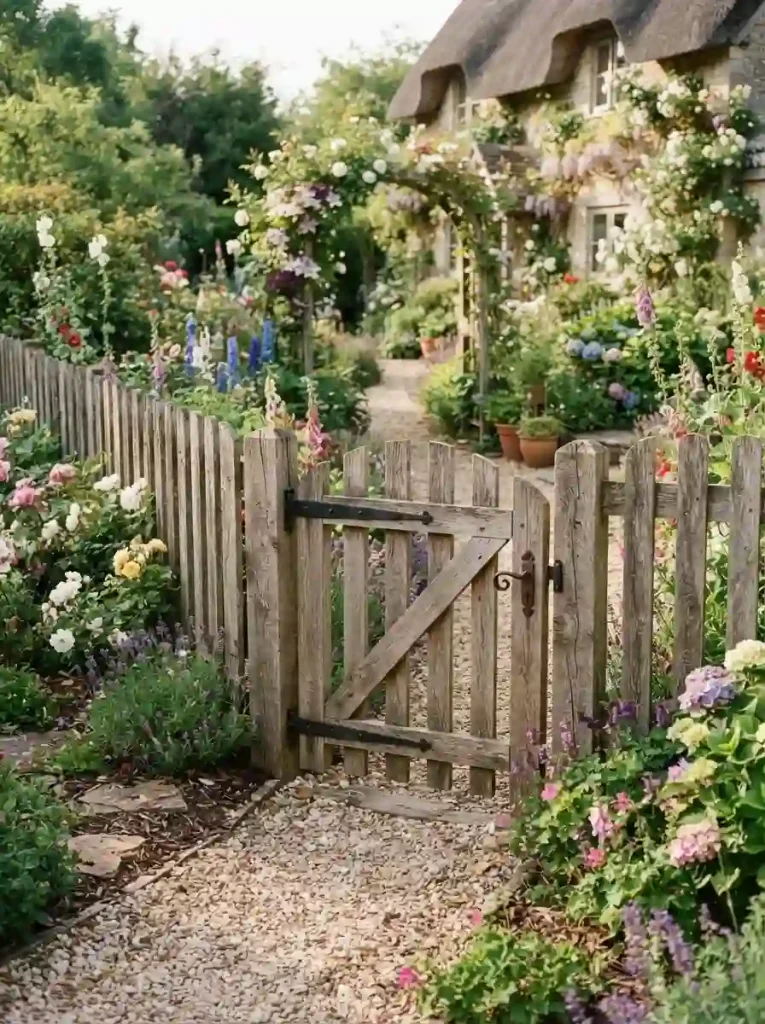
A small gate can make a simple garden fence more practical by creating an easy entrance to a flower bed, vegetable patch, or enclosed backyard area. Matching the gate to the fence also gives the project a more complete appearance.
Build the fence sections first, then measure the opening needed for the gate. Construct a rectangular wooden gate frame and reinforce it with a suitable diagonal brace to help reduce sagging. Attach the boards or slats, then fit outdoor-rated hinges and a latch.
Make sure the gate swings freely without dragging on the ground. The posts supporting the hinges need to be sturdy enough for the gate’s weight and movement.
For a small decorative garden, a straightforward timber design can be both attractive and useful.
Helpful tip:
Allow suitable clearance around the gate so it continues to open smoothly as the wood expands or the ground shifts.
22. DIY Fence With Decorative Geometric Panels
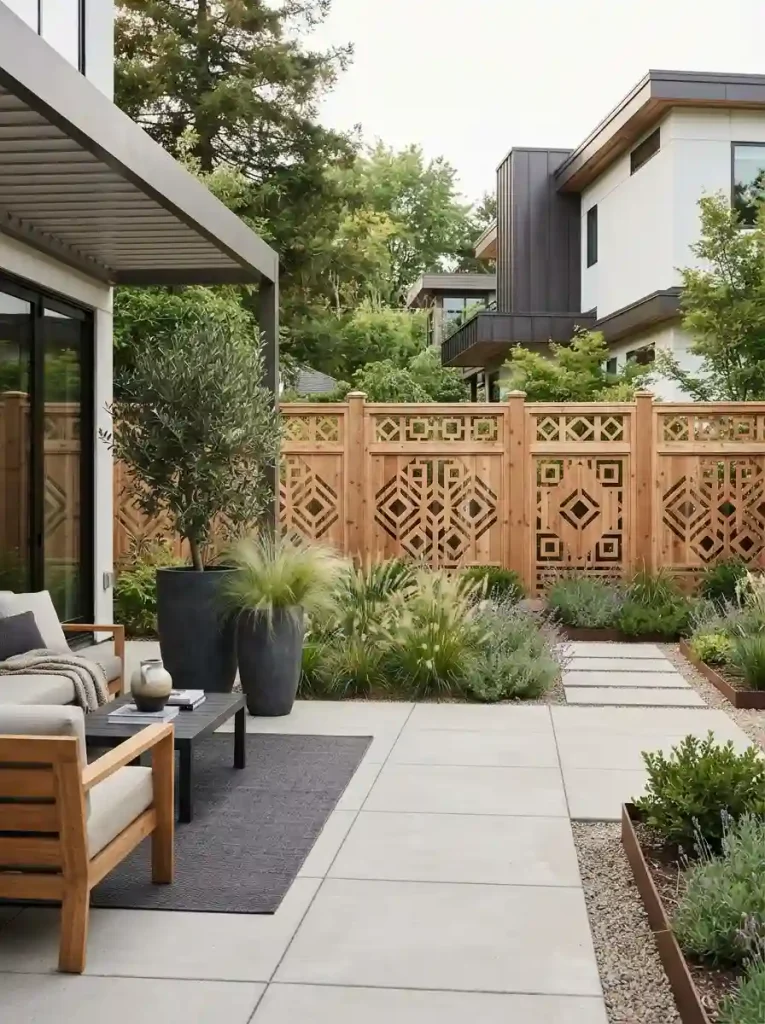
Geometric panels can transform a plain fence into an outdoor feature without requiring elaborate ornamentation. Patterns such as squares, diamonds, and simple angled cutouts add visual interest while allowing you to customize the design to match your home.
For an easier project, look for ready-made decorative exterior panels and fit them into a well-supported frame. If cutting your own pattern, use suitable exterior-grade sheet material, follow the manufacturer’s cutting guidance, and smooth any rough edges.
A geometric section can serve as an accent panel between solid fence sections or as a decorative screen beside a patio. Choose a pattern that complements the surrounding architecture rather than competing with it.
Remember that cutout panels may offer less privacy than solid fencing, depending on the size and arrangement of their openings.
Helpful tip:
Create a paper template or test pattern before cutting the actual panel to avoid costly mistakes.
23. DIY Fence Around a Small Vegetable Garden
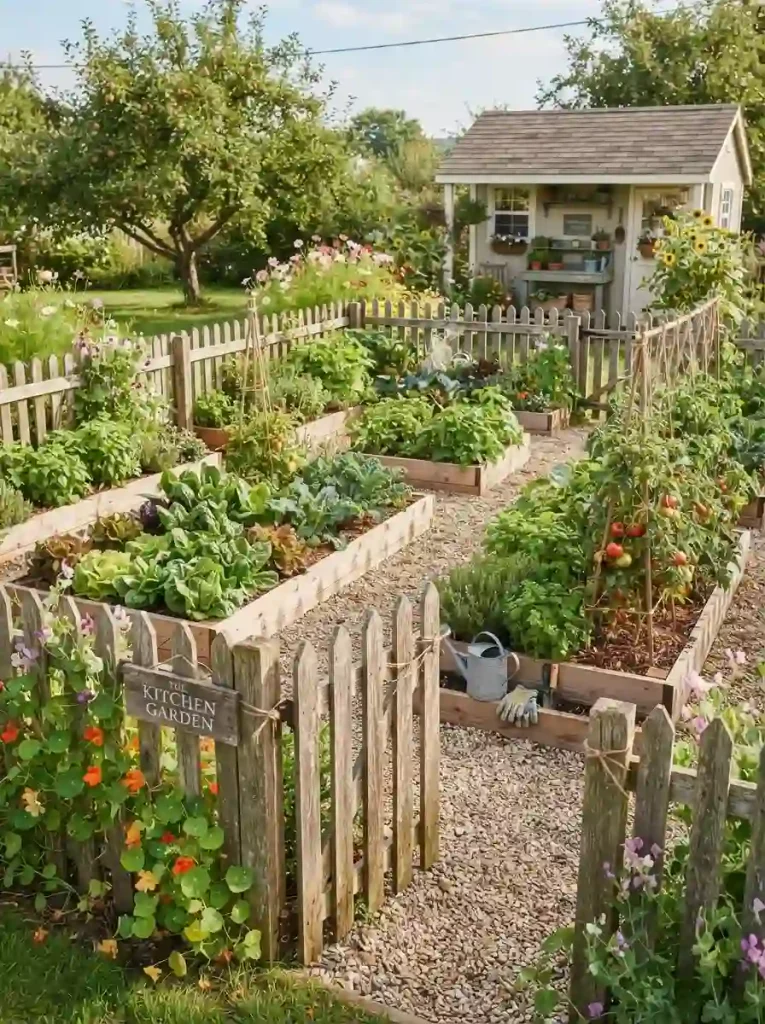
A small fence around a vegetable garden can help define the growing area, organize pathways, and discourage accidental foot traffic through planting beds. The design can remain simple while still making the garden easier to maintain.
Start by measuring the growing area and planning an entrance wide enough for watering equipment, baskets, or a small wheelbarrow. Install sturdy posts and attach lightweight wooden rails or mesh, depending on whether you need a decorative border or more practical protection.
Keep the fence low if the main purpose is to mark the garden’s boundaries. If rabbits or other animals are a concern, choose an appropriate barrier with suitable mesh openings and secure the lower edge to reduce gaps.
Leave enough room between the fence and raised beds to reach plants comfortably from both sides.
Helpful tip:
Position the entrance where it offers the easiest access to your most frequently used garden beds.
24. DIY Fence With a Rustic Farmhouse Finish
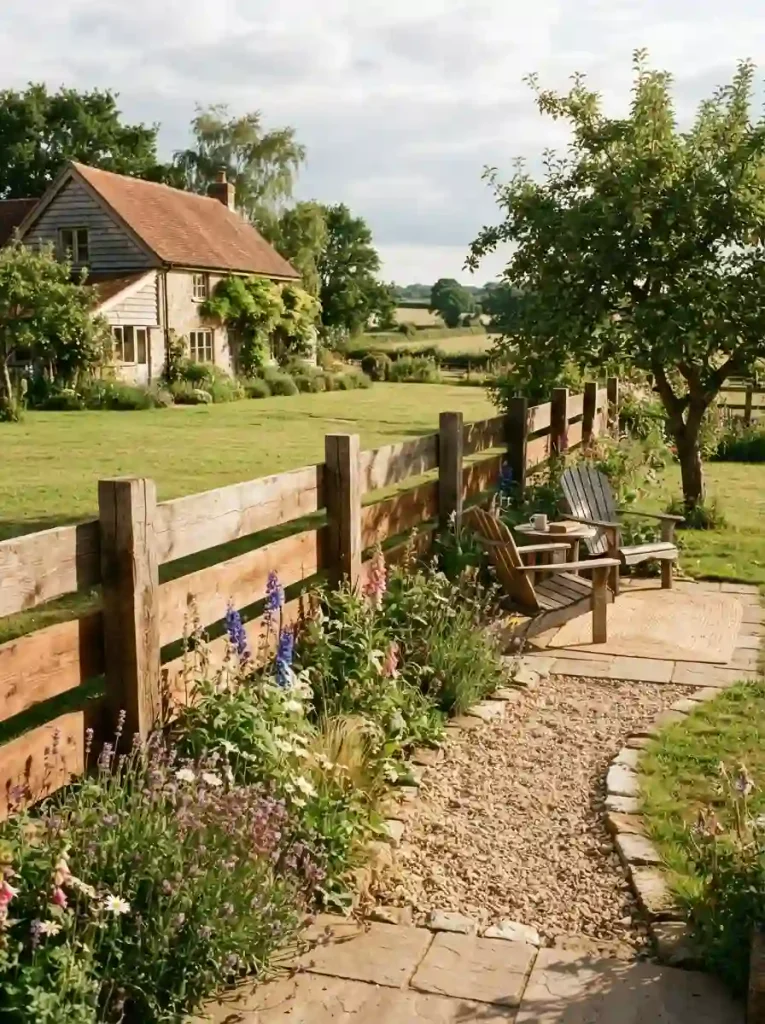
A rustic farmhouse fence can bring a relaxed, timeless appearance to a garden or spacious backyard. Its straightforward construction makes it adaptable to different outdoor settings, from informal country gardens to suburban properties with natural landscaping.
Choose exterior-suitable timber boards and sturdy posts, then decide whether you prefer horizontal rails, vertical boards, or a simple open framework. Secure the boards with compatible outdoor fasteners and finish the wood with an appropriate exterior stain or protective coating.
For a farmhouse-inspired appearance, natural brown tones and subtle weathered finishes work well alongside gravel paths, wildflowers, and wooden garden furniture.
The amount of privacy and strength will depend on the layout, materials, and post installation. If you need a secure boundary, design the structure for that purpose instead of relying on its appearance alone.
Helpful tip:
Keep the material palette consistent across the fence, gate, and nearby outdoor furniture for a cohesive farmhouse look.
How to Choose the Right DIY Fence Idea
Before starting a project, consider what you want the fence to accomplish. A decorative border requires different materials and construction methods than a fence intended to provide privacy or keep pets safely contained.
| Your main goal | Ideas to consider |
| Define flower beds | Wooden stakes, curved wood, branch fence |
| Create a modern appearance | Corrugated metal, vertical slats, geometric panels |
| Reuse available materials | Pallets, reclaimed barn wood, old shutters |
| Add greenery | Trellis, vertical garden, hanging planters |
| Improve patio privacy | Folding screen, bamboo fence, solid timber panels |
| Organize a vegetable garden | Low wooden fence, suitable mesh enclosure |
| Create a traditional garden | Picket fence, lattice fence, small garden gate |
Tips for Building a DIY Fence Successfully
A simple design is easier to build when you plan the important details before buying materials.
- Measure the area: Determine the fence length, height, post spacing, and location of any gates.
- Check local requirements: Review property boundaries, fence-height rules, and any permissions required in your area.
- Choose suitable materials: Outdoor wood, corrosion-resistant fasteners, and weather-appropriate finishes can help extend the fence’s useful life.
- Prepare the ground: Check for underground utilities before digging and follow appropriate post-installation guidance.
- Use the right tools: A measuring tape, level, drill, saw, and suitable protective equipment can make the job easier.
- Consider maintenance: Wood may require periodic cleaning, sealing, or repainting, while metal and bamboo have their own care requirements.
- Prioritize stability: Tall, heavy, or solid fences need appropriate structural support, particularly in windy locations.
Final Thoughts
Building a DIY fence doesn’t have to mean taking on a complicated construction project. A simple garden border, a reclaimed-wood divider, or a small trellis can make a noticeable difference to your outdoor space without requiring a complete backyard makeover.
The best option depends on your available materials, budget, skill level, and the purpose of the fence. Start with a manageable design, measure carefully, and invest time in making the structure stable and weather-resistant.
With the right approach, you can create a fence that looks good, serves a useful purpose, and complements the rest of your garden for years to come.