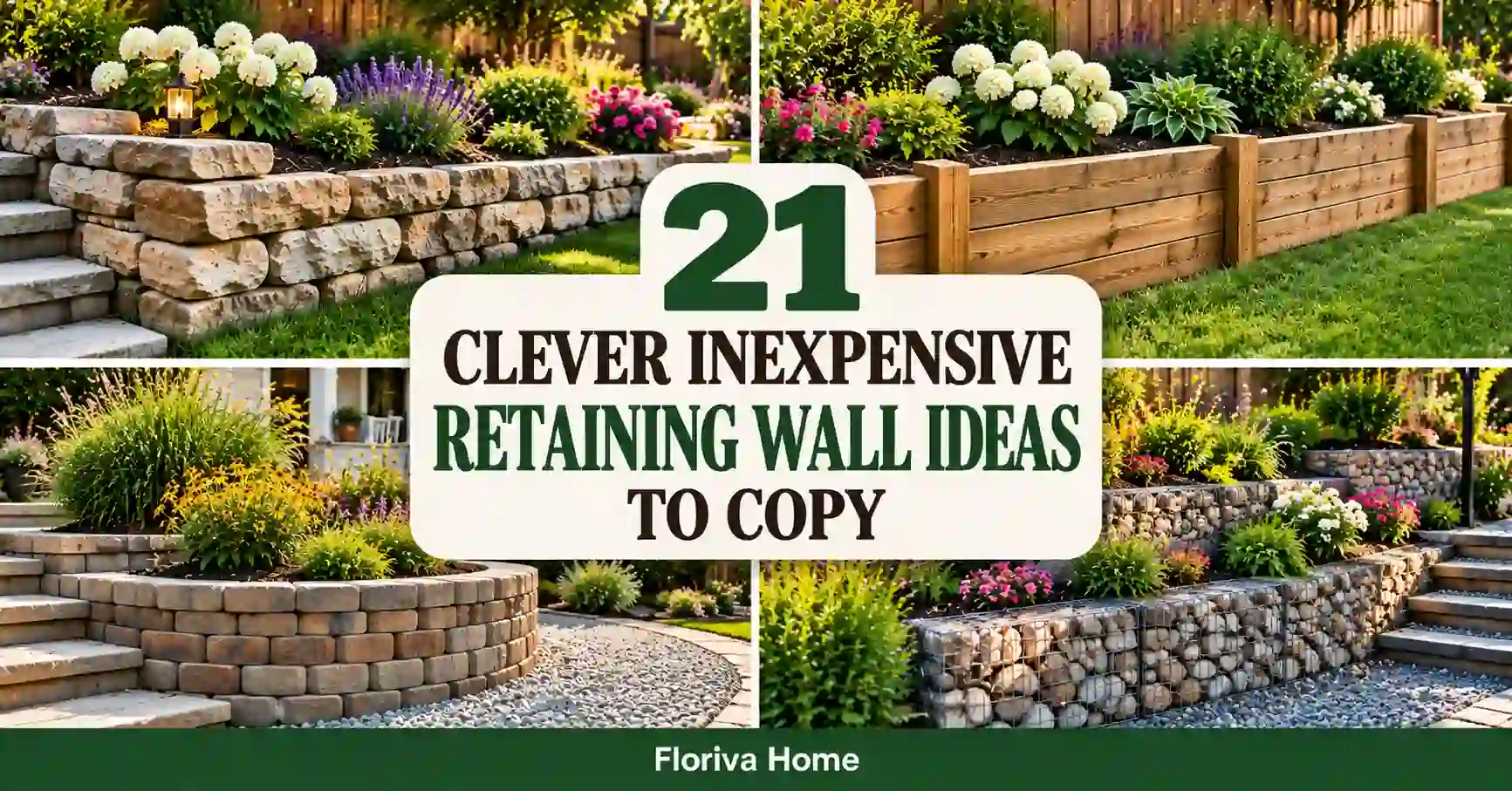
21 Clever Inexpensive Retaining Wall Ideas to Copy
A retaining wall can completely change the way a yard looks and functions, but building one does not always have to cost a fortune. With the right materials, smart construction choices, and a little creativity, you can create a retaining wall that holds soil in place while adding character to your outdoor space.
These clever inexpensive retaining wall ideas are perfect for sloped yards, garden beds, patios, walkways, and other areas where you want practical support without spending a huge amount.
Planning Your Inexpensive Retaining Wall: Key Considerations Before You Begin
Before choosing a retaining wall design, take a little time to understand your yard and the job the wall needs to do. A small decorative garden wall has very different requirements from a tall wall holding back a steep slope.
Thinking about these details first can help you avoid unnecessary costs and make your finished project more durable.
1. Simple Concrete Block Retaining Wall
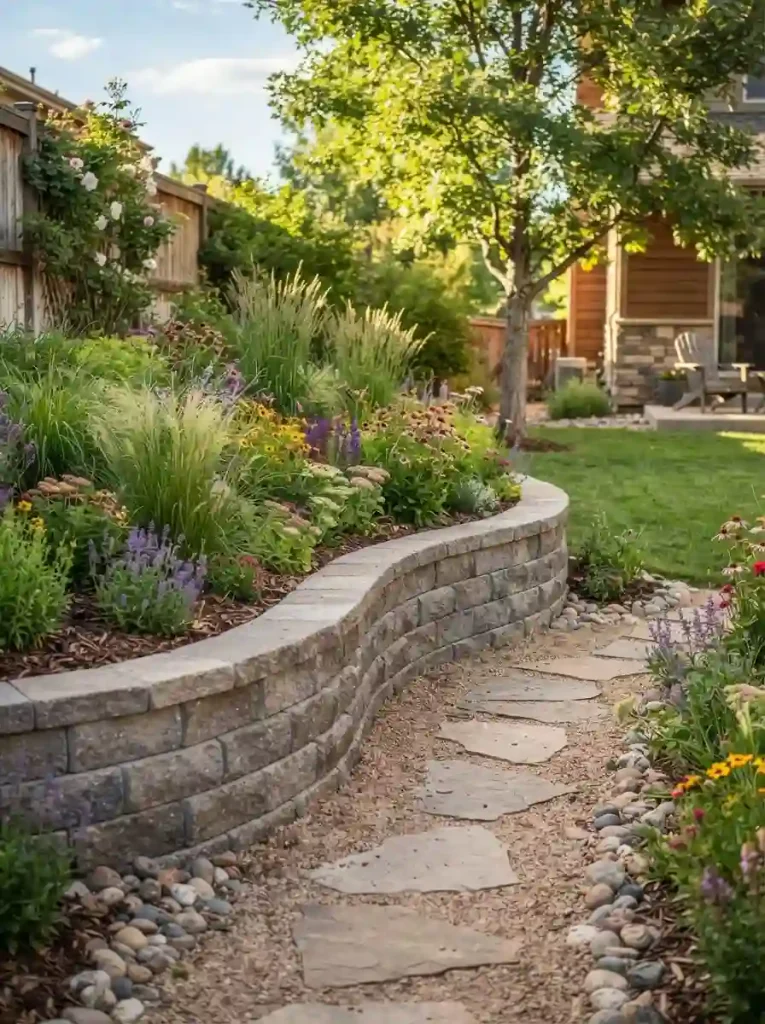
A basic concrete block wall is one of the easiest ways to create a clean retaining structure without paying for expensive natural stone.
Choose landscape blocks designed for retaining walls rather than ordinary construction blocks. Their shape and weight can make installation easier, especially for smaller landscaping projects.
Keep the layout simple by stacking the blocks in even rows. You can soften the straight lines by planting low-growing flowers or trailing greenery along the top edge.
For a more finished appearance, choose blocks in a neutral gray, tan, or earthy shade that complements your home’s exterior.
A block wall can also work particularly well around raised garden beds. Instead of trying to make the wall the main attraction, use plants to create color and texture around it.
Expert Tip:
Before purchasing blocks, calculate the wall’s approximate surface area so you can buy closer to the amount actually needed and avoid unnecessary waste.
2. Gravel-Filled Timber Retaining Wall
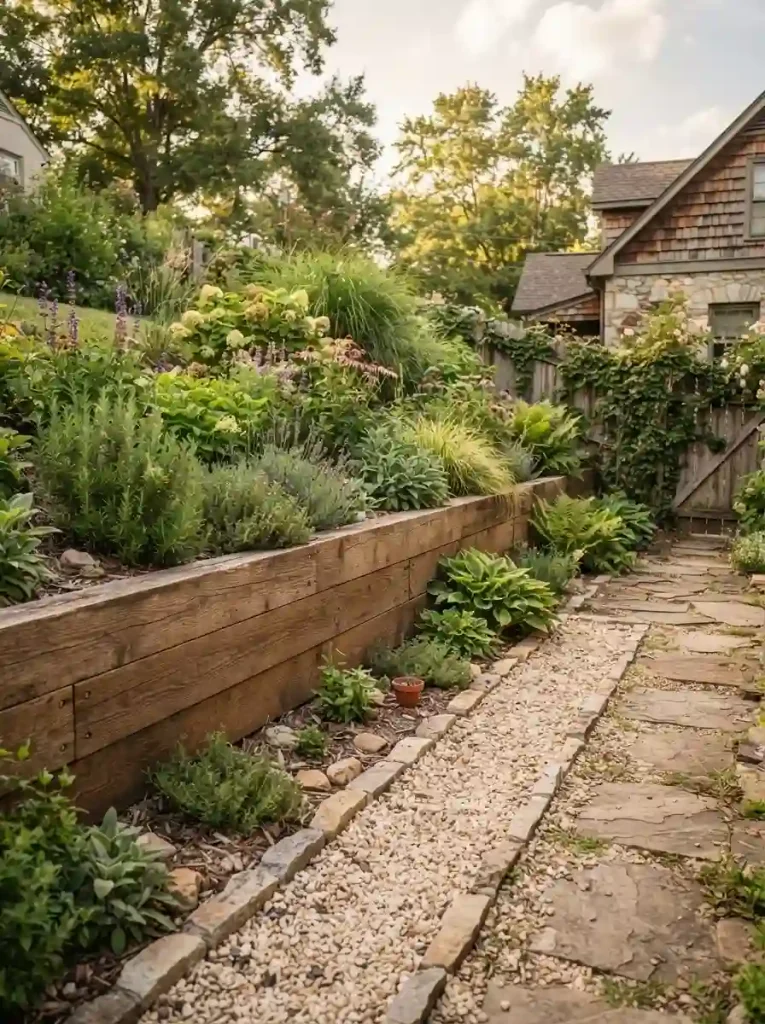
Timber can create a warm, natural-looking retaining wall while keeping the design relatively simple. Pressure-treated landscape timber or other appropriate outdoor-rated wood can work well for certain low retaining applications.
Arrange the timber horizontally to create a sturdy visual pattern. The natural grain adds warmth that concrete or manufactured blocks may not provide.
Fill and drain the area behind the wall properly, and make sure the timber is suitable for ground-contact use.
This style looks especially attractive around vegetable gardens, rustic pathways, and cottage-style landscaping. You can also stain the wood if you want a darker or more coordinated appearance.
Adding gravel along the front edge helps connect the timber wall with the surrounding landscape while keeping the overall design understated.
Expert Tip:
Use outdoor-rated materials specifically suited to retaining applications rather than ordinary untreated boards that can deteriorate quickly when exposed to soil and moisture.
3. Stacked Stone Garden Wall
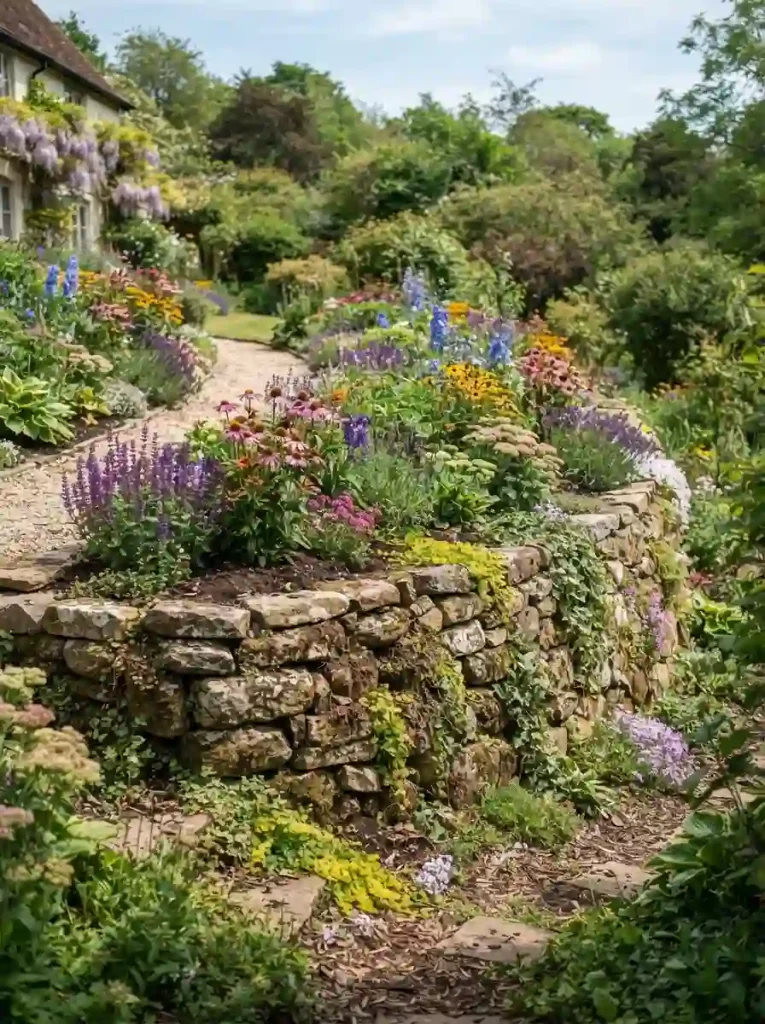
If you have access to affordable local stone, a stacked stone retaining wall can create an expensive-looking result without requiring elaborate decoration.
Use stones with relatively flat surfaces so they can sit securely on one another. Smaller stones can fill gaps and help create a more natural appearance.
This idea works particularly well for short garden walls where the main purpose is defining planting areas rather than supporting a large slope.
Let the stones remain slightly irregular instead of forcing every piece into a perfect pattern. The variation gives the wall a relaxed, organic character.
Plant creeping ground covers near the base to soften the edges and make the stone look as though it belongs naturally in the garden.
Expert Tip:
For anything beyond a small decorative wall, make sure the construction method is appropriate for the height, soil pressure, drainage, and local requirements.
4. Reclaimed Brick Retaining Wall
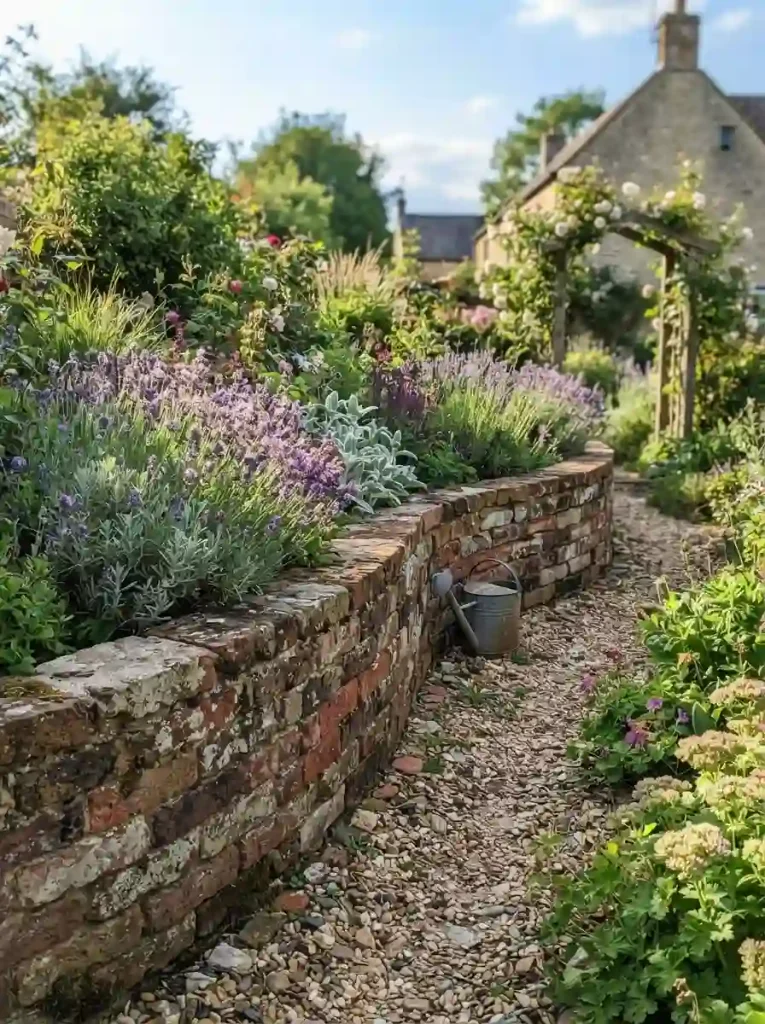
Old bricks can be surprisingly useful for creating a charming low retaining wall. Their worn surfaces and slightly different shades give the finished project plenty of character.
Look for sound reclaimed bricks from previous landscaping or construction projects. Arrange them in a simple running pattern for a tidy appearance, or create a slightly more rustic arrangement for cottage-style gardens.
A reclaimed brick wall looks particularly attractive around flower beds, small terraces, and garden paths.
Pair the warm brick tones with green foliage and soft-colored flowers. This creates contrast without requiring expensive decorative features.
If you do not have enough reclaimed bricks for an entire wall, consider using them only as a visible facing or border where appropriate and use a suitable structural method behind them.
Expert Tip:
Inspect reclaimed bricks carefully and avoid damaged pieces that may not be appropriate for structural use.
5. Gabion-Style Retaining Wall
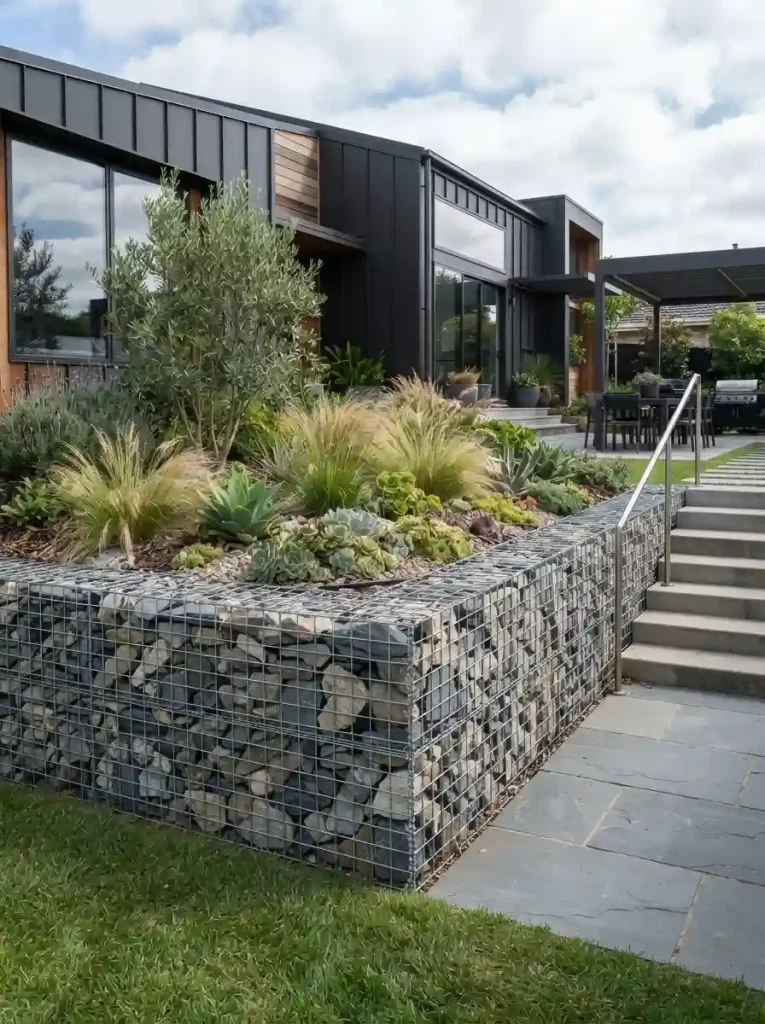
Gabion walls use strong wire baskets or cages filled with stones. They have a distinctive modern-rustic appearance and can make ordinary landscaping materials look much more intentional.
For a small landscape feature, gabion-style construction can create an interesting focal point while allowing plenty of texture through the visible stones.
Choose locally available rock when possible to reduce transportation and material costs. Smaller stones can also be mixed with larger pieces depending on the basket design.
The open stone appearance works beautifully with grasses, succulents, and other plants that have a modern or natural shape.
Use the wall to separate different levels of your yard, frame a patio, or define the edge of a garden.
Expert Tip:
Use properly rated baskets and an appropriate foundation. Taller retaining structures may require engineering or professional installation.
6. Pallet-Inspired Garden Retaining Wall
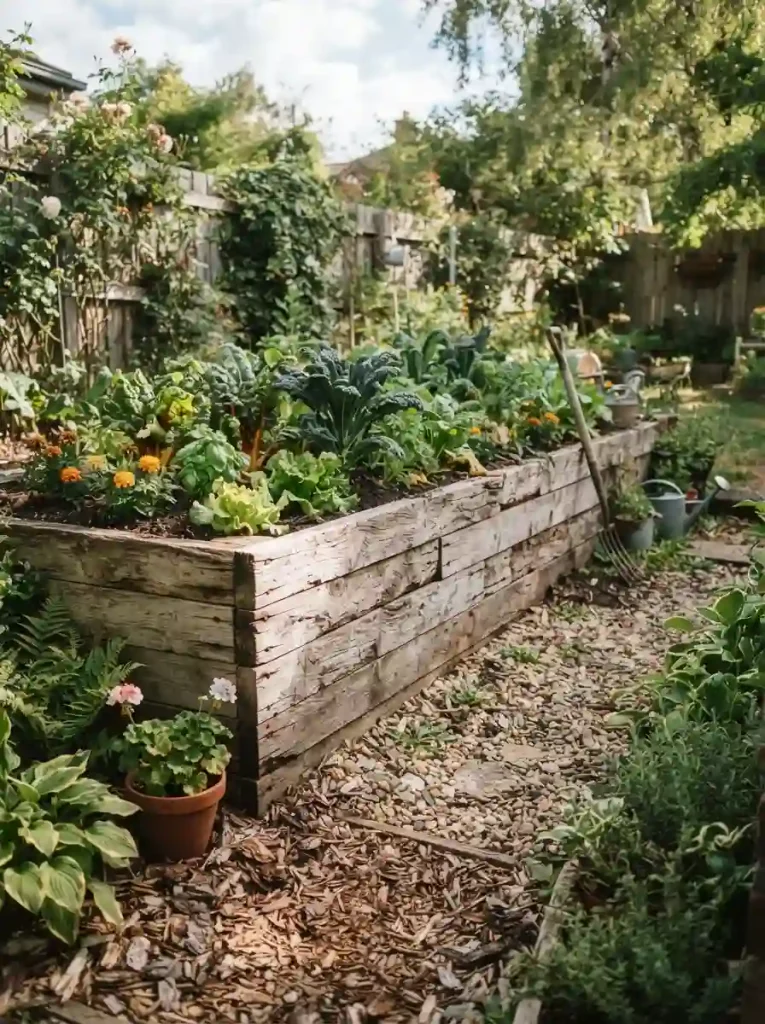
For a very small decorative garden project, reclaimed wooden materials can inspire a simple rustic retaining feature.
Instead of treating old pallets as automatically suitable structural walls, use properly inspected and outdoor-rated reclaimed wood for appropriate low garden applications.
A wood-based wall can separate a raised planting area from a walkway while adding a relaxed DIY character.
Keep the design compact and combine it with inexpensive gravel, mulch, and hardy plants. The result can feel intentional rather than overly polished.
This approach is especially appealing for vegetable gardens, backyard projects, and casual cottage-style landscapes.
Always check that reclaimed timber is safe for its intended use, especially when the wall will be close to edible plants.
Expert Tip:
Do not assume every discarded pallet or piece of reclaimed wood is safe for landscaping. Use materials appropriate for outdoor ground contact and your intended application.
7. Curved Retaining Wall Around a Flower Bed
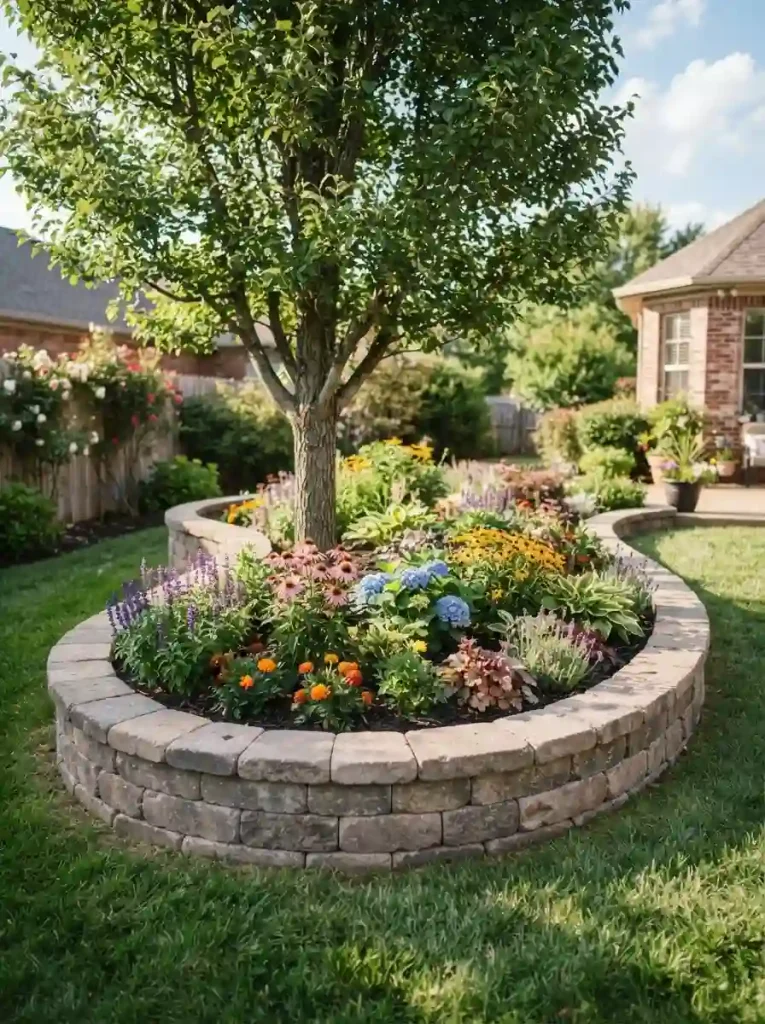
A curved retaining wall can make a small yard feel more interesting without requiring expensive decorative materials.
Instead of building a long straight line, create a gentle curve around an existing tree, flower bed, or lawn area.
Concrete landscape blocks, bricks, or suitable stone can all be used depending on the project. A curved layout works especially well when the wall follows the natural shape of the garden.
Fill the raised area with colorful flowers, ornamental grasses, or compact shrubs. The planting becomes part of the design rather than simply sitting behind the wall.
Keep the curve broad and gradual. Extremely tight curves can make installation more difficult and may require specially shaped materials.
Expert Tip:
Mark the proposed curve with a garden hose before digging. It makes it much easier to adjust the shape before committing to the final layout.
8. Retaining Wall With Built-In Planting Pockets
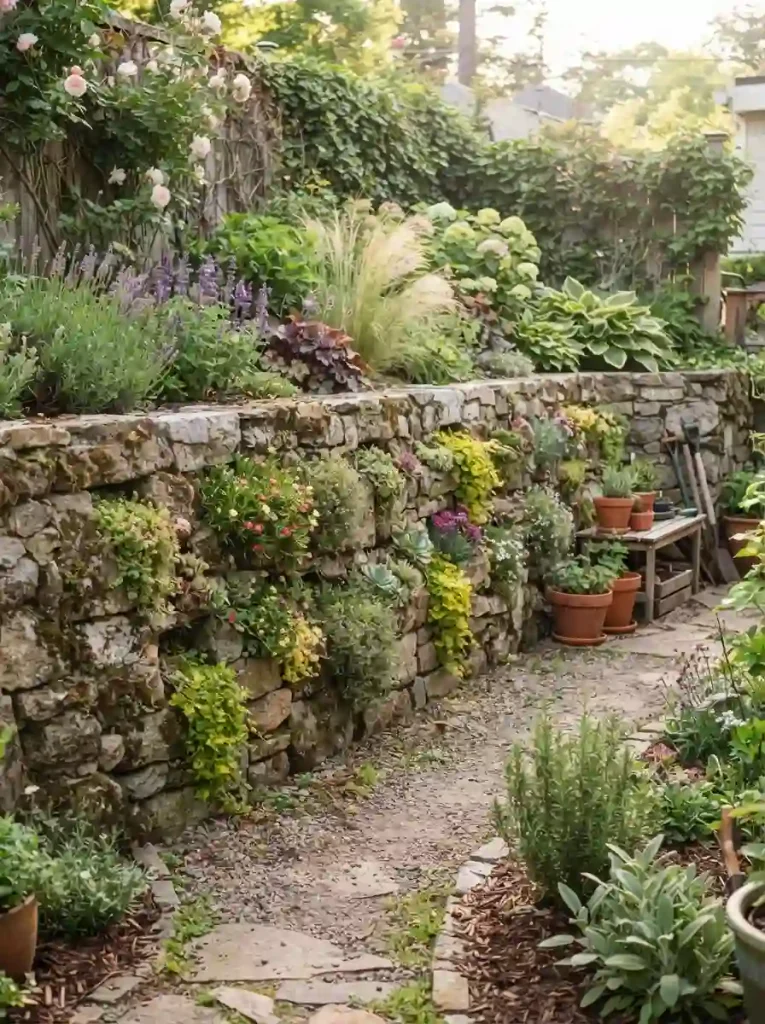
Turn the retaining wall itself into part of the garden by incorporating planting spaces into the design.
Small pockets can hold trailing plants, herbs, succulents, or compact flowers, depending on the wall material and growing conditions.
This idea is particularly useful when you want to disguise a plain wall without spending money on expensive finishes.
Plants such as creeping thyme or other suitable ground covers can eventually soften hard edges and create a more established appearance.
Use plants with compatible water and sunlight requirements so the wall does not become difficult to maintain.
The combination of hard landscaping and greenery can also make a small backyard feel more layered and visually interesting.
Expert Tip:
Make sure planting pockets have adequate drainage. Constantly wet soil against an improperly constructed wall can create long-term problems.
9. Recycled Concrete Piece Retaining Wall
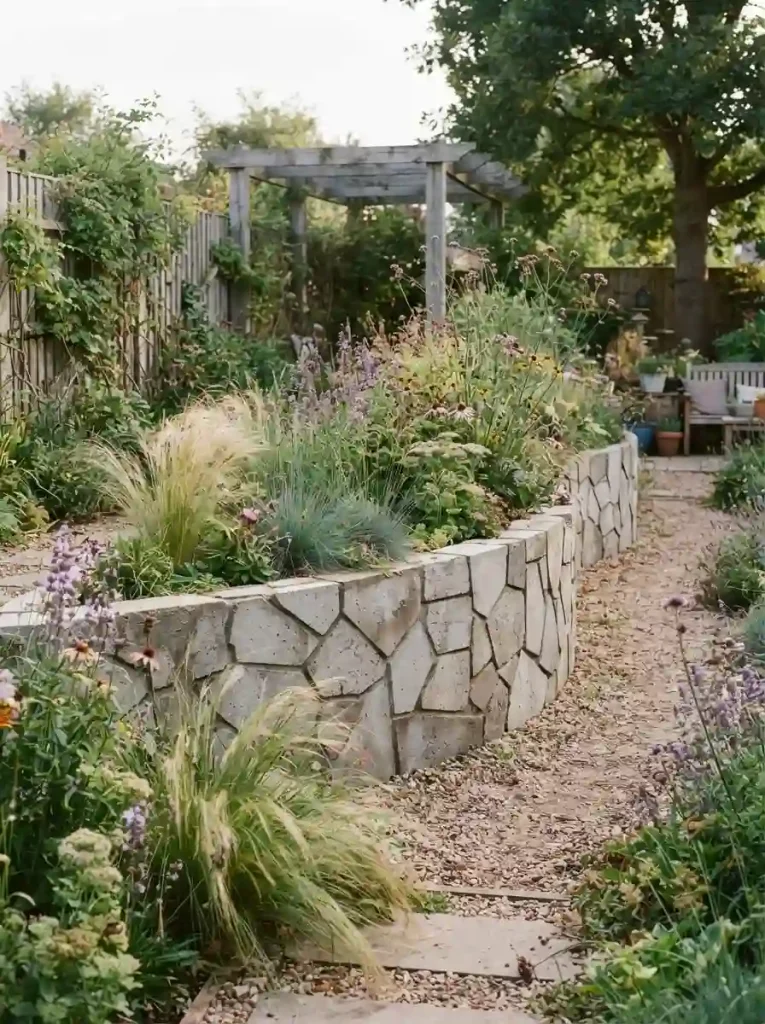
Broken concrete from an old patio, walkway, or other suitable project may sometimes be repurposed into an attractive garden wall.
Instead of hiding every irregular edge, arrange the pieces intentionally to create a rugged, modern landscape feature.
This can be particularly effective in informal gardens where perfectly matched materials are unnecessary.
Combine the concrete pieces with dark mulch, ornamental grasses, and low flowering plants. The greenery helps soften the harder appearance of the recycled material.
Before using old concrete, inspect the pieces carefully and make sure they are suitable for the intended project. Avoid materials contaminated with hazardous substances or unsuitable debris.
Expert Tip:
Sort recycled pieces by size before construction. Larger pieces can establish the main structure while smaller pieces can help fill gaps.
10. Dry-Stacked Small Rock Retaining Wall
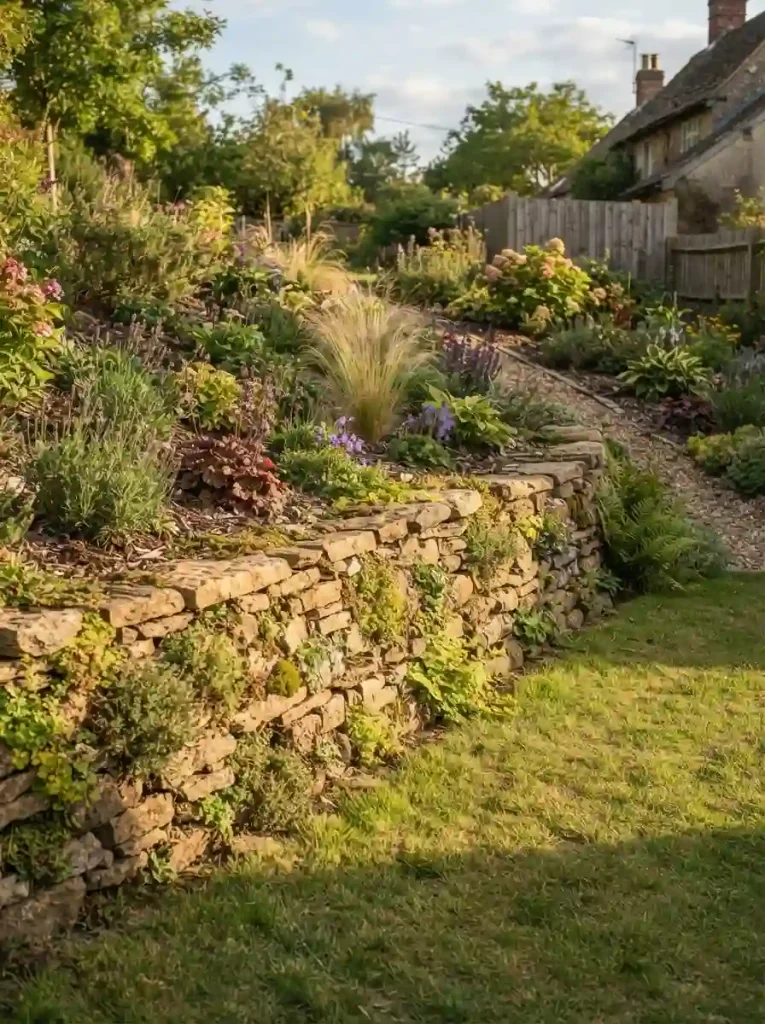
A dry-stacked wall uses carefully positioned stones without visible mortar, creating a relaxed and natural appearance.
This approach can work beautifully for short landscape walls, especially when the stones are available locally or already present on the property.
Start with a stable base and position larger, flatter stones toward the lower sections. Smaller stones can fill gaps and help create a more cohesive appearance.
The small openings between stones can also provide an interesting texture and allow the wall to blend naturally into a planted landscape.
Add low-growing plants around the edges rather than covering the entire wall. A little greenery can make the stonework look established without hiding its character.
Expert Tip:
A dry-stacked wall needs careful stone placement and a suitable foundation. Keep this approach to applications where the construction method is appropriate.
11. Painted Block Retaining Wall
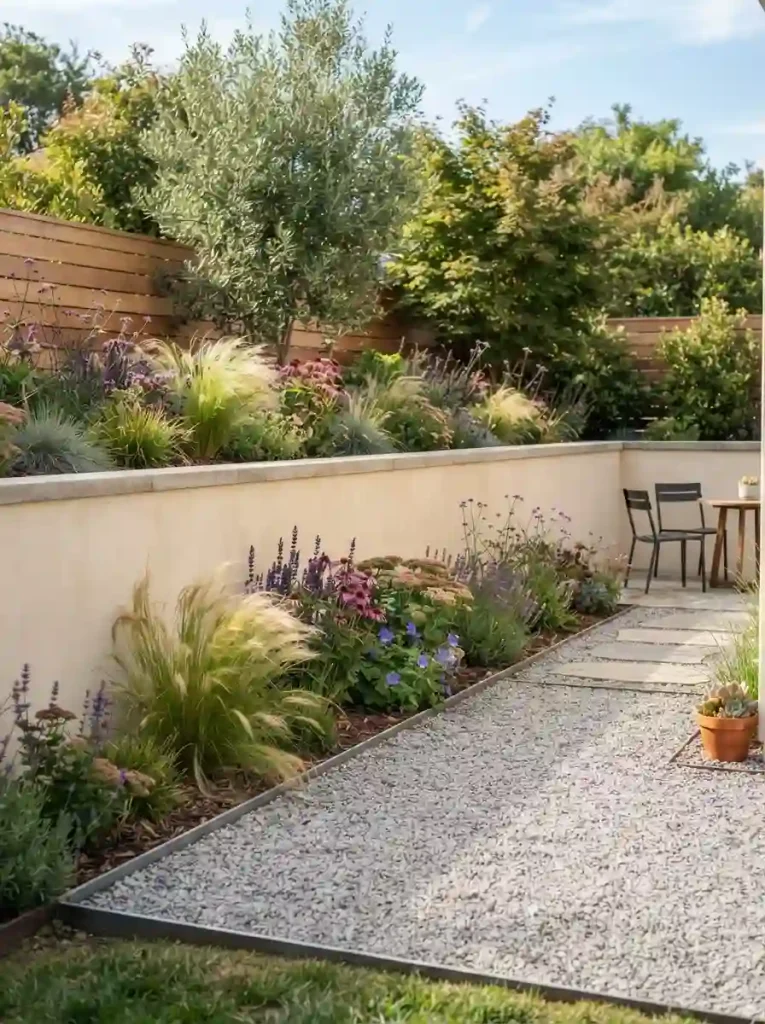
A plain block retaining wall can be given a completely different personality with an appropriate exterior masonry finish.
Instead of purchasing decorative blocks, use a simple compatible finish to create a cleaner visual appearance. Neutral shades such as warm white, soft beige, or muted gray can make the wall feel more intentional.
This works especially well when the existing wall is structurally sound but visually plain.
Keep the surrounding landscaping simple. A narrow planting bed with grasses or flowering plants can provide enough color without competing with the wall.
For a contemporary look, combine the finished wall with gravel and geometric planting. For a softer style, surround it with rounded shrubs and colorful flowers.
Always choose a coating or masonry product suitable for the specific wall material and outdoor conditions.
Expert Tip:
Test the finish on a small hidden area first. Outdoor surfaces can absorb coatings differently, and the final color may vary from what you see on a sample.
12. Corrugated Metal and Timber Retaining Wall
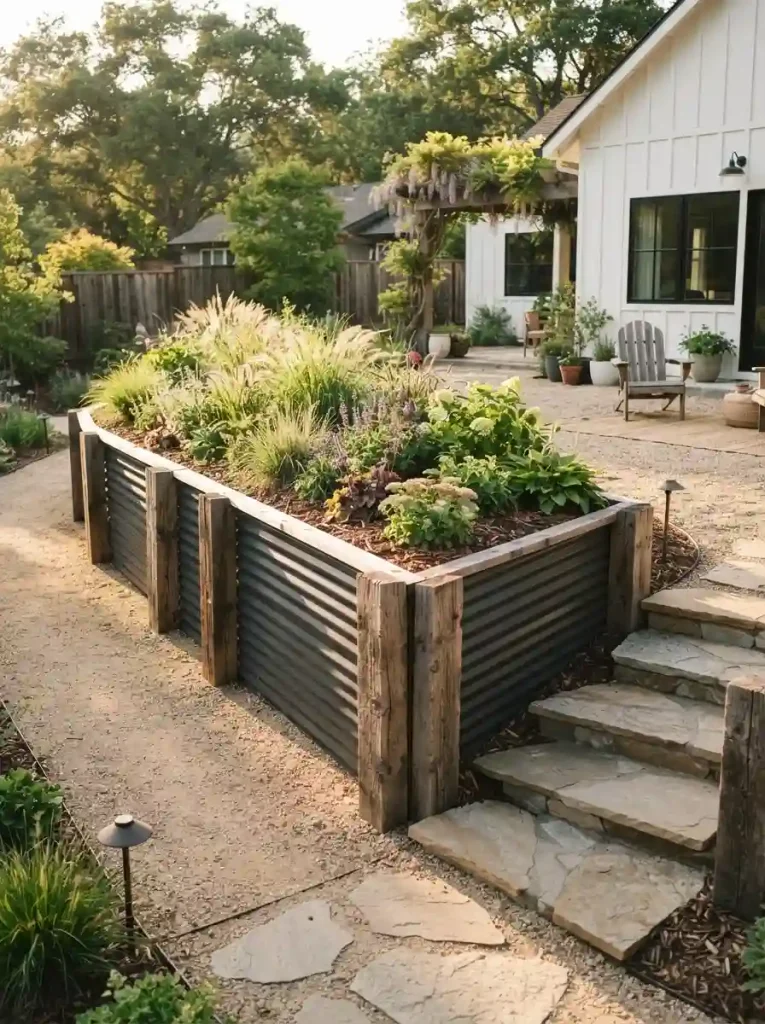
Combining two inexpensive materials can create a retaining wall with a surprisingly polished appearance. Corrugated metal panels paired with timber posts offer a modern farmhouse feel while adding visual contrast.
This combination works particularly well for low garden terraces, vegetable beds, and narrow side yards. The metal provides a clean vertical surface, while the wood introduces warmth and natural texture.
Choose materials designed for outdoor exposure and make sure the construction method is appropriate for the amount of soil being retained.
You can soften the industrial appearance by planting ornamental grasses, herbs, or flowering plants along the top edge.
Expert Tip:
Use corrosion-resistant metal and outdoor-rated timber so the materials can better withstand moisture and changing weather conditions.
13. Low Timber Tiered Retaining Walls
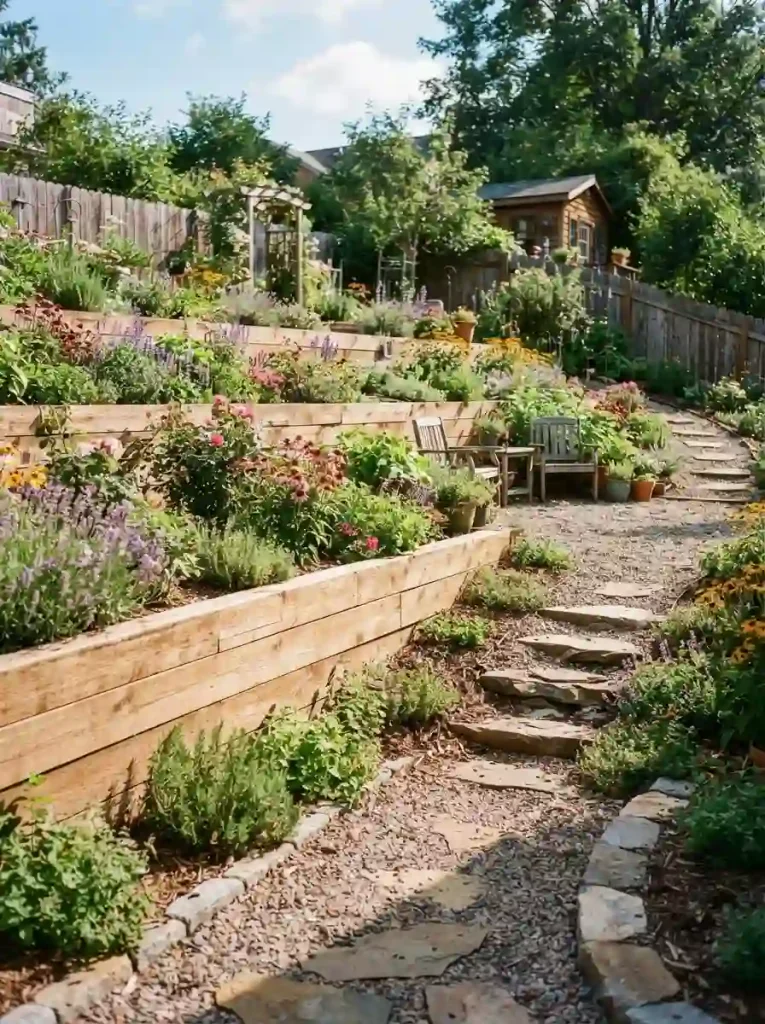
Instead of building one tall retaining wall, consider dividing the slope into several smaller levels. This approach can create useful planting areas while giving the yard a more dimensional appearance.
Short timber walls can separate each terrace, with flowers, herbs, shrubs, or ground covers planted between them.
The tiered arrangement is especially useful on gently sloping properties where you want to create several manageable garden spaces.
It also allows you to introduce different plants at each level, creating more variety without requiring elaborate landscaping.
Keep each level appropriately designed for the soil and site conditions, and provide suitable drainage between the terraces.
Expert Tip:
Several low walls still need proper planning. Do not assume dividing one tall wall into smaller sections automatically eliminates structural or drainage requirements.
14. Landscape Block Wall With Gravel Border
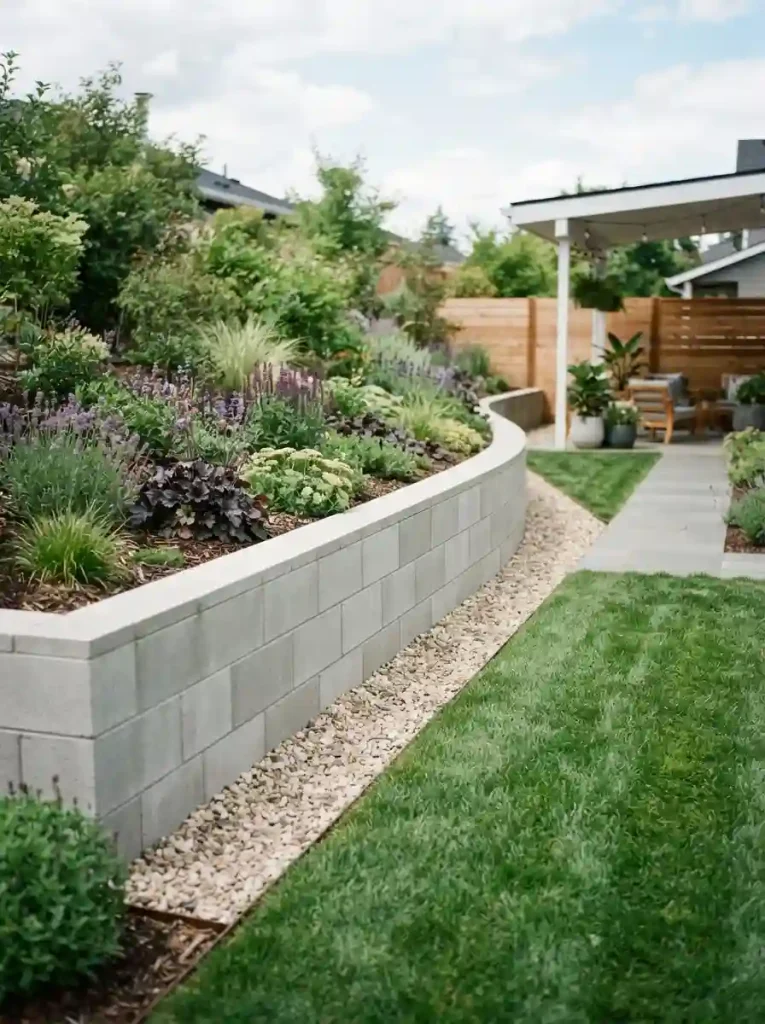
A simple retaining wall can look considerably more finished when paired with a clean gravel border.
Use affordable landscape blocks to create the wall, then add a narrow strip of decorative gravel along the front or top edge.
The gravel creates a visual transition between the hard wall and surrounding lawn or planting areas. It can also help define the wall without adding expensive decorative features.
Choose gravel that complements the block color and the rest of your landscape.
For a modern yard, use simple geometric planting. For a more relaxed garden, combine the wall with ornamental grasses and flowering perennials.
Expert Tip:
Use landscape fabric beneath decorative gravel where appropriate to reduce weed growth and keep the gravel from mixing excessively with surrounding soil.
15. Natural Boulder Retaining Wall
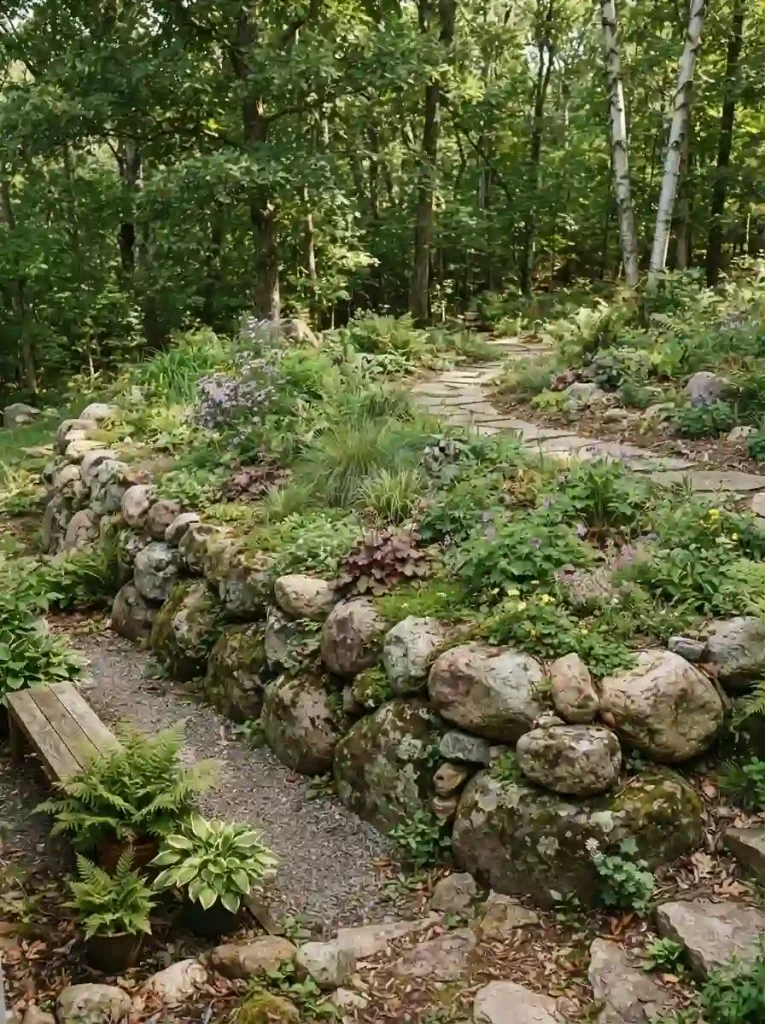
Large natural boulders can become both the structure and the main decorative feature of a retaining wall.
If suitable rocks are already available on your property, they may help reduce material costs. Local landscape suppliers may also offer inexpensive stone options depending on the region.
Arrange the largest stable pieces toward the lower section and use smaller stones to transition between them.
Leave enough visual space between some rocks for plants and ground covers. This helps the wall blend into the landscape instead of looking like a pile of stones.
This style works particularly well in natural, woodland, rustic, and cottage-inspired gardens.
Expert Tip:
Heavy boulders require careful placement. Use appropriate equipment or professional assistance when necessary rather than attempting to move extremely heavy stones manually.
16. Brick-and-Gravel Garden Terrace
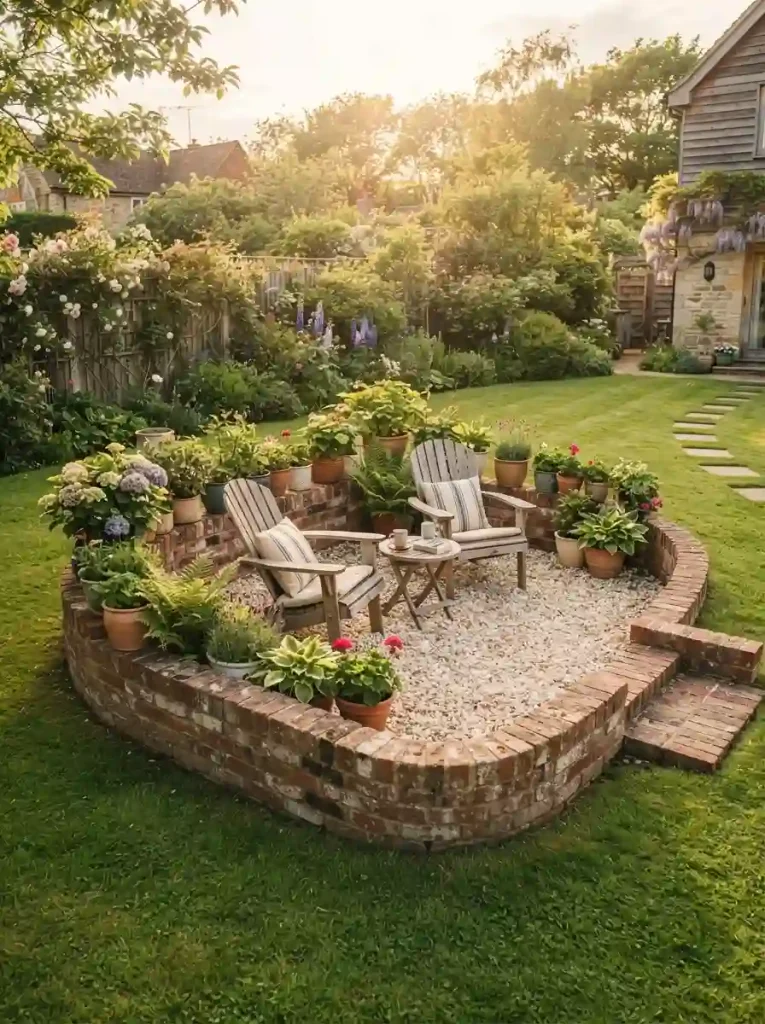
A small brick retaining wall can create a defined terrace while gravel provides an inexpensive surface for the area above or below it.
This combination is especially useful for creating a compact seating area, garden walkway, or transition between different yard levels.
Use bricks to establish a strong horizontal line, then keep the rest of the design understated.
A few potted plants, low shrubs, or climbing greenery can add personality without significantly increasing the budget.
The result feels structured but not overly formal, making it suitable for both traditional and modern outdoor spaces.
Expert Tip:
Keep gravel contained with appropriate edging so it does not gradually spread into nearby lawn or planting beds.
17. Railroad-Tie-Inspired Timber Wall
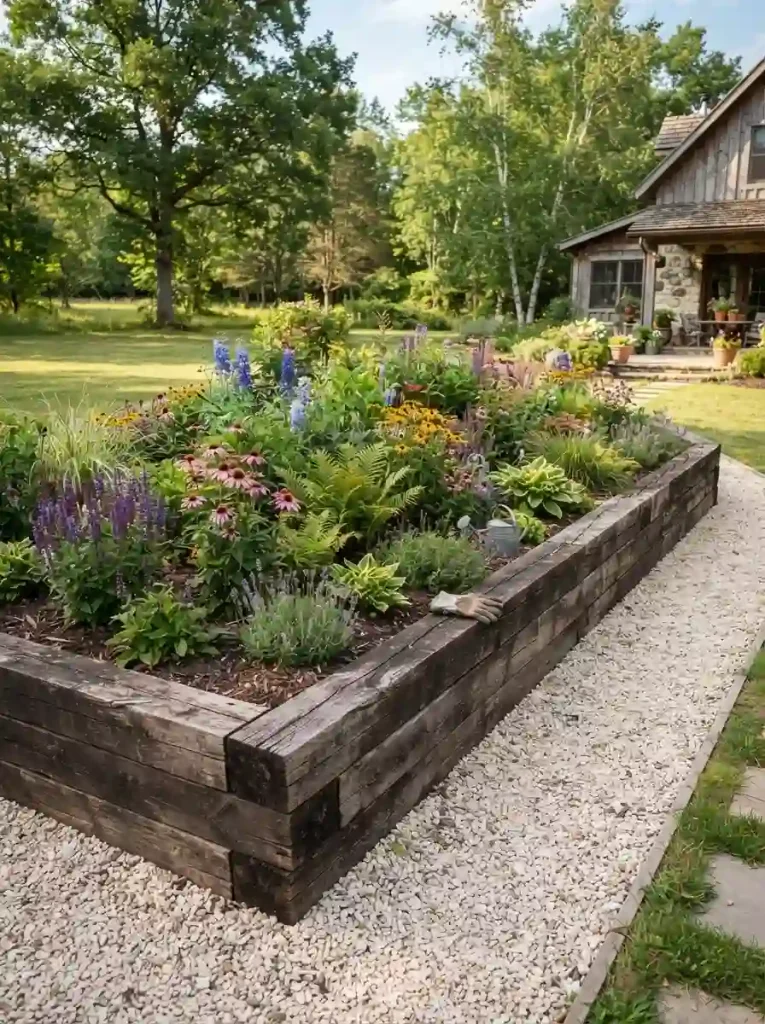
Heavy landscape timbers can create a bold retaining wall with a rustic appearance. Their substantial shape makes them particularly eye-catching around larger garden areas.
Use only appropriate outdoor-rated landscape timbers designed for the intended application. Older reclaimed railroad ties may contain preservatives that make them unsuitable for certain uses, especially around edible gardens.
Arrange the timbers horizontally for a strong, layered appearance.
Pair the dark wood with lighter gravel, pale flowers, or bright green foliage to create contrast.
This style works especially well in rustic yards, woodland gardens, and outdoor areas where a rugged appearance fits the surroundings.
Expert Tip:
Choose modern landscaping timbers rated for outdoor retaining applications instead of assuming old railroad ties are interchangeable with purpose-made landscape materials.
18. Retaining Wall With a Built-In Seating Edge
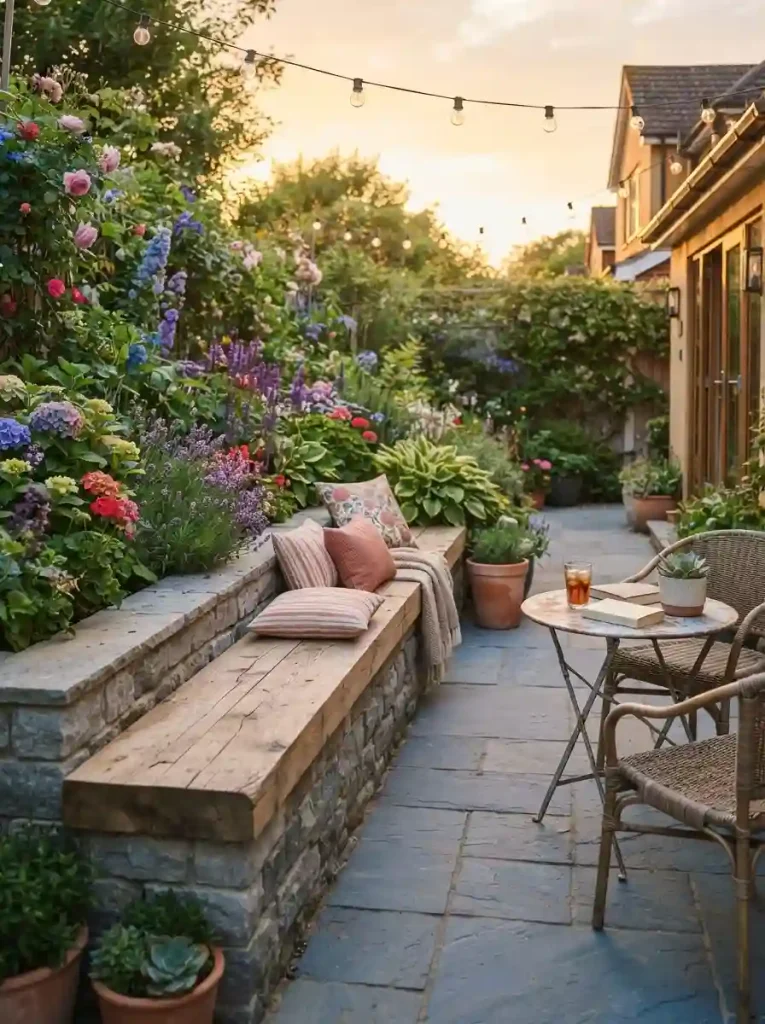
Make a retaining wall work twice as hard by incorporating a suitable seating ledge into the design.
A wide, stable top surface can create a convenient place to sit beside a patio, garden, or outdoor entertaining area when the structure is specifically designed for that purpose.
Keep the seating edge broad enough to be comfortable and finish it with a suitable material such as timber, stone, or pavers.
Surround the wall with soft planting to make the seating area feel integrated into the garden.
This idea is particularly useful in smaller yards where every feature needs to serve more than one purpose.
Expert Tip:
A retaining wall used for seating must be designed for both soil pressure and the additional loads created by people using the seating area.
19. Terraced Retaining Wall With Mulch Beds
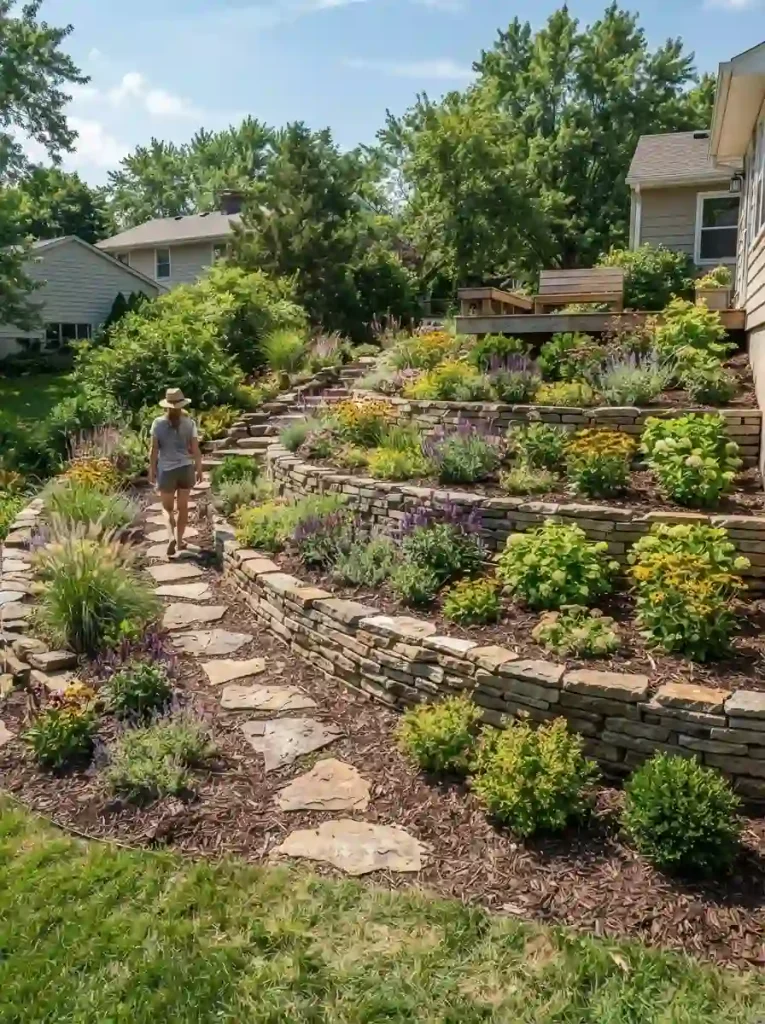
A sloped yard can become more useful when divided into simple planting terraces.
Use short retaining structures to create several horizontal beds, then fill each level with affordable mulch and easy-care plants.
Instead of trying to make every terrace identical, vary the plants slightly between levels. One section could feature ornamental grasses, another flowering perennials, and another compact shrubs.
Mulch helps give the entire project a finished appearance while making the planting areas easier to maintain.
The layered design also gives a small or awkward slope more visual depth.
Expert Tip:
Plan the drainage path before adding mulch and plants. Water should have a controlled route through the terraced area rather than collecting behind the walls.
20. Small Retaining Wall With Vertical Garden
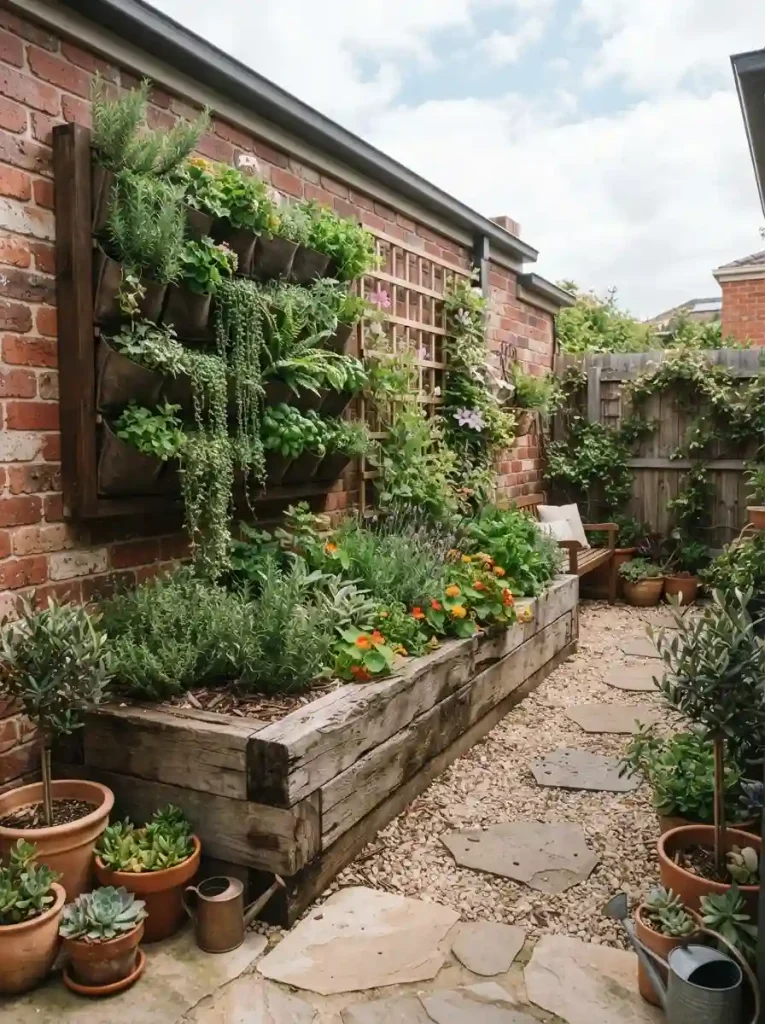
When ground space is limited, use the wall as a backdrop for vertical planting.
A simple retaining wall can support a raised bed while trellises, wall-mounted planters, or suitable vertical gardening systems add height above it.
This approach is useful for narrow side yards, patios, and compact urban gardens.
Choose lightweight planting systems that are properly supported rather than attaching heavy structures directly to a wall without considering the load.
Greenery rising above the wall can also help soften hard landscaping and create a more private outdoor atmosphere.
Use herbs, vines, ornamental plants, or other species suited to your local sunlight and climate.
Expert Tip:
Account for the weight of wet soil, containers, plants, and irrigation equipment when planning any vertical garden near a retaining structure.
21. Budget-Friendly Mixed-Material Retaining Wall
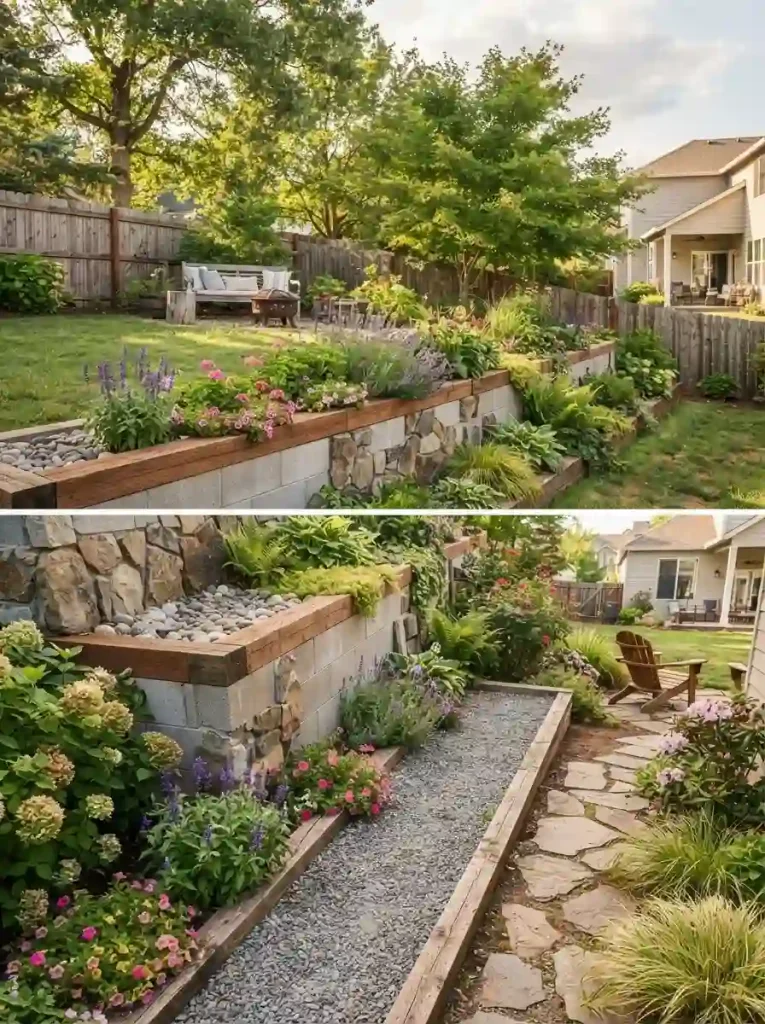
If you have leftover materials from several landscaping projects, combine them into one cohesive design.
For example, a simple block foundation can be paired with natural stone accents, timber edging, gravel, and colorful plants.
The key is to repeat a few materials throughout the yard so the combination looks intentional rather than random.
Use one primary material for the retaining structure and reserve contrasting materials for smaller decorative areas.
This can be an excellent way to stretch a limited landscaping budget while giving an ordinary slope more personality.
Finish the area with inexpensive plants, mulch, and gravel rather than adding unnecessary decorative objects.
Expert Tip:
Reusing materials can save money, but never compromise structural safety. Materials used for retaining soil should be appropriate for the loads, moisture, and conditions of the site.
How to Make a Retaining Wall Look More Expensive
You do not need premium materials to make a retaining wall look polished. The surrounding details often have a bigger visual impact than the wall itself.
Start by keeping the layout clean and consistent. Uneven lines, scattered materials, and poorly defined edges can make even expensive landscaping look unfinished.
Add a simple planting scheme using a few repeated plant varieties. Repetition creates cohesion and can make an inexpensive project feel deliberately designed.
Gravel is another useful budget-friendly finishing material. A narrow gravel border can make the wall look more defined while connecting it with paths and other parts of the yard.
Lighting can also make a difference. A few appropriately installed outdoor lights can highlight texture and create a welcoming appearance after sunset.
Most importantly, avoid adding too many competing features. A simple wall surrounded by healthy plants often looks better than an elaborate wall surrounded by clutter.
How to Save Money on a Retaining Wall Project
The biggest savings usually come from planning rather than choosing the cheapest possible material.
Measure the project carefully before purchasing anything. Buying too much material can quickly increase the budget, while buying too little can create additional delivery and labor costs.
Compare several suitable materials and consider what is already available on your property.
If you are doing the work yourself, understand which parts of the project are appropriate for DIY construction and which may require professional help.
For taller walls, difficult slopes, poor soil conditions, structures near buildings, or areas with significant drainage concerns, getting professional advice can be more economical than repairing a failed wall later.
You can also save by landscaping gradually. Build the retaining structure first, then add plants, gravel, lighting, and decorative elements as your budget allows.
Final Thoughts
An inexpensive retaining wall does not have to look cheap. Simple blocks, timber, stone, reclaimed materials, gravel, and thoughtful planting can transform a difficult slope into an attractive and useful part of your yard.
The best approach depends on the height of the wall, soil conditions, drainage, available space, local requirements, and your budget. For small decorative projects, there are plenty of creative options to explore. For larger or structurally demanding walls, proper design and professional guidance become increasingly important.
Choose a design that fits both your landscape and the practical job the wall needs to perform. With careful planning, even a modest budget can create a retaining wall that looks natural, functions well, and improves the overall appearance of your outdoor space.