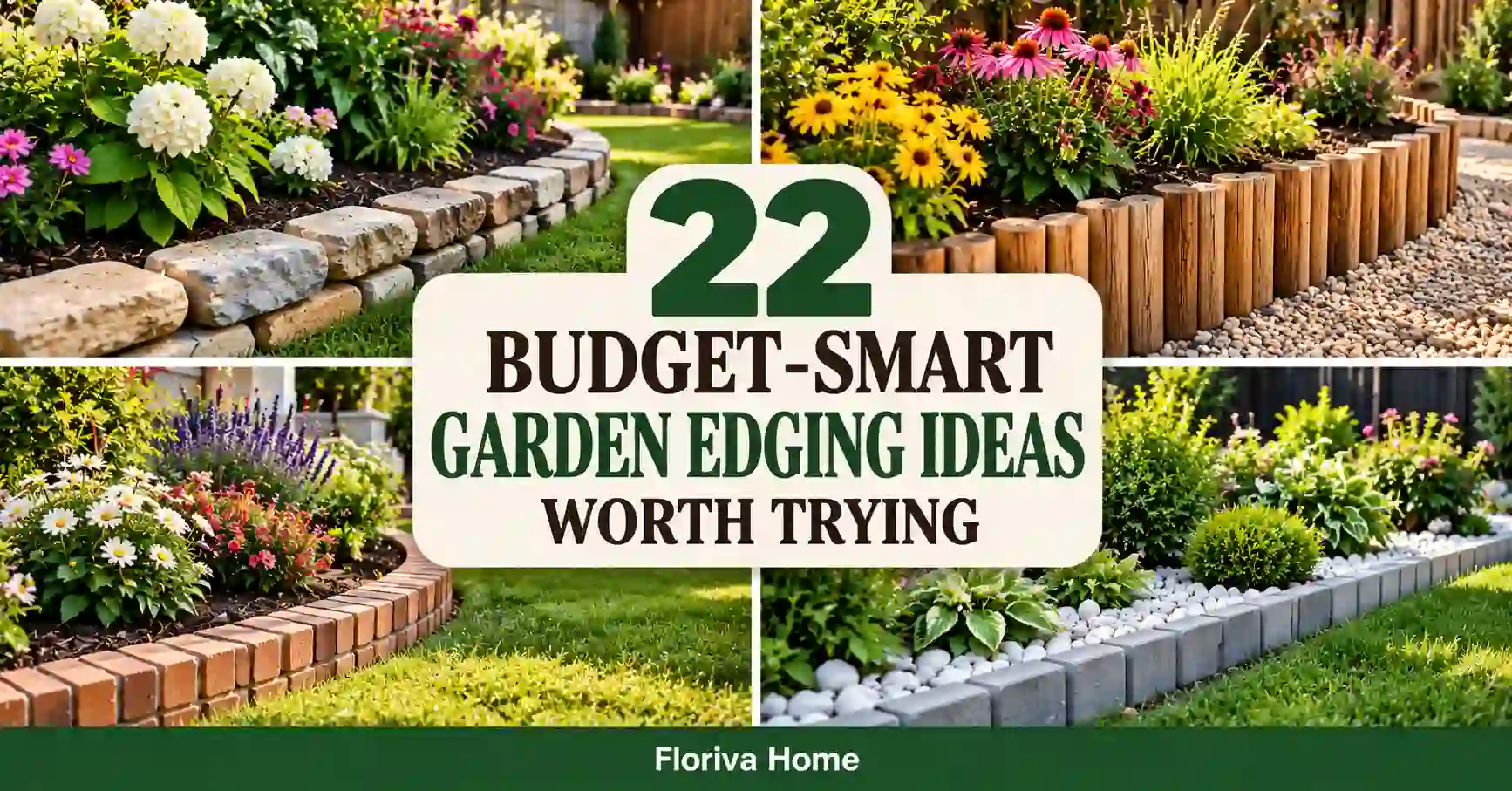
22 Budget-Smart Garden Edging Ideas Worth Trying
Garden edging can completely change the way a yard looks without requiring a major landscaping budget. A simple border helps separate lawns from flower beds, keeps mulch in place, and gives pathways a more finished appearance.
The good news is that you don’t need expensive materials to create attractive garden borders. Reclaimed wood, leftover bricks, stones, gravel, and even simple natural materials can become useful edging with a little creativity.
Whether you’re refreshing a small flower bed, defining a vegetable garden, or cleaning up the edges around a walkway, these budget-smart garden edging ideas offer practical ways to make your outdoor space look more organized.
Keep reading for affordable edging ideas that balance appearance, durability, and easy maintenance.
1. Reclaimed Brick Garden Border
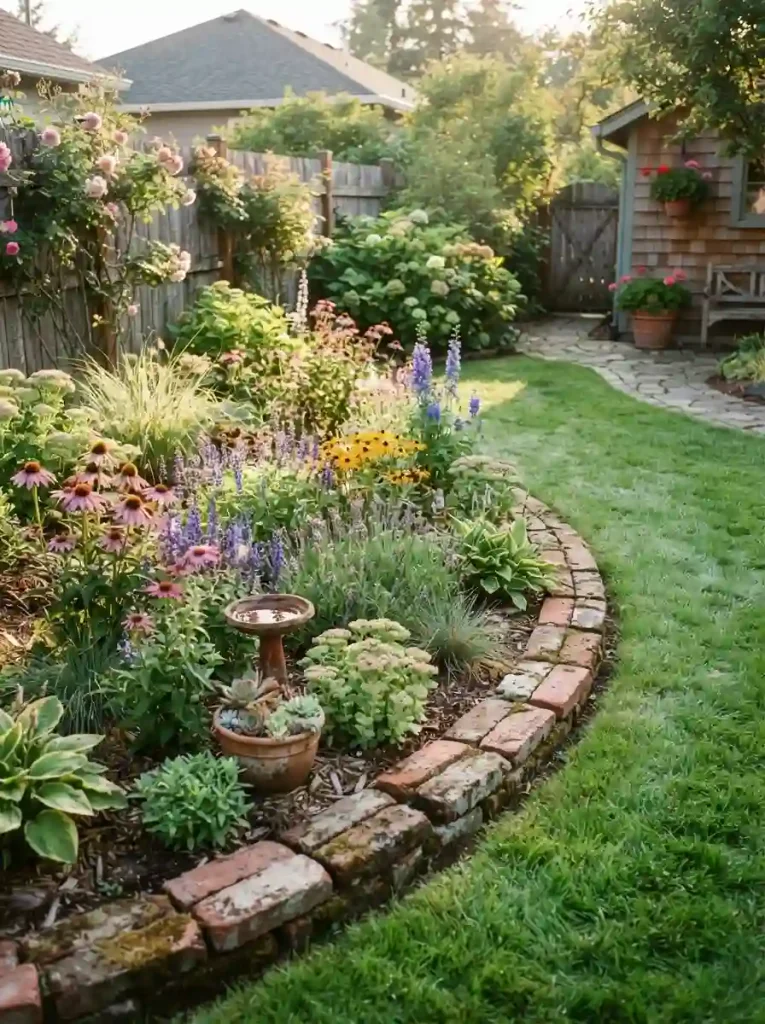
Reclaimed bricks are one of the easiest ways to create a traditional garden edge without spending much on new landscaping materials. If you have old bricks left from another project, they can give your flower beds a charming finished border.
Lay the bricks flat for a wider, more noticeable edge, or position them vertically to create a taller border around planting areas. You can also alternate their direction for a simple pattern.
Brick works especially well around cottage gardens, vegetable beds, and pathways. Its warm color creates a nice contrast against green grass and colorful flowers.
Before installing the bricks, remove grass and loosen the soil along the edge. A shallow trench filled with compacted sand can help keep the pieces level and reduce shifting.
Expert Tip:
Check local salvage yards or renovation sites for used bricks before buying new ones. Slightly weathered bricks can actually make a garden feel more established and characterful.
2. Simple Wooden Plank Edging
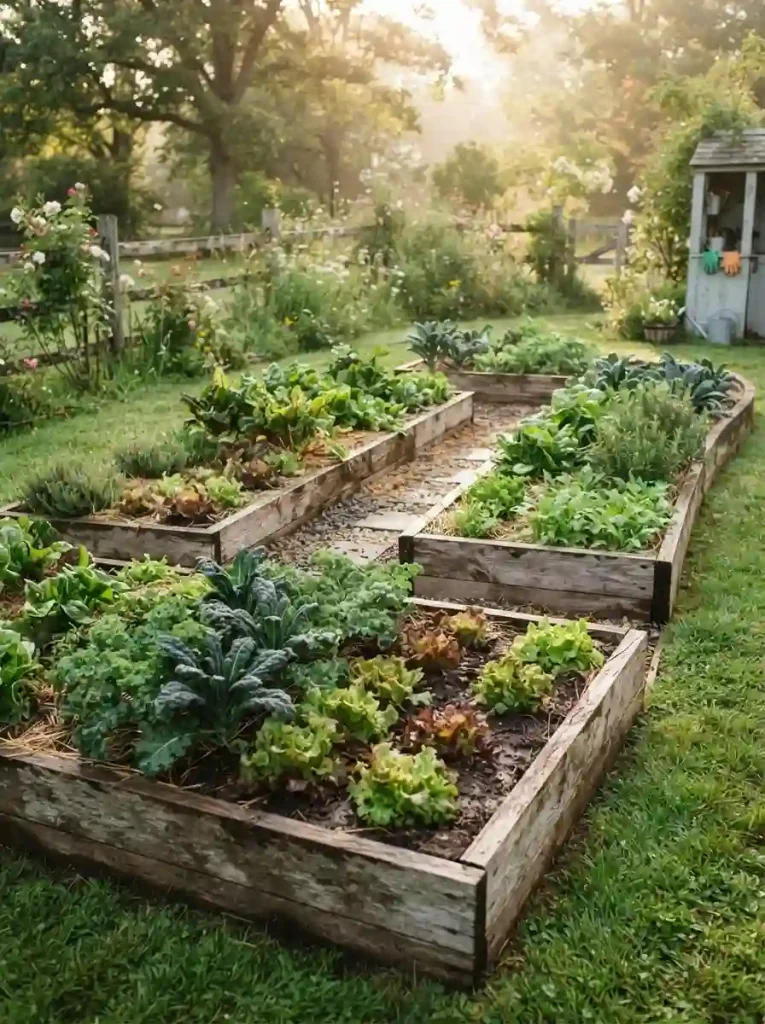
Wooden boards can create a clean garden boundary while keeping material costs relatively low. Basic untreated or naturally weathered planks can work particularly well around vegetable gardens and informal flower beds.
Cut the boards into manageable lengths and place them along the edge of the planting area. For a more rustic appearance, allow the natural wood grain and small imperfections to remain visible.
Wood edging gives a garden a warmer appearance than concrete or metal. It also creates a clear separation between soil and grass, making mowing and trimming easier.
Choose naturally durable wood when possible, especially if the edging will regularly contact damp soil. Keeping the boards slightly above ground can also help extend their useful life.
Expert Tip:
Reuse sound boards from old garden projects when possible, but avoid painted or treated wood of unknown origin around edible crops.
3. Budget-Friendly Gravel Edge
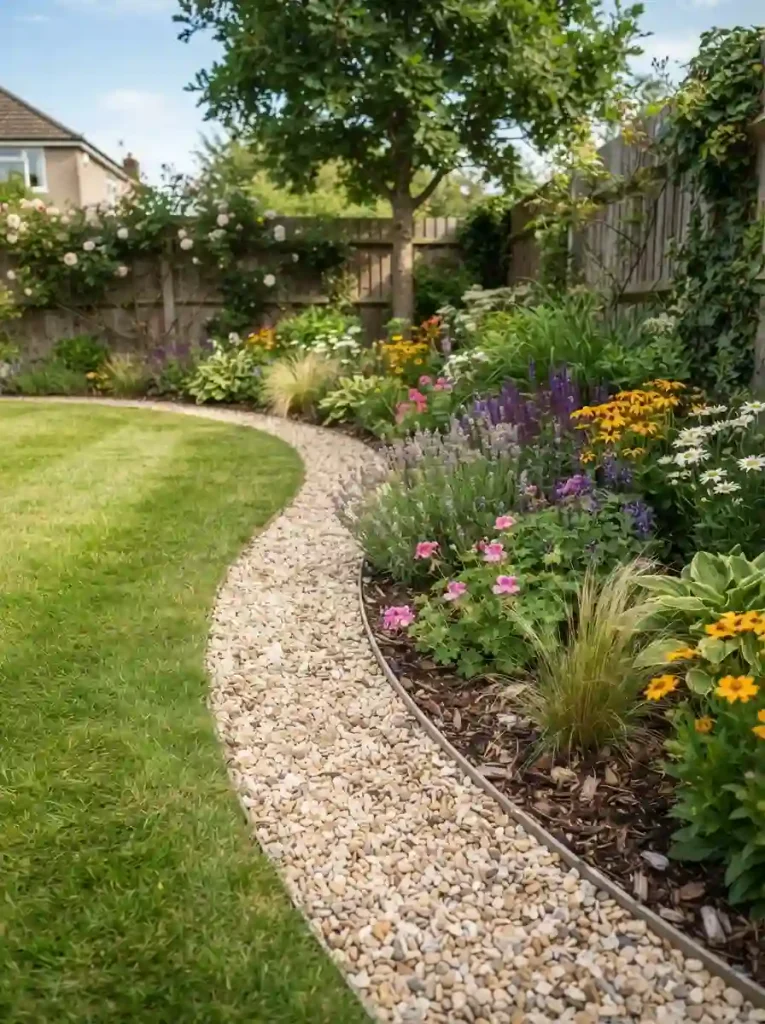
Gravel can create a neat transition between lawns, planting beds, and pathways while adding texture to the landscape. It is particularly useful when you want an edging solution that looks natural rather than highly structured.
Choose inexpensive pea gravel, crushed stone, or another locally available aggregate. A narrow strip can be enough to visually separate two areas without using a large quantity of material.
Gravel also works nicely around drought-tolerant plants and modern garden designs. Different stone colors can be used to complement nearby paving, house colors, or decorative containers.
For better results, remove existing grass from the border and create a shallow channel before adding the gravel. This helps keep the stones contained and gives the edge a deliberate shape.
Expert Tip:
Install a simple hidden landscape fabric beneath the gravel where appropriate to reduce weed growth, but avoid blocking natural drainage.
4. Half-Buried Stone Edging
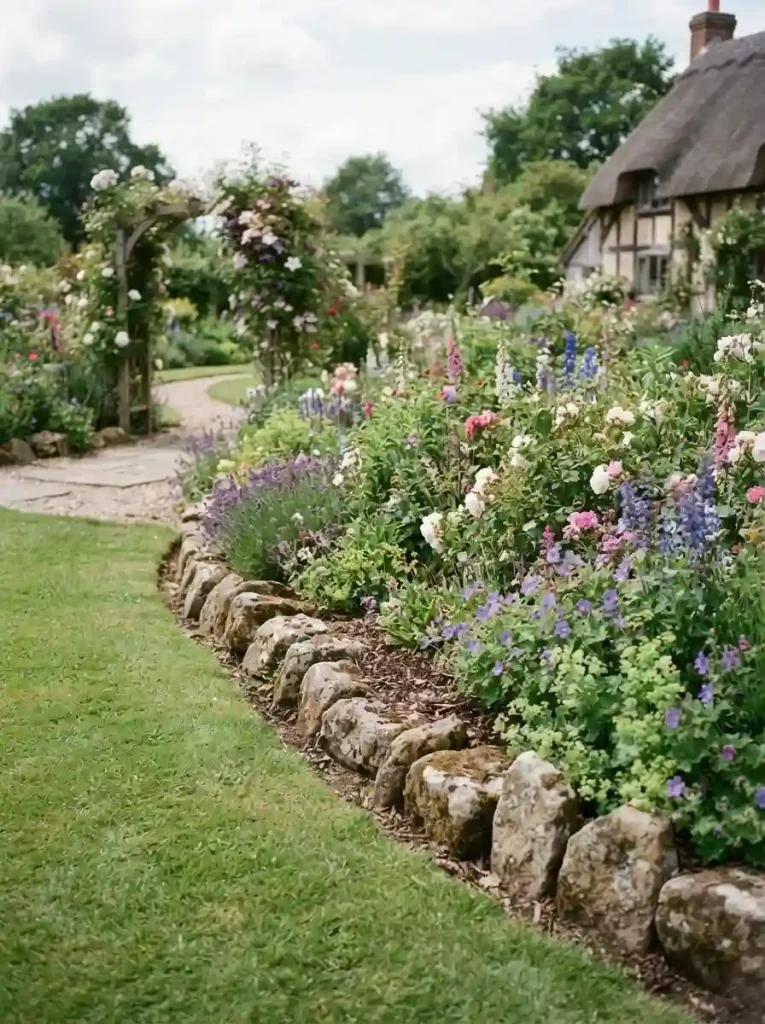
Small stones can become attractive garden edging with almost no complicated construction. If you already have suitable rocks around your property, this idea can be especially inexpensive.
Partially bury each stone so that only the upper portion remains visible. This creates a natural border while helping the rocks stay in position when people walk or work nearby.
Try using stones of similar colors for a tidy appearance, or mix different shapes for a more relaxed woodland-inspired garden. Rounded river rocks create a softer appearance, while rough stones feel more rustic.
This type of edging looks particularly good around native plants, shrubs, cottage-style beds, and informal pathways.
Expert Tip:
Choose stones that are heavy enough to remain stable but not so large that moving or positioning them becomes difficult.
5. Upcycled Terracotta Pot Edging
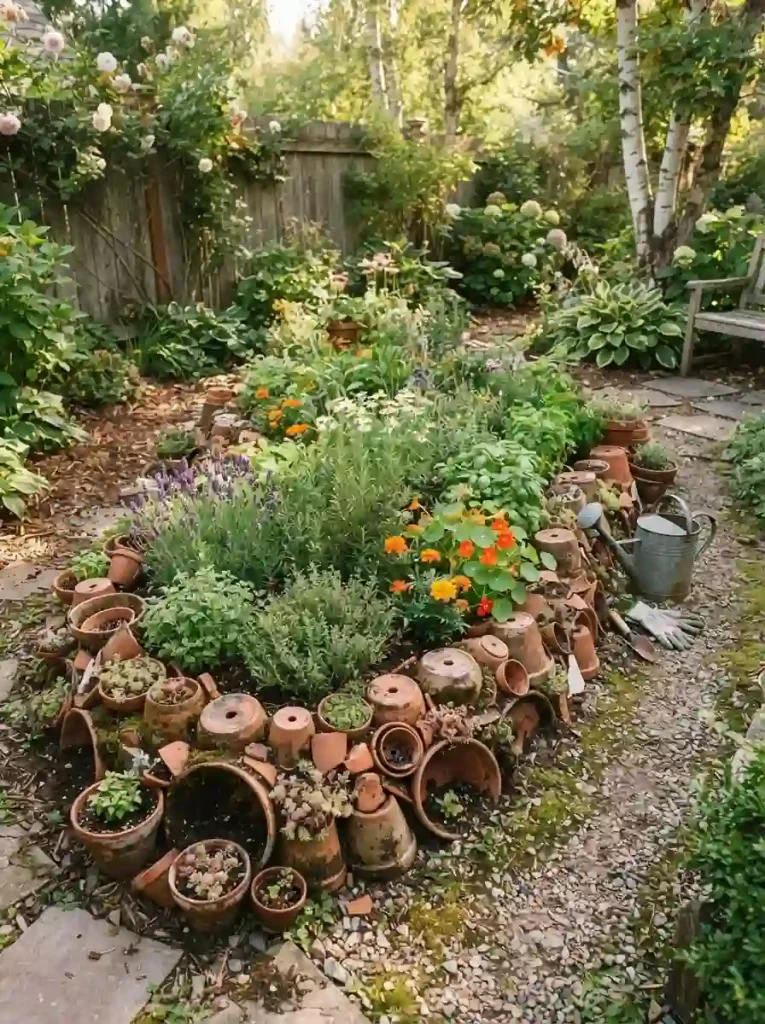
Broken or unused terracotta pots can find a second life as colorful garden edging. Instead of throwing old containers away, use their shapes and warm clay tones to create a playful border.
Whole small pots can be placed closely together along a flower bed, while larger broken pieces can be partially buried for an unusual decorative edge.
Terracotta works beautifully with herbs, Mediterranean plants, succulents, and cottage-style flowers. The earthy orange color also stands out against green foliage.
If using broken pieces, smooth or bury sharp edges carefully so the border does not become a safety concern.
Expert Tip:
Group pots of different sizes for a relaxed handmade appearance, but keep the spacing consistent enough that the border still looks intentional.
6. Painted Timber Border
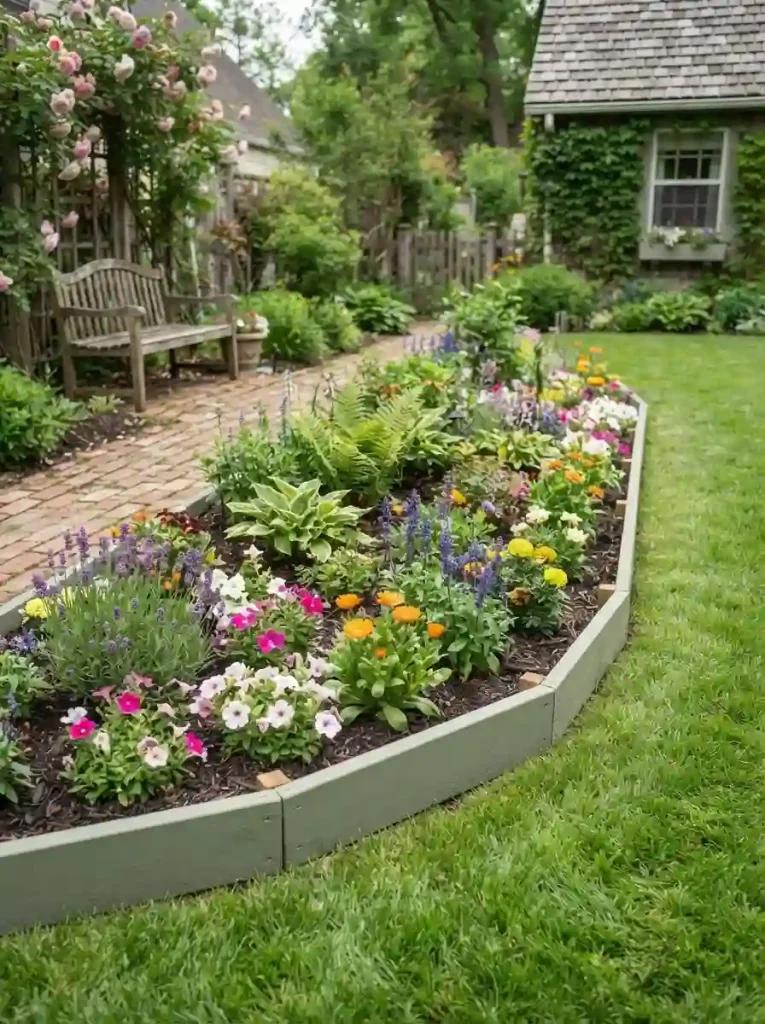
A few inexpensive timber strips can become a colorful garden feature with exterior-safe paint. This is a simple option when you want edging that coordinates with your home, fence, shed, or garden furniture.
Keep the design simple with one color rather than creating an overly busy pattern. Soft green, muted blue, charcoal, white, or natural brown can work well depending on the surrounding landscape.
The timber can be installed horizontally for a clean border or placed vertically for a more decorative picket-style appearance.
Make sure the material and finish are suitable for outdoor conditions. Proper preparation can help the paint resist peeling and weather exposure.
Expert Tip:
Paint the boards before installation. It is much easier to cover every surface evenly when the timber is still lying flat.
7. Recycled Glass Bottle Border
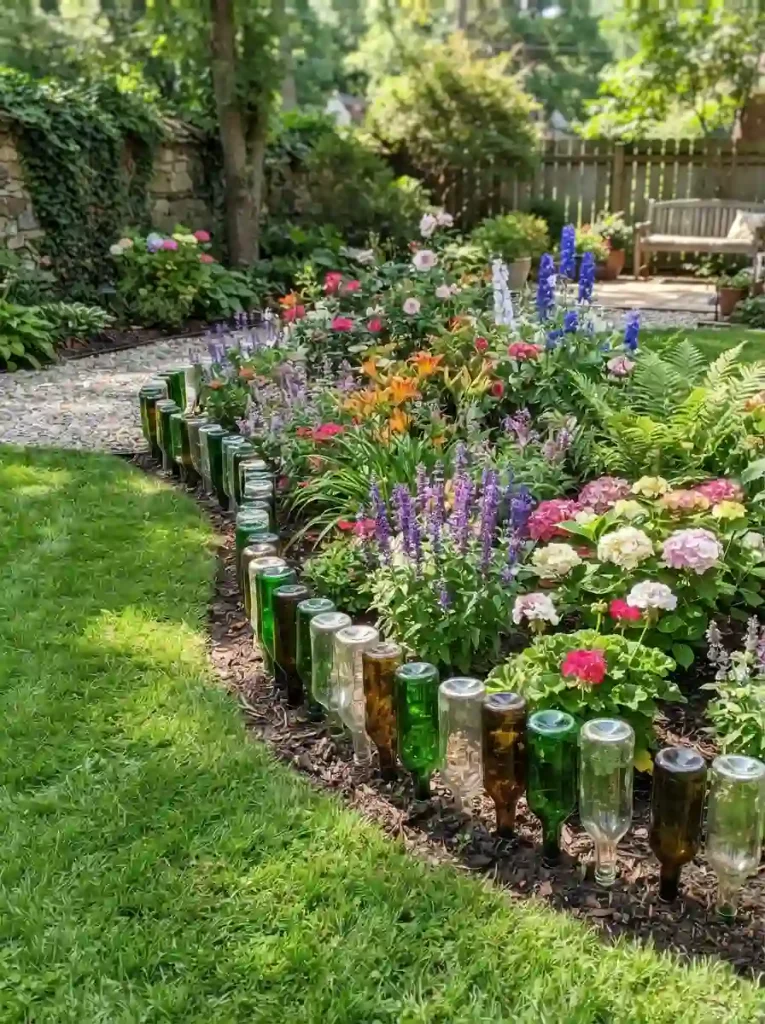
Empty glass bottles can become an eye-catching edging material when reused carefully around ornamental planting areas. Their shapes and colors create a distinctive border without requiring expensive landscaping products.
Insert bottles securely into the soil with the neck facing downward and the base visible above the ground. Clear, green, brown, or blue glass can each create a different visual effect.
This idea works best as a decorative accent rather than around areas where children frequently play or where lawn equipment may hit the bottles.
Use only bottles that are intact and free from sharp damage. Position them securely so they cannot easily tip over.
Expert Tip:
Keep bottle colors coordinated for a cleaner appearance, or use one repeated color to make the edging look more deliberately designed.
8. Natural Branch Edging
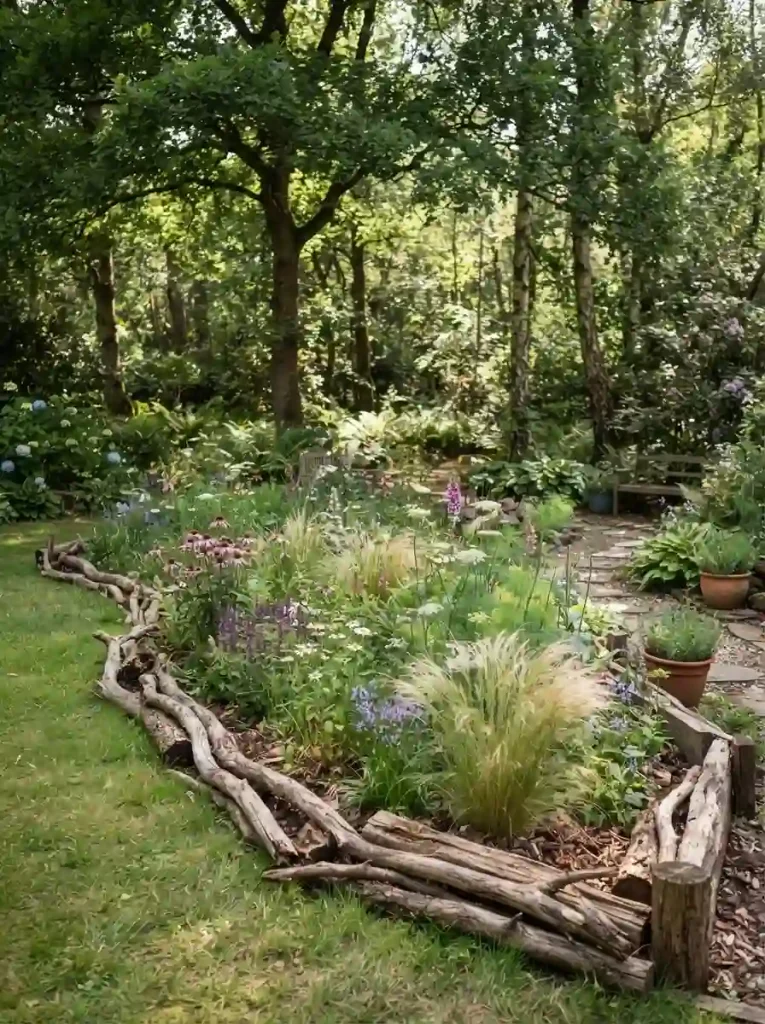
Fallen branches and sturdy garden prunings can be transformed into rustic edging for very little money. This approach works especially well in woodland gardens, informal flower beds, and natural-style landscapes.
Collect straight branches of similar thickness and cut them into manageable pieces. They can be arranged horizontally along the bed or positioned vertically in a row.
The natural bark adds texture and helps the planting area feel connected to the surrounding landscape. Branch edging also looks attractive when paired with ferns, ornamental grasses, wildflowers, and other informal plants.
Because untreated branches eventually decompose, this option is best when you are comfortable replacing sections periodically.
Expert Tip:
Choose dry, healthy branches rather than soft or visibly rotten wood. Thicker pieces generally hold their shape longer when exposed to moisture.
9. Concrete Paver Edging on a Budget
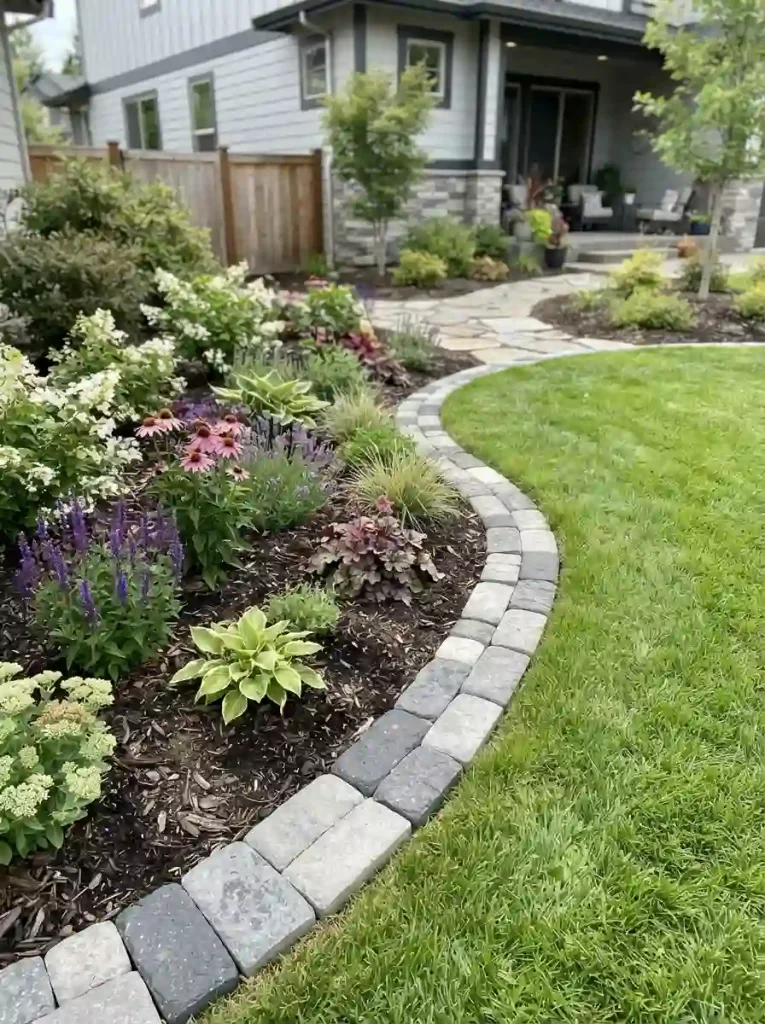
Small leftover concrete pavers can provide a surprisingly polished garden border. If you already have spare pavers from a patio or walkway project, reusing them can keep the cost low.
Arrange the pavers in a straight line for a formal garden or gently curve them around rounded planting beds. Their solid shape creates a clear visual boundary between grass and soil.
Concrete pavers are also practical because they can withstand regular contact with lawn maintenance equipment better than some lightweight edging materials.
Choose pieces that are reasonably similar in thickness so the finished edge does not become uneven. Compact the soil beneath them before installation.
Expert Tip:
Search for leftover or discontinued pavers at local building-material outlets. A mismatched batch can still look attractive when used as a deliberately informal border.
10. Rope and Stake Garden Edging
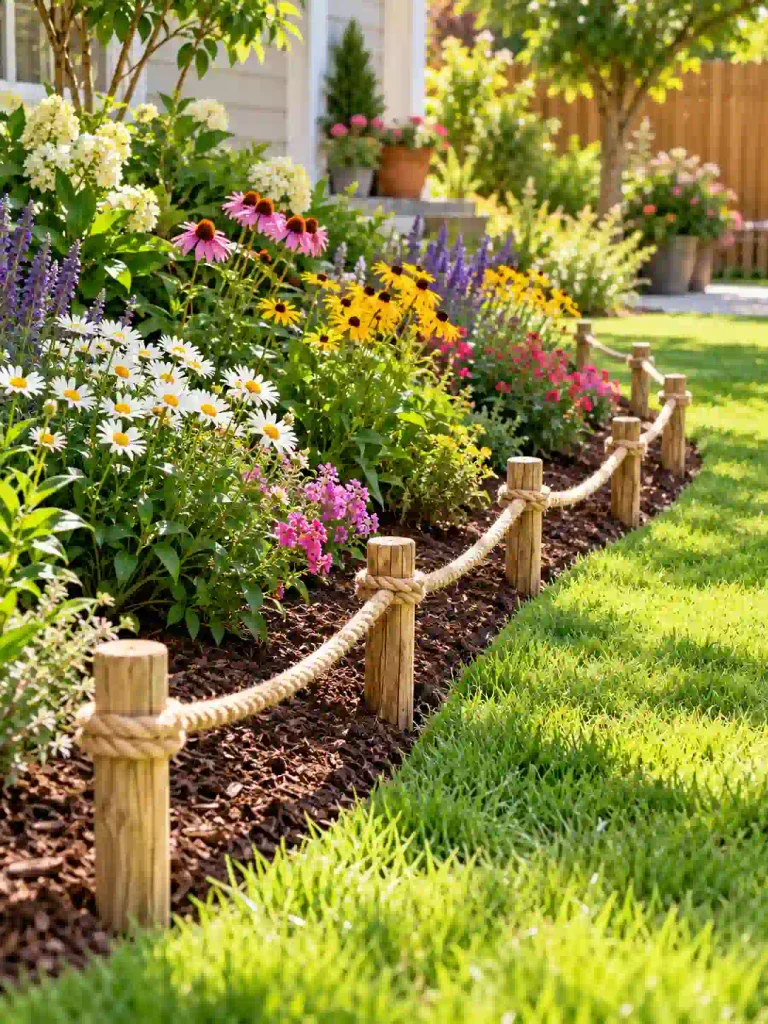
For a soft, inexpensive garden boundary, try using weather-resistant rope with small wooden stakes. This creates a casual visual separation without the permanence of stone, brick, or concrete.
Drive short stakes into the soil at regular intervals and wrap the rope around them to outline the planting bed. Curved layouts can be created easily by adjusting the spacing between stakes.
This style works especially well for temporary garden designs, rental properties, children’s gardens, and areas where you expect the layout to change.
Use sturdy outdoor rope designed to withstand moisture and sunlight. Keep the line low and secure so it does not become an obstacle.
Expert Tip:
Place the stakes closer together around tight curves and farther apart along straight sections to keep the rope line smooth.
11. Mulch Trench Edging
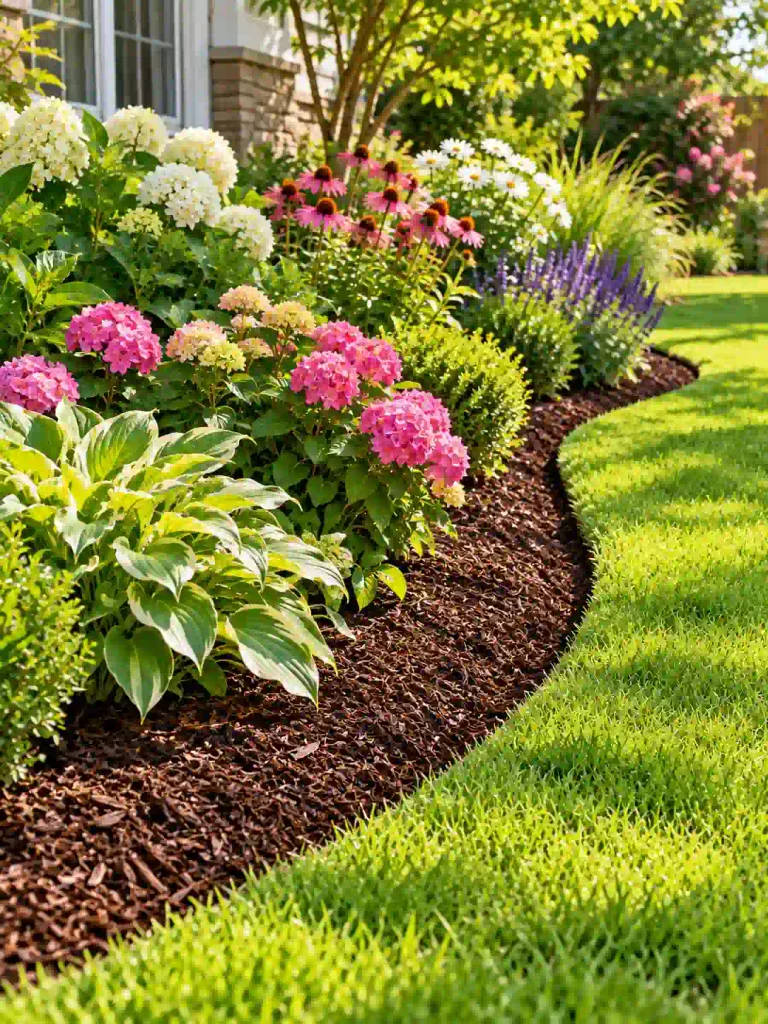
Sometimes the most affordable garden edge is created without adding a separate edging material at all. A clean mulch trench can create enough contrast to define a flower bed beautifully.
Dig a narrow channel between the lawn and planting area, then fill it with mulch or another suitable organic material. The darker strip creates a visual frame around flowers and shrubs.
This approach keeps the garden looking natural and works especially well with curved beds. It also avoids introducing another color or material that could compete with the plants.
The trench will need occasional refreshing because mulch breaks down and can gradually spread into surrounding areas.
Expert Tip:
Keep the trench wide enough to remain visible after rainfall and routine maintenance, but avoid making it so deep that water collects along the garden edge.
12. Flat Natural Rock Edging
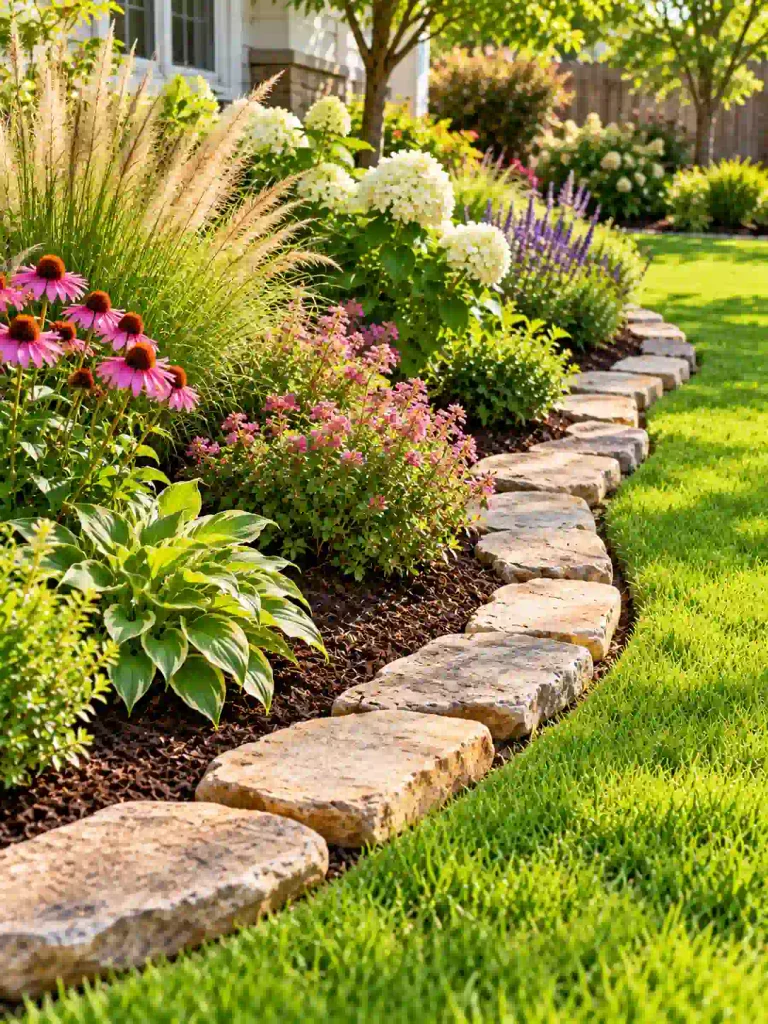
Flat landscaping rocks can create a sturdy, understated border without making the garden feel overly formal. Look for inexpensive natural stones at local landscape suppliers or reuse suitable rocks already available around your property.
Place the stones end to end along the boundary of a flower bed, keeping them mostly level with one another. Slight variations in shape can make the border feel more natural.
This style pairs well with ornamental grasses, flowering shrubs, drought-tolerant plants, and gravel gardens. The neutral stone color also works with almost any planting palette.
Prepare the ground before positioning the rocks so they do not wobble or gradually tilt. A shallow soil trench can help keep them securely in place.
Expert Tip:
Lay your largest and flattest stones along visible sections of the border, then use smaller pieces to fill gaps and create a more balanced appearance.
13. Recycled Pallet Wood Edging
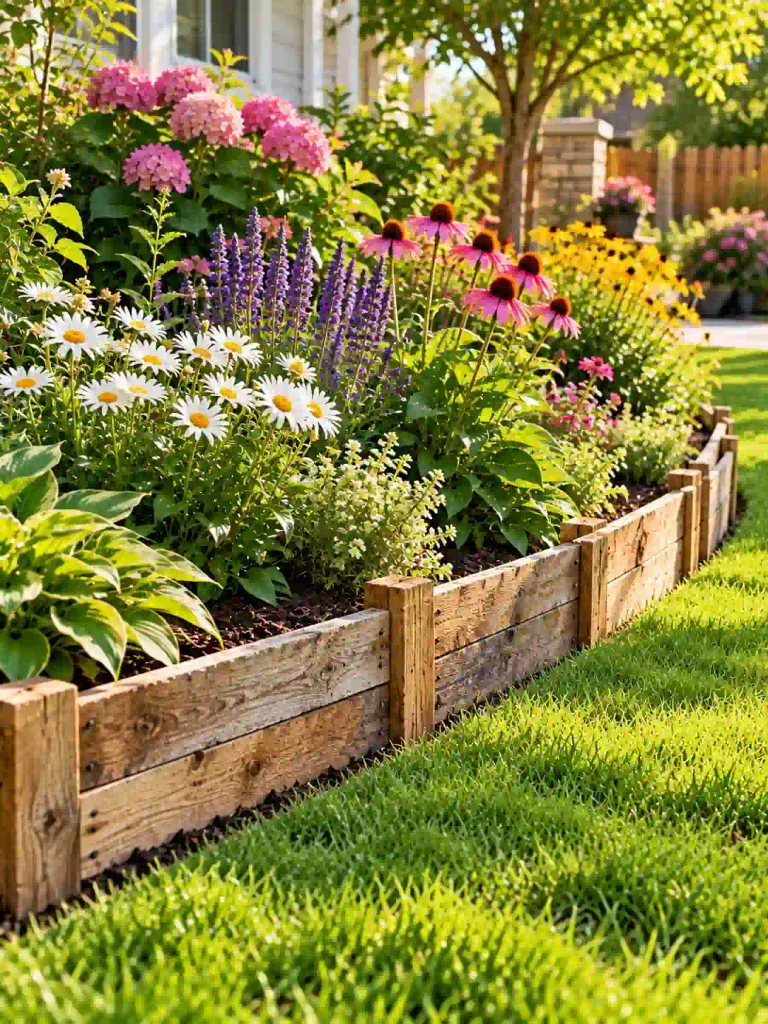
Old wooden pallets can sometimes provide useful boards for inexpensive garden projects. With careful preparation, individual boards can be turned into simple edging around ornamental beds.
Remove nails and damaged sections before cutting the boards into similar lengths. The pieces can be placed horizontally to create a low boundary or arranged vertically for a stronger visual statement.
Pallet wood has a naturally rustic appearance that works particularly well with informal gardens. Pair it with wildflowers, herbs, or mixed perennial beds for a relaxed outdoor look.
Only use pallet boards that are clearly suitable for reuse, and avoid materials showing signs of chemical contamination or extensive deterioration.
Expert Tip:
Lightly sand rough surfaces before installation to reduce splinters and give the finished edging a cleaner appearance.
14. Curved Shovel-Cut Edge
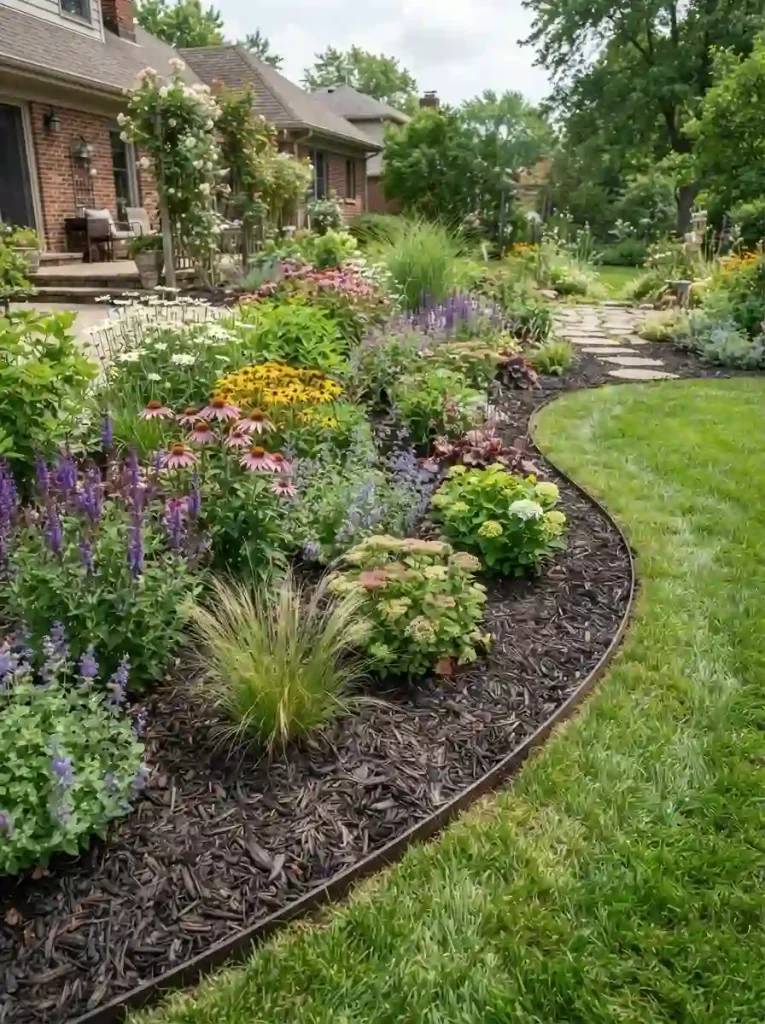
A shovel-cut edge is one of the simplest ways to make a garden look more defined without purchasing edging materials. The technique creates a clean line directly between lawn and planting soil.
Use a sharp spade to cut a narrow trench along the desired boundary. Curved lines can be shaped around trees, shrubs, and flower beds to create a more natural landscape.
The exposed soil or mulch provides enough contrast to make the border noticeable while keeping the overall appearance understated.
Because grass can slowly grow back toward the bed, the edge should be refreshed occasionally. A quick trimming session can keep the line looking crisp.
Expert Tip:
Use a garden hose to mark your preferred curve before cutting the soil. This makes it easier to adjust the shape until the layout looks balanced.
15. Small Log Garden Border
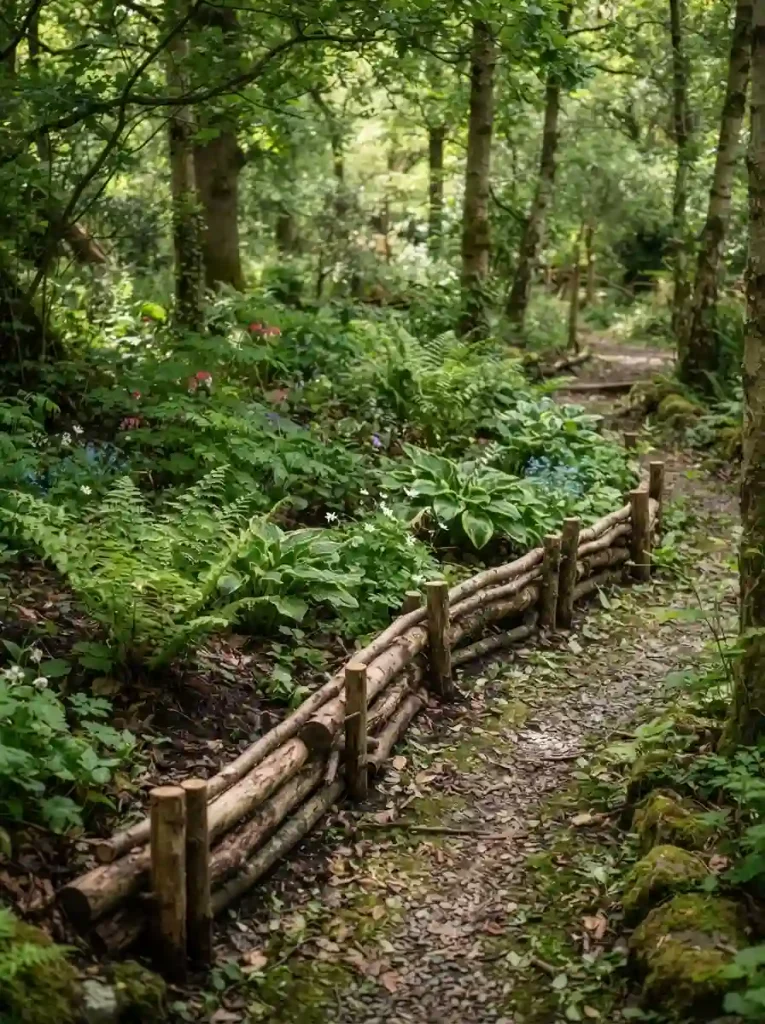
Short sections of small logs can provide a natural and substantial-looking garden edge. Fallen branches or logs from suitable sources may help reduce the cost compared with manufactured landscape timbers.
Cut the logs into similar lengths and arrange them closely along the planting bed. They can remain above ground for a stronger rustic effect or be partially buried for greater stability.
This style is particularly attractive in woodland-inspired gardens and outdoor spaces that use natural materials throughout the landscape.
Make sure the wood is healthy and reasonably resistant to rapid decay. Logs exposed directly to damp soil will eventually weather and need replacement.
Expert Tip:
Slightly vary the log diameters instead of forcing every piece to look identical. Natural variation can make the finished border feel more authentic.
16. Decorative Ceramic Tile Border
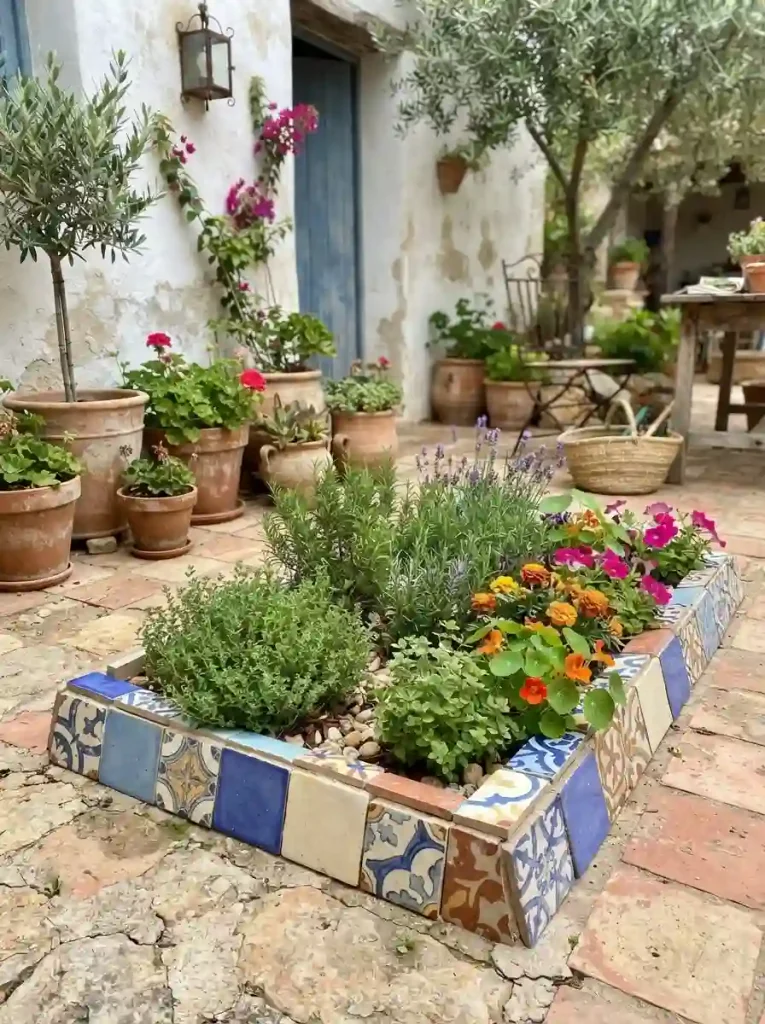
Leftover ceramic tiles can become an inexpensive decorative border when used around small garden beds. This idea is especially useful if you have mismatched tiles from a home renovation.
Place the tiles vertically along the soil edge, leaving part of each tile visible above the ground. A mix of related colors can create a cheerful handmade appearance.
Patterned tiles can work particularly well around herb gardens, patios, or small Mediterranean-inspired planting areas.
Avoid using tiles with sharp broken edges where people may regularly walk. Smooth, intact pieces are easier to install and maintain.
Expert Tip:
Choose two or three complementary tile colors rather than using every available pattern. A limited palette keeps recycled materials looking intentional.
17. Large Pebble Garden Border
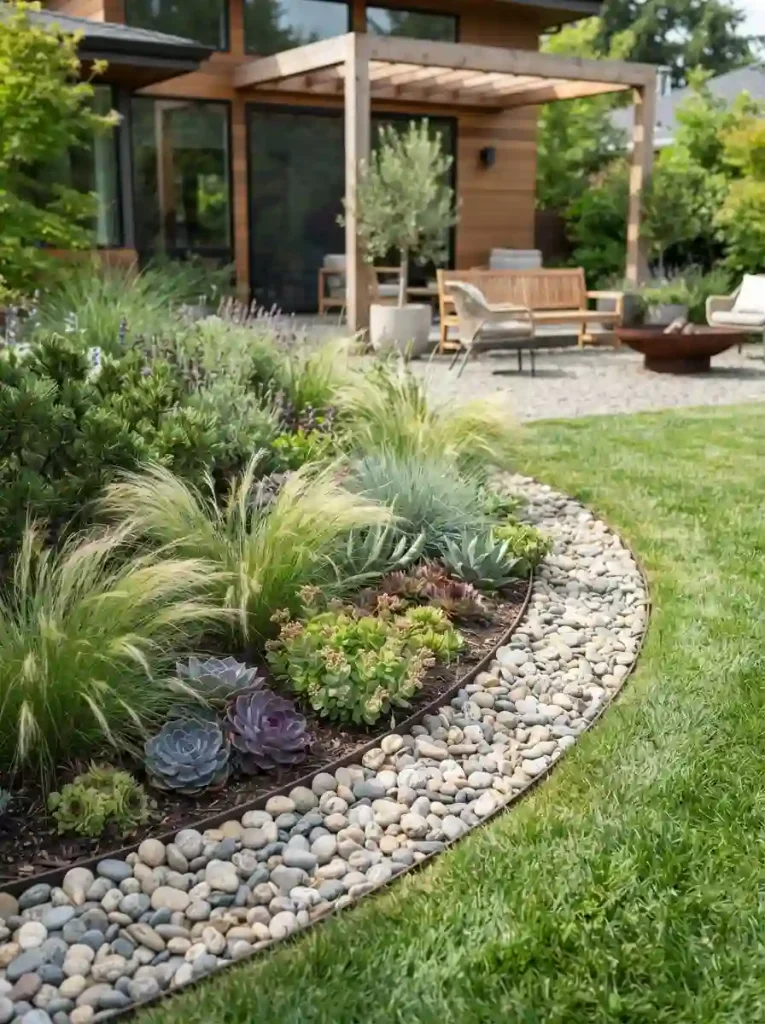
Large decorative pebbles can create a smooth, contemporary transition between planting beds and surrounding surfaces. They are particularly useful when you want a softer alternative to rigid concrete edging.
Choose stones large enough that they remain visible after rain or routine gardening. Arrange them in a single continuous line or create a slightly wider stone band.
This edging looks attractive around succulents, ornamental grasses, shrubs, and minimalist garden beds. Neutral pebbles can also make colorful flowers stand out.
Before placing the stones, clear away grass and weeds from the intended border so the pebbles remain visually distinct.
Expert Tip:
Use stones with similar tones but slightly different shapes. This gives the border variation without making it look cluttered.
18. Woven Willow-Style Border
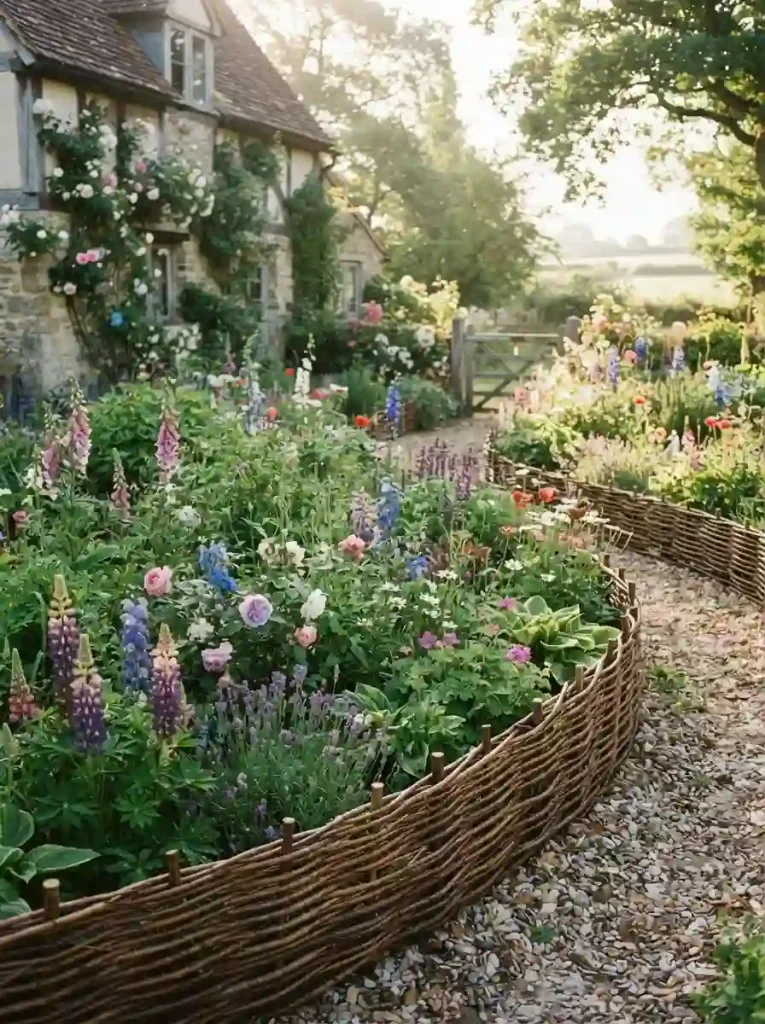
Flexible branches can be woven between short stakes to create a handcrafted garden border with plenty of character. This technique gives a flower bed a cottage-garden appearance without requiring manufactured edging.
Insert sturdy stakes at regular intervals and weave flexible branches horizontally between them. Keep each row reasonably tight so the border maintains its shape.
The woven texture looks particularly appealing beside wildflowers, herbs, and informal perennial gardens. It can also help create a stronger visual separation around raised planting areas.
Natural woven materials will eventually weather, so expect occasional repairs or replacement.
Expert Tip:
Soak stiff branches before weaving when appropriate. Flexible material is easier to shape and less likely to snap during installation.
19. Seashell Garden Edging
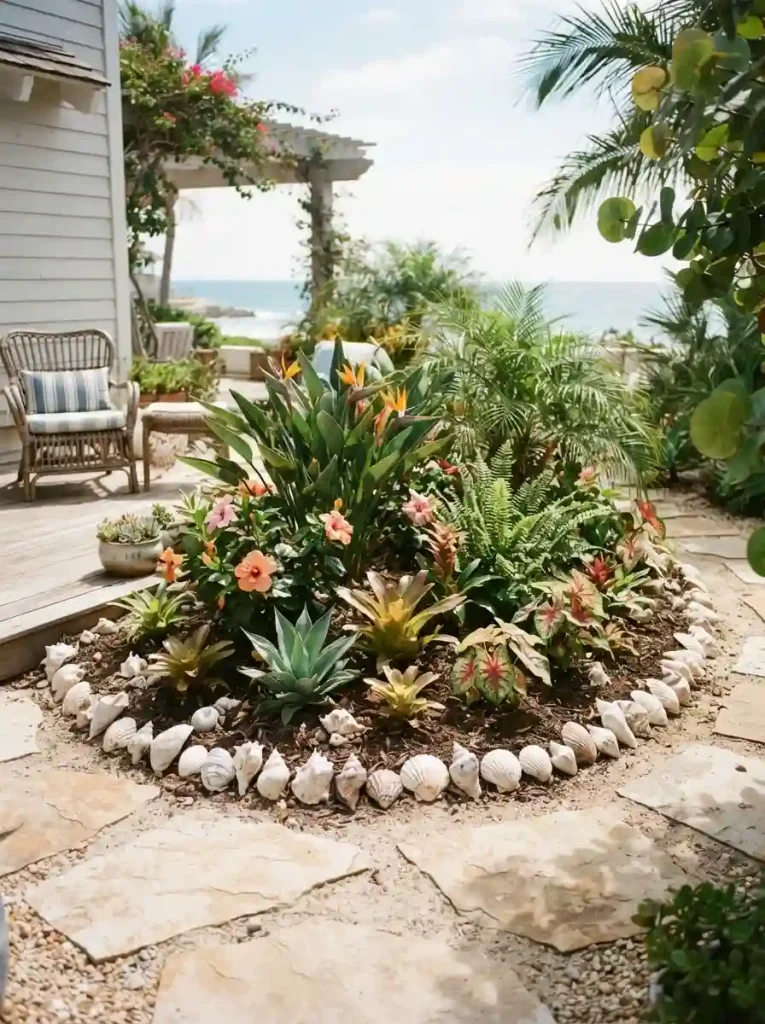
If you live near a coastal area or already have a collection of decorative seashells, they can be used to create a light and distinctive garden border.
Arrange larger shells along the outside edge of a small flower bed, herb garden, or patio planter. Their pale colors create an attractive contrast against dark soil and green foliage.
Shell edging works best as a decorative accent rather than a heavy-duty boundary. It is especially suited to coastal, tropical, and relaxed outdoor designs.
Clean shells thoroughly before using them, particularly if they have been collected rather than purchased for decorative purposes.
Expert Tip:
Use shells sparingly around selected garden areas rather than covering every border. A narrow accent line usually looks more polished and keeps the garden from feeling overcrowded.
20. Reused Slate Pieces
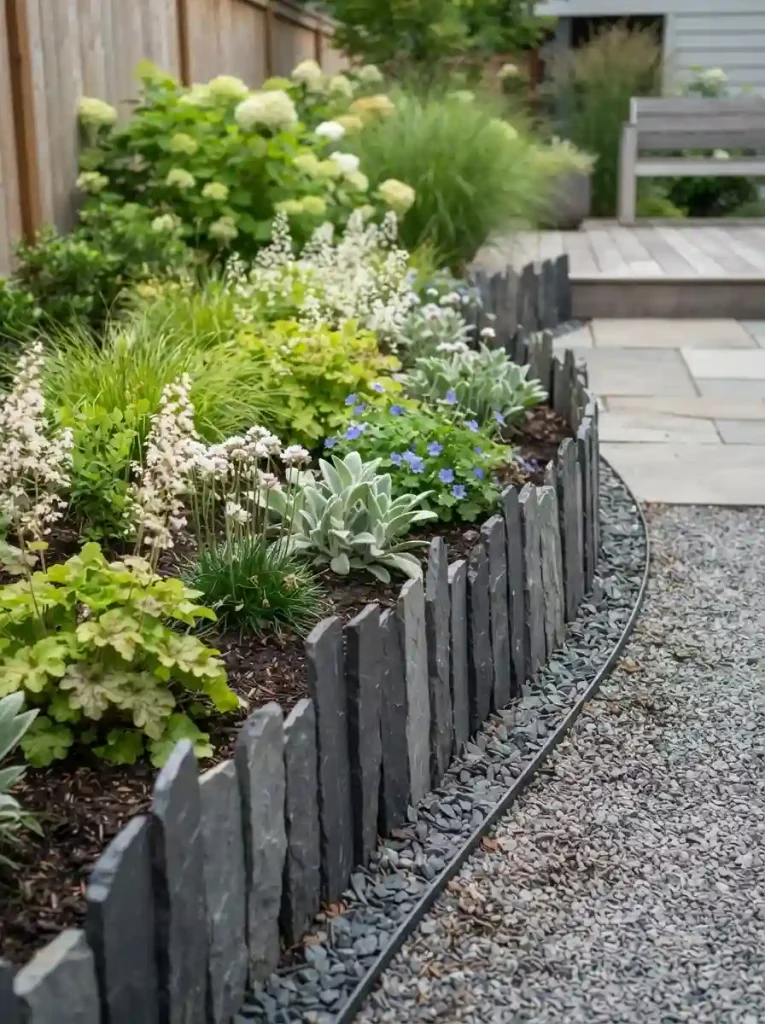
Old slate pieces can provide a sleek garden border with a naturally dark appearance. Broken slate from previous landscaping or renovation projects can often be reused instead of discarded.
Arrange the pieces vertically in a narrow trench for a contemporary edge, or lay flatter pieces horizontally for a subtle boundary.
Dark slate contrasts beautifully with bright green foliage, silver-leaved plants, and colorful flowers. It can also complement modern homes with charcoal or gray exterior details.
Make sure individual pieces are stable and do not create sharp protrusions into walkways or frequently used areas.
Expert Tip:
Keep the visible height relatively consistent when installing vertical slate pieces. Small differences are fine, but an extremely uneven line can make the border look unfinished.
21. Gravel-and-Stone Combination Border
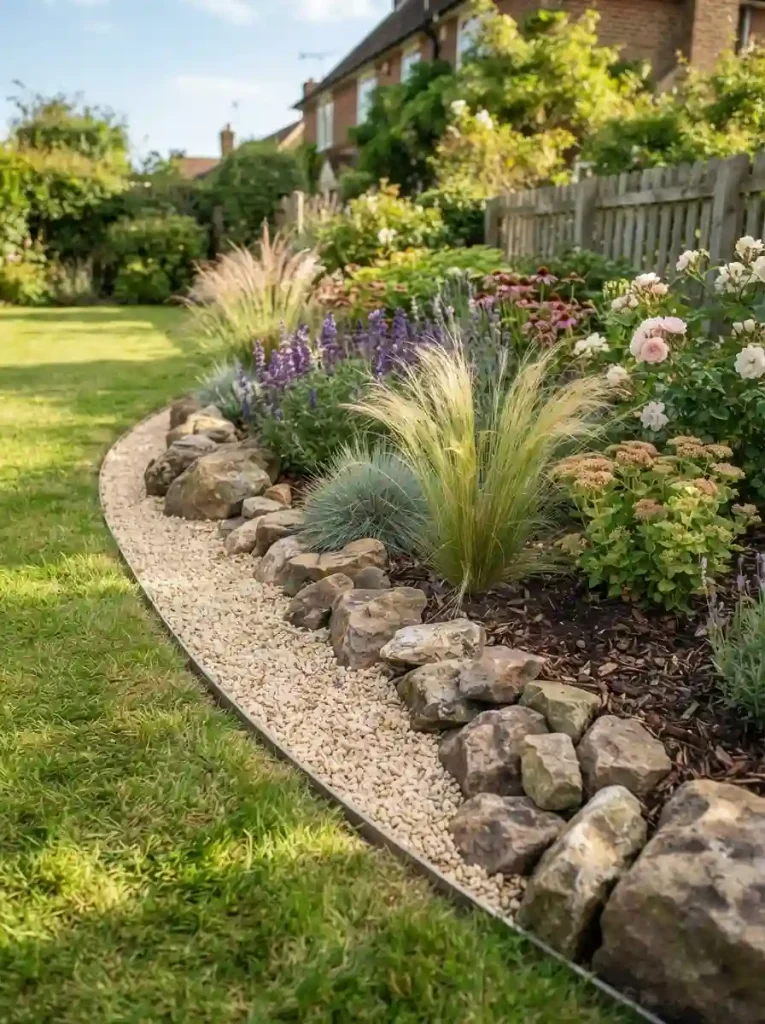
Combining two inexpensive materials can create a more finished garden edge without requiring a large budget. A narrow band of gravel placed beside larger stones provides both texture and definition.
Use larger rocks as the main boundary and fill the spaces around them with small gravel. This creates a layered appearance while helping stabilize the larger pieces.
The combination works well around dry gardens, ornamental grasses, shrubs, and informal pathways. You can also coordinate the stone colors with nearby paving or house materials.
Keep the transition between the gravel and planting area clean so the different textures remain easy to see.
Expert Tip:
Choose one dominant stone color and one complementary gravel shade. Too many contrasting materials can make a small garden border look visually busy.
22. Recycled Metal Garden Edge
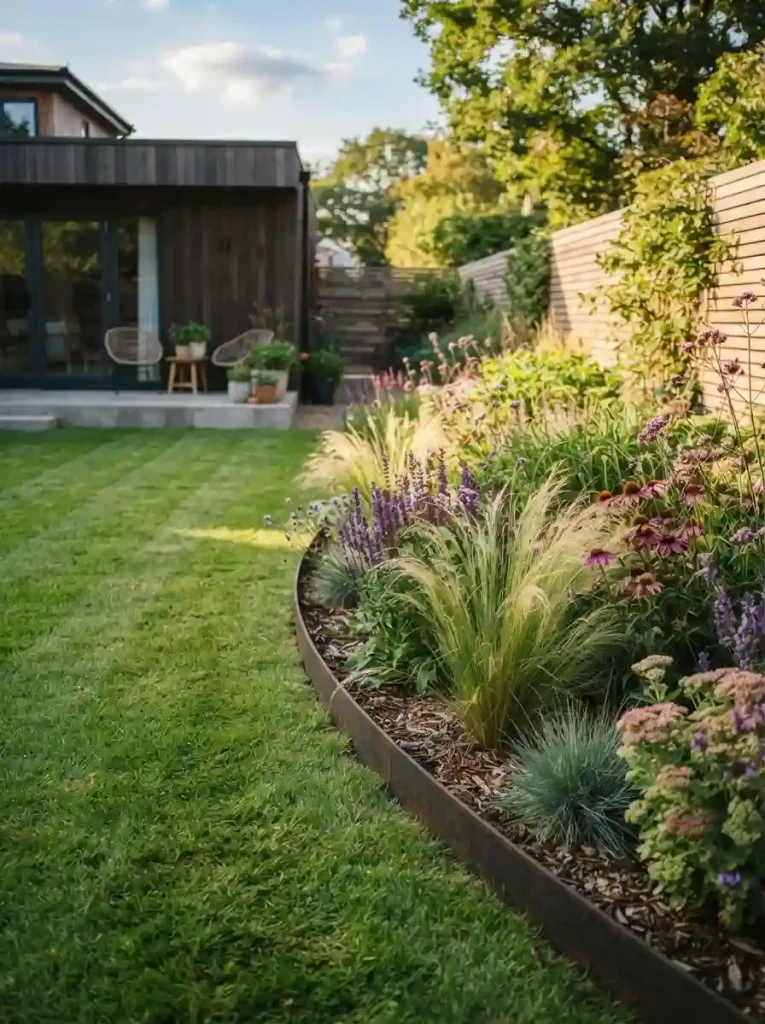
Old metal strips, corrugated panels, or suitable reclaimed metal can create a crisp garden boundary when prepared and installed safely. This option gives a more modern appearance than traditional wood or stone.
Use clean pieces without dangerous rust, sharp protrusions, or unstable edges. Metal can be installed as a narrow vertical border between lawn and planting soil.
Dark or naturally weathered metal works particularly well with contemporary gardens, ornamental grasses, succulents, and minimalist planting schemes.
Because metal edges can become hot in strong sunlight, consider their placement carefully around delicate plants and frequently used garden spaces.
Expert Tip:
Carefully cover or recess exposed edges so the finished border remains safe around people, pets, and lawn equipment.
Final Thoughts
Garden edging does not have to be an expensive landscaping project. With a little creativity, inexpensive and reclaimed materials can define planting beds, improve lawn boundaries, and give outdoor spaces a much more intentional appearance.
The best choice depends on the style of your garden, the amount of maintenance you want to handle, and the materials you already have available. Natural stones can create an organic look, reclaimed wood adds warmth, while gravel and metal can produce a cleaner contemporary finish.
Before installing any border, consider drainage, lawn maintenance, stability, and safety. A beautiful edge should also make the garden easier to care for.
Start with one small flower bed or pathway instead of changing the entire yard at once. Once you see how the new border looks, you can repeat the same approach throughout the garden.
A thoughtful garden edge may be a small detail, but it can make the entire outdoor space feel more organized, finished, and inviting.