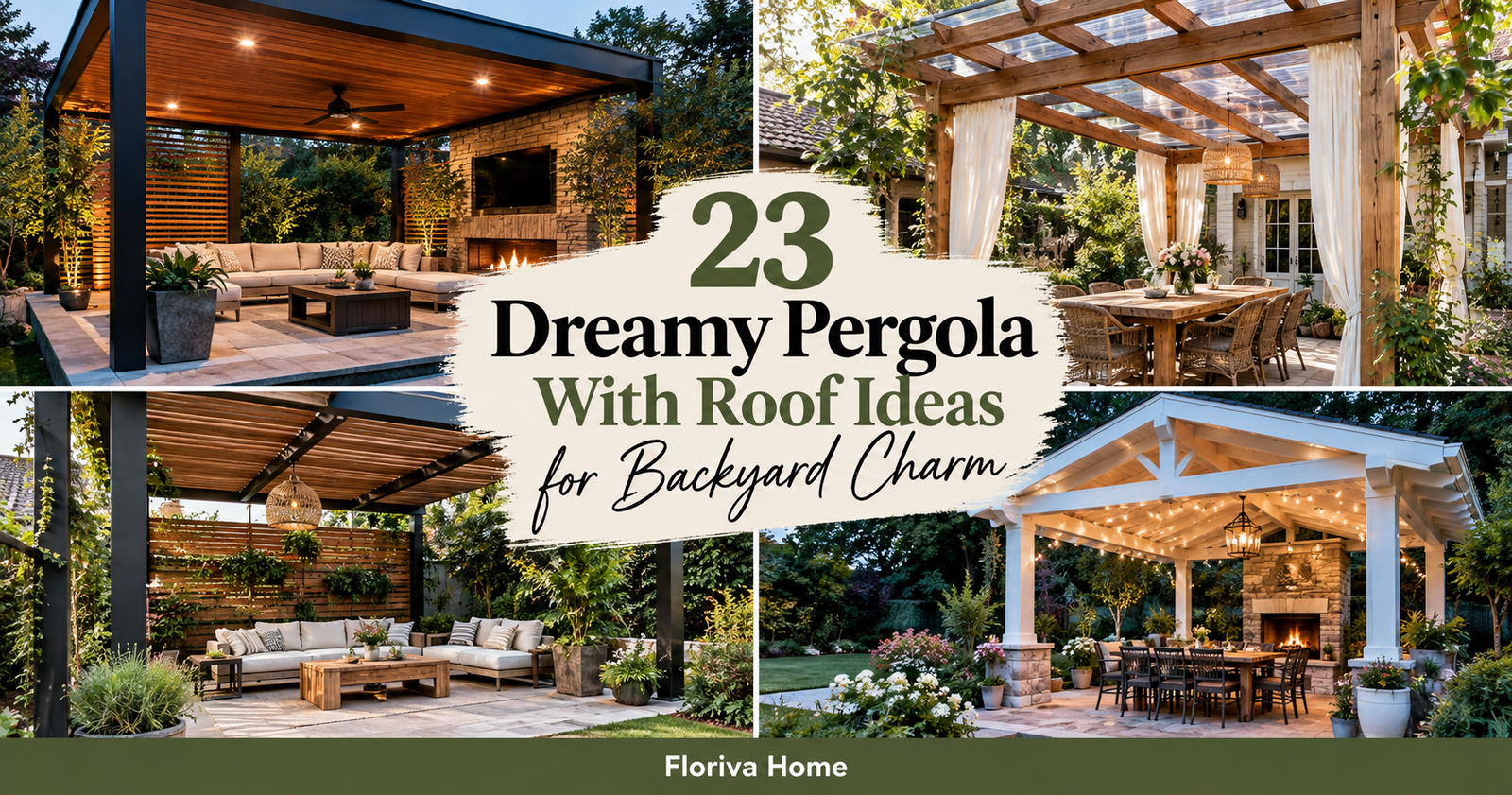
23 Dreamy Pergola With Roof Ideas for Backyard Charm
A pergola with roof can turn an ordinary backyard into a comfortable outdoor retreat for dining, relaxing, entertaining, or simply enjoying fresh air. From fully covered structures that provide dependable shade to airy designs with retractable panels, there are plenty of ways to make this feature suit your home. These 23 pergola ideas explore different materials, layouts, colors, and decorating styles, so you can find inspiration for both spacious yards and compact patios. Whether you prefer modern simplicity, rustic warmth, or a lush garden setting, these backyard pergola designs offer practical ways to create a space you’ll love using.
1. Modern Black Pergola With a Solid Roof
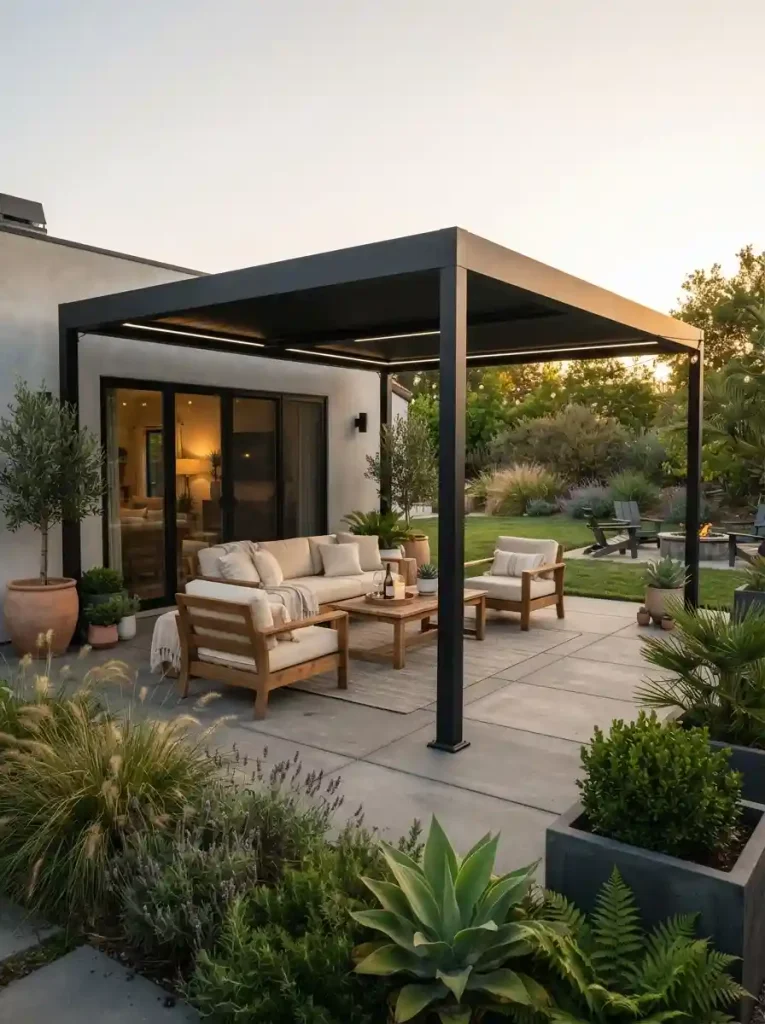
Modern black framework gives this pergola a crisp architectural appearance, while the solid roof creates a more sheltered outdoor room. Pair it with warm wood furniture and cream upholstery to soften the darker structure without losing its modern character.
For a polished backyard, keep accessories restrained. A large outdoor rug, a few oversized planters, and warm-toned lighting can define the seating zone without making the space feel crowded. This combination works especially well beside contemporary homes with neutral exterior finishes and simple landscaping.
2. Cozy Pergola With Retractable Roof Panels
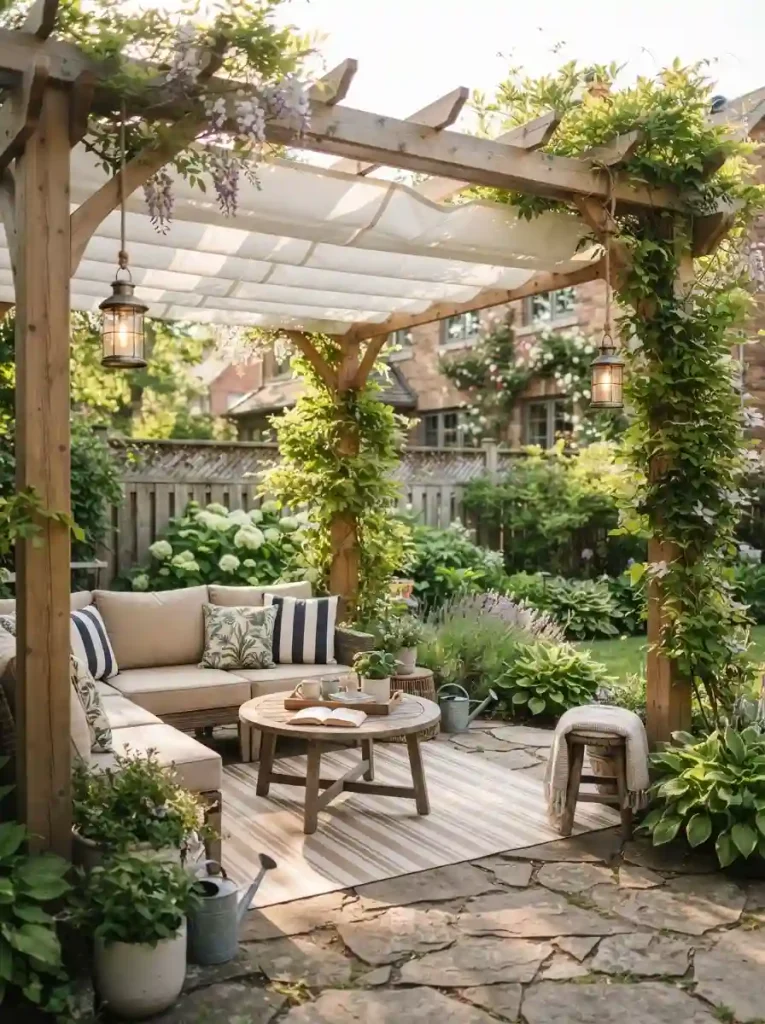
• Choose retractable panels when you want both sunshine and shade.
• Use weather-resistant cushions so the seating remains practical outdoors.
• Add adjustable lighting for evenings when the roof is closed.
• Keep the furniture arrangement flexible around the changing sunlight.
• Train lightweight vines around the posts for a softer border.
A retractable roof makes the pergola adaptable throughout the day. Open the panels during pleasant weather for a brighter garden experience, then close them when stronger sun becomes uncomfortable. It is particularly useful for homeowners who want one outdoor area to serve several purposes.
3. Whitewashed Pergola for a Breezy Garden Retreat
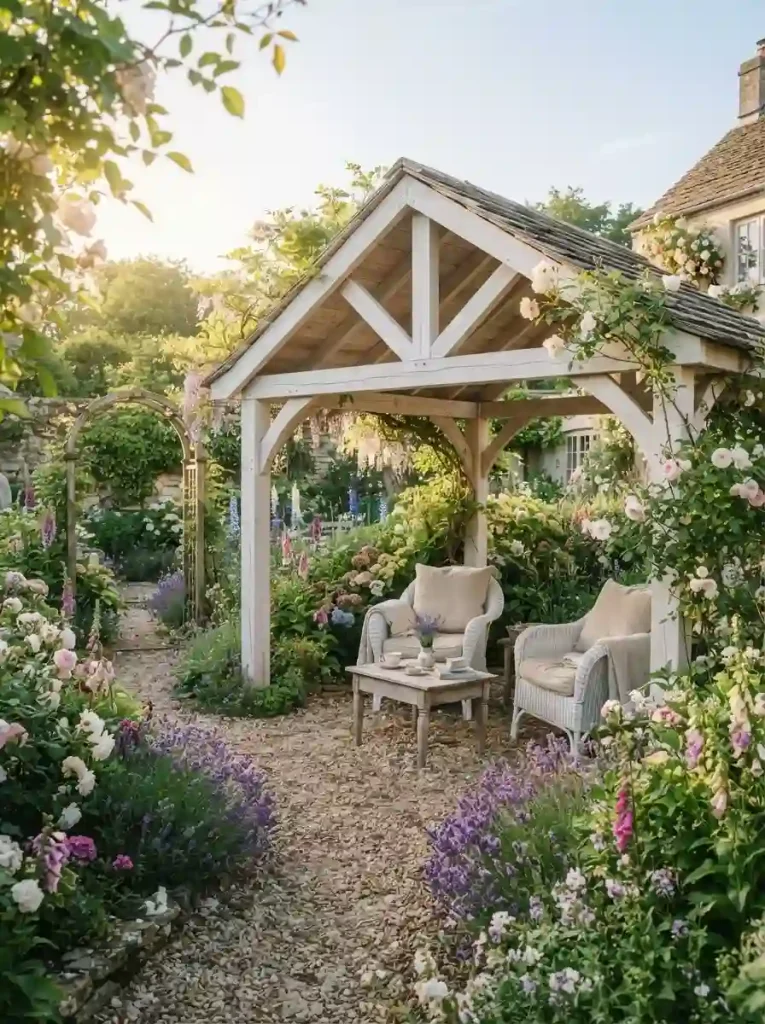
Quick Tip: Use several shades of white rather than one stark tone. A warm ivory roof, creamy furniture, and lightly weathered beams can create depth while keeping the structure bright.
Surround the pergola with fragrant flowers and soft-textured plants to make it feel connected to the garden. Lavender, roses, hydrangeas, or ornamental grasses can soften the edges. A gravel path leading toward the seating area adds a charming transition between the lawn and this peaceful outdoor destination.
4. Pergola Dining Area With a Pitched Roof
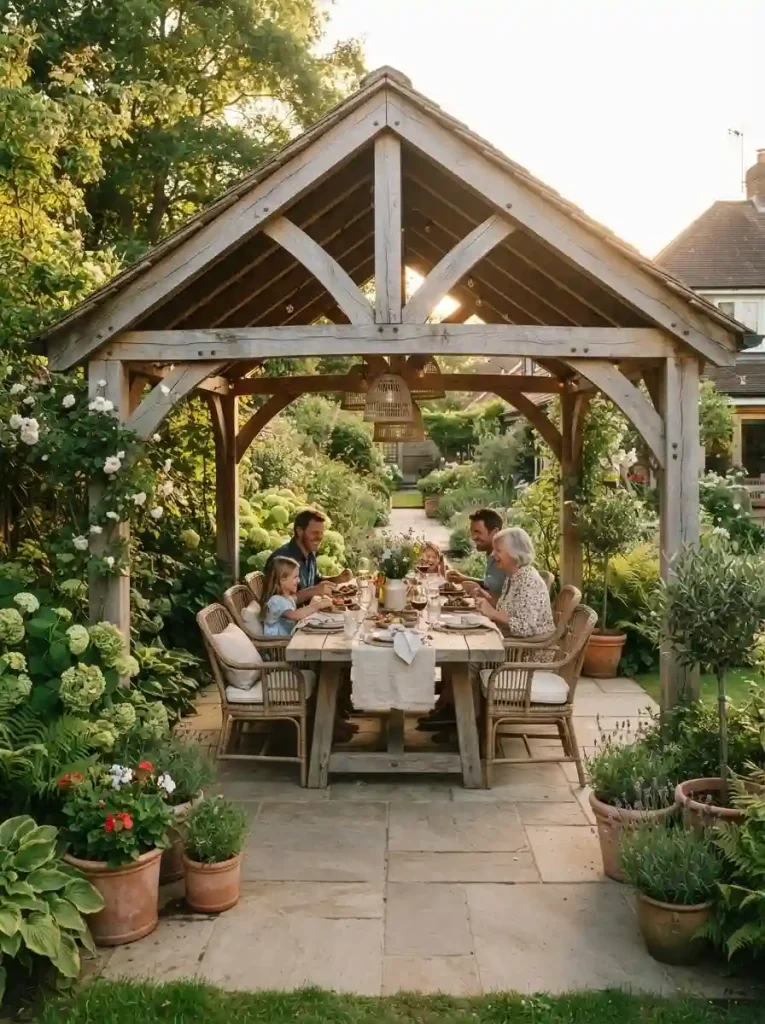
BEFORE
An uncovered dining area can become uncomfortable when direct sunlight hits the table for hours. Without a defined overhead structure, the space may also feel disconnected from the rest of the backyard.
AFTER
A pitched-roof pergola establishes a dedicated dining room outdoors while allowing comfortable headroom and better visual definition. The long table makes the space suitable for family meals and gatherings, while pendant lighting keeps it useful after sunset.
The roof shape also adds architectural interest that a flat structure may not provide. Keep the furniture centered beneath the highest portion of the roof, and use durable tableware, weather-resistant textiles, and easy-clean flooring to make everyday outdoor dining less demanding.
5. Rustic Timber Pergola With a Covered Roof
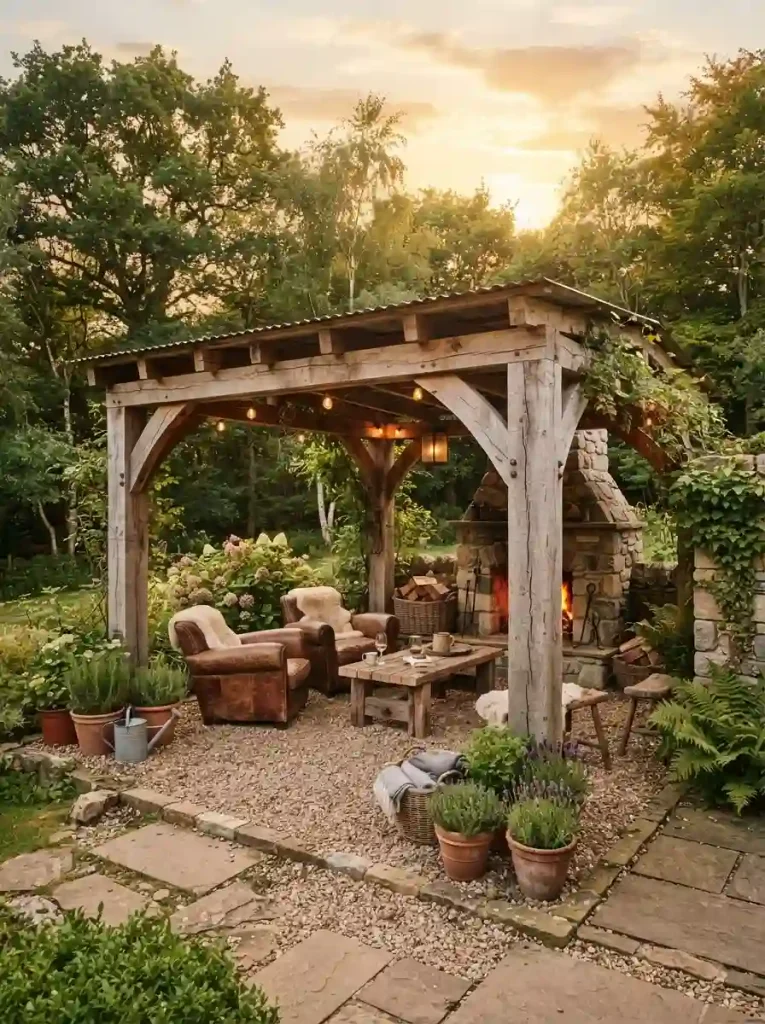
1. Select chunky timber posts to give the structure a substantial appearance.
2. Choose naturally weathered or stained wood for a relaxed rustic finish.
3. Place comfortable seating around a low outdoor table.
4. Add herbs in terracotta containers near the cooking or dining zone.
5. Keep surrounding landscaping slightly informal to complement the timber.
This approach suits homes with stone, brick, or natural wood details. Instead of trying to make every element perfectly coordinated, combine textures that naturally age together. A covered roof, stone accents, and rough timber create an outdoor space that feels established rather than newly installed.
6. Pergola With Roof Over a Small Patio
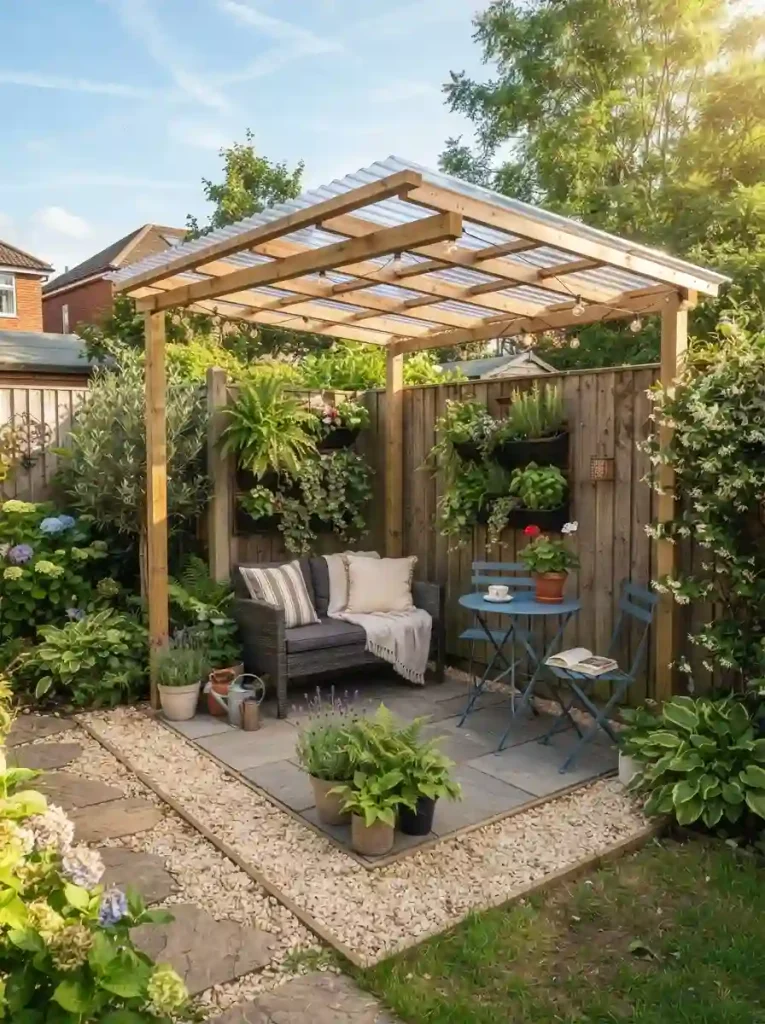
| Approach | Best Use | Main Advantage |
| Slim pergola | Narrow patio | Preserves walking space |
| Deep pergola | Larger yard | Creates fuller outdoor room |
| Wall-attached design | Small footprint | Uses existing home structure |
A small patio does not need a massive structure to feel special. Keep the posts visually slim and choose furniture with a compact footprint. Vertical planters can add greenery without consuming floor space, while a roof provides shade without requiring a separate outdoor canopy.
7. Greenery-Covered Pergola With a Weatherproof Roof
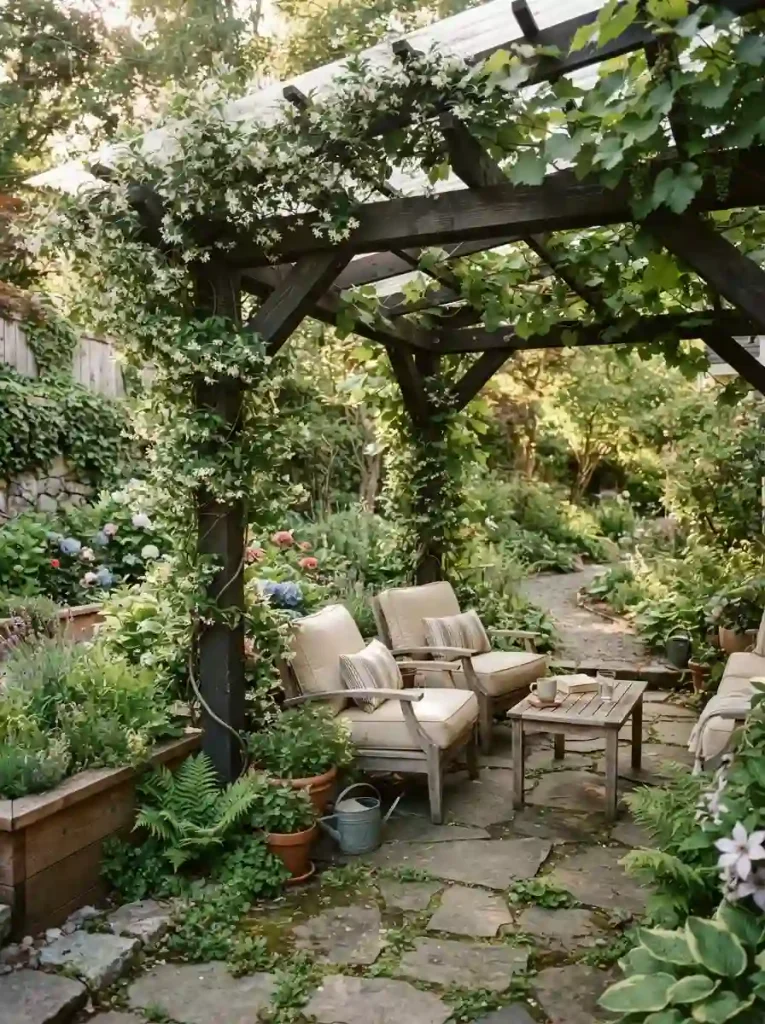
DO
• Train vines along selected sides rather than covering every beam immediately.
• Choose climbing plants suited to your local growing conditions.
• Leave access around the roof for pruning and inspection.
• Combine greenery with simple furniture so the plants remain the visual focus.
DON’T
• Let vines block gutters or drainage areas.
• Plant aggressive climbers without checking their growth habits.
• Assume a leafy covering replaces proper roof protection.
• Allow dense growth to trap moisture against wooden components.
Combining living greenery with a weather-resistant roof gives you both reliable shelter and a garden-like atmosphere. The vines create softness around the hard structure, while the roof remains functional during changing weather. This layered approach works especially well when the pergola sits beside planting beds or mature trees.
8. Outdoor Kitchen Pergola With Full Roof Cover
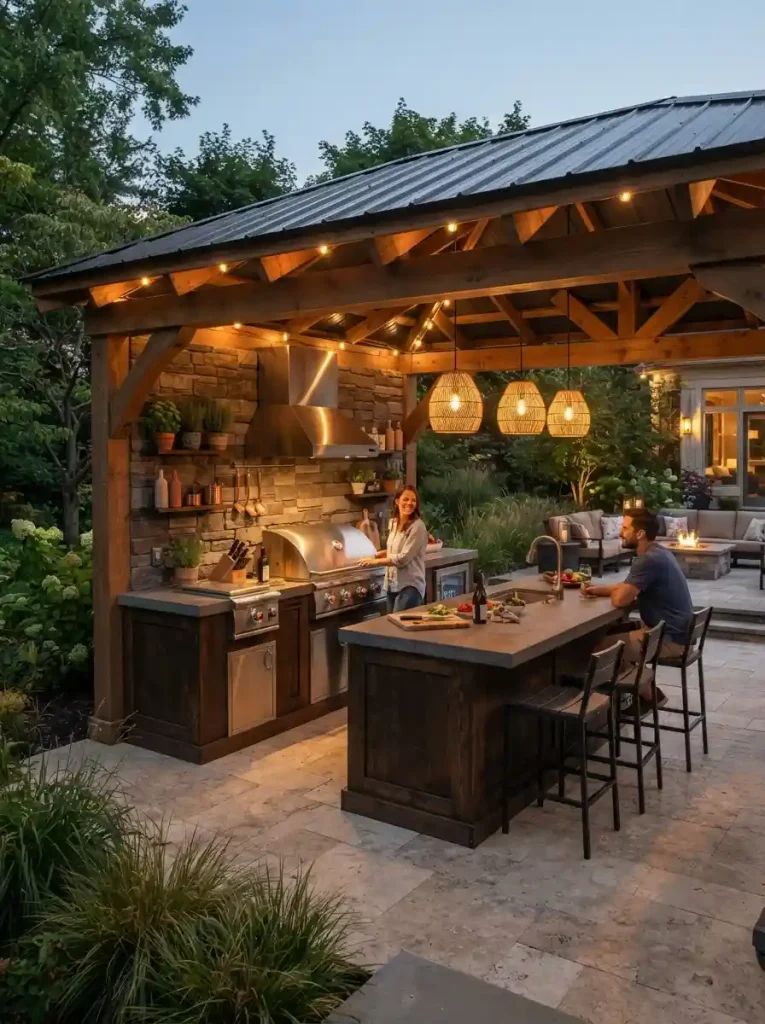
Cost: Moderate to high | Time: Several weeks | Skill Level: Intermediate to professional
Best For: Frequent outdoor cooking | Materials: Wood, stone, metal | Space Needed: Medium to large
An outdoor kitchen needs thoughtful planning because cooking equipment, seating, ventilation, and weather protection must work together. Position the cooking zone where smoke can disperse safely and leave enough room for movement between the grill, preparation counter, and dining area.
A full roof makes the kitchen more usable during bright or changeable weather. Include durable countertops and surfaces that are easy to clean, and consider task lighting above preparation areas. Keep decorative items away from heat-producing equipment to maintain a practical layout.
9. Warm Cedar Pergola With a Slatted Roof
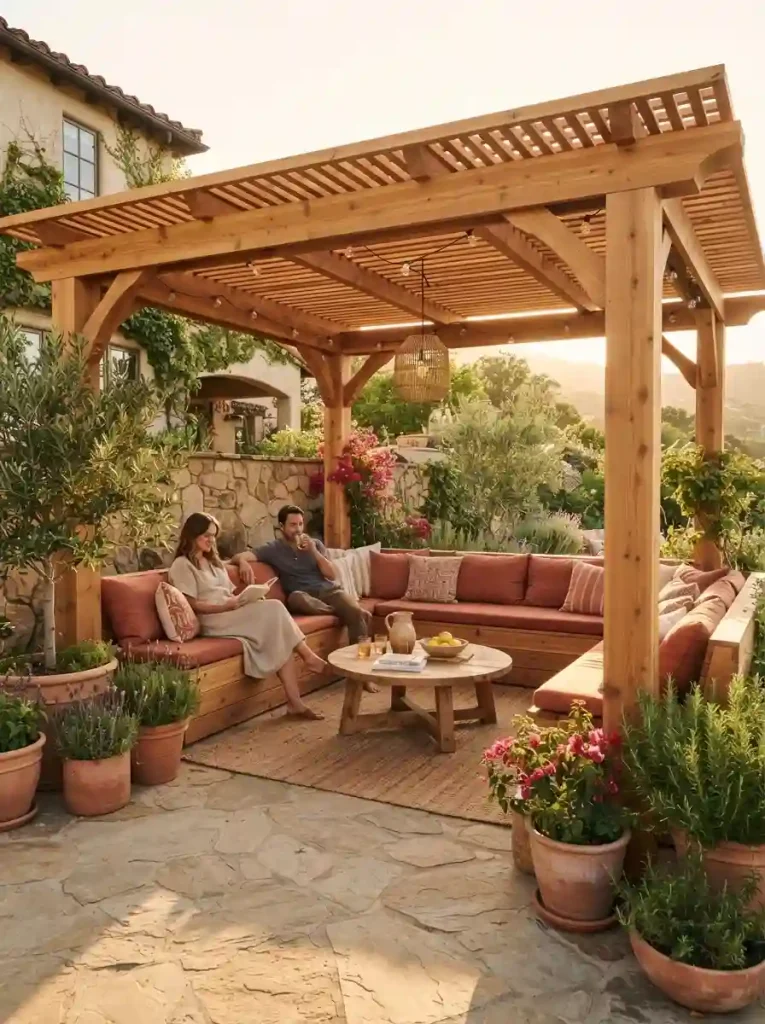
Cedar brings natural warmth to a covered backyard structure without making it feel heavy. The honey-colored timber pairs beautifully with terracotta, cream, and muted green accents, creating a relaxed Mediterranean-inspired retreat that feels especially inviting during sunny afternoons.
Use a built-in bench along one side to maximize seating while keeping the center open. A round table makes conversation easier, and potted olive trees or similar drought-tolerant plants can reinforce the warm garden character. Regularly inspect the timber and maintain its finish according to the manufacturer’s recommendations.
10. Pergola With Roof and Outdoor Fireplace
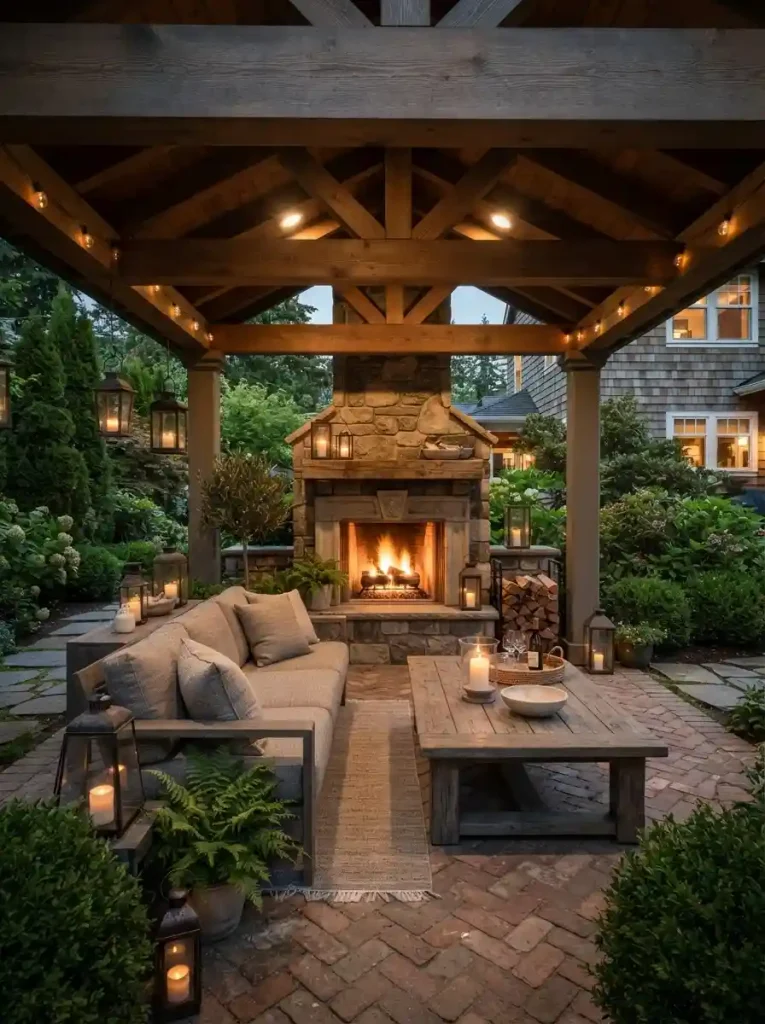
• Position the fireplace as a focal point rather than squeezing it into a corner.
• Choose heat-resistant materials around the firebox and surrounding surfaces.
• Keep seating far enough away for comfortable circulation and safe use.
• Add layered lighting so the area remains inviting when the fire is unlit.
• Use neutral textiles to balance the heavier stonework.
A fireplace changes the pergola from a seasonal shade structure into a destination for cooler evenings. Stone, brick, and timber work particularly well together because their textures complement one another. Add a generous seating arrangement so guests naturally face the fire without blocking pathways through the covered area.
11. Pergola With a Roof and Minimalist Flat Design
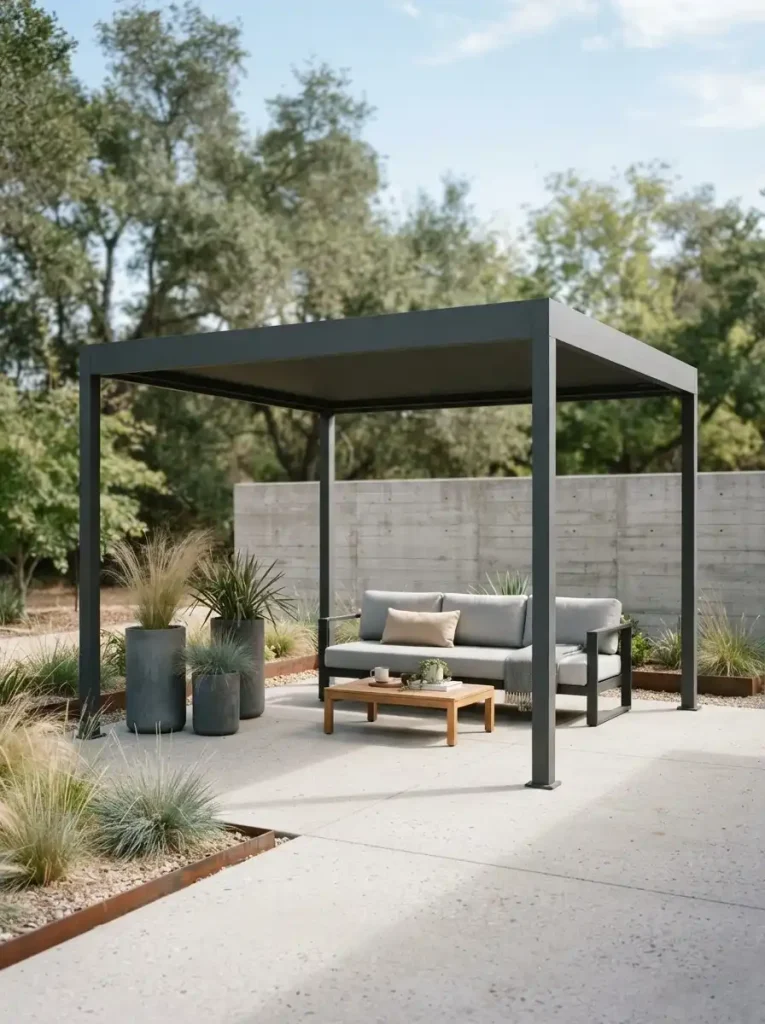
Quick Tip: Keep the furniture low and streamlined when the pergola has a strong horizontal roofline. This preserves the minimalist proportions and prevents the structure from competing visually with bulky outdoor pieces.
A flat-roof pergola works beautifully beside contemporary architecture because its simple geometry echoes modern building lines. Limit the palette to two or three tones, then introduce texture through concrete, timber, woven upholstery, or greenery. The result feels intentional without requiring lots of decoration.
12. Pergola With a Roof and Outdoor Bar
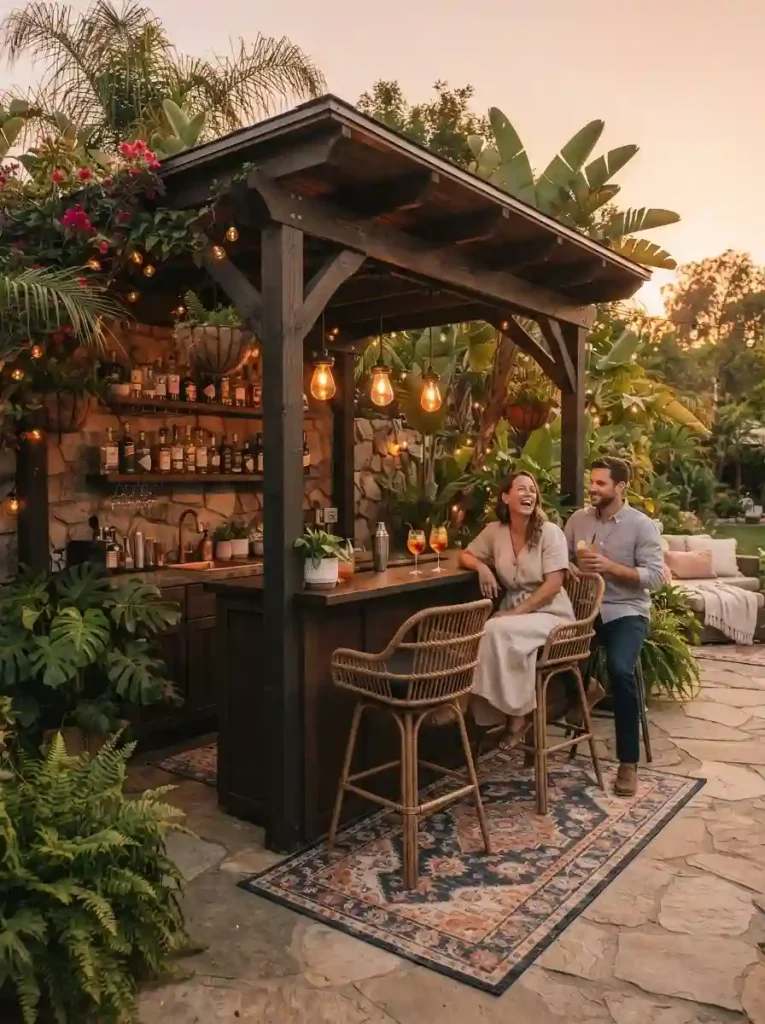
BEFORE
A backyard seating area can lack a clear purpose when furniture is scattered across the patio. Entertaining also becomes awkward when drinks and serving items have to travel back and forth to the kitchen.
AFTER
A covered pergola with a compact bar creates a dedicated social zone. The counter becomes a practical serving station while stools provide casual seating without taking up the space required by a full dining set.
For smaller yards, place the bar against the back or side of the pergola rather than in the center. Shelving underneath can hold serving pieces and outdoor accessories, while a few pendant lights make the counter visually distinct after dark.
13. Mediterranean Pergola With Terracotta Details
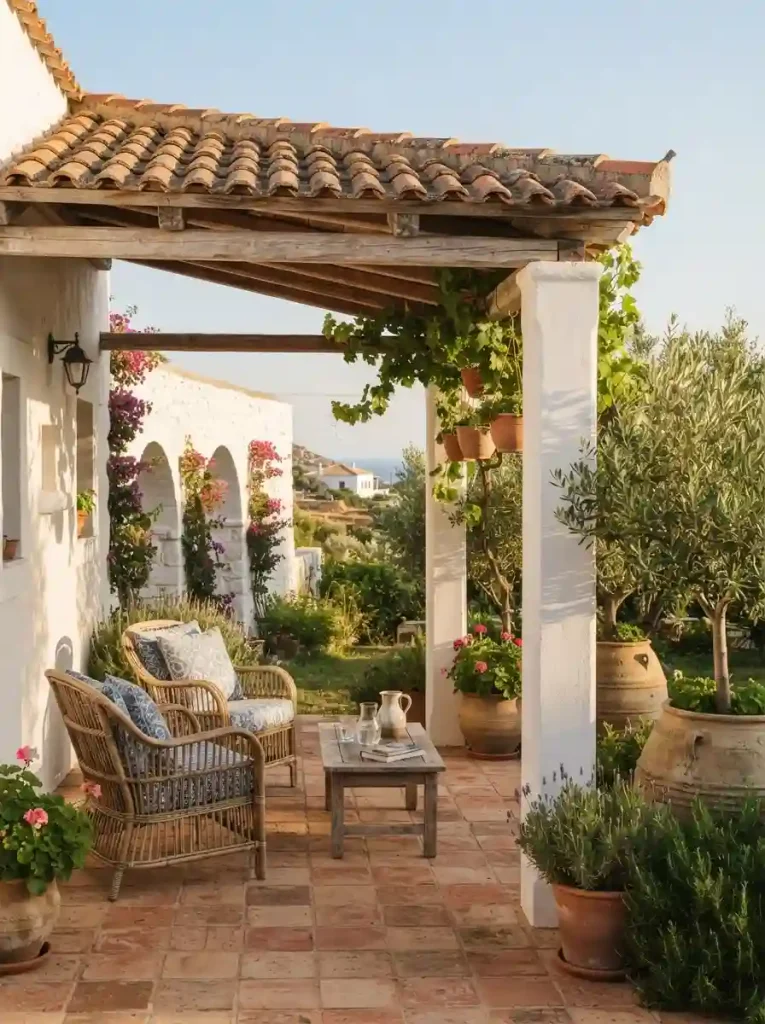
1. Use pale stucco or painted masonry for a Mediterranean-inspired foundation.
2. Choose terracotta tiles for warmth and visual texture.
3. Add blue or olive-green accents rather than introducing many bright colors.
4. Place clay pots around the perimeter instead of overcrowding the seating area.
5. Include an olive tree or similarly structured plant as a natural focal point.
The combination of stucco, terracotta, and olive-inspired greenery gives this covered pergola a courtyard character. It is particularly effective in sunny backyards where warm materials can complement surrounding landscaping. Keep accessories relaxed and slightly rustic so the design feels collected rather than overly formal.
14. Pergola With a Roof Over a Hot Tub
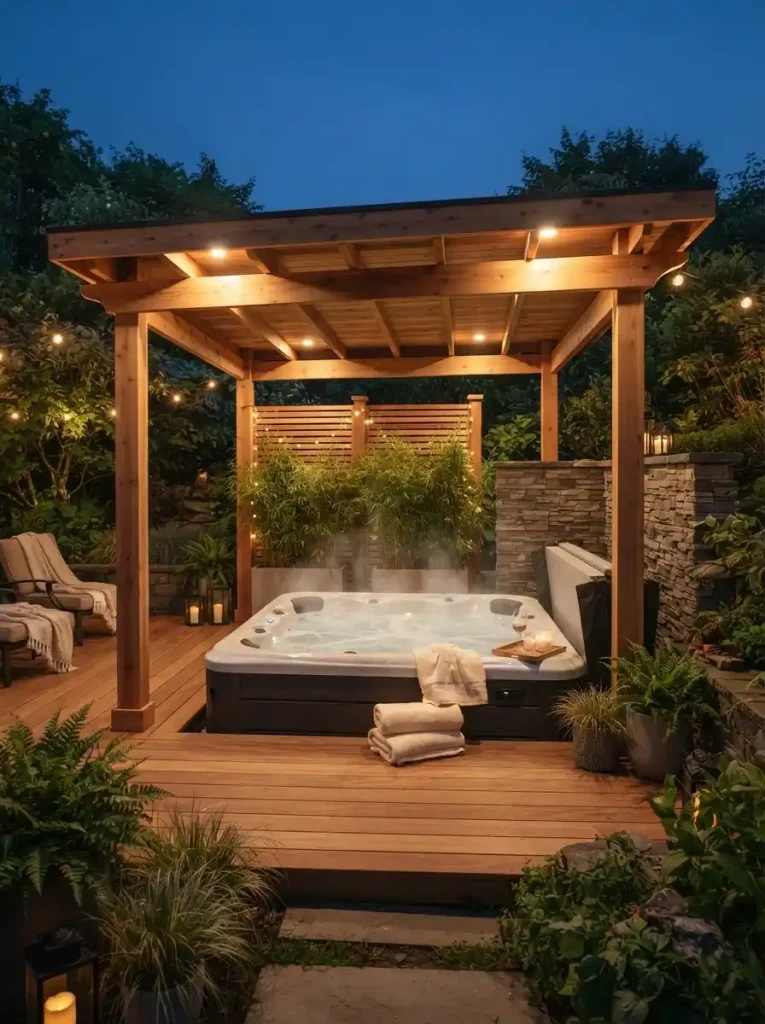
| Design Choice | Advantage | Consideration |
| Solid roof | Strong weather protection | Requires careful drainage |
| Privacy screens | Creates seclusion | Can reduce airflow |
| Cedar decking | Warm natural appearance | Needs regular maintenance |
| Recessed lighting | Clean nighttime look | Requires planned wiring |
A roofed hot-tub pergola can create a private spa zone without building a completely enclosed room. Prioritize ventilation, drainage, slip-resistant surfaces, and access to the equipment before choosing decorative details. Privacy screens can be especially helpful when neighboring homes overlook the backyard.
15. Cottage-Style Pergola With a Soft Green Roof
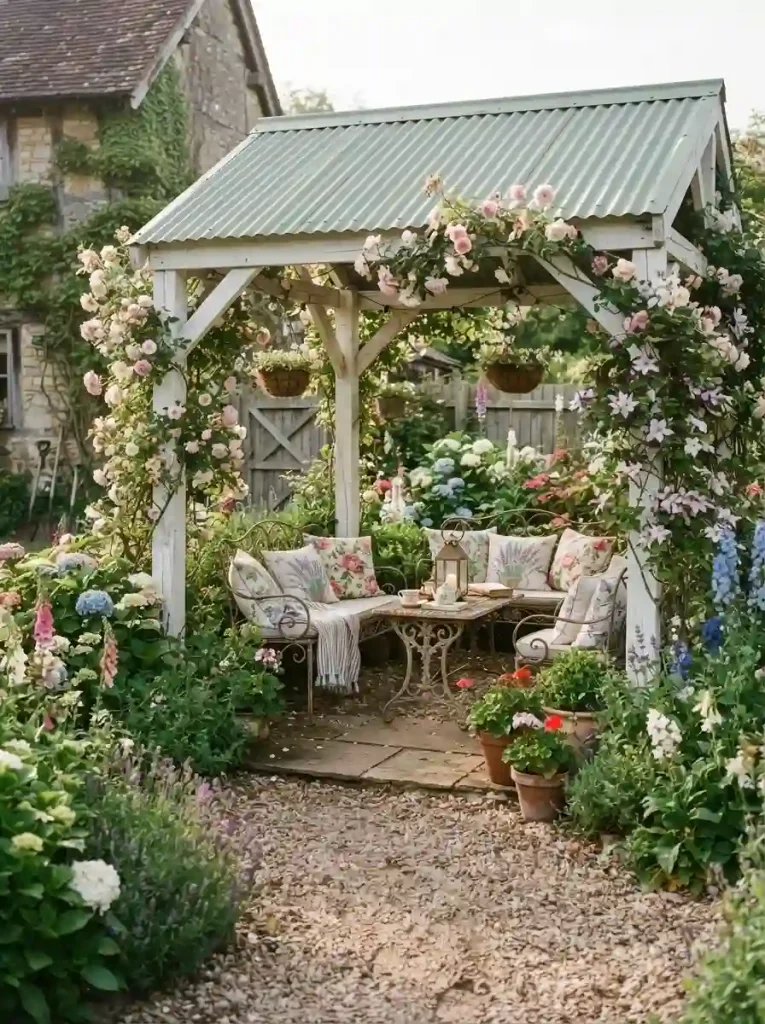
DO
• Use muted green rather than an overly bright shade for a softer cottage effect.
• Combine painted timber with relaxed floral textiles.
• Surround the structure with informal flowering plants.
• Use gravel or natural stone to reinforce the garden setting.
DON’T
• Overfill the pergola with mismatched decorative furniture.
• Use too many competing floral patterns.
• Trim every plant into rigid shapes.
• Hide the roofline completely beneath dense foliage.
This design works when you want the pergola to feel like part of an established cottage garden. Sage green provides more personality than white while remaining gentle against flowers and greenery. Vintage-style seating, climbing roses, and simple lanterns complete the look without making it overly decorative.
16. Poolside Pergola With a Waterproof Roof
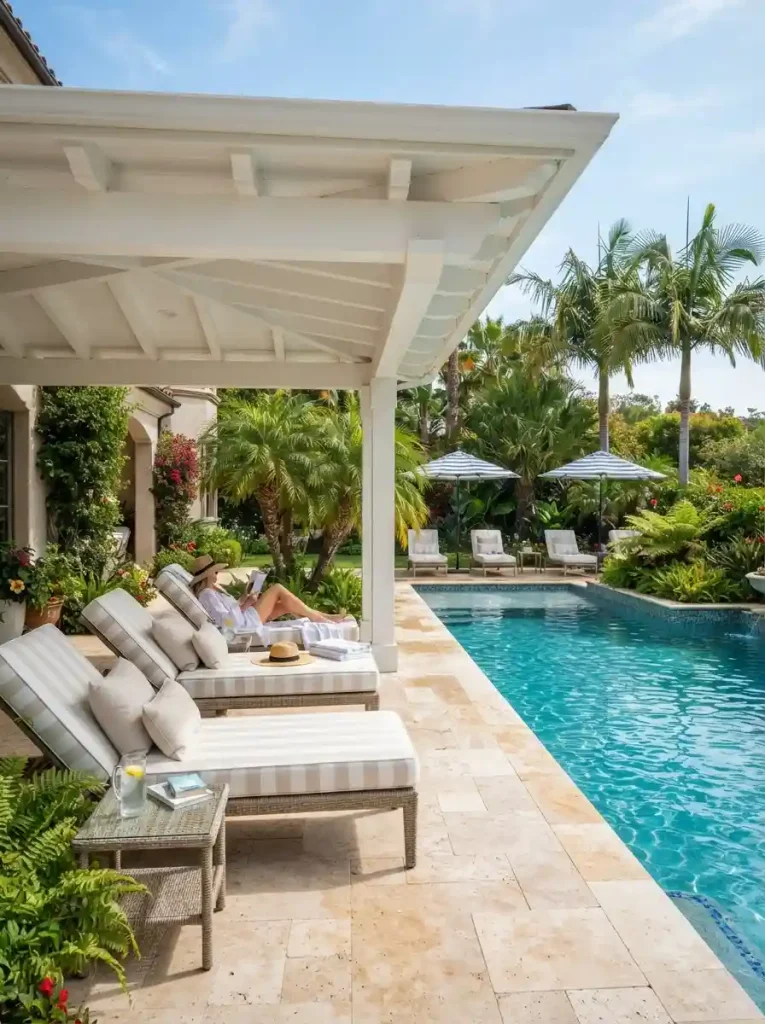
Cost: Moderate to high | Time: Several days to weeks | Skill Level: Professional recommended
Best For: Pool decks | Materials: Aluminum, treated wood, waterproof roofing | Space Needed: Medium or large
A poolside pergola benefits from materials that can handle frequent moisture and strong sunlight. Choose furniture fabrics designed for outdoor exposure, and leave enough clearance around the structure for people moving between the pool, loungers, and house.
A waterproof roof also creates a dependable shaded retreat after swimming. Keep the palette light if you want the area to feel resort-inspired, or introduce darker framing for a more contemporary contrast. Easy-clean surfaces are especially valuable around splash-prone spaces.
17. Pergola With a Clear Roof for Rainy Days
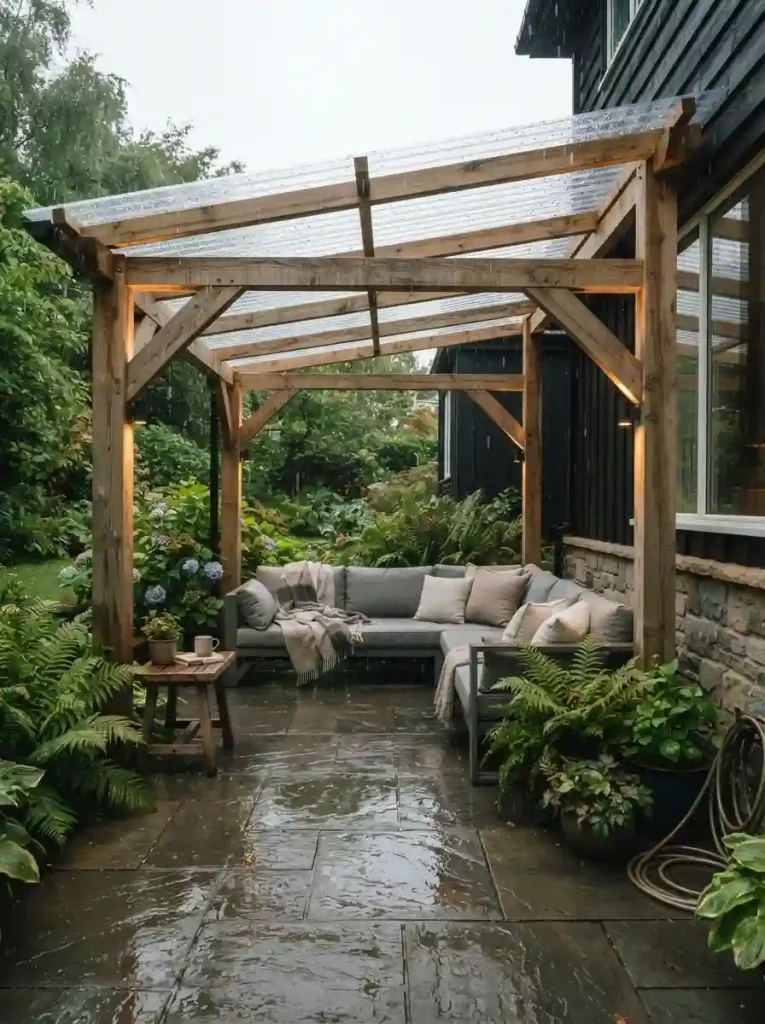
• Transparent roofing allows daylight to reach the patio while providing overhead shelter.
• Select panels designed for outdoor exposure and suitable temperature changes.
• Use furniture that remains comfortable in a bright, semi-covered environment.
• Add drainage details so rainfall does not collect around the seating zone.
A clear roof is useful when you want protection without creating a dark covered patio. Rain becomes part of the atmosphere rather than a reason to abandon the space. Pair the transparent material with timber and greenery to prevent the structure from feeling too utilitarian.
18. Freestanding Pergola for a Backyard Reading Nook
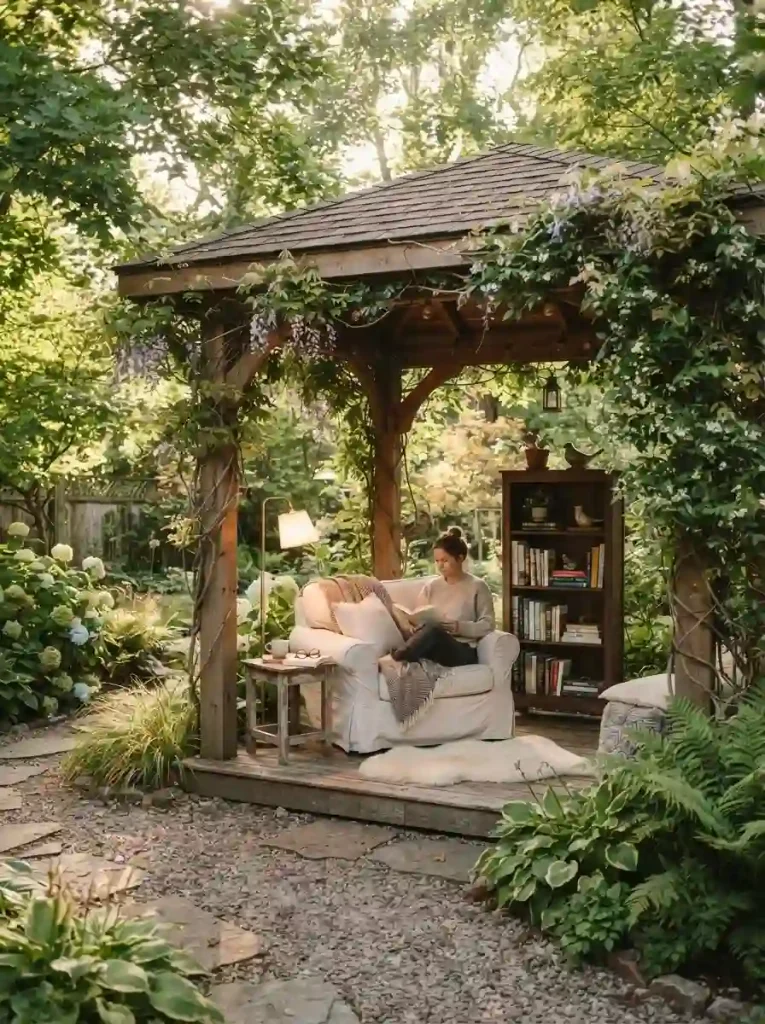
BEFORE
A distant corner of the backyard can easily become unused lawn with no clear reason to visit it. Without comfortable seating or shelter, it may remain empty except during occasional outdoor gatherings.
AFTER
A freestanding roofed pergola turns that forgotten corner into a dedicated reading retreat. One comfortable chair, a small table, and carefully positioned lighting are enough to give the area a clear purpose without requiring a large furniture investment.
Choose a location that offers a pleasant garden view and enough separation from noisy activity. A small bookshelf can hold weather-resistant reading materials, while climbing greenery helps the structure blend naturally into its surroundings.
19. Pergola With a Rustic Metal Roof
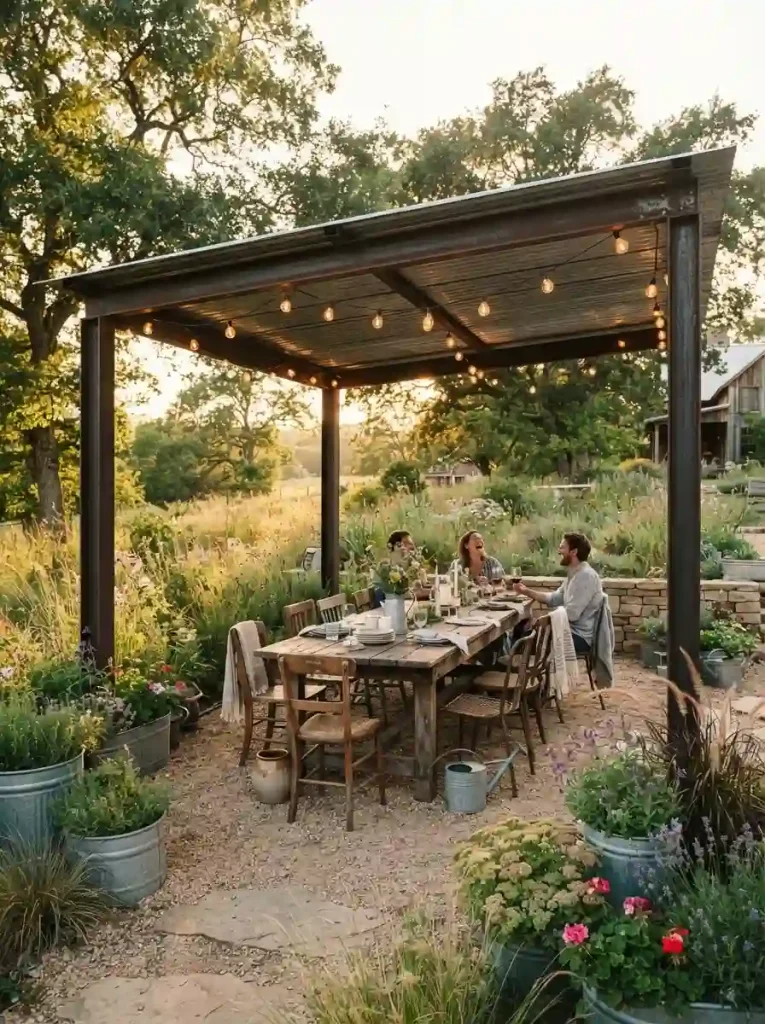
1. Install a corrugated metal roof when durability and a rustic appearance are priorities.
2. Balance the metal with reclaimed or naturally finished wood.
3. Use galvanized containers to repeat the roof’s industrial texture.
4. Add warm lighting to soften the harder materials at night.
5. Surround the pergola with loose grasses or informal planting.
Metal roofing gives a backyard pergola a distinctive farmhouse or industrial character. The trick is balancing its harder surface with warmer materials. Reclaimed wood, woven seating, plants, and soft lighting prevent the design from feeling like a utility structure and create a comfortable setting for casual outdoor meals.
20. Luxurious Pergola With a Louvered Roof
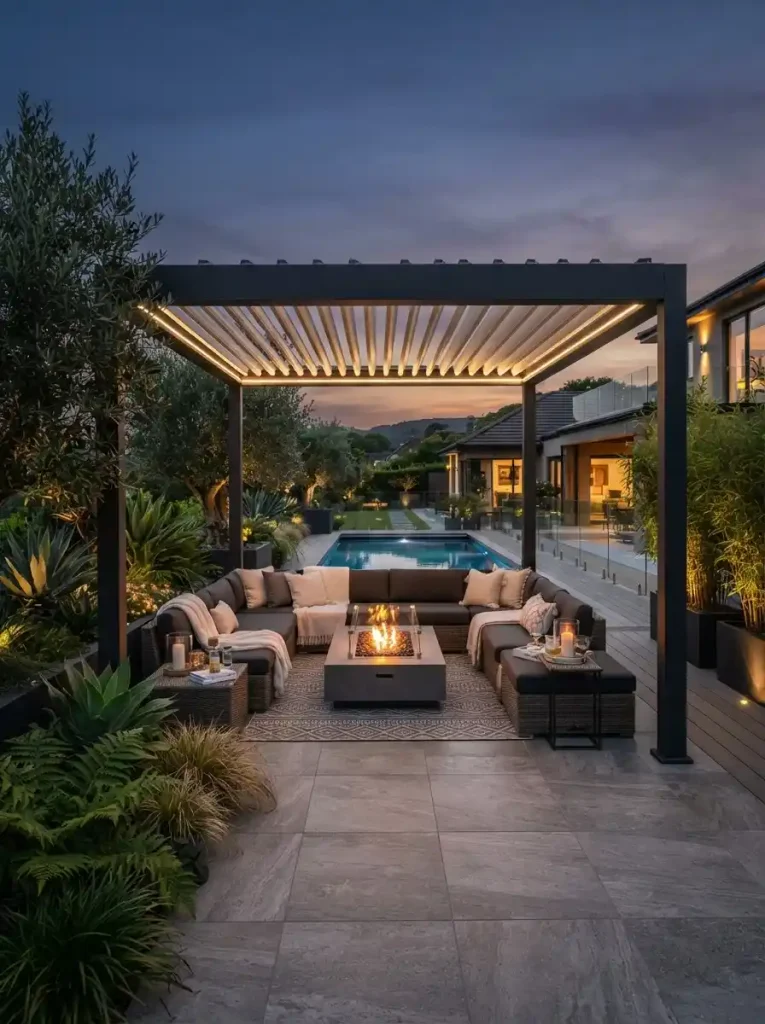
| Feature | Standard Covered Pergola | Louvered Pergola |
| Roof control | Fixed | Adjustable |
| Sunlight | Limited adjustment | Flexible |
| Weather response | Depends on roofing | More adaptable |
| Appearance | Traditional | Contemporary |
An adjustable louvered roof offers greater control over sunlight and airflow than a conventional fixed covering. It can suit homeowners who use their patio throughout the day and want to change the environment without moving furniture or adding temporary shade.
Pair the streamlined frame with substantial outdoor seating and integrated lighting for a refined appearance. Before installation, consider drainage, electrical requirements, maintenance access, and the direction of prevailing sunlight so the roof system works effectively in its specific location.
21. Small Pergola With a Roof Over an Outdoor Dining Corner
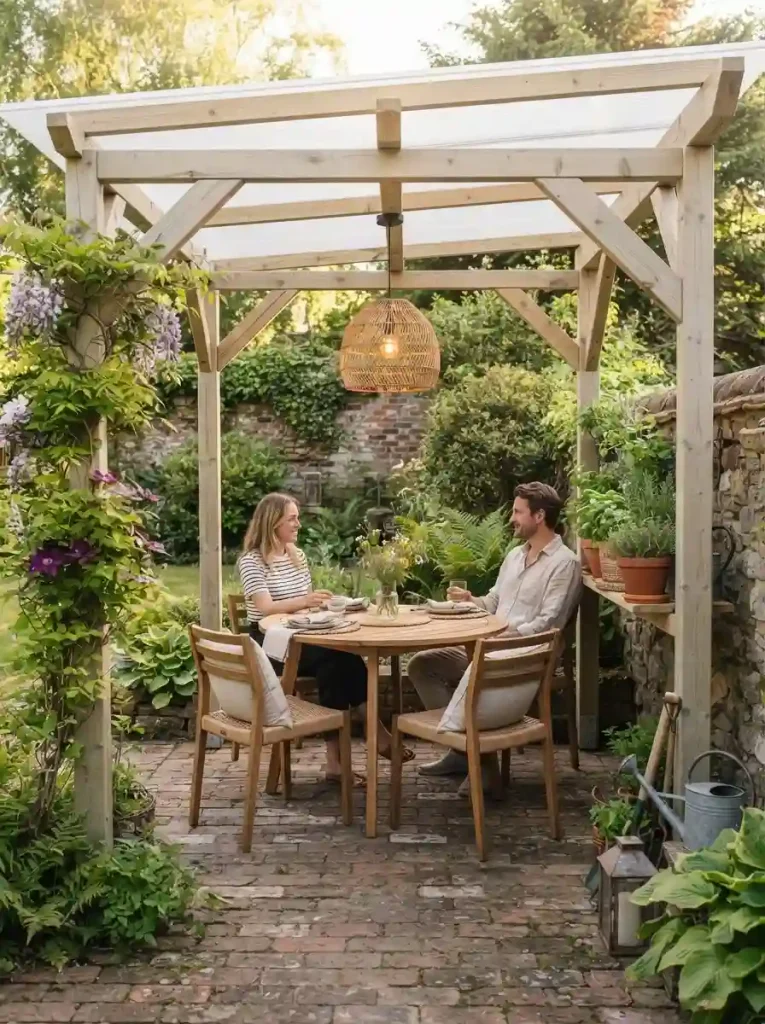
Quick Tip: A round dining table can make a compact pergola easier to navigate than a rectangular one because it eliminates sharp corners and keeps circulation flowing around the seating.
Choose furniture that can tuck neatly beneath the table when the area is not being used. A narrow roof profile keeps the structure proportional to the yard, while a single pendant light provides a visual anchor. Herbs in small containers add greenery without consuming valuable floor space.
22. Backyard Pergola With a Built-In Bench
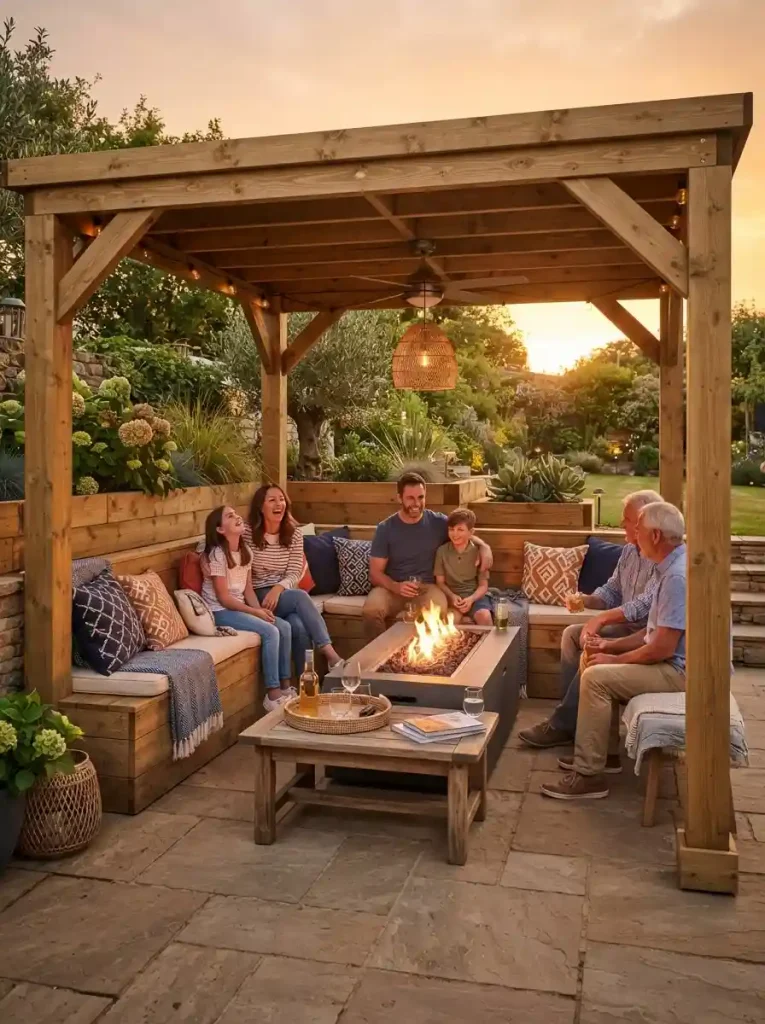
DO
• Build the bench to follow the pergola’s dimensions precisely.
• Add removable cushions for seasonal flexibility.
• Include hidden storage beneath the seating when possible.
• Keep the central floor area open for comfortable movement.
DON’T
• Make the seat depth too shallow for relaxed lounging.
• Use permanently exposed cushions in wet climates.
• Place a fire feature where circulation becomes restricted.
• Fill the remaining floor area with unnecessary furniture.
Built-in seating makes efficient use of the perimeter and leaves more room in the center for tables or a fire feature. It can also make the pergola feel custom-designed rather than assembled from separate pieces. Storage beneath the bench is an especially useful addition for smaller backyards.
23. Dreamy Pergola With Roof and String Lights
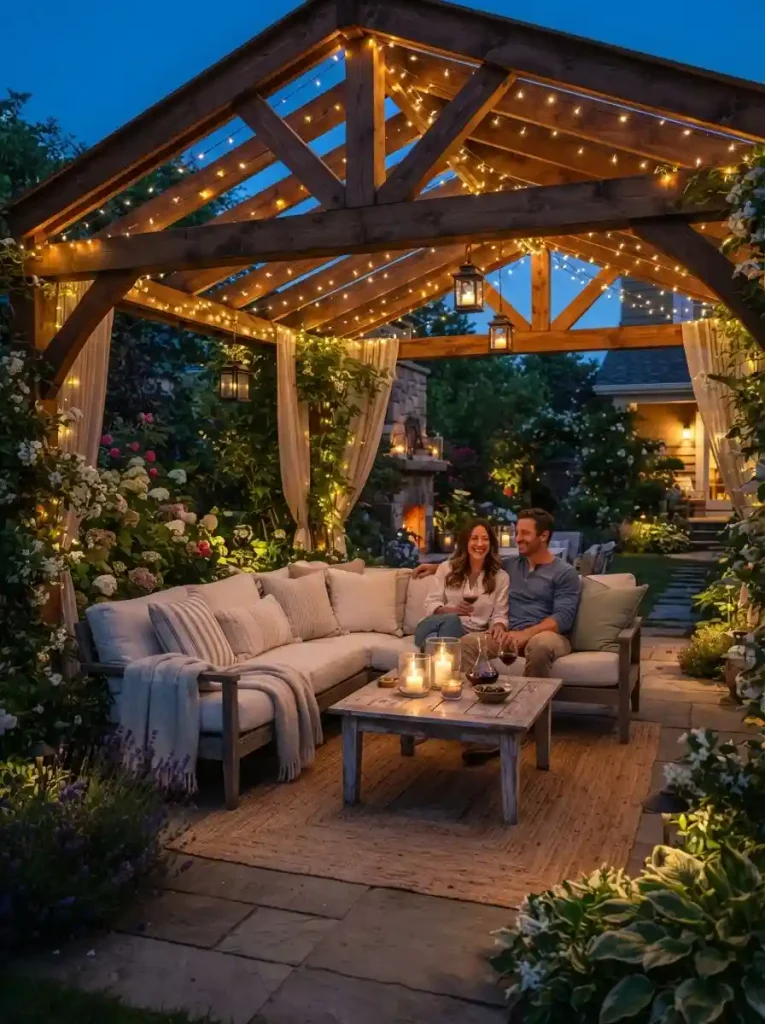
Cost: Moderate | Time: One weekend to several days | Skill Level: Beginner to intermediate
Best For: Evening entertaining | Materials: Timber, weatherproof fabric, outdoor lighting | Space Needed: Medium
String lights can completely change the atmosphere of a roofed pergola once daylight fades. Instead of covering every beam, arrange the lights along selected roof edges or across the seating zone so the illumination feels intentional and comfortable rather than cluttered.
Finish the setting with warm textiles, a weather-resistant rug, and a few low-level lanterns. Keep lighting at different heights to create depth, and use outdoor-rated fixtures and connections designed for the environment. The result is a cozy backyard retreat that feels especially inviting for evening conversations.
Conclusion
A well-designed pergola with roof can give your backyard much more than shade. It can define a dining area, create a private retreat, support an outdoor kitchen, frame a poolside lounge, or provide a cozy place to gather after sunset. The best design depends on your available space, climate, architecture, maintenance preferences, and how you plan to use the area. Whether you choose timber, metal, a louvered roof, or a simple covered structure, thoughtful furniture placement and landscaping can turn the pergola into a natural extension of your home.
Frequently Asked Questions
1. What type of roof is best for a backyard pergola?
The best roof depends on how you use the space. A solid roof provides dependable shade and shelter, while a retractable or louvered roof offers more control over sunlight and airflow. Transparent panels can preserve daylight while reducing exposure to rain. Consider local weather, drainage, maintenance, and the desired appearance before choosing.
2. Can a pergola with a roof be attached to a house?
Yes, a roofed pergola can be attached to a home when the structure is properly designed and supported. An attached design can create a natural transition between indoor and outdoor living areas. However, roof connections, drainage, structural loads, and local building requirements should be addressed before construction begins.
3. What materials work well for a covered backyard pergola?
Common choices include treated timber, cedar, aluminum, steel, and masonry. Timber provides warmth and traditional character, while metal creates a cleaner contemporary appearance and can require less routine maintenance. The roofing material should also be selected according to local weather conditions, expected lifespan, drainage needs, and the amount of sunlight you want underneath.
4. How can I make a roofed pergola feel cozy?
Layering is the easiest approach. Start with comfortable outdoor seating, then add weather-resistant cushions, an outdoor rug, warm lighting, planters, and a small table. Climbing plants can soften the structure, while a fireplace or fire feature can create a focal point for cooler evenings when appropriate.
5. Does a pergola roof need drainage?
A roof designed to shed rain generally needs a planned drainage system. Depending on the roof type, this may include a slope, gutters, downspouts, or another method of directing water away from the patio. Proper drainage helps protect the structure, furniture, foundation, and surrounding landscaping from unwanted water accumulation.