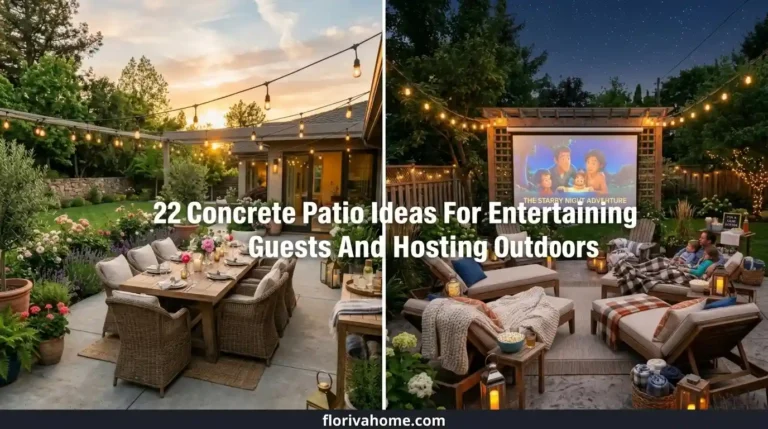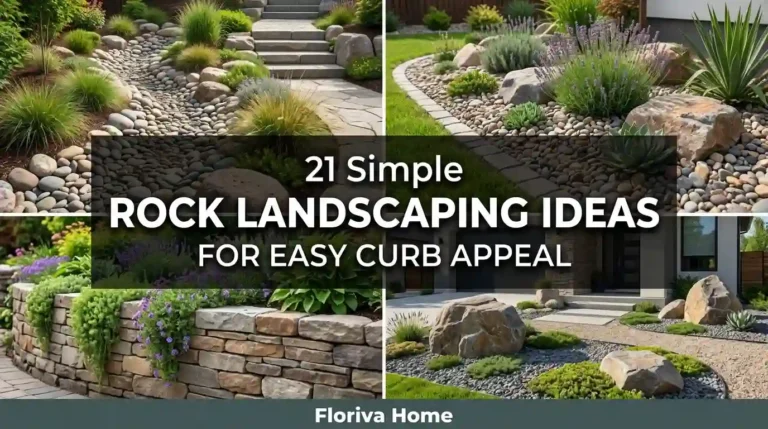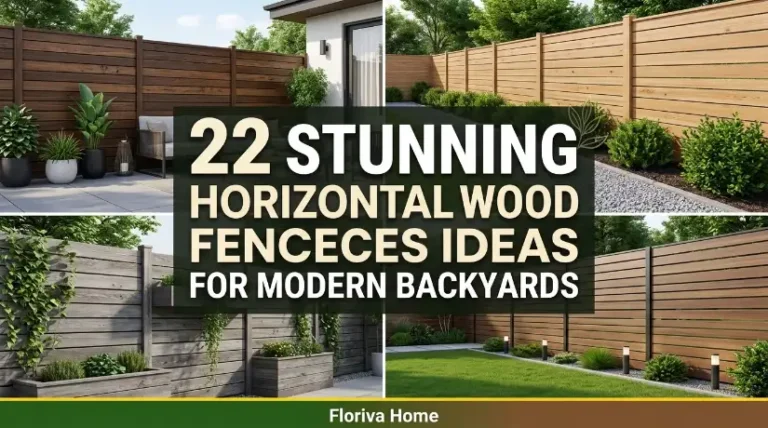
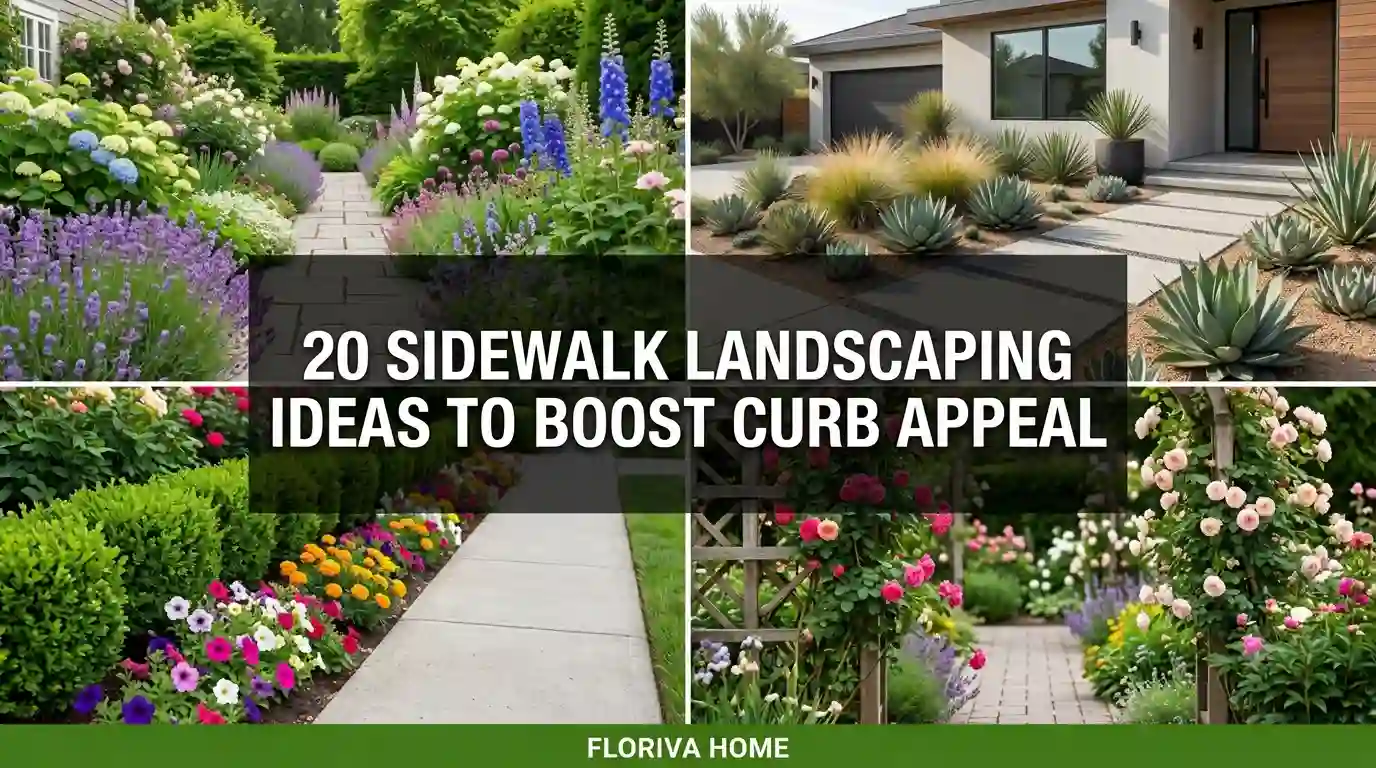
20 Sidewalk Landscaping Ideas to Boost Curb Appeal
Your sidewalk is one of the first things people notice when they approach your home, so why leave it looking plain? With the right plants, edging, textures, and small decorative touches, even an ordinary walkway can become a beautiful part of your landscape.
The best sidewalk landscaping ideas do more than add color. They can define the walking area, soften hard surfaces, improve curb appeal, and make your entire front yard feel more intentional.
Whether you have a narrow strip beside a concrete path or a wider space between the sidewalk and your lawn, there are plenty of ways to make it look polished without creating a maintenance headache.
Here are some creative sidewalk landscaping ideas to help you transform that overlooked space into one of the most attractive parts of your property.
1. Create a Layered Flower Border Along the Sidewalk
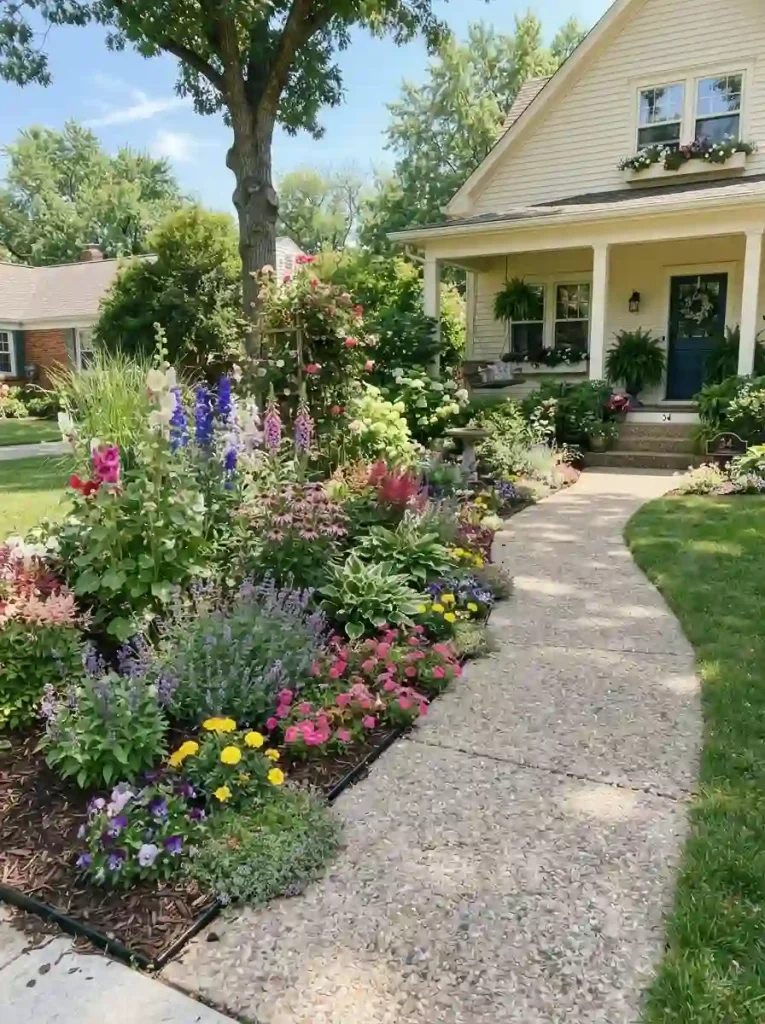
A simple row of flowers can look nice, but layering plants at different heights creates a much richer effect. Place taller flowers toward the back, medium-sized plants in the middle, and compact blooms close to the sidewalk.
This arrangement gives the planting bed depth without making the walkway feel crowded. Choose flowers with different blooming seasons so the border continues changing throughout the year.
For an especially polished look, repeat a few colors throughout the bed instead of filling every space with a different flower. Repetition helps the landscaping feel coordinated rather than random.
Expert Tip:
Keep taller plants away from the actual walking path. Leave enough clearance so flowers and foliage do not spill onto the sidewalk as they mature.
2. Line the Walkway With Compact Evergreen Shrubs
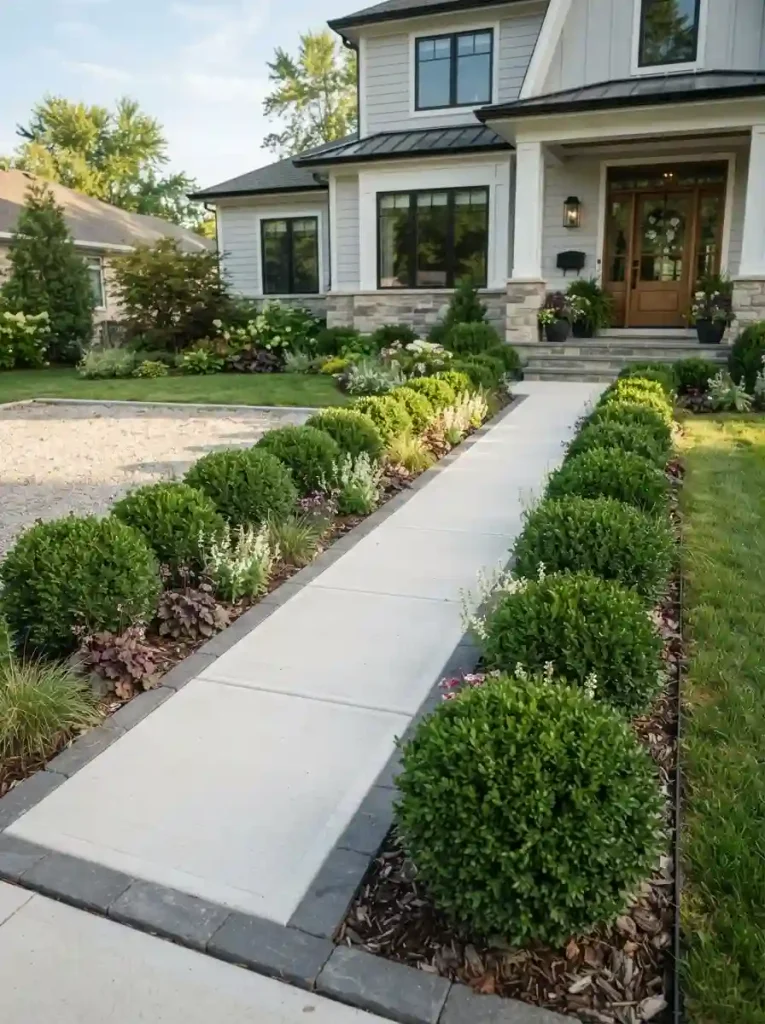
If you want sidewalk landscaping that looks attractive even outside the flowering season, compact evergreen shrubs are a dependable choice. Their consistent foliage creates structure and keeps the walkway visually defined throughout the year.
Choose varieties that stay naturally small or can be maintained at a manageable height. Plant them at regular intervals for a clean appearance, or use slightly staggered spacing for a softer garden style.
Evergreen shrubs work particularly well around modern, traditional, and cottage-style homes because they provide a permanent green framework while seasonal plants add color around them.
Expert Tip:
Check the mature width of each shrub before planting. A plant that looks tiny at the garden center can eventually become too large for a narrow sidewalk border.
3. Add a Curved Planting Bed Beside a Straight Sidewalk
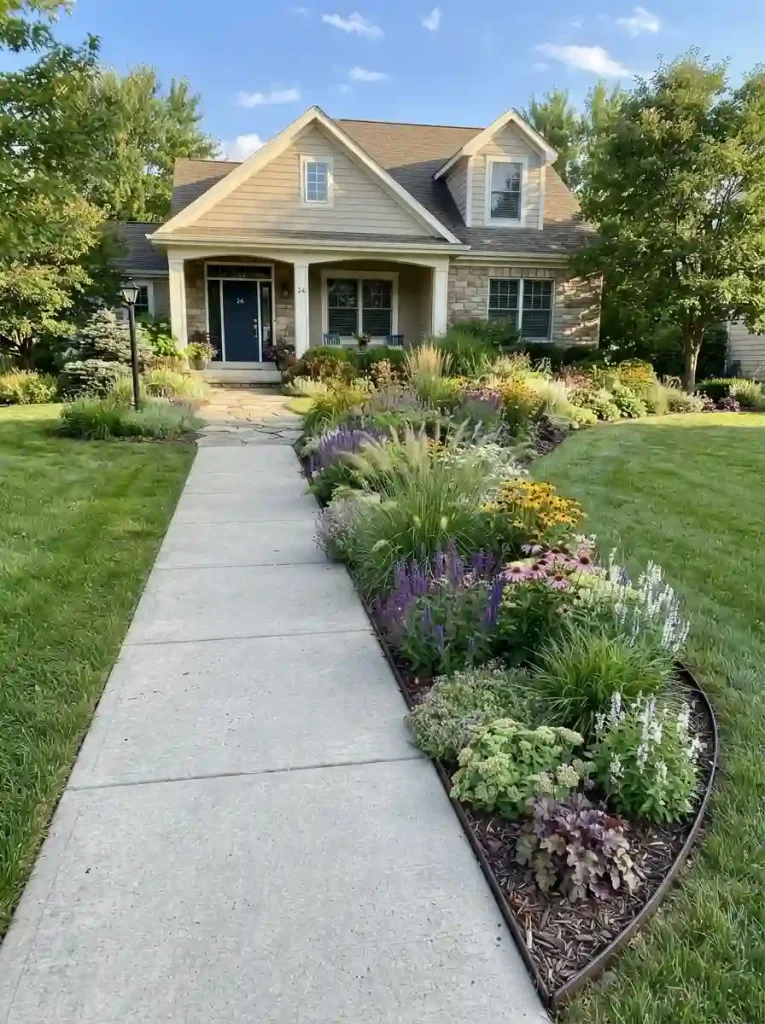
A straight sidewalk can sometimes make a front yard feel overly rigid. One easy way to soften that effect is to create a gently curved planting bed alongside it.
The curved edge introduces movement and makes the landscape feel more natural. You can fill the bed with ornamental grasses, flowering perennials, groundcovers, or a mixture of all three.
Keep the curve broad and graceful rather than creating several tight bends. A simple sweeping shape usually looks more intentional and is easier to maintain.
Expert Tip:
Mark your proposed curve with a garden hose before digging. You can adjust the shape until it looks balanced from both the sidewalk and the street.
4. Use Ornamental Grasses to Soften Concrete Edges
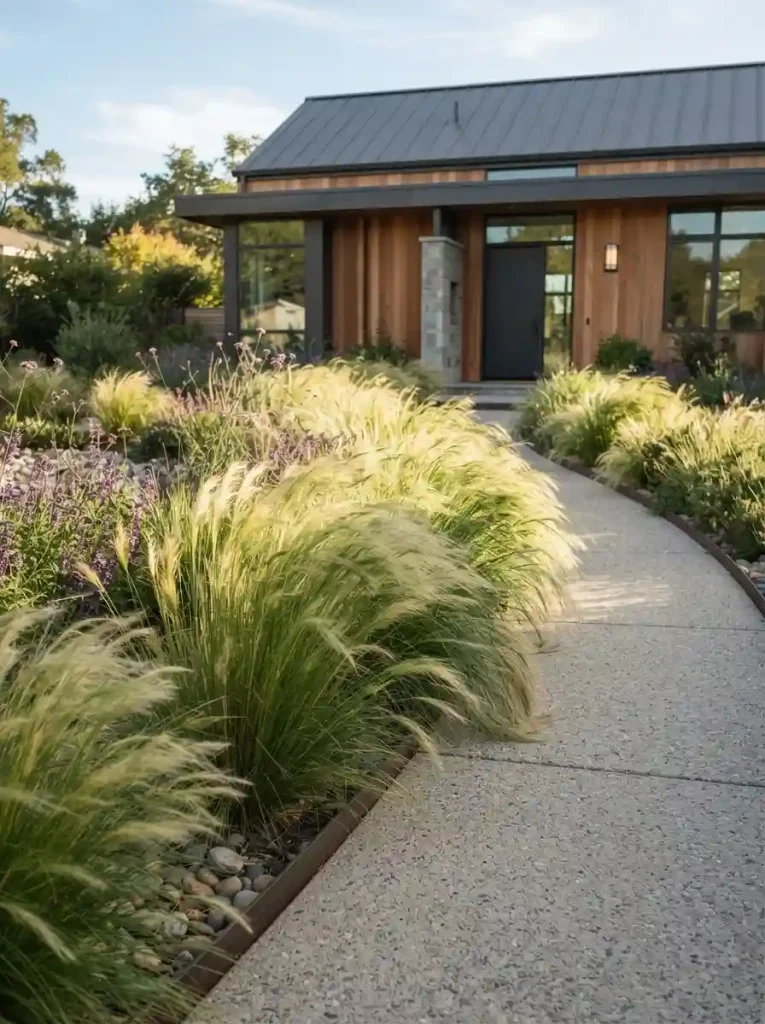
Concrete can make a landscape feel hard and overly structured, especially when there is a long stretch of sidewalk. Ornamental grasses are an easy way to introduce movement and soften those straight edges.
Their fine foliage adds texture without requiring a large planting area. Choose shorter varieties for narrow sidewalks and use taller grasses only where there is enough room to keep the walkway open.
The gentle movement of grasses in the breeze also gives the entrance a relaxed, natural character that works beautifully with stone, brick, or concrete paths.
Expert Tip:
Plant grasses in small groups rather than scattering individual plants randomly. Repeated clusters create a stronger visual rhythm along a long sidewalk.
5. Frame the Sidewalk With Flowering Trees
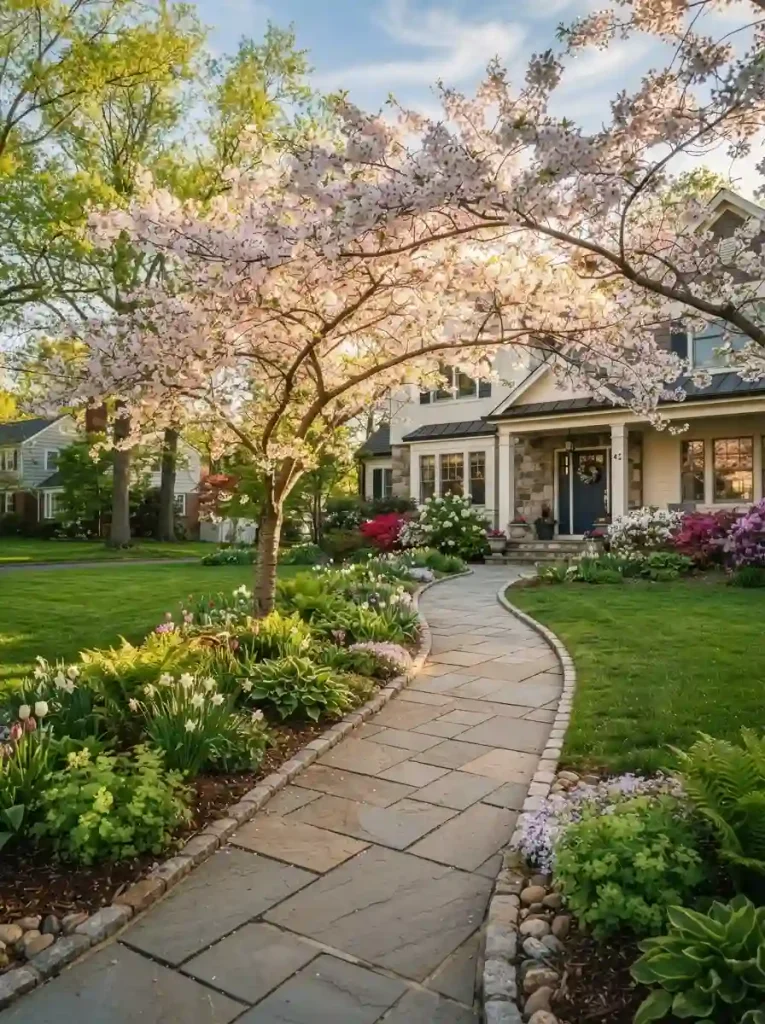
If you have enough planting space, a small flowering tree can turn an ordinary sidewalk into a memorable entrance. The tree provides height while its seasonal flowers create a striking focal point above the lower landscaping.
Select a compact tree appropriate for your climate and make sure its mature canopy will not interfere with overhead utilities or pedestrian movement.
Underplant the tree with low-growing flowers or groundcovers to connect the taller focal point with the sidewalk and surrounding lawn.
Expert Tip:
Think about the tree’s mature size before planting. Keep trunks and branches positioned so pedestrians have plenty of comfortable clearance as the tree grows.
6. Build a Low Stone Edge Around the Planting Area
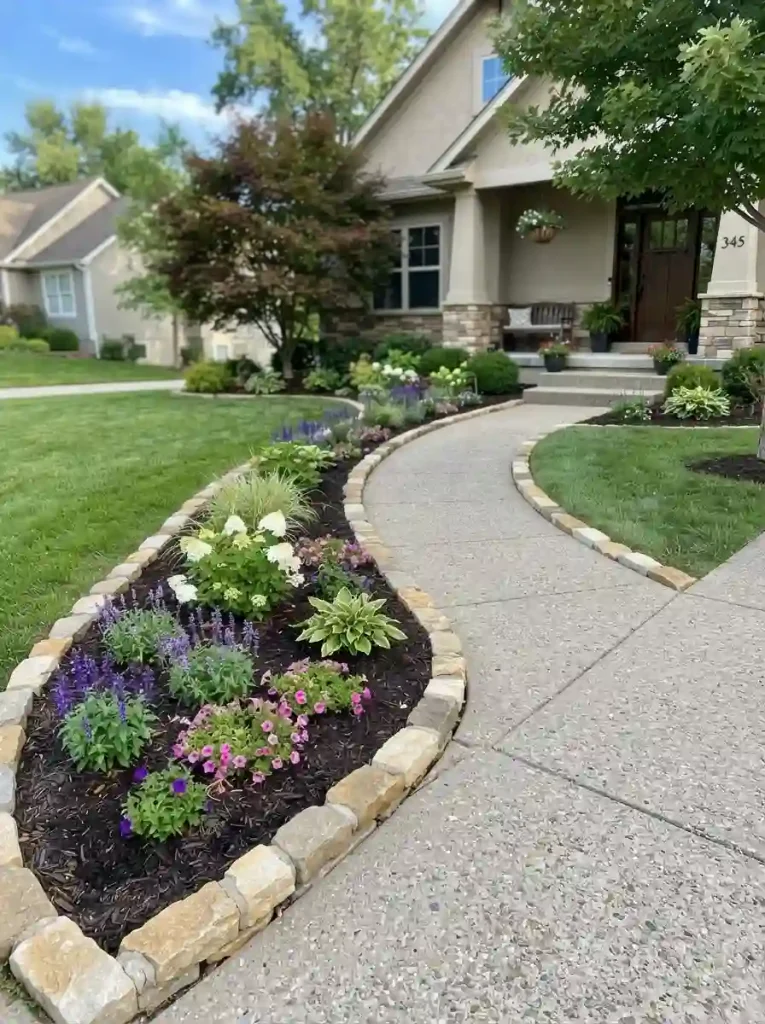
A low stone border can make a sidewalk garden look finished without requiring a large landscaping project. It creates a clear transition between the walkway, soil, mulch, and lawn.
Natural stone gives the area an organic appearance, while cut stone or masonry blocks can create a more structured modern design. Choose a material that complements your home’s exterior for a cohesive result.
Stone edging can also help keep mulch and soil from washing onto the sidewalk during heavy rain.
Expert Tip:
Keep the border low enough that it does not become a tripping hazard. A clean, consistent line will usually look better than a tall or overly elaborate wall.
7. Plant Fragrant Herbs Along the Sidewalk
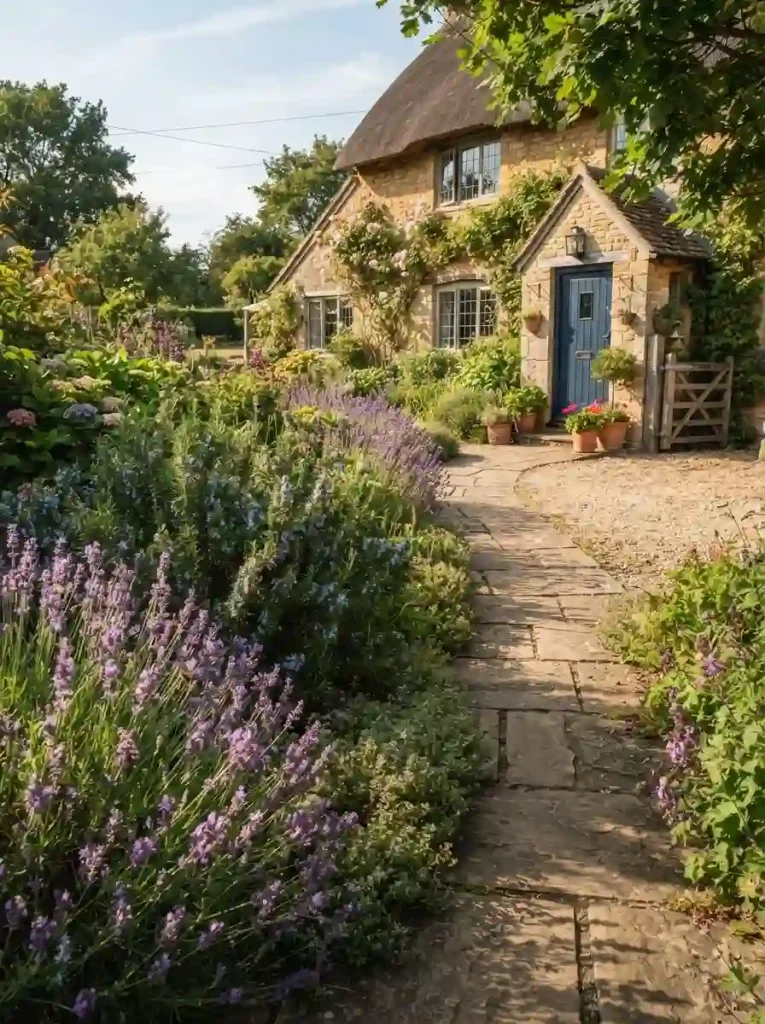
A sidewalk garden does not have to be purely visual. Fragrant herbs can turn an ordinary walkway into a sensory experience, especially when planted where people naturally brush past them.
Low-growing thyme, compact rosemary, lavender, or other climate-suitable aromatic plants can provide attractive foliage and pleasant scents. Their textures also create a more interesting edge than plain grass.
This approach works especially well in sunny areas where herbs receive enough light and the soil drains well.
Expert Tip:
Choose herbs according to your local growing conditions rather than planting based only on appearance. Good drainage is especially important for many Mediterranean-style herbs.
8. Combine Gravel With Drought-Tolerant Plants
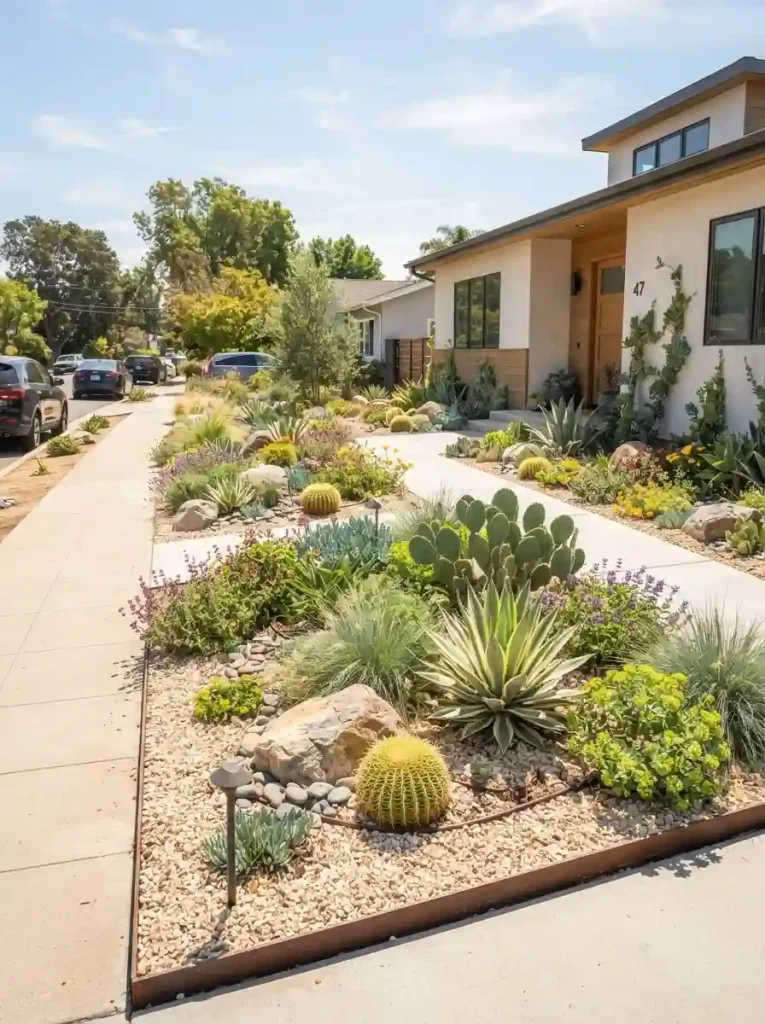
If you want a lower-water sidewalk landscape, consider replacing part of a thirsty grass strip with decorative gravel and drought-tolerant plants.
Gravel provides a clean background for plants such as ornamental grasses, hardy perennials, or climate-appropriate succulents. The combination creates strong contrast between stone and foliage while reducing the need for regular mowing.
It can also work particularly well in hot or dry regions where conventional lawn grass requires frequent irrigation to stay green.
Expert Tip:
Use landscape fabric or another appropriate weed-management method beneath the gravel when suitable, and install a defined edge so the stones stay contained.
9. Add a Narrow Vertical Garden Along a Fence
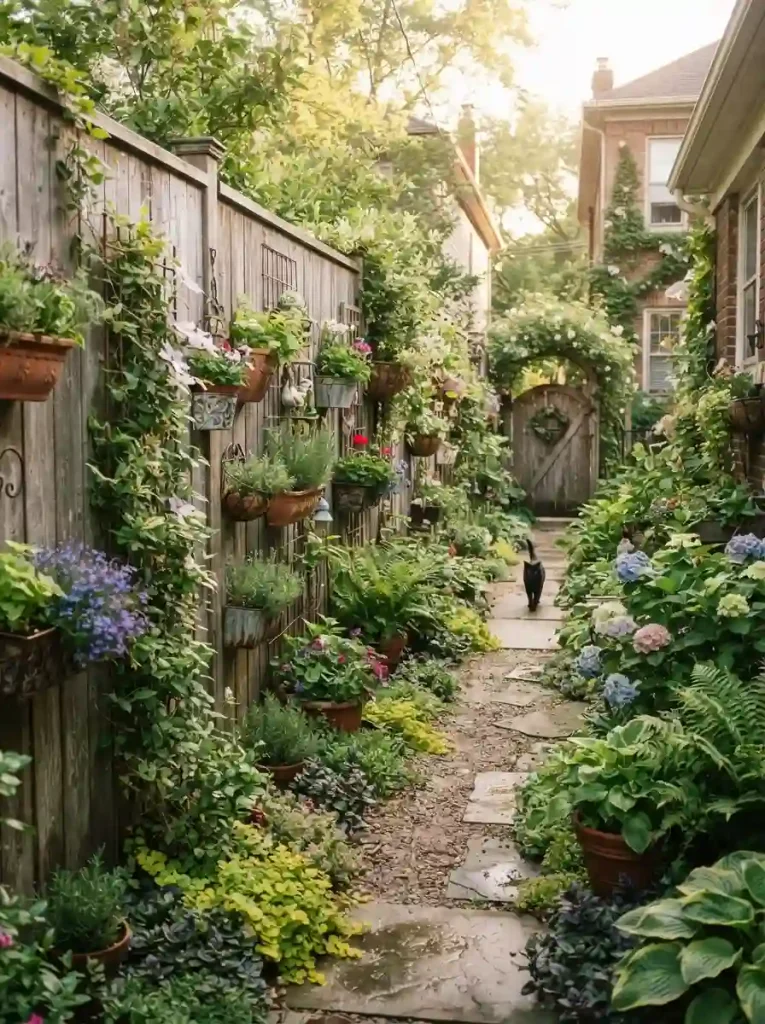
When the sidewalk runs beside a fence or blank exterior wall, use the vertical space instead of spreading plants across the walkway.
Slim trellises, wall-mounted planters, or climbing plants can bring greenery upward while keeping the pedestrian area open. This is especially useful for narrow side yards where there is little room for traditional garden beds.
Choose plants according to the available sunlight and make sure climbing growth can be supported safely.
Expert Tip:
Leave a comfortable walking zone between the sidewalk and any planter or trellis. Vertical landscaping works best when it adds greenery without narrowing the path.
10. Use Repeating Flower Pots for a Flexible Border
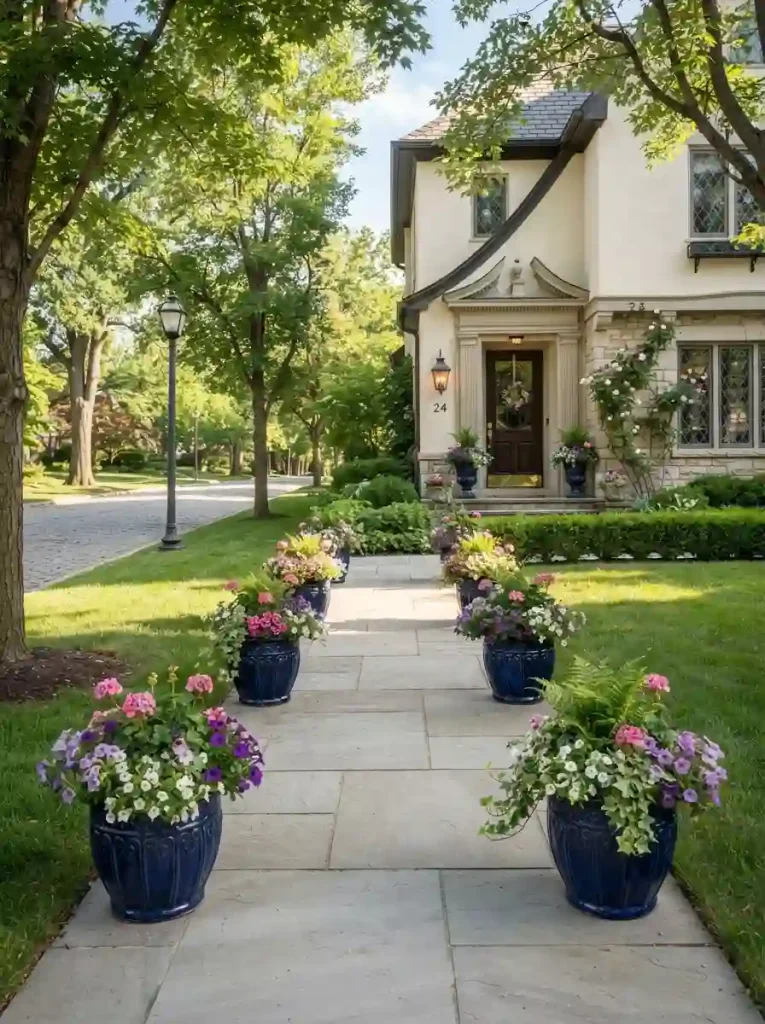
Large built-in garden beds are not the only way to decorate a sidewalk. A series of attractive containers can create a colorful border while giving you the flexibility to change the arrangement whenever you like.
Use matching or coordinating pots and repeat the same few plant varieties to create visual consistency. You can choose flowering annuals for seasonal color, evergreen plants for permanence, or a mixture for year-round interest.
Containers are particularly helpful for renters or homeowners who do not want to dig into an existing lawn or hardscape.
Expert Tip:
Use containers with drainage holes and choose pot sizes large enough to support healthy root growth. Place them where they will not obstruct pedestrians, strollers, or accessibility routes.
11. Create a Welcoming Entry With Seasonal Color
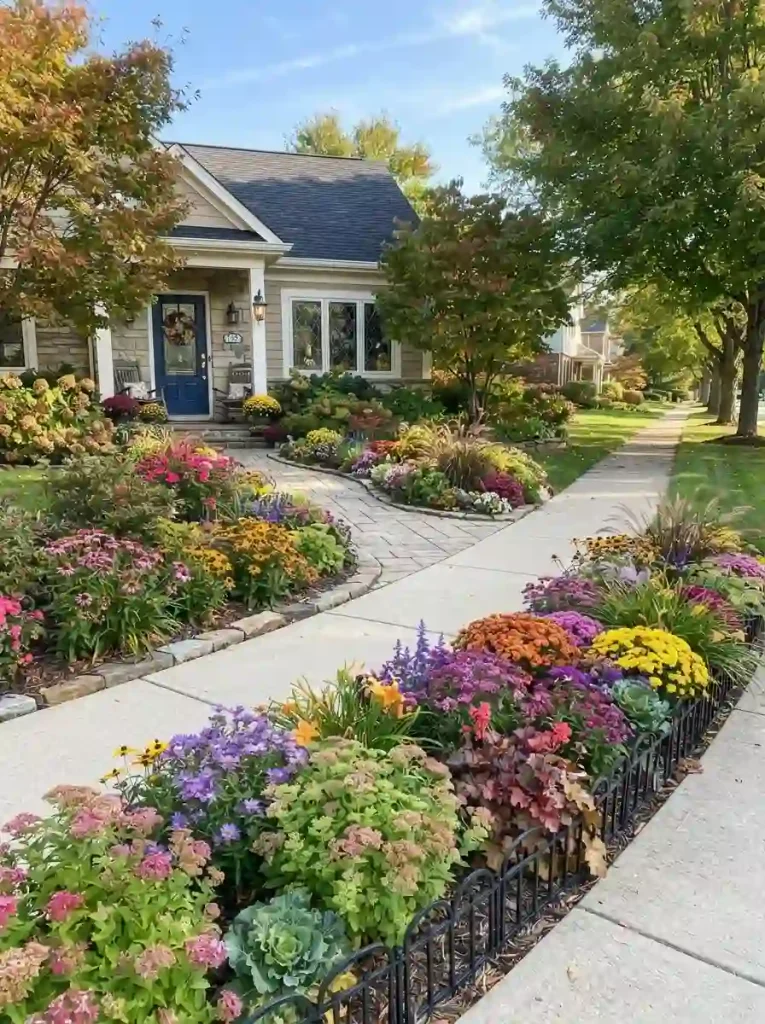
Seasonal flowers are an easy way to keep the area around your sidewalk looking fresh and inviting. Instead of relying on one type of plant all year, rotate flowers according to the growing season.
Spring bulbs, summer flowers, autumn foliage plants, and winter-friendly greenery can each give your walkway a different personality. You can also coordinate the colors with your front door, exterior paint, or other landscaping features.
This approach is ideal if you enjoy refreshing your garden throughout the year and want your curb appeal to change with the seasons.
Expert Tip:
Plan your seasonal planting before removing existing plants. A little overlap between blooming periods helps prevent the garden from looking empty during transitions.
12. Design a Pollinator-Friendly Sidewalk Garden
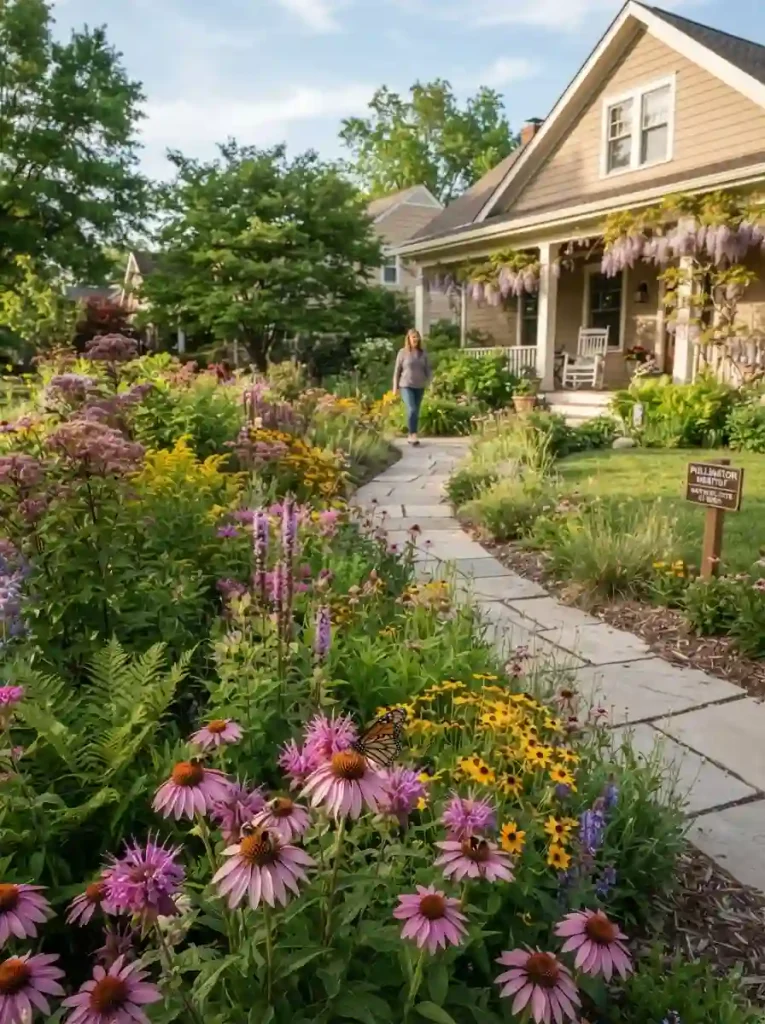
Turn the space beside your sidewalk into a small habitat for bees, butterflies, and other beneficial pollinators. Choose nectar-rich flowering plants that are appropriate for your region and arrange them in attractive clusters.
A pollinator garden can be both beautiful and practical. Different flower shapes, colors, and blooming periods can provide resources throughout much of the growing season while adding movement and life to your front yard.
Avoid filling the entire area with high-maintenance plants. A thoughtfully selected combination of native or climate-adapted species can make the garden easier to care for.
Expert Tip:
Include several plant varieties with different flowering periods so pollinators have access to food for a longer portion of the season.
13. Use Groundcovers for a Soft, Low-Growing Edge
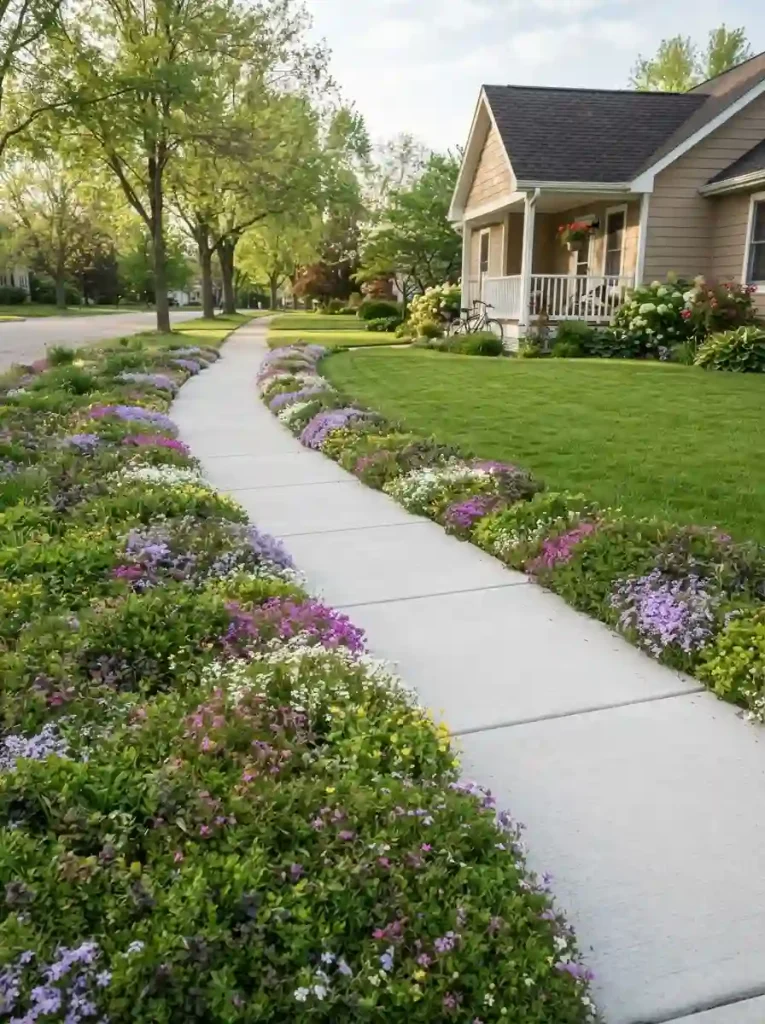
Groundcovers can create a lush transition between the sidewalk and larger landscape areas without taking up much vertical space. They are especially useful when you want greenery but do not want tall plants blocking the view.
Choose spreading plants suited to your climate and sunlight conditions. Once established, the right groundcover can help create a continuous carpet of foliage that looks polished and intentional.
This style can be particularly attractive around curved walkways, stepping stones, and informal garden designs.
Expert Tip:
Research the mature spreading habit before planting. Some groundcovers can become aggressive, so choose well-behaved varieties suitable for your specific location.
14. Incorporate Decorative Boulders for Natural Texture
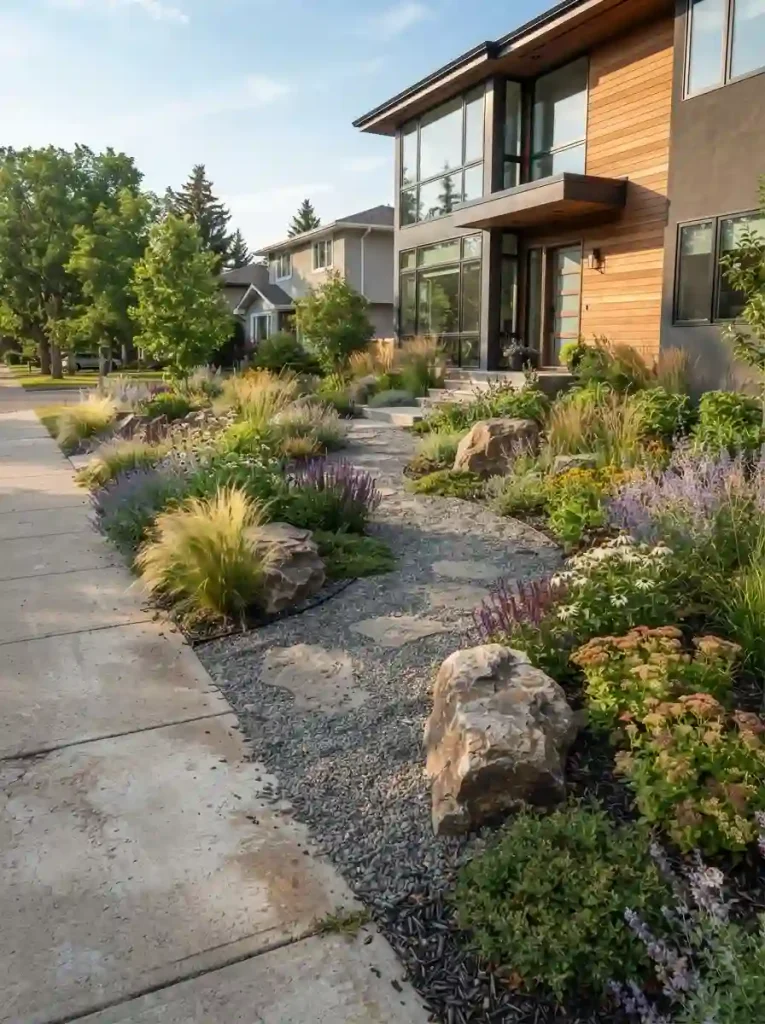
Large decorative rocks can give a sidewalk garden a natural, established appearance. Instead of scattering many small stones, select a few larger boulders and position them among plants for a balanced composition.
Boulders work especially well with grasses, low shrubs, flowering perennials, and gravel. Their permanent structure also gives the garden visual interest during seasons when fewer plants are blooming.
For the most natural result, partially bury the base of each boulder so it appears integrated into the landscape rather than simply placed on top.
Expert Tip:
Arrange rocks in uneven groups rather than creating perfectly symmetrical patterns. Natural variation usually produces a more convincing landscape.
15. Install Solar Lights Along the Walkway
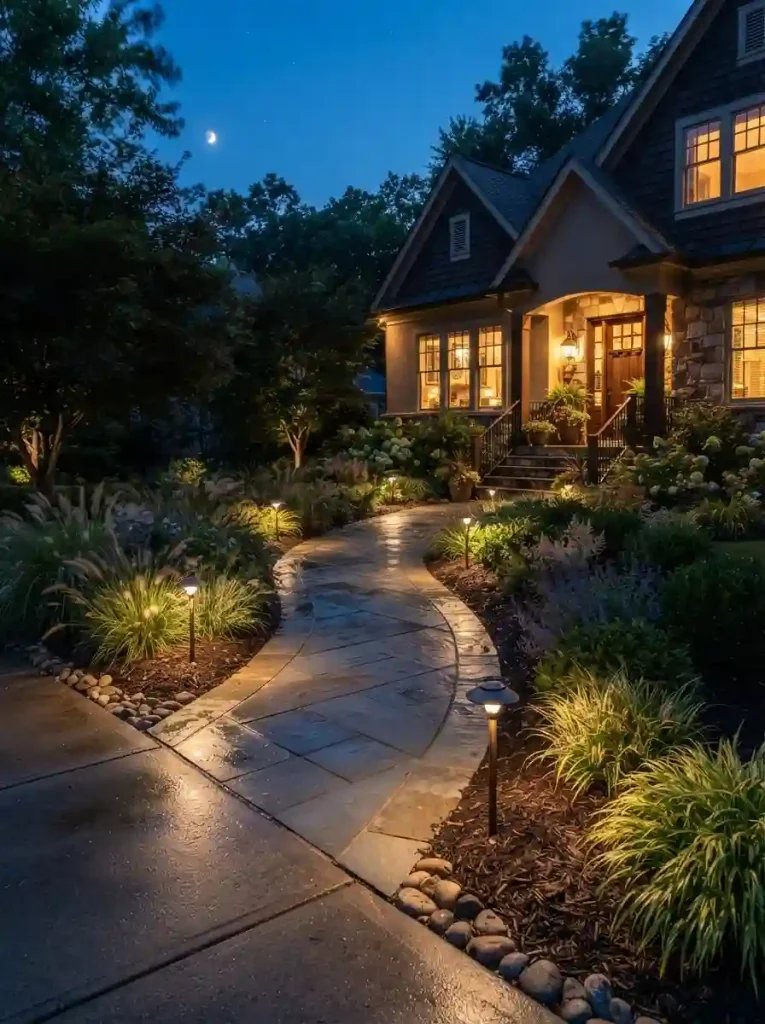
Good landscaping should look appealing after sunset too. Small solar path lights can highlight your planting beds while making the sidewalk easier to navigate at night.
Place lights at consistent but not overly tight intervals along the path. Warm, subtle illumination generally creates a more welcoming atmosphere than extremely bright fixtures.
Lighting can also draw attention to attractive plants, stones, trees, or architectural details without overpowering the rest of the landscape.
Expert Tip:
Position lights so they illuminate the walking surface without shining directly into nearby windows. Keep solar panels clear of dense foliage so they can collect sufficient sunlight.
16. Mix Edible Plants Into the Landscape
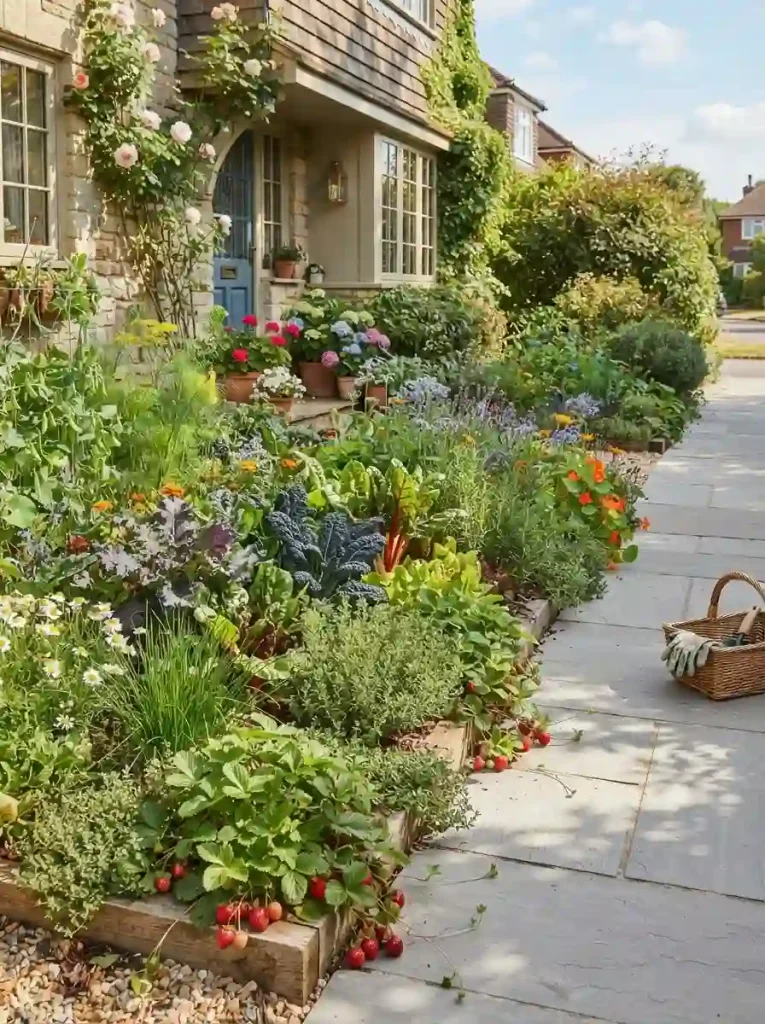
A sidewalk planting bed can be attractive and productive at the same time. Compact edible plants such as herbs, strawberries, leafy greens, or suitable dwarf vegetables can be incorporated into an ornamental garden.
The key is to combine edible plants with decorative companions rather than making the space look like a traditional vegetable plot. Different foliage shapes and textures can create a surprisingly sophisticated design.
This idea is particularly useful when you want your front-yard landscaping to serve more than one purpose.
Expert Tip:
Keep edible plants away from areas where pets frequently relieve themselves or where roadside contaminants could be a concern, and select food crops appropriate for the location.
17. Create a Minimalist Modern Sidewalk Landscape
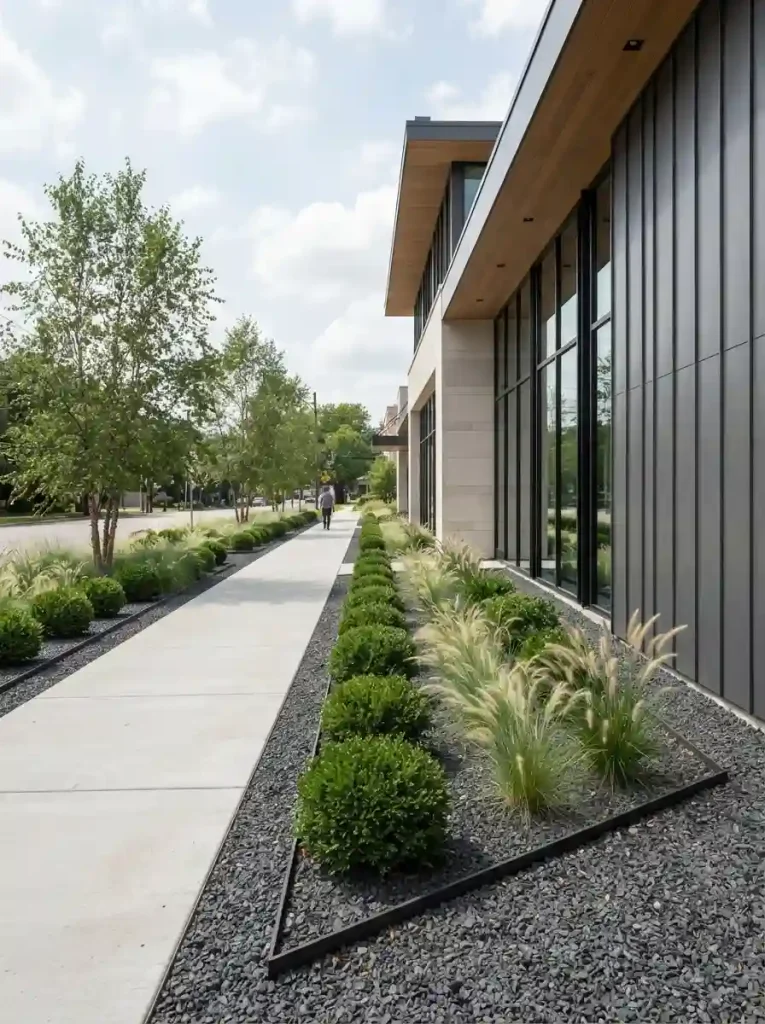
For contemporary homes, a simple planting scheme can make a stronger statement than an overcrowded garden. Use a limited palette of plants, clean edging, decorative stone, and carefully spaced features.
Repeating forms are especially effective in modern landscaping. For example, identical shrubs can be placed at regular intervals while grasses or groundcovers fill the spaces between them.
The result is a calm, organized landscape that complements modern architecture instead of competing with it.
Expert Tip:
Limit the number of major materials and plant varieties. Repetition and negative space are important elements of a minimalist landscape.
18. Add a Cottage-Style Flower Path
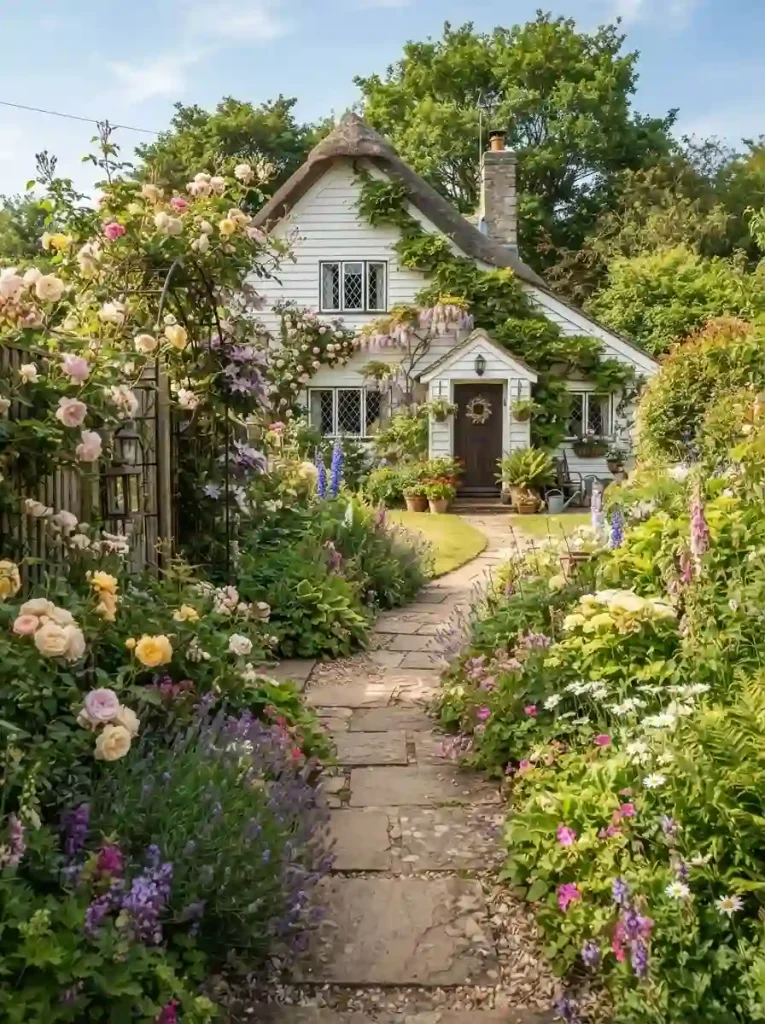
For a softer and more romantic appearance, create an informal cottage-style garden along the sidewalk. Combine flowers with varied heights, loose planting shapes, and foliage that gently fills the spaces between plants.
Unlike a formal border, cottage landscaping does not need every plant arranged in perfect lines. The beauty comes from combining different textures and allowing the garden to feel abundant without becoming untidy.
Use a few repeating plants or colors to keep the relaxed planting scheme visually connected.
Expert Tip:
Leave a clearly defined edge along the sidewalk even when the planting itself is informal. A crisp path boundary helps the garden look intentional.
19. Replace a Grass Strip With a Rock Garden
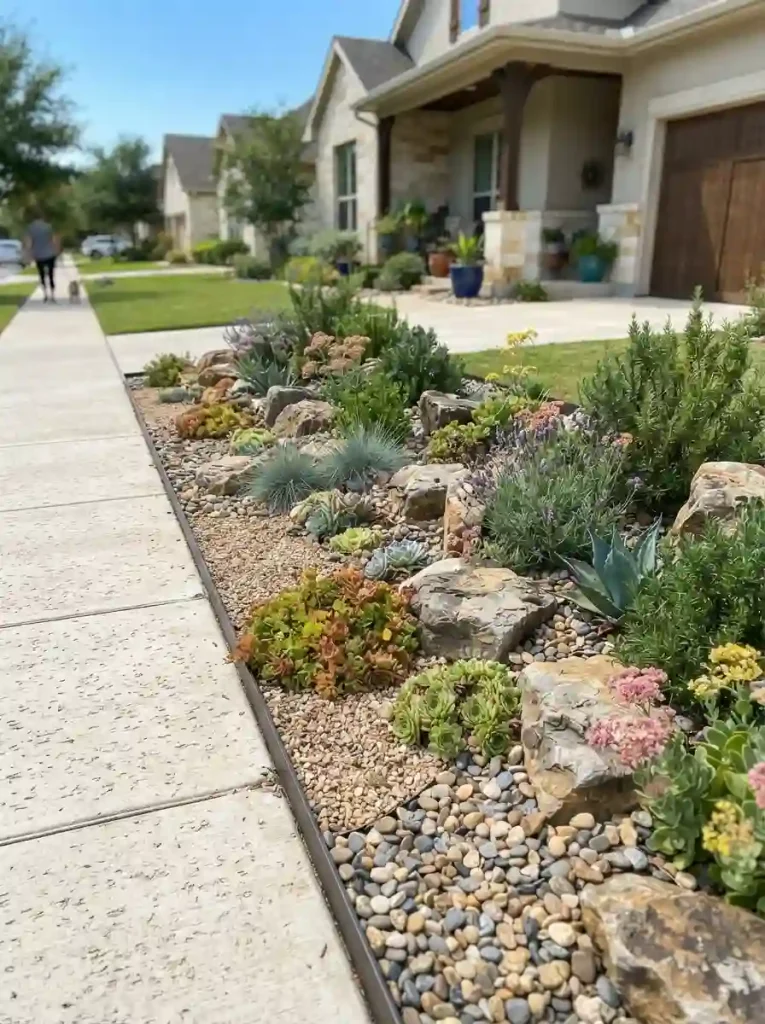
If mowing a narrow strip beside the sidewalk is inconvenient, a small rock garden can provide an attractive alternative. Combine different sizes of stones with drought-tolerant plants for a landscape that requires less frequent trimming.
Use varied textures rather than covering the entire area with one type of rock. A mixture of larger accent stones, smaller gravel, and carefully spaced plants creates depth.
This design can also work well in areas where lawn struggles because of heat, compacted soil, or limited irrigation.
Expert Tip:
Choose plants based on the actual conditions of the planting strip. Consider sunlight, drainage, winter temperatures, and the amount of foot traffic before making your selections.
20. Combine Multiple Ideas for a Complete Curb Appeal Makeover
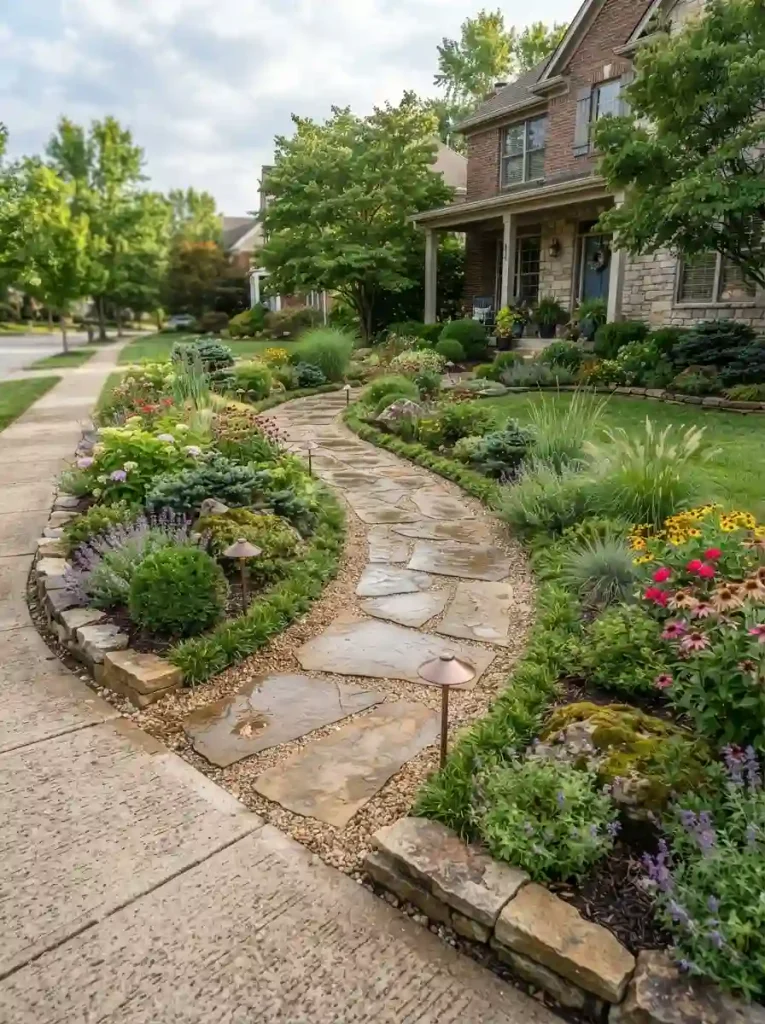
You do not have to choose just one sidewalk landscaping style. Some of the most successful designs combine several complementary elements into one cohesive planting scheme.
For example, you could pair compact evergreens with ornamental grasses, use stone edging around the bed, add seasonal flowers for color, and finish the walkway with subtle lighting.
The key is to establish a consistent visual theme. Choose materials and plants that work together rather than adding every feature you like.
Expert Tip:
Start with the largest elements first, such as trees, shrubs, and hardscape. Then add smaller plants, decorative details, and lighting around the established framework.
Practical Tips for Sidewalk Landscaping
Leave Enough Walking Space
Keep plants, containers, edging, and decorative objects far enough away from the walking surface. Remember that plants often become wider as they mature.
Choose Plants for Your Conditions
Sunlight, soil type, drainage, temperature, and rainfall all affect plant performance. Selecting plants that naturally suit the location usually results in healthier growth and less maintenance.
Think About Mature Plant Size
Never plan a garden based only on the size of plants at the nursery. Check their expected mature height and width before deciding where to place them.
Keep the Design Connected to Your Home
The sidewalk should feel like part of the overall property rather than a separate garden. Repeat materials, colors, or plant varieties used elsewhere in the yard to create visual continuity.
Make Maintenance Realistic
Consider how often you want to water, prune, weed, fertilize, and replace plants. A simple, well-maintained landscape usually looks better than an elaborate design that becomes neglected.
Sidewalk Landscaping Checklist
- Measure the available planting space.
- Observe how much sunlight the area receives.
- Check soil drainage and quality.
- Research mature plant sizes.
- Select plants suitable for your climate.
- Keep the walking route unobstructed.
- Choose an edging material that complements your home.
- Consider seasonal interest.
- Plan irrigation before planting.
- Add lighting where appropriate.
- Use mulch, gravel, or groundcover to reduce exposed soil.
- Leave enough room for plants to spread naturally.
- Check local rules if landscaping is located within a public right-of-way.
Final Thoughts
A sidewalk does not have to be an overlooked strip of concrete leading to your front door. With thoughtful planting, attractive borders, useful lighting, and the right combination of textures, it can become an important part of your home’s curb appeal.
The best sidewalk landscaping ideas are not necessarily the most complicated ones. Even a simple combination of compact shrubs, colorful flowers, ornamental grasses, or decorative stone can make a noticeable difference.
Start by studying the space you already have, decide how much maintenance you are comfortable with, and choose plants that suit your growing conditions. Then build the design gradually so every element has room to thrive.
Whether you prefer a colorful cottage garden, a clean modern border, a drought-tolerant rock garden, or a lush pollinator-friendly planting, there is a sidewalk landscaping style that can make your home’s entrance feel more welcoming.
Frequently Asked Questions
What are the best plants for sidewalk landscaping?
The best plants depend on your climate, sunlight, soil, and available space. Compact shrubs, ornamental grasses, groundcovers, flowering perennials, and climate-appropriate annuals are all useful choices when they remain within their intended planting area.
How do I landscape a narrow sidewalk?
For a narrow space, prioritize compact plants and vertical elements rather than wide-spreading shrubs. Groundcovers, slim ornamental grasses, small containers, and carefully placed trellises can add interest while preserving comfortable walking space.
How can I landscape a sidewalk without much maintenance?
Choose plants suited to your local climate, group plants with similar watering requirements, use mulch or gravel to reduce exposed soil, and avoid varieties that require frequent pruning. A simple planting scheme is often easier to maintain.
Can I use gravel beside a sidewalk?
Yes, gravel can create an attractive and practical landscape surface when properly contained. Use suitable edging to prevent stones from spreading onto the walkway and select plants that tolerate the site’s drainage and sunlight conditions.
How far should plants be from a sidewalk?
The appropriate distance depends on the mature size of the plant. Small plants can generally be placed closer, while shrubs and trees need considerably more room. Always consider their mature spread rather than their size when newly planted.
How can I make my sidewalk look better at night?
Low-voltage or solar path lighting can highlight the walkway and surrounding landscaping after dark. Position fixtures to provide useful illumination without creating glare, and keep them clear of overgrown foliage.
Should I use mulch or gravel around sidewalk plants?
Both can work well. Mulch creates a softer, natural garden appearance and can help retain moisture, while gravel provides a cleaner, more structured or drought-tolerant look. Choose based on your plants, climate, and preferred style.
How do I keep sidewalk landscaping from becoming overgrown?
Select plants based on their mature dimensions, maintain a defined planting edge, prune when necessary, and remove plants that repeatedly outgrow the available space. Giving plants enough room from the beginning can greatly reduce future problems.