
24 Small Living Room Ideas for Apartments That Maximize Every Inch
A small apartment living room can still feel comfortable, stylish, and surprisingly spacious when every piece has a purpose. The secret is not filling the room with more decoration—it is choosing furniture, colors, layouts, and storage solutions that make the available space work harder.
Whether your living room is narrow, awkwardly shaped, or simply short on square footage, these small living room ideas can help you create a space that feels open without sacrificing personality or comfort.
1. Choose a Slim Sofa That Fits the Room
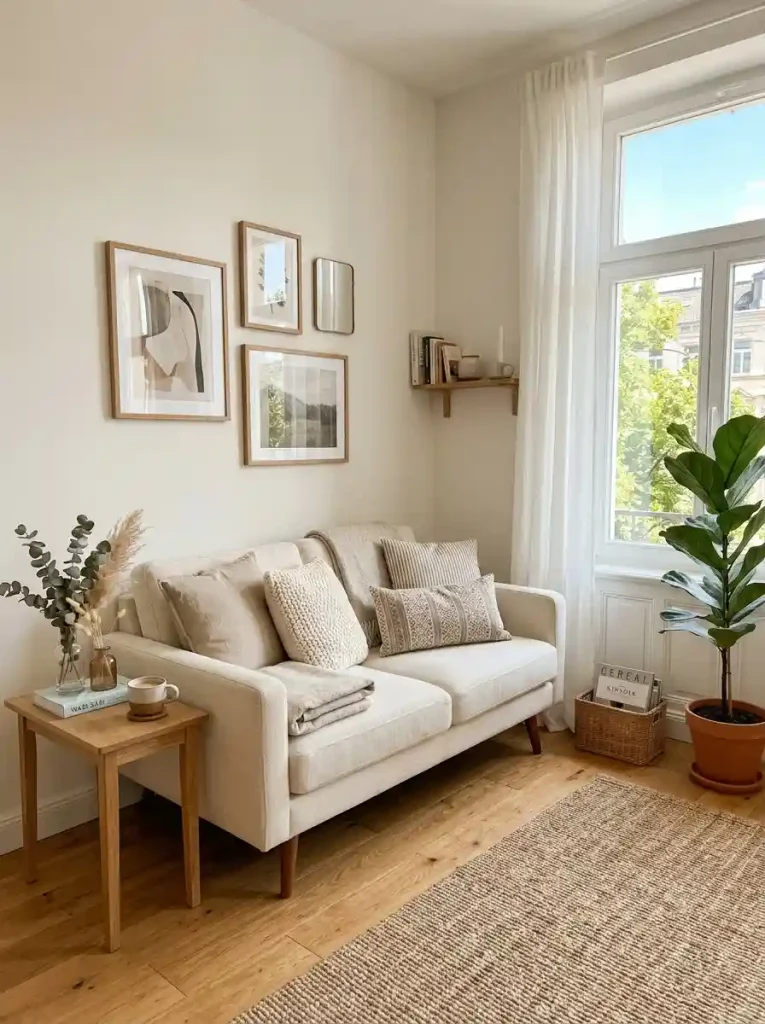
A sofa usually takes up more visual and physical space than anything else in an apartment living room, so its proportions matter. Instead of automatically choosing the largest sofa you can fit, look for a streamlined design with narrow arms and a compact depth.
A smaller sofa can actually make the entire room feel larger because it leaves more visible floor around it. If you need additional seating, pair it with one lightweight accent chair or a couple of movable stools rather than another bulky couch.
How to Make It Work
Measure before buying: Record the sofa wall, doorway width, and available walking space before shopping.
Look for narrow arms: Slim arms provide the seating capacity you need without adding unnecessary width.
Consider raised legs: Exposed legs reveal more flooring underneath, creating a lighter visual effect.
Keep the silhouette simple: Clean lines generally work better than oversized rolled arms or extremely deep cushions in compact rooms.
2. Turn an Empty Corner Into a Reading Nook
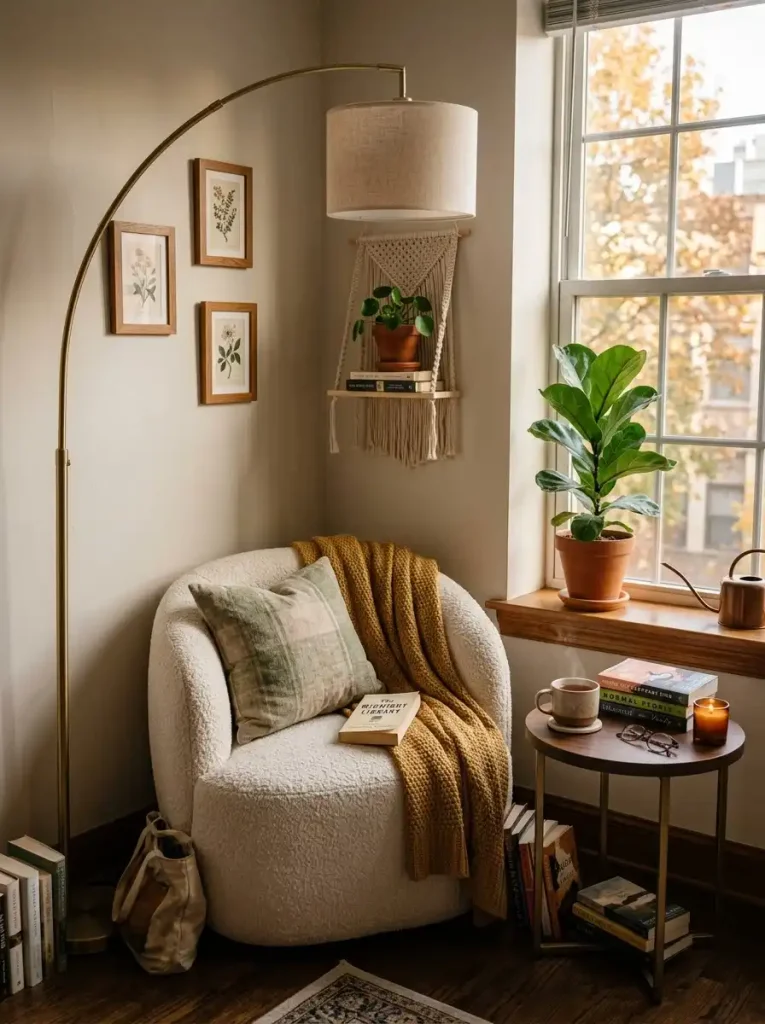
An unused corner does not need to become a dumping ground for bags, laundry, or random boxes. With one comfortable chair, a small lamp, and a narrow table, that forgotten area can become a useful reading nook.
This works especially well in apartments because the corner gains a purpose without requiring a major furniture addition. Choose pieces that can be moved easily if you need to change the room layout later.
How to Make It Work
Use a small chair: A compact lounge chair or slipper chair can provide comfort without overwhelming the corner.
Add vertical lighting: A slim floor lamp takes advantage of height instead of consuming table space.
Choose a tiny side table: Select a round or C-shaped table that leaves plenty of floor visible.
Give the nook one focal point: A plant, artwork, or small stack of books is enough to make the area feel intentional.
3. Use a Round Coffee Table to Improve Movement
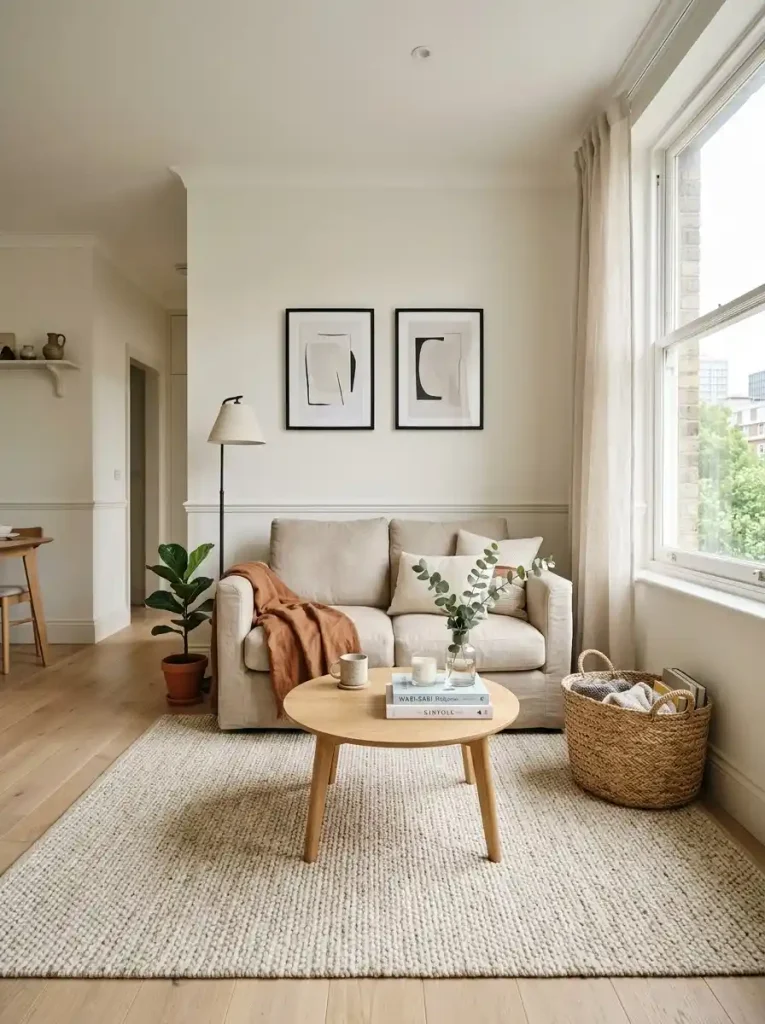
Sharp rectangular coffee tables can make a compact living room feel crowded, particularly when the table sits close to the sofa and surrounding chairs. A round coffee table creates a softer visual transition and makes it easier to move around the seating area.
The curved shape is especially useful in narrow rooms or layouts where several furniture pieces sit close together. Choose a table that is appropriately scaled rather than simply selecting the largest surface available.
How to Make It Work
Leave walking space: Keep enough clearance between the table and seating for comfortable movement.
Choose a lightweight base: Open or pedestal-style bases can make the floor look less obstructed.
Consider hidden storage: A lift-top or shelf underneath can provide additional functionality.
Keep the tabletop edited: A small tray, candle, and one decorative object can look more polished than a crowded arrangement.
4. Mount the TV on the Wall
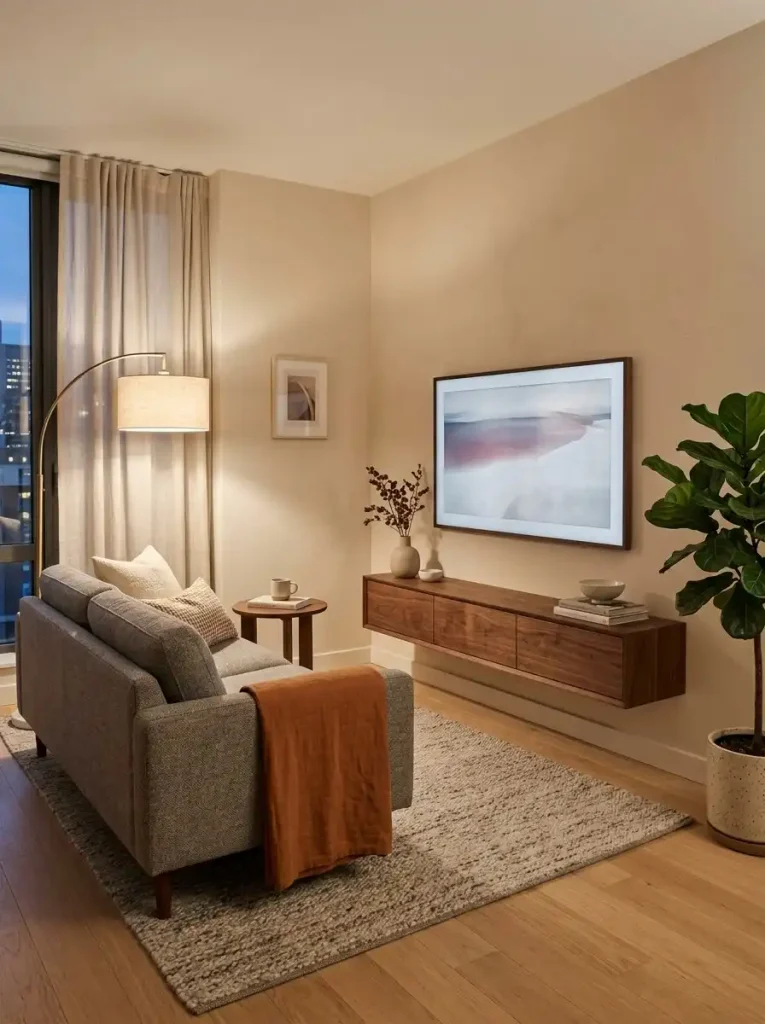
A television stand can consume valuable floor area in an already-small apartment. Mounting the TV directly on the wall removes that visual obstacle and creates room underneath for a slim floating shelf or low-profile console.
This approach also draws the eye upward, helping the wall become part of the design rather than leaving the television surrounded by bulky furniture.
How to Make It Work
Hide the cables: Use a cable-management solution so the wall looks clean and intentional.
Add one slim storage element: A floating shelf or narrow console can hold essential electronics without becoming bulky.
Avoid excessive decoration: Too many objects around the television can make the wall feel cluttered.
Balance the wall: Add artwork, a plant, or another simple element nearby if the TV feels visually isolated.
5. Make Curtains Hang From Ceiling to Floor
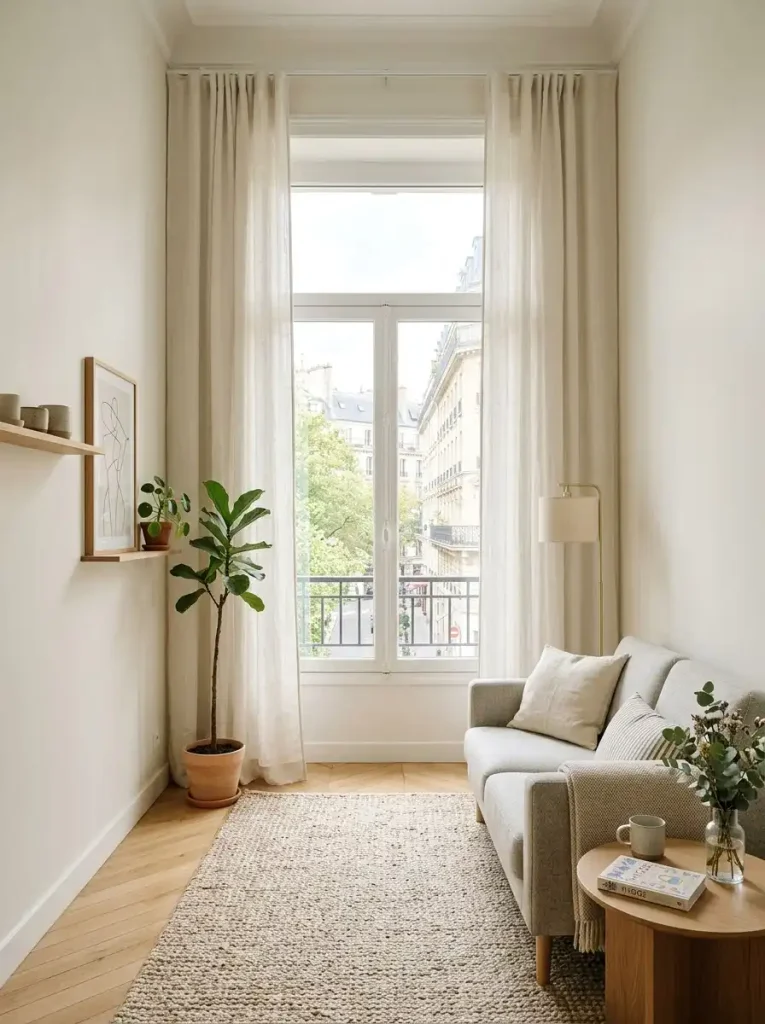
Curtains can do more than provide privacy. When installed correctly, they can visually increase the height of a small apartment living room by directing attention upward.
Mount the curtain rod closer to the ceiling rather than immediately above the window frame, then allow the fabric to fall almost to the floor. This simple change can make the walls appear taller and the room feel more finished.
How to Make It Work
Go higher: Position the rod several inches above the window frame when the room allows it.
Use full-length panels: Floor-length fabric creates a stronger vertical line.
Choose a light material: Linen-look or sheer fabrics can maintain an airy appearance.
Keep the pattern subtle: Solid or lightly textured curtains are usually easier to integrate into a small room.
6. Add a Large Mirror Opposite a Window
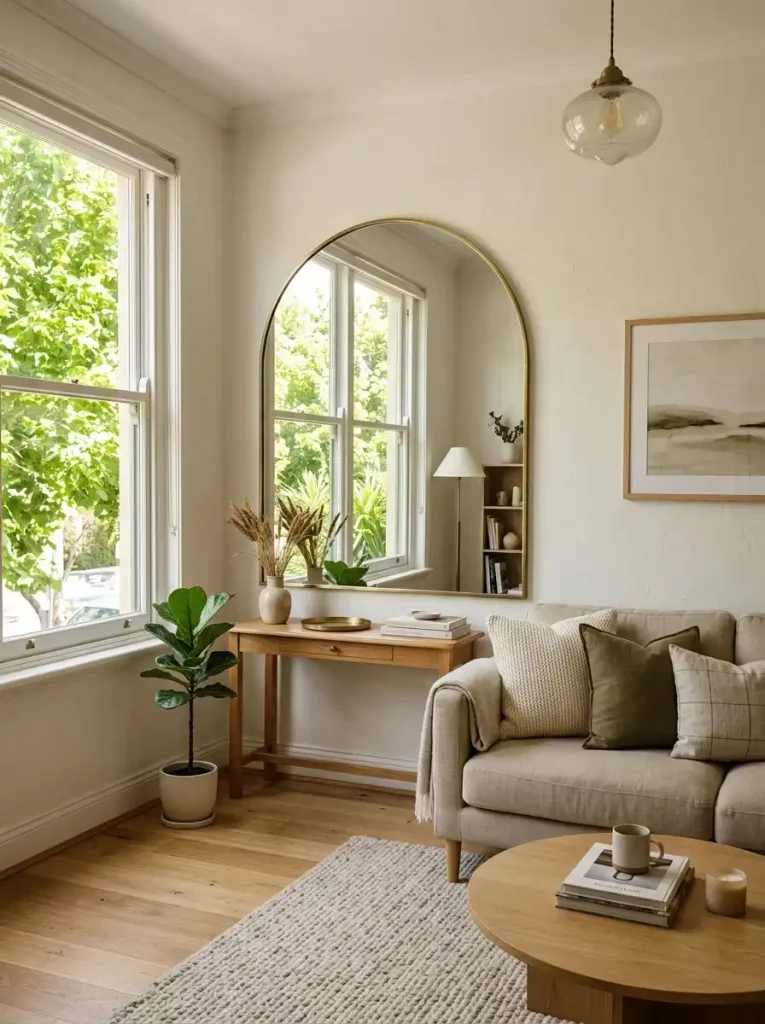
A strategically placed mirror can make a small living room feel brighter and more open by reflecting daylight and extending the visual field. Instead of covering every wall with small decorative pieces, use one substantial mirror as a functional focal point.
Positioning matters more than size alone. A mirror opposite or near a window can bounce natural light deeper into the room while making the space feel less enclosed.
How to Make It Work
Reflect something attractive: Aim the mirror toward a window, plant, artwork, or another appealing feature.
Choose one substantial piece: One large mirror can have more impact than several tiny mirrors.
Keep the surrounding wall simple: Allow enough empty space for the mirror to remain the visual focus.
Try an unusual silhouette: Arched, oval, or organically shaped mirrors can add personality without requiring additional decor.
7. Use a Storage Ottoman Instead of a Traditional Coffee Table
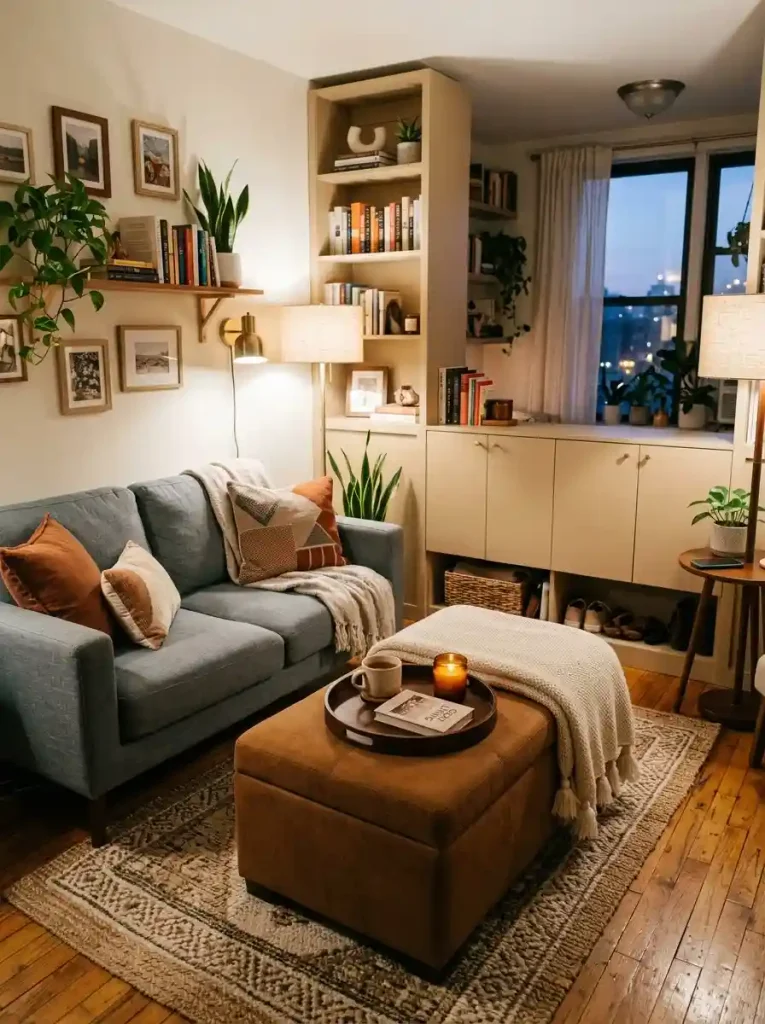
When square footage is limited, furniture that performs multiple jobs becomes extremely valuable. A storage ottoman can act as a coffee table, extra seating, footrest, and hidden storage container all at once.
Choose a firm, flat-topped model that works with a decorative tray. The tray creates a stable surface for drinks and accessories while allowing the ottoman to remain useful as flexible seating.
How to Make It Work
Pick a firm surface: The ottoman should be sturdy enough for everyday use.
Add a removable tray: This instantly creates a practical tabletop.
Store soft items inside: Blankets, pillows, board games, or seasonal accessories can disappear inside.
Choose a washable fabric: Easy-care upholstery is particularly helpful in a frequently used apartment.
8. Build Upward With a Narrow Bookcase
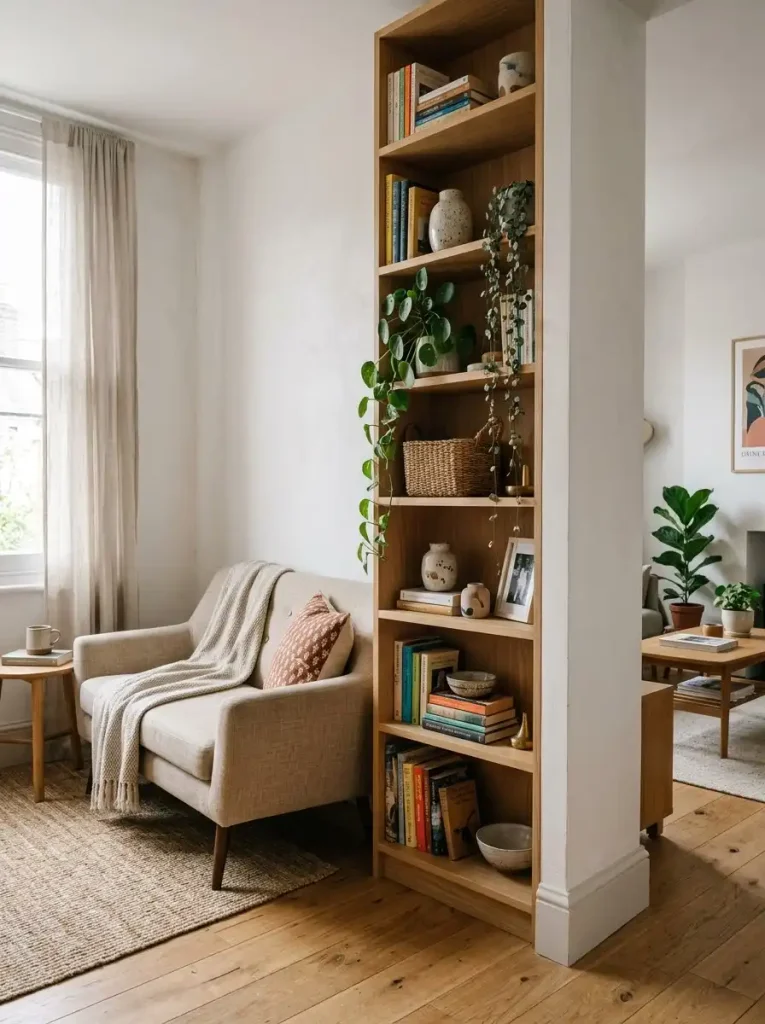
When floor space is scarce, think vertically. A tall, narrow bookcase can provide substantial storage while occupying only a small section of the floor.
Use it for books, plants, framed photographs, baskets, and a few decorative objects. Keeping some shelves partially empty is important because an overfilled bookcase can make the entire room feel visually heavy.
How to Make It Work
Choose a narrow footprint: Height can compensate for limited width.
Mix open and closed storage: Baskets can hide less attractive everyday items.
Leave breathing room: Empty sections prevent the shelves from appearing chaotic.
Use the top carefully: A trailing plant or one large decorative piece can visually connect the shelving to the rest of the room.
9. Create a Built-In Look With Matching Low Cabinets
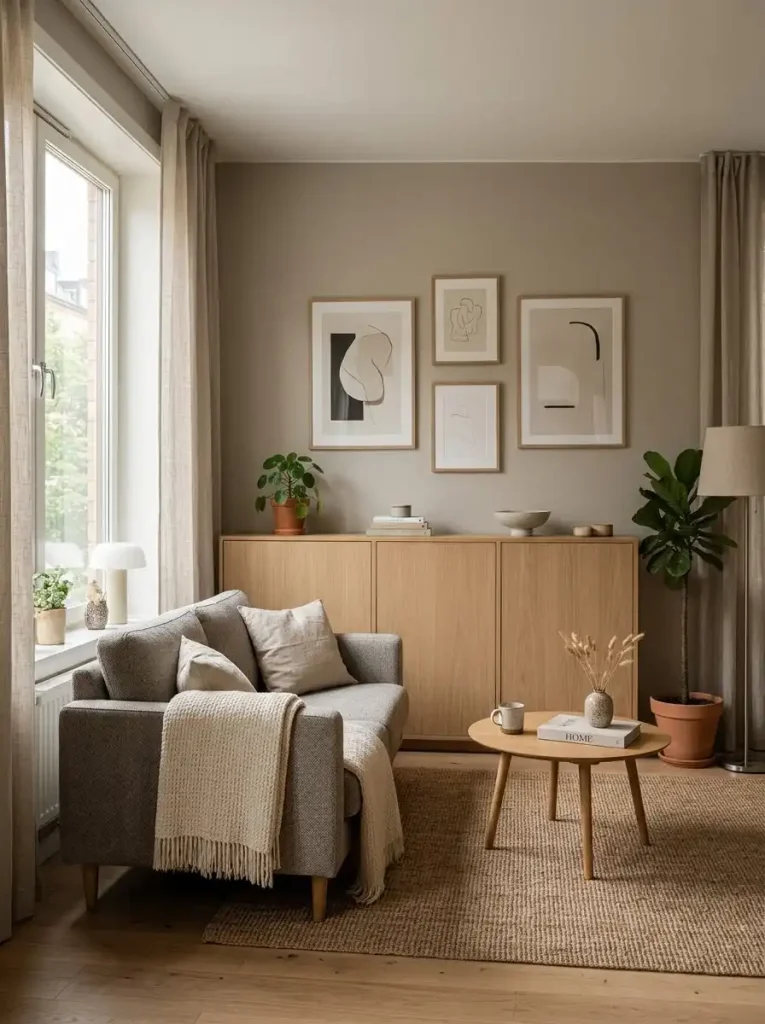
You do not necessarily need expensive custom cabinetry to create a built-in appearance. A row of matching low cabinets can visually stretch across a wall while providing hidden storage underneath.
Keeping the cabinets in one consistent finish makes the furniture read as one continuous architectural element rather than several separate storage pieces.
How to Make It Work
Repeat the finish: Matching cabinet fronts create visual continuity.
Keep the profile low: Lower furniture preserves more visible wall and ceiling space.
Hide everyday clutter: Closed doors are ideal for electronics, games, paperwork, and miscellaneous items.
Decorate the top sparingly: A few framed prints or plants are enough to finish the arrangement.
10. Choose Furniture With Exposed Legs
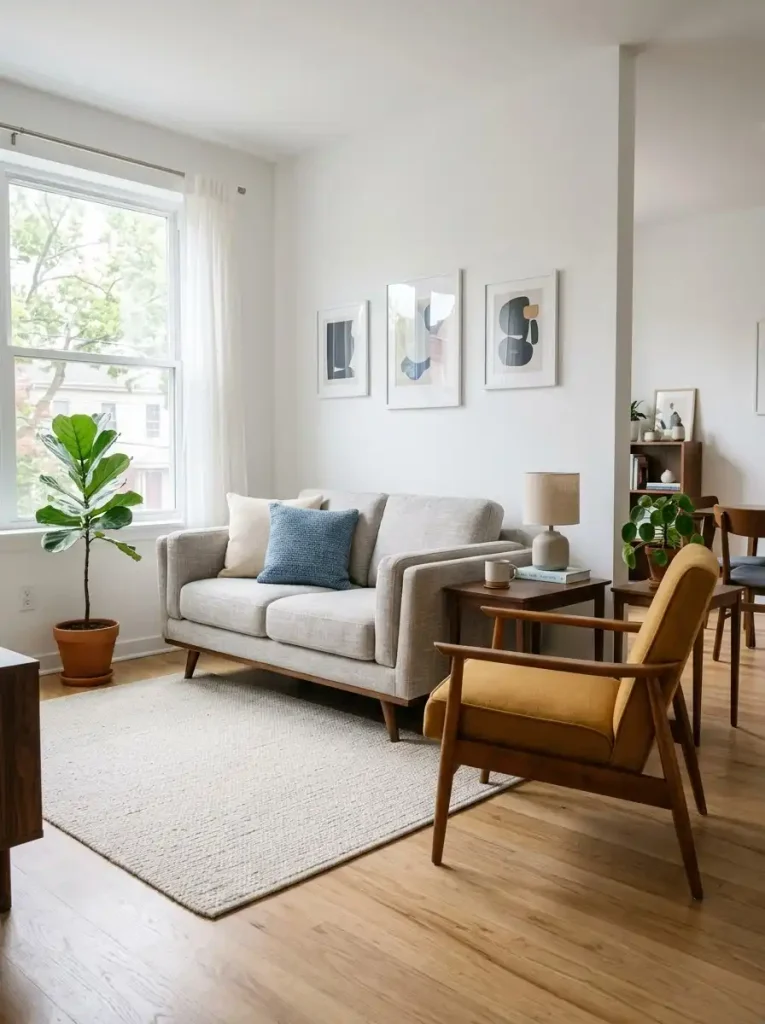
Furniture that sits directly on the floor can visually block the room and make a small apartment feel heavier. Pieces with visible legs create small pockets of negative space underneath, allowing more flooring to remain visible.
The result is subtle but effective: the room feels less crowded without requiring you to remove useful furniture.
How to Make It Work
Prioritize sofas and chairs with visible legs: These pieces create the greatest visual difference.
Avoid overly chunky bases: Heavy solid platforms can make compact rooms feel grounded in the wrong way.
Repeat the idea selectively: Use raised furniture in several places for consistency.
Keep the flooring visible: Avoid covering every open section with baskets and accessories.
11. Use One Color Family Throughout the Room
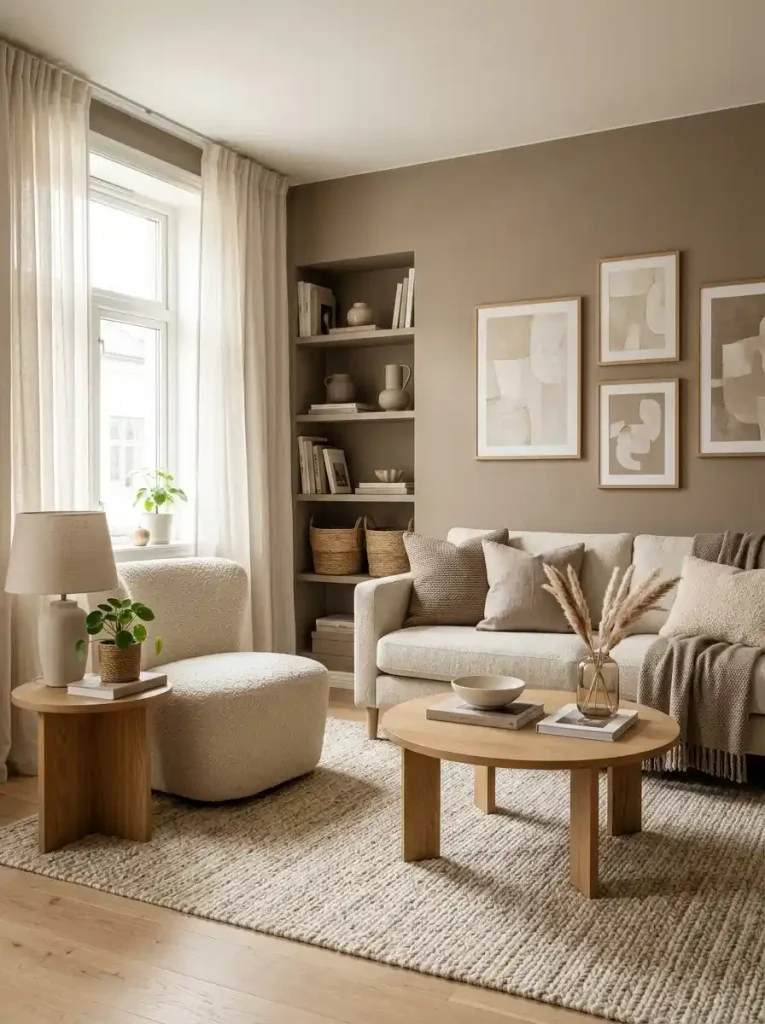
A limited color palette can make a small living room feel more connected because fewer visual breaks allow the eye to move smoothly around the space.
This does not mean everything needs to match perfectly. Instead, choose a dominant neutral and introduce two or three closely related shades through furniture, textiles, artwork, and accessories.
How to Make It Work
Start with one base shade: Warm white, beige, greige, soft taupe, or another quiet neutral can establish the foundation.
Repeat accent colors: Echo the same muted color in pillows, artwork, rugs, or ceramics.
Vary textures: Similar colors become much more interesting when materials differ.
Use contrast strategically: One darker object can provide definition without breaking the visual harmony.
12. Replace Bulky Side Tables With Slim C-Tables
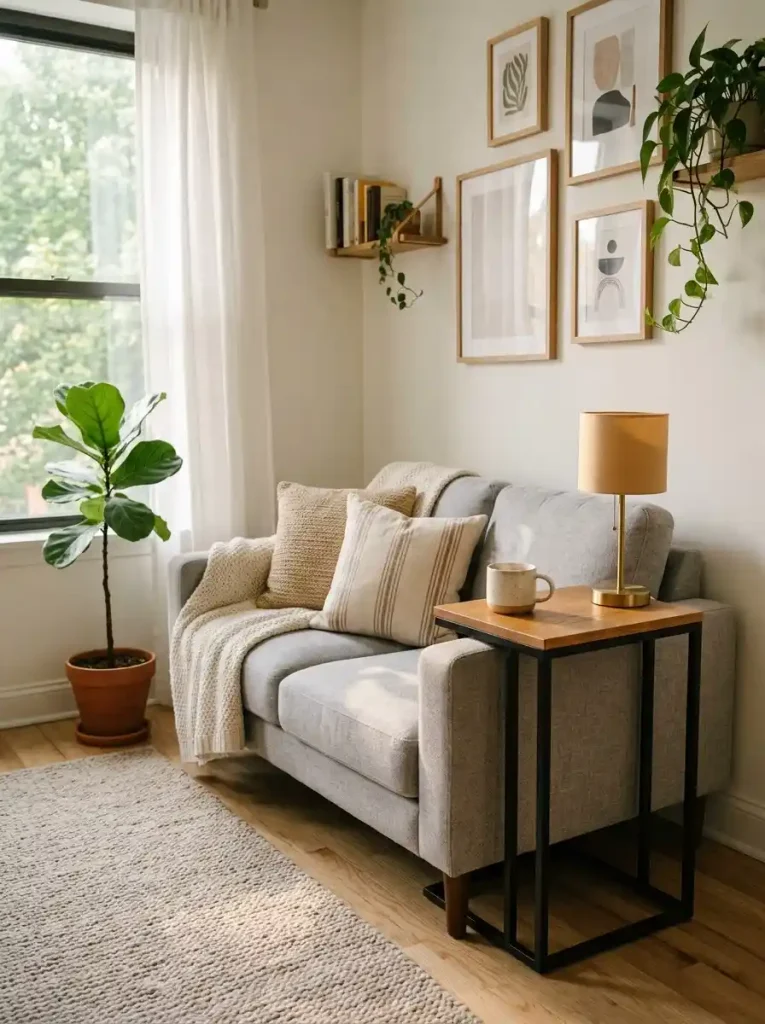
Traditional end tables can take up more floor space than necessary. A C-shaped side table solves this problem by sliding partially underneath the sofa, bringing a useful surface close without requiring a full table footprint.
It is especially practical for renters or anyone who frequently changes their layout because the lightweight table can be moved wherever it is needed.
How to Make It Work
Look for a narrow base: The slimmer the frame, the less visual obstruction it creates.
Slide it toward the sofa: Keep drinks, books, or a laptop within easy reach.
Choose a simple finish: Wood, metal, or a neutral tone can blend naturally with the existing furniture.
Use one where needed: You may not need matching tables on both sides of the sofa.
13. Use a Narrow Console Behind the Sofa
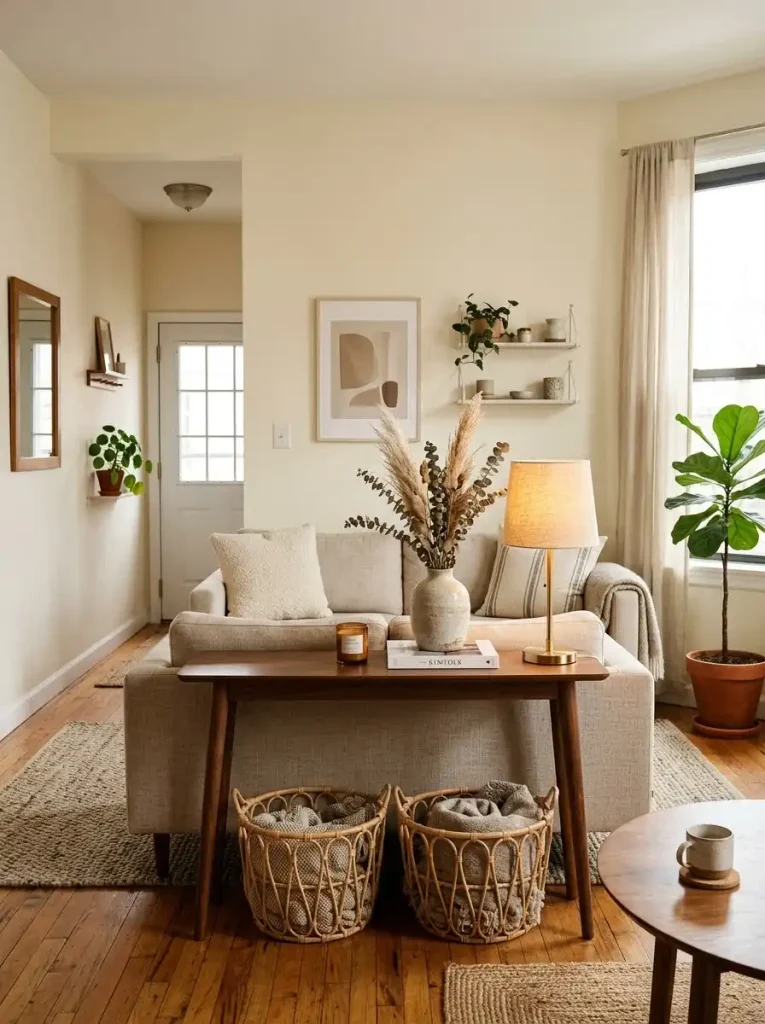
The space behind a sofa is often overlooked, especially when the sofa floats away from the wall. A narrow console can turn that unused strip into a practical surface for lighting, books, plants, or decorative objects.
Choose a console that is only slightly wider than the sofa and shallow enough to preserve comfortable walking space. It can also help visually divide an open-plan apartment without making the room feel closed off.
How to Make It Work
Keep it shallow: A slim profile prevents the walkway from becoming cramped.
Use baskets underneath: Small baskets can provide discreet storage for everyday items.
Add a lamp: Table lighting can create a warm atmosphere without requiring another floor lamp.
Avoid overdecorating: A few carefully selected objects will keep the console looking intentional.
14. Pick an Apartment-Friendly Loveseat
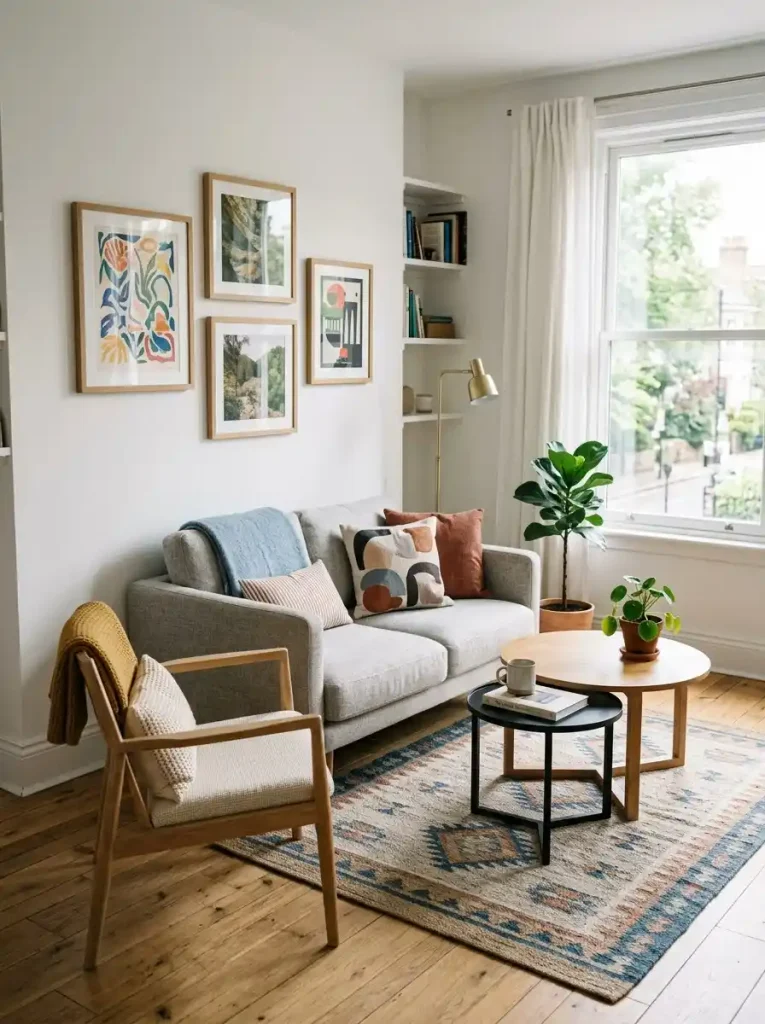
If a standard sofa dominates your living room, consider switching to a loveseat. Its smaller footprint can free up enough space for another useful seating option without sacrificing the comfort of having a proper couch.
A loveseat works particularly well for couples, solo apartments, or rooms where the living area shares space with a dining or work zone.
How to Make It Work
Measure the room first: Make sure the loveseat leaves sufficient clearance around doors and pathways.
Add one movable chair: A lightweight chair can provide extra seating when guests arrive.
Choose a proportional rug: The rug should connect the seating area without swallowing the entire floor.
Use flexible accessories: Cushions and throws can add personality without taking up permanent space.
15. Try Nesting Tables Instead of One Large Table
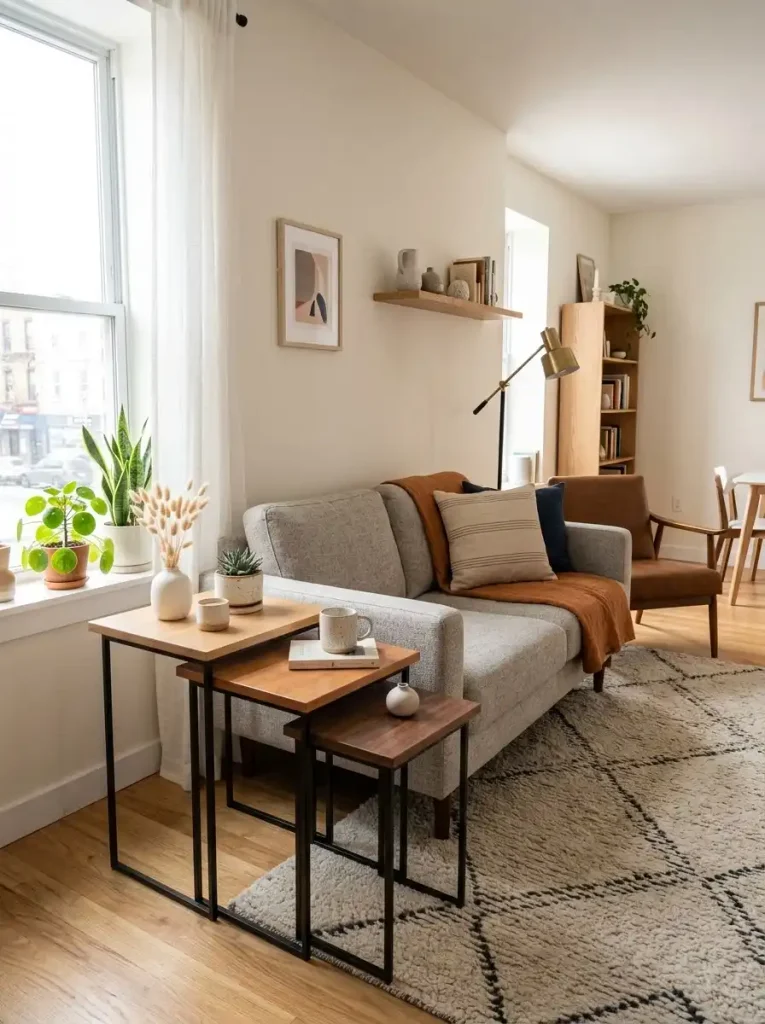
Nesting tables provide flexibility that a single oversized coffee table cannot. Several smaller tables can be separated when you need additional surfaces and pushed together when you want more open floor space.
They are particularly useful in apartments where the living room serves several purposes throughout the day.
How to Make It Work
Select different heights: Tables that stack neatly can be separated without looking repetitive.
Move them when needed: Keep one beside the sofa and bring the others forward when entertaining.
Use lightweight designs: Easy-to-move furniture makes small rooms more adaptable.
Avoid filling every tabletop: Open surfaces help preserve the room’s visual simplicity.
16. Create a Fold-Away Workstation
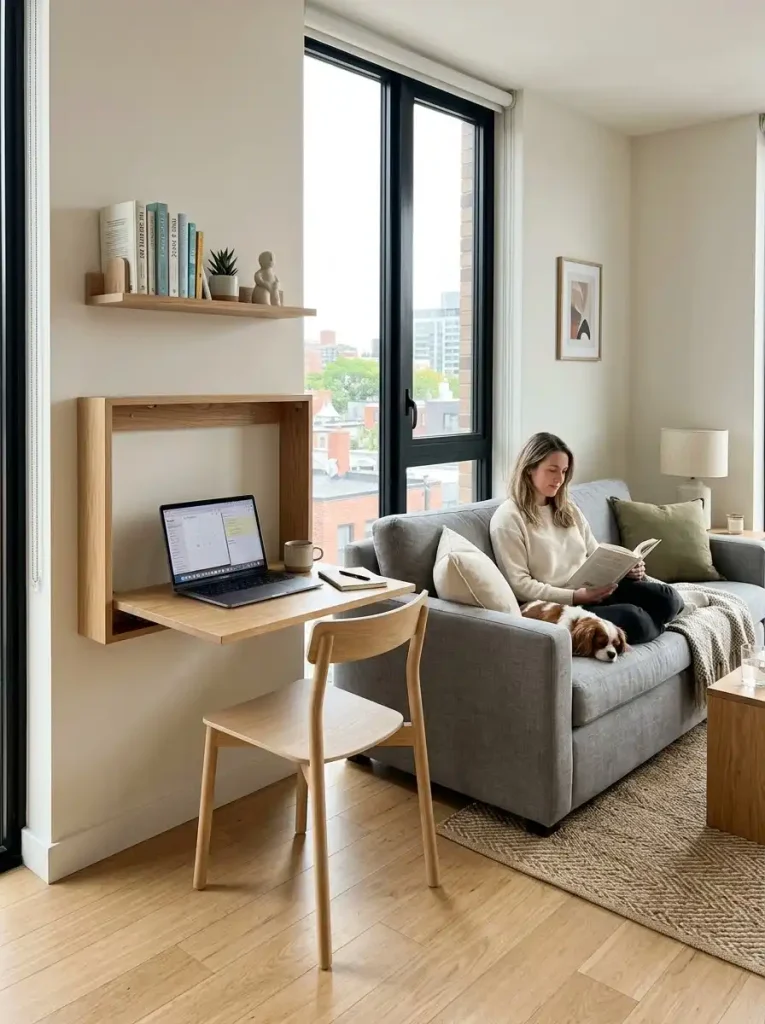
If your living room also functions as a home office, a permanent desk can quickly consume valuable space. A wall-mounted drop-leaf desk offers a smarter alternative that can disappear when work is finished.
Pair it with a compact chair that can slide underneath the desk. When closed, the wall becomes part of the living room again rather than looking like a full-time office.
How to Make It Work
Choose a shallow desk: You only need enough depth for your laptop and essential supplies.
Mount storage above it: A small shelf can hold stationery without using floor space.
Use a comfortable chair: Compact does not have to mean uncomfortable.
Clear the surface after work: Keeping the workstation tidy makes the living area feel calmer.
17. Put a Bench Under the Window
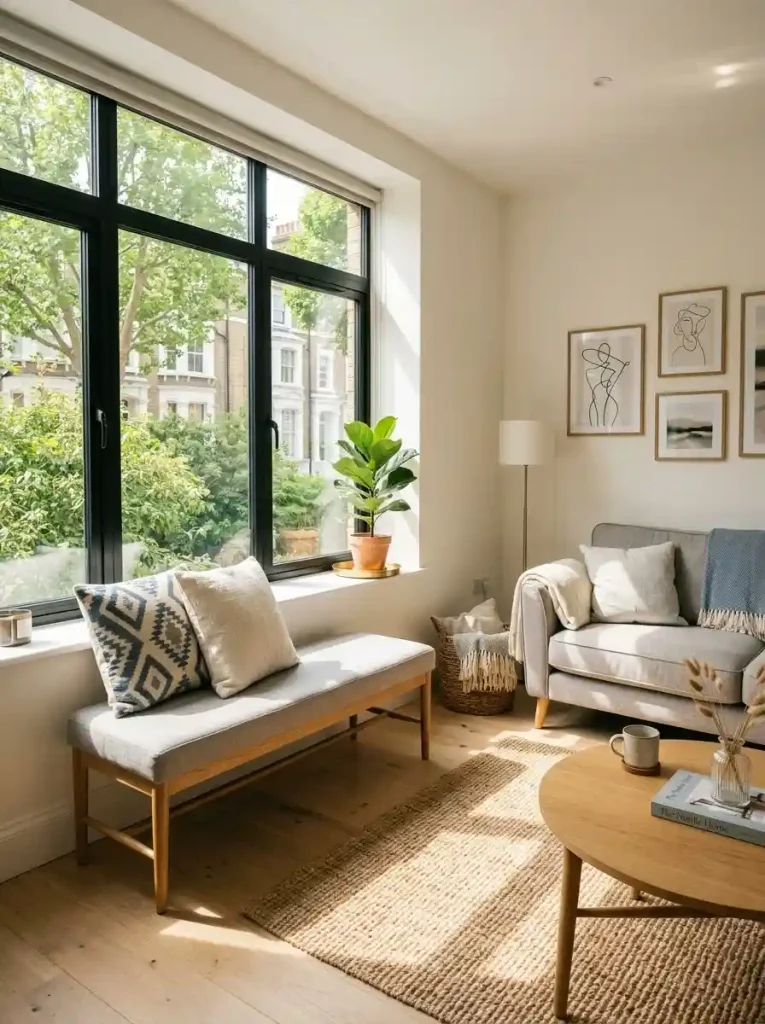
A window area can become useful seating instead of remaining an empty strip of floor. A narrow upholstered bench placed beneath the window creates a comfortable perch while keeping the center of the room open.
For apartments with limited seating, the bench can also serve as an extra seat when guests visit.
How to Make It Work
Choose a shallow bench: Keep enough clearance for movement around the window.
Add a cushion: A tailored seat cushion makes the bench feel intentional.
Use hidden storage: A lift-top or drawer design can store blankets and small belongings.
Keep the window accessible: Avoid blocking handles, radiators, or ventilation areas.
18. Use a Rug to Define the Living Area
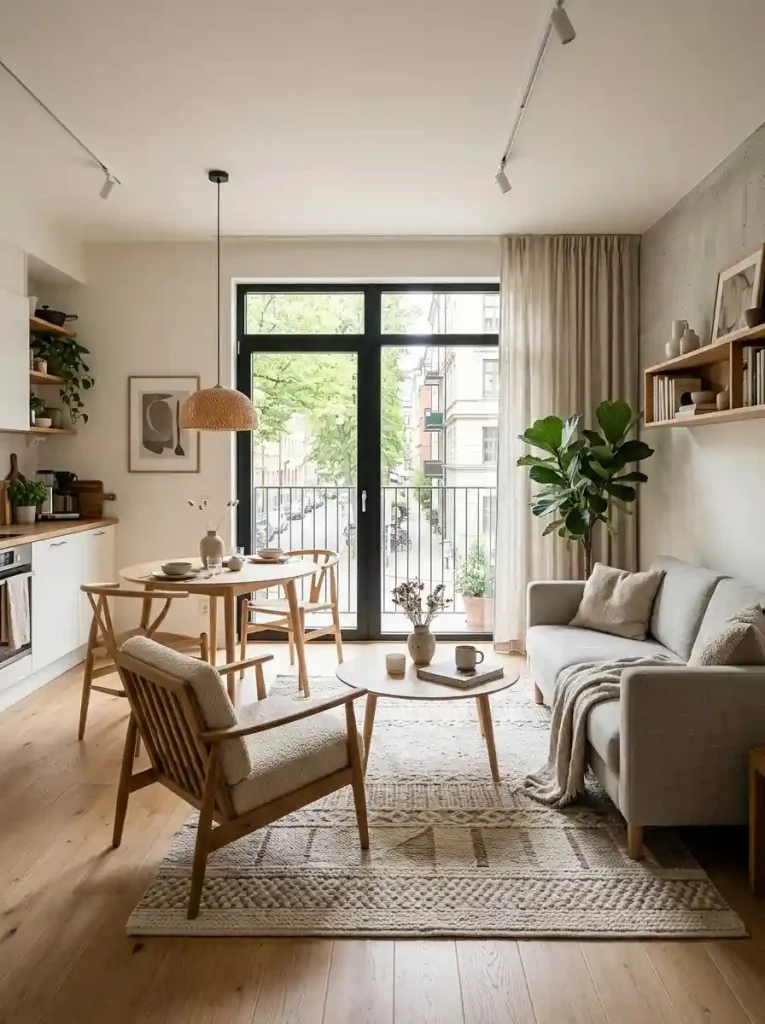
A rug can make a small apartment feel more organized by visually separating the living room from nearby dining, kitchen, or work areas. Rather than making the room look smaller, the right rug establishes a clear zone.
Choose a size that allows at least the front legs of your main seating pieces to sit on the rug. This helps the furniture feel connected rather than scattered.
How to Make It Work
Define the seating zone: Place the rug beneath the sofa and main chairs.
Avoid tiny floating rugs: A very small rug can make the furniture arrangement look disconnected.
Consider subtle patterns: Gentle patterns add character without overwhelming the room.
Match the room’s palette: Coordinating colors help the rug integrate with the rest of the apartment.
19. Use Wall-Mounted Lighting
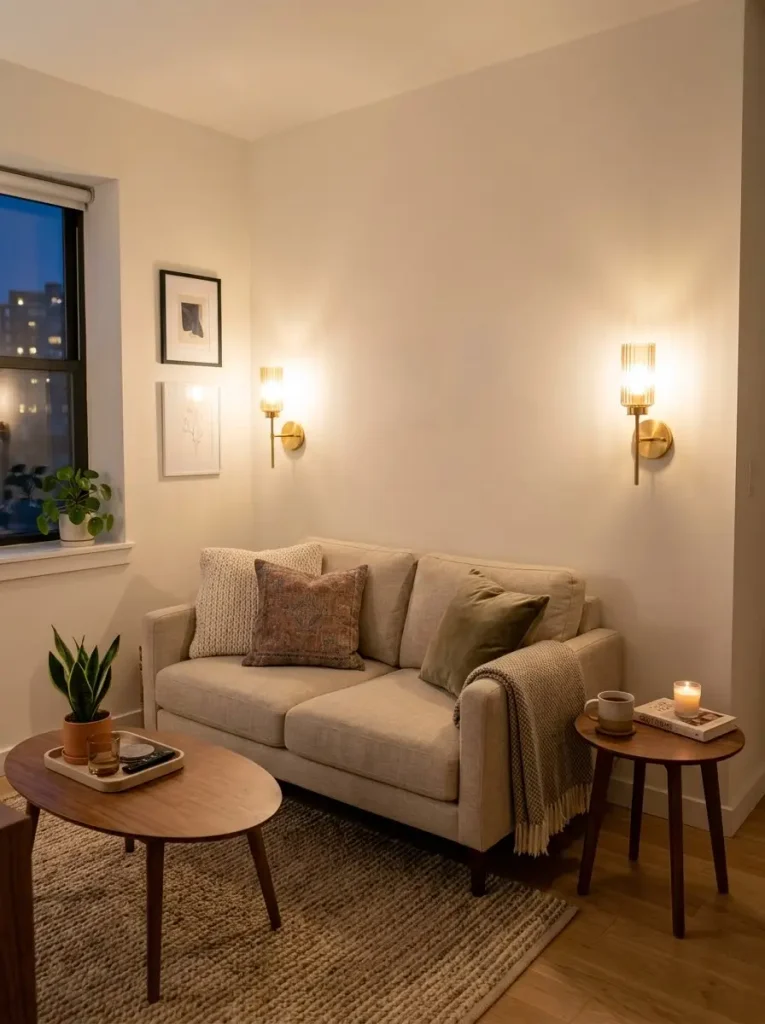
Floor lamps and table lamps are useful, but they also require floor or surface space. Wall-mounted sconces can provide the same atmospheric lighting while leaving those areas completely open.
This is particularly useful beside sofas, reading chairs, or artwork where you want focused illumination without introducing another piece of furniture.
How to Make It Work
Install sconces beside seating: Position them where the light is useful rather than simply decorative.
Choose adjustable fixtures: Swing-arm or directional designs can serve multiple purposes.
Coordinate finishes: Repeat the metal or material elsewhere in the room for visual consistency.
Consider renter-friendly options: Plug-in sconces can provide a similar effect without permanent electrical work.
20. Add a Vertical Plant Display
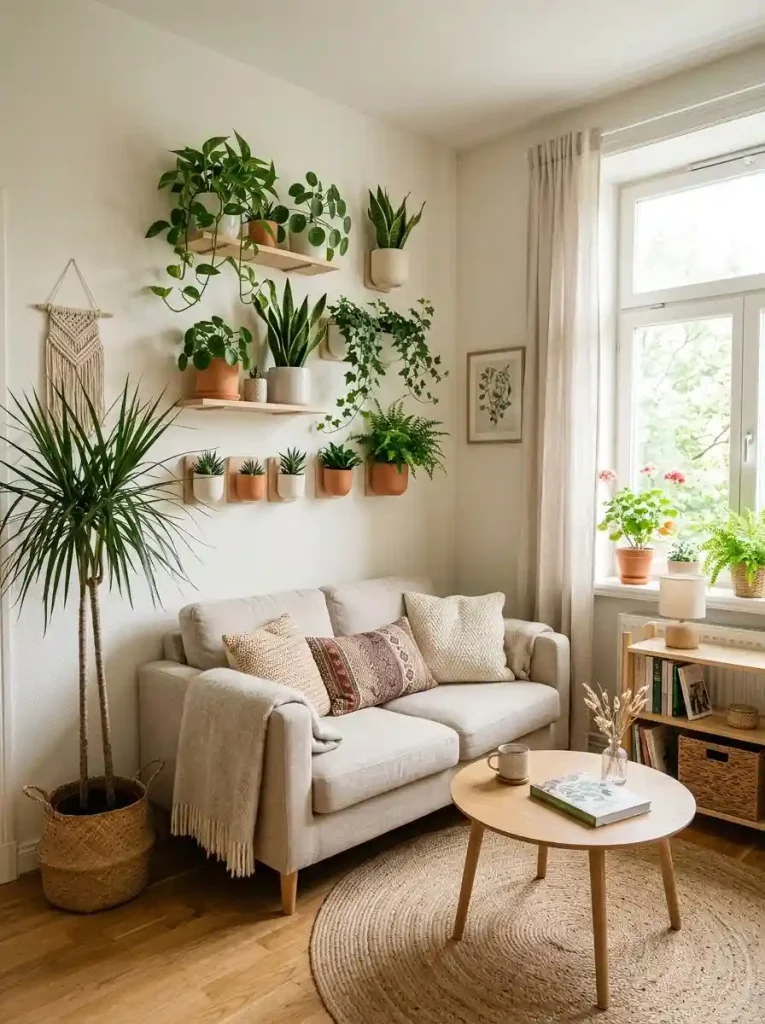
Plants bring life to an apartment, but a collection of large floor planters can quickly consume valuable square footage. Instead, use vertical space with a tall plant stand, wall-mounted planters, or one slender plant positioned in an unused corner.
The goal is to introduce greenery without creating another obstacle around the seating area.
How to Make It Work
Choose narrow plants: Tall, upright varieties can add height without spreading across the floor.
Use wall space: Hanging or mounted planters preserve valuable floor area.
Avoid overcrowding: A few plants can have more impact than a jungle of pots.
Match containers: Similar finishes create a more intentional display.
21. Use a Glass or Acrylic Accent Table
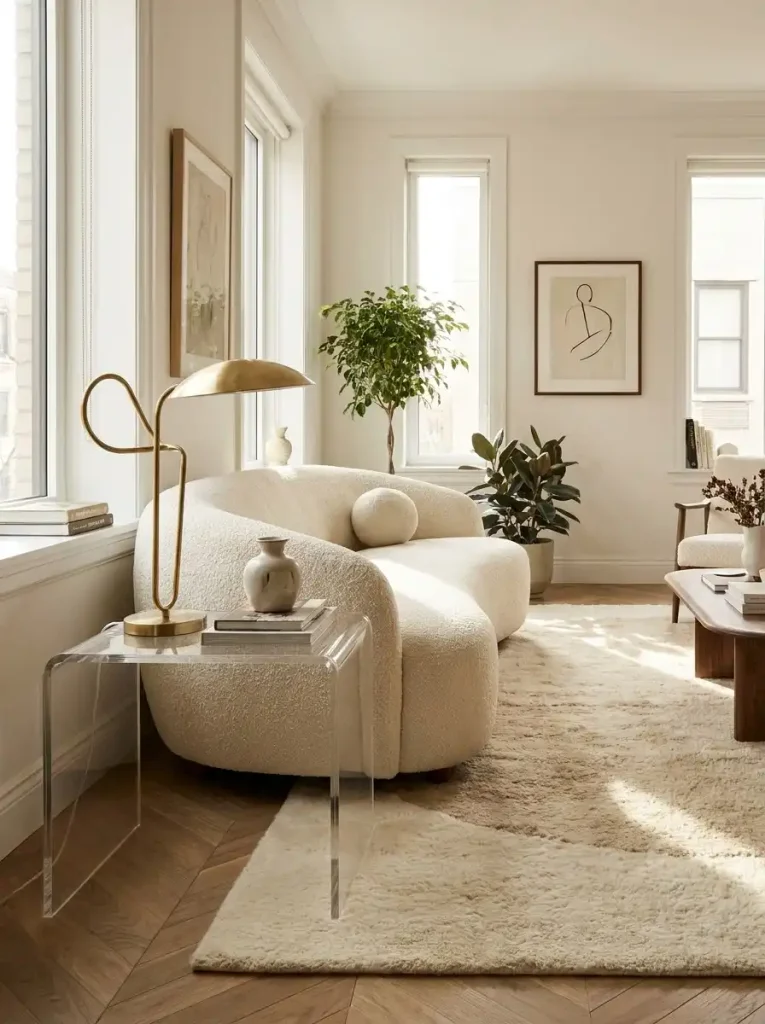
Transparent furniture can visually disappear into a small room while still providing a useful surface. A glass or acrylic side table allows the flooring and surrounding furniture to remain visible, reducing the sense of visual congestion.
This approach works especially well when the room already contains several solid furniture pieces.
How to Make It Work
Use transparency strategically: One transparent table is often enough to create the effect.
Pair it with textured furniture: Soft upholstery and woven materials prevent the room from feeling too sterile.
Keep the tabletop simple: A small lamp or decorative object is sufficient.
Choose rounded edges: Curved transparent tables can soften a compact seating arrangement.
22. Make the Most of the Entryway-Adjacent Wall
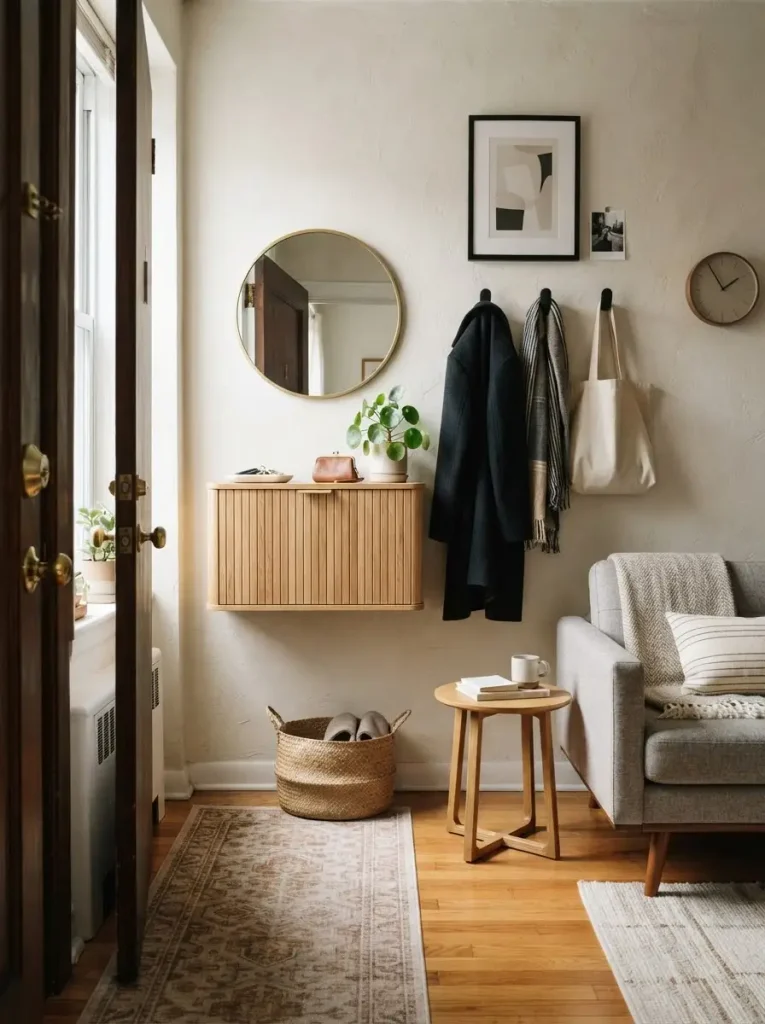
In many apartments, the wall closest to the entrance becomes wasted space. A narrow wall-mounted cabinet, hooks, or shallow shelf can provide useful storage without interfering with the living room’s primary seating arrangement.
Keep this area visually simple because it often sits within the first sightline when entering the apartment.
How to Make It Work
Use shallow storage: Choose furniture that does not protrude far into the room.
Create a drop zone: A small shelf can hold keys, mail, and everyday essentials.
Add concealed compartments: Closed storage prevents the entry area from looking messy.
Keep the wall coordinated: Matching finishes can make the storage feel like part of the living room design.
23. Use a Daybed for Flexible Seating
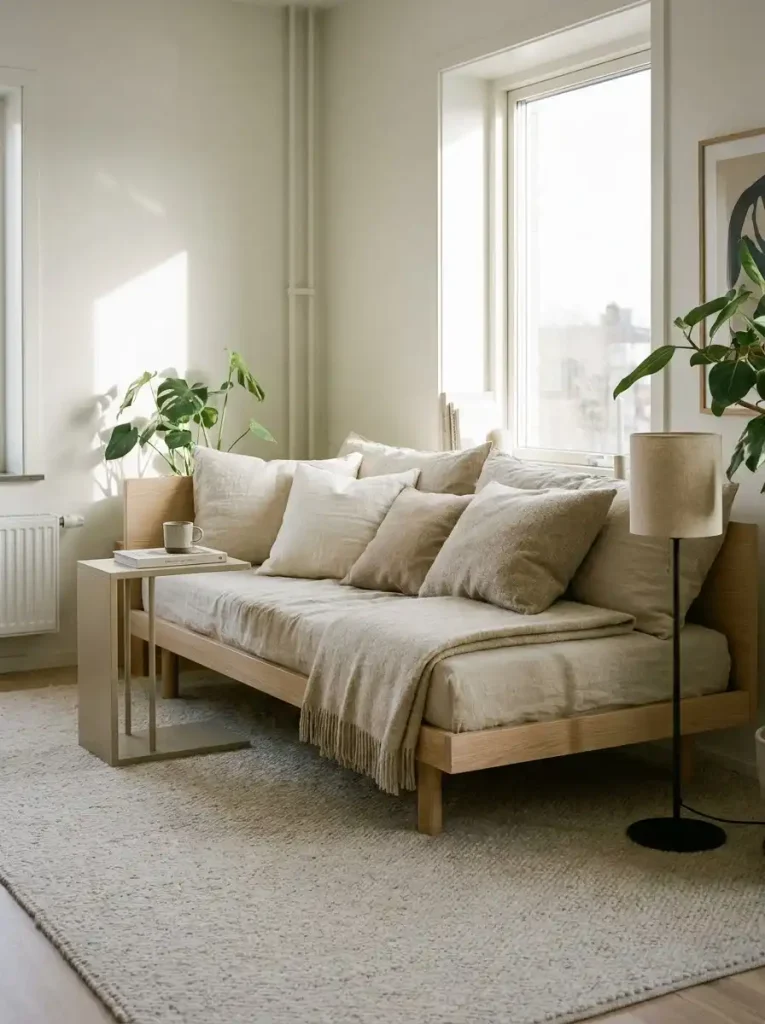
A compact daybed can work as both seating and an occasional sleeping surface, making it particularly useful in studio apartments or homes where guests sometimes stay overnight.
Unlike a large sleeper sofa, a streamlined daybed can maintain a lighter appearance while giving the room multiple functions.
How to Make It Work
Choose a simple frame: Clean construction keeps the piece from dominating the room.
Layer washable textiles: Throws and cushions can make it feel more like a sofa during the day.
Add a nearby side table: A narrow table can provide a convenient surface.
Keep surrounding furniture flexible: Movable pieces make it easier to transform the room when guests arrive.
24. Keep the Center of the Room Open
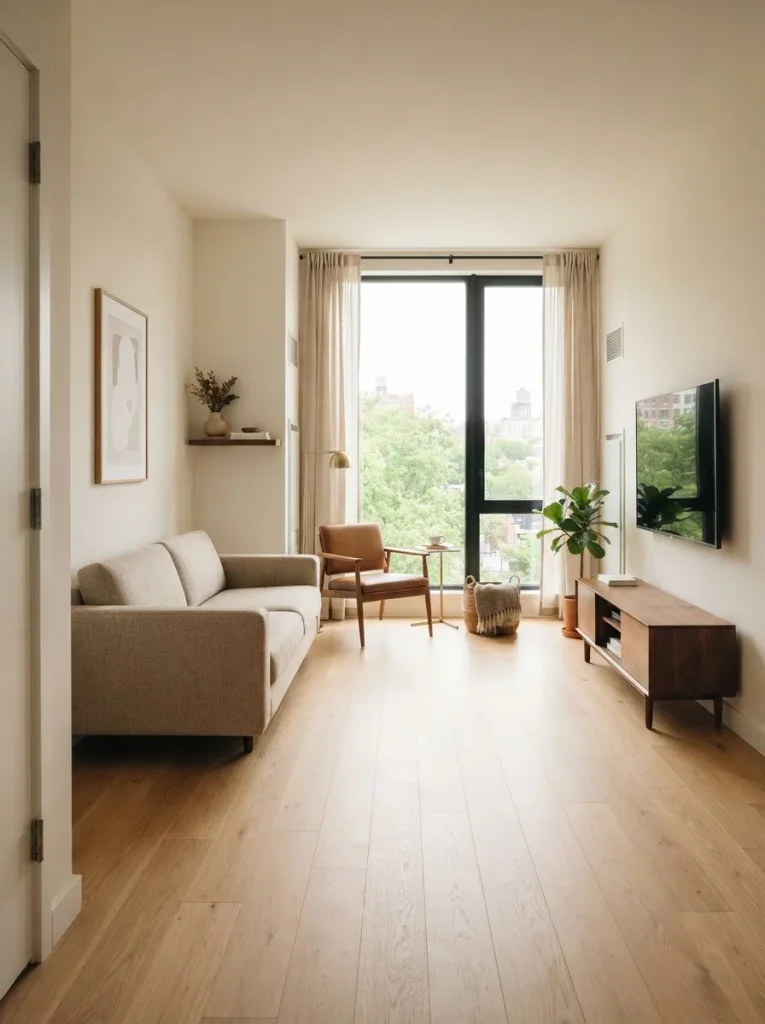
One of the simplest ways to make a small living room feel bigger is to protect the central walking area. Instead of pushing every possible piece of furniture into the room, prioritize clear circulation.
An open center gives the eye somewhere to travel and makes the room feel less cramped. You may discover that removing one unnecessary piece has a greater impact than adding several decorative solutions.
How to Make It Work
Map the walking paths: Identify how people naturally move through the apartment.
Remove unnecessary furniture: If an item rarely gets used, it may not deserve valuable floor space.
Push furniture strategically: Place larger pieces against walls when doing so does not interfere with windows or doors.
Leave breathing room: Empty floor is not wasted space—it is part of the design.
Practical Tips for Making a Small Apartment Living Room Feel Bigger
The individual ideas above work even better when several are combined thoughtfully. You do not need to use every trick in the room. Start with the biggest space problem and choose solutions that address it directly.
1. Measure Before Buying Anything
Small rooms have very little tolerance for oversized furniture. Measure the available wall length, doorway, windows, and walking paths before purchasing a sofa, cabinet, rug, or coffee table.
A beautiful piece that is too large can make the entire room difficult to use.
2. Prioritize Multi-Functional Furniture
Whenever possible, choose furniture that performs more than one job. A storage ottoman can provide seating and hidden storage. A fold-down desk can become a workstation and disappear afterward. A console can offer display space while organizing clutter.
In a compact apartment, versatility is often more valuable than size.
3. Protect Your Walking Space
A room can contain relatively large furniture and still feel comfortable if the circulation paths remain clear. Before adding another item, consider how people will move between the entrance, sofa, kitchen, bedroom, balcony, and other frequently used areas.
4. Use Vertical Space
Walls are valuable real estate in small apartments. Tall shelving, wall-mounted lighting, artwork, mirrors, and hanging plants can add functionality without competing for floor space.
5. Keep Visual Clutter Under Control
Small rooms tend to show clutter quickly. Use baskets, closed cabinets, trays, and storage furniture to give everyday belongings a designated home.
A clean room will usually feel more spacious than an equally sized room filled with visible objects.
6. Mix Textures Instead of Too Many Colors
If you prefer a calm space, you do not need multiple bold colors to create interest. Combine materials such as linen, wood, woven fibers, boucle, ceramic, metal, and glass.
The room can remain visually cohesive while still feeling layered and inviting.
Small Living Room Mistakes to Avoid
Even a well-designed apartment can feel cramped when a few common mistakes are repeated.
Buying furniture before measuring: Always check dimensions first.
Using too many tiny decorative objects: Numerous small items can create more visual clutter than one larger statement piece.
Choosing an undersized rug: A tiny rug can make the furniture arrangement feel disconnected.
Blocking natural light: Avoid placing tall furniture directly in front of windows unless absolutely necessary.
Ignoring storage: Without designated storage, everyday belongings eventually occupy chairs, tables, and floors.
Filling every empty corner: Negative space helps a small room breathe.
Using only overhead lighting: Multiple light sources can make a compact room feel warmer and more dimensional.
How to Arrange a Small Apartment Living Room
Start with the largest piece, usually the sofa. Position it according to the room’s primary focal point, such as a television, fireplace, window, or feature wall.
Next, establish the main walking route. Make sure the path through the room remains comfortable before adding secondary furniture.
Then introduce a coffee table or ottoman, followed by one or two flexible seating pieces. Once the essentials are in place, add lighting, storage, artwork, textiles, and plants.
The final step should be editing. Walk around the room and remove anything that feels unnecessary, oversized, or difficult to use.
Final Thoughts
A small apartment living room does not have to feel limited. The best layouts are often the ones that make every piece earn its place.
Choose furniture that fits rather than overwhelms the room, use walls for storage and decoration, protect open walking space, and look for pieces that perform multiple functions. Mirrors, vertical shelving, flexible tables, hidden storage, and thoughtful lighting can all make a noticeable difference.
Most importantly, do not feel pressured to fill every available inch. A room can feel larger simply because it has enough breathing space.
With the right combination of proportions, organization, and personal style, even a compact apartment living room can become comfortable, functional, and genuinely beautiful.
FAQs
How can I make my small apartment living room look bigger?
Use appropriately sized furniture, keep the central floor area open, maximize natural light, add a large mirror, and use vertical storage. A cohesive color palette and visible flooring can also help the room feel more spacious.
What furniture is best for a very small living room?
Look for compact sofas or loveseats, nesting tables, storage ottomans, slim consoles, lightweight chairs, and furniture with exposed legs. Multi-functional pieces are particularly useful because they provide several benefits without requiring additional floor space.
Should a small living room have a coffee table?
Not necessarily. If a traditional coffee table makes movement difficult, try a storage ottoman, nesting tables, C-table, or small round table. The best choice is the one that provides useful surface space without obstructing circulation.
What colors make a small living room feel larger?
Light and moderately neutral shades such as warm white, cream, beige, soft gray, and greige can create an airy appearance. You can still add darker accents through artwork, furniture, pillows, or accessories.
How do I add storage without making my living room look crowded?
Use vertical shelving, floating cabinets, storage ottomans, low cabinets, narrow consoles, and furniture with concealed compartments. Keeping frequently used items behind doors or inside baskets helps reduce visual clutter.
Is a large rug suitable for a small living room?
Yes. A correctly sized rug can actually make a small living room feel more cohesive because it visually connects the seating furniture. Avoid extremely small rugs that leave every furniture piece floating separately.
How can I make a small living room cozy without cluttering it?
Use soft textiles, layered lighting, a few plants, artwork, and warm natural materials rather than adding lots of objects. Comfort comes from texture and atmosphere, not necessarily from having more furniture or decoration.