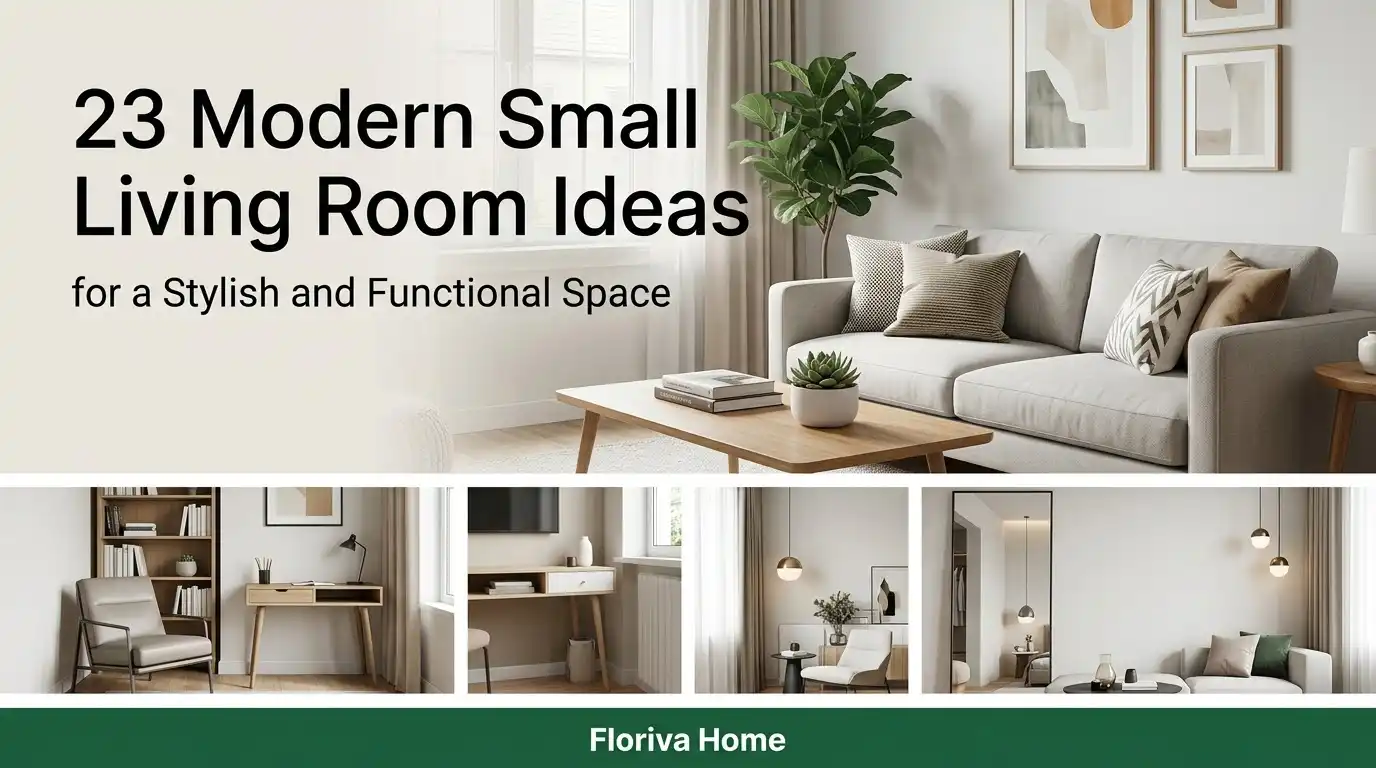
23 Modern Small Living Room Ideas for a Stylish and Functional Space
What Shapes a Modern Small Living Room
Modern small living room design is about more than trimming down furniture until it fits — it’s about choosing pieces and layouts that feel deliberate, not compromised. The goal is a room that reads as confidently styled rather than “small and making do,” blending clean lines, smart storage, and a layout that actually works for how you live.
This guide walks through 23 practical ideas covering layout, furniture, lighting, decor, and arrangement — along with the style choices and common mistakes that separate a small living room that feels curated from one that feels cramped. Whether you’re in a city apartment or a compact starter home, these ideas are meant to be picked up individually or combined into a full refresh.
Small Living Room Essentials
Before choosing a single piece of furniture, it helps to think about the room as a puzzle rather than a shopping list. Every item needs to earn its spot, and the strongest small living rooms start with a plan rather than a collection of things that happened to fit.
1. Start With a Scaled Floor Plan
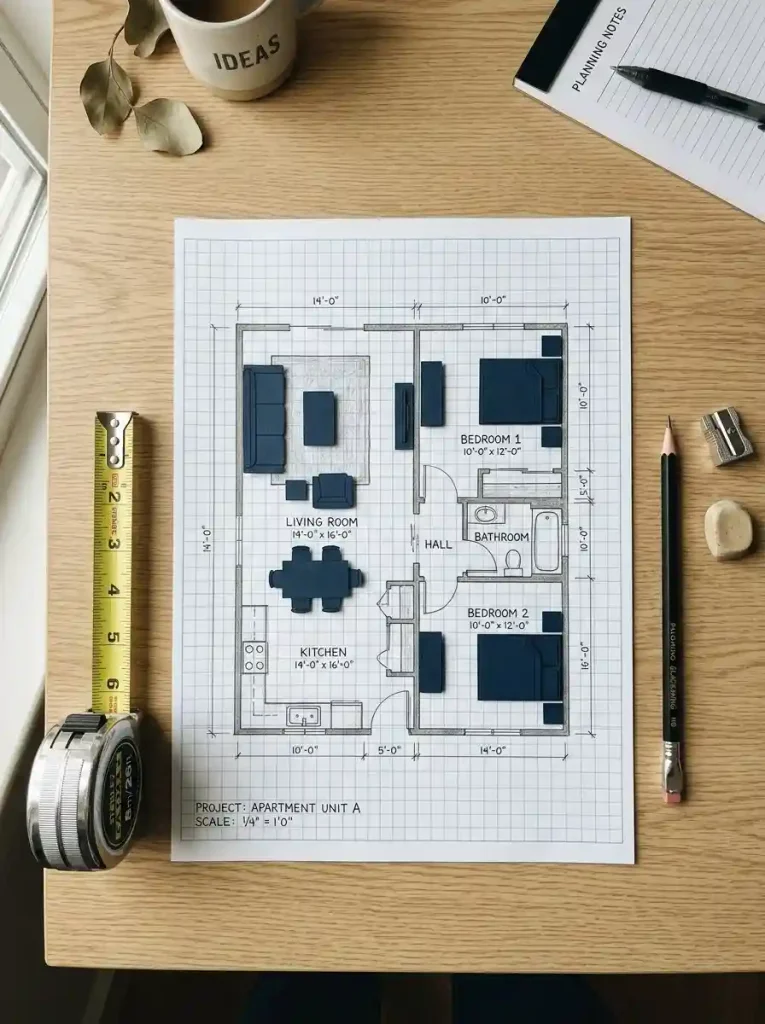
Sketching your room to scale — even roughly, on paper or with a free layout app — prevents the single biggest mistake in small-space design: buying furniture that technically fits but kills the flow. A scaled plan shows you exactly how much clearance you’ll have before a sofa ever arrives at your door.
Ways to build a useful floor plan:
- Measure wall lengths, doorways, and any radiators or vents that limit placement
- Note where outlets and light switches sit before planning furniture positions
- Mark a minimum 24-inch walking path around every seating piece
- Test the plan with painter’s tape on the floor before committing to purchases
2. Anchor the Room With One Primary Piece
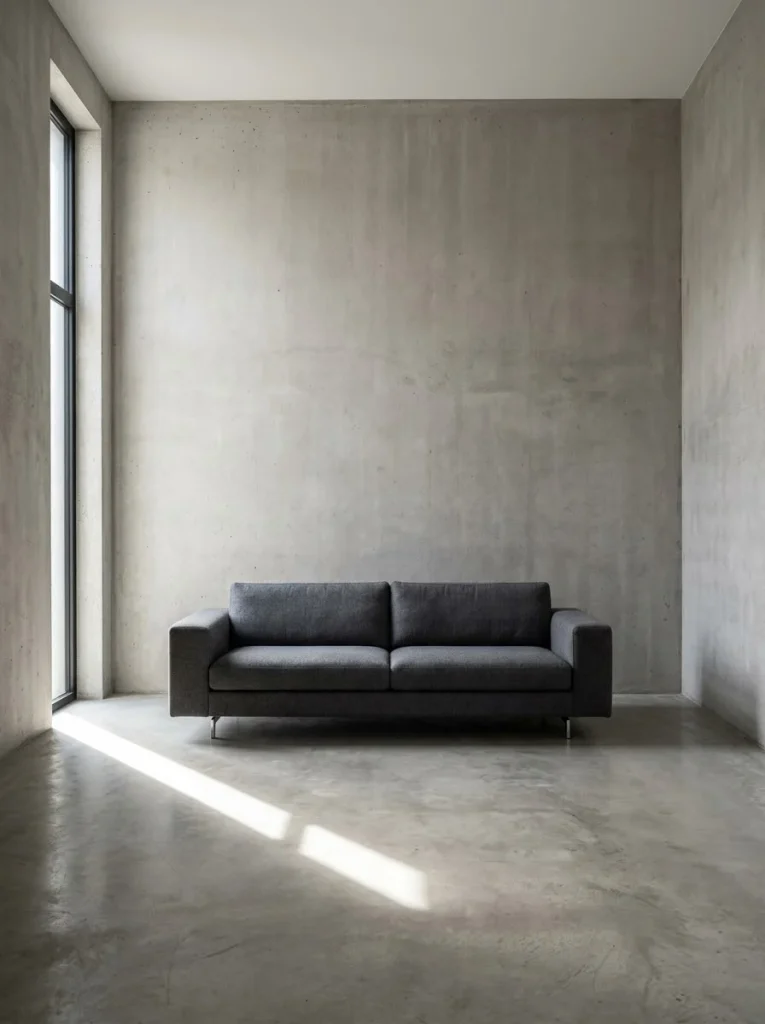
A small living room needs a clear anchor — usually the sofa — that every other decision responds to. Choosing this piece first, in a scale that suits the room rather than the biggest one you can afford, keeps the rest of the layout from feeling like an afterthought.
Choosing your anchor piece:
- Measure the room’s longest wall before shopping for a sofa or sectional
- Favor a lower-profile back to keep sightlines open
- Choose a neutral base so the piece can outlast trend-driven accents
- Let every other furniture choice scale down from this piece, not up
Key Design Elements for a Modern Feel
Beyond layout, a handful of design choices set the tone for a room that reads as modern rather than simply minimal. These elements work together — color, form, and material — to give a small space personality without adding visual weight.
3. Lean Into a Restrained Color Story
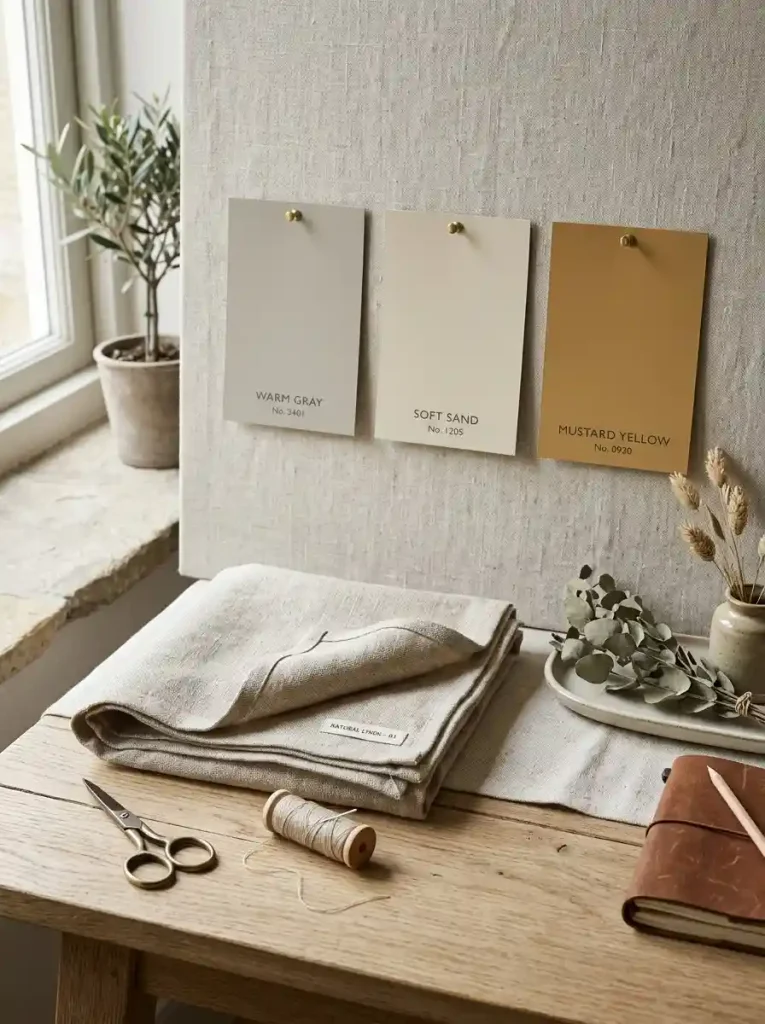
Modern small living rooms tend to work best with a tight palette — one dominant neutral, one secondary tone, and a single accent color used sparingly. This restraint keeps a compact room from feeling visually chopped up, which is what happens when too many competing colors fight for attention in a limited footprint.
Building a restrained palette:
- Choose a dominant neutral for walls and large furniture
- Add one secondary tone through textiles or a rug
- Reserve a single accent color for two or three small details
- Test the palette in the room’s actual light before finalizing
4. Choose Furniture With Exposed Legs
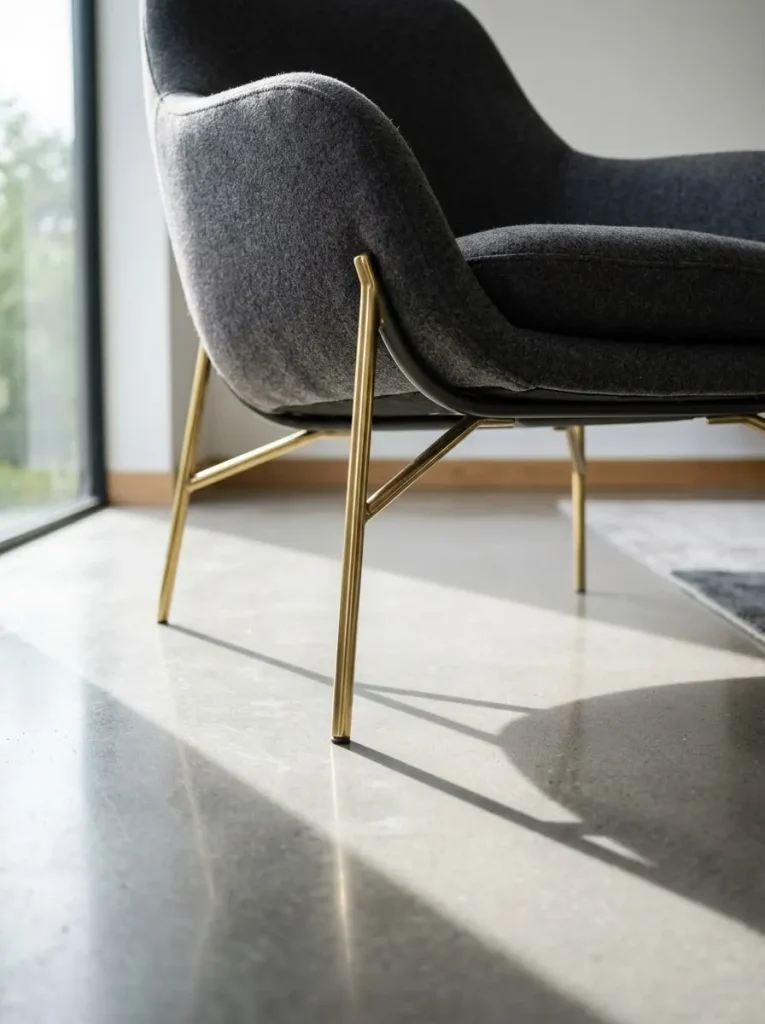
Sofas and chairs with visible, slender legs let light pass underneath them, which makes the floor feel more continuous and the room feel larger than furniture that sits flush to the ground. This is a small detail that has an outsized effect in compact rooms.
Why exposed legs matter:
- They visually reduce a piece’s footprint even when its actual size is the same
- Metal or light wood legs read as more modern than skirted bases
- They make the floor easier to clean under, which matters in tight rooms
- Pair with a rug that doesn’t fully disappear under the furniture
5. Introduce One Bold Geometric Element
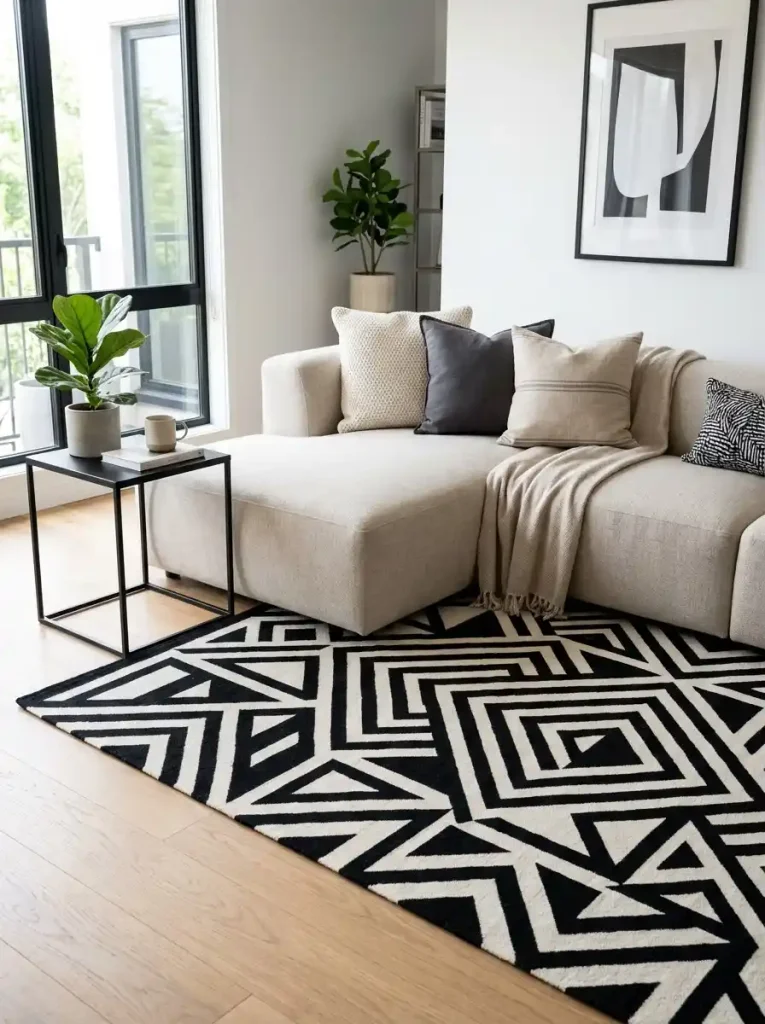
A single geometric accent — an angular rug, a sculptural side table, a graphic piece of art — gives a modern small living room a focal point without requiring extra floor space. It’s often the one design move that keeps a restrained, neutral room from feeling flat.
Where a geometric accent works best:
- On a rug, where pattern doesn’t compete with furniture silhouettes
- As a single piece of wall art sized to the width of your sofa
- Through a sculptural lamp base rather than a bulky accent chair
- Limited to one element per room to avoid visual competition
Choosing Functional Furniture
Furniture selection in a small living room carries more weight than in a larger space, since every piece is more visible and has less room to hide. The right choices multitask without looking like they’re trying to.
6. Prioritize Furniture That Serves Two Jobs
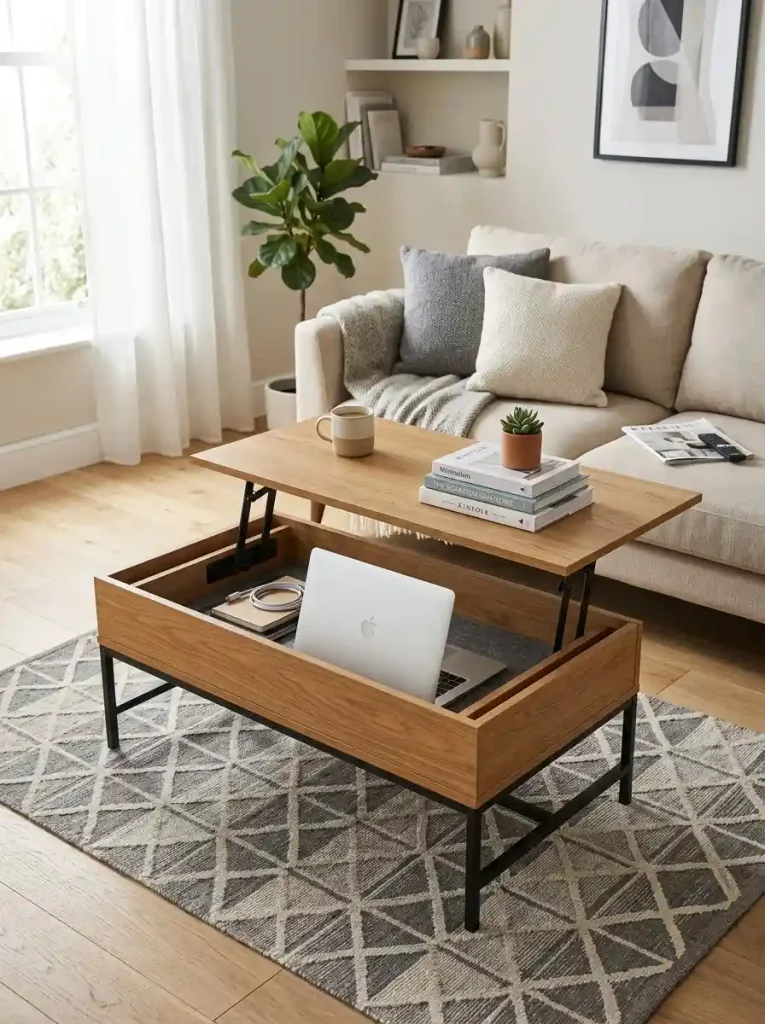
A coffee table with a shelf underneath, an ottoman that opens for storage, a bench that seats two and holds blankets — these choices reduce the total number of pieces a small living room needs, which is often more effective than shrinking each individual item.
Dual-purpose furniture to consider:
- A lift-top coffee table for laptop use or extra storage
- A storage ottoman that doubles as a footrest and seating
- A console table behind the sofa that also divides the space
- Nesting side tables that expand only when guests arrive
7. Choose a Sectional That Can Be Reconfigured
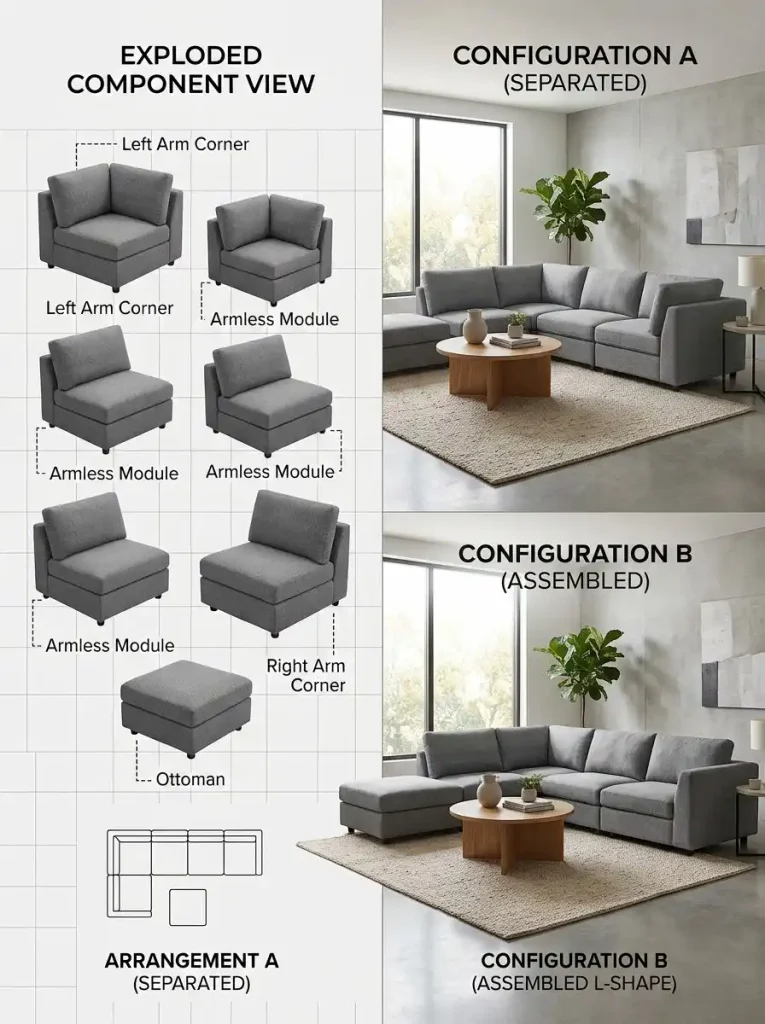
Modular or reversible sectionals let a small living room adapt as your needs change — a chaise on one side for movie nights, reversed for better flow when hosting. This flexibility matters more in compact spaces, where a fixed, oversized sectional can lock the whole room into one layout.
What to look for in a flexible sectional:
- Modular pieces that can separate into individual chairs
- A reversible chaise for adapting to different room shapes
- Legs rather than a skirted base to keep the piece visually light
- A depth under 36 inches to avoid overwhelming a tight footprint
8. Add Stackable or Foldable Seating for Guests
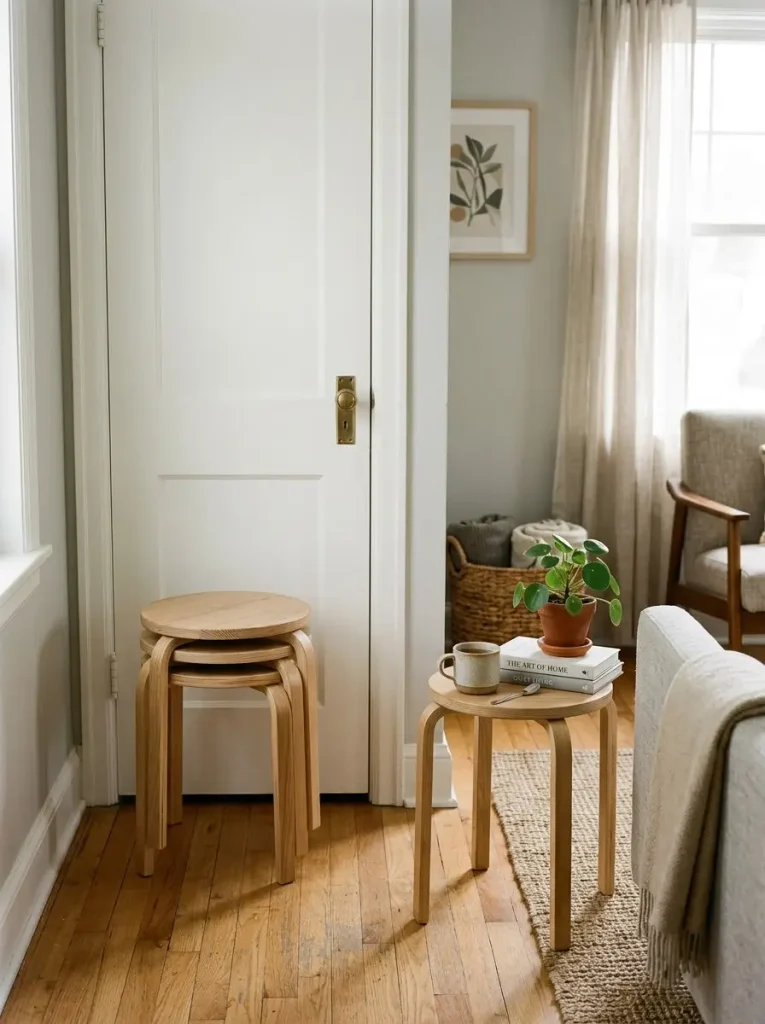
Rather than permanently housing extra chairs a small living room rarely needs, stackable stools or foldable chairs stored in a closet let you scale seating up only when company arrives. This keeps the everyday footprint of the room lean.
Making the most of flexible seating:
- Store folding chairs in a nearby closet or under a console
- Choose stackable stools that double as side tables day-to-day
- Look for lightweight materials that are easy to move solo
- Pick a finish that matches your existing furniture for a cohesive look
How to Maximize a Small Living Room
Beyond furniture, a few visual strategies can make a modern small living room feel noticeably more spacious — tricks that work with light, color, and sightlines rather than the size of the room itself.
Using Mirrors to Expand the Space
9. Position a Mirror to Reflect Your Best Light Source
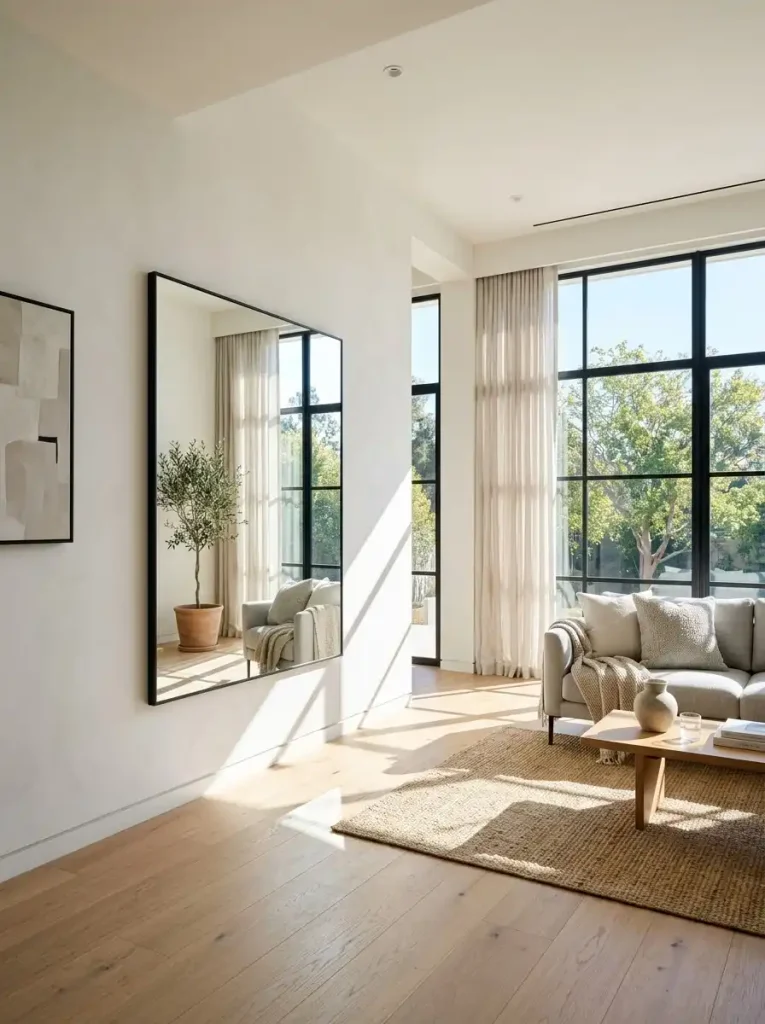
A mirror hung directly across from a window bounces daylight deeper into the room, which does more to make a small living room feel open than almost any furniture choice. The effect is strongest with a large, simple frame rather than a small decorative one.
Placing mirrors effectively:
- Hang opposite the largest window in the room
- Choose a scale that’s at least two-thirds the width of nearby furniture
- Avoid placing a mirror where it reflects clutter or a wall outlet
- Angle slightly if needed to catch light rather than just a blank wall
Color and Layout for an Open Feel
10. Keep Walls and Large Furniture in the Same Tonal Family
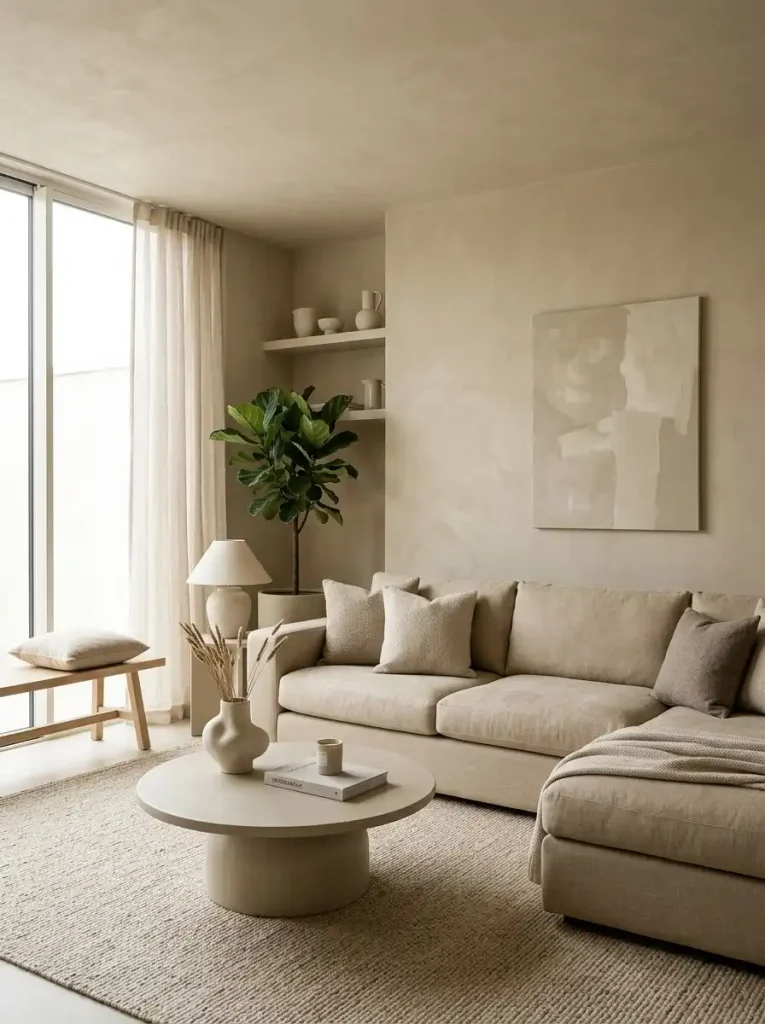
When walls and your sofa sit close in tone, the eye doesn’t register a hard edge where one ends and the other begins, which visually expands the room. This doesn’t mean everything has to match exactly — just that jarring contrast between wall and furniture color should be intentional, not accidental.
Coordinating walls and furniture:
- Choose a sofa within one or two shades of your wall color
- Save contrast for smaller, movable accents like pillows or a throw
- Test paint and fabric swatches together before committing to either
- Use trim or millwork in a slightly lighter tone to add subtle depth
11. Keep the Center of the Room Open
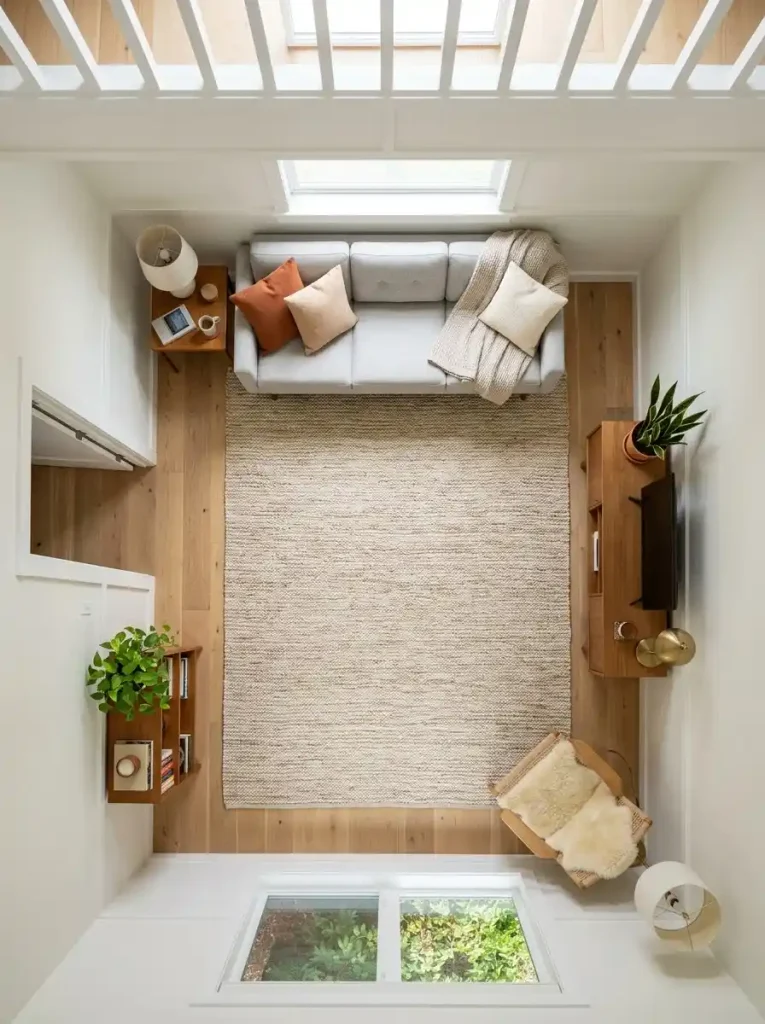
Pulling all furniture toward the perimeter of a small living room, rather than floating a piece in the middle, frees up a visual and physical breathing zone that makes the whole space feel less packed — even when the total furniture count stays the same.
Keeping the center clear:
- Push larger pieces toward walls wherever the layout allows
- Reserve the center for a rug and a low coffee table only
- Avoid placing a floor lamp or plant stand in the main walking path
- Reassess the layout after living with it for a week — small shifts help
Living Room Lighting Choices
Lighting shapes how spacious and welcoming a small living room feels more than almost any single design decision. A layered approach avoids both the flat glare of a single overhead fixture and the dim, uneven pools that come from relying on one lamp alone.
12. Layer Ambient, Task, and Accent Lighting
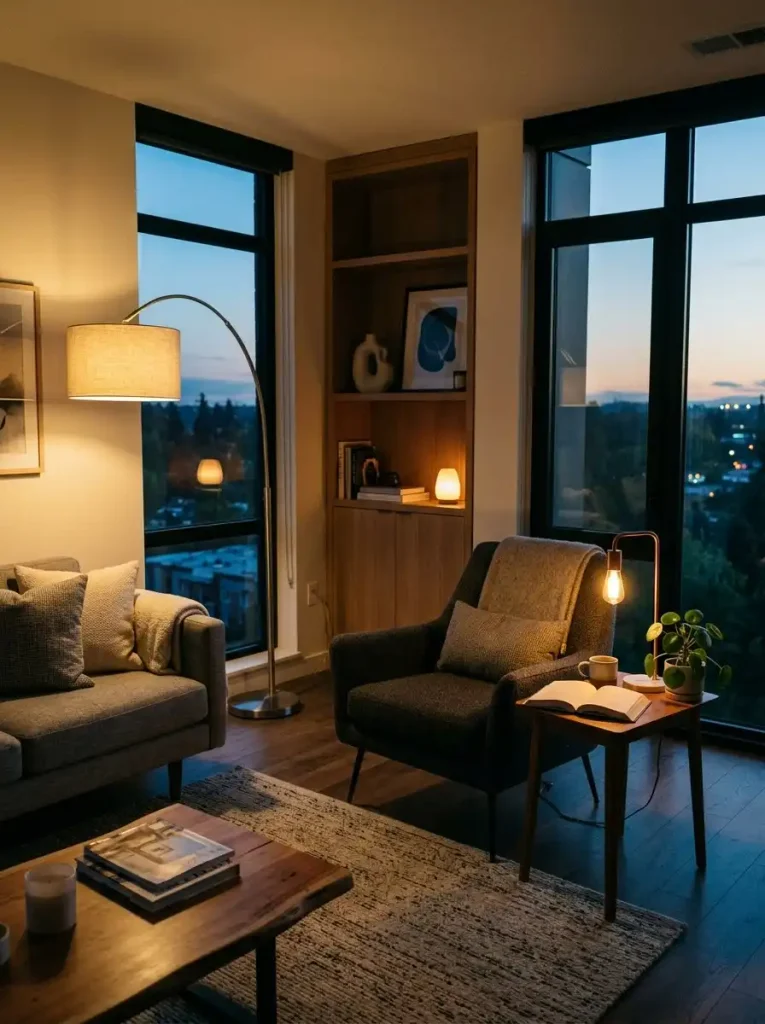
Combining a general light source with a focused task lamp and a smaller accent light gives a small living room flexibility for different moods and activities, without requiring any electrical work in a rented apartment.
Building a layered lighting plan:
- Start with one ambient source, like a floor lamp with a wide shade
- Add a task lamp beside your main seating spot for reading
- Include one accent light — a small lamp or LED strip — for evening warmth
- Put ambient and accent lights on separate switches or smart plugs
13. Choose Slim, Vertical Fixtures
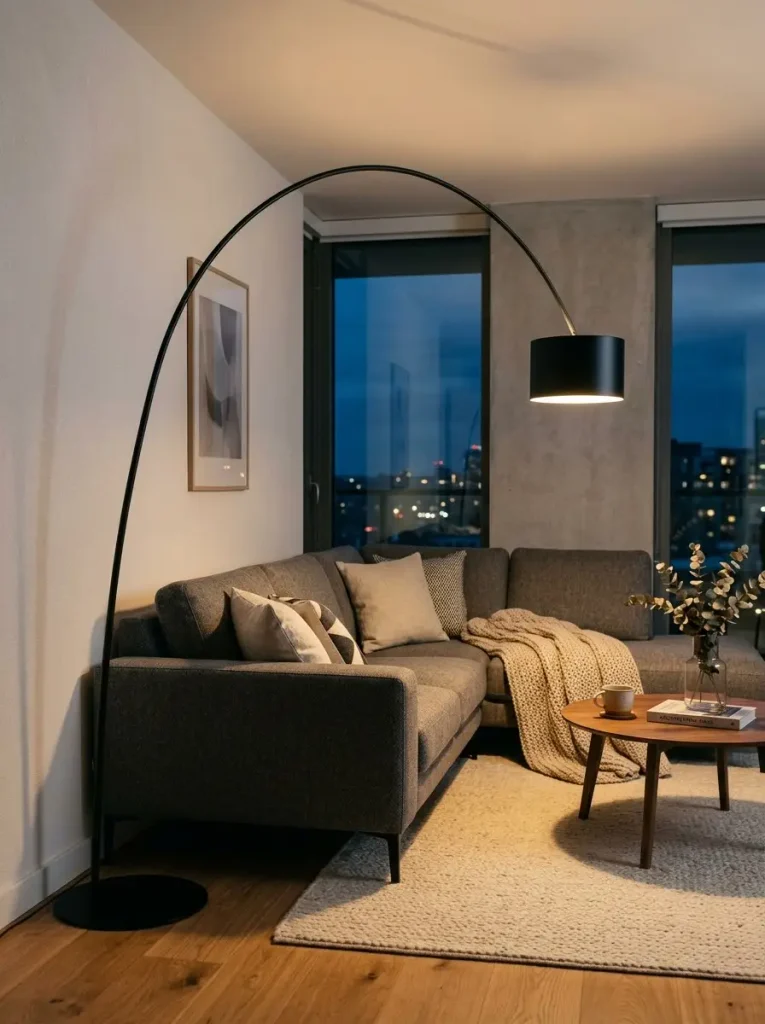
In a tight footprint, a tall, narrow floor lamp takes up less visual and physical space than a wide table lamp, while still providing strong light coverage. Arc lamps in particular can hover over a seating area without needing a side table underneath.
Choosing space-conscious fixtures:
- Look for a base diameter under 12 inches for narrow floor lamps
- Consider an arc lamp to light a sofa without extra furniture
- Choose fixtures with dimmable bulbs for flexibility after dark
- Avoid oversized shades that visually compete with nearby furniture
14. Use Warm-Toned Bulbs Throughout
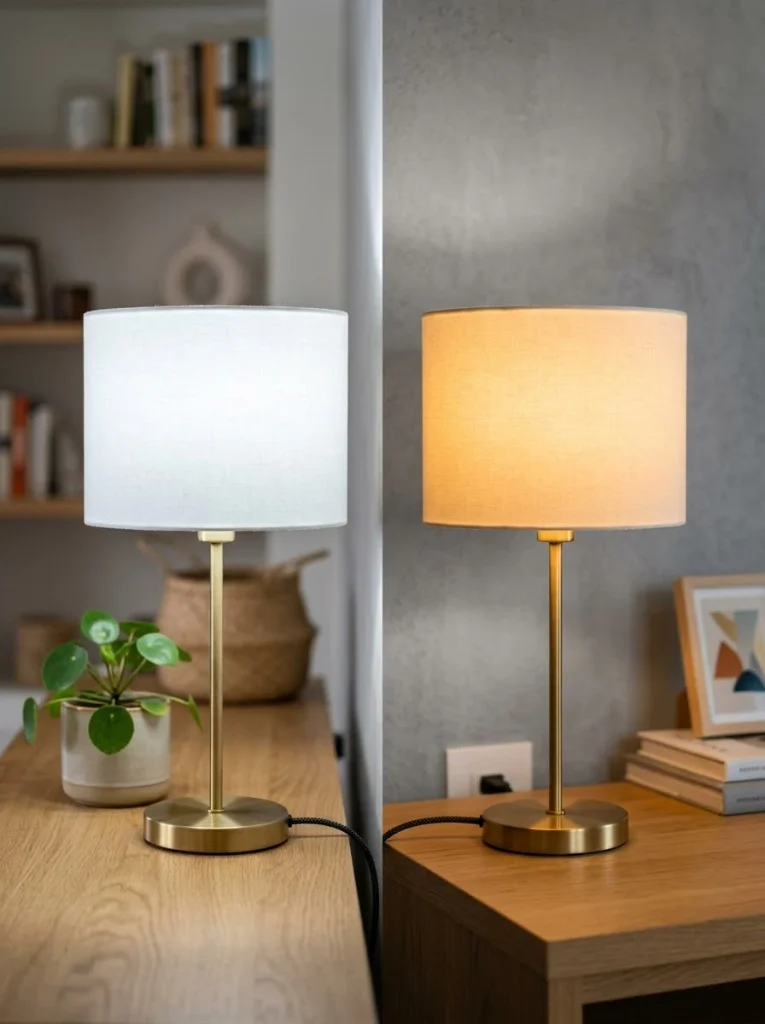
Consistent bulb temperature across every fixture keeps a small living room feeling cohesive rather than patchy. Mixing cool white overhead light with warm lamp light can make a compact room feel unsettled in a way that’s easy to overlook until it’s fixed.
Getting bulb temperature right:
- Stick to 2700–3000K bulbs across all fixtures in the room
- Match bulb brightness (lumens) between lamps for even light
- Choose dimmable LEDs to adjust intensity without changing bulbs
- Test bulbs in the evening, when the effect is most noticeable
Decor Tips for Small Living Rooms
Decorating a modern small living room is about restraint with intention — adding enough personality that the room feels lived-in, without letting decor compete with the furniture and layout choices you’ve already made.
15. Choose Cushions With a Clear Color Plan
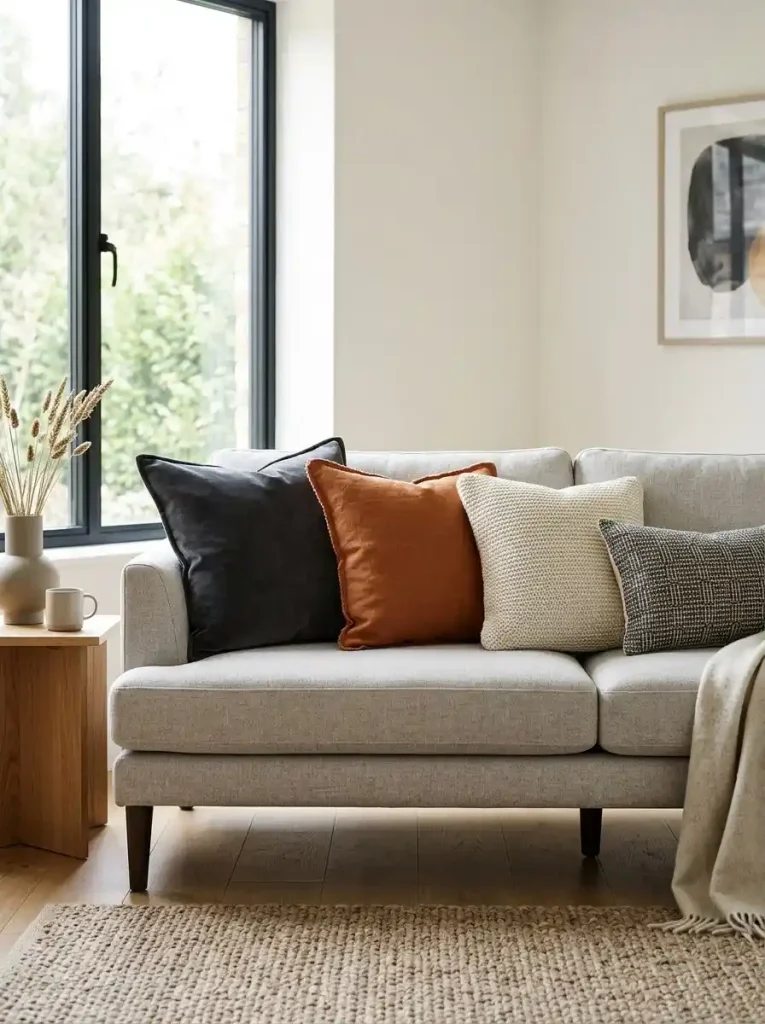
Throw cushions are one of the easiest ways to inject personality, but in a small living room they can just as easily create visual clutter if chosen at random. Sticking to two or three coordinating tones keeps a sofa looking styled rather than mismatched.
Planning cushion colors:
- Pick one dominant tone and one contrasting accent
- Vary texture (linen, velvet, knit) more than color for interest
- Limit to four or five cushions total on a small sofa
- Swap covers seasonally instead of buying entirely new cushions
16. Use One Statement Rug as the Room’s Base Layer
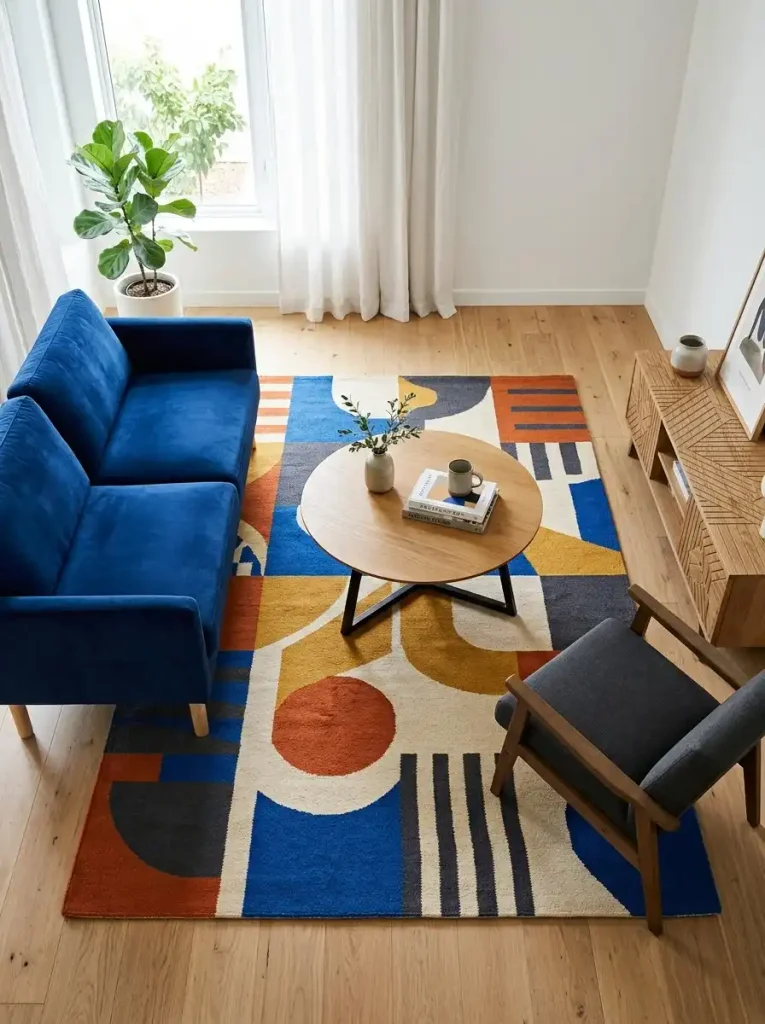
A single well-chosen rug can do more for a modern small living room’s personality than several smaller decor pieces combined. Choosing one rug with intention — rather than layering multiple busy patterns — keeps the floor from becoming a competing focal point.
Choosing a statement rug:
- Size it so all seating furniture has at least its front legs on it
- Choose one pattern or texture, not several competing prints
- Let the rug’s dominant color echo something already in the room
- Opt for a low pile in high-traffic small spaces
Selecting Art and Rugs
17. Hang One Large Piece Instead of a Gallery Cluster
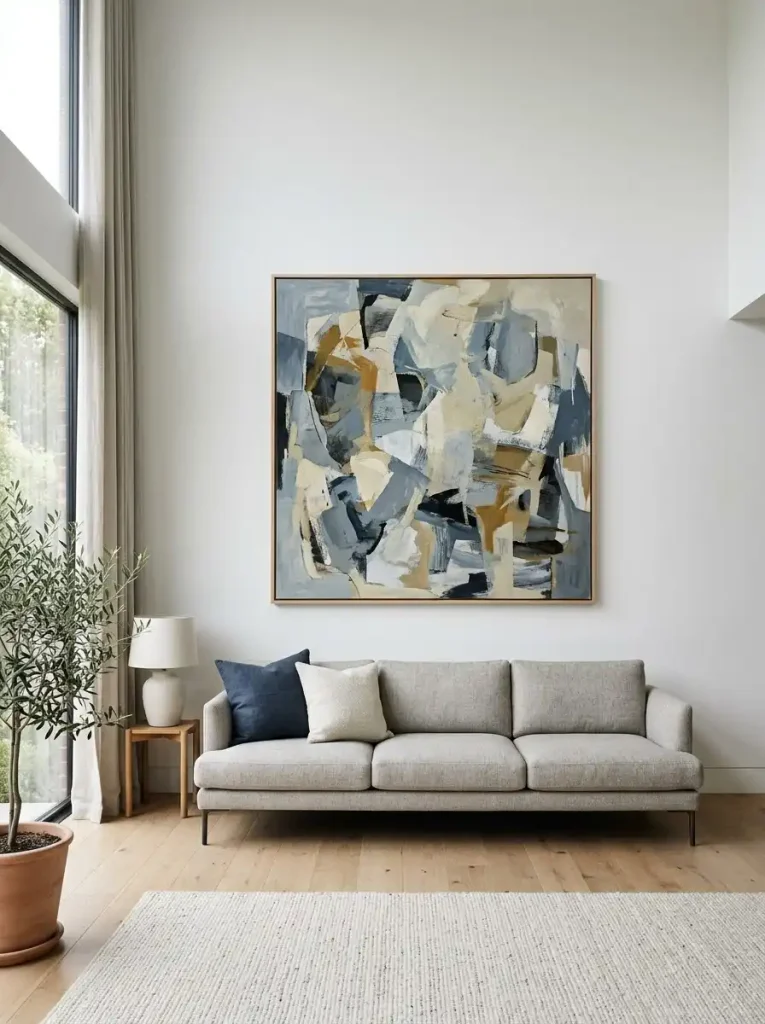
In a small living room, a single oversized art piece often reads as more sophisticated than a cluster of smaller frames, which can visually fragment a limited wall. One statement piece, sized to roughly two-thirds the width of your sofa, gives the eye a clear place to land.
Choosing statement wall art:
- Size the piece to about 60–75% of your sofa’s width
- Center it above the seating area at eye level when standing
- Choose a frame finish that echoes another metal in the room
- Leave the surrounding wall empty rather than adding smaller pieces
Adding Plants for Life and Air
18. Group Two or Three Plants at Varying Heights
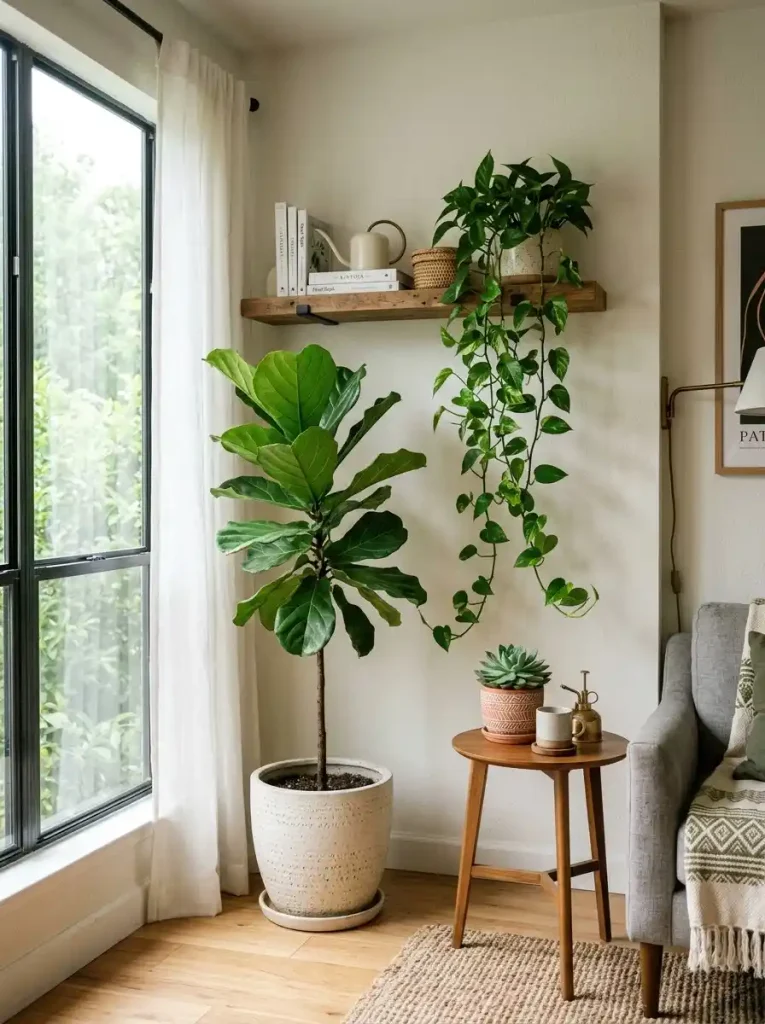
Rather than scattering single plants around a small living room, grouping two or three at different heights — a floor plant, a shelf plant, a small tabletop one — creates a cohesive green moment that reads as intentional styling rather than random additions.
Styling a plant grouping:
- Choose one tall floor plant as the anchor of the group
- Add a trailing plant on a shelf for vertical interest
- Include one small pot at tabletop height to complete the layers
- Keep the grouping to one corner rather than spreading plants around
Furniture Arrangement Techniques
How furniture is arranged often matters more than how much furniture you own. In a modern small living room, thoughtful placement can make the same set of pieces feel either cramped or genuinely spacious.
19. Float Furniture Slightly Away From the Walls
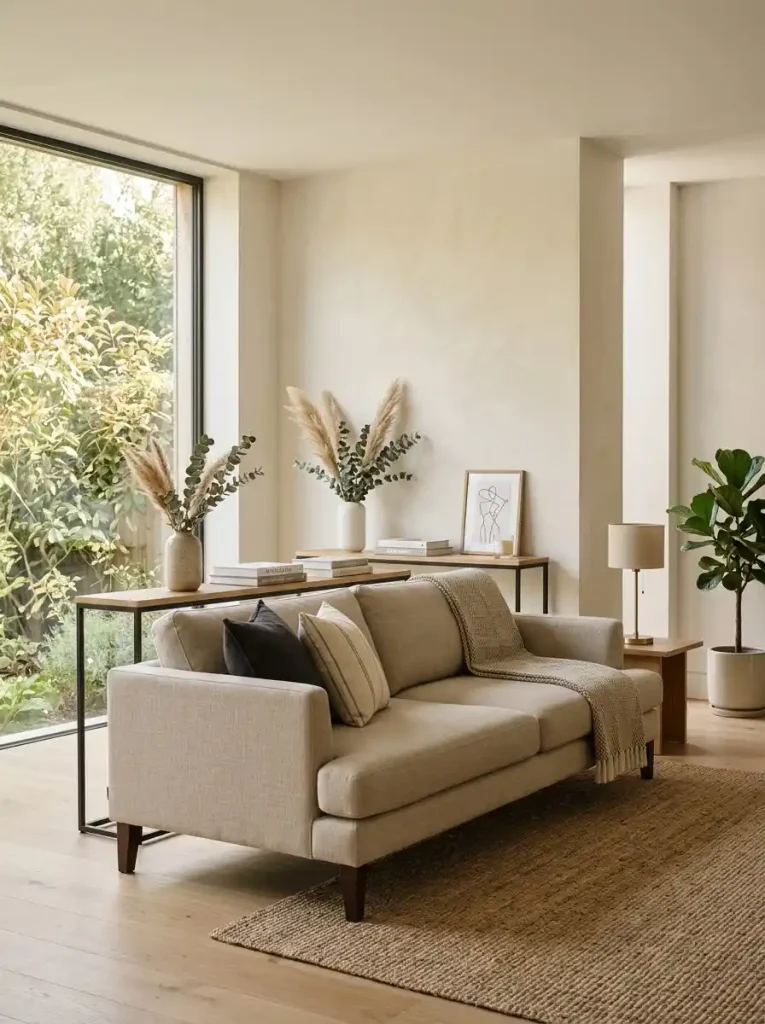
Pushing every piece flush against the walls can actually make a small living room feel more hollow and less cohesive. Floating the sofa a few inches out, even in a compact space, creates a sense of an intentional seating zone rather than furniture that’s simply been stored along the edges.
Floating furniture successfully:
- Pull the sofa 3–6 inches from the wall, even in tight rooms
- Use the gap behind it for a slim console or extra storage
- Keep the pulled-out zone anchored with a rug underneath
- Reassess if the room feels tighter — floating works best above 120 sq ft
Creating Conversation Zones
20. Angle Seating Toward Each Other, Not Just the TV
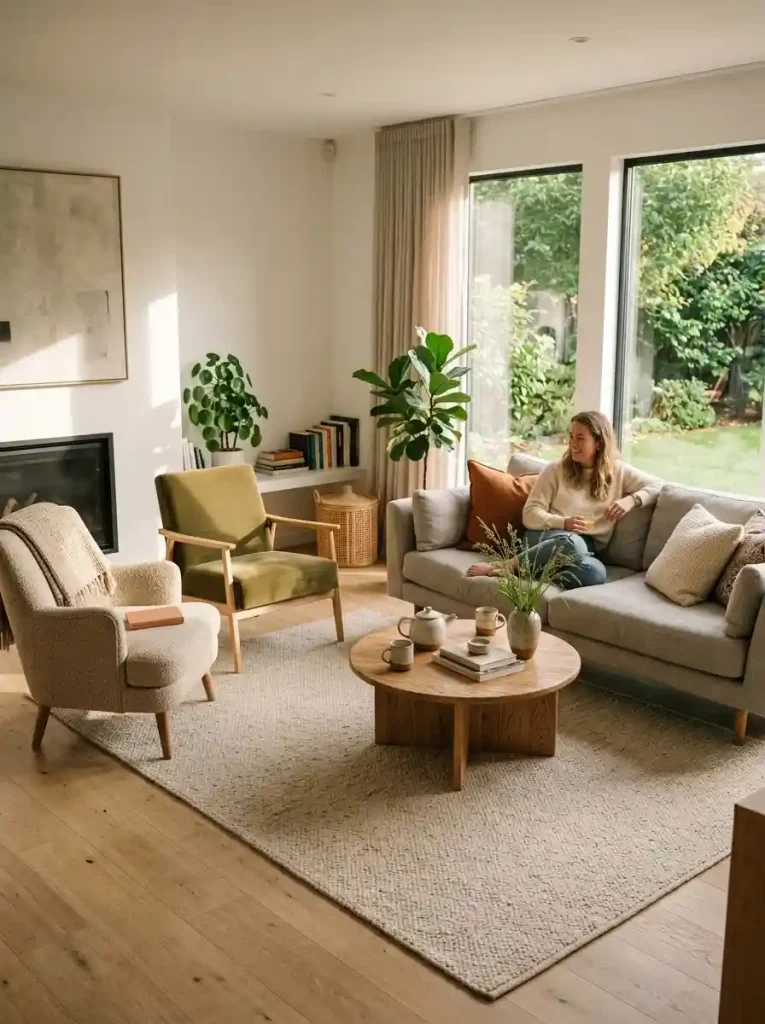
A small living room feels more inviting when at least two seats face each other rather than every chair pointing at a screen. Even one angled accent chair beside a sofa can transform the room from a viewing room into a space built for conversation.
Building a conversation-friendly layout:
- Angle one chair toward the sofa rather than squaring it to the TV
- Keep a small table between seats for drinks or books
- Leave enough space to walk between angled pieces without squeezing
- Test the arrangement by actually sitting and talking in it
Avoiding Dead Zones and Clutter
21. Turn Awkward Corners Into Small Functional Moments
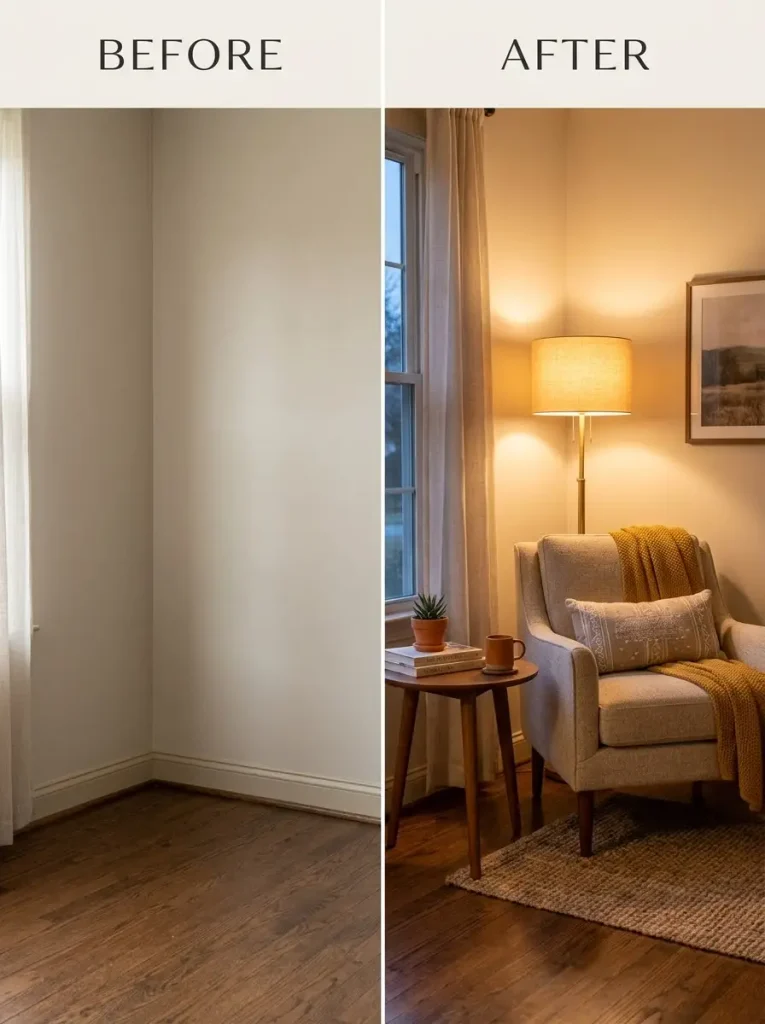
Empty corners are common in small living rooms and often get ignored entirely. Turning one into a compact reading spot, a plant display, or a slim shelving unit converts wasted space into something the room actually uses.
Making the most of awkward corners:
- Measure the corner before choosing a piece to fill it
- A single chair with a small lamp is often enough to activate the space
- Corner shelving units use vertical space without crowding the floor
- Avoid filling every corner — one or two thoughtful moments is plenty
Comparing Modern Styles for Small Living Rooms
Modern isn’t one single look, and understanding the differences helps you choose a direction rather than mixing elements that pull against each other.
22. Decide Between Bold Modern, Soft Minimalist, or a Blended Approach
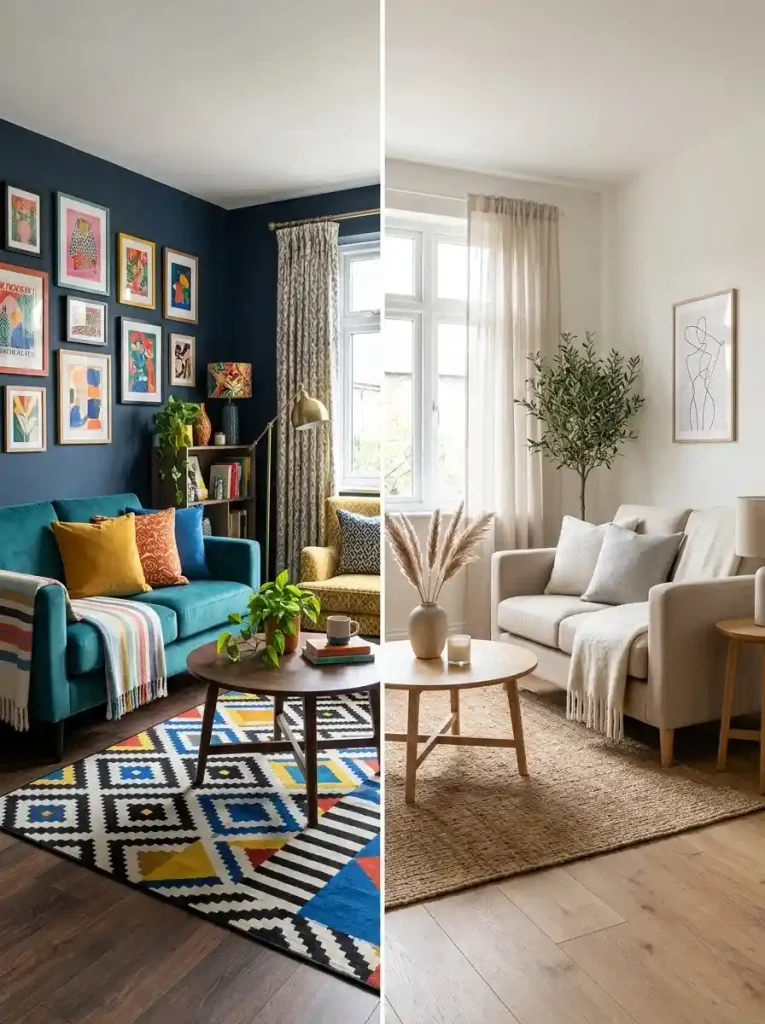
Bold modern design embraces contrast and statement pieces — a graphic rug, a sculptural lamp, saturated accent colors. Soft minimalist design pares everything back to quiet neutrals and negative space. Many small living rooms actually work best somewhere between the two: minimalist restraint as the foundation, with one or two bold modern accents layered in.
Comparing the approaches:
- Bold Modern: Graphic patterns, saturated accents, sculptural forms
- Soft Minimalist: Neutral palette, negative space, quiet materials
- Blended Approach: Minimalist base with one or two bold focal points
Choosing between silence and statement often comes down to how the room needs to function day to day — a home office corner may call for calm, while a room built purely for hosting can handle more drama.
Checklist for Designing Your Small Living Room
23. Work Through a Final Pre-Purchase Checklist
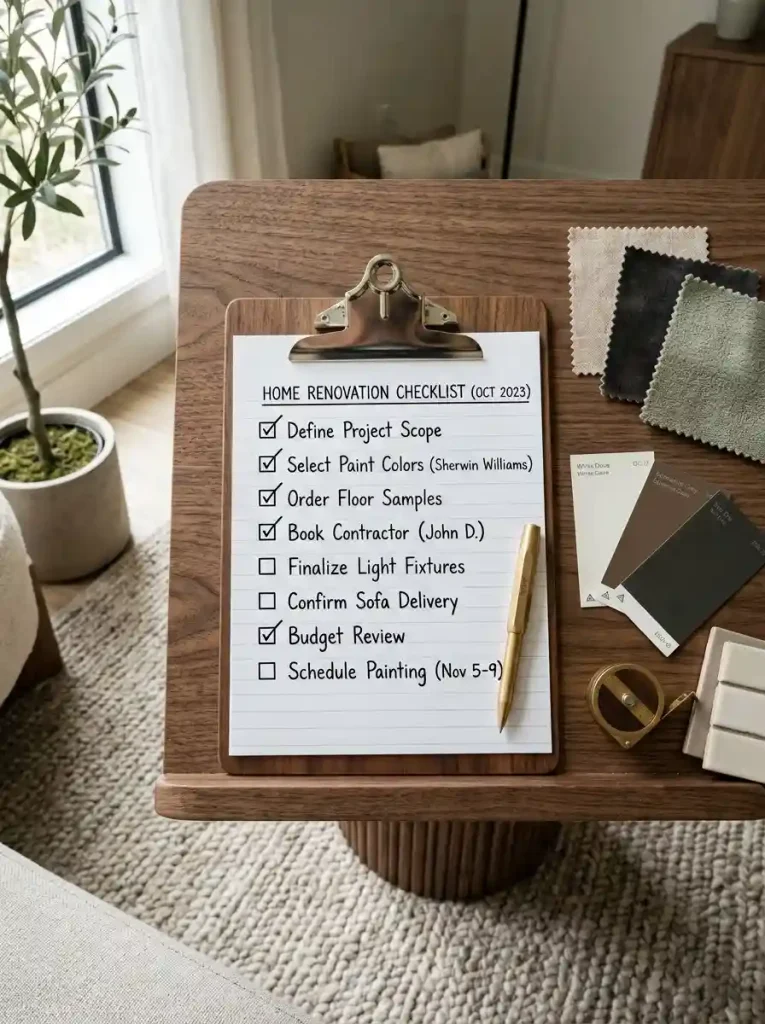
Before buying anything, running through a short checklist catches most of the mistakes that lead to a small living room feeling overcrowded or mismatched six months later.
Essentials to confirm before you buy:
- A sofa or loveseat measured against your actual floor plan, not guesswork
- At least one dual-purpose piece, like a storage ottoman or lift-top table
- A lighting plan covering ambient, task, and accent needs
- One statement decor element — rug, art, or lamp — chosen intentionally
- A clear walking path of at least 24 inches maintained throughout
Common Small Living Room Mistakes to Avoid
Overcrowding With Too Much Furniture
It’s tempting to fill every gap in a small living room, but each extra piece reduces the room’s ability to breathe. If you find yourself squeezing past furniture to reach a seat, that’s a signal to remove rather than rearrange.
Neglecting Natural Light and Airflow
Heavy curtains and blocked windows make a compact room feel smaller and stuffier than it needs to. Keeping windows unobstructed and mixing in soft, warm lamp light after dark does more for a small living room’s mood than most decor purchases.
Conclusion
Designing a modern small living room comes down to a series of intentional trade-offs — choosing furniture that multitasks, lighting that layers, and decor that’s restrained enough to let the room breathe. None of these 23 ideas require a full renovation; most can be introduced gradually, piece by piece, as budget and time allow.
The strongest small living rooms aren’t the ones with the least furniture — they’re the ones where every choice, from the sofa to the single statement rug, was made on purpose.