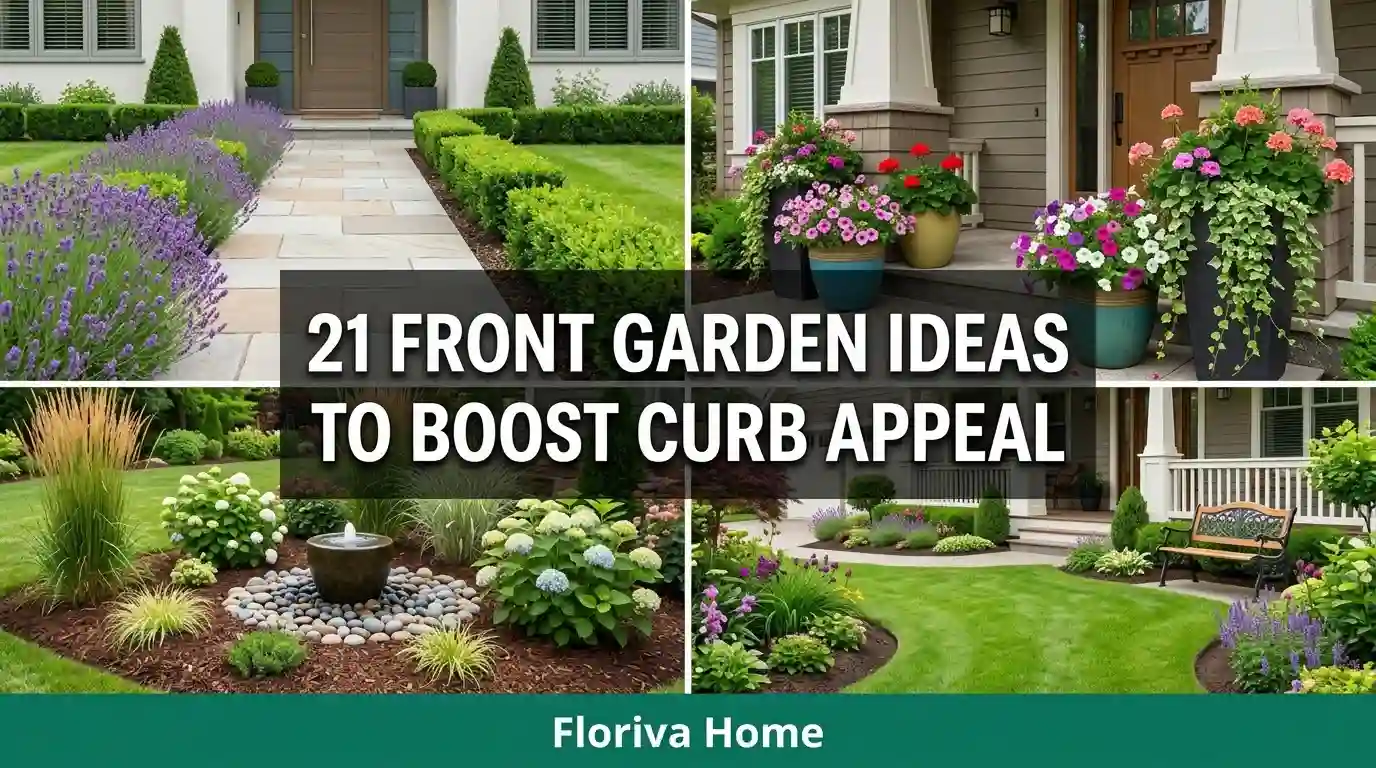
21 Front Garden Ideas to Boost Curb Appeal
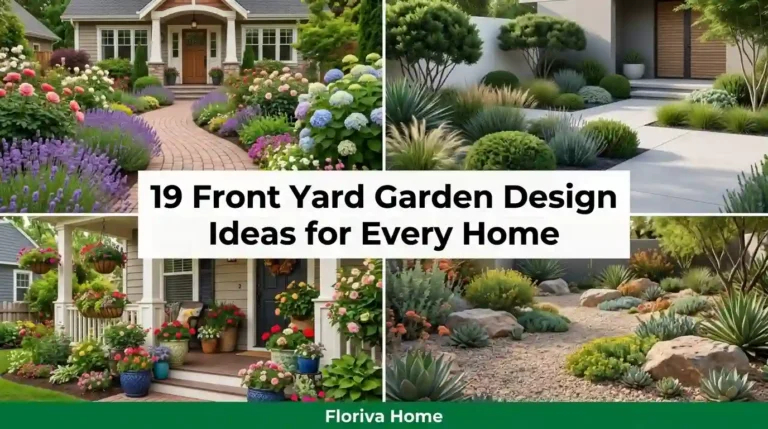
Your front garden is one of the first things people notice about your home, so even a few thoughtful changes can make a surprisingly big difference. You don’t need a huge yard or an expensive landscaping project to create an entrance that feels polished, welcoming, and full of personality.
The right combination of plants, pathways, borders, lighting, and decorative details can turn an ordinary front yard into a space that feels intentionally designed. Whether your style is modern, cottage-inspired, natural, or wonderfully simple, there are plenty of ways to improve your home’s curb appeal.
The best part? Many front garden upgrades can be completed gradually. Start with one feature you love, build around it, and let the rest of the garden develop naturally.
If you’re looking for fresh inspiration, these 21 front garden ideas can help you create an inviting outdoor space that looks beautiful from the street.
1. Frame the Front Door With Layered Flower Beds
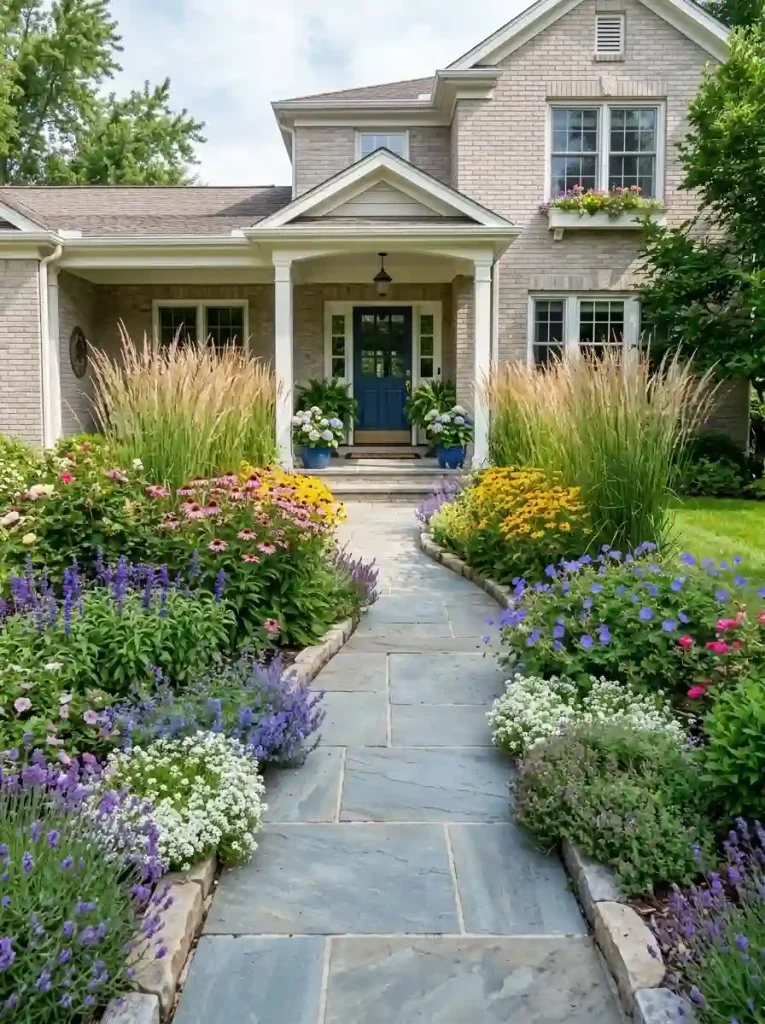
A welcoming front entrance deserves more than a bare strip of lawn. Create flower beds along both sides of the walkway and layer plants by height to give the garden a fuller, more finished appearance.
Place taller shrubs or ornamental grasses toward the back, medium-sized flowering plants in the middle, and low-growing flowers along the front edge. This arrangement creates depth while naturally drawing attention toward the front door.
Choose plants that complement your home rather than trying to use every color available. A limited palette of two or three coordinating shades often looks much more intentional.
Expert Tip:
Keep the planting slightly lower near the walkway so the entrance remains open and easy to see. A clear visual path makes even a small front garden feel more spacious.
2. Add a Curved Pathway for a Softer Entrance
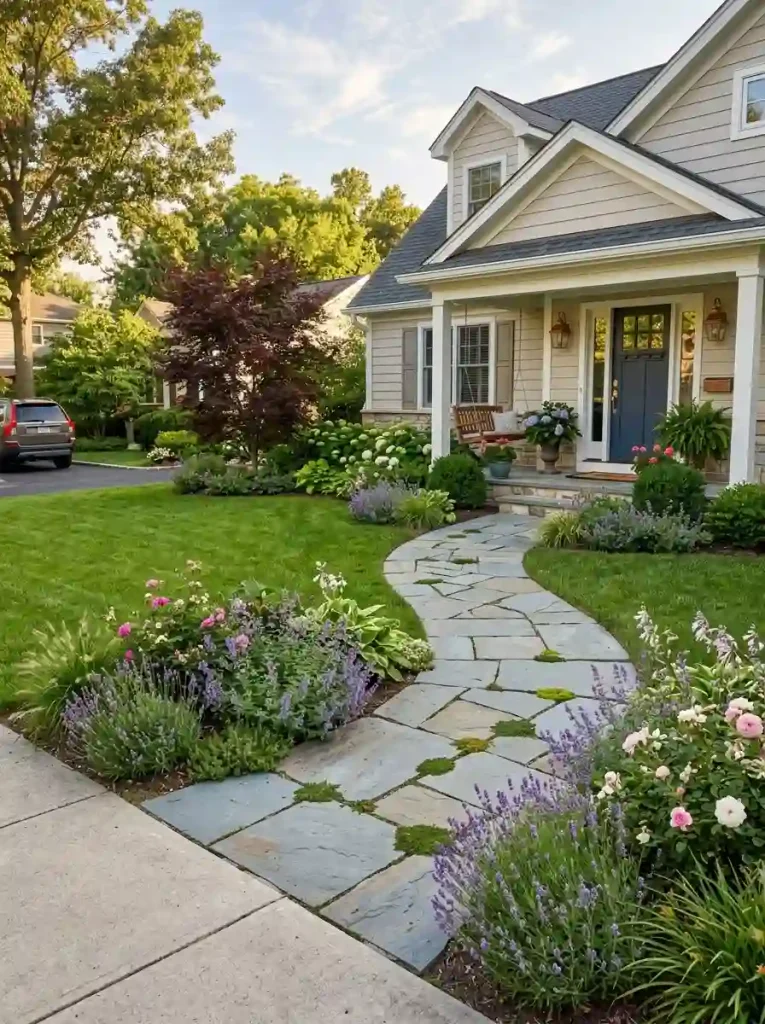
A straight walkway is practical, but a gently curved path can make the approach to your home feel much more inviting. Instead of revealing everything at once, the curve creates a subtle sense of movement.
Use brick, natural stone, concrete pavers, or compact gravel depending on your home’s style. Surround the edges with low plants to soften the hard surface and make the pathway feel integrated with the garden.
The curve doesn’t need to be dramatic. Even a modest bend can add visual interest and make a small front yard appear more thoughtfully designed.
Expert Tip:
Before installing anything permanently, mark the proposed curve with a garden hose. Stand at the street and check whether the shape looks natural from a distance.
3. Use Evergreen Shrubs for Year-Round Structure
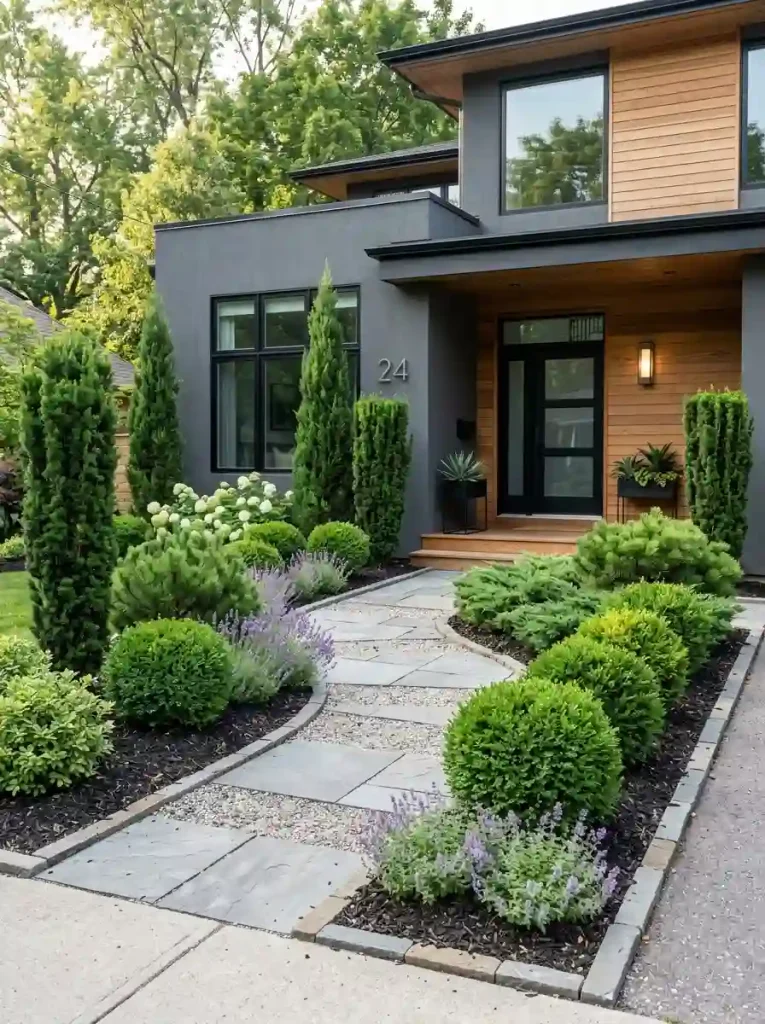
Flowers can provide seasonal color, but evergreen shrubs give your front garden something important: structure that remains attractive throughout the year.
Place compact evergreens near corners, beneath windows, or along the foundation to create a consistent framework. Their foliage can also provide a calm background for seasonal flowers that change throughout the year.
Avoid planting large shrubs too close to the house. Give them enough room to mature without covering windows, blocking pathways, or becoming difficult to maintain.
Expert Tip:
Mix different evergreen shapes rather than planting an identical row everywhere. Combining rounded, upright, and spreading forms gives the garden a more natural rhythm.
4. Create a Small Cottage Garden Along the Fence
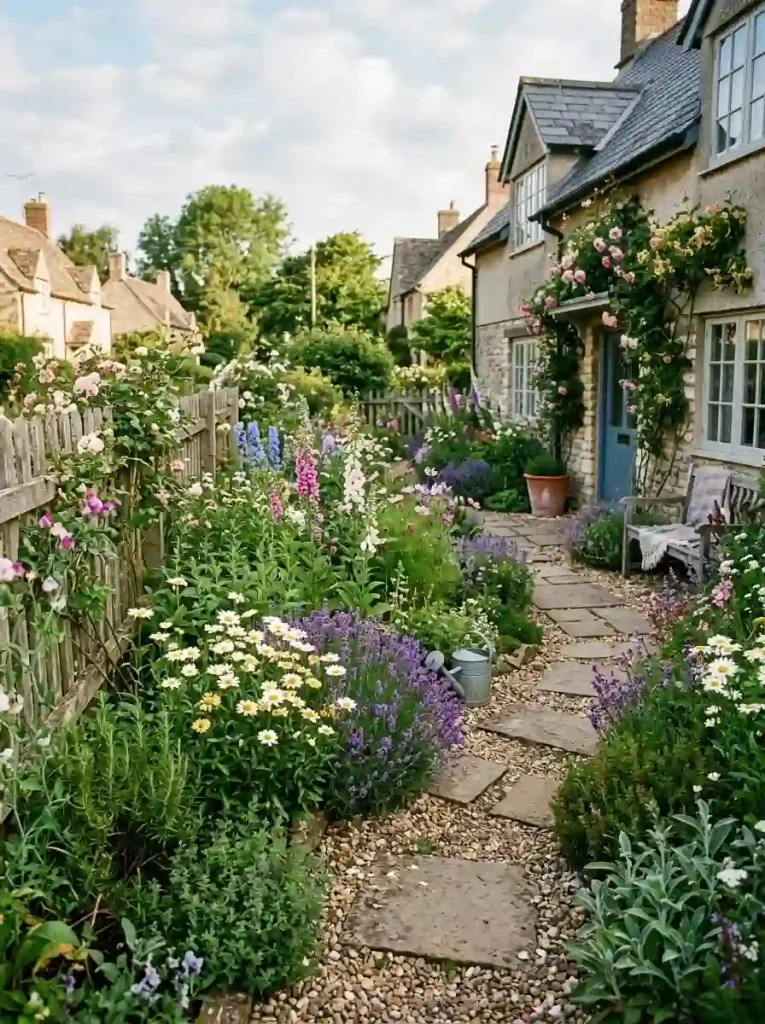
You don’t need a countryside property to enjoy cottage garden charm. A narrow planting strip beside a fence can become a colorful collection of flowers, herbs, and informal greenery.
Choose plants with different heights and blooming periods so the area changes throughout the growing season. Allow some flowers to grow naturally rather than forcing everything into perfectly shaped rows.
A simple wooden, painted, or natural fence can make the planting feel even more intentional. The slightly relaxed appearance is part of the charm.
Expert Tip:
Repeat a few favorite plants throughout the bed instead of choosing dozens of unrelated varieties. Repetition helps an informal garden still feel cohesive.
5. Highlight the Mailbox With a Mini Garden
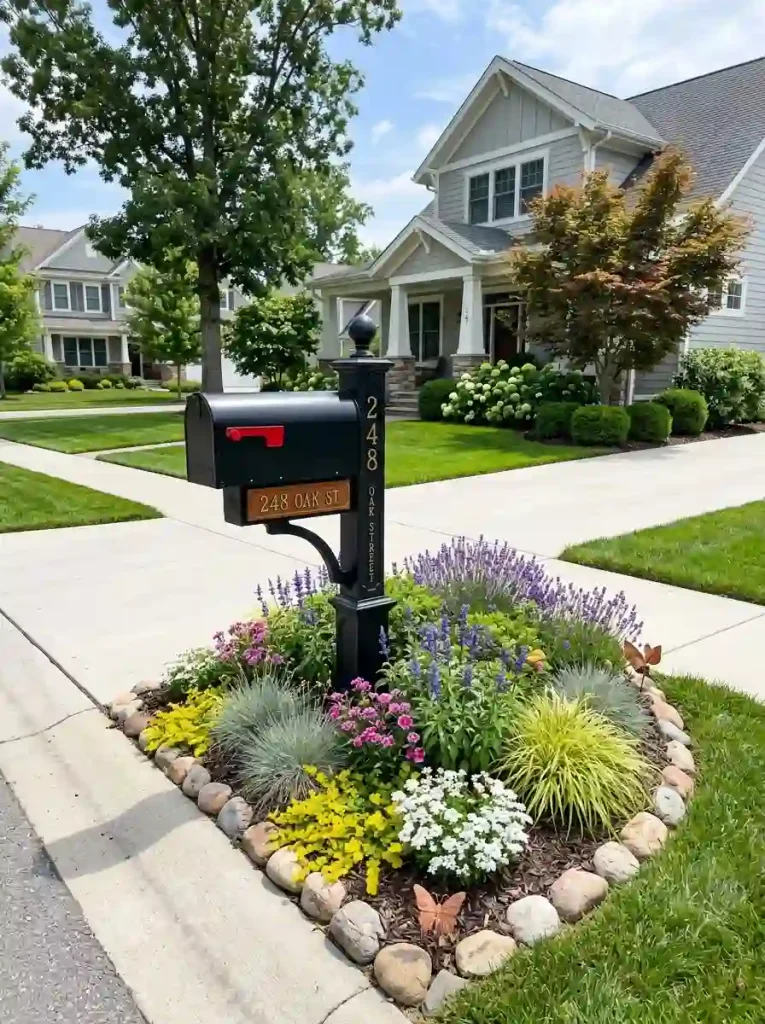
The mailbox may be functional, but it doesn’t have to be visually boring. Surrounding it with a small planting bed can turn an overlooked corner into a memorable detail.
Use low-growing flowers, compact shrubs, ornamental grasses, or decorative stones around the post. Keep plants away from the mailbox opening so mail delivery remains convenient.
This is especially useful for homeowners with limited landscaping space because the project requires only a small footprint while still adding personality to the front yard.
Expert Tip:
Choose durable plants that tolerate roadside conditions, especially if the mailbox is exposed to heat, wind, dust, or occasional foot traffic.
6. Mix Ornamental Grasses With Flowering Plants
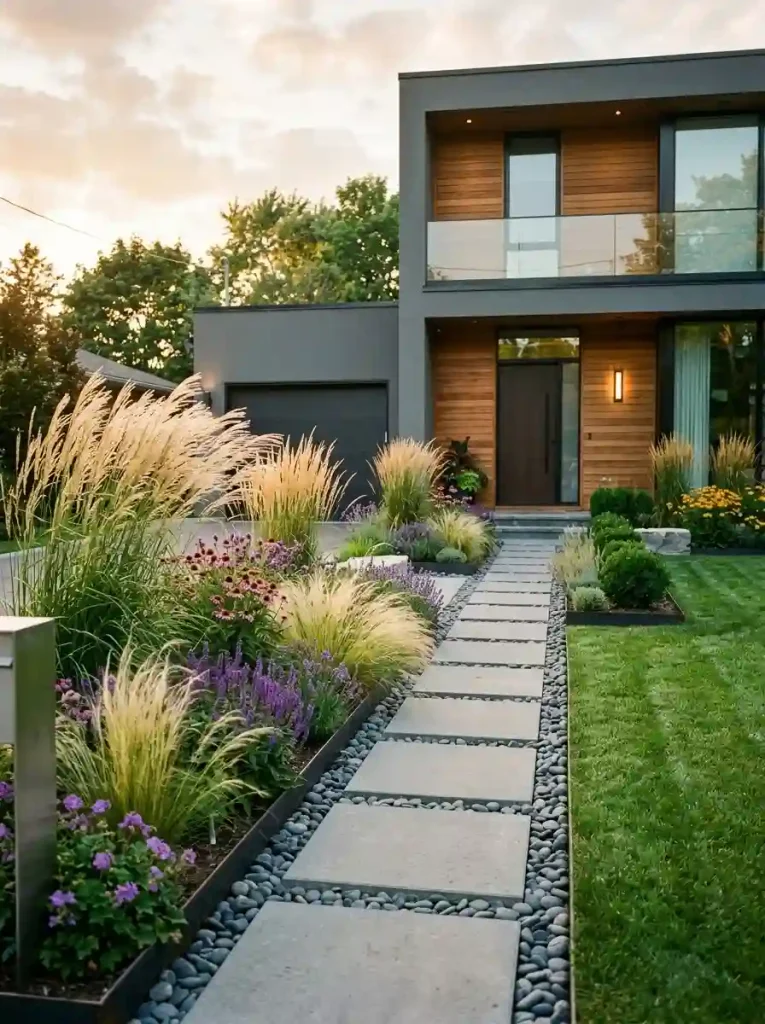
Ornamental grasses can add movement and texture that traditional flower beds sometimes lack. Their narrow leaves sway in the breeze and create a softer transition between the house and the lawn.
Combine grasses with flowering perennials or compact shrubs for a layered effect. Choose one or two grass varieties rather than filling the entire garden with different textures.
This approach works particularly well for modern homes because grasses can provide a clean, architectural appearance without making the landscape feel overly formal.
Expert Tip:
Place taller grasses toward the back or sides of the planting bed so they frame the garden without hiding the windows or front entrance.
7. Install Low Garden Lighting Along the Walkway
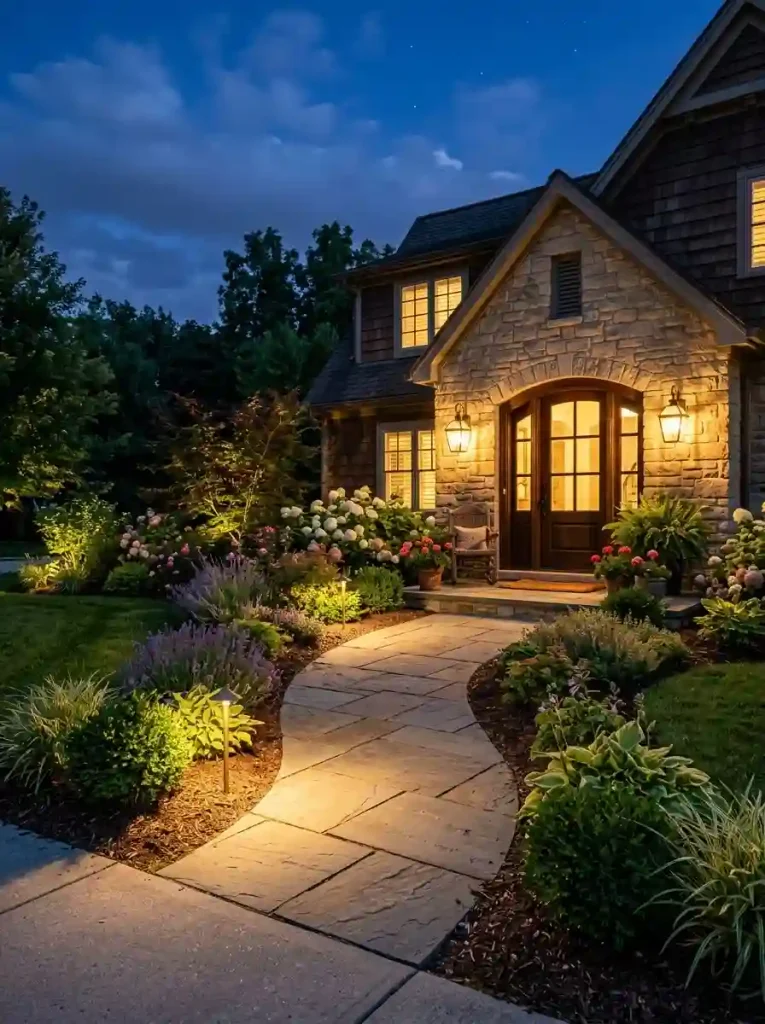
A beautiful front garden shouldn’t disappear after sunset. Small landscape lights can highlight pathways, plants, and architectural features while making the entrance feel safer and more welcoming.
Use evenly spaced low lights along the walkway rather than installing too many fixtures. You can also aim a few lights toward attractive trees or shrubs to create depth after dark.
Warm-toned illumination generally creates a more relaxed residential atmosphere than extremely bright lighting.
Expert Tip:
Think about what you want visitors to notice at night. Highlight the pathway and one or two key garden features instead of lighting every inch of the yard.
8. Build a Simple Raised Border Around the Lawn
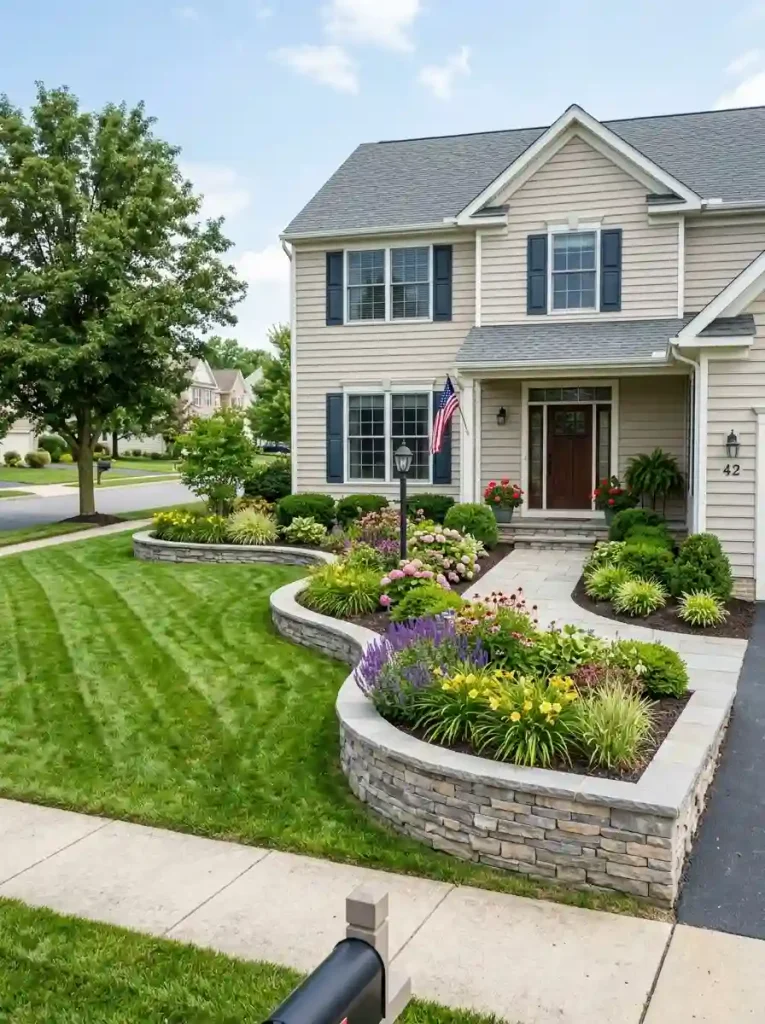
A defined lawn edge can make an entire front garden look cleaner. Instead of allowing grass to blend gradually into planting beds, create a clear border using brick, stone, timber, or another suitable edging material.
The contrast between the lawn and garden bed gives the landscape a more finished appearance. It also makes mowing and routine maintenance easier because the boundaries are clearly established.
Keep the border consistent with your home’s exterior materials for a coordinated look.
Expert Tip:
Follow the natural shape of your garden instead of creating complicated curves and corners. Simple lines are usually easier to maintain and often look more sophisticated.
9. Plant a Statement Tree Near the Entrance
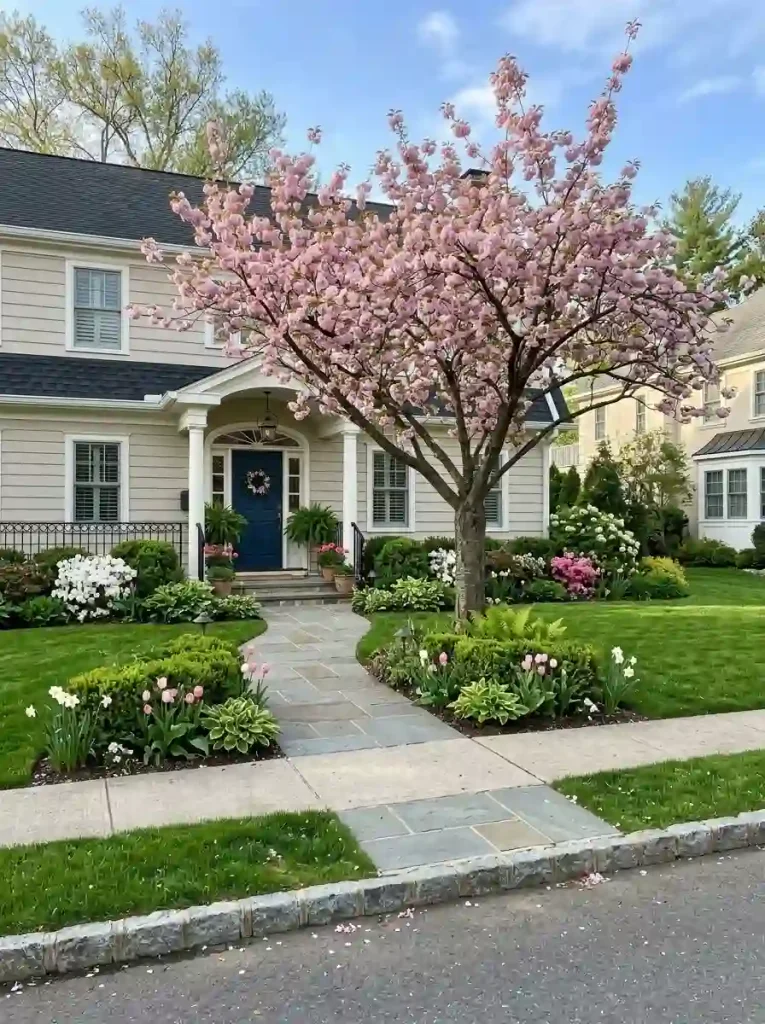
One well-chosen tree can become the focal point of an entire front garden. A small ornamental tree near the entrance can provide height, seasonal interest, and a stronger sense of permanence.
Consider the tree’s mature size before planting. The goal is to frame the home rather than overwhelm it, block windows, or interfere with paths and overhead features.
A tree with attractive spring flowers, colorful autumn foliage, or distinctive branching can provide visual interest long after the smaller plants have finished blooming.
Expert Tip:
Stand at the street and imagine the tree at full maturity before choosing its location. This simple step can prevent future crowding problems.
10. Use Decorative Gravel to Define Planting Areas
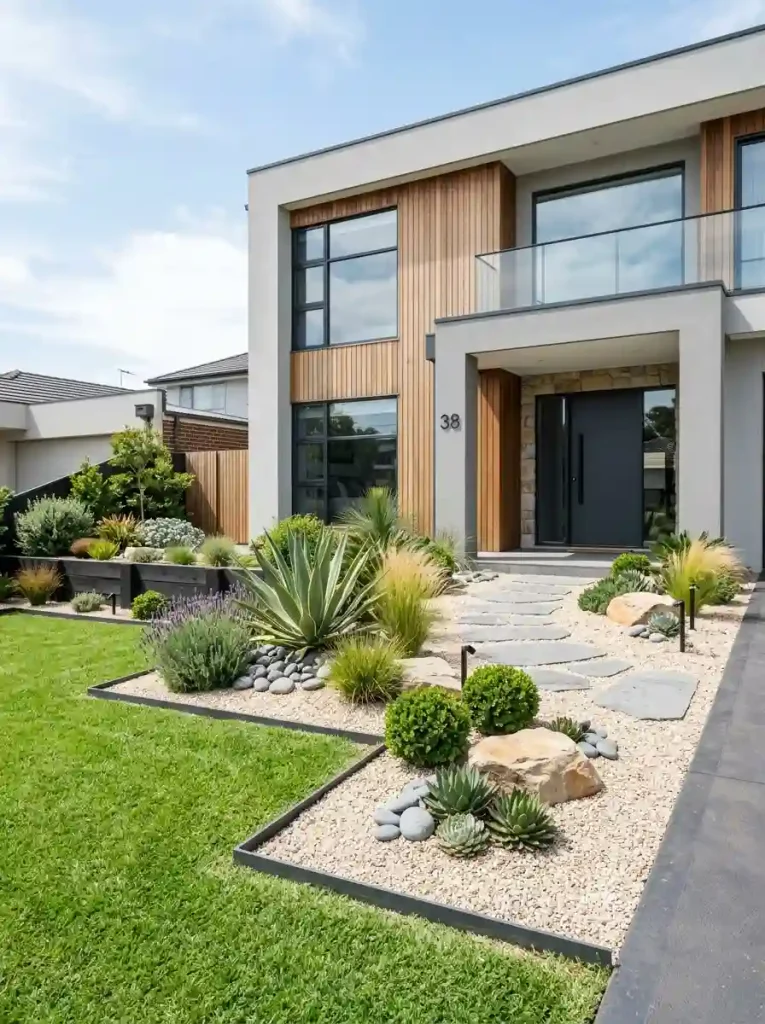
Decorative gravel can create a clean transition between plants, pathways, and larger landscape features. It is especially useful when you want a modern front garden with a tidy, low-fuss appearance.
Choose gravel that complements the colors of your home and existing hardscape. Pale stone can brighten a darker exterior, while deeper tones can create contrast around lighter walls.
Use gravel as an intentional design element rather than spreading it randomly across the entire yard.
Expert Tip:
Install a clear edge between gravel and lawn so the stones stay where they belong. A defined boundary will make the garden look much more polished.
11. Give a Small Front Garden a Vertical Focal Point
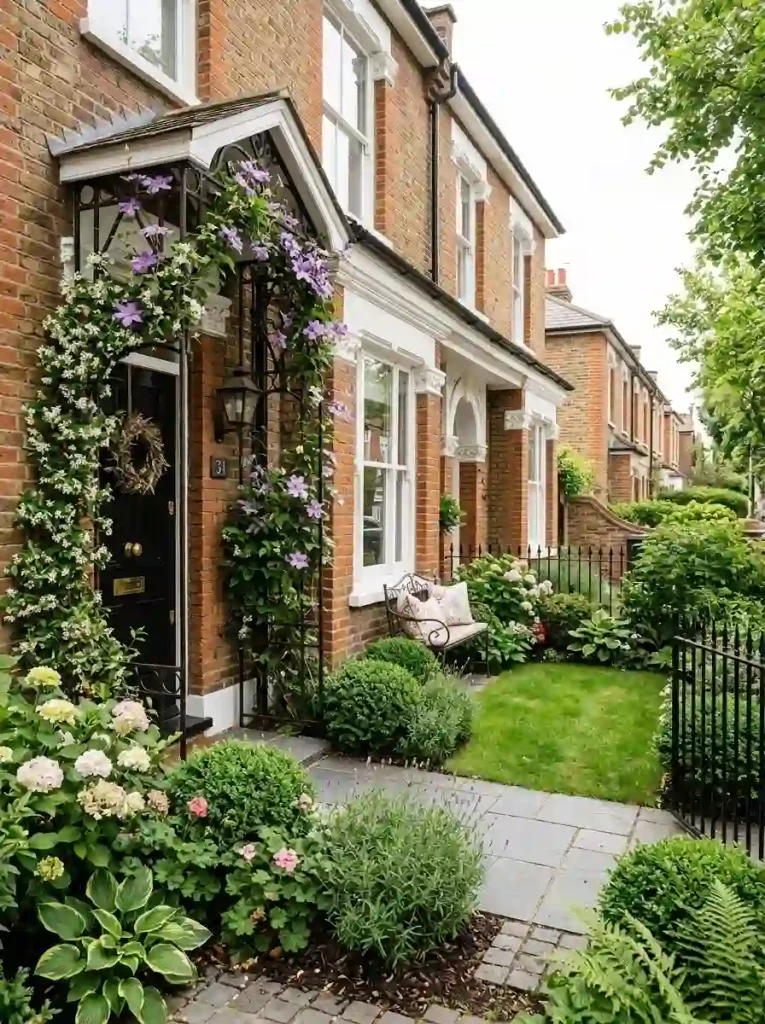
When ground space is limited, think upward. A trellis, narrow plant tower, decorative arch, or climbing plant can add height without taking up much valuable garden area.
Position the vertical feature where it naturally catches the eye, such as beside the front door or at the end of a short walkway. Climbing flowers or leafy vines can soften the structure as they grow.
This technique is particularly useful for townhouses and compact front yards where horizontal planting space is limited.
Expert Tip:
Choose a vertical feature that complements the architecture of your home. A simple metal frame may suit a modern exterior, while a wooden trellis can work beautifully with a traditional or cottage-style house.
12. Add Window Boxes for Instant Color
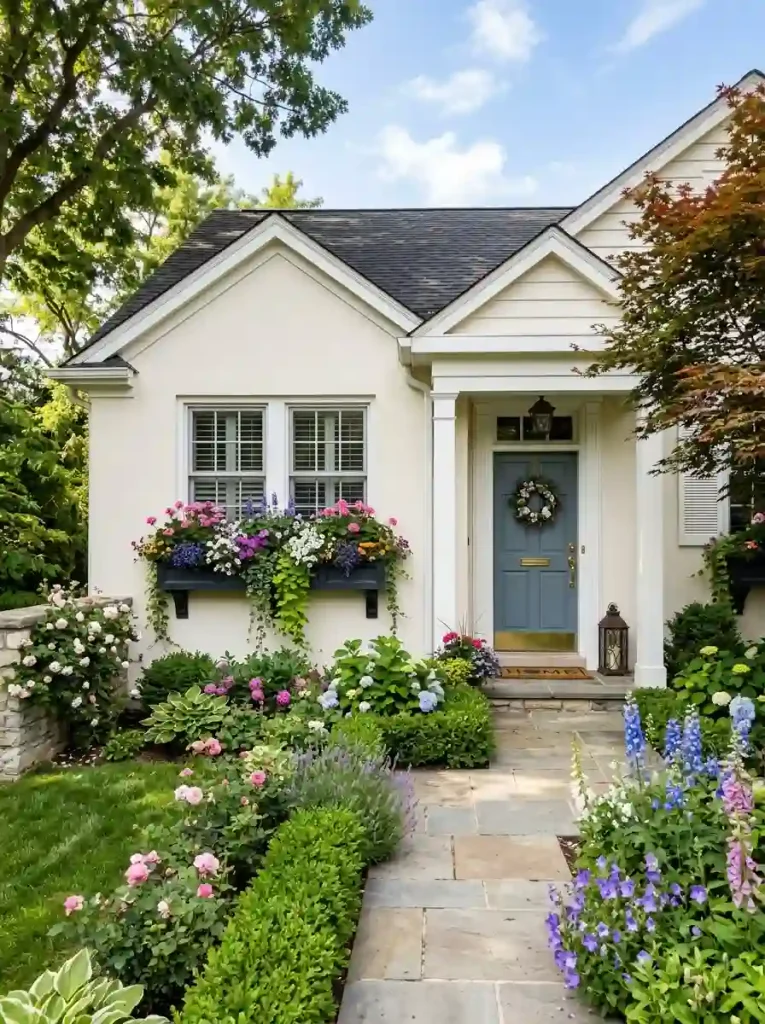
If your front garden has limited planting space, look beyond the ground. Window boxes can introduce flowers and greenery directly onto the exterior of your home while making the facade feel warmer and more welcoming.
Fill them with seasonal flowers, trailing plants, or compact herbs depending on the amount of sunlight available. Coordinating the window boxes with your front-door color or existing landscaping can create a cohesive appearance.
This is also an easy way to refresh your curb appeal throughout the year without redesigning the entire garden.
Expert Tip:
Make sure the window boxes have proper drainage and are securely attached. Choose plants according to the amount of direct sunlight the windows receive.
13. Create a Symmetrical Front Garden
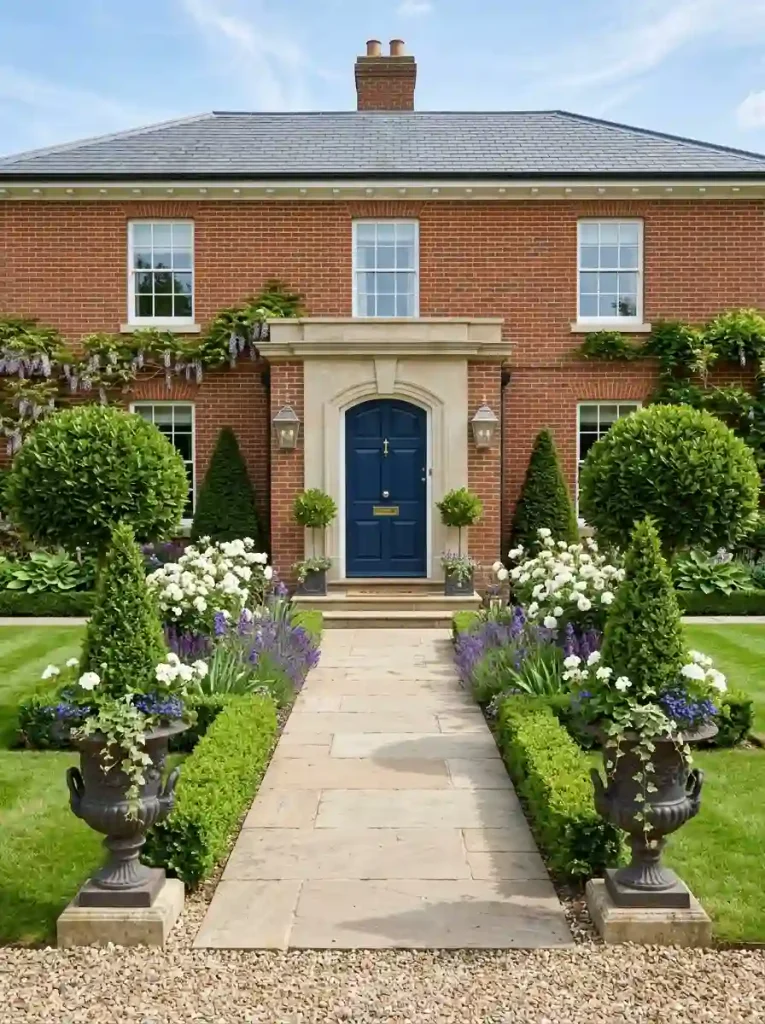
Symmetry can make an entrance feel organized, balanced, and sophisticated. Place matching or visually similar planters, shrubs, or flower beds on either side of the front door to create a strong focal point.
You don’t necessarily need identical plants everywhere. Similar shapes, heights, and colors can provide the same balanced effect while keeping the garden from looking too rigid.
This idea works particularly well around traditional, colonial, and formal-style homes.
Expert Tip:
Use symmetry around the entrance while allowing the outer edges of the garden to become slightly more relaxed. This creates structure without making the entire yard feel overly formal.
14. Replace Part of the Lawn With Groundcovers
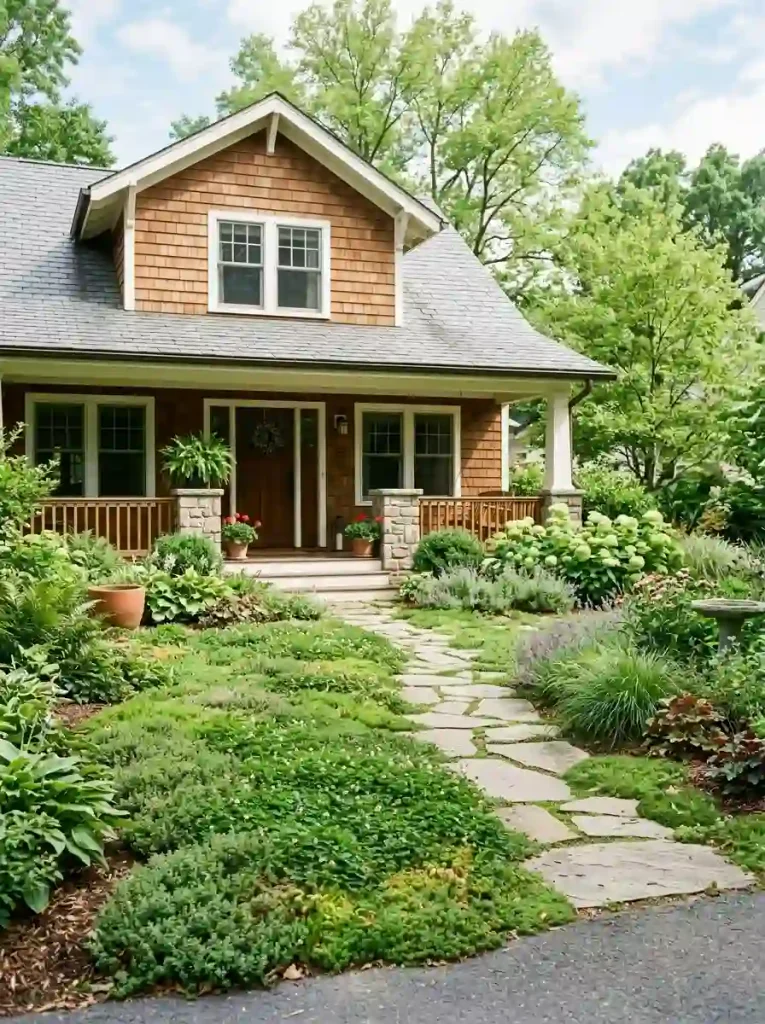
A large lawn can require regular mowing and watering, while groundcovers can create a softer alternative in selected areas. Replace a small section of grass with low-growing plants to introduce texture and reduce maintenance.
Groundcovers are particularly useful beneath trees, along borders, or in awkward spaces where mowing can be inconvenient. Choose varieties suited to your local climate and the amount of sunlight available.
The result can look lush and intentional without requiring a completely plant-filled yard.
Expert Tip:
Start with a manageable section rather than removing the entire lawn at once. This lets you see how the groundcover performs before expanding the design.
15. Use Large Planters Near the Front Door
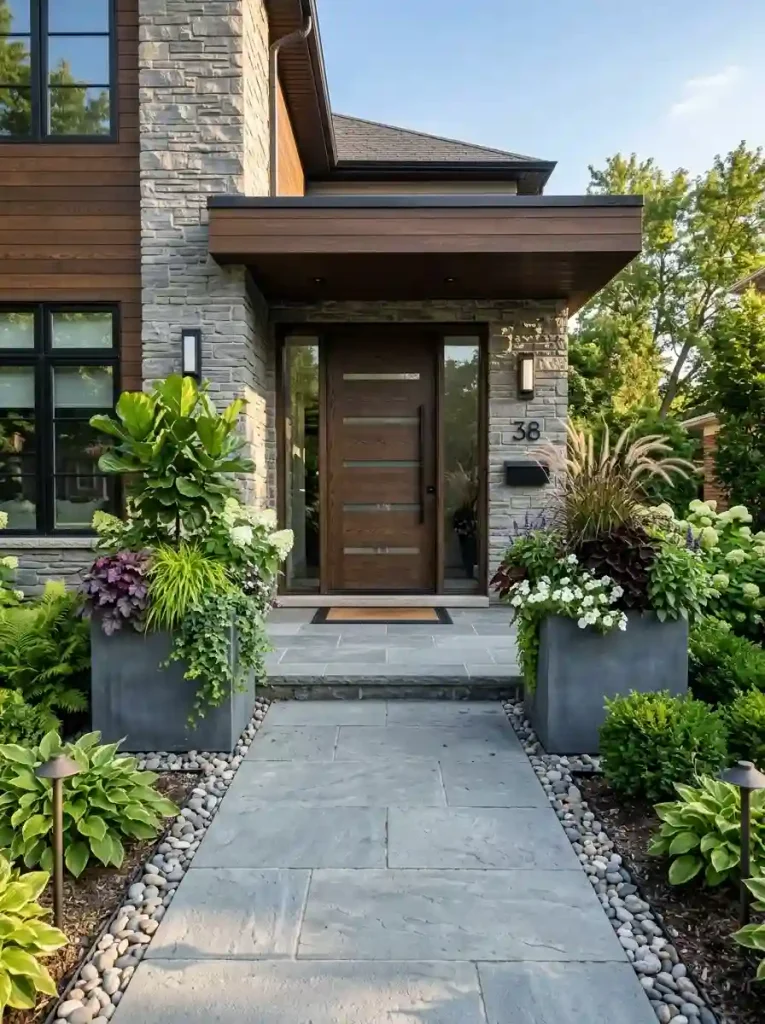
Large containers can add instant personality to a front entrance without requiring permanent landscaping. Place one substantial planter on each side of the door or use a single oversized container as an accent.
Choose pots with shapes and materials that complement the architecture. Ceramic, concrete, terracotta, stone, and metal can each create a completely different atmosphere.
Fill them with evergreen foliage for consistency or seasonal flowers for changing color throughout the year.
Expert Tip:
Select containers large enough to remain visually proportional to the entrance. Tiny pots can disappear beside a wide doorway, while oversized containers can overwhelm a narrow porch.
16. Add a Natural Stone Garden Wall
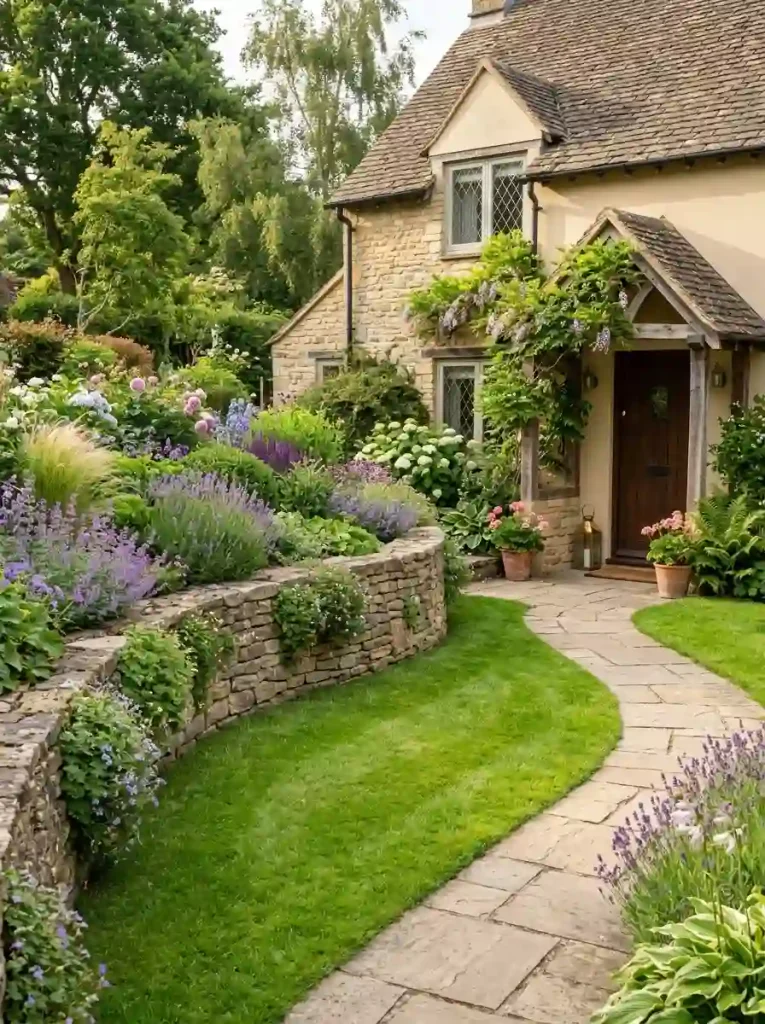
A low stone wall can provide structure while adding texture and character to a front garden. It can separate the lawn from planting beds, define a sloped area, or create a raised space for flowers.
Natural stone works especially well when you want the garden to feel connected to its surroundings rather than overly manufactured.
Keep the wall relatively low near the entrance so it does not create a visual barrier between the house and street.
Expert Tip:
Repeat the same stone somewhere else in the landscape, such as around the pathway or entrance steps. Repeating materials helps the different garden elements feel connected.
17. Design a Front Garden With Native Plants
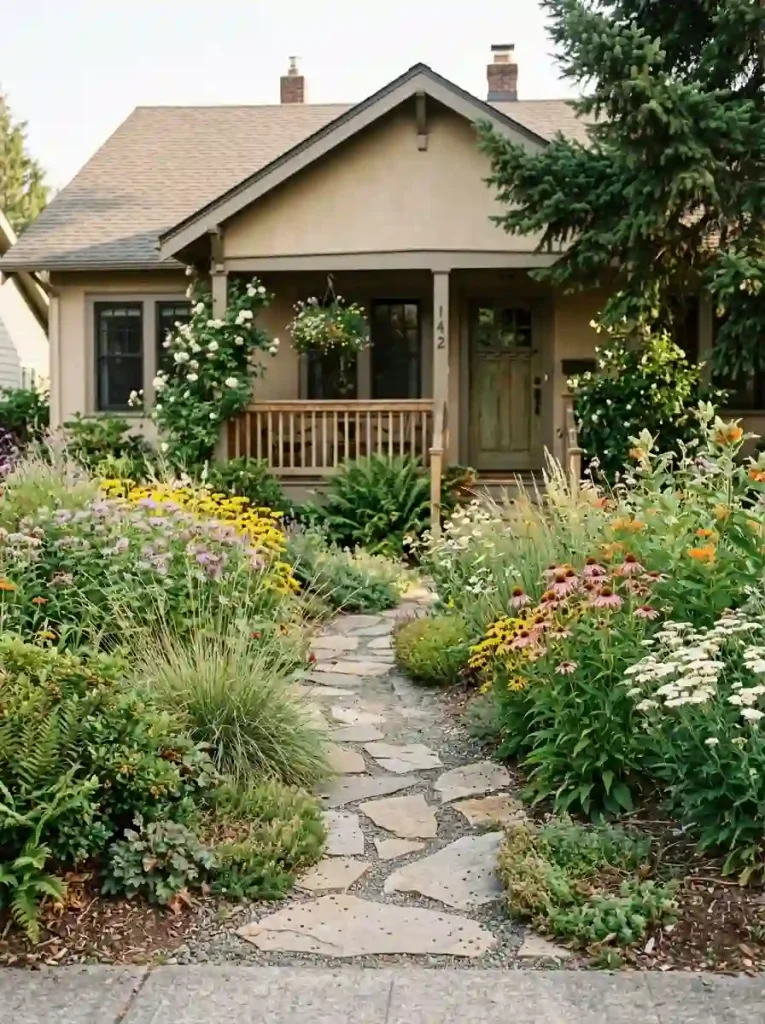
Native plants can make a front garden feel naturally connected to its environment while providing habitat and seasonal interest. They are often well adapted to local soil and climate conditions.
Instead of arranging every plant in straight rows, combine different heights and textures to create a naturalistic planting scheme. Add a few structural shrubs or ornamental grasses to keep the design visually organized.
A native-focused garden can be beautiful without looking wild or neglected.
Expert Tip:
Research plants that naturally thrive in your specific region before purchasing. Local garden centers and native-plant organizations can be useful sources of information.
18. Make the Front Steps Part of the Landscape
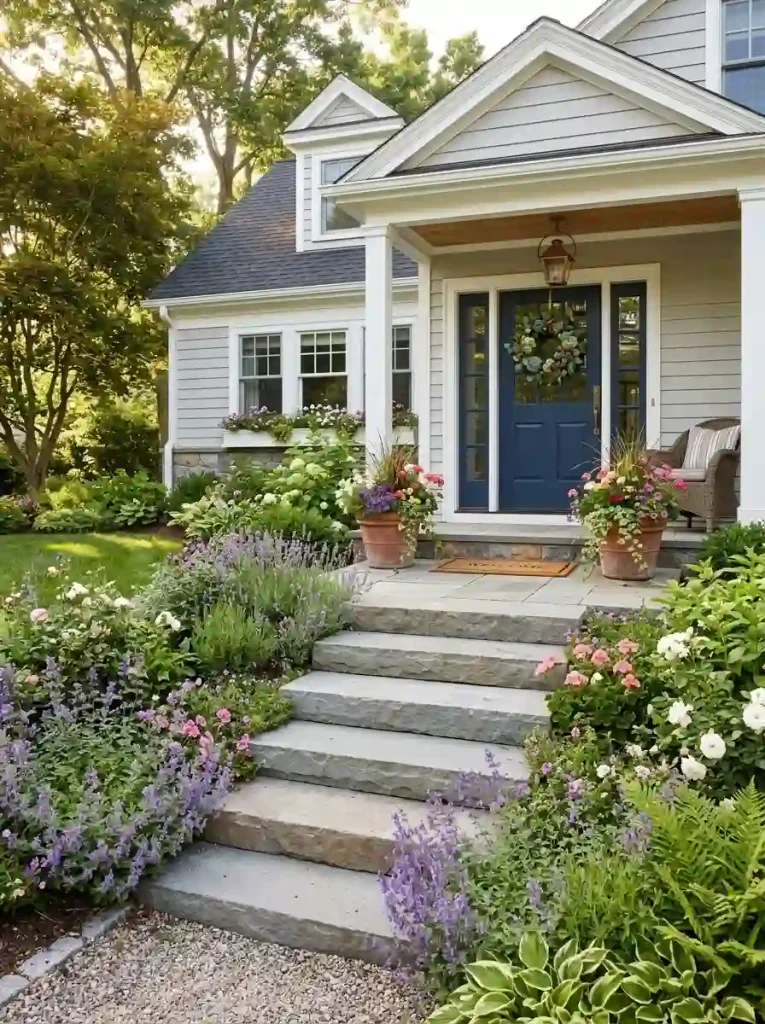
Front steps often become an overlooked transition between the garden and the house. Integrating them into the landscape can make the entire entrance feel more connected.
Place low plants along the sides, add attractive containers near the landing, or use a contrasting material around the steps. Avoid crowding the stairway because the entrance should remain comfortable and safe.
A few carefully positioned plants can make ordinary steps feel like part of a thoughtfully designed garden.
Expert Tip:
Keep the immediate walking surface clear of leaves, overgrown plants, and decorative objects. Beauty should never interfere with an easy and safe entrance.
19. Add a Bench for a Welcoming Touch
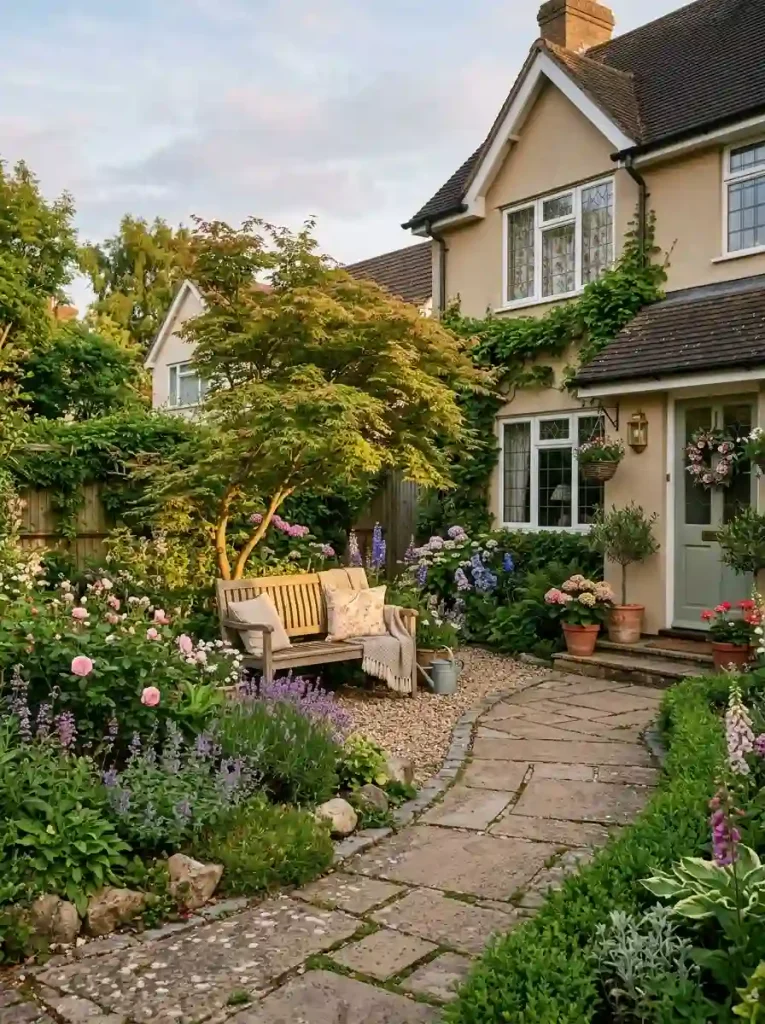
A small garden bench can make a front yard feel more like an outdoor living space. Position it beneath a small tree, beside a planting bed, or near the entrance where it becomes part of the overall composition.
Wooden benches create a warm traditional feeling, while metal or minimalist designs can suit contemporary homes.
Even if the bench is rarely used, it can serve as a visual focal point that makes the garden feel more inviting.
Expert Tip:
Choose weather-resistant furniture and place it somewhere that does not interfere with the main walkway. A bench should enhance the garden, not become an obstacle.
20. Create a Clean Modern Garden With Repeated Shapes
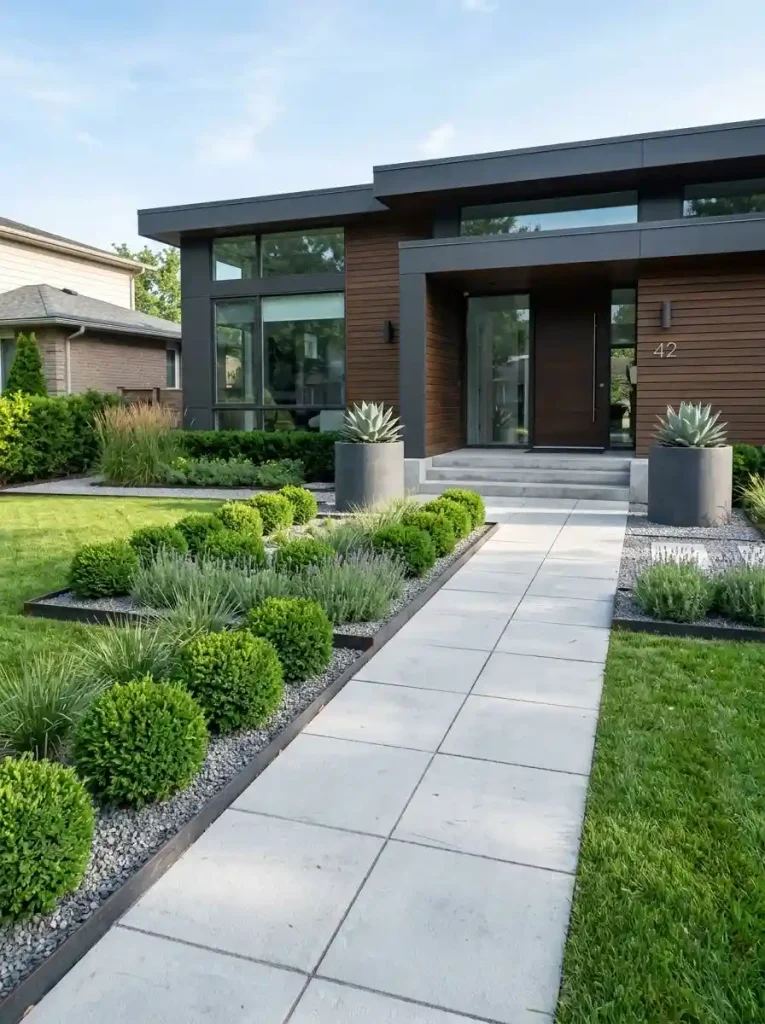
For a contemporary curb-appeal makeover, focus on repetition and simple geometry. Repeating rectangular beds, rounded shrubs, linear pathways, or matching planters can create a strong modern appearance.
Keep the plant palette relatively restrained and allow the architecture of the house to remain visible. A combination of greenery, stone, and one subtle accent color can be enough to make the space feel sophisticated.
This approach is particularly effective when the house already has clean architectural lines.
Expert Tip:
Choose one dominant geometric shape and repeat it throughout the landscape. Too many competing shapes can make a small front garden feel visually busy.
21. Finish the Garden With a Welcoming Front-Door Focal Point
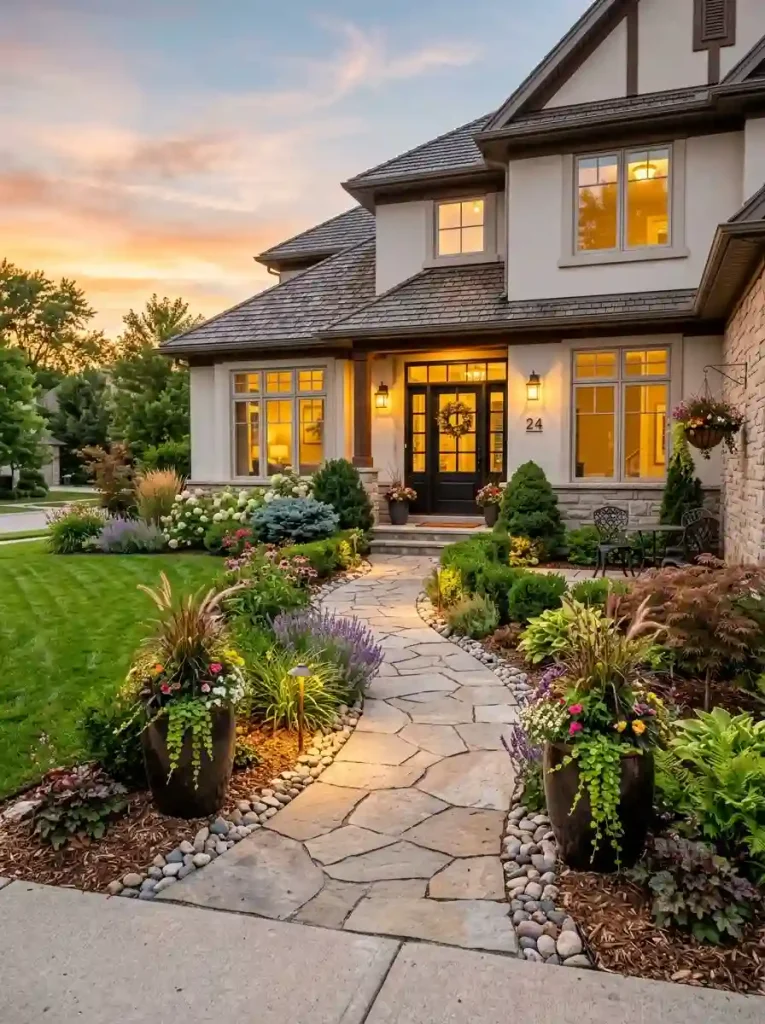
The final step in a successful front garden design is making sure everything leads the eye toward the entrance. Your front door can become the visual destination through plants, containers, lighting, a pathway, or a carefully chosen decorative accent.
Think of the garden as a frame for the house rather than a collection of unrelated features. The strongest designs guide visitors naturally from the street toward the front door.
You can keep the surrounding planting simple while giving the entrance one memorable feature, such as a colorful door, statement planter, elegant light fixture, or seasonal arrangement.
Expert Tip:
Stand across the street and look at your property as a visitor would. If the eye naturally travels toward the front entrance, your landscaping is doing its job.
How to Choose the Right Front Garden Ideas for Your Home
The best front garden isn’t necessarily the most elaborate one. It’s the design that works with your home, available space, climate, maintenance preferences, and personal style.
Start by looking at the architecture of your house. A modern home may benefit from clean lines, restrained planting, and large geometric planters, while a traditional property can work beautifully with flowering borders, symmetrical shrubs, or natural stone.
Next, consider how much maintenance you realistically want. A garden filled with seasonal flowers can look spectacular but may require more regular attention than one built around evergreen shrubs, ornamental grasses, and carefully selected groundcovers.
Also pay attention to sunlight and drainage. A plant that looks perfect in a photograph may struggle if your front yard receives completely different growing conditions.
Simple Ways to Improve Curb Appeal on a Budget
You don’t have to redesign the entire front yard to make a noticeable improvement.
Start with inexpensive changes that create an immediate visual difference. Refreshing tired mulch, defining lawn edges, pruning overgrown shrubs, adding a few containers, or installing simple pathway lighting can dramatically improve the overall appearance.
Another budget-friendly strategy is to work in stages. Instead of buying everything at once, establish the main structure first and gradually add plants and decorative features.
A tidy, well-maintained garden with a clear design often looks better than an expensive landscape filled with too many unrelated elements.
Common Front Garden Mistakes to Avoid
Even a good landscaping idea can create problems when it isn’t planned carefully. One common mistake is choosing plants based only on appearance without considering their mature size.
Overcrowding is another issue. Young plants may look small when purchased, but they can quickly fill a bed as they mature. Give each plant enough room to grow and maintain airflow.
Avoid blocking windows, paths, house numbers, or the front door with large shrubs. Your garden should frame important features rather than hide them.
Finally, don’t feel pressured to follow every landscaping trend. Choose materials and plants that fit your home and will continue to look appealing as your garden matures.
Final Thoughts
A beautiful front garden can completely change how your home looks from the street. Whether you add a curved pathway, evergreen structure, colorful flower beds, decorative gravel, statement planters, or simply cleaner garden borders, small improvements can create a meaningful difference.
The key is to think about the entire entrance as one composition. Plants, pathways, containers, lighting, and hardscape should work together instead of competing for attention.
Choose a few ideas that suit your space and lifestyle, start with the most noticeable improvement, and build from there. With thoughtful planning, even a modest front garden can become an attractive and welcoming introduction to your home.