
24 Curated Clutter Decor Ideas
Clutter doesn’t always have to disappear behind closed doors. Sometimes, everyday belongings can become part of your home’s decor when they’re arranged thoughtfully. A collection of books, vintage baskets, decorative trays, or carefully displayed objects can make a room feel personal rather than messy.
Curated clutter decor ideas focus on creating intentional displays with items you already own. Instead of filling every surface, you choose meaningful pieces, group similar objects, and leave enough breathing room for everything to stand out.
In this article, you will find 24 simple ideas to style bookshelves, coffee tables, kitchen counters, entryways, and bedroom surfaces. From layered artwork to vintage collections, each approach offers a practical way to make your home feel collected and welcoming.
In my experience, the secret to making decorative clutter look intentional is giving every group of objects a visual connection. By the end, you will have inspiration for creating charming displays without making your home feel overcrowded.
Layered Bookshelf Styling

Bookshelves become more interesting when books share space with decorative objects. Arrange books vertically in small groups, then place two or three horizontally stacked volumes beside them. Add a ceramic vase, framed photograph, or small vintage object on top.
Keep one shelf slightly less filled to create visual breathing room. Mix book colors with neutral accessories so the arrangement feels balanced rather than chaotic.
A practical starting point is to remove everything from one shelf and rebuild it using three types of objects: books, decorative pieces, and something natural. This creates variety without overwhelming the display.
Vintage Basket Collections

- Choose baskets with different shapes and weaving patterns.
- Group three or four baskets together instead of scattering them.
- Use larger baskets for blankets or magazines.
- Place smaller baskets on shelves for everyday accessories.
- Keep similar natural tones for a cohesive appearance.
Vintage baskets bring texture to empty corners while providing useful storage. Their woven surfaces soften hard furniture and add warmth to neutral rooms.
In a living room, place a large basket beside the sofa for throws. Smaller baskets can hold remote controls, chargers, or reading accessories. Look for secondhand baskets to keep the budget low and avoid buying pieces that serve no purpose.
Decorative Tray Displays

Quick Tip:
A decorative tray helps scattered objects look like one intentional arrangement. Choose a tray large enough to hold your main accessories without filling every corner.
Place a candle, small bowl, and one decorative object inside. Leave some visible tray surface to keep the arrangement from feeling crowded.
Coffee tables, ottomans, and bedroom dressers are especially useful locations for tray displays. Use a tray with handles if you regularly move your accessories when cleaning or entertaining.
For a budget-friendly arrangement, repurpose a wooden serving tray or shallow basket you already own. The tray creates a defined decorating zone, making everyday objects easier to manage.
Vintage Frame Gallery
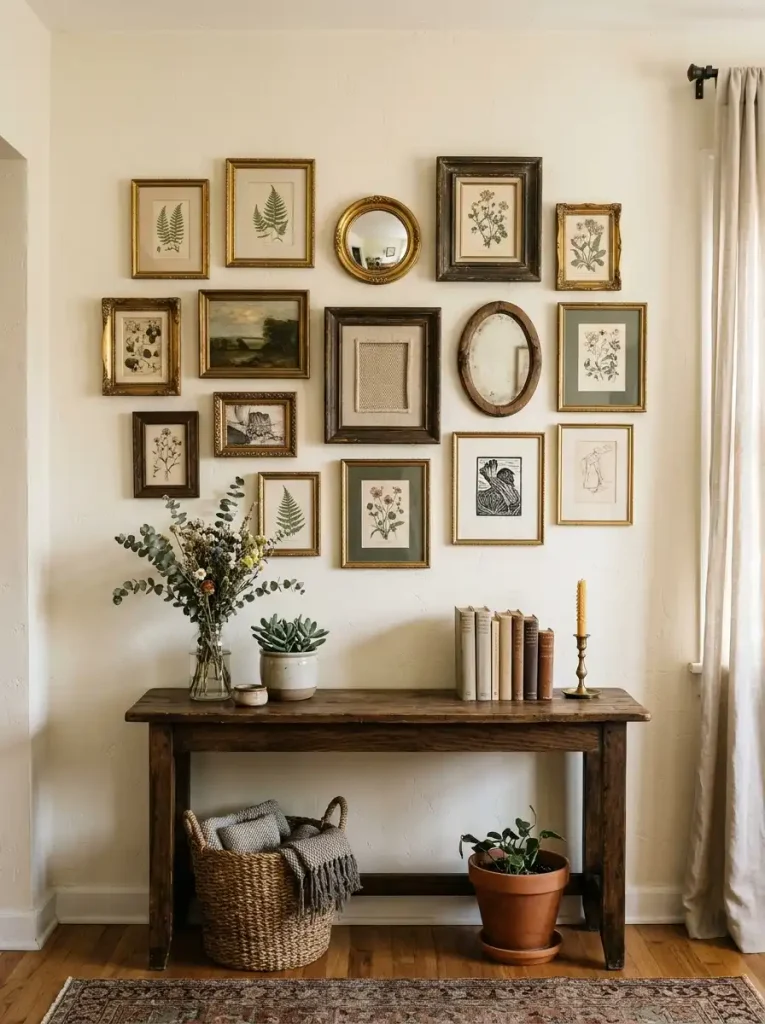
Before: Empty walls can make a room feel unfinished, while random frames may look disconnected. Small artwork often gets lost when displayed individually.
After: Group vintage frames in different shapes and finishes to create a gallery with personality. Mix botanical prints, framed photographs, mirrors, and decorative sketches.
Start by arranging the frames on the floor before hanging them. Keep approximately two to three inches between pieces, adjusting the spacing for the wall size. Choose a loose arrangement rather than a perfectly symmetrical grid for a collected look.
Collected Ceramic Vases

- Select three to five vases in different heights.
- Choose a shared color palette to connect the collection.
- Place taller pieces toward the back.
- Add dried branches to one vase for extra height.
- Leave small gaps between the objects.
Ceramic collections look especially attractive on mantels, console tables, and open shelving. Handmade pieces with uneven shapes add character without needing expensive accessories.
If your collection contains many vases, rotate a few seasonally instead of displaying everything together. This keeps the arrangement fresh while giving each piece room to stand out.
Coffee Table Book Stacks

| Point | Small Table | Large Table |
| Book stacks | One short stack | Two separate stacks |
| Decorative objects | Small bowl | Vase and candle |
| Spacing | Keep edges clear | Create separate zones |
Coffee table books provide height and color while giving decorative objects a stable base. Select books with covers that complement your room instead of choosing them only for appearance.
Keep stacks low enough that they don’t block conversation or television viewing. A small bowl placed on top can hold keys or other frequently used items, making the display decorative and practical.
Open Shelf Collections

Do:
- Group similar dishes together.
- Keep frequently used items on lower shelves.
- Mix practical kitchenware with decorative objects.
- Leave a small section of each shelf open.
Don’t:
- Fill every shelf completely.
- Mix too many unrelated colors.
- Place heavy items on unsecured shelves.
- Display dusty objects near food preparation areas.
Open shelving works best when the displayed clutter is useful. A stack of plates, everyday glasses, and a few attractive jars can create a lived-in kitchen without sacrificing function.
Choose one dominant material, such as wood, ceramic, or clear glass, to keep the shelves visually connected. Clean displayed items regularly because open storage collects dust more easily.
Antique Desk Accessories

Cost: Low to medium | Difficulty: Easy | Best For: Home offices | Result: Characterful workspace
An antique-inspired desk arrangement adds personality while keeping work supplies accessible. Use a small tray for loose stationery, a ceramic cup for pens, and a stack of notebooks for visual height.
Keep your computer and main working area clear. Decorative accessories should sit along the back or side of the desk rather than interfering with daily tasks.
Secondhand shops are useful places to find brass accessories, old clocks, wooden boxes, and interesting paper goods. Choose pieces that still serve a purpose, so the arrangement remains practical.
Decorative Box Arrangements

Do:
- Stack two boxes of different sizes.
- Choose wood, leather, or patterned finishes.
- Use boxes to hide small everyday items.
- Place a decorative object beside the stack.
Don’t:
- Use too many boxes of similar sizes.
- Leave boxes completely empty if they serve no purpose.
- Block drawers or frequently used furniture.
Decorative boxes add layers and provide hidden storage for items that would otherwise sit loose on a table. Choose boxes that complement nearby furniture rather than matching everything perfectly.
A small wooden box can hold charging cables, jewelry, matches, or spare keys. Place it on a console, bedside table, or bookshelf where its contents remain easy to access.
Layered Wall Decor

Cost: Low to medium | Time: 1–2 hours | Difficulty: Easy | Best For: Bedrooms and living rooms
Layering wall decor creates a collected appearance without requiring expensive artwork. Combine framed prints, small mirrors, woven pieces, and lightweight decorative objects.
Choose a central piece first, then arrange smaller items around it. Keep the overall grouping within a defined area so the wall doesn’t feel scattered.
For renters, lightweight frames and removable hanging strips can make the arrangement easier to change. Avoid hanging heavy objects above beds or seating unless they are securely mounted.
Books And Botanical Decor
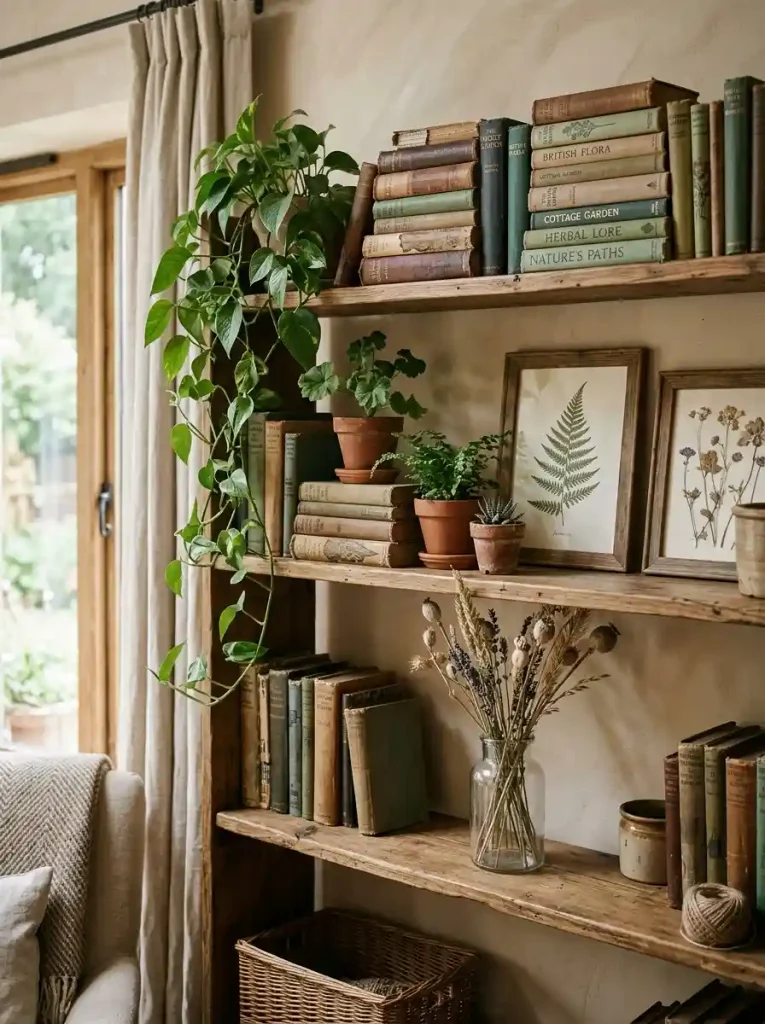
Books and plants bring natural texture to shelves while creating a relaxed, lived-in atmosphere. Place books in short stacks and use small plants to soften the straight edges.
- Position trailing plants near shelf edges.
- Use small pots between book groups.
- Stack books horizontally for height.
- Keep plants away from direct heat.
- Choose low-maintenance plants for dim spaces.
This combination works well in living rooms, bedrooms, and home offices. If natural light is limited, use realistic faux plants instead of struggling with unsuitable live varieties.
Collected Kitchen Counter

Quick Tip:
Create one decorative counter zone instead of spreading accessories across the entire kitchen. A cutting board, utensil crock, and small bowl can make a practical arrangement.
Place the group near the cooking area but away from the stove’s heat and splashes. Keep enough clear counter space for food preparation.
Choose accessories that you use regularly. A beautiful wooden board can serve as a backdrop, while a ceramic crock holds cooking tools and a bowl keeps fresh produce accessible.
Decorative Candle Groupings
Do:
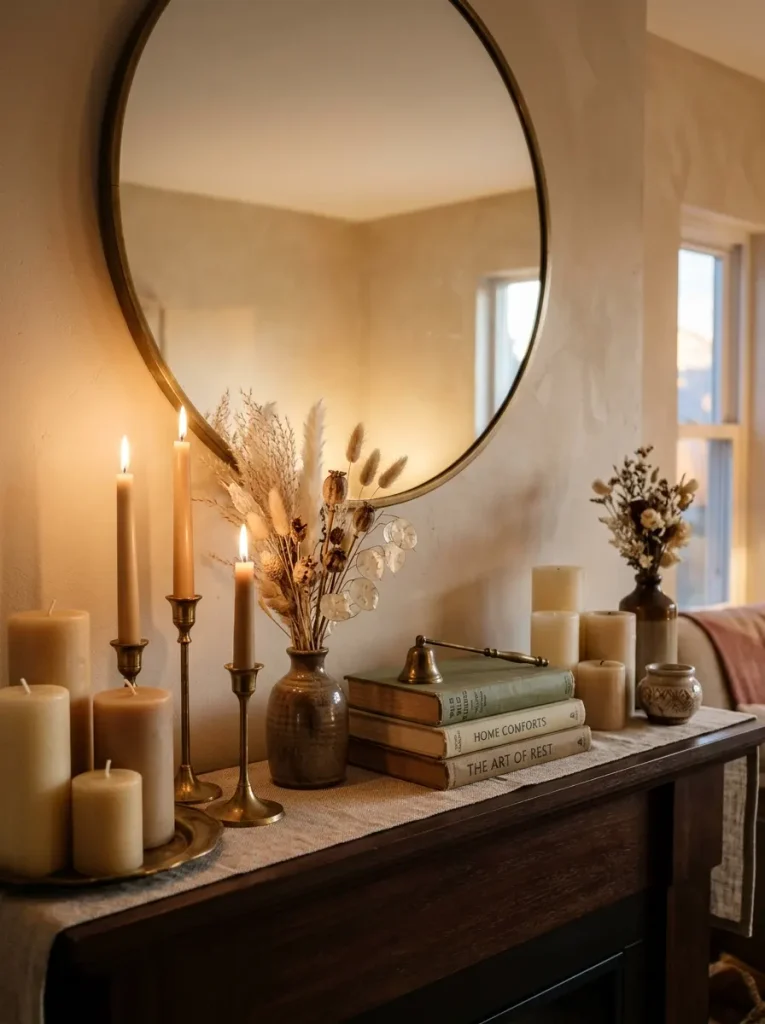
- Choose candles in two or three complementary colors.
- Place taller candles toward the back.
- Use a tray to define the arrangement.
- Keep decorative objects away from open flames.
Don’t:
- Place candles near curtains or other flammable materials.
- Leave burning candles unattended.
- Crowd the arrangement with fragile accessories.
Candles add warmth and create a natural focal point when grouped with other decorative objects. Instead of scattering them across a mantel, arrange three candles of different heights beside a small vase or book stack.
A collection of flameless candles works well for households with children or pets. Grouping candles with meaningful accessories creates a softer display without filling the entire surface.
Curated Window Sill Decor

Before: Empty windowsills can feel overlooked, while too many objects may block natural light.
After: A few carefully selected pieces create an attractive display without covering the entire window. Combine a small plant, glass bottle, and decorative object with different heights.
Leave at least half the sill open where possible, especially in smaller rooms. Choose lightweight accessories that won’t fall when the window is opened.
For a practical arrangement, place plants near the brightest area and move books or delicate objects away from direct sunlight that may cause fading.
Layered Bedside Decor

- Start with a bedside lamp for practical lighting.
- Add two stacked books beside the lamp.
- Place a small dish on top of the books.
- Include one personal object or framed photograph.
- Leave room for a phone or glass of water.
Bedside tables can hold several decorative objects without becoming crowded when each item has a purpose. Books create height, while a dish keeps jewelry or small accessories from spreading across the surface.
Choose a lamp with a stable base and avoid placing too many items near the edge. This arrangement works especially well on small bedside tables.
Woven Texture Collections

Cost: Low to medium | Difficulty: Easy | Best For: Living rooms and bedrooms | Result: Warm layered textures
Woven accessories add visual interest without relying on bright colors. Combine baskets, rattan furniture, woven trays, and textured wall decor to create a relaxed atmosphere.
Use different weaving patterns but keep the color palette consistent. Natural beige, honey brown, and soft cream work well together.
A large basket can hold blankets, while smaller baskets store magazines or accessories. Avoid placing too many similar baskets in one area because repeating the same shape can make the display feel flat.
Collected Bathroom Accessories
Do:
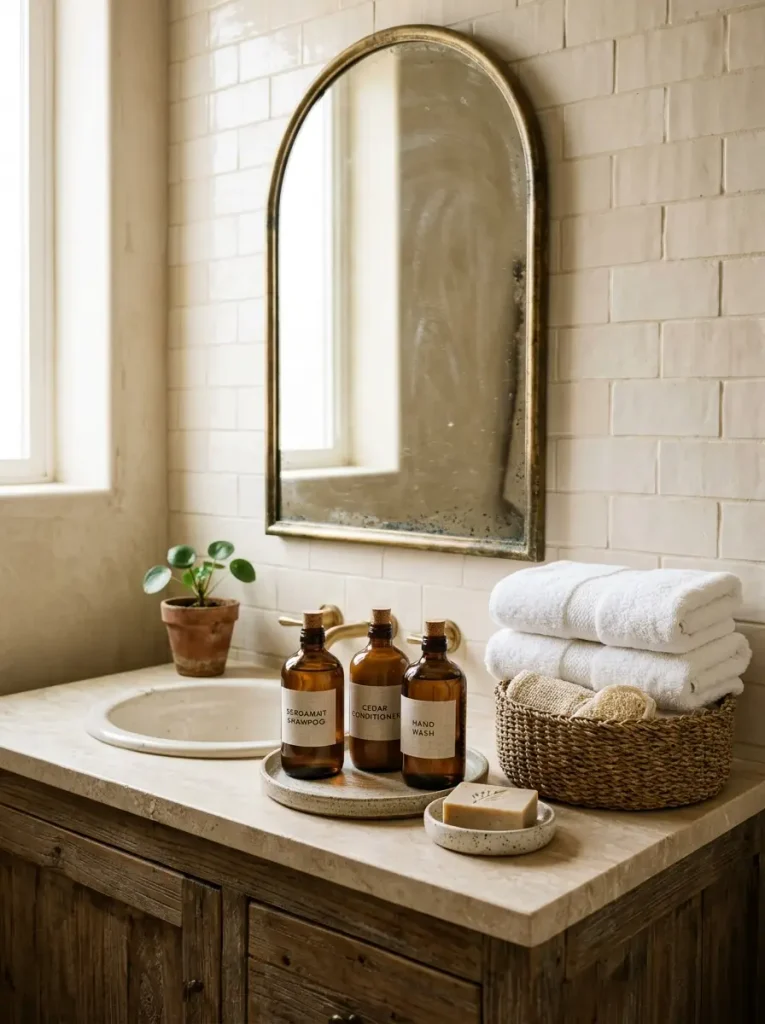
- Group toiletries inside a decorative tray.
- Use glass or ceramic containers.
- Keep frequently used products accessible.
- Store backup supplies in a basket.
Don’t:
- Display every skincare product.
- Place decorative items near splashing water.
- Store cleaning chemicals beside personal care products.
- Overfill narrow vanity surfaces.
A curated bathroom display can make everyday essentials look more intentional. Use matching containers for frequently used products and keep extra toiletries hidden inside drawers or baskets.
Choose materials that tolerate humidity. Clean glass bottles and ceramic accessories regularly, and avoid delicate paper decor near showers or sinks.
Vintage Plate Wall

| Point | Small Wall | Large Wall |
| Collection | Five to seven plates | Nine to twelve plates |
| Arrangement | Compact cluster | Wider organic grouping |
| Spacing | Two inches | Two to three inches |
A plate collection creates a decorative wall without requiring framed artwork. Mix different plate sizes and patterns while keeping a shared color palette.
Use secure plate hangers designed for wall display. Test the arrangement on the floor before hanging, and avoid placing fragile plates above frequently used seating areas.
Vintage plates are especially attractive when their patterns share similar colors, even if their shapes and designs are different.
Decorative Storage Under Tables
Do:
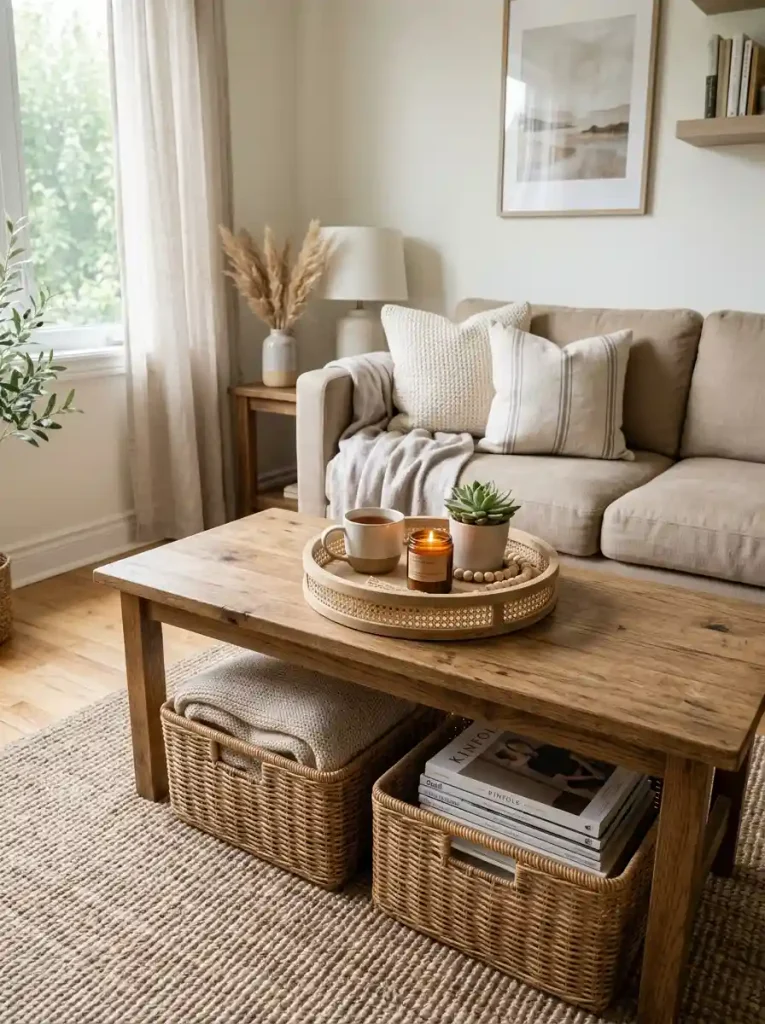
- Measure the available height before buying baskets.
- Choose baskets that slide easily underneath.
- Keep heavier items in lower storage.
- Use labels inside baskets if needed.
Decorative storage can still contribute to a curated decor style. Place matching woven baskets beneath a coffee table, console, or open bench to store blankets, magazines, or everyday accessories.
This arrangement is particularly useful in apartments where storage furniture is limited. The baskets add texture while reducing visible mess, making the surrounding decor feel more intentional.
Eclectic Console Table

Quick Tip:
Create a console arrangement using one tall object, two medium objects, and a few smaller accessories. This simple height variation prevents everything from appearing flat.
Place a lamp or vase toward one side, then balance it with books and smaller decorative pieces on the other. A framed artwork leaning against the wall can create depth without requiring additional holes.
Console tables work best when their surfaces remain partly open. Leave space for everyday items if the table serves as a practical entryway or living room landing spot.
Personal Memory Display
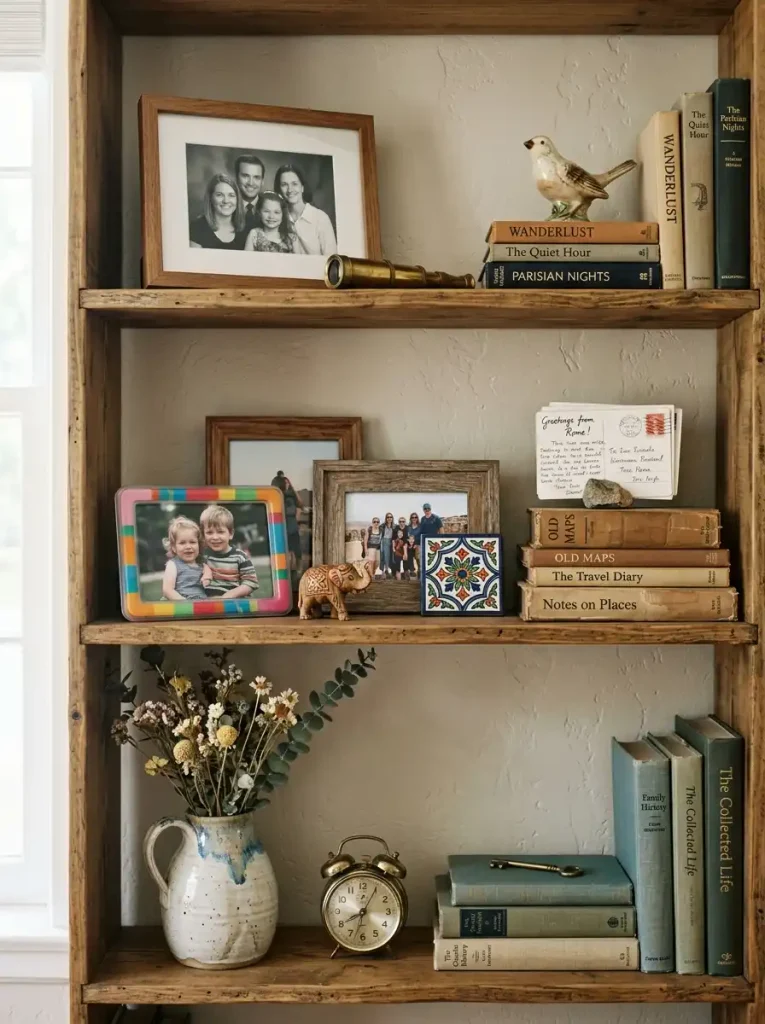
- Select a few items from one memory or theme.
- Choose frames or containers that complement each other.
- Arrange the largest pieces at the back.
- Add smaller souvenirs in front.
- Leave space between groups.
Personal collections make a home feel connected to its owners. Display photographs, travel souvenirs, postcards, and meaningful objects together instead of placing them randomly throughout the room.
A memory shelf can change over time as new photographs or travel objects are added. Keep especially delicate souvenirs in protective displays rather than placing them where they may fall.
Curated Bedroom Dresser

Cost: Low to medium | Time: 20–30 minutes | Difficulty: Easy | Best For: Bedrooms
A dresser top can become a decorative display while still supporting everyday routines. Group perfume bottles, jewelry boxes, and small accessories on a tray to keep the arrangement contained.
Add a framed picture or small mirror toward the back for height. A tiny vase can introduce a natural element without taking up much space.
Avoid placing every cosmetic product on the dresser. Keep daily essentials within the tray and store backups inside drawers to maintain a balanced display.
Layered Seasonal Decor

Before: Seasonal decorations can quickly take over shelves and tables when every available item is displayed.
After: A small seasonal collection adds character while allowing your regular decor to remain visible. Mix a few seasonal pieces with existing books, baskets, and ceramics.
Choose three or four seasonal accessories rather than decorating every surface. Store decorations in labeled containers so you can rotate them easily.
This approach works for autumn, winter, spring, and summer. Reusing the same decorative foundations reduces spending while making seasonal changes simpler.
Collected Corner Styling

Do:
- Choose one corner as your decorating zone.
- Use a small stool or side table.
- Add a floor basket for practical storage.
- Layer artwork against the wall.
- Include one natural element.
Don’t:
- Fill every inch of floor space.
- Use objects that block walking paths.
- Place unstable stacks near children.
- Mix too many unrelated colors.
A thoughtfully styled corner can make an empty area feel purposeful. Combine objects at different heights, such as a floor basket, small table, and artwork leaning against the wall.
Keep the arrangement compact enough that it doesn’t interfere with movement. In small rooms, a single well-curated corner often looks better than several crowded decorative zones.
Frequently Asked Questions
How do you make curated clutter look intentional?
Make curated clutter look intentional by grouping objects with shared colors, materials, or themes. Use trays to define small collections, vary object heights, and leave empty space between groups. Avoid displaying every decorative item you own because visual breathing room helps collections stand out.
What are the best items to use for curated clutter decor?
Books, ceramic vases, vintage baskets, framed artwork, candles, decorative bowls, plants, and meaningful souvenirs work well. Choose items that add texture or personality while serving a purpose. Combining practical accessories with decorative pieces helps prevent displays from becoming unnecessary collections.
How can I decorate with curated clutter in a small space?
Use vertical surfaces, narrow shelves, windowsills, and small trays to create compact displays. Limit each surface to a few coordinated objects and choose multifunctional accessories. Decorative baskets and boxes can hide everyday belongings while adding texture without requiring additional furniture.
How do you keep decorative collections from looking messy?
Keep collections within defined areas and regularly remove pieces that no longer fit the arrangement. Use consistent colors, varied heights, and balanced spacing. Rotate seasonal or sentimental objects instead of displaying everything at once, and dust open shelves and decorative surfaces regularly.
Conclusion
A home feels more personal when its decor reflects the things you love. Start with one shelf, coffee table, or empty corner, and arrange a few meaningful objects together. In my experience, the most inviting displays combine practical items with pieces that have character.
These curated clutter decor ideas show that you don’t need expensive accessories or perfectly matching furniture. Save this post on Pinterest so it is ready when you need it. Try one arrangement this week and share the inspiration with someone who loves decorating.
A little intention makes everyday objects feel special.