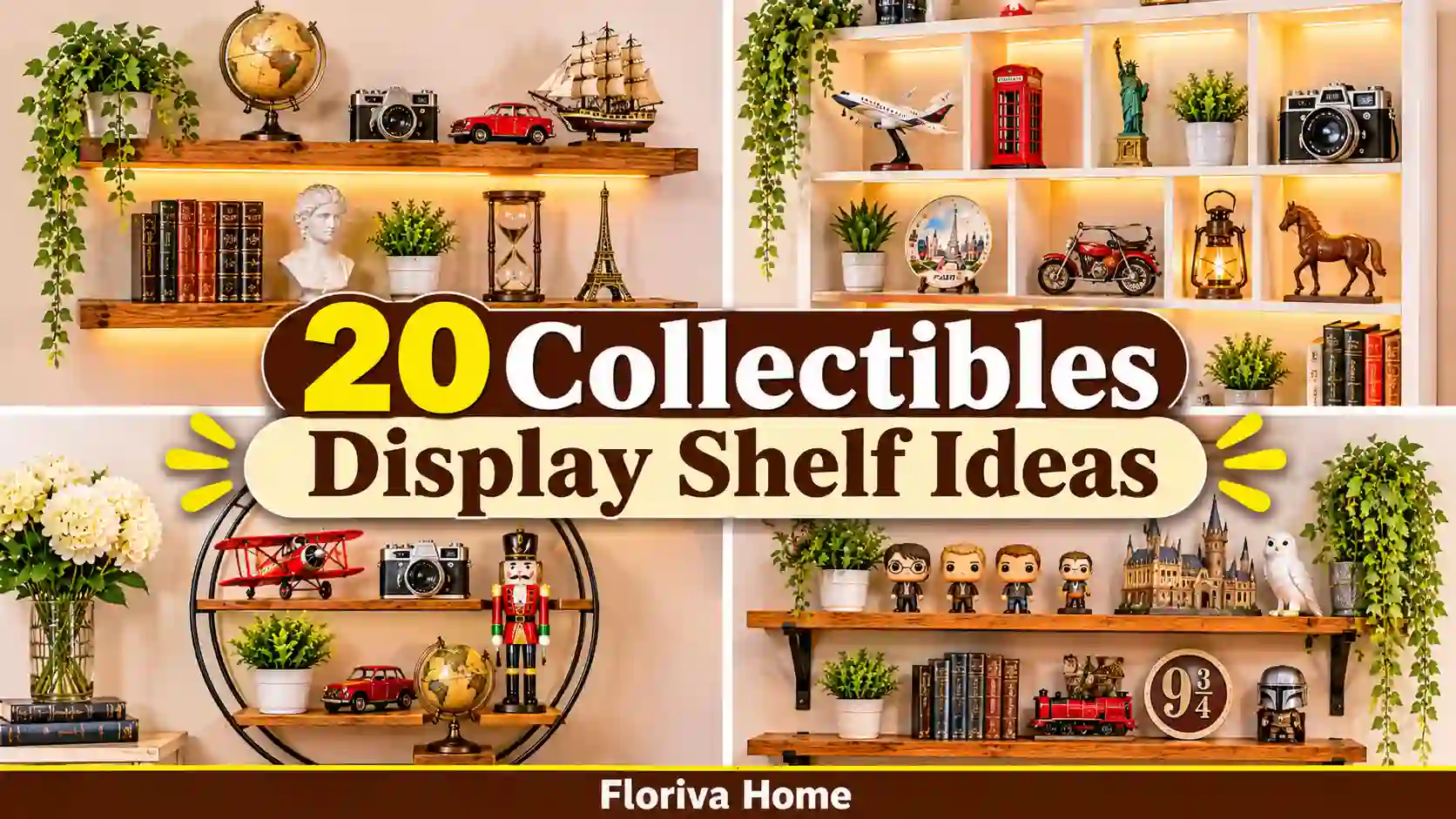
20 Collectibles Display Shelf Ideas
Collectibles deserve more than a forgotten corner or a crowded cabinet. Beautifully arranged shelves can turn favorite figures, vintage finds, books, and treasured keepsakes into eye-catching displays. The right collectibles display shelf ideas help you showcase meaningful pieces while keeping everything organized and easy to enjoy.
In this article, you will find 20 simple, practical ideas to display your collection using floating shelves, glass cabinets, wooden ledges, corner shelving, and creative wall arrangements. Whether you have a large collection or just a few special pieces, there is an arrangement worth trying.
In my experience, the best displays combine thoughtful spacing, suitable lighting, and storage that protects delicate items. By the end, you will have fresh inspiration for creating an attractive display that suits your collection, available space, and decorating style.
Floating Wooden Display Shelves
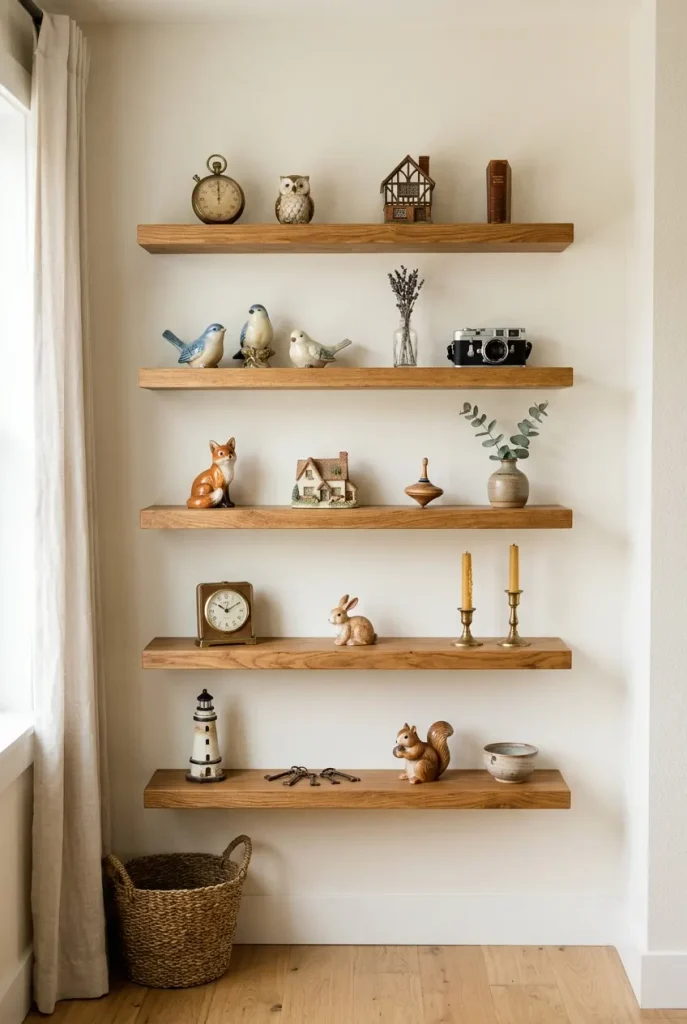
A plain wall can become a beautiful showcase when your favorite collectibles have room to stand out. Floating wooden shelves create a simple display without taking up valuable floor space.
Choose two or three shelves around 24 to 36 inches wide, depending on your collection. Leave 10 to 14 inches between levels for medium-sized objects. Arrange larger pieces at the ends and smaller collectibles toward the center.
- Best materials: Oak, walnut, or pine.
- Budget: Low to medium.
- Best location: Living rooms and bedrooms.
- Practical tip: Group similar objects together to create visual balance.
Before installing shelves, check their weight ratings and secure them into suitable wall supports. A little breathing room between pieces makes even an affordable shelf arrangement look carefully planned.
Glass Cabinet Collection

Glass cabinets offer a beautiful way to protect treasured collectibles while keeping them visible. They work especially well for delicate figurines, model cars, porcelain pieces, and vintage ornaments.
- Choose a cabinet with adjustable glass shelves.
- Keep heavier pieces on lower levels.
- Place fragile collectibles away from cabinet doors.
- Use soft LED lighting for visibility.
- Leave small gaps between individual pieces.
A cabinet around 60 to 72 inches tall can provide several display levels without occupying an entire wall. For smaller rooms, choose a narrow cabinet around 18 to 24 inches wide.
Practical tip: Group collectibles by material or theme rather than filling every shelf. Wipe the glass regularly, and secure tall cabinets to the wall to prevent tipping.
Vintage Ladder Shelf Display
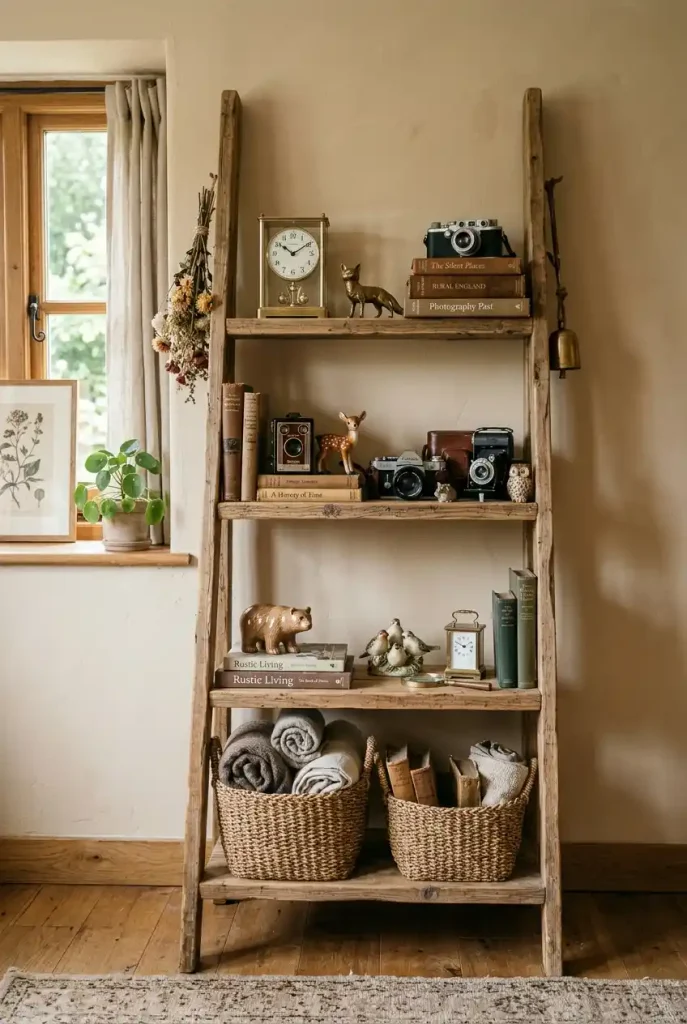
Vintage ladder shelves bring character to a room while providing several levels for displaying treasured objects. Their angled frames create an interesting arrangement that feels lighter than traditional bookcases.
This arrangement works particularly well in reading corners, bedrooms, and apartments where wall space is limited. A secondhand wooden ladder shelf can also be refinished with paint or wood stain for a budget-friendly update.
Keep heavier objects on the lower levels, and make sure the shelf is properly secured according to its installation instructions.
Wall Mounted Display Cubes
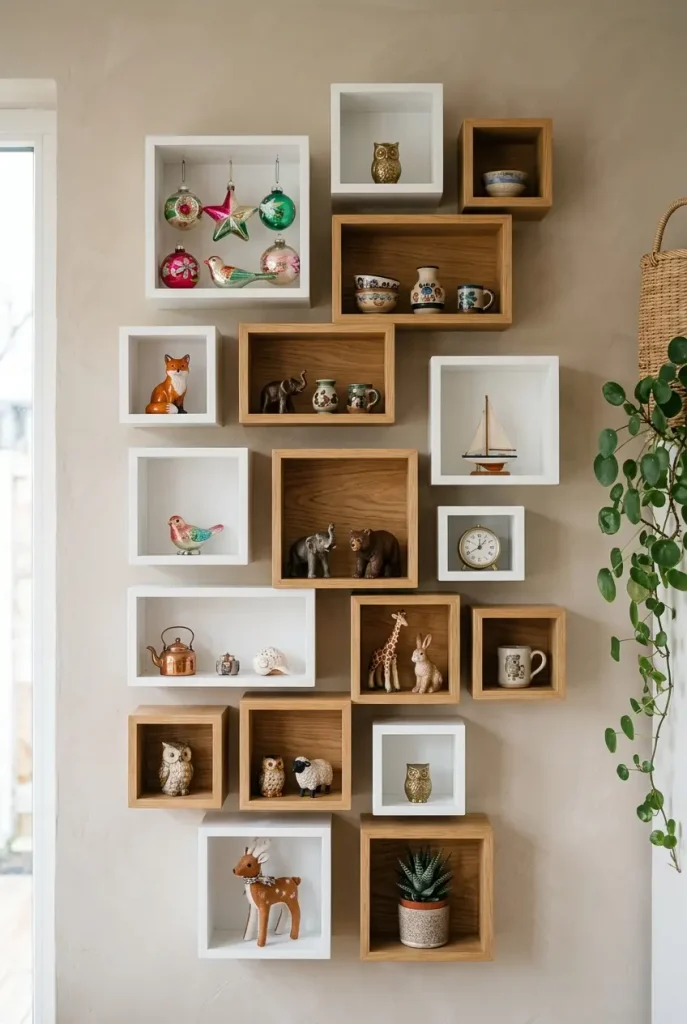
Empty wall space can become an attractive collection gallery with individual display cubes. These small compartments give every collectible its own place instead of crowding everything onto one long shelf.
Before: Small collectibles sit together on a crowded table, making individual pieces difficult to notice. The arrangement looks busy and lacks clear separation.
After: Separate wall cubes create individual display spaces. Each compartment highlights a small group while keeping the overall arrangement balanced.
Choose cubes between 8 and 12 inches wide for smaller objects. Arrange them in an asymmetrical pattern, leaving 3 to 5 inches between units. Use a medium-budget combination of ready-made cubes or simple DIY wooden boxes.
This setup works well above desks, beside reading chairs, or along narrow hallway walls. Keep heavier objects out of lightweight decorative cubes and follow the manufacturer’s mounting instructions.
Color Coordinated Collection Shelves
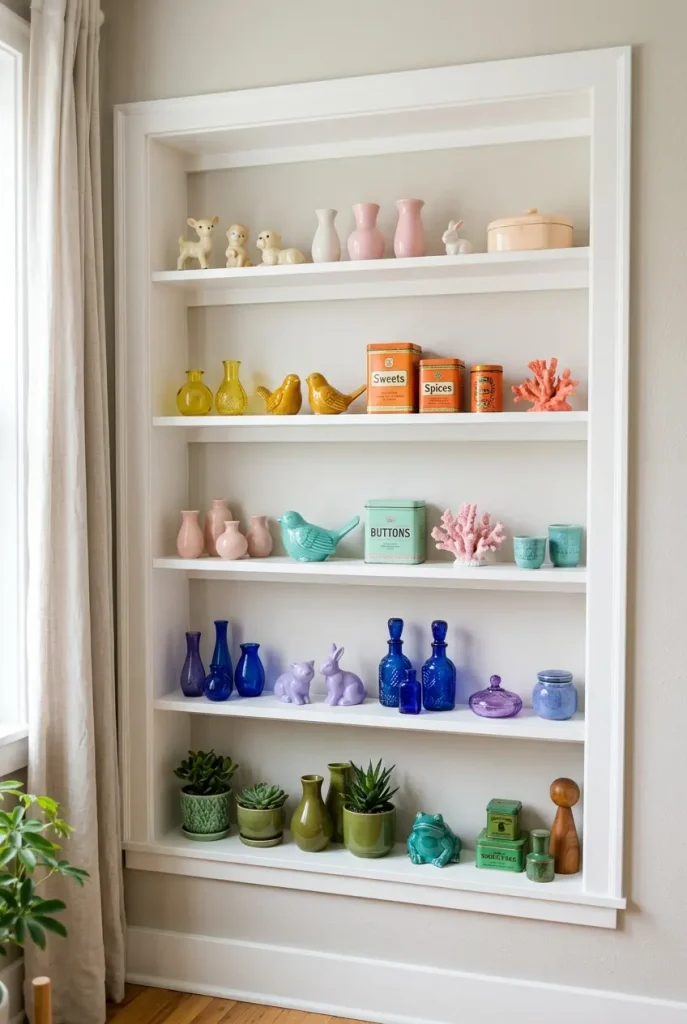
Sometimes the biggest improvement comes from changing how you arrange the pieces you already own. Color-coordinated shelves create a connected display, even when your collectibles come from different collections.
- Remove everything from your existing shelves.
- Separate collectibles into color groups.
- Place neutral pieces together as visual anchors.
- Arrange brighter objects in small clusters.
- Leave empty spaces between groups.
For example, display cream pottery on one shelf, blue miniatures on another, and colorful keepsakes on the third. This works particularly well with collections of glassware, figurines, vintage tins, and decorative plates.
Practical tip: Start with three main color groups instead of trying to create a complicated rainbow arrangement. It keeps the display coordinated without making the collection look overly staged.
Corner Collectibles Shelving
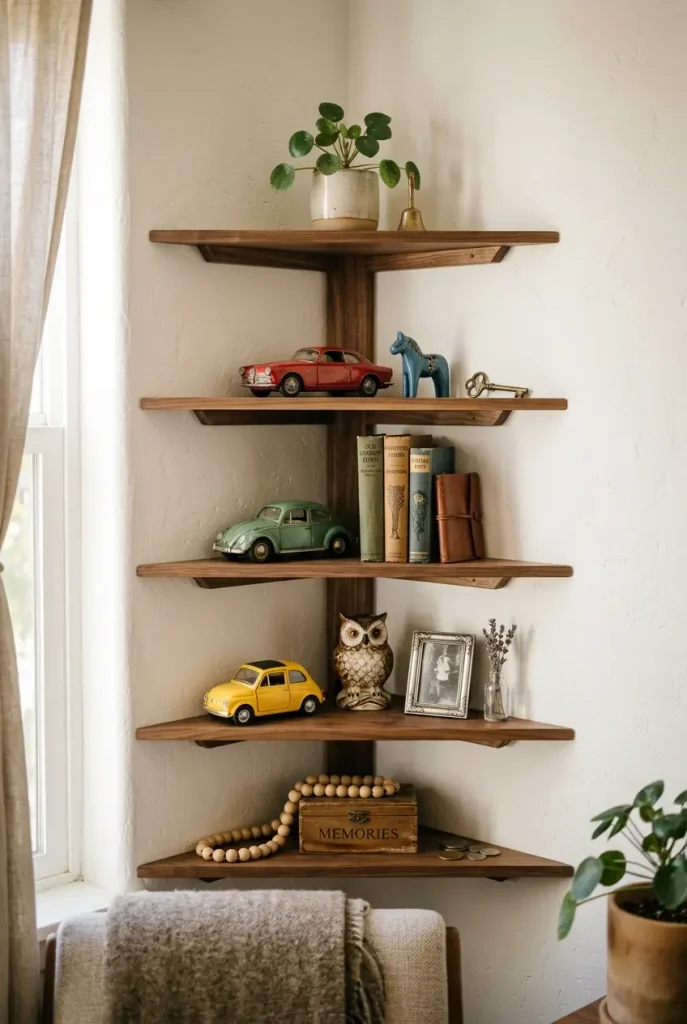
An unused corner can provide valuable display space without changing your room layout. Corner shelves make use of areas that often remain empty behind furniture or beside windows.
| Point | Small Space | Large Space |
| Shelf style | Three-tier corner unit | Five-tier corner unit |
| Shelf depth | 8–10 inches | 10–14 inches |
| Collection | Small figurines | Mixed collectibles |
| Budget | Low | Medium |
Choose a corner unit that fits your available wall space. Keep frequently viewed pieces around eye level and reserve the highest shelves for lightweight decorations.
A wooden or metal corner shelf works in bedrooms, living rooms, and home offices. Before installation, check the shelf’s load capacity and make sure it does not obstruct doorways or walking areas.
Acrylic Display Risers
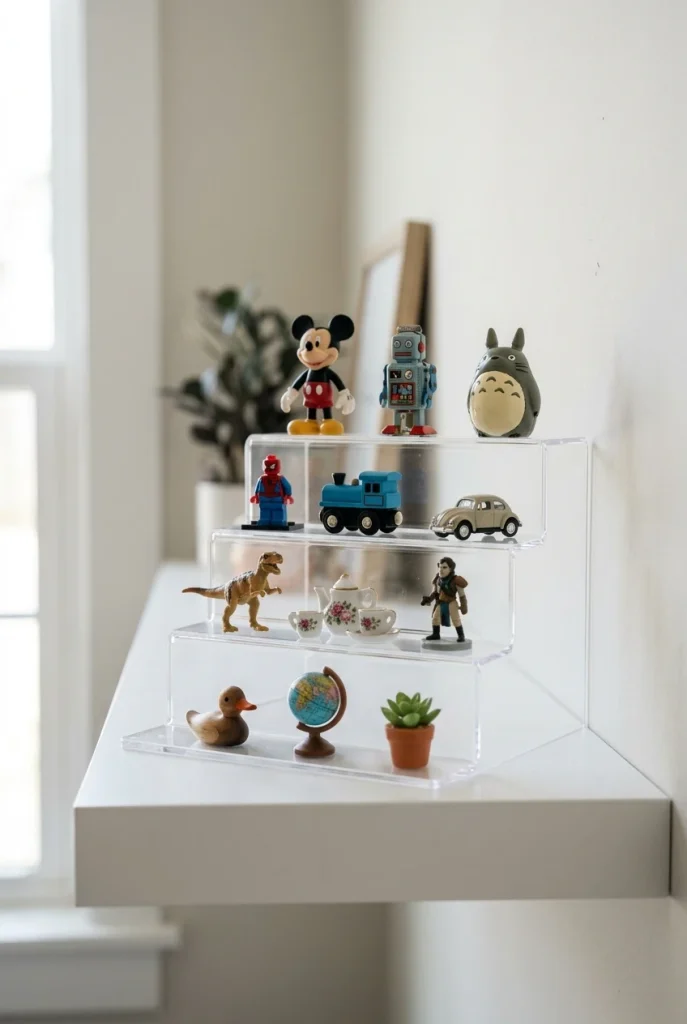
Small collectibles often disappear behind taller objects when everything sits on one level. Acrylic risers solve this problem by creating different heights without making the shelf look crowded.
Do:
- Place taller collectibles on the back row.
- Use two or three riser levels.
- Match platform sizes to your objects.
- Clean acrylic surfaces with a soft cloth.
Do:
- Place taller collectibles on the back row.
- Use two or three riser levels.
- Match platform sizes to your objects.
- Clean acrylic surfaces with a soft cloth.
Don’t: Stack unstable risers on narrow shelves.
Don’t: Place heavy objects on lightweight platforms.
Don’t: Use oversized risers that waste display space.
Clear acrylic works especially well for action figures, miniature vehicles, small toys, and decorative models. A low-budget set of stepped risers can make a noticeable difference without requiring new furniture.
Keep the arrangement simple and leave enough space to remove individual pieces without disturbing the entire collection.
Illuminated Display Bookcase
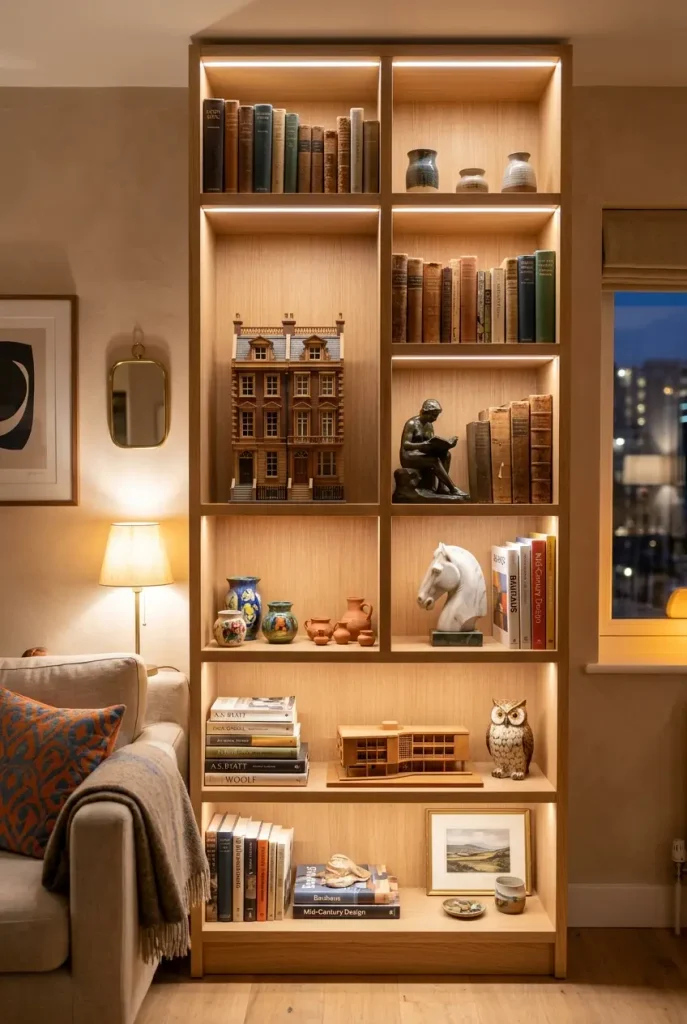
Lighting helps collectibles stand out, especially in rooms with limited natural daylight. An illuminated bookcase combines practical storage with a dedicated display area for treasured objects.
Cost: Medium to high
Time: 2–4 hours for basic styling
Difficulty: Easy to moderate
Best For: Living rooms and home offices
Choose a bookcase around 60 to 72 inches tall with adjustable shelves. Install compatible low-heat LED strips beneath shelf edges or use battery-powered display lights where appropriate. Keep cables organized and away from walking paths.
Use warm lighting to highlight wood, ceramic, and metal finishes without overwhelming the room. Avoid placing lights where they create excessive heat or shine directly into delicate collectibles.
Vintage Suitcase Display Shelf
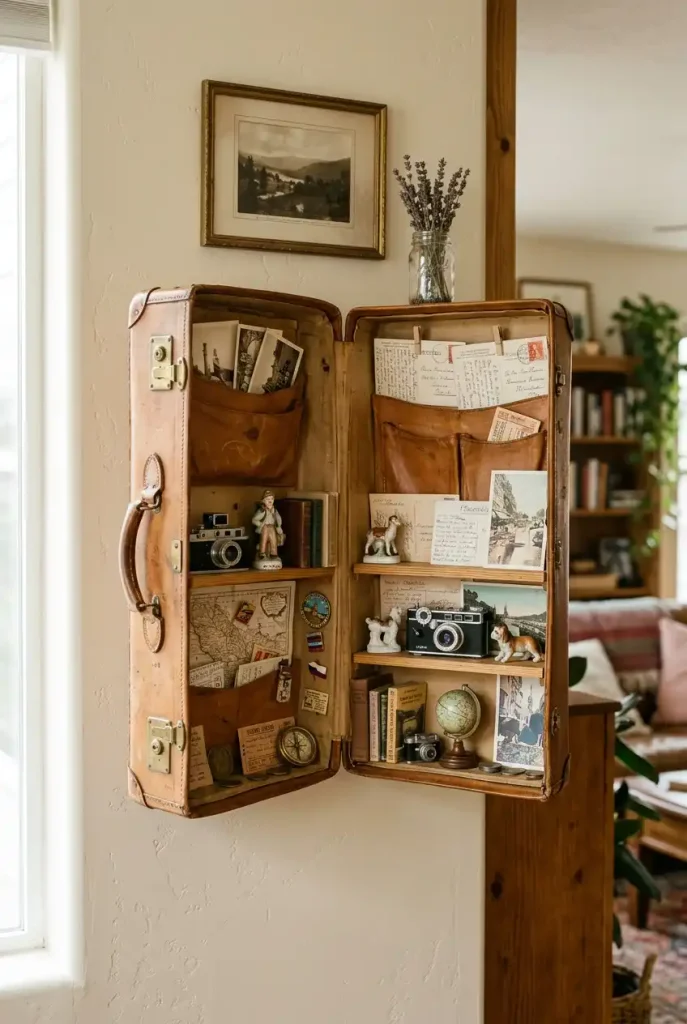
An old suitcase can become an unexpected home for small collectibles. Its compartments and vintage appearance create a display that feels personal rather than overly decorative.
A shallow suitcase mounted securely on a wall can hold lightweight souvenirs, miniature objects, and small keepsakes. Another option is placing an open suitcase on a sturdy console table with small wooden dividers inside.
Use fabric-lined sections to separate delicate pieces and prevent them from rubbing together. Keep the arrangement to one or two layers so everything remains visible.
This idea suits bedrooms, creative studios, and vintage-inspired living spaces. Start with an unused suitcase from home before purchasing one specifically for display. If wall-mounted, make sure the mounting hardware supports the full loaded weight.
Glass Floating Display Shelves
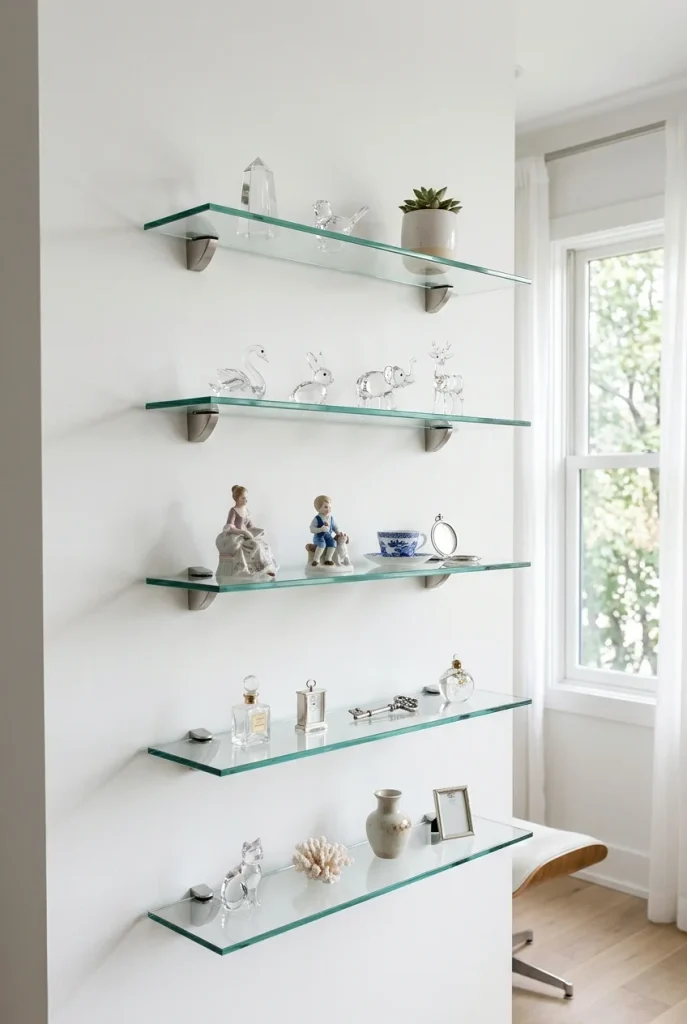
When you want collectibles to remain the main attraction, transparent shelving provides a subtle solution. Glass shelves create the appearance of objects floating against the wall.
- Select tempered glass shelves designed for display use.
- Choose 18 to 30 inches in width.
- Leave enough vertical space for each collection.
- Use secure brackets suitable for the glass.
- Arrange smaller pieces in balanced groups.
Glass shelving works particularly well for crystal ornaments, small sculptures, and decorative glassware. It also suits compact rooms because the transparent material keeps the wall from feeling visually heavy.
Practical tip: Clean the shelves before arranging your collection, then place the heaviest approved items closest to the brackets. Avoid installing glass shelves above beds or seating areas.
Miniature House Display Shelves
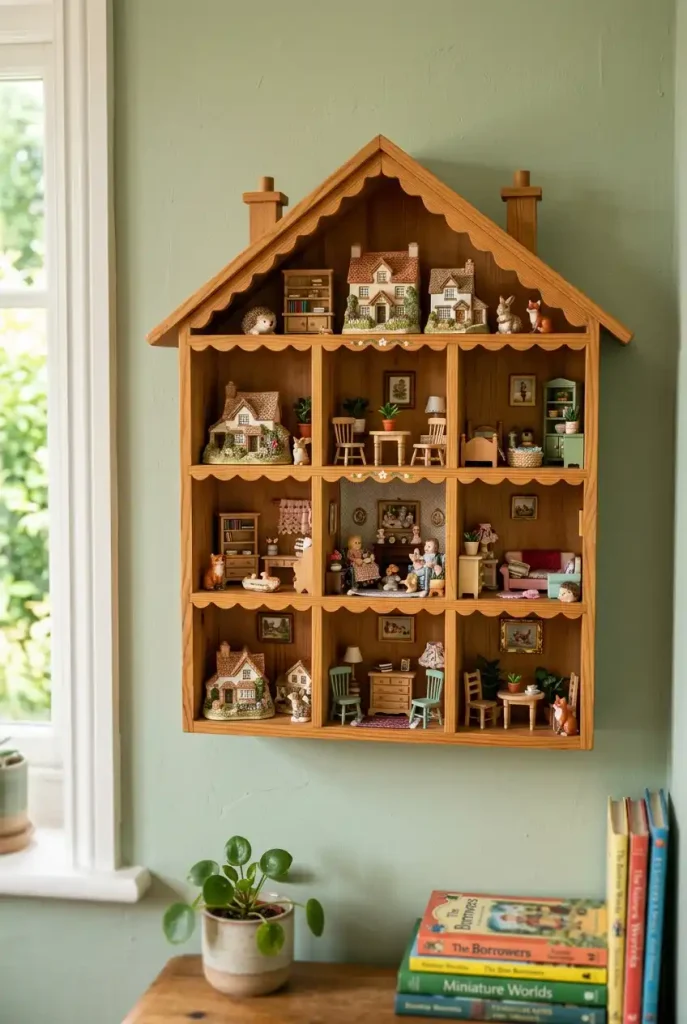
Miniature collections deserve a display that matches their small scale. House-shaped shelves create separate compartments for tiny cottages, miniature furniture, small figurines, and other detailed objects.
Choose a unit approximately 24 to 36 inches wide, with individual compartments around 5 to 8 inches tall. Place similar miniature buildings together and reserve smaller sections for accessories.
A DIY plywood version offers a low-to-medium budget option. Sand rough edges and use a suitable wall anchor if mounting the unit.
This display works beautifully in bedrooms, craft rooms, and hobby corners. Keep the smallest accessories inside shallow trays so they do not disappear during cleaning.
Rotating Display Shelf
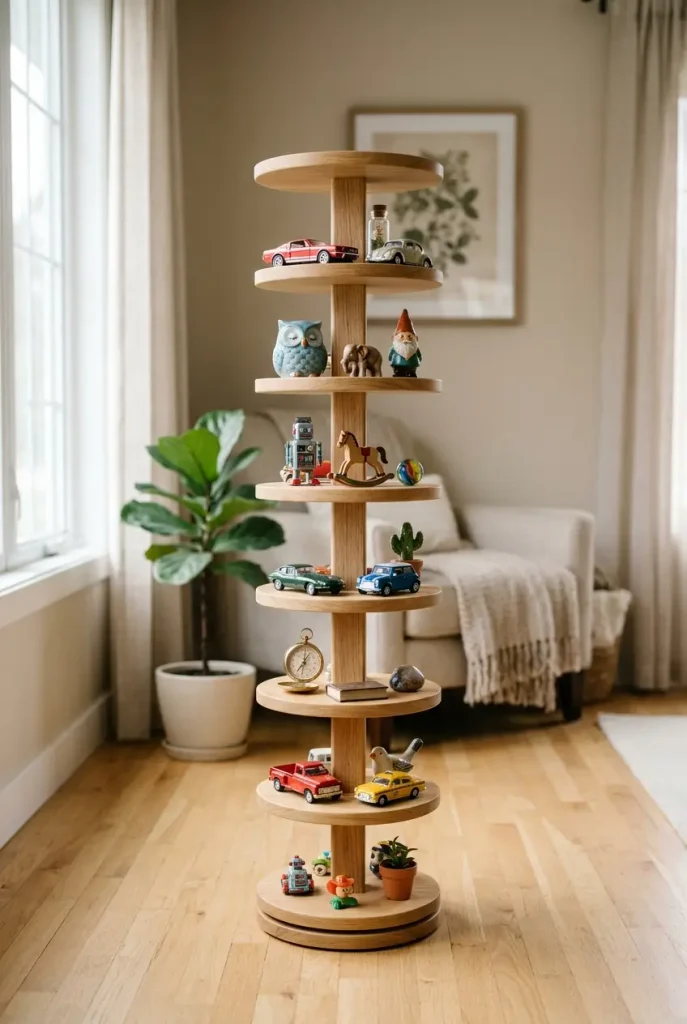
A rotating shelf makes it easier to enjoy collectibles from different angles without constantly rearranging them. It is especially useful when you have many small objects but limited wall space.
Arrange similar collectibles on each level and keep heavier pieces near the bottom. Leave enough space between objects so they do not knock against one another when the unit turns.
This setup suits craft rooms, hobby spaces, and living room corners. Check the manufacturer’s weight limit before loading the shelves, and place the unit on a level surface.
Shadow Box Collection Display
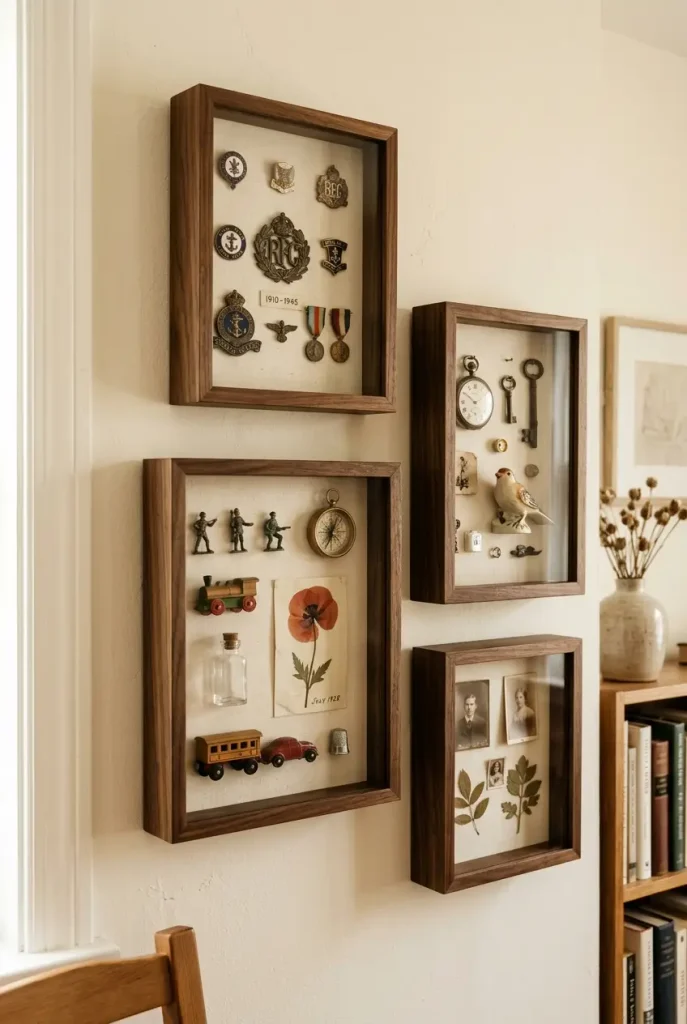
Small, meaningful collectibles sometimes need more protection than an open shelf can provide. Shadow boxes create enclosed display spaces while allowing you to enjoy every detail.
- Choose a shadow box with enough interior depth.
- Measure your collectibles before arranging them.
- Add a neutral fabric or wooden backing.
- Secure suitable lightweight objects with removable display supports.
- Group boxes by collection or theme.
Boxes around 8 to 14 inches wide work well for small collections. Larger frames can accommodate several related objects without overcrowding.
This idea suits vintage badges, miniature souvenirs, medals, and small keepsakes. Choose a medium-budget frame with a clear protective front, and avoid placing delicate items in direct sunlight.
Long Picture Ledge Collection Display
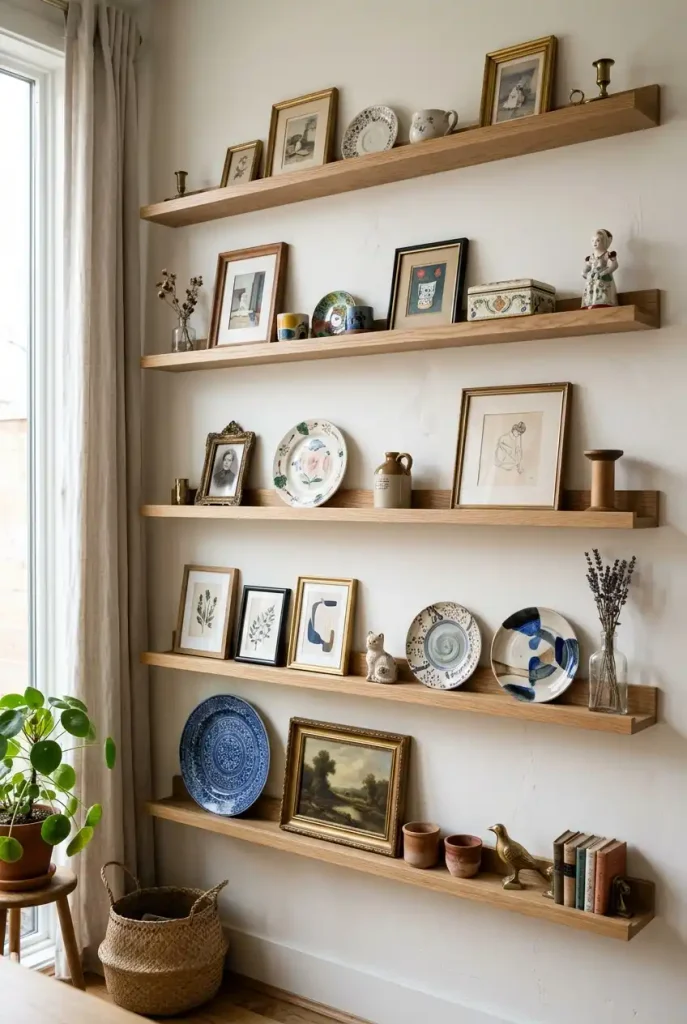
Picture ledges offer a flexible way to display collectibles without committing to a permanent arrangement. Their narrow design makes them especially useful in hallways and smaller living rooms.
| Point | Short Ledge | Long Ledge |
| Length | 18–24 inches | 36–48 inches |
| Best use | Small groups | Larger collections |
| Arrangement | Three to four pieces | Multiple object clusters |
| Budget | Low | Low to medium |
Choose ledges with a raised front edge when displaying small objects that could slide forward. Keep heavier pieces within the manufacturer’s weight limits and distribute their weight evenly.
Layer a few small framed prints behind lightweight collectibles for added depth. This arrangement works particularly well above desks, sofas, and bedroom dressers.
Industrial Metal Display Shelves
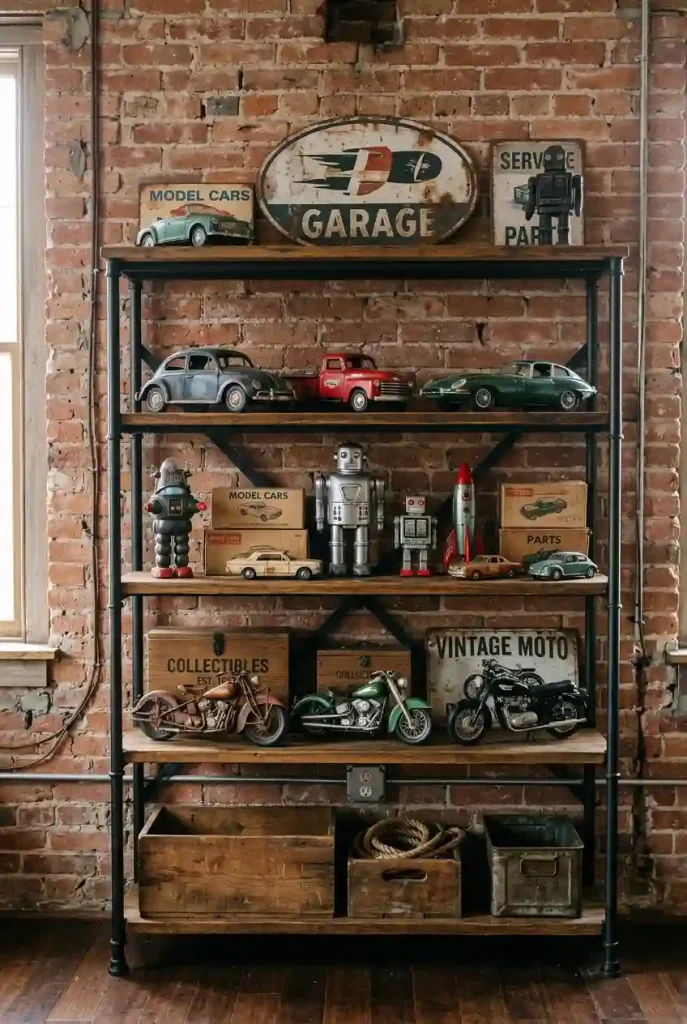
Metal shelving brings a structured look to collections that include models, vintage toys, and decorative objects. Its open design also makes it easier to adjust shelf heights as your collection grows.
Do:
- Choose sturdy metal frames with rated shelves.
- Add wooden boards for a warmer appearance.
- Group collectibles by size or theme.
- Keep heavy objects on lower shelves.
Don’t: Exceed the manufacturer’s weight limits.
Don’t: Leave unstable objects near shelf edges.
Don’t: Place the unit where it blocks access.
Don’t: Ignore wall anchoring instructions.
A unit around 48 to 72 inches tall provides several display levels for a medium-sized collection. This is a practical medium-budget option for garages, hobby rooms, and industrial-style interiors.
Use small trays to organize loose accessories and protect smaller pieces from being knocked over. A simple black frame paired with natural wood keeps the display balanced.
Open Wooden Cube Bookcase
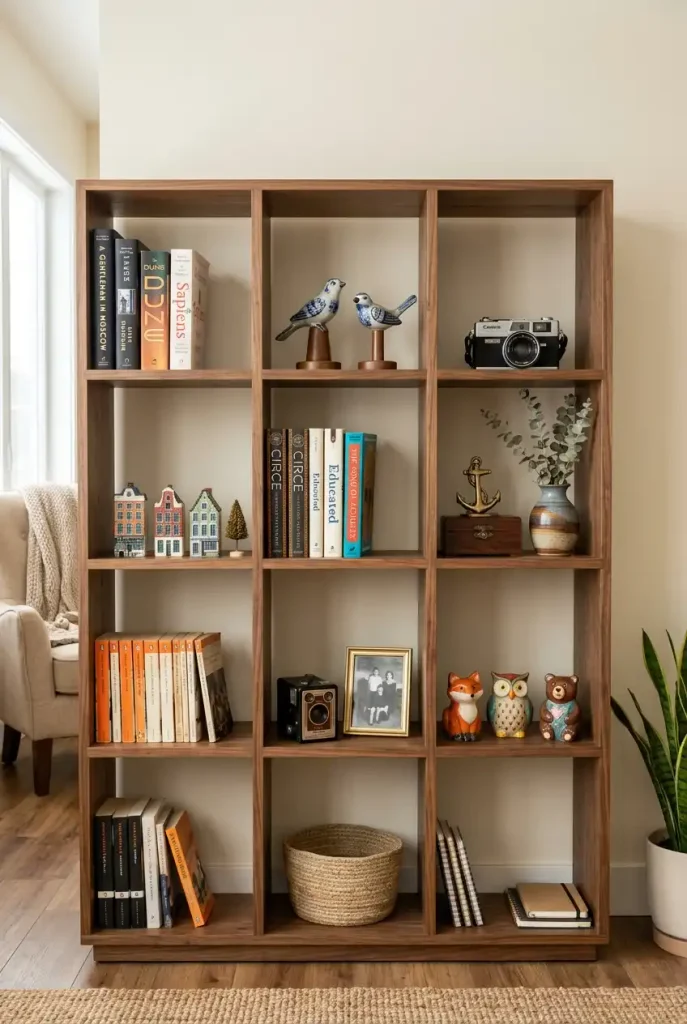
Open cube bookcases offer a straightforward way to separate different collectible groups. Each compartment acts like a small display area, making it easier to organize objects by theme, size, or material.
Cost: Medium
Time: 1–2 hours for arrangement
Difficulty: Easy
Best For: Bedrooms and living rooms
A bookcase with 9 or 12 compartments can accommodate several small collections without mixing everything together. Use small fabric bins in selected lower cubes for spare accessories and packaging.
Place your favorite pieces around eye level and reserve upper compartments for lightweight decorations. Avoid filling every cube, as some empty space helps individual collections stand out.
For a practical first step, sort your collectibles into groups before deciding which compartment each one needs. Secure tall furniture according to the manufacturer’s instructions.
Glass Dome Collectible Display
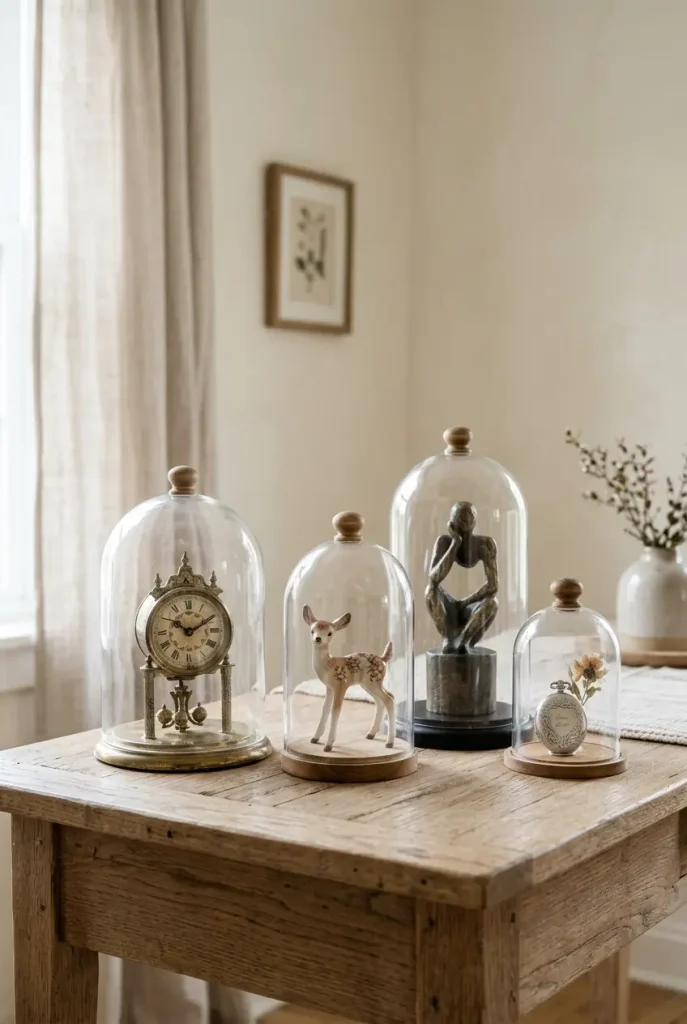
Some collectibles deserve their own little spotlight. Glass domes create individual display spaces that protect selected pieces from dust while keeping their details visible.
Best materials: Clear glass and natural wood.
Budget: Low to medium.
Best location: Console tables and sideboards.
Practical tip: Measure the tallest object before buying a dome.
This arrangement works well for delicate figurines, miniature sculptures, and special souvenirs. Keep domes away from unstable table edges and choose bases that sit flat.
Avoid placing heat-sensitive collectibles in direct sunlight behind glass. A few carefully selected pieces will create a more attractive display than covering every available surface.
Wall Grid Display Shelves
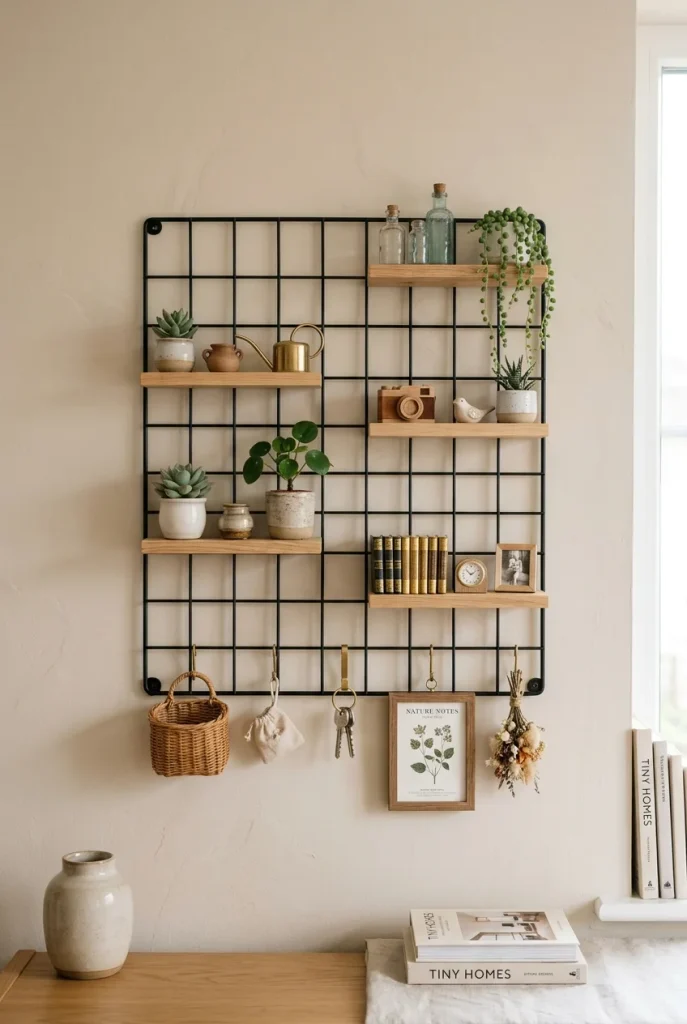
A wall grid gives you the flexibility to change your display as your collection grows. Its modular structure works particularly well in craft rooms, bedrooms, and small apartments.
- Select a wall grid with secure mounting hardware.
- Add small shelves designed for the grid system.
- Arrange lightweight collectibles at different heights.
- Use hooks for small hanging accessories.
- Leave open sections for future additions.
Choose a grid around 24 to 36 inches wide, depending on your available wall space. Wooden mini shelves add warmth, while black metal creates a more modern appearance.
Practical tip: Keep the most frequently handled objects within easy reach. Check that each accessory is compatible with the grid and that the complete setup stays within its weight limit.
Antique Drawer Display Shelf
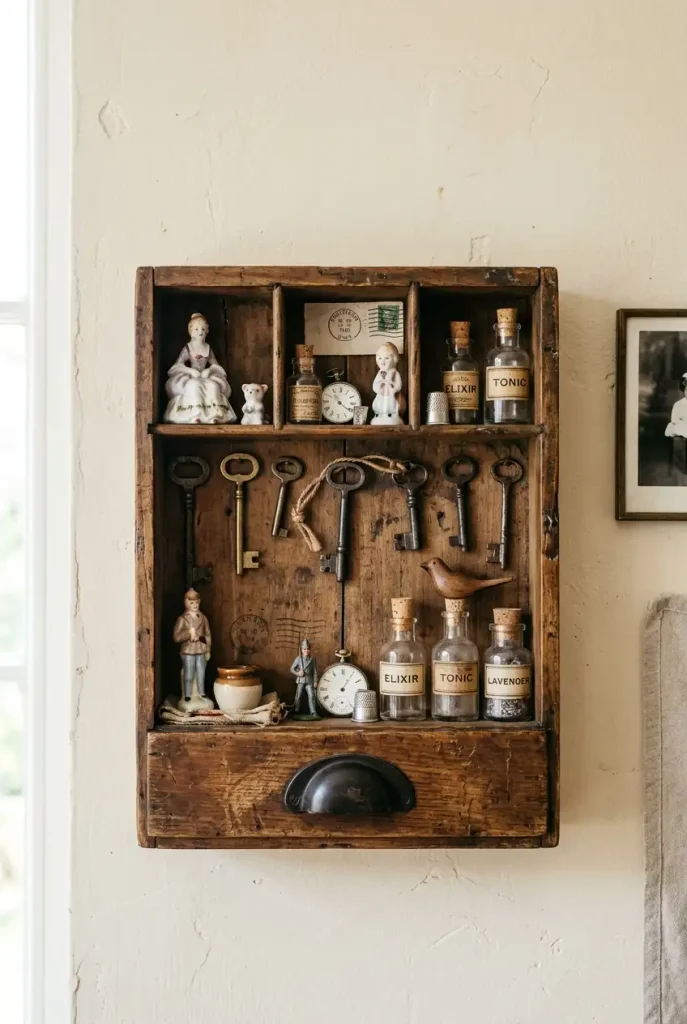
An old wooden drawer can become a character-filled display for small vintage collections. Its built-in depth makes it useful for arranging objects that need more space than a narrow picture ledge provides.
Choose a drawer approximately 18 to 24 inches wide and 3 to 6 inches deep. Add small wooden dividers or fabric-lined sections to separate collectibles.
A secondhand drawer makes this a low-budget DIY project. Sand rough edges, clean the interior, and use secure mounting hardware suitable for its loaded weight.
Keep the display limited to lightweight objects unless the drawer and wall supports are designed for heavier items.
Themed Collection Display Wall
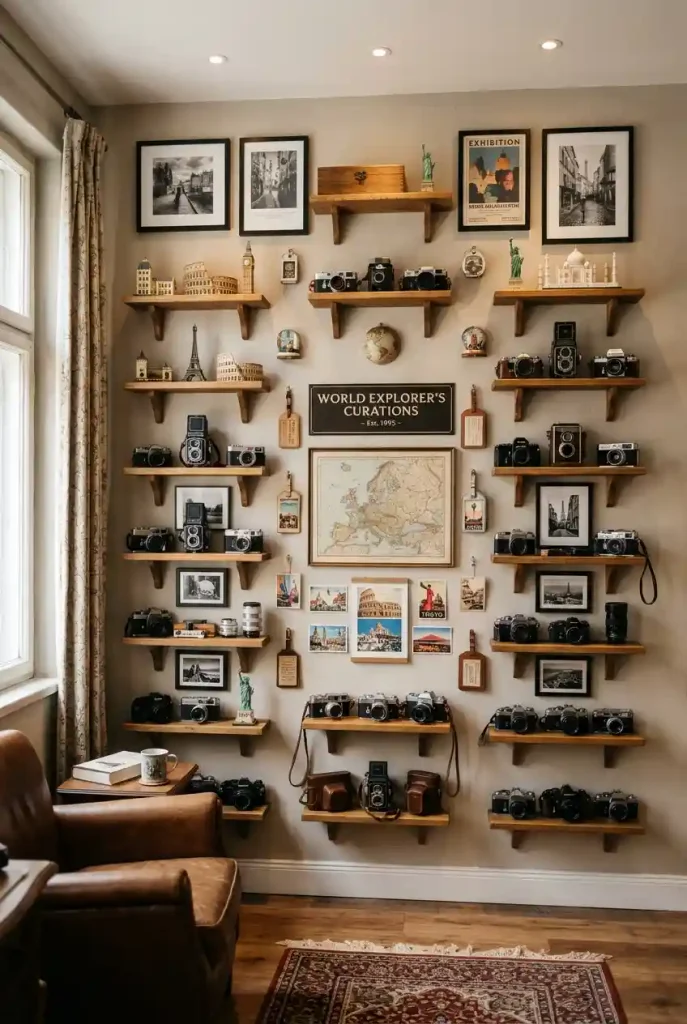
A themed display wall brings an entire collection together in one dedicated area. Instead of scattering related objects around the home, you can create a gallery that tells a clear visual story.
Theme: Vintage travel, miniature cars, or figurines.
Shelf style: Mixed wooden ledges and small cabinets.
Layout: Balanced groups with open wall space.
Budget: Medium, depending on frames and shelving.
Start by choosing one collection theme and selecting your favorite pieces. Arrange larger objects first, then fill smaller spaces with related keepsakes and framed memorabilia.
In my experience, a themed arrangement feels more intentional when colors and materials connect the different pieces. Leave room for future additions rather than filling the entire wall on the first day.
Frequently Asked Questions
How Do You Display Collectibles Without Making Shelves Look Crowded?
Display collectibles in small groups and leave visible gaps between them. Use acrylic risers for different heights, group similar objects together, and avoid filling every shelf. Keeping a few empty spaces makes individual pieces easier to appreciate.
What Are The Best Shelves For Collectibles?
Glass cabinets, floating wooden shelves, and adjustable bookcases are practical choices. Glass cabinets protect delicate pieces from dust, while floating shelves suit small rooms. Choose shelves based on collectible weight, size, fragility, and available display space.
How Can You Display Collectibles In A Small Room?
Use vertical wall shelves, corner units, picture ledges, and compact display cubes. These options use wall space instead of valuable floor areas. Keep the arrangement narrow and select a few favorite pieces rather than displaying everything together.
How Do You Keep Collectibles Dust-Free On Open Shelves?
Dust open shelves regularly with a soft microfiber cloth and use a gentle brush for detailed objects. Store delicate pieces inside glass cabinets or suitable display cases. Avoid harsh cleaning products, especially on painted, antique, or fragile collectibles.
Conclusion
A beautiful collection deserves a display that makes every piece easy to appreciate. Start with one shelf, choose your favorite collectibles, and arrange them by size, color, or theme. In my experience, simple arrangements often create the most inviting results.
These collectibles display shelf ideas can help you make better use of empty walls, unused corners, and small furniture spaces. Save this post on Pinterest so it is ready when you need it. Try one idea this week and share it with someone who loves collecting. Give your favorite pieces a place to shine!