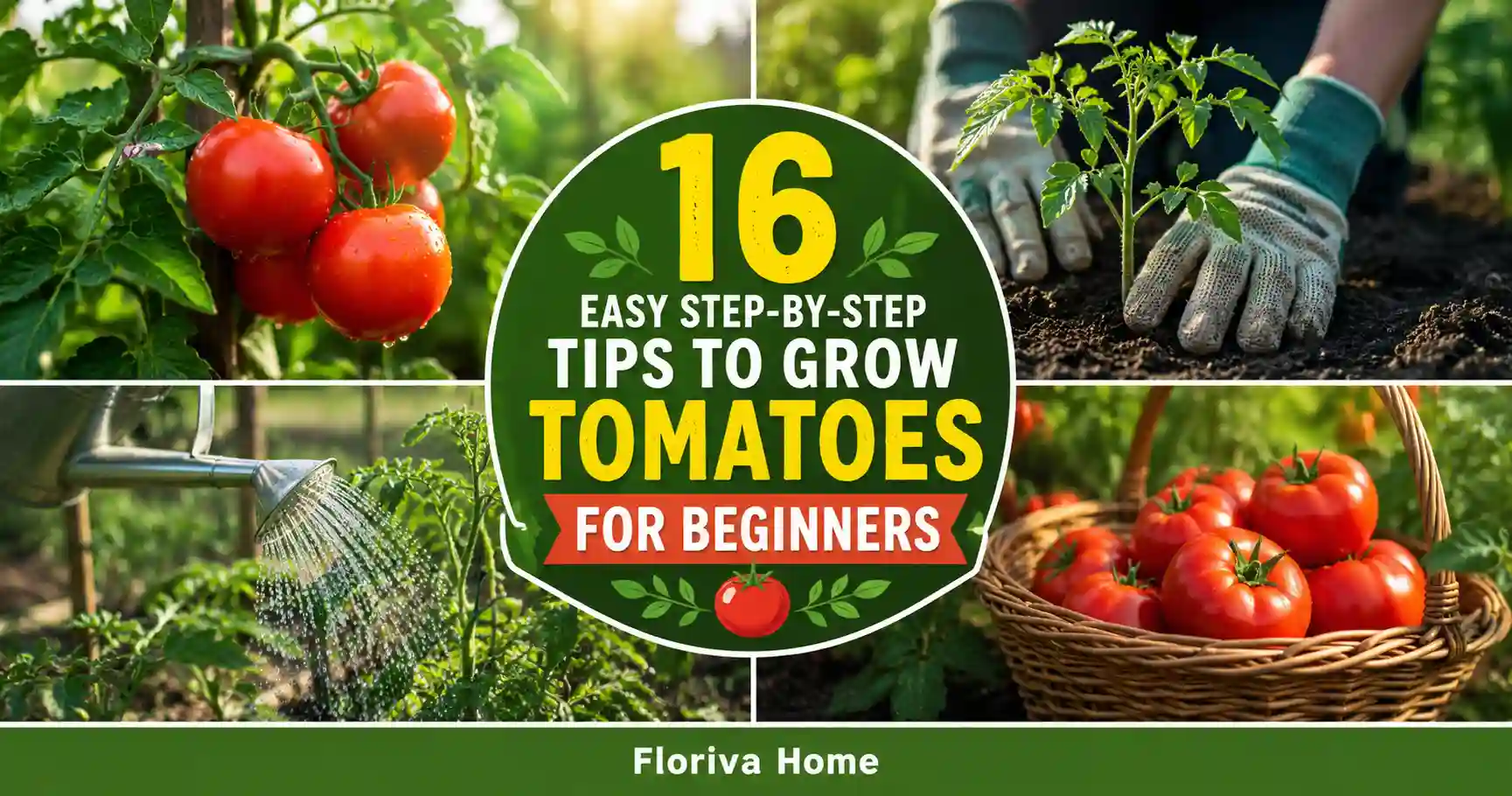
16 Easy Step-by-Step Tips to Grow Tomatoes for Beginners
Growing tomatoes can feel surprisingly easy when you start with the right steps. These sun-loving plants reward beginners with fresh, juicy fruit and plenty of satisfaction, even in a small garden or container. Whether you are planting your first seedling or trying tomatoes for the first time, a simple plan makes success much easier.
In this guide, you’ll discover 16 practical, step-by-step tips covering everything from choosing a sunny spot to harvesting ripe tomatoes. Keep reading, and you’ll be ready to grow confidently and successfully.
What is the easiest way to grow tomatoes for beginners?
Beginners should start with a suitable tomato variety, sunny location, rich well-drained soil, proper spacing, and a reliable support system. Water deeply at the base, monitor plants for pests, provide nutrients when needed, and harvest ripe tomatoes regularly for the best results.
1. Pick the Sunniest Spot
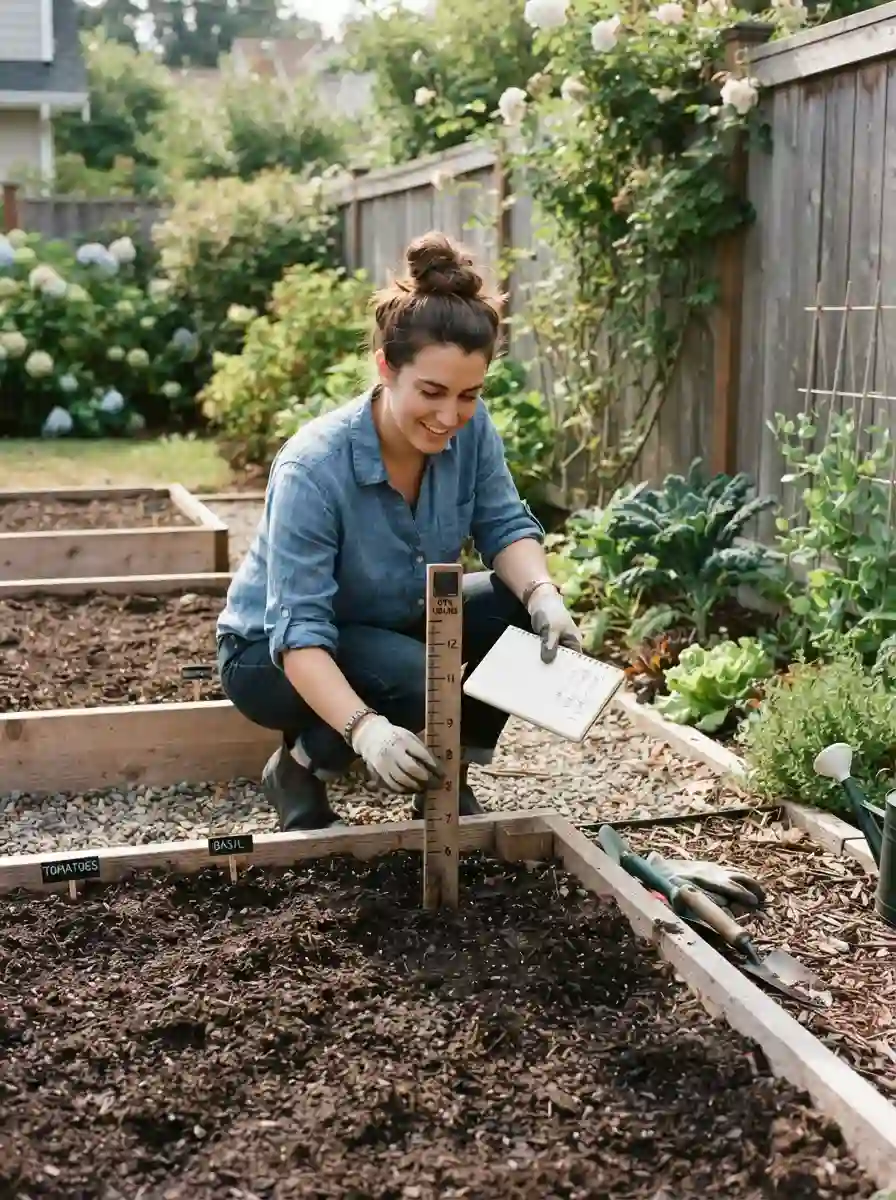
Choose a sunny location that receives at least six to eight hours of direct sunlight daily. Tomatoes need strong light for healthy growth, sturdy stems, flowering, and fruit development. Before planting, watch your garden during the day and select the brightest, least shaded area available.
Avoid spots blocked by tall fences, buildings, or dense trees for much of the day. If garden space is limited, use a large container on a sunny patio or balcony. Good sunlight from the beginning helps plants stay compact, productive, and less prone to weak growth.
2. Choose a Tomato Variety for Beginners
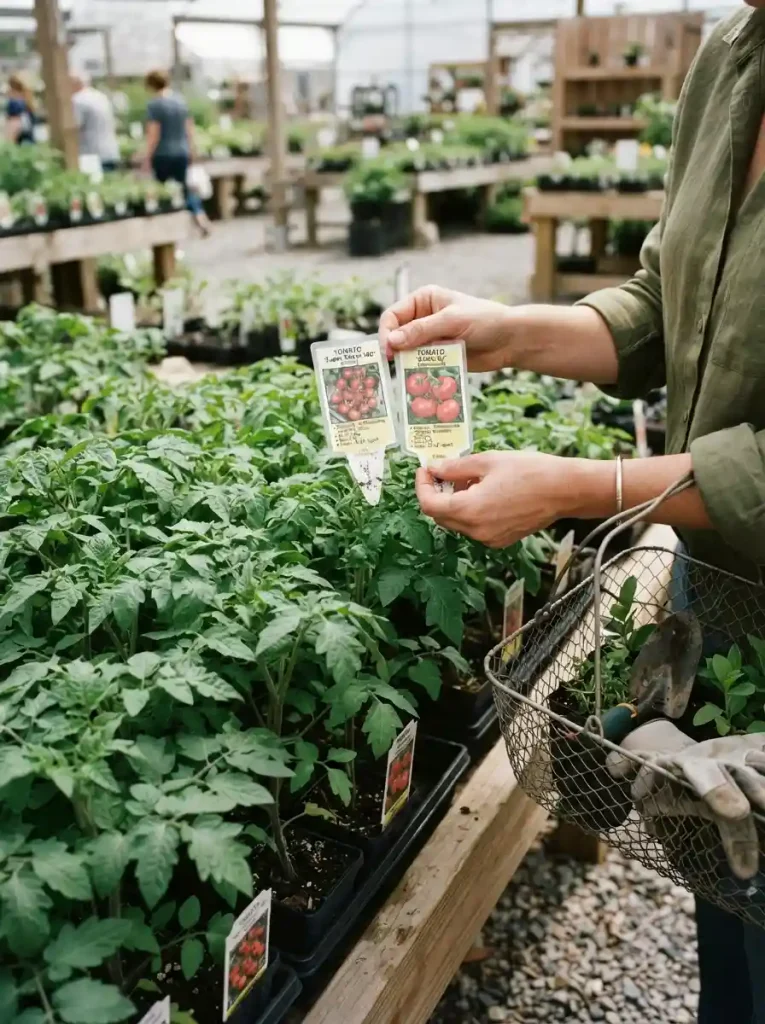
Start with a tomato variety suited to your climate, available space, and experience level. Compact determinate varieties are especially convenient for containers, while cherry tomatoes often produce generously. Read the plant label for mature size, days to harvest, disease resistance, and recommended growing conditions.
If you have limited space, look for compact or patio varieties that need less room. Gardeners with larger beds can choose sprawling indeterminate tomatoes, but these require stronger support. Selecting the right variety first prevents overcrowding and makes watering, feeding, pruning, and harvesting easier later.
3. Prepare Rich, Well-Drained Soil
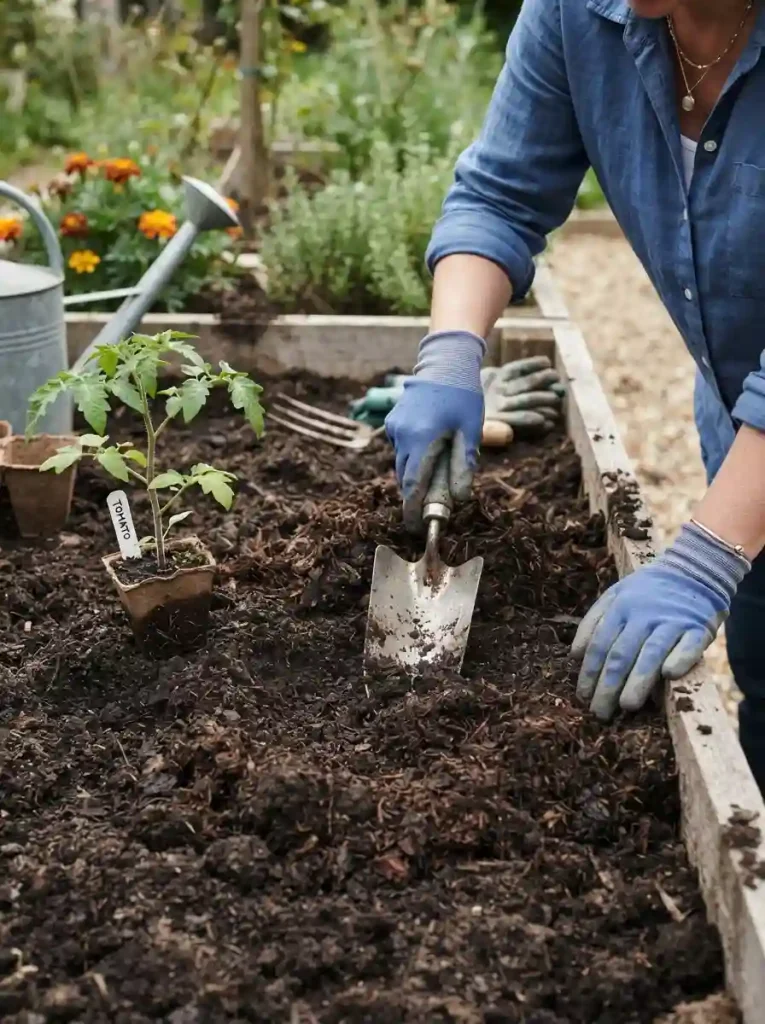
Prepare the planting area with loose, well-drained soil before putting tomatoes in the ground. Work in a generous layer of finished compost to improve structure and provide organic matter. Remove large stones, weeds, and compacted clumps so developing roots can spread easily.
Tomatoes perform best when their roots have access to moisture without sitting in water. If soil stays soggy after rain, improve drainage with compost and a raised bed rather than planting directly into the wettest area. A healthy root zone gives plants a stronger start.
4. Plant Seedlings Deeply
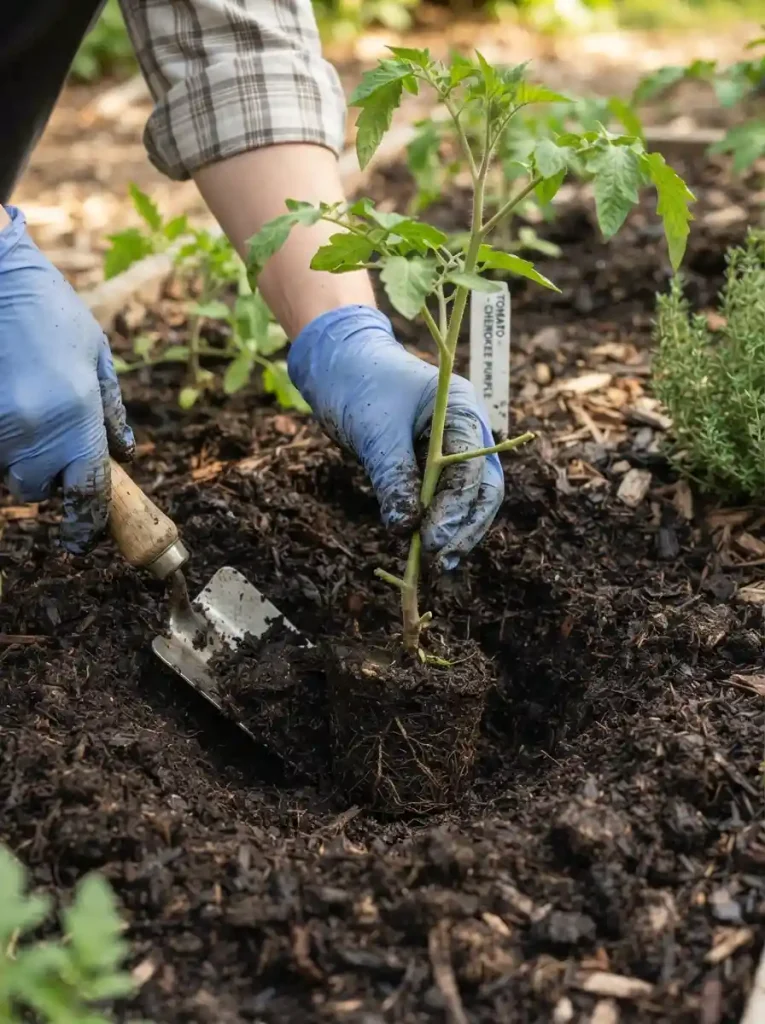
When transplanting a tomato seedling, remove the lowest leaves and plant it deeper than it originally grew in its container. Leave the upper leaves above the soil. Tomatoes can develop roots along buried stems, creating a stronger root system for supporting growth.
Dig a hole deep enough to cover part of the stem without burying the growing tip or healthy upper leaves. Set the seedling gently into the hole, fill around it with soil, and water thoroughly. Deep planting helps the plant establish firmly and access moisture.
5. Give Plants Enough Space
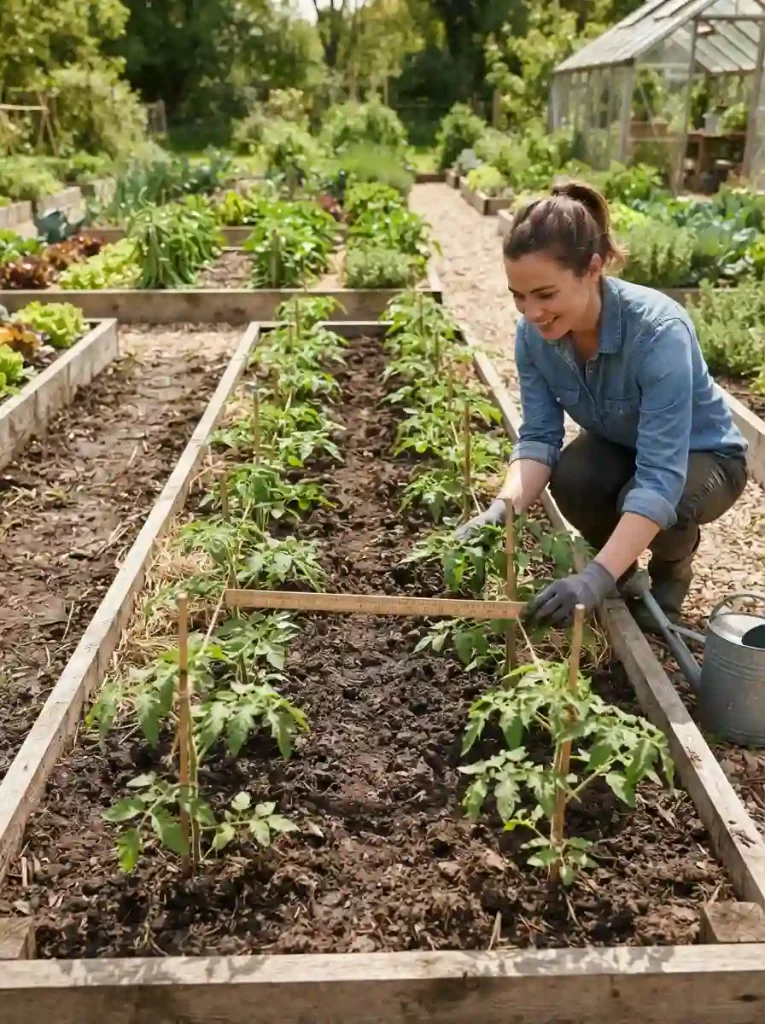
Give each tomato plant enough room to grow without competing for sunlight and airflow. Check the variety label for spacing guidance, because compact and sprawling plants have different needs. Crowded tomatoes dry slowly, shade each other, and can become harder to inspect.
As a general starting point, many tomatoes need roughly eighteen to twenty-four inches between plants, while larger indeterminate varieties may need more. Leave comfortable paths between rows when possible. Proper spacing makes watering easier and gives leaves better airflow throughout the growing season.
6. Water Deeply at the Base
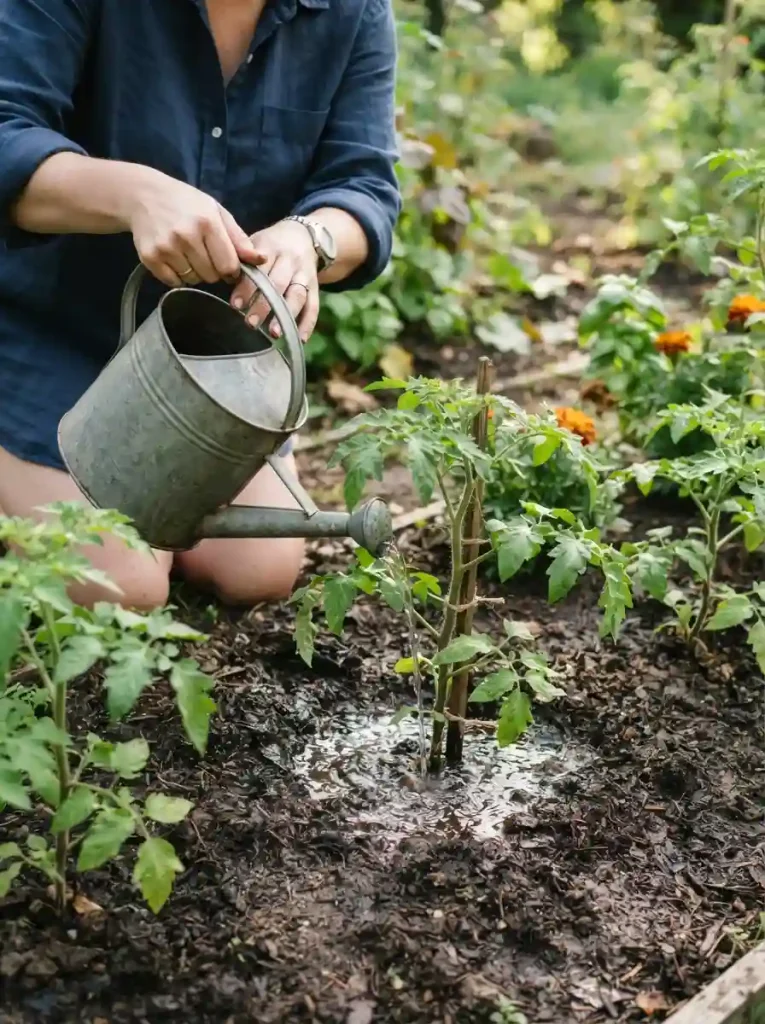
Water newly planted tomatoes deeply at the base so moisture reaches the root zone instead of lightly wetting the surface. Check the soil with your finger before watering again. The goal is consistently moist soil, not a constantly saturated planting bed, especially there.
Water slowly enough that it soaks downward rather than running away from the plant. Morning is a useful time because leaves have more opportunity to stay dry during the day. As plants grow, adjust watering according to rainfall, temperature, soil, and container size.
7. Add a Simple Support
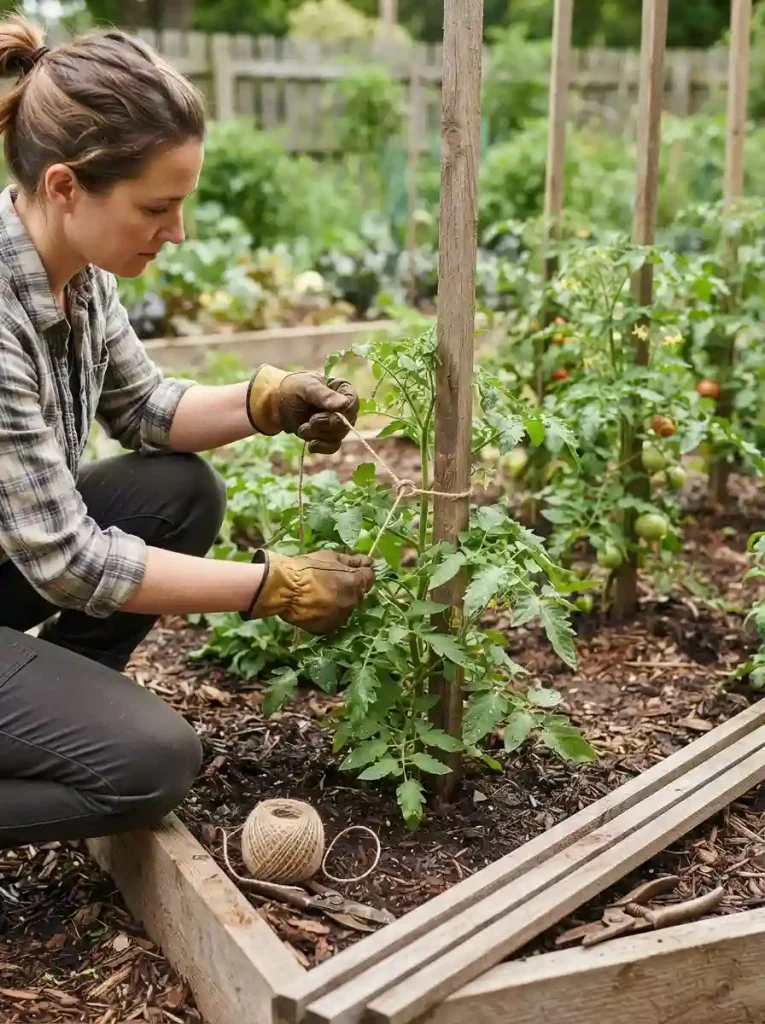
Install tomato support early, preferably when seedlings are planted, so you do not disturb established roots later. Use a sturdy stake, cage, or trellis appropriate for the variety. Indeterminate tomatoes especially benefit from dependable support because their stems continue growing throughout the season.
Tie the main stem loosely with soft garden twine as it grows, leaving enough room for natural stem expansion. Check supports regularly after heavy growth or storms. Keeping plants upright protects stems, lifts fruit away from wet soil, and makes harvesting much easier.
8. Mulch Around the Plants
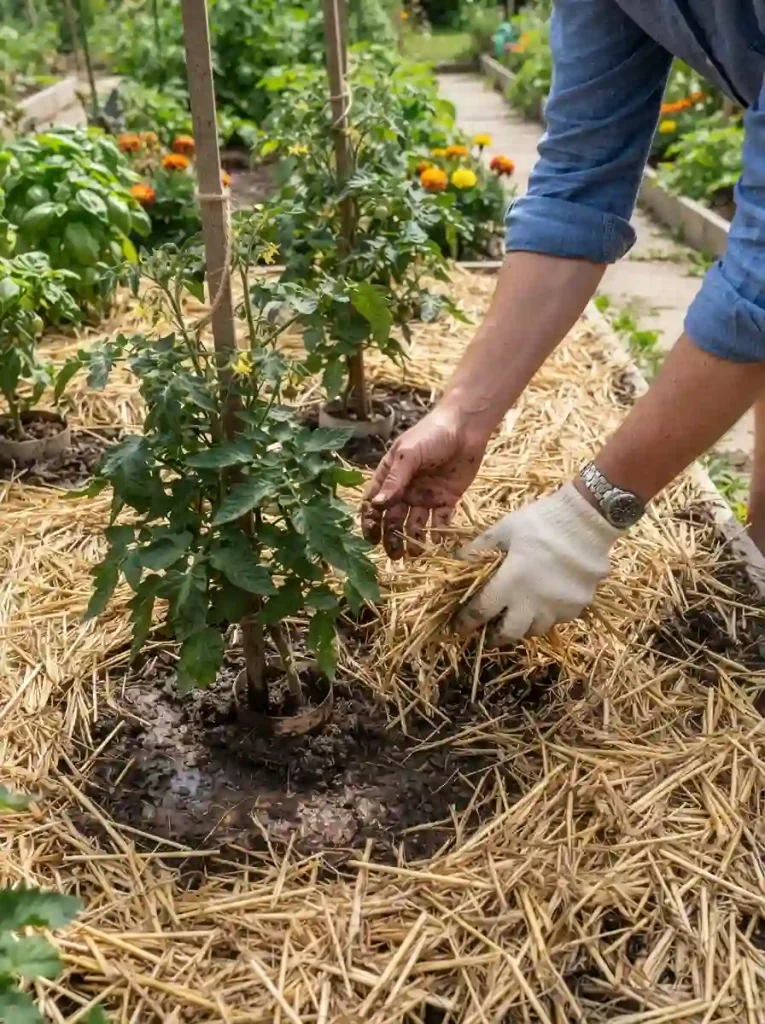
Apply a layer of organic mulch around established tomato plants to help the soil hold moisture and reduce weed competition. Straw, shredded leaves, or similar garden mulch can work well. Keep mulch slightly away from the main stem to avoid creating a constantly damp collar.
Spread mulch evenly over the soil rather than piling it against the plant. A few inches can help reduce evaporation during warm weather and keep soil temperatures steadier. Mulch also limits soil splashing onto lower leaves when watering or during rainfall, helping keep foliage cleaner.
9. Feed Tomatoes at the Right Time
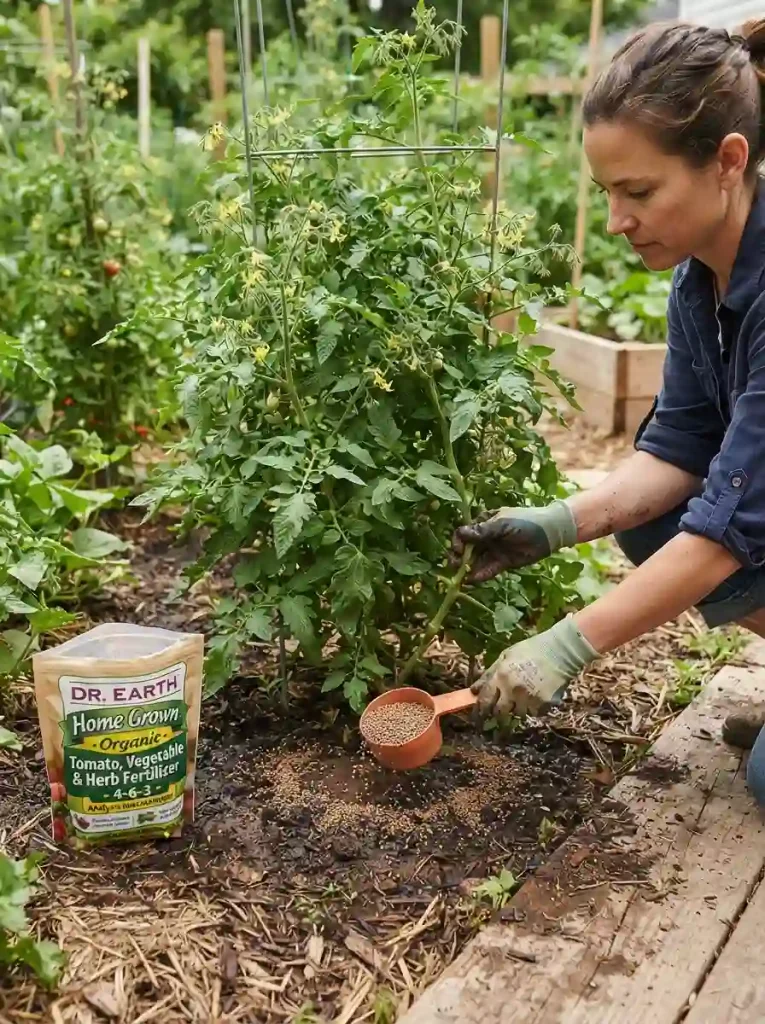
Once tomato plants are established, provide nutrients according to the fertilizer label and your soil’s needs. A vegetable fertilizer can support steady growth, flowering, and fruit production. Avoid guessing with large amounts, because excessive fertilizer can encourage leaves while reducing productive fruiting.
Apply fertilizer around the root zone rather than directly against the stem, then water according to product directions. If you prepared the bed with compost, plants may need less additional feeding. Watch plant growth and follow the recommended schedule instead of fertilizing too frequently.
10. Prune Only When Necessary
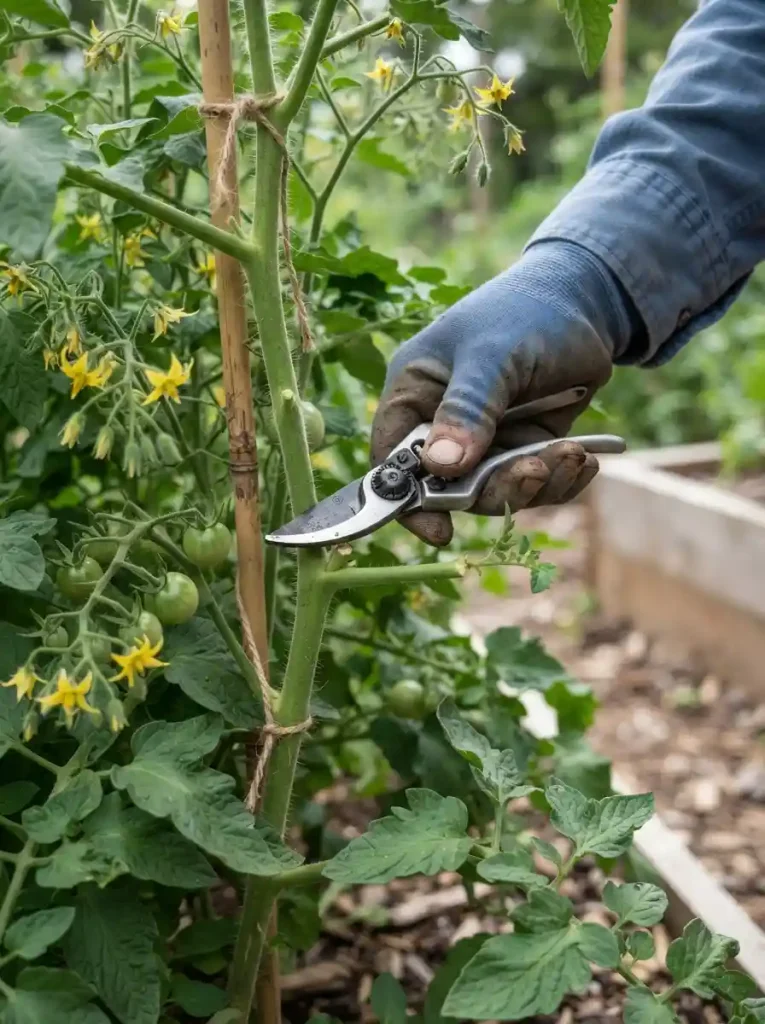
Pruning can help some indeterminate tomatoes stay manageable, but beginners do not need to remove every leaf or branch. Focus on removing damaged, diseased, or unwanted growth and a few suckers when needed. Always use clean tools to reduce the chance of spreading problems.
Avoid aggressive pruning that leaves fruit exposed to intense sunlight or removes too much healthy foliage. Determinate varieties generally need less pruning because their growth pattern is naturally compact. Before cutting, identify the main stem and branches carefully so you remove only growth you truly do not need.
11. Keep Leaves Dry When Watering
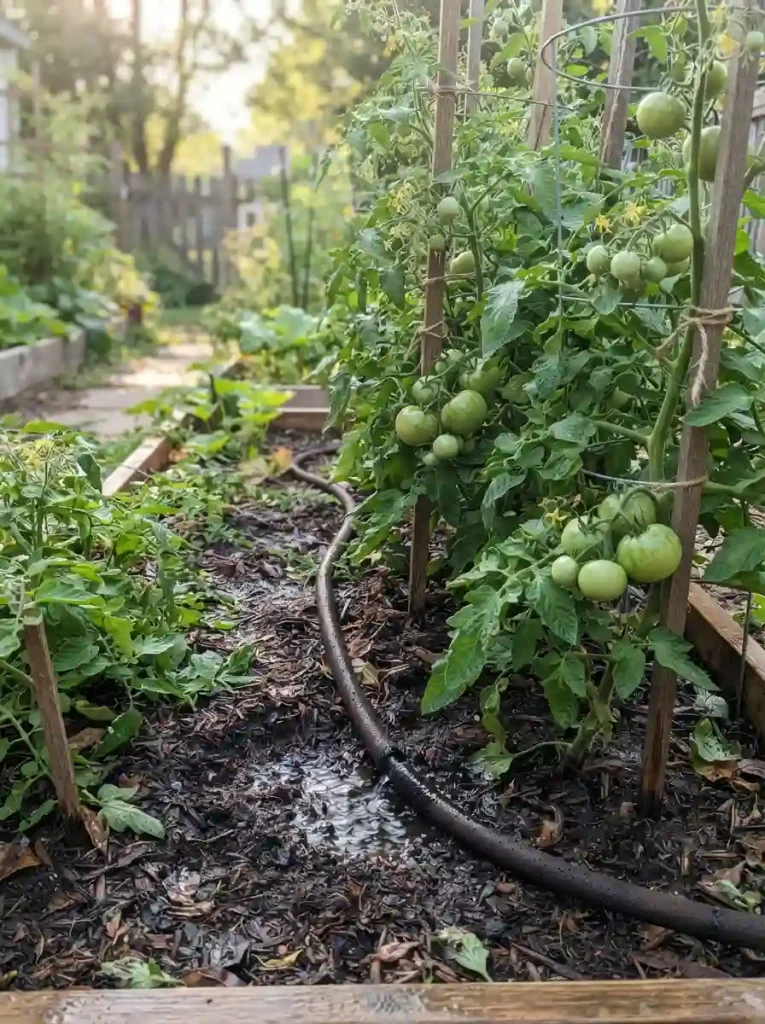
Direct water toward the soil instead of spraying tomato leaves whenever possible. Wet foliage, especially when it remains damp for long periods, can create conditions that encourage certain fungal diseases. A watering wand, soaker hose, or slow-flowing hose makes targeted watering easier.
Water around the entire root zone rather than repeatedly soaking one small spot beside the stem. Morning watering is often convenient because excess moisture has time to evaporate. If rain has already thoroughly watered the bed, check the soil before adding more water.
12. Watch Plants for Pests Early
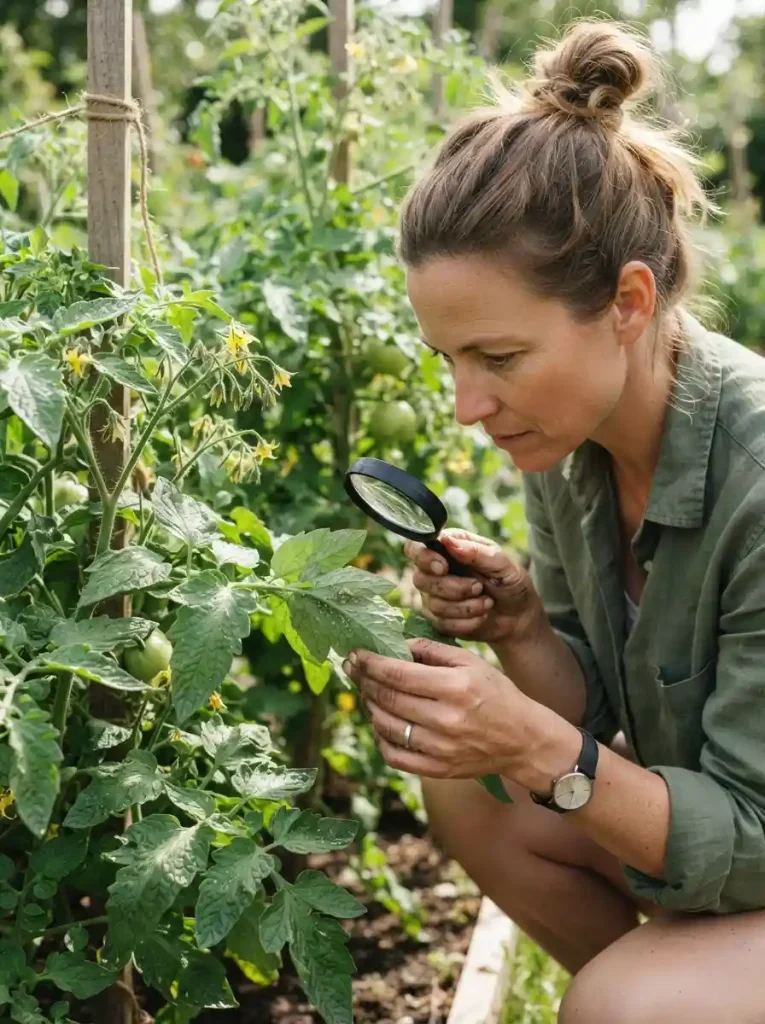
Inspect tomato plants regularly for chewing damage, curled leaves, discoloration, or small insects hiding underneath foliage. Early detection makes problems easier to manage. Walk around plants every few days and examine new growth, stems, and leaf undersides instead of waiting for obvious damage.
When you notice pests, identify the problem before choosing a treatment. Some insects can simply be removed by hand, while a strong stream of water may dislodge others. Avoid spraying products unnecessarily, especially when beneficial insects are visiting flowers or controlling unwanted pests.
13. Encourage Good Pollination
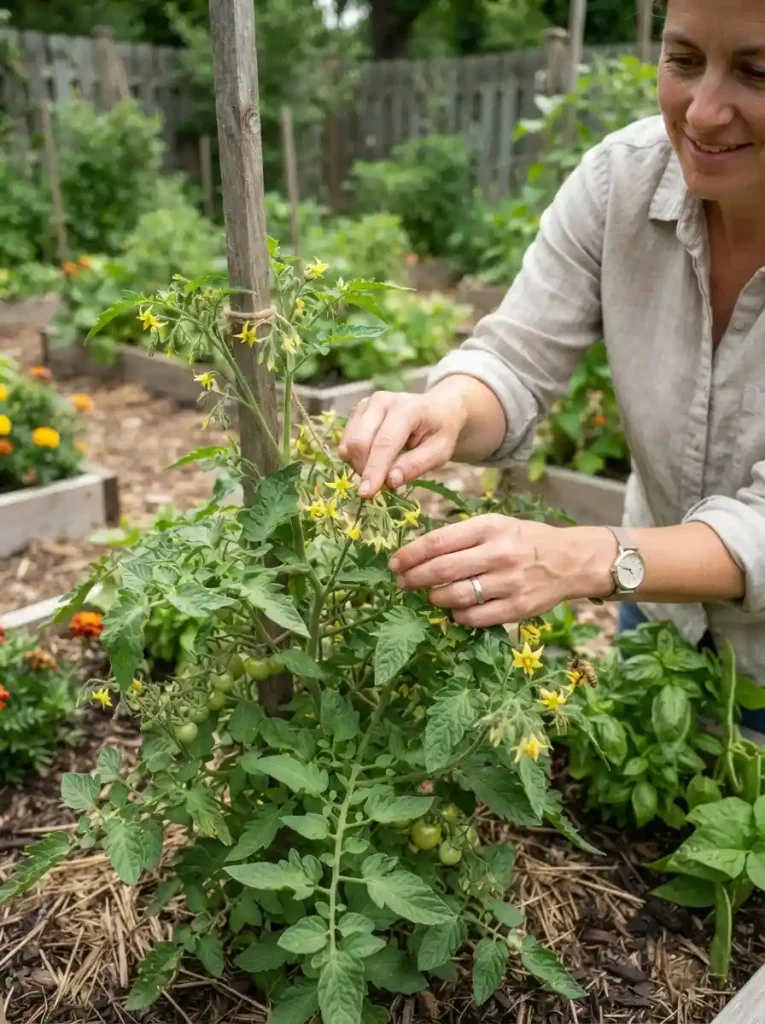
Tomato flowers usually pollinate without much help, but poor weather or limited insect activity can sometimes reduce fruit set. During calm conditions, gently shake or tap flowering stems to help pollen move within the blossoms. Do this lightly and avoid damaging delicate flower clusters.
Keep flowering plants in a location with good sunlight and avoid unnecessary disturbance while blossoms are developing. When bees and other pollinators visit your garden, allow them access to flowers whenever possible. Successful pollination leads to small green fruits forming behind healthy blossoms.
14. Check for Suckers and Tie New Growth
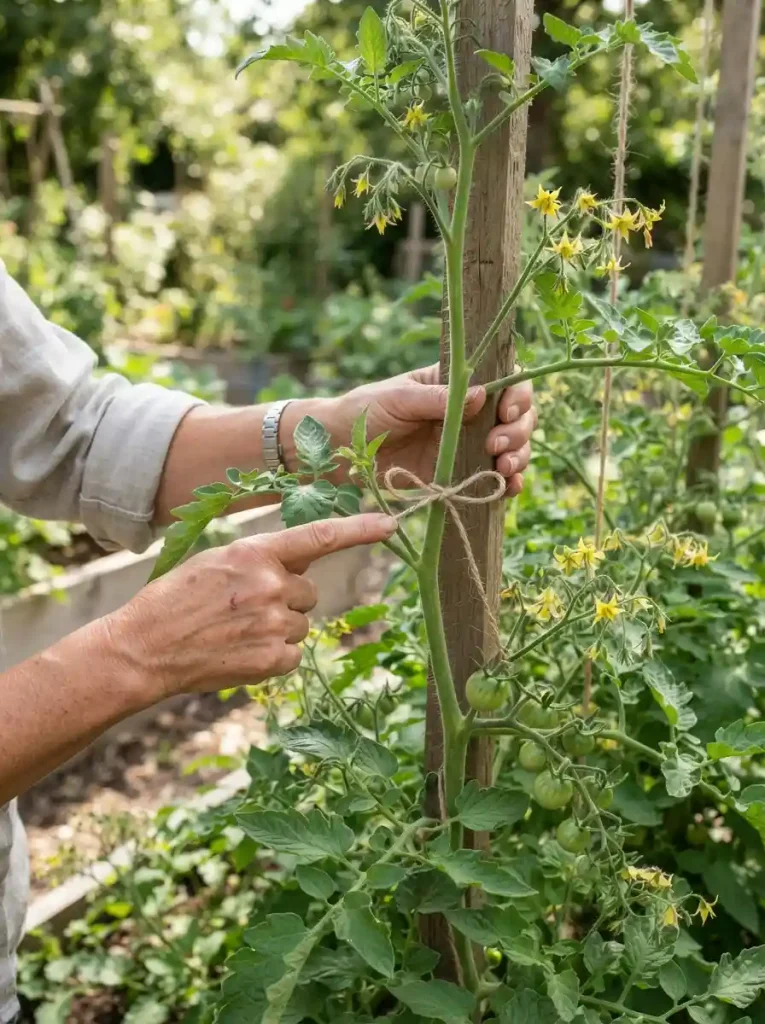
As indeterminate tomatoes grow taller, check the joints where branches meet the main stem. Remove selected suckers if you are training the plant to fewer stems, then guide the main growth toward its support. This keeps the plant organized and prevents heavy branches from sprawling.
Tie growing stems loosely every several inches rather than pulling them tightly against the support. Leave room for natural movement and thickening. Continue checking the plant after rapid growth, because new branches can quickly become heavy once flowers and fruit begin developing.
15. Harvest Tomatoes at the Right Stage
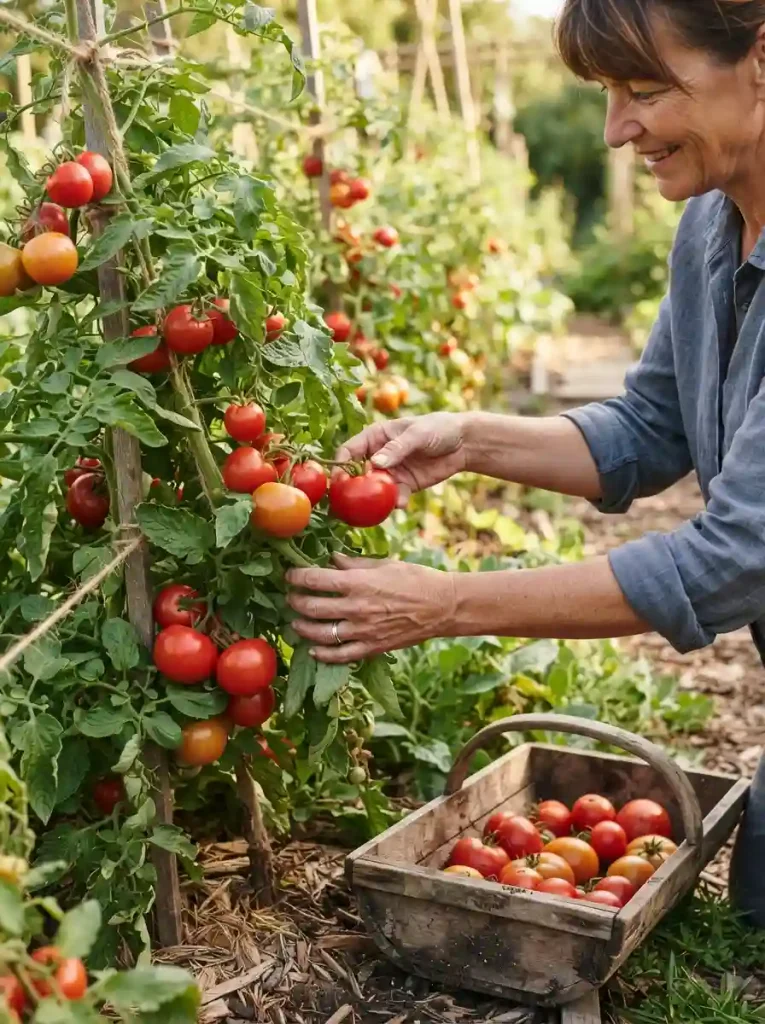
Harvest tomatoes when they have reached their expected mature color and feel slightly firm rather than rock hard. Gently twist or cut the fruit from the plant instead of pulling forcefully. Regular harvesting encourages continued production and prevents ripe tomatoes from becoming overripe outdoors.
If birds, insects, or weather threaten ripe fruit, you can pick tomatoes when they have begun changing color and allow them to finish ripening indoors. Handle harvested tomatoes gently to prevent bruising. Store ripe fruit at room temperature for the best flavor and texture.
16. Keep Harvesting and Caring Consistently
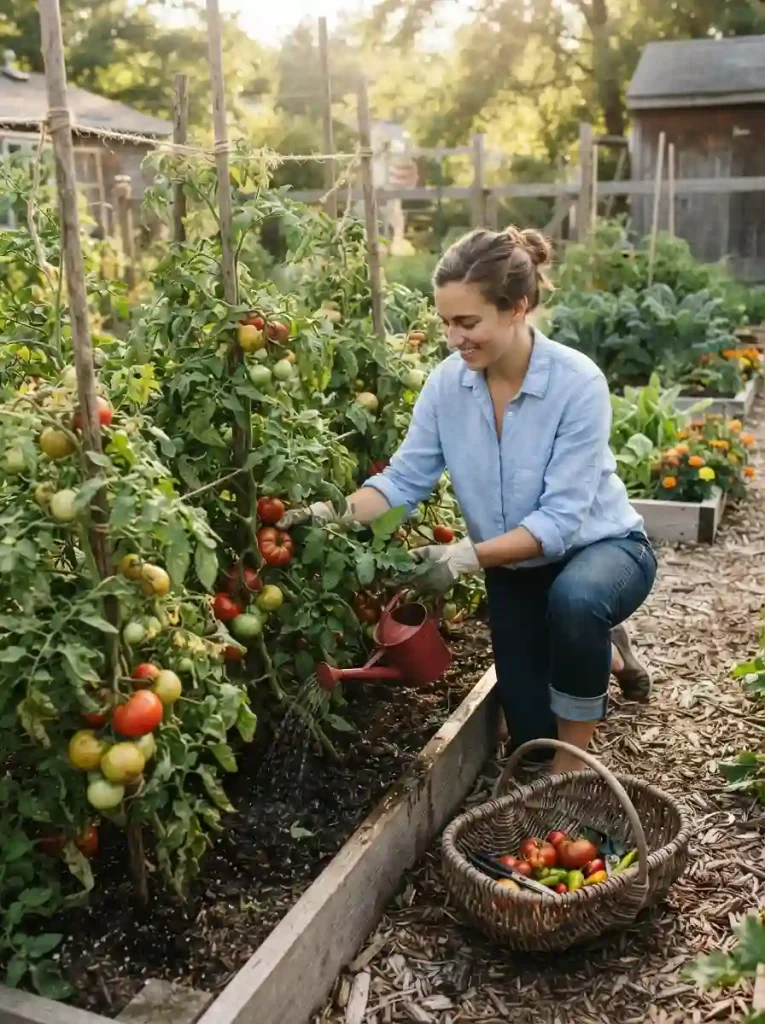
Tomato growing becomes easier when you develop a simple routine. Check soil moisture, inspect leaves, guide new growth, remove damaged foliage, and harvest ripe fruit regularly. Consistent small tasks are much easier than trying to fix neglected plants after problems have already spread.
Keep paying attention as the season changes, adjusting watering and support when temperatures, rainfall, or plant size changes. Celebrate each harvest rather than expecting perfect plants. With regular observation and simple care, beginners can enjoy productive tomato plants and gain confidence for future garden seasons.
Conclusion
Growing tomatoes does not have to be complicated when you take it one step at a time. Start with plenty of sunlight, healthy soil, proper spacing, deep watering, and reliable support. Then keep plants fed, inspected, gently pruned when needed, and harvested regularly.
These simple habits can make a noticeable difference, especially for first-time gardeners. Do not worry about making everything perfect from day one. Learn by watching your plants, responding to their needs, and enjoying the process. With patience and consistent care, your garden can reward you with delicious homegrown tomatoes.