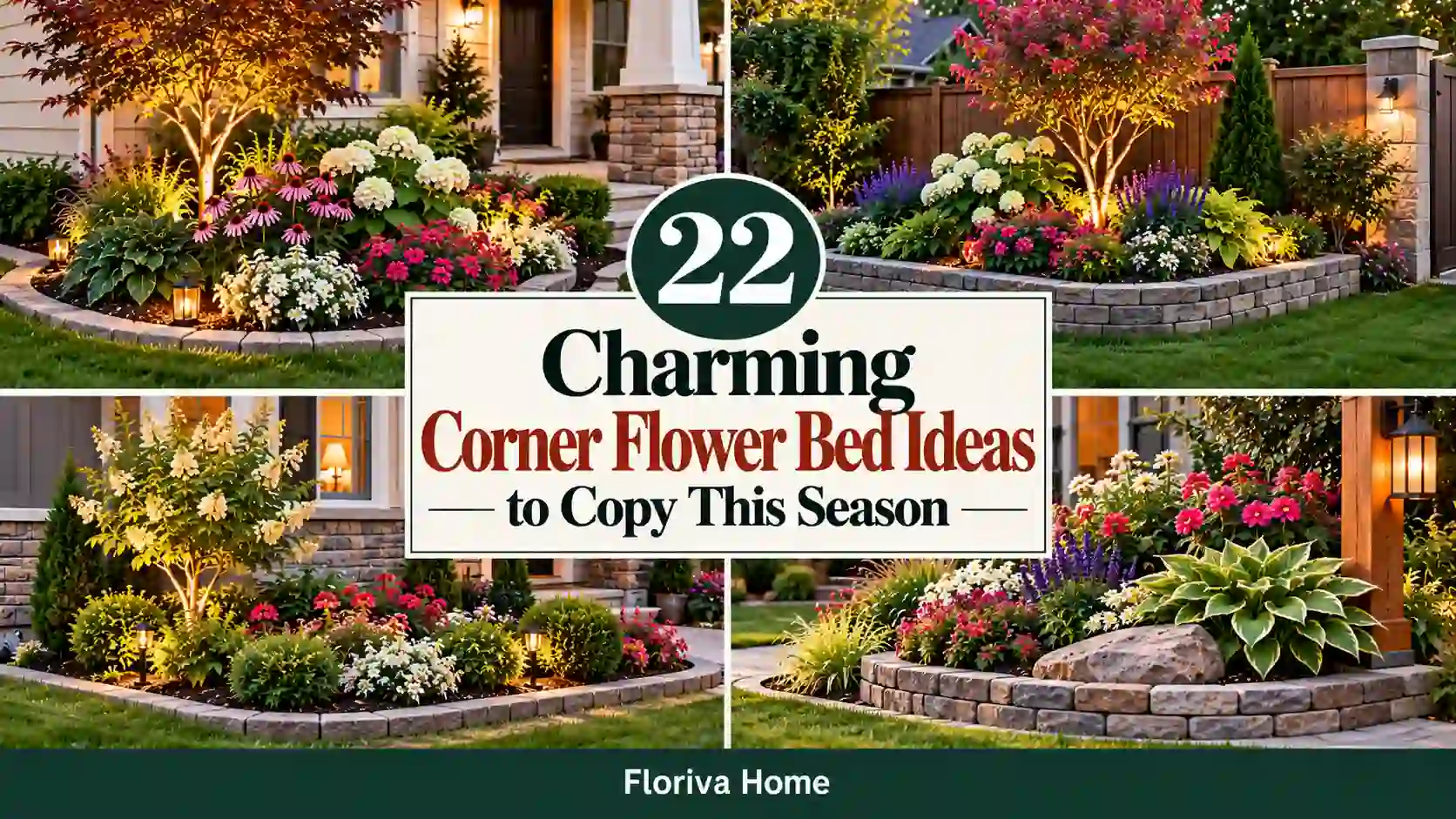
22 Charming Corner Flower Bed Ideas to Copy This Season
Inside: Layouts, plant combinations and styling tricks that turn your dullest corner into the best-looking spot in the yard.
Every yard has one: the corner where the lawn mower turns, where the fence meets the shed, and where nothing seems to grow on purpose.
The good news is that a corner is a natural stage. It has two edges to frame your plants, and the eye lands there on its own. A well-planned corner flower bed adds depth to a flat yard and can hide an awkward gap. It also gives you somewhere to show off your favorite blooms.
Below are 22 corner flower bed ideas, from small container displays to full cottage-style borders. Each one comes with plant suggestions and a practical tip, so you can copy it as it is or adapt it to your own space.
Before You Plant: Three Quick Checks
A corner bed does better when you check three things first.
1. Sun hours. Watch the spot on a clear day. Six or more hours of direct sun counts as full sun. Four to six is part sun, and less than that is shade. Match your plants to what you see, not to what you wish you had.
2. Soil and drainage. Corners often collect runoff or sit in dry shade from a fence. Dig a hole, fill it with water, and see how fast it drains. Loosening the soil and working in compost fixes most problems.
3. Mature size. Plant tags list the full-grown size. Corners feel cramped fast, so leave room for plants to reach that size.
1. Anchor the Corner With a Small Flowering Tree

A single small tree gives the whole corner a backbone. Choose a compact crabapple, serviceberry or dwarf lilac. Plant it a few feet off the corner point so it has room, and let its canopy lift the planting upward.
Circle the trunk with a mulched bed and underplant it with spring bulbs and low perennials. White tulips with blue forget-me-nots make a soft, classic combination. They fill the gap while the tree is still young.
Pro Tip:
Check the tree’s mature spread before you dig, and keep the trunk at least 6 to 8 feet from fences and walls so the roots and branches have room.
2. Build a Tiered Triangle From Back to Front
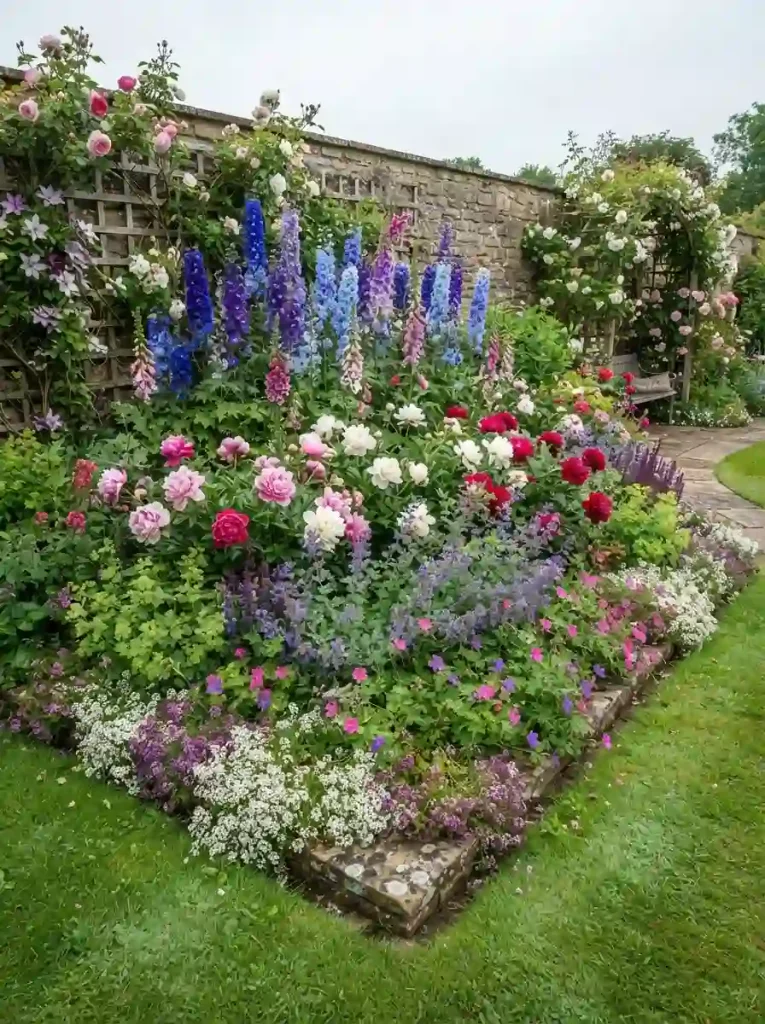
Think of the bed as a triangle with the tallest plants in the deepest part of the corner and shorter ones stepping down toward the lawn. Delphiniums, foxgloves or tall phlox go in the back. Peonies and catmint sit in the middle, and alyssum or hardy geraniums edge the front.
This layout works because every plant stays visible. Nothing hides anything else, and the bed looks full from several angles. Choose varieties that bloom at different times and something is always in flower.
Pro Tip:
Plant in odd-numbered groups of three or five. Clusters look more natural than single plants dotted around.
3. Curve the Edge Into a Crescent Border

Square corners can look stiff, so sweep the front edge into a gentle crescent. The curve softens the lines of the yard and makes the bed look bigger than it is.
Lay a garden hose on the grass to test the shape before you cut. When you like the curve, edge it with steel or stone and fill it with drought-tolerant plants such as lavender, ornamental sage and yarrow. Finish with two to three inches of dark mulch to keep it tidy.
Pro Tip:
Keep the curve wide and smooth. Tight wiggles are hard to mow around and look busy.
4. Layer Spring Bulbs Beneath Your Perennials
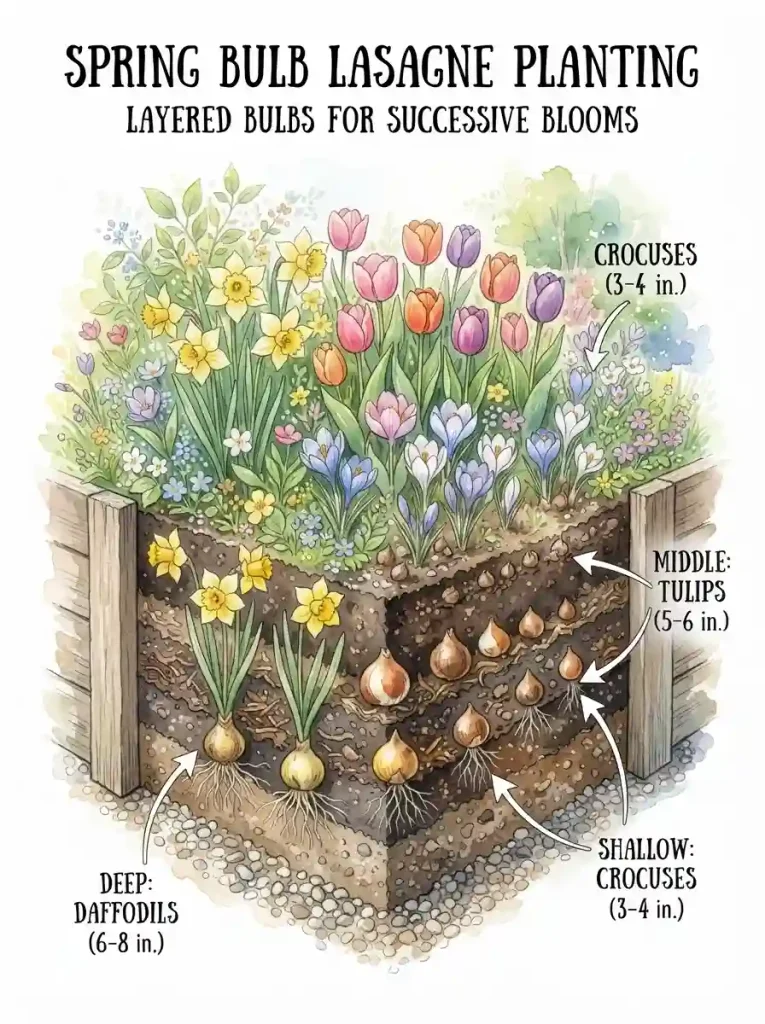
Bulbs can share the same ground as perennials if you plant them in layers. Daffodils go deepest, around 8 inches down. Tulips go about 6 inches deep, and crocuses sit on top at 3 to 4 inches. They bloom in sequence for weeks, all in the same footprint.
Perennials such as hostas or daylilies then grow up in late spring and hide the fading bulb foliage. You get early color without leaving bare patches later in the year.
Pro Tip:
Plant bulbs in fall, once the soil has cooled, and let the leaves die back naturally so the bulbs can store energy for next year.
5. Group Three Pots Where the Soil Is Poor
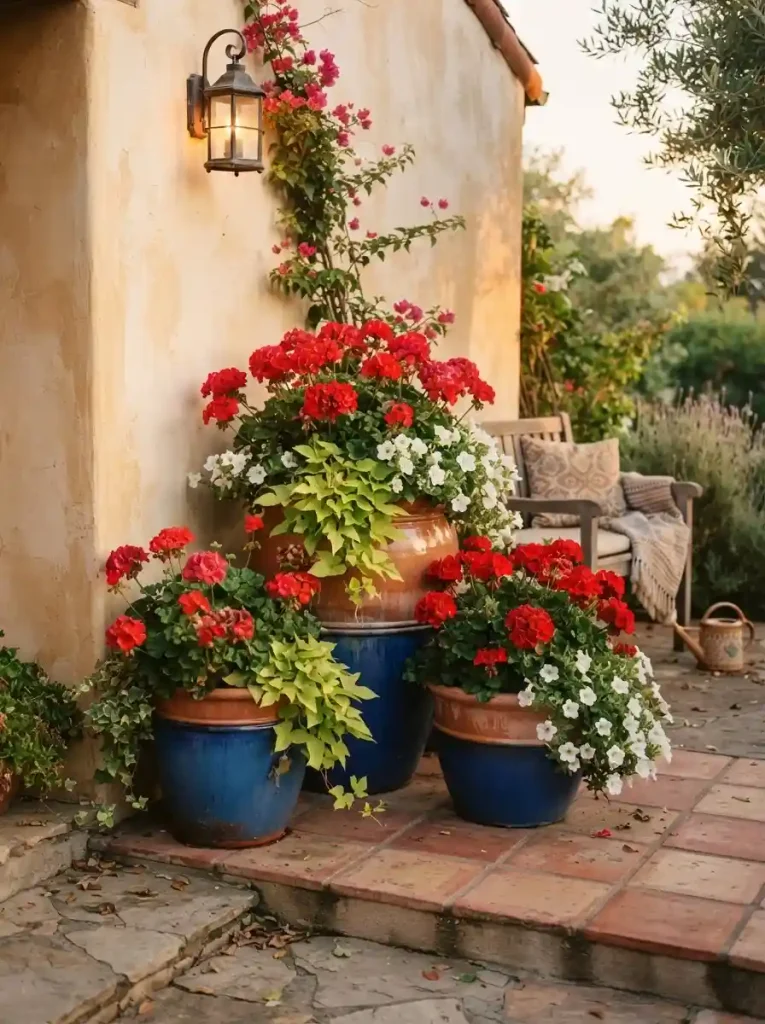
If the ground is rocky, shaded by roots or covered in concrete, skip the digging and use containers. Set three pots of different heights in the corner, with the tallest at the back. Odd numbers look more natural than even ones.
Fill each pot with a mix of upright plants, bushy fillers and trailing spillers. Red geraniums, white petunias and sweet potato vine make a strong trio. Glazed or terracotta pots in a shared color family help the group look planned.
Pro Tip:
Container plants dry out faster than those in the ground. Check the soil every day in summer, and use pots with drainage holes.
6. Stack a Raised Brick Bed
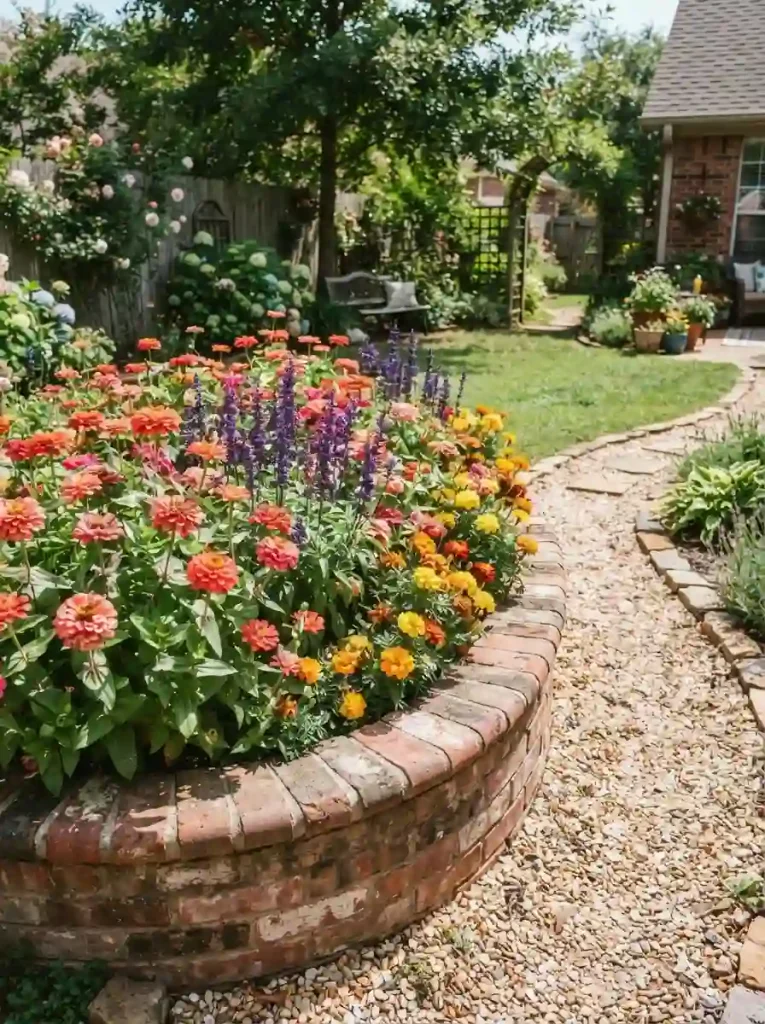
A raised bed gives you control over soil, drainage and height. Build one in the corner from brick, stone or timber, and make it 12 to 18 inches tall. Round off the front corner so you don’t bump into it.
Fill it with a mix of loam and compost and plant sun-lovers such as zinnias, salvia and marigolds. The raised edge keeps the bed neat. If the wall is wide enough, it also makes a handy spot to sit.
Pro Tip:
Use frost-rated bricks in cold climates. Standard bricks can crack after a few winters.
7. Plant a Pollinator Patch
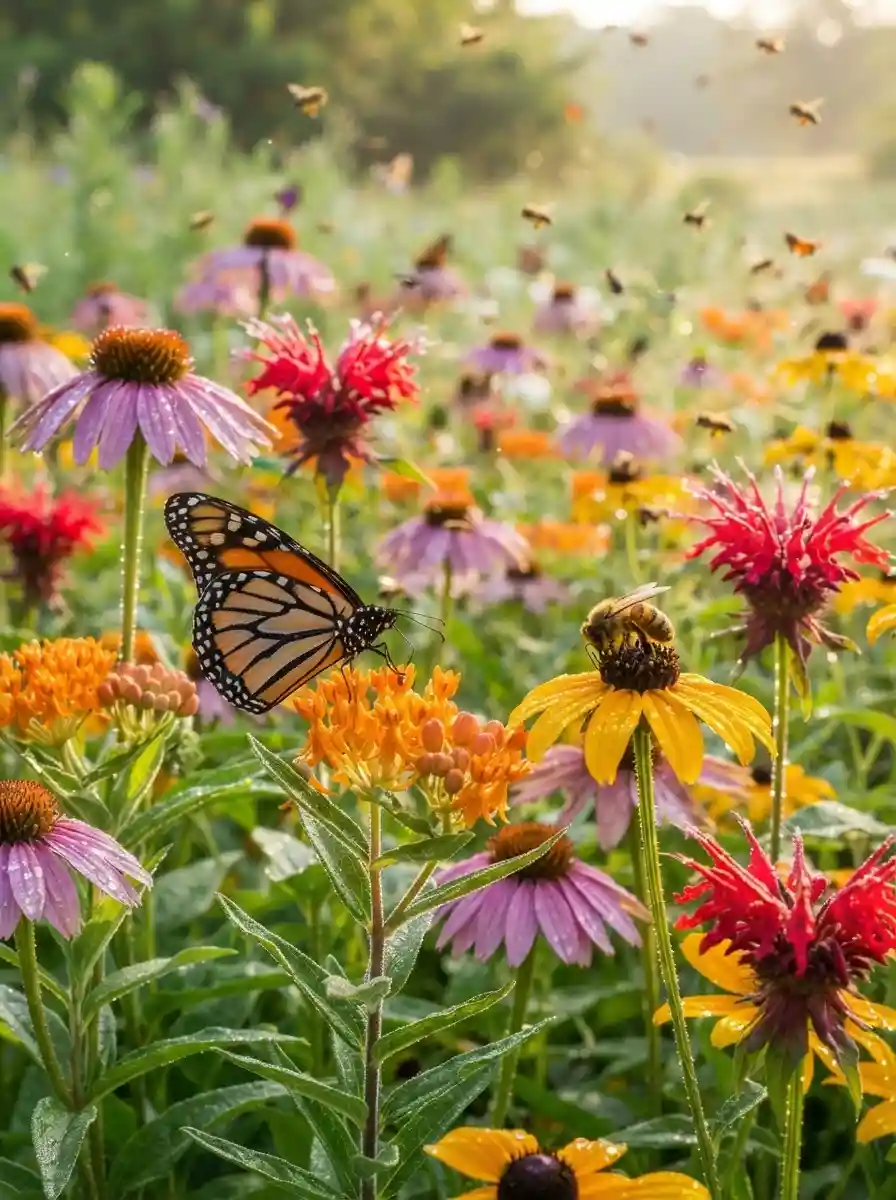
A corner is a good place for a wildlife-friendly planting that you can leave alone for most of the season. Combine purple coneflower, orange butterfly weed, red bee balm and black-eyed Susan. All four are loved by bees and butterflies, and all return year after year.
Plant in drifts of three to five rather than one of each, because pollinators find larger blocks of color more easily. Choose single-petal varieties where you can. Many double flowers hold little nectar.
Pro Tip:
Skip pesticides in this bed. Even products labeled safe can harm the very insects you want to attract.
8. Tuck in a Trellis Obelisk for Sweet Peas
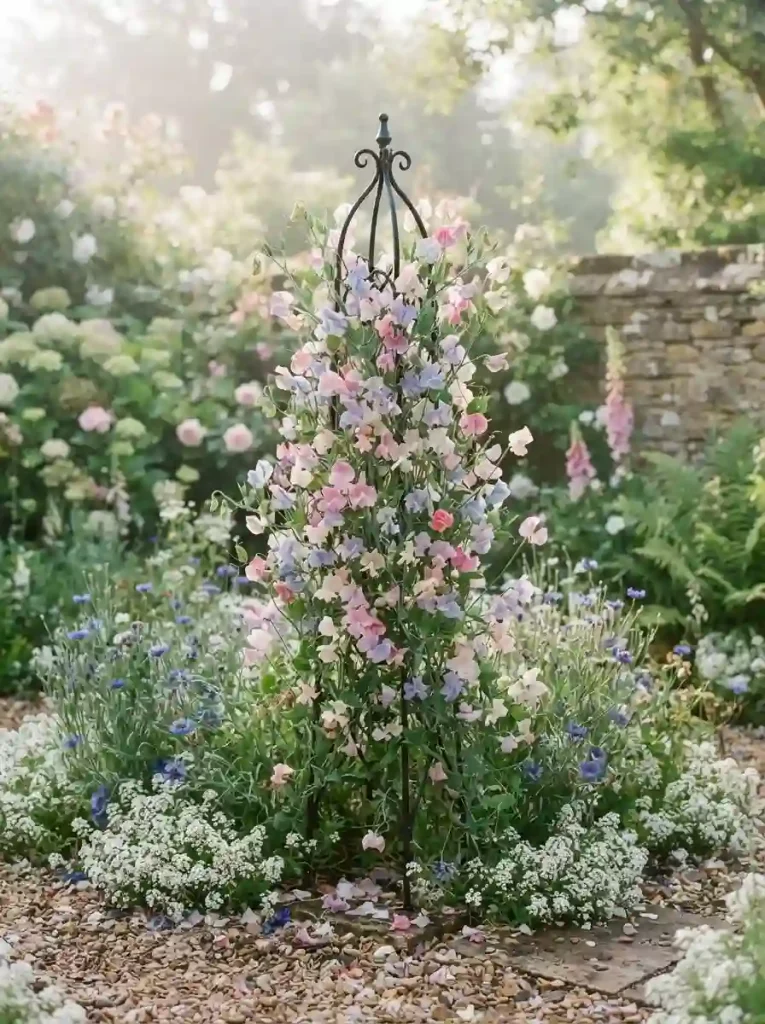
When floor space is tight, grow upward. A slim obelisk placed in the corner gives sweet peas something to climb and adds height from day one. Plant low alyssum and blue cornflowers around the base to hide the legs and echo the soft color scheme.
Sweet peas like cool weather, so sow them in early spring or, in mild climates, in autumn. Their scent is a bonus, especially in the evening.
Pro Tip:
Cut the flowers often. Picking encourages more blooms, and the vase on your table will smell wonderful.
9. Soften a Fence Corner With Hydrangeas
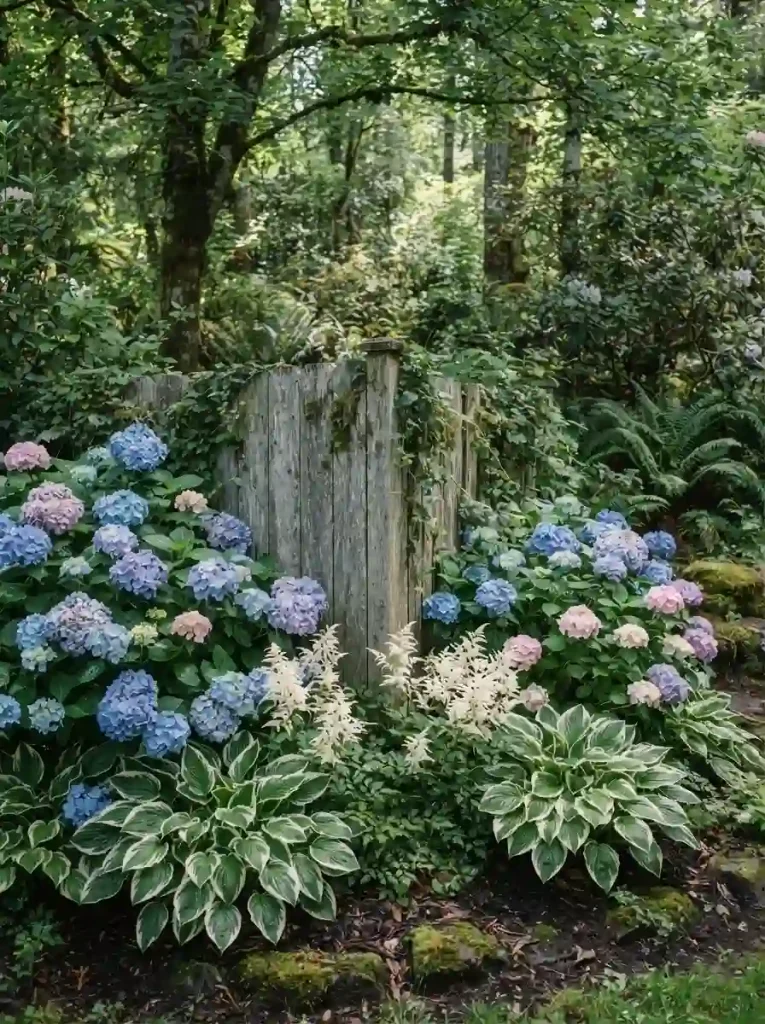
Where two fence panels meet, hard lines and shadows can make the corner feel cold. Hydrangeas are a good fix. Their big, rounded blooms fill the space and give months of color from midsummer onward.
Pair them with hostas and white astilbe at the base to cover bare stems. Morning sun and afternoon shade suit most mophead types, and panicle hydrangeas tolerate more sun. The color of mophead blooms depends on soil pH, with acidic soil giving blue and more alkaline soil giving pink.
Pro Tip:
Leave 3 to 4 feet between the shrub and the fence so it has room to grow and air can circulate.
10. Paint a Sunset With Warm-Toned Blooms

Pick colors from one side of the color wheel and the whole corner will glow. Orange helenium, red dahlias, golden rudbeckia and burgundy heuchera together look like a late-summer sunset.
Warm colors seem to advance toward the viewer, so they work well in a corner you see from across the yard. Add a few ornamental grass plumes, which catch the low evening light and add movement.
Pro Tip:
In cold climates, lift dahlia tubers after the first frost and store them dry for winter.
11. Plant a Moonlit White Garden
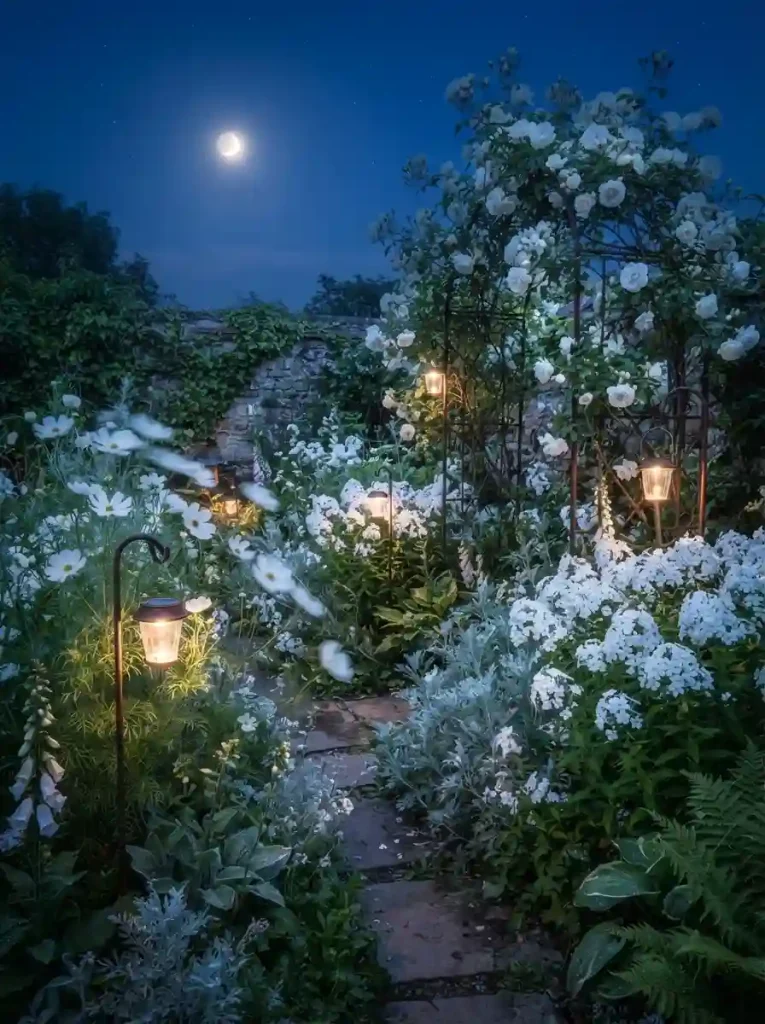
White flowers seem to glow as daylight fades, which makes this idea ideal for a corner you see from a patio in the evening. Combine white phlox, white cosmos, silver artemisia and a climbing white rose on a small support.
The silver foliage separates the blooms and gives the bed a calm, elegant look. Add a few solar lanterns and the corner stays pretty after dark. Fragrant white nicotiana makes a good scented addition.
Pro Tip:
Deadhead white flowers often. Faded petals turn brown and show up more than on any other color.
12. Fill a Shady Corner With Ferns and Bleeding Hearts

A corner under a tree or beside a tall wall doesn’t have to stay empty. Bleeding heart, with its arching stems of pink lockets, thrives in shade. Pair it with feathery ferns, silver-spotted lungwort and white foamflower for a calm, layered look.
Bleeding heart often fades back in summer heat, so the ferns and foamflower fill the gap. The planting stays green and full long after the first flowers are gone.
Pro Tip:
Work leaf mold or compost into the soil. Shade plants like moist, humus-rich ground, and tree roots will otherwise take most of it.
13. Repurpose a Vintage Wheelbarrow as a Planter

An old wheelbarrow tipped on its side makes a cheerful focal point and costs next to nothing. Let purple verbena, trailing lobelia, yellow calendula and pink snapdragons spill out of it. Stack a couple of wooden crates beside it for extra height.
The worn paint and rusty metal add a country charm that new planters can’t match. Plant it up as you would any container, and change the flowers with the seasons.
Pro Tip:
Drill several holes in the base before you plant. Old metal tubs and wheelbarrows rarely drain well, and soggy roots rot quickly.
14. Create a Sun-Baked Succulent and Gravel Corner
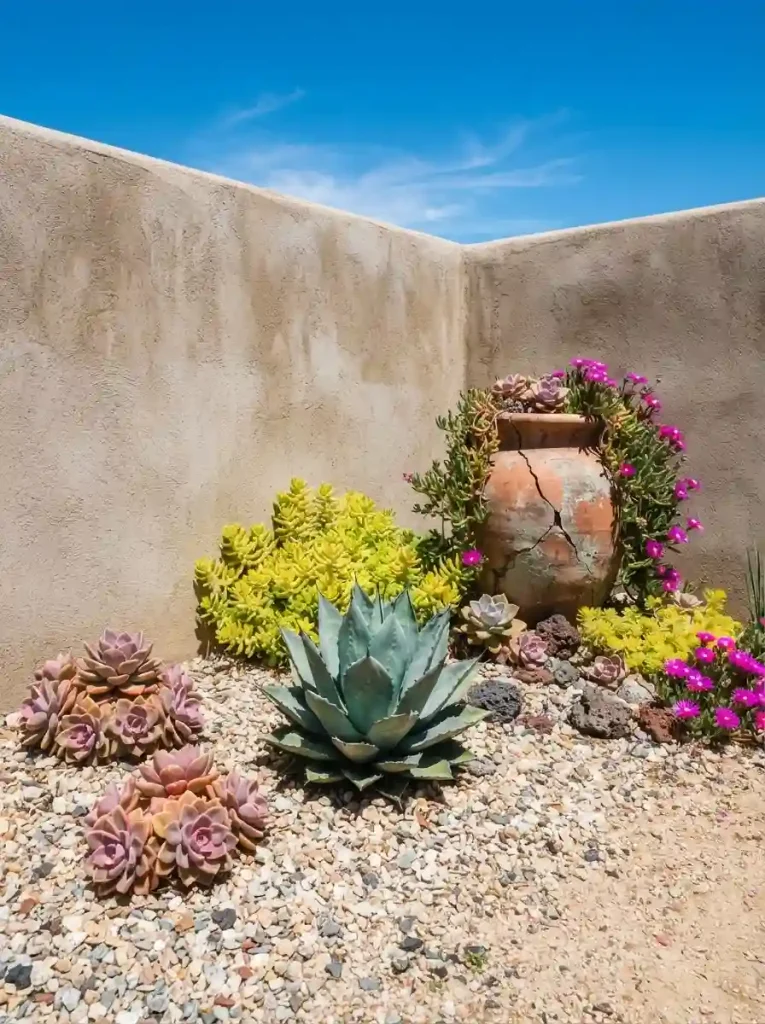
If your corner gets blazing sun and little water, lean into it. A bed of pale gravel with agave, echeveria, sedum and trailing ice plant looks sculptural and needs almost no care once established.
Group the plants by shape and color, with spiky forms next to soft rosettes. A cracked terracotta urn lying on its side adds a surprising touch. In cold climates, choose hardy types such as sempervivum and hardy sedum, and keep tender echeveria in pots you can bring inside.
Pro Tip:
Mix coarse grit or pumice into the soil. Succulents need sharp drainage more than they need feeding.
15. Plant an Edible Corner of Herbs and Flowers

Beauty and flavor can share one bed. Chives, purple basil and silvery sage make attractive, useful foliage. Orange nasturtiums and blue borage add color and look lovely scattered over a salad.
A corner close to the kitchen door is ideal, because you’ll pick from it every day. Most herbs love sun and well-drained soil, so this idea pairs well with a raised bed.
Pro Tip:
Only eat flowers you can identify with certainty, and never from plants sprayed with chemicals.
16. Turn a Downspout Corner Into a Rain Garden

Where a downspout empties into the corner, you can fix a soggy patch and gain a flower bed at the same time. Dig a shallow, saucer-shaped basin and plant moisture-loving species. Blue Siberian iris, pink Joe-Pye weed, swamp milkweed and green sedges all handle wet feet and then dry spells.
A small dry creek bed of river rocks carries the water in and looks attractive when the bed is dry. The plants soak up runoff, so less water reaches the lawn.
Pro Tip:
Keep the basin at least 10 feet from the house foundation and slope it so water drains away from the walls.
17. Plan a Four-Season Corner With Evergreen Bones
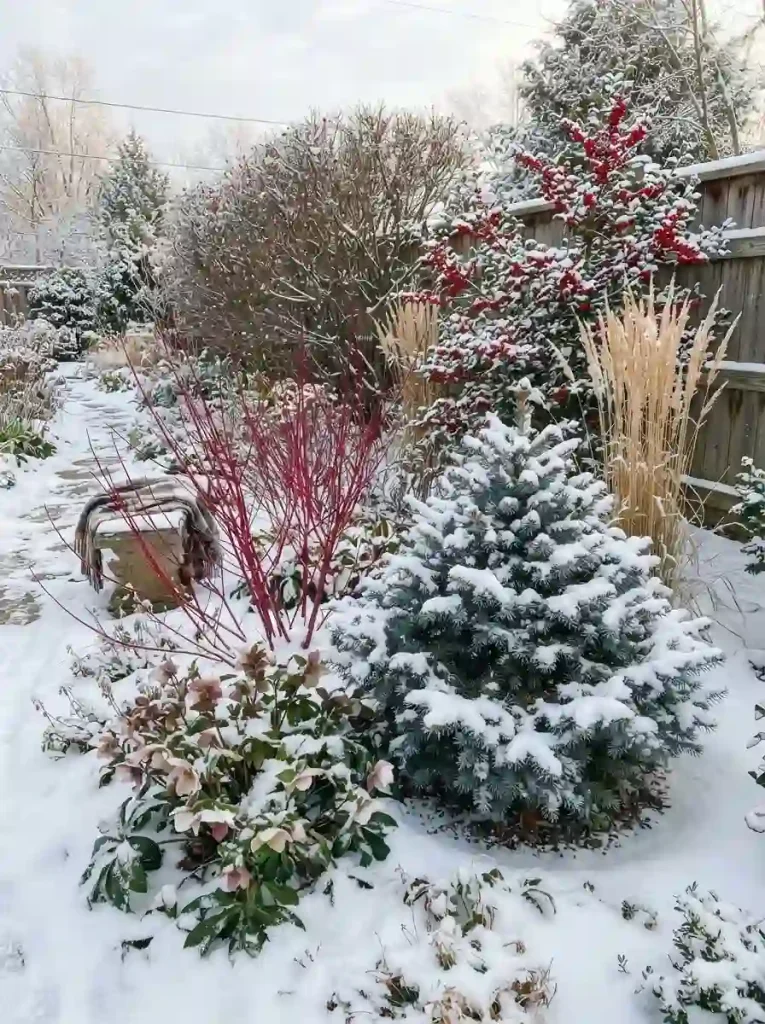
A corner that looks good only in July will look empty for half the year. Start with an evergreen backbone, such as a dwarf blue spruce or boxwood, and add red-twig dogwood for winter stems. Hellebores bloom through frost, and winterberry holly offers bright red berries for birds.
Leave ornamental grass seedheads standing through winter. They catch frost and add texture when everything else is cut back.
Pro Tip:
Winterberry holly needs a male pollinator nearby to produce berries, so check the plant tags when you buy.
18. Grow a Cutting Garden Corner

Make the corner a flower supply for your home. Plant ranunculus, sunflowers, blue larkspur and lisianthus in tight rows and cut freely. Cut flowers grow back and often bloom more as a result.
Because you’ll be harvesting, don’t worry about perfect design. Plant for productivity and pick in the cool of the morning, when stems are full of water.
Pro Tip:
Cut stems at an angle and put them in water straight away. A bucket in the shade works well.
19. Tuck Flowers Into a Dry-Stack Stone Wall

If your corner is on a slope or you want a low retaining wall, build it with dry-stacked stone and plant into the gaps. Purple aubrieta, pink creeping phlox, white candytuft and blue-gray sedum spill over the stones in spring.
Lean each course of stone slightly backward for stability. Slip the plants into the crevices as you build, because it’s much harder to add them afterward.
Pro Tip:
Fill the gaps with a gritty soil mix rather than plain garden soil. Rock plants rot in heavy, wet ground.
20. Go Bold With a Tropical Foliage Corner
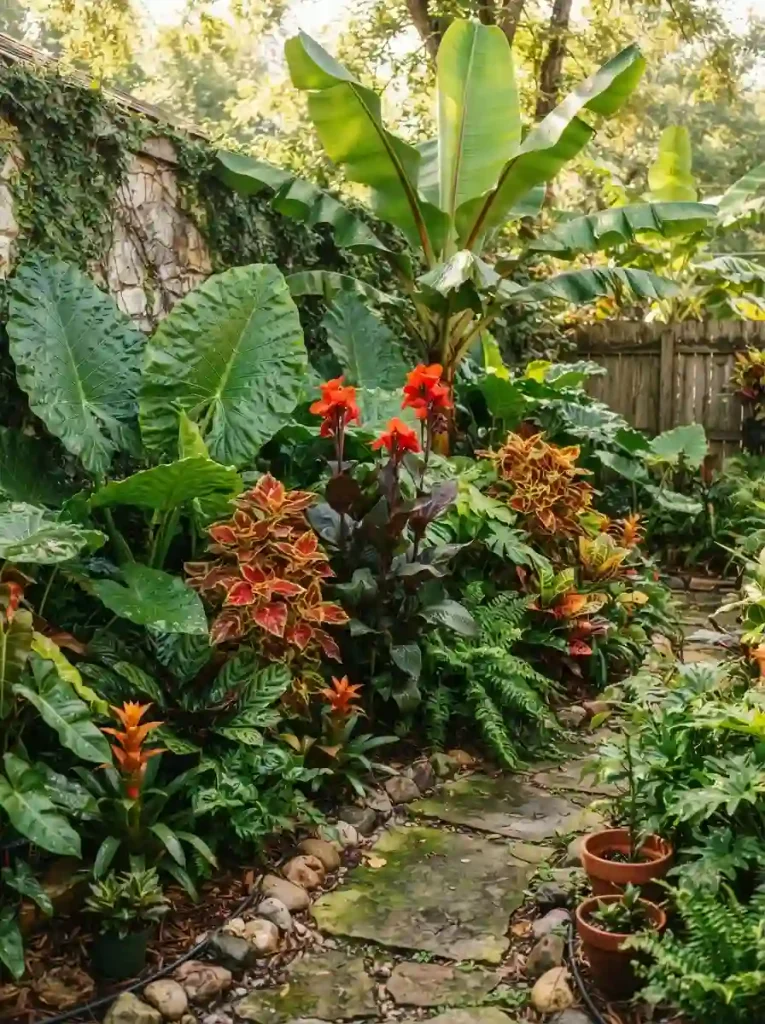
Big leaves and hot colors make a corner feel like a holiday. Combine giant elephant ears, red canna lilies, fiery coleus and a banana plant for a lush, jungle-style bed that fills out quickly in summer.
These plants are tender, so in cold zones treat them as annuals or lift the bulbs and rhizomes before the first frost. They reward you with fast growth and a big visual impact.
Pro Tip:
Feed tropical plants every two weeks in summer and water deeply. Their large leaves lose a lot of moisture.
21. Carpet the Corner With Ground-Cover Flowers

Not every bed needs tall plants. Creeping thyme, blue star creeper, golden creeping Jenny and pink dianthus can form a flowering carpet that weaves around stepping stones. The mat of leaves keeps weeds down, so upkeep is minimal.
This idea suits small spaces and sunny edges, and it smells wonderful when you walk across it.
Pro Tip:
Some ground covers, creeping Jenny in particular, spread aggressively in certain regions. Check your local invasive species list before planting.
22. Nestle a Statement Boulder Among the Plants

A single large boulder gives a corner weight and a natural look. Set it off-center, bury about a third of it so it looks like it has always been there, and plant around it. Blue fescue, creeping rosemary, pink thrift and sea lavender soften its edges.
Stone also holds warmth, which helps nearby plants in cooler months. One generous rock looks better than several small ones scattered about.
Pro Tip:
Order the boulder before you plant, and ask the supplier to place it. Even a modest rock can weigh several hundred pounds.
Final Thoughts
A corner doesn’t have to be the forgotten part of your yard. Whether you choose a tiered cottage border, a handful of pots or a boulder with a few tough plants, a small corner flower bed can change how the whole garden feels.
Start with one idea that suits your light and soil, and keep the first planting simple. You can always add more next season. Pick the idea you like best, grab a trowel and give that empty corner a purpose.
Frequently Asked Questions
What are the best plants for a corner flower bed?
It depends on your sun and soil. Coneflower, salvia, catmint and ornamental grasses suit sunny corners. Hostas, ferns and bleeding heart suit shade. Mixing a few shrubs, perennials and annuals gives the most interest.
How big should a corner flower bed be?
A depth of 3 to 4 feet along each side gives enough space for layered planting. In small yards, a smaller bed with a few well-chosen plants looks better than a crowded one.
How do I keep a corner flower bed low-maintenance?
Use perennials and shrubs suited to your climate, add 2 to 3 inches of mulch, and group plants with the same water needs. Ground covers also help by keeping weeds down.
When is the best time to plant a corner flower bed?
Spring and early fall are ideal in most areas. Cooler weather lets roots settle in before extreme heat or frost. Plant spring bulbs in autumn.
How do I make a small corner look bigger?
Curve the front edge, use plants of different heights, and stick to a limited color palette. Lighter colors and a tall focal point, such as a small tree or obelisk, also draw the eye upward and outward.