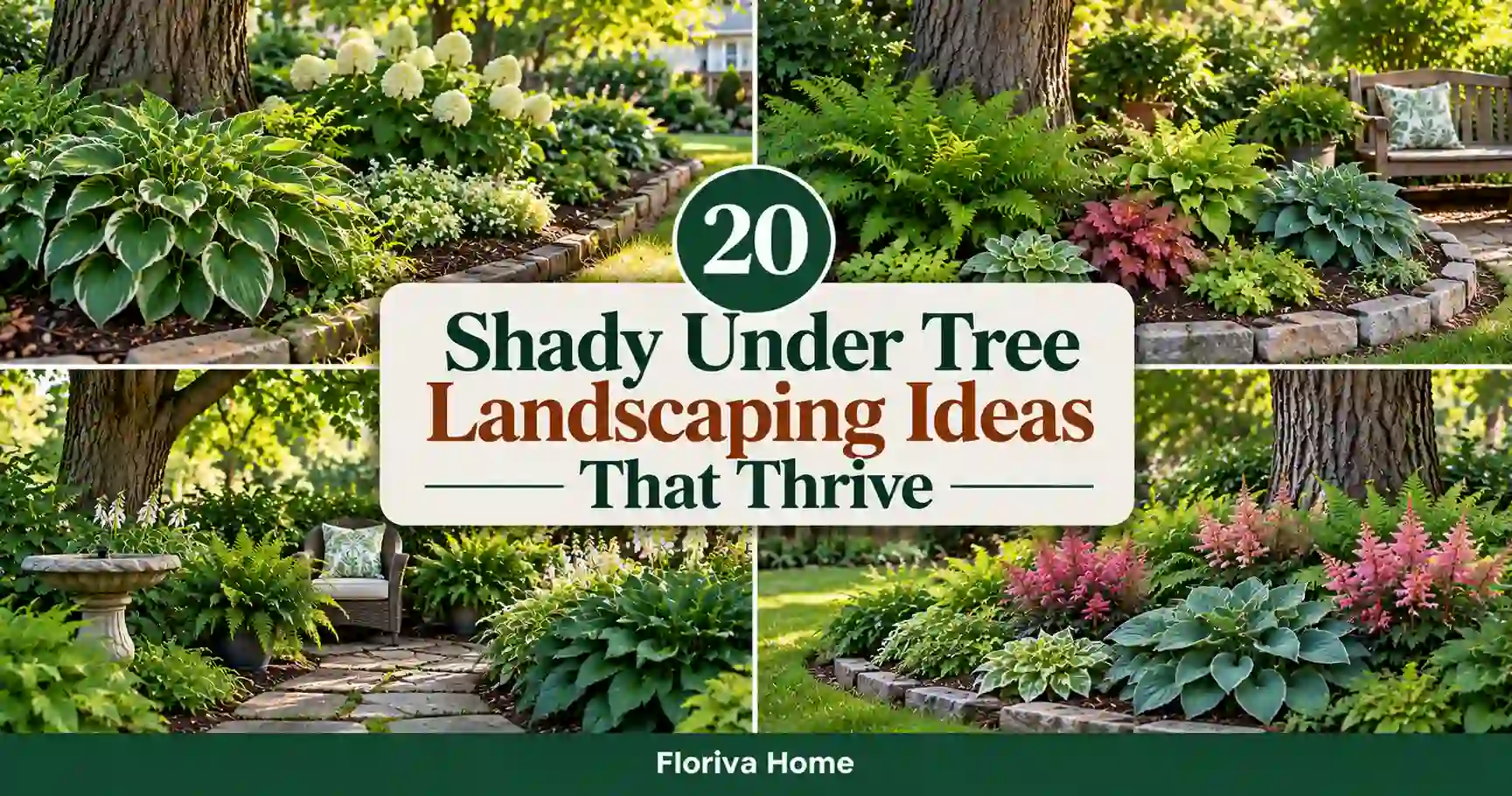
20 Shady Under Tree Landscaping Ideas That Thrive
The space beneath a mature tree can be one of the trickiest areas to landscape. Limited sunlight, dry soil, and spreading roots often make it difficult to grow a traditional flower bed or lush lawn. The good news is that the right plants and thoughtful design can turn this challenging spot into a beautiful garden feature.
These shady under tree landscaping ideas combine attractive foliage, natural materials, and simple garden features to help you make the most of your outdoor space. Whether you prefer a peaceful woodland look or a neat, modern design, you can find an approach that works with your tree instead of against it.
1. Create a Layered Shade Garden
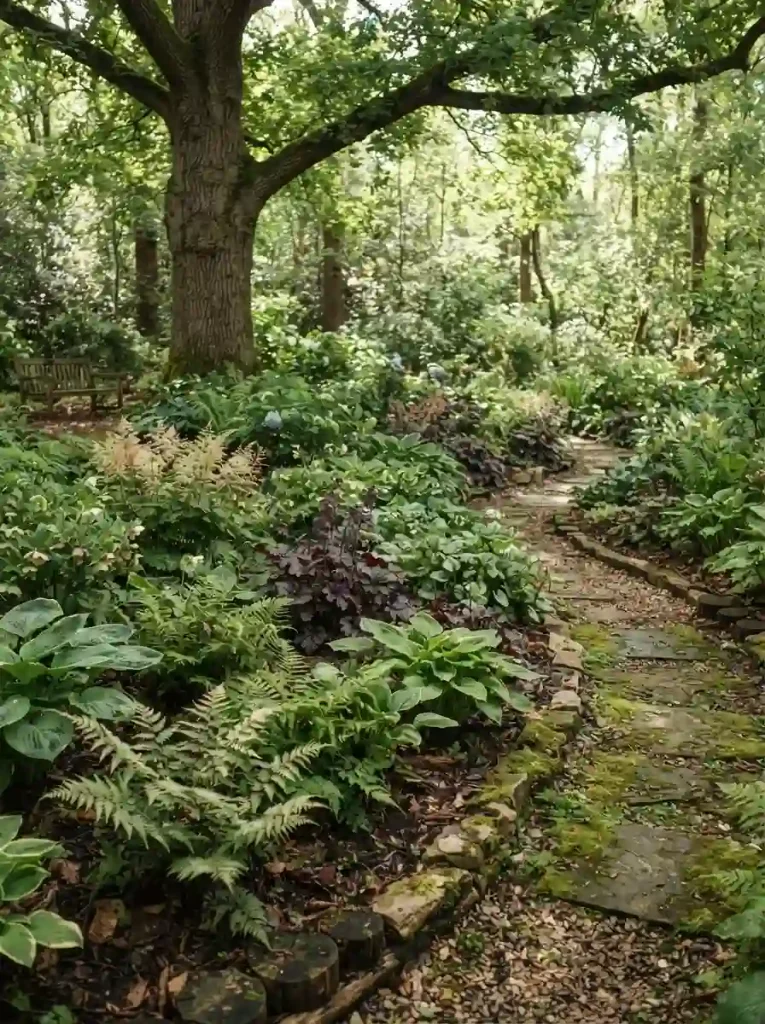
A layered shade garden brings depth and variety to the ground beneath a large tree. Instead of planting everything at the same height, combine low-growing ground covers with medium-sized foliage plants and a few taller shade-tolerant perennials. This arrangement makes the area look fuller without overcrowding the tree.
Ferns, hostas, heucheras, and other suitable shade-loving plants can create an appealing mix of leaf shapes and colors. Choose plants according to your local climate and the amount of moisture available. In dry shade, prioritize varieties that tolerate less frequent watering rather than plants that need consistently damp soil.
Keep the planting loose around the trunk and avoid piling soil against the bark. A curved planting bed can give the garden a natural appearance while leaving enough room to inspect the tree and maintain the surrounding area.
2. Design a Natural Mulch Ring
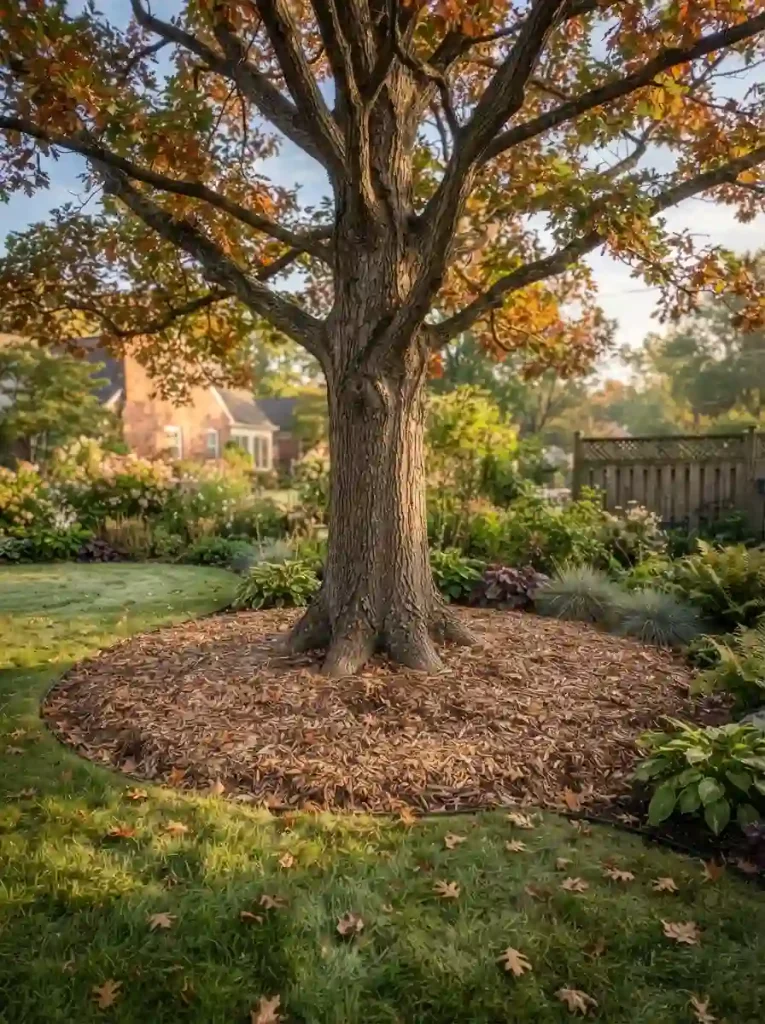
A simple mulch ring is an excellent choice if you want a tidy landscape without spending hours maintaining plants. It creates a clean visual boundary around the tree, helps conserve soil moisture, and reduces competition from weeds when installed correctly.
Choose organic mulch such as shredded bark or wood chips that suit your garden. Spread it evenly across the desired area, generally around 2–3 inches deep, while keeping it several inches away from the trunk. Never build a thick mound of mulch against the bark, as excess moisture around the trunk can encourage decay.
For a more finished appearance, extend the ring beyond the immediate base of the tree and shape its outer edge into a smooth circle or gentle oval. You can leave the space minimal or add a few carefully positioned stones nearby.
This design works especially well for homeowners who want to improve the appearance of a bare patch without disturbing established roots.
3. Fill Bare Ground With Shade-Friendly Ground Covers
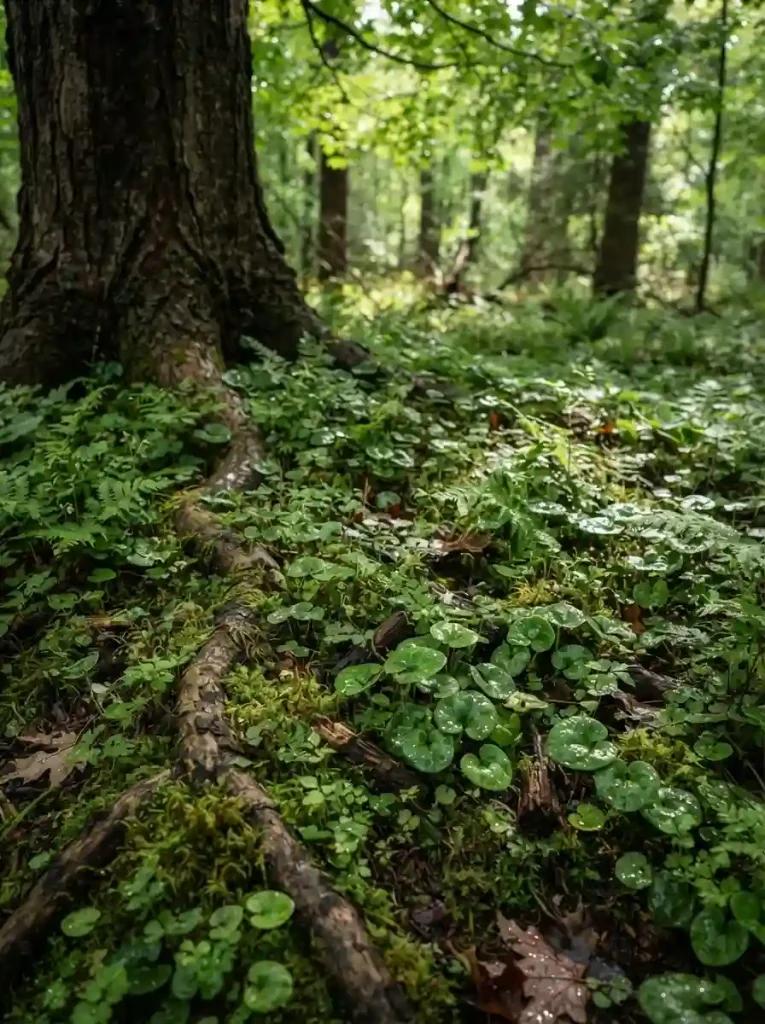
When grass refuses to grow beneath a tree, ground covers can provide a softer and more natural alternative. These low-growing plants spread across the soil, helping connect individual planting areas into one cohesive landscape.
Depending on your climate, soil, and available light, consider options such as Pennsylvania sedge, wild ginger, or other locally appropriate ground covers. In areas with brighter filtered shade, some varieties of creeping plants may also work well. Always check their growth habits before planting, since certain ground covers can spread aggressively.
The key is matching the plant to the conditions beneath your tree. Deep shade and dry soil call for different choices than moist ground receiving several hours of filtered sunlight. Water new plants while they establish, then adjust care according to their needs.
Plant in small groups rather than scattering individual plants randomly. Once the ground cover fills in, the area can look intentional and attractive with less mowing than a conventional lawn.
4. Add a Curved Stone Border
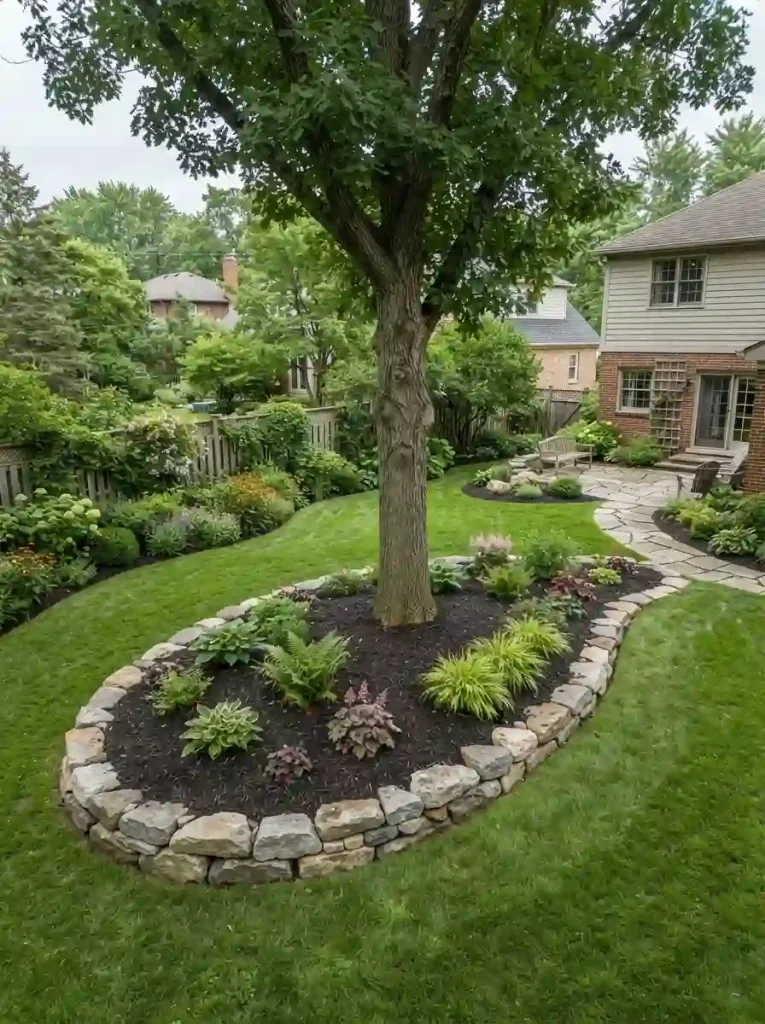
A curved stone border gives the area beneath a tree a defined shape without making the landscape look overly formal. It works particularly well in gardens where the tree sits in the middle of an open lawn or near a patio.
Use natural fieldstone, flat landscape stones, or suitable garden edging to outline a planting bed. A gentle curve often looks more natural than a perfect circle, especially around trees with wide, irregular canopies. Fill the interior with an appropriate layer of mulch and add a few shade-tolerant plants if conditions allow.
Before placing heavy stones, consider the tree’s root system. Avoid cutting major roots or digging a deep trench simply to achieve a perfectly level border. Freestanding stones placed carefully on the surface may be a better option where roots are close to the ground.
Choose a stone color that complements your home’s exterior and existing paths. Warm sandstone creates a relaxed cottage look, while gray stone suits contemporary gardens.
5. Plant a Woodland Fern Garden
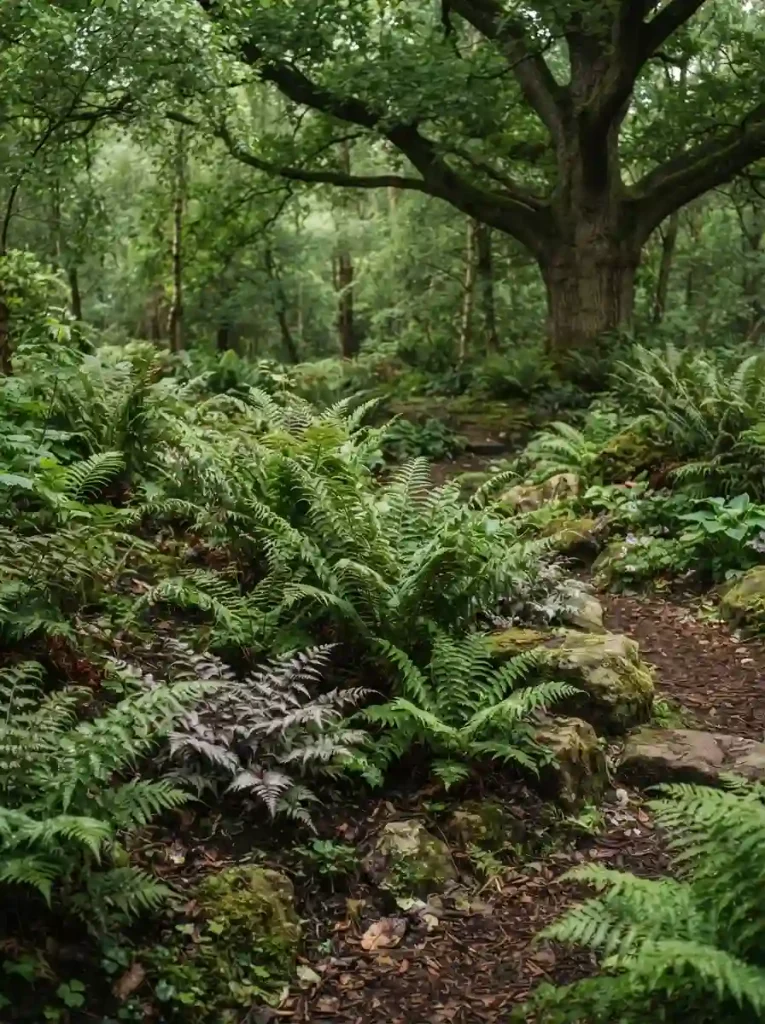
Ferns can bring a lush woodland feeling to shady spaces where flowering plants struggle. Their delicate fronds add movement, softness, and layers of green without requiring colorful blooms to make an impact.
Choose fern varieties suited to your climate and soil conditions. Some prefer consistently moist ground, while others tolerate drier shade once established. Native ferns are often worth considering because they can be better adapted to local weather and growing conditions.
Arrange several plants in loose clusters rather than placing them in a straight line. Mixing different frond shapes can make the planting more interesting while keeping the overall palette calm and cohesive. A few pieces of natural stone can complement the foliage without distracting from it.
Water newly planted ferns as needed, particularly during dry weather. If the tree canopy prevents rain from reaching the ground, you may need to provide supplemental moisture. Avoid adding extra soil over the tree’s root flare just to create a richer planting bed.
6. Arrange Shade-Loving Plants in Decorative Containers
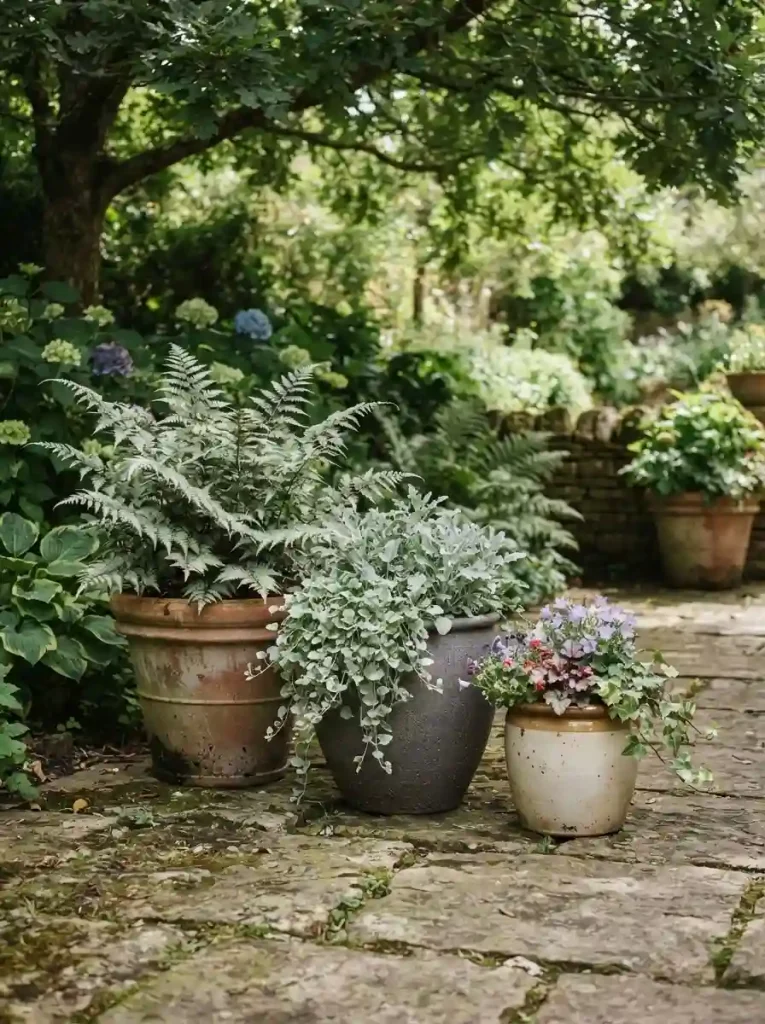
Container gardening is a practical solution when tree roots make digging difficult. Instead of disturbing the ground, you can introduce color and structure with freestanding pots arranged around the outer portion of the shaded area.
Choose containers with drainage holes and enough space for the plants to develop healthy roots. Ceramic, terracotta, resin, and concrete-look planters can all work, depending on your preferred style and how easily you may need to move them.
Fill the containers with a suitable potting mix rather than ordinary garden soil. Shade-tolerant foliage plants, compact ferns, and locally suitable flowering plants can create attractive displays. Try combining one upright plant with a lower, spreading variety, provided both have similar light and watering requirements.
Vary the container heights and group two or three pots together for a more balanced arrangement. Keep them away from the trunk and leave access for watering, mowing, and checking the tree’s condition.
Remember that containers can dry out faster than garden beds, even in shade, so check the soil regularly.
7. Create a Small Woodland Path
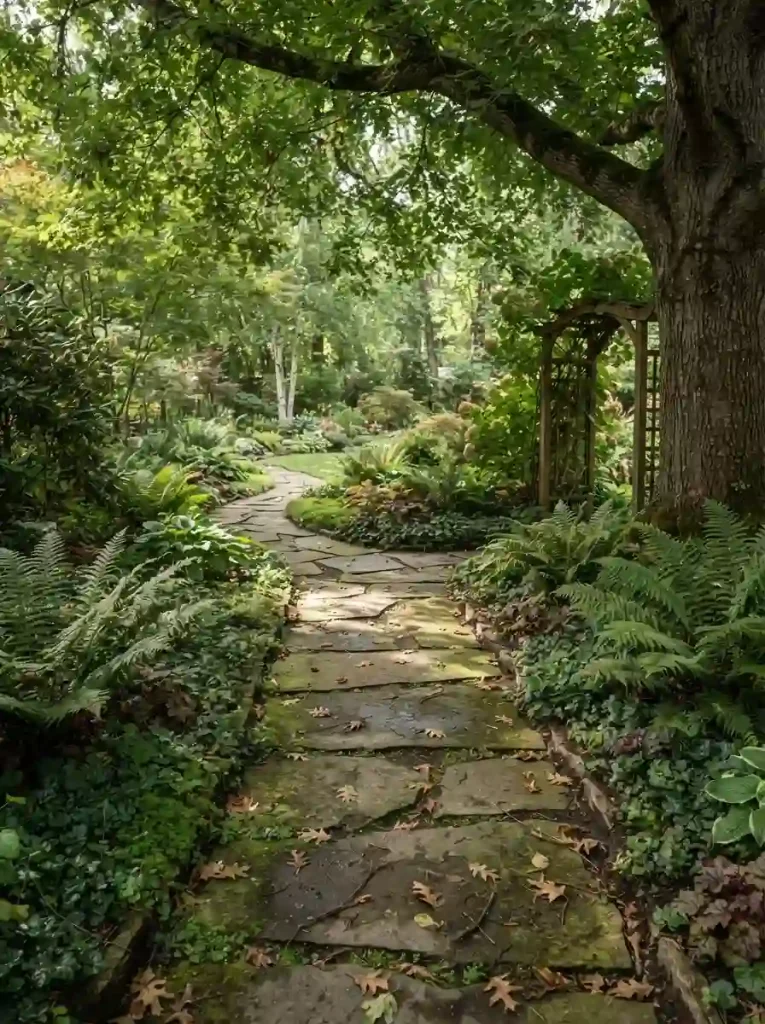
A narrow woodland path can turn an awkward shaded patch into an inviting part of the garden. It provides a clear route through the landscape while allowing plants to grow naturally along its edges.
Use flat stepping stones, irregular flagstones, or other weather-resistant materials that suit your garden. Arrange them in a gentle curve instead of a rigid straight line to create a relaxed, natural appearance. Make sure the stones sit securely and offer a reasonably level walking surface.
Plant low-growing shade-tolerant foliage along the path where enough space is available. Leave room for plants to reach their mature size without spilling across the walking area. In places with dense surface roots, position the stones carefully rather than excavating deeply to make them fit.
This design is especially appealing when the path leads to a garden bench, a quiet reading corner, or another part of the yard. A simple route can make the whole landscape feel more purposeful.
8. Grow Spring Bulbs Beneath Deciduous Trees
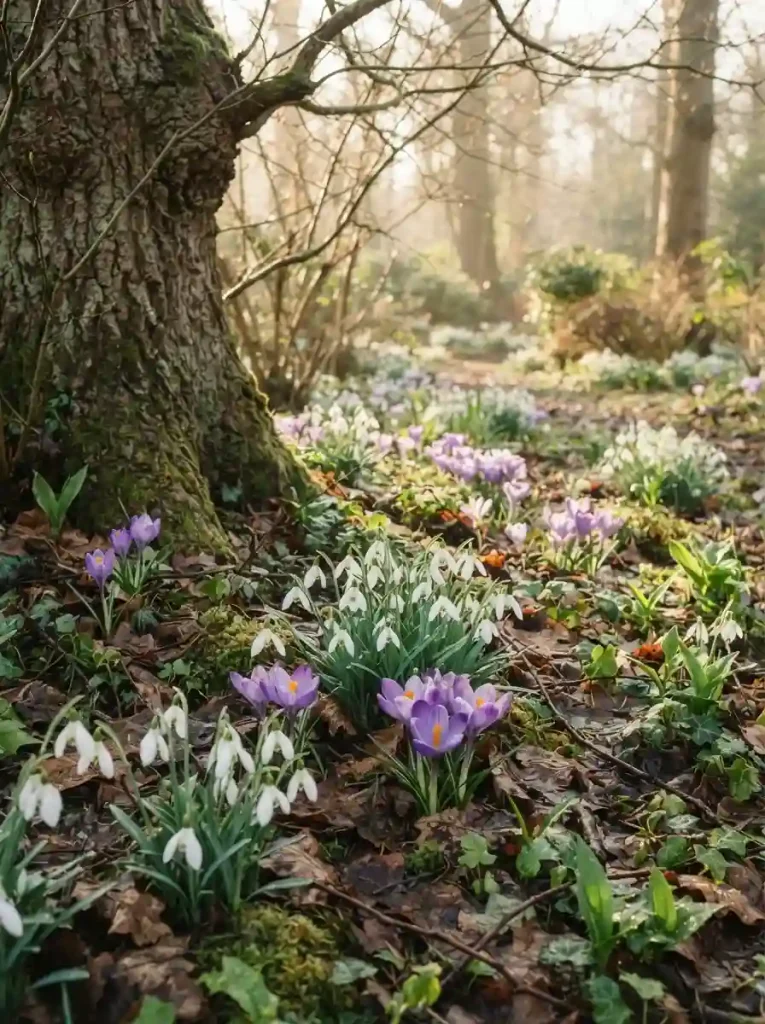
Spring bulbs can bring an early burst of color to the ground beneath deciduous trees. Because many deciduous trees allow more sunlight through before their leaves fully emerge, the area may offer a useful seasonal opportunity for certain woodland bulbs.
Depending on your region and soil, suitable choices might include snowdrops, crocuses, or other bulbs adapted to your local growing conditions. Check their sunlight and moisture requirements before planting, since not every bulb performs well in deep shade.
Plant bulbs in small, informal drifts for a natural effect. Groups of the same variety usually look more cohesive than individual bulbs scattered evenly across the bed. Once the flowers fade, allow the foliage to die back naturally so the bulbs can replenish their energy for the next growing season.
Take care when planting around established trees. Avoid cutting large roots, and choose planting locations where the soil can be disturbed with minimal impact. Where digging is impractical, use containers nearby for a similar seasonal display.
9. Build a Natural Rock Garden
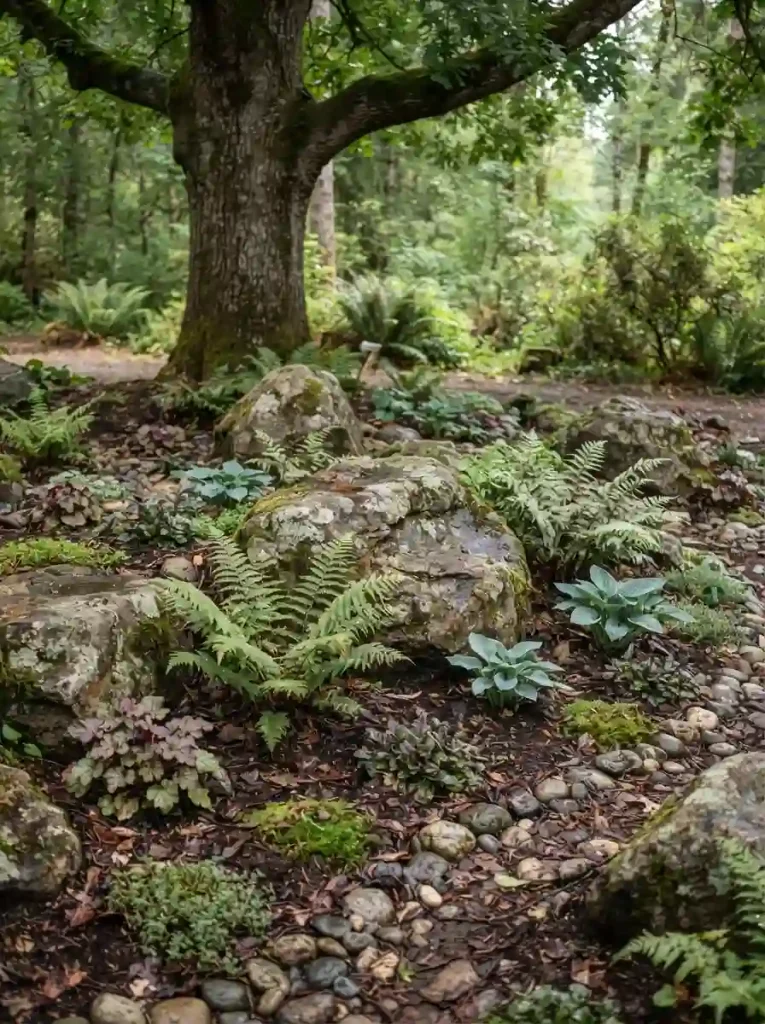
A natural rock garden can make a dry, shady area look thoughtfully designed even when flowers are difficult to grow. Stones provide structure throughout the year, while carefully selected foliage adds softness and contrast.
Choose a few stones of different sizes rather than filling the entire area with gravel. Place them in small groupings, keeping their arrangement natural and leaving open spaces for plants. Shade-tolerant ferns, suitable sedges, and other locally adapted foliage plants can soften the edges.
Before bringing in gravel or decorative stone, consider how it will affect the soil and tree roots. Avoid piling material against the trunk or covering the root flare. A thin, carefully managed layer of stone in selected areas may be more suitable than a deep bed of gravel.
This style works well in low-maintenance gardens and modern outdoor spaces. Combine neutral stones with different shades of green to create interest without relying on a large number of flowering plants.
10. Add a Simple Wooden Bench
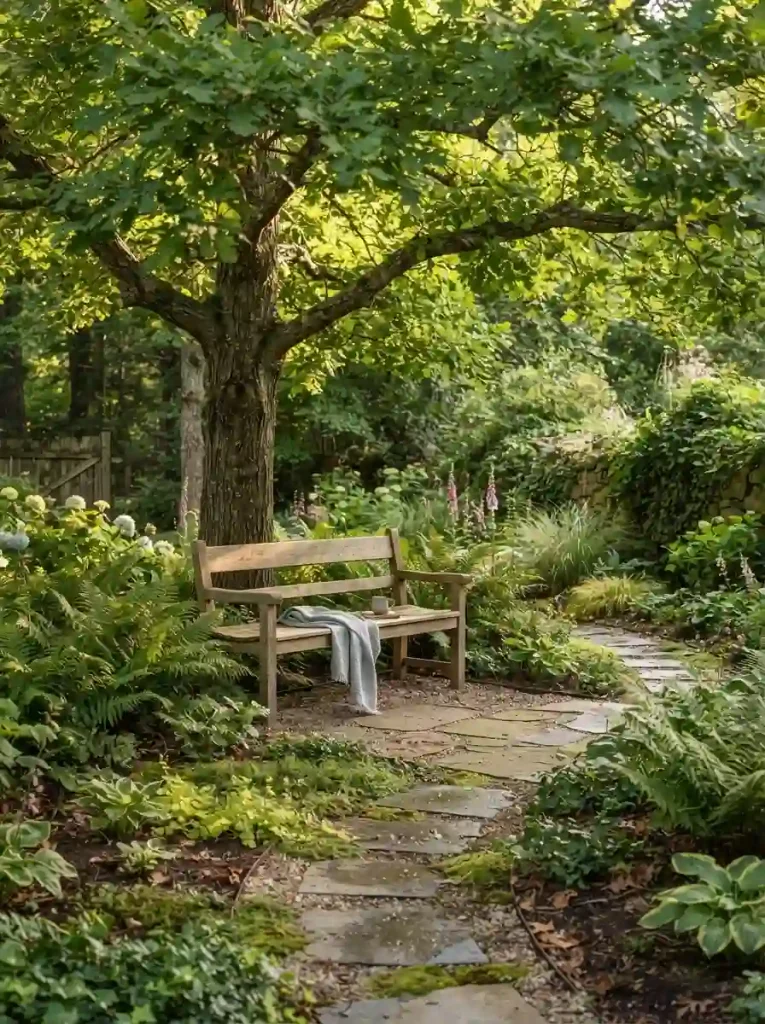
A shaded spot beneath a mature tree can become a comfortable place to relax with the addition of a simple bench. Rather than filling every available inch with plants, this idea gives the landscape a practical purpose while preserving the tree as its main focal point.
Choose a weather-resistant bench made from treated wood, naturally durable timber, or another outdoor-rated material. Position it where the ground is reasonably level and the seating area remains accessible without disturbing major roots. A bench placed slightly to one side of the trunk often looks more natural and leaves space for tree maintenance.
Surround the seating area with a few suitable shade plants, such as ferns or compact foliage varieties, without making the space feel crowded. Keep the immediate area easy to walk through, and use a stable surface beneath the bench if needed.
This design suits both small backyards and larger gardens. Even a modest bench can make an overlooked corner feel welcoming, especially when it offers a pleasant view of the rest of the landscape.
11. Create a Hosta Garden With Contrasting Foliage
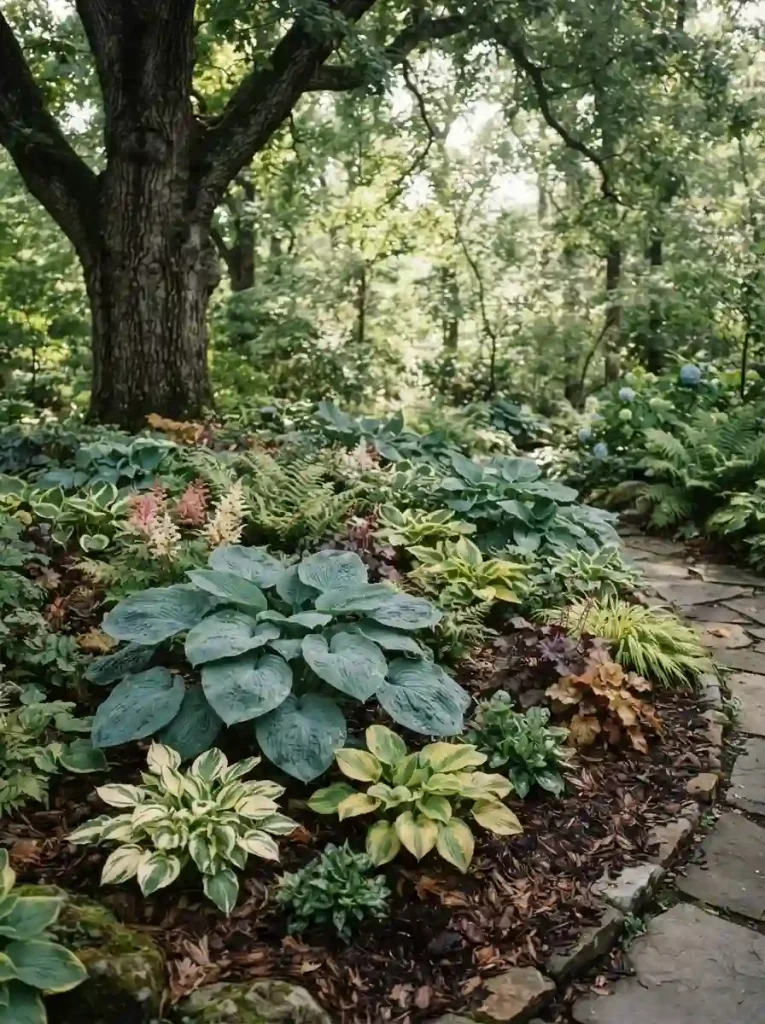
Hostas are popular choices for shady gardens because their broad leaves come in a variety of shapes, sizes, and colors. Combining different varieties can create an attractive planting bed even when very few flowers are present.
Choose hostas that suit your climate and the available moisture. Blue-green varieties offer a cool, calming appearance, while gold and variegated leaves can brighten darker corners. Pair them with smaller shade-tolerant plants to create contrast without making the design feel overcrowded.
Plant hostas in groups, leaving enough space for each variety to reach its mature width. Their foliage can eventually cover much of the ground, making the bed look fuller through the growing season. Keep in mind that hostas generally prefer more consistent moisture than many dry-shade plants.
If deer or slugs are common in your garden, consider how you will protect the foliage before choosing this design. With the right placement and care, a hosta garden can give the space beneath a tree a lush, organized appearance.
12. Design a Minimalist Gravel Garden
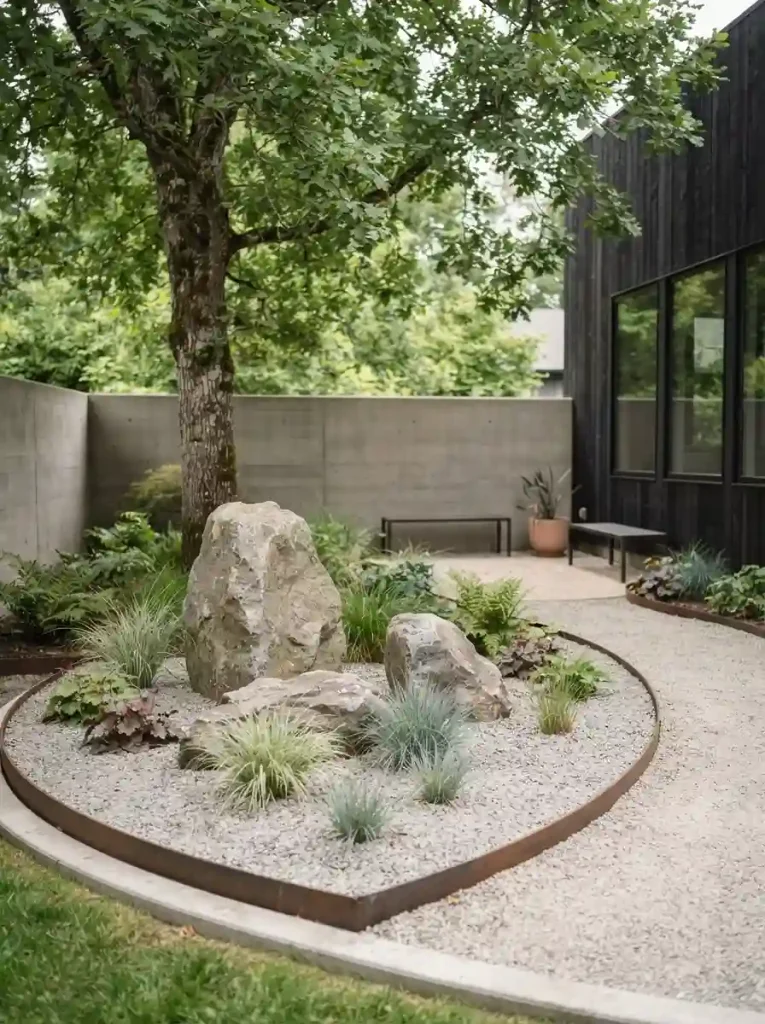
A minimalist gravel garden can create a neat, contemporary look beneath a tree without relying on a large number of plants. It is particularly useful for homeowners who prefer clean lines and simple landscaping details.
Start by deciding how much of the area should remain open and where plants will grow. Use a restrained gravel color, such as warm beige, soft gray, or natural white, to complement your home’s exterior. Add a few carefully positioned stones or compact shade-tolerant plants for visual interest.
Before installing gravel, consider the tree’s health and the condition of the soil. Avoid covering the trunk flare or building a deep layer over surface roots. A breathable, well-planned ground treatment is preferable to an arrangement that changes the soil conditions significantly.
You can soften the minimalist design with a few clumps of suitable sedges or other foliage plants adapted to the amount of shade and moisture available. The contrast between open gravel and green leaves gives the garden a balanced, modern appearance.
13. Plant a Shade Garden With Heuchera
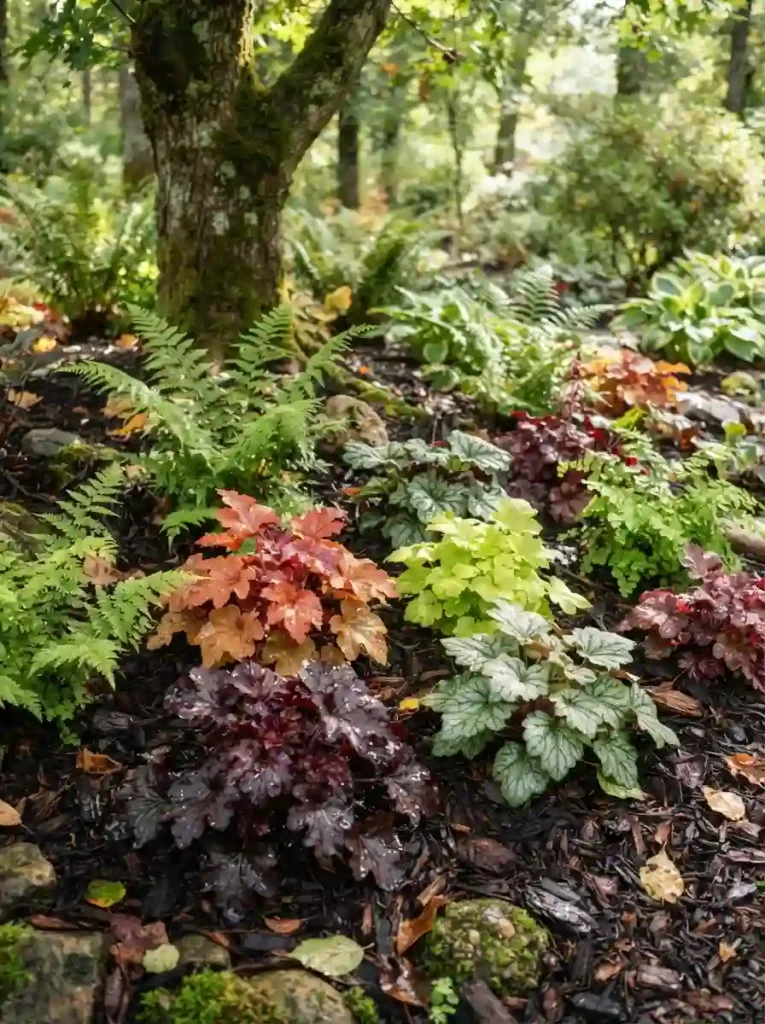
Heuchera, commonly known as coral bells, can introduce rich foliage colors to areas where bright flowering plants may struggle. Depending on the variety, its leaves can feature shades of burgundy, copper, lime green, silver, or deep purple.
Use heuchera to create small color groupings beneath a tree or along the outer edge of a shaded planting bed. Combining two or three complementary leaf colors often creates enough contrast without making the design feel busy. You can also mix heuchera with ferns or other compatible shade plants for a more layered effect.
Check the variety’s light and moisture requirements before planting. Many heucheras perform well in partial shade, but their tolerance for deep shade, heat, and dry soil varies. In challenging conditions, select varieties suited to your local climate rather than relying on appearance alone.
Good drainage is important, so avoid planting them in persistently waterlogged soil. With appropriate placement, their colorful leaves can provide interest throughout much of the growing season.
14. Make a Small Moss Garden
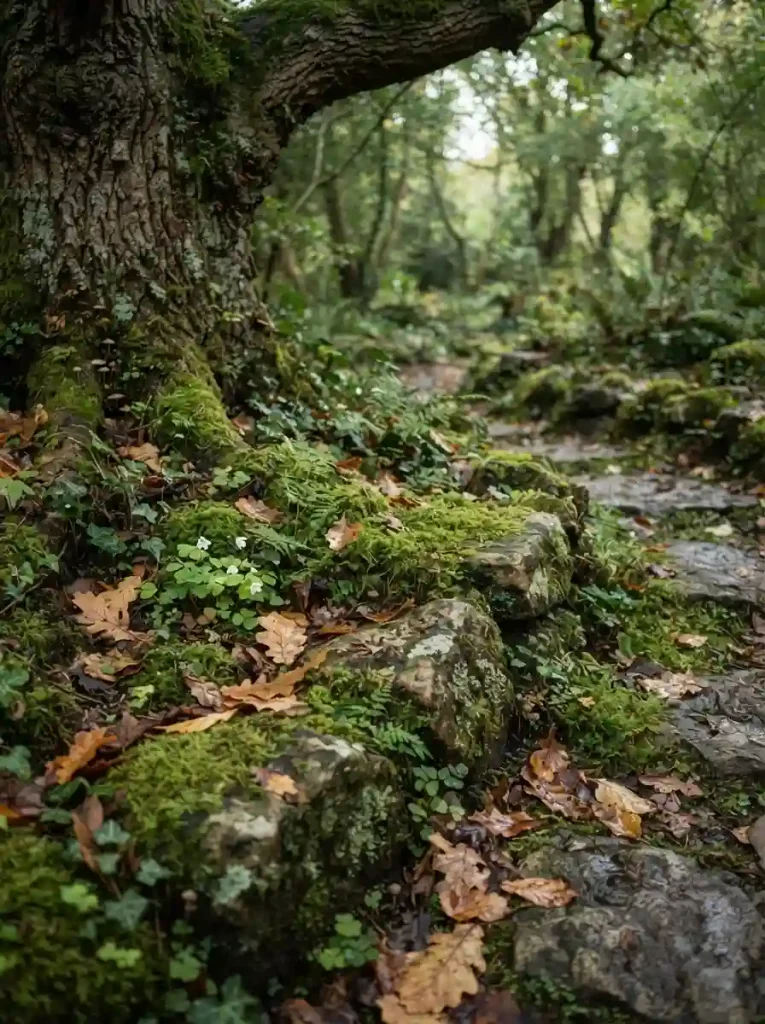
A moss garden can create a quiet, woodland-inspired look beneath a tree, especially in locations with naturally moist soil, gentle shade, and limited foot traffic. Its soft texture offers a different appearance from conventional lawns or heavily planted flower beds.
Before introducing moss, observe the site carefully. Moss generally establishes more readily where conditions suit it, and it may struggle in hot, dry locations or where the soil is frequently disturbed. Choose a locally suitable moss species and avoid collecting plants from protected natural areas.
Keep the design simple by allowing moss to occupy suitable spaces between stones, around the edges of a planting bed, or across an existing shaded patch. A few weathered rocks can provide structure without overwhelming the delicate ground surface.
Avoid unnecessary digging and heavy foot traffic. If the tree’s canopy blocks most rainfall, monitor moisture levels and water carefully when needed. A moss garden works best when the natural conditions support it rather than when you have to constantly fight the environment.
15. Add a Curved Flower Bed Around the Tree
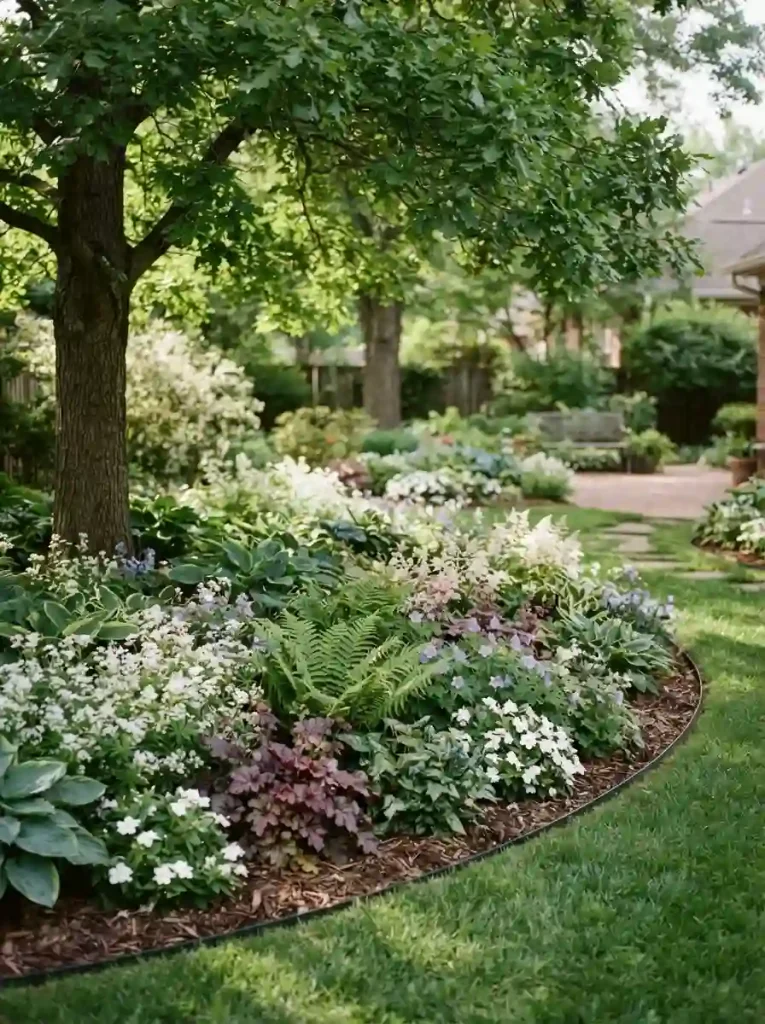
A curved flower bed can bring color and structure to the space beneath a tree while making the surrounding lawn look more organized. The secret is selecting flowers and foliage plants that tolerate the actual growing conditions rather than choosing varieties based only on their appearance.
Start by outlining a broad, flowing bed that follows the shape of the tree’s canopy or the surrounding landscape. Plant suitable shade-tolerant perennials in groups, using different heights and leaf textures to create a balanced arrangement. Where the site receives some filtered sunlight, you may have additional options for seasonal flowers.
For deep shade, prioritize plants grown mainly for their foliage, with flowering varieties added wherever conditions allow. This approach helps the bed remain attractive even when blooms are limited.
Leave enough open space around the trunk and avoid raising the soil level over the tree’s roots. A natural mulch layer can finish the bed and help reduce weed growth while the plants establish.
16. Create a Woodland Garden With Native Plants
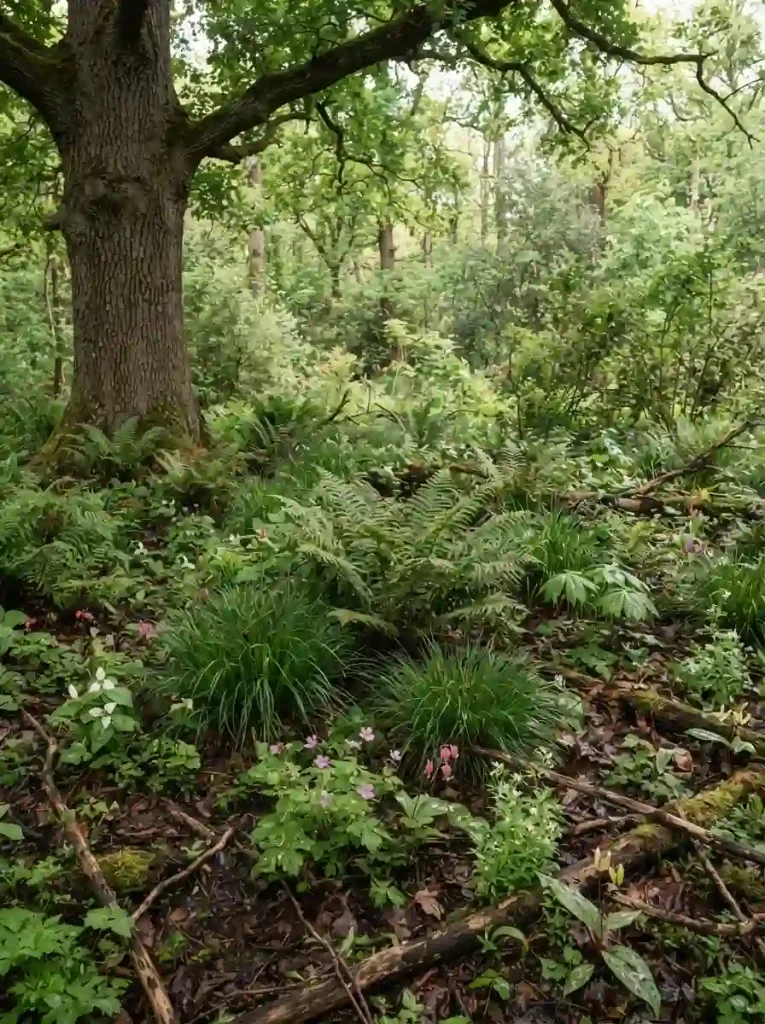
Native plants can be an excellent option for landscaping beneath trees because locally adapted species may already suit the region’s rainfall patterns, soil conditions, and seasonal changes. They can also help support local wildlife when the right plants are chosen.
Begin by researching native ground covers, ferns, sedges, and woodland perennials suitable for your area. Look for species that tolerate the particular combination of shade and moisture beneath your tree. A native plant that thrives in a damp woodland may not perform well beneath a large tree with dry, competitive roots.
Arrange the plants in natural-looking clusters rather than rigid rows. Combining a few different species can provide variety while preserving the informal character of a woodland garden. Choose plants with different flowering times or foliage textures if you want the landscape to change throughout the year.
Avoid introducing invasive plants or species that spread aggressively beyond their intended area. Once established, a well-matched native planting can become a more natural extension of the surrounding landscape.
17. Build a Small Decorative Dry Creek Bed
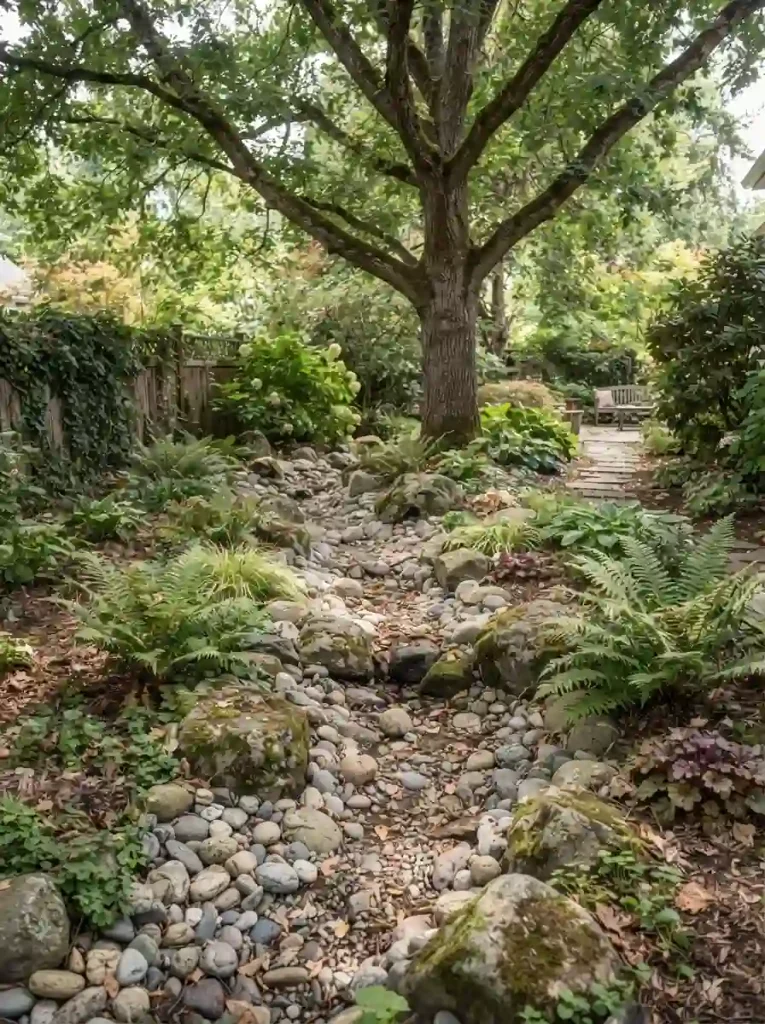
A decorative dry creek bed can add texture and movement to a shaded garden, even when there is no running water. Its winding shape creates a natural focal point and helps break up broad areas of mulch or ground cover.
Use a mixture of smooth river stones and larger rocks to create variation in size and texture. Arrange the stones in a gently curving channel, allowing some of the larger pieces to anchor the design along the edges. Shade-tolerant plants can be added nearby to soften the transition between stone and soil.
If the area has a genuine drainage problem, assess where the water comes from and where it needs to go before building the feature. A decorative creek bed should not be assumed to solve drainage issues without proper planning.
Avoid deep excavation around established tree roots. Where possible, create the visual effect using surface placement rather than digging a deep channel. The finished feature can suit rustic, woodland, and contemporary garden styles.
18. Design a Shaded Seating Nook With Pavers
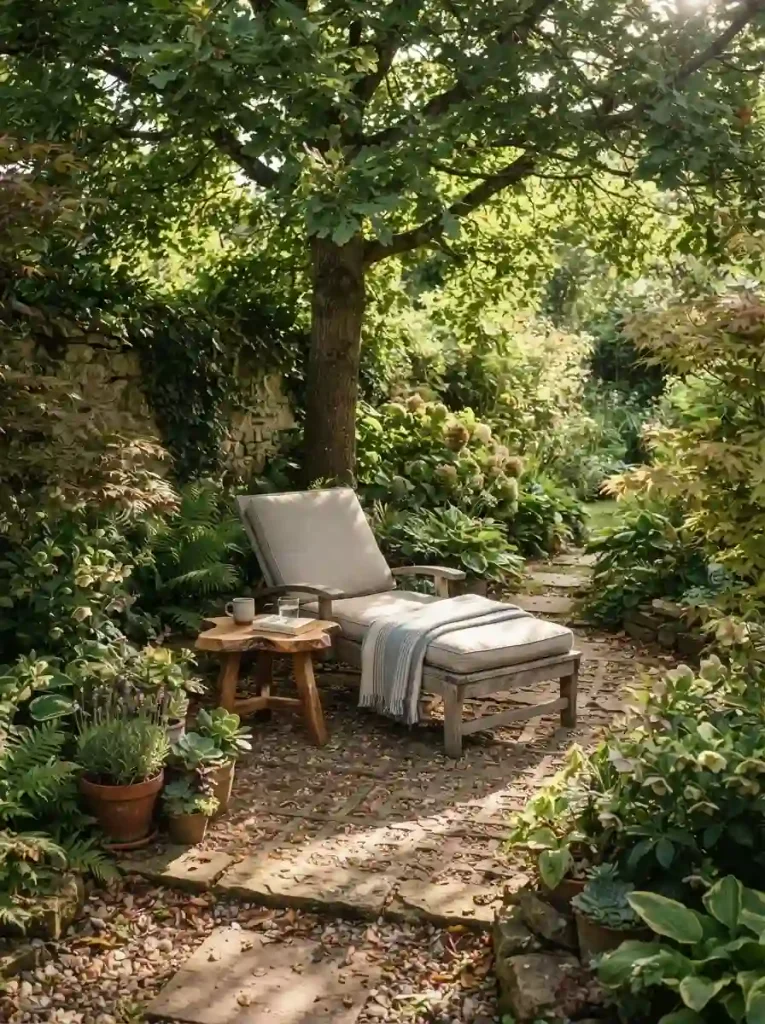
If you want a more defined outdoor living space, a small seating nook beneath a tree can turn an unused corner into a practical destination. A few carefully placed pavers and comfortable outdoor furniture may be all you need.
Choose a location that provides convenient access without disturbing major roots. Use a layout that follows the natural shape of the site, and avoid deep excavation or heavy compaction around the tree. Where roots are close to the surface, a carefully planned permeable surface or an alternative location may be safer than a conventional paved patio.
Add a compact outdoor chair or bench and use a few containers for greenery if planting directly into the soil is difficult. Weather-resistant materials and simple furniture shapes help keep the area functional without overwhelming the tree.
Consider how rainwater will move across the surface. Avoid creating a sealed area that redirects water toward the trunk or prevents the surrounding soil from receiving moisture. A thoughtfully designed nook can provide shade and comfort while respecting the tree’s growing environment.
19. Use Ornamental Grasses for Texture
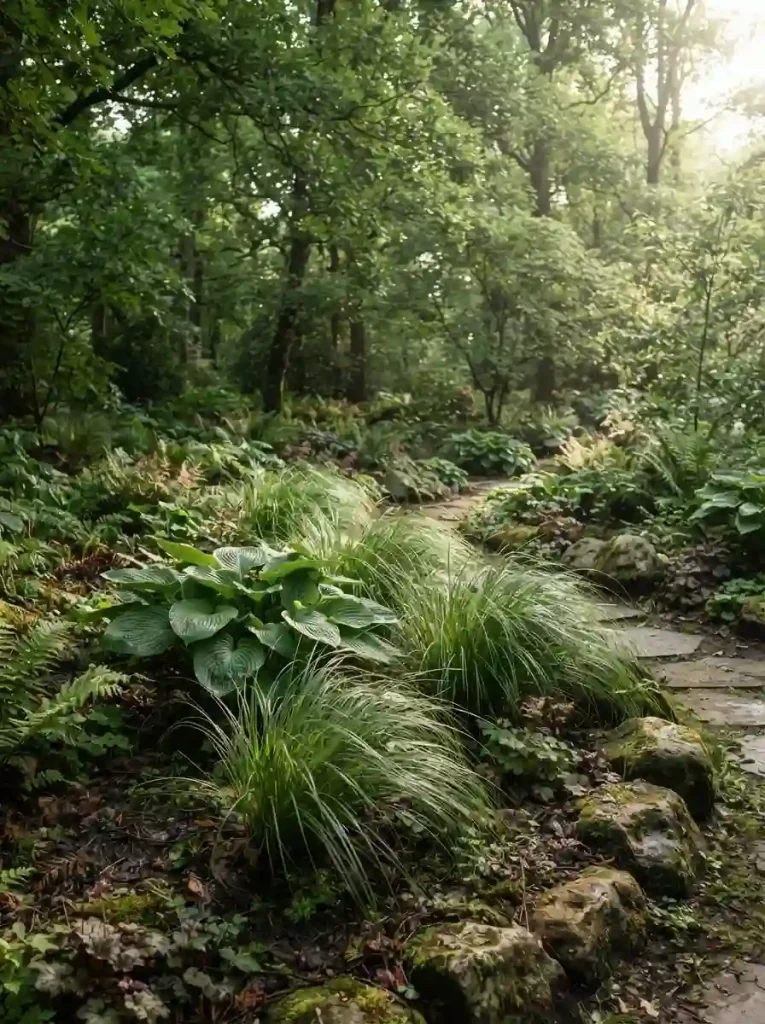
Ornamental grasses and grass-like plants can bring movement and structure to a shaded landscape. Their narrow leaves contrast with the broad foliage of hostas and other shade plants, helping the garden feel more varied without requiring a large number of different species.
For shady areas, look for suitable sedges and other grass-like plants rather than assuming every ornamental grass will tolerate limited sunlight. Some true ornamental grasses need substantial direct sun, while certain sedges are better suited to shade and woodland conditions.
Plant them in small groups along the outer edge of the tree bed or between larger foliage plants. Their upright or arching forms can create a soft border that moves gently in the breeze. Choose varieties according to mature size so they do not crowd the tree trunk or nearby paths.
Water newly planted specimens as needed and maintain the area according to the chosen species. When the plants are well matched to the site, their contrasting textures can make even a mostly green shade garden look interesting.
20. Create a Simple Woodland Garden With a Birdbath
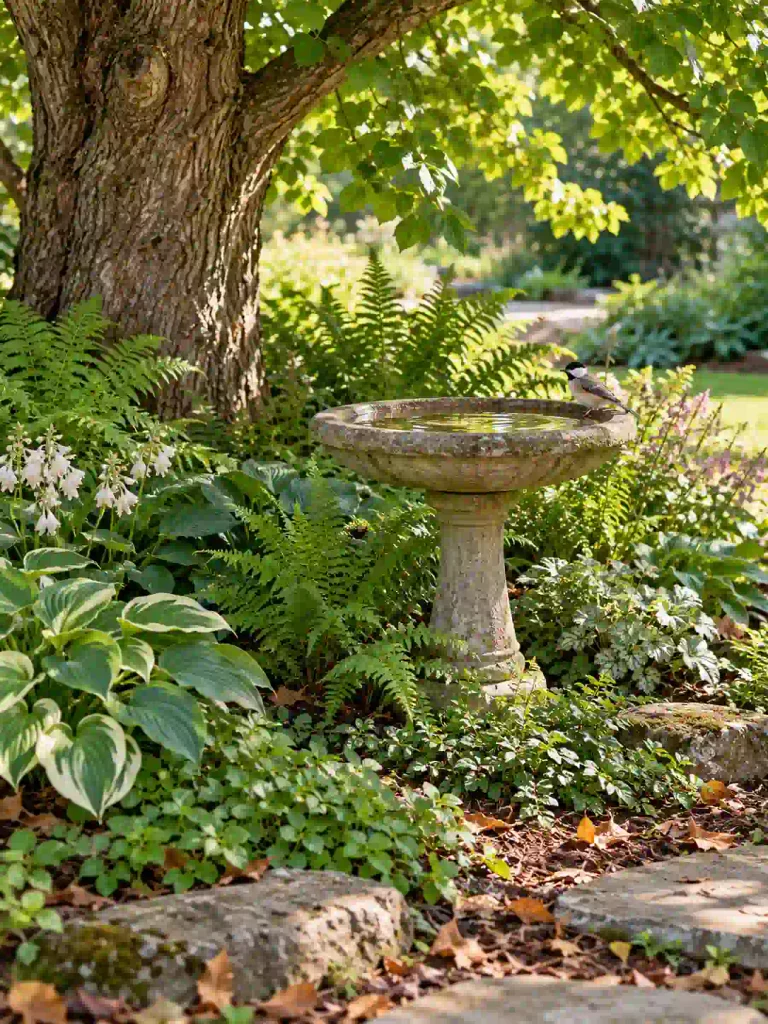
A birdbath can give a shady garden a focal point while making the area more inviting for local birds. Surrounded by carefully selected plants, it can turn the ground beneath a tree into a small wildlife-friendly retreat.
Choose a stable birdbath with a shallow basin and place it where you can clean and refill it easily. A position with some nearby cover can help birds feel safer, but avoid locating the basin where falling debris constantly contaminates the water or makes maintenance difficult.
Surround the feature with shade-tolerant foliage plants, leaving open access around the basin. Native plants that provide shelter or seasonal food may also make the garden more useful to local wildlife. Avoid crowding the birdbath with tall plants that prevent birds from seeing their surroundings.
Replace the water regularly and clean the basin as needed. During freezing weather, follow local wildlife guidance for maintaining or temporarily removing the feature. With basic care, a birdbath can add a peaceful focal point and a little natural activity to your shaded landscape.
Tips for Landscaping Successfully Beneath a Tree
Before choosing your favorite under tree landscaping idea, consider the tree’s health and the conditions of the site. A beautiful design should work with the existing roots, soil, and canopy rather than forcing the tree to adapt to an unsuitable landscape.
- Choose plants for the actual light conditions: Deep shade, partial shade, and filtered sunlight support different plants. Observe the area throughout the day before making your selections.
- Check soil moisture: Large trees can absorb considerable amounts of water, leaving the surrounding soil dry even when the garden receives regular rainfall.
- Protect the roots: Avoid cutting major roots, digging deeply, or compacting the soil with heavy equipment.
- Keep the trunk clear: Leave the root flare visible and keep mulch away from direct contact with the bark.
- Avoid raising the soil level: Adding a deep layer of soil over established roots can reduce oxygen availability and harm the tree.
- Use plants that suit your climate: Check mature size, moisture requirements, and local invasive-species guidance before purchasing plants.
- Plan for maintenance: Select a design that fits the time you can spend watering, pruning, removing leaves, and controlling weeds.
- Allow room to grow: Small plants can eventually become crowded if their mature size is not considered during planting.
Final Thoughts
Landscaping beneath a tree does not have to be complicated. From layered fern gardens and colorful hostas to natural stone borders, gravel features, and peaceful seating areas, there are plenty of ways to make a shady space more attractive.
The best design depends on your tree, local climate, soil moisture, and personal style. Start by understanding the growing conditions, protect the existing roots, and select plants that can thrive with the available light and water.
Even a simple mulch ring or a small collection of shade-friendly plants can make a noticeable difference. With thoughtful planning, the space beneath your tree can become a beautiful, useful part of your garden rather than an area you struggle to maintain.