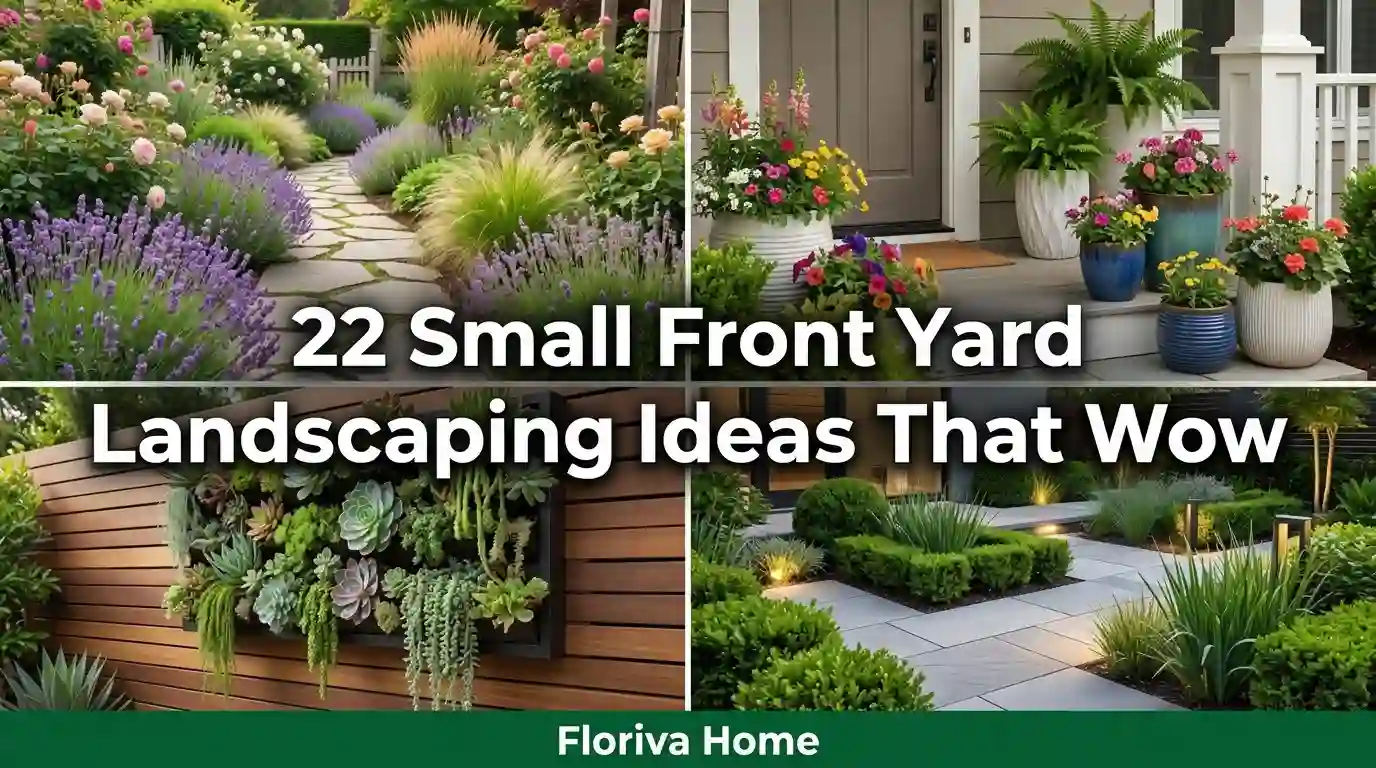
22 Small Front Yard Landscaping Ideas That Wow
A small front yard can still make a big first impression. You don’t need a sprawling lawn or an elaborate landscape design to create a welcoming entrance that feels attractive, organized, and full of personality.
The secret is to make every part of the space work together. The right combination of plants, pathways, textures, containers, and focal points can make even a compact front yard feel larger and more thoughtfully designed.
Whether you’re working with a narrow strip, a tiny lawn, or a front yard that feels awkwardly shaped, these small front yard landscaping ideas can help you create a space that looks impressive without becoming difficult to maintain.
1. Frame the entrance with matching flowering shrubs
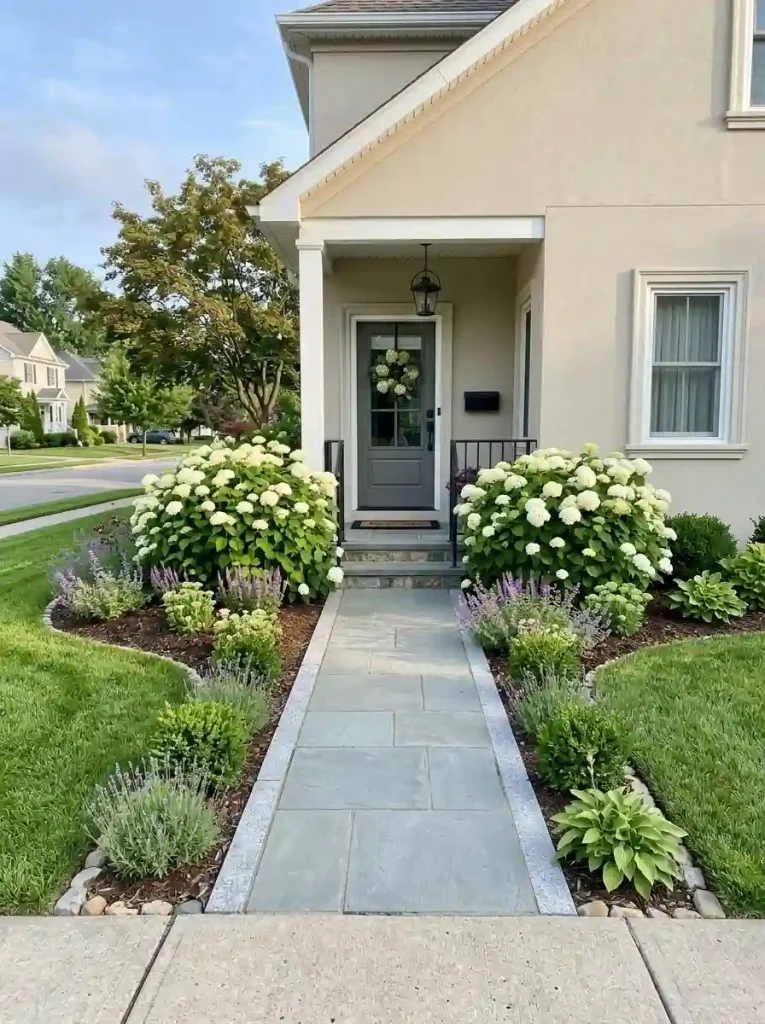
Your front door is naturally one of the first things people notice, so why not make it the visual destination of your landscape?
Place matching or closely related flowering shrubs on both sides of the entrance to create a sense of balance. Choose plants that stay within a manageable mature size so they don’t eventually cover windows, steps, or the walkway.
The flowers provide seasonal color, while the repeated shapes give the entrance a more finished appearance. You can keep the rest of the front yard simple and let this planting arrangement do most of the visual work.
Expert Tip:
Choose shrubs based on their mature width, not just their current size. A little extra planting space now can save you from constant pruning later.
2. Create a layered foundation bed beneath the windows
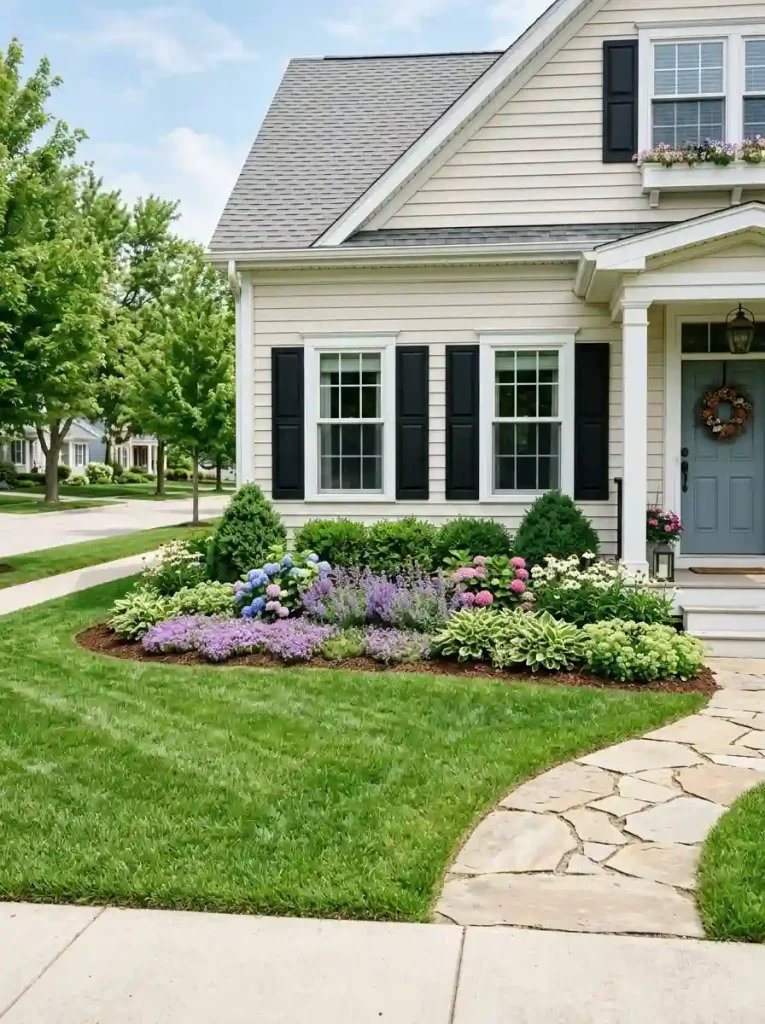
A narrow foundation bed can add plenty of depth without taking up much of your front lawn.
Start with low shrubs near the house, then add medium-height flowering plants toward the outer edge. Finish with a few ground-level plants to soften the border between the garden and lawn.
The different heights keep the bed from looking flat while allowing each plant to remain visible. Just be careful not to choose mature plants that will eventually block windows or crowd the siding.
Expert Tip:
Think of your planting bed in three levels—back, middle, and front. This simple layering technique creates depth while keeping a small space visually organized.
3. Use a curved walkway to soften a boxy front yard
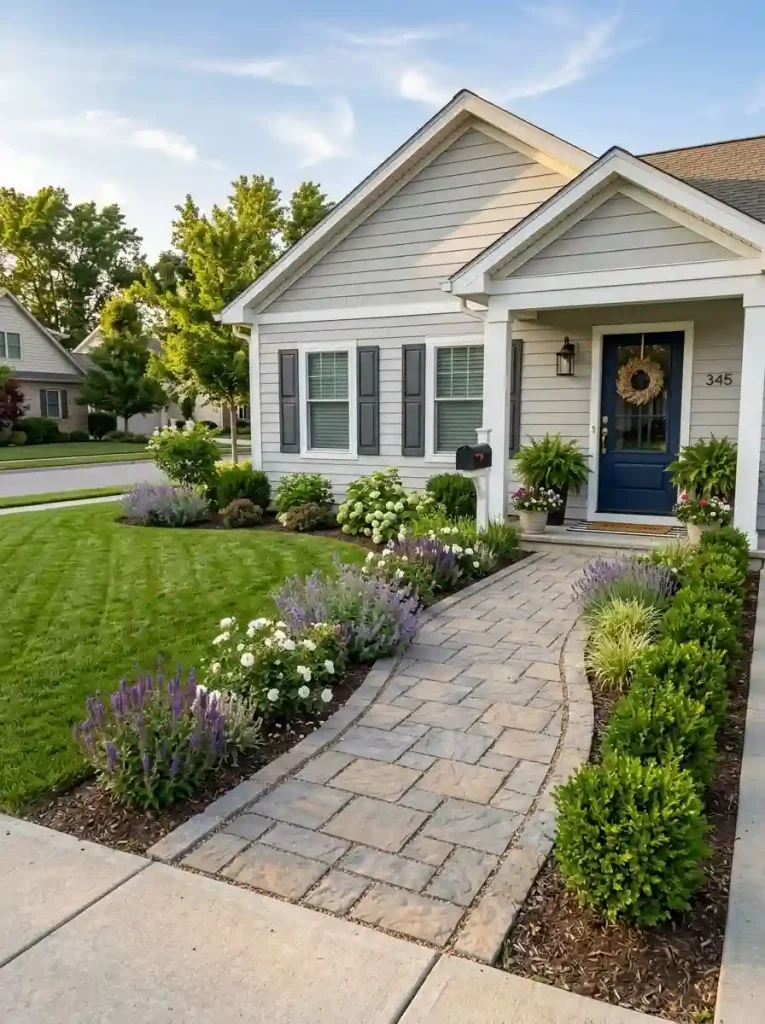
If your front yard is mostly straight lines, introducing a gentle curve can make the space feel softer and more interesting.
A curved walkway can guide visitors naturally toward the front door while creating additional opportunities for planting along the edges. You don’t need a dramatic winding path—a subtle bend may be enough to change the overall appearance.
Use affordable pavers, stepping stones, or another material that complements the exterior of your home. Keep the curve wide enough for comfortable walking and easy maintenance.
Expert Tip:
Avoid creating too many bends in a tiny yard. One gentle curve usually looks more natural and keeps the path easy to follow.
4. Plant a small ornamental tree as a focal point
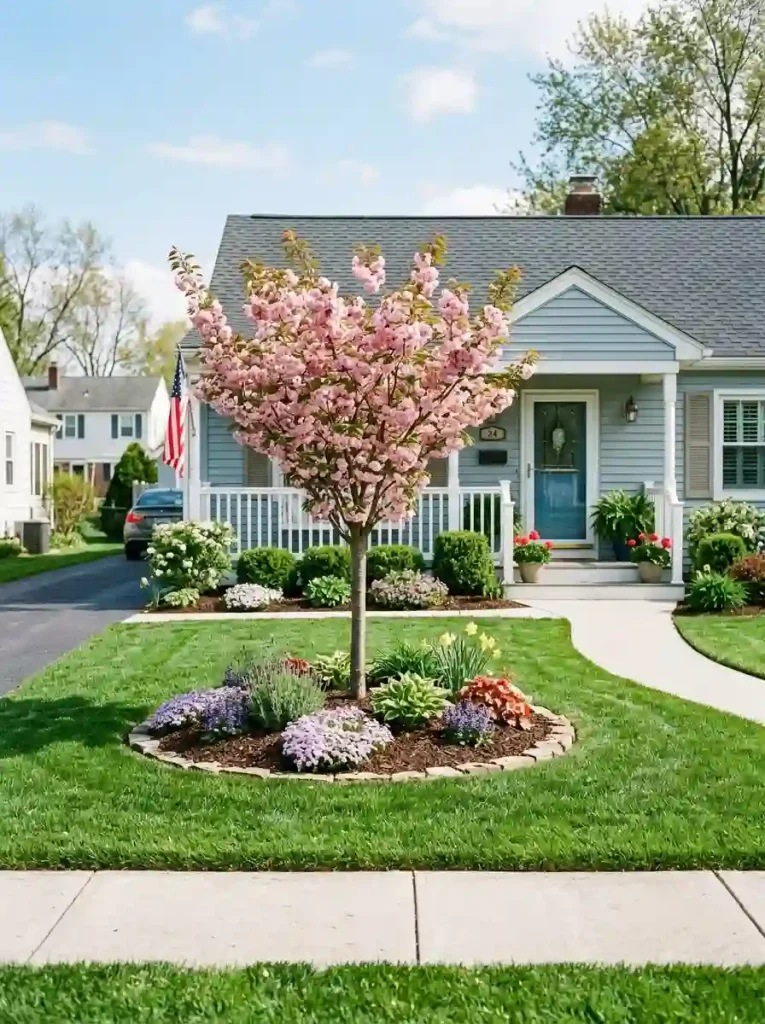
One well-positioned ornamental tree can give a small front yard the height and structure it needs.
Instead of planting several large trees that could overwhelm the property, choose one species suited to the available space and your local climate. A small flowering or ornamental tree can provide seasonal interest while creating a natural centerpiece.
Keep the area beneath the tree relatively simple. A circular planting bed, low groundcover, or clean layer of mulch can frame the trunk without competing with the canopy.
Expert Tip:
Check the tree’s mature height and spread before planting. The goal is to create a focal point—not a future problem with the roof, driveway, or utility lines.
5. Add oversized planters beside the front steps
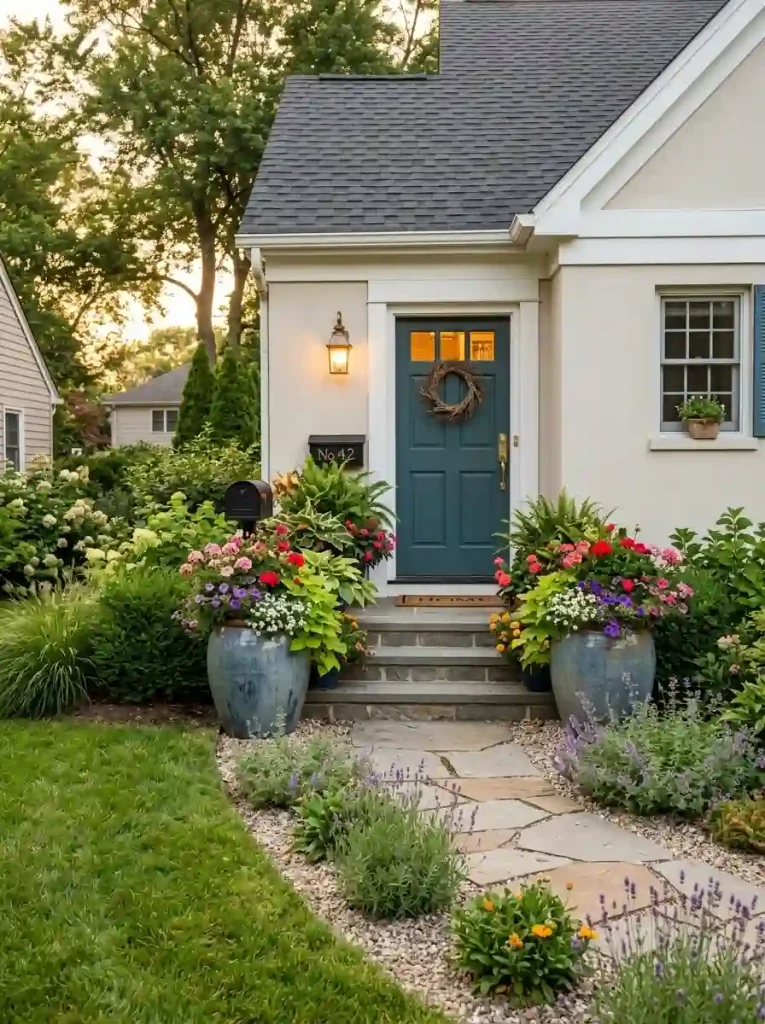
When planting space is limited, containers can give you the flexibility of a garden without requiring another large flower bed.
Place two substantial planters near the front steps or doorway and fill them with plants that complement your home’s exterior. Use different foliage textures or seasonal flowers to create interest.
The containers also make it easy to refresh the entrance throughout the year. When one plant finishes blooming, you can replace it without disturbing the rest of your landscape.
Expert Tip:
Use containers with enough visual weight to balance the entrance, but don’t choose pots so large that they narrow the walkway or make the doorway difficult to access.
6. Create a narrow pollinator garden along the sidewalk
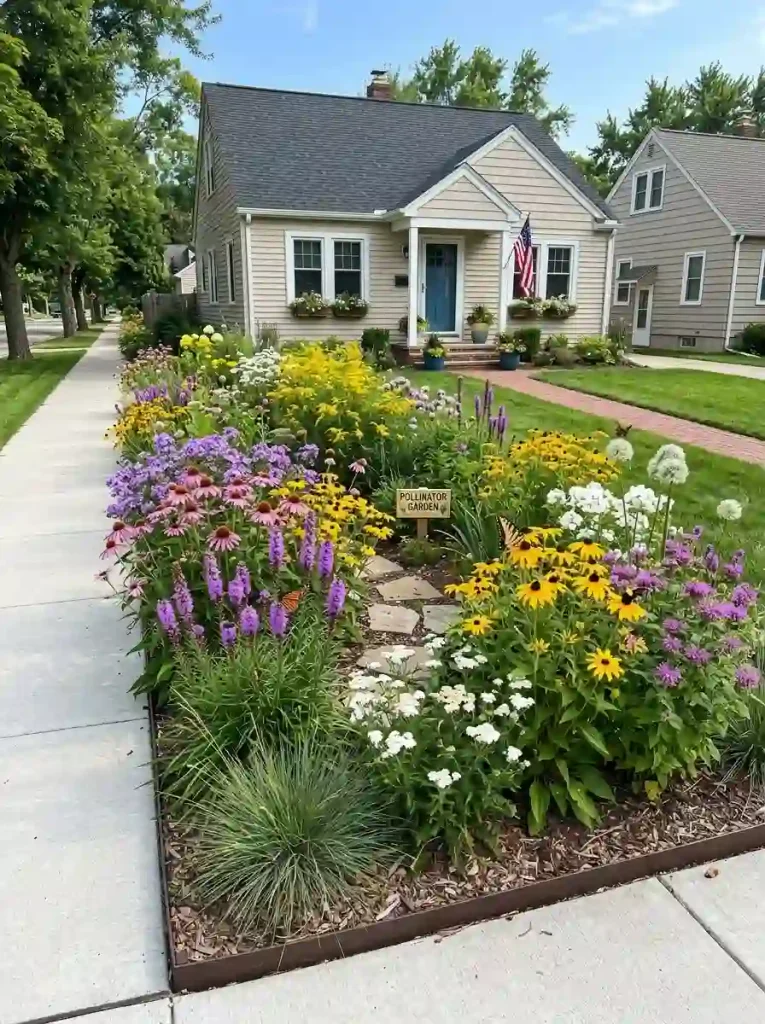
A narrow strip along the sidewalk can become a colorful pollinator-friendly garden without taking over your front yard.
Choose a handful of flowering plants that provide nectar and pollen at different times of the growing season. Group similar plants together so the area still looks intentional rather than randomly planted.
Keep taller varieties toward the back and shorter flowers near the sidewalk. This arrangement gives the garden structure while preserving visibility for pedestrians and vehicles.
Expert Tip:
Select plants suited to your region rather than choosing varieties solely for their appearance. Local conditions can make a major difference in how much care your garden requires.
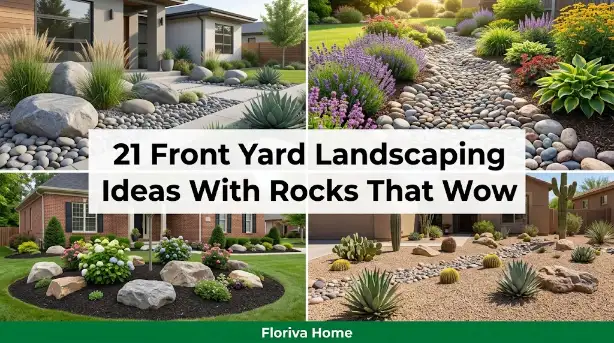
7. Use gravel to create a clean modern planting bed
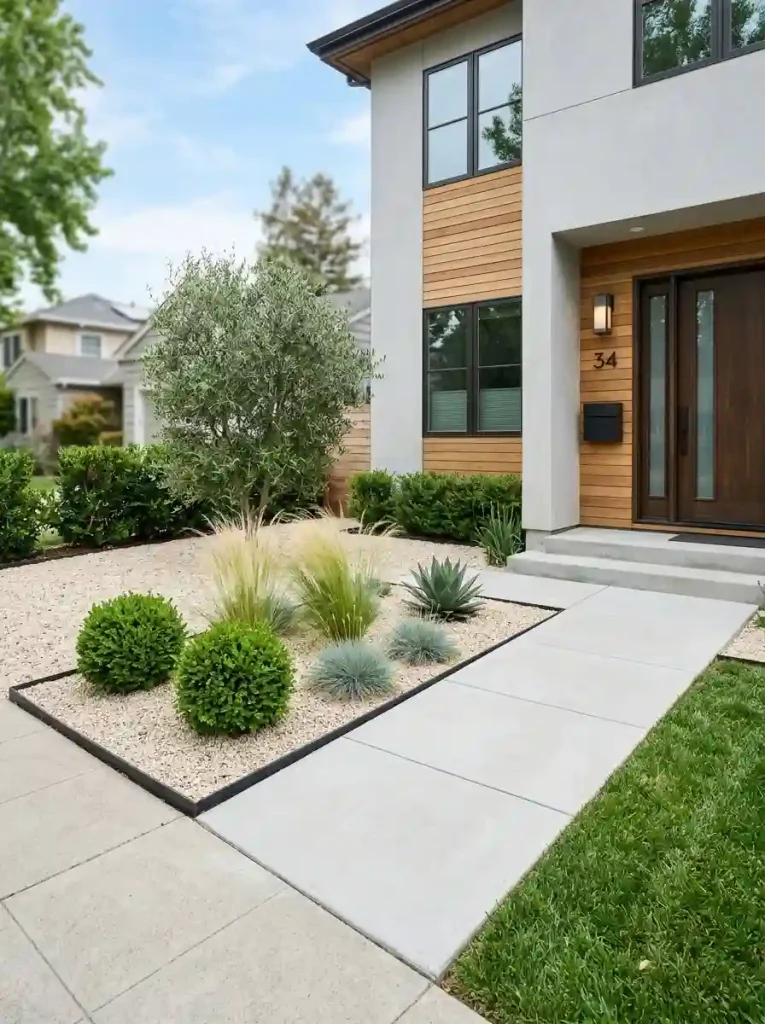
Gravel can give a small front yard a clean, contemporary appearance while helping define individual planting areas.
Create a simple gravel bed around a few carefully selected plants rather than filling the entire yard. Combine upright grasses, compact shrubs, or sculptural plants to create contrast against the smaller stones.
The restrained material palette can work especially well with modern homes, but it can also complement traditional architecture when paired with softer planting.
Expert Tip:
Install a clear border around the gravel so it doesn’t gradually spread into your lawn or walkway. A crisp edge makes the entire design look more deliberate.
8. Highlight the mailbox with a compact planting island
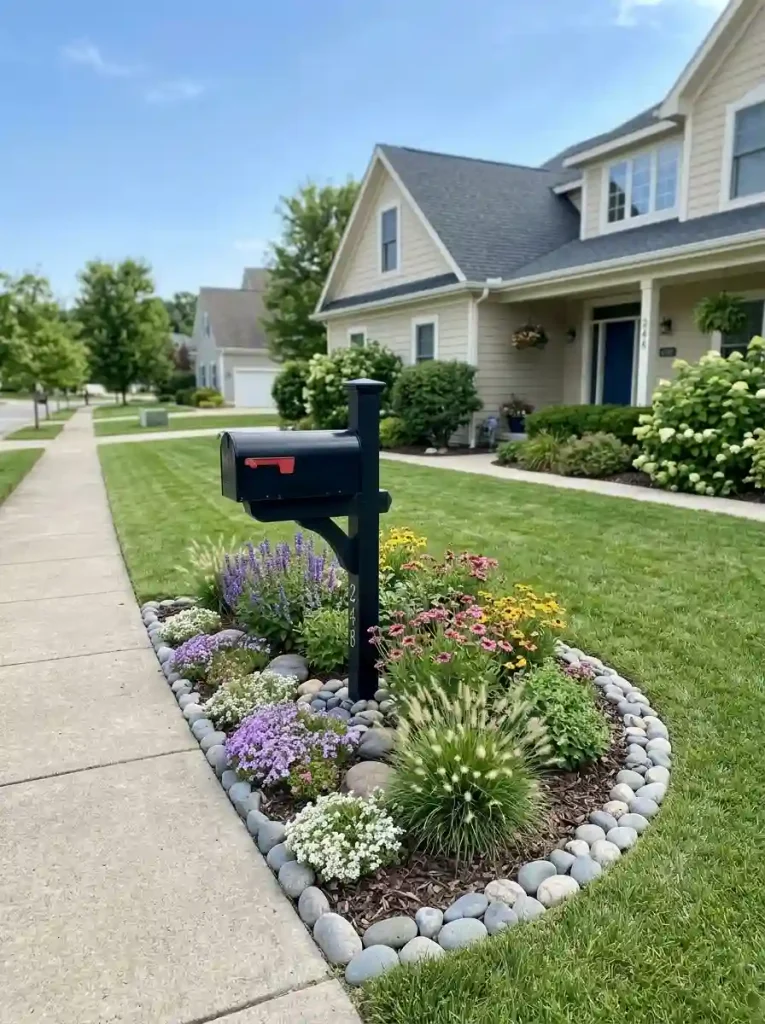
Your mailbox may be small, but it can become a useful focal point in the landscape.
Create a compact planting island around its base using low-growing flowers, foliage plants, or ornamental grasses. Keep enough space around the mailbox for easy access and make sure plants won’t obstruct the house number or delivery area.
A defined border can make the small garden feel intentional instead of looking like an afterthought.
Expert Tip:
Choose plants that tolerate the conditions around your mailbox, including heat from pavement and occasional foot traffic. Low-maintenance varieties are especially useful in this exposed location.
9. Add a narrow evergreen border for year-round structure
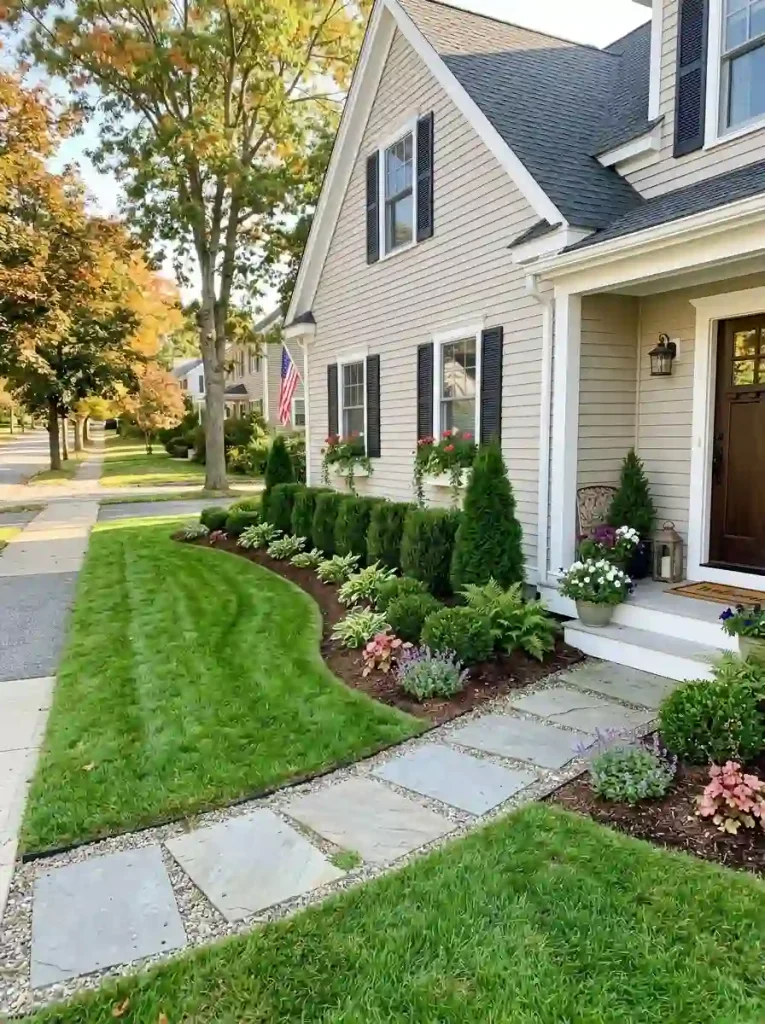
Flowers can provide plenty of seasonal excitement, but evergreen plants give your front yard a dependable structure throughout the year.
Use a narrow row of compact evergreen shrubs along the foundation, driveway, or walkway. Their consistent foliage can help define the shape of the landscape even when other plants are dormant.
Keep the planting relatively simple and repeat the same species instead of filling the border with too many varieties. Repetition creates a cleaner, more cohesive appearance.
Expert Tip:
Check the mature size before planting evergreen shrubs close to your house. Choose varieties that naturally stay compact instead of relying on heavy pruning to control them.
10. Turn a small slope into a terraced garden
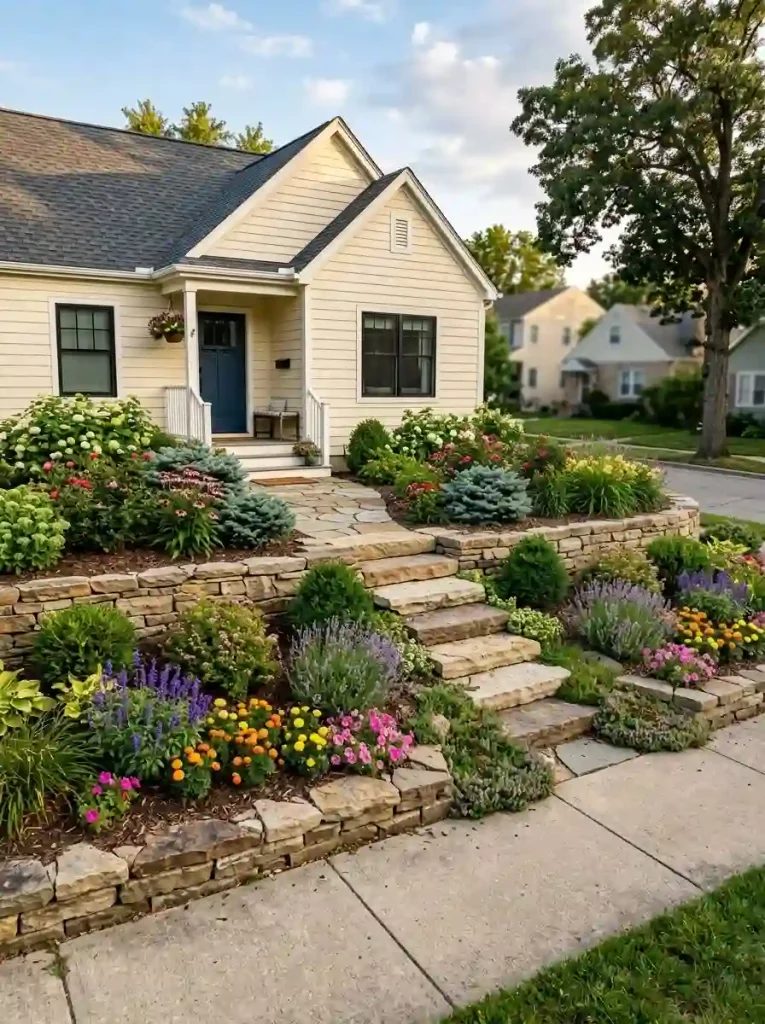
A sloped front yard can sometimes feel difficult to landscape, but the change in elevation can actually become one of its strongest features.
Instead of fighting the slope with one large planting area, divide it into two or three small levels using suitable edging or retaining materials. Plant each section with low-growing flowers, shrubs, or groundcover.
Terracing can add depth and make better use of an awkward space while helping define where plants grow.
Expert Tip:
Keep small terraces proportional to the yard. For significant slopes or retaining structures, consult an appropriate professional to make sure drainage and structural requirements are handled correctly.
11. Combine ornamental grasses with low flowering plants
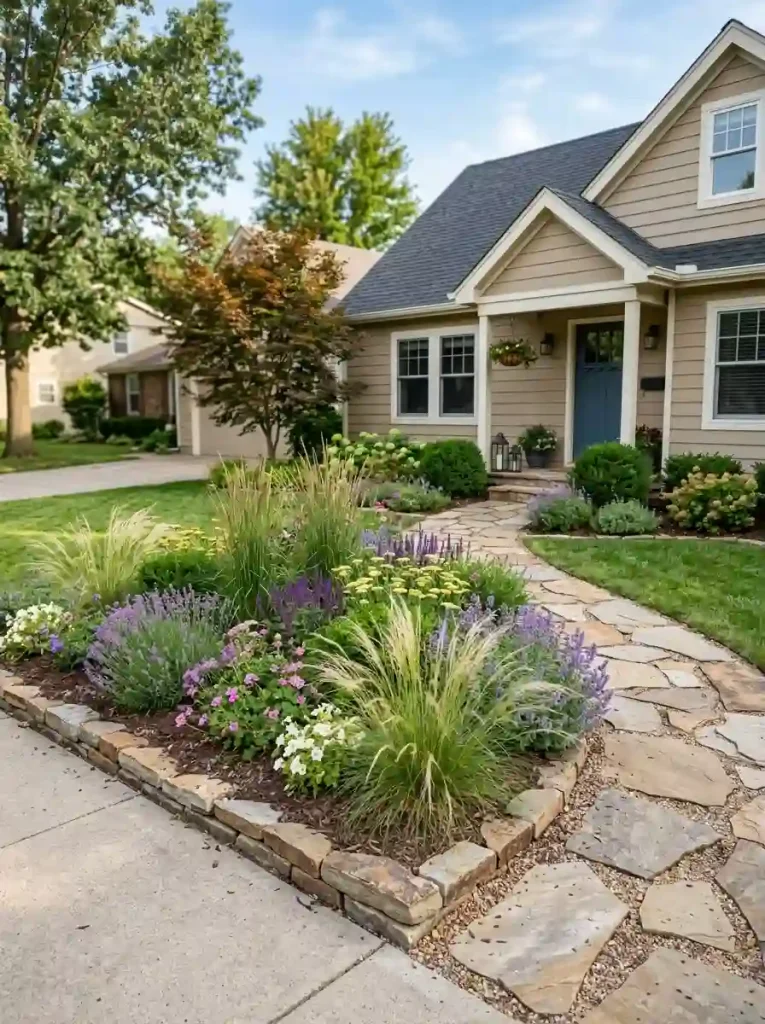
Ornamental grasses can bring movement and texture to a small front yard without requiring a complicated planting scheme.
Combine a few upright or softly arching grasses with shorter flowering plants around their base. The grasses provide height and structure, while the flowers add seasonal color closer to the ground.
This combination can work beautifully along a walkway, beneath a window, or around a small tree. Just choose varieties that fit your climate and available sunlight.
Expert Tip:
Repeat the same grass or flower in several areas of the front yard. Repetition ties separate planting beds together and makes the overall landscape feel more cohesive.
12. Create a compact gravel-and-plant courtyard
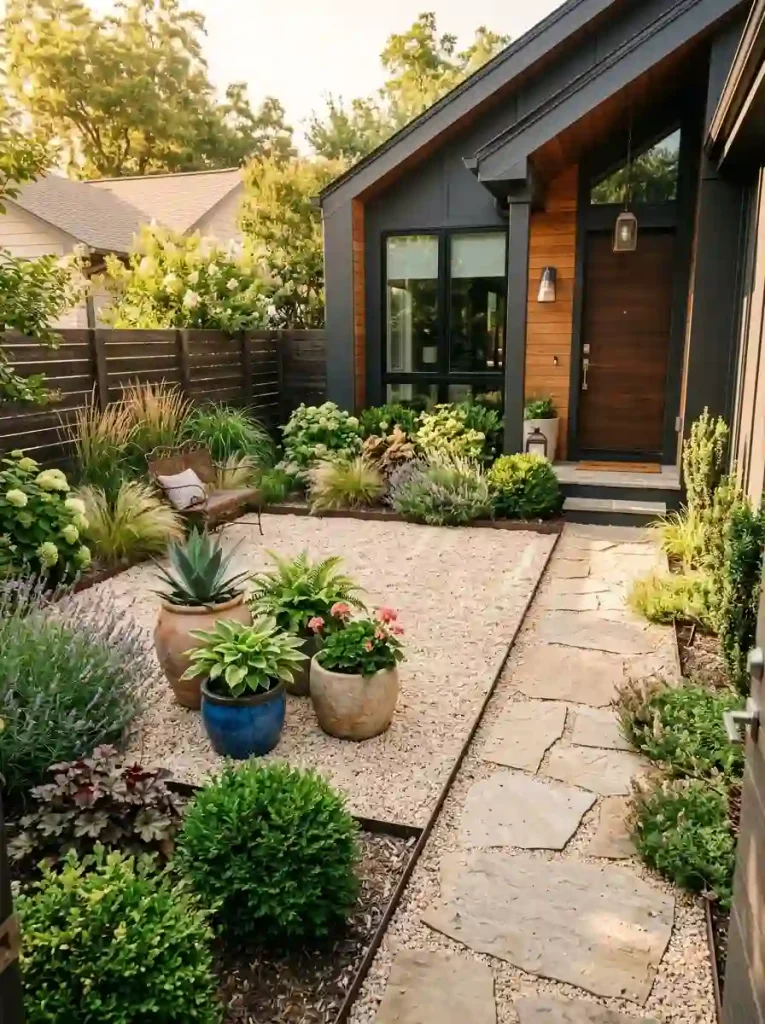
A small front yard can feel much more intentional when you divide it into a defined courtyard-style space. Instead of relying on a large lawn, use gravel as the main surface and surround it with carefully selected plants.
Leave a small open area near the entrance and use the remaining space for low shrubs, containers, or ornamental grasses. This approach works particularly well for homeowners who prefer a cleaner, more modern landscape.
The combination of hard and soft textures also makes a compact yard feel designed rather than simply planted.
Expert Tip:
Keep the color palette restrained. Using one gravel tone and a limited selection of plants can make a small courtyard appear larger and less cluttered.
13. Add a curved flower border around the lawn
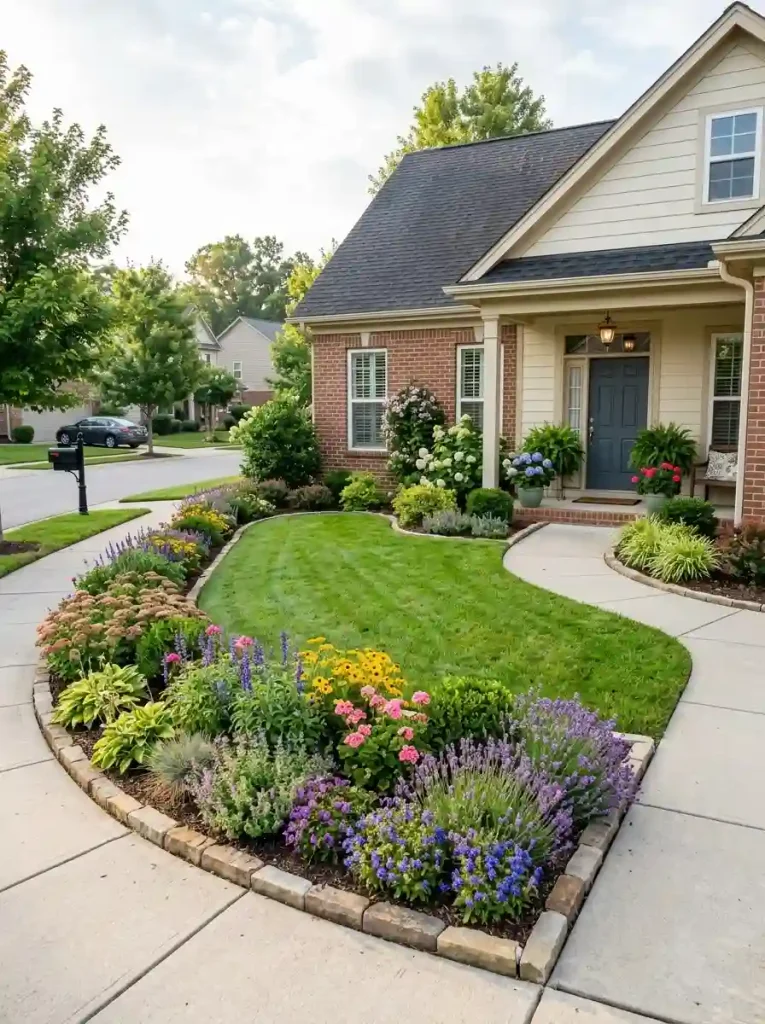
A simple lawn can become much more interesting when its edge has a graceful shape. Instead of keeping the planting border perfectly straight, create a gentle curve that follows the natural proportions of your front yard.
Fill the border with low flowers, compact shrubs, and foliage plants arranged in small groups. The curved edge creates movement while giving the lawn a softer transition into the garden.
This is also an easy way to make an otherwise ordinary rectangular lawn feel more customized.
Expert Tip:
Use a garden hose to test the curve before digging. Move it around until the shape looks natural from the street and from the front door.
14. Create a simple rain garden in a low spot
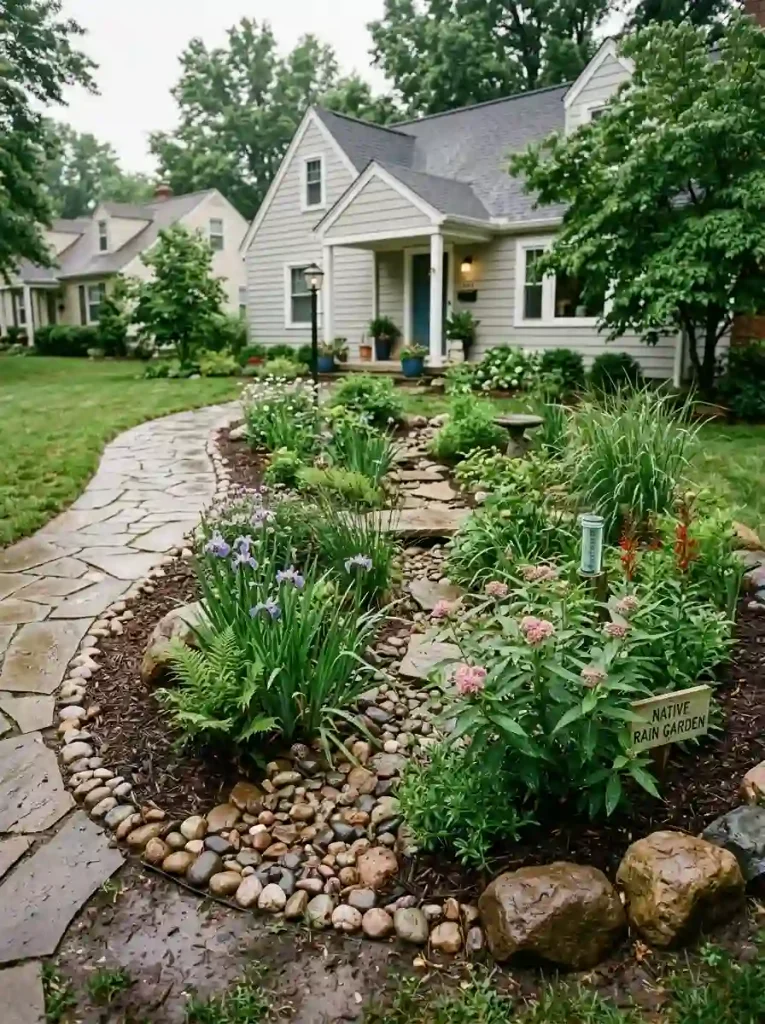
If water naturally collects in one area of your front yard, you may be able to turn that problem into a useful landscape feature.
A small rain garden can be planted with moisture-tolerant species in an appropriately designed low area. The garden can add seasonal interest while helping manage some rainwater where it lands.
Before creating one, understand how water moves through your property and avoid placing the feature too close to the home’s foundation.
Expert Tip:
Choose plants according to your local rainfall patterns and soil conditions. For drainage problems that affect your home or neighboring properties, get appropriate professional advice before changing the grade.
15. Use a bold front door color as the landscape focal point
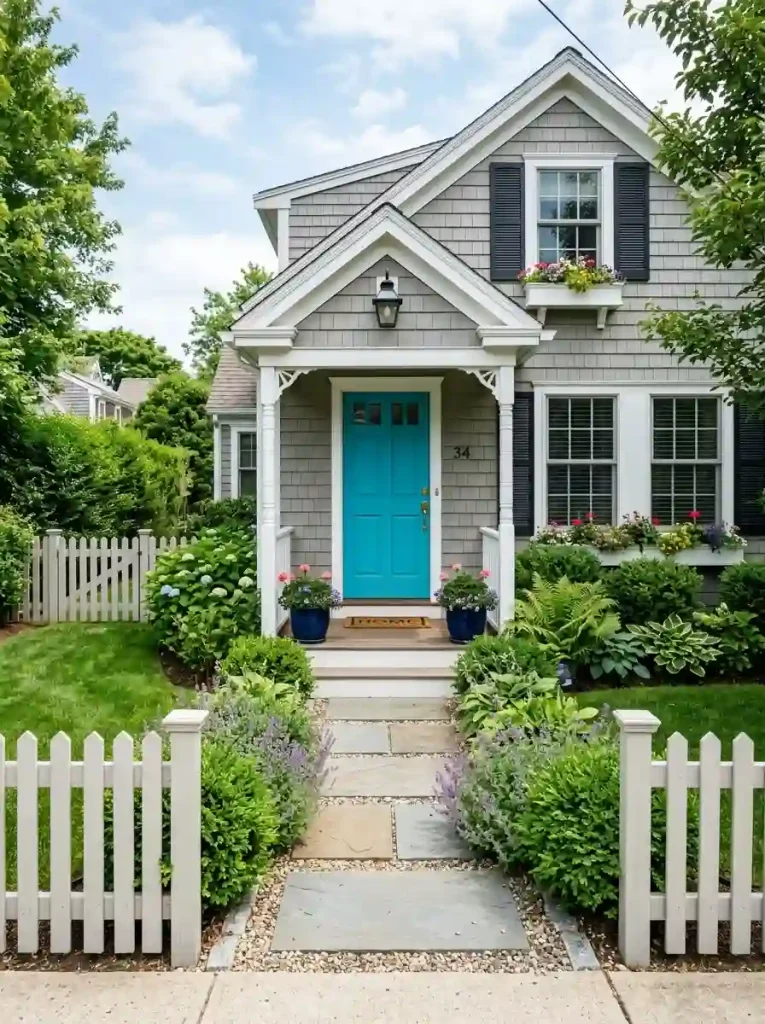
Sometimes the most effective landscaping improvement isn’t another plant. A freshly painted front door can become the focal point around which the entire front yard is organized.
Choose an exterior color that complements the home’s architecture and existing landscape. Then repeat small touches of that color through planters, flowers, or decorative accents.
Because the door sits at the end of the walkway, drawing attention to it can make the entrance feel more welcoming without taking up additional yard space.
Expert Tip:
Let the door be the strongest color in the landscape and keep nearby plants relatively calm. This prevents a small entrance from becoming visually overwhelming.
16. Plant a low-maintenance groundcover beneath a tree
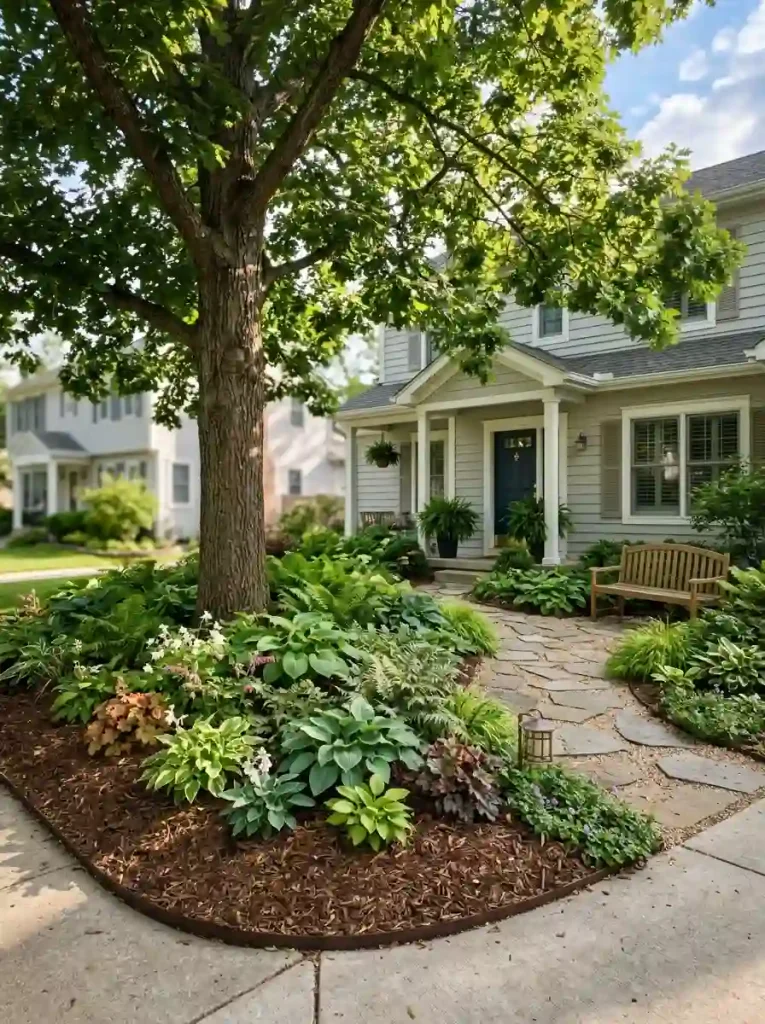
Bare soil beneath a tree can make a small front yard look unfinished, especially when grass struggles because of shade or competition from roots.
Instead, create a simple groundcover planting area beneath the canopy. Choose plants that are genuinely suited to the amount of shade, moisture, and soil conditions available.
Add a defined edge around the tree and keep the planting design relatively simple. This can turn a difficult patch into a purposeful garden feature.
Expert Tip:
Avoid piling soil or mulch against the tree trunk. Keep the planting arrangement low and allow the tree’s root flare to remain visible.
17. Use a low hedge to define the property edge
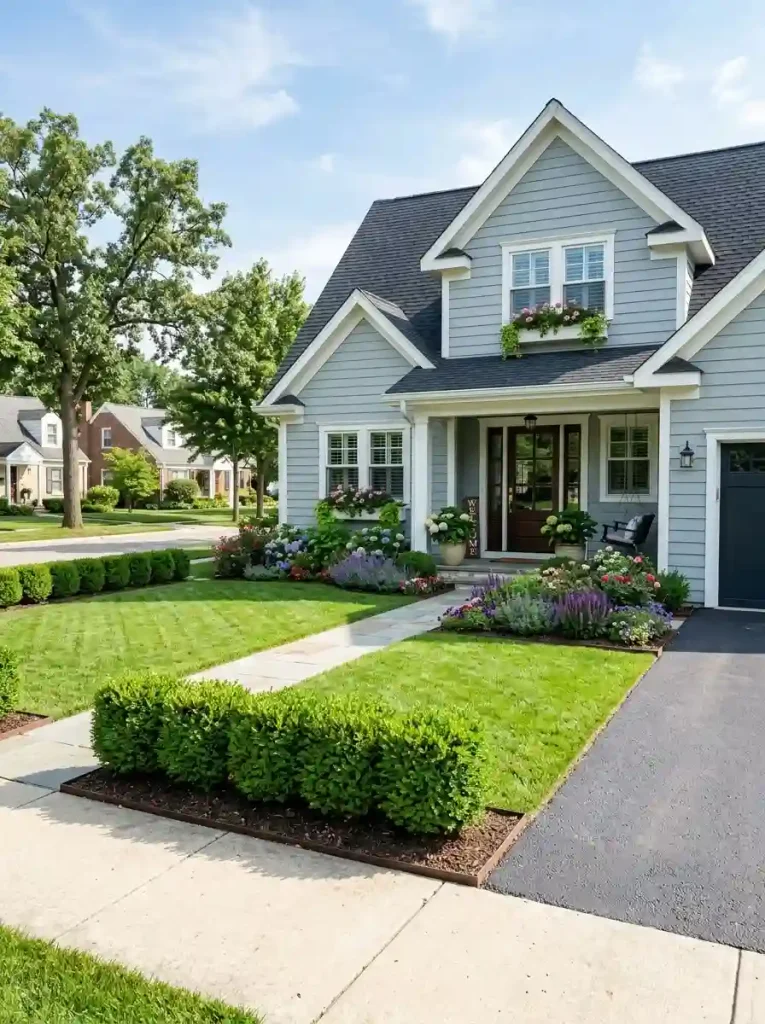
A short hedge can create a visual boundary without making a compact front yard feel enclosed.
Plant a row of appropriately sized shrubs along the sidewalk, driveway, or property line. The hedge can frame the yard while still allowing views between the street and the house.
Choose plants that naturally remain within the desired height range whenever possible. This reduces the amount of repetitive trimming needed to maintain the shape.
Expert Tip:
Leave enough room between the hedge and walking areas so mature plants don’t eventually spill over onto the sidewalk.
18. Mix ornamental stones with colorful foliage
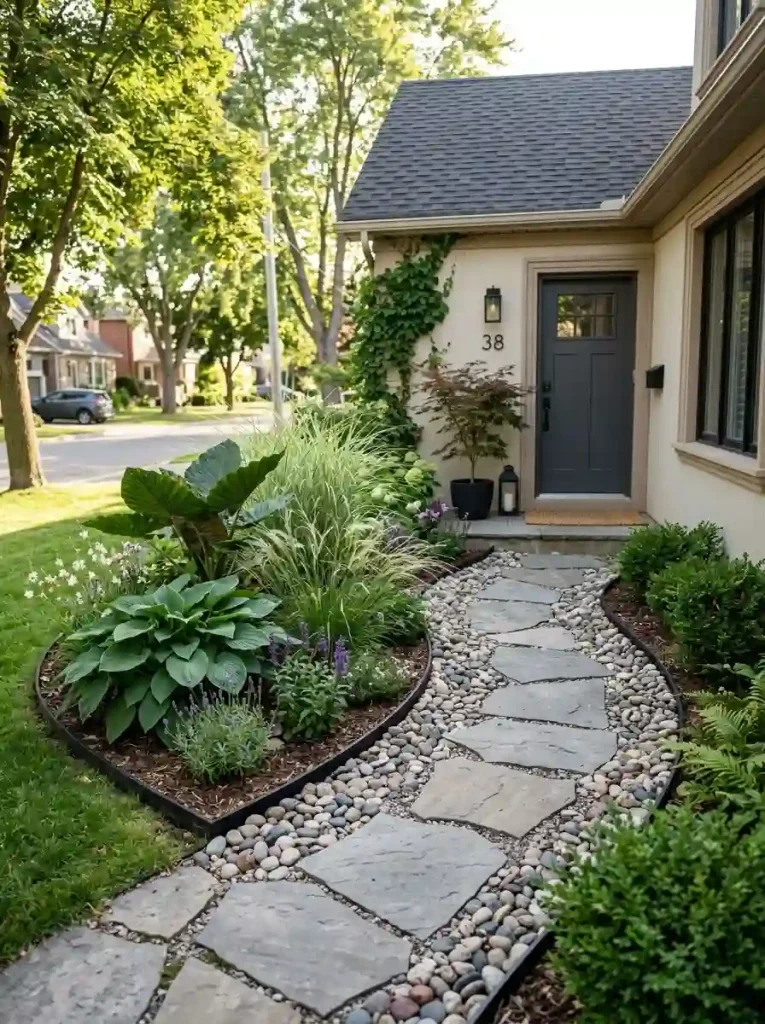
Decorative stones can add structure to a planting bed without relying entirely on flowers for visual interest.
Choose stones in one or two complementary tones and place them among foliage plants rather than covering the entire bed. Use plants with contrasting leaf shapes to create texture and depth.
This approach can work particularly well around a mailbox, walkway corner, or small foundation bed where a traditional flower garden might feel too busy.
Expert Tip:
Use stones as accents rather than scattering many unrelated colors. Repeating the same stone throughout the yard helps tie separate areas together.
19. Add a fragrant planting zone beside the walkway
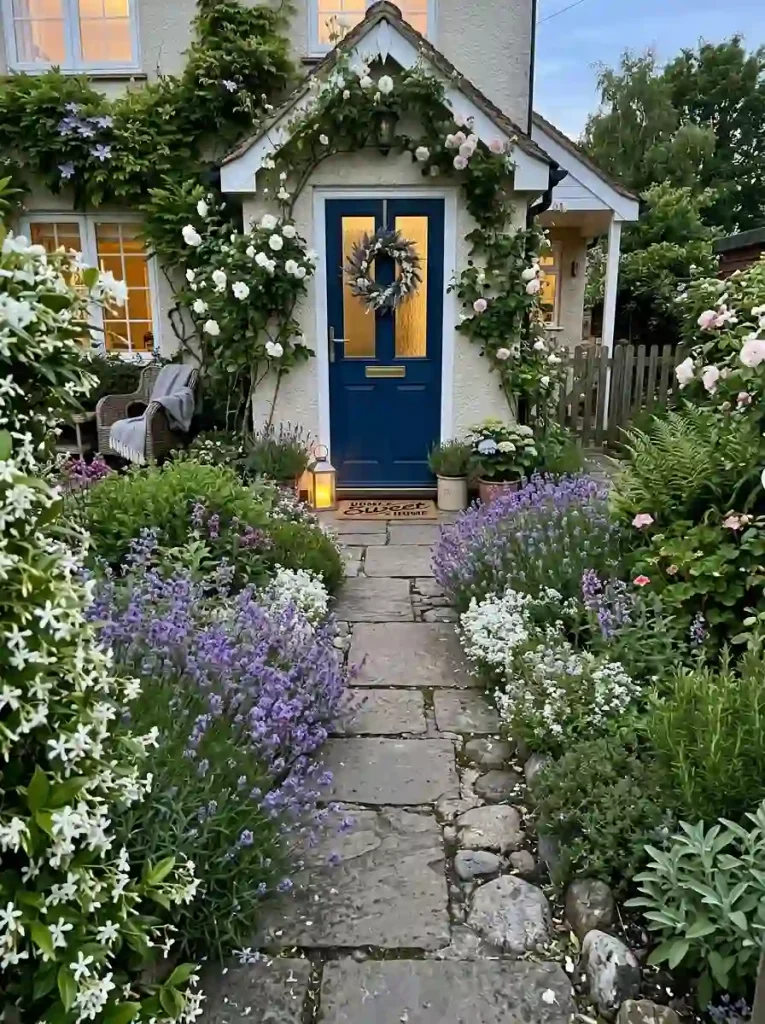
A front yard should appeal to more than just the eyes. Fragrant plants near a walkway can make the everyday experience of approaching your home more enjoyable.
Choose compact aromatic plants that suit your climate and the amount of available sunlight. Depending on local conditions, possibilities may include lavender, certain herbs, fragrant shrubs, or other suitable flowering varieties.
Place them where people can appreciate their scent without allowing mature growth to block the path.
Expert Tip:
Think about bloom timing when selecting fragrant plants. Combining plants with different flowering periods can extend the sensory appeal across more of the growing season.
20. Create a mini woodland garden in a shaded front yard
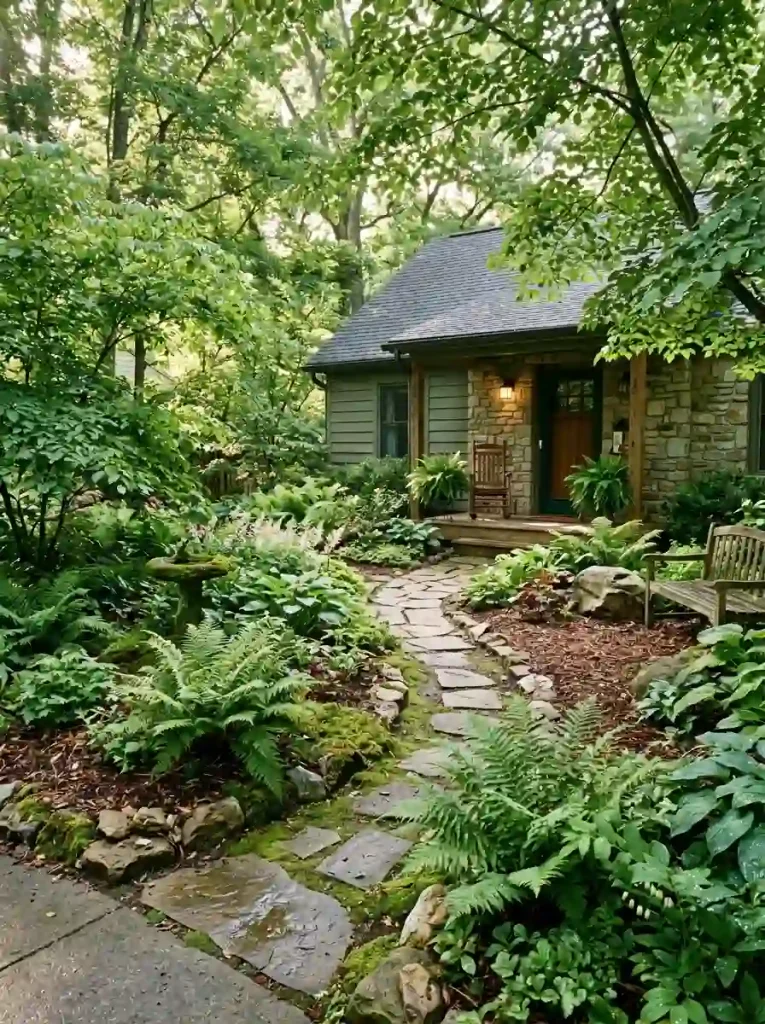
Not every front yard needs to be bright and flower-filled. A shaded area can become a beautiful woodland-style garden with layers of foliage and subtle seasonal color.
Use shade-tolerant plants with different heights and leaf textures. Add natural stones or a small path to give the area structure while keeping the overall appearance relaxed.
This style is particularly effective beneath mature trees or beside homes where direct sunlight is limited.
Expert Tip:
Observe your yard throughout the day before choosing plants. “Shade” can mean very different conditions, from filtered light to deep shade, and plant selection should reflect that difference.
21. Use repeated planters to create a polished entrance
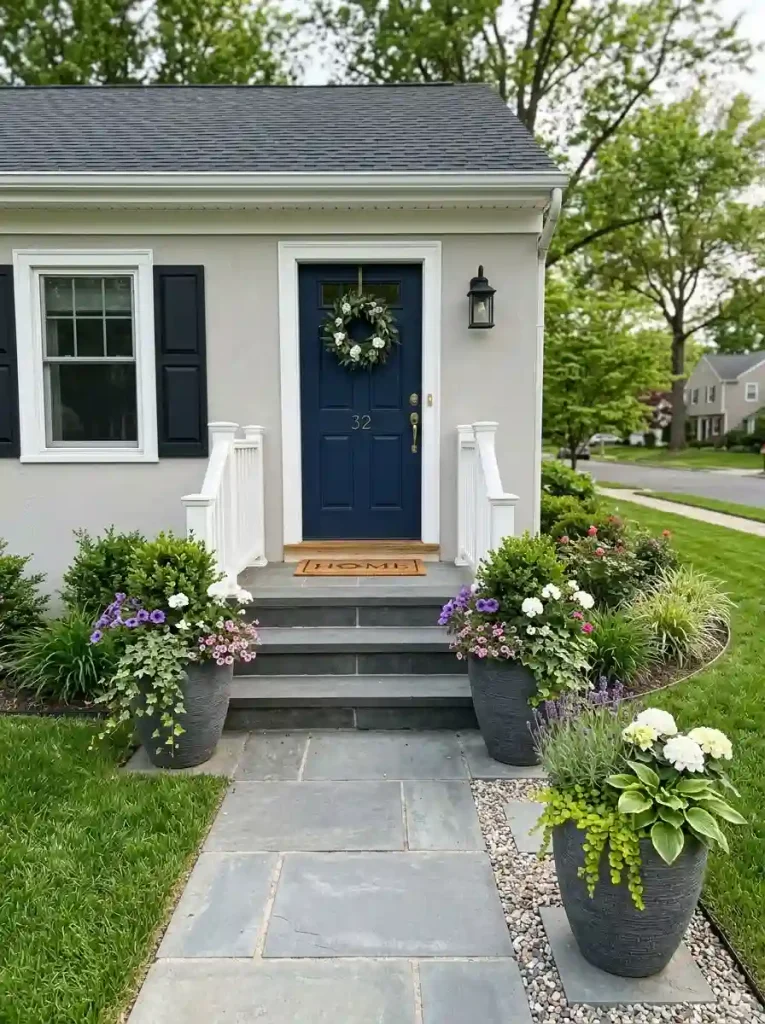
Matching planters can make even a very small entrance feel more coordinated. Instead of filling the yard with many decorative objects, repeat the same container style at key points.
Place planters near the steps, walkway, or entrance and fill them with plants that complement one another. Repetition creates visual rhythm and makes the landscape look intentional.
You can change the plants seasonally while keeping the containers the same, allowing the overall design to remain consistent.
Expert Tip:
Odd numbers can work well for informal groupings, while pairs can emphasize a symmetrical entrance. Choose the arrangement that best fits your home’s architecture.
22. Finish the yard with a simple layered entry garden
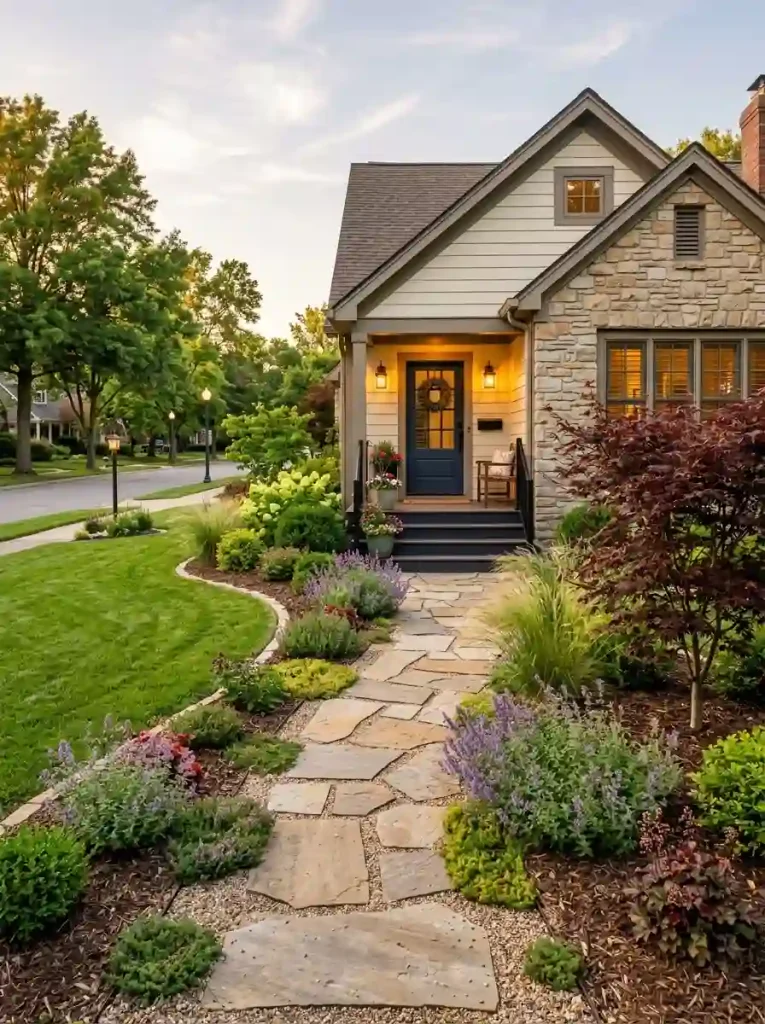
For the final touch, bring several of the design principles together without overcrowding the space. A compact layered entry garden can combine low plants, one or two medium-height features, a defined walkway, and a clear focal point.
The goal isn’t to fill every empty section. Leaving some open space is just as important as adding plants because it gives the eye somewhere to rest and makes the front yard feel more spacious.
Keep the planting palette coordinated with the house and repeat a few materials throughout the landscape for a cohesive finish.
Expert Tip:
Step back from the street and look at the entire yard as one composition. If one area feels too busy, removing a plant or decoration may improve the design more than adding another feature.
How to Make a Small Front Yard Look Bigger
Making a small front yard appear larger is mostly about controlling visual clutter and creating a sense of direction.
Keep the central walking route clear and avoid filling every corner with plants or decorations. A defined pathway can naturally guide the eye toward the entrance, while curved borders can soften rigid property lines.
Vertical elements can also help. Trellises, narrow trees, tall containers, and upright plants draw the eye upward rather than allowing everything to compete at ground level.
Using repeated materials is another simple trick. When the same type of stone, edging, or planter appears in multiple areas, the landscape feels connected instead of fragmented.
Finally, choose plants according to their mature size. An overcrowded yard can become difficult to maintain and may look considerably smaller as plants grow.
How to Make a Small Front Yard Low Maintenance
A beautiful front yard doesn’t have to demand your attention every weekend. The easiest way to reduce maintenance is to choose plants that naturally fit your climate, soil, sunlight, and available moisture.
Group plants with similar needs together so watering and care are easier. Avoid filling the landscape with dozens of unrelated varieties because each plant may have different requirements.
Mulch or other appropriate ground coverings can help reduce exposed soil and simplify the appearance of planting beds. Keeping lawn areas modest can also reduce mowing.
Most importantly, plan for mature growth. Giving plants enough space from the beginning can reduce pruning and transplanting later.
Final Thoughts
A small front yard can have just as much personality as a much larger landscape. The difference comes from thoughtful choices rather than the amount of space available.
Use pathways to create direction, layered plants to add depth, containers to introduce flexibility, and carefully selected focal points to make the entrance memorable. At the same time, leave enough open space so the yard remains comfortable and easy to navigate.
You don’t need to tackle every improvement at once. Start with the feature that would make the biggest difference to your home’s entrance, then build the rest of the landscape around it.
With the right balance of plants, hardscape, texture, and open space, even a compact front yard can create impressive curb appeal while remaining practical to care for.