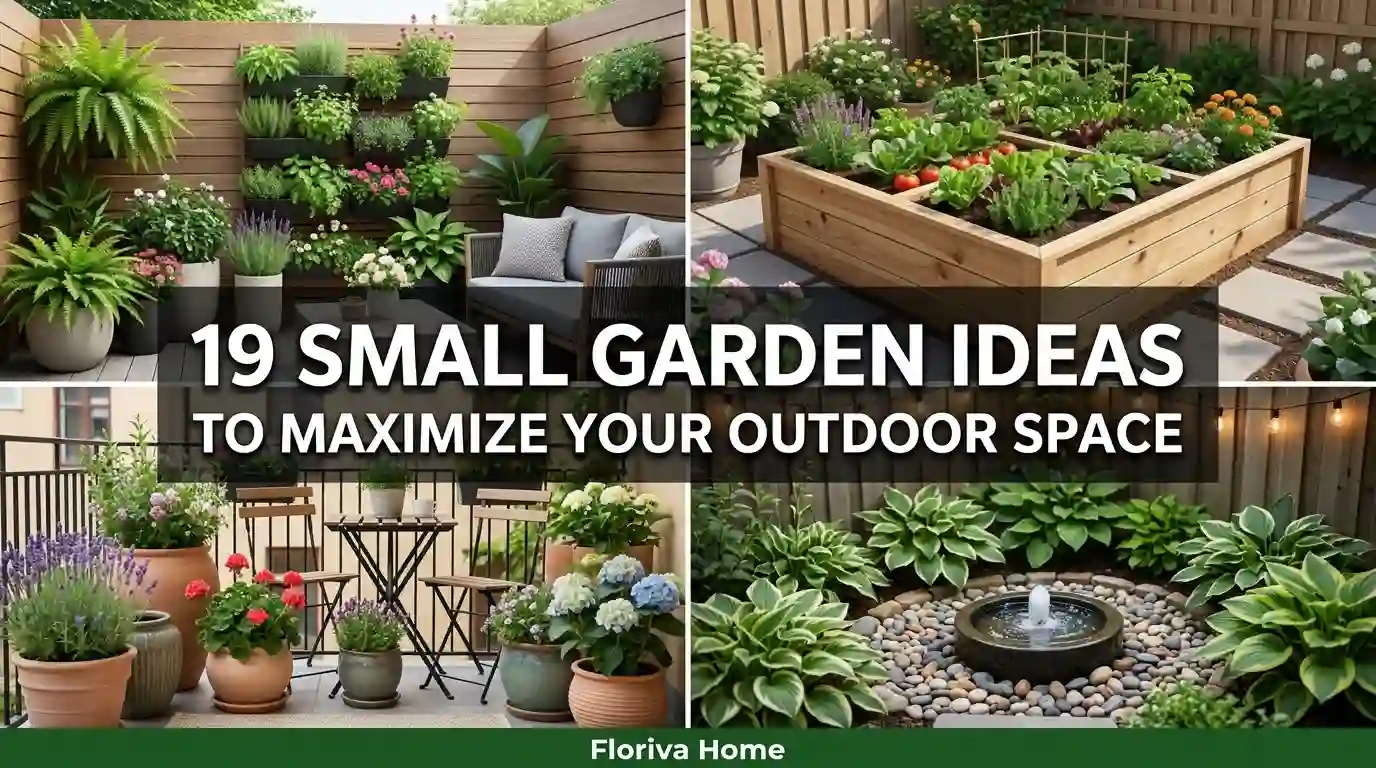
19 Small Garden Ideas to Maximize Your Outdoor Space
A tiny outdoor area can become your favorite corner of home with small garden ideas. Whether you have a narrow backyard, patio, balcony, or compact entryway, thoughtful planting and clever styling can make every inch feel intentional.
From vertical gardens to layered containers, these space-saving solutions blend beauty with function while keeping things achievable. Explore these creative backyard garden ideas today for inspiration, discover smart ways to maximize limited space, and find a look that makes your outdoor area feel bigger, greener, and wonderfully inviting.
How can I maximize a small garden space?
Maximize a small garden by using vertical planters, trellises, hanging baskets, tiered planters, and narrow raised beds. Keep pathways clear and choose compact furniture that can fold away. Combining multiple functions in one area helps you create a beautiful, practical garden without making the space feel crowded.
1. Go Vertical With a Trellis
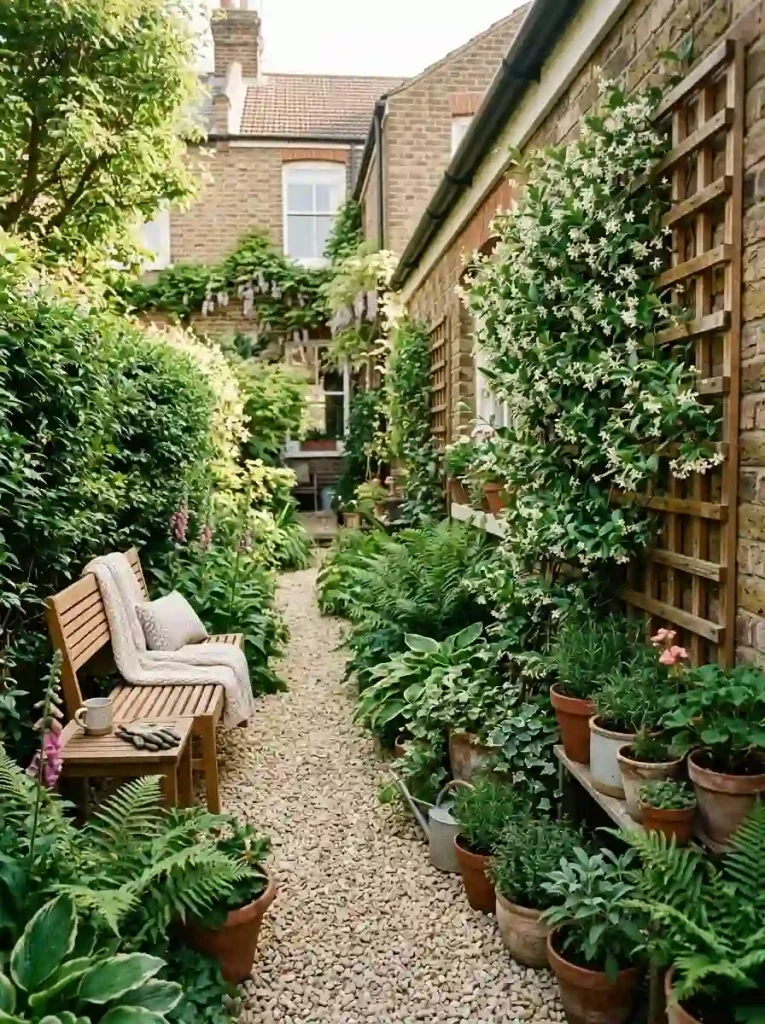
A vertical trellis draws the eye upward, making a narrow yard feel taller without consuming valuable floor space. Climbing jasmine, ferns, and small pots create layers of greenery, while a slim bench adds seating without interrupting circulation or overwhelming the compact layout.
Choose a sturdy trellis against a fence or wall, then combine one climber with shallow containers underneath. Keep furniture narrow and use gravel to visually open the ground. Repeating warm wood and earthy pottery creates a cohesive, relaxed look that feels intentional.
2. Create a Flexible Container Garden
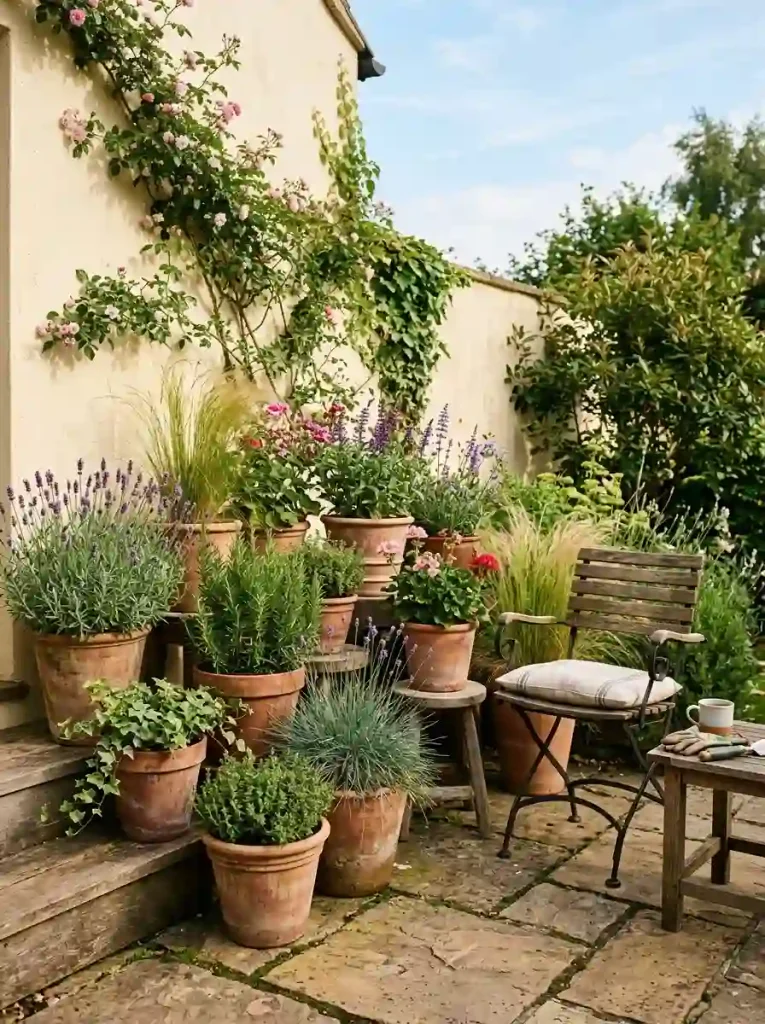
A container garden lets you create a beautiful flexible plant display without digging permanent beds. Grouping pots at different heights adds dimension, while herbs, lavender, grasses, and flowers bring color and fragrance to patios where every square foot needs to work harder.
Choose containers with varied shapes but related colors, placing taller plants behind smaller ones. Leave slim walking gaps between groups, and move pots seasonally when needed. Terracotta, concrete, or glazed ceramic can introduce texture while keeping the arrangement approachable and easy to refresh.
3. Layer Plants With Tiered Planters
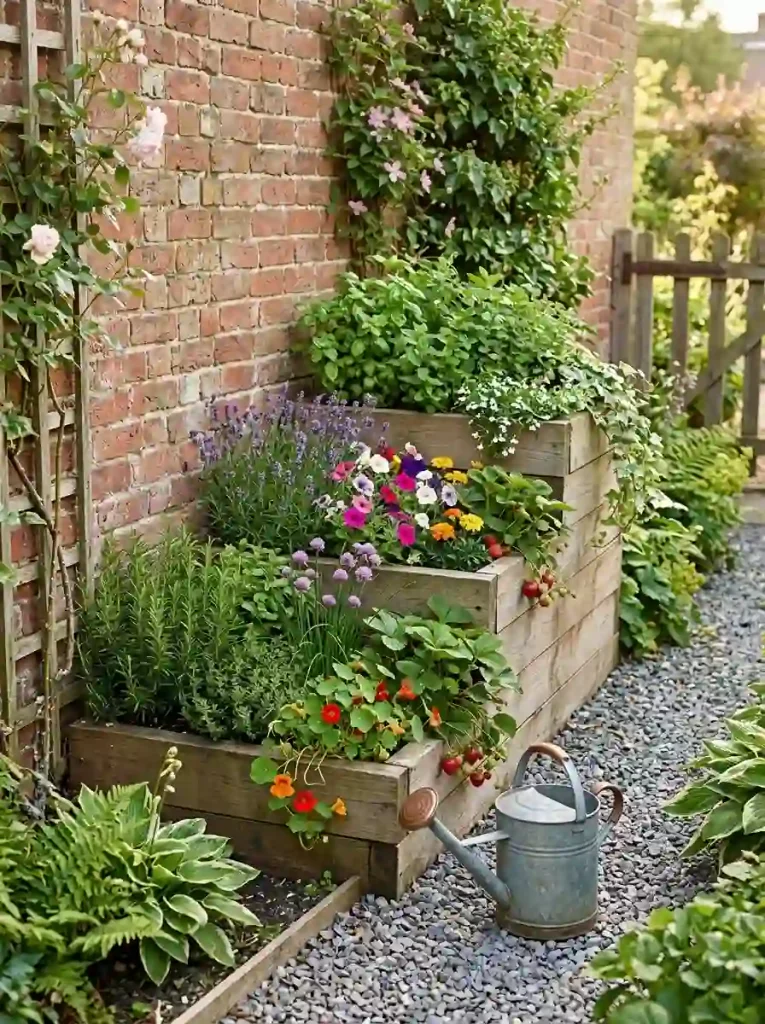
Tiered planters turn one footprint into several growing levels, giving you more planting area while keeping the garden visually organized. The stepped design works especially well against walls, fences, or patios, allowing herbs, strawberries, flowers, and trailing plants to share limited ground space.
Position the tallest tier at the back and reserve lower levels for plants that spill outward. Use weather-resistant timber and ensure each level receives suitable light. Keep the surrounding floor simple with gravel or paving so the layered planter remains the main visual feature.
4. Hang Plants Above the Patio
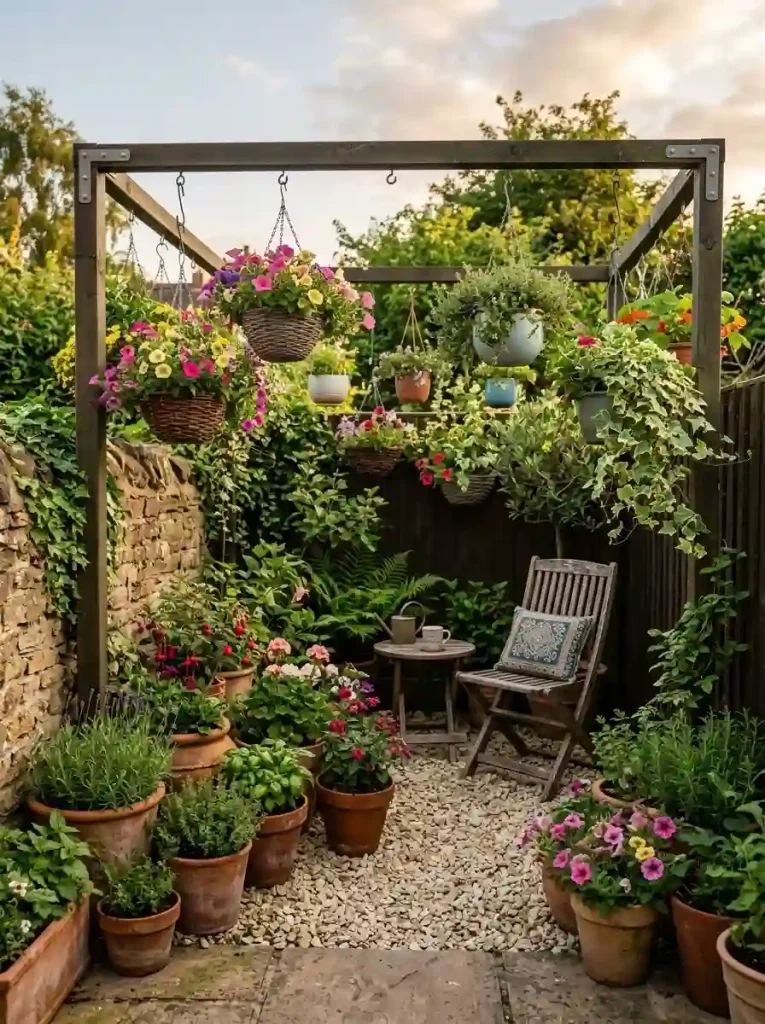
Hanging planters shift greenery overhead, freeing precious floor space while adding movement and color around a compact patio. Trailing flowers, ivy, and herbs can create a lush canopy effect without requiring bulky garden beds, making this approach especially useful for renters or small courtyards.
Install a secure overhead frame and vary hanging heights for a layered display. Choose lightweight containers and plants suited to your available light. Keep ground-level pots minimal, leaving room for a folding chair or clear walkway so the garden feels airy rather than crowded.
5. Build a Narrow Side-Yard Bed
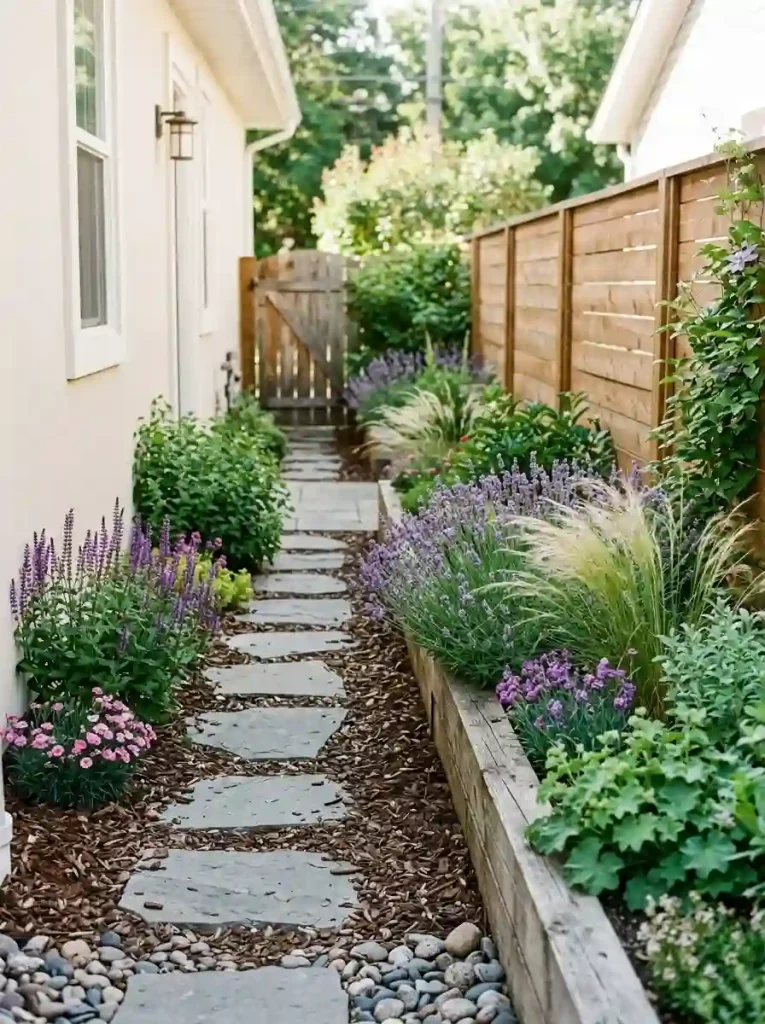
A narrow raised bed makes excellent use of awkward side-yard space where a traditional garden would feel too bulky. Slim planting zones can still support grasses, lavender, and flowers, while a stepping-stone route preserves movement and gives the garden a polished, purposeful appearance.
Build the bed along a fence, keeping its width comfortable for reaching plants from either side. Add mulch or gravel to reduce visual clutter and place stepping stones beside it. Select compact plants that provide varied heights without spilling heavily into the walkway.
6. Try a Balcony-Inspired Layout
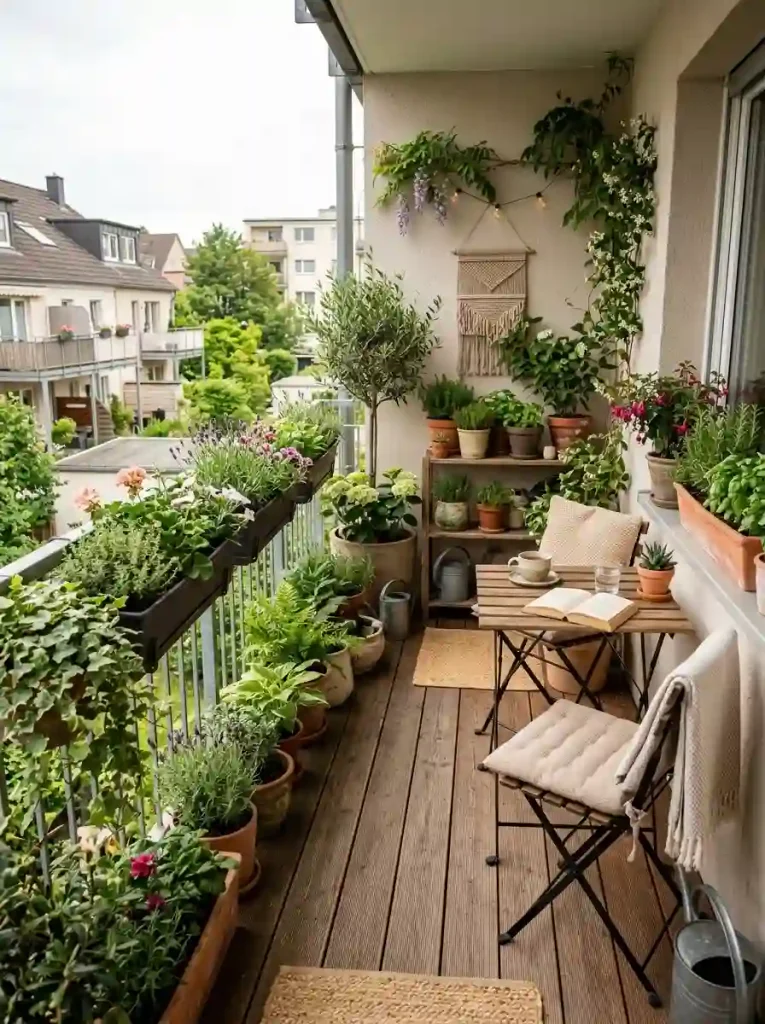
A balcony-inspired layout brings the charm of a high-rise garden to a small terrace or townhouse patio. Railing planters, compact pots, and a petite bistro set create several useful zones while maintaining open floor area, proving that small outdoor spaces can feel layered and welcoming.
Use railing boxes for herbs or flowers, then place taller containers near corners to create depth. Choose a folding table and chairs when possible, and keep colors coordinated. Wood decking, woven accessories, and neutral walls can soften the arrangement without adding unnecessary bulk.
7. Frame a Tiny Patio Seating Area
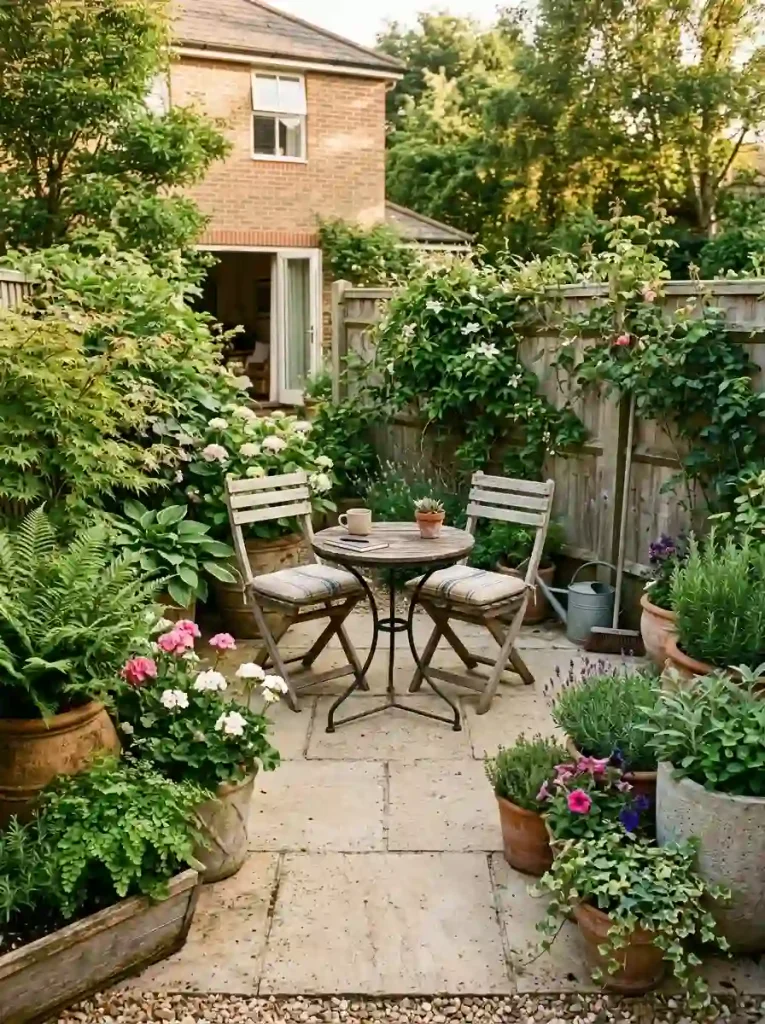
A compact patio garden can become an outdoor room when plants frame a small seating area instead of filling every corner. Containers of foliage, herbs, and flowers add softness around a tiny table, creating a cozy destination while preserving enough open paving for comfortable movement.
Start with furniture sized for the patio, then place larger containers along the edges rather than in the center. Mix leafy plants with a few flowers for contrast. Keep pathways clear and repeat two or three natural materials to make the small arrangement feel connected.
8. Transform an Empty Corner
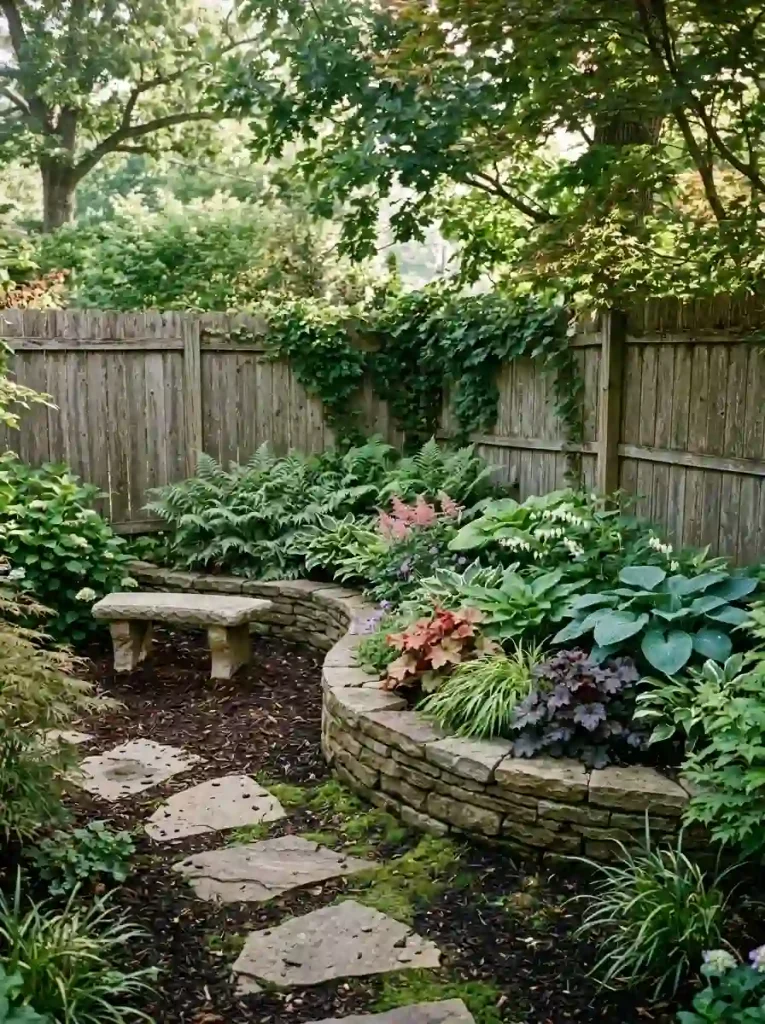
An unused corner can become a charming garden destination with a curved raised bed that follows the available shape. Ferns, hostas, and flowering accents create a layered retreat, while a small bench gives the space purpose without requiring a large footprint or complicated construction.
Trace the bed around the fence junction, leaving enough room to reach plants comfortably. Use stepping stones to connect the bench with the main yard. Choose shade-friendly plants where fences block sunlight, and add bark mulch to define the planting area neatly.
9. Keep Herbs Beside the Kitchen Door
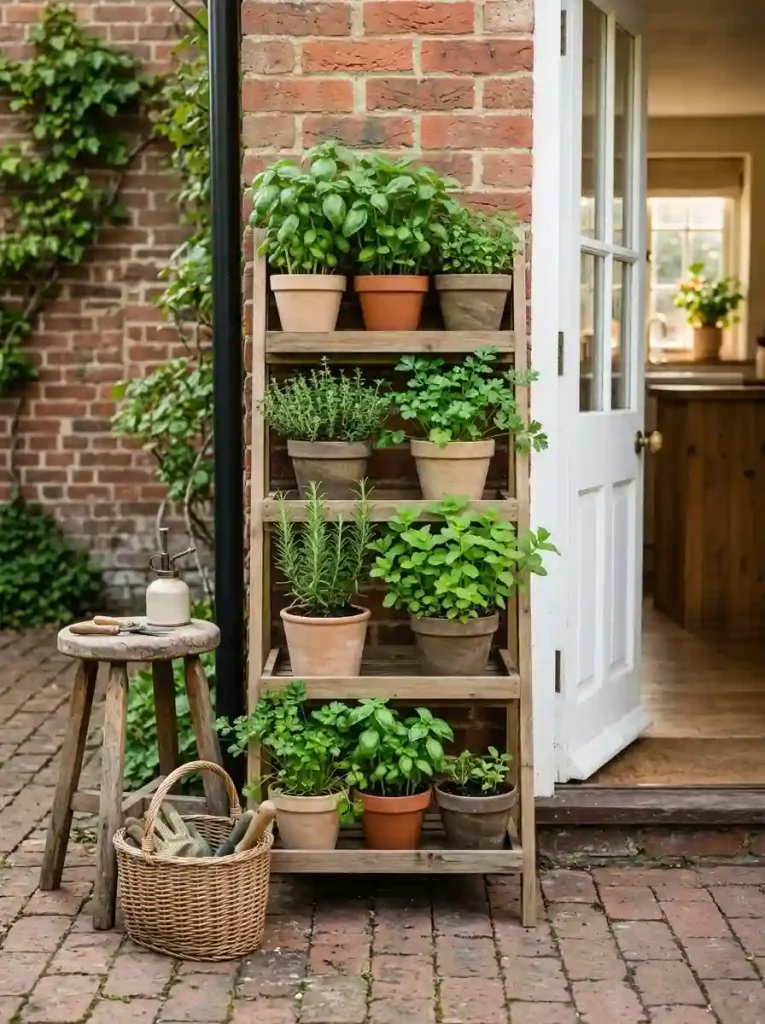
A beautiful compact herb garden near the kitchen keeps useful plants within easy reach while turning an overlooked doorway area into a fresh green feature. A slim rack uses vertical space efficiently, allowing several culinary herbs to grow together without taking over the floor.
Place basil, thyme, parsley, rosemary, and mint in individual pots so watering and moving them remains simple. Use a narrow rack beside the door, not across the path. Choose attractive containers and keep the surrounding paving uncluttered for a clean, welcoming appearance.
10. Grow More in a Raised Planter
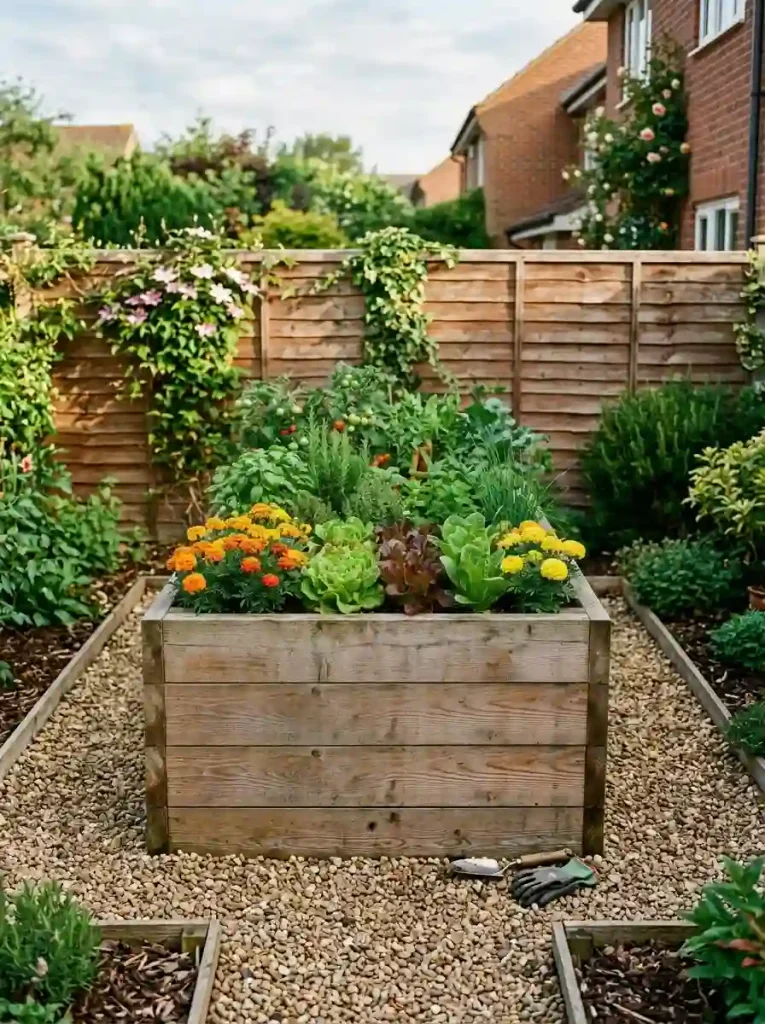
A compact raised planter creates a productive garden at a comfortable height while concentrating vegetables, herbs, and flowers into one efficient footprint. The defined box keeps planting organized, and narrow paths around it maintain access without sacrificing too much valuable outdoor space.
Choose a compact rectangular planter and place it where sunlight is strongest. Surround it with gravel rather than wide borders, then grow compact vegetables alongside herbs and flowers. Keep the box easy to reach from every side so harvesting and routine care stay convenient.
11. Cover a Wall With Climbing Flowers
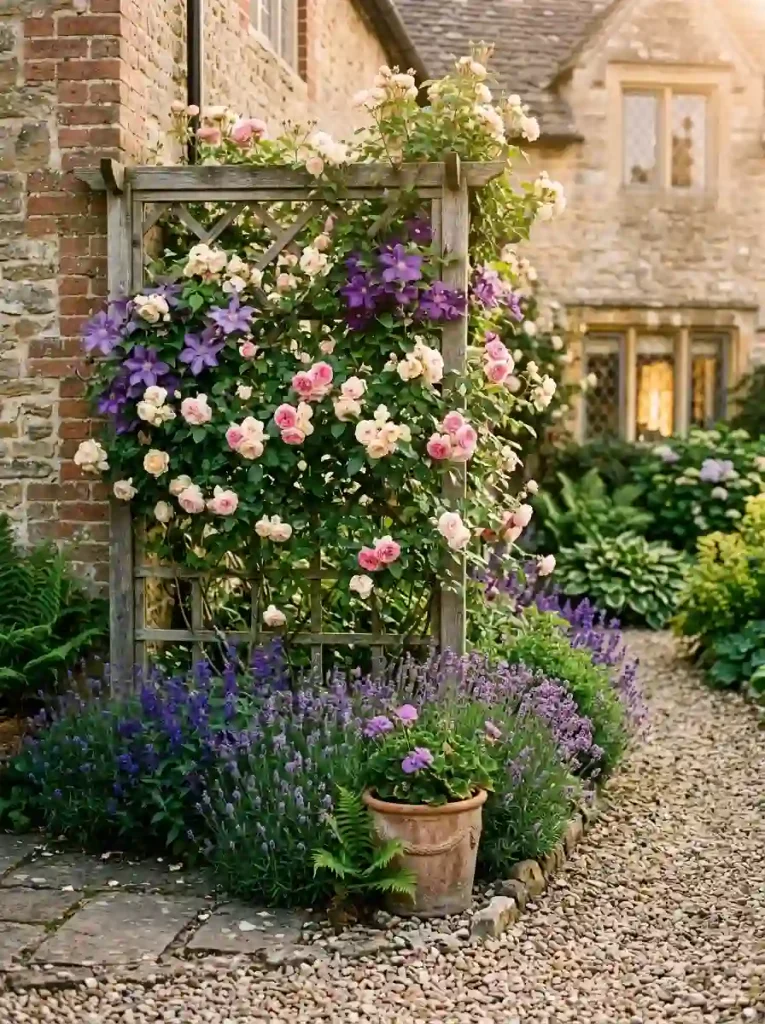
A trellis garden uses climbing plants to transform a plain wall or fence into a living focal point without expanding outward. Roses and clematis can add height and romance, while compact flowers beneath create a layered planting scheme that feels fuller than its footprint suggests.
Secure the trellis firmly before training climbers across it, leaving enough breathing room behind the stems. Place lower plants in a narrow bed and edge it with gravel. Keep the palette focused on a few flower colors so the vertical display remains calm.
12. Add Built-In Border Planters
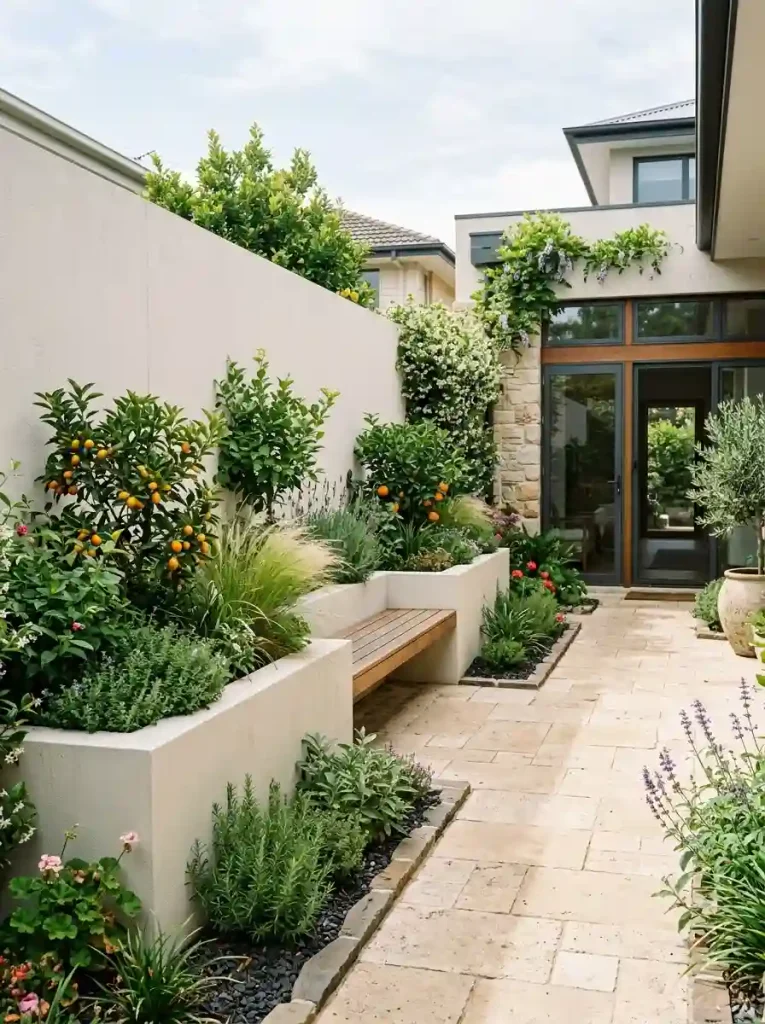
Built-in planters can make a compact courtyard feel designed rather than crowded by integrating greenery directly into the edges. Long rectangular boxes define the space while preserving a clear central route, allowing dwarf citrus, grasses, herbs, and flowers to coexist around seating comfortably.
Use planters as borders along walls instead of placing separate containers everywhere. Keep their depth consistent and choose compact varieties suited to the available light. Pair the built-ins with a narrow bench, simple paving, and restrained materials for a streamlined outdoor decorating scheme.
13. Make Seating Fold Away
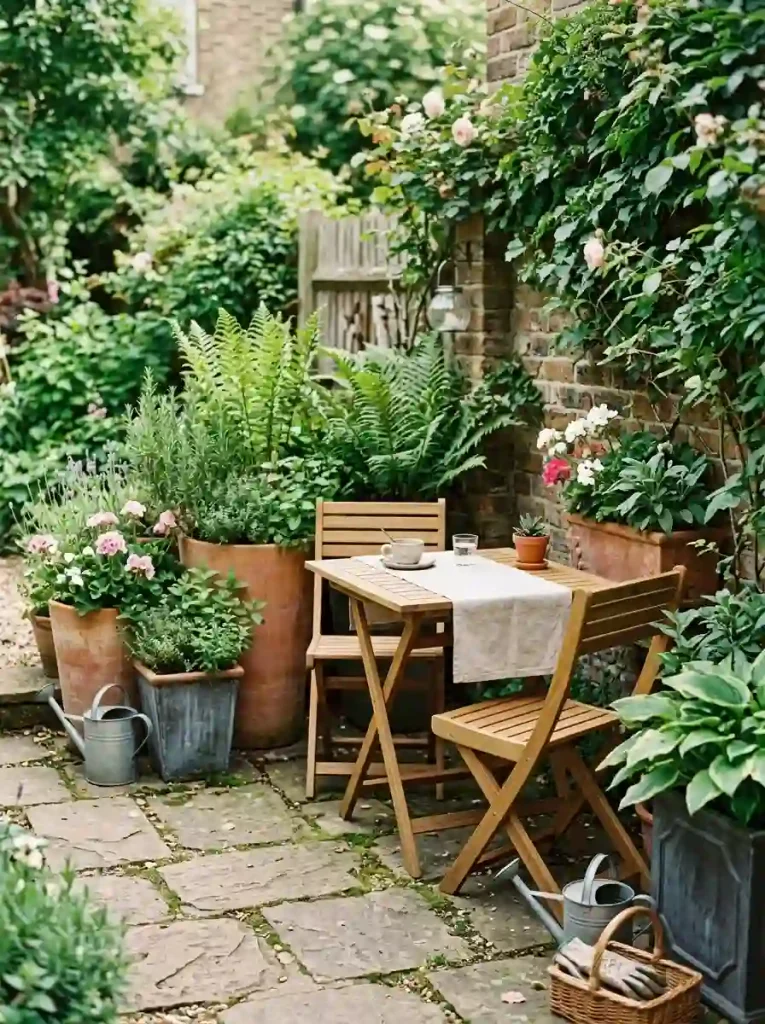
Foldable furniture makes a small garden more flexible because the seating area can disappear whenever extra floor space is needed. A lightweight table and chairs can create an inviting dining nook, while surrounding containers provide greenery without permanently blocking circulation or access.
Choose furniture that folds flat and store it against a wall when unused. Place tall planters at the perimeter, keeping the center open for movement. Add herbs, flowers, or ferns around the seating area, then repeat natural wood or neutral tones for visual calm.
14. Combine Storage With Planting
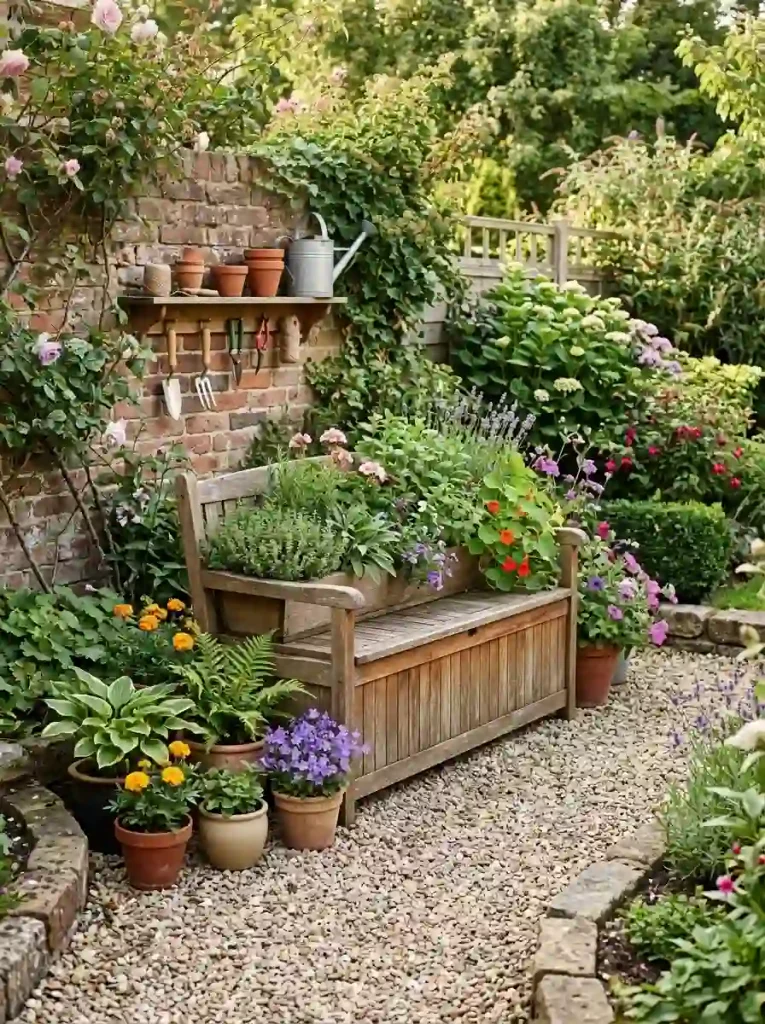
A multi-purpose garden feature can combine seating, storage, and planting in one compact footprint. A storage bench with nearby containers creates a practical outdoor station while keeping tools organized and greenery visible, making the space useful without filling it with separate furniture pieces.
Choose a bench with concealed storage for pots, gloves, or small tools, then surround it with only a few containers. Add a slim shelf above or beside it for supplies. Keep the floor open with gravel so the feature remains easy to access.
15. Create a Narrow Flower Garden
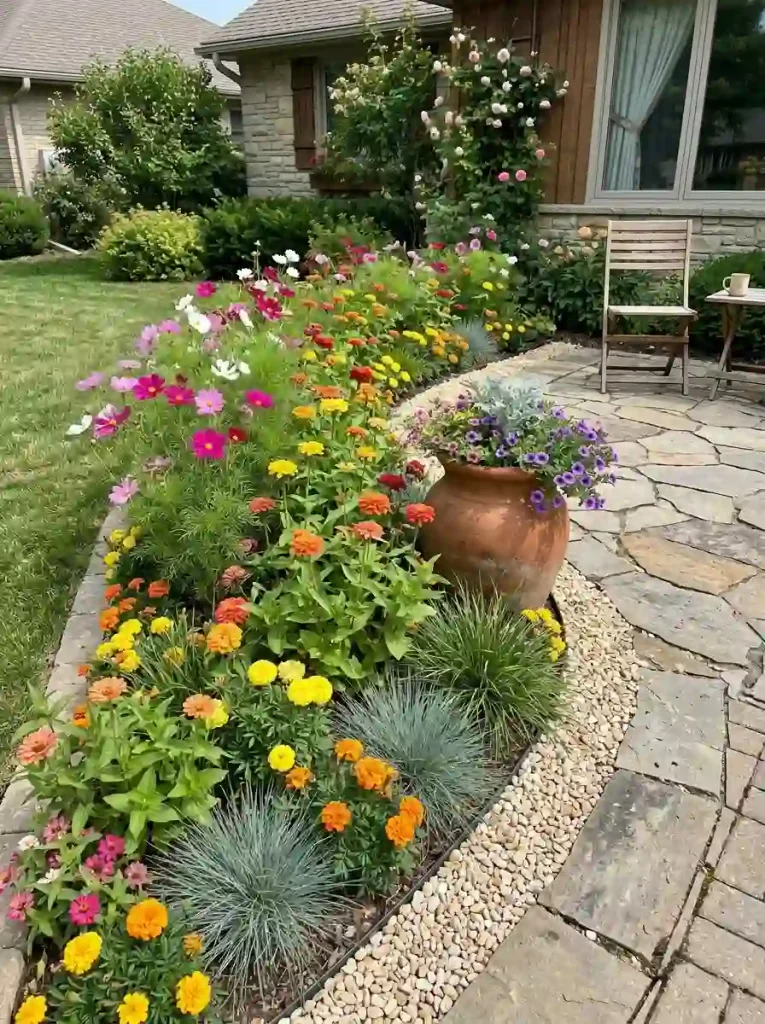
A narrow flower garden can bring abundant color to a small patio edge without demanding a large planting bed. A crescent-shaped arrangement creates a softer outline, while compact annuals and grasses provide varied heights, movement, and seasonal interest against simple paving or gravel.
Keep the flower bed shallow enough to maintain easy access from the patio. Combine a few flower varieties rather than overcrowding the space, placing taller blooms toward the back. Use pale gravel as edging to make the colorful planting stand out cleanly.
16. Build a Slim Privacy Garden
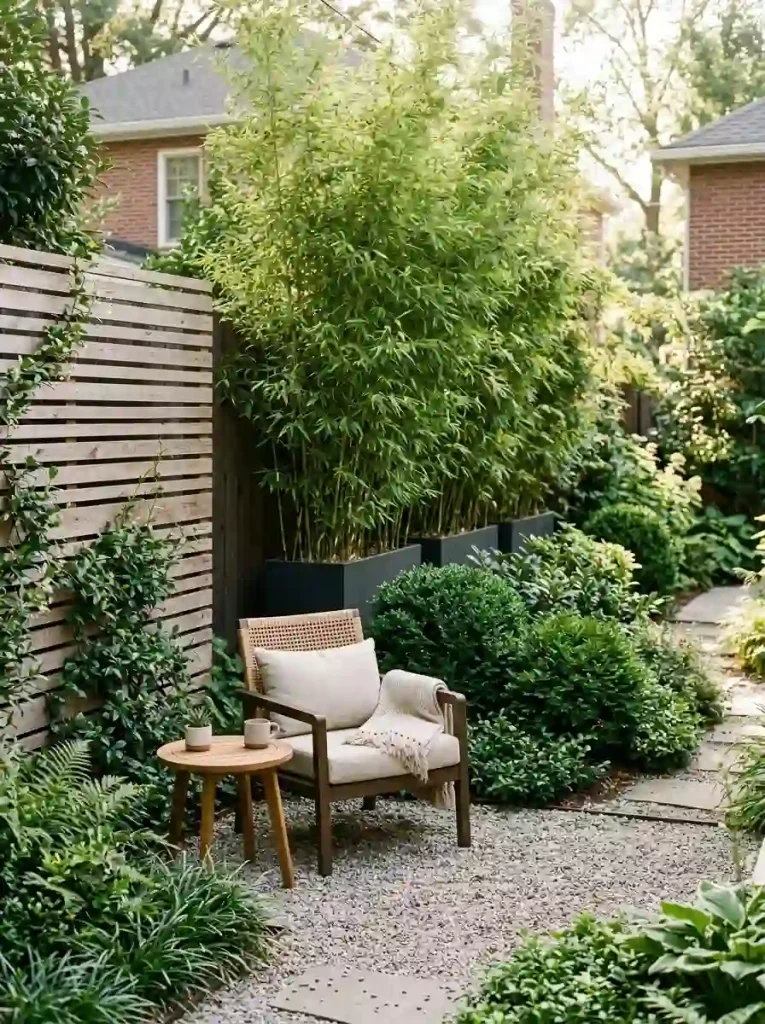
A privacy garden can create a peaceful outdoor retreat without sacrificing the limited floor area. Slim bamboo planters, evergreen shrubs, and a slatted screen add height and separation, allowing a compact seating zone to feel sheltered while remaining open enough for comfortable use.
Place tall screening elements along the boundary and keep seating close to the opposite edge. Use slim containers to reduce the footprint, then layer shorter shrubs in front. Choose natural wood and green foliage for a calm look that feels private without becoming heavy.
17. Turn the Path Into a Garden
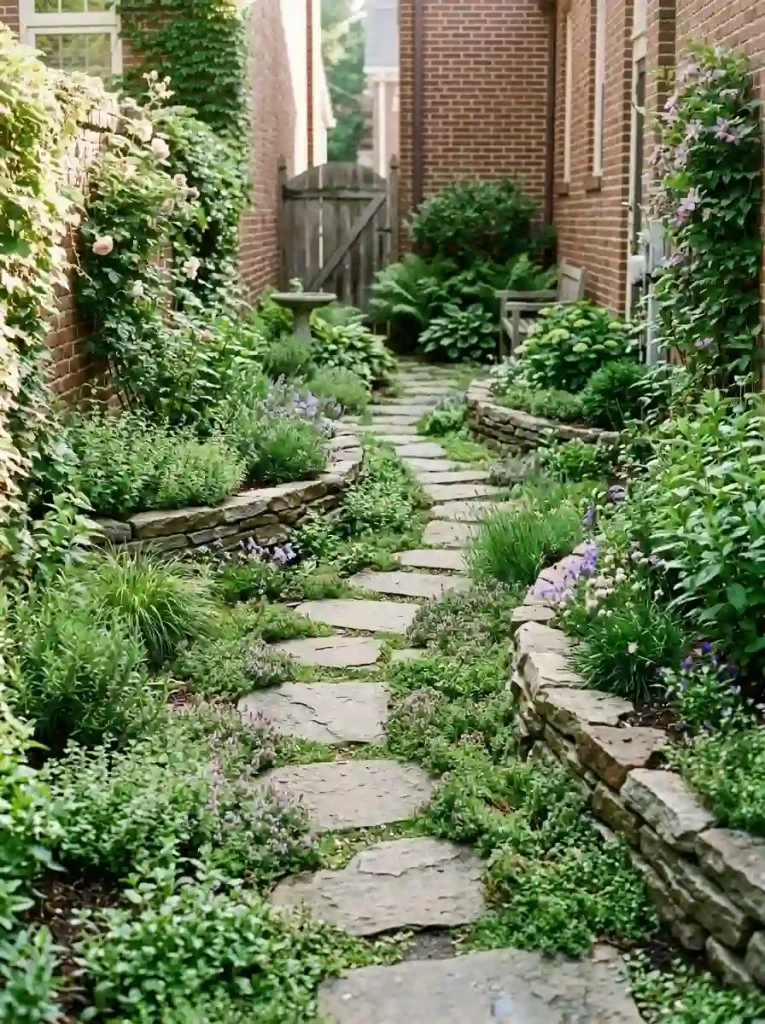
A pathway garden turns the route through a small yard into part of the planting design. Stepping stones surrounded by herbs, creeping thyme, grasses, and flowers create a gentle journey while keeping the footprint efficient and adding texture around otherwise unused edges.
Lay stepping stones with comfortable spacing and keep plants low beside the route. Use raised edging subtly to define the path without narrowing it. Select groundcovers and compact flowers that tolerate foot traffic nearby, then soften the edges with natural stone or gravel.
18. Mount a Garden Directly on the Wall
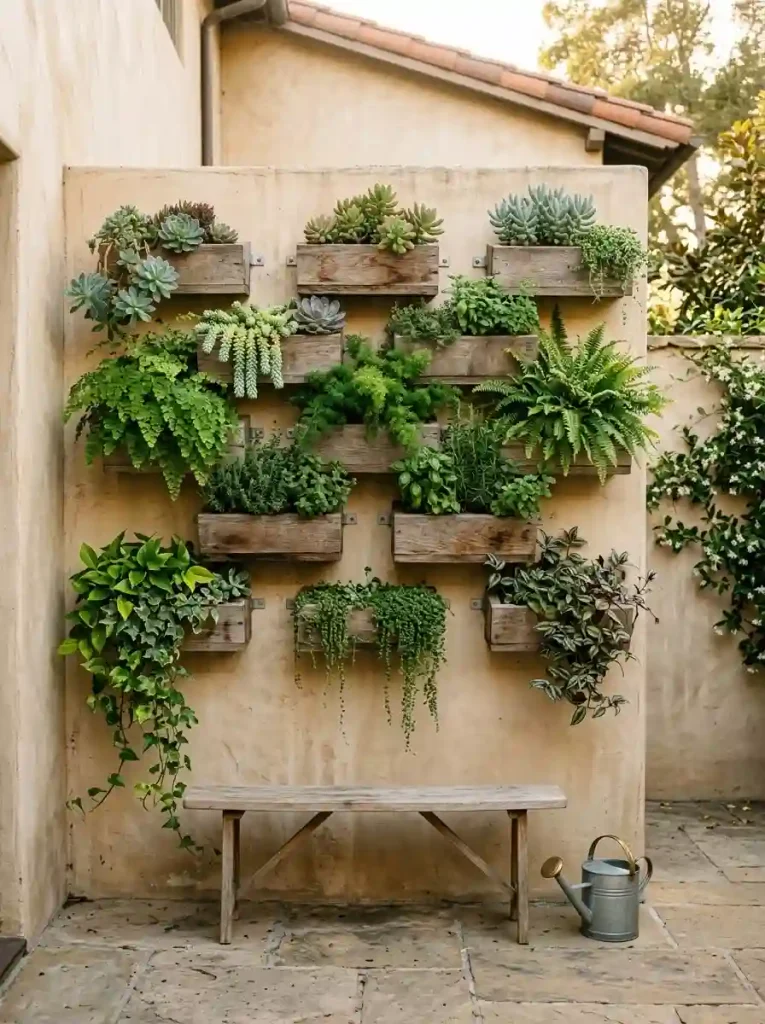
A wall-mounted garden adds a lush focal point while leaving the ground almost completely open. Staggered wooden pockets can hold succulents, herbs, ferns, and trailing plants, creating a living artwork that suits courtyards, patios, balconies, or narrow spaces with very limited floor area.
Attach planters securely to a suitable wall and arrange them in an uneven pattern for visual interest. Keep a slim bench below if space allows, but avoid crowding the base. Combine upright and trailing plants to create depth without adding bulky furniture.
19. Create a Compact Potting Station
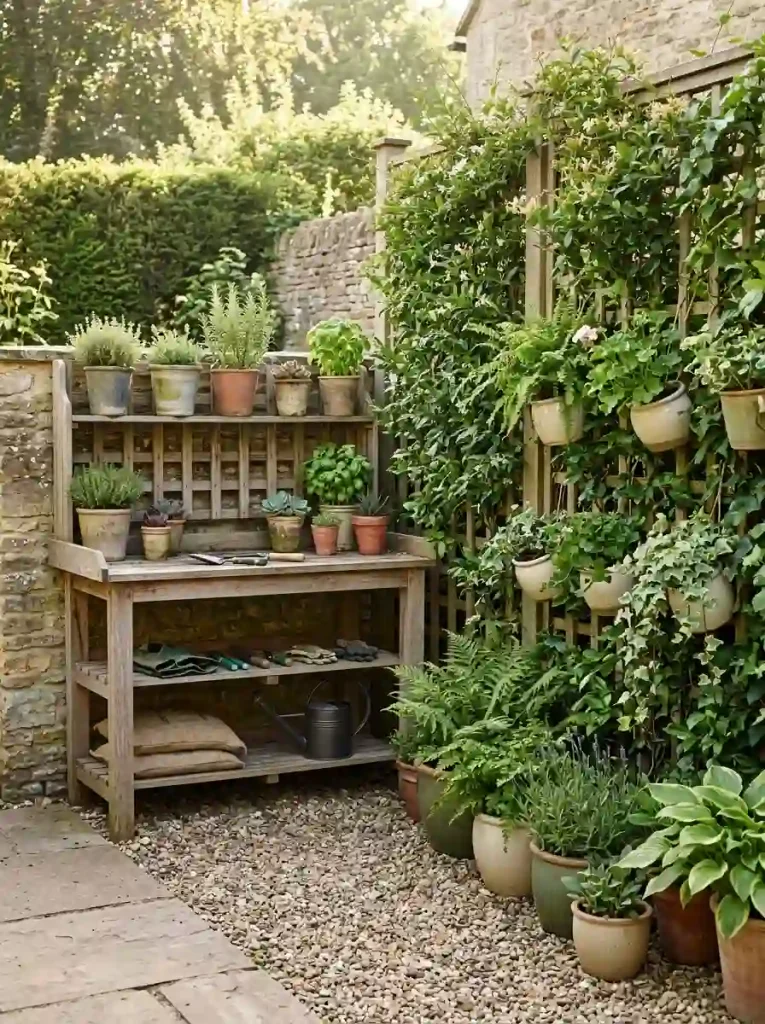
A compact garden station combines vertical planting with a practical potting area, giving one small zone several jobs. A wall trellis supports climbing greenery while a narrow shelf holds containers and supplies, keeping gardening tasks organized without spreading tools and pots across the yard.
Place the potting station against a wall and use the vertical surface for climbers or hanging pots. Store small tools beneath the shelf and keep the floor mostly clear. Choose durable wood, simple ceramics, and gravel to create a workspace that remains easy to maintain.
Conclusion
Small outdoor spaces do not need to feel limited when each layer is planned with purpose. These garden ideas show how vertical planting, containers, raised beds, clever furniture, and pathways can turn corners into beautiful retreats. Start with one solution that suits your space, then build around it with plants, textures, and details you love.
Whether you are styling a balcony, patio, or backyard, space-saving gardens can make a difference. Let your smallest outdoor area inspire your favorite gardening ideas, one detail at a time.
Frequently Asked Questions
1. What are the best plants for a small garden?
The best plants for small gardens are compact herbs, flowering annuals, ornamental grasses, ferns, lavender, climbing plants, and dwarf varieties. Choose plants according to your available sunlight and container size. Mixing different heights and growth habits can create a fuller, more attractive garden while using limited space efficiently.
2. How do I make a small garden look bigger?
Make a small garden look bigger by keeping the layout simple, using vertical planting, and creating clear sightlines. Light-colored paving, narrow furniture, layered plants, and uncluttered pathways can visually open the area. Placing taller plants toward boundaries and shorter plants toward the center also creates a greater sense of depth.
3. What are some easy small garden ideas for beginners?
Easy small garden ideas for beginners include container gardening, hanging planters, herb gardens, tiered planters, and simple wall-mounted gardens. These options require relatively little space and can be adjusted as your gardening skills grow. Start with a few easy-care plants and gradually add more layers, colors, and textures.