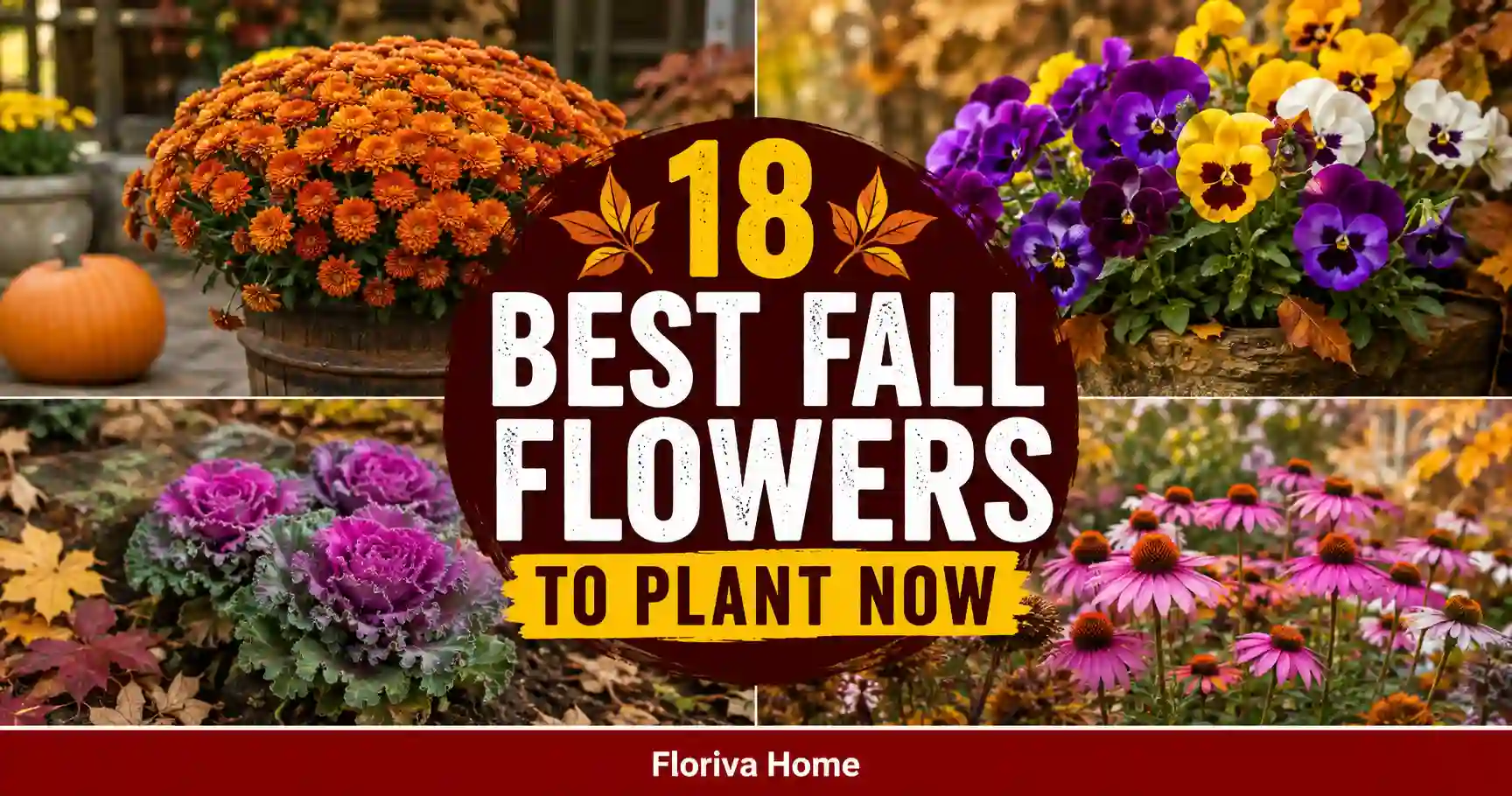
18 Best Fall Flowers to Plant Now
Fall gardening brings a fresh kind of beauty, with cooler days, golden foliage, and plenty of opportunities to fill outdoor spaces with rich color and texture. Whether you have a large backyard, a sunny border, or a collection of containers, the right flowers can make autumn feel even more inviting.
From classic mums to delicate pansies and dramatic ornamental blooms, these 18 beautiful options offer plenty of inspiration. Keep reading to discover flowers that can brighten your garden now and inspire your next cozy fall planting project.
What are the best flowers to plant in fall?
Some of the best flowers for fall include mums, pansies, asters, marigolds, violas, snapdragons, calendula, and cyclamen. The best choice depends on your local climate, growing zone, sunlight, and whether you want immediate fall color or plants that establish for future seasons.
1. Mums for Instant Autumn Color
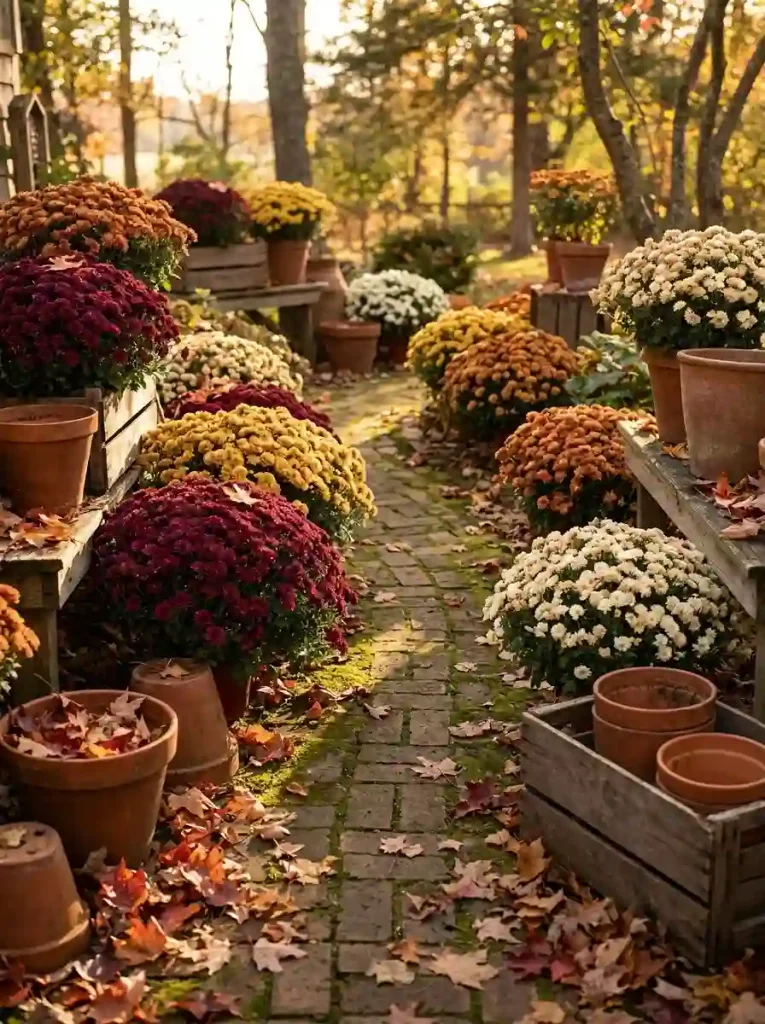
Chrysanthemums are a fall garden favorite because their dense, colorful blooms instantly create a full and festive look. Shades of gold, rust, burgundy, purple, and cream pair beautifully with changing leaves, making mums especially eye-catching in borders, containers, and welcoming entryways.
Plant mums in a sunny spot with well-draining soil, and keep the soil evenly moist while plants establish. Depending on your climate and variety, they can be used in garden beds or decorative pots. Group several colors together for a lush, layered autumn display.
2. Pansies for Cheerful Cool-Weather Color
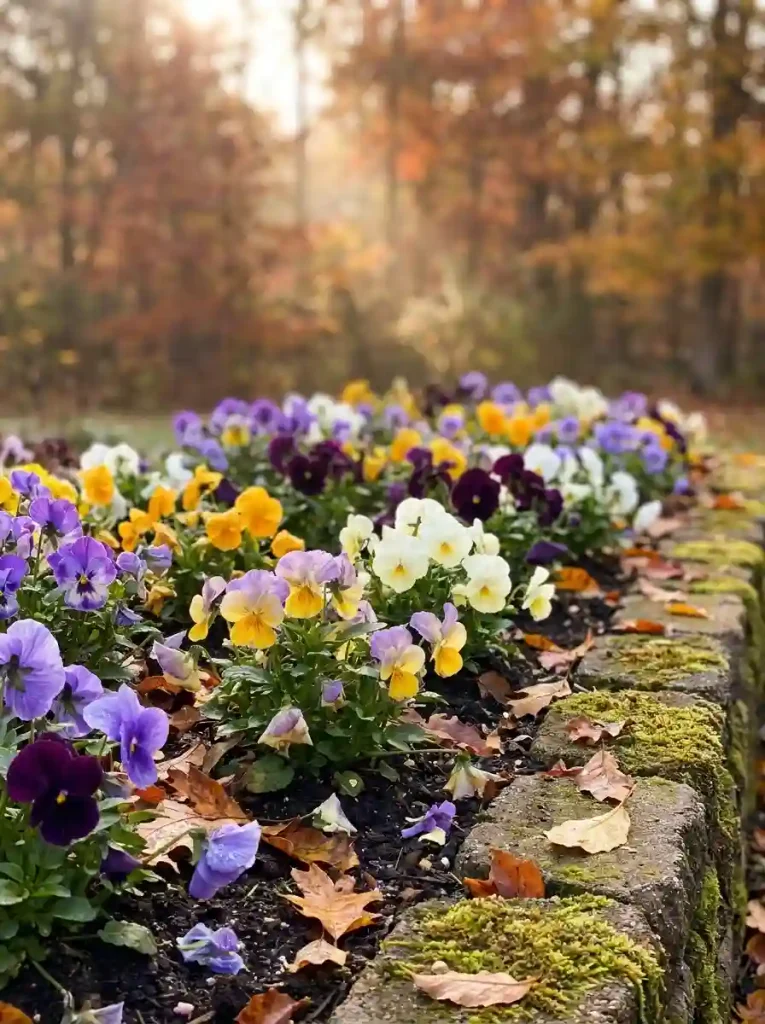
Pansies bring cheerful personality to fall gardens with their colorful faces and soft, velvety petals. Their combination of purple, yellow, orange, white, and blue creates a playful contrast against deeper autumn foliage, making even small containers feel bright and welcoming.
Plant pansies when temperatures begin cooling, choosing a location with suitable sunlight for your local climate. Water regularly without leaving roots in soggy soil, and remove faded blooms when needed. They work beautifully in window boxes, borders, hanging baskets, and front porch containers.
3. Asters for a Wildflower-Inspired Fall Garden
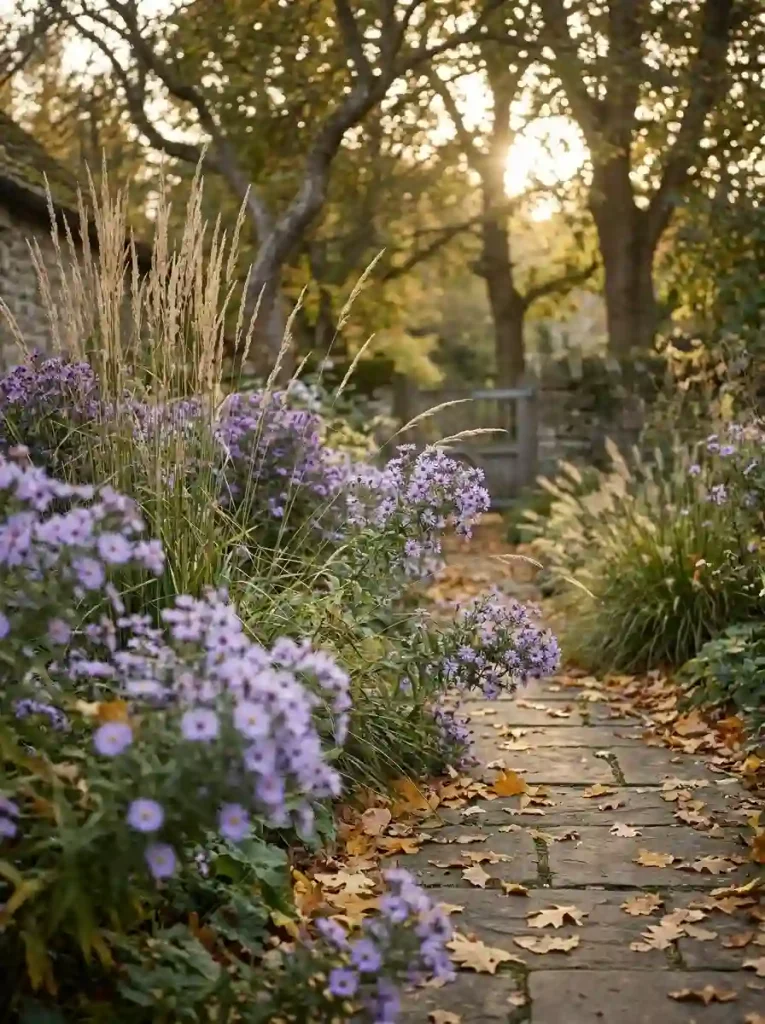
Asters add a soft, meadow-like feeling to autumn gardens with their star-shaped blooms and airy growth. Purple, lavender, pink, and white varieties look especially beautiful beside ornamental grasses, golden foliage, and rustic garden features, creating a relaxed yet colorful seasonal scene.
Choose a sunny location with good air circulation and well-draining soil for healthy growth. Asters can fill borders naturally and blend beautifully with other late-season plants. Depending on your variety and growing zone, plant at an appropriate time and provide consistent moisture while establishing.
4. Golden Marigolds for Warm Fall Borders
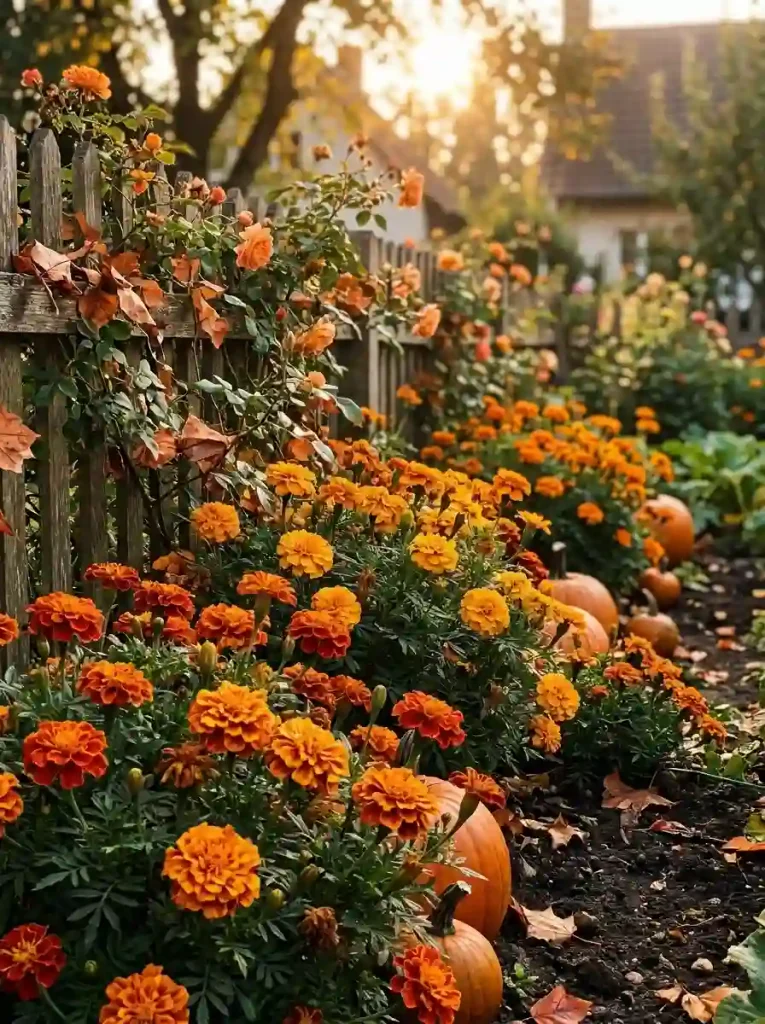
Marigolds bring glowing shades of yellow, orange, and gold that perfectly echo the warm colors of fall. Their ruffled flowers create cheerful texture in garden beds, while compact varieties can make containers and pathway edges look especially bright and carefully styled.
Give marigolds plenty of sunlight and plant them in soil that drains well. Water newly planted flowers consistently until established, then avoid constantly soggy conditions. Use them along borders, vegetable gardens, or containers where their warm tones can complement pumpkins and autumn decorations.
5. Ornamental Kale for Dramatic Texture
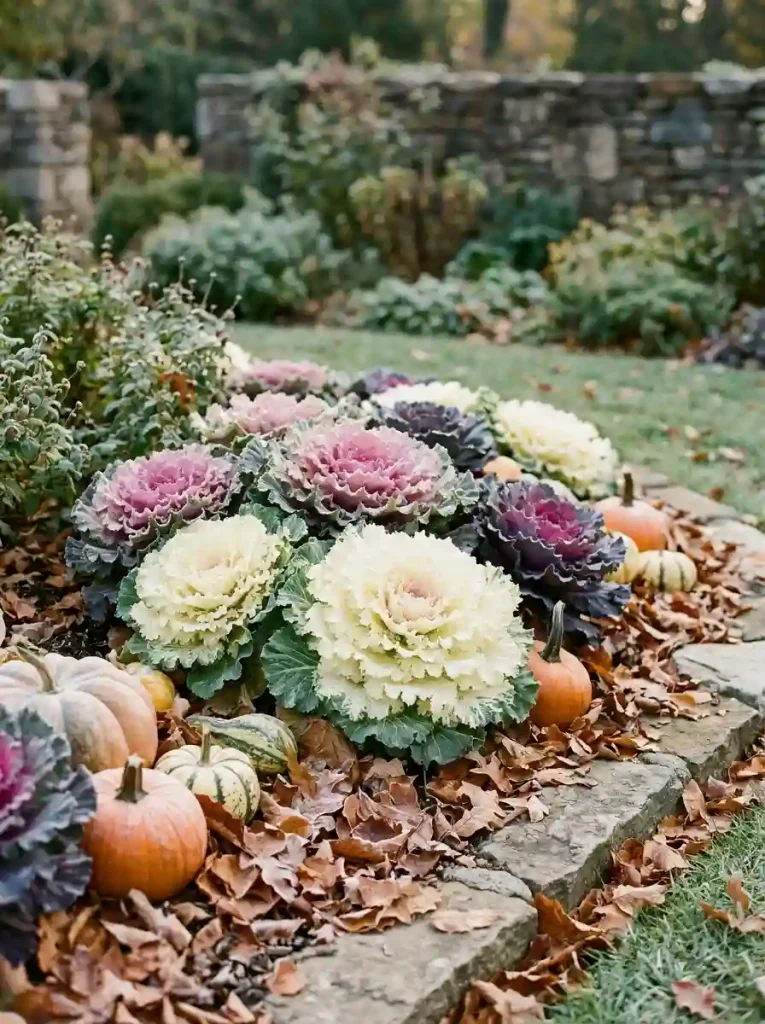
Ornamental kale offers something different from traditional flowers, bringing bold rosettes and dramatic ruffled foliage to autumn spaces. Its purple, pink, cream, and green leaves become increasingly striking as cooler weather arrives, creating beautiful texture among softer flowering plants and seasonal decorations.
Plant ornamental kale in a sunny or suitably bright location with fertile, well-draining soil. Keep moisture consistent while plants settle in, and give each rosette enough space to develop. It looks especially beautiful in formal borders, containers, and mixed displays with mums or pansies.
6. Snapdragons for Vertical Autumn Charm
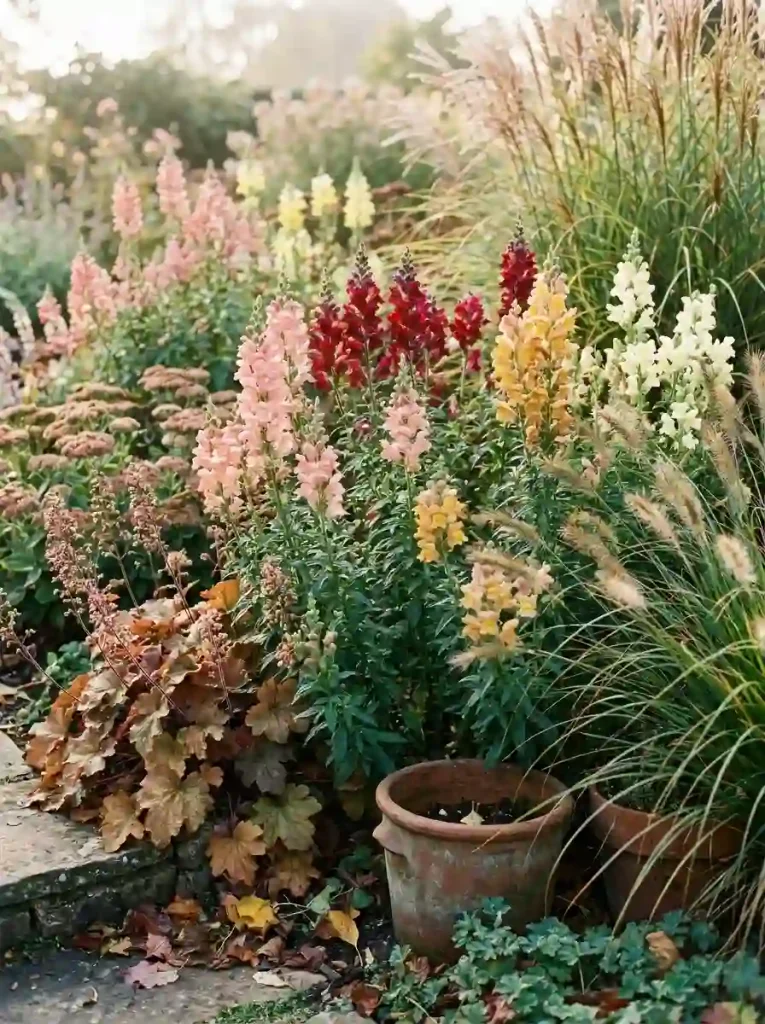
Snapdragons add beautiful height and movement to fall gardens with their upright flower spikes. Their blooms come in soft pastels and rich autumn shades, allowing them to create a romantic, layered appearance when planted behind lower-growing flowers and textured seasonal foliage.
Choose a location with suitable sunlight and well-draining soil, especially where cooler fall conditions support growth. Water consistently while plants establish and provide space for air circulation. Snapdragons are lovely in borders, cutting gardens, and containers where their vertical shape adds structure.
7. Violas for Tiny Pops of Color
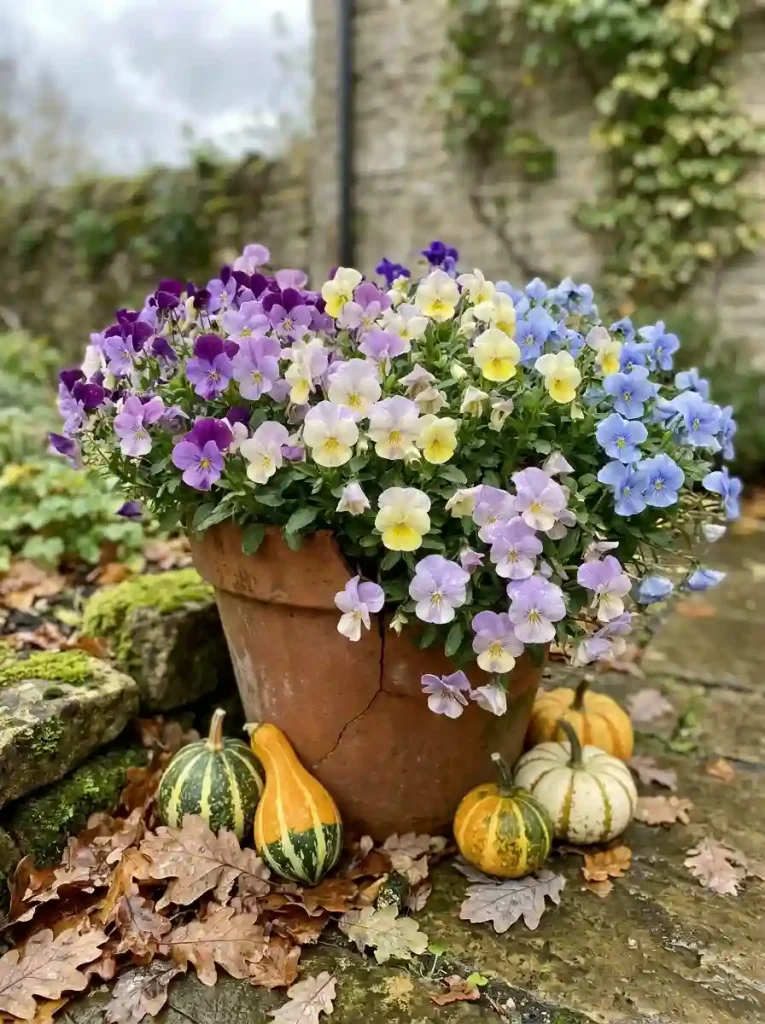
Violas may be small, but their colorful blooms can create a surprisingly big visual impact in fall displays. Their delicate flowers bring softness to containers and borders, while mixed shades of purple, yellow, cream, and blue create cheerful contrast against darker autumn surroundings.
Plant violas in well-prepared soil or quality container mix, keeping them evenly watered as they settle. They are especially useful for filling gaps between larger plants and creating full-looking arrangements. Depending on local conditions, cooler weather can help them remain attractive for longer.
8. Celosia for Bold Velvet-Like Texture
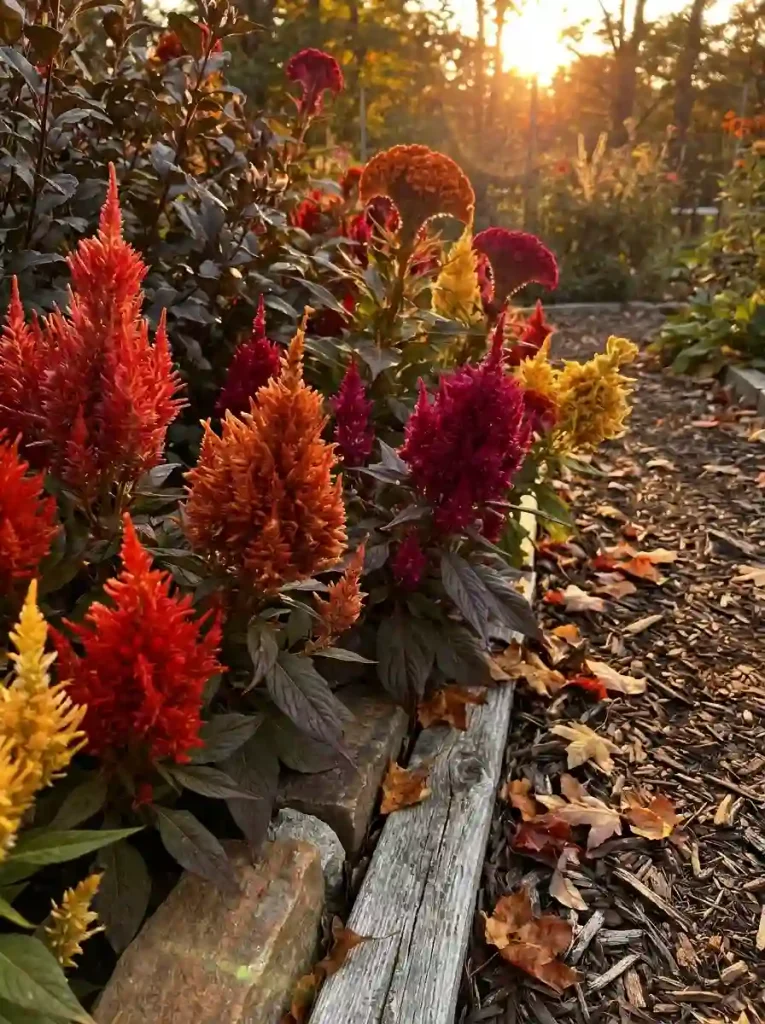
Celosia brings unforgettable texture to fall gardens with flowers that resemble flames, feathers, or velvety coral. Rich shades of red, orange, gold, and magenta make these blooms feel especially dramatic, creating bold focal points among softer flowers and changing seasonal foliage.
Choose a warm, sunny growing location and soil with reliable drainage. Water regularly while plants establish, allowing excess moisture to escape rather than collecting around roots. Celosia looks striking in mixed borders and containers where its unusual texture can become the main visual feature.
9. Sweet Alyssum for a Soft Garden Carpet
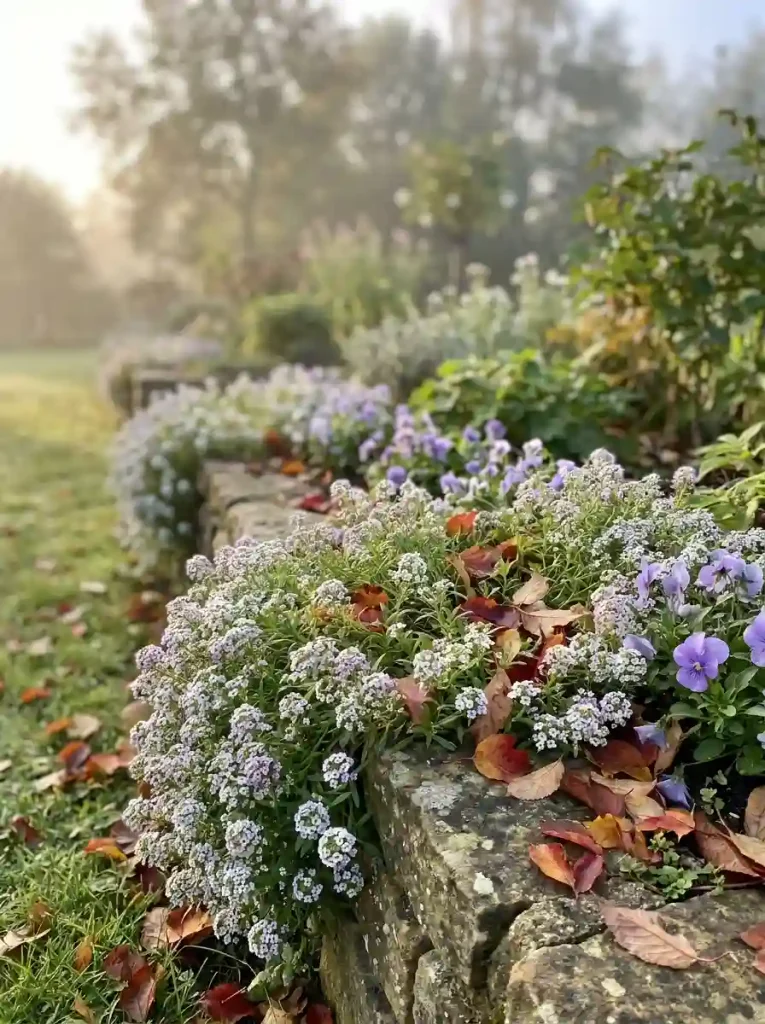
Sweet alyssum creates a soft, delicate carpet of tiny blooms that can make autumn arrangements feel fuller and more romantic. White and pale purple varieties pair easily with richer fall colors, adding gentle texture around larger flowers, containers, and garden edges.
Plant sweet alyssum in well-draining soil and provide suitable sunlight based on your local conditions. Keep young plants consistently watered while establishing. Its low-growing habit makes it especially useful for edging pathways, filling containers, or spilling gracefully around taller seasonal plants.
10. Dianthus for Spicy-Scented Autumn Beauty
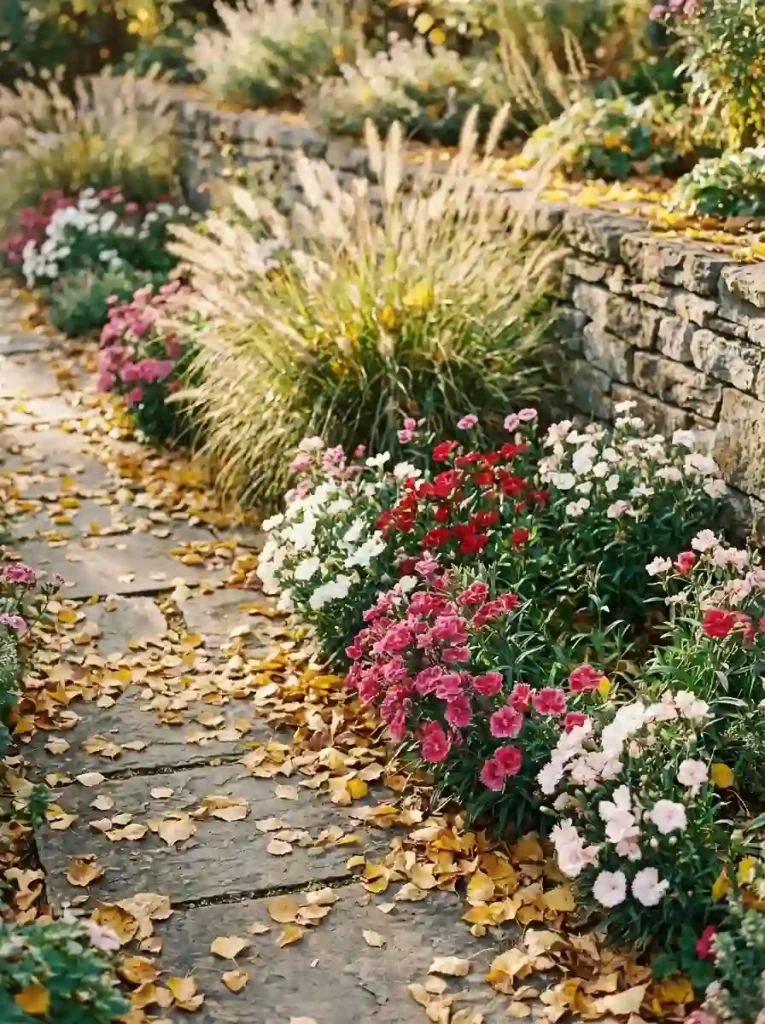
Dianthus adds charming fringed petals and jewel-like color to an autumn garden, creating a refined cottage-style look. Pink, crimson, white, and blush varieties can brighten planting areas while their compact form provides neat texture alongside broader leaves and taller flowering plants.
Give dianthus a sunny position and soil that drains freely, especially in areas where autumn brings additional moisture. Avoid overcrowding plants and water around the root zone as needed. Their tidy growth works beautifully along pathways, borders, and mixed container arrangements.
11. Calendula for Golden Cottage-Garden Glow
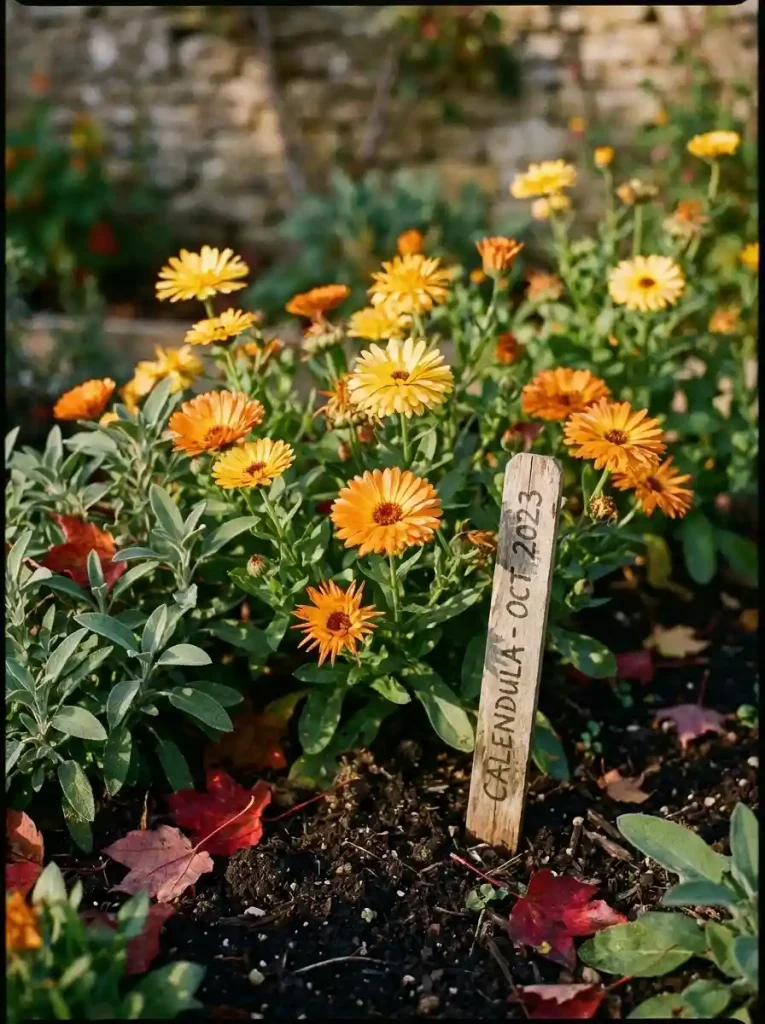
Calendula brings sunny gold and orange blooms that feel perfectly at home beside fall foliage and harvest-inspired garden decor. Its layered petals have a cheerful, cottage-garden quality, making beds and containers look warmer even as the surrounding landscape begins changing for the season.
Plant calendula in a location with suitable sunlight and loose, well-draining soil. Water gently while young plants establish, then maintain moderate moisture according to local weather. Use calendula in borders, kitchen gardens, and containers where its warm color can brighten cooler autumn days.
12. Coneflowers for a Natural Autumn Look
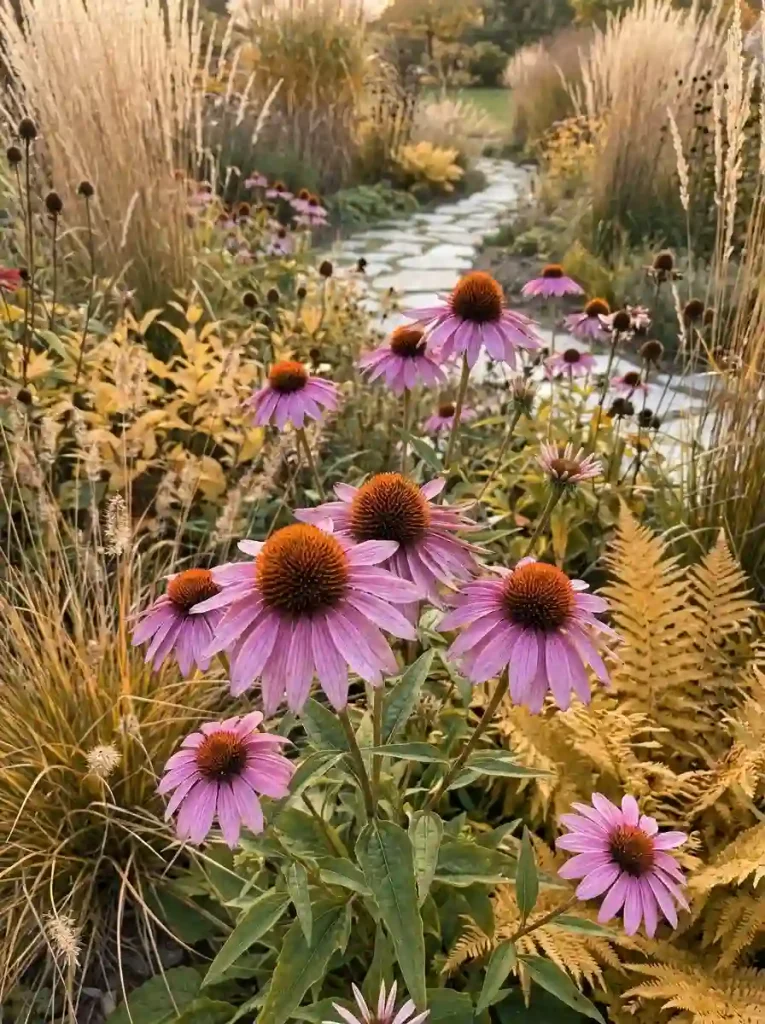
Coneflowers bring a relaxed, natural look to fall gardens with sturdy stems, colorful petals, and distinctive raised centers. Their lingering blooms and seed heads can add texture as the season progresses, blending beautifully with grasses, golden leaves, and more informal planting styles.
Choose a sunny location with soil that does not remain waterlogged. Once established, many coneflower varieties are relatively easy to manage, though needs vary by type and climate. Plant them in drifts through borders for a meadow-inspired effect with lasting seasonal structure.
13. Sedum for Rosy Late-Season Drama
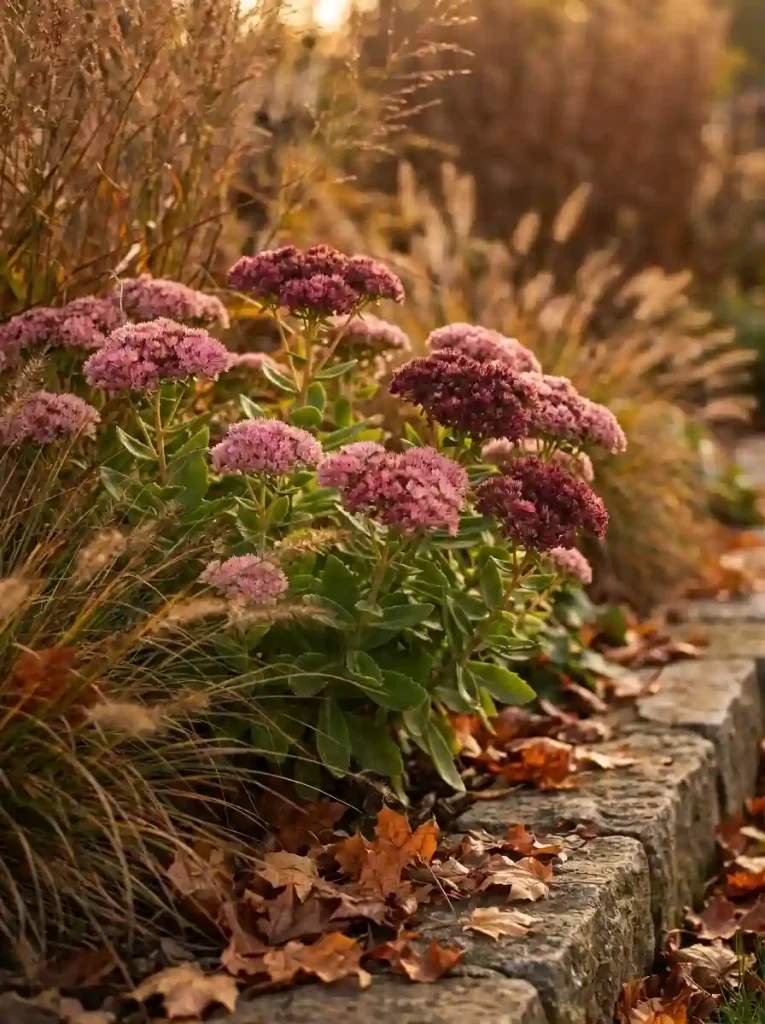
Sedum adds rich late-season color and interesting structure with dense flower clusters that often shift into rosy and deeper tones. Its sturdy appearance contrasts beautifully with delicate petals, while fleshy leaves bring additional texture to autumn borders and mixed garden arrangements.
Plant sedum in well-draining soil and give it a sunny location where appropriate for the variety. Avoid overly wet conditions around the roots. Its dependable form makes sedum useful in borders, rock gardens, and containers where gardeners want long-lasting structure with minimal fuss.
14. Japanese Anemones for Elegant Fall Blooms
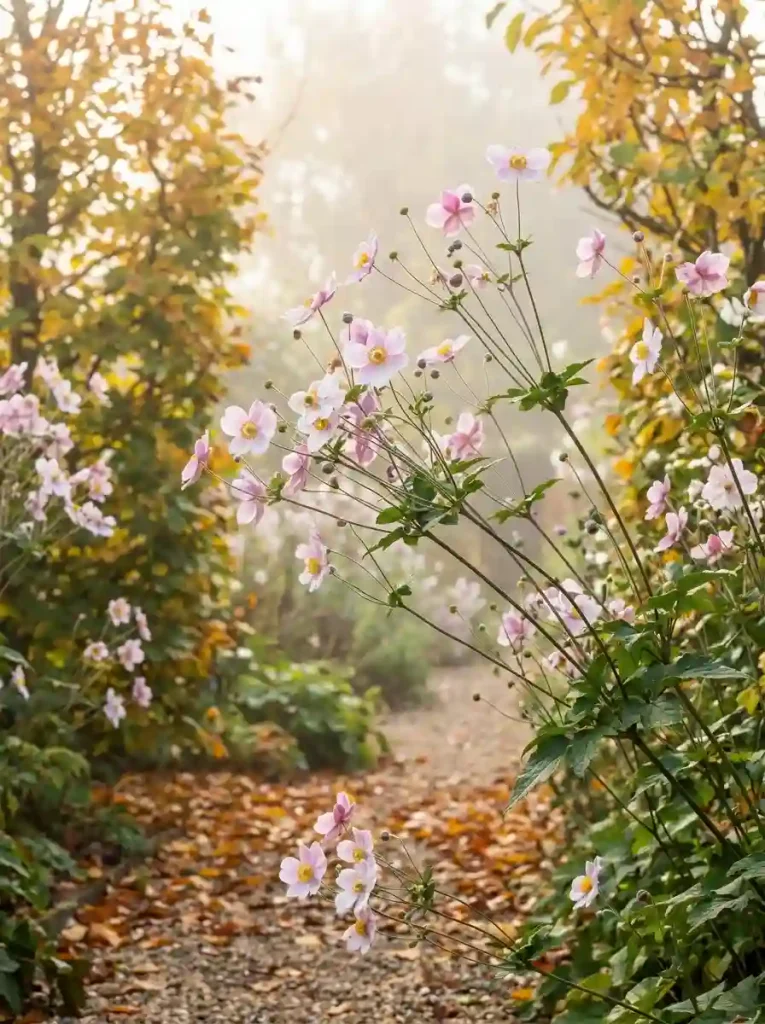
Japanese anemones bring graceful movement and elegant simplicity to late-season gardens. Their soft pink or white flowers appear to float above the foliage on slender stems, creating a light, airy contrast against the richer colors and heavier textures often found during autumn.
Choose a planting location suited to your climate, with soil that remains reasonably fertile and does not dry excessively while plants establish. These flowers can create beautiful colonies over time. Place them toward the middle or back of borders for height and movement.
15. Cyclamen for Shady Autumn Corners
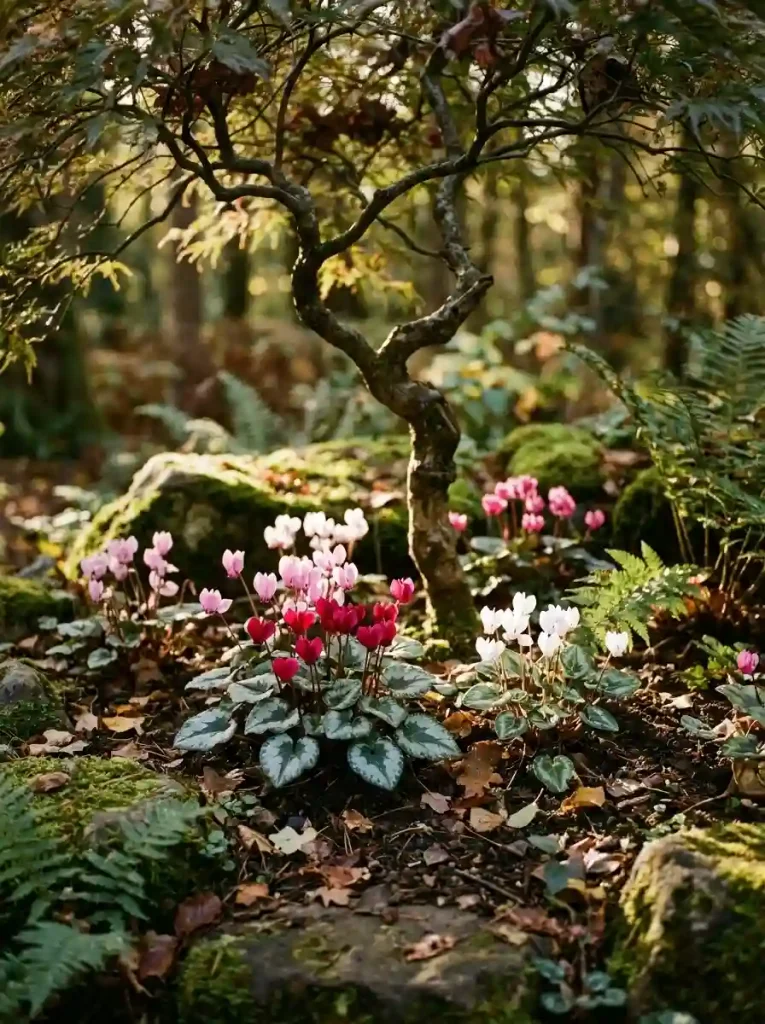
Cyclamen can bring delicate color to cooler, sheltered garden spaces with their swept-back petals and beautifully patterned leaves. Pink, red, and white flowers look especially charming against silver-marked foliage, adding refined detail to shaded corners that may need seasonal interest.
Growing needs vary between cyclamen types, so choose a variety suited to your local climate and garden conditions. Many appreciate sheltered locations and soil with good drainage. Use them in shaded beds, containers, or beneath suitable trees for an intimate autumn display.
16. Black-Eyed Susans for Golden Autumn Sunshine
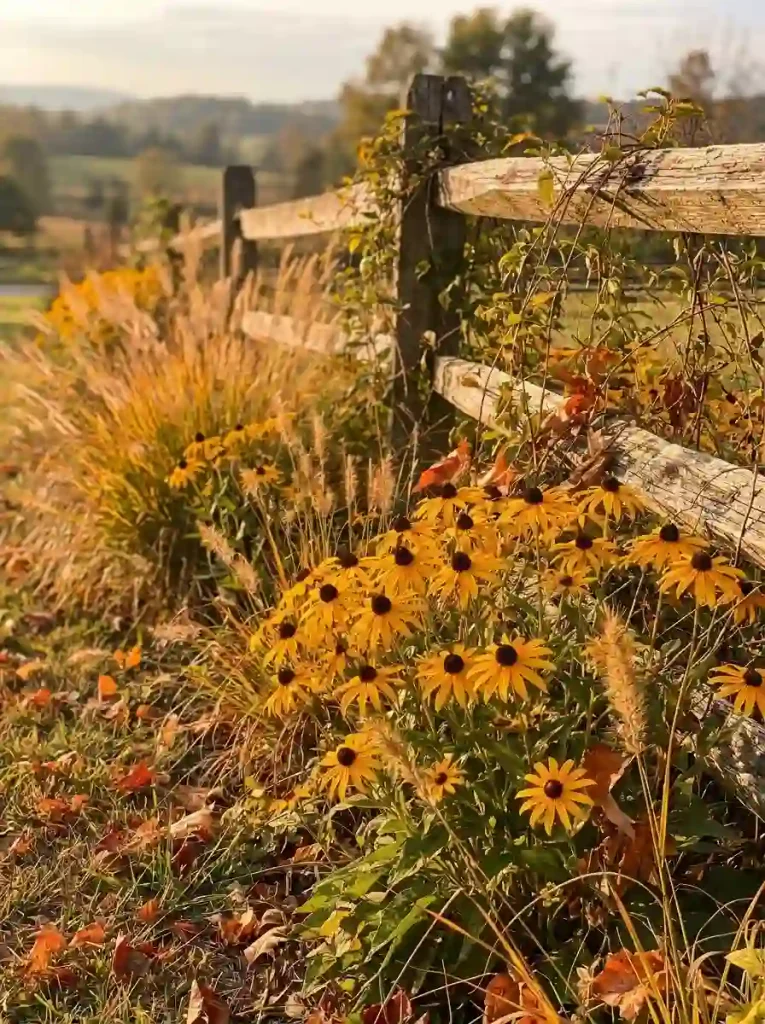
Black-eyed Susans bring a burst of golden sunshine to gardens as summer transitions into fall. Their bold yellow petals and dark centers create a strong visual contrast, making them easy to notice among changing foliage, ornamental grasses, and deeper-colored seasonal flowers.
Plant in a sunny area with soil that drains reasonably well, following the needs of your chosen variety. Once established, these flowers can add natural-looking color to borders and larger planting areas. Combine them with asters or grasses for layered autumn texture.
17. Hellebores to Plan Ahead for Cool Seasons
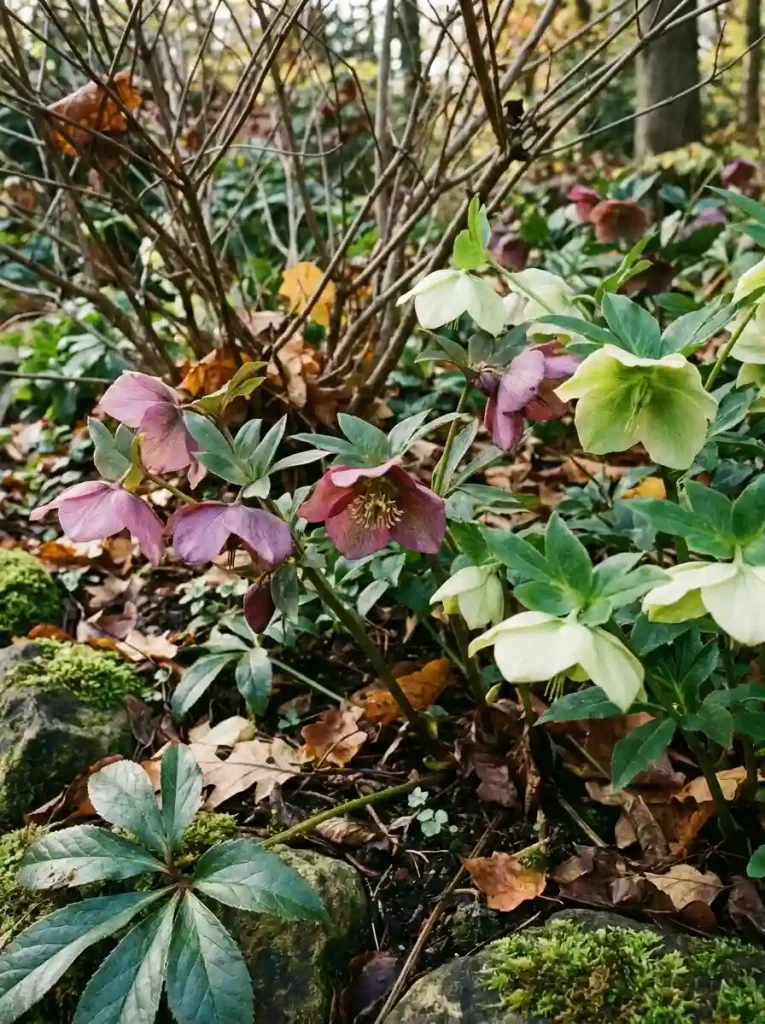
Hellebores are worth considering when planning beyond the immediate fall season, offering handsome foliage and distinctive flowers in shades ranging from cream to plum. Their understated beauty suits woodland-style spaces, where textured leaves and muted colors create an elegant, natural garden mood.
Plant hellebores in a suitable sheltered location with fertile, well-draining soil, adjusting placement according to your climate. They can be especially valuable in partially shaded gardens. Give plants room to establish and enjoy their long-term contribution to layered seasonal planting.
18. Flowering Cabbage for Statement-Making Color
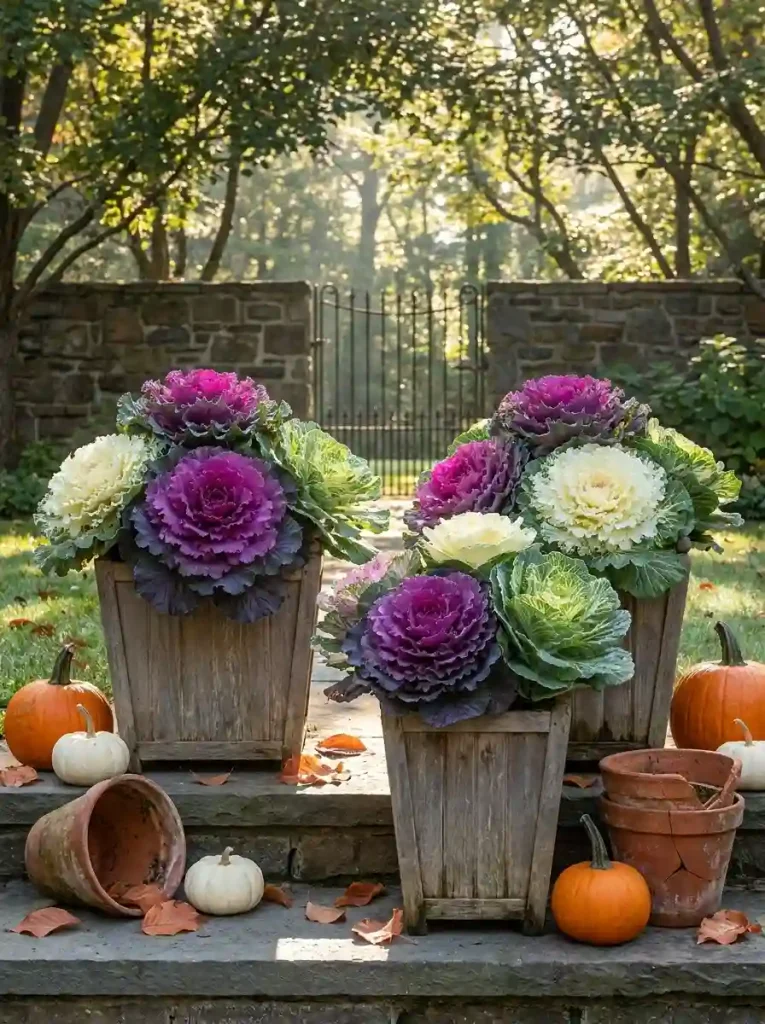
Flowering cabbage creates dramatic autumn displays with oversized rosettes and colorful, ruffled leaves that resemble giant blooms. Purple, cream, green, and magenta tones bring striking contrast to traditional flowers, making these plants ideal for bold containers and carefully designed garden borders.
Plant flowering cabbage in fertile, well-draining soil and provide appropriate sunlight for strong color and growth. Keep moisture steady while plants establish without allowing roots to remain constantly wet. Combine it with pansies, violas, or ornamental grasses for richly textured autumn arrangements.
Conclusion
Planting flowers for fall is one of the easiest ways to extend the beauty of your garden and create a colorful outdoor space that feels warm and inviting. From bright mums and cheerful pansies to textured kale and elegant anemones, every garden can benefit from a thoughtful mix of flowers, foliage, and seasonal color.
Choose varieties that suit your available space and local growing conditions, then experiment with layers, textures, and color combinations. Save these ideas for future inspiration and start planning your dream fall garden today.