21 Afrohemian Home Decor Ideas
Afrohemian style brings together the warmth of African-inspired design and the relaxed beauty of bohemian interiors. Imagine earthy clay pots, woven baskets, natural wood, and handmade textiles filling a room with character. Every corner feels warm, creative, and connected to nature. These 23 Afrohemian home decor ideas will help you create a welcoming space with meaningful details, beautiful textures, and practical decorating choices.
In this article, you will find 23 simple, inspiring ideas to bring Afrohemian style into your home. Explore woven wall baskets, tribal-inspired textiles, natural wood furniture, indoor plants, handmade pottery, and cozy bedroom accents.
In my experience, the most inviting interiors balance different textures without making the room feel crowded. By the end, you will have plenty of inspiration to create an Afrohemian home that feels personal, comfortable, and beautifully layered.
Woven Basket Wall Display
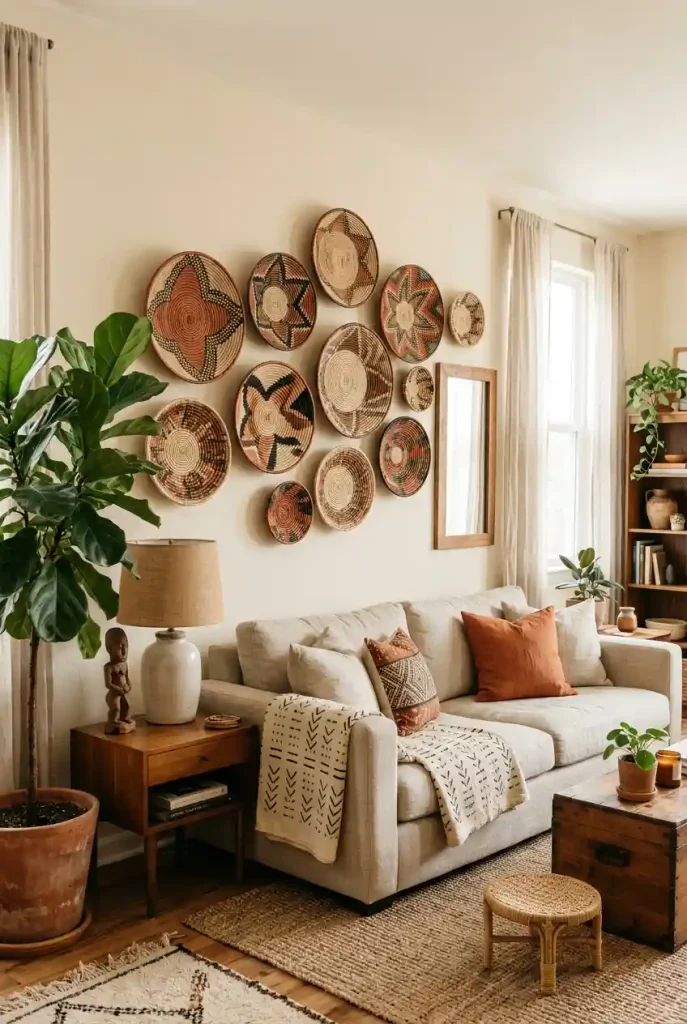
A plain wall can become the most interesting feature in your living room with a collection of woven baskets. Their natural patterns introduce texture without requiring expensive artwork.
Arrange five to seven baskets in different sizes, using a loose circular layout. Combine shallow seagrass trays with darker raffia pieces for contrast.
- Placement: Above a sofa or console table.
- Budget: Low to medium.
- Practical tip: Trace your arrangement on paper before hanging.
Leave a little breathing room between each basket so its individual pattern remains visible. Choose lightweight baskets and secure every piece with suitable wall hooks. This display works especially well in neutral rooms that need warmth and personality.
Earthy Terracotta Accents
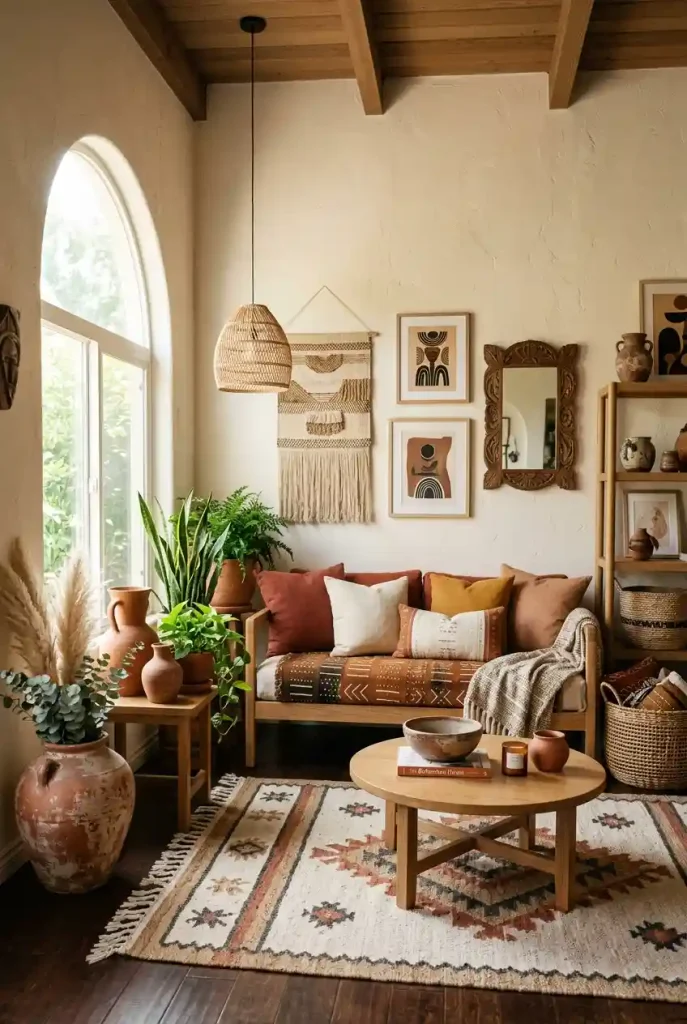
Warm terracotta shades bring a grounded, welcoming feeling to Afrohemian interiors. Even a few clay accessories can change the mood of a simple room.
- Place a terracotta vase on a wooden coffee table.
- Arrange small clay pots on open shelving.
- Add rust-colored cushions to a cream sofa.
- Display handmade pottery on a sideboard.
- Combine terracotta with sand, olive, and chocolate brown.
Budget: Low to medium, depending on the pottery and accessories.
The secret is to repeat the color in different places rather than concentrating everything in one corner. Choose three or four terracotta accents and balance them with neutral fabrics. A small collection of clay pieces can create a connected look without overwhelming your living space.
Natural Wood Furniture
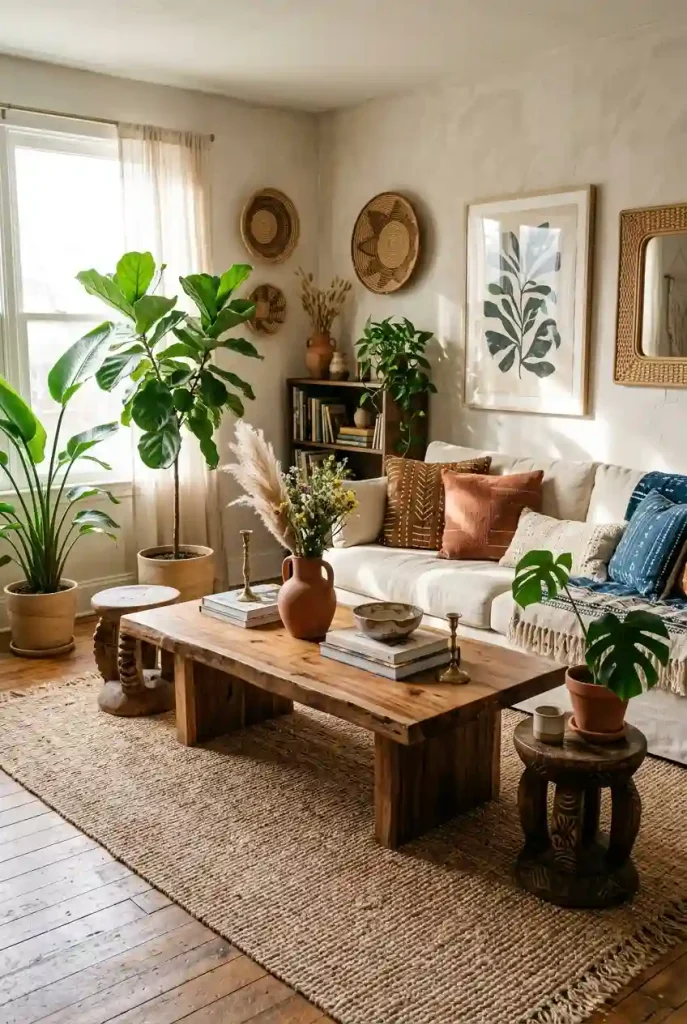
Natural wood gives an Afrohemian room its warmth and visual foundation. Look for furniture with visible grain, rounded edges, carved details, or a slightly rustic finish.
Quick Tip:
Choose one main wooden furniture piece first, such as a coffee table or sideboard. Match smaller accessories to its undertone. Avoid mixing too many competing wood finishes in one small room.
A medium-sized wooden coffee table can anchor a seating area, while narrow side tables work better in compact apartments. Add a woven rug underneath to define the space. For a budget-friendly approach, consider refinishing an existing wooden stool or table instead of buying new furniture.
Tribal-Inspired Throw Pillows
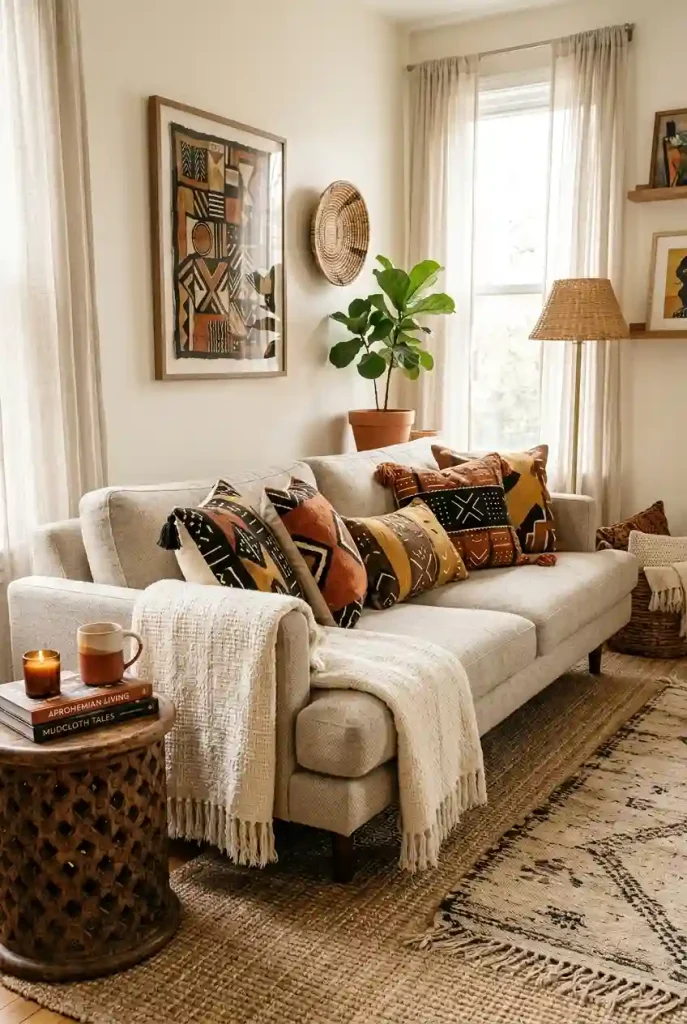
Before: A neutral sofa can sometimes feel flat, especially when every cushion has the same color and texture. The seating area may lack the visual detail that makes Afrohemian interiors interesting.
After: Introduce patterned cushions with geometric shapes, earthy stripes, and textured woven fabrics. Mix two larger patterned pillows with smaller solid-colored cushions.
Keep the arrangement balanced by choosing one dominant pattern and two simpler designs. Cushion covers measuring around 18 to 22 inches suit most standard sofas. For a low-budget update, replace only the covers rather than the entire cushions. This approach adds personality while keeping the room comfortable and easy to maintain.
Macrame Plant Hangers
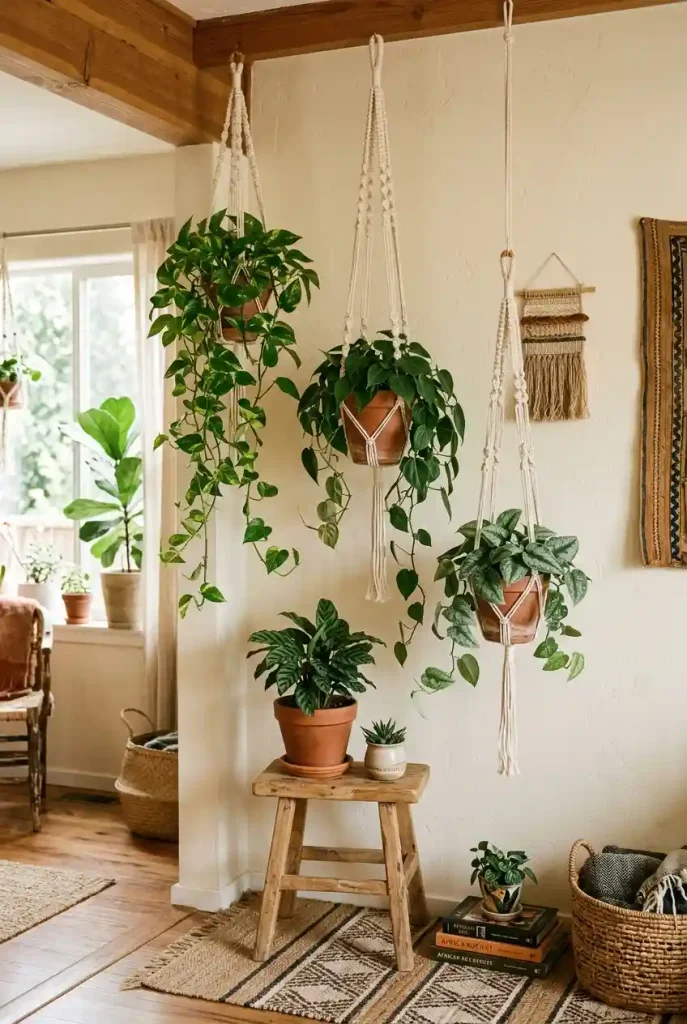
Hanging greenery brings movement and natural color into an Afrohemian home without taking up valuable floor space.
- Choose cotton macrame hangers with simple knotted details.
- Select lightweight planters that fit securely inside each hanger.
- Hang them at different heights near a bright window.
- Use trailing plants such as pothos or heartleaf philodendron.
Budget: Low to medium, depending on the hangers and plants.
Leave enough room between the hanging pots so leaves can grow without tangling. Check the ceiling anchors and use hardware suitable for the combined weight of the plant, pot, and damp soil. This arrangement works particularly well in small living rooms, bedrooms, and reading corners.
Layered Jute And Wool Rugs
| Point | Small Space | Large Space |
| Base rug | 4 x 6 feet | 8 x 10 feet |
| Top rug | Small patterned runner | Medium wool rug |
| Best placement | Under coffee table | Centered seating area |
| Budget | Low to medium | Medium to high |
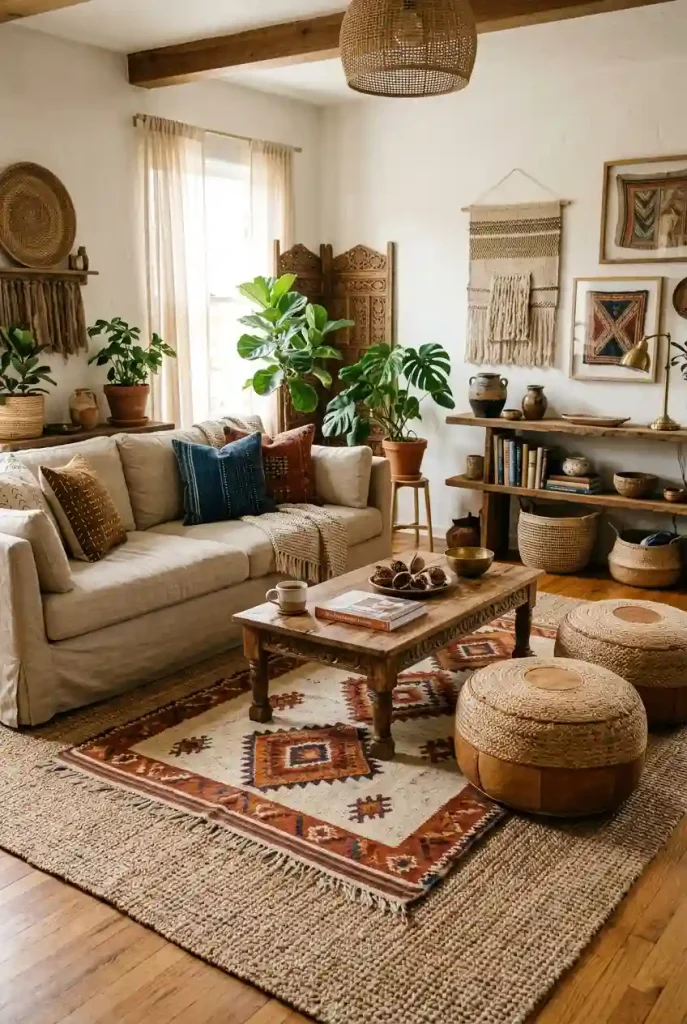
Layered rugs create depth and help separate different areas without installing partitions. Start with a flat jute rug, then position a smaller patterned rug over it. Keep the furniture legs stable and use non-slip rug pads to prevent movement. Choose complementary earthy shades rather than several competing patterns. This styling works especially well in open-plan living rooms.
African-Inspired Wall Art
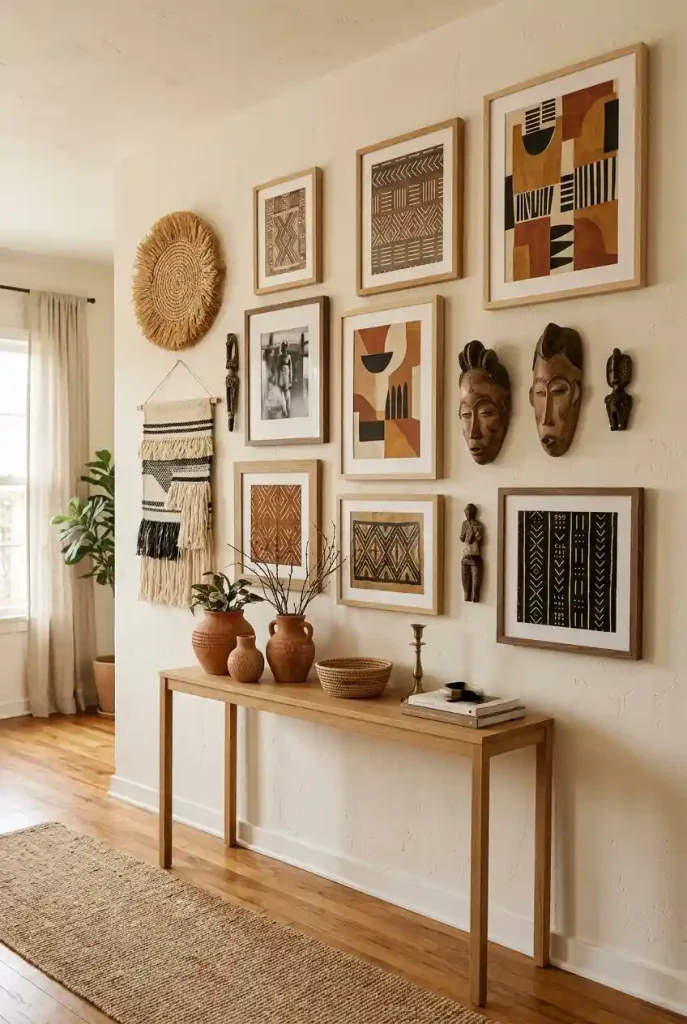
A thoughtfully arranged gallery wall can give an Afrohemian room a personal focal point. Combine abstract artwork, geometric prints, and handmade wall pieces inspired by African design traditions.
Choose three to five pieces in different sizes, then arrange them around a shared color palette of rust, ochre, cream, and charcoal. Natural wood frames help connect the artwork with other furniture.
Before hanging anything, lay the pieces on the floor to test the spacing. Keep the center of the arrangement near eye level and leave enough room between frames. Choose artwork respectfully, learn about its cultural context, and support artists and makers when possible.
Woven Storage Baskets
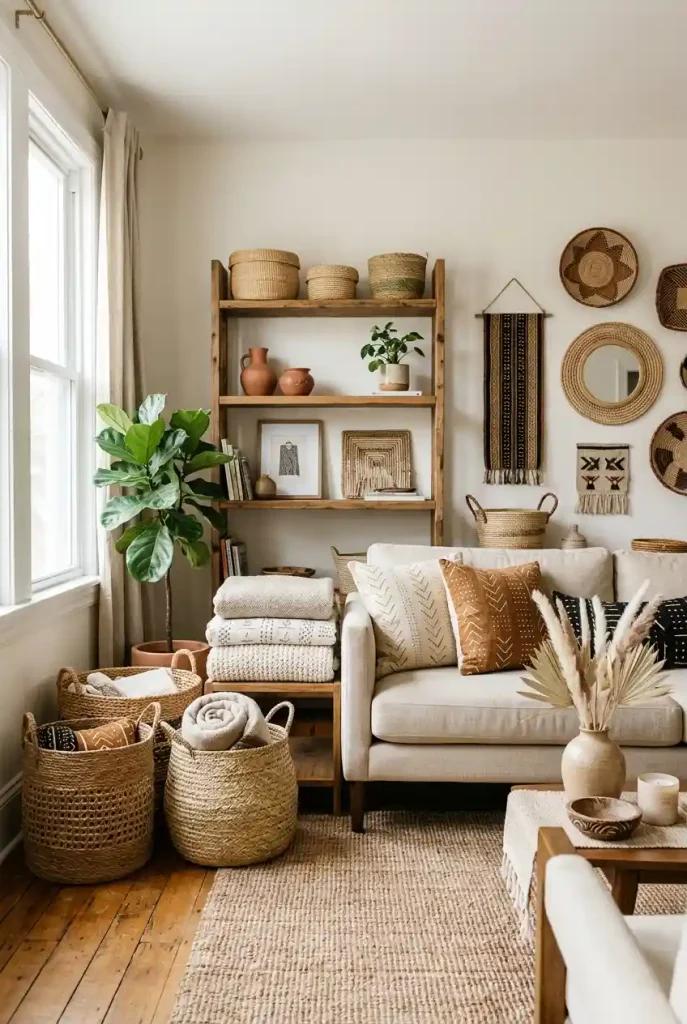
Quick Facts: Cost: Low to medium | Difficulty: Easy | Best For: Living rooms and bedrooms | Works In: Small apartments and large homes
Woven baskets combine practical storage with the natural textures that define Afrohemian decorating. Choose two large baskets around 14 to 18 inches wide for blankets and extra cushions. Smaller baskets can hold remote controls, magazines, or everyday accessories.
Place larger baskets beside sofas or underneath console tables. Use open baskets for frequently needed items and lidded versions for things you prefer to keep out of sight. For a cohesive appearance, repeat similar natural fibers throughout the room without making every basket identical.
Carved Wooden Decorative Pieces
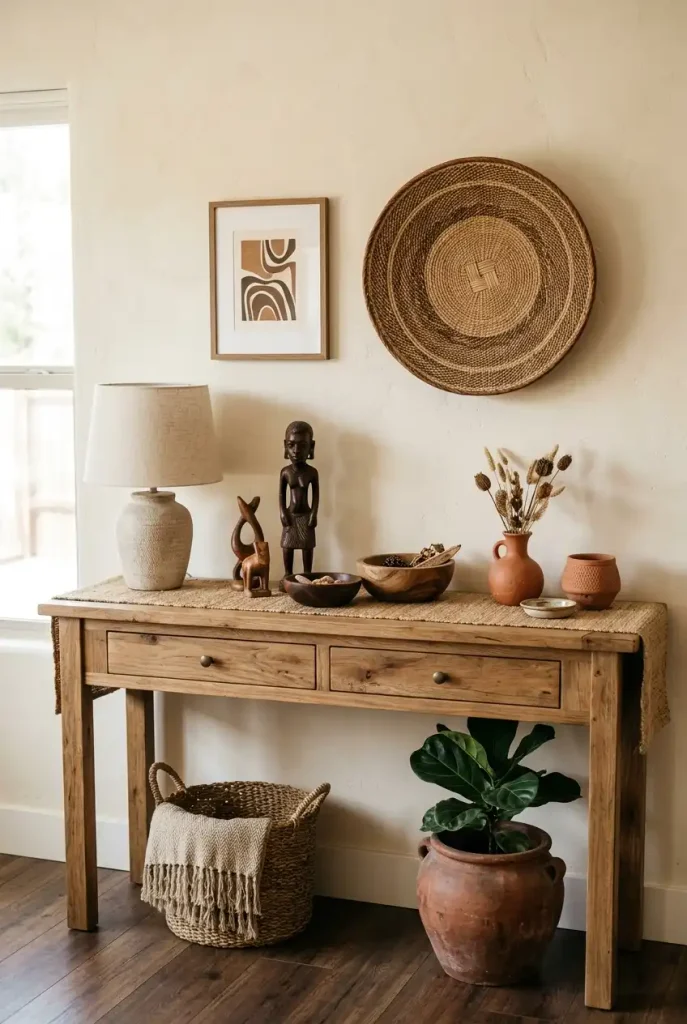
Wooden decorative objects add detail and craftsmanship to an otherwise simple room. A carved bowl, small sculpture, or handmade figurine can become an attractive focal point.
Before: A console table filled with unrelated accessories can appear busy and disconnected.
After: Group three wooden objects of different heights on a narrow tray. Place a small pottery vase beside them and leave some open surface around the arrangement.
Choose pieces with natural finishes and interesting shapes. A medium wooden bowl can hold keys or small everyday items near the entryway. For a more affordable option, look for secondhand wooden accessories or repurpose an existing decorative bowl.
Earthy Bedroom Bedding
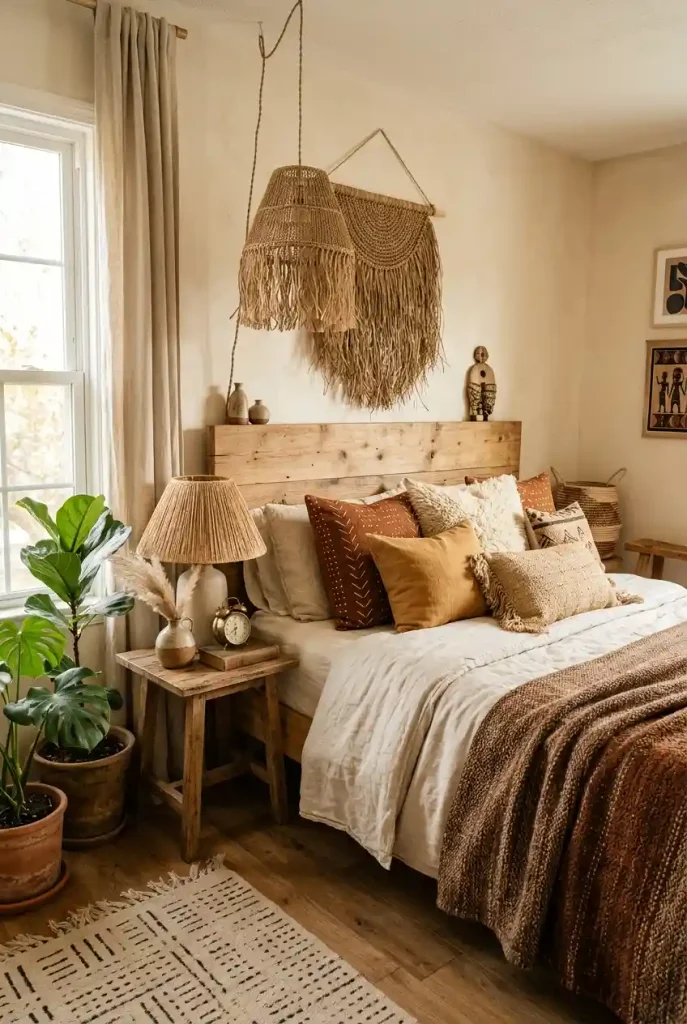
A restful Afrohemian bedroom starts with soft layers and a warm, grounded color palette.
- Choose cream or warm beige bedding as your base.
- Add two rust or ochre decorative cushions.
- Fold a textured brown blanket across the bed.
- Introduce a small patterned lumbar pillow.
- Finish with natural wood bedside accessories.
Budget: Medium, depending on bedding materials.
The bedroom feels more connected when the same earthy colors appear in different layers. Keep the largest bedding pieces neutral, then introduce richer colors through smaller accessories. A lightweight throw at the foot of the bed provides texture without making the sleeping area feel overcrowded. Washable cushion covers also make seasonal styling easier.
Rattan Pendant Lighting
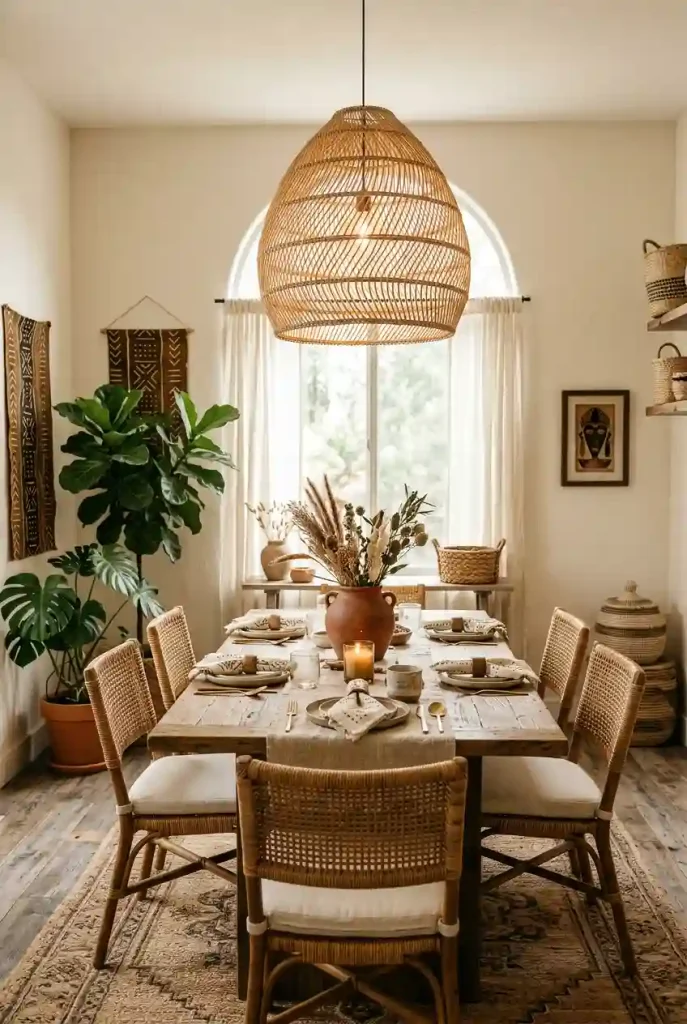
A sculptural rattan pendant can bring natural texture and a soft focal point to an Afrohemian dining area. Choose a shade that suits the table size and ceiling height.
For a balanced look, pair the pendant with a natural wood dining table, woven chairs, and a simple terracotta centerpiece. A shade around 16 to 24 inches wide may suit many dining spaces, but check the room proportions before buying.
Use a suitable ceiling mount and follow the light fixture’s installation and bulb-clearance instructions. Have electrical work completed by a qualified professional when required. Keep the rest of the ceiling decor simple so the pendant remains the main feature.
Handmade African-Inspired Textiles
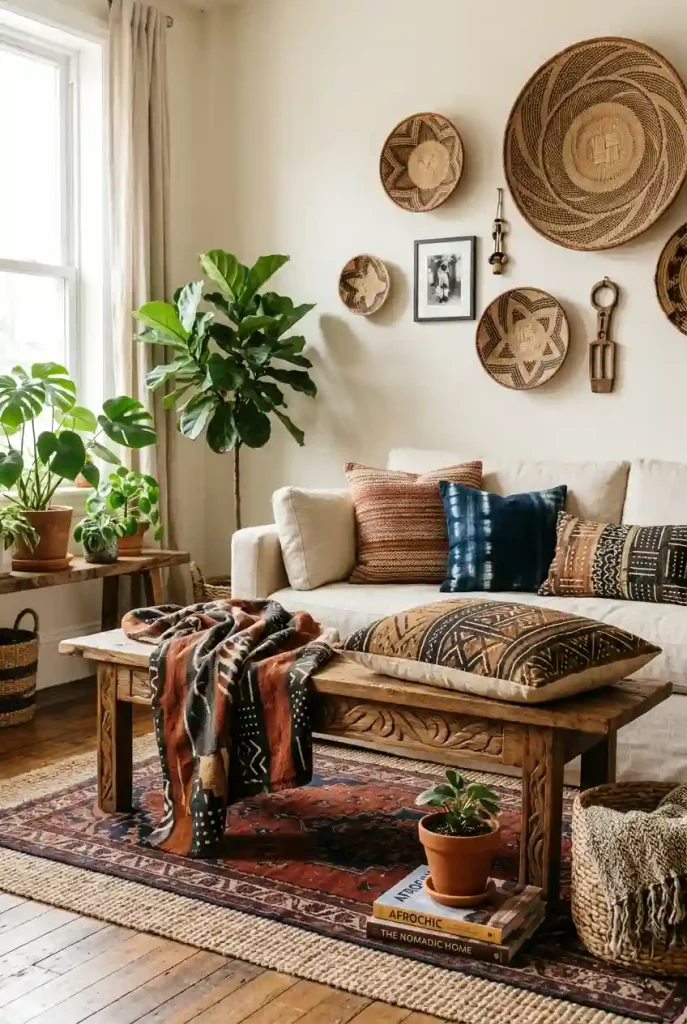
Handmade textiles introduce pattern and cultural character without requiring a complete room makeover. Look for mudcloth-inspired prints, geometric woven fabrics, and textiles featuring earthy stripes.
- Drape a patterned textile over a wooden bench.
- Use a woven runner across a console table.
- Add one patterned cushion to neutral seating.
- Display a textile inside a simple wooden frame.
Budget: Low to medium.
The key is to let one textile stand out while keeping surrounding furniture and accessories relatively simple. This creates a balanced interior with plenty of visual interest. Choose authentic, ethically sourced handmade pieces when possible, and learn about their cultural origins rather than treating traditional patterns as generic decoration.
Indoor Plants And Greenery
Quick Tip:
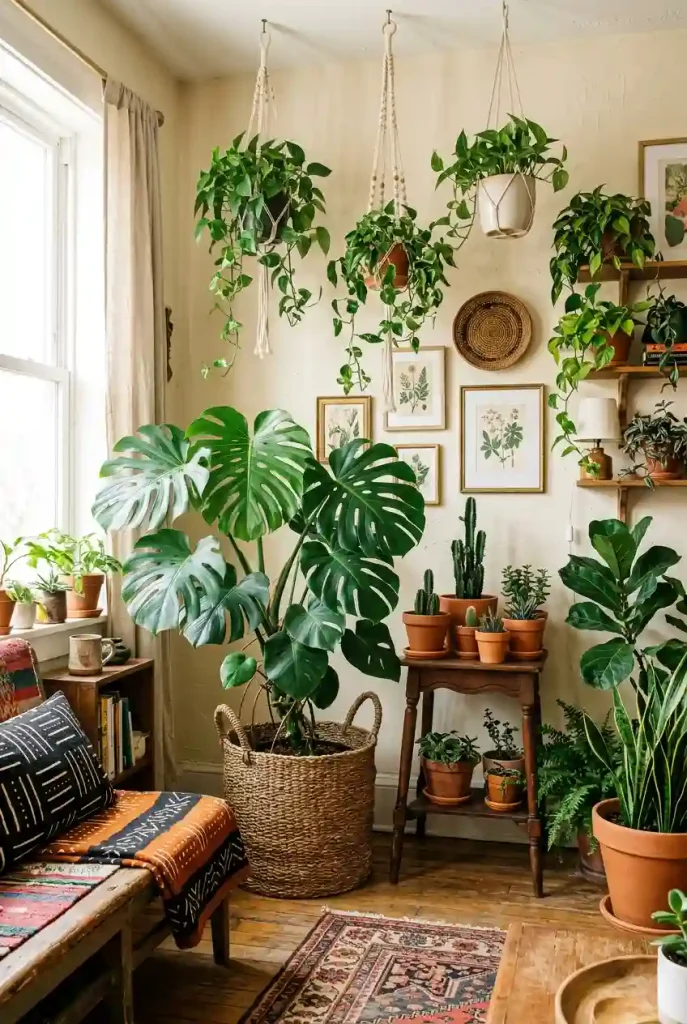
Group plants in odd-numbered arrangements, using different heights and leaf shapes. Place taller plants on the floor and smaller ones on wooden stands.
Choose varieties according to the natural light available in your room. A snake plant can suit a bright or moderately lit corner, while pothos works well in bright indirect light. Use terracotta pots, woven planter covers, and wooden plant stands to connect greenery with the rest of your decor.
Keep water-sensitive furniture protected with waterproof saucers. Avoid overcrowding windowsills, especially where plants could block natural light. Even three carefully placed plants can make a living room feel more relaxed and connected to nature.
Afrohemian Kitchen Shelves
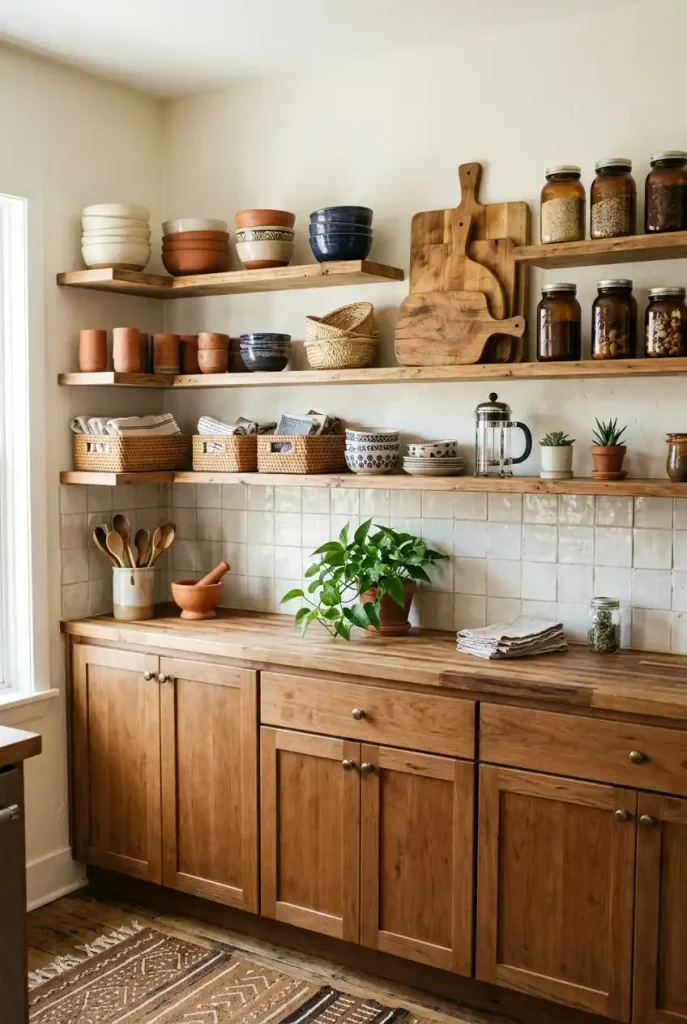
Before: Kitchen counters often become crowded with jars, utensils, decorative objects, and everyday cooking supplies. Too many items compete for attention and reduce useful workspace.
After: Install two sturdy wooden floating shelves above an accessible counter. Arrange everyday ceramic dishes on the lower shelf and decorative pottery on the upper shelf. Add one small woven basket for lightweight accessories.
Choose shelves approximately 8 to 12 inches deep, depending on the items you store. Secure them properly into suitable wall supports and respect their weight limits. Keep frequently used cookware within easy reach, while decorative pieces occupy less accessible areas.
Natural Fiber Window Treatments
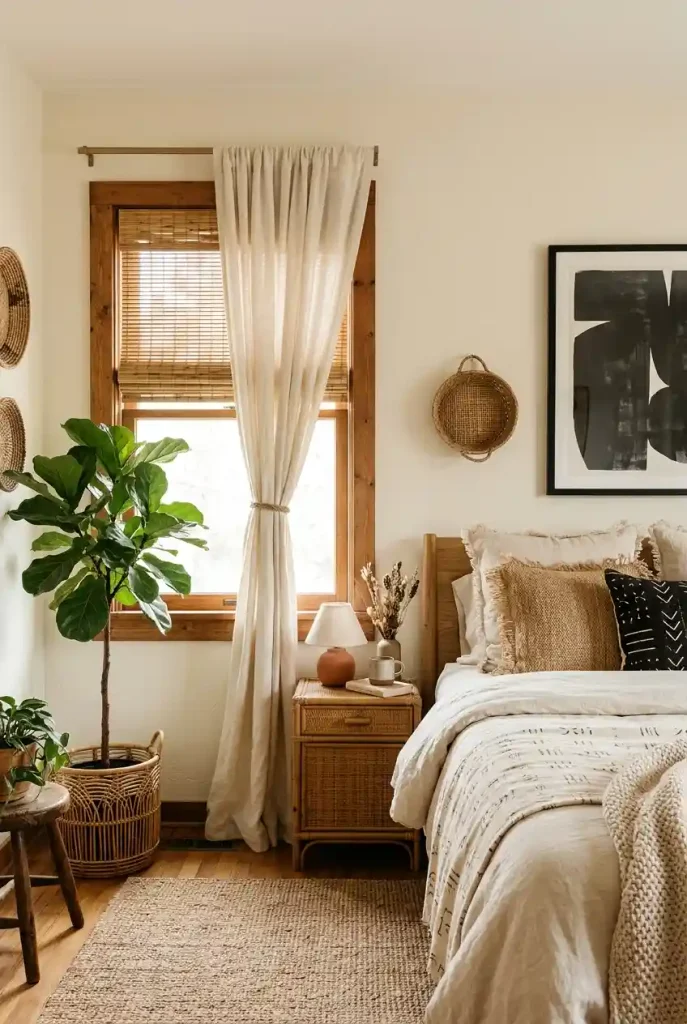
- Measure the window width and height before shopping.
- Choose bamboo shades for natural texture and filtered light.
- Add lightweight cream linen curtains for softness.
- Install a sturdy curtain rod above the window frame.
- Keep the fabric clear of heaters and cooking areas.
Budget: Medium, depending on fabric and window size.
Natural fiber window treatments soften hard window frames and complement wooden furniture beautifully. Bamboo shades offer a structured appearance, while linen curtains create a relaxed finish. Combining both adds depth without introducing extra colors. For smaller rooms, hang curtains slightly higher than the window frame to create a taller visual effect.
Carved Wooden Headboard
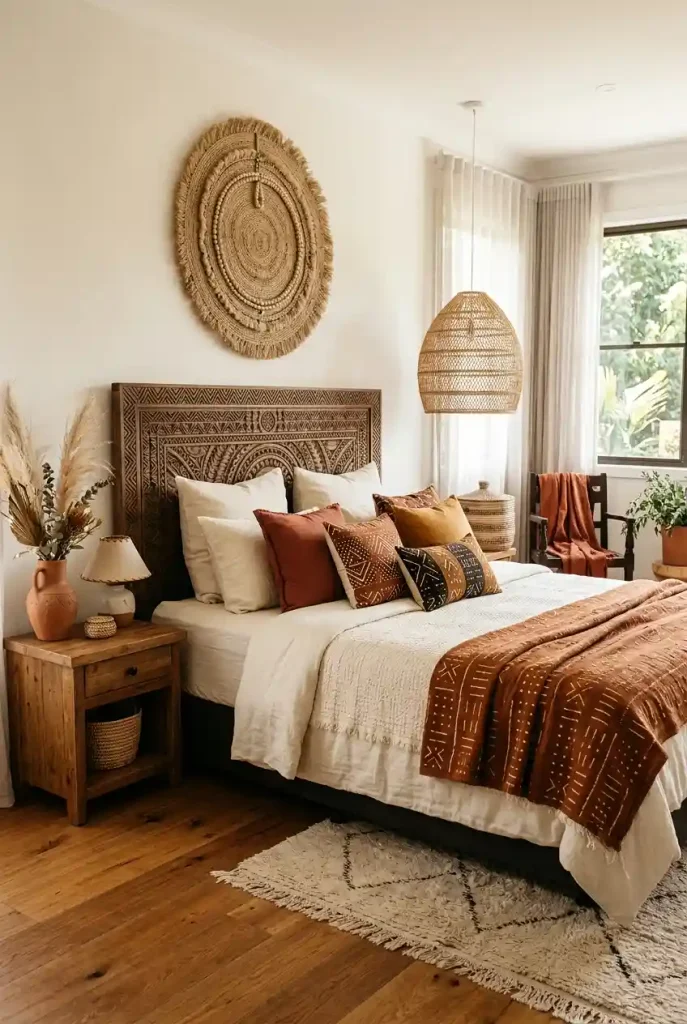
| Point | Simple Headboard | Statement Headboard |
| Material | Plain natural wood | Carved hardwood |
| Appearance | Minimal and subtle | Detailed and decorative |
| Budget | Low to medium | Medium to high |
| Best For | Small bedrooms | Spacious bedrooms |
A carved wooden headboard gives the bedroom a strong focal point while keeping the surrounding decor simple. Look for a design with clean edges and balanced patterns. A headboard around 48 to 60 inches wide can suit many standard beds, but measure your bed first. Secure the headboard according to its installation instructions, especially when choosing a heavier wooden design.
Afrohemian Entryway Styling
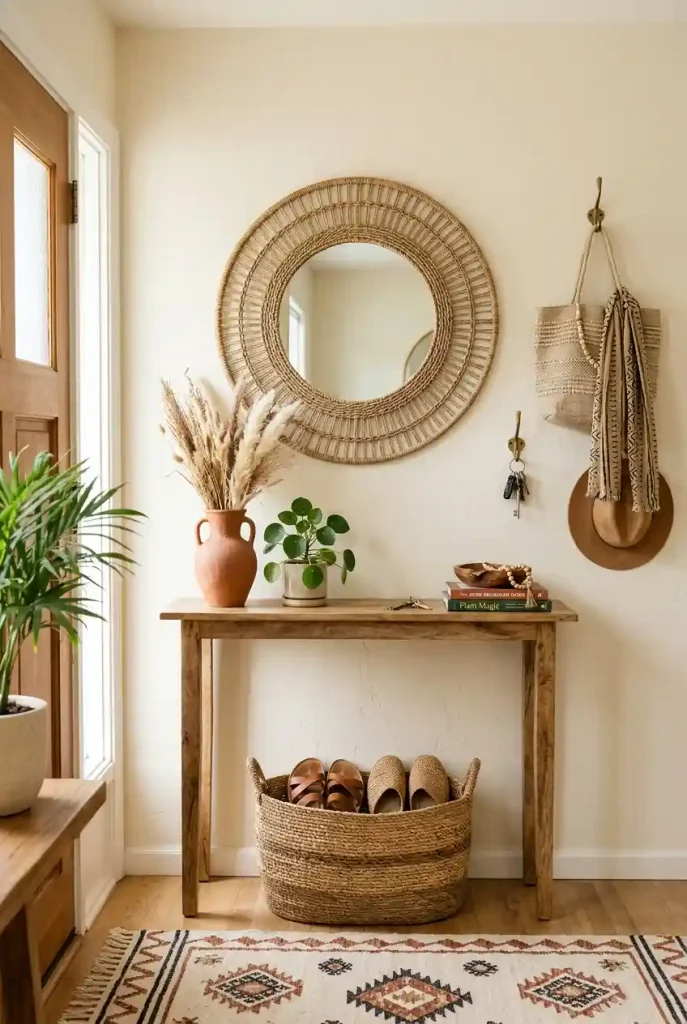
Do:
- Add a narrow wooden console table.
- Hang a round woven mirror above it.
- Install three sturdy hooks for everyday bags.
- Place a basket underneath for frequently worn shoes.
Don’t:
- Block the doorway with oversized furniture.
- Leave loose shoes across the walking path.
- Overload wall hooks with heavy bags.
A welcoming entryway should look attractive while remaining easy to use. Choose a console around 10 to 12 inches deep for narrow hallways. A small tray can collect keys, while a woven basket keeps footwear contained. Leave enough clear floor space for comfortable movement, especially near the front door.
Woven Bedroom Pendant Lights
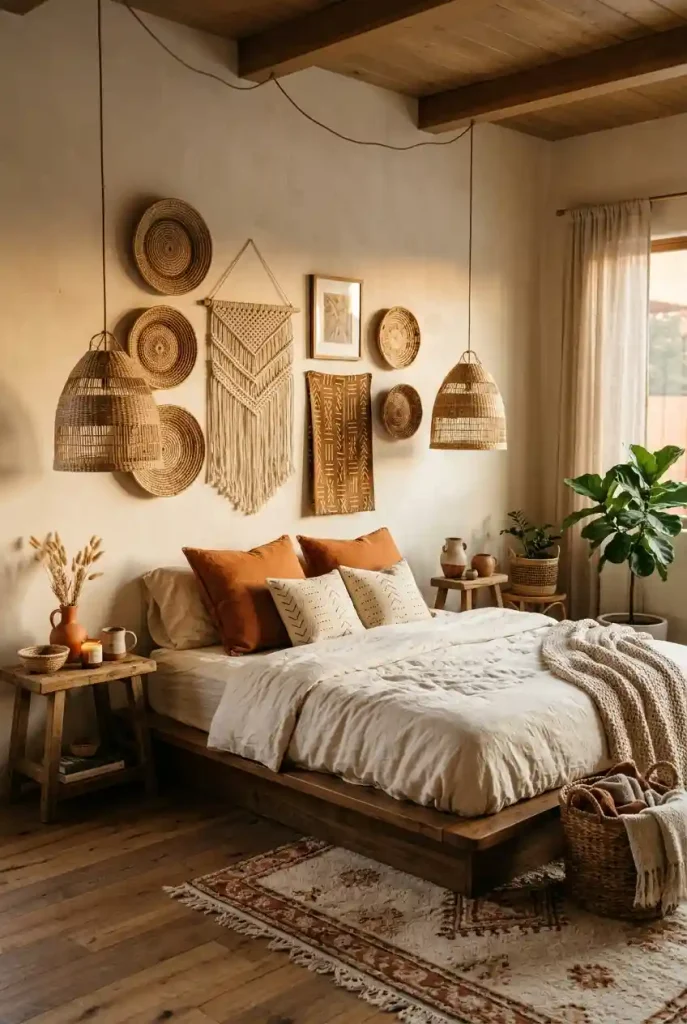
Quick Facts: Cost: Medium | Time: 1–2 hours for installation | Difficulty: Moderate | Best For: Bedrooms and reading corners
Woven pendant lights create beautiful shadows and bring natural texture into a bedroom. Choose a pendant around 12 to 18 inches wide for a bedside area, adjusting the size to your ceiling height and room proportions.
Hang the lights at a comfortable height without interfering with movement around the bed. Use qualified electrical installation where needed, and follow the fixture’s safety instructions. Pair the woven shades with simple wooden bedside tables and neutral bedding. Their warm appearance helps create a comfortable atmosphere without adding unnecessary decorative pieces.
Colorful Afrohemian Dining Space
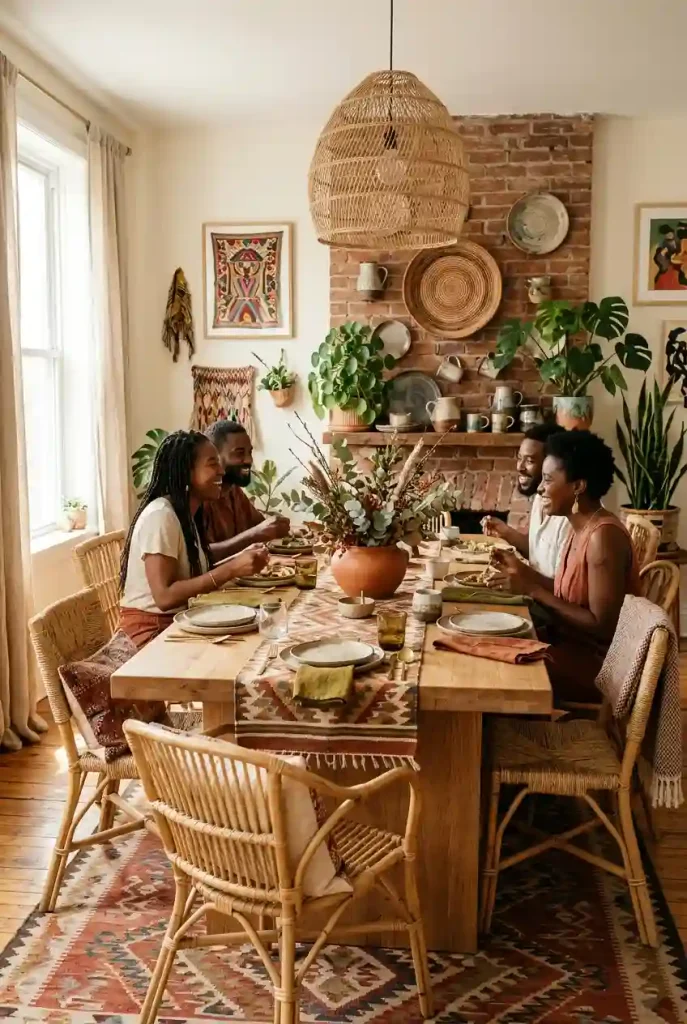
Dining rooms can feel more expressive when earthy colors meet handmade details. Start with a wooden dining table and build the surrounding decor around its natural finish.
Before: A dining area with matching furniture and plain accessories may feel visually repetitive.
After: Introduce woven placemats, rust-colored napkins, ceramic serving bowls, and a patterned runner. Add a terracotta vase with fresh greenery as the centerpiece.
Choose a runner that leaves enough exposed tabletop for everyday dining. For a small dining area, use two or three decorative elements instead of filling the entire surface. Keep the arrangement low enough for comfortable conversation across the table.
Cozy Afrohemian Reading Corner
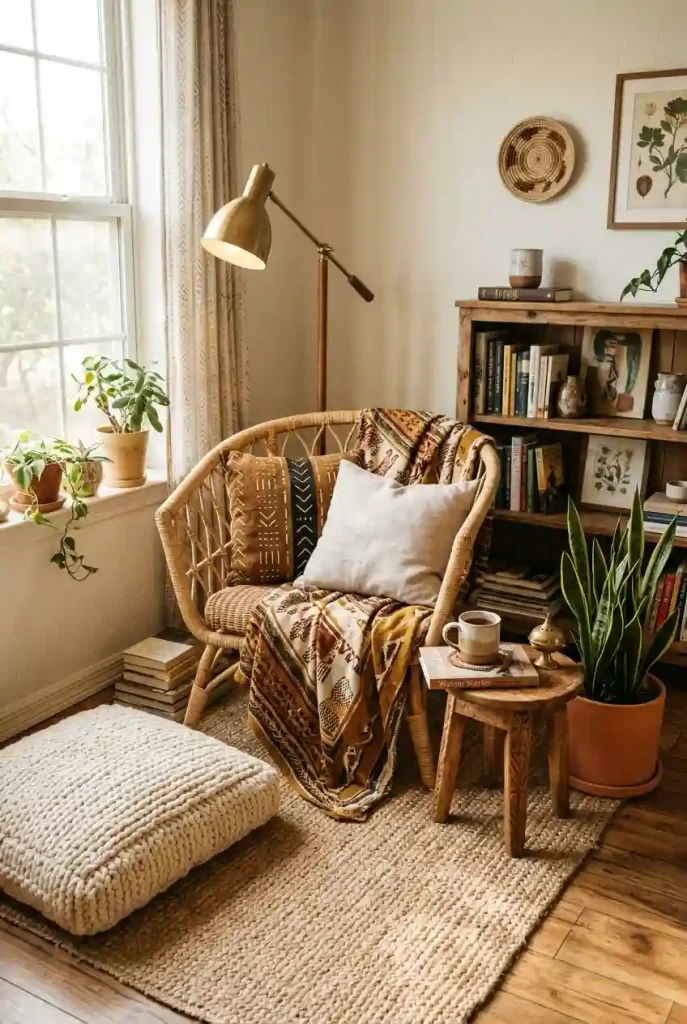
A quiet reading corner does not need a separate room. Even an unused bedroom corner can become a comfortable place to relax.
- Position a comfortable accent chair near natural light.
- Add a small wooden side table for books.
- Place a woven basket beside the chair.
- Use a floor cushion for extra seating.
- Include a warm floor lamp for evening reading.
Budget: Low to medium, depending on furniture choices.
Keep the walking path clear and choose a rug large enough to sit beneath the chair’s front legs. A small collection of books, one plant, and a textured throw will complete the arrangement without making the corner feel crowded.
Afrohemian Bathroom Storage
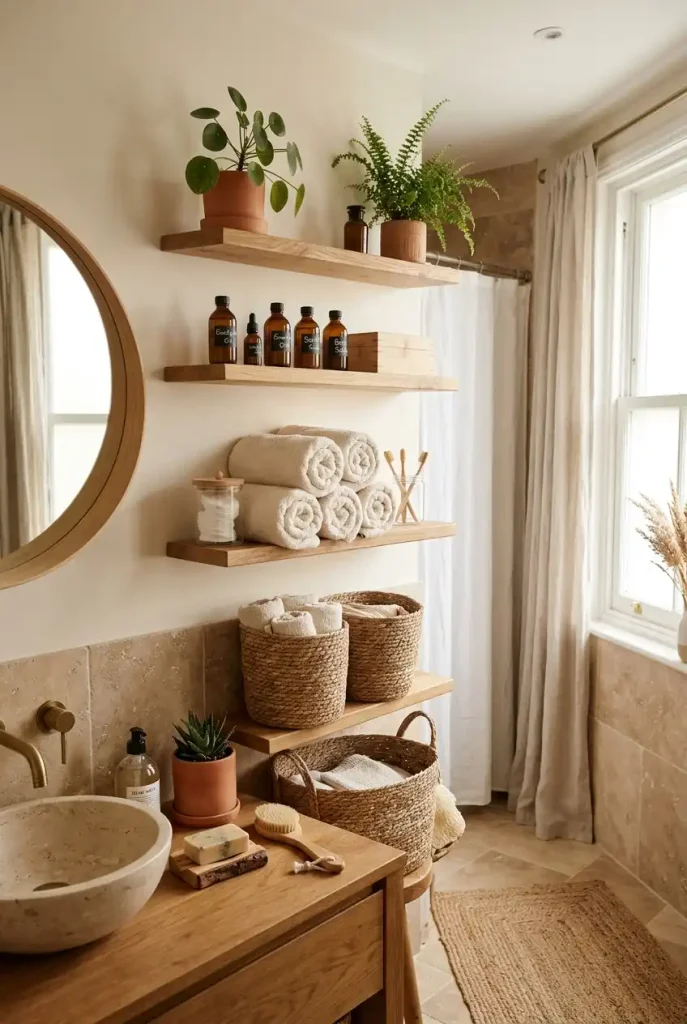
An Afrohemian bathroom can feel warm and organized when practical storage uses natural materials. Install one or two wall-mounted wooden shelves above the toilet or beside the vanity, leaving enough clearance for everyday use.
Place rolled cream towels in a medium woven basket and use smaller baskets for spare toiletries. Amber glass containers can hold bathroom essentials, while a small terracotta planter adds a natural accent. Keep frequently used products within easy reach.
Choose moisture-resistant shelving and keep baskets away from standing water. Store cleaning products securely and separately from toiletries. A simple arrangement of wood, woven fibers, and neutral towels gives the bathroom a relaxed, spa-inspired look without sacrificing useful storage.
Frequently Asked Questions
How Do I Start Decorating My Home In Afrohemian Style?
Start with natural materials and warm neutral colors. Introduce woven baskets, wooden furniture, terracotta pottery, and patterned cushions. Choose a few meaningful decorative pieces first, then gradually add textiles and plants to create a balanced Afrohemian interior.
How Can I Create Afrohemian Decor On A Small Budget?
You can create Afrohemian decor affordably by using secondhand wooden furniture, DIY woven wall displays, inexpensive terracotta pots, and simple cushion covers. Focus on natural textures rather than buying matching furniture sets or expensive decorative accessories.
Which Colors Work Best For Afrohemian Home Decor?
Warm neutrals, terracotta, rust, ochre, chocolate brown, olive green, and charcoal work beautifully together. Use cream or beige as your main background, then introduce deeper colors through textiles, pottery, artwork, and smaller decorative accessories.
Can Afrohemian Style Work In A Small Apartment?
Yes, Afrohemian style works beautifully in small apartments. Choose slim wooden furniture, wall-mounted baskets, hanging plants, and compact woven accessories. Limit large decorative pieces and use a consistent earthy color palette to keep the space visually balanced.
Conclusion
A warm and welcoming home starts with thoughtful details, not expensive furniture. These Afrohemian home decor ideas show how natural wood, woven textures, earthy colors, and meaningful accessories can bring personality into everyday spaces.
Start with one corner, such as your living room or bedroom, and build your style gradually. In my experience, combining a few well-chosen textures creates a more inviting result than filling every surface with decorations. Save this post on Pinterest so it is ready when you need it. Try one idea this week and share it with someone who loves beautiful interiors. Let your home tell its story!