

22 Weekly Home Reset Checklist
A busy week can leave small messes scattered across the house. Laundry piles up, kitchen counters collect random items, and forgotten tasks make the weekend feel overwhelming. A weekly home reset checklist helps you bring everything back under control without spending an entire day cleaning.
In this article, you will find 22 simple, practical ideas to organize your weekly routine, including resetting kitchen counters, refreshing bathrooms, sorting laundry, organizing entryways, and preparing your home for the upcoming week. Each task focuses on manageable steps rather than complicated cleaning routines.
In my experience, a successful home reset works best when you focus on the spaces you use most. By the end, you will have a practical checklist that makes your home feel calmer, cleaner, and easier to maintain throughout the week.
Reset Kitchen Counters

A clear kitchen counter makes the entire room feel more manageable. Start by removing everything that does not belong there, including mail, shopping bags, unused appliances, and empty containers.
Return frequently used items to designated zones. Keep cooking oils, salt, and everyday utensils near the stove, while coffee supplies belong together in a separate corner. Use a small tray to group essentials instead of spreading them across the countertop.
A five-minute counter reset after dinner prevents small messes from becoming a weekend cleaning project. Store rarely used appliances inside cabinets to create more workspace.
Refresh The Refrigerator

- Remove expired food, leftovers, and wilted produce.
- Wipe sticky shelves with a damp microfiber cloth.
- Group dairy, drinks, sauces, and snacks together.
- Place older food near the front.
- Check ingredients before making your grocery list.
A refrigerator reset helps you see what you already have before buying more groceries. Use clear bins approximately 8 to 12 inches wide for snacks, condiment bottles, or small produce items. Keep raw meat securely stored on the lowest shelf to prevent leaks from reaching other foods. Spend a few minutes checking expiration dates and planning meals around ingredients that need to be used soon.
Make The Bed And Reset Bedrooms

Quick Tip:
Keep a small basket near your bedroom door for items that belong elsewhere. Empty it during your weekly reset rather than walking around the house repeatedly.
Fresh bedding, straightened pillows, and cleared nightstands immediately make a bedroom feel more peaceful. Remove cups, charging cables, clothing, and unnecessary papers from bedside surfaces. Fold blankets neatly at the foot of the bed.
Spend a few minutes checking underneath the bed, especially if storage bins are kept there. Choose low-profile containers around 4 to 6 inches tall for seasonal clothing or extra linens. Keep frequently used items accessible instead of creating difficult-to-reach storage piles.
Organize The Entryway

Before: Shoes, keys, bags, and jackets often collect near the front door, making the entrance difficult to use.
After: A small entryway system gives everything a designated place and keeps the doorway clear.
- Install three to five wall hooks for everyday coats and bags.
- Place a shoe tray measuring approximately 24 inches near the door.
- Add a small basket for keys and sunglasses.
- Keep seasonal accessories in a labeled bin.
A simple entryway reset saves time during busy mornings. Choose hooks that are securely mounted and avoid placing storage where it blocks the doorway. For small apartments, vertical wall storage works better than bulky furniture. Return misplaced items to their rooms during the weekly reset.
Sort And Fold Laundry

- Gather clean laundry from bedrooms, bathrooms, and drying areas.
- Separate clothing into everyday wear, work clothes, towels, and bedding.
- Fold items immediately instead of leaving them in baskets.
- Return clothes to drawers using simple categories.
- Place unmatched socks in a small designated container.
Laundry becomes easier when clean clothes have a clear destination. Drawer dividers can separate underwear, socks, and accessories without requiring expensive organizers. Keep frequently worn clothing in the most accessible drawers. If laundry feels overwhelming, complete one category at a time rather than folding everything in one sitting.
Reset The Bathroom Vanity

| Point | Small Bathroom | Large Bathroom |
| Counter storage | Small tray | Divided organizer |
| Toiletries | Drawer dividers | Clear containers |
| Towels | Wall hooks | Shelved baskets |
| Extra supplies | Under-sink bin | Storage cabinet |
A bathroom vanity reset removes unnecessary products and makes daily routines easier. Group skincare, hair products, and dental supplies separately. Use waterproof containers under the sink for backups, but keep cleaning chemicals away from toiletries. Leave enough counter space for everyday essentials, and wipe the surface before putting everything back.
Clear The Living Room

Do:
- Fold blankets and return them to a basket.
- Arrange cushions neatly.
- Remove cups, dishes, and rubbish.
- Return books and remote controls to their places.
Don’t:
- Leave laundry on the sofa.
- Store unrelated items inside decorative baskets.
- Overfill shelves with unnecessary decorations.
The living room often collects items from every room, so begin with a quick pickup. A medium basket measuring around 12 to 16 inches can hold blankets without occupying much floor space. Keep remotes in a small tray and magazines in a vertical holder. Finish by vacuuming visible crumbs and straightening the seating area.
Plan Weekly Meals

Time: 15–20 minutes | Cost: Low | Difficulty: Easy | Best For: Busy households
A simple meal plan prevents last-minute cooking decisions and unnecessary grocery purchases. Check your refrigerator, freezer, and pantry before choosing meals. Write down three to five dinners, easy lunch options, and breakfast staples.
Use a magnetic notepad on the refrigerator or a reusable weekly planner. Keep the plan flexible enough to accommodate leftovers or unexpected schedule changes. Preparing a few ingredients ahead, such as washed vegetables or cooked rice, can make weekday meals much easier.
Create A Weekly Cleaning Caddy

Keeping cleaning supplies together saves time when moving between rooms. Store your most-used products in a handled plastic caddy or small bucket.
Include microfiber cloths, an all-purpose cleaner, glass cleaner, scrub brush, and disposable gloves. Keep the caddy in a secure cabinet away from children and pets.
A portable cleaning kit makes quick bathroom, kitchen, and surface cleaning easier because you no longer need to search for supplies. Avoid mixing cleaning products, especially bleach with ammonia or acidic cleaners. Store chemicals in their original containers and away from food.
Clean High-Touch Surfaces
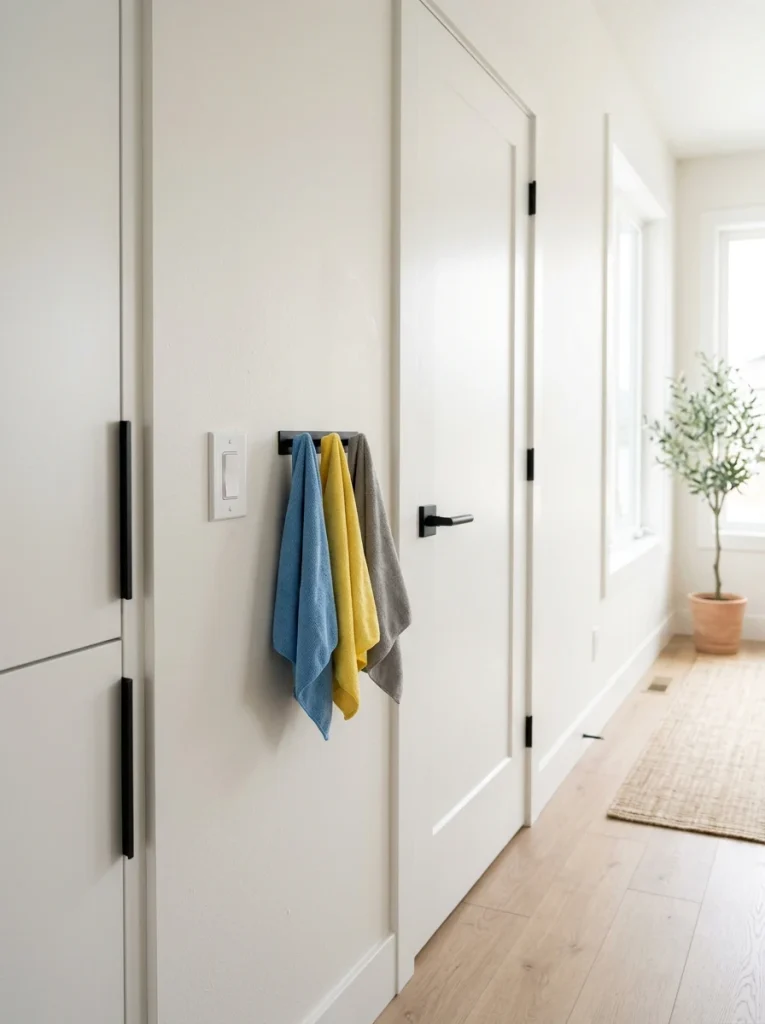
- Wipe door handles and cabinet pulls.
- Clean light switches with an appropriate cloth.
- Disinfect frequently touched remote controls.
- Wipe phone charging areas and desk surfaces.
- Clean stair railings and appliance handles.
High-touch surfaces can collect fingerprints, dust, and everyday grime. Use a microfiber cloth and a cleaner suitable for each material. Avoid spraying liquids directly into electrical switches or electronics.
Make this task part of your weekly home reset checklist by moving from room to room with one cloth. This prevents unnecessary backtracking and helps you remember frequently overlooked surfaces.
Refresh The Pantry

Quick Tip:
Place frequently used ingredients between waist and eye level. Store heavier containers on lower shelves and lighter items higher up.
Remove expired pantry products and group similar ingredients together. Keep baking supplies in one zone, breakfast foods in another, and snacks in a separate basket. Clear containers can help identify ingredients, but original packaging is useful for checking instructions and expiration information.
For narrow shelves, use bins around 8 to 10 inches deep. A small lazy Susan works well for oils, sauces, and jars. Avoid stacking heavy containers above shoulder height.
Prepare The Bathroom Towels

Before: Damp towels may be hanging over doors, folded unevenly, or mixed with clean laundry.
After: Fresh towels are folded, accessible, and stored in one organized location.
- Wash used towels and bath mats.
- Fold clean towels into consistent sizes.
- Stack hand towels separately from bath towels.
- Place extra towels inside a basket or cabinet.
- Remove damaged or heavily worn towels.
A bathroom towel reset helps the space look cleaner without requiring new decorations. Use a shelf or basket that allows airflow and avoid packing towels tightly while they are still damp. Keep a few everyday towels within easy reach and store extras elsewhere.
Review The Family Calendar
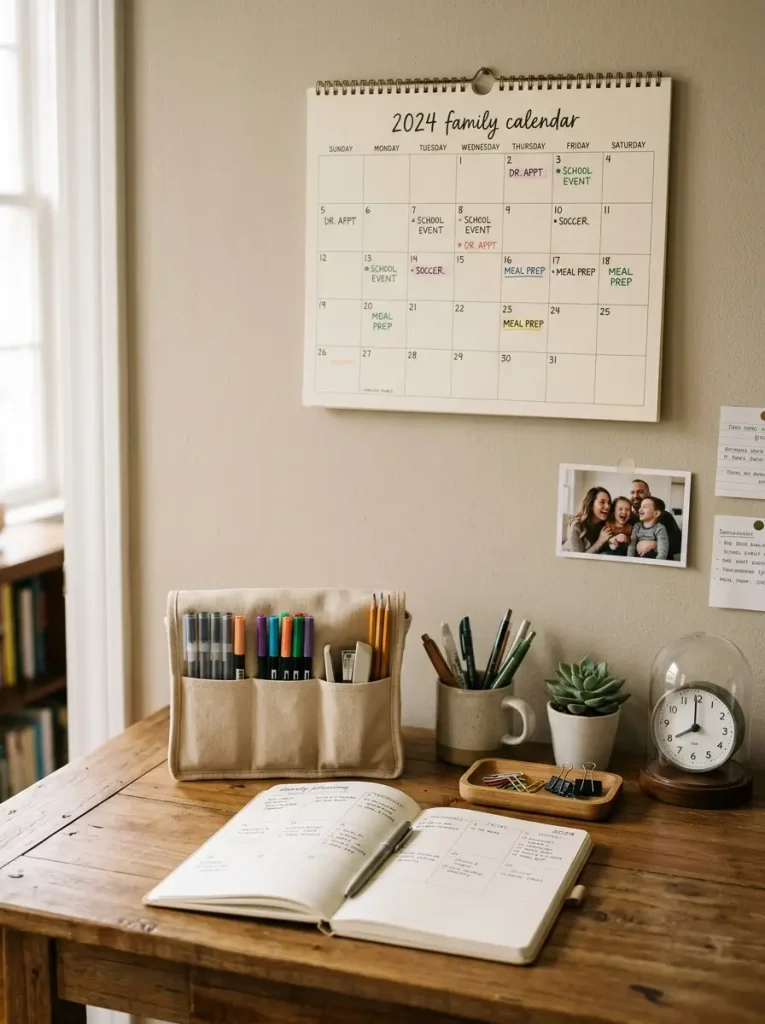
- Check appointments, school activities, and work deadlines.
- Add upcoming events to a shared calendar.
- Identify days when meals or errands need extra planning.
- Prepare reminders for important tasks.
- Review the schedule with household members.
A weekly calendar review helps prevent forgotten appointments and last-minute surprises. Use a wall calendar, phone calendar, or simple planner that everyone can access.
Highlight important dates and keep the upcoming week’s schedule visible. If several people share household responsibilities, assign tasks before the week begins instead of waiting until something needs immediate attention.
Organize The Home Office

| Point | Minimal Desk | Larger Workspace |
| Paperwork | Vertical file | Filing cabinet |
| Cables | Cable clips | Cable tray |
| Supplies | Desk drawer | Storage organizer |
| Daily items | Small tray | Desk caddy |
A clean workspace makes it easier to begin work without searching for pens, chargers, or documents. Remove unnecessary papers and keep only current projects on the desk.
Use a vertical file for documents that need action, storage, or reference. Cable clips can prevent charging cords from falling behind furniture. Keep the desk surface mostly clear, leaving room for your laptop, notebook, and frequently used tools.
Declutter The Mail

Do:
- Open important letters immediately.
- Recycle unwanted advertisements.
- Place bills in an action folder.
- Store documents that need filing together.
Don’t:
- Leave unopened mail on the counter.
- Keep every promotional flyer.
- Mix receipts with important documents.
Mail can quickly become a source of unnecessary mess when it has no designated location. Place a small three-section organizer near your entryway for incoming mail, documents requiring action, and items ready for recycling.
Review the organizer during your weekly reset. Shred documents containing personal information when they are no longer needed, and keep important paperwork in a secure location.
Reset The Laundry Room

Cost: Low | Time: 10–15 minutes | Difficulty: Easy | Best For: Any laundry area
Return detergent, fabric care products, and cleaning tools to their designated shelves. Wipe the washer and dryer surfaces, empty lint from the appropriate collection area, and remove clothing left inside machines.
A small basket can hold stain-treatment supplies, while wall hooks keep reusable laundry bags off the floor. Keep products in their original containers and store them securely away from children and pets. Check that the walkway remains clear so baskets and doors can move safely.
Straighten Bookshelves

Bookshelves look more organized when items have clear groupings rather than being scattered across every shelf. Start by removing books you no longer want and returning misplaced objects to their rooms.
Arrange books by category, size, or color if that helps you find them quickly. Use small baskets for loose accessories and leave some open space between decorative objects.
For shelves in small rooms, avoid placing heavy items near the top. Secure tall bookcases to the wall when necessary, especially in homes with children or pets.
Check Household Supplies
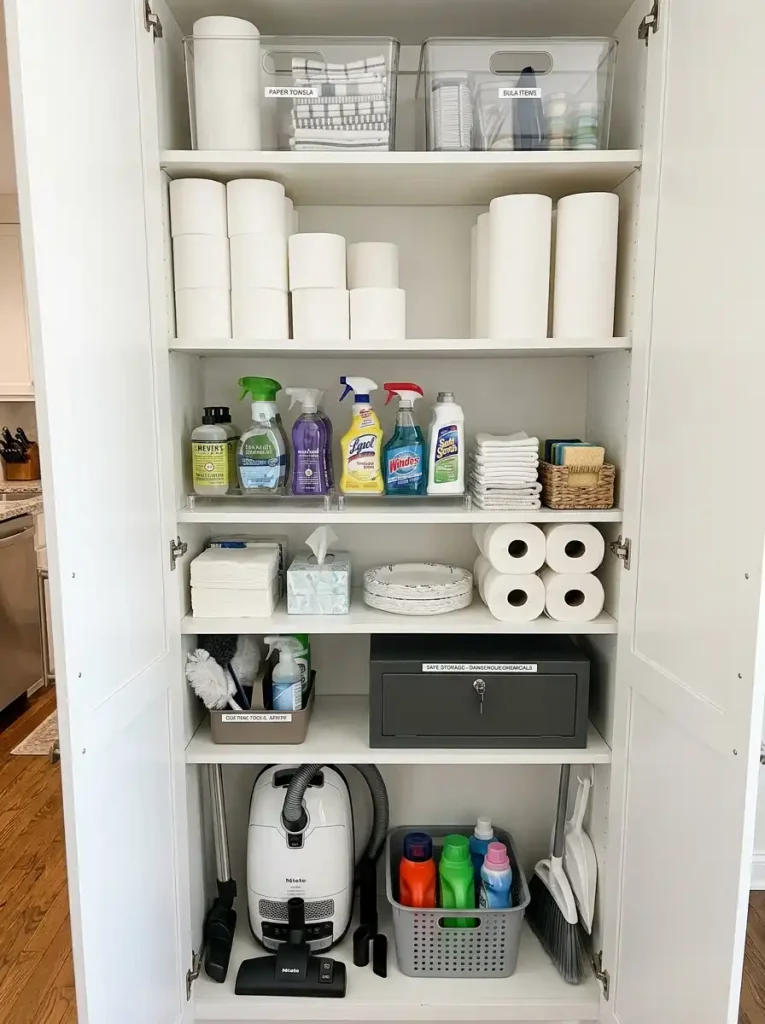
Cost: Low | Time: 5–10 minutes | Difficulty: Easy | Best For: Every household
Check toilet paper, tissues, dish soap, laundry detergent, garbage bags, batteries, and basic cleaning supplies. Group backups together in a labeled bin or cabinet.
Avoid buying excessive quantities that take up valuable storage space. A simple stock level system works well: one opened item and one backup for frequently used supplies. Store batteries and household chemicals safely, away from heat and moisture.
Sweep And Vacuum Floors

Dust and crumbs tend to gather around furniture, corners, and entryways during the week. Move lightweight objects before vacuuming and sweep hard floors where debris is visible.
Focus on high-traffic areas first, including hallways, kitchen floors, and spaces near the front door. Use appropriate attachments for corners and upholstery.
If time is limited, prioritize the areas where dirt is most noticeable. A quick weekly floor reset helps maintain the home between deeper cleaning sessions without requiring every room to be spotless.
Reset The Kids’ Play Area

Before: Toys, books, puzzles, and craft supplies may be scattered across the floor, making cleanup difficult.
After: Each category has a simple storage location that children can reach and use independently.
- Use open bins for building blocks.
- Store books upright on low shelves.
- Place art supplies in a divided container.
- Keep small toys in labeled boxes.
- Remove broken or incomplete items.
Low storage encourages children to return toys after playing. Choose lightweight bins without sharp edges and avoid placing heavy toys on high shelves. Rotate some toys into storage if the play area feels overcrowded.
Prepare The Front Door For Monday

- Check shoes and remove pairs that are no longer needed.
- Return coats and bags to their hooks.
- Place keys in their designated bowl or tray.
- Prepare umbrellas and weather-appropriate accessories.
- Clear the floor around the doorway.
A prepared entryway makes leaving home easier during busy mornings. Keep everyday shoes in a small rack or tray and store seasonal footwear elsewhere.
For a narrow entrance, wall-mounted hooks and vertical shoe storage use less floor space. Make sure the entrance remains clear enough for everyone to move safely.
Review Your Weekly Reset Checklist

| Point | Quick Reset | Full Reset |
| Time | 20–30 minutes | 60–90 minutes |
| Tasks | Essentials only | All listed areas |
| Best For | Busy weeks | Relaxed weekends |
| Focus | Visible mess | Maintenance and planning |
Not every weekend needs a complete reset. Choose the tasks that will make the biggest difference based on your schedule and household needs.
A flexible checklist prevents the routine from becoming another source of stress. Mark completed tasks, move unfinished ones to another day, and adjust the list as your home and priorities change.
Frequently Asked Questions
How long should a weekly home reset take?
A weekly home reset usually takes 30 minutes to two hours, depending on your home’s size and condition. Focus on essential tasks first, such as laundry, kitchen surfaces, bathroom cleaning, and putting away misplaced items. Divide larger tasks across the weekend if needed.
What should I include in a weekly home reset checklist?
Include kitchen cleaning, refrigerator checks, laundry, bathroom maintenance, bedroom resets, floor cleaning, pantry organization, household supply checks, meal planning, and calendar preparation. Adjust the checklist based on your household’s needs rather than trying to complete every possible cleaning task.
How can I complete a weekly home reset in a small apartment?
Start with visible areas and high-traffic spaces. Put away misplaced items, clear counters, fold laundry, clean the bathroom, and vacuum floors. Use vertical storage, baskets, and small organizers to reduce clutter without taking up valuable floor space.
Can I split my weekly home reset checklist across different days?
Yes, splitting tasks across several days can make your routine easier to maintain. Complete kitchen and laundry tasks during the week, then reserve a shorter weekend session for bedrooms, bathrooms, floors, and planning. Consistency matters more than completing everything at once.
Conclusion
A home reset doesn’t need to involve hours of cleaning or complicated organizing systems. Start with one room, clear the surfaces, return misplaced items, and complete a few essential tasks. In my experience, simple routines are easier to maintain when they fit naturally into your schedule. Use this weekly home reset checklist as a flexible guide, not a strict rulebook. Save this post on Pinterest so it is ready when you need it. Try one idea this week and share it with someone who would love a simpler home routine. Small resets create lasting habits.