

Why Are Succulent Leaves Splitting? 21 Simple Fixes
Succulents are loved for their thick, fleshy leaves and low-maintenance nature, but seeing those leaves crack or split can be worrying. If your succulent suddenly develops a tear along the side of a leaf, the problem may be related to watering, soil drainage, sunlight, or changing growing conditions.
The good news is that a split leaf does not always mean your plant is seriously damaged. By examining the affected leaves and checking your plant’s care routine, you can often identify the cause and prevent further splitting. These 21 simple fixes will help you understand what your succulent needs and how to keep its leaves looking healthy.
Key Takeaways
- Too much water: Leaves may swell beyond what their outer skin can accommodate, causing splits.
- Poor drainage: Soil that stays wet for too long can damage roots and contribute to unhealthy leaves.
- Sudden changes: Moving a plant into intense sunlight or changing its watering routine abruptly can create stress.
- Damaged leaves: Existing splits usually leave permanent scars, but healthy new growth can still develop.
- Early action matters: Correcting the underlying problem is more important than removing every damaged leaf.
Why Are Succulent Leaves Splitting?
Succulent leaves store water, allowing these plants to survive periods of limited rainfall. However, their ability to retain moisture also makes them vulnerable to splitting when water uptake happens faster than the leaf surface can expand.
Overwatering is a common cause, particularly when a succulent receives a large amount of water after its soil has stayed dry for a long time. Other factors, such as compacted soil, poor drainage, physical injury, extreme temperatures, and pests, can also contribute to leaf damage.
Before changing your plant’s care routine, look closely at the affected leaves. A firm, plump leaf with a clean crack may indicate excess water uptake, while a soft, discolored leaf could point to rot or another problem. The surrounding soil and roots can provide additional clues.
21 Simple Fixes for Succulent Leaves Splitting
1. Reduce Excessive Watering
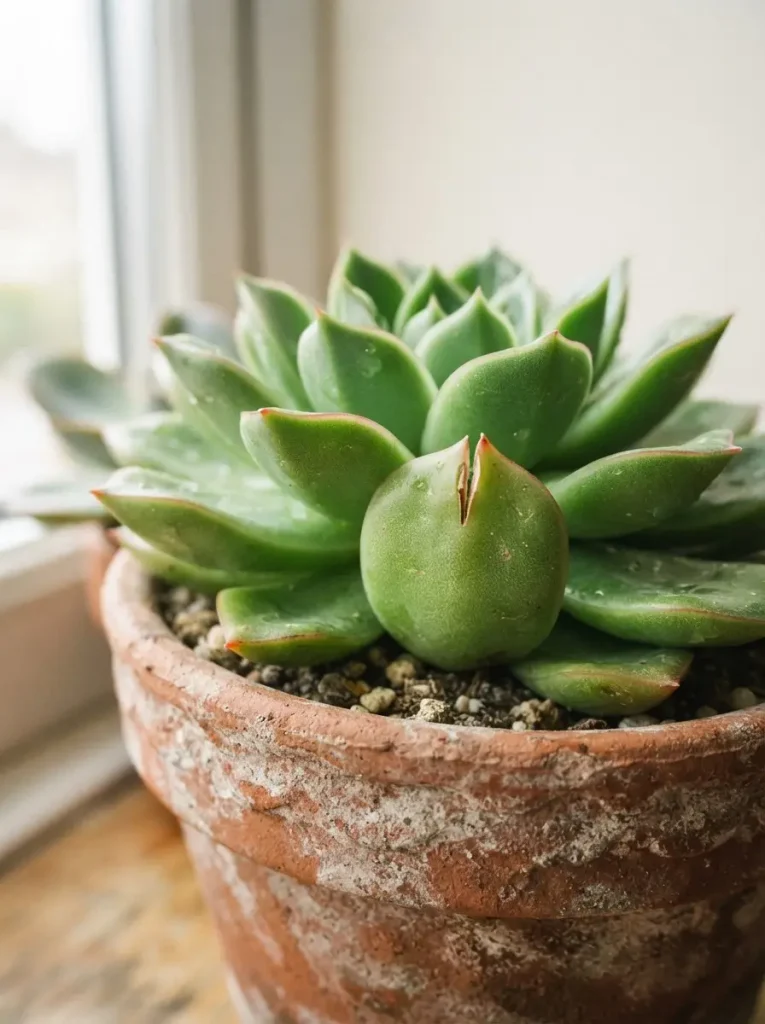
Overwatering is one of the first things to investigate when succulent leaves begin splitting. When roots absorb more water than the leaves can comfortably accommodate, internal pressure can increase until the leaf surface tears.
Start by checking the soil instead of following a fixed watering schedule. If it remains damp, wait until it has dried appropriately for your succulent species before watering again. If the plant is sitting in water or showing signs of root rot, simply waiting may not be enough; inspect the roots and correct the drainage problem.
Avoid assuming that every split leaf is caused by overwatering. Firm leaves with clean cracks suggest a different situation from leaves that are soft, translucent, or rotting.
2. Improve Soil Drainage
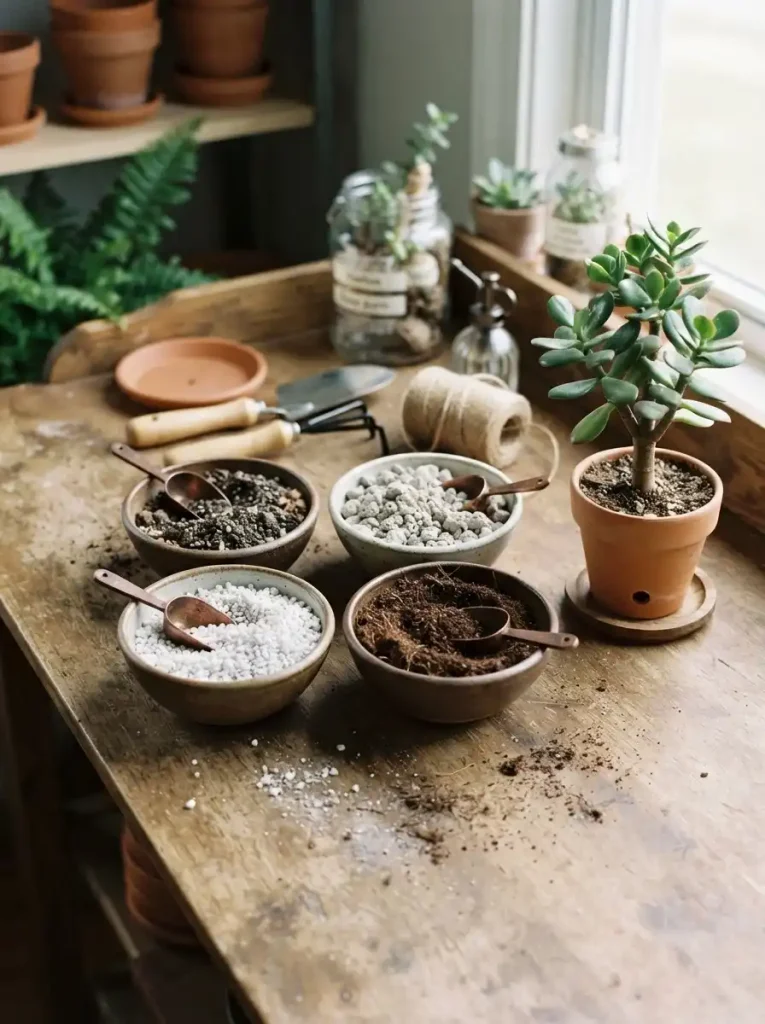
Soil that holds moisture for too long can leave succulent roots struggling to receive enough air. This prolonged dampness increases the risk of root damage and can contribute to leaf problems.
Choose a gritty potting mix designed for cacti and succulents. Depending on your growing conditions, you can improve a standard mix by adding suitable materials such as pumice or perlite. These materials create larger air spaces and help excess water move through the pot.
Pay attention to how quickly your soil dries after watering. If it remains wet for several days longer than expected, consider whether the mix is too dense, the pot is too large, or the plant is receiving too little light.
3. Use a Pot With Drainage Holes
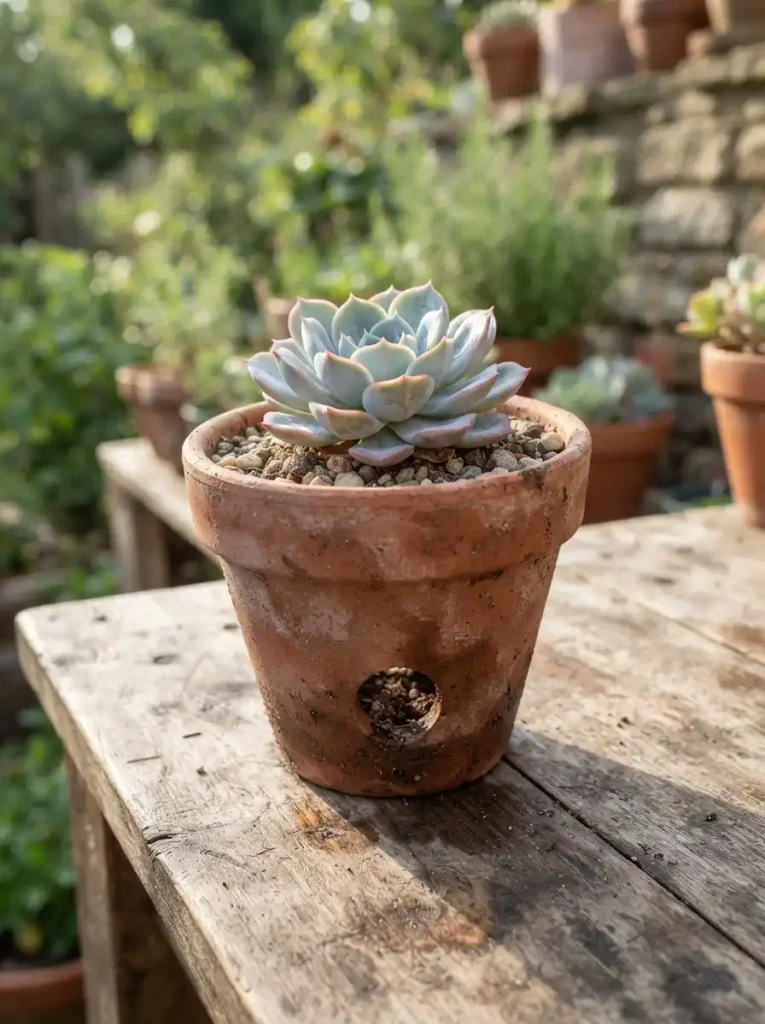
A decorative planter without drainage holes can trap excess water around the roots. Even if you use the right soil, the plant may remain too wet when water has nowhere to escape.
Move your succulent into a container with at least one functional drainage hole. After watering, allow excess moisture to drain completely and empty any water collected in the saucer.
If you prefer a decorative outer pot, place a smaller nursery pot with drainage holes inside it. Remove the inner pot when watering, let it drain, and return it only when excess water has stopped dripping.
4. Water Thoroughly but Less Frequently
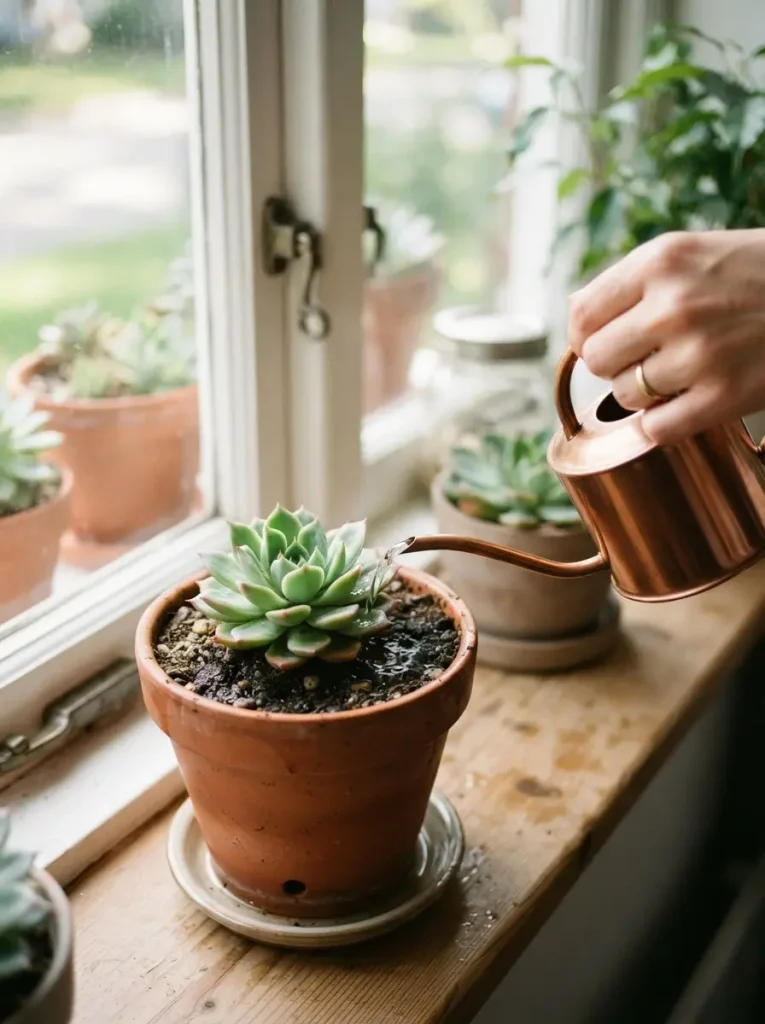
Giving succulents tiny amounts of water every day can encourage uneven moisture conditions, especially when only the soil surface becomes wet. Many established succulents grow better with thorough watering followed by a suitable drying period.
When the soil has dried sufficiently, water the mix evenly until excess water flows from the drainage holes. Then let the soil dry again before repeating the process. The interval will depend on the species, pot size, season, temperature, and indoor or outdoor conditions.
Do not interpret this advice as a reason to keep a succulent permanently dry. The goal is to avoid both prolonged saturation and repeated cycles of severe dehydration followed by excessive watering.
5. Check the Roots for Rot
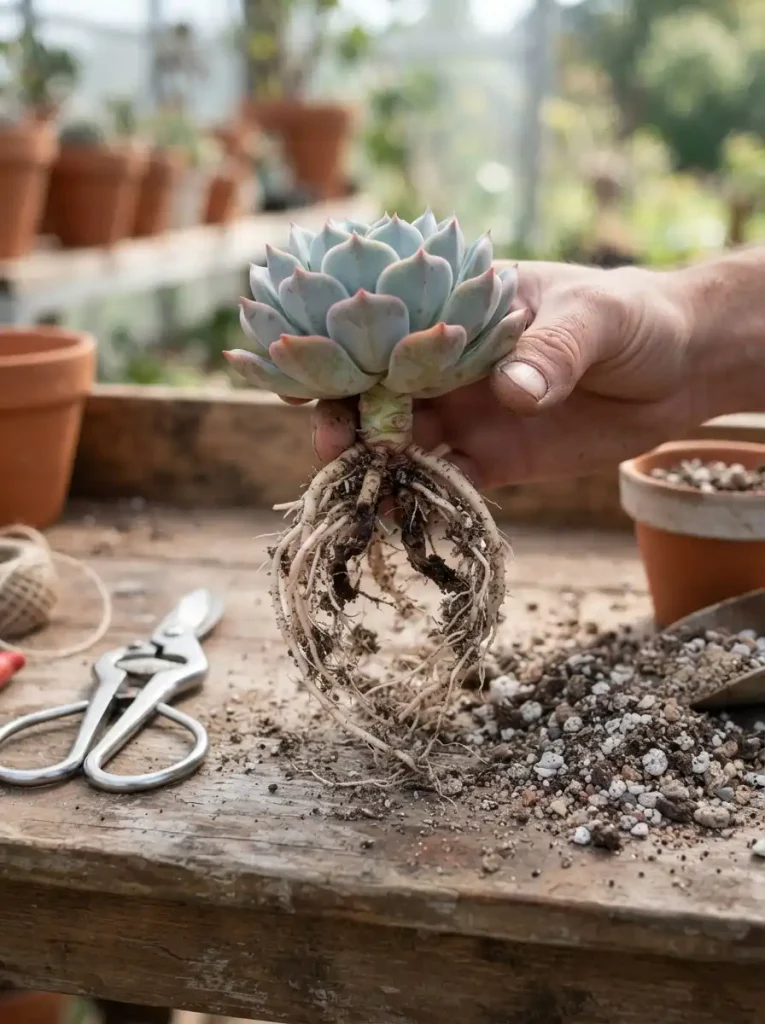
Split leaves accompanied by yellowing, mushiness, or a foul smell may indicate that the roots are unhealthy. Root rot often develops when soil stays excessively wet, allowing damaged roots to lose their ability to function properly.
Carefully remove the succulent from its pot if these symptoms are present. Healthy roots are generally firm, while rotten roots may look dark, feel soft, or break apart easily. Trim clearly rotten sections with clean tools, then repot the plant in fresh, appropriately dry, well-draining soil.
Avoid watering immediately just because the plant has been repotted. Give damaged roots time to recover, and follow care practices appropriate for the particular succulent.
6. Protect Succulents From Intense Afternoon Sun
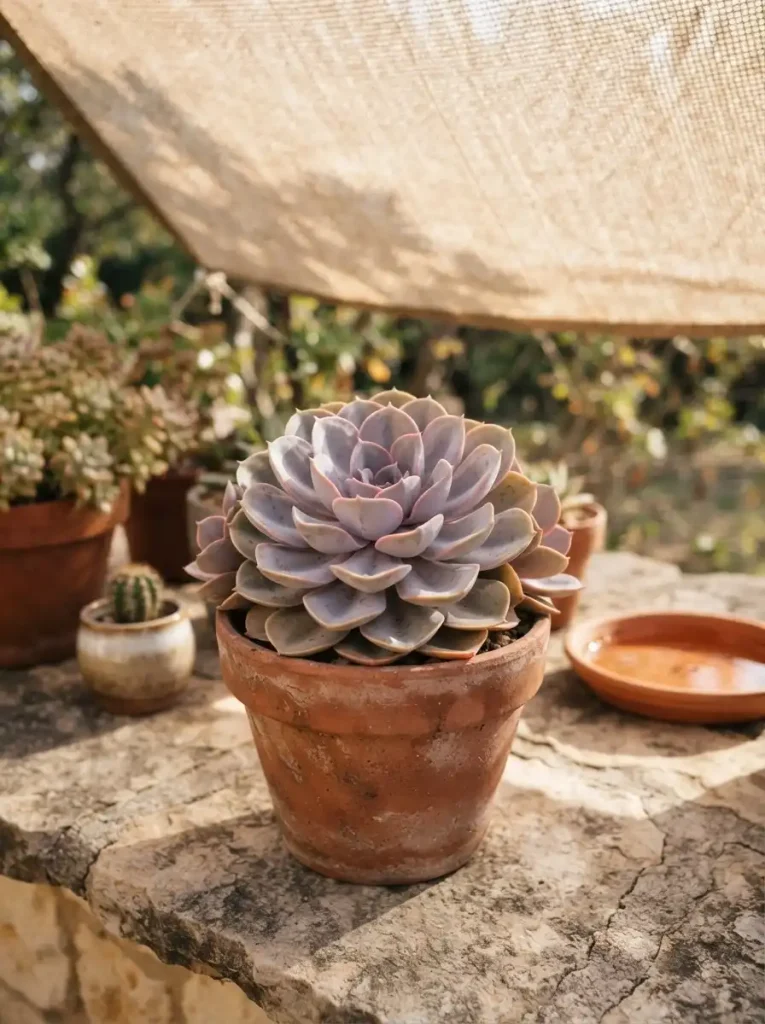
Most succulents appreciate bright light, but a sudden increase in direct sunlight can scorch leaves. Heat stress may cause pale patches, brown marks, or dry damaged areas that resemble cracks.
If your plant has recently moved outdoors or onto a sunnier windowsill, introduce stronger light gradually. Provide bright filtered light during the adjustment period and protect sensitive varieties from harsh afternoon sunshine.
Check the plant’s natural light requirements before moving it into shade permanently. Too little light can also cause weak, stretched growth, so the aim is to provide suitable light without exposing the leaves to abrupt changes.
7. Avoid Sudden Changes in Watering
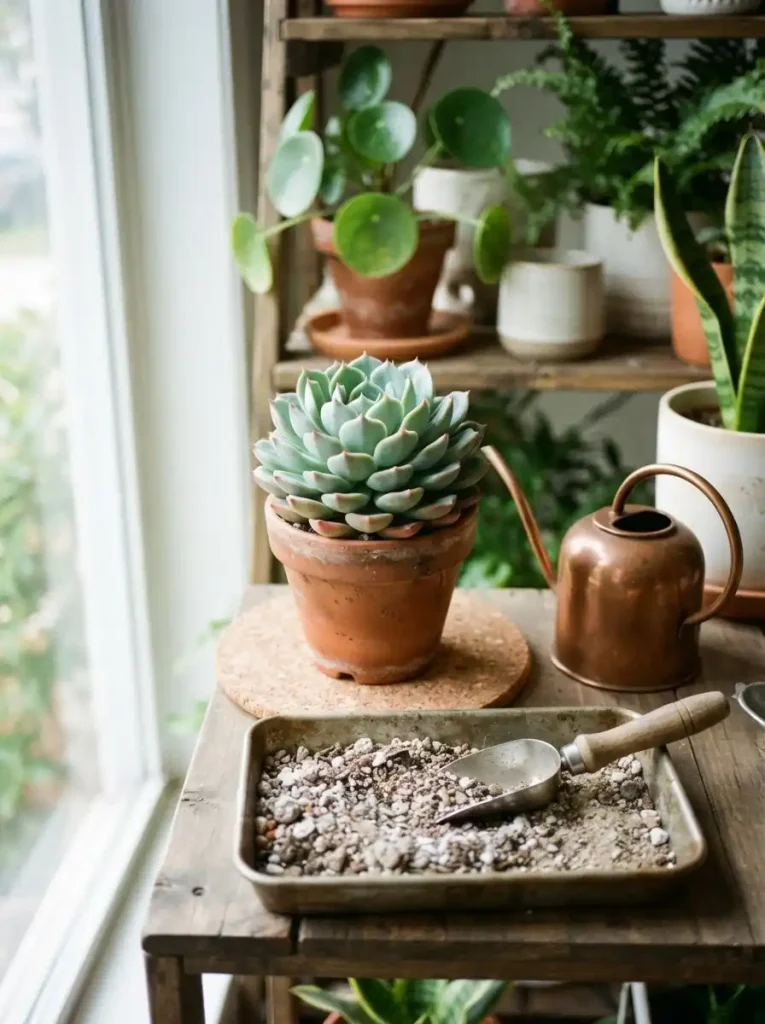
A succulent that has remained dry for an extended period may absorb water quickly when it is finally watered. In some plants, the leaves expand faster than their outer surfaces can stretch, resulting in a clean split.
Rather than alternating between prolonged neglect and heavy watering, establish a consistent routine based on soil dryness and seasonal growth. If the plant is severely dehydrated, assess its condition and rehydrate it appropriately instead of repeatedly pouring small amounts onto the surface.
Consistency does not mean watering on the same day every week. It means responding to the plant’s actual needs and avoiding unnecessary extremes.
8. Give the Plant Enough Airflow
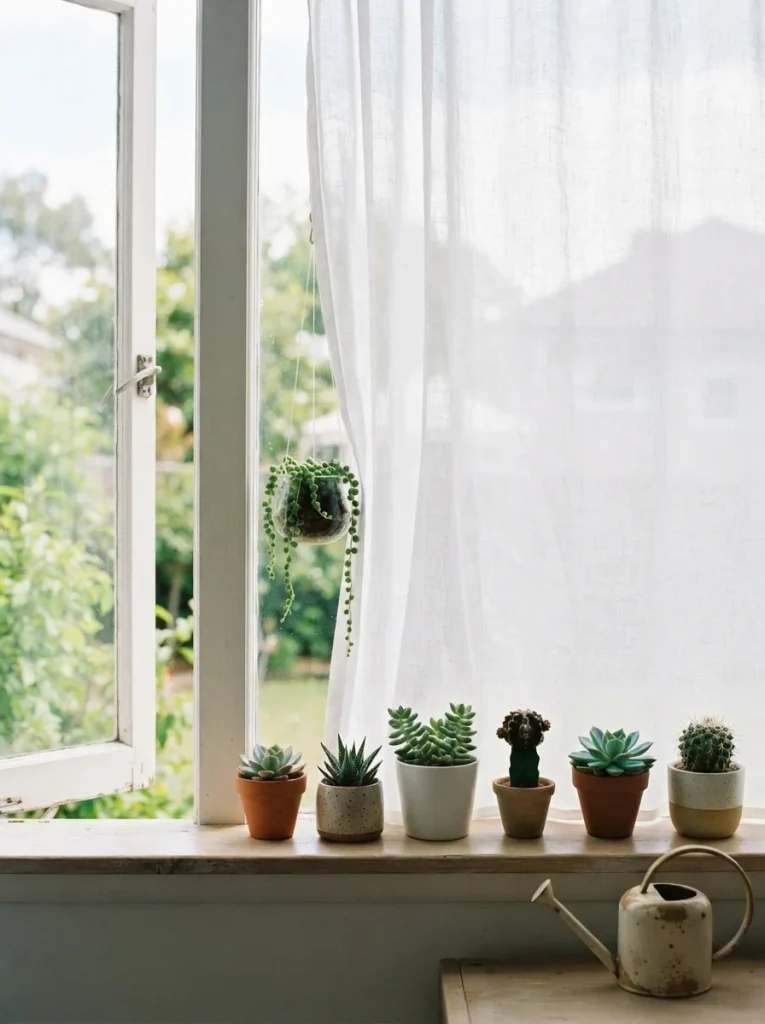
Poor airflow can slow moisture evaporation around crowded plants, especially in humid rooms or tightly packed arrangements. Damp conditions may also encourage fungal problems when damaged tissue is present.
Place succulents where air can circulate naturally, leaving a little space between neighboring pots. Avoid positioning them in persistently stuffy corners or tightly enclosed displays that remain humid for long periods.
Good airflow does not mean exposing the plant to harsh, drying winds. Aim for a comfortable environment with normal air movement while keeping the plant’s light and temperature requirements in mind.
9. Avoid Oversized Pots
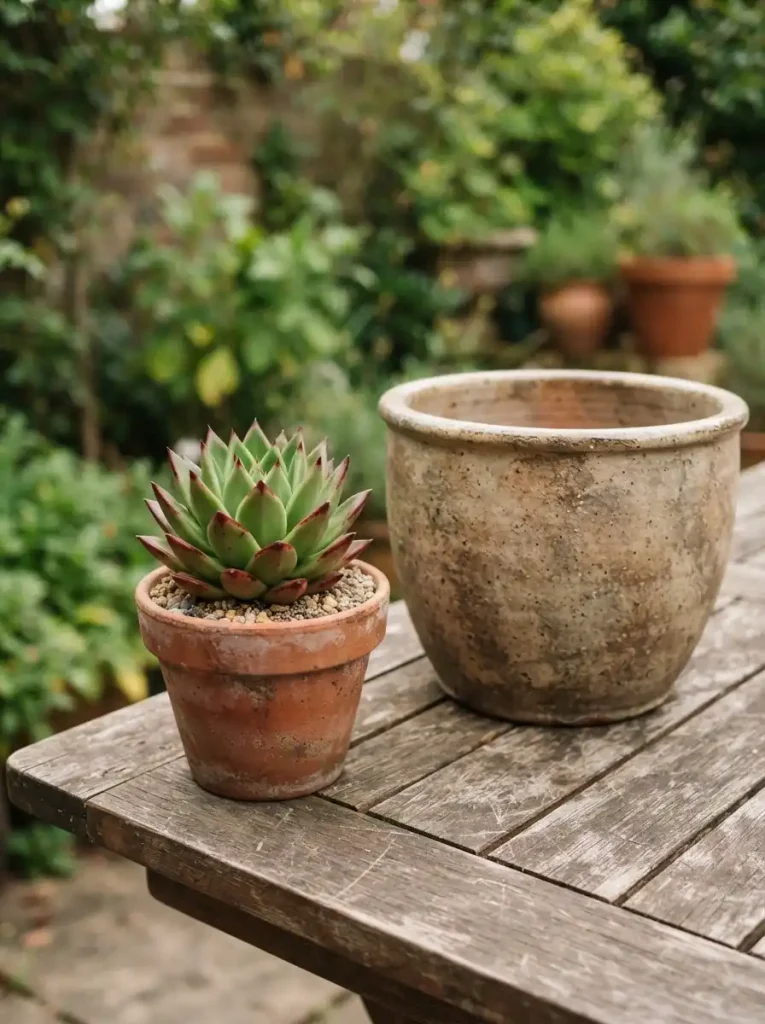
A pot that is much larger than the succulent’s root system can hold more moisture than the plant can use. As a result, the soil may remain wet for an extended period, increasing the risk of root problems.
Choose a container that comfortably fits the roots, leaving a little room for growth. If your succulent is currently planted in an oversized pot, consider moving it into a smaller container with proper drainage.
Remember that pot size is only one factor. Soil composition, temperature, and watering habits also influence how quickly moisture disappears.
10. Keep the Succulent Away From Extreme Heat
High temperatures can increase water loss and place additional stress on succulent leaves. Plants sitting against hot window glass, on sun-heated patios, or near heating appliances may experience damage when temperatures rise too far.
Move the plant away from intense heat sources and provide suitable ventilation. If it grows outdoors, consider a location with bright light and protection during the hottest part of the day when necessary.
Avoid making sudden changes that expose the plant to cold conditions instead. Most succulents have specific temperature preferences, so check the needs of your variety before deciding where to place it.
11. Protect Succulents From Cold Temperatures
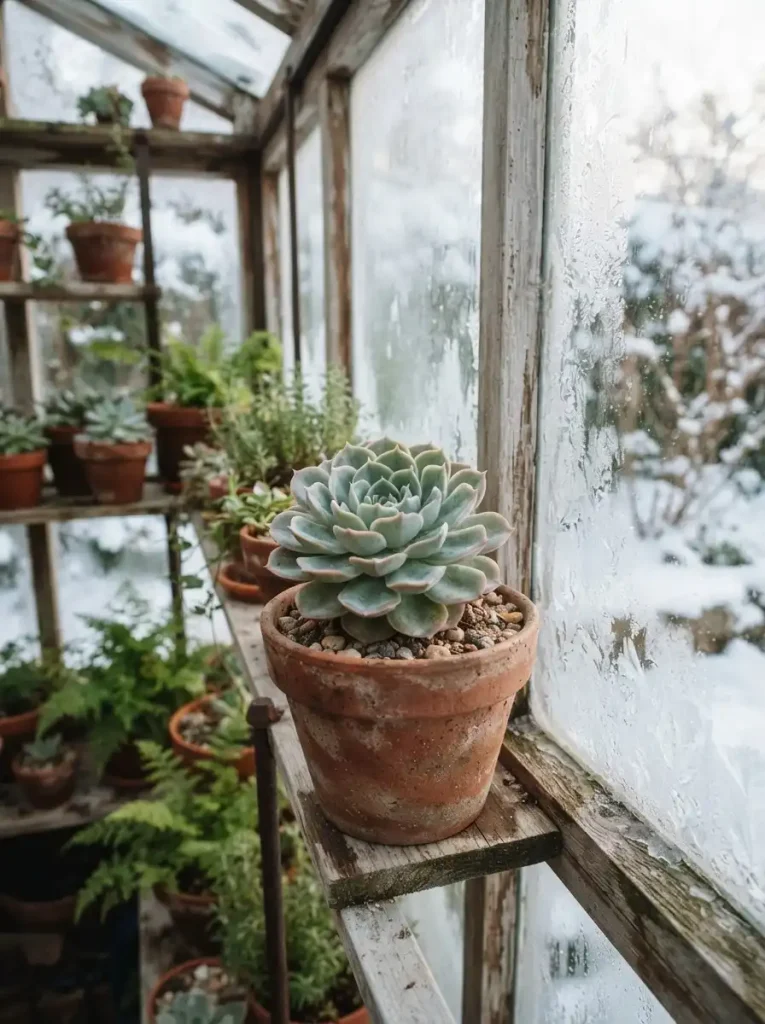
Cold weather can damage succulent leaves, particularly when a tender variety is exposed to frost or freezing temperatures. Affected leaves may develop translucent patches, dark marks, or soft areas that eventually split or collapse.
If cold damage is likely, move container-grown succulents into a suitable sheltered location before temperatures fall. Keep the plant away from icy drafts while ensuring that its growing environment still provides adequate light.
Do not remove every damaged leaf immediately. Wait until the extent of the injury becomes clear, then trim tissue that has turned rotten or is no longer viable. Prevention is especially important because severely frozen leaf tissue cannot be restored.
12. Check for Hidden Pests
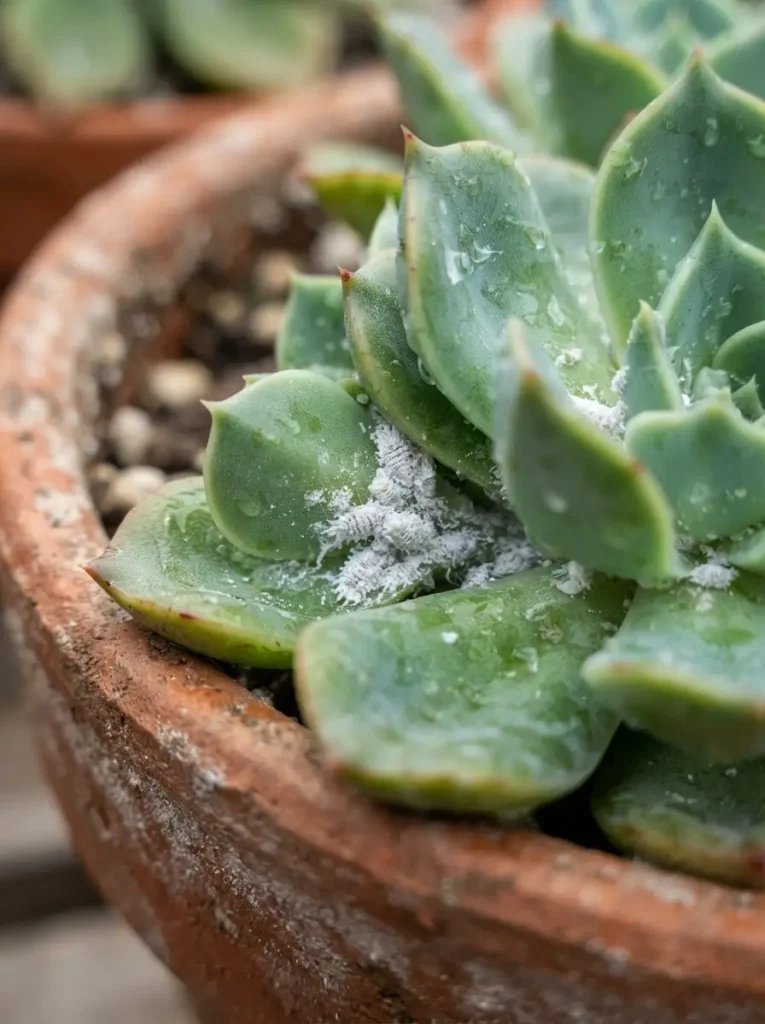
Some pests can damage succulent leaves by feeding on plant tissue. Mealybugs, scale insects, and other sap-feeding insects may weaken a plant, while the resulting damage can make leaves look unhealthy or scarred.
Inspect the leaf joints, undersides of leaves, and areas close to the stem. Mealybugs may appear as tiny white cotton-like patches, while scale insects often look like small, stationary bumps.
If you discover pests, isolate the affected plant and use a treatment suitable for the insect and succulent species. Follow the product instructions carefully, and avoid applying oils or sprays in intense sunlight, which can cause additional leaf damage.
13. Avoid Excessive Fertilizer
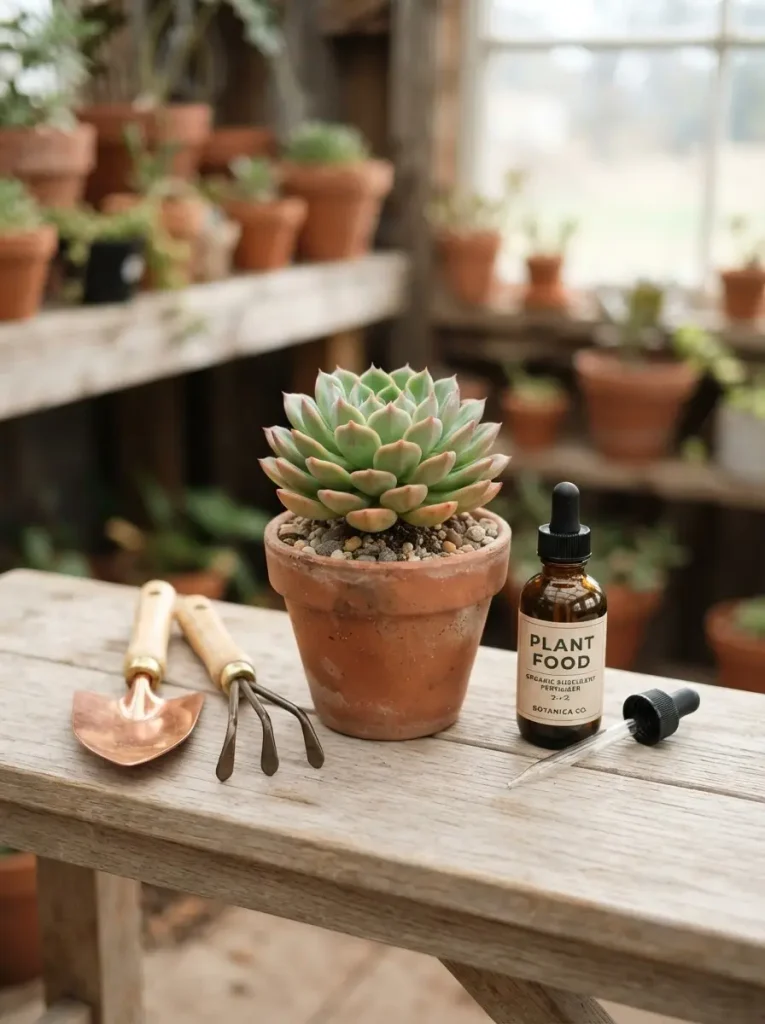
Succulents generally need less fertilizer than many fast-growing houseplants. Applying too much fertilizer can create excess soluble salts in the soil and may damage roots, particularly when the plant is already stressed.
Use a fertilizer formulated for succulents or cacti, following the recommended dilution and application frequency. Avoid feeding a plant that is showing signs of root rot or severe stress until you understand the problem.
If you suspect fertilizer buildup, consider flushing the soil with suitable water when the pot drains freely. For badly affected plants, replacing the growing mix may be more appropriate.
14. Check the Quality of Your Water
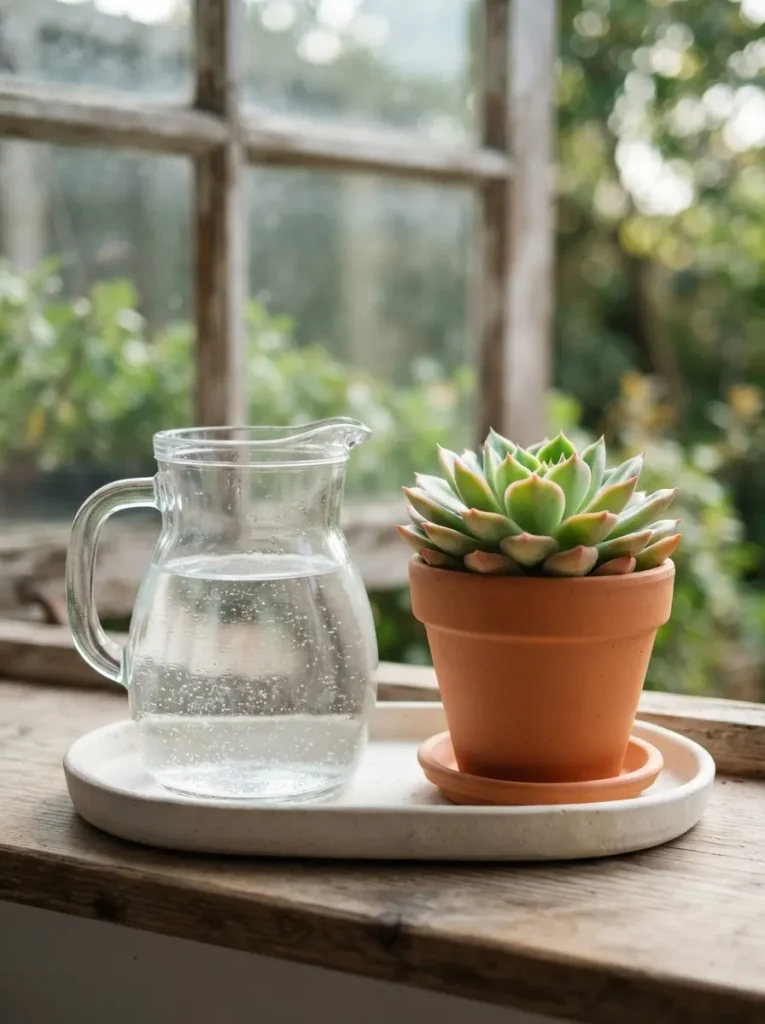
Water quality can affect sensitive succulents over time. In some areas, tap water contains high concentrations of dissolved minerals or salts that can accumulate in the growing medium.
If you notice a persistent white crust on the soil or pot, review your water source and fertilizing habits. Where mineral buildup is a concern, rainwater or another suitable low-mineral water source may help, provided it is clean and safe for plants.
Water quality is not the most common explanation for an isolated split leaf, so look at watering frequency, drainage, and root health first.
15. Inspect Leaves for Physical Damage
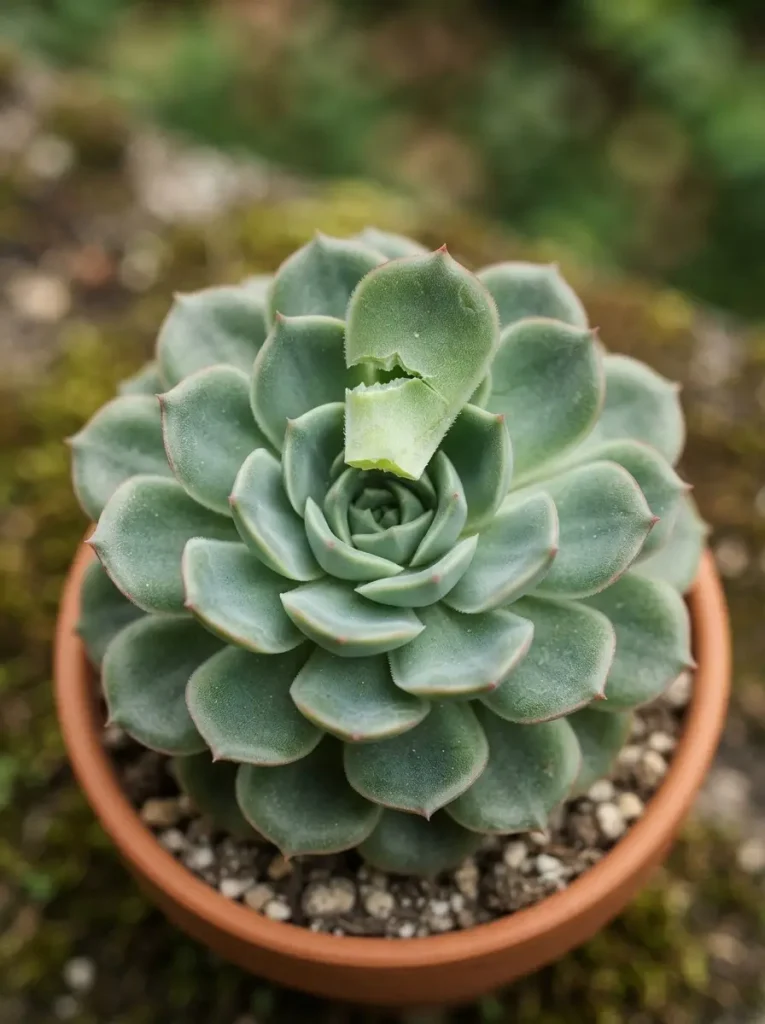
Not every split develops because of a watering problem. A leaf can crack if it is knocked against a hard surface, squeezed during handling, brushed by a pet, or damaged while the plant is being moved.
Examine the location and appearance of the tear. A single split on an otherwise healthy plant may simply be an injury rather than evidence of poor care.
Move the pot to a safer spot and handle the plant by its pot whenever possible. Avoid pulling or pressing the fleshy leaves because even a small amount of force can leave permanent marks.
16. Remove Rotten Leaves Carefully
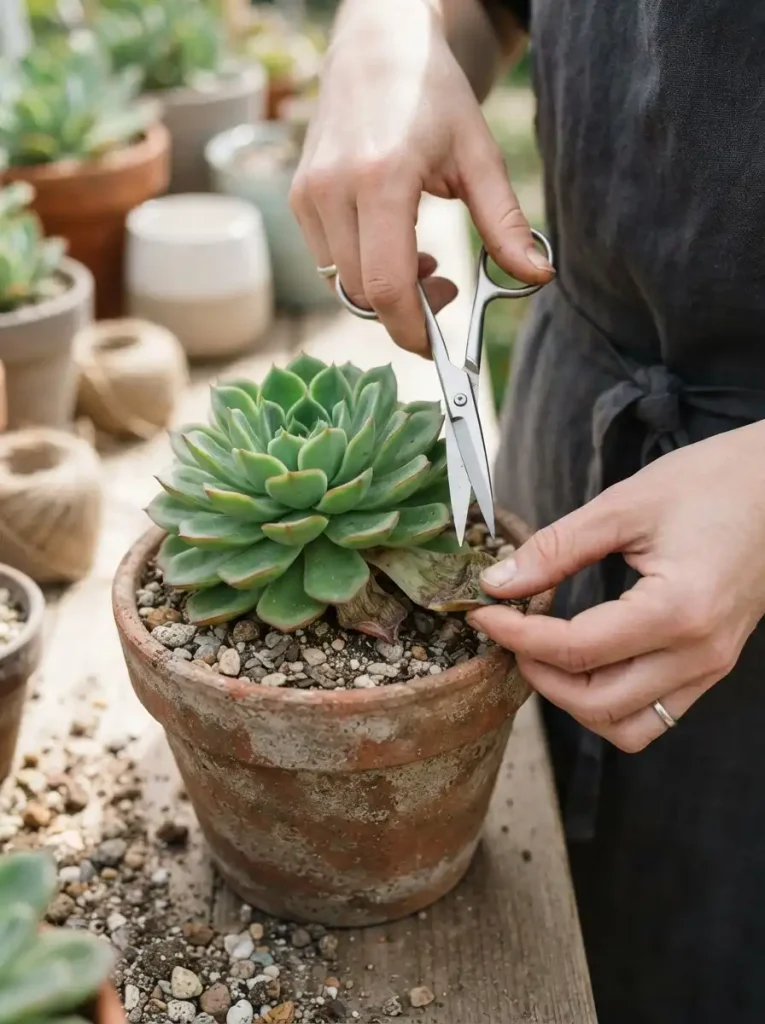
A split leaf does not automatically need to be removed. If it remains firm and shows no signs of rot, leaving it attached is often the simplest option.
However, a leaf that becomes mushy, dark, foul-smelling, or visibly infected may need to be removed to prevent further problems. Use clean, sharp scissors or pruning tools, and avoid tearing the leaf away from the stem.
Do not remove large numbers of healthy leaves just to improve the plant’s appearance. Excessive pruning can stress a succulent and reduce its ability to grow.
17. Repot a Root-Bound Succulent
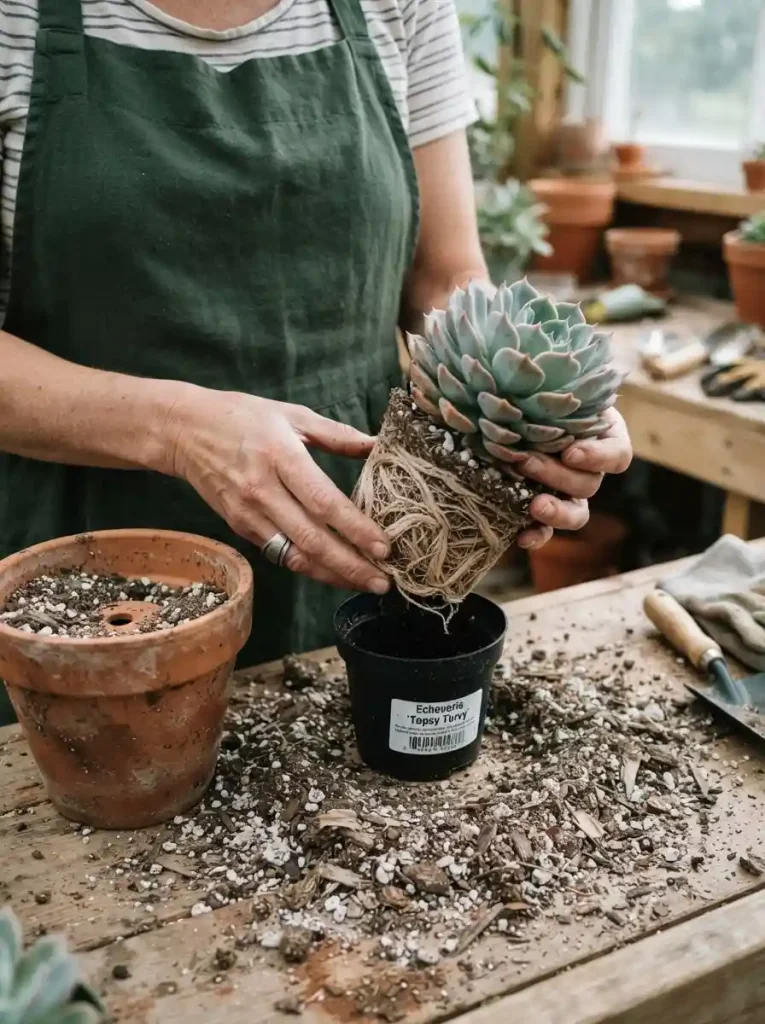
When a succulent’s roots become tightly crowded inside its container, the plant may have difficulty absorbing water evenly. Root crowding does not directly explain every split leaf, but it can make watering and moisture management more difficult.
Check the bottom of the pot for roots emerging through drainage holes or forming a dense circular mass. If the plant is genuinely root-bound, move it into a slightly larger container with drainage holes and fresh, well-draining soil.
Choose a pot that provides enough room for the roots without leaving a large volume of unused, wet soil around them.
18. Give the Plant Enough Light Indoors
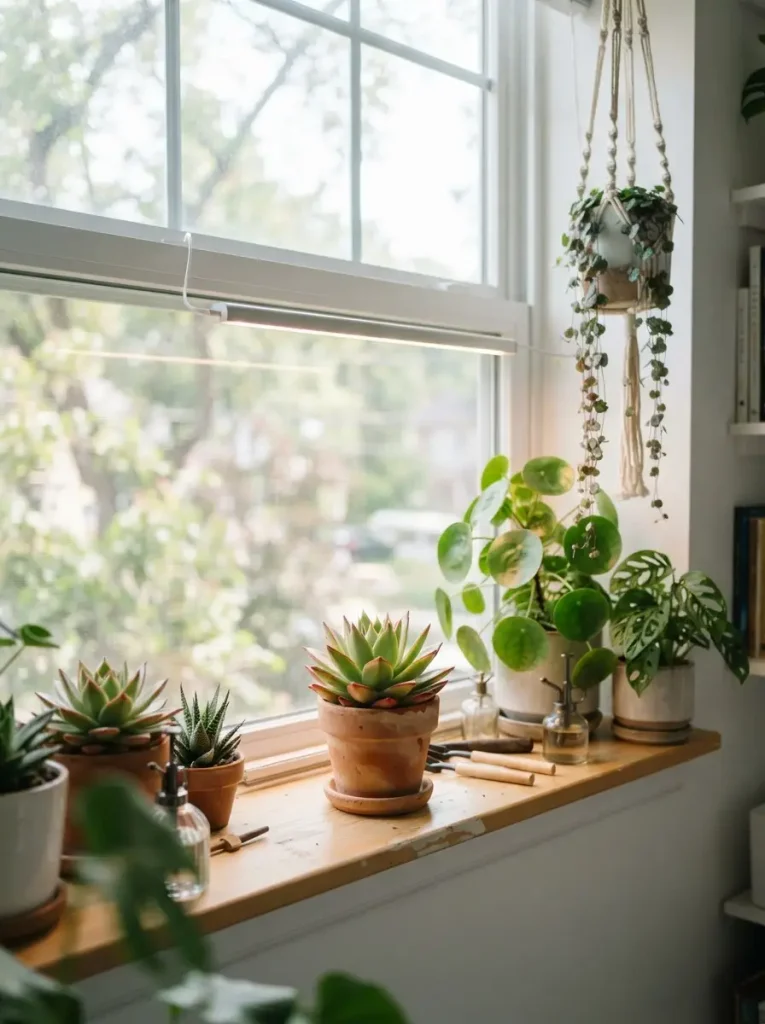
Insufficient light usually causes succulents to stretch toward a window rather than directly splitting their leaves. However, weak growth can make the plant less compact and may complicate its overall care.
Place your succulent near a bright window suited to its light requirements. If natural light is limited, a suitable grow light can help maintain healthy growth. Introduce stronger lighting gradually instead of suddenly exposing a shade-grown plant to intense sunshine.
Rotate the pot occasionally if the plant grows unevenly toward the light source. Look for compact new growth as one sign that the lighting conditions are improving.
19. Adjust Watering During Seasonal Changes
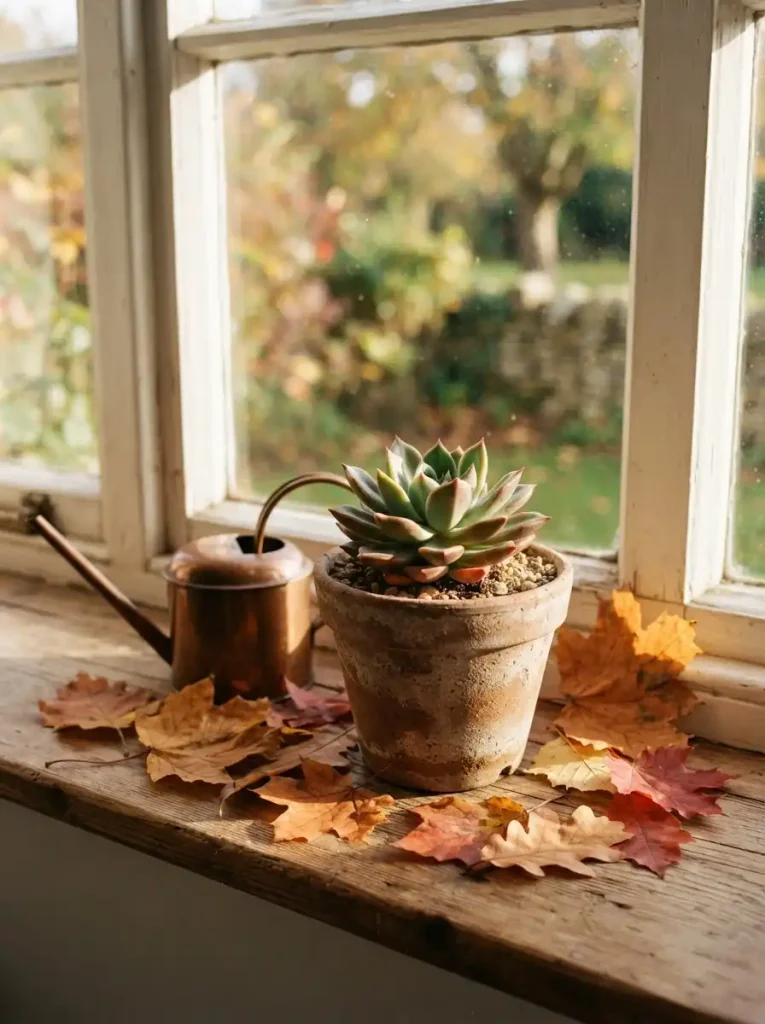
Succulents often grow at different rates depending on the season. Some become less active during hot weather, while others slow down during cooler months. Their water requirements can change accordingly.
Check the soil more frequently when temperatures, daylight hours, or indoor heating conditions change. During periods of slower growth, many succulents need less frequent watering, although the exact schedule depends on the species and environment.
Avoid following the same watering timetable throughout the year without checking the plant. Seasonal adjustments help prevent both excessive moisture and prolonged dehydration.
20. Avoid Crowding Succulents Together
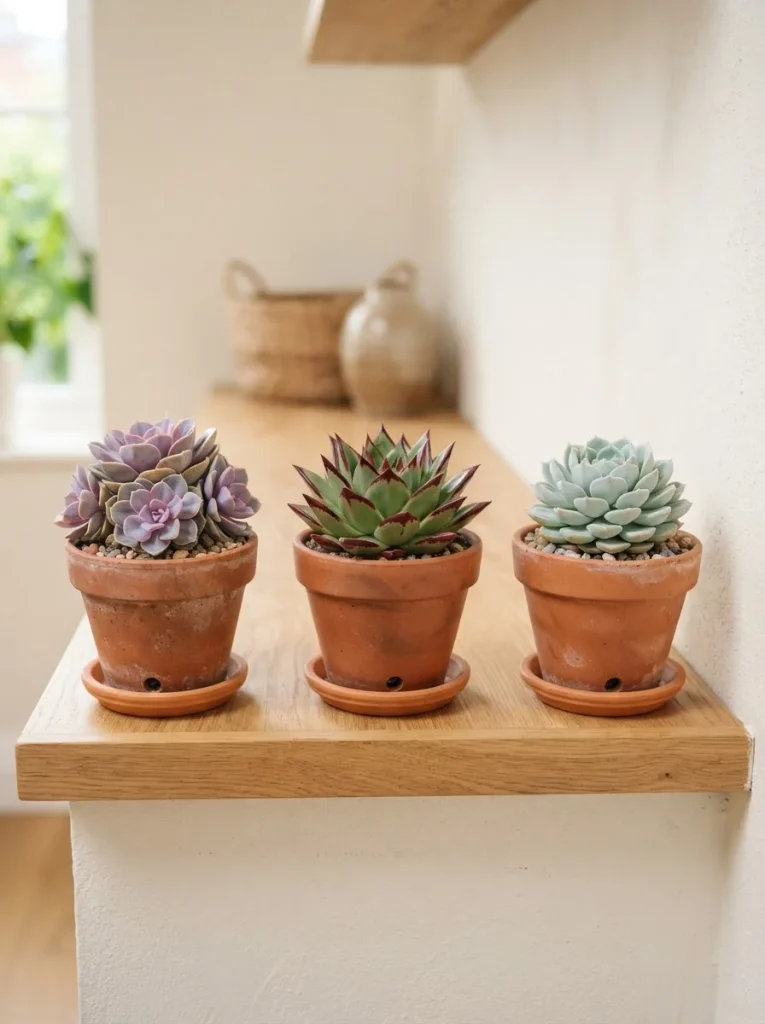
Succulent arrangements can look beautiful, but overcrowding may restrict airflow, create shaded areas, and make it harder to inspect individual plants. Different species may also have different watering and light requirements.
Give each succulent enough space to receive suitable light and allow air to move between the leaves. If several plants share one container, consider whether their growth habits and care needs are compatible.
When one plant develops rot or pests, separating it from the others also makes inspection and treatment easier.
21. Let Damaged Leaves Heal Naturally
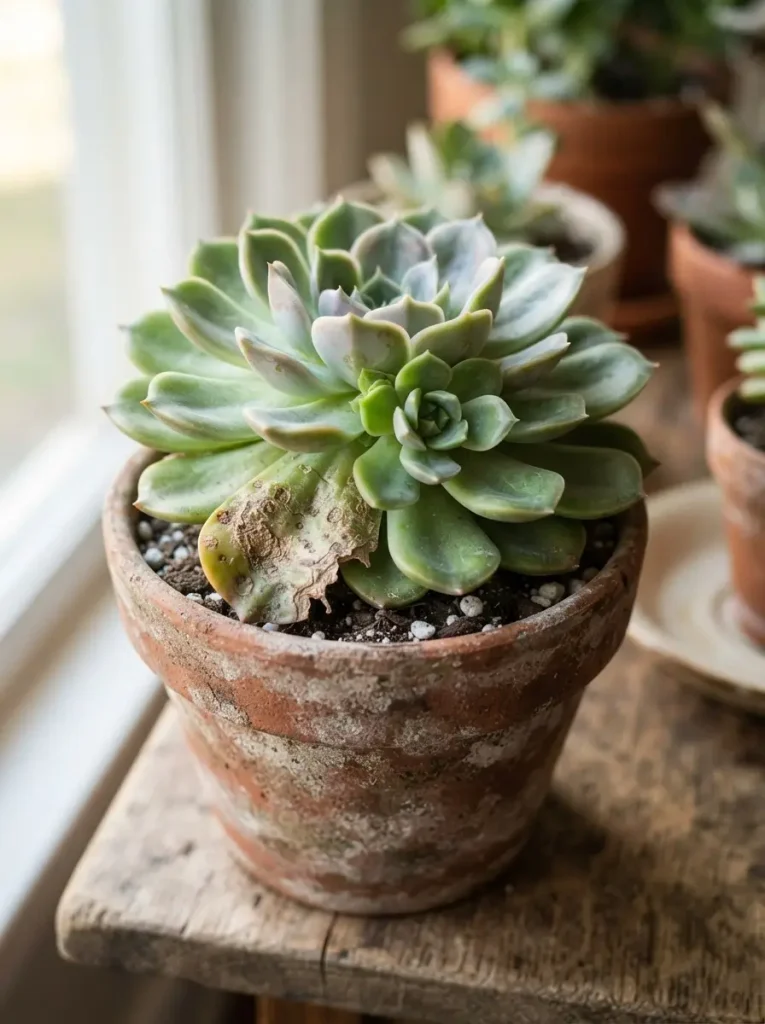
Once a succulent leaf splits, the original surface generally cannot return to its previous appearance. The plant may form a dry, scarred area around the tear, but the damage can remain visible permanently.
Keep the plant’s care conditions stable and avoid repeatedly touching the injured leaf. Make sure the soil drains properly, provide appropriate light, and monitor the split for signs of spreading discoloration or rot.
If the rest of the plant remains firm and continues producing healthy growth, there is usually no need to discard it because of one damaged leaf. Focus on preventing additional splits rather than trying to make the existing scar disappear.
How to Prevent Succulent Leaves From Splitting
After correcting the immediate problem, a few simple habits can help keep your succulent healthy and reduce the likelihood of future leaf damage.
- Check soil moisture: Water according to the plant’s needs rather than a rigid calendar.
- Use well-draining soil: Choose a suitable succulent mix that does not remain soggy.
- Choose the right container: Use a pot with drainage holes and enough room for the roots.
- Provide appropriate light: Match the lighting conditions to your succulent species.
- Avoid sudden changes: Introduce new watering, light, and temperature conditions gradually.
- Inspect leaves regularly: Look for pests, discoloration, soft spots, and new cracks.
- Adjust care seasonally: Reassess watering as temperatures and growth patterns change.
Remember that some succulents naturally have small blemishes, scars, or unusual leaf shapes. A minor split on an otherwise thriving plant is not necessarily a sign that something is seriously wrong.
Frequently Asked Questions
Can a split succulent leaf heal?
A split leaf may dry and form a scar, but it usually will not return to its original condition. The plant can still remain healthy and produce new leaves if the underlying cause is addressed.
Should I remove split succulent leaves?
Not necessarily. Leave a firm, healthy leaf attached unless it is causing another problem. Remove a leaf if it becomes rotten, mushy, or severely damaged, using clean tools.
Do succulent leaves split because of overwatering?
Yes, overwatering is a common cause. When a succulent absorbs water rapidly, its leaves can swell and develop cracks. However, physical injury, environmental stress, and other factors can also cause splitting.
Why are my succulent leaves splitting even though I barely water them?
The plant may be receiving too much water in a single watering after a long dry period. Poor drainage, root damage, and physical injury are other possibilities. Check the soil, roots, and appearance of the affected leaves before changing your routine.
Can underwatering cause succulent leaves to split?
Underwatering more commonly causes shriveled, thin, or wrinkled leaves. However, a severely dehydrated succulent that is watered heavily afterward may develop splits as its leaves rapidly take up moisture.
Why are my succulent leaves splitting and turning yellow?
Splitting combined with yellowing can indicate excessive moisture or root problems, particularly when the leaves also feel soft. Check the soil and roots for signs of rot. Yellowing alone is not enough to confirm the cause because older leaves naturally turn yellow as they age.
Will a succulent survive if several leaves split?
Yes, many succulents can survive with several damaged leaves, provided the stem and roots remain healthy. Correct the cause of the damage and monitor the plant for new growth or worsening symptoms.
How long does it take for a succulent to recover?
Recovery time depends on the species, the extent of the damage, and the growing conditions. Minor stress may improve within days or weeks after care is corrected, while root damage can take considerably longer. Existing leaf scars may remain even after the plant recovers.
Final Thoughts
Succulent leaves splitting can be frustrating, but it does not automatically mean your plant is dying. Excessive moisture, poor drainage, sudden environmental changes, pests, and physical damage are all possible explanations.
Start by examining the affected leaves, checking the soil, and reviewing your recent care routine. Correct the most likely problem without making several drastic changes at once. With suitable watering, healthy roots, appropriate light, and a little patience, your succulent can continue growing even if some leaves retain permanent scars.
The most important thing is to focus on the plant’s overall health rather than the appearance of one damaged leaf. A firm stem, healthy roots, and steady new growth are much more useful signs of recovery than a perfectly unmarked leaf.